by Legalnaija | Nov 1, 2022 | Uncategorized
The Absence Of An Oath Clause In A Sworn Declaration: How Fatal?[1]
INTRODUCTION
At one point or the other in one’s legal practice in Nigeria, there is the likelihood of haven been faced with the challenge of wriggling out of a situation where due to inadvertence of counsel, the oath clause is omitted in an affidavit or a witness statement on oath to be used in court. This error is sometimes discovered only after the affidavit has been filed and the case is to come up for hearing. While many litigators who find themselves in these unpleasant situations simply blame the omission on their secretaries, the junior lawyers in the firm bear the brunt in others. This article therefore interrogates the absence of an oath clause in a sworn declaration vis-à-vis the provisions of Oaths Act, LFN 2004, conflicting judicial interpretations of the Court of Appeal and until the recent intervention by the Supreme Court of Nigeria.
SWORN DECLARATIONS AND THE REQUIREMENT OF AN OATH CLAUSE.
In the trial of cases in Nigeria, the Rules of the various courts provide that evidence may be adduced either by filing an affidavit, as in suits commenced by originating summons/motions procedure or witness statements on oath where the suit is commenced by a writ of summons. Whichever of these procedures is adopted, a written declaration on oath is required as an integral part of the frontloaded processes (or interlocutory applications) before the Court, prior to the date set down for hearing. In defining an affidavit, the court held in the case of Onujabe v. Idris[2] as follows:
“An affidavit is a statement of facts or declaration made either on oath or affirmation before an authorized person. The averments in an affidavit are admissible as a fact until disproved because the averments are sworn before a commissioner for oaths. The life of an affidavit is the declaration on oath. What makes that piece of paper an affidavit competent to support the motion on notice is the attestation or swearing before the Commissioner for oaths. Once the document is not sworn to, it is a mere piece of paper not an affidavit. Therefore without oath there is no affidavit.”
A distinguishing feature of an affidavit therefore, that sets it apart from every other declaration is that it is made on oath before a person authorized to administer oaths. Persons authorized to administer oaths include the Chief Justice of Nigeria, Presidents and Justices of the Supreme Court and Court of Appeal, Judges of the Federal High Court, Notaries Public and Commissioners for oaths.[3]
Essentially, affidavits used in judicial proceedings constitute and forms part of the body of evidence led in a case.[4] An affidavit therefore, by the provision of the First Schedule to the Oaths Act, and usual practice, concludes with a paragraph that reads:
“I do solemnly and sincerely declare that I make the solemn declaration conscientiously, believing same to be true and by virtue of the provisions of the Oaths Act.”
It is therefore considered a settled position of the law that a sworn declaration must contain the above words for it to be valid and admissible in evidence. The absence of the words, before now, is seen as a fundamental defect as to the substance and not form, curable under Section 4 (2) (b) and (c) of the Oaths Act or Section 113 of the Evidence Act, 2011. In the case of GTB v. ABIODUN[5], the Court of Appeal per PAUL OBI ELECHI, JCA held:
“As stated earlier in the course of this judgment, any written statement which does not bear the 1st schedule to Section 13 of the Oath Act, can not be said to be a written statement on oath. It is this vital aspect of the oath that is missing in the written statement of the Respondent’s sole witness in the present appeal. Non compliance with the provisions of the Oaths Act is a breach of the Oath Act. The consequence is that the entire statement of the Respondent sole witness is left bare. The Rules of Court are not made for fun, they are made to be obeyed. See: Hard v. Hact (1990) 1 NWLR (pt 126) 276, Tom Ikimi v. Godwin Omamnli (1995) 3 NWLR (pt 383), Ibrahim v. Col Cletus Emein & Ors (1996) 2 NWLR (pt 430) 322, Tehat A.O. Sule v. Nigeria Cocoa Board (1985) All NLR 257, Odu v. Jolaoso (2002) 37 WRN 115.”
Click To Order
Similarly, in the latter case of ANENE v. ALABI & ANOR,[6] it was held Per JOSEPH EYO EKANEM, JCA as follows:
“…What is the effect of the absence of the oath? Section13 of the Oaths Act is worded in mandatory terms as it uses the word “shall” which generally speaking is a term of command that implies a mandate. The implication is that an oath is lawful if it is taken before the person set out therein and is in the form set out in the First Schedule to the Act. The converse is that an oath is not lawful if it is not taken before the specified person and in the form set out in the said Schedule. Where the form of the oath set out in the said Schedule is completely absent, there is no affidavit… At page 526, Bage, JCA, as he then was, opined that: “Any written statement which does not bear the First Schedule to Section 13 of the Act, cannot be said to be a written statement on oath. It is only when the declaration of the oath is made that the identity of the maker of the statement can be ascertained. It also serves as to the verification as truth of the statement made therein.” See also GE INTERNATIONAL OPERATION LTD v. Q-OIL AND GAS SERVICES (2015) 1 NWLR (PT. 1440) 244, 270 where Eko, JCA, as he then was, opined that: “In law and common parlance, a written statement that its maker swears to the truth thereof is an affidavit: see Oxford Advanced Learner’s Dictionary. According to Black’s Law Dictionary, 7th Edition a deposition is a witness’s out-of-Court testimony that is reduced into writing for use in Court. It becomes an affidavit if the deponent swears to an oath the declarations made therein are the truth of the matter. By the oath the out-of-Court statement in writing becomes a testimony. It is the oath that gives validity to deposition as a testimony… without the oath, the deposition or written declarations on a piece of paper is a mere piece of paper. The oath makes written declarations or depositions on a piece of paper an affidavit.” Counsel for the 1st respondent argued that the defect in the affidavit was cured by Section 113 of the Evidence Act which provides that: “The Court may permit an affidavit to be used, notwithstanding that it is defective in form according to this Act, if the Court is satisfied that it has been sworn before a person duly authorized.” ?The trial Court held that the affidavit was worthy of being used as the defect therein was cured by Section 113 of the Evidence Act especially as it was sworn before an authorized person. With all due respect, I do not agree with the trial Court. This is because the defect in the affidavit is not a defect in form; rather, it is a total absence of substance and form in that the statement in the First Schedule is completely absent, thus leaving the affidavit with nothing to be cured. The provision of Section 113 of the Evidence Act is intended to cure formal defects and not substantial defects as in this instance. In OBUMNEKE v. SYLVESTER (2010) ALL FWLR (PT. 506) 1945,1959-1960, Alagoa, JCA, as he then was, opined as follows: “Thus, every oath to be legitimate must comply with the provisions of the Oath Act, Cap. 333, Laws of the Federation and the First Schedule thereto. Where there is no statement in an oath stating that it is made solemnly, conscientiously believing the contents to be true and correct by virtue of the Oaths Act, it is not an oath or affidavit properly so called and the signature of the Commissioner for Oaths cannot remedy the defect… Failure to comply does not render the document defective in form but in substance and liable to be struck out.” Order 5 Rules 1, 2 and 3 of the Edo State High Court (Civil Procedure) Rules, 2012, cannot serve as a cure for the fatal defect. The provisions make non-compliance with the Rules an irregularity which does not nullify proceedings. Being rules of Court, it cannot be used to cure a breach of an Act of the National Assembly which ranks much higher than it in the hierarchy of legislation. The affidavit in this matter ought to have been struck out by the trial Court for being incompetent.”
By the pronouncements of the various divisions of the Court of Appeal in the above decisions, it is apparent that the Court refused the use of an affidavit and witness statement on oath because they did not contain the oaths clause as prescribed by Section 13 of the Oaths Act.
However, the same Court of Appeal sought to make a distinction in the case of UDUMA v. ARUNSI[7], where it held as follows:
“There is a distinction between affidavit evidence in procedure begun by originating summons as against statement of witnesses on oath in an election proceeding or proceedings begun by writ. In respect of the latter scenario, where the written statement is to be adopted again on oath by the maker before his cross-examination on it, whatever defect in the original oath in respect of the witness statement has been cured by the second oath made in court before the judex prior to the adoption of the witness statement by the maker and his subsequent cross-examination. [Udeagha v. Omegara (2010) 11 NWLR(Pt. 1204) 168 referred to; Onyejiocha v. Maduako (unreported) Appeals Nos. CA/EPT/54/2008 and CA/EPT/54A/2008 of 14/7/2007 departed from.]”
Similarly, in the case of STANBIC IBTC BANK v. LONGTERM GLOBAL CAPITAL LTD & ORS[8], the Court of Appeal per OBANDE FESTUS OGBUINYA, JCA held as follows:
“The focus of the appellant’s complaint is that the oath does not contain the statutory declaration/conclusion statement: “I do solemnly and sincerely declare that I make this solemn declaration conscientiously believing same to be true in accordance with the Oaths Law”. The appellant persisted that the statutory declaration, as enjoined by Section 11 of the Oaths Law, is mandatory and its absence rendered the oath incompetent. I have, in a bid to pacify the law, visited the record at the abode of the CW1’s Oath which occupies pages 21 – 33, volume 1, of the record, I have subjected the 40-paragraph oath to a merciless scrutiny. Unarguably, the oath, at its twilight, is void of the conclusion statement outlined above. The idea of offering evidence by dint of written statement on oath is a budding/green regime in adjudication. It is a method which grants witnesses the liberty to testify by deposition. Deposition signifies “a statement of a witness made under oath out of Court… Depositions are all matters of procedure as they are adjectival in nature and content”, see Buhari v. INEC (2008) 19 NWLR (Pt. 1120) 246 at 377 and 378, per Tobi, JSC. Indubitably, the admissibility of evidence, of all species, is regulated by the Evidence Act. In Buhari v. INEC (supra), the contest circled around the validity and admissibility of oaths/depositions of witnesses. Tobi, JSC, incisively, outlined four instances that will make an oath inadmissible, namely: if it is sworn before (a) a person on whose behalf the same is offered, (b) his legal practitioner, (c) a partner, (d) a clerk of his legal practitioner. It flows from this ex cathedra authority, a written statement on oath will be inadmissible if it is afflicted with any of the four negative elements adumbrated above. It is not in doubt that the oath of the CW1, which is sought to be expelled, is not plagued by any of these negative elements as to drain it of its validity and admissibility. That is not all. The selfsame Oaths Law makes allowance for omission or irregularity as to oath under Section 4 thereof. In Section 4(2) (b) and (c), it provides: (2) No irregularity in the form in which an oath is administered or taken shall – (b) invalidate proceedings in any Court; or (c) render inadmissible evidence in or in respect of which an irregularity took place in any proceedings. ?It is a recognized canon of interpretation of statutes that provisions of any legislation are not to be subjected to fragmentary interpretation. Put simply, mutually-related provisions of any statute should be married together and given holistic construction in order to garner the intention of the law maker, …. In due allegiance to the injunction of the law, I have given a communal/conjunctive reading to the mutually-related provisions of Sections 4 (2) (c) and 11 of the Oaths Law. It is my humble view that the provision of Section 4(2) (c) neutralizes the mandatoriness of the provision of Section 11 of the Oaths Law. Put bluntly, Section 4 (2) (c) douses the effervescent operation of Section 11 of the Oaths Law. That is to say, any irregularity in the form of an oath will not be fatal to the administration of oath under Section 11 of the Oaths Law. It follows that the CW1’s oath will be salvaged under the saving shelter of Section 4(2) (c) of the Oaths Law. The absence of conclusion statement is drained of the potential to ruin the CW1’s oath or smear it with an indelible incompetence which will snowball into its inadmissibility. The oath of CW1 is not marooned in the murky ocean of inadmissibility on the footing of the lack of the conclusion statemsent/declaration thereon. On the contrary, I am compelled by the salvaging provision of Section 4(2) (c) of the Oaths Law, to crown the CW1’s oath with the deserved toga of competence and validity. I am dispossessed of any justification, in law, to ostracize the CW1’s written statement on oath of 16th May, 2013. I welcome it to this appeal. I accord a wholesale affirmation to the lower Court’s impeccable finding on its competence.”
See also the case of CRC CREDIT BUREAU LTD v. LONGTERM GLOBAL CAPITAL LTD & ANOR (2021) LPELR-55674(CA) Per OBANDE FESTUS OGBUINYA, JCA (Pp 55 – 59 Paras C – C).
Whilst the Court took the rigid stance in the GTB and ANENE’s cases (supra), to the effect that a witness statement on oath without an oath clause is incompetent and ought to be struck out, the same court, differently constituted, took a more liberal approach in the cases of Stanbic IBTC and Uduma cases (supra) to hold that once a person adopts his witness statement on oath in the open court, any defect as to form is cured by the latter oath taken upon adoption.
It is important to note that all the above decisions, and others like them delivered prior to 2022 were all Court of Appeal decisions, which by our hierarchy of Courts do not sound a note of finality on the point. These conflicting decisions had further confused the issues leaving practitioners to pick the authority that suits the position they are canvassing in court.
As for the trial courts, the position to take remained unsettled since it is trite that where a lower court is faced with two conflicting decisions of a higher Court, particularly the Supreme Court, the court is bound to follow the decision that is latter in time. See Osakue v. FCE (Technical) Asaba.[9]
Where however a trial court is faced with two conflicting decisions of the Court of Appeal, a trial High Court may pick and choose which of the decisions is closest to the peculiar facts of the case before it and apply same.[10] In the case of ONWUMELU v. DIRI,[11] the Court of Appeal held thus:
“Where a lower Court is confronted with conflicting decisions of a superior court, while the inferior court cannot sit on appeal over decisions of a superior court, the inferior court is nevertheless accorded a right to make a choice between the conflicting decisions.”
Interestingly, the same Court has equally held that where the Court of Appeal is faced with two conflicting decisions of the Supreme Court, the Court can pick and choose which of the two decisions to follow.[12] In the case of G.T.B. PLC v. FADCO IND. LTD,[13] it was held that:
“The Court of Appeal is bound by the decision of the Supreme Court but where the Court of Appeal is faced with two conflicting decisions of the Supreme Court, the Court of Appeal is allowed to choose which to follow between the two decisions.”
In the writer’s humble view and considering the above judicial authorities therefore, it would seem that the validity of an affidavit and a witness statement alike, without an oath clause has remained unsettled for a long time. These uncertainties may, according to Sidi Bage, JCA (as he then was), mean that the absence of the oath clause is a fundamental defect that goes to the root of the deposition and cannot be treated as a mere irregularity.
DISTINCTION BETWEEN AN AFFIDAVIT AND A WITNESS STATEMENT ON OATH
It is not strange to find practitioners take the rules applicable to affidavit and witness statements on oaths as one and the same. Whilst it is conceded that they share many things in common, they however have some latent differences which make drawing a distinction between them, inevitable.
First, by virtue of Item 23 in the Exclusive Legislative List in Part 1 of the Second Schedule to the Constitution[14], “evidence” is under the Exclusive List in the Nigerian Constitution. As such, only the National Assembly has the legislative competence to make laws regarding it.[15] Thus, the Evidence Act, 2011[16], an Act of the National Assembly regulates affidavit evidence.
Witness statements on oath on the other hand are a creation of/regulated by rules of the various courts.[17] They evolved upon the departure from the era when witnesses give their entire testimonies orally while the Judges take them down in long hand. The frontloading system, in sum, brought about witness statements on oath.
Second, as a general rule, an affidavit constitutes evidence on its own without the necessity of calling the maker to give evidence. This is however not the case with witness statements on oath, whose evidential value is only activated when the deponent, on oath, adopts it in the open court.[18] In the case of Hon. Fabian Okpa v. Chief Alex Irek & Anor, Ndukwe – Anyanwu, JCA, the Court relying on the case of Akpokemovo v. Aga[19] held as follows:
“This Court has consistently held that a witness Statement on Oath is different from an Affidavit evidence. An affidavit is a statement of fact which the maker or deponent swears to be true to the best of his knowledge. It is a Court process in writing deposing to facts within the knowledge of the deponent. It is documentary evidence which the Court can admit in the absence of any unchallenged evidence…. On the contrary, a witness statement is not evidence. It only becomes evidence after the witness is sworn in Court and adopts his statement. At this stage at best it becomes evidence in Chief. It is therefore subjected to Cross-Examination after which it becomes evidence to be used by the Court. If the opponent fails to Cross-Examine the witness, it is taken as the true situation of facts contained therein.”[20]
Similarly, in the case of MEGAMOUND INVESTMENT LTD & ANOR v. OMOTOSHO & ANOR,[21] it was held thus:
“Section 80 and 90 do not cover witness statement on Oath but Affidavit evidence. The most glaring similarity between affidavits (which are regulated by the Evidence Act) and Witness statement on Oath regulated by Rules of Court is only the Oath to be sworn before a commissioner for oaths. They are however two different processes. The statement becomes evidence only upon adoption during examination in chief and not before that. An affidavit does not have to be adopted in examination in chief before it can be relied upon as evidence. It is evidence on filing. See HON. FABIAN OKPA V. CHIEF ALEX IREK (2012) LPELR- 8033 (CA) where the Court distinguished between a statement on oath and an affidavit in the following words: “This Court has consistently held that a witness statement on oath is different from an affidavit evidence. An affidavit is a statement of fact which the maker or deponent swears to be true to the best of his knowledge. It is a Court Process in writing deposing to facts within the knowledge of the deponent. It is documentary evidence which the Court can admit in the absence of any unchallenged evidence. Akpokeniovo vs. Agas (2004) 10 NWLR pt 881 page 394. On the contrary, a witness statement is not evidence. It only becomes evidence, after the witness is sworn in Court and adopts, his witness statement. At this stage at best it becomes evidence in chief. It is thereafter subjected to cross examination after which it becomes evidence to be used by the Court. If the opponent fails to cross examine, the witness, it is taken as the true situation of facts contained there in.” See also BARR. IHUOMA E. UDEAGHA & ANOR V. MATTHEW OMEGARA & ORS. (2010) LPELR-3856(CA), UDUMA V. ARUNSI (2010) LPELR – 9133 (CA).”
Thus, it is therefore settled law that although an affidavit and a witness statement on oath are both sworn declarations before a person commissioned to give oaths in Nigeria, the rules applicable to them are different.
THE RECENT SUPREME COURT INTERVENTION
The Supreme Court of Nigeria recently stepped into resolving this age long controversy to determine the validity or otherwise of a witness statement on oath which was argued to be incompetent for failure to have the oaths clause. This was in the case of ADEJUGBE v. ADULOJU.[22] The facts of the case were that the Plaintiff at the trial court commenced an action against the defendants before the High Court of Ekiti State. The defendants filed a preliminary objection challenging the jurisdiction of the court to hear and determine the matter on two grounds, to wit; failure to disclose a reasonable cause of action and incompetence of the witness statement on oath for allegedly being offensive to section 13 of the Oaths Act. The Plaintiff, in an attempt to save his case, filed an application to amend his processes before the trial Court but the trial court in ruling on priority of application decided to take the preliminary objection on jurisdiction first. In its ruling, the trial court dismissed the Plaintiff’s case.
On appeal to the court of appeal, the decision of the trial court was upturned and case was restored to the cause list of the trial court for trial before another judge.
Being dissatisfied with the Court of Appeal decision, the Appellant contended before the Supreme Court that the witness statement on oath of the Plaintiff did not contain a verbatim statement of the oath in the Schedule of the Oaths Act. The apex court, per Agim JSC, relying on its previous decisions in the cases of Anatogu v. Iweka II[23] and Solola v. State[24] held that the absence of the oaths clause in the witness statement on oath does not invalidate the oath. The Court held that once the deposition is made before a person authorized by law to take oaths, the absence of an oath clause will not vitiate the oath. The court stated as follows:
“Let me consider the arguments of both sides on non-compliance with S.13 of the Oaths Act and the form in the 1st schedule thereto by the 1st respondent’s written statement on oath that accompanied the writ of summons.
The Court of Appeal correctly held that the absence of the words in the form in the 1st schedule to the Oaths Act or similar words in a written statement on oath sworn before a Commissioner for oaths is a mere irregularity as to form that cannot vitiate it. S. 13 of the Oaths Act provides that-
Order at legalnaija.com/shop
“It shall be lawful for any Commissioner for Oaths, Notary Public or any other person authorized by the Act to administer oaths to take any and receive the declaration of any person voluntarily making the same in the form set out in the first schedule.”
The first schedule to the Oaths Act prescribe the oath thusly-
“I do solemnly and sincerely declare that I make the solemn declaration conscientiously, believing same to be true and by virtue of the provisions of the Oaths Act.”
Affidavits and other forms of written statements on oath usually contain this declaration as prescribed in the form in the first Schedule of the Oaths Act or similar words in the last paragraph. In our instant case, the only written statement on oath that accompanied the writ of summons and statement of claim did not contain the said declaration or any words to the like effect. But the 1st respondent who made the statement stated at the beginning of the statement that he was making the deposition therein on oath and the Commissioner for Oaths endorsed at the foot of the statement that it was sworn at the Registry of the High Court at Ado-Ekiti on 22-11-2011 before him.
Since the statement was made on oath and sworn before the Commissioner of Oaths, the absence of the declaration that was made conscientiously, believing same to be true and correct or like words in the written statement on oath becomes a mere irregularity or defect as to form that has no effect on the validity of the oath and the statement on oath.”[25]
Furthermore, the Court stated that the law is that any defect as to form does not vitiate an oath made before an authorized person in law, even if there was declaration contained in the deposition. It further held:
“Generally, the law does not allow the form of an oath or affirmation to vitiate the oath or statement made under the oath or allow the absence of oath or affirmation to prevent the admissibility of evidence that should be on oath. So where a statement, such as the 1st respondent’s statement in this case, was made on oath and sworn before the Commissioner for Oaths, the absence of the declaration prescribed in the Oaths Act that the deponent made the statement conscientiously, believing same to be true and correct or like words in the written statement on oath becomes a mere irregularity or defect as to form that has no effect on the validity of the oath and the statement on oath.”[26]
More importantly, the Court held that no law precludes a witness from adopting a statement on oath even if it was not made on oath or sworn at all. The Court, at pages 158-159, paras. B-B; 168, paras. E-G, held thus: “Section 4(2) of the Oaths Act states that no irregularity in the form in which an oath or affirmation is administered or taken shall:
(a) invalidate the performance of official duties; or
(b)invalidate proceedings in any court; or
(c) render inadmissible evidence in or in respect of which an irregularity took place in any(c)proceedings.
While by section 4(3) of the Act, the failure to take an oath or make an affirmation and any irregularity as to the form of an oath or affirmation shall in no case be construed to affect the liability of a witness to state the truth. In this case, even if the 1st respondent’s written statement was not made on oath or sworn at all, it would still be valid as the witness written statement intended to be given or given as evidence on oath in the proceedings and nothing precludes the witness from adopting it as his testimony when testifying on oath in examination in chief in open court. [Anatogu v. Iweka II (1995) 8 NWLR (Pt. 415)547; Solola v. State (2005) 11 NWLR (Pt. 937) 460 Sule v. State (2017) 10 NWLR (Pt. 1628) 545 referred to; Buhari v. I.N.E.C. (2008) 4 NWLR (Pt. 1078) 546 referred to and distinguished.]”
In simpler terms, the Supreme Court might be understood to be holding in this case that the oath taken by the witness upon entering a witness box cures whatever defects as to form, that may exist in the deposition. This holding, in the writer’s view is a welcomed development as it de-emphasizes blind adherence to the dictates of procedural law at the painful expense of doing substantial justice to the parties’ dispute presented before the court. Little wonder that the Supreme Court berated the conduct of the learned trial judge who clearly in this case preoccupied himself with determining procedural issues, disguised as jurisdictional issues, whilst allowing the substantive case suffer for the eleven (11) year journey to the Supreme Court before it is being returned to the trial court for retrial before another Judge.[27]
CONCLUSION
In interrogating this question, it is heartwarming that our courts are maintaining their intolerance for technical justice, which in most cases defeats the merits of the cases before them. It is absurd, in the writer’s opinion, if in 2022, you find a witness statement of oath being held to be incompetent merely because it did not carry a paragraph of oath clause, when it was indeed deposed to before a person authorized to take oaths of that kind.
From the decision of the Court in ADEJUGBE v. ADULOJU (supra), it is settled without doubt that a witness statement on oath without an oath clause is nevertheless valid and can be competently adopted to become evidence before a Court. It however remains unclear if this principle can be stretched to include affidavits, which as has been shown earlier in this article, are fundamentally different from a witness statement on oath. Whilst it is convenient to assume that by parity of reasoning, the decision might apply, one can only hope that a suit fought on affidavit evidence (i.e., commenced by originating summons) gets up to the Supreme Court soon enough, affording the judex an opportunity to clarify the validity or otherwise of the affidavit.
The courts ought to stay true to ensuring that substantial justice triumphs over technical justice. It is the writer’s view, that no sworn declaration should at this day and age is declared void merely because an oath clause that does not belie the other contents of the document is absent.
[1]Abdulkabir Badmos, is a Senior Associate with Mahmud & Co., Abuja-Nigeria. He may be contacted via aabadmos08@gmail.com.
[2](2012) 2NWLR (PT.1284) 285 (CA) at 308 Paras B-E; Luna C.O.P. Rivers State (2018) 11 NWLR (PT.1630) 269 (SC) at 290 Para A.
[3] Section 10, Oaths Act Cap O1, LFN 2004.
[4]Ezeudu v. John (2012) 7 NWLR (PT.1298) 1 (CA) at 15 Paras A-B
[5] (2017) LPELR-42551(CA) Pp 32 – 32 Paras B – F.
[6] (2021) LPELR-56025(CA) Pp. 18 – 23 Paras C – C.
[7] (2012) 7 NWLR (PT.1298) 55 at Pp. 97-98, paras. G-A.
[8] (2021) LPELR-55610(CA) Pp 64 – 68 Paras E – E.
[9] (2010) 10 NWLR (PT.1201) 1 at P. 34, paras. B-C.
[10] NGUN v. MOBIL PRODUCING NIG UNLTD (2013) LPELR-20197(CA) Per JOSEPH TINE TUR, JCA (Pp 31 – 32 Paras C – D)
[11] (1997) 10 NWLR (PT.525) 377 at 405-406, PARAS H-B, Per ACHIKE JCA.
[12] EBITEH v. OBIKI (1992) 5 NWLR (243) 599 at 618, para H, Per ADIO JCA
[13] (2007) 7NWLR (PT. 1033) 307 at 325, para H,
[14] Federal Republic of Nigeria, 1999 (as amended)
[15] Section 4 (2) and (3) of the 1999 Constitution (as amended).
[16] CAP E14, LFN 2004.
[17] Order 2 Rule 2 (2) (c) of the High Court of the Federal Capital Territory (Civil Procedure) Rules 2018; Order 5 Rule 2 (c) of the Lagos State High Court (Civil Procedure) Rules, 2019.
[18] ONWUFUJU v. OROHWEDOR (2020) LPELR-50767(CA) Per ABIMBOLA OSARUGUE OBASEKI-ADEJUMO, JCA (Pp 35 – 39, Paras F – E)
[19] (2004) 10 NWLR (pt.881) p.394
[20] (2012) LPELR – 8033 (CA)
[21] (2017) LPELR-50170(CA) Per YARGATA BYENCHIT NIMPAR, JCA (Pp 13 – 14 Paras B – E.
[22] (2022) 3 NWLR (PT.1816) 131.
[23] (1995) 8 NWLR (Pt. 415)547.
[24] (2005) 11 NWLR (Pt. 937) 460.
[25] At page 157 PARAS B-H.
[26] At Pp. 158, para. A; 167-168, paras. H-A.
[27] Op. cit. See dictum of Agim, JSC at pages 160-162, Paras F-A.
by Legalnaija | Nov 1, 2022 | Uncategorized

In the summer of 2017, one of the best players in the world : Neymar Da Silva Santos Júnior popularly known as Neymar Jr moved from Football Club Barcelona to Ligue 1 outfit Paris – St – Germain for a record breaking sum of €222m. The news was all over the media with many fans of the sport shocked at the humongous amount that was paid for his signature. A release clause that was hitherto thought impossible to trigger had finally being paid and following the regulations laid down by the Rules on Status and Transfers of Players (RSTP), the Catalan club had to release one of their best players for that amount. The news of the money was all up in the media with a minor detail left out of the equation, the solidarity payments that was to be made to Santos : Neymar former club and trainer by Paris- St- Germain which amounted to over €9m.[1]
Solidarity payments are those that occur when a football player is still in contract but is transferred between two clubs belonging to different associations l.e a case of international transfer. Clubs pay transfer fees, and up to five percent (5 %) of this fee is withheld to be used as the solidarity payment. These payments would then be made and distributed to all clubs that trained the player between his 12th and 23rd birthdays at a proportional rate developing on how long the player was at each club. Also, when a player signs his first professional contract, there is a sort of training money known as training compensation that is paid to the club that was involved in the player’s training.These monies are divided into two different Categories by FIFA : Training compensation and Solidarity mechanisms.
These principles were introduced due to Clubs complaints to UEFA and FIFA over the Bosman ruling which gave footballers more control over their transfers and gave the Clubs less power. Players could decide to wait out their contract and transfer to other clubs and the Clubs involved in their training would not get a dime out of the fees with no hope of recouping the money spent on training these players. [2]The need to maintain Player control and also give clubs the opportunity to make profit on players training necessitated the need for Training Compensation. In FIFA circular 079, FIFA explained the reason for the Inclusion of rules guiding training compensation and Solidarity mechanism
“The new regulations create a detailed system for the payment of training compensation. This system is designed to encourage more and better training of young football players, and to create solidarity among clubs, by awarding financial compensation to clubs which have invested in training young players. At the same time, care has also been taken to ensure that the amounts of training compensation do not become disproportionate, and unduly hinder the movement of young players”
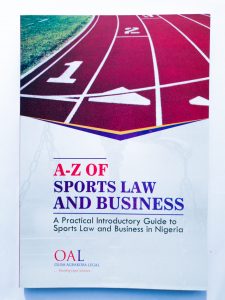
ORDER NOW
They went further to state : ” The new club concerned is to distribute 5% of this compensatory amount to all the clubs where this player has played between the age of 12 and 23. This distribution of monies is meant as a solidarity contribution to the clubs involved in the training and education of the player.”
Training Compensation
Training compensation can be paid when a player signs his first professional contract as a footballer and whenever he is transferred up until his 23rd birthday. Either a paid transfer or a free one, the training compensation is mandatory. Only exceptions are spelt out in Annexe 4, act 2 ,Section 2 :
- the former club terminates the player’s contract without just cause (without prejudice to the rights of the previous clubs); or
- the player is transferred to a category 4 club; or
- a professional reacquires amateur status on being transferred.
This exception for category 4 clubs is due to the fact that they are extremely low clubs already and it would be extremely hard to fork out enough money to serve as training compensation for any club.
In Annexe 4, art 3, Section 1. it states that once a player signs his first professional deal with a club, the Club with whom he signed the deal has to pay training compensation to every football Club/ academy who was involved in his training as a footballer within 30 days of the registration ( clubs hardly follow the 30 days rule though).
In it’s words : “On registering as a professional for the first time, the club with which the player is registered is responsible for paying training compensation within 30 days of registration to every club with which the player has previously been registered (in accordance with the players’ career history as provided in the player passport) and that has contributed to his training starting from the calendar year of his 12th birthday. The amount payable is calculated on a pro rata basis according to the period of training that the player spent with each club. In the case of subsequent transfers of the professional, training compensation will only be owed to his former club for the time he was effectively trained by that club.”
Section 3 further makes provisions for cases whereby the football club has liquidated or ceased to exist, the money is to paid to the Football Association of that country where the club is located and the money directed towards youth development in that country. For example, a player trained by the now defunct Stationary Stores Club of Lagos who has now ceased to exist, the money will then be paid to the Nigerian Football Federation (NFF) who in turn would make invest the money into youth training and development in that country.
According to Art 4 section 1, football associations are also to divide their clubs into four different categories in accordance to the clubs training investments in youth development. The pre -determined sums are supposed to resemble the amount needed to train one professional player for one year multiplied with what FIFA/RSTP calls the “player factor” l.e the ratio of players trained in order to produce a successful player. Once these club category has been set, the training compensation is calculated and gotten by multiplying the years which the selling club(s) trained and developed the player.
In 2019, FIFA in Circular No 1673 provides this chart to indicate what compensation may involve according to the respective confederation and the respective category. This chart was to be updated later.
Confederation Category I Category II Category III Category IV
AFC USD 40,000 USD 10,000 USD 2,000
CAF USD 30,000 USD 10,000 USD 2,000
CONCACAF USD 40,000 USD 10,000 USD 2,000
CONMEBOL USD 50,000 USD 30,000 USD 10,000 USD 2,000
OFC USD 30,000 USD 10,000 USD 2,000
UEFA EURO 90,000 EURO 60,000 EURO 30,000 EURO 10,000
The above chart illustrates the amount payable to these clubs under those continental federations. Worthy of note us that only UEFA and CONMEBOL clubs have Category 1 clubs.
Also, to make sure players between the age of 12 and 15 are not set at ridiculously high costs, the training compensation will be based on the training costs of Category 4 clubs. For example, if Tunde was trained from 12- 15 at a Category 2 club in Africa and then transferred to a category 1 club, it will be calculated thus : 4×2000 USD for his 12- 15 birthday and then 4× 30,000 USD Setting the total money at 128,000 USD.
Also, although there is not an obligation according to the RSTP to pay training compensation when a professional player transfers domestically, some National Football associations have transfer regulations that make training compensation payable for domestic transfers.
Solidarity mechanism.
Another way by which FIFA allows clubs to also make money from player sales and Transfers is through solidarity payments. Solidarity payments are those that occur when a football player is still in a contract but is transferred between different jurisdictions. When a player is being transferred and the transfer fees are paid, 5% of the transfer fees are held by the clubs and then distributed to all the clubs involved in his training between his 12th and 23rd birthdays at a rate depending on how long he stayed at those clubs. This is without including the training compensation paid to his club already.
This is spelt out explicitly in article 21 of the RSTP: ” when professional is transferred before the expiry of his contract, any club that has contributed to his education and training shall receive a proportion of the compensation paid to his former club (solidarity contribution). The provisions concerning solidarity contributions are set out in Annexe 5 of these regulations.
Annexe 5 of the RSTP further provides the rate of the solidarity payments as follows :
- a) Calendar year of 12th birthday: 5% of 5% of any compensation
- b) Calendar year of 13th birthday: 5% of 5% of any compensation
- c) Calendar year of 14th birthday: 5% of 5% of any compensation
- d) Calendar year of 15th birthday: 5% of 5% of any compensation
- e) Calendar year of 16th birthday: 10% of 5% of any compensation
- f) Calendar year of 17th birthday: 10% of 5% of any compensation
- g) Calendar year of 18th birthday: 10% of 5% of any compensation
- h) Calendar year of 19th birthday: 10% of 5% of any compensation
- i) Calendar year of 20th birthday: 10% of 5% of any compensation
- j) Calendar year of 21st birthday: 10% of 5% of any compensation
- k) Calendar year of 22nd birthday: 10% of 5% of any compensation
- l) Calendar year of 23rd birthday: 10% of 5% of any compensation
Just like Training compensation, Solidarity payments are obligatory when an international transfer takes place. However, football associations have regulations that also make it payable in cases of local transfers.
Also dissimilar with the training compensation, Solidarity payments does not stop and continue every time the a player is transferred either on a regular or loan basis. It is also dependent on a fee so free transfers do not count and it is only activated when a player transfers before the end of his contract for a fee. Training Compensation and Solidarity payments have helped a lot of Clubs stay afloat as it helps to bring a substantial sum of money in especially for clubs who have invested a lot in training a player and ensuring the success of his professional career.
 The Writer, Omole Damilare is a 200 level student of the faculty of Law, Adekunle Ajasin University, Akungba Akoko and a sports enthusiast. He can be reached via +2349020837174 or Omoledamilare093@gmail.com
[1] Jonathan.J, (2017,Sep 4), PSG will pay Santos €9m in solidarity money from Neymar transfer – chief : https://www.espn.com/soccer/santos-fc/story/3204253/psg-will-pay-santos-9m-in-solidarity-money-from-neymar-transfer-president
[2] Euspen.A, ( 2022, Mar 31), Training compensation and solidarity mechanism: https://www.easportslaw.com/news/training-compensation-and-solidarity-mechanism

by Legalnaija | Oct 13, 2022 | Uncategorized

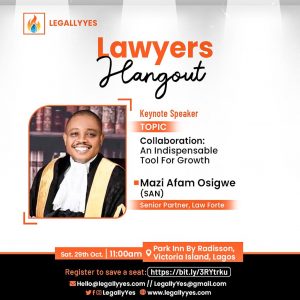
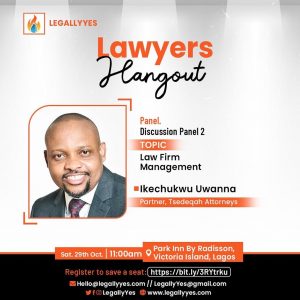
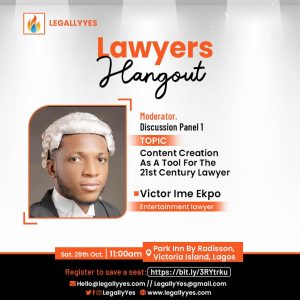
On the 29th of October, 2022 at 11.00am, a group of lawyers will be a part of an exclusive “Lawyers Hangout” holding at Park Inn by Radisson, Victoria Island Lagos.
Asides from the opportunity to network, there will be panel sessions on Law Firm Management, Technology and trends and also on content creation, some of the topics many lawyers have questions on.
A financial expert will also be available to help lawyers navigate their finances.
Other side attractions are Refreshments, Games and lots of networking activities.
To get more information on this event, visit @legallyYes on IG
Here is the link to register
Please make payment and register today on https://selar.co/z6xr to secure a seat as we have limited seats available.
Please contact +234 8149990849 for more details. (WhatsApp only ).
See you there.
Proudly sponsored by Legalnaija
See fliers below







by Legalnaija | Sep 4, 2022 | Uncategorized

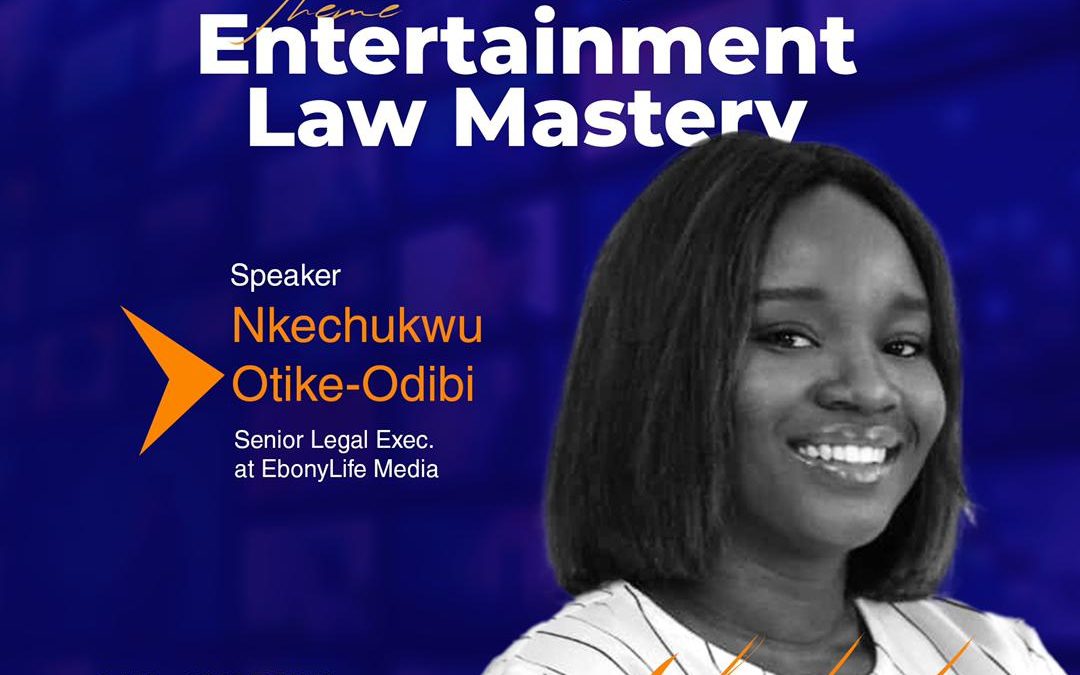
Nkechukwu Otike-Odibi is currently the Senior Legal Executive, EbonyLife Media and has led the Legal department of the Company from 2020 till present. She obtained her LL.B from the prestigious University of Benin (UNIBEN) and her LL.M degree with a certificate in Entertainment Law from the University of Southern California (USC).
Her career path has seen her advice on a number groundbreaking international co-production and licensing deals with Netflix, Sony and Westbrook amongst others.
She was also instrumental in the research done for the Harvard Business School case study on EbonyLife Media, the first HBS case study on an African company led by a female entrepreneur. She is passionate about the African entertainment space and educating entertainment practitioners on the workings on the entertainment industry.
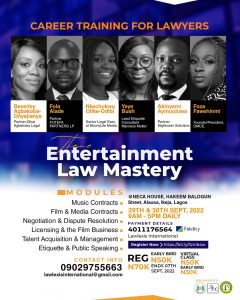
TRAINING OVERVIEW
Theme: Entertainment Law Mastery
MODULES–
- a)Music Contracts & Agreements
- b)Film & media Agreements
- c)Negotiation & Dispute Resolution
- d)Talent Acquisition & Management
- e)Licensing & the Film Business
- f)Etiquette & public speaking
MEMBERS OF FACULTY
- Beverly Agbakoba-Onyejianya (Partner, Olisa Agbakoba Legal)
- Akinyemi Ayinuoluwa (Partner, Hightower Solicitors)
- Fola Alade (Partner, FOTEFA Partners LP/ Mediation Academy)
- Oyinkansola Fawehinmi (Foza) (Founder/President, DMCE.)
- Yeye Bush (Lead Etiquette Consultant, Manners Matter)
- Nkechukwu Otike – Odibi (Senior Legal Executive, EbonyLife Media)
DATE–29th and 30th September, 2022
TIME– 9.00am – 5.00pm Daily
REGISTRATION

Register for either the physical or virtual sessions.
Physical Session:
Fee: 70,000 Naira
Early Bird: 50,000 Naira (ends 7th Sept, 2022)
Registration Link: https://bit.ly/3znIb4w
Venue: NECA House, Alausa, Ikeja, Lagos
Virtual Session (ZOOM)
Fee: 50,000
Early Bird: 30,000 (ends 7th Sept, 2022)
Registration Link: https://bit.ly/3CbB6Y9
Get 10% Off the virtual session when you use the code: LEGAL9JA
PAYMENT DETAILS–
Lawlexis International Limited
Fidelity Bank
4011176564
Participants will receive a certificate of participation.
NOTE: All payment and delegate information should be sent to lawlexisinternational@gmail.com before the date of training for proper registration. For more information and confirmation of payment, kindly contact us on 09029755663.
by Legalnaija | Sep 4, 2022 | Uncategorized

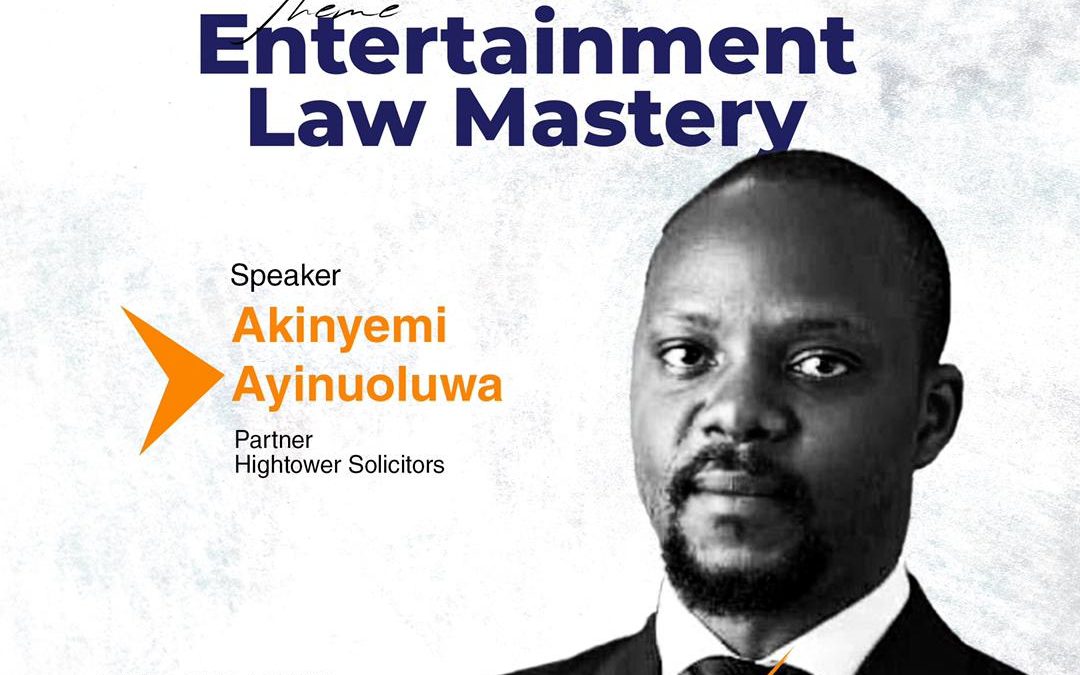
Akinyemi Ayinoluwa is a Partner and Co-founder at HighTower Solicitors and Advocates. His music law practice focuses on the representation of recording artists, songwriters, record producers, record labels, investors in music, and talent managers. He is often recommended as a lawyer who breathes, drinks and eats music. Akinyemi’s past legal experience includes: Associate at Wemimo Ogunde & Co and Awokoya & Co.
Prior to qualifying as a lawyer, he was a songwriter, recording artist, composer and performer; he was the lead singer of the defunct 100 degrees boy band. He has authored numerous articles in the field of music law, estate planning, commercial transactions, and regularly gets invited to deliver speeches and courses about these subjects.
Specialties: Intellectual Property Law- contract negotiation in TV industry, music, Production contracts, Recording contracts, Artiste Management deals, Synchronization deals, Talent negotiations, endorsement deal negotiations, trademarks, music publishing, Debt Recovery, and Reputation Management.
On a small number of clients, Akinyemi functions as a business manager, as well as the lawyer. In recent years, Akinyemi has built up a formidable roster of producer clients from Afrobeats: Masterkraft, Blaq Jerzee, Northboi, Rexxie, Magicsticks, Jaypizzle, and many others. Akinyemi Ayinoluwa prides himself in helping clients understand the value of their intellectual property rights and to be mindful of the exploitation that is rampant in the industry.

TRAINING OVERVIEW
Theme: Entertainment Law Mastery
MODULES–
- Music Contracts & Agreements
- Film & media Agreements
- Negotiation & Dispute Resolution
- Talent Acquisition & Management
- Licensing & the Film Business
- Etiquette & public speaking
MEMBERS OF FACULTY
- Beverly Agbakoba-Onyejianya (Partner, Olisa Agbakoba Legal)
- Akinyemi Ayinuoluwa (Partner, Hightower Solicitors)
- Fola Alade (Partner, FOTEFA Partners LP/ Mediation Academy)
- Oyinkansola Fawehinmi (Foza) (Founder/President, DMCE.)
- Yeye Bush (Lead Etiquette Consultant, Manners Matter)
- Nkechukwu Otike – Odibi (Senior Legal Executive, EbonyLife Media)
DATE–29th and 30th September, 2022
TIME– 9.00am – 5.00pm Daily
REGISTRATION
Register for either the physical or virtual sessions.
Physical Session:
Fee: 70,000 Naira
Early Bird: 50,000 Naira (ends 7th Sept, 2022)
Registration Link: https://bit.ly/3znIb4w
Venue: NECA House, Alausa, Ikeja, Lagos
Virtual Session (ZOOM)
Fee: 50,000
Early Bird: 30,000 (ends 7th Sept, 2022)
Registration Link: https://bit.ly/3CbB6Y9
Get 10% Off the virtual session when you use the code: LEGAL9JA
PAYMENT DETAILS–
Lawlexis International Limited
Fidelity Bank
4011176564
Participants will receive a certificate of participation.
NOTE: All payment and delegate information should be sent to lawlexisinternational@gmail.com before the date of training for proper registration. For more information and confirmation of payment, kindly contact us on 09029755663.
by Legalnaija | Sep 4, 2022 | Uncategorized

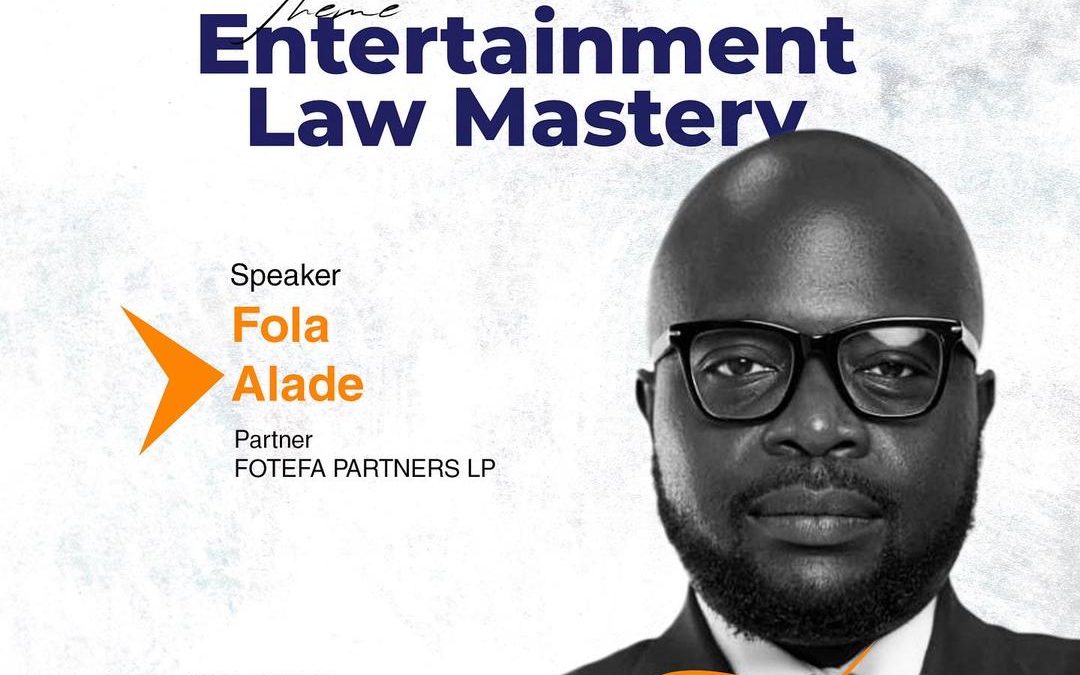
Fola Alade is a Notary Public and an Accredited Attorney- Mediator based in Lagos. He is the Founder/ Principal Partner at FOTEFA PARTNERS LP (MEDIATORS & MEDIATION ADVOCATES), a bespoke Mediation firm in Nigeria
Fola Alade is a Fellow, World Mediation Organization (WMO), Mediator of the Global Mediation Panel at the Office of the Ombudsman for United Nations Funds and Programmes, a Certified Mediation Advocate with the Standing Conference of Mediation Advocates (U.K), a trained Mediator on the Panel of Neutrals of the Federal High Court(FHC), Lagos Multi-Door Courthouse (LMDC), Edo State Multi- Door Court House(EMDC), Lagos Court of Arbitration (LCA) and Lagos Chamber of Commerce and International Arbitration Centre (LACIAC), a trained Negotiator from the Lagos Business School (LBS), a Certified Emotional Intelligence Specialist and a Certified Trainer(International Award in Delivering Training[IADT] UK) with the London Professional Training Centre.
He is the Founder/Principal of Fotefa Mediation Academy, another bespoke Mediation Training Academy where he trains on the business and practice of Mediation. He is also the Executive Director of the Incorporated Trustees of Attorney-Mediators Association (ATMA), a Consultant/Facilitator/Trainer with the Standing Conference of Mediation Advocates (SCMA Nigeria), Betaworka Cosmopolitan Partners Limited, Au Courant Legal Research Firm, Legally Engaged Academy and the Resource HQ Ltd where he trains on Negotiation, Mediation, Mediation Advocacy, Workplace Conflict and Emotional Intelligence.
He was a Judge at the 8th Edition of the 2TG-RMLNLU International Mediation Competition and the 17th Edition of the International Commercial Mediation Competition.
Fola was called to the Nigerian Bar in 2007 after obtaining his LLB Hons Degree from the University of Lagos in 2006. He is a member of the Nigerian Bar Association (NBA) and the Section on Business Law (SBL), Lagos Court of Arbitration (LCA) and a Partner member with the NCMG International (Negotiation and Conflict Management Group International).
TRAINING OVERVIEW
Theme: Entertainment Law Mastery
MODULES–
- a)Music Contracts & Agreements
- b)Film & media Agreements
- c)Negotiation & Dispute Resolution
- d)Talent Acquisition & Management
- e)Licensing & the Film Business
- f)Etiquette & public speaking
MEMBERS OF FACULTY
- Beverly Agbakoba-Onyejianya (Partner, Olisa Agbakoba Legal
- Akinyemi Ayinuoluwa (Partner, Hightower Solicitors)
- Fola Alade (Partner, FOTEFA Partners LP/ Mediation Academy)
- Oyinkansola Fawehinmi (Foza) (Founder/President, DMCE.)
- Yeye Bush (Lead Etiquette Consultant, Manners Matter)
- Nkechukwu Otike – Odibi (Senior Legal Executive, EbonyLife Media)
DATE–29th and 30th September, 2022
TIME– 9.00am – 5.00pm Daily
REGISTRATION
Register for either the physical or virtual sessions.
Physical Session:
Fee: 70,000 Naira
Early Bird: 50,000 Naira (ends 7th Sept, 2022)
Registration Link: https://bit.ly/3znIb4w
Venue: NECA House, Alausa, Ikeja, Lagos
Virtual Session (ZOOM)
Fee: 50,000
Early Bird: 30,000 (ends 7th Sept, 2022)
Registration Link: https://bit.ly/3CbB6Y9
Get 10% Off the virtual session when you use the code: LEGAL9JA
PAYMENT DETAILS–
Lawlexis International Limited
Fidelity Bank
4011176564
Participants will receive a certificate of participation.
NOTE: All payment and delegate information should be sent to lawlexisinternational@gmail.com before the date of training for proper registration. For more information and confirmation of payment, kindly contact us on 09029755663.
by Legalnaija | Sep 4, 2022 | Training

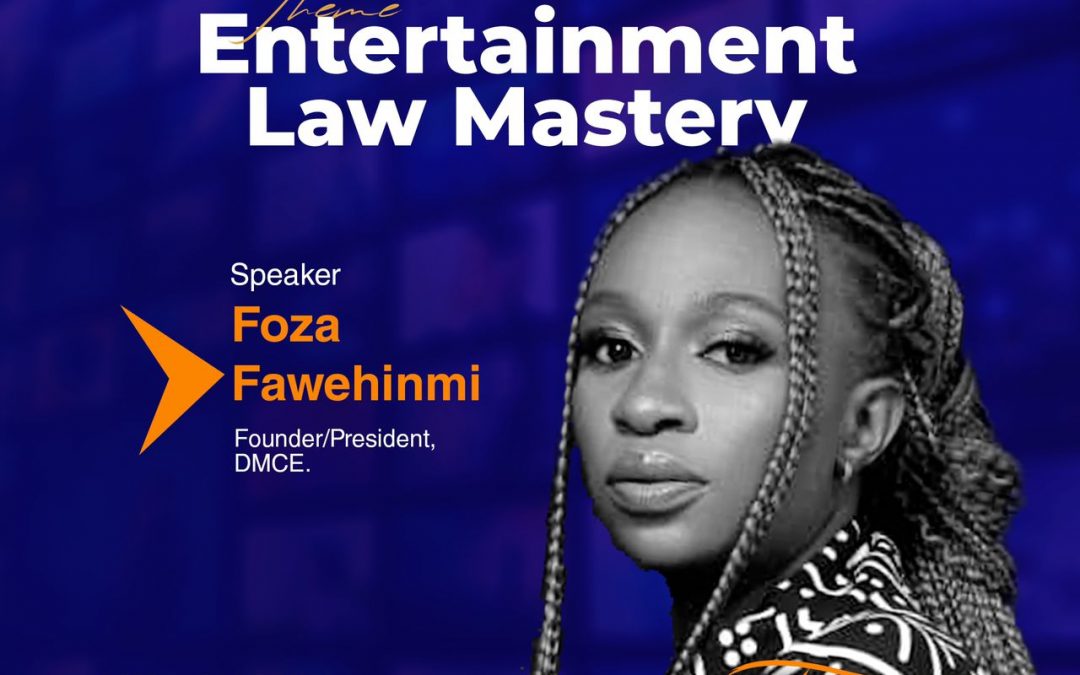
Oyinkansola Foza Fawehinmi is an award-winning lawyer and the president of Digital Music Commerce and Exchange Limited, an intellectual property valuation, management and administration company serving sub-Saharan Africa.
At the beginning of her professional career, Foza Fawehinmi made a name for herself by championing causes for entertainers, record companies and institutions in Nigeria. This saw her craft innovative solutions for her clients and partners in the creative industry, using her knowledge of law and entertainment. Since then, she has brokered deals worth over $10,000,000 working with top talents from 5 nationalities and advising several governments in the sub-saharan African region on IP matters.
Over the last 9 years, she has served as a legal advisory and business consultant for some of Africa’s most reputable entertainment companies and artists like Chocolate City Music, Premier Records, Boomplay Music, Infinix Nigeria, K1 De Ultimate, Teni, Adekunle Gold, The Sarz Academy, Sarz and more.
TRAINING OVERVIEW
Theme: Entertainment Law Mastery
MODULES–
- Music Contracts & Agreements
- Film & media Agreements
- Negotiation & Dispute Resolution
- Talent Acquisition & Management
- Licensing & the Film Business
- Etiquette & public speaking
MEMBERS OF FACULTY
- Beverly Agbakoba-Onyejianya (Partner, Olisa Agbakoba Legal)
- Akinyemi Ayinuoluwa (Partner, Hightower Solicitors)
- Fola Alade (Partner, FOTEFA Partners LP/ Mediation Academy)
- Oyinkansola Fawehinmi (Foza) (Founder/President, DMCE.)
- Yeye Bush (Lead Etiquette Consultant, Manners Matter)
- Nkechukwu Otike – Odibi (Senior Legal Executive, EbonyLife Media)
DATE–29th and 30th September, 2022
TIME– 9.00am – 5.00pm Daily

REGISTRATION
Register for either the physical or virtual sessions.
Physical Session:
Fee: 70,000 Naira
Early Bird: 50,000 Naira (ends 7th Sept, 2022)
Registration Link: https://bit.ly/3znIb4w
Venue: NECA House, Alausa, Ikeja, Lagos
Virtual Session (ZOOM)
Fee: 50,000
Early Bird: 30,000 (ends 7th Sept, 2022)
Registration Link: https://bit.ly/3CbB6Y9
Get 10% Off the virtual session when you use the code: LEGAL9JA
PAYMENT DETAILS–
Lawlexis International Limited
Fidelity Bank
4011176564
Participants will receive a certificate of participation.
NOTE: All payment and delegate information should be sent to lawlexisinternational@gmail.com before the date of training for proper registration. For more information and confirmation of payment, kindly contact us on 09029755663.
by Legalnaija | Sep 4, 2022 | Training

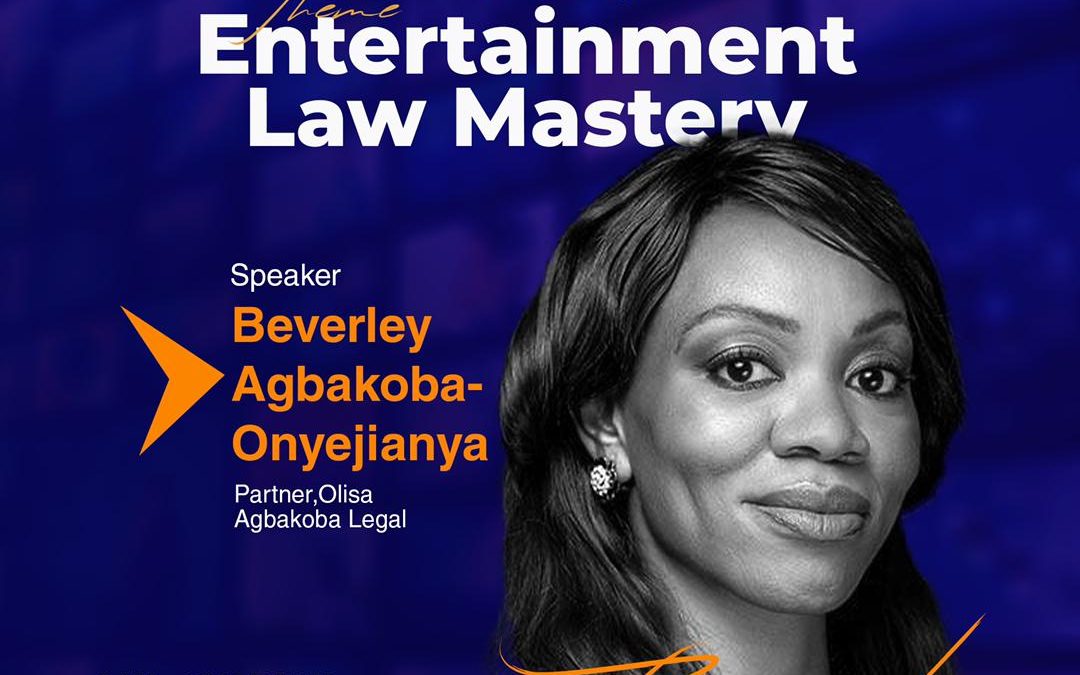
Beverley A Agbakoba-Onyejianya is currently a Partner, and Head of the Sports, Entertainment and Tech practice at Olisa Agbakoba Legal. She is also a regulatory and compliance professional. Beverly is called to the Nigerian and UK bar, she also sits on the panel of neutrals at the Lagos Multi Door Court and the Lagos Court of Arbitration.
She has over 14 years professional experience in the banking and capital markets sectors in the United Kingdom and Nigeria. Her broad experience in the regulatory and compliance industry covers investment banking, brokerage and fund management sectors and has seen her hold various leadership roles in regulatory and compliance sector. She is a member of the Nigerian Economic Summit Group (NESG) Sports thematic Industry group on Alternative Dispute Resolution and Youth Policy Development.
She is also a member of the Lagos Divisional Football Association and a Mediator -Football Tribunal at Fédération Internationale de Football Association (FIFA).
Beverley is recognised as a thought leader in sports law and has co – authored, authored and published numerous articles and materials on sports law, entertainment law, corporate governance including the A to Z of Sports Law in Nigeria.
Beverley is the founder of Lagos Tigers Football Club – a youth academy and is passionate about youth sports development. She is regularly invited to speak at international and national conferences on sports governance, intellectual property, regulatory and compliance, and personal development. Beverly is a member of faculty at the Entertainment Law Mastery class scheduled for the 29th and 30th of September.
TRAINING OVERVIEW
Theme: Entertainment Law Mastery
MODULES–
- Music Contracts & Agreements
- Film & media Agreements
- Negotiation & Dispute Resolution
- Talent Acquisition & Management
- Licensing & the Film Business
- Etiquette & public speaking
MEMBERS OF FACULTY
- Beverly Agbakoba-Onyejianya (Partner, Olisa Agbakoba Legal)
- Akinyemi Ayinuoluwa (Partner, Hightower Solicitors)
- Fola Alade (Partner, FOTEFA Partners LP/ Mediation Academy)
- Oyinkansola Fawehinmi (Foza) (Founder/President, DMCE.)
- Yeye Bush (Lead Etiquette Consultant, Manners Matter)
- Nkechukwu Otike – Odibi (Senior Legal Executive, EbonyLife Media)
VENUE– NECA House, Plot A2, Hakeem Balogun Street, Alausa, Ikeja
DATE–29th and 30th September, 2022
TIME– 9.00am – 5.00pm Daily
REGISTRATION
Register for either the physical or virtual sessions.
Physical Session:
Fee: 70,000 Naira
Early Bird: 50,000 Naira (ends 7th Sept, 2022)
Registration Link: https://bit.ly/3znIb4w
Venue: NECA House, Alausa, Ikeja, Lagos
Virtual Session (ZOOM)
Fee: 50,000
Early Bird: 30,000 (ends 7th Sept, 2022)
Registration Link: https://bit.ly/3CbB6Y9
Get 10% Off the virtual session when you use the code: LEGAL9JA
PAYMENT DETAILS–
Lawlexis International Limited
Fidelity Bank
4011176564
Participants will receive a certificate of participation.
NOTE: All payment and delegate information should be sent to lawlexisinternational@gmail.com before the date of training for proper registration. For more information and confirmation of payment, kindly contact us on 09029755663.

by Legalnaija | Sep 2, 2022 | Law
Introduction
Child labour refers to work engaged in by children which is mentally, physically, socially or morally dangerous and harmful to the children and also interferes with their schooling.[1] Article 32 of the Convention on the Rights of the Child (CRC) recognizes the rights of children to be free from economic exploitation and works that are harzardous or interfere with their general wellbeing and development. ILO 138 prescribes the minimum age for work and ILO 182 addresses the worst forms of child labour. Recommendation 146 accompanies ILO 138 and directs state signatories to develop national policies with provisions on poverty alleviation, promotion of decent jobs for adults, free education among other factors which have a direct effect on child labour.[2] Equally relevant is the United Nations 2030 Agenda for Sustainable Development which is hinged on 17 Sustainable Developments Goals (SDG). SDG 8 is for the promotion of sustained, inclusive and economic growth, full and productive employment and decent work for all. SDG (Target) 8.7 is to take immediate and effective measures to eradicate forced labour, end modern slavery and human trafficking and secure the prohibition and elimination of the worst forms of child labour, including recruitment and use of child soldiers, and by 2025 end child labour in all its forms.
SDG 8.7 in Nigeria
Nigeria is signatory to the key UN Conventions aimed at child protection and currently has a National Action Plan on the elimination of child labour for the years 2021-2025. This action plan is intended to coincide with SDG 8.7 on eliminating all forms of child labour by the year 2025. With more than half of the current year gone by, the race to accomplish target 8.7 has barely two years and four months to go. International child right actors are concerned at the slow pace of attaining to SDG 8.7 of eliminating all forms of child labour by the year 2025 globally.[3] The Durban Call to Action[4] which followed the Fifth Global Conference on the Elimination of Child Labour held between the 15th to the 20th of May 2022 in Durban reiterated the challenge to address the elimination of all forms of child labour. Based on current statistics, the COVID pandemic caused setbacks in global efforts to eliminate child labour, shrunk previous gains and ballooned the number of children trapped in child labour.[5] UNICEF data suggests that 26% of children aged 5 to 11 in West and Central Africa are subjected to child labour.[6] The Situation Analysis of Children in Nigeria 2022 report that about 14 million children between the ages of 5 -14 are currently engaged in child labour.[7] Beyond policy and print, it is not immediately obvious how Nigeria intends to close up the gap by 2025. While Nigeria anticipates a change of government in the coming year and possibly, an improvement in its economic conditions, it is not likely that the country will be sufficiently close to SDG 8.7 by 2025.
UNICEF’s multisectoral approach to child labour identifies that an effective coordination across systems is key to ensuring protection and access to services.[8] Systems include nutrition and food, private sector, services for CAAC (children and armed conflict), social protection, empowered families, and education and skills. The coordination of these systems which do not stand alone but are intricately interwoven rests on several stakeholders but squarely on the government.
One basic system in the multisectoral approach is nutrition and food. This ties into the need for food security. The challenge of food insecurity in Nigeria is not peculiar to children but affects them greatly because of their vulnerability. The causes of food insecurity in Nigeria are easily traceable to insufficient production, inefficient policies, civil insecurity, corruption and low technology for processing and storage.[9] A few of these causes are not peculiar to Nigeria such as the effects of climate change on food production which has affected some northern states with significant desert encroachment, dwindling farmlands and water scarcity.[10] The country however needs to surmount the challenge of food insecurity if there would be any gains in eliminating child labour.
Another important system is the private sector. The Government’s efforts to achieve SDG 8.7 depends greatly on stakeholder involvement. The Unicef Guidance Note for Action on Child Labour and Responsible Business Conduct charges the business community to contribute its quota to eliminating child labour by guaranteeing decent work and living wages to employees.[11] The Nigerian business community on its part is faced with a business environment where the cost of doing business is relatively high. According to the World Bank ranking on the ease of doing business for 2020, Nigeria ranked 131 out of 190 countries considered.[12] The indices used pertain to registering businesses, obtaining permits, electricity supply, getting credit, protecting minority investors, enforcing contracts, registering property, paying taxes, resolving insolvency and trading across borders. The ranking is based on select cities and thus may not reflect the actual position of other parts of the country. There are several other challenges including security concerns, high cost of generating power and needed infrastructure, multiple layers of regulatory fees and more recently, compulsory sit-at-home exercises in some parts of the country on certain days of every week which culminate in a difficult business environment for the business community. In the face of these challenges, there is little justification for the government to charge the Nigerian business community to pitch in by guaranteeing sufficient wages for employees in the fight against child labour.
Services for CAAC is fast becoming one of the most critical systems in the elimination of child labour in Nigeria. This owes to the fact that the effect of children in armed conflict cascades into every other system and threatens to wipe out the gains the country has made in its effort to eliminate child labour. Amnesty International has reported that no fewer than 1,500 children have been abducted from schools in the last eight years.[13] Insecurity in Nigeria is convoluted and spirals into depriving children of education, denying children proper nutrition, increasing the number of children at risk of armed conflicts both as recruits and hostages and clearly forcing more children into child labour at the hand of their captors. Over 11,000 schools are reported to have been shut down owing to terrorist activities in the country.[14] Erstwhile pupils and students now forced to stay home for their safety, add to the number of children aged 5 to 17 who will have to engage in work for hours longer than is suited to their age bracket including hazardous work. Abducted children turned into child soldiers in turn cause terror that keeps farmers away from their farms and raises poverty levels. The National Action Plan for the elimination of child labour runs the risk of remaining a printed policy if the challenge of CAAC is not addressed in practical terms.
The systems of social protection and empowered families are affected by factors such as inflation, high rates of unemployment and scarcity of disposable income. Though Nigeria has slipped out of the bottom rung of the global poverty ranking, the World Poverty Clock shows that poverty levels in the country are currently rising.[15] Pre COVID, 4 in 10 Nigerians were estimated to be living in poverty.[16] The pandemic necessitated the closure of schools and loss of jobs which invariably left children with the short end of the stick. Out of jobs parents meant engaging children in menial jobs not requiring much skill or training to support the family. Post pandemic, the number of Nigerians that have slipped into poverty have increased. As households become poor, members of those households who are children become more susceptible to child labour. Many more children have been made available to assist in household chores with other families. Some of such children do not go to school at all as their parents receive monthly salaries for their work. A decent number of such children do get some level of education though the value of such education may be relatively low or attendance at school may be staggered. The lack of quality education or in some cases the lack of education at all leads to low levels of literacy and vocational skills thereby impacting on the opportunities open to such child labourers in adulthood and perpetuating the cycle of child labour.[17] Article 3 of the CRC recognizes that in all actions concerning children, the best interests of the child should be a primary consideration. Set against the backdrop of the economic reality of the families of child labourers, the decision to send off their children to work for an income or in exchange for education no matter how deficient appears to them to be the best decision for the child. The decision is nonetheless questionable.
The education and the skills systems are up against the challenges of the preceding systems and cannot be meaningfully pursued by the government, until the associated systems such as insecurity and poverty are out of the way.
Conclusion
The multisectoral approach to child labour reveals a lot of gaps in Nigeria’s quest to attain to SDG 8.7. The government must first be seen to exercise political will in the right direction to achieve the much-needed collaboration with stakeholders and industry groups. Terrorism, food insecurity and poverty will need to be addressed for any meaningful gains to be made in education and the elimination of child labour. The government thus needs to take deliberate steps towards a coordinated approach to ensure that SDG 8.7 moves from print to action. Gains may be slow, and the target of 2025 may not be feasible, but meaningful collaboration among stakeholders will guarantee the rescue of many children from child labour by 2025.
 Eberechi May Okoh LLM, ACTI, MCIArb
[1] https://www.ilo.org/moscow/areas-of-work/child-labour/WCMS_249004/lang–en/index.htm, accessed 8 August 2022.
[2] https://www.ilo.org/ipec/facts/ILOconventionsonchildlabour/lang–en/index.htm accessed 8 August 2022.
[3] Guidance Note for Action, Child Labour and Responsible Business Conduct https://www.unicef.org/reports/child-labour-and-responsible-business-conduct assessed 10 August 2022.
[4] What is the Durban Call to Action? | 5th Global Conference on the Elimination of Child Labour (5thchildlabourconf.org) accessed 8 August 2022.
[5] Covid-19 Pandemic Fueling Child Labor | Human Rights Watch (hrw.org) accessed 11 August 2022.
[6] https://data.unicef.org/topic/child-protection/child-labour/ assessed 6 August 2022.
[7] Situation Analysis of Children in Nigeria https://www.unicef.org/nigeria/media/5861/file/Situation%20Analysis%20of%20Children%20in%20Nigeria%20.pdf accessed 8 August 2022.
[8] Guidance Note for Action, Child Labour and Responsible Business Conduct https://www.unicef.org/reports/child-labour-and-responsible-business-conduct assessed 10 August 2022.
[9] S. Matemilola and I. Elegbede, ‘The Challenges of Food Security in Nigeria’ (2017) 4 Open Access Library Journal 9.
[10] Bonaventure N. Nwokeoma and Amadi Kingsley Chinedu, ‘Climate Variability and Consequences for Crime, Insurgency in North East Nigeria’ 8 (2017) Mediterranean Journal of Social Sciences 173.
[11] Guidance Note for Action, Child Labour and Responsible Business Conduct https://www.unicef.org/reports/child-labour-and-responsible-business-conduct assessed 10 August 2022.
[12] NGA.pdf (doingbusiness.org) assessed 10 August 2022.
[13] https://guardian.ng/news/eight-years-after-chibok-11536-schools-closed-over-1500-pupils-abducted/ assessed 6 August 2022.
[14] https://guardian.ng/news/eight-years-after-chibok-11536-schools-closed-over-1500-pupils-abducted/ assessed 6 August 2022.
[15] https://worldpoverty.io/map accessed 8 August 2022.
[16] Nigerian Poverty Assessment 2022 https://documents1.worldbank.org/curated/en/099730003152232753/pdf/P17630107476630fa09c990da780535511c.pdf accessed 8 August 2022.
[17] Guidance Note for Action, Child Labour and Responsible Business Conduct https://www.unicef.org/reports/child-labour-and-responsible-business-conduct assessed 10 August 2022.
by Legalnaija | Aug 31, 2022 | Uncategorized
Become An Entertainment Law Expert By Learning From Award Winning Entertainment Lawyers (Career Training For Lawyers; Hybrid Session)
According to statistics, this year total revenue in the Nigerian Entertainment industry is projected to reach US$4.77m. Furthermore, a PwC report forecasts that the fast-growing industry will earn $14.8bn in 2025.
As Nigeria’s media and entertainment industry continues on its growth path, it urgently requires more lawyers who understand the business and the laws that apply to entertainment law.
Lawlexis has put together a stellar faculty of award winning entertainment lawyers and experts to provide participants with a clear mastery of the entertainment industry, and how lawyers may make more impact and take advantage of the opportunities therein.
Modules for this training include;
– Music Contracts & Agreements
– Film & media Agreements
– Negotiation & Dispute Resolution
– Talent Acquisition & Management
– Licensing & the Film Business
– Etiquette & public speaking
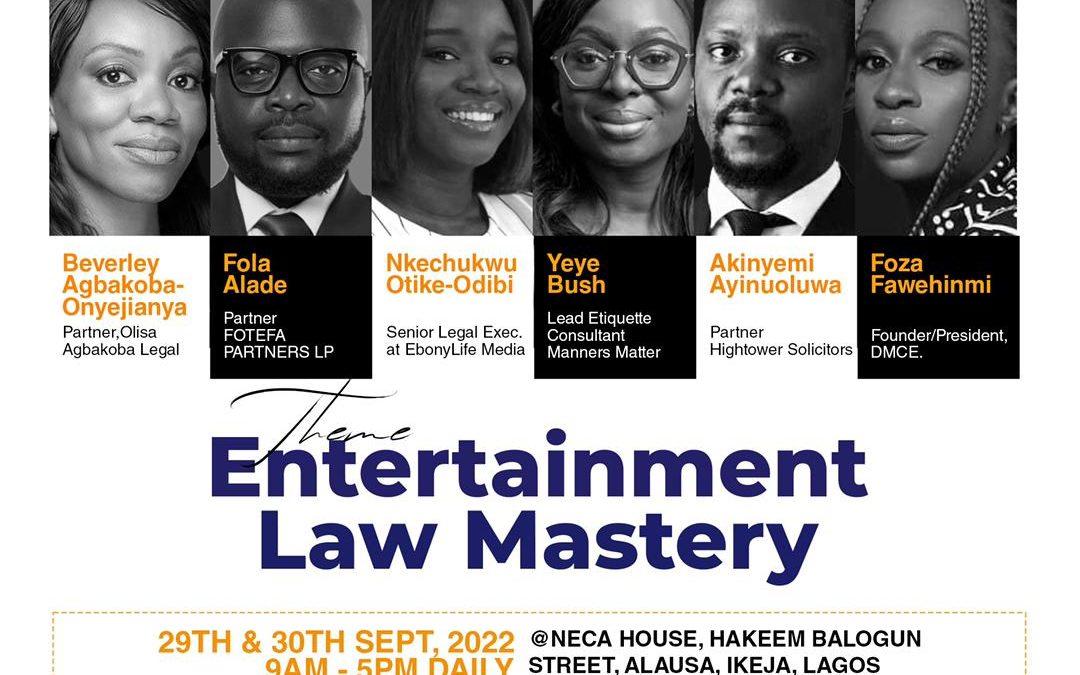
The Members of Faculty include;
– Beverly Agbakoba-Onyejianya (Partner, Olisa Agbakoba Legal)
– Akinyemi Ayinuoluwa (Partner, Hightower Solicitors)
– Nkechukwu Otike-Odibi, Senior Legal Executive at EbonyLife Media
– Fola Alade (Partner, FOTEFA Partners LP/ Mediation Academy)
– Oyinkansola Fawehinmi (Foza) (Founder/President, DMCE.)
– Yeye Bush (Lead Etiquette Consultant, Manners Matter)
Other details are:
Theme: Entertainment Law Mastery
Date : 29th & 30th September, 2022
Time: 9am – 5pm daily
Registration:
- Physical Session:
Fee: 70,000 Naira
Early Bird: 50,000 Naira (ends 7th Sept, 2022)
Registration Link: https://bit.ly/3znIb4w
Venue: NECA House, Alausa, Ikeja, Lagos
Virtual Session (ZOOM)
Fee: 50,000
Early Bird: 30,000 (ends 7th Sept, 2022)
Registration Link: https://bit.ly/3CbB6Y9
Persons who should attend include lawyers and stakeholders in the entertainment industry at all levels. If you want a successful practice in Entertainment law and business, you may not come across such unique opportunity to learn from these lineup of experts again.
For enquiries, please contact: Lawlexis – lawlexisinternational@gmail.com or 09029755663