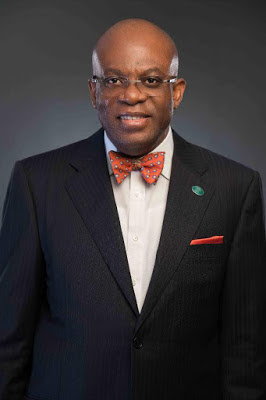
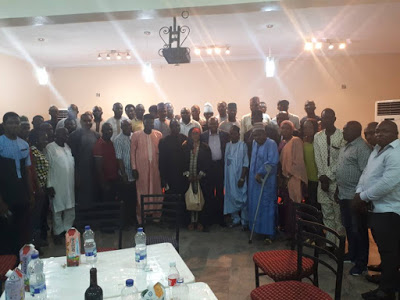
If You Ever Get To See Paul Usoro SAN In Court, Do Not Forget To Say Hi

If You Ever Get To See Paul Usoro SAN In Court, Do Not Forget To Say Hi


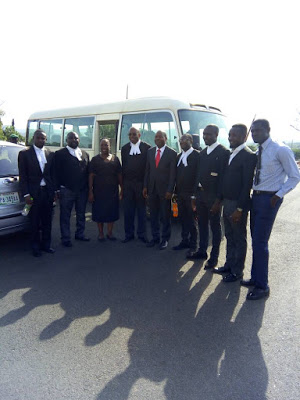
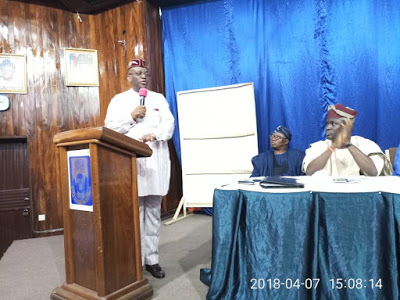
Paul Usoro SAN was at the Federal High Court
Lokoja yesterday, 16 April 2018, in respect of a Suit scheduled for the hearing
of highly contentious applications principal of which was one aimed at setting aside
injunctive orders earlier made by the Court.

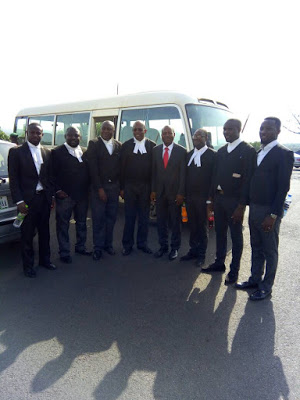
Paul Usoro was not alone as he appeared
alongside a hand full of young lawyers and some members of the NBA Lokoja
Branch.


As is customary with the Learned Silk, he
used the opportunity (a matter in which incidentally another SAN and two PHD
holders were on the opposing side) to do what he does best – nurture, mentor
and tutor young and upcoming lawyers. In a brief session held at the end of the
Court Session, Paul Usoro SAN shed light on the skills and art of in-court
advocacy which he demonstrated in the course of the proceedings. Principles of
law on the exception to the general rule that a Court cannot set aside its own
orders, the question of fair hearing and its critical importance to the
adjudicatory process and the  conduct of
a party as one of the factors a court will consider in exercising its
discretion were some of the areas of law, Mr Usoro SAN shed light on. The law
students were not left out as the basics of moving a motion, the frontloading process
and pleadings were areas he lectured them on. How good it feels to learn from
the master!

At the end of the session, the Learned Silk,
in the company of his mentees, proceeded to pay a courtesy visit to the Kogi
State Attorney General and Commissioner for Justice, Mr Ibrahim Mohammed SAN.
It was indeed an iconic day in the lives of
all the young lawyers involved
Register for Career Training For Lawyers

Register for Career Training For Lawyers

Dear Lawyer, 
 The
modules for the Career Training are engineered to equip you with relevant
skills & knowledge necessary for servicing clients in the following
emerging and lucrative areas of law & practice;

              Sports
Law 
              Mediation
              Entertainment
Law 
              Finance
for Lawyers 
              Forensic
Document Examination;&
              Intellectual
Property Law. 
The tutors
are experts and have a track record of excellence in their chosen fields and
specializations. They include; Dr. Abiodun Osiyemi , President,
Forensic Science Academy and President, Association of Forensic Sciences and
Expert Witness; Mrs. A. B Agbakoba – Onyejianya ACIArb (UK); Head of Regulatory
& Compliance, Olisa Agbakoba Legal and OACO Professional Services, a
firm of Chartered  Accountants. 
The
details of the training include – 
Date
– 26th and 27th April, 2018
Venue –
LCCI Conference & Exhibition Centre, Nurudeen Olowopopo Drive, Alausa,
Ikeja
Time 
– 9am – 5pm daily
REGISTRATION
Fee per
delegate: N30,000 
ACCOUNT
DETAILS–
Lawlexis
International Limited
Fidelity
Bank
4011176564
Note that
all Payment confirmation and Delegate Information should be sent to lawlexisinternational@gmail.com
or call 08055424566. 

NBA – SLP Conference: Quality Work Determines Earning | Paul Usoro SAN

NBA – SLP Conference: Quality Work Determines Earning | Paul Usoro SAN


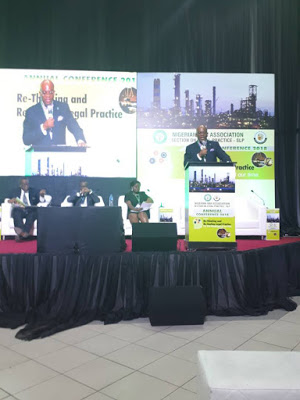
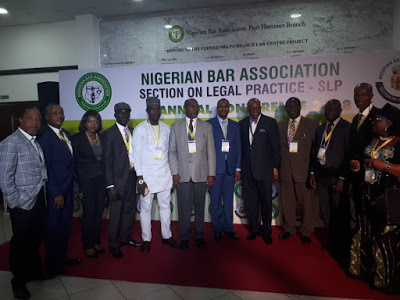
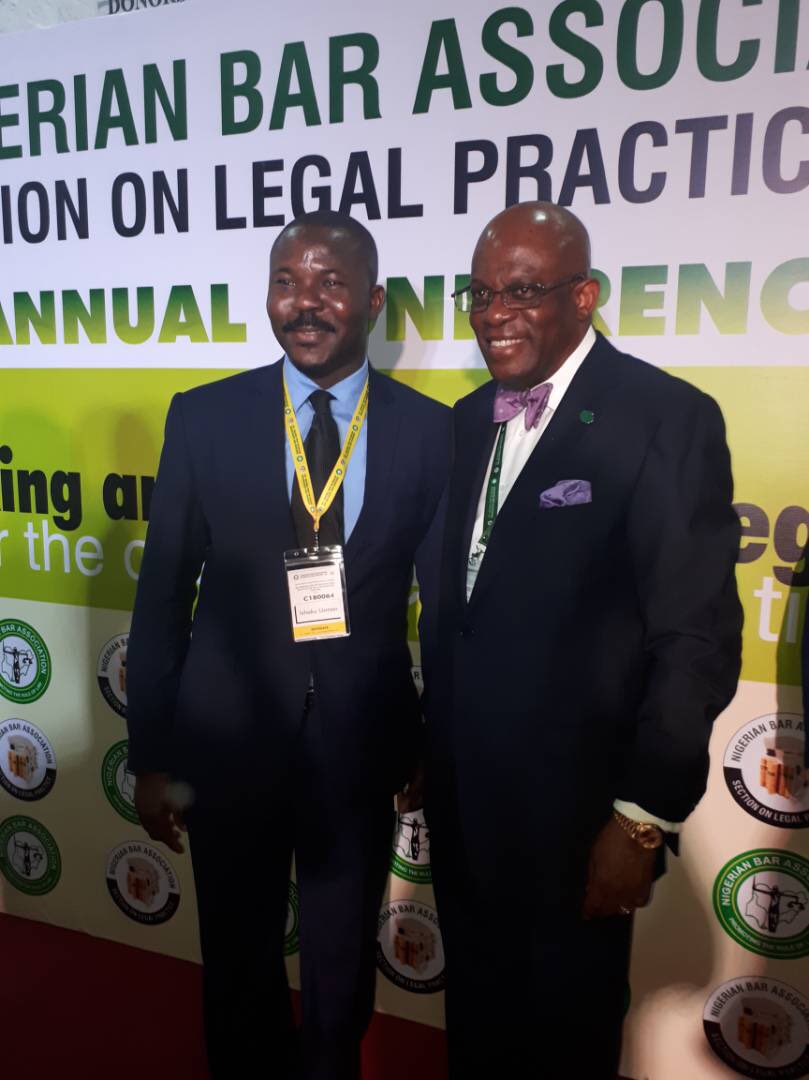
Good afternoon learned Silks, Seniors and
colleagues, as a guest speaker at the NBA section on the Legal Practice
conference live in Port Harcourt, here are a few of my thoughts which I believe
will go a long way in giving an uplift to your practice.

These are practical observations using my
practice as an example.  Firstly it is a
good pointer that the quality of your work determines what you earn.  We as lawyers are not always good at
planning, we try to go into everything and that is what makes “Jack of all
trades the master of none”.


When the GSM auction was to take place,
argument was canvassed that no Nigerian has ever done it before which is true.
We did it and it was internationally rated as the best. The same argument was
also canvassed when we were drafting the communication Act. Since 2003 that the
Law has been passed, there has not been a single amendment to it because the
law is adjudged to be the best.

When I was to prepare the telecommunications
law, there were doubts whether a Nigerian lawyer can do it and the conclusion
was that Nigerians cannot handle it. 
Eventually, I prepared d it and when they went through it, it became the
best in the world. Since 2003 that I prepared the law, it has not been challenged
anywhere and it has never been amended.

The quality of your work determines the fee
you will earn and by planning this helps you to be at the top level of your
earnings. “Aim to be at the top level of your practice and that will determine
the fees you command”.  Lawyers really
must have a safety valve when dealing with clients and companies in particular.
If you do not keep records, it will be very difficult to put a cost to your
work.

One of the challenges in litigation is timing
(the time it takes to complete litigation). When negotiating, it is good to
have a safety valve which will enable your ability to renegotiate if the time
exceeds what you had expected.

It is also good to point out that your
environment also plays a big role in determining the type of fees you charge.
If your office appears tattered, the client is likely to price you the way you
appear.  So appearance is very key in our
practice. In a scenario where a client enters your office and it looks well
taken care of, it automatically determines your fees.

The issue of fees is essential because it is
from the fees we are able to take care of our juniors. It cannot be ignored or
taken lightly.

Your ability to create and maintain client
relationship is very critical to your practice. Client service relationship
also goes a long way to determine your fees. If you take home anything I have
said today, understand that a relationship with your client is very
important.  Make clients your friend;
update them on the level of their cases and quite naturally you will have a
good working relationship.

Paul Usoro Challenge: A Bold Initiative at Advancing the Pro Bono Culture

Paul Usoro Challenge: A Bold Initiative at Advancing the Pro Bono Culture

Paul Usoro Challenge: A Bold
Initiative at Advancing the Pro Bono Culture Though life was not perfect for
24-year old Jimi Oladapo, at least he managed to get by. A graduate of
Accounting from the University of Benin, Oladapo eked out a living working as a
machine operator in a plastic production factory. After three fruitless years
of job hunting, he was forced to swallow his pride, put away his impressive
university degree and take up his present job. While the job was hardly his
preferred option, it was, at least, a stop-gap measure that guaranteed him
daily bread.

However, the young man’s
relatively stable life came crashing down after he was arrested for allegedly
murdering his landlord’s son. Oladapo maintains that he acted in self-defense.
According to him, he was attacked by the deceased and his brother and in a bid
to defend himself, he killed the young man.

One year after the incident
and Oladapo is still languishing in prison even as he waits for the matter to
be taken to court. Bereft of legal representation, abandoned by family, friends
and the society as a whole, Oladapo’s fate mirrors the pathetic situation of
Awaiting Trial Persons (ATP) in Nigeria.

He is not alone. According
to a fact sheet released by the Prisoners’ Rehabilitation and Welfare Action
(PRAWA), a Lagos based Non-Governmental Organization (NGO); over 70 percent of
inmates in Nigerian prisons are ATPs. They are left at the mercy of a legal
system that simply has not lived up to its responsibility of guaranteeing much
needed access to legal services for indigent citizenry. In truth, Oladapo and
thousands of ATPs that are wasting away in prisons all over the country reflect
the sad state of the Pro Bono culture in Nigeria’s legal space.

The obvious dearth of Pro
Bono, that is, the provision of free legal services for indigent people, is not
limited to the criminal law scene in Nigeria. It also spills into civil disputes.
Incidences of widows who are deprived of their late spouse’s estates, workers
whose employments are terminated without receiving benefits due to them,
amongst others, make headline news daily. A number of these cases go unresolved
simply because the victims cannot afford the high cost of engaging counsel.

Interestingly, Nigeria’s
legal space has witnessed a number of initiatives put in place to provide legal
support for indigent people. For instance, the Legal Aid Council (LAC), a
department under the Federal Ministry of Justice was established in 1976, to
provide free legal services to indigent Nigerians.  In 2012, the Lagos State Government announced
the establishment of the Lagos State Public Interest Law Partnership (“LPILP”)
a partnership initiative between the State Government and over 100 law firms,
to provide free legal assistance to indigent members of the public.

In 2009, came the Pro Bono
Declaration for Members of the Nigerian Bar Association (NBA), the Umbrella
Body of Nigerian lawyers, which requires each member to provide more than 20
hours or three days of pro bono legal services per annum. In 2015, NBA took its
stance on Pro Bono a notch further by encouraging law firms and lawyers to
provide free legal services to at least five indigent families yearly. In
addition to the aforementioned, several other NGOs like the Prisoners’
Rehabilitation and Welfare Action (PRAWA) have been in the forefront of
providing pro bono services to people who cannot afford legal services.

So, why has the culture of
pro bono not gotten traction in Nigeria despite these laudable moves? The
reasons are not farfetched. Quite simply, there are not enough lawyers and law
firms stepping in, to provide free legal services to indigent people. With the
exception of a few established law firms, a significant number of lawyers and
law firms in the country are too enmeshed in the bread and butter struggle, to
keep afloat, to bother about providing free legal service. True, the economic
situation may well be a good reason for the dying culture of Pro Bono in
Nigeria. However, is this excuse really tenable given that pro bono service in
itself remains a sacrosanct responsibility which the legal profession prides
itself in?

James Etaghene runs a law
chamber in Abuja. He admits to cutting down on his pro bono work to focus more
on his business. “My brother, I have to look out for myself and my business
before I think of helping others. In any case, the pro bono work would be
funded by my business and things have not exactly been rosy with my firm, hence
the decision to leave pro bono work for now,” he explained.

All may not be gloom
however, as legal luminary and foremost communications law expert, Paul Usoro,
SAN announced the donation of N600, 000 as prize money to six lawyers in a new
initiative tagged Paul Usoro Challenge. The Paul Usoro Challenge, a novel idea
from the distinguished lawyer, is a social media driven campaign set up to
recognize and encourage young lawyers to buy into the pro bono culture. The
Challenge called on lawyers, between 1-10 years of practice, to send in short
videos of their pro bono work which would be assessed by a special panel
comprising top legal practitioners (members of PBC panel). 

According to Usoro, the
Challenge is a platform to celebrate the efforts of lawyers who were giving
back to society through pro bono legal services and encourage others to join.
He said: “From our experience in doing pro bono work, we realized that there
are lots of young lawyers out there who are doing so much for the society,
through free legal services. The Pro Bono challenge is a platform for us to
share the fantastic stories of these young lawyers and challenge not only their
peers but the entire legal space to emulate them,” he said.

Speaking on Pro Bono
practice in Nigeria, Mrs L. Y. Salau, Deputy Director, Legal Aid Council,
stated that “Pro Bono is a way veritable way in which lawyers can give back to
the society. Unfortunately, most lawyers shy away from this area except when
they want to meet the requirements for the rank of SAN. A lawyer who genuinely
does pro bono cases will a have sense of fulfilment.

The second edition of the
Paul Usoro challenge is already underway with modifications to its scope. Head
of Chambers, Paul Usoro & Co, Munirudeen Liadi revealed that this edition
has been packaged to accommodate a broader spectrum of pro bono services.
Contestants have also been extended to include lawyers between 1 and 15 years’
experience at the bar. Specifically, lawyers who have handled pro bono cases in
areas of law enforcement agents’ brutality, domestic violence, gender related
issues, child abuse can now participate in the Challenge.

Speaking on the notion
behind this, Liadi said that “Our aim is to cover more areas of pro bono work.
Based on experience, we’ve been convinced of the need to open the opportunity
to lawyers handling these cases and also expand the scope in terms of years of
practice. It is no secret that abuse of human rights is rife in Nigeria. In one
breath, we’re encouraging pro bono work and as well helping to get more hapless
Nigerians out of difficult situations,” he said.

The current Challenge is
expected to run from 9th of February till 9th of April. Six Lawyers with the
most compelling cases, after evaluation by a designated panel of judges, will
be rewarded with N100, 000 each for their efforts. Interested lawyers are
advised to visit the PUC website, www.paulusoro.com for modalities on
participation or via the learned silk’s social media pages; Facebook: Paul
Usoro SAN, Twitter: @paulusorosan, Instagram: @paulusoro

IP – How to protect your domain name in Nigeria (2) | Davidson Oturu

IP – How to protect your domain name in Nigeria (2) | Davidson Oturu


Registration of a domain name

The
technical management of the domain name system is handled by ICANN. However,
the registration of the TLDs are managed by ICANN accredited Internet registrars.
A company can also confirm the availability of a domain name by searching a
registrar’s site or by using a ‘WHOIS’ search. WHOIS is an internet database
that contains information on domain names, the domain registrars, registrants
and the domain’s Administrative and Technical contacts. By performing a WHOIS
search, one can also confirm who registered a domain name and its expiration
date.

For
registrations of a domain name in the ccTLDs, a company will need to contact
the registration authority designated for each ccTLD. WIPO has set up a ccTLD
database that provides useful guidance on how to register a cTLD. WIPO has
established a Trademark Database Portal
(http://ecommerce.wipo.int/databases/trademark/index.html) to assist in the
domain name search.

Domain Name Conflicts

The
UDRP (<https://www.icann.org/udrp/udrp-policy24oct99.htm>)
sets out the legal framework for the resolution of disputes between a domain
name registrant and a third party (i.e., a party other than the registrar) over
the abusive registration and use of an Internet domain name.

The
essence of the UDRP is to enable anyone in the world file a domain name
complaint concerning a gTLD or ccTLD using the UDRP Administrative Procedure.
The complaint may be submitted to any accredited dispute resolution service
provider accredited by ICANN.

All ICANN
accredited registrars
 that are authorized to register names in
the gTLDs and the ccTLDs that have adopted the Policy have agreed to
abide by and implement the UDRP Rules for those domains. Any person or entity
wishing to register a domain name in the gTLDs in question is required to
consent to the terms and conditions of the UDRP. According to the ICANN policy,
a domain registrant must agree to be bound by the UDRP — they cannot get a
domain name without agreeing to this. To effect this, a Dispute Resolution
Policy clause is usually inserted in the domain name registration agreement
stating that if the registration of the domain name is challenged by a third
party, the registrant shall be subject to the provisions specified in the UDRP.

Resolution of disputes and the
UDRP

Paragraph
4(a) of the UDRP provides that it is mandatory for a registrant
to submit to administrative proceedings in the event that a third party brings
a complaint before any of the approved dispute resolution provider concerning
an alleged abusive registration of a domain name under the following
circumstances:

a.                                                              
the
domain name registered by the domain name registrant is
identical or confusingly similar to a trademark or service mark in which the
complainant has rights; 
and

b.                                                              
the
domain name registrant has no rights or
legitimate interests in respect of the domain name in question;
 and

c.                                                               
the
domain name has been registered and is
being used in bad faith.

Consequently, where a domain name offends the
provisions of the UDRP Policy, such a domain name registration must be
cancelled and the name transferred in favour of the person who possesses the
registered trademark.

ICANN approved providers

Paragraph
3 (a) of the UDRP Rules states that any person or entity may initiate an
administrative proceeding by submitting a complaint to any provider approved by ICANN.

The
implication of this provision is that the Complainant can institute
administrative proceedings before any of ICANN’s approved providers. The
approved providers as listed on the ICANN website are:

a)          Asian
Domain Name Dispute Resolution Centre

b)          The
National Arbitration Forum

c)          World
Intellectual Property Organization

d)          The
Czech Arbitration Court

Procedure for commencing
transfer of a domain name

The
procedure for commencing the transfer of the domain name is as follows:

–         The
filing of a Complaint with an ICANN-accredited dispute resolution service
provider chosen by the Complainant

–         The
filing of a Response by the person or entity against whom the Complaint was
made

–          The
appointment by the chosen dispute resolution service provider of an
Administrative Panel of one or three persons who will decide the dispute

–         The
issuance of the Administrative Panel’s decision and the notification of all
relevant parties; and

–         The
implementation of the Administrative Panel’s decision by the registrar(s)
concerned where there is a decision that the domain name(s) in question be
cancelled or transferred.

Conclusion

The
importance of domain names cannot be emphasized enough in this era of
e-commerce. A protected domain name is indispensable for prominence, and
profitability of a business like an internationally protected trademark or
service mark. It is therefore necessary to protect ones domain name as a
trademark and under the ICANN and WIPO procedure.

Some
points to note on this include the following:

·                                                 
Registered
trademarks/service marks protect a brand name while a registered domain name
protects against any unauthorized use of the domain name;

·                                                 
Trademark
supports the value of a business while a domain name draws traffic to the
business from any part of the world where there is access to the internet and
the World Wide Web.

You
may contact me at doturu@aelex.com for more information on
intellectual property, franchising and brand protection. 

Davidson Oturu 
Partner at AELEX 
Source: LinkedIn 
IP – How to protect your domain name in Nigeria | Davidson Oturu

IP – How to protect your domain name in Nigeria | Davidson Oturu

What
is a domain name?

Simply
put, a domain name can be considered as the name that a person or business
chooses for his/its website. It is used to identify a registered Internet
Protocol (IP) address which online visitors can use to access a website.
Examples of some domain names are “google.com”, “facebook.com” and
“linkedin.com”.

A
domain name can be regarded as a company’s unique identity and most individuals
and businesses usually invest in registering a domain name. A domain name can
comprise of a combination of letters and numbers. It is however advisable to
choose a name that is distinctive so users can easily identify it. If a common
domain name is selected by a company, it may be difficult building a reputation
with the name and impossible to prevent other competitors from using it.

Every
domain name is required to have a word (Second-Level Name) and a suffix (Top
Level Domain Name). For example, with the domain name linkedin.com, “linkedin”
is the Second-Level Name and the suffix, “.com”, is the Top Level Domain (TLD).
TLDs can be classified as generic Top Level Domains (gTLDs) and Country-Code
Top Level Domain (ccTLDs). Companies can register their domain names in any
number of TLDs. The company may choose from gTLDs (such as “.com”, “.net”), or
ccTLDs (such as “ng’” for Nigeria and “.za” for South Africa).

Importance
of protecting a domain name

It
is important that you protect your domain name by registering it with a Second
Level Name that is closely related to your brand. Examples of some relatively
popular domain name disputes highlighted below may help to put this in
perspective.

IKEA

IKEA is a company that designs and sells ready
to assemble furniture and is the world’s largest furniture retailer[1]. In 2001, IKEA won a high-profile domain name regarding
the domain name “ikea.com.cn.”  The matter was instituted in China against
a Chinese company as IKEA, which had registered its well-known trademark, was able
to show that the Chinese company (CINet) had registered multiple domain names
for financial gain and was potentially misleading consumers about the
relationship between IKEA and CINet. 

Bruce
Springsteen

In
2001, Bruce Springsteen commenced an action when he discovered that a domain
name, “BruceSpringteen.com”, had been registered to a cybersquatter, Jeff
Burgar. He however lost the domain name dispute when the World Intellectual
Property Organization (WIPO) panel ruled 2-1 in favour of Burgar as there was
no evidence to show that Bruce Springsteen’s name was trademarked[2].

Google

Google
is reported to have lost a dispute over the domain name, “Oogle.com”. They have
also lost other domain name disputes involving “Groovle.com” and “Goggle.com.”[3]

Apple

In
2012, long before the iPhone5 had been manufactured, Apple filed and won a
domain dispute claim against the domain name owners of iPhone5.com.[4] Apple has also secured ownership of other sites such as
iPhone4.com and WhiteiPhone.com.

Can
a domain name be protected as a trademark?

In
several instances, it can be argued that a domain name performs similar
functions as a trademark. While the trademark is a mark that customers can use
to identify a brand or a product, the domain name serves as an identifier and
draws visitors from any part of the world to the company’s website.

In
considering the protection of a domain name, one needs to be aware that in most
jurisdictions, it is possible to register domain names as trademarks, provided
that the domain names satisfy all conditions for it to be registered like the
trademark and service marks. Thus, if the domain name is distinctive and is
capable of distinguishing the goods or services of a company from that of other
companies, it may be registered and protected as trademark or a service
mark.

Furthermore,
in order to qualify for registration as a trademark or service mark, it must be
distinct from other domain names and well-known trademarks so that it does not
mislead or deceive customers or violate public order or morality.

Trademark
Protection vs. Domain Name Protection

Generally,
trademarks are only protected in jurisdictions where they are registered. In
other words, where trademarks are registered with a trademarks registry in a
particular country, they may not enjoy worldwide protection as the protection
they enjoy is limited to the country where they are registered.

Due
to this limitation, it may not be advisable to register a domain name only as
a trademark as this would limit its protection. Due to this limitation and
other factors, the Internet Corporation for Assigned Names and Numbers (ICANN)
was established to oversee and regulate the domain name industry. The tasks of
ICANN includes the responsibility for IP address allocation, protocol
identifier assignment, TLDs system management and root server system management
functions.

Furthermore,
ICANN exercises such regulatory powers as accrediting domain name registrars,
setting base prices for domain names, protecting domain name trademarks, and
punishing wrong-doers. It is also the responsibility of ICANN to address the
issue of domain name ownership resolution for gTLDs and it has, in conjunction
with WIPO, developed the Uniform Dispute Resolution Policy (“UDRP”) and UDRP Rules.

Through
the UDRP, ICANN and WIPO have provided a mechanism for rapid, cheap and
reasonable resolution of domain name conflicts by avoiding the traditional
court system for disputes and allowing cases to be brought to a set of bodies
that determine domain name disputes.

This
is the end of Part 1 of this article. In part 2, we will consider how a domain
name can be registered and the dispute resolution procedure that can be adopted
where a company intends to challenge the ownership of a domain name.

You
may contact me at doturu@aelex.com for more information on intellectual
property, franchising and brand protection.

[1]IKEA Is a World-Wide Wonder (Forbes)
https://www.forbes.com/sites/walterloeb/2012/12/05/ikea-is-a-world-wide-wonder/#5a188a5427b9

[2] Landmark Domain Name Dispute Cases (Hutcherson Law LLC)

[4]Apple wins WIPO dispute, secures ownership of iPhone5.com
domain
http://www.idownloadblog.com/2012/05/17/apple-wins-iphone5-com-dispute
Davidson
Oturu

Partner
at Aelex

Source: Linkedin

Sources of Nigerian Law | Tobi Olatunbi

Sources of Nigerian Law | Tobi Olatunbi


The essence of this article is to assist the
law student and lawyer to identify how and where to locate information on which
law applies or what the position of the law is in relation to any legal problem
that may confront him. The expression “sources of Nigerian law ”
refers to the materials through which a legal practitioner or a court or judge
would find reliable authorities for a particular legal question.

We can classify the sources of Nigerian law
into two aspects, namely, primary and secondary sources. The primary sources
include English law (consisting of the received English law as well the
extended English law); Nigerian legislation and subsidiary enactments; Nigerian
case law or judicial precedent; and customary law rules; including the Islamic
law where applicable.

The secondary sources of Nigerian law
comprise of law reports, textbooks, legal periodicals, law digests, legal
dictionaries, newspapers, among others. Its worthy of note that only the
primary sources could have binding force on a court of law in Nigeria whereas
the mentioned secondary sources can merely serve persuasive purposes, and are
usually relied upon where no primary source is available or applicable.

We shall be discussing the various sources in
details.

PRIMARY
SOURCES

1.1            
The
English law

Any study of the
Nigerian legal system will be incomplete without a consideration of the impact
of English law. The received English law remains a veritable source of Nigerian
law. This is understandably so because of Nigera’s colonial heritage as English
law was introduced into different parts of this country following the establishment
of British colonial administration in the nineteenth century. The various
legislatures in Nigeria have thereafter made enactments which received English
law directly  into their jurisdictions or extended the force of English
statutes were usually written in general terms without specifying the
particular topic son which English statutes are received. As an illustration,
the Interpretation Act was one of such enactments . Section 45 of the Act
provided as follows:

     ( 1) Subject to the
provisions of this section and in so far   as other provision is made
by any federal law, the common law of England and the doctrines of equity, together
with the statutes of general application that were in force in England on the
1st of  January 1900 shall be in force in Lagos and, in so far as they
relate to any matter within the exclusive legislative competence of the Federal
legislature, shall be in force elsewhere in the Federation. “

The “statutes of general application
(commonly referred to among law students as SOGA) which were in force in
England on the 1st day of January 1900 ” have been received into all the
jurisdictions in Nigeria with the exception of Edo, Delta, Ekiti, Osun, Ondo
and Ogun States of Nigeria where these statutes have not been received in so
far as such statutes deal with matters within the legislative competence of
those States.

Similarly, section 14 of the Supreme Court
Ordinance ,1914, provides that:
  (1) Subject to the terms of this or any other Ordinance ,the Common law,
the doctrines of equity and statutes of general application which were in force
in England on the 1st of January 1900, shall be in force within the
jurisdiction of this court.”

 
Such statutes of general application are still in force in Nigeria even if they
have repealed in England. Since the phrase ‘statutes of general application’ is
so pivotal in this discussion, it is appropriate to elaborate on it.

What is a statute of general application?

It is important to note that no problem is
usually associated with the question of the applicability of common law and
doctrines of equity in Nigeria since Nigerian courts have continued to
recognize and apply common law principles and rules of equity to cases coming
before them for adjudication as such principles and rules stand in England on
the day of their application of English common law and principles of equity are
not barred or limited by time in Nigeria.


The Supreme Court Ordinance, the Interpretation Act and other enactments on the
subject of the statutes of general application do not define what
constitutes a statute of general application. We are therefore compelled to rely
on case law, that is what the courts have declared in their judgments, to
determine what is meant by statute of general application.

In Dede V African Association Ltd, the court
held that although Section 14 of the Supreme Court Ordinance speaks of statutes
of general application which were in force in England, nevertheless, all such
statutes must be taken to apply to the United Kingdom. Weber J, ruled that
‘statutes of general application’ must mean those statutes applicable
throughout the United Kingdom and not those in force in England only. This
would have been unfortunate decision had the judge not said that the Supreme
Court Ordinance expressly mentioned “the statutes of general application
that were in force in England ” and not the United Kingdom.

Osborne, CJ defined the phrase by applying ‘a
rough but not infallible test” in Attorney General v John Holt & Co
Limited where His Lordship stated as follows:

“…….two preliminary questions, can
however be put by way of a rough but not infallible test, viz: (1) by what
courts is the statute applied in England? and


(2) to what classes of community in England does it apply?
If on the 1st January ,1900 an Act of Parliament were applied by all civil and
criminal courts, as the case may be, to all classes of the community ,there is
a strong likelihood that it is in force within the jurisdiction. If on the
other hand, it were applied only by certain courts (e.g a statute regulating
procedure),or only to certain classes of the community (e.g an Act regulating a
particular trade),the probability is that it would not be held to be locally
applicable.


Perhaps following the propositions of Osborne, CJ in the foregoing case,the
then Federal Supreme Court ,in Lawal v Younan, held  that the Fatal
Accidents Act,1846 and the Fatal Accidents Act, 1864,both of which applied to
all classes of the community in England ,were statutes of general application.
Similarly, in Braithwaite v  Folarin, the West African Court of Appeal ,in
holding that the Fraudulent Conveyances Act ,1571,was a statute of general
application said inter alia( among other things)that the statute of general
application ,applying as it does quite generally to ordinary affairs and
dealings of men without any qualification or speciality restricting its
application.

In the same vein, the West African Court of
Appeal in Young v Abina  asserted in respect of the Land Transfer Act
,1897 as follows:
“The Land Transfer Act of 1897 applied quite generally to all
establishments in England of persons dying after 1st January 1898. It is
difficult to see how a statute could be of more ‘general application ‘in
England than that ,and it was in force in England on 1st January 1900.

The following English statutes have been held to be statutes of general
application with reference to Nigeria:
(a). Infant Relief Act, 1874,in Labinjo v Abake.
(b) Trustees Act,1888,in Taylor v Taylor.
(c) Limitations Act (Real Property), 1874,in Thomas v De Souza;
(d) Statutes of Frauds,1677,in Malomo v Olusola.

From all that we have discussed, it is
obvious that the English law remains a very important source of Nigerian law.
We must however quickly add that by virtue of Nigeria being an independent and
sovereign nation, foreign laws, including the English law, do not have any
binding force on our courts but may only serve as persuasive authorities.

Tobi Olatubi

Legal Practitioner  

What to Know Before Signing A Guaranty or Surety Agreement | Zaniath Abiri

What to Know Before Signing A Guaranty or Surety Agreement | Zaniath Abiri

A guarantee can be defined in legal parlance,
as an undertaking to answer for the payment or performance of another person’s
debt or obligation in the event of a default by the person primarily
responsible for it. It most commonly designates a private transaction by means
of which one person, to obtain some trust, confidence or credit for another,
engages to be answerable for him. Put in another way, a guarantee is
contract to
answer for the payment of some debt, or the performance of some duty by a third person who
is primarily liable for that payment or performance.


It is a collateral
contract, which does not extinguish the original obligation for payment or
performance. Guarantee was judicially defined in the case of Nwankwo v.
E.D.S.C.S.C.U.A. (2007) 5 N.W.L.R. (Pt. 1027) 377, S.C
., as the
assurance that a contract or a legal act, will be carried out. A guarantee
clause was also defined in that case, to be a provision in a contract, deed or
mortgage, by which one person promises to pay the debt of another.

Parties to a Guarantee Agreement.

There are three (3) parties to a guarantee
agreement. That is;

1.           
the
giver of a guarantee is called the “Surety,
“Guarantor” or “Secondary Debtor”. There
may be co guarantors to any given guarantee agreement, who are usually liable
in varying degrees, depending on their personal contracts.

2.           
The
person to whom the guarantee is given is the Creditor.

3.           
The
person whose payment or performance is secured by the guarantor is termed “the
Principal Debtor”,
or simply “the Principal”.

However, it is important to note that
strictly speaking, the Principal Debtor does not usually acquire any right, or
undertake any liability under the contract of guarantee and for this reason, he
cannot sue to enforce the terms of the contract of guarantee. This is so,
unless the agreement is worded in such a way, as to give the Principal Debtor,
any such rights.

Liability of the Guarantor.

Usually, the Creditor is entitled to proceed
against the Guarantor, once the Principal Debtor becomes unable to repay the
debt or interests thereon. It is at this point, that the liability of the
Guarantor, is said to have crystallized.

In the case of F.I.B Plc v. Pegassus
Trading Office (GMBH) (2004) 4 N.W.L.R. (Pt. 863) 377,
the Supreme
Court held that the liability of the Guarantor, could take two (2) forms:

1.           
the
Guarantor may by his agreement, undertake to discharge the liability, only when
the Principal Debtor fails in his obligation to pay, after his default in repaying
the loan and/or interests on the loan. In this case, the Guarantor’s liability
does not arise, until a demand has been made on the Principal Debtor, who has
defaulted.

2.           
The
Guarantor may by his agreement, make himself the “real” debtor technically
referred to as “primary obligor”. Thereby giving the Creditor, the option of
asking him for the repayment of monies due to him, without first asking the
Principal Debtor. In which case, the Principal Debtor simply drops out, so the
Guarantor becomes solely liable.

The latter scenario was held to be the
position in the F.I.B Plc v. Pegassus Trading Office’s case and
the Appellant (Guarantor) was held liable to the Cross-Appellant (Creditor).

It is important to note that the exact
scope/nature of liability undertaken by a Guarantor/Surety under the guarantee
depends upon its terms and is not necessarily the same with that of the
Principal Debtor. While he may guarantee less than what the Principal Debtor
owes, the Guarantor’s obligation cannot exceed that of the Principal Debtor. It
is for this reason, that a guarantee agreement which imposes on the Guarantor,
a greater liability than that of the Principal Debtor is not invalidated but
rather, the amount of the liability will be reduced to the amount owed by the
Principal Debtor.

Obviously, the Guarantor is not liable, where the principal
debt cannot be enforced, as in the case of illegal contracts. Because the
liability of the Guarantor is dependent on that of the Principal Debtor and the
wording of his agreement, the Guarantor’s obligation is extinguished if the
original obligation fails unless it is worded to be enforceable irrespective of
the validity of the underlying contract. Finally on this note, when the
Principal Debtor’s obligations are extinguished, so is the Guarantor’s, in the
guarantee agreement.

Does the guarantee terminate with the
guarantor’s death?

Because guarantee agreements are most often,
personal contracts, the death of the Guarantor, usually brings the contract to
an end. This is unless, the guarantee agreement is worded in such a way, as to
bind the Guarantor’s estate, after death. In which case, the Guarantor’s estate
will be held liable to the Creditor, in the event of the default of the Debtor.

In conclusion, as with every other contractual
document, before signing that guarantee agreement, be sure to read, read and
re-read its terms and conditions, to fully understand what your obligations
are, under the contract. Do not assume you understand all the phrases and
clauses. It may appear simple and straight forward enough, but you will be
surprised how much obligation you may be taking upon yourself. It will be
prudent to obtain professional advice before signing one.

Zeniath Abiri

Managing Partner

Abiri & Mustafa LP

Source – LinkedIn

“Beyond the NBA race, let’s build a relationship”- Paul Usoro

“Beyond the NBA race, let’s build a relationship”- Paul Usoro

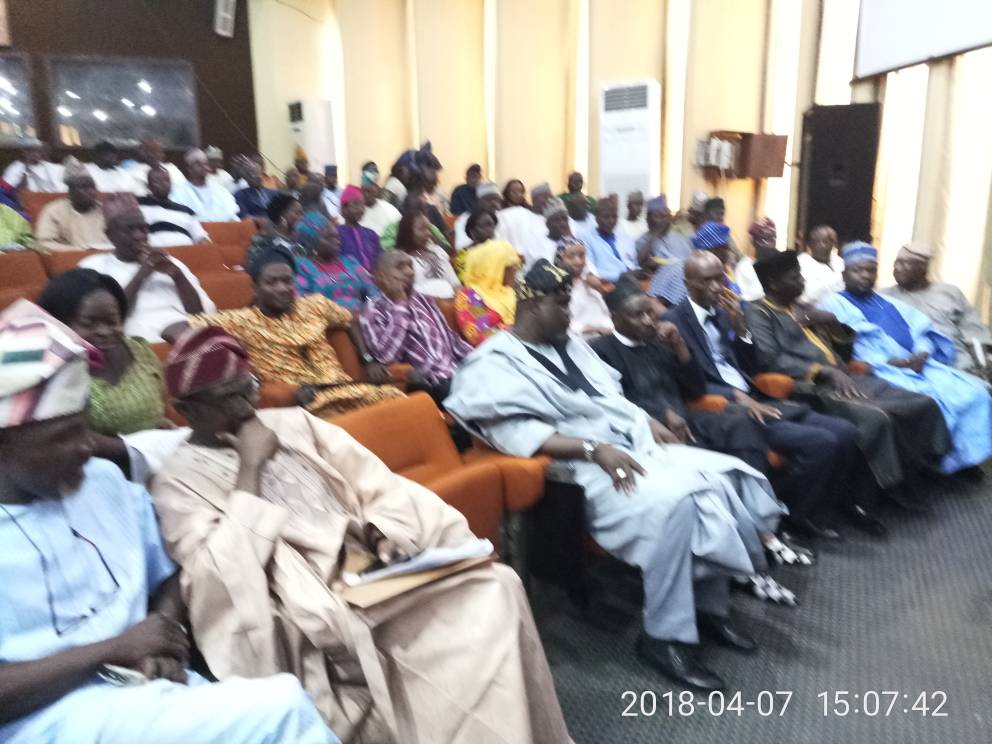
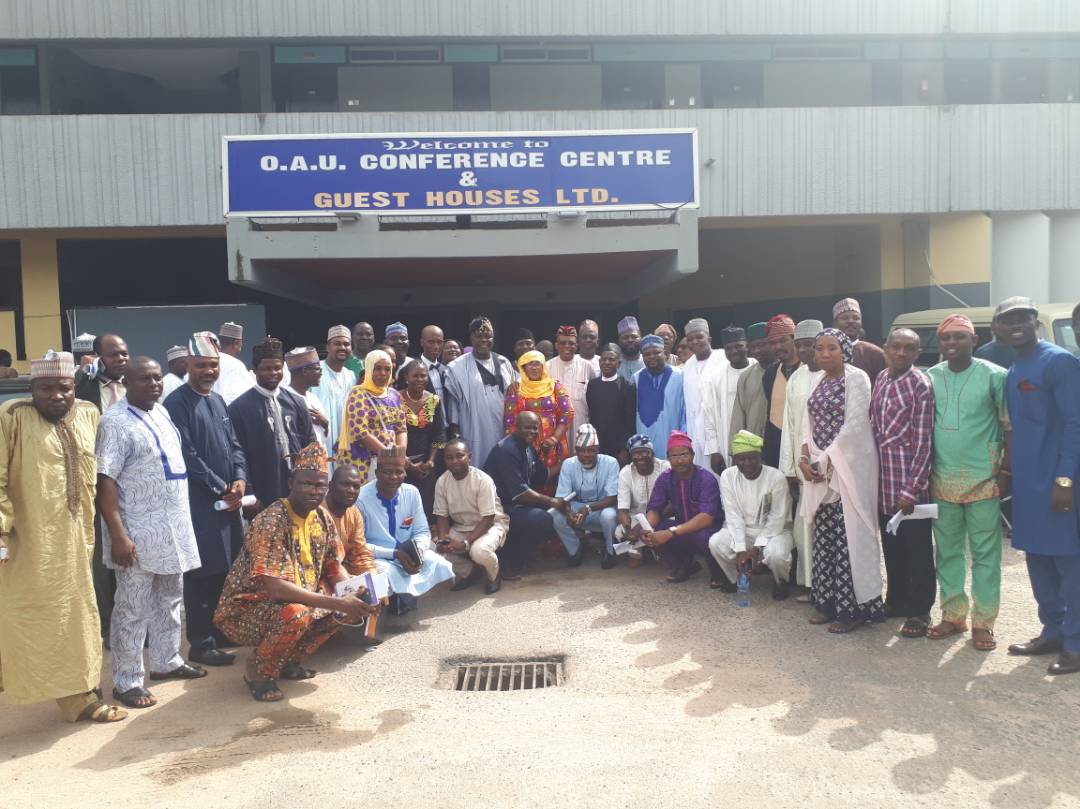
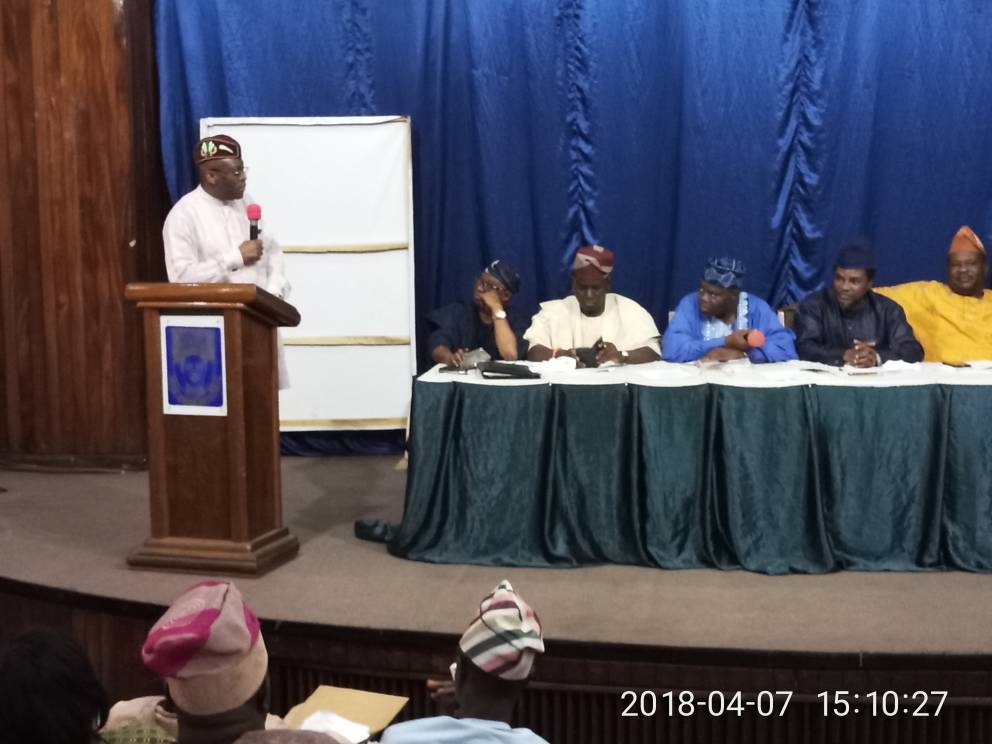
Legal powerhouse, Paul Usoro
SAN, FCIArb was present at the Egbe Amofin Oodua meeting in Ile-Ife at the
Obafemi Awolowo University earlier on today with more than 100 bar leaders, NBA
Chairmen and Secretaries from the North, West and East.


During the course of the
meeting, Paul Usoro stated his support for the Yoruba community. In his words
“Wherever God will take me to, I will continue to represent Yoruba race
well”;


“I schooled in OAU. I
was trained not only in learning but also in the Yoruba culture. Whatever I am
today, I learnt it from the Yorubas”. He also stated his desire for an
inclusive relationship beyond the NBA race.

Paul Usoro is a Man of the
people who has built bridges all around the country; He evidently treasures
relationships as he was accompanied to the meeting by Mallam Hussain Sani
Garun-Gabbas, SAN ( Hon. Attorney General and Commissioner of Justice, Jigawa
State), Alh. Tajudeen Oladoja ( Life Bencher), Francis Ekwere ( Immediate Past
1st Vice President of NBA),  Mallam
Ibrahim Aliyu ( Immediate Past 2nd Vice President of NBA) and Mr. Bukar Waziri
( Immediate Past Publicity Secretary of NBA).