by Legalnaija | Jun 15, 2021 | Directory, Uncategorized

The Legalnaija Lawyers Directory enables Lawyers complete a professional profile in order to enhance visibility on the Internet. By subscribing to the Directory, a Lawyer increases access to prospective clients and strengthens professional reputation among peers and within the legal community.People who are looking to hire a Lawyer are more likely to visit your profile and contact you via email, or phone call, if you have an active subscription on the Directory. Lawyers who subscribe benefit directly from the high volume of visitors to the Legalnaija website, and Lawyers can also list office location(s), phone numbers and email addresses so that potential clients can make contact right away.
To subscribe, follow these 6 simple steps –
1. Log on to https://app.legalnaija.com/signup
2. Create an account
3. Fill in your details, attach any relevant documents and submit for verification.
5. You will be notified of your approval and listing via email.
If however your application is suspended,vensure your profile is filled and your credentials are uploaded and resubmit. Subscription fee is 1,000 Naira monthly only. Hurry, you get a 30 day free trial when you sign up. For more info, contact support at hello@legalnaija.com or via @Legalnaija across your social media platforms.

by Legalnaija | Jun 14, 2021 | Blawg, Law

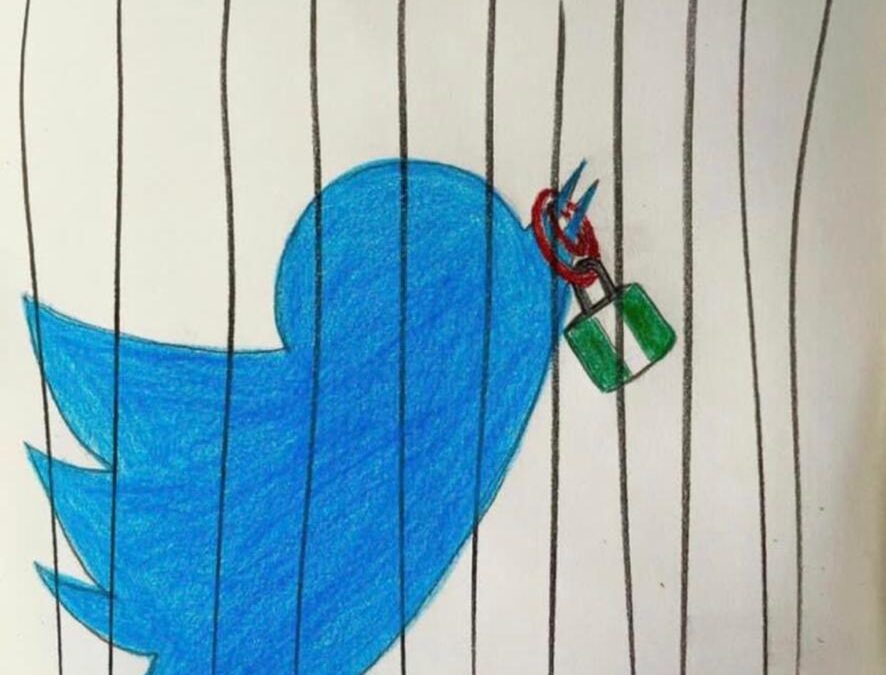
Photo credit: BBC.com
On Friday, the 4th of June 2021, the Nigerian Government announced the indefinite ban of the operations of Twitter in Nigeria. This was a retaliatory attempt by the government after Twitter deleted a controversial post made by President Mohammed Buhari referencing the civil war of 1996 and threatening those he claims causes trouble “with the language they understand”. The government announced the suspension stating that “the persistent use of the platform for activities that are capable of undermining Nigeria’s corporate existence”.
This caused overwhelming outrage from both local and international communities including the Nigerian Bar Association who gave President Buhari an ultimatum to reverse the ban or face legal actions. As if the ban was not enough, the Attorney-General of the federation, Mr. Abubakar Malami further called for the prosecution of those who still found a way to use Twitter. Amusingly, the Federal Government also made the announcement to ban Twitter using the same platform.
The idea of regulating social media has been a priority of this administration for some years, however they have been faced with strong oppositions from Nigerians as it is believed that the intention to regulate social media was not genuine and hypocritical as social media was a very powerful tool used by this government when campaigning in 2015.
Interestingly, Twitter has been a target of this administration for the role it played during the #EndSars protest. As it was one of the major social media giant used for donations and awareness of police brutality. Twitter’s CEO, Jack Dorsey even tweeted his support for the movement and created an emoji exclusive to the protest. However, deleting the tweet of the president was the last straw. The question craving for answers is whether the federal government suspension of Twitter was within the confines of the law.
As was rightly stated by the president of the Nigerian Bar Association, Mr. Olumide Akpata, the ban of Twitter and the “directive to the NCC to immediately commence the process of licensing all OTT and social media operations in Nigeria is a disguised attempt to regulate social media, restrict freedom of speech and shrink civic space.”
The action of the Federal Government is directly a breach of the constitutional provision of the right to freedom of expression at the press as contained in Section 39 of the 1999 Constitution which the federal government is subject to.
Furthermore, the tweet of President Buhari was in violation of twitter’s rules as the NCC provides for a technical framework for the use of social media in Nigeria which has a policy that every social media platform is required to have a network policy, standards and best practices, guidelines and procedures to ensure that risks and myriad of benefits are balanced comparatively in coherent manner. Deleting a tweet likely to go against such standards is appropriate. Therefore, the president was in breach of Twitter policy which nobody should be above. If twitter can delete former president of the United States of America, Donald Trump’s tweet and ban him, why is President Buhari different?
The ban on Twitter is also in violation of the Article 19 of the United Nations Declaration of Human rights which states that “Everyone has the right to freedom of opinion and expression, this right includes freedom to hold opinions without interference and to seek, receive and impart information and ideas through any media and regardless of frontiers”. Also it is in violation of Nations United Nations provision on the right to be online and offline. The United Nations recognizes the impact of human rights on freedom of opinion and expression which was adopted in their human rights council in 2009 which Nigeria is a part of.
In conclusion, Nigeria is a democratic country with a constitution modelled after the United States of America which prioritizes freedom of speech and freedom of the press. Banning the use of Twitter is indirectly contravening the provisions of Section 39 of the 1999 Constitution. Also, Attorney- General Malami criminalizing the use of twitter is highly unethical as there is no provisions of law in Nigeria that supports the criminalization of the use of social media. The utterances of Attorney-General Malami are full of illegalities. The reason given by the minister of information is just a mere excuse. Besides, it was reported by the Guardian News that Nigeria lost approximately N7.5 Billion as a result of the ban thereby dwindling the already unstable economy.
Banning a social media platform that was not in violation of section 45 of the 1999 constitution which states reasons in which fundamental rights can be restricted is undemocratic. Now Twitter may not be perfect but it is what the people wants. Freedom to use the internet space is a fundamental right in Nigeria and it should be kept as such.
Freda Odigie is a Legal Practitioner.
You can contact her on flutterfreda@gmail.com
by Legalnaija | Jun 11, 2021 | Uncategorized
Dear Colleagues,
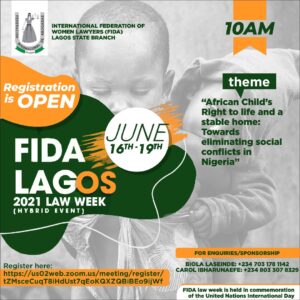
The International Federation of Women Lawyers [FIDA] Nigeria, Lagos State Branch is pleased to inform you that registration for the 2021 FIDA Lagos Law Week is now open .
The year’s hybrid (physical & virtual) Law Week is themed – “African Child’s Right to life and a stable home : Towards eliminating social conflicts in Nigeria”.
This year’s Law Week is in commemoration of the United Nations International Day.
The Law Week is scheduled to hold as follows-
*Date:* Wednesday, 16th June – Saturday 19th June, 2021.
*Physical Venue:* To be communicated to targeted audience.
*Time:* 10am
Some of the speakers scheduled to speak are –
1, *MARYAM UWAIS, MFR*
2, *TITILOLA AKINLAWON, SAN*
3, *ABIMBOLA AKEREDOLU, SAN*
4, *VICTORIA AWOMOLO, SAN*
5, *KIKELOMO AYEYE*
6, *INEMESIT DIKE*
*EVERYONE IS A DISCUSSANT*
Knowledge Shared, Knowledge Gained
For enquiries please call Abiola Laseinde on 07031781142 or Caroline on 08033078329.
Zoom Registration Link:
https://us02web.zoom.us/meeting/register/tZMsceCuqT8iHdUst7qEoKQXZQBiBEo9ijWf

by Legalnaija | Jun 11, 2021 | Uncategorized
Dear Colleagues,
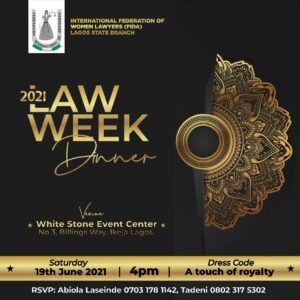
It’s that time again to unwind, FIDA Lagos is set to hold her 2021 Law week dinner themed *”A touch of Royalty”*.
After the intellectually challenging 2-day technical session, what more could we crave for than to let our hair down and enjoy the weekend in style.
This year’s dinner is scheduled to hold on *Saturday, the 19th of June, 2021* at the prestigious *”White Stone Event Centre”* in the heart of Ikeja. Doors will be open by *4pm*.
Side attractions such as dance, comedy, competition have all been lined up for the dinner. Mouth watering gifts and prizes awaits the first 20 persons.
Sumptuous finger licking delicacies ranging from African to Chinese and the best of continental cuisine is what to expect.
Adequate security is guaranteed as you have fun in the heart of Ikeja. So come show off your latest dancing steps.
You don’t want to miss this royal event, hurry and get your dinner cards at :
*#5,000 – For FIDANS*
*#10,000 – For Non-FIDANS*
Interested persons should kindly pay into the *FIDA Lagos Stering bank account- 0003538220*
- For more enquiries, Please call Abiola Laseinde on 07031781142 or Tadeni on 08023175302 or Nnenna on 08037728600
by Legalnaija | Jun 8, 2021 | Uncategorized
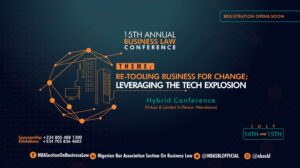
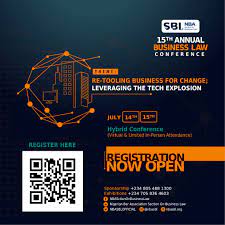
The Nigerian Bar Association’s Section on Business Law (NBASBL) 2021 Conference is around the corner and once again it’s an opportunity for commercial lawyers, members of the business community, regulators and members of the public to sit, discuss and strategize on critical issues that benefit the Nigerian business community. This upcoming conference which will be the 15th Annual Conference of the Section of Business Law has us excited for the following reasons;
- The Theme
The theme of this year’s conference, which is Re-tooling Business for Change: Leveraging the Tech Explosion, speaks to recent global trends on the role of technology in today’s legal industry. In the words of Mr. Adeleke Alex – Adedipe, 2021 Chair, Conference Planning Committee;
“with the growth of technology comes an unending struggle of law to keep pace with technological developments and disruptions. This is particularly true of the business space as the fourth industrial revolution continues to emerge and the world tries to grapple with the economic realities of the Covid-19 pandemic”.
It is exciting to note that the NBASBL is looking forward at relevant Tech – trends and is looking to get ahead of it, rather than be left behind.
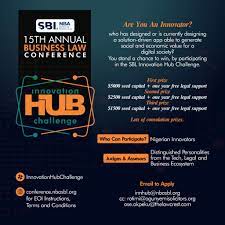
- The Innovation Hub Challenge
The NBASBL 2021 Conference will also be hosting the Innovation Hub Challenge, wherein winners stand a chance of winning between $1500 – $5000 seed money for solution – driven Apps able to generate social and economic value for a digital society.
The competition is open to all Nigerian Innovators and the panel of Judges includes distinguished personalities from the Tech, Legal and Business Eco – System. Winners also get one year free legal support.

- The Keynote Speaker
The keynote speaker for the NBASBL 2021 Conference is Dr. Wendy Okolo, an aerospace engineering researcher in the Intelligent Systems Division at NASA Ames Research Center. She leads a controls team on a Space Technology project to advance the guidance, navigation, and control technologies that will make precision landing for deployable entry vehicles a reality for planetary exploration. At 26 years old, Wendy became the first black woman to obtain a Ph.D. in aerospace engineering from the University of Texas at Arlington. Her graduate studies were recognized and funded by the U.S. Department of Defense through the National Defense Science and Engineering Graduate Fellowship, Zonta International through the Amelia Earhart Fellowship, the American Institute for Aeronautics and Astronautics, and the Texas Space Grant Consortium. Other research awards include a Resolution of Commendation from the Tarrant County Court of Texas and an award for excellence in research by the Women of Color in STEM (Science, Technology, Engineering, & Mathematics).
We have not even mentioned the array of over 40 speakers, over 35 sessions and an exciting list of conference events. You should be a part of this exciting conference so go right now to the NBASBL website to register.

by Legalnaija | Jun 8, 2021 | Uncategorized
In Nigeria today, we have two distinct but simultaneously operating principal codes for the determination of crimes in the country. A code is a statute that largely covers the whole of a particular area of law. The Criminal Code operates in the southern region of the country, while the Penal code operates in the Northern region. This article illuminates the development of the Nigerian criminal laws, as well as its sources.
Prior to the involvement of Colonial masters in the ‘Nigerian’ political system, the spectrum of land that is now known as Nigeria was occupied by peoples who had their diverse ways of dealing with public offences. It is noteworthy that a society without laws will ultimately culminate in administrative anarchy and interpersonal chaos.
The ethnic groups we have known to be part of Nigeria had customary laws that sufficed as a recognizable way of dealing with dissenters. These laws were largely unwritten, apart from the Northern Moslem community, which operated written laws under different structures. A major one among these structures was the Maliki School.
The first interference from the Western world with the customary criminal structure was in 1863, when the Common Criminal Laws were introduced to the Colony of Lagos. No other unique law existed in other territories, but for ordinances enacted at specific times to deal with specific issues. This introduced common law was difficult to obey. It was unwritten and unascertainable.
In 1904, the colonial system under the administration of Lord Frederick Lugard introduced a Criminal Code to the Northern region of Nigeria. Thus, making a tripartite criminal law system in the country, wherein the English Criminal Law obtained in Lagos, the Criminal Code in the North, and indigenous rules in the South. The Criminal code became applicable in the whole of Nigeria in 1916, after the Northern and Southern Protectorates were amalgamated in 1914.
The provision of Section 4 of this code was its major delinquency. This section allowed Native courts to continue in the administration of justice with the use of Native laws. This frustrated the functionality of the code, as different regions could still apply their native laws and archaic systems of punishing convicted offenders.
The section read, “No person shall be liable to be tried or punished in any court in Nigeria, other than a native tribunal, for any offence except under the express provision of the code or some other ordinance or some law or some order-in-council made by his majesty for Nigeria”.
Obviously, the words ‘other than a native tribunal’ already made the lapse for its ineffectiveness in the Nigerian system.
To this effect, Section 4 of the Criminal Code was amended in 1933. However, the amendment did not settle matters, as it was not clear what the powers of the Native Courts were when the provision was read together with the Native Court Ordinance of 1933.
In the case of Gubba v. Gwandu N.A. (1947) 12 WACA 141, the West Africa Court of Appeal held that Native laws could be applied on offences under native laws. But if it was an offence provided for under the code, then the code would apply.
The decision of the court caused controversy, since almost all manners of offences were already provided for under the code. This ruling had, therefore, downgraded the customary criminal laws, as well as the Moslem laws. A committee was enacted to look into this issue. The committee proposed that the customary court could apply customary laws to tried criminal cases, without paying regard to the provisions of the code. This proposition was upheld by the court in a case like Kano Native Authority v. Fagoli (1957).
In Maizabo v. Sokoto N.A. [1957] NLR 133 (FSC), the court held that though native courts could try criminal cases, punishment of offenders are not to be given in excess of the provisions of the criminal code. In other words, native courts could try cases, but punishment was to be in accordance with the provisions of the Criminal code.
This situation was unacceptable to native communities, particularly the Northern region, since the code was not drafted for a Muslim community. We must note that the Criminal Code was modelled on the Queensland Code of Australia, drafted by Sir James Fitzsteven in 1878.
The foregoing led to the introduction of the Penal Code to the Northern Region in 1959. This new Code was modelled on a Sudanese code that had already successfully operated in a Muslim community.
1n 1958, the decision was taken in a constitutional conference to wholly expunge the use of customary laws from the Nigerian criminal law system. Thus, making all Nigerian Criminal Laws written, applicable as provided by the Criminal Code and the Penal Code.
A section of the 1959 Bill of Rights, which became section 22(10) of the Nigerian Constitution, 1963, provides – “No person shall be convicted of a criminal offence unless that offence is defined and the penalty therefor is prescribed in a written law.”
Also, Section 8(3) of the Administration of Criminal Justice Act, 2015, provides, “A suspect shall be brought before the court as prescribed by this Act or any other written law or otherwise released conditionally or unconditionally.”
This was how Nigeria ended up with the two-codes system. The Criminal Code that had existed since 1916 (now operative in the Southern region), and the Penal Code of 1959, operating in the Northern region of the country.
Nigeria has its major source of criminal laws from the two principal codes, namely, the Criminal Code Act Cap C38 Laws of the Federation of Nigeria, 2004, and the Penal Code Cap C8, Laws of the Federation of Nigeria, 2004.
Other sources of the Nigeria Criminal laws include the Constitution of the Federal Republic of Nigeria, 1999, the Criminal Procedure Act (Southern), the Criminal Procedure Code (Northern), the Administration of Criminal Justice Act, 2015, other Statutes and Acts of the National Assembly, international treaties, and case laws.
 Written by: Inioluwa Olaposi
Inioluwa Olaposi studies Law at Obafemi Awolowo University, Ile-Ife. He founded LawHub NG (https://www.lawhub.com.ng), providing academic law posts and laws of Nigeria. He is interested in development and entrepreneurship.
by Legalnaija | Jun 6, 2021 | Uncategorized
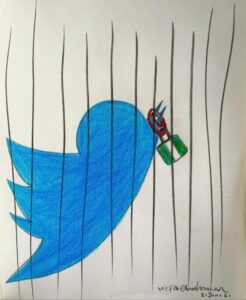
On the 4th day of June 2021, the Federal Government of Nigeria, through the Federal Ministry of Information & Culture issued a press release informing the entire world, ironically on Twitter, that, the operations of the global microblogging social networking site have been suspended in Nigeria. To put this far-reaching decision in proper perspective, the ministry, in a series of tweets, stated that:
“FG suspends @Twitter operations in Nigeria. The Federal Government has suspended, indefinitely, the operations of the microblogging and social networking service, Twitter in Nigeria.”
Barely 6 hours after the tweets, Nigerians’ access to twitter was systematically and gradually limited or completely blocked and thereby necessitated their resort to Virtual Private Networks (VPN) to access the all-important app/site.
In another frenetic move to ensure Nigerians do not have access to Twitter, the office of the Attorney General of the Federation was reported to have instructed the Director of Public Prosecutions to commence the prosecution of “violators of the Federal Government De-activation of operations of Twitter in Nigeria”
Upon this directive, many newspapers have reported that the purpose is to prosecute users who access twitter though VPN in spite of its suspension in Nigeria. However, this article seeks to briefly highlight some of the many legal issues that have arisen from the most reported events in the past 24 hours in Nigeria, especially among its young citizens.
1. What does it mean to ‘operate’ in Nigeria?
It is beyond doubt that, from the Ministry of Information’s tweets, what was been suspended in Nigeria are the “operations of Twitter.” Now, what does the term ‘operation’ mean under the Nigerian law? At page 275 of Babalola’s Law Dictionary (2nd edn. Noetico Repertum, Lagos, 2019), the word was defined by the Court of Appeal in Osondu v Federal Republic of Nigeria (2000) 12 NWLR (Pt. 682) 470 at 483 as:
“(1) Exertion of power; (2) the process of operating or mode of action; (3) an effect brought about in accordance with a definite plan; (4) action; and (5) activity”
From any of the definitions above, what the FG has simply done was to suspend the “activities” of Twitter in Nigeria and nothing more. It is not beyond doubt that, for business or establishment purposes, to my knowledge, Twitter neither operates an office nor does business in Nigeria within the context of its suspension by the FG.
Hence, the suspension of its operations is rather a matter for the companies that grant access to the site than for Twitter itself since the FG is aware that the company’s physical office in Africa is located in Ghana. Secondly, Twitter, a company, does not have ‘activities’ in Nigeria within the context of its business operations.
However, a discussion of the propriety of such knee jerk approach by the FG to the company’s deletion of Nigeria’s President’s controversial tweet, is another issue that is not the crux of this intervention.
2. Nigerian Communications Commission’s powers to suspend Twitter
From a press release by the Association of Licences Telecommunications Operators of Nigeria (ALTCON) dated 5 June 2021, the public was informed of the NCC’s shut down directive but the statement simply alludes to the Commission’s regulatory powers under the NCA 2003.
It must be quickly stated that, no regulator’s power to give directives is at large. Such directives must be given under specific provision(s) of the relevant enabling law. It is trite law that, an agency’s power to give directives is a delegated power which must be clearly and specifically donated by its enabling law. (See NNPC v. Famfa Oil Ltd (2012) 17 NWLR (Pt 1328) 148; FGN v. Zebra Energy Ltd. (2002) 18 NWLR (Pt. 798) 162; Ogunlaji v. A.G Rivers State (1997) 6 NWLR (Pt. 508) 209; UNTHMB v. Nnoli (1994) 5 NWLR (Pt. 36) 376)
I am aware of the NCC’s Internet Code of Practice which empowers the Commission to instruct Internet Service Providers (ISPs) to block access to certain offensive sites. For the avoidance of doubt, clause 7.5 of the Code expressly provides that:
“Upon determination by the Commission that the content reported under Paragraph 7 (2) above is indeed unlawful, the Commission shall issue a takedown notice to all IASPs to deny or disable access to the content. The IASP shall be expected to comply with such takedown notice within 24 hours of receipt of the notice.”
It is interesting to note that, in 2019, I filed a suit at the Federal High Court, Abuja against the NCC challenging the likelihood of this provision to be used to violate fundamental rights of Nigerians pursuant to sections 39 and 46 of the 1999 Constitution but the court dismissed our case as premature and speculative in spite of the instructive wording of section 46 that empowers an applicant to file a suit even when any of his fundamental rights is ‘likely’ to be interfered with.
I saw this (the arbitrary shutdown of anti-government websites) coming and we approached the court but his lordship saw otherwise in Digital Rights Lawyers Initiative v NCC, Suit No. FHC/ABJ/CS/56/2019 (Judgment delivered in 2020)
Assuming the NCC even wielded the big stick under clause 7.5, the exercise of such powers is clearly circumscribed by certain conditions which must be satisfied as condition precedent before a takedown notice can be issued. Secondly, under the clause, it is the offensive contents that are meant to be attacked but not the entire platform as done in this case.
3. The AGF’s imminent prosecution of ‘offenders’
The AGF, as the chief law officer, has simply directed the DPP to prosecute violators of the ‘de-activation’ directive. To my mind, I respectfully opine that, the very simple question that answers any speculation(s) that may arise here is – who are/were the recipients of the directive. The users or the ISPs? I think the answer is as clear as it could get.
Without necessarily deviating into any argument as to whether the FG has criminalised the use of Twitter (which would be a very preposterous thing to even imagine) and since users were never directed to de-activate their Twitter accounts or never to access Twitter, they are not under any legal obligation to ‘de-activate’ or suspend twitter unlike the ISPs who are duty bound to comply with the regulator’s directives except they are ready to ‘risk it all.’
4. Interference with freedom of expression of millions of Nigerians
CNN reported that about 39 million Nigerians have twitter accounts which mean different things to different people e.g market place, social networking, means of communication, information site etc.
By the suspension, the FG has clearly interfered (whether rightly or wrongly) with citizens’ medium of expression and reception of information in a dangerous affront to section 39 of the 1999 Constitution. I understand a number of organisations are planning to approach the courts once the JUSUN strike is over to challenge the suspension and that is the reason I will pause here.
Conclusively, there are many more legal issues that have arisen and will continue to arise from the FG’s suspension of Twitter in Nigeria. However, considering the value that Nigerians daily derive from the site which, in my modest opinion outweighs political sentiments to the contrary, it is advisable for the FG to rethink its decision. Thankfully, it is a suspension but not an outright ban.
 By Olumide Babalola

by Legalnaija | Jun 4, 2021 | Uncategorized
So today the Federal Government released a statement indefinitely suspending twitter operations in Nigeria.
The reason behind this according to them is that there is a “persistent use of the platform for activities that are capable of undermining Nigeria’s corporate existence”
As plausible as this may seem, the question remains – can the FG Ban or suspend the use of twitter in Nigeria. I say this because it is unequivocally enshrined in our Constitution that freedom of expression is a fundamental right and this right is protected by section 39 (1) of our Constitution.
Nigeria is also a party to several international conventionsthat have established the importance of respecting the peoples right to freedom of expression.
The rights of Nigerian citizens to use the platform provided by twitter can be referred to as digital right that comes within the purview of the freedom of expression protected by the Constitution.
It is thus correct to say thatDigital rights are human rights which cannot be arbitrarily breached or curtailed arbitrarily.
The United Nation’s Universal Declaration of Human Rights unequivocally states that limiting, curtailing or outrightlydisconnecting people from the internet violates their rights. Digital rights under which the use of social media such as twitterfalls, are considered to be fundamental human rights. As a matter of fact, theUnited Nations Human Rights Council in its 2016 resolution resolved that the “same rights that people have offline must also be protected online.” Nigeria as a member of the United Nations and a member of the Human Right Council is a signatory to that resolution and is therefore bound by it.
Additionally, the International Convention on Civil and Political Rights (ICCPR) which Nigeria is a member and signatory to,provides in paragraph 2 of its Articles that “everyone shall have the right to hold opinions without interference”.It further provides that “everyone shall have the right to freedom of expression; this right shall include freedom to seek, receive and impart information and ideas of all kinds, regardless of frontiers, either orally, in writing or print, in the form of art, or through any other media of choice”
It is important to point out however that these rights are subject tocertain restrictions, but these restrictions cannot be arbitrarily or unnecessarily activated;the permissible restrictions include; the protection of national security or maintenance of public order.
I will want to believe that the Federal Government is relying on the above leeway to suspend twitter indefinitely; however I find the decision hasty and impulsive considering the fact that Twitter has a system in place where it removes illegal content upon receipt from third parties, including Governments, to remove illegal content in accordance with the laws of the countries where the people use the service. So if the Federal Government has justifiable proof of a breach of our laws by some twitter users, the simple approach should be to request twitter’s censorship and not a general indefinite ban of the platform. Because how do you justify an attempt todisenfranchiseof over 40M Nigerians of their right to freely express themselves without a firm legal basis for such limitations.
Indeed fake news and incitement are real threats that MUST be curtailed but banning twitter is similar to throwing away the baby with the bath water. The Federal Government must be wary not to impede people rights and creativity by limiting online freedom. Citizens must be allowed to communicate freely online and offline albeit in accordance with legal provisions.
 OMORUYI OSAGIE EDOIGIAWERIE ESQ ACIArb(UK)
OmoruyiEdoigiawerie is a Legal Practitioner with over a decade experience. Over the years, he has garnered consummate experience in Corporate Legal Practice and Statutory Compliance Matters.
His core expertise lies primarily in Corporate Commercial Practice, Startup Law, Immigration and Employment law, Immigration Law, Alternative Dispute Resolution and Entrepreneurship. Additionally he regularly provides advisory and capacity building support to a spectrum of clients particularly start-ups whom he enjoys mentoring. To date he has helped build and grow over 1000 startups most of who remain gainfully in business.
Omoruyiholds Graduate and postgraduate degrees in Law and is an Alumnus of the University of Lagos, Harvardx program on Leadership, he is also a Member of the Chartered Institute of Arbitrators UK, Mediation specialist and management Consultant, he is also a member of the Nigerian Bar Association and several professional bodies and is an ardent contributor to topical national and Legal issues.
He can be reached on twitter @UyiDlaw, Instagram @Uyilaw and email omoruyi@uyilaw.com.
OmoruyiEdoigiawerie Esq ACIArb
Lagos, Nigeria.
4-6-2021
by Legalnaija | Jun 4, 2021 | Uncategorized

The Nigerian Bar Association Section on Business Law (NBA-SBL) has unveiled its keynote speaker for the 15th Annual Business Law Conference scheduled to hold on Wednesday July 14th and Thursday 15th, 2021.
In a press statement signed by the Chair of the Conference Media, Publicity & Mobilization subcommittee, Theodora Kio-Lawson, the Section revealed that NASA’s Wendy Okolo would give the keynote address at this year’s conference.
Dr. Wendy Okolo is an aerospace engineering researcher in the Intelligent Systems Division at NASA Ames Research Center. She leads a controls team on a Space Technology project to advance the guidance, navigation, and control technologies that will make precision landing for deployable entry vehicles a reality for planetary exploration.
At 26 years old, Wendy became the first black woman to obtain a Ph.D. in aerospace engineering from the University of Texas at Arlington. Her graduate studies were recognized and funded by the U.S. Department of Defense through the National Defense Science and Engineering Graduate Fellowship, Zonta International through the Amelia Earhart Fellowship, the American Institute for Aeronautics and Astronautics, and the Texas Space Grant Consortium. Other research awards include a Resolution of Commendation from the Tarrant County Court of Texas and an award for excellence in research by the Women of Color in STEM (Science, Technology, Engineering, & Mathematics).
At NASA, she has received a number of awards including the 2020 NASA Ames Award for Researcher/Scientist and the 2019 NASA Ames Early Career Researcher Award. Dr. Okolo is also the recipient of the 2019 U.T. Arlington Distinguished Recent Graduate Award, the 2019 Women In Aerospace Award for Initiative, Inspiration & Impact, and the 2019 Black Engineer of the Year Award for Most Promising Engineer in U.S. Government.
Her focus is in the area of systems health monitoring and control systems design with applications to air and space components, vehicles, and systems. To that effect she manages a multi-million-dollar sub-project on a System-Wide Safety Project, leading a team to develop the monitoring, predictive, and mitigation capabilities that will enable the safe operations of unmanned aerial vehicles (UAVs) in the U.S. national airspace.
Dr Okolo, whose keynote address will dwell on the 2021 theme: “Re-tooling Business for Change: Leveraging the Tech Explosion”, will kickstart conference conversations across several plenary and breakout sessions to explore the fast-developing relationship between frontier technologies, business and the law.
According to Kio-Lawson, the choice of the young NASA top executive as this year’s keynote speaker was in fulfilment of a promise to offer participants an unusual experience with explosive content and resource at 15th conference.
She said, “The NBA-SBL is dynamic and forward thinking in its approach to achieving its objectives – which includes capacity building, professional development for members, collaborative efforts to drive policy changes and several other contributions to the bar. In the aftermath of a pandemic and faced with current realities, it was important that the 2021 theme brought to light the disruptive nature of technology and its transformative impact across the world today. Hence our choice of theme, keynote speaker and selection of highly knowledgeable speakers and discussants”
The 15th Annual Business Conference which is a hybrid of virtual and in-person attendance will amongst other things, spotlight vital topics such as, tech innovation and e-governance; the future of digital financial services; alternative currencies in the digital age; global tech trends in law practice management; the role and impact of technology and innovation in bridging the health care deficit in Nigeria, amongst other vital discourse
by Legalnaija | Jun 3, 2021 | Law
Past general secretary, Nigerian Bar Association. Presented on 2nd June, 2021 at the public hearing of the House Of Representatives Committee on the review of the 1999 constitution of the Federal Republic Of Nigeria 1999 (as amended).
Protocols
INTRODUCTION
Quite often, I meditate on the affairs and the future of this nation. Each time I do this, I believe like many others in this Country, become very apprehensive of the future of the Country even though I am a man of faith. As a messenger of hope and confidence, I try to suppress and overcome my fears by faith. However, I do recognize that faith does not deny the facts. Faith only insists that the fact do not represent the final position if something is done to change that position. It is an undeniable statement that faith without work is dead.
The situation in Nigeria today to face the reality is precarious from all dimensions.That is not the focus of my short presentation, But I dare say that all that we are seeing today are symptoms, products and reminiscents of a faulty foundation. If the foundation be destroyed, God says there is nothing the righteous can do. The point was well made yesterday by the RT. Hon Speaker, Mr. Femi Gbajabiamila in his opening speech and this is very fundamental that “the foundation of any nation is its constitution and that the Constitution of Federal Republic of Nigeria 1999 as amended is short of standard. That the Constitution is a product of a horrid National compromise to return the military back to the barracks.”
WHAT IS A CONSTITUTION?
In Nigeria, the Supreme Court has said in AG Federation Vs. AG Abia State that “It must be remembered that the fountain of all laws is the Constitution. It is the composite document setting out how the Country is to be held together. It is not a document to be read with levity or disdain …. It is the very foundation of the nation’s existence.”
It is the Supreme law in which the principles of fundamental nature for a nation are established.” It is supreme and superior to any other law. Indeed, it determines the validity or otherwise of governmental actions.
The Constitution of the Republic of South Africa, 1996 inSection 2 states “This Constitution is the supreme law of the Republic of South Africa. Law or conduct inconsistent with it is invalid and the obligations imposed by it must be fulfilled.”
Article 6 Clause 2 of the Constitution of the United States of America says “This Constitution and the laws of the United States which shall be made in pursuance thereof and all treaties made or which shall be made under the authority of the United States shall build the supreme law of the land….. any thing in the Constitution or law of any State to the contrary notwithstanding.”
Similarly, Section 1(1) of the 1999 Constitution FRN as amended also established the supremacy and the binding force of the 1999 Constitution I submit in an inelegant manner unlike the very vocal and direct provision of the South African Constitution I cited above.
THE INCURABLE VICES OF THE 1999 CONSTITUTION AS AMENDED
- The late constitutional Lawyer Chief Rotimi Williams SAN said on the 18th of June 1999 at a Seminar organized by the NBA Ikeja on the 1999 Constitution that “The 1999 Constitution is a document that tells lie against itself.”
- Itse Sagay SAN in his characteristics self was more categorical when he described the Constitution as a fraud, contending that the people of Federal Republic of Nigeria never gave to themselves or resolved to give to themselves the 1999 Constitution. I will expantiate on this later.
- Another foremost constitutional Lawyer, Prof. Ben Nwabueze SAN has described the Constitution as an illogicality contending that the 1999 Constitution is a unitary constitution for a Federal system of Government.
- My Learned Brother Silk and Constitutional Law expert, S.T. Hon, SAN, had this to say in his book titled‘Constitutional Law and Migration Law’: “there is no doubt that the 1999 Constitution was enacted by the military. That the apex Court merely imputed this exercise to the Nigerian people.”
- In a Paper titled “Preventing the Breakdown of Democracy in Nigeria – an overview of the 1999 Constitution”presented by me in year 2000, I said “The 1999 Constitution is in my view nothing more than a legacy bequeath on us by the Military neo colonial masters at the eve of their departure on the 29th of May, 1999, in a fashion reminiscent of a will that takes effect after the demise of the testator…”
Many other well informed Nigerians, too numerous to mention have said repeatedly based on the vices stated above and many others that the 1999 constitution lacks legitimacy and popular acceptability fundamentally because of the circumstances of its making and because of the several positions in it which are alien to all known principles of federalism.
First, it is to be recalled that we have successfully carried out 4 Amendments through 1st, 2nd, 3rd and 4th Alteration exercises. Several Sections of the Constitution were altered in the course of the four (4) exercises, all these within approximately a period of 21 years of the existence and operation of the Constitution. The question is if we find it desirable to embark on another exercise as profound and expansive as the one being contemplated, whether it is not far better and more desirable to think about a holistic replacement of the 1999 Constitution?
Second, I noted with satisfaction that some of the issues scheduled to be considered in the review exercise constitute fundamental and existential issues for Nigeria as a safe and secured Nation, as a Federation and lastly as a successful Constitutional Democracy. I am referring here to such items as devolution of powers, Federal Structure and true Federalism, the Nigeria Police and Nigerian Security Architecture, comprehensive Judicial Reform, Local Government autonomy and the National Assembly itself. Once these foundational issues are going to form the cornerstone of this review, the question is whether it is not better and preferable to garner the thoughts, feelings, visions and aspirations of the Nigerian people with a well articulated, negotiated agreement towards embarking on the process of making a new Constitution for Nigeria to mark a new beginning.
Third, the Constitution was described as a fraud and a document that lies against itself at a Seminar on the new Constitution organised by the Nigerian Bar Association, Ikeja Branch, on the 18th of June, 1999 because the Constitution purportedly stated in its opening recital that “We the people of the Federal Republic of Nigeria having firmly and solemnly resolved… do hereby make, enact and give to ourselves the following Constitution.” Since the enactment of the 1999 Constitution, the question has been asked repeatedly, where and when did that resolution take place? How did the people of the Federal Republic of Nigeria arrive at that firm and solid resolution purportedly expressed in the recital to the 1999 Constitution?
It must be recalled that the 1999 Constitution of the Federal Republic of Nigeria was midwifed by the then Military Government of General Abdusallam Abubakar, GCFR, pursuant to the promulgation of the Constitution of the Federal Republic of Nigeria Decree No. 24 of 1999. The question is whether Decree No. 24 of 1999 can take the place of a referendum by the people in the making of a people’s Constitution recognising that the ultimate sovereignty lies with the people?
FAULTY FEDERAL STRUCTURE
Inthe case of Attorney-General of Abia State v. Attorney-General of the Federation, the Supreme Court stated the meaning and scope of Federalism in the following words: “Federalism as a legal concept generally connotes an Association of states formed for certain common purposes, but the State retains a large measure of their original independence or autonomy. It is the co-ordinate relationship of power between the individual States and the National Government which is at the centre.”
The Supreme Court went further to say that “Federalism as a viable concept of organising a pluralistic society such as Nigeria for governance does not encourage so much concentration of powers in the centre which is the Federal Government. In federalism, the component states do not play the role of errand boys.” The point was also made by the Supreme Court in Attorney-General of Lagos State v. Attorney- General of the Federation, that each Government in a Federation “exists not as an appendage of another Government but as an autonomous entity in the sense of being able to exercise its own will in the conduct of its affairs, free from direction from another Government.” None of these essential characteristics of a true Federalism can be said to exist in Nigeria in real and practical terms.
I am fully persuaded by the opinion of Professor Ben Nwabueze, SAN, that “one single Constitution for all the governments involved both Federal and State in a Federation is a manifest contradiction.” For instance, in 1960, we had the Independence Constitution. There were separate Constitutions for both the Federation and the Regions as separate Schedules to the Independence Order-in-Council. Similarly, the 1963 Republican Constitution made provisions for the establishment of regional Constitutions for the three regions that composed the Federation at the time. Section 5 (1) thereof stated as follows: “Subject to the provision of this Constitution (Federal Constitution) the Constitution of each region shall have the force of law throughout the region.”
There was also a specific provision in that Constitution which stated that the Executive Authority of a Region (which extended to the execution and maintenance of the Regional Constitution) shall be exercised so as not “to impede or prejudice the exercise of the Executive Authority of the Federation or endanger the continuance of the Federation.”
It thereforefollows that in an ideal Federal system, apart from sharing of powers, both the Federal and the Federating units must have their own Constitutions. The question is whether we truly want a Federal or a Unitary System of Government in Nigeria and whether an elaborate discussion on the desirability or otherwise of this initiative can be undertaken under an amendment process such as the one being contemplated?
Everyone in this Nation today accepts the fact that the Nation is faced with a lot of structural and systemic challenges, a good number of which are the products of the inadequacies of the 1999 Constitution. It is no longer news that there has been over concentration of powers at the centre at the detriment of the federating units. Indeed, over the years the centre has been grabbing and grabbing powers at the expense of the federating units. The long years of military adventure in governance has not helped the situation. For the sake of comparison, the 1954 Constitution donated 43 items to the centre in the Exclusive Legislative List, 45 items in the 1960 and 1963 Independence and Republican Constitutions, 66 items in the 1979 Constitution and 68 items to the centre in the 1999 Constitution as amended.
The reality of our Constitutional structure and power sharing today is that simple items such as census, labour, trade unions and industrial relations, mines, minerals, natural gas, drugs, evidence, trade and commerce are in the Exclusive Legislative List. Not to talk of the Policing system. This is in addition to 30 items under the Concurrent Legislative List for which both the Federating States and the Federal Government have powers to make laws subject of course to the supremacy of the Federal Law over the State Law on any such matter where one is inconsistent with the other.
A CENTRALIZED AND MONOLITIC POLICE STRUCTURE – AN ABSURDITY
The issue of Nigeria Police and the security architecture in particular is very germane. It is not an over statement to say that the greatest challenge confronting our Nation today and particularly the security and sustenance of our Constitutional democracy is that of insecurity. I believe that nobody is left in any doubt that the centralized and monolithic Police structure established by Sections 214 and 215 of the Constitution can no longer guarantee the security of this Nation and its component parts and this explains why the other security agencies like the Military, the Airforce and the Navy are now directly involved in the maintenance of law and order in different parts of the country.
PARTICIPATORY/ PEOPLE DRIVEN CONSTITUTION
The process of making the 1999 Constitution as stated earlier falls short of guaranteeing its popular legitimacy and acceptability. No amendments no matter how many times can in a retroactive manner cure this foundational defect in the making of the 1999 Constitution. It remains a military-donated Constitution. A deliberate effort to embark on the making of a new Constitution will offer an opportunity to Nigerians for popular participation in the Constitution making process of their Country.
Scholars of Constitutional Law have argued and I wholeheartedly agree with their reasoning that the scope of making a Constitution should not be determined by the rulers or those who govern them. Professor Julius Ihombere, talking about the value of participatory/ people driven Constitution making approach had this to say: “political elites and leaders have not come to fully appreciate the importance of a participatory or people driven Constitution making approach to their own survival in office and to the reduction of conflicts and pressures on the State, its institutions and custodians. Asides from using the process to resolve burning national issues, a participatory approach is probably one of the best panaceas to instability, public cynicisms and alienation from government. It is equally the best way to cultivate a culture and tradition of reliance on dialogue and consensus rather than the result to violence in the political process.”
The contemporary challenges being faced in the Nation today such as the wide spread insecurity, various sectional loyalty and allegiances instead of loyalty and commitment to the cause of the Nation on the basis of nationalism and patriotism, lack of properly focused political system cloaked in ideology and the uncountable number of political parties jostling for power, the agitation for true federalism, both fiscal and structural, make the call for a new Constitution not only worthy of consideration but I submit compelling and inevitable.
It is my humble view that the time to take the bull by the horn and drive a wholesale replacement of the 1999 Constitution through the instrumentality of an autonomous and independent body is now. Such body must emanate from the people. Like I stated earlier the ultimate sovereignty lies with the people. It is my contention that we have gotten to a point in Nigeria when we should subject the Nation to the sovereign will of the people by making a people driven Constitution.
ARGUMENT AGAINST PROPOSAL FOR A NEW CONSTITUTION
I am not unaware of the argument that we cannot have two sovereigns in a nation in the sense of having a Sovereign National Conference as well as a Sovereign Government and Sovereign National Assembly. I am not here to advocate for a sovereign national conference. Any conference or assembly of people can drive a new constitution for Nigeria. Going by the example we have seen in South Africa, I think both can coexist without one impeding or obstructing the workings of the other. Example they say is better than precept. Let us draw example from those who have successfully passed through this stage before and came out very successfully.
Let it be recalled that the agitation and resistance against the Apartheid System of Government in South Africa was what led to the setting up of the Convention for Democratic South Africa (CODESA). At the time of formulating a new Constitution by the Convention for Democratic South Africa (CODESA), the Republican Constitution of South Africa 1961 was in place and a democratically elected government led by the National Party was also in place.
History recorded that it was the Convention for Democratic South Africa that fashioned a new Constitution that ultimately removed discrimination and all forms of apartheid rule in South Africa. It is time for us to recognise that no problem is ever solved by technically avoiding the problem. Let us collectively resolve to confront our constitutional problem, resolve it by taking the bull by the horn.
It will be a great day for Nigeria if we can take this giant step to fashion out a new Constitution that will satisfy the yearnings, aspirations and inspirations of all Nigerians rather than embarking on limitless amendments. A Constitution that will enjoy a buy-in of all Nigerians. A Constitution that Nigerians can take ownership of by their participation in the process of its making. Somebody says that no matter how long you persist on a wrong route, you can never arrive at your desired destination. The time for us to take our destiny in our own hands is now. With all its noticeable inadequacies, the 1999 Constitution has tried to give us a Constitutional democracy albeit in a limited sense. We can all see the failures that are threatening the survival of our democracy. If it is not Panadol, it cannot do the work of a Panadol. The flaws of the Constitution of Federal Republic of Nigeria 1999 cannot, no matter how many alterations be cured.
CONCLUSION
In conclusion, I cannot agree less with Professor Julius Ihombere when he stated in his paper titled ‘Towards Participatory Mechanisms and Principles of Constitutional Making in Africa’ published in 2000 said: “rather than just seeing the Constitution as a power map focusing exclusively on the question of power (which is what we may achieve by the various Amendments) we must see the Constitution as an instrument for addressing pressing socio-economic, cultural and economic questions as well as an embodiment of consensus around constitutionalism.”
The Constitution must be seen and regarded as “an expression of the general will of the Nation, a reflection of its history, fears, concerns, aspirations, vision and indeed, the soul of the Nation. Furthermore, the Constitution is not just an elite affair rather it must be seen as a single document under which diverse and ideologically opposed people unite and rally in defence of democracy.”
The Chairman of this Review Session and through you the Rt. Hon. Speaker of the House of Representatives of the Federal Republic of Nigeria, a new Constitution will translate: “We the people of the Federal Republic of Nigeria having firmly and solemnly resolved… do hereby make, enact and give to ourselves the following Constitution” from make believe into reality. May I conclude by saying that if we must decisively address the inadequacies, distortions, confusions, fundamental omissions and the inherent contradictions and illogicalities in the 1999 Constitution of the Federal Republic of Nigeria, as amended, if we must establish a true and functional Federation that will guarantee National cohesion,our focus must be to give to ourselves a new Constitution. This is the truth, no matter how inconvenient.
THE END