by Legalnaija | Nov 7, 2023 | Blawg
The decision of the London Commercial Court in the case of Process & Industrial Development (P&ID) v Federal Republic of Nigeria, coram Knowles J, handed down on October 2023, has garnered significant global attention within the legal and international business communities. Its consequences have questioned the seeming usefulness of arbitration as a dispute resolution mechanism casting a shadow on the potential corruption of arbitrators, deliberating the various perspectives surrounding this case.
The judgment has been welcomed by several distinguished arbitration practitioners (particularly from Nigeria) and even non-practitioners. Whilst the delight may be in order, sight must not be lost of the lessons to be learned from some key pronouncements (which may be obiter dictum) made by the court, which must necessarily generate a retrospection.
Background
In the year 2010, P&ID executed a Gas Supply and Processing Agreement (GSPA) with Nigeria’s Ministry of Petroleum Resources. This agreement required Nigeria, via the Ministry of Petroleum Resources, to deliver natural gas (“wet gas”) to P&ID, which would process it into “lean gas” at no cost to Nigeria. The crux of the matter began to unfold when Nigeria failed to supply the wet gas in breach of its obligations under the GSPA and P&ID also, consequently, failed to perform its corresponding obligations.
In August 2012, P&ID initiated the arbitration process per the terms of the GSPA, claiming damages resulting from Nigeria’s alleged breach. The arbitration, conducted under the rules of the (then) Nigerian Arbitration and Conciliation Act, comprised Sir Anthony Evans, Chief Bayo Ojo, SAN, and Lord Hoffmann (as Chairman)-two highly respected English jurists and an Attorney General of Nigeria. It was held in Nigeria and adhered to Nigerian law.
The tribunal sat for over three years, and in January 2017, awarded P&ID damages proposed to be $6.597 billion, calculated based on the commercial expectation of P&ID, over the twenty-year lifespan of the GSPA. This figure, however, escalated considerably due to the application of the English pre-and post-judgment interest rates, thereby accruing to an immense sum of $9.6 billion by the summer of 2019.
In a move to enforce the terms of the arbitral award, the company sought to enforce the arbitration award in a London Commercial Court. This made Nigeria challenge the award on the grounds of fraud and corruption surrounding the contract’s creation and performance and the impartiality of the tribunal. In September 2019, the UK court granted Nigeria permission to appeal the award.
As far as the Nigerian government was concerned, the Tribunal’s decision was an ‘economic warfare’ that influenced foreign direct investment, and the international perception of doing business in Nigeria, and cast a shadow over the image of contractual fairness in Nigerian commercial sectors.
In confirming the initial award of $6.6 billion, followed by a later increment to an outstanding $10 billion in favor of P&ID, Justice Butcher placed Nigeria in a precarious financial situation. This seismic judgment sent shockwaves throughout the Nigerian state, already grappling with enormous economic challenges. This is due to its enormous financial implications accruing heavy interests per day and also questioning the sincerity and transparency of public officials in contract negotiations and enforcement.
In light of such overwhelming fiscal implications, Nigeria appealed the judgment. Justice Knowles of the English Commercial Court was charged with sitting over the appeal. In this case, Justice Knowles permitted Nigeria to extend the time to bring its challenge against the arbitral award. His decision was fundamentally based on the prima facie evidence presented concerning fraudulent and corrupt practices during the contract signing and execution, which implies that the contract should be nullified or reconsidered. This precedent-setting ruling necessitates a recalculation of how arbitration cases involving states and corporations are adjudicated in the international legal community.
To Nigeria, Justice Knowles’ ruling is a significant lifeline. Considering Nigeria’s current economic condition, amidst recovering from the 2020 global economic downturn and a dwindling oil market, a $10 billion payout would undoubtedly strain the nation’s budget vastly.
Simultaneously, Justice Knowles’ judgment carries multilayered implications for the international arbitration community. While serving as a sobering reminder to ensure strict adherence to ethical guidelines in contract negotiations, his ruling insinuates a possible shift in arbitration norms within the legal fraternity. The emphasis on fraud and corruption as key considerations in arbitral decisions could impact future arbitration rulings, sparking a pivoting focus on transparency and corporate governance; particularly now that Nigeria’s Arbitration and Mediation Act, has deleted the reference to misconduct, as a ground for setting aside an award.
However, the ruling also raises questions about the sanctity of arbitral awards and predictability in international arbitration. It prompts the query if award creditors can rely on arbitration awards, especially when there is a suspicion of fraud or corruption that was not initially uncovered during the process of arbitration. Moreover, it places an additional burden on arbitral tribunals to investigate and consider allegations of corruption during arbitrations.
In sum, Justice Knowles’ judgment is historic. Its repercussions ripple throughout the Nigerian state and beyond, fundamentally shaking the arbitration community with its new approach. While offering Nigeria an opportunity to contest an overwhelmingly high penalty, it also ushers in a meticulous debate on the nature of arbitration norms and the sanctity of arbitration awards.
Implications of the Judgment on Arbitration
The implications of the P&ID judgment significantly impact the global perception of arbitration. The severe allegations concerning the corruption of arbitrators potently taint the sanctity and credibility of the arbitration process. The significance of ensuring not just the fairness of the arbitration process but its clear perception of being fair, cannot be understated. This is not without reason- it needs to be borne in mind that arbitrators are typically granted considerable powers, facilitating them to essentially ‘write the law’ in significant points of the dispute. Further, the opacity of arbitration proceedings potentially enables and conceals corrupt practices, encouraging distrust and apprehension in the institutional process of arbitration.
Learning Outcomes
The Justice Knowles’ judgment document is fast becoming a training document for many. It has also come with its learning outcomes many of which both the Nigerian State, Commercial lawyers, and the arbitration community must take a cue from. Some of them are as follows:
- Robust Due Diligence: Contracting parties must conduct thorough due diligence to assess the financial, legal, and technical capabilities of potential partners. This includes verifying the authenticity of documents and ensuring compliance with regulatory frameworks to minimize the risk of entering into agreements with unreliable or fraudulent entities. It is interesting to know that the promoters of P&ID have been doing business since the ’90s’ and no one profiled them against their acclaimed professional background.
- Anti-Corruption Measures: Governments and organizations should implement stringent anti-corruption policies and procedures to prevent corrupt practices in contract procurement. This involves promoting transparency, conducting regular audits, and enforcing penalties for violations.
- Strengthen Contractual Obligations: Parties involved in contracts should prioritize the clear and precise delineation of obligations, rights, and remedies. This includes incorporating mechanisms for dispute resolution, such as arbitration, to provide a fair and efficient means of resolving conflicts.
- Contract Management: Effective contract management is crucial to ensure compliance with contractual obligations, monitor performance, and address any potential breaches promptly. Establishing robust monitoring and reporting mechanisms can help identify and rectify issues before they escalate into costly disputes. Many of the infractions committed by the public servants were due to carelessness and weak contract management structures.
- Enforceability of Arbitration Awards: The P&ID case highlights the importance of recognizing and enforcing arbitration awards. Governments and parties to international contracts should respect the integrity and finality of arbitration decisions, as they play a vital role in resolving cross-border disputes and maintaining investor confidence.
Conclusion
Although bribery allegations featured prominently in Nigeria’s submissions on serious irregularity, the legal basis for Justice Knowles’ findings of serious irregularity was that of fraud, which is a different cause of action from that of bribery under English (or Nigerian) law. In this instance, the Court emphasized that “Section 68(2)(g) of the English Arbitration Act is concerned with the question of whether there was fraud and an award or conduct contrary to public policy’-the basis of the London Court’s conclusion. Either way, the case places a glaring spotlight on the potential corruption of arbitrators generally, pleading for increased transparency and probity in arbitration proceedings.
The judgment is also a direct challenge to the arbitration community to, as a matter of urgency, draw up an effective code of ethics of the practice of arbitration. This is the only way Users of the mechanism can continue to find it a credible one for resolving commercial disputes.
While the arbitration process aims to encourage faster and more effective dispute resolution, fostering a system that prioritizes ethical standards with zero tolerance for corruption is a quintessential prerequisite for its credibility.
TOLU ADEREMI
PARTNER, PERCHSTONE & GRAEYS, LP
LL.B (IBADAN), B.L, LL.M (ABERDEEN), DOCTORAL CANDIDATE (DTU), VISITING PROFESSOR ON ALTERNATIVE DISPUTE RESOLUTION (ADR), CHAIRMAN, INTERNATIONAL LAW ASSOCIATION ARBITRATION COMMITTEE, MEMBER, INTERNATIONAL CHAMBER OF COMMERCE (ICC) COMMISSION ON ARBITRATION, PARIS.
by Legalnaija | Nov 6, 2023 | Blawg

Introduction
In an increasingly interconnected world, the digital landscape of any nation is the beating heart of its progress, potential, and prosperity. For Nigeria, a nation teeming with promise, the digital realm represents an unparalleled opportunity to leapfrog into the future. However, like any frontier of promise, this digital landscape is not without its perils. Enter the realm of cybersecurity an omnipresent shield that guards the gates of Nigeria’s digital domain. In an age where data flows like a mighty river, and the lines between physical and virtual reality blur, the significance of cybersecurity to Nigeria cannot be overstated. It’s not merely a matter of safeguarding data; it’s about protecting the very essence of the nation’s growth, security, and resilience.
The implications ripple far and wide, transcending individual businesses and government facilities. In this article, we embark on a journey to unveil the intricate tapestry that is cybersecurity in Nigeria. From the bustling markets of Lagos to the corridors of power in Abuja, from the bustling startups in Port Harcourt to the rural heartlands, this is a story that affects us all.
As we delve into the intricate depths of this discourse, our foremost scrutiny will be directed toward the paramount role played by cybersecurity legislation in molding the nation’s economic landscape, bolstering the security of supply chains, fortifying the integrity of critical infrastructure, and upholding the sanctity of individual privacy and safety. Within this legal odyssey, we shall navigate the labyrinthine confluence of imminent threats and the unwavering resolve to withstand them, acknowledging the inherent vulnerability and cultivating robust digital bulwarks that are not only requisite but fundamental in the protection and preservation of Nigeria’s digital future.

Cybersecurity Landscape in Nigeria: An Overview
The International Telecommunications Union [ITU] defines Cybersecurity as “the collection of tools, policies, security concepts, security safeguards, guidelines, risk management approaches, actions, training, best practices, assurance and technologies that can be used to protect the cyber environment and organization and user’s assets” (Sreenu & Krishna, 2017). ITU also notes that the general objectives of Cyber Security are: Availability; Integrity, (which may include authenticity and non-repudiation), and Confidentiality. Continuous vigilance and adaptation to evolving threats are crucial in maintaining effective cybersecurity (Moreta et al., 2023). Cybersecurity practically acts as the guardian of data quality, preserving trust and the seamless flow of information while shielding against unauthorized access and manipulation. It upholds the essence of a secure digital realm.
The current cybersecurity landscape in Nigeria reflects a dynamic and evolving terrain, marked by both opportunities and challenges. As the nation embraces digital transformation and experiences rapid technological growth, it simultaneously faces heightened cyber threats and vulnerabilities. Nigeria, with its burgeoning digital economy and expanding online presence, has become a prime target for cyberattacks. These threats encompass a wide spectrum, from financially motivated attacks, such as phishing and ransomware, to politically and socially motivated incidents.
In a country where millions of Nigerians engage in daily online activities, from financial transactions to social connections and e-commerce, the digital realm has become an integral part of our lives. The delicate and often sensitive nature of these interactions underscores the critical role of cybersecurity. With online banking, e-commerce, digital communication, and remote work becoming the norm, the nation’s economic and social fabric relies on the sanctity of these digital transactions. The ramifications of a cybersecurity breach can be staggering, ranging from financial losses and personal data exposure to threats to national security. Thus, the importance of robust cybersecurity measures cannot be overstated. As Nigeria accelerates its digital transformation, including e-governance and e-health initiatives, the stakes rise higher. Ensuring the confidentiality, integrity, and availability of digital assets becomes paramount. A secure digital environment not only fosters trust and confidence but also empowers the nation to harness the full potential of the digital age.
The Cyber Security Experts Association of Nigeria (CSEAN) anticipates a gradual escalation in the incidence of cyber threats within the Nigerian landscape, where the Small and Medium Scale Enterprises (SMEs) sector is expected to bear the brunt of these adversities. As per the findings in the CSEAN report, there was an 87% surge in phishing attacks targeting SMEs in 2022, signifying a significant increase from the 37% recorded in 2021.
Cybersecurity Laws and Regulations in Nigeria: Legal Implications and Consequences
Nigeria finds itself at a crossroads where a surge in cybercrimes has reached an alarming magnitude. This multifaceted threat encompasses financial fraud, data breaches, phishing scams, and ransomware attacks. Beyond their digital confines, these perils cast a shadow over the nation’s economic stability, individual privacy, and even national security. In light of this intricate and escalating cybersecurity challenge, the imperative for legal intervention is undeniable. Legal measures must serve as a robust bulwark against the chaos and disarray that these cybercrimes can instigate. The regulatory framework should uphold the rule of law, deter cybercriminals, and ultimately secure Nigeria’s digital future and socioeconomic well-being.
Continuing from the preceding context, let us delineate several of the extant regulatory frameworks that pertain to cybersecurity in Nigeria;
- Cybercrimes (Prohibition, Prevention, Etc.) Act 2015.
- Nigeria Data Protection Regulation 2019.
- National Cybersecurity Policy and Strategy, 2021.
- Nigeria Data Protection Act 2023 (NDPA)
The Cybercrimes (Prohibition, Prevention, Etc.) Act according to its objectives provided in section 1 of the Act was created to establish an efficient and comprehensive legal and regulatory structure to address cybercrimes in Nigeria, safeguard critical national information infrastructure, and enhance cybersecurity measures, including data protection and privacy rights.
Part 3 of this Act meticulously delineates actions that qualify as offenses, along with the corresponding punitive measures prescribed for each transgression. These transgressions encompass a range of activities, including, but not restricted to: unauthorized access to computer systems, violations against critical national information infrastructure, acts of system interference, interception of electronic communications, such as messages and emails, illicit electronic fund transfers, phishing schemes, unsolicited mass emails (spam), propagation of computer viruses, and computer-related fraudulent activities. It is imperative to underscore that each of these infractions carries a unique sentencing regime, with certain egregious transgressions not affording the option of a pecuniary fine due to the gravity of their impact.
Furthermore, the statute also imposes a set of obligations upon individuals or entities engaged in the operation of computer systems or networks. Among these obligations is the compelling duty to promptly report any instances of cyberattacks or intrusions to the Computer Emergency Response Team (CERT) Coordination Center, facilitating the swift enactment of necessary remedial actions. Failure to comply with this specific duty is met with a substantial penalty of 2,000,000 naira and a seven-day suspension of internet service.
It is noteworthy that a subset of these offenses possesses a technical intricacy that necessitates the expertise of a qualified professional to ascertain whether a given action qualifies as an offense under the purview of this legislation.
The Nigeria Data Protection Act being the latest legislative framework governing the domains of data privacy and security, meticulously delineates the obligations bestowed upon data controllers and processors concerning their responsibilities to safeguard the data placed in their custody directly and indirectly by the data subjects. The legislation establishes a commission entrusted with the critical mandate of overseeing data controllers, ensuring that they do not overstep the bounds of authority granted to them by data subjects. This commission is tasked with evaluating the conduct of these data controllers to ascertain their compliance with the stipulations outlined in the Nigeria Data Protection Act (NDPA).
The legislation has seamlessly integrated globally recognized best practices within its provisions, particularly on the obligations and standards imposed upon data controllers in the realms of data processing, data transfer, and various other relevant facets.
The Nigeria Data Protection Regulation was not invalidated by the emergence of the NDPA. However, the Nigeria Data Protection Act (NDPA), being a primary national legislation, holds precedence over the Nigeria Data Protection Regulation (NDPR), which is categorized as subsidiary legislation. Importantly, it is crucial to note that the NDPA, while exerting its legal authority, does not nullify or revoke the NDPR. Rather, the NDPA explicitly stipulates that all regulations promulgated by the National Information Technology Development Agency (NITDA), encompassing the NDPR, maintain their legal validity and remain in effect, as though they were originated or endorsed by the Nigeria Data Protection Commission (NDPC).
The National Cybersecurity Policy and Strategy, The policy document embodies a comprehensive and adaptable framework, placing significant emphasis on the collaboration between the government, the private sector, and citizens to safeguard digital ecosystems. Nigeria aspires to cultivate strong legal and regulatory frameworks that can effectively combat cybercrime, fortify the protection of critical infrastructure, and ensure the privacy of data. This endeavor seeks to be accomplished through the persistent monitoring of cyber threats, the development of incident response plans, and the implementation of public awareness campaigns, all of which are pivotal components aimed at nurturing a resilient cyber landscape conducive to sustainable growth and the secure advancement of digital transformation.
Common Cyber Threats in Nigeria
In the digital age, the pervasive nature of cyber threats casts a daunting shadow over our interconnected world. The dangers are manifold, ranging from data breaches and financial fraud to critical infrastructure disruptions and even threats to national security. What fuels this digital menace is a complex interplay of factors, including the ever-evolving sophistication of cybercriminals, the lucrative nature of cybercrime, and the relative anonymity provided by the digital realm.
While the digital landscape offers boundless opportunities, it also harbors threats that thrive in the nation’s evolving cyberspace. Reports of phishing scams, online fraud, and data breaches paint a picture of a thriving cyber underworld. The reasons behind this growth include a lack of comprehensive cybersecurity infrastructure, limited awareness, and a need for robust regulatory frameworks. Understanding the dynamics of these threats is paramount, for it is only through this understanding that we can hope to fortify our defenses and ensure a secure digital future in Nigeria. Here are some of the prevalent cyber threats wreaking havoc in Nigeria:
- Phishing Attacks
- Ransomware
- Business Email Compromise (BEC)
- Distributed Denial of Service (DDoS) Attacks
- Identity Theft
- Malware Infections
- Online Fraud
- Data Breaches
- Insider Threats
- Social Engineering Scams
These threats collectively pose significant challenges to cybersecurity within the nation, thriving on the unsuspecting and the unprepared. These threats each with distinct characteristics and potential ramifications. Phishing attacks cunningly manipulate human psychology, tricking individuals into divulging sensitive information or falling prey to malicious links. Ransomware, the merciless extortionist, encrypts vital data, demanding cryptocurrency payments for its release. Business Email Compromise (BEC) infiltrates corporate email accounts to initiate fraudulent transactions or financial manipulations, while Distributed Denial of Service (DDoS) assaults inundate digital services with traffic, rendering them inaccessible. Identity theft is the stealthy theft of personal information, which can lead to financial ruin and reputation damage. Malware infections propagate malicious software, compromising security, and spreading chaos. Online fraud schemes perpetrate scams and deception for financial gain. Data breaches compromise confidentiality, often exposing private data to unscrupulous entities. Insider threats arise from within an organization, posing risks to its assets. Social engineering scams craftily manipulate victims into revealing confidential information.
In 2020, Nigeria secured an unfortunate 16th place in the global ranking of countries most severely impacted by cybercrime. A recent development within Nigeria’s cyber threat landscape has unveiled a rather alarming trend: hackers are strategically enticing employees of Nigerian organizations to act as insider threats. Revelatory research indicates that these hackers are offering financial incentives to employees in exchange for access to sensitive information within an organization’s network. While specific instances of staff succumbing to such temptation were not documented, this emerging scenario is undeniably a cause for growing concern. The third quarter of 2022 bore witness to a staggering 1616% surge in data breaches in Nigeria, escalating from 35,472 incidents in the second quarter to a daunting 608,765 occurrences in the third. This unnerving spike signals a pressing need for enhanced cybersecurity measures. In a commendable stance against cybercrime, Nigeria’s Economic and Financial Crimes Commission (EFCC) has undertaken a proactive campaign in 2022, successfully convicting 2,847 individuals involved in cyber-related crimes. This marks a significant stride in the fight against cybercriminals who threaten the nation’s digital landscape and the security of its citizens.
Safeguarding Digital Assets: Best Practices
In a digital landscape fraught with risks and vulnerabilities, the need to adopt cybersecurity best practices has never been more pressing. Healthcare and financial organizations, in particular, find themselves squarely in the crosshairs of cyber threats. To safeguard sensitive data, financial assets, and the trust of their clients, individuals, and entities in these sectors must embrace the proactive measures explored in this section.
- Detecting External Security Flaws: Cybercriminals frequently zero in on organizations lacking robust security protocols, and healthcare and financial institutions are prime targets due to various vulnerabilities. In healthcare, the extensive array of internal systems often remains unpatched, granting cybercriminals easy access. Limited IT resources compound the problem, resulting in outdated security protocols. Furthermore, inadequately secured healthcare member portals can expose patient data to potential breaches. Financial service sectors encounter similar challenges as they modernize their infrastructure, transitioning from legacy systems to digital platforms. During this transition, cybersecurity gaps may inadvertently open doors for malicious actors. Criminals strategically target financial institutions, well aware of their capacity to meet ransomware demands, making them high-value targets in the digital realm.
- Conducting Penetration Tests: Penetration testing is a proactive approach employed by companies to uncover potential security vulnerabilities. By emulating hacker tactics, this method aims to detect and address security weaknesses before they can be exploited. Simulated cyberattacks are designed to exploit existing vulnerabilities, providing valuable insights to fortify defenses and protect sensitive data.
In the healthcare sector, adherence to HIPAA guidelines necessitates robust testing to ward off potential breaches. Similarly, financial institutions must follow government regulations for safeguarding consumer data. In both cases, IT teams play a crucial role in identifying and addressing security system vulnerabilities through comprehensive testing.
- Risk Prioritization Based on Business Impact: After identifying vulnerabilities in your assets, the next crucial step is to prioritize them according to the potential risks they pose to your organization. This prioritization process guides your efforts in enhancing security and establishes benchmarks for future assessments. To streamline this process, security ratings come into play. These ratings assign a letter grade to your security posture, reflecting how effectively it safeguards vital data and information. This grading system offers clarity, highlighting areas that demand immediate attention within your security framework. Additionally, these ratings prove valuable in third-party risk management, showcasing your commitment to due diligence during vendor onboarding and ongoing monitoring.
- Utilize Automated Cybersecurity Solutions: Incorporating automation into your corporate network environment plays a pivotal role in risk reduction and security enhancement. Automated cybersecurity solutions prove invaluable in network monitoring, offering IT teams the gift of time to concentrate on addressing high-risk threats.
Moreover, these automated solutions excel in reducing incident response times and swiftly curbing the propagation of attacks across networks. When appropriately configured, automated resources can extend their capabilities to assess security metrics. It is highly advisable to focus on metrics conducive to the automated gathering of data for comprehensive cybersecurity management.
- Stay Current with Regular Updates: Staying at the forefront of cybersecurity defense mechanisms is essential to ensure your security remains resilient. Regular updates and modifications are indispensable, as they empower IT teams to adapt to evolving security technology and emerging threats promptly.
- Develop an Effective Incident Response Plan: Preparedness is key in cybersecurity. An incident response plan, including dedicated teams and action checklists, minimizes harm and enables a swift recovery. The plan’s complexity varies with the attack and organization size. Regularly update and rehearse the plan for optimal performance and adaptability in the face of evolving cyber threats.
Safeguarding digital assets is an ongoing endeavor, necessitating the expertise of adaptable and continuously learning security professionals. As the threat landscape constantly evolves, these individuals must remain at the forefront of emerging trends, ensuring they are well-equipped to thwart even the most sophisticated cyberattacks. The resilience of organizations, the protection of sensitive data, and the preservation of trust in the digital age hinges upon the dedication and vigilance of such security experts.
Conclusion
The realm of cybersecurity in Nigeria stands at a critical juncture. While existing laws make strides in addressing cyber threats, more stringent measures are imperative to deter the audacity of cybercriminals and bullies. The role of legislation extends to ensuring the unwavering adherence of organizations, particularly public entities, to robust cybersecurity best practices. With public organizations safeguarding highly sensitive data, their commitment to data protection is not just an obligation; it is a covenant of trust with the public they serve. The future of cybersecurity in Nigeria hinges on the unwavering resolve of lawmakers and organizations to fortify digital defenses, guaranteeing the resilience and integrity of our digital landscape.
by Legalnaija | Nov 6, 2023 | Blawg

Sports right from its inception has predominantly been for entertainment purposes. However, the concept of rewarding winners in these sporting competitions and the egoistic nature of man have made sports more than just entertainment for these athletes, who also want to be recognized as some of the best in their field.
It is often misconceived that the ban on the use of performance-enhancing drugs in sports was just to eliminate the undue advantage that these persons have against their opponents who do not use these drugs. While this was an important factor taken into consideration in the full deliberation, another factor was also as important if not more important. This factor is the issue of the health of these athletes who partake in the use of these drugs. The intake of some of these banned substances can lead to Cardiovascular problems, liver and kidney damage, lead athletes to addiction, and many other temporary and permanent health concerns. The dangers of these performance-enhancing drugs have led to the formation of several organizations and agencies to help regulate the growing issue of doping, one of these organizations is the World Anti-Doping Agency (WADA)
World Anti-Doping Agency (WADA)
The World Anti-doping Agency is an organization set up on 10 November 1999 in Lausanne, Switzerland. The International Olympic Committee (IOC) spearheaded the motion to establish this foundation to combat the ever-growing concerns of doping in the sports ecosystem. The agency’s official headquarters is situated in Montreal, Quebec, Canada while the office at Lausanne now serves as the regional office in Europe.
WADA works in collaboration with many national and international sports federations, and other stakeholders to establish and enforce the World Anti-Doping Code, a set of anti-doping rules and regulations that apply to all athletes and support personnel worldwide. This agency maintains a prohibited list of substances and methods that are banned in sports, it is a flexible list and it gets updated annually to reflect different research in the field of medicine.
The interference of different regulatory bodies on the issue of doping in sports is predicated on well-analyzed reports pointing towards the short and long-term negative impact of doping on not just the athletes but also the sports events involved and most importantly, sports in general.
“Sanctions serve as a lesson for Wayword deeds” mischievous actions that defy the norms, can trigger reactions, unleashing storms. Sanctions can befall, harsh yet fair, a price to pay for those who dare. Sanctions are provided under regulations that are set to keep the chaos in check.
The Legal Repercussions of Using Performance-Enhancing Drugs in Sports
The idea of law and sanctions in curing mischief is based on the principle that individuals who engage in harmful or unethical behavior should be held accountable for their actions and face consequences as a deterrent to future wrongdoing. The use of laws and sanctions to prevent mischief can take many forms, including fines, imprisonment, community service, and other forms of punishment. Laws and sanctions can serve as a means of deterrence by sending a clear message that certain behaviors are not acceptable and will be met with consequences. They can also provide a sense of justice to victims of mischief and serve to restore public confidence in the rule of law.
The legal implications of using performance-enhancing drugs in sports carry jurisdictional flavor meaning that different jurisdictions treat their cases differently but in generality, the issue of doping in sports is no light matter. A critical appraisal of this is best done by examining some of the legal implications enforced by most internationally recognized sports organizations such as the International Olympics Committee (IOC), Fédération Internationale de Football Association (FIFA), world Anti-Doping Agency (WADA), Union of European Football Association (UEFA) and so on;
- Disqualification and Forfeiture Medals and Prizes: This is predominantly what most sports organizations go with and some of the world’s greatest athletes have been on the receiving end of this. Ben Johnson, a Canadian former sprinter, was widely recognized as one of the world’s fastest men. In the 1988 Seoul Olympics, Ben Johnson came through, grabbing with him both the gold medal in the 100m sprint and more impressively shattering the world record at that time, finishing with a time of 9.79 seconds. However, he was to enjoy this galore for just a few days as the International Olympic Committee (IOC) sanctioned him for doping, amongst many other sanctions handed him were disqualification from the race and making him forfeit his gold medal. Ben Johnson was found to have tested positive for the anabolic steroid stanozolol, which is a synthetic steroid that is commonly used by athletes to enhance their performance by increasing muscle mass and strength.
- Payment of Fines: Several factors impact the weight of the fine to be levied on athletes caught doping, the substance taken, the financial strength of the athlete, how many times the athlete has been found in violation, and the governing body sitting on the case. Fines as high as $250,000 have been slapped on athletes for doping as seen in the popular 2016 case of Tennis star, Maria Sharapova. Sharapova tested positive for a banned substance, Meldonium at the Australian Open. Meldonium is believed to improve endurance, reduce fatigue, and enhance recovery time, which could provide an unfair advantage to athletes who use it. Its ban has been a controversial topic in the sports world as it has been argued that evidence of its performance-enhancing effects is not strong enough to warrant a ban, but it is still recognized as a banned substance and still makes the list of banned substances according to World Anti-Doping Agency (WADA).
- Contractual Disputes: Sponsors and employers who are contracted to these athletes most times have zero tolerance for doping and often include doping in the termination clause as a cause to terminate the contract between them and the athletes. In some situations, things get messy to the extent that parties involved in the contract are before the court seeking its intervention. In the 2016 case of Maria Sharapova, after the tennis star tested positive for the banned substance, she lost several endorsement deals, one from Nike. Sharapova instituted legal proceedings against Nike, arguing that Nike had breached the contract between them as they did not provide her with sufficient notice and an opportunity to cure any breach before terminating the contract. In the end, Nike agreed to pay Sharapova an undisclosed amount, it was reported that Sharapova would receive compensation for the remaining value of her contract with Nike, which was worth about $70 million over eight years.
- Criminal Charges/Investigation: Largely doping does not attract criminal charges but in some jurisdictions, effective efforts have been made toward strictly policing doping. In Germany, there is the Germany Anti-Doping Act. The act was enacted in 2015 and it criminalizes the use, possession, and distribution of doping substances. This law applies to every sport in Germany. Athletes who obtain banned substances through prescription fraud, such as forging prescriptions or obtaining them through unlicensed sources can face criminal charges in the United States of America for charges related to fraud and drug trafficking.
- Ineligibility for Future Events/Tournaments: Athletes found guilty of violating anti-doping regulations, most often are suspended from competing in future tournaments at least for a limited timeframe. Maria Sharapova was suspended from competing in any tennis event for 15 months by the International Tennis Federation. In some cases, even when the period of suspension is over, some tournament organizers are reluctant to invite these athletes to their events. Justin Gatlin is a true victim of organizers’ reluctance to invite athletes with past doping records. In 2015, the organizers of a Diamond League track and field meeting in Shanghai, China, refused to send out an invitation to Gatlin citing their policy of not inviting athletes who have been convicted of doping charges.
- Loss of Records: Numerous world records set in the past have been expunged from history and it is now like they never happened just because the athletes with these records are doping. It is important to note that testing positive for banned substances even after the tournament could be enough to erase the record set. Sometimes suspicions might lead to an athlete getting tested after the event. However, the type of banned substance and the organization governing the tournament will determine the severity of the case.
- Reduced Funding: It is not inconceivable that events rocked by the doping crisis will find it tough to secure funds for subsequent events. Just as in the case of sponsorship for athletes, brands do not want to work with organizations or persons that will smear the brands’ image in the eyes of the public. The Tour de France, which is one of the most recognized cycling races in the world lost one of its most dominant sponsors, Credit Lyonnais as a result of several consistent doping scandals in the sport.
- Increased Regulations on doping matters: Laws and regulations have always been a means of encouraging positive behavior and curtailing mischievous habits. It is these tools that organizations and event organizers employ to restrain players from resorting to doping. These regulations are sometimes made stricter and drug tests more frequent in such a way that it becomes practically impossible to dodge.
CONCLUSION
Athletes are responsible and strictly liable for any substance found in their bodies and as so athletes are to treat their bodies as a temple. The athlete is to handle his/her body as a job and be very cautious of all food intake and products they use on their body. Medications and supplements taken by these athletes might contain banned substances that the athlete unknowingly consumes. There is a possibility that an environment heavily polluted with banned substances can be dangerous to the athlete as he/she might inhale enough concentration that can show up during drug tests. It is advised to be well aware of all banned substances to avoid mistakes along the way. Doping has ruined many careers and erased many established careers just like Lance Armstrong who had all his cycling accolades taken after it was found that he was doping his whole career. Doping generally undermines the integrity of sports and will always be given zero tolerance.
Relevant Materials
- “Maria Sharapova Sues Nike Over Termination of Contract After Doping Scandal.” The Guardian, 14 Mar. 2018, theguardian.com/sport/2018/mar/14/maria-sharapova-sues-nike-over-contract-termination-after-doping-scandal.
- “About Us.” World Anti-Doping Agency, https://www.wada-ama.org/en/about-us.
- “Prohibited List.” World Anti-Doping Agency, https://www.wada-ama.org/en/what-we-do/prohibited-list.
- https://www.nytimes.com/2013/10/23/sports/cycling/lance-armstrong.html
- https://www.wada-ama.org/en/what-we-do/prohibited-list
- https://www.nytimes.com/2006/07/30/sports/30iht-doping.2322317.html
- https://www.theguardian.com/sport/2015/nov/05/justin-gatlin-olympic-sprinter-banned-doping-offence
- Photo: www.procon.org
by Legalnaija | Nov 1, 2023 | Book
Happy New Month from Legalnaija
Dear Legalnaija Customers,
We are delighted to welcome you to the month of November, the month of gratitude and celebration. We hope that you had a wonderful October and that you are ready for the new opportunities and challenges that this month brings.
We want to thank you for your continued patronage and support of Legalnaija, your one-stop-shop for all things legal. We appreciate your trust and confidence in us and we are committed to providing you with the best legal services and resources that you need.
As a token of our appreciation, we are offering you a special discount for this month only. You can get 10% off the Legalnaija bookstore with the promo code LEGAL9JA. This is a great chance to buy the latest and best books on Nigerian law. Hurry, this offer is valid until November 30th, 2023.
To redeem your discount, simply visit our www.legalnaija.com/store, browse our bookstore, add the books you want to your cart, and enter the promo code LEGAL9JA at checkout. You will see the 10% discount applied to your total amount. It’s that easy!
We hope that you enjoy this offer and that you find the books useful and informative. We also invite you to contribute to our blog, where we have over a thousand articles educating you on your legal rights and obligations under Nigerian laws. You can also find a lawyer near you or draft an agreements on our website.
We wish you a happy new month and a prosperous November. Thank you for choosing Legalnaija!
Sincerely,
The Legalnaija Team
by Legalnaija | Oct 30, 2023 | Blawg
A MATTER OF PRINCIPLE| Muhammadu Buhari
RARELY in modern times can so few have tried to take so much from so many. If Nigeria had lost its arbitration dispute with Process & Industrial Development in a London court on 23 October, it would have cost our people close to USD15 billion.
We won, and all decent people can sleep easier as a result. Justice Robin Knowles said Nigeria had been the victim of a monstrous fraud. But it was a close-run thing. As the judge said: “I end the case acutely conscious of how readily the outcome could have been different, and of the enormous resources ultimately required from Nigeria as the successful party to make good its challenge.”
But ordinary Nigerians never took the decisions that ended up before Justice Knowles. Had Nigeria lost, it would have required schools not to be built, nurses not to be trained and roads not to repaired, on an epic scale, to pay a handful of contractors, lawyers and their allies – for a project that never broke ground.
How did it get to this point? How did Nigeria prevail? Was this a one-off, or par for a shabby and distasteful course? What are the lessons for the future?
The ‘P&ID Affair’ was already firmly set by the time I came into office in 2015. A company registered in the British Virgin Islands that no one had heard of, with hardly any staff or assets, had won a contract to build a gas processing plant in Cross Rivers. The company was owned by Irish intermediaries who knew Nigeria well and had done business in everything from healthcare to fixing tanks.
The previous government could not supply the gas. The plant was never built. Construction was not started. P&ID did not even buy the land for the facility. But the contract, incredibly, was clear: P&ID could sue Nigeria, and claim all the profits it might have made over 20 years as if everything had been completed.
Nigeria was in court in London, trying to talk down liability and costs. Back at home, fixers were looking to work out a quiet settlement. This is often the way. A lot of contracts end up in dispute. P&ID won a settlement in 2017 of USD6 billion, with compound interest. People, including out of work ex-British Cabinet Minister Priti Patel, were queuing up to insist we paid, or risk Nigeria becoming an untrustworthy trade pariah.
It was clear that far from the whole story had been told. I tasked Abba Kyari, my chief- of-staff and Attorney General of the Federation, Abubakar Malami, with finding a way, even at that late stage and despite so much conflicting advice, to get us a fair hearing. Working with a number of different agencies and senior officials of government, we began to find a huge amount of evidence, not all of which Justice Knowles was to accept. But he agreed that P&ID had paid bribes. He agreed that one of P&ID’s founders had committed perjury. And he agreed that P&ID had somehow found in its possession a steady supply of Nigeria’s privileged internal legal documents, outlining our plans, strategies and problems.
My own view is that this whole, sorry affair shows how important it is to follow the legal process in resolving a dispute. It shows that given time and opportunity for each side to present their case, the temple of justice can satisfactorily resolve all disputes without resort to extra-judicial measures. It was definitely worth the struggle: this was an attempted heist of historic proportions, an attempt to steal from the treasury a third of Nigeria’s foreign reserves.
But even at this moment, we should note what the English judge cautioned. The arbitration process in London “was a shell that got nowhere near the truth.” We need better contracts, in the public and private sector. And we need greater transparency: the reality is that, had P&ID not conjured up quite such an outlandish ransom, they may have found themselves in the same place as the myriad other invisible contractors who all too often quietly take Nigeria for many millions in out of court settlements. Sterner sanctions are indicated for Nigerian public officials who have been proven to connive with foreign criminals to defraud our country.
Nigeria has won this battle with corruption, but the war is far from over. As Justice Knowles concluded: “This case has also, sadly, brought together a combination of examples of what some individuals will do for money. Driven by greed and prepared to use corruption; giving no thought to what their enrichment would mean in terms of harm for others. Others that in the present case include the people of Nigeria, already let down in so many ways over the history of this matter by a number of individuals in politics and administration whose duty it was to serve them and protect them.” Well said.
Muhammadu Buhari served as President of the Federal Republic of Nigeria 2015-23
by Legalnaija | Oct 23, 2023 | Uncategorized
Legal drafting is one of the most time-consuming and tedious tasks for lawyers. It involves creating and modifying various legal documents, such as contracts, agreements, pleadings, and more. Legal drafting requires a high level of accuracy, consistency, and attention to detail. However, it also involves a lot of repetition and manual work, which can lead to errors, inefficiencies, and frustration.
That’s why Legalnaija, a leading online platform for Nigerian lawyers, has introduced a document automation feature that helps lawyers save time and improve their productivity. Document automation is the process of using software to generate customized legal documents from predefined templates. Document automation can reduce the time spent on legal drafting by up to 80%, according to some studies.
How does document automation work?
Document automation works by using existing legal documents as templates and filling in the variable information based on the user’s input. For example, if a lawyer needs to draft a contract for a client, they can use a document automation tool to select a contract template that suits their needs. Then, they can answer a series of questions about the client’s details, such as name, address, terms of agreement, etc. The document automation tool will then generate a new contract that is customized for the client.
How does Legalnaija help lawyers with document automation?
Legalnaija is a platform that connects Nigerian lawyers with clients, colleagues, and resources. It offers various features and services for lawyers, such as online marketing, legal research, and more. One of its features is document automation.
Legalnaija’s document automation feature allows lawyers to create and access legal templates for different practice areas. Legalnaija’s document automation feature helps lawyers save time on legal drafting by:
- Providing them with ready-made templates that are relevant and compliant with Nigerian laws and regulations.
- Enabling them to customize their templates according to their preferences and needs.
- Allowing them to generate new documents in minutes by answering simple questions or filling out online forms.
- Reducing the risk of errors and inconsistencies by automating data entry and formatting tasks.
- Enhancing their client service and satisfaction by delivering high-quality and professional documents faster.

www.legalnaija.com/shop
What are the benefits of document automation for lawyers?
Document automation can provide many benefits for lawyers, such as:
- Saving time: Document automation can significantly reduce the time spent on legal drafting by automating repetitive and manual tasks. This can free up more time for lawyers to focus on other aspects of their practice, such as client communication, strategy development, research, etc.
- Improving quality: Document automation can improve the quality and accuracy of legal documents by minimizing human errors and ensuring consistency. This can enhance the reputation and credibility of lawyers and reduce the risk of disputes and litigation.
- Increasing efficiency: Document automation can increase the efficiency and productivity of lawyers by streamlining their workflow and reducing their workload. This can enable them to handle more cases and clients without compromising their quality of service.
- Boosting profitability: Document automation can boost the profitability of lawyers by lowering their costs and increasing their revenue. By saving time on legal drafting, lawyers can reduce their overhead expenses and increase their billable hours. They can also offer fixed-fee services or alternative fee arrangements to attract more clients who value speed and transparency.
How can lawyers get started with document automation?
If you are a lawyer who wants to save time on legal drafting and improve your practice with document automation, here are some steps you can take:
- Sign up for Legalnaija
- Explore the templates
- Try it out
- Give feedback
Some of the document templates on Legalnaija include a Non – Disclosure Agreement, Affidavits, Memorandum of Agreement, Loan Agreement, Guarantors Forms, Tenancy Agreement, Power of Attorney, Licensing Agreement and more. Document automation is a powerful tool that can help lawyers save time on legal drafting and improve their practice. Legalnaija is a platform that makes document automation easy and accessible for Nigerian lawyers. If you want to learn more about document automation and how Legalnaija can help you, visit our website here.
Note: Subscribing to the Legalnaija Lawyers Directory gives any lawyer or law firm free access to the Agreement Templates on the website. For inquiries, please contact hello@legalnaija.com; or 09029755663.
by Legalnaija | Oct 18, 2023 | Book
Litigation is the legal process of resolving disputes through the court system governs the way things are done in practice, the court be it Civil or Criminal cases. If you desire to perfect your skill in litigation (be it Civil or Criminal),these books are essential resources for litigation lawyers, helping them navigate the complex legal landscape and effectively represent their clients in court. Here are 10 books available on Legalnaija you should add to your law library.
- Criminal Evidence in Nigeria by Jide Bodede: The book contains twelve chapters. Chapter one on the admissibility of evidence deals with the nature of evidence which can prove the existence or non-existence of facts including hearsay and improperly obtained evidence. Chapter two on the burden of proof deals with the responsibility to produce evidence to prove facts. Chapter three on witnesses and chapter four on the corroboration of witnesses both deal with the persons who can present evidence, the restrictions on the presentation of evidence. Chapter five, deals with the trial rights of defendants and the defence alternatives. Chapter six, deals with the exclusion of confessions on the grounds of oppression or unreliablity. Chapter seven is about the admissibility of evidence of visual identification and identification parades. See the book here https://legalnaija.com/product/criminal-evidence-in-nigeria/

- Trial within Trial in Criminal Proceedings by Ekemini UdimTrial within trial is a mini trial within the context of the main trial. It is a procedure in criminal law wherein the confessional statement of an accused person is subjected to trial scrutiny so as to determine whether the statement was freely and voluntarily made by the accused person to the police. In the words of Honourable Justice Centus Nweze of the Supreme Court of Nigeria, the raison d’être of the evolution of the mini trial procedure is to arm the trial court with a procedural mechanism for sifting the chaff of involuntary and inadmissible evidence from the wheat of admissible evidence. See the book here https://legalnaija.com/product/trial-within-trial-in-criminal-proceedings/
- Practical Approach to Cross Examination by Ekemini Udim:The Book demystifies cross- examination and places in the hands of every trail advocate the basis but necessary tools for attainment of effective cross examination. See the book here https://legalnaija.com/product/practical-approach-to-effective-cross-examination/
- A Hand Book Of Criminal Law And Procedure Through Cases: This handbook which is in its 2nd edition covers a wide range of important issues in criminal law, including approaches, methods and models, general principles, specific offenses. This edition captures recent developments in the law as evidenced by decisions of the Superior Courts, particularly the Apex court. The subject areas have also been expanded, while their classification now makes for easier reading and quicker reference as occasion demands. A very easy to use subject matter index forms an important component of the book making referencing a lot easier. Have a look at the book here; https://legalnaija.com/product/a-hand-book-of-criminal-law-and-procedure-through-cases-hard-cover/
- A Force of Justice (A book in honour of Hon. Justice Oguntade):This book was published in honour of Hon. Justice Oguntade JSC (RTD) in 2010. It focuses on some of the landmark cases where Justice Oguntade either delivered the leading judgment or a dissenting judgment subjecting them to critical review and comprehensive assessment in well-articulated and researched essays by the contributors. Contributors include over 24 Senior Advocates and other distinguished Legal Practitioners and Professors, including; Professor Yemi Osibajo SAN, Professor Taiwo Osipitan SAN, Chief Wole Olanipekun SAN, Kola Awodein SAN, Professor Oyelowo Oyewo SAN, Dr. Alex Iziyon SAN, Chief Bolaji Ayorinde SAN, Kemi Pinheiro SAN, Tayo Oyetibo SAN, Dr. Babatunde Ajibade SAN, Professor Ayo Atsenuwa, Dr Olisa Agbakoba SAN. Etc. See the book here https://legalnaija.com/product/a-force-of-justice-a-book-in-honour-of-hon-justice-oguntade/
- Casebook On Evidence Law :Casebook on Evidence Law by Olusegun Yerokun. See the book here https://legalnaija.com/product/casebook-on-evidence-law/

- Human Rights Litigation In Nigeria: Law, Practice And Procedure: This book is written by Mr. Frank Agbedo, one of Nigeria’s leading authors in human rights literature and jurisprudence.
Principal features of the book include but are not limited to the ABC of human rights litigation, an in depth analysis of the new FREP Rules 2009, A review of judicial attitude to enforcement of Fundamental Rights Cases, Prosecuting Appeals in Fundamental Rights Cases, The status of public interest litigation in Nigerian Courts, The Role of Amici Curae in human rights litigation, the justiciability or judicialisation of socio-economic rights in Nigerian Courts and the future of human rights litigation. The book also features a comprehensive package of practice forms and precedents relating to practical applications for enforcement of fundamental rights, as well as a comprehensive index of cases and relevant statutes.Practice forms and precedents. The book is almost a ready answer to all issues and matters relating to preparation, initiation, filing and prosecution of fundamental right cases in Nigerian Courts. The book is comprehensive enough to the cover of the field of human right law, practice and procedure and which could be better described as a One-Stop-Shop in human rights litigation. See the book here https://legalnaija.com/product/human-rights-litigation-in-nigeria-law-practice-and-procedure/
- Civil And Criminal Litigation In Nigeria:A Practical guide for Civil and Criminal Litigation Lawyers. See the book here https://legalnaija.com/product/civil-and-criminal-litigation-in-nigeria/
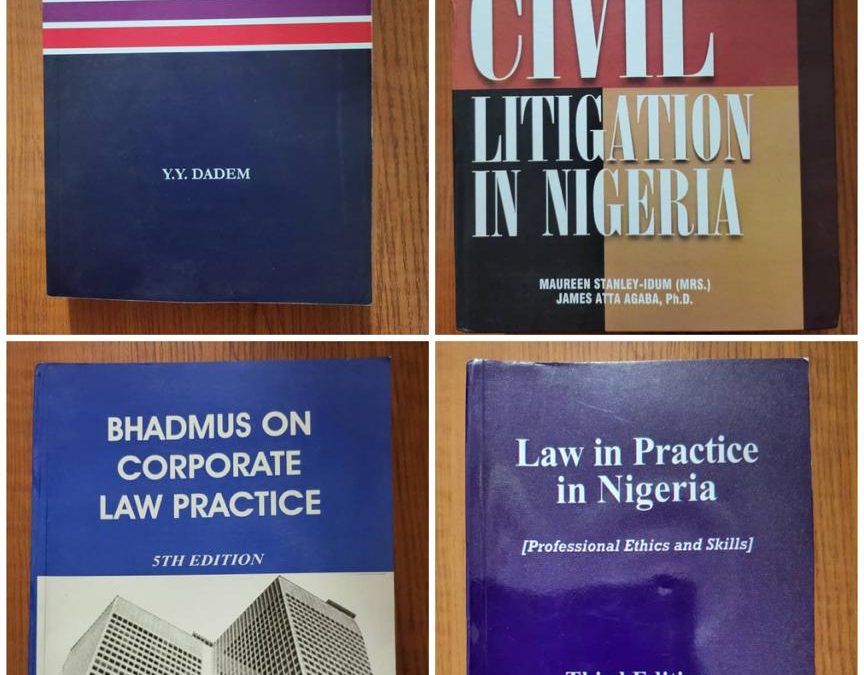
- Civil Litigation in Nigeria:This is the 3rd Edition of the book “Civil Litigation in Nigeria”, published in 2020, and co-written by M.M Stanley – Idum (Mrs) and J. A Agaba PH.D. See the book here https://legalnaija.com/product/civil-litigation-in-nigeria/
- Law of Evidence in Nigeria: This book is expansive in scope, covering a wide range of issues relevant for a proper understanding of the law relating to the Law of Evidence in Nigeria. It evinces the author’s industry, hard work and diligence. It also advertises his redoubtable scholarship. It is fascinating both for its insightful acuity and fecundity of his writing style. His prose is arresting just as the breadth and diversity of the issues on the Law of Evidence is breath taking. See the book here https://legalnaija.com/product/the-law-of-evidence-in-nigeria/
by Legalnaija | Oct 16, 2023 | Blawg
PRIVCON PRIVACY AWARDS: CALL FOR NOMINATION
The conveners of PrivCon Nigeria – an annual privacy and data protection conference in Nigeria – are delighted to announce the call for nominations into varying categories of their inaugural PrivCon Privacy Awards 2024. These awards have been established to identify and celebrate outstanding contributions to the growth and development of privacy and data protection in Nigeria.
Nominations are now open into the following categories:
- Privacy Leading Light (Legal) for lawyers in private practice or in-house counsel.
- Privacy Leading Light (Tech)– Privacy professionals in tech (non-lawyers)
- Privacy Leading Light (Academics): University lecturers teaching law, cybersecurity, ICT and other related courses.
- Privacy Leading Light (Research): Researchers with published works in the area of privacy, data protection, cybersecurity or related subjects.
- Privacy Leading Light (Women category): Women in tech, female lawyers
- Privacy Leading Light (Advocacy): Non-governmental organisations leading privacy/data protection advocacy in Nigeria.
- Privacy Team of the Year (Private sector): Private and public companies with formidable privacy departments.
- Privacy Team of the Year (Public sector): Government agencies with formidable privacy departments.
- Best Privacy Culture Development: Nigerian Organisations with the best privacy culture
- Best Privacy Product/Programme: Nigerian Companies with privacy-enhancing products or programmes
- DPO of the Year (private sector): DPOs in private or public companies.
- DPO of the Year (public sector): DPOs in government departments
- DPCO of the Year: licenced DPCOs in Nigeria
- Rising star (Legal): young lawyers (1 -5 years post-call)
- Rising star (Tech): young privacy professionals (1-5years experience)
- Rising star (Undergraduate): University students (including postgraduate and law school)
Nominations are invited from individuals, organizations, and entities who have made significant strides in promoting the privacy and data protection industry in Nigeria. Please consider submitting nominations for deserving candidates in these categories.
HOW TO NOMINATE:
Head over to PrivCon Privacy Awards website at www.privconprivacyawards.ng. Fill out the nomination form with the required information. Include a detailed description of the nominee’s contributions and why they deserve recognition in the selected category.
NOMINATIONS TIMELINE:
Call for Nominations Opens:16th October 2023
Nominations Deadline: 30th November 2023
Shortlisted Nominees Announced: 7th December 2023
Voting starts: 8th December 2023
Voting closes: 8th January 2024
Final Nominees Announced: 31st January 2024
Panel of Judge Announced: 1st February 2024
Awards Ceremony: April 2024
For any inquiries or require assistance, please contact host@privconnigeria.ng
Join us in celebrating those who have made significant strides in advancing privacy and data protection in Nigeria.
by Legalnaija | Oct 14, 2023 | Blawg
Criminal Instinct; Inborn Or Socially Imbibed[1]
CRIME FACTORS
- CONSTITUTIONAL/ENVIRONMENTAL FACTORS
Research had been carried out and it is deduced that to ascertain the causes of crime, the researcher must start somewhere, which necessitates some assumptions. The most popular presumption is that criminal behavior results from constitutional, environmental, and psychological factors operating either alone or in concert with one another on the offender. The presence of these forces must be dealt with as best as we can while keeping in mind the significant degree of overlap between them, even though their intensity and size are not now subject to precise measurement.
I allude to the physical traits that predispose the offender to act in the manner he does when I talk about constitutional variables in crime causation. These physical traits may be long-lasting or fleeting. Drunkenness is an example of a temporary criminogenic factor, although a physical condition like dwarfism may be a lifelong criminogenic predisposing factor. Studies on heredity, twins, hormones, and physical appearance all provide support for the constitutional tendency to criminal behavior at this time.
Early phrenologists, or men who sought to establish a link between the skull, the brain, and social behavior, are credited with starting the scientific study of these topics. Franz Joseph Gall[2] believed that the physical makeup of the skull and the structure of the brain was connected to a person’s propensities for particular types of behavior, including criminal behavior. But Lombroso was the one who popularized this anthropological theory of criminal behavior. The study that disproved the accuracy of anthropological beliefs was conducted by Dr. Charles B. Goring, an English jail doctor. In his book The English Convict,[3] Goring summarizes his research, which he conducted using control groups and statistical methods Pearson developed at University College, London.
2. HEREDITY
Numerous observers have remarked how frequently criminal behavior in children matches criminal behavior in parents or siblings, and some have concluded that a propensity for criminal behavior is an inheritable trait. Studies of ‘criminal families’ such as Richard Dugdale’s The Jukes,[4] Estabrook’s and Davenport’s The Nam Family,[5] and Henry Goodard’s The Kallikaks[6] have been used in support of this conclusion.
In Nigel Walker’s words, most delinquent children have lived with their delinquent parents or siblings long enough to acquire ways of life by imitation or some other non-genetic process of transmission.[7] Nevertheless, Cyril Burt came to the opinion that constitutional considerations are important in determining juvenile delinquency, but it would be erroneous to assume that every criminal is a helpless victim of his predisposition to crime.[8]
3. TWINS
The age-old and crucial question in criminology is “nature vs. nurture.” The studies of twins that examined the degree of concordance or discordance in the criminal behavior of monozygotic (identical) and dizygotic (non-identical) twins have proven to be the most effective means of addressing it. Monozygotic twins are produced when a single ovum is fertilized and separated into two separate embryos, each of which has an identical set of genes. These monozygotic twins are always identical in terms of sex, blood type, and appearance. On the other hand, the simultaneous fertilization of two ova by two spermatozoa leads to the development of dizygotic twins. These twins, which could be made up of one male and one female, two males, or two females, do not have genetically identical sets. Both of them may or may not share the same blood type, and they may or may not look alike.
When it comes to behavior, twins who display the same behavior are considered to be concordant in that regard. When it comes to the behavior aspect, twins that display divergent behavior are considered to be discordant. In this sense, two twins with the same genetic complexion are said to be concordant. This trait may be the result of genetic transmission if monozygotic twins exhibit a much higher rate of concordance with the trait of criminal behavior than dizygotic twins. Medical research has shown that at least one type of abnormal behavior, the symptom caused by Huntington’s chorea,[9] is genetically transmitted. Monozygotic twin pairs have also been reported to have high concordance rates for alcoholism, idiopathic epilepsy, and schizophrenia.[10]
According to Walker,[11] incorrect categorization will most frequently result in dizygotic being labeled as monozygotic, which will if anything, lower the concordance rate. One can only presume that the investigator was aware of the issue of prejudice and took appropriate action in response to the second criticism. The use of monozygotic twins who were raised in different circumstances is the only way to address the last complaint, which is of course the most serious. Studies in this vein have proved ‘that there are a marked genetic factor underlying measurable traits of personality, such as extraversion and neuroticism, and of course intelligence.’[12]
There is strong but not conclusive evidence based on unseparated twins for a partial determination of ‘criminality, by genetic inheritance; and fairly conclusive evidence, based on separated and unseparated twins, for a similar determination of at least two personality traits. The onus of proof, therefore, seems to lie on those who wish to explain away the higher concordance rates for delinquency in monozygotic.[13]
4. ENDOCRINOLOGY
Some have hypothesized that endocrine disorders in the individual are a contributing factor in criminality generally and particularly in the case of sexual offenses. In their book The New Criminology,[14] Schlapp and Smith made an effort to explain why there was a high rate of crime among immigrant parents’ first-born children in America by claiming that the mother’s glandular disorders were caused by the stress of immigration. The authors postulated that their offspring received this glandular imbalance from them. Children that were born later were not affected once the mother’s problems calmed. Hormonal therapy and castration of sexual offenders, both essentially presume an endocrine foundation for the proscribed behavior, have neither had outstanding outcomes nor been free of debate.[15]
5. PHYSIQUE
Ernst Kretschmer, a well-known German psychiatrist, contributed significantly to the field of serious investigation on the relationship between body composition and personality. He was able to prove beyond a shadow of a doubt that different body types are associated with particular types of mental diseases. For instance, he found a link between schizophrenia and an athletic body type. The work of Sheldon and the Gluecks in America may be credited to Kretschmer for having first connected bodily kinds (somatypes) to criminality. Kretschmer continued to make this connection. Sheldon defined four body kinds, or somatypes, based on his system of categorizing body types, which is predicated on the idea that a particular type of tissue will predominate in every individual.
- The endomorph in which fatty tissue predominates. This type is given to food, drink, comfort, company, and sleep.
- The ectomorph in which skin and the nervous system predominate. This type is given privacy, is sensitive to pain, needs sleep, and is youthful in appearance.
- The mesomorph is in which bone, muscle, and sinew predominate. He is insensitive to pain and is given to movement and aggression.
The balanced type or that body build in which equal amounts of the features of the preceding types are found.
6. MENTAL FACTOR
Mental disease, as opposed to mental sub-normality, is always characterized by the affected person’s persistent inability to live up to the expectations of the reality in which he or she is immersed. Because it is famously difficult to distinguish between periodic and constant failure, the literature frequently uses varying language and lacks accuracy. As a result, the interested person has a lot of latitude in how he constructs his thinking on the matter. The ideas of intellect, emotional maturity, and persistence have all been utilized in attempts to isolate, stabilize, and quantify components of mental existence. Intelligence is the ability to successfully adapt behavior to changing circumstances and to learn from experience. When it comes to pursuing action that is motivated by intelligence, emotion, or both, persistence is the opposite of emotional adjustment, which is the ability to reconcile one’s thoughts about things.
It is obtained that the mother is the primary caregiver for a child’s emotional needs from birth to age four, and this is crucial for healthy growth. The child starts to develop long-lasting relationships with others between the ages of four and seven, and father-child relationships become significant. The child’s intelligence is gradually growing at the same time that this emotional pattern is taking shape. The child’s ability to develop mentally depends on how well his emotional and intellectual growth keeps up with one another. His intelligence is known to rise throughout infancy, peaking between the ages of fourteen and sixteen, and then remain constant at that level until the second half of his life when it starts to fall.
For an informal discussion, mental diseases are frequently separated into two major categories: organic and functional. Organic mental illness is dependent on a specific physical illness, such as advanced syphilitic infection or drug use. Functional mental diseases are those that ‘have not yet been shown to have a clear physiological cause.’[16] They are recognized psychologically as opposed to physically. Examples of mental disorders with a functional origin include anxiety and hysteria.
7. PSYCHOSES
The general paralysis of the insane (dementia paralytica) caused by syphilitic infection, traumatic psychoses brought on by accidents, encephalitis lethargica, senile dementia, puerperal insanity, epilepsy, intoxication, psychoses, paranoia, paraphrenia, mania, and schizophrenia are the psychoses that are of interest from a criminological perspective.
- General paralysis of the Insane due to Syphilitic Infection
An overall decline in the quality of the person’s entire personality is a symptom of this psychosis. Antisocial behavior, such as theft, fraud, forgery, and violence performed without any attempt at covertness, sometimes precedes the onset of clinical symptoms. In the lack of clinical signs, these people may be mistakenly held responsible for their actions.
- Traumatic Psychoses Caused by Accidents
There have been cases when brain injuries were followed by pronounced personality changes, including an excess of sensitivity to the effects of alcohol, excitability, and a propensity for violent crimes. The punch-drunk boxer’s antisocial behavior is a hallmark of this type of psychosis.
- Encephalitis Lethargica (Sleeping Sickness)
An inflammation of the brain is caused by psychotic fever, which is ‘typically followed by serious and long-lasting aftereffects and changes in physique, intelligence, and character.’[17] The post-encephalitic stage is characterized by ‘committing thefts, assaults, acts of cruelty, or sexual misdemeanors’ by the patients. Only placing them in specialized hospitals is something that can be done.[18]
The organic psychosis known as epilepsy is commonly linked to criminal activity. Unconsciousness, convulsions, and uncontrollable body movement may result from the brain’s normal electrical activity being incredibly erratic and violent. A typical epileptic seizure follows. This disturbance, nevertheless, can be less severe and the epileptic features hardly noticeable. Although these epileptic seizures can sometimes be created intentionally, in the case of the actual epileptic, they are brought on by relatively unidentified internal impulses. In some epileptics, the focal point of the severe electrical activity surges has been seen to be damaged areas of the brain. It is well-recognized that some illnesses and poisonings can cause epilepsy.
It is often said intoxication leads to psychosis,[19] when it does we may be treated to the situation found in R. v. Hartridge[20], where Hartridge shot his wife to death while he was in a highly intoxicated state. Hartridge didn’t try to hide what he had done, and there wasn’t a clear reason for the shooting. In actuality, the rifle’s report, per his testimony, was the occasion that brought the reality of the situation to the forefront of his thoughts. He was unable to recall any of the activities leading up to the shooting. The Saskatchewan Court of Appeal rejected his arguments in a thorough ruling issued by Culliton, C.J.S. He had defended automation and the psychosis that it implies.
The source of the psychosis, in the Court’s opinion, was of utmost importance. This opinion was undoubtedly informed by the criminal law’s well-known unwillingness to absolve culpability in situations where intoxication was the offender’s state[21]. Criminological intoxication has four facets;[22]
- To what extent is intoxication per se a crime?
- What influence does intoxication have on the commission of a crime?
- What is the psychiatric significance of intoxication?
- What is the reaction of the criminal law to offenses committed under the influence of alcohol?
- Manic-Depressive Psychosis
Intervals of enthusiasm and depression alternate with sporadic intervals of rationality in this type of mental disease, which swings back and forth. Reactive depression is defined as depression brought on by an external force, such as the flu or the usage of sulphonamides. It might be endogenous and have no known external origin. Suicidal behavior[23] frequently follows depression, regardless of the reason. A severe depression mood might result in a parent killing his children and himself or a couple making a suicide pact.[24] On the other end of the spectrum, mania will show itself as intense, uncontrollable enthusiasm, which can occasionally result in violence like homicide, which is a reflection of an exaggerated urge to kill. Most often, medication or electroconvulsive therapy is used to treat depression and manic episodes.
- NEUROSES
The psychotic’s reality is so controlled by his imagination that he is no longer subject to natural laws. Reality has vanished. The neurotic, on the other hand, can see the world for what it is, but he is significantly less able to handle its demands. Hallucinations or delusions are not a part of neurotic symptoms, and their onset is never abrupt. Although medication may occasionally be used, psychotherapeutic techniques of treatment are typically used.
Hysteria is a condition in which the person has lost control over some aspect of his behavior,’ according to one definition. This may cause the person to make utterly unconscious movements or verbalizations. A powerful example is how the film ‘For King and Country’ tackled the battle exhaustion of one particular soldier. The physical changes that may accompany hysteria are entirely reversible, and its underlying causes are solely emotional. Hysteria always has the same underlying cause: a never totally conscious and usually wholly unconscious attempt on the part of the victim to use the portrayal of disease symptoms for their benefit. These physical symptoms are just as valid as those with only physiological explanations. The alleviation of unresolvable mental conflict is advantageous to the patient. Treatment must take this into account since, if it eliminates the main channel of release without offering a suitable substitute, severe harm may follow.
- Anxiety Neurosis and Phobias
One of the neuroses that affect people the most frequently is this one. It is defined by the person experiencing extreme and ongoing anxiety over circumstances that would not trigger such a response in a non-sufferer. The typical level of anxiety response prevalent in all of these people reaches such a high pitch that it significantly impairs the sufferer’s capacity to deal with the demands of his surroundings. When a student asks to postpone taking a test after having fully prepared himself for it from an objective standpoint, that behavior is an example of anxiety neurosis. It is typically referred to as a phobia when this extreme worry is caused by a wholly irrational view of an object or circumstance.
8. THE ‘USUAL’ OFFENDER
A ‘normal’ criminal does not exist, which is an absurdity. The crime itself is an indication of abnormality. If psychosis, neurosis, psychopathy, or mental deficiency are supposed to be absent from normality, the ‘normal’ offender is the one whose personality does not include any of these. Any examination of the ‘normal’ offender must start with the premise that offenders and non-offenders have distinct psychological makeups. However, the study has been unable to identify any particular personality traits of the offender group. The study, in Wooton’s opinion, shows that ‘personality traits are distributed in the criminal population in about the same way as in the general population.’[25] Although it has been documented to cause suicide in extreme situations, anxiety neurosis has no direct criminological significance. Occasionally, hospitalization may be required.
9. PSYCHOPATHY
It is necessary to take into account a group whose mental instability is more readily seen in their conduct than in their mental processes through the study of abnormal mental life. From a criminologist’s perspective, this group reflects criminals whose behavior is characterized by frequent run-ins with the law that seem to be the result of a pronounced inability to draw on prior experience. Repeated offenses and penalties have little effect on the pattern of their behavior, and they just make them more hopeless and resentful. The psychopath’s career usually starts in youth, lasts his entire life, and seems to be influenced by both physical and emotional aspects.
The unusual electroencephalographic pattern of electrical activity in the brain and the immature capillary loop formation in the nail bed are two physical traits associated with psychopaths. A disproportionately large number of psychopaths’ recorded electrical patterns reveal brain processes that are similar to those often found in young infants.
10. MENTAL DEFICIENCY
In a New York survey of 10,000 consecutive criminals, 2.6% were classified as having mental impairments. Since Alfred Binet’s studies in France in the eighteenth century, there has been debate over whether intelligence and delinquency are related. The early idea that crime was a logical choice of behavior gave rise to the belief that people with mental defects shared no legal liability for their actions with newborns and the crazy. Early in the nineteenth century, mental incapacity was distinguished from insanity, but it wasn’t until the latter part of the century that scientific standards for gradations of mental ability were developed. It is important to keep in mind that the same elements contributing to an individual’s resulting IQ score may also contribute to criminality when examining the association between intelligence and delinquency. If comparisons of the IQ of delinquents and non-delinquents are to be relevant, they must only take into account delinquency. Walker[26] contests the idea that people chosen by society for the delinquent group are increasingly characterized by an inferior mentality.
About 10% of all cases of severe mental abnormalities can be attributed to grossly distorted newborn rearing. For many years, early-life psychological trauma has been studied as a potential cause of mental illness. However, because severe mental deficiency is typically linked to apparent organic disease, this idea has been ignored in severe mental deficiency. Emotionally adverse environments likely have a substantial role in mental disability.[27]
Congenital intellectual impairment refers to people who exhibit signs of a lower level of intellectual capability or ability from birth. This intellectual disability is described as a condition of limited potential for, or arrest of, cerebral development, as a result of which the affected person is unable, at maturity, to adapt himself to his environment or the needs of the community to maintain an existence independent of external support.[28] Intellectual disability may result from environmental or inherited causes, intrauterine developmental abnormalities, or early childhood infections or traumas that cause damage to the neurological system.
It is critical to keep in mind that, in addition to the subject’s intrinsic intellect, other factors may have an impact on the test’s outcomes. When the mental age score from the Binet test is divided by the chronological age result, the result is the I.Q. These are the categories of intelligence;
- the moron with an IQ of less than 50,
- the imbecile with a score of 25 to 50,
- the idiot with a score of 50 to 70,
- the moron with a score of 50 to 80, the dull normal 80 to 90,
- the average 90 to 110,
- the superior 110 to 120,
- the very superior, over 120,
- and the genius or close to genius with a score of 140 and above.
Any determination of a person’s intellectual capacity should be supported by both clinical judgment and psychological testing.
11. SOCIAL FACTORS
- FAMILY
Just like Vin Diesel said in most parts of Fast and Furious, family is all that matters. The first set of persons an individual is introduced to, learns from, and grows with is the family, every member of the family, all their activities, words, actions, and inactions. Because they have an impact on a child’s development, the family environment and parenting style are significant risks or protective factors for involvement in crime. The likelihood that a youngster will become a criminal adult is significantly shaped by parental behavior. A child’s likelihood of experiencing conduct issues and subsequent criminal involvement appears to be significantly elevated when their parents are criminals. Due to the numerous methods (common environmental influences, genetic risk factors, biological risk factors, and parental negative role modeling) that may transmit a parent’s risk of criminal participation to their child, the influence of parental criminality is complicated.
Significant generational consequences on a person’s risk of committing a crime are caused by family violence and child abuse. According to some studies, childhood abuse doubles a person’s likelihood of committing many different types of crimes.
The impact of family influences seems to be greatest during a child’s formative years and diminishes as they age, though inadequate parental supervision and a lack of affection between parents and their teenage children have also been identified as risk factors for future offenses.
2. COMMUNITY AND PEERS
Another institution we are quickly introduced to after the family which also has a great influence in our lives whether good or bad is the community we are born and grow into and also the field we keep. Although it can be challenging to quantify, community and neighborhood effects on criminality do seem to have an impact on both crime and antisocial behavior. As a youngster gets older, the influences of the neighborhood become more significant.
Numerous studies have indicated that violent behavior and the emergence of antisocial peer groups are closely related. Most of the people involved in crime and nabbed have been asked what motivated them into committing the crime and they have confessed to being brainwashed and influenced by those they call friends. Some have even said when they rejected their offer, they were bullied and cheated they later conceded.[29]
3. EDUCATION
On countless times the video of teachers maltreating the pupils kept under their care trended on the internet. With the cruel treatment, the individual is exposed to help to train their minds and perception about things which in turn makes them brutal and heartless. A risk factor for subsequent delinquency and criminal conduct is not participating in school-level education. When compared to lawful work, education alters the relative opportunities provided by crime, particularly property crime. Greater profits from employment are ensured by higher levels of education, making it more desirable than crime.
For children under the age of 13, having parents with poor levels of education (i.e., parents without college degrees) has also been linked to an increased risk of future crime. Success in education lessens the financial rewards of crime and, hence, the motivations for criminal behavior.
- LEVEL OF ECONOMY
Unemployment, relative wealth (disparity), and poverty (deprivation) are all economic elements that affect criminal behavior. A link between disparity and violent crime is suggested by the weight of the evidence. Although there is disagreement over the strength of this association, worldwide data reveals that a relationship remains even after adjusting for other characteristics.
According to evidence, certain types of criminal behavior are linked to deprivation. Even after adjusting for parental, individual, school, and peer characteristics, the Christchurch Health and Development Study’s[30] analysis contends that socioeconomic disadvantage is linked to both self-reported crimes and officially documented convictions.
4. SOCIAL MEDIA
Since the advent of smartphones and the internet, we have always spent most of our time on the phone chatting with friends, playing games, surfing the internet, and having access to unsolicited websites. On some of these websites, are training, groups and organizations educating some of their audiences on how to carry out some criminal activities.
Also, some movies and symposiums are basically for mind training and supporting individuals to join their criminal course and they will be paid for it and some other benefits.
CONCLUSION
We live in a world filled with a lot of criminal activities. Truth be told, everyone is capable of carrying out different criminal acts. However, some people are so determined that no matter what, even if Jupiter will fall, they will never be involved in any criminal activity. Those that are now involved in criminal activities, if truth be told are not acting with their right senses. They are either brainwashed, manipulated, or coerced as discussed earlier.
It is however pertinent that each government of the states of the world set up a Wellbeing Institution. What will this Institution be responsible for? This institution will be responsible for identifying individuals that have this criminal psychology, accommodating and not arresting them with the option that they are free to go back into society of their freewill if they do not like being in the institution but if they are found exhibiting the criminal psychology traits they exhibited that got them into the institution, they will now be arrested and prosecuted. Those that decide to stay back at the institution should be educated, fed, medically treat, train in different entrepreneurial skills, empowered, and released back into society to start life afresh as a different person. However, the individuals released back into the and closely monitored to see that all they have been taught in the institution is dully put into practice.
Why did I recommend this method? I believe that if most of these persons with criminal psychology have the right and appropriate person(s) to be connected with, they will surely and quickly snap out of their mystery.
REFERENCES
- S. Hornby. (1974) Oxford Advanced Learner’s Dictionary Oxford: Oxford University Press. 800.
Abacha v. State 2002 100 LRCN 1588.
Anthropological Criminology. Retrieved from https://en.m.wikipedia.org/wiki/Anthropological_criminology
Armstrong and Turner. (1965). Special Problem Groups in McGrath (Ed.). Crime and Its Treatment in Canada. 462.
Arthur H. Estabrook and Charles Davenport. The Nam Family: A Study in Cacogenics. Retrieved from https://core.ac.uk/download/pdf/46955637.pdf
Barbara Wooton. (1959). Social Science and Social Pathology.
Bryan A Garner. (2007). Black’s Law Dictionary (8ed.) St Paul: West Group. 10.
C.M.V. Clarkson. (2001). Understanding Criminal Law (3ed.) London: Sweet & Maxwell. 9.
Criminal Code of Canada, Supra, n. 36, s. 213. A successful suicide is an example of Dr. William’s ‘unenforceable crime.’
Driver v. Hinnant (1966) 356F.2d761 (4th Cir.)
Easter v. District of Columbia (1966) 361 F. 2d 50 (D.C. Cir.).
Franz Joseph. Gall and Phrenology. Retrieved from https://study.com/academy/lesson/franz-joseph-gall-phrenology-theory-definition-lesson-quiz.html
Genesis 4: 1-7. See also https://www.biblegateway.com/passage/?search=Genesis%204&version=NLV
Government Liquor Act, R.S.B.C. 1960, c. 166, s. 68
Guttmacher and Weihofen. (1952). Psychiatry and the Law, 172. New York.
- Bourne. (1965). Protophrenia: A Study of Perverted Recruing and Mental Dwarfism. 11.
H.M.S.O. London (1913).
Halsbury’s Laws of England. Retrieved from https://www.google.com/search?client=firefox-bd&q=Halsbury%E2%80%99s+Laws+of+England+definition+of+crime
Henry H. Goddard. The Kallikak Family. Retrieved from https://embryo.asu.edu/pages/kallikak-family-study-heredity-feeble-mindedness-1912-henry-herbert-goddard
Hutchinson T. & Duncan. (2012). Defining and Describing What We Do; Doctrinal Legal Research. New Jersey. Deakin Law Review. Vol. 17 No. 1.
Ignorantia juris non excusat.
Ikomi v. State 1986 3 NCR, ALR 341
Imran A. K. Nyazee. (2002) General Principles of Criminal Law (2ed.) Rawalpindi, F L H, 2002. 15-16;
Isaiah 14:13-14
How, why, and when did Satan fall from heaven? Retrieved from https://www.gotquestions.org/Satan-fall.html
- B. Curzon. (1997). Criminal Law (2ed.) Plymouth: M & E Handbooks. 7.
Nigel Walker. (1965). Crime and Punishment in Britain. 47.
Okoli v. State 1992 6 NWLR Pt. 247 381
- v. Hartridge (1967), 1 C.C.C. 346 (Sask. C.A.).
- v. Hilborn [1946) O.R. 552; 2 C.R. 129; 86 C.C.C. 406 (Ont. C.A.)
Richard Dougdale. The Jukes: A Study of Crime, Pauperism, Disease, and Heredity. Retrieved from https://readingroom.law.gsu.edu/buckvbell/1/
Robinson v. California (1962) 370 U.S. 660, 666
Romans 3:23; for all have sinned, and come short of the glory of God Retrieved from https://www.bible.com/bible/1/ROM.3.23.KJV; See also 1 John 1:19; If we confess our sins, he is faithful and just to forgive us our sins, and to cleanse us from all unrighteousness Retrieved from https://www.kingjamesbibleonline.org/1-John-1-9/
Romans 6:23; See also ‘For the wages of sin is death, but the gift of God is eternal life in Christ Jesus our Lord.’ Retrieved from https://biblehub.com/romans/6-23.htm
Schlapp and Smith. The New Criminology. Retrieved from https://books.google.com.ng/books/about/The_New_Criminology.html?id=37w1AAAAIAAJ&redir_esc=y
Section 2 Criminal Code of Nigeria
See the movie Monster produced by Tonya Lewis Lee, Nikki Silver, Aaron L. Gilbert, Mike Jackson, and Edward Tyler Nahem 2018
Sellin, (1964). The MeasuTement of Delinquency. 7-8.
Stafford-Clark. (1963). Psychiatry Today (2nd Ed.).
The Liquor Act, R.S.S. 1965, c. 382, s. 105 (1)
The Liquor Control Act, 1958, R.S.A. 1958, c. 37. s. 87
The Liquor Control Act, R.S.M. 1956, c. 40, s. 169 (3).
University of Otago, Christchurch. Christchurch Health and Development Study. Retrieved from https://www.otago.ac.nz/christchurch/research/healthdevelopment/
Vec Milos (September 2007). The mind on the stage of justice: the formation of criminal psychology in the 19th century and its interdisciplinary research. Retrieved from https://pubmed.ncbi.nlm.nih.gov/18173066/
Vernon Fox (1976). Introduction to Criminology. New Jersey: Prentice-Hall Inc. 27.
Vernon Fox. (1976). Introduction to Criminology. New Jersey: Prentice-Hall Inc., 8-9.
[1]. A. V. Adeleye Puzzle Law Firm, Durban Street, Off Ademola Adetokunbo Crescent, Wuse 2, Abuja. adeleyebola93@gmail.com 08108173996
[2] Franz Joseph. Gall and Phrenology. Retrieved from https://study.com/academy/lesson/franz-joseph-gall-phrenology-theory-definition-lesson-quiz.html
[3] H.M.S.O. London (1913).
[4] Richard Dougdale. The Jukes: A Study of Crime, Pauperism, Disease, and Heredity. Retrieved from https://readingroom.law.gsu.edu/buckvbell/1/
[5] Arthur H. Estabrook and Charles Davenport. The Nam Family: A Study in Cacogenics. Retrieved from https://core.ac.uk/download/pdf/46955637.pdf
[6] Henry H. Goddard. The Kallikak Family. Retrieved from https://embryo.asu.edu/pages/kallikak-family-study-heredity-feeble-mindedness-1912-henry-herbert-goddard
[7] Nigel Walker. (1965). Crime and Punishment in Britain. 47.
[8] Op. cit. Supra n 5, at 230.
[9] Op. cit. Supra n. 20, at 48. Also, see infra, n. 92.
[10] Id., at 48-49.
[11] Id., at 50.
[12] Id., at 50-51.
[13] Id., at 51.
[14] Schlapp and Smith. The New Criminology. Retrieved from https://books.google.com.ng/books/about/The_New_Criminology.html?id=37w1AAAAIAAJ&redir_esc=y
[15] Armstrong and Turner. (1965). Special Problem Groups in McGrath (Ed.). Crime and Its Treatment in Canada. 462.
[16] Stafford-Clark. (1963). Psychiatry Today (2nd Ed.).
[17] Op, cit. Supra, n. 20, at 63
[18] Id., at 62.
[19] Id., at 246
[20] (1967), 1 C.C.C. 346 (Sask. C.A.).
[21] Robinson v. California (1962) 370 U.S. 660, 666; Driver v. Hinnant (1966) 356F.2d761 (4th Cir.); Easter v. District of Columbia (1966) 361 F. 2d 50 (D.C. Cir.).
[22] Government Liquor Act, R.S.B.C. 1960, c. 166, s. 68: The Liquor Control Act, 1958, R.S.A. 1958, c. 37. s. 87: The Liquor Act, R.S.S. 1965, c. 382, s. 105 (1): The Liquor Control Act, R.S.M. 1956, c. 40, s. 169 (3).
[23] Criminal Code of Canada, Supra, n. 36, s. 213. A successful suicide is an example of Dr. William’s ‘unenforceable crime.’
[24] R. v. Hilborn [1946) O.R. 552; 2 C.R. 129; 86 C.C.C. 406 (Ont. C.A.)
[25] Barbara Wooton. (1959). Social Science and Social Pathology.
[26] Op. cit. Supra, n. 20, at 59
[27] H. Bourne. (1965). Protophrenia: A Study of Perverted Recruing and Mental Dwarfism. 11.
[28] Guttmacher and Weihofen. (1952). Psychiatry and the Law, 172. New York.
[29] See the movie Monster produced by Tonya Lewis Lee, Nikki Silver, Aaron L. Gilbert, Mike Jackson, and Edward Tyler Nahem 2018.
[30] University of Otago, Christchurch. Christchurch Health and Development Study. Retrieved from https://www.otago.ac.nz/christchurch/research/healthdevelopment/
by Legalnaija | Oct 14, 2023 | Uncategorized
ABSTRACT
Different criminal activities keep eating into the fabric of society in every corner of the world and everything and method put into action to curb these crime rates keeps proving abortive. Both the government and the security operatives are viewed as incompetent and carrying out their first duty which is the safety of the lives and property of every member of the state. This article views criminal behavior as a deliberate action from the mind and not a thing of mistake as every criminal action is planned and calculated. The history of criminal psychology and the different factors influencing criminal psychology are itemized and provide the possible way out of the menace.
KEYWORDS: Criminal, Psychology, Psychoses, Social media, Brainwash.
INTRODUCTION
Just recently, there was a trend of a video of a young boy, I think from the South American continent of around eight (8) to twelve (12) years old being asked what he wants to be when he grows up. He said he wants to be a killer with a happy expression. The Interviewer went further to ask him why he wants to be a killer and he said it feels good. He went further to say he is going to kill anybody he could come along his way. The Interviewer asks that will he kill his Mom and siblings too, and he made an exception for them. The Interviewer asks if he is going to kill her too and he also makes an exception for her.
One question that comes to mind is where did this young boy get the mindset to be a killer? Was anyone in his family once involved in the killing that the boy witnessed? What intrigued the inhuman thoughts in the people found in different criminal activities, was learned as they grow from friends social media, and movies or they were born with it and they had it in them all through their growth
This study tends to conduct in-depth research into the psychology of crime and what motivates criminals to do what they did.
The Research work will be adopting both a normative analysis and a critical analysis approach. In order to assess the coherence and validity of normative data, such as the legal principles, provisions of some textbooks, journals, discussions on the subject matter, and other pertinent laws, it is necessary to examine the doctrinal data first. One illustration is deciding if criminalizing behaviour committed by an individual is normatively coherent, but ignoring what may have ignited the thought and behaviour.[1] A critical analysis, on the other hand, examines electoral and democratic principles in existing literature and policy in order to assess and apply these concepts to justify the modification of election laws. Case laws and some textbooks will also be consulted through the research of this topic.
HISTORY OF CRIME PSYCHOLOGY
Right from the creation of the world, maybe we decide to go by the Biblical way, the scientific story of man, or the one told by different customs and traditions across the world, crime has been in existence for a long time. Most people often think that the first crime in the Bible started with Cain killing Abel[2] but no, the first crime in the Biblical story is the conspiracy Lucifer and some angel had against God,[3] it is no need to state here that conspiracy is a crime. This conspiracy which played out in both Lucifer’s and Cain’s issues is an issue of the mind. The idea of rebelling against God his master and killing his brother started and was perfectly played out in their minds. This is to let you know that crime has been in existence for a very long time and it lives with us, we are born in it and we grow in it. However, it is left to an individual whether to develop and go into crime or just live a normal life devoid of crime.
The study of criminal psychology began in the late 17th century seeing the great crime rate increasing side every day around the world. Both frightening and interesting, the thinking of a known criminal. The usefulness of a quantitative record of criminal activity was highlighted by Sir William Petty and Bentham campaigned for the courts to maintain a statistical record of criminal convictions in 1778.[4]
The development of human behavior began with the establishment of tiny towns and villages in agricultural regions, and the application of the intellect to satisfy the needs of the body and its associated systems. Who began communal living first is still unclear. It is certain, however, that it began close to water sources where there was both vegetation and meat to be had. The supernatural, mysticism, and magic were also used in early attempts to comprehend human behavior. Long before Freud, people believed that dreams had meaning, and we continue to learn about ‘mental dynamics.’
‘Extrasensory perception (ESP) is an old idea that is enjoying much current study. It is based on the ‘psychic power’ enabling people to communicate with unseen and unheard people and other sources and that ‘The witch doctor or medicine man or shaman became the interpreters of ‘law’ or conforming behavior.’[5]
The separation of the ‘mind’ and ‘body’ in early philosophies led to paradoxes in our understanding of how people behave.
Behaviorism in modern experimental psychology holds that anything that cannot be defined, observed, and measured is ‘mentalistic’ and subjective. Subjective data pertains to personal experience bound by past and present awareness and interpretation. Objective data or ‘veridical domain’ refers to data that can be observed and are available to everybody. Experimental psychologists and many social scientists are concerned only with objective data, while many clinicians, including clinical psychologists, psychiatrists, and psychiatric social workers, are concerned with personal awareness and perception, experience, and the perspective of the patient.[6]
In contrast to scientists, religious philosophers place more emphasis on the latter. To determine whether intentions were good or evil and the behaviors that resulted from those intentions from realistic viewpoints, the debate’s goal was to examine the relationship between the mind and body. It has helped us to comprehend human behavior, especially criminal activity that is motivated by retaliation (also known as Actus Reus or Mens Rea) and related to purpose. A significant component of the interactions between Mens Rea and Actus Reus remained unexplored due to disagreements over criminal behavior and its causes.
Understanding criminal behavior and recommending corrective actions through the criminal justice system are based on criminality. The focus is on the types of crimes that are committed and how they are categorized per local law and social norms, with any imposed restrictions. The two primary aspects of the crimes, the Public Wrong and the Moral Wrong are mostly used to categorize and decide upon them. Mala in prohibita and Mala in se are two additional ways to distinguish between criminal offenses. The purpose of this example is to demonstrate how criminal behavior is consistent among those involved in comparable crimes and when criminal conduct is regarded to be a crime.
It should however be noted that any background can be used as justification for committing a crime, but in this section, it will be highlighted as to who commits what crimes and under what conditions. The fundamental notion regarding the commission of crimes is to comprehend the operation of a sense of capability. Human behavior is unique to each individual, and there may be many more causes than those covered in this article. It is important to emphasize that although man prefers easy, he must work hard to obtain relaxation.
Quarreling is defined as a physical altercation, a heated argument, or the exchange of insults, taunts, threats, or accusations between two people. These crimes are perpetrated by people who are aggressive and violent by temperament, but not to the point where they would hurt their adversaries physically. Most often, they are the ones that try to force others to follow the rules and procedures, whether they agree with them or not. They intimidate or abuse one another when they argue at a distance, yet they argue with one another face-to-face without being physical. However, their “Sense of Capability” prevents them from resorting to actual violence while they are blaming or arguing. The other type of abuse involves wrongly using someone, with or without their consent, by using their environment and circumstances to force them to participate in the abuse. Legally abusing is ‘deviating from legal or reasonable use of words or force in dealing with a person or thing. Injury to the mind, emotions, body, or sexual organs can come from physical or mental abuse.’[7] Because they lack the confidence to endure more than verbal abuse or to confront any retaliatory force, the perpetrators of these crimes choose weaker individuals as their targets, such as children, women, elderly or young people, and any type of subordinates.
Offenders of violent crimes physically damage others, whether or not there is a motive or animosity between them. Most often, people with anxiety or high blood pressure would commit these kinds of actions, which are both crimes and offenses, to fulfill their unfulfilled aspirations and desires. They would have unfinished wills that date back to their childhood, adolescence, or young. These individuals lack patience, thus they respond quickly to any unfavorable circumstance by hurting an adversary or creating property harm. Some people carry out these crimes to extort money under duress, while others do so out of passion or to fulfill their nasty fantasies. In every one of these situations, their “sense of capability” allowed them to act improperly regardless of the damage that resulted. The violence primarily manifests as an individual or group act. In cases of personal violence, the goal is to lessen or hinder the opponents’ capacity for competition by inflicting harm that results in a loss or some kind of temporary or permanent disability. Collective violence typically disrupts or harms the daily activities of the public, causing losses for the country.
Philosophy, medicine, law, and biology were the four main pillars of the creation of criminal psychology. Before there was criminal psychology, there was a debate in criminal law between medical specialists and court judges over how to proceed in the majority of instances, which prompted the formation of a specialized field for individualized investigations and assessments of suspects. Criminal anthropology[8], which focuses more on systemic characteristics of crime than specific suspects and court cases, is considered to be a subfield of the larger discipline of criminology, which is often regarded as having criminal psychology as a forerunner.[9]
CRIME AND OTHER TERMINOLOGIES
Offenses are felonies, unlawful deeds, omissions, or circumstances that usually result in court-ordered criminal prosecutions. In every society, the State establishes some crimes as offenses by codification, and when these crimes are committed, police or investigation agencies are triggered to take action, bring the criminals to justice, and punish them.
An act or omission which renders the person doing the act or making the omission liable to punishment under this Code, or any Act, or law, is called an offense.[10]
However, C. M. V. Clarkson defines it as;
Criminal law sets standards that largely reflect community values of what is wrong and harmful. By setting these standards and punishing those who do not conform to them, lawmakers hope to strengthen respect for the standards and encourage people to comply with them. It is not enough simply to lay down these standards. They must be communicated to the public and potential wrongdoers. This communication must be in a language and in a form that is accessible and comprehensible to such a person.[11]
Offenses’ primary distinction from crimes is their widespread notoriety. The State declares an offense through legislation, which is publicized in the media and printed materials. Once something is classified as an offense, the public must refrain from it, and the job of the police to enforce it. Although there is a saying that ‘ignorance of the law is no excuse,[12]’The State also has to make sure that it receives widespread attention and has room for the general population to follow it. Except for special laws designed for particular objectives, no law can be enforced alone. All parties involved retain the right to know the specifics of this case as well. The knowledge of the seriousness of the offense and the punishment may serve as a check on the ‘sense of capability’ of some wrongdoers.
To operate daily operations smoothly in society, many issues are jointly agreed upon as laws or norms. Although many tiny transgressions or errors go unnoticed by the broader public, they have a significant impact on an individual’s future success. As an illustration, taking favorite foods away from kids without their consent, lying to get out of a situation where you might otherwise become angry, or berating others for trivial things are some examples. A pang of guilt known as sin is not the same as a crime or an offense. The Bible did not categorically defines the term sin, however, sin could, regardless of religion, be defined as;
Breaking God’s law and ordains or behavior that is against the principles of
morality. It may be an offense against convention that is considered contrary to common sense and that is fatal to the salvation of the soul.[13]
Sin causes a person’s personality to feel guilty, which prepares them for punishment.[14] To ensure that they are brought to justice, they continue to sin or commit crimes as a result of their newly found ‘sense of capability.’ Vice is any moral sentiment, ethical shortcoming, evil, corruption, flaw, or violation of one’s religious commitments. Fornication, cheating, backbiting, drunkenness, and other vices are among the numerous that fall under the criminal category. Having a guilty conscience maintains the criminal in a constant state of restlessness and mental disturbance, whereas punishment gives the convict a sense of satisfaction while relieving their social and emotional suffering. The possibility for guilty-conscious people has also been supplied by religious and social peers. They can confess their faults to God and repent, or they can submit to the law or go into confessional boxes as an alternative.[15]
Till tomorrow, every author will be creative with the right definition of the term crime. Just like the proverbial elephant and the group of blind men, everyone will define the term from their point of view. It is often viewed as;
Any act of wickedness or sin. In everyday use, the word often carries overtones of immorality and wrongdoing. The links between morality and criminal law have been very strong.[16]
An unlawful act or default is an offense against the public and renders the person guilty of the act liable to legal punishment.[17]
The Latin word, crimen, from which ‘crime’ is derived, means an accusation, a tort,
or wrong was done by one individual against another.[18]
Crimes typically involve actions that affect the public in some way, as opposed to merely interfering with private rights. The State is the public’s defender of rights under modern law. The distinction between the laws governing civil and criminal procedures highlights the public aspect of a crime. Therefore, subject to certain restrictions, any citizen may file a criminal complaint, regardless of whether he has experienced a direct injury.
In practice, of course, a vast majority of prosecutions are carried on by the police or other public officers who have no personal interest in the outcome. The individual who starts a prosecution may not discontinue it at will for it is not only his concern but that of every citizen. The initiator of the prosecution has no power to pardon the offender. This right belongs to the State, which represents the public interest in the matter.[19]
Making crimes a public wrong is necessary so that the efficacy of a criminal’s ‘sense of capability’ can be recognized and dealt with by the appointed administrative appointees, such as the police and other law enforcement authorities. The use of the guilty party’s ‘sense of capability,’ which is otherwise extremely difficult to judge at an individual level or in isolation, can be easily identified by reviewing the record of available evidence related to the commission of crimes. Based on this, the state can take corrective action to reduce crime both generally throughout the dominion and in the impacted areas in particular.
[1] Hutchinson T. & Duncan. (2012). Defining and Describing What We Do; Doctrinal Legal Research. New Jersey. Deakin Law Review. Vol. 17 No. 1.
[2] Genesis 4: 1-7See also https://www.biblegateway.com/passage/?search=Genesis%204&version=NLV
[3] Isaiah 14:13-14; See also How, why, and when did Satan fall from heaven? Retrieved from https://www.gotquestions.org/Satan-fall.html
[4] Sellin, (1964). The MeasuTement of Delinquency. 7-8.
[5] Vernon Fox. (1976). Introduction to Criminology. New Jersey: Prentice-Hall Inc., 8-9.
[6] Ibid. 11.
[7] Bryan A Garner. (2007). Black’s Law Dictionary (8ed.) St Paul: West Group. 10.
[8] Anthropological criminology. Retrieved from https://en.m.wikipedia.org/wiki/Anthropological_criminology
[9] Vec Milos (September 2007). The mind on the stage of justice: the formation of criminal psychology in the 19th century and its interdisciplinary research. Retrieved from https://pubmed.ncbi.nlm.nih.gov/18173066/
[10] Section 2 Criminal Code of Nigeria
[11] C.M.V. Clarkson. (2001). Understanding Criminal Law (3ed.) London: Sweet & Maxwell. 9.
[12] Ignorantia juris non excusat
[13] A. S. Hornby. (1974) Oxford Advanced Learner’s Dictionary Oxford: Oxford University Press. 800.
[14] Romans 6:23; See also ‘For the wages of sin is death, but the gift of God is eternal life in Christ Jesus our Lord.’ Retrieved from https://biblehub.com/romans/6-23.htm
[15] Romans 3:23; for all have sinned, and come short of the glory of God Retrieved from https://www.bible.com/bible/1/ROM.3.23.KJV; See also 1 John 1:19; If we confess our sins, he is faithful and just to forgive us our sins, and to cleanse us from all unrighteousness Retrieved from https://www.kingjamesbibleonline.org/1-John-1-9/
[16] L. B. Curzon. (1997). Criminal Law (2ed.) Plymouth: M & E Handbooks. 7.
[17] Halsbury’s Laws of England. Retrieved from https://www.google.com/search?client=firefox-bd&q=Halsbury%E2%80%99s+Laws+of+England+definition+of+crime
[18] Vernon Fox (1976). Introduction to Criminology. New Jersey: Prentice-Hall Inc. 27.
[19] Imran A. K. Nyazee. (2002) General Principles of Criminal Law (2ed.) Rawalpindi, F L H, 2002. 15-16; See also Ikomi v. State 1986 3 NCR, ALR 341; Okoli v. State 1992 6 NWLR Pt. 247 381; Abacha v. State 2002 100 LRCN 1588.