
The Business Of Law Practice/ What Law School Does Not Teach You | Olivia Muzan Esq.

The Business Of Law Practice/ What Law School Does Not Teach You | Olivia Muzan Esq.

Long Title – 
BUILDING THE LAW FIRM OF THE FUTURE: THE BUSINESS OF LAW PRACTICE/WHAT LAW SCHOOL DOES NOT TEACH YOU.
By Olivia C. Muzan, Esq.
INTRODUTION:
It is interesting to know that the narrative of the Legal profession is gradually changing, especially regarding law practice and law firm management. The Legal profession has gone beyond practice and procedure.

The ability to welcome change and development is a key asset for today’s successful legal practitioners’ and law firms.
In this modern, ever changing world, what is satisfactory today will need constant advancement to cope with the demands of tomorrow.
To be successful in such a world, it is important that you maintain both your personal skills and knowledge and use the latest techniques to motivate and encourage others to accept your leadership and ideas. 
It is the requirement of the Council of Legal Education (CLE) that every lawyer must go through the compulsory five (5) years Legal Training in the university where you acquire your LL. B degree and one (1) year at the Nigerian Law School. By the provisions of Section 1(2) of the Legal Education (Consolidation, etc) Act, Cap 206 Laws of the Federation of Nigeria, 2004 which provides thus; 
“the council shall have the responsibility for the Legal Education of persons seeking to become members of the Legal profession”
It is after this Legal Education training at the Nigerian Law School that a person is then qualified and given a license to practice law in Nigeria.
As lawyers, we all know that what we learn in the university is the substantive aspect of the law, while that of the Law school is entirely practice and procedure- at this stage at the Nigerian Law School, we are “equipped” with the technical know-how and all that practice and procedure entails.
Unfortunately, there is not enough or adequate provision in the curriculum for Business Education and training. When we leave the law school and are faced with practical realities of law practice we realize that we are not adequately informed with a lot of the challenges we tend to face in practice.
The Legal profession no doubt is very dynamic in nature and it has become imperative for lawyers to become more creative and innovative in our approach to our practice.
I am going to highlight some key concepts of Business which law school does not teach adequately;
1. Business Development skills
2. Leadership skills
3. Networking
4. Soft skills development
5. Emotional Intelligence skills
6. Digital and Technology skills

Business development is about developing and implementing growth opportunities within and between organizations in the legal sector, it includes strengthening ties with existing clients as well as identifying new business opportunities and potential new clients (1). Business development entails acquiring knowledge and skills that are required to run a Business efficiently and effectively to give client satisfaction.

It is settled knowledge that running/owning a law firm is akin to running any other kind of business, therefore, it is important that the principles of business are applied to running a law firm. Afterall, the goal is profit making, giving value and client satisfaction.

Some Business development skills include but are not limited to the following;

I. Communication and interpersonal skills
II. Innovation/creativity (creative thinking)
III. Strategy
IV. Project management
The list is endless but the above mentioned are just a few of the important skills lawyers need to develop in addition to lawyering.
Another area of Business where lawyers need to develop skills in will be in Leadership. In today’s business world, leadership skills are very necessary to navigate our day to day challenges. Some of these leadership skills include but are not limited to the following;

i. People management/people skills
ii. Communication
iii. Conflict management at the work place
iv. Commitment
v. Motivation
vi. Accountability 
vii. Positivity etc.
These skills will not be dealt with exhaustively, but the writer encourages us to avail ourselves with training courses both online and physically where these Business concepts are taught, to incorporate them into our daily law practice. Also, there are a lot of books on Business and Leadership that could be of immense benefit to us. Some include Harvard Business Review to mention a few. For those who can afford to pay to attend Business schools like Lagos Business School, trainings by business consultants, that is also a great way to acquire business knowledge.
Networking-I remember been in Law school and some of our lectures saying, “your first clients as a lawyer are your friends and family members”. Going forward in practice, I ask myself so after friends and family what next? How do I build a client base? How do I meet people and get them to do business with me? For people who are introverts like me, the word “networking” can be scary. Networking goes beyond just attending social and corporate events, seminars, conferences, workshops, exhibitions and exchanging business cards. You need to be able to have a deep connection with people you meet before they will want to do business with you. Recently I was watching a program on CNN called Business Traveller and the presenter was interviewing a woman who I remember saying “people are going to have to like you before they do business with you. For me, the idea of Networking will be making yourself a bit more likeable and then you begin to attract the right people for business. I believe all of us can constantly work on ourselves just like i am currently doing to make ourselves more likeable to do business with. We need to constantly rebrand ourselves and have more “people skills” to be able to Network effectively.
So, in addition to being more outgoing, we can at least try to be more likeable, trustworthy, having integrity, and making potential clients and business partners have confidence in our abilities. Of course, having all these qualities together with having the knowledge of the law will be of great advantage. 
Soft Skills Development- According to Wikipedia, soft skills are a combination of people skills, communication skills, character or personality traits, attitudes, career attributes, social intelligence, emotional intelligence quotients, among others, that enable people to navigate their environment, work well with others, perform well and achieve their goals with complementing hard skills.
I believe that soft skills can be developed over time through conscious training and intentional determination. In addition to the above (my opinion) the ability to use your initiative, to think outside the box and think on your feet when faced with an unexpected challenge is a soft skill.
In a LinkedIn survey conducted, the top soft skills organizations (remember law firms are also organizations) will need in 2019 are;
a. Creativity
b. Persuasion
c. Collaboration.
The ability to use your creative/thinking abilities can make you a problem solver/solution provider.
Emotional Intelligence Skills-Emotional Intelligence refers to our ability to recognize and manage our feelings, to empathize and to interact skilfully. 
Emotional Intelligence helps us “grasp human nature”-knowing ourselves and how others feel and see the world and understanding the complexity of relationships. These abilities all differ from IQ which measures logical thought and the ability to analyse.
To understand human nature in general, it helps to first understand ourselves, which takes self-awareness, we recognize our feelings and how they impact.
The essence of Emotional Intelligence or (EI for short) cuts across every strata of human interactions of which its practice or negligence portray obvious consequences. Researches have shown that people with higher Emotional Quotient (EQ) and average intelligence quotient (IQ) tend to turn out more successful than people with higher intelligence quotient (IQ) and lower Emotional quotient (EQ) especially regarding engagements that leverage on social interaction.
In his article “Why you must lead with Emotional Intelligence” Osita Jeb Elebe explains five (5) vital parameters in which Emotional Intelligence cuts across.
a) SELF-AWARENESS: capacity to know your emotions, abilities, flaws, values, passion, and their effect on people in your space.
b) SELF MOTIVATION: ability to power or drive yourself independently to achieve set goals, irrespective of circumstances, and awareness that elements that ignite your passion.
c) SELF REGULATION: the ability to control and regulate your emotions and feelings, and openness to adaptability to change.
d) EMPATHY: knowing and considering the emotions of people around and putting yourself in their place when making decisions.
e) SOCIAL SKILLS: connecting with people and handling interpersonal relationships with grace.
Like any other skill, emotional intelligence can be developed and enhanced for effective self-management, people management and Client management for the effective running of an organization.
Digital and Technology Skills: -The world is Technology driven, we all know this; therefore, we must keep up with technology and its emerging trends to be able to be effective in our day to day law practice.
Financial Technology and Artificial Intelligence are the new trends in the tech world and these two trends are finding their way into the legal sector, especially Financial Technology Law. 
It has been said that Artificial Intelligence is a part of Financial Technology, so I’m going to place more focus on Financial Technology. Financial Technology according to Investopedia.com is used to describe new technology that seeks to improve and automate the delivery and use of financial services. Basically, it is a broad category that refers to the innovative use of technology in the design and delivery of financial services and products.
The FinTech industry can be classified into five (5) components, also known as “the big 5”, they include;
Cryptocurrency/Virtual Currency
Blockchain
Transaction and payment services
Artificial Intelligence
Big Data.
These will not be discussed extensively in this article but in subsequent articles of the writer.
With the emergence of a lot of FinTech Start-ups in Nigeria there’s also going to be a high demand for Lawyers to advise these FinTech companies, so it will be in our best interest to develop legal knowledge and to be abreast with the Regulatory framework in the FinTech world.
ADVERTISEMENT
I deliberately isolated this business concept, simply because of its perception in the Legal profession. I am going to deal on Advertisement as it is permitted in the profession.
What Does the Rules of Professional Conduct say about Advertisement?
Section 39(1) of the Rules of Professional conduct provides;
1) Subject to paragraph (2) and (3) of these Rules, a lawyer may engage in any advertising or promotion in connection with his practice of the law, provided
a) It is fair and proper in all circumstances
b) It complies with the provisions of these Rules.
Sub-Rule 2 and 3 state unequivocally how lawyers are not permitted to advertise.
Sub-Rule 4 states clearly the ways and manner a lawyer may advertise.
How can a Lawyer advertise Digitally?
The following are some of the ways a lawyer can advertise digitally.
Own a website
Own a Blog
Use Email signatures
Use SEO’s (Search Engine Optimisation)
Make Publications
Give free information
Use newsletters
Use YouTube Videos
Procure the placement of your firms name in a reputable list of law firms
Give Lectures
Join a cause
Use your WhatsApp status.
ORGANIZATIONAL STRUCTURE AND MANAGEMENT
Organizational structure refers to a system that outlines how certain activities are directed in order to achieve the goals of an organization. These activities include rules, roles and responsibilities.
The organizational structure also determines how information flows between levels within the organization (Investopedia).
Key Features
An organizational structure outlines how certain activities are directed to achieve the goals of an organization
Successful Organization structure defines each employee’s job and how it fits within the overall system.
Having an organized structure in place allows organizations to remain efficient.
The disadvantages of not structuring firms properly is that it leads to lack of growth, the lawyers keep leaving, unhealthy competition, poor management, lack of productivity and efficiency.
It is important for lawyers and law firms to know and understand the need for Organizational Structure and Management, this enables or enhances a smooth running of day to day business, employees know their roles/job description, clients get better satisfaction for services rendered.
Organizational structure also leads to sustainability. I believe that it is imperative for lawyers to structure their law firms in a way that is sustainable and long lasting. Its time to build institutions and systems that outlive generations.
CONCLUSION
 In this fast pace, technology and innovation driven world, there has become an increasing need for lawyers and modern-day law firms to conform to emerging trends in Business Development and Leadership skills and apply principles that govern business.
The need for Business development skills to be acquired by every lawyer who desires to pursue a career in law practice cannot be overemphasized.
Developing Technology skills will be of great advantage to the future lawyer and law firms.
REFERENCE;
i. Successful Managers’ Handbook
ii. Rules of Professional Conduct 2007
iii. Wikipedia
iv. Investopedia.com
v. Introduction to FinTech by Davidson Oturu.
vi. Africa Legal
vii. Digital Skills Training for lawyers -Presentation by Fernandez Obiene

Olivia C Muzan
Oliviacorinimuzan.wordpress.com
oliviacorini7@gmail.com

I Am Being Prosecuted For Professional Fees | Paul Usoro SAN

I Am Being Prosecuted For Professional Fees | Paul Usoro SAN

While speaking with Tunde Oyesina in an interview reported by The Nigerian Lawyer, Paul Usoro SAN once again responded to the allegations of fraud brought against him the EFCC. 
The Learned Silk and Honourable President  of the NBA has always maintaned that the EFCC is prosecuting him for the professional fees received from the Akwa – Ibom Government. 
Find the Excerpts below:
” You are the first ever NBA President to face corruption charge, any update on the matter?

I had presented to you during our 6th December, 2018 NEC meeting the facts of this charge. Those facts have not changed howsoever. The Proof of Evidence which was subsequently served on me does not contain any fact that contradicts the position that I presented to you, to wit, that I am being prosecuted for (a) professional fees totaling N1.1 billion that were legitimately earned and paid to Paul Usoro & Co (“PUC”) by Akwa Ibom State Government (“AKSG”) between 2015 and 2016; and (b) professional fees totaling N300 million that were paid to PUC by Governor Udom Emmanuel of Akwa Ibom State for the benefit of our colleagues who provided professional services to the Governor.
The PUC Bank Statement of Account that forms part of the Proof of Evidence clearly shows that the N300 million was duly paid to those colleagues of ours who rendered those services to the Governor. The N1.1 billion was not and is not the property of AKSG and nobody, apart from the EFCC, has claimed otherwise.
The N300 million to the best of my knowledge was not paid from the coffers of AKSG and no one apart from the EFCC has so claimed. As the trial unfolds, we will keep our members duly informed. I must thank all our members, from the depths of my heart, for the overwhelming support and solidarity that Mfon and I have enjoyed and received from all of you across the nation.
You have seen this persecution for what it is: a struggle for the soul of our profession and means of livelihood and not just the persecution of Paul. We are so very touched by your faith in us and your show of love, from telephone calls, personal visits, text messages and other forms of communication. I must also thank most sincerely, my team of lawyers, led by our past President, Chief Wole Olanipekun (SAN), for all their work on my behalf. We cannot repay you for this show of faith and love for and in us. Our prayer is that the Almighty will reward you all abundantly. We feel confident that our collective effort would be rewarded and truth will ultimately out and we will all be vindicated.
Perhaps, I need to mention here that my current persecution is not isolated. As a profession, we are under siege. For the very first time, both in our country’s history and in the history of our association, the NBA elections of 2018 has been the subject of purported investigation by the EFCC. I do not believe that such an investigation is within the purview of the EFCC, seeing as there was no financial or economic crime that was alleged. I am also not aware that the EFCC has taken as much interest in the activities of other professionals and their associations as it has taken in our profession and our association, particularly in recent years. To put it mildly, our profession and indeed the justice sector, I repeat, is under siege. Even the Independent Corrupt Practice Commission (ICPC) has taken to inviting our past Presidents and Secretaries for questioning over the contract award for the construction of our National Secretariat.
But then, these agencies do not act alone; they act in close collaboration with some of our members. The petition that triggered the purported EFCC investigation into our 2018 elections, for example, was written by one of our members. Indeed, we have taken to reporting ourselves to the EFCC even in internal matters of the association which could be resolved internally. We do need to rethink our ways and reassess our circumstances in this regard, in our collective interest, for our collective good and for the good of our profession and our association.” 
Read the full interview Here
Tips For Your Uber Car Hire Agreements

Tips For Your Uber Car Hire Agreements

Do you drive a Uber or Bolt (Taxify) or do you own the car being used for a Uber or Bolt service, If yes, do you have a Commercial Driver Agreement? 
Such an agreement will help protect both interests of the driver and car owner. A number of legal tips for your agreement include – 

1. Properly identifying the Vehicle
2. Stating the duration of the agreement 
3. Responsibility for the maintanance and repairs of the vehicle. 
4. Insurance 
5. Storage of the vehicle 
6. Obligations of the parties 
7. Payment schedules 
8. Driver Guarantor 
9. Breach & Termination of the agreement 
If you have any questions on drafting a commercial vehicle agreement, drop a comment, send a DM or send a mail to info@adedunmadeonibokun.com 
#uber #taxify #bolt #commercialdriver 
#agreements #contracts #law #lawyer #lawfirm #legal #legalnaija #nigerianlawyers
@aoc.legal
www.legalnaija@gmail.com 
Family Law Tip – What is Condonation?

Family Law Tip – What is Condonation?

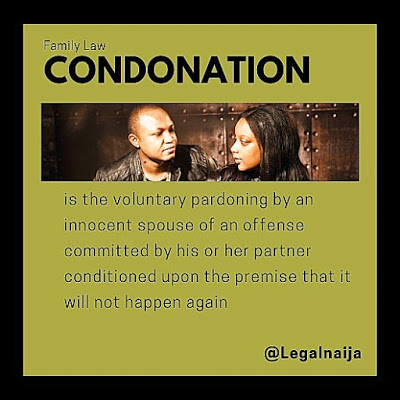
The definition of condonation is the act of forgiving, excusing or overlooking a wrong-doing.
In divorce proceedings, it can be used as a defence wherein the Respondent avers that the Petitioner had already condoned the act that constituted the ground for divorce. 
Learn and share 
#familylaw #familydisputeresolution #familylawyerng #divorce #divorceparty #divorce
Cyber –Squatting In Nigeria | Madu Blessing

Cyber –Squatting In Nigeria | Madu Blessing

The world today is indeed
a global village.  It has revolved around
technology and the internet. With the advent of internet, individuals can establish
various businesses and register such business online and in doing so, they maintain
a personal or official domain name. 


A domain name is a unique name that an
individual or organization chooses to identify its website. Every website has a
domain name which comprises of a registered internet protocol (IP) address. An
example is www.legalnaija.com. Since customers and clients try to find businesses
online, some individuals register this domain names identical to the company’s
or individual trademarks and then attempts to sell to its owner. These
individuals are known as cyber-squatters. Cyber-squatters have robbed
businesses of their fortune and it is a threat to legitimate business owners in
this digital era. 
 Cyber- squatting, also known as domain
squatting is the act of registering or using a domain name in bad faith. The
person who registers this domain name has no affiliation with such name. It is
usually done with the intention of making profits by selling to its owners.

Anyone can be a victim of
cyber- squatting. The usual targets are however, businesses, Politicians and
celebrities. Some famous cases of cyber-squatting are Linda Ikeji, Donald
Trump, Konga, eBay and so on.

Cyber-squatting is a major
issue in Information and Comunications Technology and its far reaching
implications has brought about a need to regulate this problem. In 2015, the Cybercrimes (Prevention, Prohibition, e.t.c)
Act
brought about a framework that governed various aspects of online activities
including cyber-squatting.

Cyber-squatting was
defined in Section 58 as the
acquisition of a domain name over the internet in bad faith to profit, mislead,
destroy reputation and deprive others from registering same if such domain name
is;

·       
Similar,
identical, or confusingly similar to an existing trademark registered with the
appropriate government agency at the time of the domain name registration

·       
identical or in any way
similar with the name of a person other than the registrant, in case of a
personal name; and

·       
acquired without right or
with intellectual property interests in it.

An example usually occurs
where, C buys cowbell.com, when the company has not yet created a website and C
thereafter sells to cowbell at a later date for profit. Another example is
where, my name is Madu Blessing. I am a prolific writer and my books are best
sellers. A, registers a domain with the name www.madublessing.com. If A’s reason for
doing so is to;

·       
profit financially

·       
mislead the public

·       
destroy my reputation as a writer or
individual

·       
deprive me from registering same

Then, A can be regarded as
a cyber-squatter.

Section
25(1)
of the Act stipulated the punishment for cyber-squatters
and it provides thus:

“A person who, intentionally takes or makes use of a name,
business name, trademark, domain name or other word or phrase registered, owned
or in use by any individual, body corporate or belonging to either the Federal,
State or Local Government in Nigeria, on the internet or any other computer
network, without authority or right, and for the purpose of interfering with
their use by the owner, registrant or legitimate prior user, commits an offence
under this Act and is liable on conviction to imprisonment for a term of not
more than 2 years or a fine of not more than =N5,000,000.00 or both.”

The major
ingredients to note here is that;

·       
the offender must have an intention to
interfere with the owners name , business name,
trademark, and domain name

·       
the owners name , business name, trademark, and domain name must be owned or be in use
by the owner

·       
the act must have been carried out in the
internet or any computer network

·       
the act must have been without authority

The court exercises wide
discretion when awarding penalties against convicted offenders. Section 25(2) further stipulates what a
court must take into consideration when awarding penalty. The court considers;

·       
refusal
by the offender to relinquish, upon formal request by the rightful owner of the
name, business name, trademark, domain name or

·       
an
attempt by the offender to obtain compensation in any form for the release to
the rightful owner for use of the name, business name, trademark, domain name

In
addition to the penalty specified under this section, the court may make an
order directing the offender to relinquish such registered name, mark,
trademark, domain name, or other word or phrase to the rightful owner.

How
can victims protect themselves from cyber-squatters?

There
are numerous ways a victim can protect himself from cyber-squatters and they
are;

1.      Making
a complaint at Internet Corporation for Assigned Names and Numbers (ICANN) –
ICANN makes use of UDRP (Uniform Domain 
Name Dispute Resolution Policy). This is an online dispute resolution
mechanism that handles ownership of domain name disputes. The owner of a domain
name can file a complaint before ICANN accredited dispute resolution service
provider. ICANN would either cancel such domain name or order that it be
transferred to the rightful owner. Some conditions must be fulfilled before a
complaint may be made to UDRP and they are;

·       
the domain name must be identical or
similar to an existing trademark or service mark in which the complainant has
rights

·       
the complainant must prove that the cyber-squatter
has no rights or legitimate interest in the domain name

·       
the domain name has been registered and it
is been used in bad faith.

Thus, it is only the owner
of a registered trademark that can successfully file a complaint. Complaints
can only be brought  by those whose
domain name is gTLD (generic top level domains) or Country code top-level
domains.

2.      Proceedings
under Nigeria Internet Registration Association( NIRA)

This is the Nigerian
Registry for .ng domain names. The owner of a domain name may institute his
action at NIRA if his domain name is a ccTLD and ends with .ng. It has its own
dispute resolution policies and rules. The conditions to be satisfied before a
complaint is brought and the remedies available are same as bringing an action
under ICANN.

3.      Institute
Proceedings under the Cyber CrimesAct

Cyber-squatting is a
criminal offence and it is prohibited under Section 25. Cyber-squatters are
liable to imprisonment of two years or a fine of N5, 000,000 or both. To
institute an action, the domain name owner does not need to have a trademark so
long as his registered business name is the domain name. The complainant is
required to file an action with the police before an action can be commenced.
The court exercises its discretion in awarding penalty.

4.      Bringing
an action under Civil Wrong

Cyber-squatting cuts
across several areas of law including Intellectual Property, Trademark, Passing
off, and Deceit and so on. An action can be instituted under the Trade Marks
Act because the Act accommodates actions arising from domain name disputes and
cyber-squatting where the domain name is a registered trademark.

Cyber-squatting is not
only regarded as a crime but it is seen as a serious threat to business. Thus,
to prevent cyber-squatting, business owners should secure their domain names by
registering their trademarks at the start of business before it is too late.

Blessing .C.  Madu

Counsel

2019 Election Petitions:The Judiciary can help Sanitize Nigerian Electoral System.  | Raymond Nkannebe; Esq.

2019 Election Petitions:The Judiciary can help Sanitize Nigerian Electoral System. | Raymond Nkannebe; Esq.

With the limitation period for the presentation of petitions flowing from the just concluded Presidential and National Assembly elections having closed a fortnight ago, and those of gubernatorial and Houses of Assembly elections closing on the 1st of April, 2019 save for states and local constituencies where supplementary elections were held on the 23rd of March, 2019, it is safe to conclude that the politicians have had their day under the proverbial sun, and have now passed the ball into the court of the judiciary who must now get to work in the next one year at least to determine the catalogue of petitions that have proceeded  from the womb of the 2019 elections which in many ways brought to full glare and national embarrassment, the weakness of our electoral process. So bad was it, that some segment of the civil society posit that it is arguably the worst election to have been conducted in Nigeria since the dawn of uninterrupted democracy in 1999.

Contrary to the situation in 2015, the victory of president Muhammadu Buhari is today a subject of litigation. Whereas former president Goodluck Jonathan made the now famous phone call to his opponent candidate Muhammadu Buhari when it became crystal clear that he was on the wrong side of the ballot, Alhaji Atiku Abubakar rightly or wrongly depending on the individual’s political bias, has decided to challenge the re-election of Muhammadu Buhari in court.
In a 147-page petition filed on his behalf by a battery of very senior and distinguished members of the bar, Atiku and his Peoples Democratic Party (PDP), are asking that the result of the election as announced by the electoral umpire, INEC be nullified, and their candidate returned. According to them from what one gathers from the well laid out petition, on a proper computation of results from the polling units, it was the PDP and their candidate Atiku Abubakar, and not Muhammadu Buhari who won the election. They have made a heavy weather of having evidences which support this proposition particularly the smart card reader data from all the polling units across the country transmitted to INEC’s back-end server during the course of the polls. 
Beyond Atiku’s petition, a staggering  736 petitions challenging one election or the other, have been received by the election petition tribunals inaugurated by the acting Chief Justice of Nigeria, Tanko Muhammad, two weeks before the conduct of the election. This number understandably could increase as the final collation of results by INEC in Rivers state last week, has seen some candidates and their political parties angling to challenge the return of incumbent Governor Nyesom Wike.
The climate of rigging and manipulation of election results in Nigeria added to the undue militarization of the electoral process by the incumbents who are often in control of the security apparatus often necessitates the challenge of  elections by Petitioners on a number of grounds that have been laid down by the electoral law namely, that the person whose election is being challenged was not qualified to contest the election ab initio; or that the winner of the election did not score the majority of lawful votes cast at the election. Others are that the questioned election is invalid by reason of corrupt practices or non-compliance with the provisions of the Act; or that the Petitioner was validly nominated but was unlawfully excluded from contesting in the election by the electoral umpire. See section 138(1) )(a-d) of the Electoral Act, 2010 (as amended).
It is however not in the fleshing out of the grounds of the petition and the particulars in support of same that the Petitioners often run into a problem but in the leading of evidence to establish to the required degree of proof, the often serious allegations contained in most petitions such that could eventuate into a return of the petitioner by the tribunal as was recently seen in the Osun state election petition tribunal which nullified the victory of incumbent governor Gboyega Oyetola in favour of Senator Ademola Adeleke. This writer however understands that decision is a subject of appeal at the Court of Appeal sitting in Abuja.
A holistic appraisal of the election petitions that have made their way to our courts and/or election tribunals as far back as the cases of Omoboriowo v Ajasin (1984) 1 SCNLR 108; Obih v Mbakwe (1984) LPELR-2712 (SC); Nwobodo v Onoh (1984) 1 SC 1; Buhari v INEC (2008) 19 NWLR (pt. 1120); Ojukwu v Obasanjo (2006) (EPR) 242 to name a few, will readily reveal the near impossibility of upturning an election through the courts. A petitioner almost always finds himself contending with a large body of case law and statutory provisions that literally excuses and/or explains away the electoral infractions complained of in his petition. Save for a handful of cases where a petitioner was returned through the tribunals, thousands of petitions go to court at every election cycle without any success. Perhaps the circumstances of the 2007 general election puts the difficulties faced by a petitioner in proper context. Despite the winner of that very controversial election acknowledging that the process which brought him to power was fraught with widespread irregularities and gross manipulation of the electoral process, it is ironical to say the least, that the challenge of that election at the presidential election tribunal by then General Muhammadu Buhari came to nought. Such is the lot of the Petitioner.
The sad consequence(s) of this is that it has helped to fester the culture of rigging across board. The Nigerian politician having understood how difficult it is to upturn an election through the courts, has devised even more brazen and disingenuous means of rigging him or herself into power and thereafter, dare their opponent to go to court to challenge the victory. Anyone who has had the privilege of studying the electoral forms from our shambolic elections will readily come to terms with the fact that elections in Nigeria are basically a riggers affair. It is the candidate who is able to out-rig the other through any means whatsoever that is often declared the winner thus making a mockery of our democracy.
In a bold attempt however to improve the sanctity and integrity of our electoral process and to the credit of former chairman of the electoral commission Alhaji Attahiru Jega, the smart card reader was introduced in the 2015 general election to checkmate the recurrent problem of multiple accreditation of voters against the spirit of the voters register. The genus of the smart card reader machine was to ensure that only bio-metrically accredited voters could cast valid ballots at the polling booths. It was thought that it would solve the recurrent problem of multiple thumbprinting by unscrupulous elements who lend themselves to politicians who prostitute the electoral process.
But the legality of the smart card reader as an instrument for the conduct of elections was to evolve into a serious constitutional debate on the back of the petitions that made it to the election tribunals following that round of elections. In the case of Nyesom v Peterside (2014) 5 NWLR (pt. 1430) 377 a full-bench of the apex Court despite acknowledging the motive behind the introduction and use of the card reader machine in an election, which needless to say was to bolster the democratic norm of  “one man one vote”, went ahead to strike it down for having derived its efficacy from the INEC guidelines which obviously was in conflict with section 49(2) of the Electoral Act 2010 (as amended) which nominates the voters register as the instrument of accreditation of voters and proof of over-voting by a person challenging an election.
In answering the question whether failure to use card reader for accreditation of voters can invalidate an election, the apex Court Per. AKA’AHS held instructively as follows, “the introduction of the card reader is certainly a welcome development in the electoral process. Although it is meant to improve on the integrity of those accredited to vote so as to check the incidence of rigging, it is yet to be made part of the Electoral Act. Section 138(2) envisages a situation where the Electoral Commission issues instruction or guidelines which are not carried out. The failure of the card  reader machine, or failure to use it for the accreditation of voters cannot invalidate an election. The section provides as follows: “138(2) an act or omission which may be contrary to an instruction or directive of the Commission or of an officer appointed for the purpose of election but which is not contrary to the provisions of this Act shall not of itself be a ground for questioning the election”. 
With the above sentiments of the apex Court, many of the petitioners who went to court in the last cycle of election hoping to make a case out of the non-use of the smart card readers in the accreditation of voters at the polling units found themselves on the wrong side of the law, and severally paid with a dismissal of their petitions. Unfortunately, none of the petitioners drew the attention of the apex Court to the amendment of section 49 (2) of the Electoral Act which was signed into law by former president Goodluck Jonathan on the 20th of March, 2015, just 8 days before the holding of the general election. On their part too, the judex did not take judicial notice of this amendment to the principal Act which legitimized the use of the smart card reader for voter accreditation; the very basis upon which the Court upheld all the disputed governorship elections conducted by the INEC on April 11, 2015. 
Having said that, the 2019 elections and the petitions trailing it, provides another window of judicial activism for the judiciary which has the potency of revolutionizing our electoral process and by extension, our nascent democracy. With the countrywide criticisms that have greeted the conduct of the just concluded general elections ranging from selective use of the smart card reader machines in some places and the outright thumbprinting of ballot papers in the quarters of party chieftains and what not, in a barefaced prostitution of our electoral process, suffice it to say that the ball is effectively in the Court of the judiciary to rise up to the occasion in ensuring that not a single illegal vote counts in the return of a candidate. 
A simple way to do this, is to ensure the fulsome recognition of the data from the smart card reader machines and using same as a benchmark for reconciling the total votes cast in a polling unit so as to check against over-voting which was perpetrated by politicians with reckless abandon in the just concluded 2019 elections. In places where the smart card reader machines malfunctioned and thus were not used, the tribunals must ensure that the procedure enumerated by the electoral umpire on how voters in such polling units should cast their votes, was applied to the latter. Anything otherwise, must of necessity lead to the cancellation of the results from such unit as consecrated by the relevant provision of the Electoral Act 2010 (as amended), and the Guidelines of the electoral commission 2019. 
Instructively, the apex Court in the Nyesom v Peterside case (supra) acknowledges that the innovation of the smart card reader machines was well intentioned in that, it was calculated to improve the integrity of our elections. The petitions that are now lying before the several election petition tribunals across the country, provides an opportunity for the judex to uphold  the smart card reader machine and lend it the much needed judicial imprimatur which counted against its usage in the last cycle of elections, irrespective of the consequences for the individual poll where it is applied.
At a time when it has been shown that the executive and the legislature are enmeshed in a dark conspiracy to the detriment of our democracy, such as was seen in the circumstances under which assent to the Electoral Act Amendment Bill (2018) was refused by president Muhammadu Buhari, the judiciary can step in, in its hallowed capacity as the avowed defender of any democracy to sanitize our electoral system.  This is what Nigerians who are increasingly losing confidence in our electoral process earnestly asks of the judiciary.
Raymond Nkannebe; a legal practitioner writes from Lagos.
Pigeon-holing the Ground of Non-qualification of a Party Candidate in Pre and Post-Election Matters |Prince Ikechukwu Nwafuru

Pigeon-holing the Ground of Non-qualification of a Party Candidate in Pre and Post-Election Matters |Prince Ikechukwu Nwafuru

In
election petition and pre-election litigation, it is common to see lawyers and
litigants go off on a tangent on the issue of qualification of a person for
election to various offices, by introducing into their processes, internal party
issues and non-constitutional criteria. And this is notwithstanding the express
provisions of the Constitution on the qualification for political positions.  It is either the Petitioner is alleging that
the Respondent was not properly nominated by his/her political party and as
such is not qualified to contest the election in the first place, or the
Respondent in his Reply to the Petition, is setting up a defence of lack of
locus standi of the Petitioner on the ground that the nomination of the Petitioner
is invalid. 

In both scenarios, arguments have been made to the effect that it
is wrong to raise the issue of political party primaries at the Election
Tribunal or to challenge the qualification of a party candidate outside the
precinct of the Constitutional provisions. Pursuant to the principle of
internal party affairs, neither the Petitioner nor the Respondent is in a
position to challenge the outcome of the Primary Election of the opposing Party
at the Election Petition Tribunal under whatever guise. Several reasons have
been adduced to support the arguments. First, the Petitioner and the Respondent
are not members of the same political party and as such, neither of them has
the locus to challenge the process that led to the nomination of the opposing
party. Even amongst members of the same political parties, the Courts, as part
of the judicial policy on non-interference with domestic affairs of political
parties, have consistently endeavored to narrow the ground upon which party primaries
may be challenged in pre-election disputes, not to talk of a non-member who is
often considered as a stranger and a meddlesome interloper in internal party
affairs.  To drive home this point, in
the case of Frank Okon Daniel v. INEC & ORS (2015) LPELR-24566(SC), the
Supreme Court speaking through His Lordship Rhodes-Vivour JSC posed the
question thus: “Who can question the conduct of primaries?”. The Law Lord
went ahead to answer the question as follows:

“Section 87(9) of the Electoral Act
answer the question. It reads: “87(9) Notwithstanding the provisions of
this Act or rules of a political party, an aspirant who complains that any of
the provisions of this Act and the guidelines of a Political Party has not been
complied with in the selection or nomination of a candidate of a Political
Party for election may apply to the Federal High Court or the High Court of a
State or FCT, for redress. This court has interpreted the above section in
recent decisions. In Sylva & 2 Ors v. PDP (2012) 13 NWLR (Pt. 1316) p.85 I
said that: “….. Section 87(9) of the Electoral Act confers jurisdiction
on the court to hear complaints from a candidate who participated at his
party’s primaries and complains about the conduct of the primaries….” In
Lado v. CPC (2011) 18 NWLR (Pt. 1279) p.689 Onnoghen, JSC said that:
“…… section 87 of the Electoral Act, 2010, as amended deals with the
procedure needed for the nomination of candidate by a Political Party for any
election and specifically provided a remedy for an aggrieved aspirant who
participated at the party primaries which produced the winner by the highest
number of votes.” Also in Emenike v. PDP & 3 Ors. (2012) 12 NWLR (Pt.
1315) p. 556, Fabiyi, JSC said: “…… that for a complaint to come
within the narrow compass of sections 87(4) (6) and 87(9) of the Electoral Act
and be cognizable by a court the aspirant must show clearly and without any
equivocation that the National Executive Committee of the Political Party
conducted a primary election in which he was an aspirant and that the primary
election was conducted in breach of specified provisions of the Electoral
Act/Electoral Guidelines. Can the appellant benefit from section 87(9) or did
the appellant participate in the re-run of the PDP held on 15/1/11. In his
affidavit filed in support of his amended originating summons the appellant
deposed in paragraphs 26 and 30 as follows: “26. That in response, I informed
Mr. Akpabio Udo Ukpa that I was not aware and did not participate in the re-run
election. 30. That because of their refusal to inform me, I could not attend
the re-run neither did any of my supporters, as we became aware after it had
been done.” An admission, clearly and unequivocally made is the best
evidence against the person making it. Paragraphs 26 and 30 are conclusive
evidence that the appellant did not participate in the re-run primaries
conducted by PDP on 15th January, 2011. They are clear admissions by the
appellant. Since the appellant did not participate in the re-run primaries
there was no way he could complain about the conduct of the primaries, and so
had no locus standi to institute an action as provided by section 87(9) of the
Electoral Act. Put in another way, before a candidate for the primaries can
have the locus standi to sue on the conduct of the primaries he must be
screened, cleared by his political party and participate at the said primaries.
Anything short of that the candidate who did not participate in the primaries
could conveniently be classified as a meddlesome interloper with no real
interest in the primaries. The Court of Appeal to my mind was wrong. The
appellant has no locus standi to institute this suit because he did not
participate in the re-run primaries.”

The
above excerpt summarizes the principle that only an aspirant who participated in
a party Primary can challenge the outcome of the primaries. If a member of a
political Party who did not participate in the Primaries cannot challenge the
outcome of same, how much more a non-party member? This again, underscores the
need to compartmentalize the ground of non-qualification in election petition
litigation. 

Second
and as a corollary to the first point above, the election petition Tribunal is
not a proper venue to challenge the nomination of a party candidate as it forms
part of pre-election matters which incidentally are now time-bound. Even where
qualification of a party candidate is to be challenged either in pre or
post-election dispute, a bit of circumspection and adroitness is required to
avoid veering off the Constitutional path. In my previous write-up “
Election Petition Litigation: Key Legal
Issues to note”
(https://www.linkedin.com/pulse/election-petition-litigation-key-legal-issues-note-prince-nwafuru/),
I had discussed the nature of challenge to qualification that could support a ground
of election petition. However, in that op-ed I did not mention the provision of
section 138(1)(e) of the Electoral Act. Not that it would have changed my
conclusion in that write-up, but at least to show that the new sub-section has
not changed the position of the law on the vexed issue of qualification of a party
candidate. This follow up is therefore, necessary to demonstrate that the
ground of non-qualification is often misunderstood and misapplied at the
election petition tribunals and in pre-election disputes as well. 

Sub-section
(e) of Section 138(1) of the Electoral Act was introduced following the 2015
amendment that was signed into law by the former President, Goodluck Ebele
Jonathan on 26 March 2015. The sub-section provides that an election may be
challenged on the ground that person whose election is questioned had submitted
to the Commission affidavit containing false information of a fundamental
nature in aid of his qualification for the election. Thus, in addition to the
four traditional grounds upon which an election may be challenged under section
138(1)(a)-(d) of the Electoral Act, 2010 (as amended), this new sub-section
seeks to expand the ground on non-qualification by providing that an election
may also be question on the ground that respondent submitted to INEC affidavit
containing false information of a fundamental nature in aid of his
qualification for the election. The flip side argument would mean that, the
Respondent in an election petition for instance, may rely on this subsection to
challenge the locus standi of the Petitioner to present the Petition on the
ground that the Petitioner submitted affidavit containing false information to
INEC. What this sub-section (e) seeks to achieve is not yet clear considering that
subsection (a) of Section 138(1) of the Electoral Act, 2010 (as amended)
already provides that an election may be questioned on the ground that “a
person whose election is questioned was, at the time of the election, not
qualified to contest the election.”  Does
section 138(1)(e) of the Electoral Act, give a litigant at the Election
Petition Tribunal a carte blanche to introduce all sorts of grounds under the
pretext of challenging the qualification of a party candidate? I do not think
so. Again, it is not clear what constitutes “false information of a fundamental
nature in aid of his qualification” as provided in the sub-section. The Courts in
many decided cases have already said that reference should be made to the
Constitution only, in determining the issue of qualification of a person to
elective position. Hence, the constant allegations of forgery of age
declaration certificate, tax clearance documents or academic qualification in a
bid to challenge the qualification of the party candidate thereto need to be
examined vis-à-vis the constitutional provisions on qualification for elective
offices. Whether such issues would fall within the qualification criteria set
out in the Constitution would depend on the facts of each case. For instance in
the case of academic qualification, the Constitution has set the minimum
academic requirement to be that the person must have been been educated up to
at least School Certificate level or its equivalent. The same Constitution
defines “School Certificate or its
equivalent
” to mean (a) a Secondary School Certificate or its
equivalent, or Grade II Teacher’s Certificate, the City and Guilds Certificate;
or (b) education up to Secondary School Certificate level; or (c) Primary Six
School Leaving Certificate or its equivalent and – (i) service in the public or
private sector in the Federation in any capacity acceptable to the Independent
National Electoral Commission for a minimum of ten years, and (ii) attendance
at courses and training in such institutions as may be acceptable to the Independent
National Electoral Commission for periods totaling up to a minimum of one year,
and (iii) the ability to read, write, understand and communicate in the English
language to the satisfaction of the Independent National Electoral Commission,
and (d) any other qualification acceptable by the Independent National
Electoral Commission;

In PDP v. OGAH & Ors (2016) LPELR-40850(CA), the
1st Respondent Dr. Sampson Uchechukwu Ogah sought the
disqualification of Dr Okezie Ikpeazu, the current Governor of Abia State on
the ground that the Governor was not qualified to be the Candidate of the
Appellant (PDP) in the Governorship Election relying on and alleging that the
Form CF001 as sworn to by Dr Ikpeazu in the affidavit accompanying other
documents submitted to Independent National Electoral Commission by him
pursuant to Section 31 (2) of Electoral Act was false. The Court of
Appeal in setting aside the decision of the Federal High Court disqualifying Dr
Ikpeazu, reiterated the principle to the effect that based on the doctrine of
“covering the field” as enunciated in AG. Abia v. AG. Federation
(2001) 6 NWLR Pt. 763 at Pg. 264 at 391 – 392 also in Abia v. AG. Federation
supra, by the Supreme Court, the National Assembly CANNOT make laws with
respect to the qualifications and non-qualifications of candidates for election
into political office.

What is clear from the foregoing decision is that the
issue of qualification of a candidate to stand for an election can only be
decided by making reference to the Constitution
. Section 138(1)(a) and (e) of the Electoral Act, 2010 (as
amended) is therefore not a blank cheque to introduce internal party affairs or
any qualification issue not anchored on the provisions of the Constitution in
pre or post-election disputes. Putting it differently, in challenging the
qualification of party candidate at the Election Petition Tribunal or regular Courts,
it is important that the ground of the petition or objection is premised on
those qualifications provided under the Constitution. The Constitution has made
copious provisions for the qualification of persons vying for various elective
positions such as President, Governor, Senator, Member of House of
Representative or Member of a State House of Assembly. For instance, the
Constitution provides that “A person shall be qualified for election to the
office of the President if –(a) he is a citizen of Nigeria by birth; (b) he has
attained the age of forty years; (c) he is a member of a political party and is
sponsored by that political party; and (d)he has been educated up to at least
School Certificate level or its equivalent.

Any
other provision of the Electoral Act or any other law setting different qualifications
for candidate in respect of any elective post in Nigeria is subservient to the
above Constitutional provision and cannot be countenanced. Putting it
differently, any requirements provided by INEC or any other body stipulating
the qualification to contest an elective position in Nigeria must be within the
narrow margin of “all constitutional requirements for election to that
office.” In effect, any extraneous requirements that are squarely outside
the requirements of the Constitution on qualification of a person to an office
cannot ground a reason for disqualification either in election petition
litigation or pre-election matters.


Prince Ikechukwu Nwafuru
Counsel 
Paul Usoro & Co. 

Photo Credit – www.thisdaylive.com 

Decisions Of The National Executive Council, A Lesson In Due Process

Decisions Of The National Executive Council, A Lesson In Due Process

Major decisions that affect
the welfare of lawyers are usually decided by the National Executive Committee
of the Nigerian Bar Association. Though this decisions affect lawyers directly,
quite a number of lawyers are unaware of how decisions are reached by the NBA’s
National Executive Council, while some believe all decisions are made by the
NBA President, more seasoned members of the Bar understand that such decisions
are reached by following due process and the principles of equity.

In order to ensure fairness,
equity and proper administration, the NEC represents all Stakeholders in the Nigerian
Legal Profession. According  to the NBA
Constitution, the NBA NEC is made of the following members;

(a) National Officers;

(b) All past Presidents and
General Secretaries;

(c) All Chairmen and
Secretaries of registered Branches;

(d) One (1) other representative
of each registered Branch;

(e) Chairmen and Secretaries
of Sections;

(f) Other deserving members
of the Association co-opted by the National Executive Committee provided always
that the total number shall not exceed 180 members.

Furthermore, Section 7(6) of
the NBA Constitution provides expressly for how decisions are to be made and it
states clearly that, “consensus shall be the aim of the National Executive
Committee but if it becomes necessary to put any questions to vote, then it
shall be decided by a simple majority, based on a show of hands, provided
however that the National Executive Committee may resolve to decide any
specific issue by secret ballot”.

Recently, the decision of
the NEC removing Mr. Akinlade, the Chairman of the NBA Ikorodu Branch, received
some criticisms by members of the Bar who believed the NBA President, Mr. Paul
Usoro, reached the decision. A position solely, which could not be farther from
the truth.  Mr. Bayo Akinlade, was
suspended as the Chairman of the NBA Ikorodu Branch over what the NEC termed
“gross disrespect and disregard for the bar”.

As evidenced above in the
NBA Constitution, there is a process for reaching decisions at the NEC and same
was duly observed and followed by the Paul Usoro SAN led NBA in the removal of
the NBA Chairman. It is noted that the NBA President has introduced groundbreaking
initiatives into the NBA, especially initiatives bothering on transparency,
good governance and credible leadership. Most definitely the Nation can learn a
lot from the Nigerian Bar Association.

At the last meeting of the
NEC held on the 28th of March, 2019, other issues discussed include
the Rule of Law, the 2019 Election Monitoring reports, illegal harassment of
members of the Bar and the Financial Audit of the NBA among other things.
The NBA President, Paul Usoro SAN continues to be a shinning example on leadership within the Bar. To stay updated on the
amazing work of the NBA and its president, follow the NBA President
@paulusorosan on all your social media platforms or stay tuned to the Legalnaija
Blawg.

@Legalnaija

The Obligation of an Employer to Give a Work Reference | Michael Dugeri

The Obligation of an Employer to Give a Work Reference | Michael Dugeri

Employers quite frequently do seek legal advice on their obligation to give work/employment reference to their employees. While there is no general legal duty to give an employee (or former employee) any reference – positive or negative, recent case law suggests that there is an implied term in contracts of employment imposing a duty on the employer to provide fair and accurate work/employment reference for their employees. There is a potential liability for an employer who provides unfair or misleading reference, which can cause harm to the employee. 

In the case of Kelvin Nwaigwe v. Fidelity Bank Plc (unreported Suit No. NICN/LA/85/2014) the National Industrial Court examined the implied obligation of an employer to give work reference. The Claimant sued his former employer claiming inter alia, a right to work reference. Due to the paucity of local authorities in this area of labour law, the Court turned to the law and practice in similar jurisdictions such as the UK for guidance, and held thus: 
‘I am persuaded by the force of these UK case law authorities that in appropriate cases there is an implied term in contracts of employment imposing a duty on the employer to provide work reference in respect of its employee, whether former or existing. The defendant in the instant case is a Bank and hence a financial institution. This means that the defendant has an obligation to give a work reference to, or in respect of, the claimant, which work reference must be true, accurate, fair and not misleading to a future employer; and I so find and hold.’
Under common law, there was no absolute obligation on employers to provide reference to an employee but case law in the UK has developed a number of exceptions to the common law position. It would now appear that, in certain circumstances, an employee can require an employer to give a reference. UK case law suggests that it may be appropriate in some cases to imply a term into a contract of employment that the employer will provide the employee with a reference at the request of a prospective employer. The basis for this implied term was aptly stated in the case of Malik v. Bank of Credit and Commerce International SA (BCCI) (1997) UKHL 23 where the House of Lords held that Employers must take care not to damage their employees’ future employment prospects, by harsh and oppressive behaviour or by any other form of conduct which is unacceptable today as falling below the standards set by the implied trust and confidence term. 
For clarity and context, some of the UK case laws that were applied in the Nwaigwe case are examined as follows:
In Spring v. Guardian Assurance (1995) 2 AC 296, the plaintiff was dismissed from office by the defendant (an insurance company and hence a financial institution). He got another job which required a work reference from the defendant. The work reference given by the defendant was not favourable, described by the trial judge, Judge Lever QC, as the “kiss of death”. In consequence, the plaintiff lost the new job and so brought an action against his former employer on several grounds including negligent misstatement, malicious falsehood and breach of contract, but not defamation. An action in defamation (but not for the tort of negligence) would have entitled the defendant to the defence of qualified privilege. The House of Lords held that an employer who gives a reference in respect of a former employee owed that employee a duty to take reasonable care in its preparation and would be liable to him in negligence if he failed to do so and the employee thereby suffered economic damage. The House of Lords also held that an implied term of the contract existed between the plaintiff and the defendant to ensure that reasonable care was taken in the compiling and giving of the work reference, and that the defendant was in breach of that implied term.
Lord Slynn in the House of Lords commented that, even if there is no universal duty on an employer to give a reference, it would seem that contracts may exist when it is necessary to imply such a duty. Lord Woolf (as he then was) then attempted to specify the circumstances which would enable such a term to be implied. Those circumstances are: 
a. the existence of the contract of employment or of services; 
b. the fact that the contract relates to an engagement of a class where it is normal practice to require a reference from a previous employer before employment is offered; and 
c. the fact that the employee cannot be expected to enter into a class of employment, except on the basis that the employer will on the request of another employer, made not less than a reasonable time after the termination of the previous employment, provide a full and frank reference to the employer. 
In another UK case, Bartholomew v. Hackney London Borough and Anor (1999) IRLR246, the Court of Appeal held that in giving a reference to a former employee, a former employer owes a duty of care to the former employee to provide a reference which is true, accurate and fair; fairness determined by having regard to the whole of the reference and the surrounding context, as a number of discrete statements, though factually accurate in themselves, could nevertheless read as a whole give an unfair or potentially unfair impression to a recipient of the reference. However, it is not necessary that a reference in every case be full and comprehensive. 
In TSB Bank Plc v. Harris (2000) IRLR 157, a reference provided to a potential employer for an existing employee which disclosed customer complaints unknown to the employee, was found to be a breach of the employer’s duty and was held to be a breach of trust and confidence to disclose complaints to others, if the employee was not given an opportunity to answer them.
And in Cox & Cross v. Sun Alliance Life Ltd (2001) IRLR 448, the Court of Appeal made it clear that the question of whether an employer who provides a reference for a former employee is in breach of the duty to take reasonable care to ensure that the reference is accurate and fair will usually involve making reasonable inquiry into the factual basis of the statements in the reference. The take away from this case is that it is advisable for employers to confine unfavourable statements on employees to those matters into which they have made reasonable investigation and have reasonable grounds to believe are true; and where an investigation is discontinued, unfavourable comments should be confined to matters that were investigated before the employee’s departure. 
As though taking a cue from other jurisdictions such as the UK, the Courts in Nigeria (as in the in the Uwaigwe), have held that an employer is indeed obligated in law to provide an employee with a reference. An employer owes a duty of care against negligent misstatement i.e. not to mislead or misrepresent to the person (usually a potential employer or the employee) to whom the reference is provided. It is submitted that this approach accords more with best practice in labour and employment law.  
In conclusion, sometimes it is best for employers to adopt the position of just providing a statement of service confirming an employee’s length of service and not commenting further. This is known as the “no comment” reference. The other option is to provide a “full disclosure” reference where the employer provides all the relevant details of the employee, including appraisals and potentials, while leaving it to the potential employer to draw its conclusions. An employer cannot be held liable for defamation in providing this type of reference as long as it is made without malice and the information is based on credible evidence. However, it is safer to provide information based on performance appraisals that were counter-signed by the former employee. This will prevent potential liability for negligent misstatements.
Michael Dugeri
Corporate Commercial Lawyer at Austen-Peters & Co.
Mikedugeri@gmail.com