Taiwo Oyedele: Of Brexit, the New Foreign Exchange Policy, Tax and You
How the recent
developments and events of the coming months in the local and global
environment will impact you and tax.
developments and events of the coming months in the local and global
environment will impact you and tax.
There have been
significant events in the local and international space in the past few days.
Most notable locally is the new exchange rate policy of the Central Bank of
Nigeria (CBN) and internationally, the referendum by Great Britain to leave the
European Union (EU). Both key developments have impact on Nigeria, albeit to
varying extent. I have attempted to highlight some of these impacts in this
article.
The Brexit Referendum
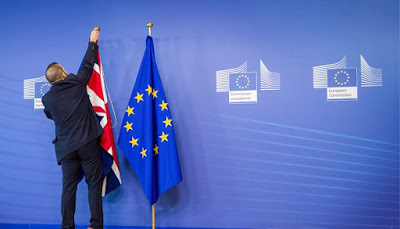
On Thursday 23 June 2016,
citizens of the United Kingdom (UK) voted in a referendum either to leave or
remain in the European Union (EU). In a most shocking outcome, over 17 million,
precisely 17,410,742 or 52% out of the total 33,551,983 voters voted to leave
the EU compared to 16,141,241 or 48% that voted to remain. Since the outcome of
the referendum, the very first exit by any country since the EU was established
has got the whole world wondering what would happen next and the implications
not only to the UK and the EU but also the rest of the world.
The Brexit vote has
not only shocked the EU and the rest of the world, it also left many citizens
and residents of the United Kingdom themselves “fantastically stunned”. It is
not surprising that millions of British people have now signed a petition
requesting for another referendum. Whatever happens next,
one thing is certain – that Great Britain and the EU will no longer remain the
same.
The impact will be far
reaching. Over USD 2 trillion has been wiped off global capital markets across
all continents. This also means that less value for pension and retirement
plans with investments in those markets. Other issues range from
reconfiguration of the single market, renegotiation of trade agreements,
immigration and labour law, functions and so on. As a result of the uncertainty
created by the exit vote, the market has perhaps over-reacted as the British
Pound depreciated by about 10% within 24 hours, the worst in over 30 years. In
the medium to long term, the exchange rate to other major currencies will
probably recover but likely to be lower than pre-referendum levels for some
time. For Nigeria, there will be minimal impact. Nigerians studying in the UK
will need relatively less Naira to pay their fees. Those travelling to the UK
for business and vacation will also find it slightly more affordable.
In terms of importation
from the UK, this will become cheaper for Nigerians while exports to the UK
will become more expensive and therefore less attractive. British businesses in
Nigeria will be relatively more valuable to their UK group both in terms of
their returns on investment and consolidation value in Sterling.
from the UK, this will become cheaper for Nigerians while exports to the UK
will become more expensive and therefore less attractive. British businesses in
Nigeria will be relatively more valuable to their UK group both in terms of
their returns on investment and consolidation value in Sterling.
The monies stolen from
Nigeria and stashed away in the UK by some politicians will be of less value
than if the funds had been recovered pre-referendum. We may have to renegotiate
the double tax treaty between Nigeria and the UK if Brexit triggers a leave
vote by any of its territories such as Scotland.
Nigeria and stashed away in the UK by some politicians will be of less value
than if the funds had been recovered pre-referendum. We may have to renegotiate
the double tax treaty between Nigeria and the UK if Brexit triggers a leave
vote by any of its territories such as Scotland.
Businesses do not like
uncertainties and this is the main reason for the currency devaluation while
various rating agencies have either downgraded or are considering downgrading
Britain and even though nothing has really changed after the election. The
actual exit could still take about 2 years. Where possible, governments must
address all controllable uncertainties as much as possible from macro-economic
policies, fiscal direction and so on.
In the Economic Community
of West African States (ECOWAS), which was established in 1975, Mauritania
pulled out of the Union in December 2000 without any fanfare and no noticeable
impact. This is largely due to the fact that ECOWAS has not really fully
integrated and taken off. The Common External Tariff within ECOWAS was only agreed
in 2015, forty years after the Union was formed. Also, the size of the UK
economy and its influence on the global stage makes it completely different and
unprecedented.
And what about the new
foreign exchange policy?
foreign exchange policy?
The Central Bank of
Nigeria recently announced a change in foreign exchange policy from the fixed
official rate to a floating exchange rate which is largely market driven. Based
on the 2016 Budget, a benchmark exchange rate of N197 to the USD was used in
estimating government revenue. With the exchange rate now around N281,
government will get about 40% more from its dollar revenue. This will help
cushion the impact of decline in oil revenue as a result of the crisis in the
Niger Delta and hopefully also help reduce the planned deficit funding of N2.2
trillion in the Budget.
State governments will
also get more revenue to share in Naira terms from federal allocation to
improve the dire financial position of the states especially given that 27 of
the 36 states are reported to be defaulting on salary payments as at the end of
May 2016.
also get more revenue to share in Naira terms from federal allocation to
improve the dire financial position of the states especially given that 27 of
the 36 states are reported to be defaulting on salary payments as at the end of
May 2016.
In a similar fashion,
import duties and VAT on importation should significantly improve partly due to
the higher exchange rate being used to calculate payments and also because of
the improved liquidity in the foreign exchange market which should result in
more importation. Also, it is expected that there will be more inflows of
foreign direct investments, foreign portfolio investments and diaspora
remittances which will improve economic activities and consequently the
country’s tax base and tax take.
So what’s next?
Investors and businesses
do not like uncertainties. Unfortunately there will always be uncertainties in
any economy but savvy investors learn to manage rather than avoid
uncertainties. However, uncertainties that are self-inflicted should be avoided
as they not only discourage some investors, they also necessitate a risk
premium for investments to be viable. As a country we can do very little or
nothing to control the price of crude oil, we had no control over Brexit vote,
and we will not be able to control whether Donald Trump wins American’s
election but we can, for instance, control the uncertainties created by our
failure to pass the Petroleum Industry Bill, inability to fully deregulate the
downstream sector, the uncertainties around fiscal and industrial
policies.
Government must strive to
reduce uncertainties to attract both domestic and foreign investments.
Businesses that wish to play in this market need to plan for the long run but
also must be sufficiently agile to respond quickly and efficiently to unplanned
changes which they will inevitably encounter. Either way, Africa and Nigeria in
particular continues to be an attractive market for discerning investors who
will gain an advantage for moving in earlier than those who wait until they get
more certainty, which may be a very long wait.

Taiwo Oyedele is the Head of Tax and Corporate Advisory Services at PwC
Nigeria (the world’s leading professional services firm with presence in
over 150 countries). Taiwo has been in the forefront as a thought
leader and prominent speaker on key accounting and tax issues including
the tax implications of IFRS Adoption and Transfer Pricing. He is an
ardent advocate of tax reforms with particular emphasis on tax
simplification and transparency. He recently represented the
Manufacturers Association of Nigeria at the National Economic Council
(body of all 36 Governors and the Vice President) to successfully make a
case for reforms to address multiplicity of taxes.
ED’S Note- This article was originally published by the author here.