Mowunmi Abdulkareem: ICT/IT-Legal Issues

Mowunmi Abdulkareem: ICT/IT-Legal Issues


Information and
Communication Technology
Information and
Communication technology law is the field of law that makes available the legal
framework for collecting, storing, and disseminating electronic information in
the in both local and international marketplace. A lawyer who specializes in
this area of the law represents individuals and businesses from all different
sectors. They structure and construct ICT/ IT-related transactions in a way
that maximizes the client’s economic benefit and ensure regulatory compliance.
Attention is always given to anticipating potential sources of dispute between
the parties to a transaction, and crafting agreements that address these fears,
and hence reducing the risk of litigation.

Sometimes disputes arise
in this field of law and surely it is a lawyer specializing in these types of
cases can prove a powerful advocate compared to a general legal practitioner.
Such a lawyer is more effective at explaining technical concepts to the Court;
and will likely have contacts within the industry that make finding consultants
and expert witnesses less difficult. Clearly, information technology law is a
forte practice. 
Software Licensing Issues
It is not in doubt that
businesses often change or update their operating software in an effort to keep
pace with technology. Switching software programs can lead to greater
profitability, but it can also present any number of legal pitfalls for unsuspecting
business managers. For example, a typical software licensing contract will
contain provisions relating to performance warranties, installation and
troubleshooting, user training, limited liability and indemnification of the
vendor, infringement disclaimers, payment and finance terms, and more. Despite
the complexity of these agreements, some software company representatives
purposefully wait to provide a copy until shortly before the sale closes. 
Owners and managers who
find themselves presented with a licensing agreement that they do not
completely understand should resist pressure from the sales representative to
sign the document with little or no time for meaningful review. Any “deadline”
imposed by the vendor is likely nothing more than a high pressure sales tactic.
There is simply too much at stake in the event the software fails to meet the
needs of the business. The wisest course of action is to demand additional
time, and hire an information technology lawyer to analyze and explain the contract
and to point out terms that should be inserted or removed.

Data Privacy and Security

Much of the litigation
that occurs in this field of law results from enterprises failing to keep
customer and employee information secure. Now that it is primarily stored in
digital format, sensitive information is prone to theft on a scale unimaginable
in previous generations. Hackers and other cyber criminals routinely target
financial institutions, e-commerce websites, and ordinary businesses, sometimes
gaining access to thousands of customers’ data all at once. This can lead to
various legal claims, from government enforcement actions to class action
consumer lawsuits.
Companies that have any
presence on the internet should act proactively to avoid these problems. Information
technology lawyers are available to audit security systems and policies, and to
recommend any necessary changes; and defend against civil litigation brought by
private parties. Data privacy and security issues can arise at any time. To
succeed in today’s business environment, it is critical to stay ahead of the
curve and make safeguarding digital information a priority. 
Electronic Signature
Another growing cause of
concern for many businesses involves electronic signatures. Like digital
storage, electronic signature software has the potential to dramatically
streamline operations for businesses willing to embrace new technology. At the
same time, care must be taken to avoid compromising sensitive customer data
and/or violating government regulations on the subject. It is pertinent to
mention at this juncture that the Electronic Transactions Bill 2015 which is
currently awaiting presidential assent represent giant strides in the
facilitation of electronic transactions and recognition of electronic signatures
in Nigeria. The Bill, if passed into law, could help to address certain issues
affecting electronic transactions in Nigeria and (also to a large extent)
prevent against some inequities that occur in several electronic transactions.
The Bill will also allow
companies to replace traditional paper signature documents with electronic
forms. By virtue of the said Bill (if passed to law) the Customers will be able
to agree to contractual terms with the click of a computer mouse, speeding up
the turnaround time for a transaction considerably as long the electronic
signatures comply with rules relating to customer consent disclosures, record
retention, and document reproduction capabilities. Again, engaging a lawyer to
conduct a compliance review in this area is highly recommended.

ICT/IT Lawyers

If you conduct any type of
business activity online and you care to know whether your current practices
are exposing your business to potential liability; or you are about enter into
any ICT/IT-related transaction, contact an information Communication technology
lawyer today.
By  OMOWUNMI
ABDULKAREEM ESQ
ASSOCIATE
ABIODUN ADESANYA & CO.
BOOKSHOP HOUSE (2ND FLOOR)
50/52 BROAD STREET,
LAGOS

Ed’s Note: This article was originally published here.

Magnus Amudi: Shareholders Resolutions: Matters Requiring Special Resolutions

Magnus Amudi: Shareholders Resolutions: Matters Requiring Special Resolutions


Under the Companies and
Allied Matters Act, Chapter C20, Laws of the Federation of Nigeria, 2004 (CAMA)
a resolution may be passed as ordinary or special resolution. An ordinary
resolution is one passed by at least 50% of the votes plus one while a special
resolution is one passed by at least 75% of the votes. The CAMA provides that a
company may, by its articles, provide that any matter not required by the
articles or by the CAMA to be passed by a special resolution shall be passed by
ordinary resolution. As such, all matters can be passed by ordinary resolutions
except the following:

1.     Alteration
of the memorandum of association (section 46(1) CAMA).
2.     Alteration
of articles of association (section 48(1) CAMA).
3.     Changing
the name of the company (section 31(3) CAMA).
4.     Reduction
in authorized share capital (section 106 (1) CAMA).
5.     Making
liability of directors unlimited (section 289 CAMA).
6.     Resolution
that the company be wound up by the court (section 408(a) CAMA).
7.     Resolution
that the company be wound up voluntarily (section 457(b) CAMA).
8.     Authorizing
the liquidator on the sale of undertaking of company to receive shares,
policies, or similar interests as consideration for distribution among members
(section 538 CAMA).
9.     Re-registration
of unlimited company as company limited by shares (section 52(1) CAMA).
10.  Re-registration of a company limited by
shares as unlimited company (section 51(5) and 46(1) CAMA).
11.  Re-registration of private company as
public company (section 50(1) CAMA).
12.Re-registration of public company as a
private company (section 53(1) CAMA).
13.A resolution for a scheme proposed for a
compromise, arrangement or reconstruction or merger between it and another
company (section 539 CAMA).
14.A resolution by the company to pay interest
on equity capital raised to defray the expenses of certain infrastructure
projects which cannot be made profitable for a long period (section 113 CAMA).
15.  
A resolution to determine that any portion
of the company’s share capital which has not been already called up shall not
be capable of being called up except in the event and for the purposes of the
company being wound up (section 134 CAMA).
16. A resolution of the holders of a class of
shares to vary the rights attached to that class of shares (section 141 CAMA).
17. A resolution to alter remuneration of
directors fixed by articles of association (section 267 CAMA).
18.In a member’s voluntary winding up, a
resolution, on or after the appointment of a liquidator, that the accounts of
the company shall not be audited prior to its being laid before the general
meeting (section 470(6).
19.In a members voluntary winding up a
resolution to authorise the liquidator to pay any classes of creditors in full;
to make any compromise or arrangement with creditors; to compromise all calls,
and liabilities to calls, debts and liabilities (section 481).
By:
Magnus Amudi
Magnus Amudi is an
Associate Attorney at Aelex. His major areas of practice are
Corporate/Commercial Law, Energy and Natural Resources, Company
Secretarial/Compliance, Labour and Employment Law
.
Ed’s Note: This article was originally published here.

Magnus Amudi – New guidelines for the operation of the Nigerian Inter-Bank FX Market

Magnus Amudi – New guidelines for the operation of the Nigerian Inter-Bank FX Market


1.0 Introduction
In line with the
objectives of enhancing efficiency and facilitating a liquid and transparent,
Foreign Exchange (FX) market, the Central Bank of Nigeria (CBN) hereby releases
the revised guidelines on the operations of the Nigerian Inter-Bank FX market
towards the liberalisation of the market.

2.0 Guidelines
The CBN shall operate a
single market structure through the autonomous/inter-bank market i.e. the
Inter-Bank Foreign Exchange Market with the CBN participating in the FX market
through interventions (i.e. CBN Interventions) directly in the inter-bank
market or through dynamic “Secondary Market Intervention Mechanisms”.
Furthermore, to promote
the global competitiveness of the market, the inter-bank FX market will be
supported by the introduction of additional risk management products offered by
the CBN and Authorised Dealers to further deepen the FX market, boost liquidity
and promote financial security in the market.
Additionally, to further
improve the dynamics of the market, the CBN shall introduce FX Primary Dealers
(FXPDs). These shall be registered Authorised Dealers designated to deal with
the CBN on large trade sizes on a two-way quote basis. amongst other
obligations as stated in the FXPD Guidelines – (Guidelines for Primary
Dealership in FX Products). The FXPDs shall operate with other Authorised
Dealers (non-FXPDs) in the Inter-bank market.
 
2.1 Inter-bank Foreign
Exchange
Market 2.1.1
Participants in the
inter-bank FX market shall include Authorised Dealers, Authorised Buyers, Oil
Companies, Oil Service Companies, Exporters, End-users and any other entity the
CBN may designate from time to time.
2.1.2Authorised
Dealers shall buy and sell FX among themselves on a two-way quote basis via the
FMDQ Thomson Reuters FX Trading Systems (TRFXT Conversational Dealing), or any
other system approved by the CBN.
2.1.3 Authorised
Dealers may offer one-way quotes (bid or offer) on all products and on request
to other Authorised participants via the FMDQ Thomson Reuters FX Trading System
(FMDQ TRFXT – Order Book System), or any other system approved by the CBN.
2.1.4 The
maximum spread between the bid and offer rates in the inter-bank market shall
be determined by FMDQ OTC Securities Exchange (FMDQ) via its market
organisation activities with the Financial Market Dealers Association (FMDA).
2.1.5 Proceeds
of Foreign Investment Inflows and International Money Transfers shall be
purchased by Authorised Dealers at the inter-bank rate.
2.2 HEDGING PRODUCTS
2.2.1To further deepen the
FX market, in addition to the already approved hedging products referenced in
the CBN “Guidelines for FX Derivatives and Modalities for CBN FX Forwards”,
Authorised Dealers are now permitted to offer Naira-settled
non-deliverable overthe-counter (OTC) FX Futures.
2.2.2 OTC
FX Futures’ transactions shall be nonstandardised with fixed tenors and bespoke
maturity dates.
2.2.3 OTC
FX Futures sold by Authorised Dealers to endusers must be backed by trade
transactions (visible and invisible) or evidenced investments.
2.2.4 FMDQ
will provide the appropriate benchmarks for the valuation and settlement of the
OTC FX Futures and other FX derivatives.
2.2.5 FX
OTC Futures and Forwards will count as part of the FX positions of Authorised
Dealers.
2.2.6 To
promote market liquidity, Authorised Dealers may apply FX Spot transactions to
hedge Outright Forwards, OTC FX Futures and FX Options etc.
2.2.7 Settlement
amounts on OTC FX Futures may be externalised for Foreign Portfolio Investors
(FPIs) with Certificates of Capital Importation. Such settlement amounts shall
be evidenced by an FMDQ OTC FX Futures Settlement Advice.
2.2.8 Furthermore,
FMDQ will be developing detailed registration and operational regulation on FX
Options and will drive, with the market, the development of other risk
management products and attendant guidelines.
2.3 Foreign Currency
Trading Position
2.3.1 Further
to the CBN Circular Ref: TED/FEM/FPC/GEN/01/001 dated 12th January 2015,
Authorised Dealers, (FXPDs and non-FXPDs) are hereby notified of a review in
the daily Foreign Currency Trading Positions of banks. Consequently, Authorised
Dealers shall have maximum limits of +0.5%/-10% of their Shareholders’ Funds
unimpaired by losses as Foreign Currency Trading Position Limits to support
their obligations as liquidity providers at the close of each business day.
2.3.2 Where
an Authorised Dealer requires a higher position limit to accommodate a customer
trade, the Authorised Dealer shall contact the Director, Financial Markets
Department. Where the request is assessed as valid, the Director shall
communicate immediate approval by text or email to the Authorised Dealer.
Thereafter, the Authorised Dealer must, with 24 hours, write to the Director,
Financial Markets Department who will thereafter communicate an approval in
writing. The Director, FMD shall exercise discretion on the duration of the
temporary position limit depending on the estimated defeasance period of the
transaction size.
2.3.3 Returns
on the purchases and sales of FX shall be rendered daily to the CBN by
Authorised Dealers.
2.3.4 Inter-bank
funds shall NOT be sold to Bureaux-deChange.
2.3.5 The
forty-one (41) items classified as “Not Valid for Foreign Exchange” as detailed
in the CBN Circular Ref: TED/FEM/FPC/GEN/01/010, remain inadmissible in the
Nigerian FX market. 2.3.6Applicable exchange rate for the purpose of import
duty payments shall be the daily inter-bank FX closing rate as published on the
CBN website.
2.4 CBN INTERVENTIONS
2.4.1 Participation
in the FX market by the CBN shall be via: i. The Inter-Bank FX Market ii.
Secondary Market Intervention Sales (SMIS)
2.4.2 Intervention
Through the Inter-Bank FX Market
1.    
The CBN reserves the right to intervene in
the inter-bank market to either buy or sell FX Spot upon the receipt of valid
two-way quotes on the standard amount as defined from time to time in the FXPD
Guidelines.
2.    
CBN may also intervene in the inter-bank
market by placing orders for non-standard amounts in the FMDQ TRFXT – Order
Book System., or any other system as approved by the CBN.
  • There shall be no predetermined spread
    on FX Spot transactions executed through CBN intervention with the FXPDs.
1.    
The CBN reserves the right to intervene in
the inter-bank market to either buy or sell FX Forwards upon the receipt of
valid two-way quotes on the standard amount as defined from time to time in the
FXPD Guidelines.
2.    
To enhance liquidity, CBN shall also offer
nondeliverable OTC FX Futures (bid or offer) daily on the FMDQ OTC FX Futures
Trading & Reporting System.
3.    
The OTC FX Futures shall be in non-standardised
amounts and different fixed tenors which may be sold on any date thereby giving
bespoke maturity dates.
  • FXPDs may purchase OTC FX Futures for
    their own accounts or sell to other Authorised Dealers and end-users.
    viii. There shall be no maximum spread on the sale of the Forwards and OTC
    FX Futures purchased from CBN by FXPDs to Authorised Dealers and endusers
2.4.3 Secondary Market
Intervention Sales (SMIS)
1.    
The CBN may, at its discretion, intervene
in the FX market through the sale of FX to Authorised Dealers (wholesale) or to
end-users through Authorised Dealers (retail) via a multiple-price book
building process using the FMDQ-Thomson Reuters FX Auction Systems, or any
other system approved by the CBN. All SMIS bids shall be submitted to the CBN
through the FXPDs.
SMIS – Wholesale:
  • All FX Spot purchased by Authorised
    Dealers are transferable in the inter-bank FX market.
  • CBN may offer long-tenored FX Forwards
    of 6 – 12 months or any tenor to Authorised Dealers. o Sale of FX Forwards
    by Authorised Dealers to end-users must be tradebacked. There shall be no
    predetermined spread.
  • FX Forwards purchased by Authorised
    Dealers are transferable in the inter-bank FX market.
SMIS – Retail:
  • All FX Spot purchased by Authorised
    Dealers for end-users shall be for eligible transactions only upon the
    provision of appropriate documentation.
  • FX Spot sold to any particular
    end-user shall not exceed 1% of the overall available funds on offer at
    each SMIS session.
  • CBN may offer FX Forwards to endusers
    through Authorised Dealers and may limit the amount sold to an individual
    end-user o All FX Forwards sales to end-users must be trade-backed.
  • There shall be no maximum spread on
    the sale of FX Forwards by Authorised Dealers to end-users.
3.0 Execution and
Reporting
2.5 To ensure effective
monitoring of the FX market, all Authorised Dealers and end-users are required
to trade only on FMDQ-advised FX Trading System(s). All transactions not
executed on the Trading Systems shall be voice reported on the Trading Systems.
2.6 All FX transactions by
Authorised Dealers are to be reported to FMDQ via the FMDQ-advised FX Reporting
System. CBN will be granted access to this system.
4.0 Sanctions
Authorised Dealers are
enjoined to comply with the provisions of these Guidelines, failing which
appropriate sanctions shall be imposed, including suspension of the FXPD,
Authorised Representatives of the Authorised Dealer, suspension of Authorised
Dealer from the FX market and/or withdrawal of the Authorised Dealership
Licence.
For the avoidance of
doubt, all Authorised Dealers are to refer policy issues in respect of which
they are in doubt to the Director, Financial Markets Department, Central Bank
of Nigeria for clarification.
5.0. Primacy of the
Guidelines
These Guidelines
supersede:
1.    
Circular Ref: TED/FEM/FPC/GEN/01/020 dates
October 28, 2014 titled “Guidelines on the Operation of CBN Interventions in
the Inter-Bank Market through the Two Way Quote System”.
2.    
All other prior Circulars and Guidelines on
the subject matter. Please be guided

By: Magnus Amudi
Magnus Amudi is an Associate
Attorney at Aelex. His major areas of practice are Corporate/Commercial Law,
Energy and Natural Resources, Company Secretarial/Compliance, Labour and
Employment Law.
Ed’s Note: This article was originally published here

The dialogue now should be focused on inclusivity in the workplace, writes Tunde Okewale MBE

The dialogue now should be focused on inclusivity in the workplace, writes Tunde Okewale MBE

To facilitate change and
improve the retention and progression of candidates from diverse backgrounds,
the focus needs to be on inclusion. The big question is: are we trying to
assimilate people from diverse backgrounds into the established norms of the profession
or are we trying to change the culture of profession? I believe the answer
should be the latter.

We need to be careful to
avoid workplace diversity evolving into solely a business necessity, rather
than being driven by an emotive discourse and moral case for equality towards
the individual, leading to an enhanced performance.

Instead of focusing on the
outdated debate about the benefits of diversity in the workplace, let us focus
on the matter of inclusivity. Managing the diversity that now exists has become
a bigger problem. The approach to recruitment into the legal profession has
improved, but issues remain surrounding progression and retention. More women
are entering the profession than men; however, the proportion of female
partners at City firms is usually less than 25 per cent.

There should be a focus on
the procedures and safeguards that can be put in place by organisations to
ensure that the same opportunities are available to women who are mothers.

Many graduate recruitment
organisations focus on helping firms recruit ethnic minority trainees, but the
figures in relation to ethnic minority associates and partners are also low.
There remains an issue in relation to the progression of Black and Minority
Ethnic (BME) practitioners at the Bar, with only 6 per cent of QCs declaring
that they are BME (compared with 12 per cent of the practising Bar)
and 90 per cent declaring that they are white. There has been no change in
these figures since 2014.

There is a paradox at play
in the recruitment of diverse candidates in the legal profession. While some
chambers and firms would be happy to recruit a diverse candidate over an
equally qualified traditional candidate, this is only the first step in
overhauling the process. The lack of thought and provision for
diverse employees, who may already feel excluded from the mainstream, stunts
the growth of the legal profession and causes capable, bright, and enthusiastic
professionals to leave.

The dialogue now should be
focused on inclusivity and ensuring that diversity paradoxically becomes the
norm.

An illustration of this is
that, rather than firms making adjustments for specific employees, adjustments
could be made so that differences are not apparent. This can be done with, for
example, dietary requirements, by ensuring that food options are varied
enough to embrace all cultures without highlighting individual differences, and
with activities and team-building excursions that embrace people from all
backgrounds.

Inclusivity is much more
difficult to implement in sectors deeply embedded in tradition. The social
norms were developed when the world was a different place, and politically
and socially at odds with the times we live in today. This means that the
issues are systemic and will require gradual and sustained cultural change.

But as the economy becomes
increasingly global and our workforce increasingly diverse, organisations’
success and competitiveness will depend on their ability to effectively
manage diversity and inclusion in the workplace.

Tunde Okewale MBE is a
barrister practising from Doughty Street Chambers @UrbnLawyerwww.doughtystreet.co.uk
ISSUE: 
Vol 160 no 25 28-06-16

Ed’s Note: This article was originally posted here.

Preparing for a Corporate Bond Issue In Nigeria: A Brief Guide

Preparing for a Corporate Bond Issue In Nigeria: A Brief Guide


The current economic
meltdown in the Nigerian business environment has necessitated that the
Government and Companies diversify their sources of raising funds. A viable
means of raising funds is through the issuance of Government or Corporate
Bonds.

In recent times, the
Nigerian Bond market has experienced a low turnout of investment and even
withdrawal from investors due to various reasons. Today.ng reports that
investors in London are wary about investing in Nigerian bonds due to
uncertainty regarding the Nigerian fractured foreign exchange market. It is
also reported that Foreigners held $5.4 billion of Nigerian bonds in September
2013 but dumped them after the country was ejected last year from the most
widely used GBI-EM debt index.


However, bonds still
remain an attractive source of funding for companies seeking debt funding in
contrast to equity funding which may deplete control and ownership of the
Company. Bonds are also attractive to Governments seeking an alternative source
of revenue for financing specified projects.

According to Investopedia,
a bond is a debt investment in which an investor loans money to an entity
(typically corporate or governmental) which borrows the funds for a defined
period of time at a variable or fixed interest rate. Bonds are used by
companies, municipalities, states and sovereign governments to raise money and
finance a variety of projects and activities. Owners of bonds are debtholders,
or creditors, of the issue. Bonds are commonly referred to as fixed-income securities
and are one of the three main generic asset classes, along with stocks
(equities) and cash equivalents. Many corporate and government bonds are
publicly traded on exchanges, while others are traded only over-the-counter
(OTC).

ISSUING CORPORATE BONDS

Stage 1- Eligibility : A
company seeking to issue corporate bonds must be either a Public Company,
Foreign Public Company or Supranational Body. Also, the issuing body must
ensure necessary approvals from SEC and other bodies are obtained before the
issue. Rule 568 of the SEC 2013 Rules also stipulate that all
issues must be rated by a rating agency. To ensure security for the purchaser,
the rule further states that a Company in default of interest or repayment of
principal in respect of previous debts issuance for a period of more than six
(6) months is not eligible for a debt offering.

 Stage 2- Due
Diligence :
A company seeking to offer bonds must conduct both legal
and financial due diligence. Legal due diligence may be done by the Company’s
Solicitors who will review the Company’s Memorandum and Articles of Association
for restrictive clauses that may hamper the issue. Financial due diligence will
entail a review of the Company’s financial records to evaluate a projection of
the source and application from the issue. A review of the tax implications of
the issue will also be necessary.

 Stage 3- Mode of
Issue: 
Depending on its target market for the
issue, the company is allowed to issue Bonds either through public offer or
private placement.  An issuer should confer with its issuing house,
underwriter, and/or financial advisor before the offering.

Stage 4- Authorization: Before
the issuance, the board of Directors of the issuing Company must authorize the
issue by passing a board resolution to that effect. A resolution of the General
Meeting will be required where the amount to be borrowed is beyond the
specified limit on the borrowing powers of directors in the Memorandum and
Articles of Association of the issuer, and where the bond to be issued is
convertible.

Stage 5- Filing and
Application Stage: 
The company will file a registration
statement accompanied by the following documents;

1.    
Duly completed form SEC 6;

2.    
Appropriate filing and registration fees;

3.    
Two (2) copies of the board resolution
authorizing the issue of the bond or special resolution if needed

4.    
Two (2) copies of the Memorandum and
Articles of Association(CTC)of the Issuer

5.    
A copy of certificate of incorporation of
the issuer certified by the company secretary;

6.    
A signed copy of the Issuers latest audited
accounts for the preceding three (3) years, with the latest
account not more than nine (9) months old at the time of
filing with the Commission;

7.    
Reporting accountant report;

8.    
Consent letters of the parties to the
offer;

9.    
Two (2) copies of the draft vending
agreement between the issuer and the issuing house;

10.  Draft underwriting agreement (where
applicable);

11.   Rating report by a registered rating
agency;

12.  A letter of “No Objection” from the
relevant regulatory body (where applicable);

13.    Two (2) copies of draft trust deed;

14. A draft prospectus, right circular,
placement memorandum or any form of information Memorandum with specified
contents in RULE 567(n)(i-xi)

15. Declaration by the issuer on compliance
with all requirements of the Act
CONCLUSION  
Generally, Companies
seeking to offer bonds should be wary of issues such as:
1.    
The cost of timing of issuance (e.g.,
interest rate environment may rise, thus cost of funding rises)

2. Fees; Issuance costs; the smaller the
issuance, usually the greater percentage the costs are to size of issuance,

3. Initial and ongoing reporting obligations
and requirements to regulatory bodies and to bond holders,

4.  Downgrading of credit rating which may affect
subsequent borrowings,

5.  Low demand on issuance thus interest paid
may have to increase to satisfy investors’ demands.

Odoemenam
has trained in Nigeria’s top two commercial law firms where he rotated seats in
various departments such as Power & Infrastructure, Oil & Gas, Tax
advisory, Banking & Financing, and Litigation & ADR. Odoemenam’s
experience spans working with teams that has advised high profile clients on
cross-border transactions and created business efficient solutions. Among
Odoemenam’s array of skills include contract drafting, legal due diligence,
commercial awareness and the ability to properly advise clients on a wide range
of corporate and commercial transactions.


Ed’s Note: This article was originally posted here 
Taiwo Oyedele: Of Brexit, the New Foreign Exchange Policy, Tax and You

Taiwo Oyedele: Of Brexit, the New Foreign Exchange Policy, Tax and You


How the recent
developments and events of the coming months in the local and global
environment will impact you and tax.
There have been
significant events in the local and international space in the past few days.
Most notable locally is the new exchange rate policy of the Central Bank of
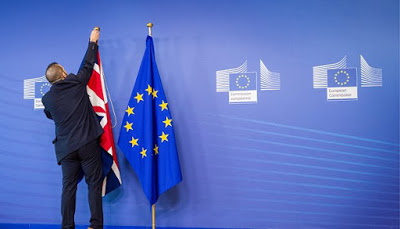
Nigeria (CBN) and internationally, the referendum by Great Britain to leave the
European Union (EU). Both key developments have impact on Nigeria, albeit to
varying extent. I have attempted to highlight some of these impacts in this
article.

The Brexit Referendum
On Thursday 23 June 2016,
citizens of the United Kingdom (UK) voted in a referendum either to leave or
remain in the European Union (EU). In a most shocking outcome, over 17 million,
precisely 17,410,742 or 52% out of the total 33,551,983 voters voted to leave
the EU compared to 16,141,241 or 48% that voted to remain. Since the outcome of
the referendum, the very first exit by any country since the EU was established
has got the whole world wondering what would happen next and the implications
not only to the UK and the EU but also the rest of the world.
The Brexit vote has
not only shocked the EU and the rest of the world, it also left many citizens
and residents of the United Kingdom themselves “fantastically stunned”. It is
not surprising that millions of British people have now signed a petition
requesting for another referendum.
Whatever happens next,
one thing is certain – that Great Britain and the EU will no longer remain the
same.
The impact will be far
reaching. Over USD 2 trillion has been wiped off global capital markets across
all continents. This also means that less value for pension and retirement
plans with investments in those markets. Other issues range from
reconfiguration of the single market, renegotiation of trade agreements,
immigration and labour law, functions and so on. As a result of the uncertainty
created by the exit vote, the market has perhaps over-reacted as the British
Pound depreciated by about 10% within 24 hours, the worst in over 30 years. In
the medium to long term, the exchange rate to other major currencies will
probably recover but likely to be lower than pre-referendum levels for some
time. For Nigeria, there will be minimal impact. Nigerians studying in the UK
will need relatively less Naira to pay their fees. Those travelling to the UK
for business and vacation will also find it slightly more affordable.
In terms of importation
from the UK, this will become cheaper for Nigerians while exports to the UK
will become more expensive and therefore less attractive. British businesses in
Nigeria will be relatively more valuable to their UK group both in terms of
their returns on investment and consolidation value in Sterling.
The monies stolen from
Nigeria and stashed away in the UK by some politicians will be of less value
than if the funds had been recovered pre-referendum. We may have to renegotiate
the double tax treaty between Nigeria and the UK if Brexit triggers a leave
vote by any of its territories such as Scotland.
Businesses do not like
uncertainties and this is the main reason for the currency devaluation while
various rating agencies have either downgraded or are considering downgrading
Britain and even though nothing has really changed after the election. The
actual exit could still take about 2 years. Where possible, governments must
address all controllable uncertainties as much as possible from macro-economic
policies, fiscal direction and so on.
In the Economic Community
of West African States (ECOWAS), which was established in 1975, Mauritania
pulled out of the Union in December 2000 without any fanfare and no noticeable
impact. This is largely due to the fact that ECOWAS has not really fully
integrated and taken off. The Common External Tariff within ECOWAS was only agreed
in 2015, forty years after the Union was formed. Also, the size of the UK
economy and its influence on the global stage makes it completely different and
unprecedented.                            
           
And what about the new
foreign exchange policy? 
The Central Bank of
Nigeria recently announced a change in foreign exchange policy from the fixed
official rate to a floating exchange rate which is largely market driven. Based
on the 2016 Budget, a benchmark exchange rate of N197 to the USD was used in
estimating government revenue. With the exchange rate now around N281,
government will get about 40% more from its dollar revenue. This will help
cushion the impact of decline in oil revenue as a result of the crisis in the
Niger Delta and hopefully also help reduce the planned deficit funding of N2.2
trillion in the Budget.
State governments will
also get more revenue to share in Naira terms from federal allocation to
improve the dire financial position of the states especially given that 27 of
the 36 states are reported to be defaulting on salary payments as at the end of
May 2016.
In a similar fashion,
import duties and VAT on importation should significantly improve partly due to
the higher exchange rate being used to calculate payments and also because of
the improved liquidity in the foreign exchange market which should result in
more importation. Also, it is expected that there will be more inflows of
foreign direct investments, foreign portfolio investments and diaspora
remittances which will improve economic activities and consequently the
country’s tax base and tax take.
So what’s next?
Investors and businesses
do not like uncertainties. Unfortunately there will always be uncertainties in
any economy but savvy investors learn to manage rather than avoid
uncertainties. However, uncertainties that are self-inflicted should be avoided
as they not only discourage some investors, they also necessitate a risk
premium for investments to be viable. As a country we can do very little or
nothing to control the price of crude oil, we had no control over Brexit vote,
and we will not be able to control whether Donald Trump wins American’s
election but we can, for instance, control the uncertainties created by our
failure to pass the Petroleum Industry Bill, inability to fully deregulate the
downstream sector, the uncertainties around fiscal and industrial
policies. 
Government must strive to
reduce uncertainties to attract both domestic and foreign investments.
Businesses that wish to play in this market need to plan for the long run but
also must be sufficiently agile to respond quickly and efficiently to unplanned
changes which they will inevitably encounter. Either way, Africa and Nigeria in
particular continues to be an attractive market for discerning investors who
will gain an advantage for moving in earlier than those who wait until they get
more certainty, which may be a very long wait.
Taiwo Oyedele is the Head of Tax and Corporate Advisory Services at PwC
Nigeria (the world’s leading professional services firm with presence in
over 150 countries). Taiwo has been in the forefront as a thought
leader and prominent speaker on key accounting and tax issues including
the tax implications of IFRS Adoption and Transfer Pricing. He is an
ardent advocate of tax reforms with particular emphasis on tax
simplification and transparency. He recently represented the
Manufacturers Association of Nigeria at the National Economic Council
(body of all 36 Governors and the Vice President) to successfully make a
case for reforms to address multiplicity of taxes.


ED’S Note- This article was originally published by the author here.
What Brexit Will Mean For Intellectual Property – Harbottle & Lewis LLP

What Brexit Will Mean For Intellectual Property – Harbottle & Lewis LLP

1.    
We don’t know what relationship the UK will
have with the EU post-Brexit – other than not being a member state. Every
business must plan an enterprise-wide review of its intellectual property
licence and distribution agreements to establish any requirements for
renegotiation (and possibly, termination).  The most obvious point being
that agreements defining a territory as “the EU” will almost certainly have to
be interpreted as excluding the UK from the date of exit.


2.    
The departure of the UK from the EU could
undermine much of the rationale for existing licence arrangements that are
drafted on an EU-wide basis. This could result in pressure to terminate or
renegotiate, and potentially litigation.

3.    
EU law must be complied with in the UK
until we leave. However, Directives that have not yet been implemented (such as
the recent Trade Secrets Directive) will almost certainly not be
implemented.  Meanwhile, however, English courts may nevertheless be
obliged to apply the principles of such directives whether or not implemented.

4.    
Depending on the approach taken by law
makers, the principle of exhaustion of rights might no longer apply in the UK,
unless we become an EEA member like Norway. If so, it would be possible to use
IP rights to block any imported genuine goods at the UK border, whatever their
origin.

5.    
Obviously, the EU-wide IP rights, such as
the EU trade mark and Community design rights, will no longer include the UK
once we leave the EU. This has practical and cost implications for IP managers
in terms of filing strategies.  Unless some kind of automatic conversion
of rights is established as part of the exit transition, action will need to be
taken well in advance of leaving the EU, to ensure protection in the UK. 
It may be possible to convert EU-wide marks to national rights, or new filings
may be required.  A massive disadvantage of new filings will of course be
the loss of priority, unless again that is catered for by transitional
legislation.

6.    
Remedies for infringement of intellectual
property rights will change. In particular, terms settling past disputes, and
cross-border injunctions granted by courts, will have to be reassessed. 

7.    
Litigation strategies will also need to be
reassessed, since the jurisdiction rules under the Brussels Regulation might no
longer apply. This will affect choice of forum for future disputes.

8.    
Much of what we have come to understand as
enshrined principles of IP law will be open to reinterpretation. Decisions of
the CJEU will continue to have effect indirectly as a result of past decisions
of our appeal courts based on CJEU judgments.  Eventually, those decisions
will be reassessed.  Many may view this as a welcome opportunity for the
English courts to simplify and clarify some of the harder concepts of, in
particular, trade mark law.

9.    
The Unified Patent Court system and the
Unitary Patent will not include the UK. This will also seriously delay the
commencement of the Unified Patent Court for the remaining member states, since
the UK’s ratification was essential to commencement and, further, the UK was to
be the location of one of the three central divisions.  UK businesses
holding EP patents still need to understand the UPC system, however, and in
particular must stay focused on the key current requirement of assessing
whether to opt EP patents out of UPC.  For the avoidance of doubt, none of
this affects the long-established EP patent system, which is not specific to EU
member states.

10.And finally – this doesn’t necessarily stop
with the UK. Businesses should be alive to similar issues looming in other EU
member states, and take care when drafting any EU-related IP agreements. 
There is no need for immediate panic, but Brexit will in due course have huge
implications for IP rights holders and licensees.  IP practitioners, and
rights holders, will be at the forefront of shaping how things play out.

Jeremy Morton, Partner
jeremy.morton@harbottle.com
(+44) (0)20 7667 5293

Jeremy Morton leads the
contentious intellectual property practice at Harbottle & Lewis. He is a
senior intellectual property and technology law adviser and litigator in the
UK, with over 20 years’
experience. He advises on
a wide range of European IP law, contentious and non-contentious, including
patent litigation, copyright, trademarks, designs, trade secrets, as well as
data protection. He frequently advises in the technology, arts and
entertainment fields. He also advises on brand management.

Ed’s Note: This article
was originally published by the author here