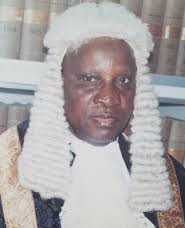

Military attire, civilian camouflage, and their legality in Nigeria | Gbenga Odugbemi

Military attire, civilian camouflage, and their legality in Nigeria | Gbenga Odugbemi

In Nigeria, it is notorious that majority
of the civilians do not know their rights, and for a population where the majority
do not know their rights, legal understanding is consequently a sophisticated
endeavor. Although, this a discussion for another time, the reason why law
seems sophisticated in Nigeria is still very confusing. For a country having
three major languages – Yoruba, Igbo, and Hausa – one would expect that laws
would be written in these languages, or if not, that laws would be written in
the more common and uniting language – the ‘Nigeria Pidgin English’. A forced
understanding of the law written in English
language in a country where the majority of the adults – 56.9% – are
illiterates is ludicrous[1]


The question beckons, who are the laws written for?. It is like the USA having
their laws written in French, or France having their laws written in Chinese.
The relics of colonization must be modified (to suit the Nigerian people) if we
do not want to totally abrogate them. The legal profession and the Rules of
professional responsibility are also a
constituent factor in the legal illiteracy of the Nigeria populace; for
example, lawyers are restricted in giving legal clarifications to the populace
by Rule 35[2]
of the “Rules of Professional Conducts for Lawyers” (in Nigeria). This is an
anomaly, as it offends the right to freedom of expression (of lawyers) as
promised in the section 39 of the Nigerian 1999 Constitution.    
The problems described above have been the
cause of the dearth of cases on the law relating to wearing of military garbs
in Nigeria hitherto. There is virtually no case law
on this issue in Nigeria, and one of the causes is that the people do not understand
the law or their rights?, for if we know our rights and understand the law,
someone, in the past would have brought this issue before a court of law in
Nigeria. It is saddening while writing on a topic as this, that the writer has
to search the nooks and crannies for authorities to support arguments. On
another note, if laws are not deliberately made sophisticated, and if everyone
understand the law, the crippled man almost beaten to death by two military
officers in Onitsha, Anambra State recently[3]
would not have been a victim of the humiliation and pain he suffered, for
what?, just because he is a Nigerian and has worn a military camouflage.
Since the attitude of the Nigerian military
is a continuing one, where they assault anyone wearing military-like attire,
and since the court has not made any
pronouncement on the issue – because no one has had the audacity to take their
case to court, this creates a lacuna in legal discourse. “Legal discourse”
because the majority of the writings on
the issue are being propounded by non-lawyers or those who do not understand
the law. The aim of this article is to dissect the law on the issue of
civilians wearing military camouflage, the legal provisions especially in the
Criminal Code Act (applicable in Nigeria – aside from the Northern part), and
the legality of the military officers who more than often ‘beat the hell out’
of civilians wearing military camouflage in public.
Quickly, the relevant laws are in sections
110[4]
– which describes the acts that constitute
the offense and the punishment of “Unlawfully
wearing the uniform of forces”, and section 251 – which describes the offense of what constitutes “Bringing contempt
on uniform”.
In section 110, the law provides that:
Any
person who – Unlawfully wearing the uniform of forces, etc. L.N. 112 of 1964.
1967 No. 27.
(1)            not being a person serving in any
of the armed forces of Nigeria, wears
the uniform or any part of the uniform of such forces, or any of the armed
dress having the appearance
or bearing any of the regimental or other
distinctive marks of such uniforms; or
(2)            not being a person holding any
office or authority under the Government of Nigeria or of any part thereof,
wears any uniform or distinctive badge or mark or carries any token calculated to convey the impression that such person holds
any office or authority under the government;
                 is guilty of an offense and is liable to imprisonment for one
month, or to a fine of ten naira, unless
he proves that he had the permission of the President or of the Governor of a
State or wear such uniform or dress, badge or mark or to carry such token:
                 Provided that this section
shall not apply to the wearing of any uniform or dress in the course of a stage
play or in any bona fide public entertainment.
First, it must be understood that contrary
to popular belief and what has been circulating, this provision does not “entirely” incriminate civilians from
wearing military attire or a camouflage of same. Here is a dissection of the
two subsections, starting from subsection 2. 
In the said subsection 2, a proper and close reading would show that
what that subsection incriminates is “impersonation”, especially when one pay
close attention to the phrase “calculated to convey the impression”. In law,
there are lots of ramifications that follows using a phrase as this in a criminal
law provision. One, it shows that the crime requires a criminal mental state[5],
and also, that the prosecution/State must prove this culpable mental state
before the suspect can be convicted. It,
therefore, follows that civilians wearing military garbs on the street
without the intention or mental state calculated to convey the impression that
they belong to the military cannot be held responsible under section 110
subsection 2. It is very simple. The prosecution has the burden of proving that
a civilian wearing a military garb intend to impersonate, the civilian is not liable
at the point of merely wearing a military garb.
On subsection 1, unlike subsection 2, the offense is clearly strict in nature. A strict offense
is one that doesn’t require the prosecution/State to prove the mental state
which culminated into physically carrying out the culpable mental state. Put in
another way, doing the act alone is enough for someone to be found guilty, for
example, merely possessing arms like gun(s)
is a crime in Nigeria under section 428 of the Criminal Code Act, whether the
person intended to possess the gun is immaterial. Likewise in subsection 1
above, wearing the said uniform or any type having the appearance is enough to
make someone liable. Why it could be argued that this section is the main basis
for the harassment of the Nigerian populace wearing military camouflage, it
must be mentioned that the interpretation of that provision itself is not
flawless. The wordings of section 110 (1) at best is an example of ‘legislative
imprudence’ common in most Nigerian statutes. For what it’s worth, it is
obvious that what section 110 in the ‘spirit of the law’ is trying to
incriminate is also “impersonation” like its subsection 2. This argument is
further bolstered when one looks at the two previous sections of the law –
which are also deliberating on similar offense,
this time for persons in public service and police officers. Section 108 uses
the word “personates” and section 109
uses the words “with intent…” It is only logical that section 110 also
incriminates personation, but it seems the legislature has ‘muddled up’ its
actual intention in section 110 subsection 1.
Although the ongoing
argument is open to lots of criticisms – like the literal provision of the law
must be adhered to – a counter-argument is employing the legislative intent in
interpreting a statutory provision. The title of section 110 shows it was added
in 1967, that period marked the beginning of the Nigerian Civil War, whereas a
legislative manuscript or White Papers of the legislature in making this law
cannot be laid hands on so that one can decipher the legislative intent behind section
110 (1). Still, one can logically reason that the legislative intent was to prevent
impersonation or using the military platform to carry out odd/criminal
activities. It is also logical to say the legislative intent was to delineate
civilians from the military. Whichever logically conclusion one might want to
draw, the most important thing is that section 110 in its entirety is a war relic that must and should have been eliminated since it was not part of our law
before, but was “smuggled” in – for war, and emergency purpose. War has ended,
so is the emergency situation, in fact, the Civil War ended 3 years after, in
early January of 1970, the country is no more ruled by the military and has now embraced democracy – a
civilian type of government – and still we still have a section 110 in our
criminal law. Section 110 is an upshot of the laziness of Nigerian
legislatures, the Nigerian Criminal Code Act has been promulgated since
1st June, 1916, and has since not been reviewed or
amended. It is really sad. If the law has been reviewed, it would have followed
the way criminal laws are now been written, i.e. where a crime which is a
strict liability offense is so highlighted, and those requiring prove of mental
state uses words like ‘intentionally’, ‘with intent’ etc.
On the other provision, section 251 of
the law states that:
“Any
person who, not being a person serving in any of the armed or police forces of
Nigeria, wears the uniform of any of these forces, or any dress having the
appearance or bearing any of the regimental or other distinctive marks of any
such uniform, in such manner or in such circumstances as to be likely to bring contempt on that uniform, or employs any
other person so to wear such uniform or dress, is guilty of a simple offence,
and is liable to imprisonment for three months or to a fine of forty naira.”
Section 251 of the Criminal Code Act
shares in the criticisms of section 110
above, but also, it is clear that section 251 is a bad law. The controlling
phrase is “as to be likely to bring contempt”. This is a clearly subjective
phrase, the question is what constitutes “contempt on the uniform?”. If the
legislature via the criminal law provision has recluse itself from objectively and
narrowly defining what would amount to “contempt”, then anything subjectively
done to the uniform must be accepted as
licit. Section 251 is vague and is, therefore, void. [see: PDP v. INEC &
Ors (2012) LPELR 9724 (SC)]. The suspect is being robbed of the ‘notice’ of
what he is being held reprehensible for – and this is unconstitutional, see
section 36(6)(a) of the Nigerian 1999 Constitution.
A more important issue that must be
addressed is the jungle-justice the military are exerting on civilians found
culpable as regards these laws. The military is
either equal to the civilians or below them (since they – the military – live
on the taxpayer’s taxes – the civilians
taxes), but never above them, and therefore could not and should not be seen
beating people up on the streets. Even if we agree that civilians could be held
liable under section 110(1) alone, the suspect is still entitled to the
procedural due process promised under section 36 of the Nigerian Constitution.
An instance where the military takes the law into their hands, where they make
themselves the court and executioner of their judgment is devastating. This must be stopped, and the military body and
institutions must be held accountable for this attitude, as it sure shows their
‘products’ are not well-ingrained in the due process requirements of the law since the attitude is quite repetitive. The
initiative taken by the Director, Army Public Relations, Brigadier-General Sani Kukasheka Usman
subjecting the two military officers engaged in the maltreatment of the
crippled man in Onitsha to an assault charge (via their Commanding Officer) is
admirable. This type of attitude puts our feet back in the right direction. At
the end, if we agree that wearing a military-like attire is a crime, then, like
every other criminal case, the suspect
must be subject to the court system, not assault on the streets.
This article will not be complete
without mentioning the relevance of section 39 of the Nigerian Constitution as
it relates to these issues. It is trite that the freedom of expression and its
interpretation is and should be interpreted
broadly. Freedom of expression thus encapsulates wearing a military-type garb.
However, since there has not been a case before a court in Nigeria on this
issue, it is doubtful how the court will explain the fundamental right of
expression and wearing a military-like garb. Still, it is doubtful if any court
would suppress the fundamental right of expression in clothing for a military
‘interest’. The military/government (for whatever reason) might argue they have
an interest in restricting civilians from wearing what they wish, but the assessment
would be if such propounded interest is legitimate/rational enough to suppress
a huge constitutional right as freedom of expression. Thus, from a legal point
of view, section 110 of the criminal code itself is constitutionally infirm as
it intends to restrict the smooth operation of a fundamental right housed by
the constitution, and because of that is void by virtue of section 1(3) of the
Nigerian Constitution. The Constitution is paramount to any other law, the said
Criminal Code Act inclusive.
There are also some arguments flying
around that similar attitude is incriminated in countries like India and the Philippines, the question is, and so what?,
does it mean that incriminating the act is good law?, does it mean Nigeria must
follow suit?, gay rights is observed in Europe and North America, do we observe
the rights?. No doubt, arguments as these are hypocritical
because even countries with advanced military personnel allow their civilians
to wear military-like garbs. The ability of a State to choose laws for her own
people is what sets each State apart. A sanction of civilians in this regard in
today’s Nigeria is not only unnecessary, it is a source of brutality of the common man by military
officers as has been seen repetitively.
In conclusion, we need our laws in our
traditional languages in Nigeria, the merits of doing so are vast. For once, the acts of those in power
could be checked, the masses would know their rights, it would also aid
judicial activeness and explanation on a lot of knotty legal issues as the
court would have had opportunities to explain lots of issues that would have
been brought by lots of people. Rule 35 of the Rules of Professional Conduct
for Lawyers in Nigeria is also a bad rule, so is Rule 34 restricting
Advertisement of legal practice, these rules are in conflict with the freedom of
expression. Lawyers should be able to take the challenge of explaining laws to
people freely, without the fear of the Nigerian Bar Association subjecting him
to a quasi-trial in a disciplinary hearing. 

If there is any country that needs
explanations of law to its populace, it is Nigeria, it is confusing why that
effort is being restricted by some rules. Rules should emancipate us, not
restrict us unnecessarily. Also, the Nigerian Army Institutions must be charged
with impacting some legal knowledge in those they release to go on the streets,
especially on the constitutional due process of law, and that they should
refrain from taking laws into their hands, as civilians have rights and should and
cannot be pushed around. An assault charge would most likely stand in a court
of law if the crippled man assaulted in Onitsha chooses to press charges,
regardless of the internal charge by the Nigerian Army. The Nigerian Army can
foreclose a potential legal damages loss if it put her agents in check.  

Gbenga Odugbemi
Legal Counsel 

Photo Credit – www.nigerianeye.com 


[1] 65 million Nigerian adults are said to
be illiterates, see:
http://www.vanguardngr.com/2015/12/65-million-nigerians-are-illiterates-unesco/
[2] Rule 35 provides: “A lawyer may with propriety write articles for publication in
which he gives information upon the law; but he should not accept employment
from such publications to advise inquirers in respect to their individual
rights.”
[3] On February 7th, 2016
[4] Of the Nigerian Criminal Code Act
[5] In criminal law, before a person can be
convicted of an offence, the State/Prosecution must prove that the person
had/nurtured a mental state of committing an offence, and secondly, that he
actually did the carried out the mental state idea he nurtured – that he
materializes or transform the culpable mental state into reality. These two
requirements are referred to as ‘mens rea’ and ‘actus reus’. However, some laws
describing a crime explicitly state that the State/prosecution need not prove
the mental state – the ‘mens rea’, this type of offences are called “strict
liability offences”, e.g. when one runs a red light at a traffic stop, it does
not matter if the person had the mental state of running the light OR where one
is found possessing a controlled drug/substance, the ‘possession’ itself is a
crime, there is no need to prove intention of possessing it etc.
Life of Lagos Lawyer -Episode 7

Life of Lagos Lawyer -Episode 7


As a lawyer, receiving phone calls about a
client in police custody is not the sort of welcoming news I like to hear, in
fact its bad market. What happened to the Fortune 500 companies, Oil & Gas
Firms and Multi-Nationals? Why don’t those Clients call my phone! Now, I am
getting calls that Baba Fine-face has been arrested by the Police for staging a
protest against the government. Na me send am? However, after listening to the
way the poor man was man-handled by security agents, his clothes torn, phones
seized and his left eye partially closed from a swollen face, who am I not to
come to my brother’s aid.  

I am not surprised though as this is not
his first time. Baba Fineface is a member of the Native Leadership Congress and
a staunch believer in the doctrines of equality, fairness and justice. This
time, his protest was against the State Governor for the State’s inability to
pay the salaries of workers. For 7 months, state workers had been forced to beg
just to survive. Many children had been withdrawn from schools for the inability
of their parents to pay school fees and the frustration in many homes was about
to erupt like a giant Volcano. The Country’s Misery Index was now above 50% and
the foreign exchange rates have successfully crippled many businesses. Who
would blame Baba Fineface.
It’s always unsettling for a Lawyer
visiting a Police Station, maybe it’s because of the mutual hatred between the
Police and Lawyers. While the Police are used to having their way with
un-learned members of the society, it is only the Lawyer that can rightfully
defend his position confidently. I once heard a Policeman say “Chai, this country
don spoil, why would a lawyer have the temerity to talk when being addressed by
a Policeman”, the Policeman had been responding to my debate with his colleague
over the guilt of my client.  So now you
understand why though the Policeman and the Lawyer are both ministers in the
Temple of Justice, it is very difficult for us to get along. And right now,
sitting in the DPO’s office, it’s not difficult to feel the tension in the air.
It is the Officer’s position that my client
organized an unlawful protest by not seeking a Police permit before carrying
out such and when he was directed to turn back with his cohorts, they refused,
so the officers on riot – duty had to teach my client a lesson. I notice his
demeanour while saying the words “teach my client a lesson”, you would have
thought he was referring to just a mere cautionary warning and not four
police officers beating an unarmed man with batons and the soles of their boots.
I on the other hand am of the opinion that my client was unlawfully assaulted
and arrested because he did not cause any public outburst of violence and the
law is trite as decided by the Supreme Court that no one needs a police permit
before carrying out a peaceful protest and such person may only inform the Police
for the sake of providing security. Furthermore, Sections 39 and 40 of the
Constitution guarantees my client’s right to freedom of expression and to
assemble and associate freely. It takes threatening to sue the Police for
breach of my client’s Rights before he is released on bail with no apology but
a warning not to organize such protests again. Chai, the sacrifices some people
have made for this country, only God can reward them. In a country where there
is Rule of Law, a Policeman will be breaching the rights of citizens with
impunity, chai this country has spoilt.
“Ah, D-Law, this country has showed me
pepper”, Baba Fineface begins. “See how these policemen beat me like thief today,
just because say we want better country for ourselves and our pickin, wetin I do
now and nobody go fight for me”. You no wan go court? I respond. “D-Law, no
even talk that one, who court don epp na, I go go court now, spend 5 years
before judgment commot before we come begin appeal again. I beg who wan dey go
court every day na for 5 years, u fit go now make them say court no sit, e don
taya person o”.   Baba Fineface is just glad to be out of the
ordeal and wishes only to return home for a good night rest after vising the
hospital for a checkup. We both discuss my fee and he agrees to pay the
following morning before I in-turn start driving in the direction of my Office.
 
However, I continue to ponder on Baba
Fineface and his ordeal. I believe it is safe to say there is a huge disconnect
between the Government and the governed in this Country. This also has led to
distrust on the part of the people towards Government and political office
holders. The resulting effect is what I would liken to a No-Win situation for
everyone. While most persons believe political office holders are in government
to line their pockets with the best part of the Nation’s collective wealth,
political office holders on the other hand seem to be overwhelmed by the
growing demands of the people for a better standard of living and accountable
governance.
So why won’t people like Baba Fineface take
to the streets in protest? How do we find a solution to this problem? We engage
constructively I believe. The need for proper engagement with all tiers of
government cannot be overstated. The advantages are too numerous to count and
the benefits are too enormous for us to overlook. Protests and rallies half the
time fail to generate results only attention. But na person wey don chop fit
engage o, I quickly tell myself.
 Join
us next time for another episode of “Life of a Lagos Lawyer”. An exclusive
Legalnaija series. 
PLESE NOTE: This is a work of
fiction. Names, characters, places and incidents either are products of the
author’s imagination or are used fictitiously. Any resemblance to actual events
or locales or persons, living or dead, is entirely coincidental.

Effect of the International Convention for Control and Management of Ships’​ Ballast Water and Sediments

Effect of the International Convention for Control and Management of Ships’​ Ballast Water and Sediments

Since the advent
and use of steel-hulled vessels, water has been used as ballast to stabilize
vessels at sea. Industry practice over years reveals that Ballast water is
pumped into vessels to maintain safe operating conditions throughout a voyage.
This reduces stress on the hull, provides stability, improves propulsion and
maneuverability, compensates for weight changes in various cargo load levels
which would have ordinarily arisen due to fuel and water consumption.

Whilst the
practice of using water as ballast is done without ill-motives and is essential
for safe and efficient modern shipping operations, it is known to sometimes
pose serious ecological, economic and health problems due to the multitude of
marine species carried along in ships’ ballast water. The transferred species
may survive to establish a reproductive population in the host environment,
becoming invasive, out-competing native species and multiplying into pest
proportions. The spread of invasive species is now recognized as one of the
greatest threats to the ecological and the economic “well-being” of the planet.
The need to find a lasting solution became more apparent as years passed.
It took several
years of complex negotiations between International Maritime Organization
Member States to adopt (by consensus) the International Convention for the
Control and Management of Ships’ Ballast Water and Sediments (BWM Convention)
at a Diplomatic Conference held at International Maritime Organization’s (IMO)
Headquarters in London on February 13th 2004. For the Convention to have the
force of law as it were, at least 30 countries representing a combined total
gross tonnage of more than 35% of the world’s merchant fleet must have ratified
it.
On September 8,
2016, Finland ratified the International Maritime Organization’s (IMO)
International Convention for the Control and Management of Ships’ Ballast Water
and Sediments (the “Convention”) which was originally adopted in 2004.
Finland’s ratification ensured that the convention satisfied the conditions of
the required number of signatories and total gross tonnage. Consequently, the
Convention is widely expected to come into force on September 8, 2017.
The ratification
of the Convention is said to be a landmark step towards halting the spread of
invasive aquatic species, which can cause havoc for local ecosystems, affect
biodiversity and lead to substantial economic loss. 
The Convention is
expected to have a significant impact on ships engaged in international trade,
requiring them to manage their ballast water and sediments to certain minimum
standards and to install onboard ballast water management systems.
The Convention
states that all ships of 400 gross tonnage and above will be required to have
on board:
·        
Ships specific approved Ballast Water Management
Plan approved by the administration
·        
Ballast water record book
·        
Approved Ballast Water Treatment System
·        
International Ballast Water Management certificate
In view of the
foregoing, it is also expected that there will be huge retrofit demand on
thousands of ships once the Convention comes into force later this
year. Around 40,000 to 50,000 ships will probably need to be retro-fitted
to an approved Ballast Water Treatment System. The implementation of the
Convention will be a major challenge in the global shipping industry, including
shipyards, equipment manufacturers and ship owners majorly because of the cost
of installing a Ballast Water Treatment System (“BTWS”).
The expectation
and objective is to eventually have a situation where all relevant vessels have
a BWTS installed, whereby ballast water discharged is made harmless as it
relates to invasive species. The IMO implementation schedule for BWTS implies
that most vessels (which do not already have a BWTS installed) will be
requested to install such equipment in the period 2017–2021 – in each case
before the expiry date of the vessel’s International Oil Pollution Prevention
Certificate.
The Convention
also includes a transitional period during which ballast water can be
“exchanged” in deep seas during voyages between ports A and B.
The UK P&I
Club has admonished its members not to delay compliance with the new strict
ballast water management controls which will surely come into force during the
course of the year.
Although the
fixing of BWTS is quite expensive, it is a welcomed development and the cost
cannot be compared to the economic damage which runs into billions of dollars
and colossal ecological and public health impact. This Convention shows that
the trends in the shipping market are sustainable development and environmental
friendly operations.
There is
worldwide acceptance and optimism about the Convention and industry experts are
certain that the Ballast Water Management Convention, once in force in
September 2017, will not only minimize the risk of invasion by alien species
via ballast water, but will also provide a global parlance for international
shipping, providing clear and robust standards for the management of ballast
water on ship.
Damilola
Osinuga is an Associate in the Shipping and Oil Services practice group of Bloomfield
Law Practice
, Nigeria. His scope of work includes registration of
commercial vessels and yachts, incorporation and legal support of shipping
companies, ship financing and mortgaging, shipping advisory and litigation.

Ed’s
Post – This article was first published here.
Legal Strategies for Addressing Climate Change: A Comparative Analysis of Cap-and-Trade and Carbon Tax | Magnus Amudi

Legal Strategies for Addressing Climate Change: A Comparative Analysis of Cap-and-Trade and Carbon Tax | Magnus Amudi


1.     Introduction
Today, major/global climate change
conversations are no longer centered on the validity or otherwise of global
warming as a major threat and challenge to the earth’s existence. The doubts
that once welcomed this subject “are fading, appropriately, as rapidly as some
ice sheets and glaciers are melting.”[1] 


The United States Department of State states that,
“climate change poses multiple threats to U.S. and global security. It is
likely to exacerbate economic and social inequality, and increase competition
and conflict over agricultural, marine, and water resources. It can result in
the massive displacement of people, including those whose livelihoods depend on
these resources.”[2] The discussion today, both locally and
internationally, focus on ways to abate the continued deterioration of our
climate thereby enhancing our collective survival. The purpose of this paper is
to discuss two major legal climate change strategies, comparing and contrasting
both, and highlight their advantages and disadvantages The two strategies
examined in this paper are Cap-and-Trade and Carbon Tax. “Climate change
strategies” is used here to mean plans or methods employed to reduce the
emissions of Greenhouse Gases (“GHGs”). The following are the critical GHGs
found on earth’s atmosphere: Water vapor (H2O), Carbon dioxide (CO2), Methane
(CH4), Nitrous oxide (N2O), Ozone (O3), Chlorofluorocarbons (CFCs).[3]
2.       Comparative
Analysis of Cap-and-Trade and Carbon Tax as Legal Climate Change Strategies
2.1.  Cap-and-Trade
Cap and Trade are two words which when
taken together represent a legal method of tackling the destructive effects of
climate change by reducing the emissions of GHGs. “[A regulator] sets a []
‘cap’ [] on emissions, which is lowered over time to reduce the amount of
pollutants (e.g., CO2) released into the atmosphere. The ‘trade’ creates a
market for carbon allowances, since the ‘total number of permits is limited by
the cap, the permits take on financial value and can be traded on the open
market,’[4] persuading companies to innovate in order to meet,
or come in under, their allocated limit. The less they emit, the less they pay,
so it is in their economic incentive to pollute less.”[5]
A very successful example of a
cap-and-trade legal strategy is the Acid Rain Program (the “Program”).
Established by Title IV of the 1990 Clean Air Act with U.S. Environmental
Protection Agency (“EPA”) as its administrator. The major goal of the Program
is to reduce Sulfur Dioxide (“SO2”) emissions to half of the level in 1980 by
setting a cap on the total amount of SO2 that could be emitted by electric
power plants across the country. It is believed that the Program have reduced
annual SO2 emissions to one-half the amount emitted in 1980.[6]
How it works(ed)? As a typical cap-and-trade
program, the Program did not set individual emission caps for each powerplant,
rather, an overall cap is set each year with each powerplant allocated a
certain number of allowances based on the predetermined cap. An allowance is a
right to pollute, to the extend ‘allowed.’ When not fully exhausted or used, by
reducing emissions below the allowed level, an allowance holder may sell
(trade) or save (bank) the allowance for future use. To be complaint,
powerplants that are unable to reduce their emissions below the allowed level
must purchase allowances. The trading aspect therefore creates an incentive for
emission reduction. The overall allowances are adjusted and lowered over time
to ensure continued reduction in emissions and achievement of the program’s
goal. How are emissions monitored? Every powerplant under the Program is
required to deploy a Continuous Emissions Monitoring (CEM) which continuously
measure the emissions of SO2, reporting emissions to the EPA. Under
cap-and-trade strategy, some of the major policy issues are what to regulate
and the scope (which GHGs and emissions sources to include and where in the
fossil fuel supply chain the point of regulation will occur), method of
allowance distribution (free distribution, auction or a synergy of both?), and
flexibility and cost controls (bankability, safety valve, offsets e.t.c.).

2.2.  Carbon Tax
By contrast, a carbon tax is a tax levied
on the carbon content of fuels.[7] “It is intended to make users of fossil fuels pay
for climate damage their fuel use imposes by releasing [GHGs, chiefly] carbon
dioxide into the atmosphere, and also to motivate switches to cleaner energy.”[8] Like the traditional command and control regime,
carbon tax tries to internalize the social cost of the utilization of dirty
fuels. Emissions of GHGs, specifically CO2 is proportionate to the carbon
content of the fossil fuel burned for the generation of energy, making the
implementation of a tax regime on the carbon content of the fossil fuel ease.[9] Due to this certainty, a carbon tax could be
implemented at the point of the entry of the dirty fuels into the market
(Upstream), passed along through the wholesale users (downstream) to the final
consumer of products in rates. An example of a successful carbon tax program is
that of Sweden. Sweden has used a carbon tax to reduce greenhouse gas emissions
since 1991. “The Swedish Ministry of Environment estimated that carbon tax has
cut emissions by an additional 20 percent (as opposed to solely relying on
regulations), enabling the country to achieve its 2012 target under the Kyoto
Protocol.”[10]
Why Carbon tax? It is direct and it can be
used to generate revenues for the government, which applies it for a more
economic purpose. “It could be revenue-neutral: all revenues could be rebated
directly to every citizen (tax-and-dividend) or could be used to reduce
existing taxes (tax-and-shift). Alternatively, revenues could be invested in
development and deployment of new clean-energy technologies (tax-and-invest)
and/or in energy efficiency programs (tax-and-caulk).”[11]
3.     Comparative
Analysis (Highlighting the Strengths and Weaknesses of Both Strategies
Cap-and-trade and carbon trade as discussed
are both market-based legal strategies used to address adverse impacts of
climate change. However, they will be compared and contrasted under the
following subheadings:
3.1.  Innovation-Both
cap-and-trade similarly encourage innovation in the way industries or large
entities generate/consume energy. To take advantage of the trading part of
cap-and-trade, a polluter would require to reduce emissions and either save or
trade allowances. In carbon tax, polluters are forced to look for alternatives
sources for their energy needs to avoid paying carbon taxes. Thereby driving
innovation or forcing the development and deployment of new technologies.
3.2.  Revenue Generation-Both
strategies are possible revenue generators. Cap-and-trade can also generate
revenue for government if the initial allowances are auctioned rather than
freely distributed. However, carbon tax is a certain way to generate revenues.
3.3.  Certainty/Uncertainty-Both
strategies share similarities and difference regarding certainty/uncertainty.
While cap-and-trade firmly conveys the amount of emissions to be allowed (the
‘cap’), carbon tax does not. Conversely, carbon tax guarantees the amount of
revenue to be received from the regulation, but cap-and-trade does not.

3.4.  Monitoring/Report
Requirements
-Both strategies require close monitoring, reporting and
verification of reports to be successful. Without the regulators close
monitoring of the program, issues of fraud and misrepresentations may defeat
the exercise.
3.5.  Independence/Dependence-One
of the not so popular characteristics of these two strategies are their
independence/dependence on the intervention of the regulators. For
cap-and-trade, as soon as the initial allocation of the allowances are made,
emission regulation becomes market controlled, thus requiring little or no
governmental intervention. However, for a carbon tax, the regulator will
continuously monitor the operation of the program to ensure that the tax has
not been a burden to businesses or become too little to matter, as such,
requiring adjustments.
3.6.  Economic Justice/Equity-Both
strategies raise the price of energy (both electricity and gas) bringing
additional adverse economic impact on low-income consumers. Nonetheless, these
impacts can be mitigated by utilizing the collected revenue (where allocation
was auction in cap-and-trade) in a way that ameliorates its impacts on
low-income households. Similarly, if not adequately implemented and regulated,
cap-and-trade may create emission hotspots, especially within the low-income
communities. Even if the reduction in GHGs are widespread, that of
co-pollutants remain a conundrum as they impact on local environment.
3.7.  Regulatory Framework-Both
strategies would require a legal framework and/or enabling legislation to be
implemented. It is thought that while cap-and-trade may require an entirely new
implementation framework, carbon tax may piggyback on existing tax frameworks.

3.8.    Flexibility-Cap-and-trade
is the most flexible of both. While polluter may choose to either reduce their
emissions by investing in better technologies, some may easily buy allowances
to continue usual operations. However, carbon tax offers no such flexibility.
Indeed, even if polluters desired to switch from fossil fuel EGU to cleaner
burning fuels, such as natural gas, such moves require major investments and a
major overhaul.
4.       Conclusion
In view of the above comparative analysis,
I am of the view that the cap-and-trade strategies offers much more than the
carbon tax does. For one, one of the strongest points in favour of carbon tax
is its revenue certainty, if cap-and-trade adopts the auction method for the
distribution of initial allowances, it would be carbon tax in addition to
trade. Finally, another cap on the feather of cap-and-trade is its tremendous
success in United States (the Program) and in the European Union.

[1] Perry E. Wallace, Climate Change, Corporate
Strategy, and Corporate Law Duties, American University Washington College of
Law Digital Commons @ American University Washington College of Law, 2009
[2] United States Department of State, Addressing
Climate Change: A Top U.S. Priority, http://www.state.gov/r/pa/pl/223165.htm
[3] Wikipedia,
https://en.wikipedia.org/wiki/Greenhouse_gas#Greenhouse_gases
[4] Eleanor Revelle, Cap-and-Trade Versus Carbon Tax:
Two Approaches to Curbing Greenhouse Gas Emissions, retrieved from:
http://lwv.org/content/cap-and-trade-versus-carbon-tax-two-approaches-curbing-greenhouse-gas-emissions
[5] Environmental Defence Fund, How Cap and
Trade Works
, Retrieved fromhttps://www.edf.org/climate/how-cap-and-trade-works (December
17, 2016).
[6] U.S. Environmental Protection Agency, Acid Rain
Program Basic Information. Available at:
http://www.epa.gov/airmarkets/progsregs/arp/basic.html
[8] Carbon Tax Centre, Pricing Carbon Efficiently and
Equitably,https://www.carbontax.org/whats-a-carbon-tax/ Retrieved
December 17 2016.
[9] Id.
[11] Eleanor Revelle, Cap-and-Trade Versus Carbon Tax:
Two Approaches to Curbing Greenhouse Gas Emissions, retrieved from:
http://lwv.org/content/cap-and-trade-versus-carbon-tax-two-approaches-curbing-greenhouse-gas-emissions

Magnus
Amudi
Corporate, Energy and Environmental Law
Practitioner

Ed’s Note – This article was first published
here.
Essentials Of A Contract Of Sale | Hightower Lawyers

Essentials Of A Contract Of Sale | Hightower Lawyers

A Contract of Sale is an
agreement for the exchange of goods, services, or property, between the seller
and the buyer, for a promised or paid value, usually money.


For there to be a valid
contract of sale, all these essential elements must be present. 
They include:


Two parties in the transaction (the buyer and Seller).

Goods, services or property, which must be the subject matter of the agreement.

There must be some price consideration.

The interest in the goods must be transferred to the buyer.

It may be an express or implied agreement.

There must be transfer of ownership.

A common type of
Contract of Sale is the Contract of Sale of land. For the purpose of this text,
we highlight the under-mentioned set of facts.

Executing a Contract of
Sale of land is the initial step in a conveyancing transaction. At this initial
stage, the purchaser acquires an equitable interest in the property at this
stage while a legal interest is acquired at the completion step.

Section 4, Statute of
Fraud, 1677 is the preliminary statute applicable to the Contract of Sale of
land in Nigeria, as well as the Law Reform Contract Act (No 64) of 1961(Lagos),
and Property and Conveyancing Laws of Western Nigeria.

Subject to the various
laws applicable to the Contract of Sale of land, the contract must be evidenced
in writing and signed by the respective persons privy to the transaction,
although no particular form is required.

 There are certain
essentials that must be included in the memorandum of a contract of sale. They
include:

1.    
The name of the parties.
2.    
The property.
3.    
The price.
4.    
The signature of the parties.
Before parties in this
contract can enforce it, the memorandum must exist although it need not exist
at the time the contract is being made.

The three types of
‘Contract for Sale’ are Oral, Open and Formal Contracts.

Oral Contract is
an agreement by word of mouth. This is prevalent under native law and custom.

Open Contract on
the other hand provides for the minimum requirements of the Statute of Fraud –
the Parties, Property and Signature.

Formal Contract is
one made subject to general conditions of sale, in-spite of the fact that they
only apply so far as they are not varied by or inconsistent with the special
conditions stipulated by conveyancing laws.

The capacity of parties in
a contract of sale is also important; it is the ability of the party to be in a
contract of sale of land. The inability of either of the parties renders the
contract void.

In conclusion, the
existence of these salient essentials guarantees
 that your interests
are well guarded when conducting a sale of land or real property.
If you have found this
blog-post helpful, please, do share. Be social!

Hightower Lawyers
Ed’s Note – This article
was first published here.

The Shareholders Agreement | Eberechi Okoh

The Shareholders Agreement | Eberechi Okoh

“They criticize me for
harping on the obvious; if all the folks in the United States would do the few
simple things they know they ought to do, most of our big problems would take
care of themselves.”
 Calvin
Coolidge


A shareholders’ agreement
(“SHA”) as the name implies is an agreement between shareholders. The practice
in Nigeria is for this agreement to be entered into as a pre-incorporation or a
post-incorporation contract. Plainly speaking, every time two or more persons
agree to incorporate a company, a SHA is born, albeit oral. As obvious as its
relevance appears to be, many shareholders proceed to incorporate companies
with their partners without reducing terms into writing and ne’er a SHA. On the
assumption that the memorandum and articles of association (M & A)
sufficiently protects their interest, shareholders proceed to execute more
complex documents with third parties, even while the company has no code
guiding the shareholders’ business relations.  Thus, a very common cause
of action in various Nigerian courts is the breach of oral pre- incorporation
contracts amongst shareholders. Unfortunately for many, with nothing more than
the M & A, they are forced to compensate their fellow shareholders who may
have contributed nothing beyond their signature at the time of the company
registration.
In the past, lawyers would
populate the M & A with as many provisions as would ensure that interests
of the subscribers to the M & A were protected. However, the Corporate Affairs
Commission has since stopped receiving bulky M & A for registration. As
such, the SHA becomes a veritable tool to protect each shareholder’s business
interest within the company and to regulate the company’s dealings with third
parties. 
  
A good SHA should be
executed by, and between the shareholders and should name the company as a
party. Matters relating to consideration, obligations of parties, transfer of
shares, pre-emption rights, dividend policy, fair value, tag along drag along
provisions and voting should be clearly dealt with and provided for. The
SHA can also be used to amplify information contained in the M & A.

Clearly, the SHA is
particularly useful to small companies, unquoted companies, companies set up as
special purpose vehicles and companies whose shareholders generally revolve
around a definite circle. It is therefore pertinent that every shareholder
protects its business interest today by executing a Shareholders’ Agreement.

 Eberechi Okoh

Senior Associate at
Streamsowers & Kohn


Eberechi May Okoh is a highly motivated lawyer with
over ten years hands on experience spanning litigation and commercial law
practice.


Ed’s Note – This article was originally published here.
How To Conduct A Sale Of Family Property | HightowerLawyers

How To Conduct A Sale Of Family Property | HightowerLawyers

Unlike real assets owned
by individuals, family property (land and houses) is for the use
and enjoyment of the members of a family as one unit. Thus, one member cannot
single-handedly sell such property.

Therefore, for sale of family
property to enjoy validity under Nigerian law, there must
be the full payment of purchase price, coupled with actual
delivery of possession (this delivery should be done in the
presence of witnesses), and concurrence of vendors.
Asides from showing unequivocal intention
to sell, the significance of full payment, coupled with possession,
is to ensure that in the event of a default, the purchaser
would be able to sue for the amount paid and/or title to the property.
WHO MUST GIVE CONSENT FOR SALE TO BE
VALID?
The ‘Agreement to Sell’ of the vendors
refers to the consent of both the family head and other principal
members of the family to sell family property.
The head of the family is the patriarch of
the family. Usually a male leader, older, and respected by other members of the
family. Principal members are other senior members of the family or those who
act as representatives of the different branches (in the case of a polygamous
family) of the family in the course of the transaction.
Where there is alienation (i.e. a sale)
without the consent of the family head, such sale is void
(i.e. of no legal effect), and when the sale is by the family head
without the consent of the principal members, the sale is voidable
i.e., it can be set aside by the courts at the instance
of the non-consenting principal member(s).
Furthermore, it is important to have
witnesses who observed the handing over of the property to the buyer. This
prevents any reversal of the decision to sell, and doubles as actual proof of
transfer of interest in the property.
In conclusion, the requirement
of writing is not a pre-condition for the sale of family property
especially under customary law. One should also note that asides the
aforementioned, sale of family land may be subject to certain native
rights prevailing in a particular ethnic group.
To conduct a sale of family assets, the
information proffered here is priceless. Be guided!
HightowerLawyers
Ed’s Note – This article was originally posted here
Photo Credit – Family House | Pixabay.com

DRONE IN A TOY SHOP: The Battle Between Technology Development & National Security In Nigeria

DRONE IN A TOY SHOP: The Battle Between Technology Development & National Security In Nigeria

While window
shopping in the mall one day, I saw something unusual through the window of one
of the stalls. It was something I had always thought it would be cool to have,
if only I knew what to do with it. It was a drone. A DRONE? A DRONE in a toy
store??? I know you must think I’m old and archaic but really what is a drone
doing in a toy store.


The possibility
of drones being available for sale to the general public is one that makes me
fearful for a number of reasons. There is no doubt that the introduction of
this technology brings much potential for growth in many different areas. It
may contribute to making security surveillance systems cheaper and safer,
therefore improving our ability to safeguard infrastructure (such as oil
pipelines) and the general public from evil doers such as the killer herdsmen
and the dreaded boko haram sect. Other applications may include use by
hospitals to deliver emergency first aid equipment, speedy delivery of pizza to
my house, and even more awesome innovations from those in the music and
entertainment industries. However, the introduction of drones also poses
several risks in the wrong hands, especially in the context of the complex and
volatile nature of Nigeria these days.

Therefore my
major question is: how can the use of drones be regulated such that innovation
and progress is encouraged in a systematically controlled environment.

I was elated to
see that the Nigerian Civil Aviation Authority (NCAA) has proactively taken
steps to provide safety guidelines for the operation of drones, particularly in
a non-segregated airspace, for certification, safety and security reasons. The
word proactive is used due to the fact that the International Civil Aviation
Organisation (ICAO) is yet to publish Standards and Recommended Practices
(SARPs), as far as certification and operation of civil use of Remotely Piloted
Aircraft (RPA) is concerned. [1]the NCCA has put in place very stringent procedures for
the acquisition of licences to operate a drone in Nigeria, which includes the
following:

1. Writing a letter to the Director General,
Nigerian Civil Aviation Authority (NCAA) stating your proposed use of your
(RPA),

2.  The payment of a non-refundable processing fee of
N500,000 (Five Hundred Thousand Naira) bank draft payable to the Nigerian Civil
Aviation Authority.

3.    It is also expected that your business is
incorporated with Corporate Affairs Commission (CAC) with a minimum capital
shares of N20,000,000. [2]
4.   Due diligence by the Nigerian Security Agency (NSA)
and part in compliance with NCAA is carried out on the applicant.

And finally an
annual renewal of licence fee of NGN100, 000.00.[3]
As laudable as this
step may seem, it poses more as a deterrent to potential drone users due to the
high cost and unpredictable outcome of the application process. The application
process is geared mainly to those who are able to raise revenue, whether
legally or on the side (i.e., illegally). This is also evident from the little
detail of a non-refundable half a million-naira processing fees. (note that the
total certification process costs more than the average cost of a drone). The
certification process by the NCAA has therefore grounded the use of drones to a
near total halt.

Furthermore, the
Nigerian Civil Aviation Regulations (Nig.CARs 2015 Part 8.8.1.33) and
Implementing Standards (Nig.CARs 2015 Part IS.8.8.1.33) stipulates the
guidelines for the use of drones in Nigeria which covers how, when and where to
use drones.[4] This is funny because the guidelines will now
guide no one, or at best very very very few privileged people and institutions
who know people in high places that can guarantee license approval (the story
of Nigeria).

In the spirit of
technological progress however, what is most important is the ability to strike
a balance between the good and the bad potentials of drone use. The complex
balance between the encouragement of use to increase economic and innovative
growth is crucial. For example, going beyond regulating the use of drones, it
would be nice to see the NCCA co-operating with the Nigerian Customs and
immigration services in order to control the importation or smuggling of drones
such that importation is not discouraged but controlled and properly tracked.

The
certification process should also be attached to the purchase and use of drones
whereby prospective buyers must show evidence of certification before being
able to import or buy drones off the rack of equally certified retailers, just
like buying a gun (considering the fact that drones are also potentially
weapons). Also the NCCA may encourage the building of drones (knowing how
innovative Nigerians can be) for the encouragement of technological
development, as well as having a less stringent and more cost effective
certification/licensing process to encourage legitimate users, importers and
builders to register activities. Finally, a wider spread law to enforcing and
punishing the violation of any and all guidelines and laws.[5]
As the world
continues to evolve, Nigeria should not continue to be seen as a country who
constantly lags behind technology-wise. 

A little progress has been seen in
recent years  throught the introduction of electronic commerce into the
Nigerian evidence act 2011. But it would be nice to see more progress in this
direction by creating and amending laws to be more accepting of technological
development. I do understand however that there is a need for complete synergy
between the law and enforcement agencies for this dream Nigeria to be realised.
Drones pose even higher dangers where so many dysfunctional agencies and laws
are in existence. While deterring the use of drones in the country may not be
the most technology oriented move to make, it is the safest for now pending
when we become a more mature and technology forward and functional nation.
Therefore, I’m more than happy to wait for the time to buy my own drone and fly
to see what I look like from an aerial view, than get stalked or worse by a
random unknown and dangerous person. I am happy to be patient.
[3]Anti-Drone Regulations: NCAA Will Send Nigeria To
The Stone Age; Samuel
Odusami
; viewed 27th September 2016
[5] Drones and their interaction with security and
privacy; sokombaa alolade

Abimbola A. Laoye-Balogun

Managing Partner 
H.B Balogun & Co.

Ed’s Note – This article was published here.

Photo Credit – www.pacificlegal.org 
Statute Barred Debt And Its Revival | Simileoluwa Owotomo

Statute Barred Debt And Its Revival | Simileoluwa Owotomo


INTRODUCTION
In discussing this
poignant issue, one must discuss debt within the
constraints of the law. 
A debt exists when a
certain sum of money is owed from one person (the debtor) to another (the
creditor). Hence ‘debt’ is properly opposed to unliquidated damages to
liability, when used in the sense of an inchoate or contingent debt; and to
certain obligations not enforceable by ordinary process. ‘Debt’ denotes not
only the obligation of the debtor to pay, but also the right of the creditor to
receive and enforce payment. See
NIPOST v. I. E. Co. Ltd. (2006) 8 NWLR (Pt.
983) Pg.435.


In ARAKA V.
EJEAGWU (2000) 12 S.C. (PART I) 99
, the meaning of what it means for a
subject matter to be statute barred was succinctly stated as follows –

In my interpretation
“statute-barred” simply means barred by a provision of the statute.
It is usually as to time i.e. the bar gives a time limit during which certain
actions or steps should be taken, and one is barred from taking action after
the period specified in the statute. Any action taken after or outside the
specified limit or period is of no avail and has no valid effect. The bar can
be lifted or the limit extended only if the statute allows it to be done. Where
there was no such extension, the action carried out will be invalid, and the
court will treat as such
.”PER KALGO J.S.C. (P.47, Paras.A-C).

According to Section
34(a) of the Limitation Law of Lagos State
, a statute barred debt means
a debt in respect of which the period fixed by this Law for bringing of an
action to recover it has expired.

ISSUES
FOR DETERMINATION
A.   WHEN
IS A DEBT SAID TO BE STATUTE BARRED?
B.   HOW
CAN A DEBT SAID TO BE STATUTE BARRED BE REVIVED?

A.       WHEN
IS A DEBT SAID TO BE STATUTE BARRED?
In discussing whether a
debt is statute-barred, one must understand the provisions of the statute that
gives a time limit within which certain actions or steps should be taken for
debt recovery.

In OKONTA &
ANOR V. EGBUNA (2013) LPELR-21253(CA),
 the issue of whether a debt is
statute barred by virtue of the Limitation of Action Law was discussed as
follows:         

“Let me reproduce the
provisions of S. 12 (c), and 20(1) (a) and S. 18 of the Act for case of
reference and to make the treatment of this issue clearer. S. 12 (c) states
that – “A right of action shall cease to exist in the following
circumstances. …(c) Lapse of time where the time allowed under the law for
bringing action in respect of a particular matter has lapsed.”

S.20 (1) (a) states that-
“The following actions shall not be brought after the expiration of six
years from the date on which the cause of action accrued, that is to say, (a)
actions founded on simple contract or on tort.”

S. 18 states that –
“The provisions as regards limitation of actions provided in this Law
shall have no application where a person bringing an action to recover land, or
the person through whom he claims, derived his title to such land solely under
customary law.”

It is clear from the
express wordings of S. 18 that it excludes only actions for recovery land from
application of the Limitation of Actions Law. A debt recovery action is
not excluded by S. 18 from the application of the Limitation of Action Law.”
It is clear from S.
20 (1) (a) that an action on a simple contract for recovery of debt must be
brought to court within six years from the date the cause of action accrued. S.
12 (c) states the consequences of the failure to comply with S.20 (1) (a) of
Act. It is stated clearly that the right of action shall cease to exist and
therefore not be exercisable after the expiration of the 6 years period
.
It is clear from the writ of summons and statement of claim that the suit at
the trial court was filed over 6 years after the respondent demanded for the
refund and the appellant failed to do so. Clearly the action was statute
barred. Such a claim is not maintainable after the limitation period of 6 years
has expired.” Per AGIM, J.C.A. (Pp. 23-25, paras. F-A

In the case of MERCANTILE
BANK OF NIGERIA PLC V. FETECO NIGERIA LTD (1998) 3 NWLR (PT.540) 143
, the
question for determination in the instant case was whether the claim of
plaintiff for a debt of N5, 791,857.61 being outstanding loan plus interests
thereon was statute-barred or not under the English Limitation Act of 1623,
which required such suits to be commenced within six years from the date of
accrual of cause of action, being debts that arose from a simple contract.

It was held that the
limitation period is six years and by virtue of the provision ofSection 15
of the Interpretation Act Cap. 192, Laws of the Federation of Nigeria 1990
 and
the year on which the particular event occurred is excluded
. See also ANWADIKE
V ADM-GEN OF ANAMBRA STATE (1996) 7 NWLR (Part 460) 315
.

From the above, it is
trite to deduce that the limitation period for debts that arose from a simple
contract is six years excluding the year on which the contract commenced. SeeSection
20 (1) (a) of the Limitation of Action Law
.
Hence, a debt can be said
to be statute barred when the limitation period of six years, after the year of
contract, has lapsed.

B.        HOW
CAN A DEBT SAID TO BE STATUTE BARRED BE REVIVED?
There is indeed a remedy
to revive a debt that is statute barred and same will be discussed as follows;

The principle of
Acknowledgment and Part payment
An acknowledgment of
debt to remove the bar must be made to the proper person by the proper person,
that is, the debtor and the creditor, with the proper formalities when they are
required by statute and must be in terms sufficient to warrant the inference of
a promise to pay the debt.

Part payment of
debt to remove the bar must be made under such circumstances as amount to an
acknowledgment of the debt. It must appear that the payment was made on the
account of the debt for which the action was brought and that it was made as a
part payment of a greater debt.
                                                                             
In THADANI &
ANOR. v. NATIONAL BANK OF NIGERIA LTD. & ANOR. (1972) 1 S.C. (75),
 the
principle of acknowledgment and part payment was further discussed:

“The principle of
acknowledgment or part-payment is founded on the theory that by so doing the
debtor establishes a fresh contractual relationship so that a cause of action
then starts to run from the date of the fresh contractual relationship. In
Stamford Spalding & Boston Banking Co. v. Smith (1892) 1 QB 765, Lord
Herschell at p. 768 stated thus concerning the effect of a document which is
relied upon as an acknowledgement:-

It
cannot be disputed that an acknowledgement, in order to exclude the operation
of the , must be absolute and unconditional, and one from which a promise to
pay the debt can be inferred. But it was argued that if an acknowledgement is
in fact made, it is immaterial to whom it is made. Such appears to have been
considered the law at one time, and there are certainly some dicta to that
effect; but that is not the law now. In my opinion, since the decision in
Tanner v. Smart (1827) 6 B & C 103 it has been abundantly settled that an
acknowledgement to a stranger is not sufficient. It must be to the creditor or
his agent, to someone who was entitled to receive payment of the debt, and to
whom you could presume a promise to pay the debt.”

The position therefore is
that before writing could be described as an acknowledgement to take the case
out of the Statutes of Limitation, the writing by the debtor should recognise
the existence of the debt or the rights against himself. Beyond this whether a
document does this or not is a question of fact depending upon its
contents.” Per COKER, J.S.C. (Pp. 11-12, paras. A-B).

In NIGERIA SOCIAL
INSURANCE TRUST v. KLIFCO NIGERIA LTD (2010) LPELR-2006(SC) (2010) 13 NWLR
(Pt.1211) 307 S.C.
 on whether an acknowledgment of the debt that is
statute barred will revive the right to recover it, it was held as follows:
    

“…Meaning that
there must have been an initial indebtedness which according to the Limitation
law is statute barred arising after a lapse of a period of years from the
accrual of cause of action in the case. The limitation law here is a period of
6 years being a simple debt. However, where there is acknowledgment of the
debt, the right to recover by action is revived and it is the crux of matter in
this case.”PER CHUKWUMAH-ENEH, J.S.C (P. 29, paras. E-F)

Section 45 of the
Limitation Law of Lagos State
 states as follows-

(1) Every acknowledgment
shall be writing and signed by the person making the acknowledgment.
(2) An acknowledgment
under Sections 38,39,40,41,42,43 or 44 of this Law-
(a) may be made by the
agent or the agent of the person by whom it is required to be made under
whichever, of these sections is applicable; and
(b) shall be made to the
persom or the agent of the person whose right or claim is being acknowledged.

Section 46 of the
Limitation Law of Lagos State 
states as follows;
(2) An acknowledgment of a
statute-barred debt shall not bind any successor of the acknowledgor on whom
the liability devolves on the determination of any person’s interest in
property under a settlement taking effect before the date of the acknowledgment”

From the above, it can be
deduced that an acknowledgment as a remedy for a statute barred debt must be in
writing, must be signed by the debtor or his agent and must be made by the
creditor or his agent
As regards part payment, Section
49 of the Limitation Law of Lagos State
 states as follows;

(1) Where
(a) any right of action
has accrued to recover any debt; and
(b) the person liable
therefor makes any payment in respect thereof;
the right of action shall
be deemed to have accrued on and not before the date of such payment.
(2) Payment of interest in
whole or in part shall, for the purposes of this section, be treated as a
payment in respect of the principal debt.

3.     COMMENTS/OBSERVATIONS
AND CONCLUSION
In N.S.I.T.F.M.B.
v. Klifco Nig . Ltd. (2010) 13 NWLR (Pt.1211) 307 S.C., 
it was held
that “… where there is acknowledgment of the debt, the right to
recover by action is revived..”
 
It must however be noted
that what constitutes acknowledgment is a matter of fact depending on each
case. See THADANT AND ANOR V. NATIONAL BANK OF NIGERIA (1967 – 1975) 2 NBLL.
383 per COKER , JSC.
One of the
principles of the statute of limitation is that those who go to sleep on their
claims should not be assisted by the courts in recovering their property. But
another equally important principle is that there shall be an end of these
matters, and that there shall be an end to stale demands.

In conclusion, for a debt
statute barred to be revived, there must be an initial indebtedness; there must
be an acknowledgment of the debt or part payment of the greater debt.
Simileoluwa Owotomo

Associate at Ayodele, Olugbenga & Co. 

Ed’s Note- This article was originally posted here
Personality Profile – Hon. Justice S.M.A Belgore GCON, CJN (RTD)

Personality Profile – Hon. Justice S.M.A Belgore GCON, CJN (RTD)

SALIHU MODIBBO ALFA BELGORE was born on the 17TH
of JANUARY, 1937 to Yusufu Belgore, An Alkali and Aishatu Belgore in Ilorin,
Kwara State.

His early education was at Okesuna Elementary School,
Ilorin between 1945 to 1948; before proceeding to Ilorin Middle School from
1949 to 1951 and ILESHA GRAMMAR SCHOOL between 1952 and 1956.  Honourable Justice Belgore’s professional
training began at the Inns of Court School of Law, London and The Honourable
Society of The Inner Temple after which he was called to the Utter Bar at The
Inner Temple in February, 1964.


Honourable Justice Belgore was first appointed as an
Associate Magistrate in the Judiciary of the Northern Nigeria in July,
1964.  Later on, he served in various
parts of former Northern Nigeria and later in North Central State (now Kaduna
state) variously as Magistrate, Chief Magistrate and Chief Registrar up to
1973. Justice S.M.A. Belgore was further appointed as the Acting Judge of The
High Courts of North Central and Kwara States; Kano and North–Western States,
Benue, Plateau and North–Eastern States in 1974 between February and July.
His other judicial appointments include –
–        Appointed Substantive Judge of The High
Courts of Benue, Plateau and North – Eastern States: 2ND JULY, 1974.
–        Appointed a Judge of Plateau and Kwara
States, 1976 – 1977.
–        Appointed Chief Judge of Plateau State on
1st March, 1977.
–        Appointed Justice of Court of Appeal on 1st
September, 1979 – Vide Official Gazette No 44 Vol. 67 of 18/09/80.
–        Appointed Justice of The Supreme Court of
Nigeria 26TH          JUNE,
1986.
Honourable Justice Belgore has also held other
positions including–
·       
Chairman, Nigerian Institute for Advanced
Legal Studies; highest legal think-tank in Nigeria, established under a Federal
Government Statute. 1999 – 2007
·       
Vice-Chairman, National Judicial Council,
2001-2006
·       
Member of Board of Governors, National
Judicial Institute, 2002-2006
·       
Chairman National Archives
·       
Life Member, Body of Benchers
·       
Member, Legal Practitioners Privileges
Committee, 1998-2002

·   Appointed The Honourable Chief Justice of
Nigeria on The 14TH DAY OF JUNE, 2006
·       
Chairman, National Judicial Council
·       
Chairman, Federal Judicial Service
Commission
·       
Chairman, Legal Practitioner Privileges
Committee
·       
Chairman Board of Governors, National
Judicial Institute
·       
Vice President, Chartered Institute of
Arbitrators
·       
Judge, administrative tribunal of the
African Development Bank
·      Master bencher, honourable society of the
inner temple, London – January, 2007 – for life.

Honourable Justice Belgore
has also been the recipient of many Honorary Awards including;
·      GRAND COMMANDER OF THE ORDER OF THE NIGER
(GCON)
·      COMMANDER OF THE ORDER OF THE NIGER (CON)
·     LLD (HONORIS CAUSA), IGBENEDION UNIVERSITY,
OKADA
·    LLD (HONORIS CAUSA), UNIVERSITY OF ABUJA,
GWAGWALADA
·     D.LITT (HONORIS CAUSA), AL HIKMAH
UNIVERSITY
Honourable Justice S.M.A
Belgore speaks Yoruba, Hausa, English, Arabic, some French and understands
Igbo. His hobbies include; History, Sciences, Physics, Mathematics and to some
extent Medicine.

As a Judicial Officer for
about forty-two years, he served all over the Federal Republic of Nigeria in
various judicial capacities. His duty carried him to the north east and west,
now called geopolitical zones of the country. Therefore he always feels at home
anywhere in Nigeria.

On retirement, he
currently holds the following positions;
·       
Member, National Council of State
·       
Judge, Administrative Tribunal of African
Development Bank
·       
Chairman, Tripartite Committee on Minimum
Wage
·       
Chairman, Central Working Group of Nigeria,
vision 20:2020
·       
Chairman, Nigerian National Honours Award
Committee
·       
Chairman, Tripartite Committee on Minimum
Wage
·       
Member, Presidential Advisory Committee
·   President, Administrative Tribunal, African
Development Bank (AFDB)
·       
Chairman, Institute for Oil & Gas Law
·       
Life Member, Body of Benchers
·       
Life Bencher, Honourable society of the
Inner Temple (where he was called to the English Bar in 1964).

Culled from – Legal Rights and Obligations Under Nigerian Law by Adedunmade Onibokun, published in honour of the Hon. Justice S.M.A Belgore GCON, CJN (RTD) on 17/1/17.