
Renaissance Trip To Trace The History of Slavery

Renaissance Trip To Trace The History of Slavery

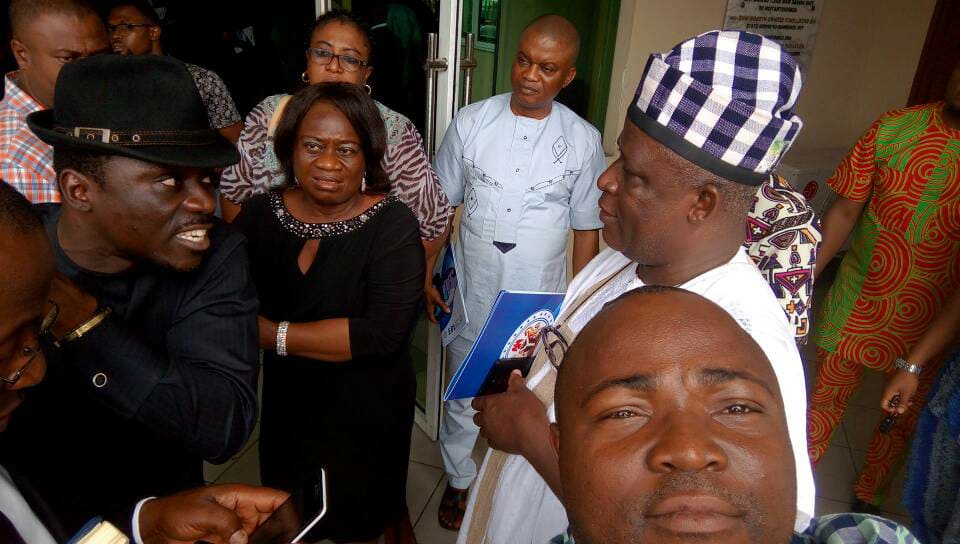
On 9th February,
2018, I had the opportunity of joining screen icon, Omotola Jalade Ekeinde,
Captain Ekeinde, members of the Omotola4point0 team, members of the Lagos State
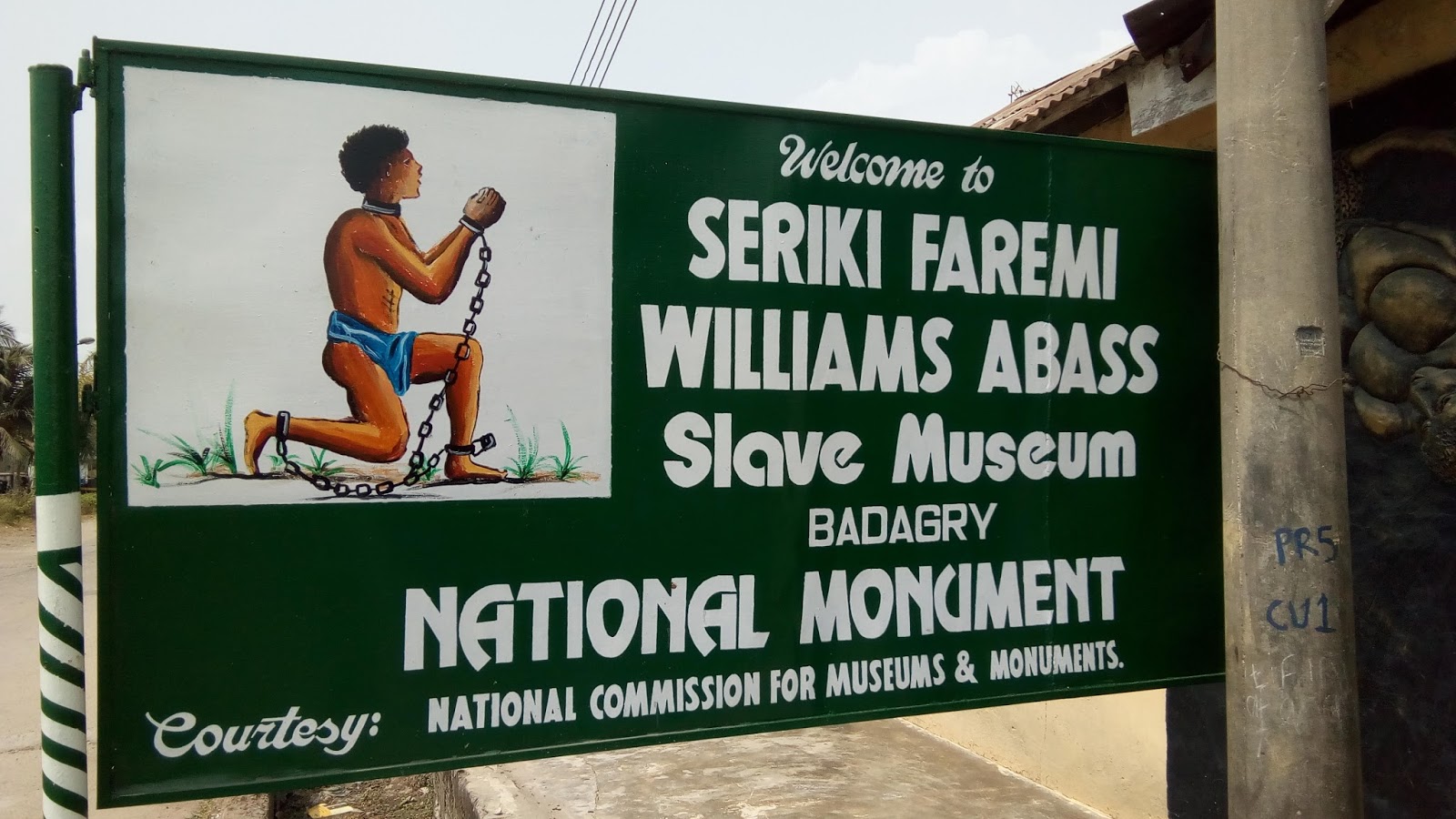
Ministry of Tourism and a number of amazing guests on a tour of the Badagry
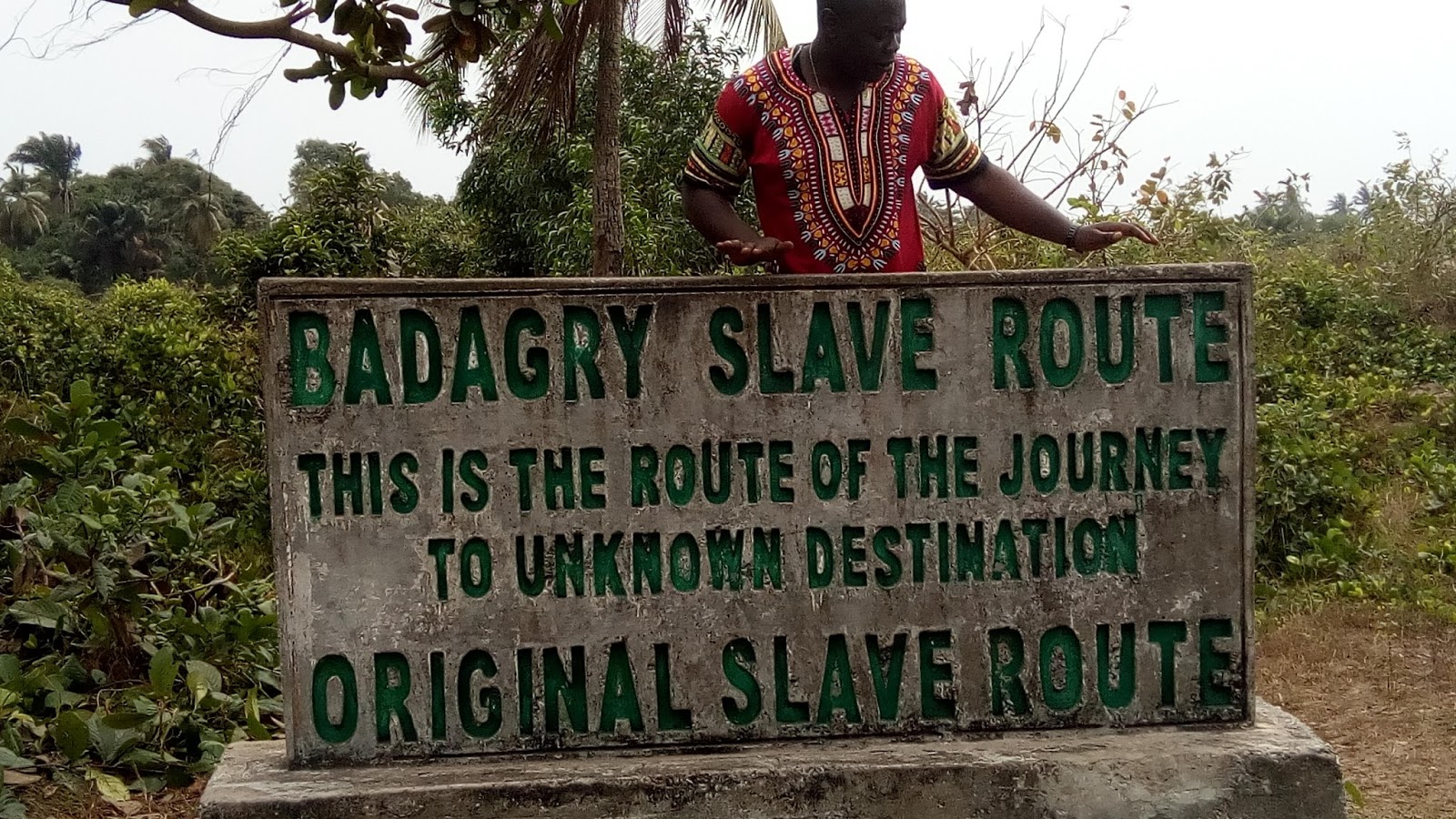
Slave Route. The aim of the trip was to have a clearer understanding of the
events that occurred around the Slave Trade Era and discern how they have
shaped the mental state of the Nigerian and also the African. As expected, the
trip turned out to be both insightful and enlightening.

Imagine my utmost surprise
when I learnt that contrary to public belief, the Slave Traders were only successful
in kidnapping a few Nigerians and our local chiefs and kings were directly instrumental
to the success of what has come to be known as one of the biggest crimes in mankind’s
history. According to history, in return for items such as wine, gun powder,
gin and mirrors, Yoruba kings waged war on neighbouring towns and villages in
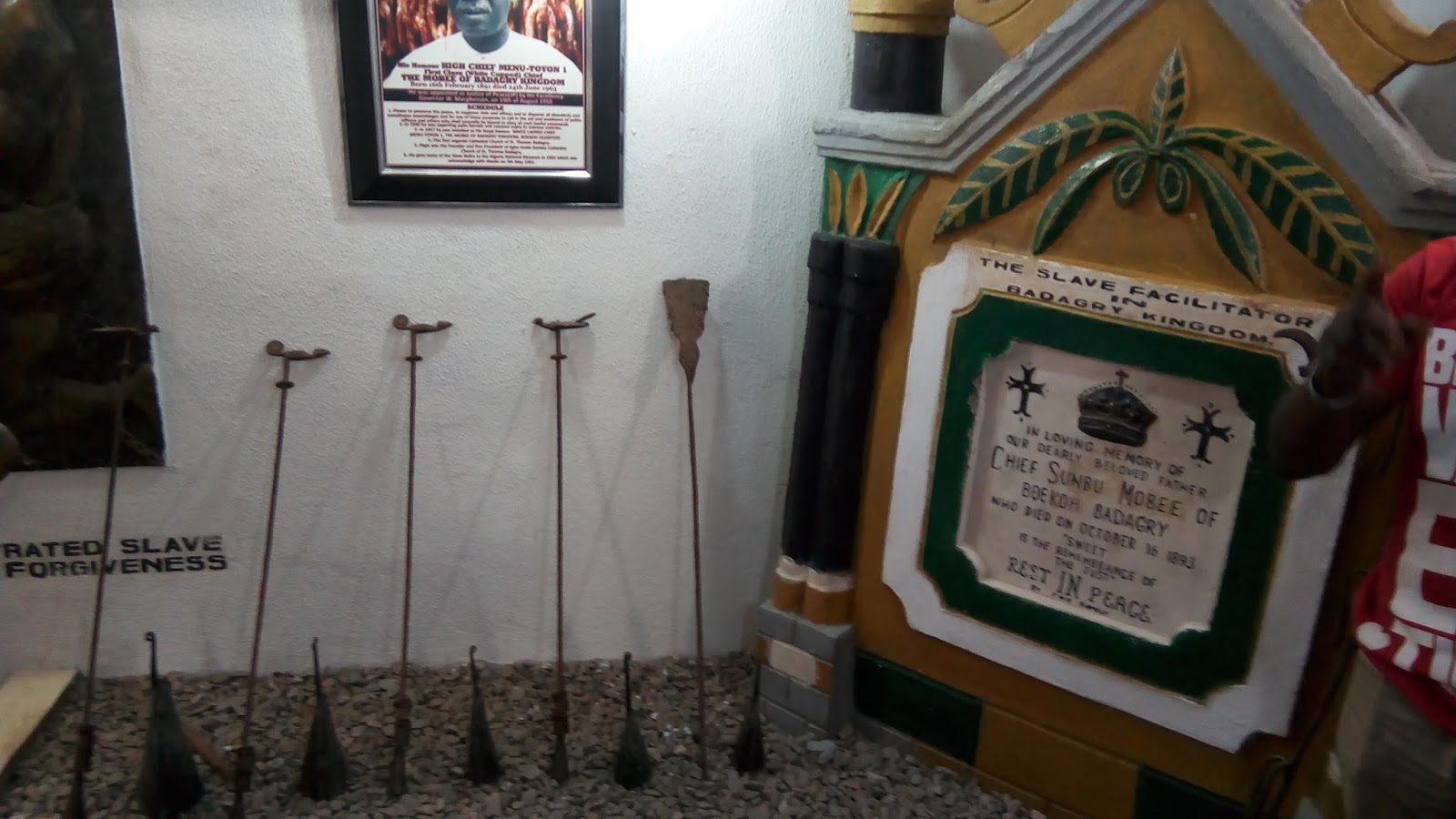
other to kidnap slaves for batter. One of such leaders was Chief Sunbu Mobee,
ruler of Badagry who died in 1893 and was the King of Badagry during the slave
trade era.

Would you believe that
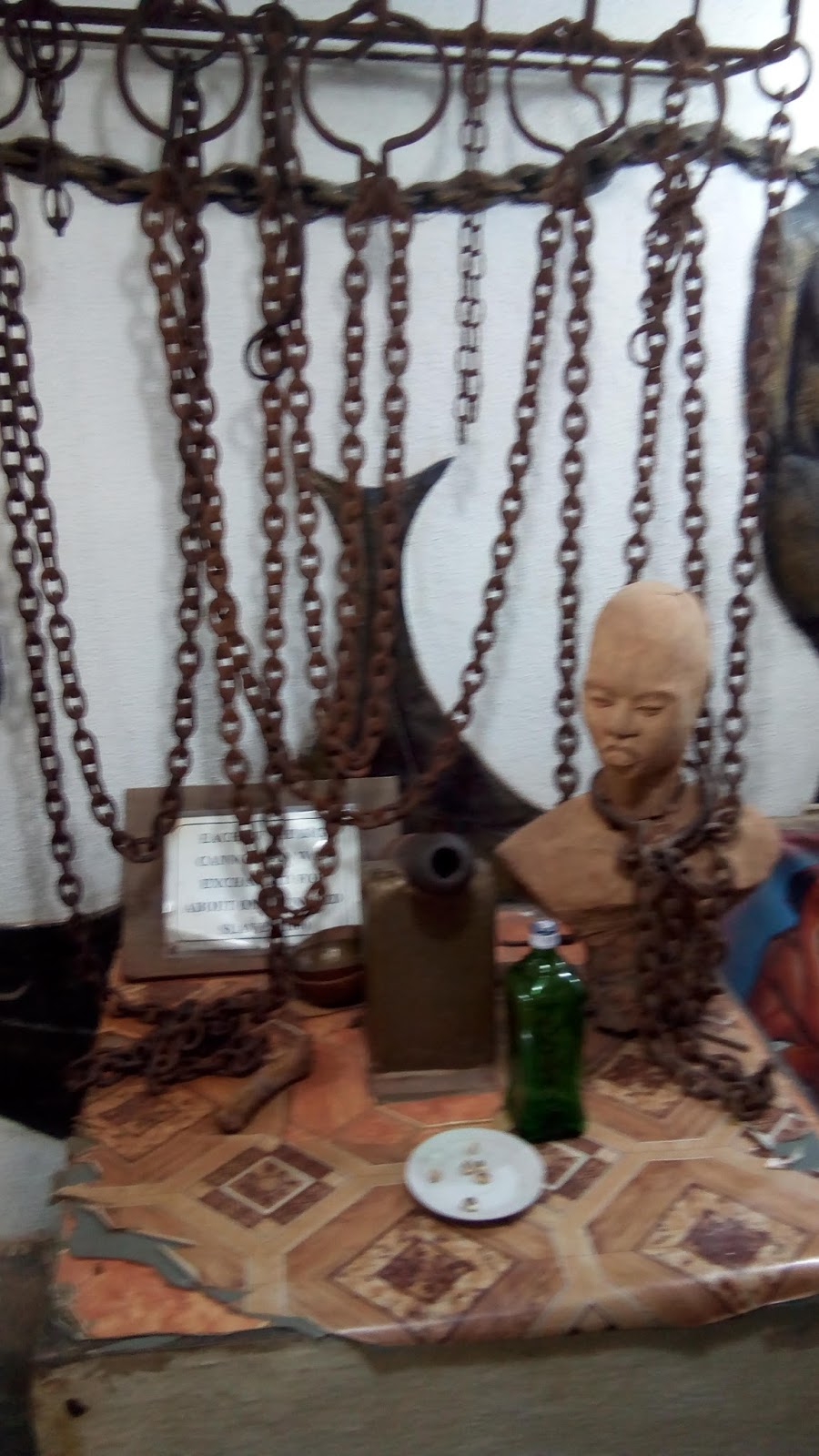
during the era, a bottle of gin was exchanged for about 10 able bodied slaves? Or
that when the Traders played raffle draws, the first prize was a Horse while
the second prize was a slave girl? This meant that the white traders placed a higher
premium on a horse over a slave.

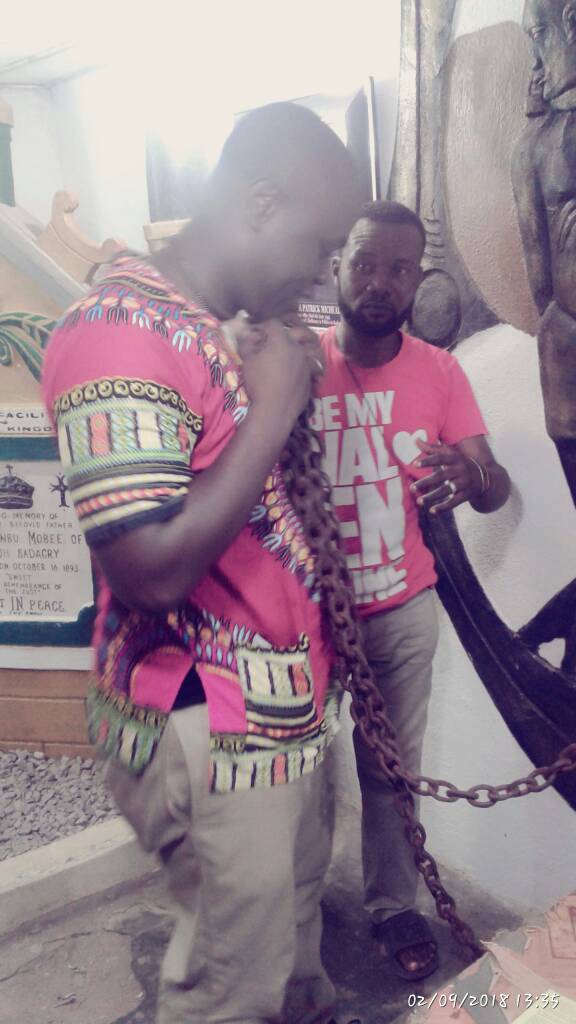
Furthermore, slaves who were
kidnapped in places such as Oyo kingdom had to walk to the coast in Badagry
with heavy chains around the necks and ankles while on their way to unknown
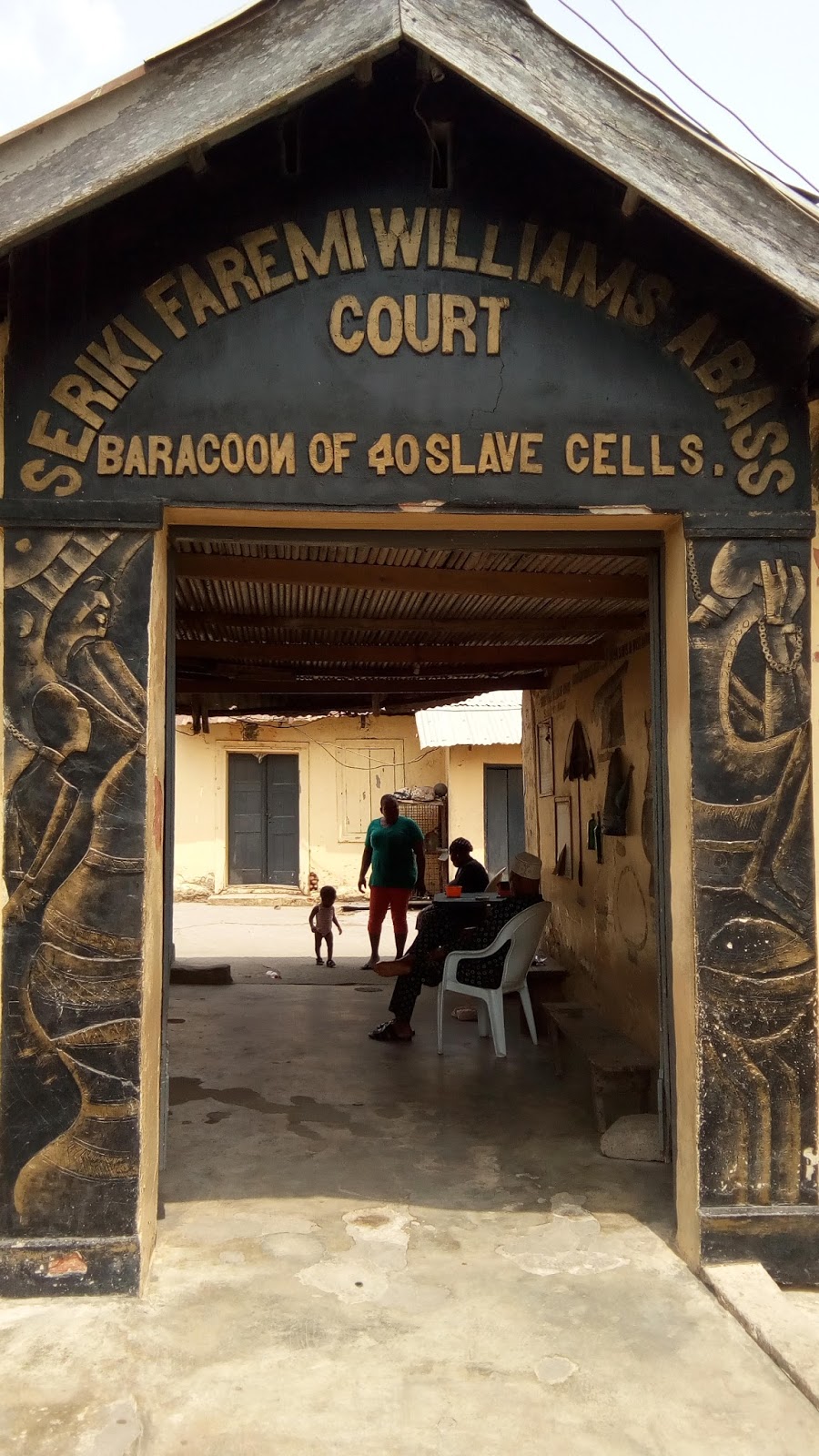
destinations. Such slaves upon reaching Badagry were housed in Baracoons,
otherwise known as slave cells. Here they were gathered and prepared for the
long journey by sea to Spain or the Americas.

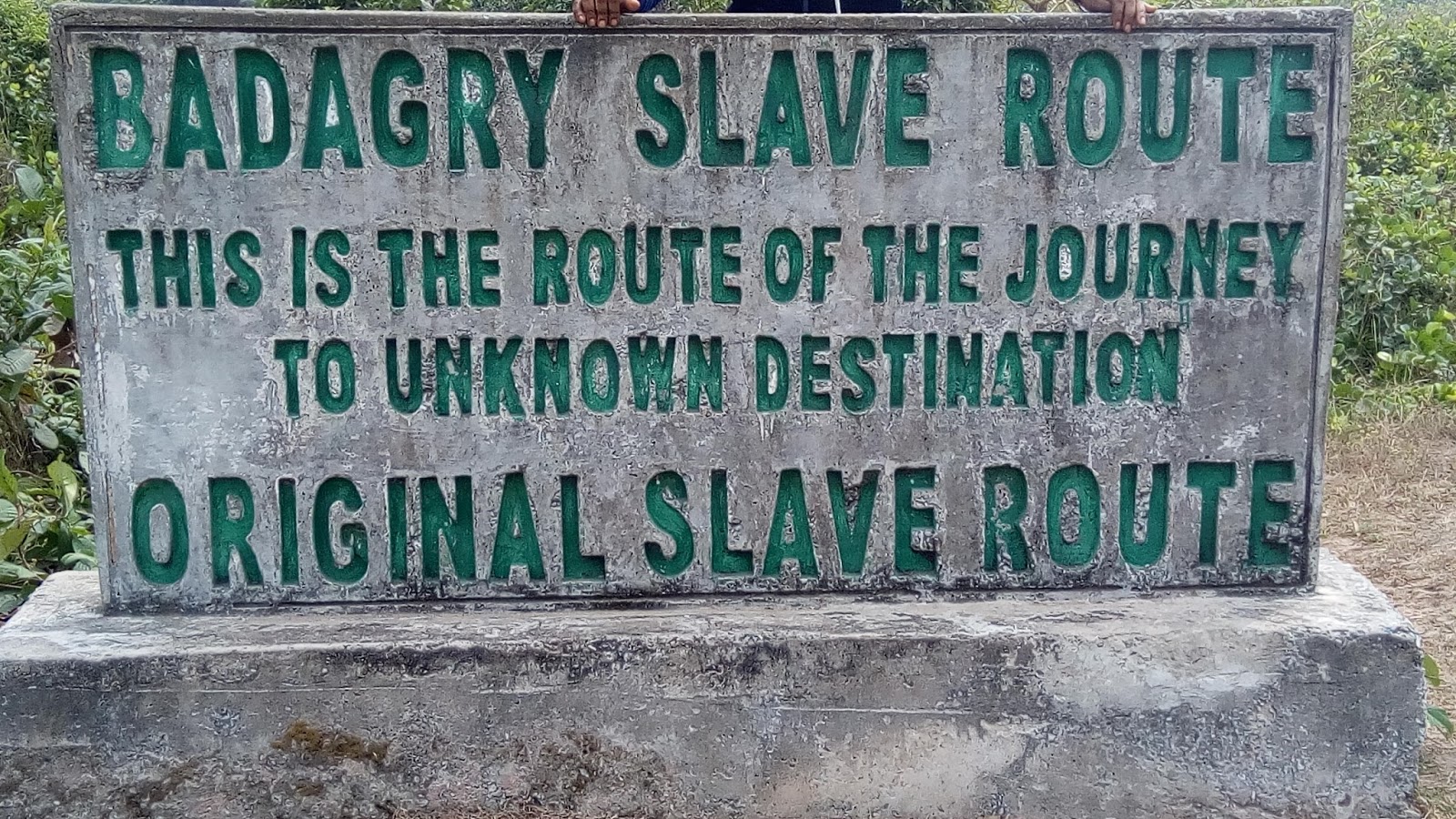
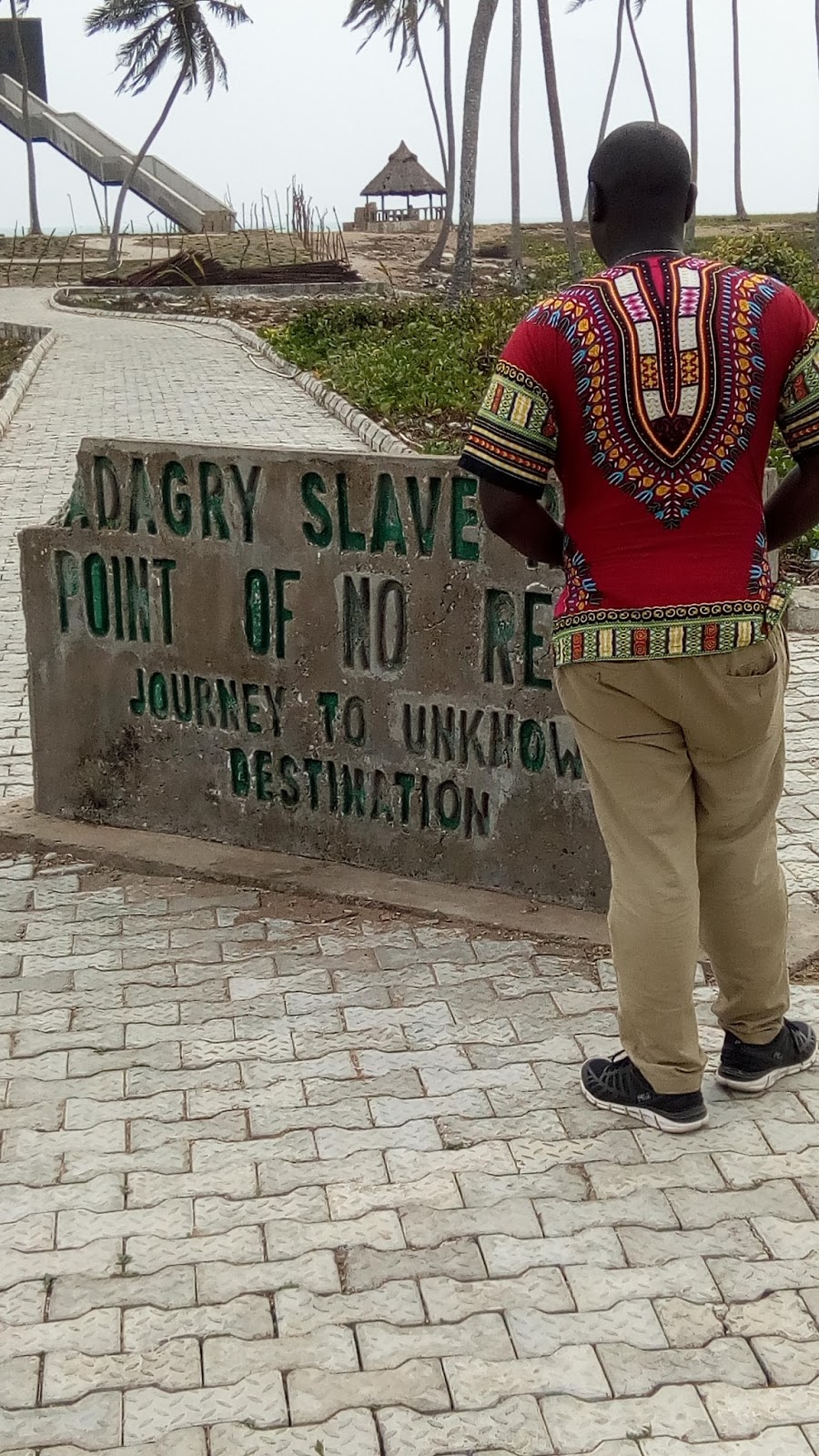
The journey from the shores
of Badagry usually began with a walk through the route slave route to the point
of no return, where the big ships were waiting to cart off the slaves. Each
ship taking about 600 slaves at a time. In
the early 1500’s, slaves were transported from West Africa to America through
Badagry. It is reported that Badagry exported no fewer than 550,000 African
slaves to America during the period of the American Independence in l787. In
addition, slaves were transported to Europe, South America and the Caribbean.
The slaves came mainly from West Africa and the neighboring countries of Benin
and Togo as well as others parts of Nigeria.

According
to Olusegun Mobee in his book, “History of the Mobee Family of Badagry
and Their Involvement in the Slave Trade
“,
Mr. Mobee states, “Slaves were never
captured in Badagry…As a matter of fact, then, slavery was a recognized
institution all over the world. Slaves were employed by Kings, Chiefs, and
wealthy people in their houses as domestic servants. A man’s economic and
social status were assessed by the number of slaves he possessed.

Conditions on board the ship
during the Middle Passage were appalling. The men were packed together below
deck and were secured by leg irons. The space was so cramped they were forced
to crouch or lie down. Women and children were kept in separate quarters,
sometimes on deck, allowing them limited freedom of movement, but this also
exposed them to violence and sexual abuse from the crew.

On reaching the Americas the
crew of slave ships prepared the Africans for sale. They washed, shaved and
rubbed them with palm oil to disguise sores and wounds caused by conditions on
board. The captains usually sold their captives directly to planters or
specialised wholesalers by auction. Immediately owners and their overseers
sought to obliterate the identities of their newly acquired slaves, to break
their wills and sever any bonds with the past. They forced Africans to adapt to
new working and living conditions, to learn a new language and adopt new
customs.

It is important to further note that slave trade came to an end not necessarily because of the Abolitionist movements but generally because of the industrialization boom in England, where machines took the jobs of slaves and farm owners were no longer in need of slaves because they had machines that could do the jobs at little maintenance cost. Though Slave trade is
abolished, acts of slavery still continue in the world today, recent case
studies include Nigerians recently rescued Slave camps from Libya.

Adedunmade Onibokun
dunmadeo@yahoo.com
Great News For Pro Bono Lawyers

Great News For Pro Bono Lawyers

Paul Usoro & Co (PUC) is delighted to announce the second edition of the Pro-Bono challenge commencing today the 09 February, 2018.  The first edition was an eye opener with a range of video entries that inspired so many in the Legal space. 

Abasiodiong EkpeyongEsq emerged as the winner of the maiden edition as determined by an external evaluation committee made up of great legal minds such as Prof. Fabian Ajogwu, SAN, Mrs. Abimbola Akeredolu, SAN and Mr. EssienUdom. According to Mr Munirudeen Liadi, Head of Chambers at PUC “The decision was made to give a chance to more Lawyers between ages of 1-15 years at the Bar to showcase and inspire colleagues with their touching Pro Bono cases.”
The initiative is aimed at rewarding the selfless and sacrificial efforts of lawyers who go the extra mile to defend the defenseless, ultimately restoring confidence in and respect to the rule of Law in Nigeria.
This second edition will focus on humanitarian issues, with special attention to Law enforcement agents’ brutality, Gender related issues, and Child abuse. The 6 most compelling cases will be rewarded with N100,000 each.
Please note the following:
• Each participant is expected to create a short video (Max 2 mins) which could be shared via Instagram, Facebook or via email (puchallenge@gmail.com
• All video entries via Instagram & Facebook are required to use the hash-tag #PAULUSOROCHALLENGE for the videos to be discovered.
• There will be extra points for Law enforcement agents’ brutality, gender related cases, child abuse and humanitarian matters. 
• Past and present PUC lawyers are not allowed to take part in the PU Challenge.
• Participants in the maiden edition of PU Challenge are not also allowed to participate.
• Lawyers who can participate are Members of the Nigerian Bar, of 1-15 years’ experience, who have paid their practicing fees..
• Entries will be selected on a zonal basis (6 geographical zones). There will be 1 winner per zone; for outstanding Pro- Bono cases handled.
• All supporting documents should be sent to a designated email address: puchallenge@gmail.com for verification.
• Follow the Paul Usoro social media accounts for live updates – Twitter: @PaulUsoroSANFacebook: Paul Usoro, SAN (Personal) & Page (@pusorosan),Instagram: @paulusoro, LinkedIn: Paul Usoro, SAN.
All entries must meet the above listed requirements before they are considered valid. Acceptance of entries will end on the 09 March, 2018. A panel of external judges will decide the winners which will be announced vide the official Paul Usoro Instagram handle in April, 2018.
Best of luck.
Legal Consequences of Not having a National Identity Number | Prince Ikechukwu Nwafuru

Legal Consequences of Not having a National Identity Number | Prince Ikechukwu Nwafuru

Introduction 
The National Identity Management Commission (“NIMC”) recently published five Regulations relating to the national identity management, The already gazetted Regulations which were made pursuant to the National Identity Management Commission Act, 2007 (“NIMC Act”) are as follows: (1) the Mandatory Use of the National Identification Number Regulations, 2017; (2) Nigeria Biometrics Standard Regulations, 2017, (3) Licensing of the Frontend Services of the National Identity Management Commission Regulations, 2017, (4) Access to Register Information in the National Identity Database Regulations, 2017 and (5) Registration of Persons and Contents of National Identity Database Regulations, 2017. The focus of this article however, is on one of these Regulations, that is, the Mandatory Use of the National Identification Number Regulations, 2017 (“the Regulations”) as well as the far-reaching implications and consequences of not having a National Identification Number (“NIN” or “National Identification Number”), on business, professional services, contracts, access to public service and commercial transactions in Nigeria. The transactions that require NIN for their validation and completion will equally be highlighted. 
Distinction between NIN and the National e-ID Card.
Whilst the end product of successful enrolment and registration is the issuance of the National Identity Card now called National e-ID Card (“e-ID Card”), it is important to note that the NIN is not synonymous with the e-ID Card. It is possible to have the NIN without necessarily having the e-ID Card. As a matter of fact, experience has shown that it usually takes years to process and activate the e-ID Card unlike the NIN that can be obtained within weeks after registration. For instance, I registered in 2013 and was given a NIN few weeks after registration but it has been difficult to obtain the e-ID Card for reasons only NIMC can explain. 
It is therefore important that you take necessary steps to register and obtain your NIN if you have not done that already as the more critical issue is the possession of NIN and not necessarily the e-ID Card. Registration is mandatory for every registrable persons, defined under the NIMC Act to mean any citizen of Nigeria and non-citizens who are lawful resident in Nigeria either permanently or for a period of two years or more. Section 18(1) of the NIMC Act provides that a person who has attained 16 years at the commencement of the Act shall register within sixty days or such longer period as the NIMC may by Order prescribe. Similarly, section 18(2) provides that the duty to register any person under 16 years at the commencement of the Act shall be on any person having charge of any such under aged persons and the registration must be done within 60 days of birth or within such longer period not exceeding 180 days as may be prescribed by the NIMC.  After the completion of the enrolment process, a Slip is issued to the applicant containing the NIN. With the NIN Slip which serves as a Temporary means of identification, the registered member can carry out transactions with the NIN while awaiting the issuance of the multi-purpose e-ID Card which as I have noted above could take years before issuance. To further buttress the point that the NIN (and not necessarily the e-ID Card) is all that is required for the purpose of under-listed transactions, the Act defined a “registered individual” to mean any person in respect of which an entry has been made in the Database. Thus, the possession of National Identification Number alone qualifies one as a registered individual even without the possession of the e-ID Card. This explains why registration and obtaining your NIN are even more important than the possession of the e-ID Card.
Transactions that require the use of National Identification Number
Section 27(1) of the NIMC Act listed the transactions which require NIN. Section 27(1)(l) of NIMC Act allows the NIMC to prescribe and gazette additional transactions that will require NIN before they can be carried out. Thus, pursuant to these provisions, the Commission under Part I of the Regulations prescribed additional transactions: The combined reading of the provisions of the NIMC Act and the Regulations shows that the following transactions require the NIN:
1.     Acquisition and Transfer of Interest in Real and Personal Properties: This covers all transactions involving transfer of titles or interest in land or landed property and includes tenancy agreements. It also covers transactions involving sale, purchase and change of ownership of aircrafts, vessel, motor vehicles, motor cycles, transfer and transmission of shares or equities, and any contract for valuable consideration and for the transfer of any interest whether tangible or intangible, etc.
2.     Credit Facilities and Financial Services: The use of NIN is compulsory in transactions relating to loan facilities, opening of accounts in Banks and other Financial Institutions, purchase of Insurance policies and banking transactions generally,
3.     Registration of Business and Non-Business Organizations: This covers registration of companies, sole proprietorships, partnerships and Incorporated Trustees or non-profit organizations as well as post incorporation documentations and filings. 
4.     Public, Social and Commercial Services: This category covers a wide range of transactions and services cutting across registration of voters, provision of consular services, pension, pilgrimage, tax identification, access to social benefits, purchase of travel tickets for air, rail, road and water transportation, boarding of aircrafts, trains, commercial vehicles, hotel bookings, ships and boats, registration and user of cybercafé services, employment, enrolment and registration for examinations, enrolment and registrations in both public and private educational institutions, registration and membership of professional bodies, registration of telephone SIM Cards and other communication devices, import and export of goods and commodities, licensing and operations of telecommunications, issuance of birth certificates, driver license, operation of bureau de change and transactions involving foreign exchange and application for or bidding for any contracts or services from any government agency or parastatal, etc.
5.     Filing Court Processes: NIN is also required for filing of criminal and civil actions in courts and this extends to arbitration processes. Similarly, obtaining and processing of probate documents also require NIN.
The above list is not exhaustive of the transactions that require NIN but represents the major ones. To engage in any of the above-categorized transactions, one must present his or her National Identification Number which must be verified before the transaction is concluded. Neither the Act nor the Regulations specifically provide for the effect of failure to present the NIN on the validity of transaction itself. Will a failure to present and verify the NIN render a transaction such an agreement to transfer interest in tangible or intangible property void? Will such a contract or transaction be declared illegal? In the case of CORPORATE IDEAL INSURANCE LTD v. AJAOKUTA STEEL CO. LTD & ORS(2014) LPELR-22255(SC), the Supreme Court provided a guide on how to determine an illegal contract when it held as follows:
“The question may thus be asked. How does one identify or recognize an illegal contract or transaction? This question has since been answered by this Court in a plethora of authorities. In ALAO v. ACB LTD (1998) 3 NWLR (Pt.542) 339 at 370 paragraphs C – F, per Igu, JSC, this Court held as follows:- “It is trite that a transaction or contract the making or performance of which is expressly or impliedly prohibited by statute is illegal and unenforceable. Where a contract made by the parties is expressly forbidden by statute, its illegality is undoubted and no Court ought to enforce it or allow itself to be used for the enforcement of alleged obligations arising thereunder if the illegality is duly brought to the notice of the Court…” It is crystal clear that any contract or transaction entered into by parties, which contract or transaction is either expressly or impliedly prohibited by statute, is illegal and unenforceable. It is my view therefore that any contract or transaction which seeks to circumvent the provisions of a statute is ex-facie illegal and no party can take benefit from it.”
With the above decision, it will be interesting to know how Nigerian Courts will construe a transaction that fails to comply with the requirement of the Regulations and NIMC Act. What is clear however, is that it is an offence under the Act to carry out such transactions without the NIN. It is also not clear whether the NIN should be indicated in the transactions documents as evidence of compliance with the Regulations. In my view, there should be an indication in the transaction documents that the NIN was presented and verified as that is one sure way to prove compliance with the Regulations and the Act. A duty is imposed on government agencies offering any of the services listed above to insist that any person involved in relevant transactions with them produce his NIN. After producing the NIN, the relevant government agency is expected to verify and authenticate the person or the NIN so provided in the National Identity Database using online verification from NIMC platform, Card Acceptance Device, Card Reading Device or a combination of any of these. Again, this presupposes that the relevant government agencies must have any of these devices in place as the non-availability of these devices will hamper the enforcement of the Regulations. 
Registration Timeline and Enforcement 
The NIMC Act came into force in 2007 and the timeline for registration and obtaining the NIN is provided in the Act as I have shown above. Though the Act gives the Commission the power to make an Order extending the timeline, I am not aware of any such extension. Assuming there is no Order made by the NIMC extending the sixty days provided in the Act, it means that the timeline provided under the Act stands. It is also not clear when the enforcement of the Regulations will commence given as earlier noted the logistics and devices required to make the enforcement possible. It has been reported that NIMC wants to ensure that the database is populated before commencing enforcement of the mandatory use of the NIN for all identity-based transactions. As at September 2017 it was also reported that NIMC had registered 21,360, 000 Nigerians in the National Identity Database and issued them the National Identification Number. This figure is very low considering the country’s population of above 180 million.
Punishment and Consequences of Default
The NIMC Act provides for identity-based offences which include but not limited to carrying out transactions without a NIN. Section 28 provides for a fine of not less than N50,000.00 or imprisonment for a term not less than 6 months or to both such fine and imprisonment for any person who carries out or permits to carrying out of any transaction without a NIN. If the offender is a corporate body, it is a fine of not less than N 1,000,000.00 and in addition, the Chief Executive or the line manager or other similar officer of the body corporate, or any other person purporting to act in any such capacity shall be deemed guilty of that offence and shall be liable on conviction to a fine of N1,000,000.00 each. It goes further in Section 30(1)(a)  to criminalize failure of any registrable person to register and provides for a fine of not less than N100,000 or imprisonment for term of not less than 6 months or to both such fine and imprisonment. Rule 7 of the Regulations provides that failure to comply with the provisions of these Regulations and other relevant Regulations made pursuant to the Act, shall be punishable by the imposition of administrative fines and sanctions by the Commission, in addition to the penalties provided under the Act. It is safe to state that the administrative fines and sanctions referred to in the Regulations are those fines specifically provided in the NIMC Act and it will be wrong and illegal for the Commission to impose any arbitrary fines or sanctions not specifically provided under the Act or the Regulations. 
Conclusion
The importance of registering for the NIN cannot be over-emphasized given the highlighted legal consequences of engaging in those transactions without the NIN. Whilst there is no indication as to when enforcement will commence, business owners, professionals and the public are advised to register and obtain the NINs to avoid the consequences that will follow non-registration. Every business and non-business organization should mandate their officers, employees and those acting for them to register and obtain their NINs. The NIMC Act and the Regulations have listed a range of transactions spanning virtually all commercial activities and public services such that one cannot think of any meaningful transaction in Nigeria that can be concluded without the NIN. Beyond the possible effect on the validity of the transactions, transacting without the NIN is a criminal offence which carries imprisonment and/or fine. Both the person carrying out and the person who permits the carrying out of such transaction is guilty of an offence under the Act and it is not defence that the service provider or the relevant government agency did not request your NIN. The way out of these avoidable consequences is to obtain your NIN


Prince Ikechukwu Nwafuru
Counsel 
Paul Usoro & Co. 
NBA Uyo Branch Condemns EBF Move on Adoption

NBA Uyo Branch Condemns EBF Move on Adoption

 The on-going saga of the Eastern Bar Forum took yet another ugly twist.
Despite key members of the Eastern Bar Forum from the Uyo and Port Harcourt bars categorically issuing statements dissociating themselves from the EBF’s adoption plot, Arthur Obi Okafor SAN was named by the divided forum as the sole Presidential candidate for the Nigerian Bar Association.

We ask;
Who is deceiving who here?
Why would the EBF despite warnings and a boycott from key members of the forum still go ahead to adopt Arthur Obi Okafor SAN?
Is this constitutional?
Would this be allowed to stand by the NBA?
Below is a statement by the secretary of the NBA Uyo Branch Aguda Ememobong on the matter:
I hereby categorically state and describe as a travesty of basic democratic principles the purported adoption of a certain aspirant today at the NBA Port Harcourt Branch House as the candidate of Eastern Bar Forum for the Presidency of NBA.
I wish to state categorically that Uyo Branch of the NBA dissociates itself from such clearly unpopular and controversial development. As a matter of fact the Uyo Branch chairman and other delegates staged a walk out on the purported Screening Committee Meeting of EBF which was boycotted by all but one aspirant at Hotel Presidential by 7am before the Quarterly Meeting.
The Chairman’s principled stance was predicated on the fact that such activity contravenes the position of the National Exco of the NBA against  such political activities for national offices when the ban on politics has not been lifted in addition to failure to afford a level playing field to all would be contestants from the zone. I wish to note that the open rejection, commotion and massive walk out which greeted the attempt to impose an aspirant on legal practitioners from the zone is symptomatic of the divisiveness of such ill-advised project and its capacity to splinter the forum.
The Uyo Bar insist on a level playing field for all lawyers from the zone who have intention to contest any office when the ban on politics is lifted and the Branch had never taken a position on any candidates. This will show respect to the incumbent National Exco and avoid any exercise in futility. 
The Uyo Bar notes that the so called process of adoption was flawed in many ways. At the meeting Hall for instance no one was allowed to raise a point of observation or counter motion.The only people allowed to speak were people ready to rubber stamp the said motion for adoption. For these reasons and the sake of the future of the EBF I call all fellow members to support only what is legitimate, transparent and capable of uniting us.
Aguda* Ememobong
Secretary, NBA UYO BRANCH
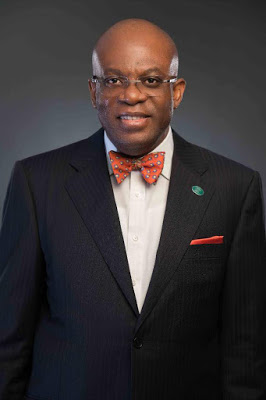
10 Facts about Paul Usoro SAN

10 Facts about Paul Usoro SAN

1. His firm Paul Usoro & Co., is one of the best paying firms with lawyers fresh out of law school earning 150,000 Naira Monthly. 

2. He has been on the board of Airtel, for over 18 years and has been the longest serving member. He is also on the Boards of other companies including Access Bank, PZ Cuzzons etc 
3. Mr. Usoro drafted the Nigerian Communications Act 2003, a robust and enduring piece if legislation that regulates the communications industry till date.
4. Mr Usoro the founding chairman of the Communication Committee of the Nigerian Bar Association’s Section on Business Law.
5. Mr. Usoro was called to the Bar in 1982 and started his practise in Kaduna. He was also elevated to the Inner Bar as a Senior Advocate of Nigeria in 2003
6. Paul represented the Governor of Akwa Ibom State, Governor Udom Gabriel Emmanuel and his political party in about 35 pre-election lawsuits from 2015, particularly at the Governorship and National Assembly levels. All the cases were successfully defended by Paul and his Team. Not a single one of those matters was lost at any of the Courts.
7. Paul played a crucial and leading role in the team that represented a France-based multinational oil servicing company in a landmark litigation against a Nigerian company for the recovery of judgment sums of US$11,628,962.11; US$5,214,939.98; DM212,252,751.11; N26,349,753.61 and US$7,157,865.87. The judgment delivered by the Court of Appeal in the second quarter of 2015 has become a locusclassicus in Nigerian jurisprudence on the principles of subrogation of one party for another for purposes of realizing a judgment debt.
8. Paul led the Airtel Shareholders Committee in negotiating the Celtel Transaction as the Committee Chairman, which, at the time, ranked as one of the biggest private sector equity transactions in Nigeria’s history. 
9. Paul is an active member of the NBA Legal Profession Regulation Review Committee set up in 2016.
10. Paul Usoro, SAN, a devoted and loving husband and father, is married to Mfon Ekong Usoro and they are blessed with two children, one of whom is a legal practitioner, a member of the NBA and of the New York Bar.

Lawyers reject EBF adoption of Obi Okafor

                                 
The Eastern Bar  forum has adopted Aurthur Obi Okafor as their Presidential candidate in the forthcoming election of the Nigerian Bar Association contrary to the public opinion of a large number of members of the EBF. 

It was reported that the motion was raised and a lawyer who opposed the adoption was shouted down by lawyers in support of the adoption. This led to a walk out by many lawyers who were bitter over the rascally way the adoption was handled.
The anti-adoption lawyers have continued to denounce the adoption and have publicly registered their opposition. Despite reports of both physical and verbal abuse from the supporters of the adoption by EBF. 
Lawyers across the country have continued to denounce the adoption of a sole candidate by the EBF and continue to support a position of equality and fair opportunity for willing candidates to contest. The NBA being a body of officers in the temple of justice must adhere to the tenets of democracy and equality. Marginalization must also be rejected within the Bar. 
How Creatives Can Protect their Intellectual Property Rights | Adedunmade Onibokun

How Creatives Can Protect their Intellectual Property Rights | Adedunmade Onibokun

 As an Artist,
Inventor, Photographer or a member of the creative industry, it takes a lot of
effort, skill and hard work to do what you do and it is a reasonable expectation
to be paid for your work. However, once work is made available to the public,
the chances of someone claiming the work as their own or reproducing it without
giving proper credit is extremely high in today’s technologically advanced and
share-friendly culture. Nothing is more infuriating than discovering that your
creative ability is being exploited by someone who has neither the permission
nor the right to do so.

Adequately
curbing piracy in Nigeria still requires a lot of effort despite the spirited actions
of several government agencies. Truth is, there really is no actual patent or
copyright police, roaming the streets on behalf of Creatives and looking to
investigate piracy, except for the few police raids on centers known for
selling or making pirated works.  Most Creatives
therefore usually enforce their rights, themselves though our non – evolving laws
and the inadequacies of judicial enforcement are not encouraging.  
To protect your
Intellectual Property Rights (IPRs), the first thing to note is registration with
the relevant authority. IPRs are governed by the Trademarks Act, the Patents
and Designs Act, the Merchandise Marks Act and the Copyright Act, in
addition to the principles of common law.
The Trademarks Act
A trademark
consists of any word, symbol, or device used to distinguish the company’s goods
or services. A trademark is a recognizable sign, design, or expression which identifies
products or services of a particular source from those of others. The Act
provides that
no
person shall be entitled to institute any proceeding to prevent, or to recover
damages for, the infringement of a trade mark except it is registered.
The Patents and Designs Act
The Act
provides that
an invention is patentable if it is new, results from inventive
activity and is capable of industrial application; or if it constitutes an
improvement upon a patented invention. Patents protect ideas that are novel,
useful, and non-obvious. When a patent expires which is usually about 20 years,
the item or process enters the public domain. Until that time, a patent holder
can prevent unauthorized use, manufacture, or sale of the invention. 
The Merchandise Marks Act
The Act relates
to fraudulent marks on merchandise and provides in Section 3, that anyone who
forges a trademark or assigns on goods a false trademark with intent to deceive
or has in his possession forged goods for sale shall be liable-
on conviction before a High Court to imprisonment for a term of two years,
or to a fine, or to both and on summary conviction before a magistrate court to
imprisonment for a term of six months or to a fine.
The Copyright Act
Copyright law
protects the creative expression of ideas. Ideas themselves may be protected by
patents, not copyrighted. Any creative work that has been fixed in a tangible
medium of expression, such as paper, software, or film, and that can be
reproduced or otherwise communicated exactly is automatically protected by
copyright law. Examples include art, songs, movies and writings. The digital
world is boundless and to protect a copyright, an artist may have to use
digital watermarks on their creations and put up a copyright notice on the web
page where your work is displayed.
How to enforce IPRs
Having
registered your intellectual property, whether trademarks, copyrights or
patents; enforcing your legal rights against any person who may have infringed
on them is the second step to protecting your IPRs. IPRs are protected through
the registration of rights with the relevant registries and regulatory bodies
established by the Nigerian Government, such as the Trademarks, Patent and
Designs Registry. the Nigerian Copyright Commission (NCC), as well as other
related offices, such as the National Office for Technology Acquisition and
Promotion (NOTAP), the Standard Organization of Nigeria, and the National
Agency for Food and Drug Administration and Control (NAFDAC). All these offices
run their independent registries and often interface in the discharge of their
mandate.  

·       
National Agency For
Food And Drug Administration And Control
(NAFDAC)
NAFDAC is
empowered to regulate and control the importation, exportation, manufacture,
advertisement, distribution, sale and use of food, drugs, cosmetics, medical
devices, packaged water and chemicals, generally known as regulated products. Under
the provisions of various regulations and guidelines on registration, the
submission of evidence of ownership of trademark is a condition precedent for
the registration of branded regulated products. Where an infringed trademark is
used in respect of a product that is within the purview of NAFDAC powers, a
petition can be presented to NAFDAC in that respect.
·       
 The Nigeria Copyright Commission (NCC)
The role of the
NCC is limited to works which are eligible for copyright protection under the
Act. It is the agency responsible for the enforcement of the Copyright Law in
Nigeria, carrying out raids and seizing items that are pirated, prosecuting
perpetrators and convicting them with copyright infringement. If a copyright is
infringed, a petition can be made to the NCC on registered copyrights.
·       
 Nigerian Customs Service
The new fiscal
policy of Nigeria, as contained in the Common External Tariff for 2008–2012
Schedule 4, provides the list of goods which are absolutely prohibited from
being imported. Specifically, Item 3 prohibits the importation of “all
counterfeited/pirated materials or articles including base or counterfeit coin
of any country.”
·       
 The Nigerian Police
Section 4 of
the Police Act provides for the general duties of the police and one of such
duties is the prevention
and detection of crime and the apprehension of offenders. As such crimes
bothering on criminal infringement of IPRs can be reported to the Police.
·       
 The Nigerian Intellectual Property Office (IPO)
The IPO is an
arm of the Commercial Law Department under the Ministry of Trade and
Investment, and is also known as the Nigerian Trademarks, Patent and Designs
Registry. Applications challenging the grant of Trademarks either before or
after such registration can be made to the IPO.
·       
The Federal High Court
The Federal High
Court is the court with jurisdiction to enforce IPRs and civil proceedings for
infringements can be instituted at the Federal High Court against any offender.
The Federal High court is also vested with the authority to hear criminal
matters bothering on the infringement of IPRs.
It is
important that in Nigeria, there are several pieces of work that do not fall
under the protection of IPRs in Nigeria, including the style designs of fashion
designers, therefore a designer such as
Ugo
Monye
 who made the popular native attire Ebuka Obi-Uchendu wore
cannot claim damages or infringement against any other designer who recreates
the outfit.
There
continues to be a call for a reform of Nigeria’s IP laws as most of the current
legislations are old and do not conform with today’s reality.
If you will like to read further on how to
legally protect your business or startup, here are 10
tips
.

Adedunmade Onibokun
Adetola Adeleye. (2016). INTELLECTUAL
PROPERTY RIGHTS ENFORCEMENT IN NIGERIA: REGULATORY AGENCIES TO THE RESCUE.
Available:
http://pennjil.com/intellectual-property-rights-enforcement-in-nigeria-regulatory-agencies-to-the-rescue/.
Last accessed 2nd Feb, 2018 .
 Ray
Dickinson. (2017). What Can You Protect? Types of Intellectual
Property.
 Available: http://edwardlowe.org/what-can-you-protect-types-of-intellectual-property/.
Last accessed 2nd Feb, 2018.
Photo Credit – Pic 1 – www.guardianng.com ; Pic 2 – www.lindaikejisblog.com 

NOTE: Please
note that this article is strictly for educational purposes and not for
commercial purposes. If you have any comments or remarks you may contact the
author. 
Why Lawyers Must Reject Adoption As Basis For Voting

Why Lawyers Must Reject Adoption As Basis For Voting


The concept of adoption of
political candidates is not new to Nigerian politics, neither is the concept of
zoning and most recently, the latest inclusion to our national vocabulary, the word
“marginalization”,
 the treatment of a person,
group, or concept as insignificant or peripheral.


The concept of adoption of
political candidates in party politics has always met stiff opposition from
members of such party. Such adoptions are agreed not to represent the true wish
of stakeholders but an enforcement of candidates on the voting populace. Under
such instances, merit is not necessarily the motivation behind the selection
but factors such as tribal sentiments, favoritism, God-fatherism and loyalty
are usually the determining factors.

In a highly sensitive
political landscape like ours, it is agreed that everyone be given a fair chance
and opportunity on the political field. This is justice. It therefore should
come as a surprise when injustice is now proposed within the Bar. It must sound
as a warning when tribal sentiments and marginalization raises its head under the
watch of members of the Bar and like an enemy aircraft carrier in the time of
war, it must be brought down.

In the race for President
of the Nigerian Bar, the Eastern Bar Forum (EBF) proposes to adopt a sole
candidate, an action that will marginalize others and is not being propelled by
the idea of putting the best candidate forward.
Moreso, according to the
EBF Constitution, the guidelines set for such candidate include;

1.
Every Aspirant Shall Subm
it The Following Letters To The Screening Committee As
Notice Of Aspiration:
A.
Expression of Interest Letter
B.
Letter of Allegiance to Be Bound By EBF Decision
C.
Letter of Good Standing from the Aspirants Local NBA Branch, Duly Signed By the
Chairman and Secretary of The Branch.
2.
Every Aspirant Shall Submit To The Screening Committee, Copies Of All Documents
Qualifying The Aspirant For The Office Being Vied For In Accordance With The
NBA Constitution.
3.
For Any Aspirant To Qualify For EBF Adoption, Such Aspirant Must Have Been Duly
Qualified Pursuant To Article 11(2) Of The Constitution And Shall Submit To The
Screening Committee, Copies Of The EBF Receipt For The Preceding Two Years
Dues.
Members of the Nigerian Bar
will be voting for the office of President of the Bar and other national
positions within the association. Lawyers will choose their representatives
according to who is best for the job. It will also be counter – productive should
the EBF treat any and other candidates as insignificant or peripheral. Officials
of the NBA, hold the office in trust for the members of the NBA, the Association belongs to its members  and everyone should have equal
opportunity to add value to the Bar from their professional and co-operate perspectives.

The leaders of the Bar
must be candidates, all lawyers, whether young or old will respect. 
EBF SHOULD ADOPT ALL THE
CANDIDATES FROM THE EAST AND BURY THE IDEA OF ADOPTION OF A SOLE CANDIDATE. Let
all the candidates be embraced equally so that EBF can boldly claim the
eventual winner as its own.
@Legalnaija

Incorruptible judiciary as a catalyst for an equitable and progressive society |  Adaeze Akuegbu

Incorruptible judiciary as a catalyst for an equitable and progressive society | Adaeze Akuegbu


INTRODUCTION

Perhaps
I should begin with this quote by Mary Harris Jones (“Mother Jones”)[1] who said;“I asked a man in prison once how he
happened to be there and he said he had stolen a pair of shoes. I told him if
he had stolen a railroad he would be a United States Senator.”
The
seemingly unshakable grip of corruption remains ever so glaring in various
societies and climes especially in this nation Nigeria. The necessity of a
discuss proffering biblical, timely and intellectual solutions is very much
welcomed development. As would every academic write up, this paper will attempt
to define the key words in the topic of discuss. This is not to say that the
definitions are all encompassing but it is put forward as a light that would
pave the way for a fruitful discuss. The words that ought to be defined
include: Incorruptible; Judiciary; Catalyst; Equitable and Progressive.
The
New Webster’s Dictionary of the English Language[2] defines Incorruptible to mean impossible to
corrupt morally especially by bribery. One thing we should be quick to note is
that the definition refers to the impossibility to corrupt morality. The
definition also places a beam on the fact that the most prominent, but not the
only, form of corruption is bribery.
The
Judiciary is said to refer to the apparatus of law and its administrators[3]. Thus, the judiciary is what the common man would look
at to see the concept of law at work if peradventure he does not have access to
the law books. The judiciary ought to and in fact should represent the very law
of the land and its administration.
When
we talk about a Catalyst, we refer to a substance that alters the rate of a
chemical reaction and is itself unchanged by the process[4]. That is to say that the substance which causes a great
change in other substance around it does not in itself experience the change.
When
something is Equitable, we mean to say that such a thing is fair and just[5]. The last but not the least key word is the word
Progressive, which means moving forward or onward or increasing in severity,
intensity. It has also to do with, or favours, political and social progress or
reform[6].
Having
defined all of these terms it would remain to piece them all together to give
an insight to what this paper seeks to do. This paper aims to enlighten us on
the importance for the judiciary to be impossible to corrupt morally and as
such dispense their functions in a fair and just manner that would trigger,
alter and increase in severity the progress of the our country Nigeria. This is
an advocacy that hopes to jolt the judiciary to rise to the morally
incorruptible pedestal as is the expectation of the populace.
2.0
THE CORRUPT STATE OF THE JUDICAIRY
A
corrupt judge does not carefully search for the truth[7]; when the truth of a case is not properly sought out
the people suffer injustice in the very hands of those who are to uphold same.
As the days go by, the glaring nature of the menace corruption has become in
our society cannot be overlooked. This factor necessitates this discuss. It is
said that in order for one to move forward exponentially, which is the end goal
of this paper, one has to go down memory lane albeit to pin point the pitfalls over
the years. This section of this paper seeks to x-ray the past and present
activities of the judiciary in order that we may move forward.
Corruption
as a word in itself means the state of being or becoming decayed. This connotes
a gradual journey towards decay. Thus, it is the accumulation of various
activities of the Judiciary over time that would lead to such decadence.
Corruption of any kind breeds especially that in the judiciary breeds inequity,
inequality, lack of justice and a feeling of dissatisfaction in the common man.
As has been said by an anonymous source “the worst affected by
corruption is the common man
”.  When inequity is the order of the day,
the common man is forced to take laws into his own hands by resorting to self
help, that is, situations of jungle justice therefore taking us back to the
Stone Age where survival of humans was based solely on the strength. Thomas
Hobbes referring to a time like this stated that:
“During
the time men live without a common power to keep them all in awe, they are in
that conditions called war; and such a war, as if of every man, against every
man…. No arts; no letters; no society; and which is worst of all, continual
fear, and danger of violent death: and the life of man, solitary, poor, nasty,
brutish and short”[8].
The
jungle justice that the populace resorts to now and then only fuels further the
lack of trust the citizenry has in the judiciary and the regression that now
envelopes our society.
The
most common form of judicial corruption is the bribery of judicial officers and
members of the judiciary in order to ensure a favorable outcome for the party
advancing such bribe. I dare say however, that is not the only form of judicial
corruption there is. Judicial corruption could come also from bias[9]; intimidation[10] and the judicial corruption that is the judicial
system itself[11].
Whilst
judicial corruption that stems from bribery has monetary consideration as the
reason behind the pervasion of justice and propagation of inequality in the
application of the law by the judiciary; the judicial corruption emanating from
bias is more subtle and difficult to detect and is often times not induced by
any of the parties to the suit. The bottom line being that which route is towed
the end point is the in equitability in the application of the law to similar
situations which results in inequality. For instance, a female judge who went
through a gruesome divorce in the hands of a terrible husband when faced with a
divorce case will be more sympathetic and likely to favour the female. The same
goes for the male judge suffered loss of property during a
separation without meaning to this judge will in inclined to help his male
counterpart preserve and walk away with as much of his property to himself as
is possible within the law. In either of the examples the judge is no longer
seeking the truth in and the justice of the case but his own kind of justice
which may not be justice in the eyes of the common man.
Giving
an instance of bribery as a cause of corrupt practices, a Nigerian lawyer, Mr.
Tunji Abayomi speaking with Channels Television[12] gave instances of corruption in Nigeria’s
judiciary, which according to him had become a culture in the third arm of
government. Mr. Abayomi, gave an instance of a case in which he had
successfully obtained judgment from a certain judge which we will call A.
Afterwards, counsel made an application for execution of judgment before Judge
B who directed the court bailiff to execute the judgment according to the
directive. To the chagrin and utter dismay of Mr. Abayomi the party against
whom the judgment was to be enforced, that is, the judgment debtor broke this
smooth running chain of the hand of justice by applying to the court for an
order staying the execution of the judgment.  This order was granted by
the judge who according to Mr. Abayomi could not look up on the day of the
hearing where he read the order staying the judgment the court which had
already being executed. Counsel described this as strange but later heard an
allegation that the judge had accepted the sum of N300,
000 as bribe in order to grant the order for stay execution. This act of the
judiciary caving under the influence of the party against whom judgment was
gotten led to an inequitable result for the successful party, who was now
precluded from enjoying the fruits of his victory. This kind of occurrence only
leads to loss of faith in the justice system in the country and the resultant
resort to self help. In This Day Newspaper[13] it was stated that:
“It
must be conceded and addressed, the fact that, going forward, there is a severe
crisis of confidence in the judicial arm of Government. Do the courts meet the
expectation of the people in the discharge of its primary responsibilities? The
answer is obviously in the negative. The consensus is that the corrupt elements
in the court system and the Bar have given the entire sector an almost
irredeemable bad name. One of the measures to be embarked upon in order to
restore the image and efficacy of this arm of Government is the expulsion of Judges
who have been proven to be corrupt, from the system”.
The
people have consistently looked to the judiciary for saving but time and time
again they have gone home crest fallen as the judiciary have failed to live up
to the expectation. In an account written by Femi Orebe in The Nation Newspaper[14], the reporter stated that as in all sectors of the
Nigerian society, corruption predominates the judiciary and has become endemic.
The corrupt state of the judiciary he says is a cause for concern as the
priests in the temple of justice should, at the least, be the exception in the
corruption story in the country. Narrating a story to drive home the depth of
the corrupt practices in the judiciary, he stated that the government of
Western Region had just acquired a piece of land at Idi-Ose for the use of
IITA in Ibadan. Some of the land-owners, not happy with the amount of
compensation paid, threatened to go to court, which development Chief Ladoke
Akintola reported to Awo and advised that the matter be resolved
without litigation. Awo, the story goes, disagreed, confident that the
government had a solid legal team in FRA Williams, Fani-Kayode and Bode Thomas.
SLA replied in Yoruba, suffused with panegyrics:
“My
Leader, e fura o. Looto ‘Timi mo Procedure. Oba ni Fani ninu Constitution,
beeni Thomas o kere ninu Evidence. Sugbon TOS Benson ni lawyer awon ti a n so
yi. E si mo pe TOS mo Ademola o”- meaning yes, these are terrific lawyers, but
TOS Benson and Justice Ademola, handling the case, are friends o”.
Awo
got the message and opted for settlement[15]. The lesson from this they say; is that while the
brilliant lawyer knows the law, the successful one knows the judge. Should this
be the order of the day? Shouldn’t the best man win? This indeed is the sad and
deplorable state below which the judiciary has fallen and an evident example of
corruption through intimidation. To further buttress this, Justice Hardy of
London in sentencing Ibori for his crimes in a London court described the
Nigerian Judiciary as one usurped by men of power. This is far from the ideal
justice system we ought to proudly portray as the most populous black nation.
The
menace of corruption has eaten so deep into the fabric of the judiciary and is
not restricted to one ethnic group or geographical location. Although, some
claim that certain judges from a particular geographically areas are more
corrupt than the others, this claim remains to be substantiated. In Aregbesola
vs. Olagunsoye Oyinlola[16], the three judges who presided over the matter at the
Osun Election Petitions Tribunal not only arrived at a decision but also were
faulty in their findings leaving much to be desired. The faulty finding was
traceable to the issue of one Alhaji S.O. Nofiu who signed Forms EC8B in nine
out of eleven wards in Ife Central Local Government Area of the state. Ready to
appeal against the shame of a judgment, the party against whom judgment was
given obtained the certified true copies of the judgment but were ordered by
the court to return it. According to a Non Governmental Organization; the
Justice Now Foundation[17], the tribunal judges made two contradictory findings
as regards the evidence of forms EC8B in nine out of eleven wards in Ife
Central Local Government Area signed by one Alhaji N. O. Nofiu. The findings
were glaringly faulty in the face of the fact that no reason was advanced by
the Respondents to explain why this happened. In the face of this misnomer
however, in its holding the Tribunal stated thus:
“In
respect of the allegation that Alhaji N. O. Nofiu signed 9 form EC8B in the Ife
Central LG, the petitioner referred us to the evidence of RW29 and RW42 who
stated under cross examination that he is the PDP secretary, and we have gone
through that evidence, but we could not find where they were confronted with
forms EC8B’s in relation to the said wards of the local government. There must
be oral evidence to link the documentary evidence which is lacking here”.
Thankfully,
this shameful decision of the tribunal was overturned by the Court of Appeal
and the rightful winner was sworn in as the governor of Osun state.
Of
course we would have to mention the most recent corruption allegation against
the judiciary that led to the recent arrest of certain judges by members of the
Department of State Services (DSS). The affected judges include Justices
Sylvester Ngwuta and Inyang Okoro of the Supreme Court; the suspended Justice
of the Court od Appeal, Ilorin Division, Mohammed Tsamiya and Justice Kabiru
Auta of the Kano State High Court. Also, Justice Adeniyi Ademola of the Federal
High Court, Abuja, former Chief Judge of Enugu State, Justice I. A Umezulike
and Muazu Pindigi of the Federal High Court, Gombe Division. The DSS claims to
have recovered sums of money in local and foreign currencies from the judges
which are allegedly proceeds of official corruption. It was also the case that
Governor Nyesom Wike protected a judge in his state against armed DSS
operatives. The members of the DSS claimed to have submitted complains to the
National Judicial Council (NJC) which is charged with the duty of disciplining
erring members of the judiciary but the NJC did nothing which made the DSS to
step in. The question here is not really about the procedure that was used to
“bring the erring justices to book” so much as it is the fact that the judges
themselves could have descended so low in the books of the DSS and in fact the
society.
3.0
BIBLICAL EXAMPLES OF AND INJUNCTIONS ON BRIBERY, CORRUPTION AND THE JUDGES
One
instance in the bible was where a judge himself expected the “accused person”
to bribe him but the accused being a firm child of God did not descend so low
as to offer a bribe. The book of Acts 24 verses 25-27 says that: “25-
As Paul talked about righteousness, self-control and the judgment to come,
Felix was afraid and said, ‘that’s enough for now! You may leave. When I find
it convenient, I will send for you’. 26 –at the same time he was hoping that
Paul would offer him a bribe, so he sent for him frequently and taked with him.
27- when two years had passed, Felix was succeeded by Porcius Festus, but
because Felix wanted to grant a favour to the Jews, he left Paul in prison”
[18]The example of the Apostle
only tells us that we as believers should not assist in perverting the course
of justice.
On
the part of the officers in the temple of justice themselves the bible warns
and says in Exodus 23 verse 8 “Do not accept a bribe, for a bribe
blinds those who see and twists the words of the innocent”
[19]. In Proverbs 17 verse 8 “a bribe
is seen as a charm by the one who gives it; they think success will come at
every turn”
, verse 23 says that“the wicked accept bribes in secret to
pervert the course of justice”
.
The
effect of taking bribe is explicitly stated in Isaiah 1 verse 23, “your
rulers are rebels, partners with thieves; they all love bribes and chase after
gifts. They do not defend the cause of the fatherless; the widow’s cause does
not come before them”
.
4.0
TOWARDS AN INCORRUPTIBLE JUDICAIRY
By
biblical standards a judge“…will not accept any compensation; he will refuse
a bribe, however great it is”
 Proverbs 6 verse 35[20]. Deuteronomy 16 verses 18­
19, in stating the ideal state of a
judicial system says that:
“18 Judges
and officers shalt thou make thee in all thy gates, which the Lord thy God
giveth thee, throughout thy tribes: and they shall judge the people with just
judgment. 
19 Thou
shalt not wrest judgment; thou shalt not respect persons, neither take a gift:
for a gift doth blind the eyes of the wise and pervert the words of the
righteous[21].
“The duty of the youth is to challenge corruption”[22] hence the timely nature of
this paper. We have earlier in this paper put the sources of judicial
corruption under the heads of: (a) bias; (b) bribery; (c) Intimidation and (d)
the judicial corruption that is the judicial system itself. Here we want to proffer
workable solutions that will close up the sources.
4.1.
Curbing Bias and Bribery
Bias
is multifaceted and the reasons for the giving and acceptance of bribes are
seemingly unending. One would then wonder what would suffice as a veritable
tool to fight these cankerworms that have delicately and deliberately caused a
steady decay in the judiciary. My answer to such a wondering person would be
values.
Values
can be defined as the worth of something compared to its price or put in
another form it can be defined as principles or standard of behaviour[23]. A proper understanding by the key players in the
judiciary of the principles and standards of behavior expected of them is the
first step. The full understanding of the worth of justice, equity, equality
and fairness that far outweighs any price any individual would have to offer as
bribe or the bias the officer might have is the second. The inculcation of
these values I dare say becomes all the more important in the face of the fact
that the burden borne by the judiciary is a lot heavier than that borne by
other tiers of government. The common man takes solace in the fact that he can
test the limits of laws made by the legislature in the courts and he is
comforted that within the four walls of the courtroom executive lawlessness can
be redressed.
To
achieve the inculcation of values into the officers of the judiciary, I propose
that rigorous trainings with the sole aim of instilling the values of justice,
equity and fairness, that is, the need for justice to be done and be manifestly
seen to be so done. First the existing officers of the judiciary will be
sensitized and then each person scheduled for appointment as an officer in the
judiciary. The training exercises are to be carried out by the existing members
of the judiciary who are an epitome of the core values of the judiciary.
4.2
Intimidation
Intimidation
of the judiciary could be by another tier of government or could be based on
status, fame, power and influence. Whichever form it chooses to take it does
not in any way give the actions any legitimacy.
To
solve this menace I propose as others have overtime, the complete independence of
the judiciary from other arms of government. Independence remains the one and
only way to ensure that the judiciary can speak up and uphold the rule of law
without fear. Independence ensured through a self serving salary payment
system; sentimentally free appointments; job security through the setting of
parameters for compulsory retirement and a transparent retirement plan.
4.3
The judicial corruption that is the judicial system itself
Justice
delayed is inevitably justice denied. It is the reality today that matters
before courts do not proceed as they ought. Sometimes this is due to the delay
tactics of the counsel and at other times it is the judge themselves who fail
to sit as frequently as they should. The resultant delay leads to the cases
outliving those who filed them in court.
In
order to solve the problem of delay therefore, a time frame for the resolution
of matters ought to be inserted into the rules. After the expiration of the
stipulated period, the counsel and the judge involved in such a delayed matter
should forward an explanation to the Chief Judge of the court and the National
Judicial Council. In addition, the judge would then suggest a period of time
estimated for the conclusion of the cases. It is also recommended that the fast
track system, settlement week, electronic-filling system, case management
conferences and the frontloading system that have been fully imbibed and is
being implemented in Lagos state and in the Federal Capital Territory, Abuja
are commendable and should be adopted by other states as an instrument to
ensure the quick dispensation of justice and equity.
CONCLUSION
I
will conclude this discuss by a reference to the Book of Proverbs 29 verse 4
which says that;“by justice a king gives a country stability, but those who
are greedy for bribes tear it down”. 
Progression and stability in the
society stems from justice and equity, justice and equity can only be a reality
where the judiciary is above the moral decay called corruption.
*Akuegbu
Adaeze Victory, LL.B (Lagos), B.L
[1]
U.S Labor and Community Organizer, Speech at Coney Island, 1903
[2]The New Webster’s Dictionary of the English Language,
International Edition; Lexicon International – Publishers Guild Group New York,
New
York                                                                                                                                                                             
[3] Ibid
[4] Ibid
[5] Ibid
[6] Ibid
[7] HORACE, attributed, Forty Thousand
Quotations, Prose and Poetical
[8] Thomas Hobbes, “Leviathan or The Matter,
Forme and Power of a Common Wealth Ecclesiasticall and Civil
” (1651).
[9] Bias could be religious, political, social, ethnic
and sometimes based on life experiences. In technical terms it is referred to
as the judges’ idiosyncrasies.
[10] This can be two fold (a) by powerful and
influential persons (b) by the constant interference of other arms of
government in the activities of the judiciary.
[11] A situation where the cases that come before the
court experience untold delay lasting for fifteen (15) years in certain cases
either by the delay occasioned by the judges themselves or the lawyers who
appear before them or sometimes due to no fault of any of the players.
[12] ‘Lawyer gives instances of corruption in
Nigeria’s Judiciary’ Channels Television24th of October, 2016.
[13] ‘Corruption and the Nigerian Judiciary: Matters
Arising’ This Day Newspaper 18th of October, 2016
[14] ‘Still on Corruption in the Nigerian Judiciary’
The Nation Newspaper 23rd October, 2016.
[15] The writer however stated in his write up that
the veracity of the story cannot be guaranteed.
[16]  (2010) LPELR-CA/I/EPT/GOV/02/2010
[17] See the Advertorial in THE NATION of Monday, 7
June 2010
[18] Holy Bible, New International Version (NIV)
[19] Ibid
[20] Ibid
[21] Holy Bible, King James Version (KJV)
[22] Anonymous Quote
[23] Concise Oxford English Dictionary, 11th Edition,
Oxford University Press.

Adaeze Akuegbu

Paul Usoro – A Leader, Young Lawyers Love

Paul Usoro – A Leader, Young Lawyers Love


Few years ago, the Nigerian Law School
restructured its curriculum to accommodate the present realities of Law
practice. The courses were restructured and a bit of digitalised learning were
introduced. Today, that generation of lawyers who went through this training
are practicing law and they form the majority of lawyers described as young
Lawyers. Lawyers who are 1-7 years  post call.

These are lawyers who were in secondary
school in the first decade of the third millennium. The decade the internet and
the Global system of mobile communication became popular in the country. The
decade the manual type writer finally met its waterloo, the decade the post
office began to succumb to the incursion of emails and text messages, The
decade facebook came into being, the decade life practically became easy and
faster.
These were the times of these young lawyers
who will be called to the Nigerian Bar to meet a system totally strange to what
they grew up with .A law Profession that is still living in the Stone Age and
still gives the impression that the young ones are lazy and in such a hurry. It
is not true. They are just a generation of lawyers who grew up differently.
This group of lawyers are less
conservative, more practical; more outspoken and in fact more progressive
minded but unfortunately found themselves in a system that constricts them.
They met a bar association that still
expects them to queue in the banking hall to renew their practicing fee using a
special teller only obtainable in the bank. They met a system that requires
them to file hard copies of processes in court and make loads of photocopies, a
bar association that still conducts its meetings like a town union meeting.
They met a system where cases cannot be tracked, where lawyers and their clerks
still dissipate energy like labourers in the practice of law. In fact, they met
a hard life.
In 2014 a Senior Lawyer named Austin Alegeh
was elected as the President of the Nigerian Bar Association. He was the last
President to be elected through the delegate system of election which the NBA
operated at that time; by the end of his tenure in 2016, the NBA had a new
revolutionary constitution that provided for Universal Suffrage and electronic
voting. The constitution had its pitfall but one fact remained constant, it was
a great and bold leap forward. It created an inclusive bar that brought every
lawyer including the young ones closer to the affairs of the NBA.
In 2016, the new constitution was put to
use. Many describe it  as a test election believing that the 2018 election
will be the first real election since 1990.
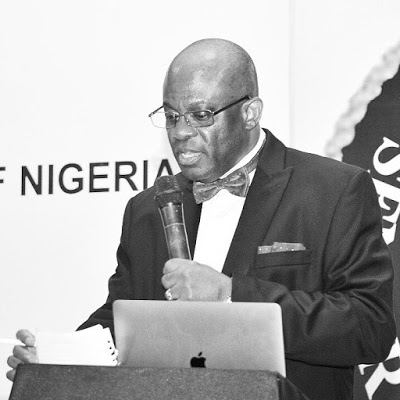
In the race for the NBA Presidency is Paul
Usoro SAN who was a former President of the Law society of the University of
Ife in his university days. He has made a success of his law Practice with many
Junior Lawyers driving the Law Firm. Paul Usoro and Co, a law firm he founded
is well known for its successes and tragedies. In March 2006, the legal
community in Nigeria woke up to the terrific news that the law firm of Paul
Usoro and Co situated in the Bank of Industry building has been raised down by
fire. Millions and Millions of law assets were lost in the inferno. It was a historic
tragedy that will remain indelible in the annals of lawyers. The worst case
scenario any law firm can find itself.
Few years later, the law firm bounced back
and became even bigger. It is one of the few law firms in Nigeria that maintain
an IT department. The young lawyers in PUC are chauffeur driven to courts and
operate in a clean corporate environment. This background excites the young
lawyers who are progressives and desire mentorship. The Welfare of young
lawyers in PUC is one of the reasons   why they are gravitating
towards him. They believe that if he is taking care of the welfare of more than
35 lawyers in the firm, he will know how to do it for young lawyers. That is
how practical this generation of lawyers can be. Out of all the candidates who
have expressed their desire to lead the NBA, Paul Usoro SAN employs the highest
number and pays young lawyers the most with a minimum salary of N150,
000.00
(One hundred and fifty thousand Naira) for the youngest young lawyer
coming from NYSC. Though he still considers this as peanuts but it ranks as one
of the highest  in Nigeria.
Paul usoro’s law firm which now operates
with other partners on board is jokingly referred to as the African Union by
some lawyers while some others have different names for it. The reason behind
these informal names is that the work force of the law firm is made up of
people from diverse region/ethnicity across the country. For this open minded
generation of lawyers, it matters so much in a country like Nigeria.
Another reason why these young lawyers find
Paul Usoro interesting is his commitment to information technology. The
Nigerian Communication Act and many other regulations regulating the telecoms
industry in Nigeria owe their existence to Paul Usoro a top telecom lawyer 
usually referred as the Prince of Telecom. His practice is fully supported by
information Technology and the young lawyers there find themselves in a
familiar terrain.
Paul Usoro in some fora has emphasized on
the need for lawyers, the judiciary and other institutions that relate with
lawyers to be I.T compliant. He believes that it will go a long way in
improving the lot of lawyers .This also appeals to this young generation many
of whom are looking up  to him as someone they can work with.
As the election gets closer by the day, the
generality of Nigerian lawyers are looking forward to a brand new leadership in
July. By then, the younger lawyers must have had their say. However it turns
out, lawyers will have two years to either relish or tolerate it.
Anthony Atata has been documenting the NBA since 2009

From – Courtroom Mail