Photo News: Paul Usoro SAN Holds Consultation Meeting With Stakeholders In Calabar

Photo News: Paul Usoro SAN Holds Consultation Meeting With Stakeholders In Calabar

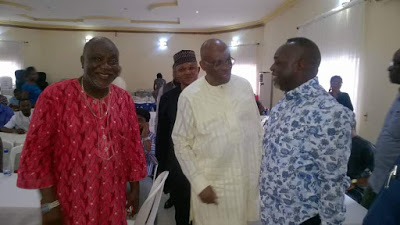
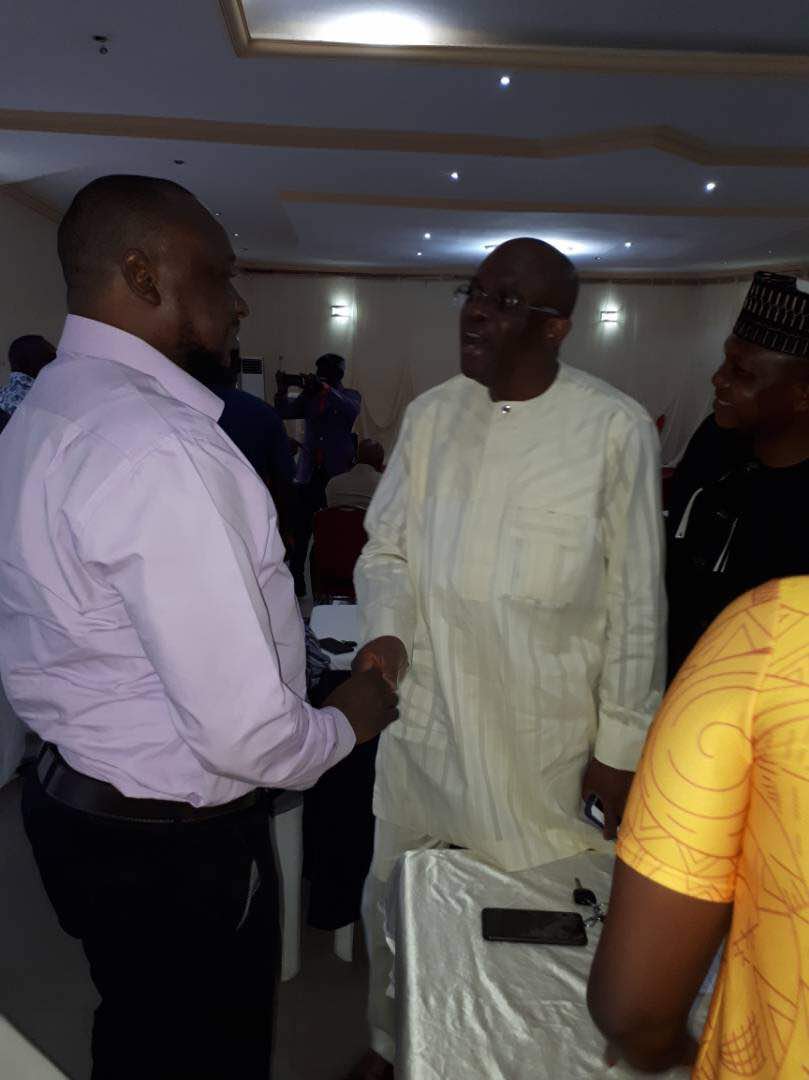
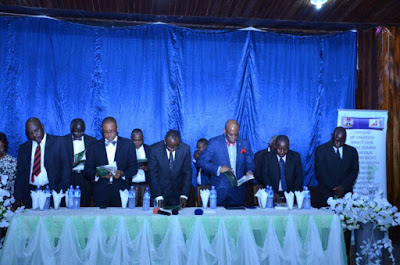
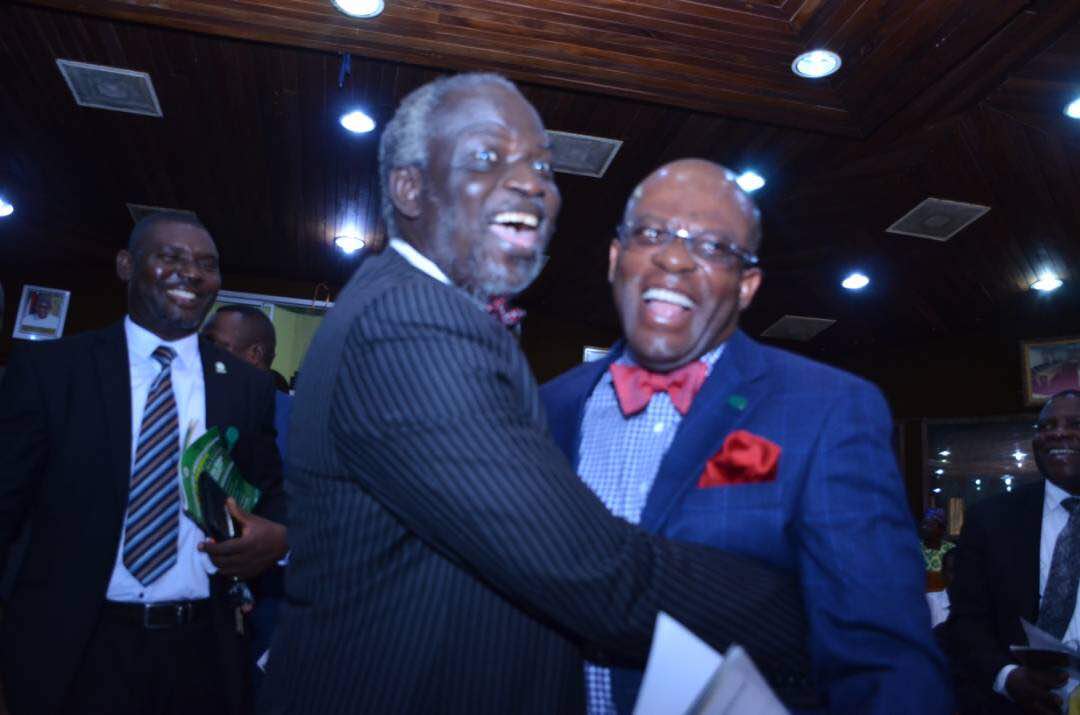
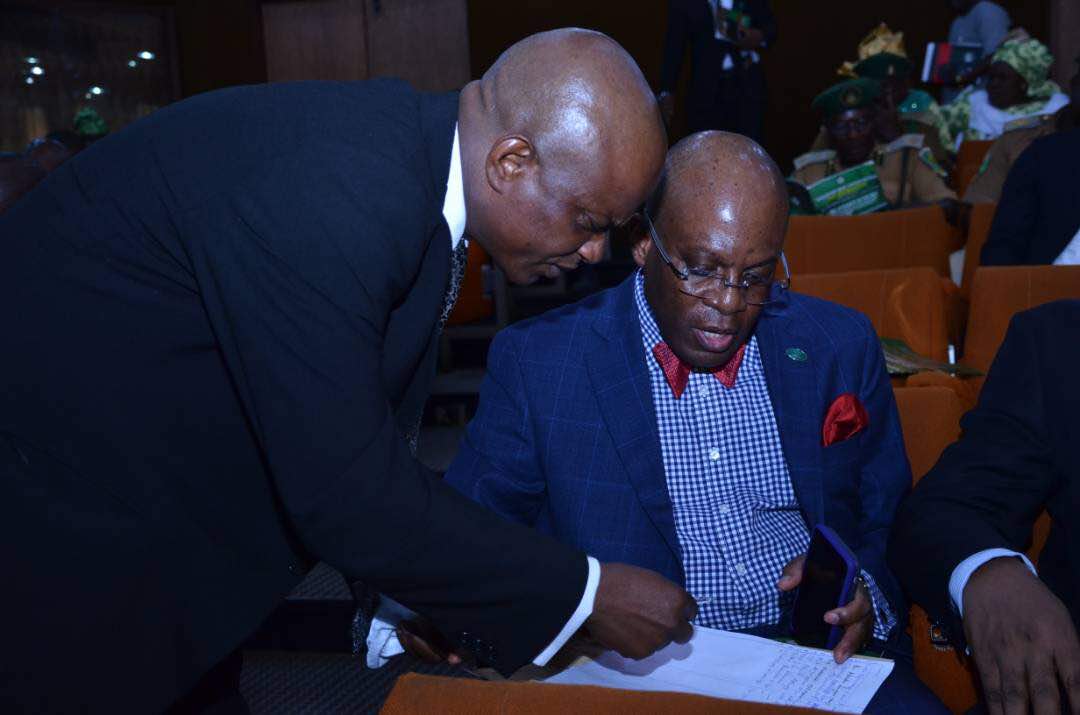
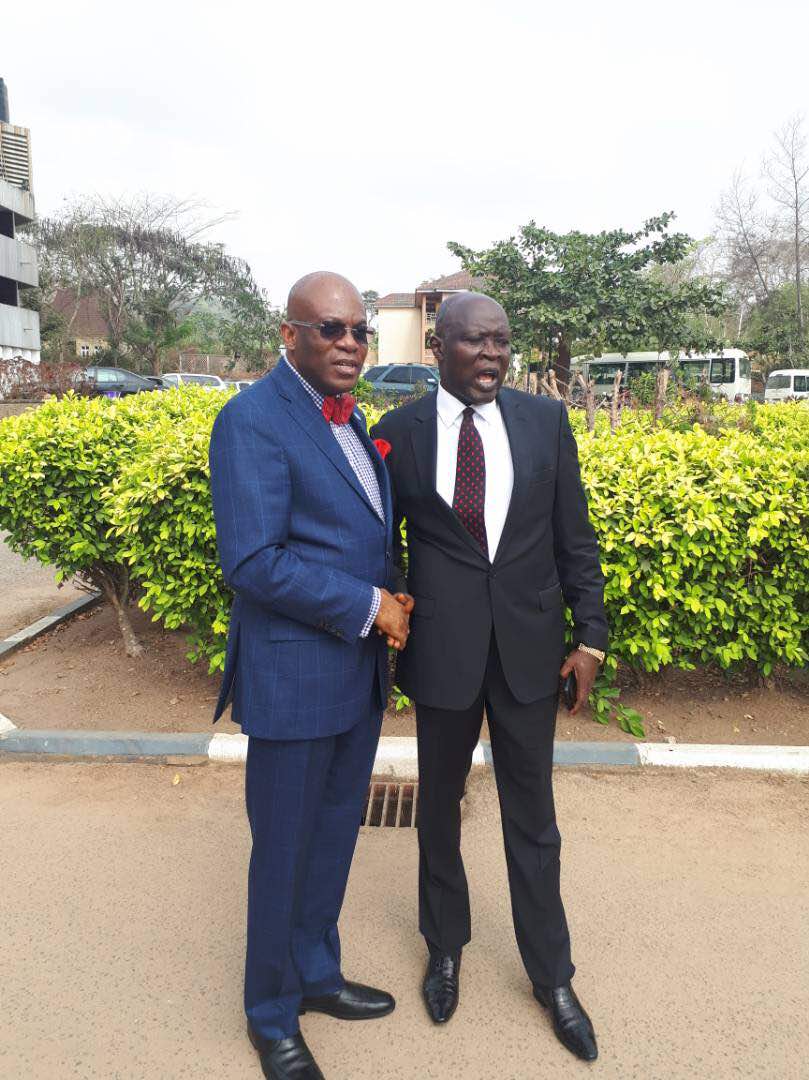
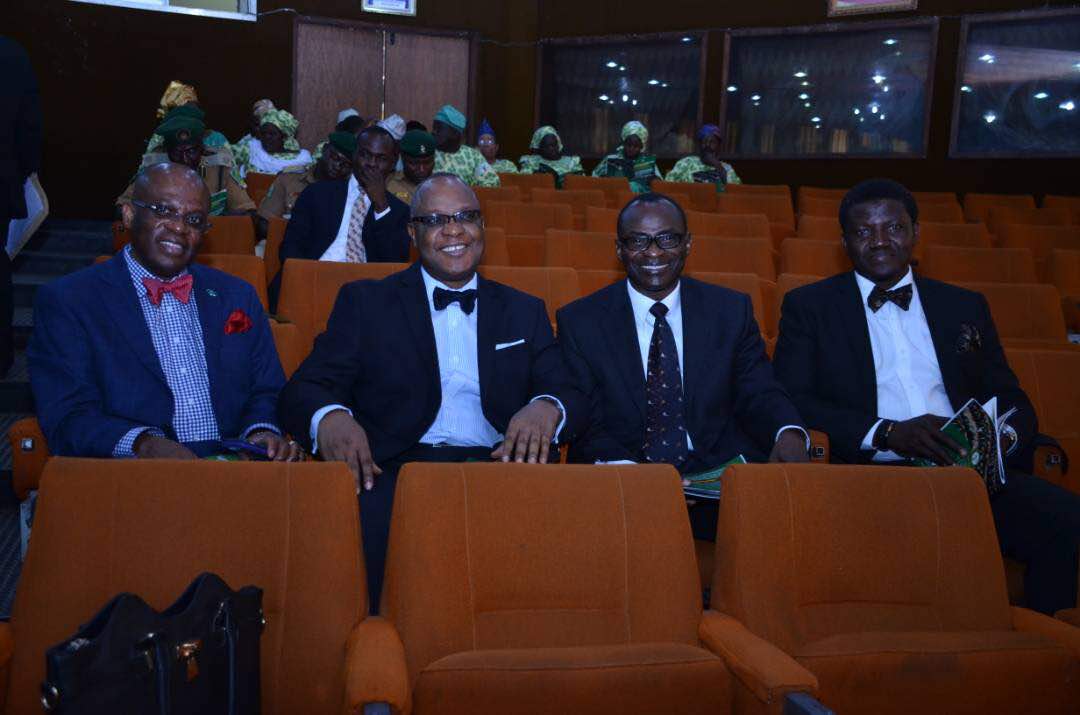
The versatile litigator, Paul Usoro SAN, is currently at the Gomays Galaxy Hall in Calabar advancing the cause of the legal profession as he consults with NBA members which includes exco of FIDA, the young lawyers’ forum, Law officers and CLASFON.


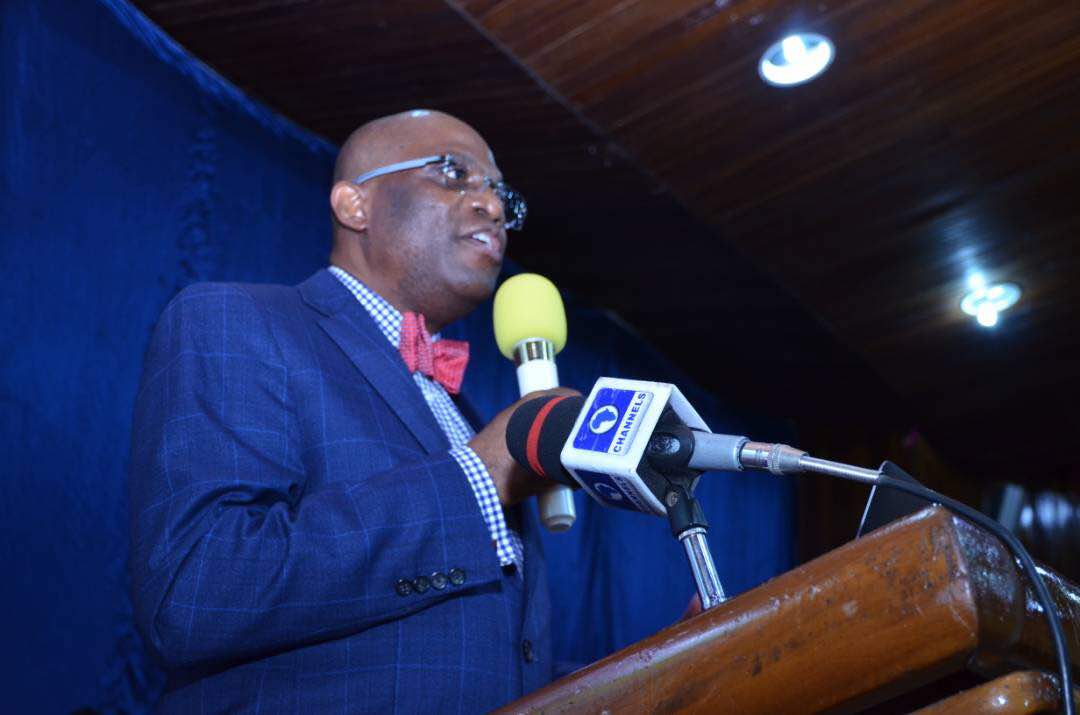
Yesterday, the learned silk was at his alma mater, Obafemi Awolowo University for the annual law week of the Ife NBA chapter. As a guest speaker at the event, he delivered a lecture on the theme Integrity of the Bar and Bench as a Panacea of Socio-economic Development in Nigeria.


In attendance are the Chairmen of the Calabar Ogoja Ikom NBA branches in Cross River, Chairman Young Lawyers Forum, The Chaitierdon of FIDA, the Chairperson of CLASFON, Branch secretaries, former chairmen and elders of the branches, Secretaries of the Uyo and Eket Bar and many others

Yesterday, the learned silk was at his alma mater, Obafemi Awolowo University for the annual law week of the Ife NBA chapter. As a guest speaker at the event, he delivered a lecture on the theme Integrity of the Bar and Bench as a Panacea of Socio-economic Development in Nigeria.

In attendance are the Chairmen of the Calabar Ogoja Ikom NBA branches in Cross River, Chairman Young Lawyers Forum, The Chaitierdon of FIDA, the Chairperson of CLASFON, Branch secretaries, former chairmen and elders of the branches, Secretaries of the Uyo and Eket Bar and many others

Members present include; Chief Orok IronBar, Imo Inyang, Efifiom Ekong, Chief Ogar Ndoma Egodo, Robin Umium, Richard Opeche, Nkoyo Ama, Leo Muffy, Etim Inyang, Idaka Imoke, Henry Ntuen,Dr. Otuekong Ukut and Aguda Ememmobong Udoh, the Secretary to NBA Uyo Branch  

Obafemi Awolowo University welcomes Paul Usoro back home

Obafemi Awolowo University welcomes Paul Usoro back home

Nearly 37 years after, Paul Usoro SAN is back in Ile-Ife again, as a guest speaker at the Law Week of the NBA, Ile-Ife Branch.
The event which is holding today, Thursday, 15th of February 2018 will be held at the OAU Conference Centre, Ile-Ife.

Interestingly the Learned Silk studied Law at the Obafemi Awolowo University (previously known as the University, Ile-Ife), Osun State, Nigeria. He obtained his Bachelor of Laws degree (with Honors) in 1981.
As a student of the University of Ife, Paul stood out with principled qualities as the President of the prestigious Law student’s society.

A young Paul Usoro as the leader of the Law society was very active displaying a fearless and pro-active front that indeed was unique to his being. He went on to set up his own firm in 1985 which has grown from strength to strength becoming one of Nigeria’s leading Law firms under his leadership.
He has never hidden his affection for OAU, and we look forward to his message at the event later on today.

The Law week of the Nigerian Bar Association Ile-Ife began today at the Obafemi Awolowo University Conference Center, Ile Ife,Osun State.

OAU Alumna Paul Usoro SAN was invited as a guest speaker at the event, he spoke on the theme of the Law Week – Integrity of the Bar and Bench as a Panacea of Socio-economic Development in Nigeria.

Speaking at the event, Paul Usoro SAN stated some human and institutional factors that denigrate the integrity of the Bar.

Paul Usoro SAN spoke on the Lack of Integrity of the Bar & Bench stated the following-

According to him, the human factors include personal integrity and indiscipline of Bar men especially as it relates to the way they practice while the Institutional factors include judiciary’s financial dependence on the executive, government’s undue interference and subversion of the rule of law, weak regulatory framework, poor educational system and poor remuneration of judicial officers.

He listed some consequences the lack of Integrity of the Bar & Bench can cause, such as delayed justice, civil unrest and disturbances; subversion of the cause of justice by the government (the recent arrest of judicial officers) loss of confidence in the judiciary/the justice administration system and capital flight as investors prefer climes where they are likely to face less challenges.

According to him all of these problems may not necessarily be the fault of those administering justice as they are institutional.

He gave insightful thoughts aimed at addressing the Integrity Deficit in the System.

1. Bar men must endeavor to keep their personal integrity intact. For instance, stating the truth in affidavits filed in Court and refrain from applying for adjournments on basis of facts that are not true.

2. Continuing Legal Education. Lawyers must keep updating themselves so as so be equipped with sound knowledge of their profession. It is an integrity issue where a lawyer fails to make quality submissions to the Court for whatever reason. 

3. The Nigerian Bar as the grand promoter of the rule of law needs to raise its voice when the course of justice is being subverted in line with its motto.

4. Revamping of existing frameworks which includes (I) procedure for the appointment of judicial officers. Judicial officers are as good as the procedures that bring them in. (ii) Procedure for admission of lawyers to the Bar. We need to bar those who should have no business with the Bar.

5. The NBA will be able to lead the charge by electing competent people who can protect the integrity of the Bar.

The event was graced with the presence of notable dignitaries. Prof. S. B Odunsi was the moderator with Prof. Amos Idowu, amongst others as discussants. Other special guests include the Executive Governor of Osun State, Ogbeni Rauf Aregbosola, Governor Rotimi Akeredolu SAN, Senator Babatunde Owoworare, Senator Iyiola Omisore, Jimoh Ibrahim & his Imperial majesty, Oba Adeyeye Babatunde Enitan Ogunwusi Ojaja 11,the Ooni of Ife who attended the event as the Royal Father of the day.

Protect your trade secrets

Protect your trade secrets

Dear LNB Reader, 
A trade secret is information, including a formula, pattern, compilation, program, device, method, technique or process, that derives its economic value from not being generally known to the public and is protected by reasonable efforts  to maintain its secrecy. 

Information such as customer lists, process methods or other formulas that you’ve developed, they can be protected as trade secrets as long as you use reasonable efforts to keep them secret. This could include storing the information in a password protected place, only disclosing the information on a need-to-know basis and making sure the information isn’t posted in a public place.
Learn & Share 
#LNBlegaltips
@Legalnaija 
Right Choice Between Voluntary Resignation and Termination of Employment | Kayode Omosehin

Right Choice Between Voluntary Resignation and Termination of Employment | Kayode Omosehin

Between Voluntary Resignation and Termination of Employment
One of the easiest ways out of any confusion created by an irreconcilable difference in the course of an employment relationship is a voluntary resignation by the affected worker. Unfortunately, lack of knowledge of employee’s rights and employer’s powers has resulted in several litigious employment disputes that could have been avoided with minimal costs to both parties. It all depends on making the right decision with less stress or none at all.
Employer’s pressure, following a request or advice to a worker to resign, is a prominent element in the facts of most judicial decisions reviewed on the questions of voluntary resignation by an employee. I have addressed below, in a question and answer manner, some of the legal issues associated with a letter of termination and voluntary resignation, whether or not the resignation is based on the employer’s advice to resign:
 1.    What is the difference between a termination letter and an employer’s advice to resign?
A termination letter of employment is simply a document by which an employment relationship is determined. It is a letter which disengages an employee from any further obligations except those which he is required by agreement to fulfill before exiting the employment. However, an employer’s advice to resign is merely a verbal or written request by an employer urging an employee to voluntarily quit his job rather than a termination of the employment by the employer. An employer’s advice to a worker to resign is simply a management strategy to ensure that the company’s record does not reflect that the worker’s employment was terminated by the company (even though the worker was urged or pressured to resign).
 It is difficult to outline what will amount to undue pressure from an employer to warrant the inference of a wrongful termination of employment. It is advised that the facts of each circumstance ought to be carefully reviewed by an employment lawyer in order to advise on the best way out of any irreconcilable difference between an employer and employee. Sometimes, an employer’s advice or request for a worker’s resignation may be a kind gesture towards the employee whereas at other times, it may be inappropriate and actionable! The National Industrial Court held that an employer’s advice or request to an employee to resign has no legal effect whatsoever and, as such, can be disregarded by a worker. In a case decided on 25th September 2014 by Honourable Justice O. A. Obaseki-Osaghale of the Calabar Division of the Court, the claims of an aggrieved employee against his employer were granted in large part when the court held that the claimant’s employment had not been terminated by a memo issued by the company’s management advising the claimant to resign.
 2.    Is an employee bound to resign when the employer requests for his or her resignation?
A worker is not bound to resign on the advice or request of his or her employer. A worker is at liberty to refuse to resign, even if he is threatened by his employer to do so, especially if there are no justifiable reasons for which the employer can immediately (and lawfully) terminate the employment. In other words, if a worker is not culpable for any misconduct or poor/non-performance, he or she can disregard the employer’s advice or request for resignation.
 It would appear to be a common practice for a company to request a worker to resign in order to avoid being fired! The question, however, is how far can the company go in legitimately requesting or pressuring a worker to tender resignation without violating international best labour practice? In my view, it is a wrong decision for an employer to request or advice an employee in writing (including a report of investigation) to tender resignation unless the employee is found wanting for misconduct or poor/non-performance. This is because the court may presume that a worker’s service has been wrongfully terminated if, after his refusal to tender resignation on the written advice or request of the employer, a notice of termination is issued to such a worker.
 It is useful to mention that a worker should regard an employer’s advice to resign as a good gesture or favour if, after a considered review of the circumstances, there are, indeed, justifiable grounds for immediately terminating the employment by the company.
3.    What are the required contents of a letter of termination or resignation?
A letter of termination or resignation is required to satisfy certain conditions. These conditions are not provided in any law but are drawn from my review of some judicial decisions of superior courts in Nigeria in which letters of termination and resignation were in contention between employers and their respective employees.
 The following conditions are to be satisfied:
i. Date of the Letter: A letter of termination or resignation must be dated. Without being dated, a document is worthless as a letter of resignation or termination. The date is necessary to compute the period of notice as agreed in the employment contract.
ii. Addressed to a Specified Party: A letter of termination must be addressed to an individual employee and not to a group of employees; otherwise, this will give rise to a different legal implication. For instance, where a letter of termination is addressed to a group of employees, it may give rise to an inference that the employees have been disengaged in a manner that will entitle them to redundancy benefits. A letter of resignation, however, may not be invalidated merely because it is not addressed to a specific authority in the company, it is sufficient if it is addressed to the company or any official in the management.
iii. Clear Wording of the Termination Phrase: A letter of termination must clearly state that the employee’s services are no longer required by the employer or that his/her employment is terminated effective from a specified date. Equally, a resignation letter must state clearly that the employee wishes to bring the working relationship to an end by using any of these or similar expressions; “I hereby resign from my employment as director/manager/accountant/Head, Human Resources etc. of the company or “Please accept my resignation as director/manager/accountant/Head, Human Resources etc. of the company”.
iv. Reason for Termination: According to recent judicial decisions, every letter of termination of employment must state a good reason for terminating the service of a worker. Liability may arise to the employer if the termination letter does not state any ground (and of course, a good ground) for the termination.
v.  Notice Period or Salary in lieu of Notice: A letter of termination or resignation must state whether a notice period is given to the addressed party or that the party issuing the letter will pay/has paid the salary payable in lieu of the notice period, depending on the employment agreement. Where the party issuing the notice intends to pay a salary in lieu of notice, the letter of termination or resignation may state the amount payable or simply enclose a banker’s cheque in the said sum. The payment should not be delayed. Where a notice period is given, the employee is expected to resume work as usual unless the employer prefers to pay the worker off and dispense with his or her service for the notice period. It is, however, unclear and, therefore, arguable whether, in the course of a notice period, a worker may decide to convert his service for the reminder of the notice period to payment of salary in lieu of notice. Where an employee accepts payment after termination of employment, he cannot complain later of unlawful termination of employment.
vi.             Date of Disengagement: A letter of termination or resignation must state when the worker will stop work or whether he is required to leave the employment immediately. If the worker is required to leave the employment immediately, his salary in lieu of notice and other benefits, in appropriate circumstance, should be paid immediately as well. Even though the Court of Appeal’s case of WAEC v. Oshionebo [2006] 12 NWLR (pt. 994) 258 has been interpreted by the National Industrial Court to imply that the tendering of resignation by an employee carries with it the “right” to leave the service automatically without any benefit, it is my view, however, that a thorough review of an employment contract is sacrosanct in determining if the employee will be entitled to any terminal benefits at the time of voluntary resignation. Please note that the parties may enter into a new agreement on how to satisfy, at a future date, any outstanding obligations under the employment contract which the parties cannot fulfil at the time of resignation or termination of the employment.
vii.            Authorized Signature: Except where delegation of authority is otherwise permitted, a letter of termination must be signed by the authorized staff of the employer in accordance with the employment contract. Please note that the authorized staff of the employer is the official who signed the employment contract on behalf of the company or the staff who has the power to terminate the employment. If there is any question as to whether the staff who signs a letter of termination has a delegated authority to do so, the answer will depend on the facts of each case, the employment contract, internal structure of a company and the court’s evaluation of evidence.
viii.          Evidence of Delivery: A letter of termination or resignation must be delivered to the addressed party in the manner agreed in the employment contract or any other manner which may justify reasonable notice. It is acceptable to forward a letter of resignation or termination under the cover of an email to the official email of the addressed party provided that nothing is done to prevent its receipt. In such case, both the letter and the cover email must be tendered in any litigation regarding the employment.
ix.             Evidence of Receipt: A letter of termination or resignation must be received by the addressed party. The addressed party has no right or discretion to reject the letter.  A letter of resignation or termination takes effect from the date on which the letter is received by the addressed party. Proof of receipt is important in order to answer any question on whether an employment relationship has been brought to an end either by termination or resignation.  

4.    What are the Remedies for terminating an employment by a defective or no letter of termination
Whenever an employee’s engagement is brought to an end by a defective letter of termination or resignation or no letter at all, damages is the only available remedy to the aggrieved party. The employee cannot be reinstated to the employment as the Court does not force a willing servant on an unwilling master and vice versa. In the case referred to under No. 1 above, the employer, by a memo dated 17th December 2009, advised the claimant to resign but he refused to resign and, instead, brought an action against the company three (3) years after (on 18th December 2012). After holding that the claimant was right to have disregarded the employer’s memo advising him to resign, the court held that the worker remained in the company’s employment and therefore entitled to salaries for the period from June 2009 till judgement date, 25th September 2014, and thereafter until his employment was properly terminated by the employer!
Associate at Udo Udoma & Belo-Osagie   
Source: LinkedIn             
IP 101 – Trademarks v Trade secrets v Patents– What’s the difference? | Davidson Oturu

IP 101 – Trademarks v Trade secrets v Patents– What’s the difference? | Davidson Oturu

Trademarks, trade secrets and patents are different forms of intellectual property that are capable of being protected in Nigeria. However, non-professionals tend to find a few of these terms a bit confusing. A client may walk up to his attorney with an invention in his hand and say “I want to trademark this product”. Well, it is important to note that inventions are not capable of being protected as trademarks. This leads to several questions such as “what then can you trademark”? “What is a patent”? “Can trade secrets be protected and are they registrable”?

I will proceed to briefly consider these concepts as this may aid one in understanding their differences. The first concept I will consider in this article will be trademarks.
Trademarks
The Trade Marks Act 1965 of Nigeria defines a trademark as “a mark used or proposed to be used in relation to goods for the purpose of indicating, or so as to indicate, a connection in the course of trade between the goods and some person having the right either as proprietor or as registered user to use the mark whether with our without any indication of the identity of the person, and means, in relation to the certification trade mark, a mark registered or deemed to have been registered under Section 43 of this Act[1]”.
It is my view that the above definition is rather convoluted and so we will adopt the definition given by the World Intellectual Property Organisation (WIPO) which defines a trademark as a sign, logo or word that is used to identify certain goods and services as those produced or provided by a specific person or organisation[2].
Based on the foregoing definitions, it is evident that the primary aim of a trademark is to protect a person’s goods and services. This will also prevent those who do not have the rights to a trademark from using a similar mark such that it is likely to deceive or cause confusion in the course of trade in relation to any goods in respect of which it is registered.
How do you identify a trademark?
A trademark can be a combination of colours or can be made up of single colours. It can be a word, a combination of words, numerals, drawings, abbreviations, drawings or shapes. Examples of familiar trademarks include BMW, Coca-Cola, 7Up, YSL, MTN, 7/11, the Apple logo, the Shell logo etc.
Regardless of whatever form or shape the trademark takes, it must be distinctive and must be capable of distinguishing the goods or services with which it is used. Thus a name that simply describes the nature of the goods and services that are offered may not constitute a valid trademark. For example, “detergent” cannot be trademarked. However, although a given trademark may not be distinctive from the outset, it may acquire distinctiveness through long and extensive use.
Trademarks have multiple purposes as it enables consumers distinguish different products or services. It also serves as a marketing tool and can help the owner of the mark enhance its brand and reputation.
Other than these obvious purposes, trademarks can be very valuable assets when they become well known. For example, the “Google” trademark is considered as one of the most valued trademark on the planet and is worth an estimated value of $44.3 billion. The “Microsoft” trademark is not far behind as it is valued at $42.8 billion[3]. Thus not only can holders of these trademarks licence them to third parties who may want to be identified with the mark but the owner of the mark can equally use it to secure a credit facility from financial institutions.
Protection of trademarks
It is advisable to register trademarks as they are territorial rights. This means that they must be registered in each country where the proprietor would want them to enjoy protection as except a trademark is protected in a particular country, it can be freely used by third parties.
Trademark protection is also usually limited to specific goods and services (unless the trademark in question is a well-known or famous trademark). This means that the same trademark can be used by different companies as long as it is used for dissimilar goods or services. The exception to this is where the mark is a well-known or famous trademark. An example of a well-known mark is “Coca-Cola”. I daresay it will be difficult or impossible for an applicant to successfully register a trademark for a pair of trainers and brand them with the “Coca-Cola” logo! This is due to the fact that it is a well-known mark and no Trademarks registry will be willing to register such a trademark.
By registering his trademark, the proprietor is given the exclusive rights to use the trademark to identify his goods or services and can also prevent third parties from using an identical trademark for similar goods or services.
How is a trademark registered?
An application to register trademark must be filed with the trademarks registry at the ministry of Trade and Investment. The application must contain a clear reproduction of the sign filed for registration, including any colours, forms, or three-dimensional features. The application must also contain a list of goods or services to which the sign would apply.
The sign must fulfill certain conditions in order to be protected as a trademark or another type of mark:- it must be distinctive, so that consumers can distinguish it as identifying a particular product, as well as from other trademarks identifying other products;
– it must not be deceptive or likely to mislead the consumers as to the nature or quality of the product;
– it should not be contrary to public order or morality;
– it should not be identical or confusingly similar to an existing trademark. 
This may be determined through search and examination by the national office, or by the opposition of third parties who claim similar or identical rights.
How long is a registered trademark protected for?
A trademark is registered for an initial period of seven (7) years but may be renewed from time to time for a period of fourteen (14) years[4].
[1] Section 1, Trade Marks Act 1965
[2] World Intellectual Property (WIPO), ‘DL 001 – Primer on Intellectual Property’ (2018)
[3]Forbes, the 10 most valuable trademarks (2018)
[4] Section 23 (1) of the Trademarks Act 
Davidson Oturu MCIArb
Partner at AELEX
Source: LinkedIn
Civic Engagement Series – Petitions

Civic Engagement Series – Petitions

A petition is a request to do something, most commonly addressed to a government official or public entity. 

Petitions could be a potent weapon in the hands of the citizenry and an effective tool for engaging with govt or demanding a position from government. Examples include petitions that sought the release of Nelson Mandela during his imprisonment by the apartheid government of South Africa. 
Other instances are online petitions used the organisations and persons to cause govt to act in a certain way. 
As a Nigerian, if you are unsatisfied with a position of government, you may start a petition that seeks to change the situation and the more people sign your petition, the more credibility it receives. 
You may also use a petition to call the attention of government to issues of importance to your community. For instance, a petition circulated in your community for repair of public infrastructure.
#civicengagementseries
#civicengagement
Vat On Imported Services – Vodacom v. FIRS: Federal High Court Decides | Adefolake Adewusi

Vat On Imported Services – Vodacom v. FIRS: Federal High Court Decides | Adefolake Adewusi

On 19th December 2017, the Federal High
Court (“FHC”) in Lagos per Kuewumi J., upheld the decision of the Tax Appeal
Tribunal (“TAT”) in Vodacom Business Nigeria Limited v. Federal Inland
Revenue Service 
which set out the statutory provisions and guiding
principles in Nigeria for the imposition of Value Added Tax (“VAT”) on imported
services.Briefly, the facts of the case are that, a foreign
satellite owner, NSS had supplied Vodacom, a Nigerian company, with
satellite-network bandwidth capacities which were received in Nigeria through
earth-based stations set up by Vodacom. Also contractually, the VAT burden had
been transferred from NSS to Vodacom. 


At the TAT, Vodacom argued that the
supply of bandwidth capacities was not an imported service, as it was supplied
in the Netherlands. FIRS on the other hand argued at the TAT that by virtue of
section 2 of the Value Added Tax Act 2007 (“VAT Act”), VAT is chargeable on any
good or service supplied in Nigeria, except expressly exempted. Since the
supply of bandwidth capacities was not expressly exempted, FIRS argued that
such supply was subject to VAT. The TAT accepted FIRS’ argument. The TAT also
took the view on the basis of the “destination principle” that since the
service in question, the supply of bandwidth capacities, was consumed in
Nigeria, its supply was subject to VAT in Nigeria.

Vodacom appealed against the decision of
the TAT to the FHC. Vodacom argued that a service supplied by a non-resident
person to a person inside Nigeria is only subject to VAT if the service is
indeed rendered in Nigeria. Section 46 of the VAT Act defines “imported
service”
 as “service rendered in Nigeria by a non-resident
person to a person inside Nigeria.”
 Vodacom argued that the words “rendered
in Nigeria”
 as inserted by the lawmaker as it relates to the
definition of “imported service,” in Section 46 of the VAT
Act, has the location where the service was rendered, and not where the service
was received, as the relevant consideration. Consequently, the physical act of
rendering the service had to be performed in Nigeria for the service to be
liable to VAT. Vodacom also argued that the TAT had found that NSS, the
non-resident company in question, was not incorporated in Nigeria or registered
for tax purposes with FIRS. Vodacom therefore argued that NSS did not carry on
business in Nigeria. Vodacom also argued that the failure of the TAT to make
pronouncements on the arguments raised by Vodacom as regards the fact that NSS
was not carrying on business in Nigeria, made the judgment of the TAT flawed.
Vodacom further argued that its obligation to pay VAT was premised on the
issuance of VAT invoice to it by the non-resident supplier, NSS pursuant to
Section 10(2) of the VAT Act. Since NSS issued no VAT invoice to Vodacom,
Vodacom had no duty to remit VAT to FIRS. Vodacom further contended that the
VAT Act contained no provisions penalising the recipient of services for
non-payment of VAT consequent upon the non-issuance of VAT invoice by the
non-resident supplier of services.

On its part, FIRS argued that Section 2 of
the VAT Act made every supply of service in Nigeria liable to VAT except the
services which are listed in the First Schedule to the VAT Act, notably amongst
which is exported service. FIRS argued that from the definitions of“supply
of services”
 and “supply of goods” in Section 46 of
the VAT Act, acts of sale and delivery are acts of supply (clearly different
from production) and that sale and delivery take place when the goods or
services are received and paid for by the consumer. FIRS argued that what
matters to Section 10(2) of the VAT Act, is that the consumer, not the means of
supply, is in Nigeria, as the non-resident supplier may or may not be required
to accompany the goods or services to Nigeria, but that even where the
non-resident supplier accompanied the goods into Nigeria, that did not detract
from the requirements to comply with Section 10(2) of the VAT Act. Thus, the
physical act of rendering the service could not be restricted to the physical
presence of NSS in Nigeria.

FIRS then argued that Section 10(2) of the
VAT Act creates two statutory duties namely: (i) the duty of the non-resident
company to include the tax in its invoice; and (ii) the duty of the person to
whom the goods or services are supplied in Nigeria to remit the tax. FIRS
argued that the foregoing duties were separate, distinct and independent of
each other, further arguing that the requirements under Section 10 of the VAT
Act are only made for proper record, accountability and ease of
compliance/enforcement and not a condition precedent for liability to pay VAT.
FIRS contended that the very moment the services were received in Nigeria by
Vodacom, the liability to account for VAT arose even with the failure of NSS to
include VAT in its invoice or did but under assessed VAT. FIRS maintained that
the non-registration or non-issuance of an invoice for VAT was not fatal to the
remittance of VAT by a taxable person because Section 15(1) of the VAT Act
compels a taxable person to render account of his transaction. FIRS further
argued that if Section 10 of the VAT Act was interpreted to prevent VAT
collection when the foreign supplier of services failed to register for VAT and
raise VAT invoice, then a recipe for tax evasion would be brewed as the
consumers in imported services in future cases would only need to ensure that
their non-resident suppliers do not comply with Section 10 for them to escape
VAT on the services. On the effect of the phrase, “carrying on
business”
 in Section 10 of the VAT Act, FIRS argued, relying on a
judicial precedent, that sale was a transaction by way of trade notwithstanding
that it was an isolated transaction where the intention of the company was to
deal in that line of business within its memorandum of association.

In its judgment, the FHC held that Section
2 of the VAT Act was the charging clause and imposed VAT on the supply of all
goods and services other than those listed as exempted in the First Schedule to
the VAT Act. Consequently, VAT is charged and payable on all international,
inter-state and intra-state supplies of goods and services except those that
are expressly exempted bearing in mind the territorial nature of tax law. The
FHC discountenanced as untenable, Vodacom’s argument that in considering what
an imported service was, the relevant consideration was the location where the
service was rendered and not where the service was received. The FHC held that
in ascertaining whether a transaction is liable to VAT, the crucial questions
are: (i) did the transaction give rise to a supply of either goods or services
(ii) was it for consideration? (iii) is the supply of goods and services
exempted by the VAT Act? The FHC held that if questions (i) and (ii) are
answered in the affirmative and question (iii), then such a transaction is
subject to VAT. 

The FHC further discountenanced Vodacom’s argument that a
service supplied by a non-resident person to a person inside Nigeria is only
subject to VAT if the service is rendered in Nigeria. The FHC held that for
supply of imported goods and imported services, the location of the supplier
was of no consequence. What was important was whether a supply of goods and
services was made into Nigeria and for consideration, and once that question
was answered in the affirmative, a VAT-chargeable transaction had occurred. The
FHC held that in the instant case, Vodacom was supplied in Nigeria, satellite
network bandwidth capacities for consideration as shown by the contractual
document and such supply not being within the exempted services, was liable to
VAT in Nigeria pursuant to Section 2 of the VAT Act. In essence, the supply of
satellite network bandwidth capacities qualified as “imported service” because
it was supplied by a person outside Nigeria to a person inside Nigeria.

The FHC further held that in the context of
VAT, a company was a non-resident company if it was either a foreign company
unincorporated in Nigeria but present in Nigeria on the basis that it had
applied and obtained exemption pursuant to the provisions of Section 59 of the
Companies and Allied Matters Act, Cap C20, Laws of the Federation of Nigeria
2004; or a foreign entity outside Nigeria but transacting business with persons
in Nigeria. The FHC noted that the requirement for VAT registration was relaxed
for a non-resident company which had no physical presence in Nigeria to reduce
the administrative burden on such non-resident company. In some jurisdictions,
the approach in this second instance would be to under the reverse charge mechanism,
require the VAT to be paid by the recipient (i.e. the consumer) rather than the
supplier of the imported services. The FHC held that a contrary decision in
this regard would be “a gratuitous escape route for VAT evasion” since
a non-resident supplier would be able to, by refusing to be registered for VAT,
be excused from the liability to pay VAT for a transaction liable to VAT. Such
was not the purpose of the VAT Act. As regards whether or not the non-resident
supplier carried on business in Nigeria, the FHC held that in keeping with a
cardinal feature of VAT namely, flexibility to keep pace with technological and
commercial developments, “carries on business” includes a
single supply of goods and services of Nigeria.

The FHC viewed as a misdirection, the TAT’s
holding that NSS did not carry on business in Nigeria arising from the
perception that a business can only be carried on in Nigeria if the company in
issue was resident in Nigeria. In providing clarification, the FHC held that
all that was to be considered in finding out whether an entity was carrying on
business in Nigeria from outside Nigeria or not for the purpose of VAT was the
occurrence of a supply to a person in Nigeria. Physical presence was not a
condition to carrying on business in Nigeria for the purpose of the VAT Act.
Referencing the non-binding OECD VAT/GST
Guidelines, the FHC held that a service had been rendered only when it had been
consumed. Essentially, VAT should be levied in the consumer’s jurisdiction,
rather than the non-resident supplier’s jurisdiction. Consequently, a service
made without delivery had not been rendered. A service was rendered in Nigeria
if it was received by a person in Nigeria from outside Nigeria.

As a passing remark, the FHC observed that
the likely conflict the insertion of the phrase “in Nigeria” in
Section 46 of the VAT Act had set out to abort, was a situation where a person
inside Nigeria imported services that were rendered in a country other than
Nigeria. The FHC noted that in this case, the non-resident supplier, NSS had
contracted its VAT liability to Vodacom and held that even if the clause
contracting the VAT liability were non-existent, Vodacom would still be liable
to VAT by virtue of Section 2 of the VAT Act as such was a purposeful way of interpretation
to avoid double taxation or unintended non-taxation.

The FHC held that to avoid the
administrative burden of registration on a non-resident company supplying
services and to assure that VAT was accounted for, the reverse charge mechanism
was appropriate to be applied which required the VAT-registered customer to
account for the VAT on supplies received from the non-resident supplier. The
FHC subsequently held that it was just to apply the reverse charge mechanism
because a patriot dealing with a person outside Nigeria over a supply made to
him must take steps to avoid a situation where the State was deprived of
legitimate revenue.

The FHC consequently affirmed the decision
of the TAT delivered on 12th February 2016. 

Before now, it seemed like there were
two conflicting decisions on the issue of the imposition of VAT on a service
provided by a non-resident entity to a Nigerian entity arising from the
decisions of different TAT panels in Gazprom v. FIRS and Vodacom
v. FIRS. 
 In the earlier decided Gazprom case, The
Abuja panel of the TAT had held that since a non-resident supplier contracting
with a Nigerian company was not necessarily carrying on business in Nigeria,
such company was not obliged to register for or charge VAT and the Nigerian customer
was not obliged to remit VAT to the FIRS where the supplier does not issue a
tax invoice. In the Vodacom case decided subsequently, the
Lagos panel of the TAT took the view on the basis of the “destination
principle”
 that since the service in question, the supply of bandwidth
capacities, was consumed in Nigeria, its supply was subject to VAT in Nigeria
and the consumer had a duty to ensure the non-resident supplier issued a VAT
invoice.

For information as regards how
this decision may affect your tax affairs, you may contact me.

Adefolake adewusi
Senior Associate at AELEX
Source: Linkedin

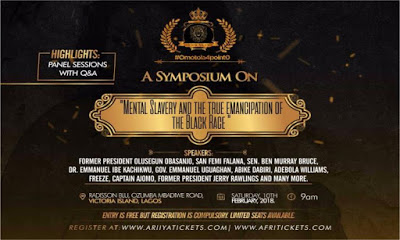
Emancipation of the Nigerian Youth from Mental and Political Slavery | Adedunmade Onibokun

Emancipation of the Nigerian Youth from Mental and Political Slavery | Adedunmade Onibokun

This piece is inspired by leading actress,
activist and philanthropists, Omotola Jalade – Ekeinde, who via her works and
passion as always promoted the illumination of the African Spirit; the
Emancipation of the African mind and the strengthening of the African
Character. Most recently, on the 10th of February, 2018 and in
celebration of her 40th birthday, Omotola hosted the symposium
centered on the “Emancipation of the Black Race from Mental Slavery”.

I believe most
people have an idea of what it means to be mentally enslaved or at least
believe that they do. Some will think of it as a distant mental state, that
plagues others but of which they are immune. What would you say if I told you
that 99% of all Nigerians are mentally enslaved.

I know in typical
Nigerian fashion, many have murmured “God forbid” under their breaths and some
others would remain confident that they are one of the lucky 1%, for they cannot
be part of the madness called Mental Slavery. Probably because they are wealthy,
have travelled to many parts of the world or even because they are professors,
doctors, lawyers, senators, political leaders, have many degrees or are simply
educated. But do not be deceived, rebuke it all you want, be assured that in the
mind of every Nigerian lie the chains that have held us long bound in mental
slavery not because Mental Slavery is a Nigerian thing, it is the dilemma of
the Black Man, no matter the city, country or continent in which he finds
himself.
In the early
1500’s, slaves were transported from West Africa to America through Badagry. It
is reported that Badagry exported no fewer than 550,000 African slaves to
America during the period of the American Independence in l787. According to Olusegun
Mobee in his book, “History of the Mobee Family of Badagry and Their
Involvement in the Slave Trade
“, Mr. Mobee states, “Slaves were
never captured in Badagry…As a matter of fact, then, slavery was a recognized
institution all over the world. Slaves were employed by Kings, Chiefs, and
wealthy people in their houses as domestic servants. A man’s economic and
social status were assessed by the number of slaves he possessed. This type of
slavery was known as domestic slavery and usually, many of these slaves were
captives of war. But many of the slave owners on learning that European slave
merchants were besieging Badagry with goods such as iron bars, cotton, wool,
linen, whiskey, gin, metal wares, and assorted wines in exchange for slaves,
wasted no time to bring their domestic slaves to Badagry with the hope of
exchanging them for the listed items. It was confessed that the prospects of
Trans – Atlantic Slave Trade fueled into tribal wars in Yorubaland as the kings
and slaves who had taken part of the European slave merchants’ offer, went all
out to wage war on the other towns and villages with the sole aim of getting
slaves to be exchanged for wine and guns.”
But how has the
slave trade affected the mental faculties of the Nigerian till date? And Why
has the black race and the African continent been the biggest liability to the
world. This is beacuse Africans for generations have been made to believe that we are
second class citizens of the world.This has hit the psyche of the Nigerian most
especially. We have been brain washed to believe that our cultures and norms
are second place. For instance, we celebrate Hollywood over Nollywood; we
celebrate Angelina Jolie over the likes of Omotola Jalade; we trust their
healthcare systems over ours; we value their education over ours and pay huge
sums of dollars and pounds to get a foreign degree; we have doctors but travel
abroad especially if among the wealth and political class; we have tagged our
indigenous religions witchcraft and voodoo, something evil while we have
embraced Christianity and Islam. Most recently, many Nigerians have paid their way to slavery as seen recently from news reports in Libya.
I remember
sitting at a Bar with a British Lawyer in Dubai. I was in town for the
International Bar Association Conference but he was at that time working in the
city. After a while into our conversation, he asked me where I was from and I
responded Nigeria. He said, he knew I was Nigerian by origin but was asking
where in the UK I was based.  I told him
I was based in Lagos and he looked in disbelief. I never forgot till this day
when he said he never believed anyone out of Nigeria could speak so well. He
told me, I speak well for a black person and must have been foreign trained because
he could not believe an African who was raised in Africa could speak so
well. 
Colonialization is
another factor that totally disintegrated the Nigerian  Spirit. The British colonized Nigeria in 1884.
The British controlled Nigeria by using authoritarian systems and by being
unafraid to use force and fear to keep  Nigerians under control. In essence,
the British empowered the political class and used them to control the
populace. And the political class who wanted a sustenance of their status, used
every way they could find to stay relevant and disenfranchise the masses. This is why it must not surprise you that the class of 66 is still in control of Nigeria till date.
This has resulted in
a dog eat dog society, where everyone strived to join the privileged few and the
fastest way of making that achievement was by stealing wealth in the millions
and billions. Because the richer they became, the more they became members of
that elitist society. One will be called a big man and in public people will
hail you not because they love you but because they want to be like u. Rich,
corrupt, without decency and morals. A phenomenon that has continued till
this day.
The activities of
the Nigerian political class made matters worse for the Nigerian nation. The
political class reveled in squander, corruption, ethnic bigotry and a disregard
for Nigeria’s economic and social realities. This resulted in a society where we
have come to lack empathy for one another. We do not trust one another and are
always suspicious of each other. For instance, If you are a member of my generation,
you must be familiar with many of our parents who very realistic, they are
parents who would say “do not marry anyone from the Ibo Tribe or the Yoruba
Tribe or the Hausa Tribe. Some Yoruba parents go further to say do not marry
ijebus, or egbas or ijeshas. And when you ask why? The would likely respond
with reasons such as they are not trustworthy, they are fetish, their men are
wicked, their women are too independent minded and so many others reasons.
While we may not question their reality because it is borne from their
experiences, we must note that it is not our own.
The most
pertinent question at this time is how can Nigerians carve a new identity
for ourselves. To do so, I believe we must understand that we are not here to
pleasure ourselves, we are not here to fix ourselves or take care of ourselves,
we are not here solely to find means of making ourselves more comfortable,
for there is something wrong that is not allowing us to find our greatest meaning.
A new responsibility has been placed on the Nigerian, not anything new that we
have not known before. But if we have ever needed to step up and take
responsibility, we need it now. We must not tolerate the madness, we must not
create another type of madness that allows us to say we are the ones that are
sane. We have witnessed the rise of violence on the black man everywhere
especially in the United States of America and Libya.
We must not judge
ourselves based on what we have done for ourselves but on what we have done for
others. The big question therefore is how do we play our role in all of these
struggles.
Here are outlines
of how we may accomplish same –
1.    
We must illuminate the African spirit, empower of
the African character and liberate the African mind. 
2.    
We must overcome the concept of black inferiority
with the truth of black humanity.
3.    
We must reject the lie associated with black
people. That we are inferior and 2nd class.
4.    
We must tell our story, like the saying goes; as
long as the lion does not bot have an historian, the hunter will always be the
hero. 
5.    
We must realize that no one but ourselves can free
our minds. 
6.    
We must deploy a superiority equal to any other nation
in the world.
7.    
We must let our light so shine that the world would
see our good deeds, our impact, our contribution, our role to making mankind
great.
8.    
We must ask questions on how we can be better, to take
a second look at our environment. Look at our space in which we have accepted
for hundreds of years and ask ourselves, what kind of components can we change.
We must redefine our decency, our truth and our justifications going forward.  
9.    
We must stop focusing on the little things that divide
us but look rather at the improvements we can make to our environment. So when
the people in the year, 2095 look that at the kind of impact that we made in
2018 and going forward, they would say the black race accepted a level of
responsibility that has defined the kind of peace they have accepted and the
race they have become.


10. Nigerians, most especially the youths must engage government and leaders continuously. Social media trends can be great for calling the attention of government to issues but it is not enough, especially when the energy is not channeled right.
In our emotional
emancipation, we must identify a healthy sense of self-esteem; to be free from
all thoughts of mediocrity, to learn that we can compete as a nation, as a
people on a global scale.
We must see
ourselves beyond the negative stereotypes. It requires no professional degrees
or complex government structures, policies, agencies or investigative
panel. It requires only a 4 letter word – CARE. You may be surprised at
what sort of solution I am proffering but you would be surprised to learn that,
something as simple as caring and kindness is far from us.  Allow me to
illustrate further, sometime a few years ago, while studying for my Masters in
International Business Law in London, I was walking into a bank somewhere in
the Stratford, East London. Their bank doors are not similar to ours, they do
not have those intimidating security doors that’s takes one person at a time,
it was just a glass door. The White lady in front of me held the door for me
but I just walked through and let the door swing shut. But the person walking
in behind me almost walked into the door. I immediately felt bad and realized
at that point that I had failed in my social responsibility. I had to apologise
to the person and always held the door for others behind me since that day. Further
because I realized it was part of their culture to just look out for one
another, irrespective of race or colour, a kind of social kindness I had not
experienced before.
But replay that
same scenario in Lagos and you would get a different reaction.  If you mistakenly go further to complain, you
may get a response such “Oga, you sef no get eye”,” You no fit see say door dey
there” or “na me be your gateman ni?”. Not surprisingly, 2 weeks  ago, I was walking into church on Sunday and
the I had to catch the door before it hit my face, because the gentleman who
was ahead of me just let it swing shut without minding the faith of the person
coming behind. Thank God say I get eye.


But I reminded
myself that day of our painful past and experiences, we
have become an uncaring people and I don’t just speak about Nigerians, I speak
about the black man as a whole. Going forward Nigerians must not see
material realities as testimonies but as tools of effectiveness. Like my
mentor, Olakunle Soriyan says, we must realize that it is the smallest of our
character that makes a man acquire a thing and think that his life can be
better because of it. We must audit our sense of mission and ask questions
about our morality and what the material can represent. We must ask serious
questions of our lifestyles. We must reject the impulsion to use our skill and
position as a means of showcasing our nuisance value but use them for deeds
that society can be grateful for. This is critical and must be done as a matter
of supreme urgency.   
Adedunmade
Onibokun
#Omotola4point0