How To Recover Small Debt Claims In Lagos State | Adedunmade Onibokun

How To Recover Small Debt Claims In Lagos State | Adedunmade Onibokun

A friend once wanted to recover
the sum of N35,000 (Thirty – Five Thousand
Naira) which had been erroneously deposited into a wrong bank account. Due to
the inability to locate the account owner, my friend was informed by the bank that
only via a court order could the payment be reversed, hence leading to my
friend calling me for help. Would you believe it cost over N5,000 (Five Thousand Naira) to institute a court proceeding at the
Magistrate Court and effect service on the Defendants? Leaving my friend with N30,000 (Thirty Thousand Naira) as the
value of the sum sort to be recovered.

Sometimes, the value of the sum
sort to be recovered could be much higher, for instance N500,000 (Five Hundred Thousand); N3,000,000
(Three Million Naira) or N5,000,000
(Five Million Naira). No matter the amount, a creditor will usually be required
to pay legal fees, most especially if a lawyer is instructed or one proceeds to
court as an option to recover the debt owed.  More often than not, creditors find the legal
and other fees paid to recover a debt as too high. Also, the long period of
time associated with court proceedings further discourages such creditors and
many usually choose to petition the police as an option of recovering the sum. Though
the police do not have the jurisdiction to act as debt recovery agents except
the petition also includes allegations of fraud or deceit.

This high cost of litigation
suffered by creditors especially those seeking to recover small sums, instigated
a cry for a small claims court with a mandate to address the issues of high
cost of litigating small claims and abridge also time of litigation. Thankfully,
the Lagos State Judiciary has established such a court with the introduction of
the MAGISTRATES’ COURTS LAW PRACTICE
DIRECTIONS ON SMALL CLAIMS 2018
by Hon. Mr. Justice Opeyemi O. Oke, Chief
Judge of Lagos State on 24th April, 2018. The objective of the small claims procedure is to provide
easy access to an informal, inexpensive and speedy resolution of simple debt
recovery disputes in the Magistrates’ Courts.

The Small Claims Practice
Direction is novel in that it provides in Article 12 (2) that the entire period
of proceedings from filing till judgment shall not exceed sixty (60) days) and
for matters to come under this provisions it must have the following elements
as stated in Article 2 –  

(a)     The Claimant or one of the Claimants resides
or carries on business in   Lagos State;

(b)     The
Defendant or one of the Defendants resides or carries on business in Lagos
State;

(c)      The cause of action arose wholly or in part in Lagos State.

(d)     The claim is for a liquidated monetary
demand in a sum not exceeding N5,000,000
(Five Million Naira), excluding interest and costs.

(e)     The Claimant has served on the Defendant, a
LETTER OF DEMAND.

The Practice Direction also recognizes
in Article 10 that Parties may represent themselves at the proceedings in the
Small Claims Court. Partnerships and Registered Companies can be represented by
either a Partner, Company Secretary or any other Principal Officer of the
Partnership or Company.

This is good news for
businesses and persons in Lagos seeking to recover sums below N5, 000, 000 (Five Million Naira) at the Magistrate
Court as it reduces the cost of litigation and abridges the time spent in
court. To institute a proceeding for debt recovery according to the Small
Claims Practice Direction, one may a fill the Small Claims Complaint Form and
file same at the Magistrate Court. For further information on how to take
advantage of the new practice direction in recovering your debt, you may
consult a lawyer or visit the Registry of the Magistrate Court.


Adedunmade Onibokun

Principal Partner

 Photo Credit – www.thenigerianlawyer.com 

   

Lagos State Small Claims Court

Lagos State Small Claims Court


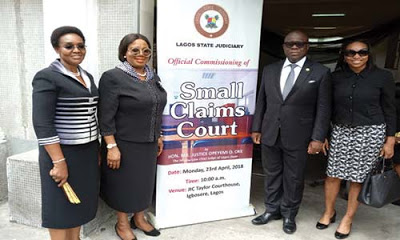
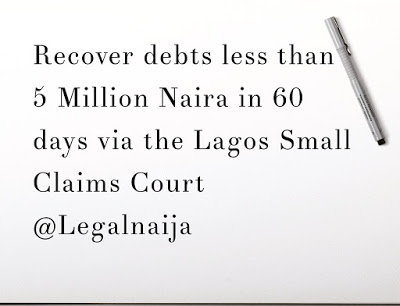
The purpose of the Small Claims Court  commissioned by the Honourable Chief Judge of Lagos State on Monday, 23rd April, 2018 is to provide easy access to an informal, inexpensive and speedy resolution of debt recovery disputes in the Magistrate Courts, of claims not exceeding the sum of N5,000,000 (Five Million Naira). The entire period of proceedings from filing of the claim till judgment is not to exceed 60 days.

#lagoslaws 
#debtrecovery 

#smalldebts
IP ABC: – Does a Patent give you complete protection | Infusion Lawyers

IP ABC: – Does a Patent give you complete protection | Infusion Lawyers


Question of the Week

We are DigiMid, a digital media company in
Nigeria. We have just developed a new product that will enable people watch
videos at nights with their eyes closed so they don’t strain their eyes. The
product is a wearable electronic lens. Because it is new, we want to apply for
patent in Nigeria. But the issue we have is the risk of having a third party
make the same product by reverse engineering or other means. Before investing
in patent application, we want to know what a grant of patent really gives us.
Is it adequate protection? If not, what should we do to get complete
protection?

Answer 

WOW, a wearable electronic lens that enables
people watch videos with their eyes closed! Amazing stuff!


Now to your question, you want to know what a grant of patent in Nigeria gives
DigiMid and if this will be adequate.


A patent gives DigiMid a monopoly over the invention for a period of 20 years.
This protection is generally adequate.

What kind of monopoly? you might ask.


The Patents and Designs Act governs patents in Nigeria. Under the Act, a patent
can either be a product or a process. An inventor who is granted a patent is
called a patentee. A patent gives the patentee a monopoly by conferring on the
patentee right to stop any other person from doing two major acts:-

If the patent is granted in respect of a
product, the patentee has the right to stop any other person from making,
importing, selling, using, or even stocking the product for the purpose of
selling or using it;

If the patent is granted in respect of a
process, the patentee has the right to stop any other person from doing two
things:

(i) applying the process; or

(ii) making, importing, selling, using, or
stocking for the purpose of selling or using a product that was obtained from
applying the process.

In DigiMedia’s case, your wearable electronic
lens is a product. As a patentee, you will therefore enjoy the right to stop
any other person from doing any of the acts in paragraph one above.


Now to your second question, will patent be an adequate protection for your
invention?


Generally, yes. With the exclusive rights granted to a patentee, you have
meaningful protection for your invention.


But note that DigiMid’s rights as a patentee in respect of its
watch-videos-with-eyes-closed lens only applies to acts done for commercial or
industrial purposes. This means you can’t stop an unauthorized person from
making the invention if it is not for commercial or industrial, or both.

There are a number of reasons a patentee may not enjoy adequate protection.

One of these reasons is the way with which many inventors fail to protect their
inventions right from day one. How?


In DigiMedia’s case, the 3 points below show how:

If DigiMid’s patent application is not
well prepared for adequate protection, you may not have adequate protection.
 In your patent
application, your claim or claims determine the scope of protection you will
enjoy after patent is granted. This is why the scope of protection a patent
confers is determined by 2 things: (i) the terms of the claims; and (ii) the
description (with any plans and drawings). To prepare a patent application that
protects you adequately, consult a patent agent or attorney;

If DigiMid already sold the
watch-videos-with-eyes-closed lens in Nigeria, DigiMid no longer has any rights
against unauthorized makers, importers, sellers, or users.
This is so because
by selling the product before patenting it, you have exposed the invention to
the public. Under section 1(2) of the Patents and Designs Act, an invention is
new as far as it does not form part of the state of the art. State of the art
is everything concerning the field of knowledge to which your invention relates
which has been made available to the public before the date of filing your
patent application. So avoid selling your inventive product or process before
getting a patent. If you must make your invention available to the public for
some reasons, there is a safe procedure to do so under the Act; and

If DigiMedia exposed the
invention in a local or unofficial exhibition, getting adequate protection or
any protection at all is difficult.
 Making your invention available to the
public before patenting it affects protection (and even eligibility of the
invention for patent). Under the Act, there are 3 ways an invention is made
available to the public: (i) by description (oral or written); (ii) by use, or
(iii) by any other way. ‘Any other way’ is quite broad so it’s best that you
avoid any disclosure to the public in any way. The only public place that is
excluded is any official or officially recognized international exhibition. So
you don’t compromise your proprietary interest, avoid disclosing details of
your invention at both local and unofficial exhibitions.


What should DigiMid do to get complete protection?

First, be aware that even for real or movable property, there is no such thing
as complete protection. A patent being an intangible property, protection is
even less assured. This is why there are always risks of infringement. One way
of minimizing these risks is by ensuring that your patent application contains
specific claims, not general claims.


Second, since your invention is new—and excitingly so—consider getting patents
internationally as well. You may start by focusing on the countries you wish to
export your product to. For this purpose, there is a procedure that allows an
already registered patent in a country to be given priority when applying for
patent for the same product or process in another country. Nigeria’s Patents
and Designs Act recognizes this procedure.

Lastly, apart from patent, you may also consider trademarking the name of the
product you have invented. Should any person successfully get away with
unauthorized sale, import, or use of any invention as yours, you will be able
to use your distinctive mark to compete, making it easier for your customers to
distinguish your inventive product from others.

To explore all your options, we advise you contact an IP lawyer or law firm for
professional assistance and guidance.


Best wishes

IP ABC

Photo Credit – Static World 

Duale, Ovia & Alex-Adedipe Set to Organize Inaugural Business Series on Telecommunications, Media And Technology

Duale, Ovia & Alex-Adedipe Set to Organize Inaugural Business Series on Telecommunications, Media And Technology

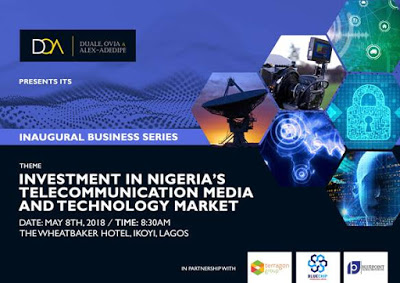
Top Nigerian Law Firm of
Duale, Ovia & Alex-Adedipe (DOA)
is organizing its inaugural Business Breakfast Series on May 8, 2018 at The Wheatbaker
Hotel, Ikoyi, Lagos, Nigeria.

The theme of the Session is “Investment in Nigeria’s Telecommunication,
Media and Technology Market (TMT)
”. According to the Managing Partner of
the Firm, Adeniyi Duale, this year’s Session would focus on the burning issues
in the Financial Technology (Fintech)
space with an opportunity to discuss and review new developments from a global
perspective.

Furthermore, Adeniyi has
stated the session will provide a unique opportunity for Fintech companies to
meet with potential investors to dialogue and listen to various private equity
firms on what forms the basis of their investment criteria in start-ups and
companies seeking growth capital.

The Session will serve as an
elevated medium to share ideas and skills, grow and network while deliberating
on ways to build and identify opportunities that allows Investors or Venture Capitalists
invest in the budding Fintech sector.

The Firm will be partnering
with Terragon Group, Bluechip Technologies Limited and Blue Point Global Resource
Limited for the event. The event is also expected to attract a distinguished
faculty of knowledgeable panelist and resource persons from within and outside
Nigeria.

The Firm has been recognized
in the Telecommunication, Media and Technology sector as well as in the Real
Estate and Construction space having won awards at the Legal Blitz Limited’s
annual ESQ Nigeria Legal Awards 2017.

DOA is a bespoke full-service commercial
law firm in Nigeria providing a wide range of expert legal services to a highly
diversified client base both local and international operating in various
sectors of the economy.

The Firm is noted to have specialist
skills in areas including but not limited to Telecommunication, Media and
Technology, Banking and Finance, Company Secretarial, Capital Market, Energy
and Natural Resources, Litigation and Dispute Resolution, Taxation, Real Estate
and Construction.

According
to the Firm’s Managing Partner “As a Firm, we effect our distinct understanding
and knowledge of the Nigerian market to advise our clients on legal issues. We
also understand the challenge and complexity of doing business in Nigeria,
hence clients have continually relied on our intricate and artful knowledge of
the law and economic realities of Nigeria in providing bespoke legal services
that achieve their respective corporate and business objectives”.

To register for the event click here

Map: View
Directions 
here

When Lawyers Bury the Wig and Gown 1: Big Brother and the LPA | Lotanna Attoh

When Lawyers Bury the Wig and Gown 1: Big Brother and the LPA | Lotanna Attoh


Two
weeks ago, the Big Brother Nigeria reality TV show ended, and one youth (who
may or may not be lazy, depending on how you look at it) has emerged N25
million naira richer. Also newsworthy, but maybe not as much as the Big Brother
finale: the 113 plus Chibok girls still in captivity along with Leah Sharibu;
the Benue people still being killed; Lai Mohammed still being Lai Mohammed;
Senator Dino Melaye doing Jackie Chan-like stunts; thugs casually visiting the
National Assembly; and oh yes, Buhari still remains our president.

Yes,
all those take second place to Big Brother; such is the power of mindless
reality TV shows. Personally, I have never understood what the fascination is
with the Big Brother show, and I never will.

Now
you might be wondering what the correlation is between the topic above and Big
Brother? Well to those who were regular viewers of the show and are lawyers,
such might be obvious; but to others like myself who couldn’t be bothered about
it, but were forced to receive updates and information on it thanks to social
media and the show’s numerous fans, that link might not be so obvious. The link
between the two is none other its ex housemate, Cynthia Nwadiora aka Cee-C. Still
not clear? A little background then.

Cynthia
Nwadiora aka Cee-C is, presumably, a lawyer. That is all the background you
need.

This
article aims to look at the propriety or otherwise of conduct of persons who
are presumably practising lawyers, in relation to the relevant sections of the
Legal Practitioners Act . Our case study on this discourse will be Cee-C.


“Facts”

We
will be working on a set of presumptions. This is solely because of the fact
that I don’t personally know Cee-C, and thus I cannot factually speak about
anything concerning her; inference and presumptions will only be made here.

Our
chief presumption and the foundation of this discourse is that the now ex
Big-Brother housemate is a lawyer. I say presumption because I don’t know for a
fact that she is one, but all the information from social media and news outlet
claim that she is learned. Till it is rebutted, Cynthia Nwadiora aka Cee-C is a
lawyer.

Our
next step now is the question: when was she called to the Nigerian Bar?

Her
year of call will help in achieving the goal of this article: an earlier year
of call will bring about a different analysis from a later one. So, for the
sake of this article, we will presume, again, that she was called sometime
before she entered for the Big Brother reality show. Let’s say some 4 years
before; so, 2014 would be  her year of
call, hypothetically.

Next
is the crucial question: what was Cee-C doing in the ‘4 years’ since she was called
to the Nigerian Bar? Was she a practising lawyer, or was she engaged in some
other  profession? Again, we must presume
here. Let us go with the former supposition, i.e., that she was a practising
lawyer. Let us also presume that she was practising up to the moment before she
got into the Big Brother house.
Now
that we have all our ‘facts’ in place, let us take stock:

Cee-C is a lawyer


Cee-C was called to the Bar in 2014


Cee-C was a practising lawyer before getting in the Big Brother House
Now
let’s look at the law in relation to this topic.

The Law

The
relevant law to this discourse is the Legal Practitioners (LPA) (Amendment) Act
1994, with specificity to its section 12 (2).

Section
12 (2) states that:

“Where
a person whose name is on the roll is judged by the Disciplinary Committee to
be guilty of misconduct not amounting
to infamous conduct, which in the opinion of the Disciplinary Committee is
incompatible with the status of a legal practitioner,
the Disciplinary
Committee may, if it thinks fit give such direction as is authorised by
paragraph (c) (II) or (III) of subsection (1) of this section…”

I
have highlighted the relevant portion of that section to our discussion.

To
my unlearned friends, the above section is simply saying that where the
disciplinary body of our profession finds any lawyer to be guilty of conduct
which they judge to be unbecoming of a legal practitioner, such a lawyer will
be punished either by being suspended from practising law for a period of time,
or by being admonished by the body [section 12 (1)]. Pretty straightforward
right? Alas, like with all things law, it isn’t so, and there are
complications.

To
understand these complications, one must first of all understand the true
meaning of the section. And to do this, reference must be made to subsection
(1) (a) of the same section 12. Section 12 (1) (a) states:

“Where a person who is a member of the legal
profession is judged by the Disciplinary Committee to be guilty of infamous
conduct in any professional respect…”

The
phrase “… infamous conduct in any professional respect” simply
means conduct rendered in a professional capacity, which is at variance with
the rules and norms of the profession; it seeks to ensure that lawyers act
uprightly while rendering their professional services. In the case of NBA v
Alabi
(2006) 14 NWLR (Pt. 1000) 841, the Disciplinary Committee defined the
phrase to mean “infamous conduct in any professional respect is an act or
omission which in the opinion of the Legal Practitioners Disciplinary Committee
is such that will bring the legal profession into disrespect.” In that
case, the lawyer in question failed to remit to his client money given to him
for the client. In another case, Chike v LPDC (2005) 15 NWLR (Pt. 1026)
1, the lawyer misappropriated money given to him for his client. Such was held
to be an infamous conduct in a professional respect. In several other cases,
the Committee ruled against lawyers who acted unscrupulously in their
professional dealings.

Now
that we know that section 12 (1) (a) has to do with the lawyers’s conduct  in their professional capacity, we turn back
to section 12 (2). This section is the direct opposite of section 12 (1) (a).
This is so because its provisions make no reference to conduct in a
“professional respect,” rather the conduct which it seeks to prohibit
is that which “is incompatible with the status of a legal
practitioner.” What would then amount to such conduct? Unfortunately, the
Act does not specify; it leaves that question unanswered and open to one’s
discretion, and there lies the problem. Our case law is also rather lean in
this respect, as most of the disciplinary cases have bordered on conduct in a
professional respect (I found none which touched on conduct incompatible the
status of a legal practitioner.) Despite the dearth of materials on this issue,
I will refer to the textbook, Law In Practice in Nigeria (Professional
Ethics and Skills)
2nd Edition by A. Obi Okoye, for a better understanding
of such conduct as stated under section 12 (2). In pages 384 and 385  under the heading “Conduct not amounting
to infamous conduct, but which is incompatible with the status of a legal
practitioner,” the author lists out certain types of behaviour, that in
his opinion may be held to be conduct incompatible with the status of a legal
practitioner. He mentions: “the use of obscene language by a legal
practitioner in public, habitual drunkenness, fighting in public, seduction of
a client or his wife.”

We
now know the law and its problem; we can now proceed to the last part of this
article.

Cee-C

Recall
our earlier presumptions on Cee-C (stated above) under the heading
“facts,” that she is lawyer and she was a practising one up until she
entered the Big Brother house? Good.

I’m
sure you can now see my destination with all this, but before we arrive there,
let us indulge ourselves in one more presumption. For the sake of this
discourse, let us presume that Cee-C’s conduct in the Big Brother house was terrible
and full of shocking behaviour. In any case, the updates and reports on social
media during the show showed that this was the case. Still, as I didn’t watch
the show, I cannot confirm that.

With
this last presumption and taking into consideration others mentioned, the
question then is: can section 12 (2) of the Legal Practitioners (Amendment) Act
1994 be invoked against Cynthia Nwadiora aka Cee-C?

Can
her conduct in the house be sufficient 
grounds for the Disciplinary Committee to try her, and if found guilty
suspend her from practising law or admonish her? Can Cee -C’s conduct in the
house be held to be conduct which is ‘incompatible with the status of a legal
practitioner?”

Unfortunately,
I don’t have the answers to those questions. So, I will leave them to you and
the LPDC to ponder on.

Needless
to say, it is obvious that section 12 (2) and other sections of the Legal
Practitioners Act need to be reviewed and amended. There is currently a bill before
the National Assembly seeking to replace the existing Act, but I don’t know if
it contains an amendment to that section.

To my
learned friend Cee-C: Not all of us were made to suffer adjournments and the
like… I applaud your hustling spirit. You know what you want, keep chasing
it!
I remain a Minister in the Temple of Justice.

L. Attoh Esq. [2018] All rights reserved.
Photo:
thenationonlineng.net

Sensitizing People About Their Rights – Whose Responsibility Is It? | Judy-Vallery Imasuen

Sensitizing People About Their Rights – Whose Responsibility Is It? | Judy-Vallery Imasuen


A
sight that is so common among Nigerians is that of not knowing what their
rights are. The idea of “fundamental rights” has been so romanticized by the
populace that it is common to hear citizens vaguely bring almost any matter
under it. Therefore it is possible to hear a person who has been denied their
salary or is facing an eviction say that “their fundamental right has been or
is being breached.”

Due
to lack of sensitization, people are unable to distinguish between a
fundamental right, as provided for in Chapter 4 of the Constitution of the
Federal Republic of Nigeria 1999 (as amended)
, and other rights that are
safeguarded by the law and contracts. They do not categorize rights the way it
is done in the legal sector. Most times the general perception is one of
recognizing that there is a problem that needs sorting out.

What
this shows is that Nigerians are not adequately sensitized about what the law
is and how it affects them. Some do not seem to appreciate the importance of
contractual terms and conditions stated in letters addressed to them. They do
not see the importance of seeking clarification on terms they do not understand
before signing documents until it is too late.

They
are not aware of the existence of institutions that can help them. In addition
to this, their distrust in the efficiency of institutions such as the police
force is preventing them from getting the help they need. With this, the
unfortunate cycle of injustice continues everyday.

While
there are some people who are aware that their rights are being breached or are
about to be breached, they do not know the correct institution to go to in
order to have their issues addressed.

For
example, in Lagos State there exists the Domestic
and Sexual Violence Response Team
established with the aim of
eradicating sexual and gender-based violence. It is common for domestic
violence victims to run to a human rights organization first instead of
immediately reporting the matter to the Domestic and Sexual Violence Response
Team.

Although
domestic violence may lead to a violation of one’s fundamental right to life
and right to dignity of human person as provided for in Sections 33 and 34
of the Constitution of the Federal Republic of Nigeria 1999 (as amended)

respectively, an organization such as the Domestic and Sexual Violence Response
Team would be better able to handle such matters effectively.

Various
rights groups have sprung up to address the problems of the masses and render
assistance to them whenever they can. However, what the people do not realize
is that some of their problems could be easily addressed by filing a complaint
at the nearest police station without having to tolerate the injustice done to
them.

The
question then is, who is responsible for sensitizing the people? Sensitization
campaigns are not the responsibility of only a few. It is the responsibility of
all stakeholders who are dedicated to seeing that justice is done, such as
lawyers and rights groups. This is because they are in a position that enables
them to know about the law and explain it using simple terms.

Now
that we have been able to establish who bears the responsibility of sensitizing
the masses about their rights, the next question is how best could we carry out
sensitization campaigns? A good way of tackling this would be to follow the
practices of copywriters in the marketing sector.

In
simple terms, a copywriter writes advertisements that encourage people to take
a particular action such as purchasing an item or signing up to a course.
Before a copywriter writes an advert, they take time to analyze their target
audience to determine where they can be found, their habits, interests and common
problems or “pain points”. They know what medium their audience reacts to best.
Taking this medium into consideration, they craft relatable words that capture
the attention of their audience and achieve their primary aim of selling.

A
similar technique can also be employed in the legal sector to facilitate an
effective sensitization campaign by bringing the law to the masses using media
that they can easily relate with. 

For
a sensitization campaign to be effective, it has to take into consideration the
people it is meant for. The campaign has to be able to convey information using
a medium and language that can be easily consumed. This could take the form of
social media posts and pictures that portray the main point.

An
example of this can be seen in how Venezuela Inteligente, a digital rights
organization, used
social media to promote participation in legislative elections
. Mass
BlackBerry Messenger messages were sent out to encourage the youth to
participate in legislative elections.

If
sensitization campaigns are properly conducted, more people would know that
they can seek help to address their problems and hence would be better equipped
to fight for their rights.


Judy-Vallery
Imasuen

Legal
Practitioner at the Committee for the Defence of Human Rights (CDHR)

NBA Ikot Ekpene Branch honours Paul Usoro SAN

NBA Ikot Ekpene Branch honours Paul Usoro SAN

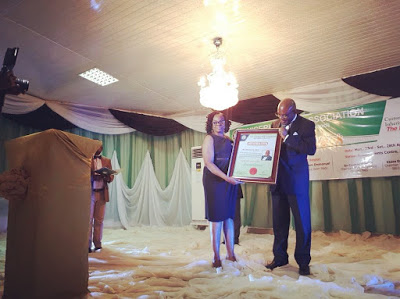
PAUL USORO, SAN IS HONOURED BY HIS HOME BRANCH, IKOT EKPENE BRANCH OF THE NBA AS THE PRINCE OF THE BRANCH, THE 1ST SAN FROM IKOT EKPENE SENATORIAL DISTRICT AND THE 2ND SAN FROM AKWA IBOM STATE.

Mr. Paul Usoro, SAN being presented with a Certificate of Honour  by Hon Justice Joy Unwana (Akwa Ibom State High Court Judge) on behalf of the NBA, Ikot Ekpene Branch. The certificate is in recognition of Mr. Usoro, SAN’s special position as the first and only Lawyer  from the branch that has been elevated to the rank  of Senior Advocate of Nigeria (SAN).

Accessing the Investors’ Protection Fund of the Nigerian Stock Exchange | Adejorin D. Abiona

Accessing the Investors’ Protection Fund of the Nigerian Stock Exchange | Adejorin D. Abiona


The Investors’ Protection Fund of the
Nigerian Stock Exchange (IPF) is a scheme set up by virtue of the provisions of
the Investments and Securities Act due to the activities of capital market
operators which sometimes endanger the interests of investors[i]. The primary aim of the Investors’
Protection Fund is to compensate investors who suffer pecuniary losses
resulting from some circumstances stated in ISA. This article examines the
Investors’ Protection Fund as it relates to investors accessing the said fund.

Administration of the Fund

The Investors’ Protection Fund is
administered by The Board of Trustees of The Nigerian Stock Exchange’s
Investors’ Protection Fund (“The Board”) subject to the regulatory supervision
of the Securities and Exchange Commission (the “Commission”).[ii]

Purpose of the Fund as it Relates to
Investors

The purpose for establishing the investor
protection fund is to protect investors in Capital Market by compensating those
who suffer pecuniary loss arising from any of the following[iii]:

(a) Insolvency, Bankruptcy or Negligence:

The fund shall be used to compensate
investors that suffer any loss arising from insolvency, bankruptcy or
negligence of a dealing member firm of a securities exchange or capital trade
point.

(b) Defalcation:

Defalcation refers a default, act of
embezzling, failure to meet an obligation, misappropriation of trust funds or
money held in any fiduciary capacity and failure to properly account for such
funds[iv]. Investors are protected
against defalcation committed by a dealing member firm or any of its directors,
officers, employees or representatives in relation to securities, money or any
property entrusted to, or received or deemed received by the dealing member
firm in the course of its business as a capital market operator.

(c) Revocation or Cancellation:

The Fund shall also be applied in
compensating persons who suffer pecuniary loss from the revocation or
cancellation of the registration of a capital market operator pursuant to the
provisions of section 38 of Investments and Securities Act which provides for
registration and regulation of capital market operators by the Security and
Exchange commission (SEC)

Who Can Access the Fund?

Every Investor with a dealing member firm of
the Nigerian Stock Exchange (“The Exchange”) who suffers pecuniary loss in any
of the circumstances stated above is entitled to claim compensation from the
investor protection fund.

 Accessing the Fund

a.      Submission
of Claim

A claim for compensation should be made in
the first instance to The Exchange or the IPF with all supporting documents. A
complainant must exhaust The Exchange’s complaint management procedure before
making a claim from the IPF[v].

The claim should be the amount of the actual
pecuniary loss suffered by him including the reasonable cost of disbursement
incidental to the making and proving of his claim less any amount or other
benefits received or receivable by him from any source other than the investor
protection fund in reduction of the loss[vi].

Documents needed in support of a claim[vii]

i.            Copy
of share subscription form

ii.           Contract
Notes

iii.          Receipt
issued by Firm

iv.          Account
Opening Form

v.           Acknowledgement
letter from the firm

vi.          Central
Securities Clearing System (CSCS) transaction history statement

vii.        CSCS
client account statement

viii.       Bank
Statement

ix.          Copy
of Cheque issued/ bank draft

x.           Registrar’s
statement of transaction,

xi.          Shares
allotment letter from registrars

xii.        Copy
of share certificate,

xiii.       Letters
of Administration/ Probate (in the case of an estate)

xiv.       Company
incorporation documents (copy of certificate of incorporation, particulars of
directors statement of share capital).

xv.        Means
of identification e.g. driver’s license, international passport, national
identity card, bankers confirmation etc.

xvi.       Such
other documents evidencing identity and ownership over shares.

Where the claim of an investor is rejected,
such Investor may institute an action to compel payment at the Investments and
Securities Tribunal[viii].

b.      Verification

The Exchange shall verify every claim within
thirty (30) days after its internal process and determine the amount or extent,
if any, to which the claim shall be allowed. Payment shall only be made based
on verified claims in accordance with the Investors’ Protection Fund Rules and
the provisions of the Investments and Securities Act[ix].

c.      Payment

Payment shall be made when it has been
satisfied by evidence that[x]:

i. the investor has a claim against a Dealing
Member;

ii. the investor has duly applied for
settlement of its claim from the Dealing Member;

iii. the Dealing Member is unable to satisfy
the claim within a reasonable period;

iv. the investor has exhausted The Exchange’s
internal complaint resolution procedure;

v. the investor has duly applied for
compensation from the Fund; and

vi. The Exchange has verified the claim.

Amount of Compensation Payable

The maximum compensation payable to an
investor is an amount that is determined by the Board from a written policy
from time to time. The maximum amount payable set by the Board in 2015 is
N400,000 (Four Hundred Thousand Naira) per Claimant[xi].

Where the loss is less than the maximum
amount fixed by the Board at any given time, the investor may be paid the full
amount of the loss, less any amount or value of all monies or other benefits
received or receivable by him from a source other than the Fund in reduction of
the loss[xii].

In addition to any compensation, the investor
is also entitle to interest at the rate of five per cent per annum calculated
from the day upon which a claim arose and continuing until the day upon which
the claim is satisfied[xiii].

Conclusion

Many investors suffer financial losses from
activities such as market manipulation, misrepresentation, false trading and
negligence of some capital market operators and as such, it is quite important
to adequately protect them. The IPF as examined above provides a form of
protection to this Investors and it is commendable that the Nigerian government
subscribes to this.

It is however noteworthy that the IPF is
different from the NIPF. While the IPF compensates aggrieved investors for
losses enumerated above, the SEC established the National Investor Protection
Fund (“NIPF”) in line with its powers under of the ISA [section 13(k)] to
compensate investors whose losses are not covered by the IPF.

References

[i]  Section
197, Investments and Securities Act, 2007.

[ii] Ibid

[iii]
Sections 197, 212, Investments and Securities Act, 2007.

[iv]
Section 315, Investments and Securities Act, 2007; Chief Livinus Ezemegbe v.
The Nigerian Stock Exchange & Anor. 2006 Legalpedia SEC CV80

[v]
The Nigerian Stock Exchange Investors’ Protection Fund: Frequently Asked
Questions retrieved from
http://www.nse.com.ng/regulation-site/becoming-an-investor/FAQs on February 11,
2018; Section 213, Investments and Securities Act, 2007.

[vi]
Section 213 (6), Investments and Securities Act, 2007

[vii]
The Nigerian Stock Exchange Investors’ Protection Fund: Frequently Asked
Questions supra

[viii]
Chief Livinus Ezemegbe v. The Nigerian Stock Exchange & Anor supra

[ix]
Section 213, Investments and Securities Act, 2007.  Paragraph 4.01,
The Nigerian Stock Exchange Investors’ Protection Fund Rules retrieved from
http://www.nse.com.ng/regulation-site on February 11, 2018

[x] Paragraph
4.02, The Nigerian Stock Exchange Investors’ Protection Fund Rules supra

[xi]
NSE Press release dated August 5, 2015 retrieved from
www.nse.com.ng/mediacenter/pressreleases/pages/IPF-Set-to-Compensate-Investors
on February 11, 2018

[xii]
Paragraph 4.04, The Nigerian Stock Exchange Investors’ Protection Fund Rules
supra

[xiii]
Section 213 (7), Investments and Securities Act, 2007


Adejorin David Abiona 
Associate at Tokunbo Orimobi LP 
Source – LinkedIn 
IP ABC: Patenting Your App/Software | Infusion Lawyers

IP ABC: Patenting Your App/Software | Infusion Lawyers

Question of the Week (1) 
We are a tech
company in Nigeria. We have just finished building an app
first of its kind in Africa. Because we have
big plans for this app, we need to protect it. Since the app has an
innovative and intuitive technology, we want patent protection. How do we
go about getting a patent in Nigeria?


Answer 

You want to patent your new and intuitive app
in Nigeria.


In Nigeriaand most countriesapps are eligible for copyright
protection only, not patent.


This is because apps are software programs and software programs are
categorized as literary works under the Nigerian Copyright Act. They are
literary works because software programs are written in computer language
(whether source code or object code). The fact of their being written is what
makes them literary, thus their functionalities are immaterial.

The implication of the position above is that your company cannot
successfully apply for patent at the Trademarks, Patents & Designs Registry
in Nigeria. Patents are granted to protect new scientific and
technological inventions only, not software programs. So while your app may
have “innovative and intuitive” capabilities, the Patents and
Designs Act—which applies to inventions in Nigeria—does not
recognize software programs as subjects of patent.

Note that the only
way your app can be eligible for patent in Nigeria is if the app has any
functional or technical features that is new and inventive since patent
protects technical or functional features in a product or process, not just any
product or process.

But if your app does
not contain this feature, it cannot be patented. At best, it can only be
copyrighted since software is a ‘literary work’ by virtue of being written or
expressed in computer language. (Copyright is not concerned with the functional
or technical feature of your app, if it contains any functional and technical
features.)

Patenting Your Software outside Nigeria

Because you have “big plans” for
your app, you may consider patenting your app in other jurisdictions,
particularly the marketplaces you wish to expand to. In Europe and the United
States for instance, software patents are legally acceptable, but subject to
certain requirements. In Europe, the European Patent Office (EPO)
treat software programs as computer-implemented inventions and requires
that to qualify for patent, the software program or computer-generated
invention must solve a technical problem in a novel and
non-obvious manner
. In the US, patent law does not permit
granting software patent that contains abstract ideas.

To help your company navigate this typically technical software-patent matter,
consult an IP lawyer or law firm.


Best wishes

IP ABC
Image Credit – www.pixabay.com