
Recovery Of Premises: The Law And A Lanldord’s Right to Self Help | Eseoghene Palmer Esq

Recovery Of Premises: The Law And A Lanldord’s Right to Self Help | Eseoghene Palmer Esq

A nightmare commonly shared by
property owners is that of an erring tenant unwilling or unable to pay the rent
as agreed on the due date. This is simply because real estate is as much a business
entity as a commercial bank. Many Landlords cannot resist the need for
self-help at the perception of this would-be-insipient and unfortunate dream.

To be sure the court frowns at a
Self-Help, as seen in Hemmings V. Stoke Poges Gulf Club Ltd
[i],  Scrutton LJ stated clearly that “…when the
grievance complained of is the removal by no more force than is necessary of a
trespasser and his property  from the
premises which the landlord has a right to enter for the purpose, the justification
covers not only the entry but the forcible expulsion which is the object of the
entry and which makes the entry a forcible one”. Lord denning was more decisive
when he reaffirmed the above view in the case of
McPhail v. Persons Unknown[ii]
“if (a tenant) remains in possession (after the expiration of his tenancy)
there is high authority for saying that the owner is not entitled to take the
law into his own hands and remove the tenant by force. He should go to the court
and get an order for possession”. The Nigerian courts pay tribute to this
reasoning. In the case of
Oni v. Dada[iii]
where a tenant breached the terms of his tenancy agreement, his
landlord wrote to him of the determination of the tenancy forthwith and shortly
after, let the premises to a third party who trespassed into the premises. The
court held that the breach of covenant on the part of the tenant did not in any
way justify the rapid trespass in the premises.

Recovery of premises is a
delicate one. Because the law is natured to protect the weakest party in its
bid to do justice. In a recovery of premises matter, the court is seen to weigh
matters so as not to render a tenant suddenly homeless. The weaker party is prima facie the tenant. An act of
self-help usually enrages the court and serves to frustrate the landlord in the
event that such tenant is fully aware of his legal right and applies it at the
slightest infraction.

Usually the rights of a tenant
asides the content of a tenancy agreement, statutorily includes freedom from
encumbrance and quiet possession. Once this statutory rights are challenged
without an order for possession at the palm of the Landlord, it is deemed an
act of self-help.

The standard procedure for
recovery of premises should be followed by all property owners. The following
paragraph will discuss these in detail.

1.      
WRITTEN
AUTHORITY

The Landlord should contact an
attorney who is sound in recovery of premises law, and authorize him in writing
to act on his behalf in the recovery process.

2.      
QUIT NOTICE

Usually, when a tenancy has been
determined either by effluxion of time or expiry of rent or a breach of
covenant or most commonly rent due in arrears, a ‘quit notice’ shall be needed.
A ‘quit notice’ life span is determined by the nature of the tenancy agreement.
The formula used to determine the period of a notice is

a.       Tenancy
at will or weekly tenancy- a week’s notice

b.       Monthly
tenancy – a month’s notice

c.       Quarterly
tenancy- a quarter’s notice (3 months)

d.       Yearly
tenancy- a half year’s notice

 It must be issued by the Landlord Himself or
an authorized agent. A quit notice should be well dated, with the name of the
Landlord, the full description and location of the target property, the name of
the tenant, the date in which the tenant should quit and deliver up possession.
However, it must be noted that a fixed tenancy/tenant, that is, a tenancy that
was already designed to end at a particular time and not simply an annual
agreement subject to renewal, needs no
letter of notice to quit

3.      
NOTICE
OF OWNERS INTENTION TO RECOVER PREMISES

This is a very important notice
and so because without it, no Landlord can bring an action in court for an
order to recover possession. It is pertinent to note that this Notice unlike a
‘Notice to quit’ has a 7-day life span. According to J. A Agaba
[iv]
“it would appear that the use of the phrase ‘the
tenancy shall lapse and the court shall make in order for possession and
arrears of rent
’ used severally in section 13 of the tenancy law (of Lagos)
does not obviate the need for this notices. After the notice of quit has
expired, the notice of the owner’s intention refers to the landlord as the
owner and no more as the landlord because at the time of serving of the 7-day
notice it is deemed in law that by the ‘Notice to quit’ the tenancy has been
further determined.

4.      
CIVIL
PROCESS BY WRIT OR PLAINT FOR REFUSINGTO DELIVER UP POSSESSION

Upon expiration of all the
aforementioned notices, the landlord should be able to go to court to recover
possession by seeking an order of possession from the court- section
16(1) of Rent Control Law of Lagos state and section 10 Recovery of premises
Act, Abuja.
The fact that must be stated in the writ includes:

1.       The
fact that the claimant is entitled to possession of the premises in question

2.       Accurate
description and location of the premises

3.       The
nature of tenancy and rent payable

4.       The
date of expiration

5.       The
fact that notwithstanding of the service of the notices the tenant has refused
to give up possession

6.       The
claim section may contain the arrears of rent and mesne profit due

Certain documents must be
attached:

1.       Evidence
of service of the notices, usually by picture

2.       Duplicate
copies of the notices

5.      
SERVICE
OF COURT PROCESSES TO THE TENANT

the tenant is to be served with
the processes personally by the court sheriff. However, where it appears that
he is trying to evade service, an application can be made to apply a
substituted service process.

In conclusion, a tenant is
protected by law until the landlord can prove that He has done the needful in
evicting the former. The protection supplied to the tenant earns Him the name
of a “Statutory Tenant” the moment the landlord result to court action and
until the order for possession is issued. In other words, aperson becomes
statutory tenant by operation of law the moment his tenancy is determined but
the order for possession has not be handed to the landlord. Some tenant abuse
the leniency of the court by counterclaiming and appealing   until te landlord becomes knocked out by
frustration, this was the sad fact in the case of
Ap V. Owodunni[v]
where a tenant refused to give up possession for 14 years but instead
resulted to sinister ways to frustrate the legal process for eviction. At this
junction it is pertinent to give alternative dispute resolution a chance in
sensitive issues like this. Over the years, the landlord has been observed as becoming the weaker party and must
tread carefully on this issue of repossession. Whereas, Alternative dispute resolution
is fast, seamless and cost effective in the long run. It aims at bringing the
party to a consensus, it could take the form of a win-win format or a win-lose
format at the core, it aims to solve the problem without unnecessary earth
tremors.

Landlord should please consult a
lawyer on matters concerning recovery of possession, and tenants should do the
same.

Eseoghene Palmer Esq is an
Associate with Adedunmade Onibkun & Co, with a flair for property law
and Mediation


[i]
(1920) 1 KB 720
[ii]
1973) 2 Ch 447, 458-9
[iii](1957)
SCNLR 258
[iv] CIVIL
LITIGATION IN NIGERIA BY M.M STANLEY-IDUM & J.A AGABA
[v]
(1991) 8 NWLR (pt. 210) 391

Paul Usoro SAN’s Reflections (PT 6) – Welfare of Young Lawyers

Paul Usoro SAN’s Reflections (PT 6) – Welfare of Young Lawyers

REFLECTIONS 6: WELFARE OF YOUNG LAWYERS AND RELATED ISSUES – PAUL USORO, SAN FCIArb

Related Issues (II): Mentorship
Without intending to downplay or diminish the need for reasonable remuneration and welfare packages for young lawyers, I believe that what young lawyers need the most is mentorship in law practice.

Mentorship, by the way, is not synonymous with pupillage. Pupillage, properly defined, is a mandatory pre-qualification process whereas mentorship is generally voluntary and without any defined and agreed pecuniary compensation for the mentor and/or mentee. Mentorship has no age-at-the-bar limit; it could benefit and be practiced by lawyers, no matter their ages at the Bar. The focus in this piece however is on mentorship for young lawyers. Mentorship requires the mentee to identify a role model in the profession, preferably, a successful practitioner who will guide and advise the mentee on the path to successful legal practice and also the ethics and traditions of the Bar and practice generally.

Most if not all successful practitioners have stories of their climb to the top of the profession, sometimes from rather humble beginnings. These stories, if shared with mentees, would help to dispel the notion that successful practitioners were all or mostly born into success and didn’t have to work for it. Depending on the level of relationship and trust, the mentor may share with the mentee the twist and turns of his personal experiences in the climb to the pinnacle of the profession and also the principles that guided and girded him to success. He could also give the mentee a peep, more importantly, into how he manages his success and the foundations for his remaining successful. Such a mentorship program could assist the mentee in handling difficult real-live legal situations and cases. It also comes in handy in equipping and advising the mentee on how to operate his own law practice and relate with clients and other justice sector stakeholders.

Most times, utmost patience and perseverance may be required of the mentees if the mentorship program must succeed and be rewarding. If the mentor is a busy successful practitioner, the demands on his time would be enormous and, despite his enthusiasm for the program, mentorship may not be in the upper rungs of his scale of priorities. It may also be worth the mentee’s time to study and know the mentor’s work schedule and, in particular, the times when the mentor may be free and/or receptive to calls from the mentee. The meetings between the mentor and the mentee do not have to always be formal settings; informal meetings, away from the office settings, may sometimes be very rewarding and relaxing for both parties.
I must enter a critical caveat here: mentorship programs can open doors for mentees, but they are not designed as door-openers. Some of us mistake mentorship for door-opening opportunities; mentorship is intended to provide practical guidance and advice to the mentee on legal practice, based on the experience and knowledge of the mentor. Introduction of prospective clients to mentees and facilitating the opening of doors isn’t part of mentoring; these may be add-ons benefits and, should not be bundled with the mentorship program. The mentee needs to understand that, the wealth of experience, knowledge and skills that the mentor may be willing to share with and impart to the mentee, if the mentee is patient, hard-working and ready to learn, could open innumerable doors and bring in premium clients for the mentee.
I believe that the NBA should encourage and actively facilitate such mentorship programs. A modified version of such program could involve periodic visits by young lawyers who are practicing in the hinterland to structured Law Firms in the cosmopolitan cities and branches to see and learn, first-hand, law office management and the practice of law in those Law Firms. It would be most beneficial to institutionalize a structured mentorship program for junior colleagues.
Paul Usoro’s reflections on the welfare of young lawyers & related issues

Paul Usoro’s reflections on the welfare of young lawyers & related issues

Related Issues (I): Pupillage
Pupillage has in recent times been mooted as a way of remediating the deplorable welfare packages for most junior lawyers.  The proposal is for junior lawyers to work with senior lawyers for a mandatory period of a year or two before they can establish their own firms if they so decide.  In those mandatory years, the junior lawyers, according to the proposal, would be paid a minimum wage similar to the allowance paid to medical doctors during their residency years.

I see a number of challenges and flaws with and in this proposal.  First, pupillage, as it is practised in the United Kingdom and South Africa is a pre-qualifying process and not a post-qualification requirement.  The focus of pupillage in those countries is to foster practical training for the trainee barristers during the mandatory period of one year that they will be attached to senior lawyers and will have the privilege of learning directly from them.  It is not my understanding that this is what the proponents of pupillage are proposing.

The second challenge, is the expectation that governments, at different levels, will accept to pay a minimum wage to junior qualified lawyers, most of whom may not, during that period of mandatory “pupillage” be working for the various governments and their agencies.  I am sceptical of that prospect given the aversion of our governments to social spending but if it can be swung and the welfare package proves to be reasonable, it would be a great day for the profession and its junior members and the architects of such a success would all deserve tonnes of accolades.  If we are however unsuccessful in getting the various governments to pick up the bills for these junior lawyers’ mandatory “pupillage” program, it is my belief that most law firms will refuse to engage these junior members of the profession based on imposed minimum wage standards; we would, in that event, end up at the starting block of the problem that we are all trying to resolve.  
Even if our various governments accept to pay the fresh lawyers specified welfare packages during their compulsory “pupillage” years, we would, in point of fact, be deferring the current welfare challenges of the young lawyers considering that the mitigating period of mandatory “pupillage” would only last for 2 years at most, and thereafter, the young lawyers would enter the job markets, complete with its present-day vagaries and inadequate remuneration structures.  With that scenario, it is desirable that we work at a sustained and sustainable solution to the welfare challenges of young lawyers, deploying, amongst others, the solutions that I have proffered in the preceding segments of this Series.

But, is pupillage – in its pre-qualification sense – absolutely unrequired in our current training process?  Definitely not.  It could and should be incorporated into our pre-qualification process and used to impart practical training to our trainee lawyers, similar to what obtains in the United Kingdom and South Africa.  This is imperative given the widespread discontent with the standards and quality of practice by some junior members of the profession.  The closest to such pre-qualification pupillage program in Nigeria is the attachment of Nigerian Law School students to law firms for a period of 6 weeks during which period they are expected to be exposed to advocacy in practice and law practice generally.  I’m not sure how rigorous the Law School has been in supervising these attachment students and whether indeed it forms part of the final scores for the Call to Bar of the law students.  I’m not also sure that the current very limited period of the attachment makes as much impact on the law students and actually enables them to learn much and imbibe the best practices of the Bar.  
In addressing these issues, it may be wise for the Nigerian Law School and the NBA to periodically review the attachment processes and tighten the required bolts and loose ends in order to gain the best value therefrom.  Returning to the issue of welfare for junior members of the Bar, it would be helpful if some stipend is recommended for the Law School students during the mandatory attachment period, particularly if the attachment period gets to be extended.  However, such mandated or mandatory stipend must not be confused with the required steps for ameliorating the poor welfare packages for junior lawyers.  For one, the Nigerian Law School students are not lawyers, as at the attachment period, and the welfare of qualified junior lawyers cannot be equated with, measured by or with the standards of the Nigerian Law School students.  In any case, the welfare challenges of junior lawyers which requires urgent attention and relief relates to their Post-Call years and not the pre-Call student period. 
The point here is to develop practical, implementable and sustainable solutions to the welfare challenges of young lawyers.
Paul Usoro SAN calls for collective interest to make the NBA an Institution

Paul Usoro SAN calls for collective interest to make the NBA an Institution

                        Lawyers of various branches of the NBA in Lagos State on Friday evening, 08 June 2018, gathered to hang out with Astute Litigator and Strategist, Paul Usoro, SAN. At the event, called for strategic plans and initiation of reforms to institutionalize the Nigerian Bar Association (“the NBA”).

                                   
Addressing the audience, Paul Usoro, SAN enjoined every lawyer to take interest in the activities and affairs of the NBA for one significant reason. According to him, the NBA has the potential and capability not only to direct the affairs of the profession but of Nigeria as a whole. It is the only association that, if well managed, could change the course of Nigeria’s history provided it has good leadership and is properly run.
An association laden with such potential should ride on the heels of good corporate governance practices to become an institution of repute. The learned silk entrenched that the NBA at the moment is yet to infuse processes and procedures into the system, which are the fundamentals of corporate governance. “I come from a background where I am used to processes and procedures. From the year 2000 and up to date, at any given time, I sit on the boards of a minimum of two companies and sometimes on the boards of up to five companies. One of the things boards do which I want to bring into the NBA is to put processes into the system, which is essence is corporate governance. These fundamental structures must be put in place as these are the basic principles to building an institution.”.
                      
Paul Usoro, SAN added that in building an institution out of the NBA, these processes and procedures must be guided by strategic and sustainable plans. This will bring about transparency as there would be corporate governance principles overriding everything. “The NBA can work towards charting a 10 year or 15-year strategic plan, that everybody buys into. That is what we will collectively do when we get into office. Working out a succession plan is not so difficult and it is not an impossible thing to do. We will also be introducing a succession plan, similar to does inculcated in all institutions, to help sustain our plans. It simply means that certain things will get changed. I have a few ideas with regards to how this can be done”, he explained.
                             
The legal luminary further disclosed that one of such strategic plans is judicial reforms. “One of the ingredients of judicial reform is to ensure that there is a system of electronic recordings in the courts. Even in the NBA of today, we do not have electronic recordings of minutes of meetings and sometimes people contend that what is contained in the minutes is not exactly what happened. All these can be resolved if we have electronic recording systems in place. How can an NBA of 2018 that does not have electronic recordings for its minutes, fight for electronic recordings in the courtrooms? If we have an electronic process in the court rooms, it will speed up the processes and reduce the time the judges have to write long hand which customarily delays the justice that is to be administered”.
Paul Usoro also spoke on one of the primary reason the NBA is set up, which is to promote the rule of law. “The rule of law gets assaulted when you have judges being locked up unjustifiably. The rule of law gets undermined when you have lawyers assaulted. The rule of law gets violated when court rooms are attacked. The rule of law gets degraded when the independence of judges is tampered with. These are things the NBA ought to stand up to. The NBA needs a president with courage to stand up to defend the rule of law”.
Earlier in his welcome address, Martin Ogunleye, immediate past Chairman of the NBA, Lagos Branch disclosed that Paul Usoro is a man that has stood the test of time, and this is a function of his integrity. For him, integrity and experience in corporate governance will indeed make the NBA an institution of repute.
The event which held at the serene Freedom Park in Lagos Island was a relaxing atmosphere, with soulful music. It was well attended by lawyers and members of all 5 branches of the NBA in Lagos State.
2018 NBA ELECTIONS – Scholarly works of Presidential Candidates

2018 NBA ELECTIONS – Scholarly works of Presidential Candidates

This is the last post in our
series on comparisons of the profiles of the 2018 NBA Presidential candidates
and we would be examining the scholarly works and papers delivered by the
candidates as provided in the public profiles which could be found in the
following links;  Mr. Paul
Usoro, SAN, FCIArb
; Prof.
Ernest Ojukwu, SAN
; Mr.
Arthur Obi Okafor, SAN FCIArb
and Mazi
Afam Osigwe, LLM, FCIArb
.

To read all the other
assessments in the series, you may view the 1st, 2nd, 3rd,
4th and 5th post which cover issues such as the backgrounds
of candidates, their contribution to lawyer welfare, their NBA activities and
their contributions to law reforms.

PAUL USORO SAN

Paul has presented several
papers at NBA programs, using the platform to share knowledge with old and
young lawyers. Some of these papers include:  
1. “Good Governance, Corruption and Economic Development: Nigeria’s
Experience and the Journey so Far”. Presented at the Nigerian Bar Association
Kano Branch 2018 Law Week, Kano. 

2. “The Impact of
Legislation, Regulations and Policies on the Ease of Doing Business in
Nigeria”. Delivered at Manufacturers Association of Nigeria, Business Luncheon
for Managing Directors/CEOs, Lagos, April, 2018. 

3. “The Place of Pupillage
and Mentorship in the Future of Legal Practice in Nigeria”. Delivered at the
Nigerian Bar Association, Makurdi Branch 2018 Law Week, Makurdi.  

4. “The Integrity of the Bar
and Bench as a Panacea for Socio-Economic Development of Nigeria” Presented at
the 2018 Ife Bar Law Week, Conference Centre, Obafemi Awolowo University,
Ile-Ife. 

5. “Governance, Regulation
and Compliance: Beyond Rhetorics”. Keynote address at 32nd ICSAN Annual
Conference. 

 6. Keynote Address delivered on 27 October
2017 at the Hackcess Cybersecurity Conference on the Progress of Data Access
and Privacy Laws in the Sub-Region Holding, Lagos.

7. “Telecommunications Law
and Regulations”. Paper presented at the Legal Advisers/Law Officers Course
organized by the Nigerian Institute of Advanced Legal Studies.  

8. “Drafting Commercial
Agreements and Banking Documents: Telecommunications Contracts”. Paper
presented annually from 2003 to Course participants at Nigerian Institute of
Advanced Legal Studies, Lagos Campus.

9. “Frontloading under Akwa
Ibom State High Court (Civil Procedure) Rules 2009”. Lead Presentation at Joint
Workshop by the 3 Nigerian Bar Association Branches (Uyo, Ikot Ekpene and Eket)
in Akwa Ibom State. 

PROF. ERNEST OJUKWU, SAN

1.     Author
and co-author of law books


ARTHUR OBI – OKAFOR

1. Economic Recession in
Nigeria: The Legal Practitioners Survival Strategy.

2. Understanding Appellate
Practice in Nigeria.

3. Enhancing Access to
Justice through Alternative Dispute Resolution.

4. Enhancing Consumer Rights
of Protection Under the Law, Visa- Vis The Impunity of Bills and Charges by
Power, Network and Energy Service Providers in Nigeria… Is the Consumer
Helpless?

5. Opportunity and
Challenges in the Gaming Industry.

6. Strengthening the
Nigerian Legal Framework for the Effective Prosecution of Gender Based
Violence.

7. 21st Century Legal
Profession and its Social Responsibility Paradigm.

8. The Bar: Professional
Ethics in Decline?

MAZI AFAM OSIGWE

Not available on profile
released for public records.

Provisions of the Constitution Alteration Bills signed by President Buhari

Provisions of the Constitution Alteration Bills signed by President Buhari

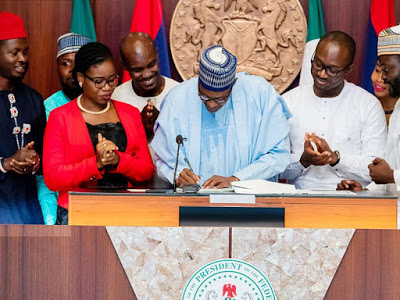
President Buhari on Friday,
8th June, 2018, signed into law the  Constitutional Alteration Bills and with this
comes great news for the Nigerian justice administration system and Nigerian
democracy.

The constitutional amendments
signed by President Buhari include;

1.     Constitution
Alteration Bill, number 16, which disallows any vice-president or deputy
governor who succeeds his boss on account of death or resignation from seeking
2nd term in office.

2.     The
2nd constitutional amendment coming into force is Constitution
Alteration Bill, number 21, which relates to the determination of pre-election
matters. The amendment authorises the conclusion of disputes arising from the
nomination of candidates for elections before the general election and reduces
the date and time of determining pre-election matters to ensure that
pre-election matters in court do not get into the time of the elections and do
not pend thereafter.

3.     The
3rd amendment is the Fourth Alteration Bill which grants autonomy to
Houses of Assembly and the judiciary in the 36 states of the federation.
Meaning state houses of assembly and state judiciaries will have their
budgetary allocations automatically transferred to their accounts by the
Federal Ministry of Finance, rather than being subject to the budgets of the
State Executives.

4.     Alteration
Bill Number 9 was also signed into law by Buhari, the new amendment increases
the number of days that the electoral commission has to conduct election
run-off from seven to 21 days.

This is great news as the Nigerian
constitution can only get better.

The Nigerian Police – A system built on extortion, blackmail and human rights violation | Adedunmade Onibokun

The Nigerian Police – A system built on extortion, blackmail and human rights violation | Adedunmade Onibokun

Amnesty International

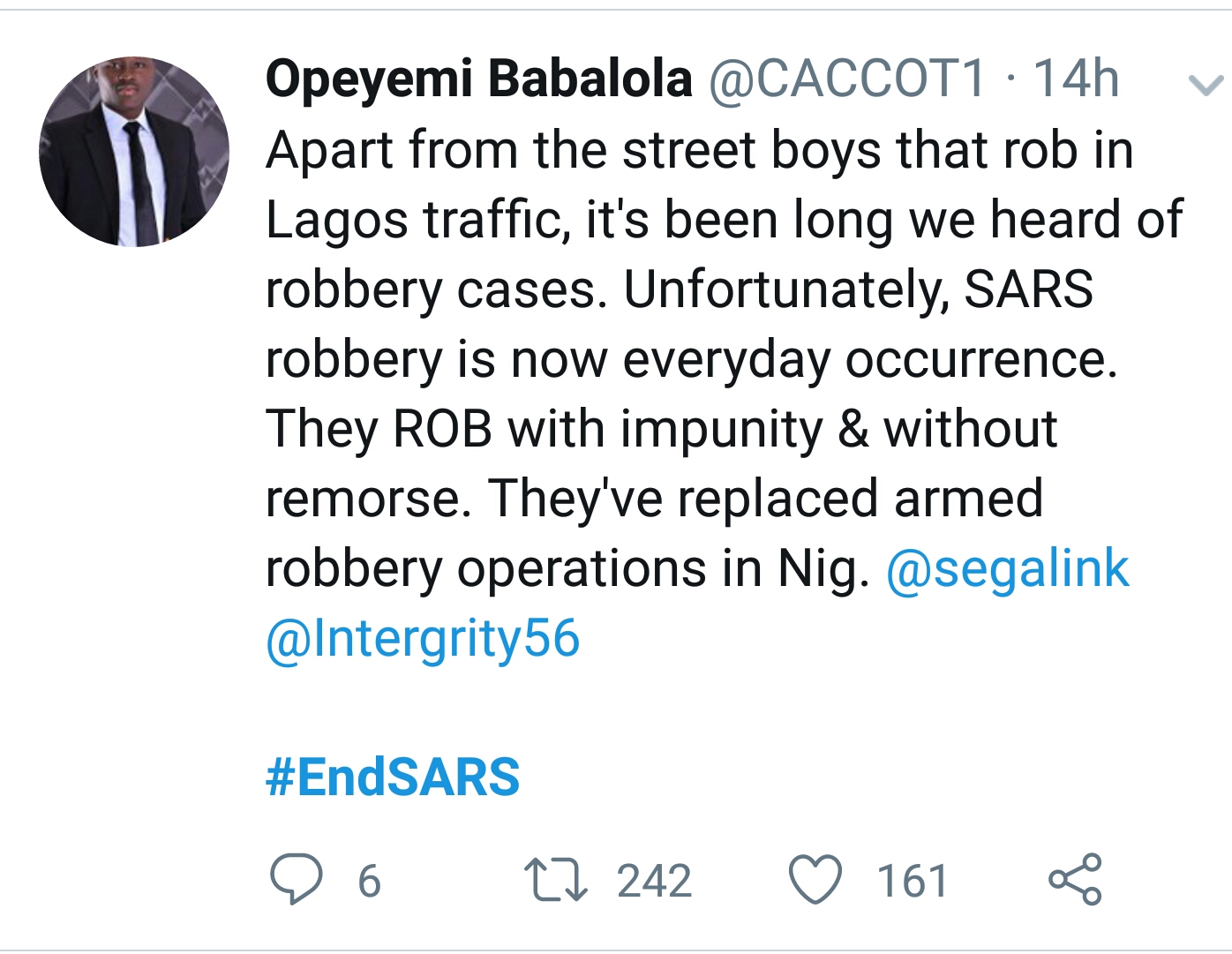
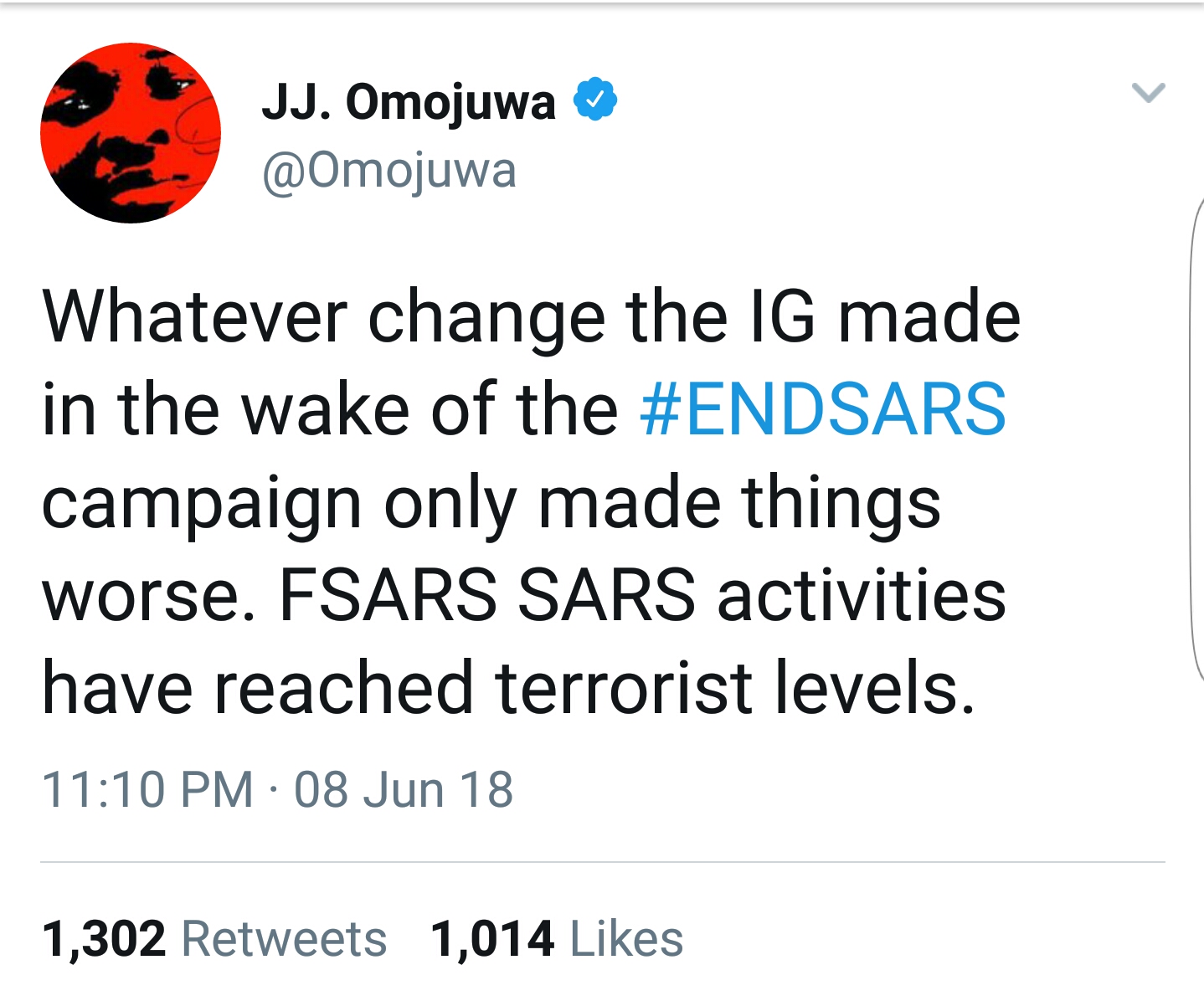
Over the past few months, there has been public
outcry against a unit of the Nigerian Police known as the “Special Anti – Robbery
Squad (SARS)”. With the hashtag #EndSars, many Nigerians have called for the
disbandment of the rogue unit within the police or in the alternative its
complete reform. Albeit, despite the national outcry of the atrocities committed
by these police officers, there seems to be no end to their reign of terror,
extortion and blackmail as on the contrary, they seem to have been emboldened
in their actions and social media is filled with daily reports of the inhuman
treatment metered to Nigerian citizens by these gun wielding extortionist. 


According to Amnesty International, in its 2016 report on SARS, titled; Nigeria: You have signed your death warrant, former detainees told
Amnesty International they had been subjected to horrific torture methods,
including hanging, starvation, beatings, shootings and mock executions, at the
hands of corrupt officers from the feared Special Anti-Robbery Squad (SARS).


The following is an excerpt from Amnesty  – 


“Our research has uncovered a pattern of
ruthless human rights violations where victims are arrested and tortured until
they either make a ‘confession’ or pay officers a bribe to be released.”
Amnesty International has received reports
from lawyers, human rights defenders and journalists and collected testimonies
stating that some police officers in SARS regularly demand bribes, steal and
extort money from criminal suspects and their families.
SARS officers are getting rich through
their brutality. In Nigeria, it seems that torture is a lucrative business,”
said Damian Ugwu.


You may ask yourself if justice would ever
inhibit this land? Or if we have a government?  And you will not be wrong to let your heart
fall to the feeling of despair and frustration resulting from the discovery
that in a nation like ours, one must not look to the government to provide adequate
security, rather one must secure oneself with a high fence and tough vicious
dogs. But how do you protect yourself from the person who is constitutionally
vested with the authority to protect you? how can we be assured that our cries
would lead to the reforms we so desperately seek in the Police force. 


Is SARS ever going to change? The answer is “NO”
and below are the reasons why our cries have not changed anything till now.

1.    
POLICE WELAFARE

The issue of police
welfare has been on the burner for many years and is a factor critically responsible
for the unlawful actions of the police. The Nigerian police is underfunded and
underequipped and most officers have been forced to use extortion as a means of
acquiring extra financial support for themselves and their families. In essence the need for better welfare packages for officers of the police force is of supreme importance. 


Another is recruitment, there are an estimated 350,000 police officers in Nigeria with a mandate to police a population of over 180 Million people. Which leaves an average of 500 citizens to one police officer. However, about 150,000 of these officers are assigned to VIP protection units. Leaving a little over 250,000 police officers to cater to the country. 


The issues of poor remuneration and gear also raise their ugly heads. Every officer should have a bulletproof vest as a standard part of his uniform but we find our officers are sent into duty with minimum forms of body protection or armour. 


The Police have stated that it would take an average budget of 1 Trillion Naira yearly for the Agency to leave up to its mandate, however with the current estimates of the Nigerian budget, the police alone would not be able to come close to such an amount in funding. A solution may however appear in the creation of State Police, an initiative the Nigerian Police has usually approached with caution due to the opportunity it would provide for State Governors to control the said state police for political gain, however, this must not be the reason why Nigerians should be denied the opportunity to give the creation of state police a try. Since the current Nigerian police will not be equipped to police the nation effectively within all territorial lines and also because community policing is now a globally accepted standard. 

2.    
POLICE ADMINISTRATION

The system of the Nigerian
police is one that supports extortion and as long as the system is not
reformed, nothing will come of our cries. According to Wikipedia, there
are over 1300 police stations in Nigeria. Have you ever wondered how these
stations are funded? The DPO of a police station is expected to run the station
and usually this requires some finances. Does the Police Headquarters provide
these finance? NO. 


It can then be assumed that Police Stations are meant to fund themselves and since the
police does not have any business, how are they supposed to carry out their
functions? You guess is as good as mine, they support the stations through
funds they get from the public and how do they get those funds? you may answer that question to the best of your knowledge. Moreso, like the branch of a business, it has been alleged severally
that each police station also has to forward financial returns up the chain,
this therefore allows the police to run like a profit making company and when
there are no goods to sell, how do they make profit?

3.    
POLICE SUPERVISION

On social media and
on other forms of traditional media, the Police Complaints commission has
requested citizens who are unlawfully treated by Police officers to make
official complaints and reports, however, the police complaints commission is
not well equipped to come to the aid of every Nigerian and there have been queries
of unanswered and untreated complaints.


According to the Police Complaints website, in the first quarter of 2017, over 498 complaints were received by the unit, about over 355 were resolved and closed, while over 65 were false/unrelated. This number represents only a limited number of the acts of unlawful treatment that happen daily and it would be interesting to see recent numbers of complaint form the unit.   

From reports, the acts of extortion are openly done at the police stations and is no secret between the
officers. They all know are deemed to know what is going on but are all unwilling to put an end to
it because it serves their purpose. It can be likened to the system of a racket that is
inbuilt into the system and as long as there is no mechanism to check these
human right violations at the police stations, there would be no reprieve to
the common Nigerian as the Police Complaints Unit cannot effectively cover all
1300 police stations within the country.

Truth is usually, the
DPO of every station and every other officer in the station is usually informed of the on-goings at the station and therefore it has become part and parcel of the system.

4.    
POLITICAL WILL

The hard truth is
that in Nigeria, the political class are most concerned about themselves and
not the general populace. And it is only when it concerns them directly that
they seem to seem to swing to action. For instance, in Nigeria courts, trials
could take years to complete but election petitions are the only proceedings
that have a maximum timeline of 180 days. This timeline was put in the law by
politicians who were concerned about the security of their positions but they
have not thought well to introduce time limits to other court proceedings
because they believe it does not concern them as hardly do they fall victims of
these unholy acts of the police.

5.    
THE LACUNA IN THE
CRIMINAL JUSTICE SYSTEM

When a citizen is
beaten and unlawfully arrested by SARS what are the instant remedies available to
such a person. Obviously one cannot make a call as your phones are seized and
crying for help is fruitless as one is usually beaten in the premises of the
police station while other officers turn a blind eye. Such citizen is then
asked to bail oneself after the police officers must have gone through the
phone with the aim of discovering the person’s account balance before they are
then allegedly lead to the bank ATMs to make cash withdrawals.

The only remedy
available to such person upon arrest is usually to be taken to court to prove
his innocence of the crime but that includes being charged to court, being
remanded by the Magistrate while bail is granted or denied and the requirement
of having to instruct a lawyer to defend one’s case in court. Usually these
only work in theory because most Nigerians rather than go before a judge who
has now become as hardened as the wooding bench would rather pay their way out
to secure their freedom.

6.    
LACK OF PENALTY

Until the law says
that all police officers who collect bribes or act unlawfully will be removed
from the force, then no form of reforms will come to the police. When there is
no repercussion for the acts of extortion by the police it emboldens the
officers to continue in the unjust ways. One may ask Yomi Shogunle how many
officers have been dismissed after being found guilty of these acts, more often
they are given lesser penalties like a demotion or a transfer to another unit,
however, they are usually retained in the force to continue their acts of
bitterness towards citizens and only a few are either prosecuted or jailed.

The above stated factors are the problems
faced by Nigerians in the fight to reform the police and without the political
will to reform the police, Nigerians will continue to be victims of the police
and will always be oppressed by the institution whose duty is to protect them.
So how can we turn our faith around and
demand a system that works? By doing the following –
1.     By making police and
especially SARS reforms a KPI for the current political administration. The
only time to get the attention of Nigerian politicians is in an election year
and as we move towards the 2019 elections, the current APC government should be
made to note that if they do not reform the police or disband SARS then there
would be no re-election for them. Trust me, this will work.

2.     By every Nigerian standing
up to challenge unlawful SARS officials anywhere they may be found.  If you see a SARS official around you, make a
recording of all their actions and put same out on social media, let them know
that they are being watched everywhere the go and the people will hold them
accountable.

3.     Sue the police. The
more people are able to enforce their legal rights and obtain judgment against the police for the unlawful acts
they commit, the more government attention will be brought to these despicable
acts.
The above may not be exhaustive in providing
solutions to the acts of human right violations by the police, if you have any way by which we can
promote and achieve police reforms, pls provide same in the comment section below and to end in the famous
words of Senator Dino Melaye “If you speak the truth, you die.
If you lie, you die. I, Dino Melaye has decided to speak
the truth and die”.
Most obliged. 

Adedunmade Onibokun Esq.

Provisions of the Not Too Young To Run Bill | Lealnaija

Provisions of the Not Too Young To Run Bill | Lealnaija

Many young Nigerians have
been elated since arrival of the news that President Buhari signed into law  on May, 31, 2018; what has now been popularly recognized
as the #NotToYoungToRunBill. The significant effect of this new law is that it
reduces the age requirement for persons who wish to contest for political
office thereby giving young Nigerians the opportunity to show they are not too
young to serve and help grow Nigeria either.

Special kudos should also be
given to the Bukola Saraki led National Assembly for also ensuing the law was
passed into barely a year after it was introduced.

However, many have asked how
this law will come to be effected as it contradicts the provisions of the
constitution which provides for the minimum limit of statutory age requirement
for persons who wish to contest political office.

At this point, it is
important to note that the new law signed by President Buhari does not in any way
conflict with the constitution as the Bill itself was a Bill to amend the Nigerian
Constitution as the title of the Bill reads – A BILL FOR AN ACT TO ALTER THE PROVISION OF THE CONSTITUTION OF THE
FEDERAL REPUBLIC OF NIGERIA, 1999 AND FOR OTHER MATTERS CONNECTED THEREWITH
.

 Constitutional Amendments –

The Amendments to the Nigerian
Constitution by the Bill include –

1.      Qualifications
for Membership of National Assembly-  

Section
65 (1) (b) is amended by substituting the provisions with a new provision as
follows:    A person shall be qualified
for election as a member of –

(b)
the House of Representatives, if he is a citizen of Nigeria and has attained
the age of twenty-five years.

2.      Qualifications
for Membership of House of Assembly

Section
106 (b) and (d) is amended by substituting the provisions with new provision as
follows:  A person shall be qualified for
election as a member of a House of Assembly if – 

 (b) he has attained the age of twenty-five
years;

3.     
Qualifications for election as President

Section 131 (b) and (c) is amended by
substituting the provisions with new provisions as follows: A person shall be
qualified for election to the office of the President if –  

(b) he has attained the age of thirty-five
years;

It should however be noted
that some of other aspects of the Bill were however not signed into the amendment.
For instance, the age requirement for a member of the Senate was retained at 35
years as well as those of the Governors. Though, the initial contained a
provision to reduce both requirements to 30 years.

@Legalnaija

2018 NBA ELECTIONS: Corporate Governance & Leadership profiles of the Presidential Candidates.

2018 NBA ELECTIONS: Corporate Governance & Leadership profiles of the Presidential Candidates.

This is the 5th post in our series on the comparison and qualitative assessment of the 2018
NBA, Presidential Candidates. Our comparison has been based on the profiles of
the candidates as provided online, though some of these profiles were silent on
certain criteria which we have used for our comparisons, we have stated same
where applicable.

Please note that you can
view the complete profiles of all the Presidential candidates, you may find
same via this links;  Mr. Paul
Usoro, SAN, FCIArb
; Prof.
Ernest Ojukwu, SAN
; Mr.
Arthur Obi Okafor, SAN FCIArb
and Mazi
Afam Osigwe, LLM, FCIArb
.

Our first post examined the Background
of the Candidates; the second examined their contributions to lawyers welfare
and law reforms; the third had a look at their respective NBA
Activities
; while the fourth examined their Advocacy
and Practice Skills.

The choice of the most preferred
candidate to lead the Bar is critical to national development and also to the
welfare of legal practitioners. Such member of the Bar must be the best man for
the job. Therefore, study carefully our comparisons of the profiles of these
aspirants and pick the best man to lead the Nigerian Bar Association.

You may also download the
full report here.

Corporate
Governance & Leadership


PAUL USORO, SAN        

1.         Paul at various times, served on the Boards of several
blue-chip companies including:

a.         Premium Pensions Ltd,

b.         CR Services (Credit Bureau) Plc (representing Zenith Bank
Plc),

c.         Nigerian Bulk Electricity Trading Plc,

d.         Boards of PZ Cussons Plc,

e.         Airtel Networks Limited,

f.          Marina Securities Ltd,

g.         Access Bank Plc, one of Nigeria’s leading banks.

2.         Paul is a pioneer director of Airtel Nigeria Limited,
Nigeria’s leading mobile telephone company, having been appointed to the
Company’s Board in 2001, then known as Econet Wireless Networks Limited; the
company has over the years undergone major ownership and structural changes
prior to being acquired by Bharti Airtel of India in 2010.  Paul was the only pioneer director of the
company that survived the several changes in ownership of the company until his
resignation in February 2018.

3. Chairmanship of Boards
and Critical Board Committees

Exposure in the boardroom as
chair of key committees refined Paul’s skills on essential development and
growth factors for successful organizations with focus on corporate governance,
strategic thinking and financial accountability. Paul’s robust leadership
experience in the boardroom are listed hereunder:

a.         Chairman, Board of Marina Securities Limited.

b.         Chairman, Access Bank Plc Board Remuneration Committee. 

c.         Chairman, Access Bank Plc Board Governance & Nomination
Committee.

d.         Chairman, PZ Cussons People & Governance Committee of
the Board.

e.         Member, Access Bank Plc Board Audit Committee,

f.          Member, Access Bank Plc Risk Management Committee

g.         Member, Access Bank Board Risk Credit and Finance Committee.

h.         Past Chairman, Airtel Board Audit Committee.

i.          Past Chairman, Premium Pensions Limited Board Audit
Committee.

j.          Past Chairman, Nigerian Bulk Electricity Trading Plc Board
Audit Committee.

4. On 22nd February 2018,
Paul was awarded the Corporate Governance Rating System (GCRS) “Rating
Certificate” by the Board of the Nigerian Stock Exchange and The Convention on
Business Integrity. The award of the Rating Certificates was in recognition of
Paul’s excellent scores in the Fiduciary Awareness Certification Test (FACT) of
the CGRS administered to directors of Access bank as part of the CGRS
certification exercise in Nigeria.

 5. The leadership and membership of corporate
board committees gives Paul the opportunity to implement skills acquired in the
executive trainings he has attended over the years some of which are listed
below:

a.         Making Corporate Boards More Effective, Harvard Business
School, Boston, USA (November 2014)

b.         Audit Committees in a new Era of Governance, Harvard
Business School, Boston, USA (July 2013)

c.         Leadership Best Practices, Harvard Business School, Boston,
USA

d.         Finance for Executives Program at the Fontainebleau Campus
of INSEAD, France (April 2017)

e.         Finance and Accounting for the Nonfinancial Executive,
Columbia Business School in New York, USA (March 2018)

6. President, Law Society,
University of Ife. Even at a young age, Paul contested for and won the
Presidency of the Law Society of the then University of Ife, (now OAU) becoming
the first student from Nigeria’s ethnic minorities as at that time to occupy
such office.


PROF. ERNEST OJUKWU, SAN          

1.         Chairman, Chartered Institute of Arbitrators, Asaba (2011 –
Present)

2.         President, University of Calabar Alumni Association, Onitsha
Chapter (2003 – Present).

3.         Member, Defunct Idemili Local Govt. Town Planning Authority,
Anambra State 1995.

4.         Member, Idemili South Local Government Town Planning
Authority, Anambra State.

5.         An Assessor with the Delta State Multi-Door Court House for
listing Arbitrators, Mediators and Conciliators.

6.         Author and co-Author of Law Books. 


ARTHUR OBI-OKAFOR, SAN

1.         Chairman, Chartered Institute of Arbitrators, Asaba (2011 –
Present)

2.         President, University of Calabar Alumni Association, Onitsha
Chapter (2003 – Present).

3.         Member, Defunct Idemili Local Govt. Town Planning Authority,
Anambra State 1995.

4.         Member, Idemili South Local Government Town Planning
Authority, Anambra State.

5.         An Assessor with the Delta State Multi-Door Court House for
listing Arbitrators, Mediators and Conciliators.

MAZI AFAM OSIGWE   

1.         Chairman of NBA Abuja Branch, December 2010 to December
2012.

2.         Editor-In-Chief of the Unity Voice (the monthly newsletter
of NBA Abuja) from 2011-2013.

3.         He is also the Company Secretary/ Legal Adviser of many
companies.