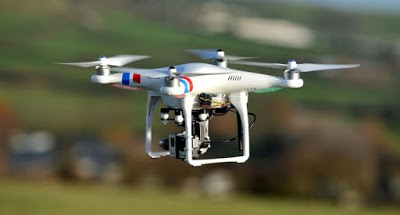
Random Musings On The Use Of Drones In Nigeria | Toju Dottie

Random Musings On The Use Of Drones In Nigeria | Toju Dottie

More than ever, an in-depth and intricate
study of the law is absolutely necessary given the rapid technological
advancements being made around the world. The most recent wave that has hit
Nigeria is the use of drones.

With
the Christmas and New years holidays just recently observed, I attended quite a
number of events hosted by friends. In the course of attending these events, I
noticed the use of these peculiar-flying objects (which I have now come to know
as drones) used by photographers to record and capture moments. 


Being
a lawyer, I started wondering (some of these scenarios are a bit stretched but
realistic) the likely legal issues that may arise with the improper use of this
new technology. A few came to mind. 

Find
below:

Invasion
of Privacy / Confidentiality:  The use of camera fitted
drones
to film people  in certain situations or
companies in business meetings where they believe or expect to have privacy.
For example, a woman sun bathing in her backyard or people in a business
meeting on company’s property strategizing- discussing certain confidential
information as it relates to the business. Such  footage (video or
photograph) if shared online can release trade secrets to competitors and
ultimately violate one’s right to privacy.

 There
is currently no comprehensive Privacy Act in Nigeria that sets out detailed
provisions on the protection of the privacy of individuals and citizens, safe
for section 37 of the Nigerian Constitution (1999) which provides that “the
privacy of citizens, their homes, correspondence, telephone conversations and
telegraphic communications is hereby guaranteed and protected” 

There is also no guideline that
set outs the use of drones for recreational purposes; so it appears that there
is no functional framework to balance the use of drones and the right to
privacy.

An
aggrieved party, in this instance might in the meantime make use of the
Tortious Liability of Trespass and Nuisance. A trespass is any physical
intrusion upon property owned by another. When considering these issues in the
context of intrusions into airspace, the plaintiff must prove unwarranted
interference with his land arising from intentional or negligent entry -in this
case causing an object to intrude into the plaintiff’s airspace.

Nuisance
is based on a property owner’s right to use and enjoy the land. A plaintiff in
this regard must show that the object in airspace interfered with the use and
enjoyment of his land and that the interference was unreasonable.

Copyright
Issues: This occurs where a photographer( under pressure to please his
client) hires a third party drone operator to take aerial photographs of the
event and the third party operator uploads the pictures online to advertise his
aerial photography services.

 In
such a scenario, given the automatic ownership nature of
copyrights, questions will arise as to who in fact owns copyright in the
photographs or videos that have been captured. Infringement issues may also
arise by using works from the footage captured by a person not the owner of the
drones.

Patent
& Design Issues- I will speak in this context in reference to the Nigerian
Patent & Design registry. Usually protection for an invention such as the
drone will be in functionality and shape of the drone. In Nigeria, Patent and
Design examiners do not actually carry out the examination as to the substance
of the application. Therefore, in an instance where there are two applications
for drones, the patent examiner will approve both applications in respect of
functionality (Patent) and Design (Shape) as the registry staff are not trained
or experienced to examine a patent in respect of patentability or conformity
with the law; thereby making patent granted under this system weak. This
in itself, does not encourage creativity and innovation as manufacturers will
not put in the work or make proper research (as obtains in other jurisdiction)
to ensure that the equipment is improved as any patent /design application
brought is not thoroughly examined but granted patent.

Cyber
– Security: Drones are controlled my wifi radio signals; hence making it
vulnerable to being manipulated by the operator who has access to the drone
wifi network. Therefore the drone might be used in hacking, making
unlawful interception and signal manipulation during flights all resulting to
breach in security in cyber space.

 Terror
Attacks-.Following the aforementioned cyber security issue, drones may be
used to carry and disseminate bombs in public; thereby being used as an
instrument to cause terror and mass destruction.

In
conclusion, I strongly recommend a meticulous look at our laws, regulatory
bodies vis a vis this new technology to adequately balance these innovations
and the new problems it possesses.

Disclaimer:
This article is only intended to provide general information on subject matter
and does not itself create a client /attorney relationship between the reader and
the author. Specialist legal advice should be sought about the readers
specific case.

Toju Dottie

Senior Associate & Consultant

George Ikoli & Okagbue

Source: Linkedin

Brand protection – why you should not purchase counterfeit luxury goods | Davidson Oturu LL.M

Brand protection – why you should not purchase counterfeit luxury goods | Davidson Oturu LL.M


The 2018 World Cup is scheduled to come up in
June 2018. The Golden State Warriors and the Cleveland Cavaliers are playing
the NBA Playoff Finals in June 2018. Roland Garros, the French Open, is also
taking place in the same month. Due to these significant sporting events, there
has been an upsurge in the sale of jerseys and sporting kits worn by athletes
and teams that are participating in the sporting fiestas. 


Sponsors
of sporting kits are also not left out from participating in these events; it
is reported that the English national team secured a sponsorship deal from Nike
that is valued at £400m.[1] However, due to the pricey nature of most of the
luxury items such as Gucci, Nike, Adidas and Calvin Klein, amongst others,
there is the tendency for counterfeiters to manufacture counterfeit goods and
sell them to the public who unwittingly purchase them. Statistics from the
Organisation for Economic Co-operation and Development (OECD) shows that
Ray-Ban, Rolex, and Louis Vuitton are the most copied brands worldwide with
Nike being the most counterfeited brand globally. Websites have also sprung up
that specialize in the sale of counterfeit goods and consumers have encouraged
their trade by patronizing these inferior rip-offs. 

A
classical case is the Nigerian football jersey which is being sold through Nike
vendors for $90. However, the knockoffs and counterfeit jerseys that have
proliferated the market are being sold for as little as $5[2]

What are counterfeit goods?

Counterfeits are
goods made or sold under another’s brand name or trademark without the brand
owner’s authorization. It can be a form of trademark infringement or passing
off (depending on if the trademark is registered) as the manufacturers of the
counterfeit goods sells or passes off similar looking goods bearing the
trademark or brand of the original brand owner. 

A
trademark will be deemed to have been infringed where a person, other than the
proprietor or owner of the mark, uses an identical trademark so nearly
resembling the registered trademark as to be likely to deceive or cause
confusion in the course of trade in relation to goods in respect of which it is
registered[3]. All that the owner of the trademark would be
required to show is that the trademark has been registered. 

However,
where the trademark is unregistered, the counterfeiter will still be liable for
passing off his goods as that of the owner of the trademark/brand. The owner of
the brand would however have to show that there is an already established
goodwill and reputation attached to the brand. 

How valuable are counterfeits?

It
is estimated that the production of counterfeit goods has grown by over 10,000%
over the last two decades. A study by the International Chamber of Commerce (ICC) estimated
that the global value of all counterfeit goods reaches over $650
billion every year.
The same study projected that by 2015 the
upper bound of the global value of counterfeit and pirated goods was $1.77
trillion,
a number that is roughly equal to the GDP of Brazil
and represents over 2 % of the world’s total economic output in 2014[4]. In 2016 alone, the U.S. government seized $1.38
billion in counterfeit goods across various industries[5]. The United Arab Emirates has also had its
fair share of counterfeits as it is reported that in 2016, the Department of
Economic Development (DED) in Dubai seized 67.7 million counterfeit items
amounting to Dh1.16 billion. Also in 2017, the Anti-Economic Crimes department
of Dubai Police handled 243 cases involving commercial fraud and piracy – worth
Dh28, 882,985, including cases involving 719,134 counterfeit products[6].

Recent
statistics from The Economist shows that
counterfeit products make up 5 to 7% of world trade[7]. As at 2014, it was said to have cost an estimated
2.5 million jobs worldwide[8]. Clearly, counterfeiting of goods appears to be a
lucrative business for the counterfeiters. 

What to do where a brand is
being counterfeited

Civil remedies

The
likelihood that consumers will be confused by the goods, which is the standard
of trademark infringement, is evident in counterfeiting as the counterfeiter’s
primary purpose is to confuse or dupe consumers.

Thus
although there is no statutory civil remedy provided for counterfeiting under
Nigerian law, the owner of a brand can institute an action at the Federal High
Court for trademark infringement. 

Where
the trademark is unregistered in Nigeria, the owner of the brand can bring an
action for passing off which can be instituted at the High Court.

Where
a brand owner is successful in a civil action, he can get orders of injunction
restraining further acts of infringements, delivery of infringing articles and
items as well as accounts for profits, costs and damages.

Criminal remedies

With
regards to criminal remedies, the brand owner can report the counterfeiting to
the government authorities and actions can be brought under the Merchandise
Marks Act[9] and/or the Trade Malpractices (Miscellaneous
Offences) Act.[10]

Section
3 of the Merchandise Marks Act provides that every person who forges any trade
mark, falsely applies to goods any trade mark or any marks so nearly resembling
a trade mark as to be calculated to deceive or applies any false trade
description to goods is guilty of an offence.

Furthermore,
anyone who sells or has in his possession for sale or any purpose of trade or
manufacture, any goods or things to which any forged trade mark or false trade
description is applied, or to which any trade mark or mark so nearly resembling
a trade mark as to be calculated to deceive is falsely applied is also guilty
of an offence except if he can prove that he acted innocently or had no cause
to suspect the genuineness of the trademark. 

Where
the counterfeiter or the seller of the counterfeit goods is found guilty under
the Merchandise Marks Act, he will be sentenced to a term of 2 years or a fine
or both imprisonment and a fine.  The Merchandise Marks Act also
prescribes imprisonment for 6 months or a fine of N100 upon summary
conviction by a Magistrate. In both cases, the offenders are liable to forfeit
all chattel, articles or instruments used in committing the offences.

Regulatory bodies

The
brand owner may also lay complaints before regulatory agencies such as the
Nigeria Customs Service (NCS) and the Standards Organisation of Nigeria (SON).
Although Nigeria does not presently have a customs recordal system, brand
owners can petition the Comptroller General of the NCS and request for the
organization’s involvement with regards to the prevention of the importation of
counterfeit goods at the ports and borders. Where there are reasonable grounds
to suspect that anything is liable to forfeiture, the NCS can seize and detain
such counterfeit goods immediately upon entry into the Nigerian ports or
borders.

On
the other hand, the SON is the statutory body
vested with the responsibility of standardising and regulating the quality of
all products that are to be used in Nigeria. It has a set of guidelines for
exports to Nigeria called the Standards Organization of Nigeria Conformity
Assessment Programme (SONCAP). SONCAP is used to verify products exported to
Nigeria except those that appear on the Excluded Product List.

A
brand owner who has information about the counterfeiting of his product may
make a complaint at the SON office. SON may then conduct an investigation and
depending on the outcome, it may carry out a raid to confiscate the counterfeit
products. 

Conclusion

Part
of what fuels counterfeiting is the fact that consumers tend to view buying a
counterfeited luxury good or jersey as being harmless and a good bargain. But
consider this: counterfeits wreak havoc on the economy and cause other
financial turmoil for businesses such as theft of intellectual property rights,
low turnover, stolen know-how, lost jobs, wrongful lawsuits caused by
counterfeited products and price hikes. 

While
the brand owners and security agencies continue to find ways to stop
counterfeiters from profiting from sale of counterfeited goods, the consumers
have their own part to play: do not buy that counterfeit!

For extensive information on
brand protection and intellectual property rights, you may contact the author
of this article at doturu@aelex.com
.

[1]Football
Association secures new £400m England kit deal (The Guardian, 13 December 2016

[2] Nigeria World
Cup kit sells out in minutes as fakes flood Lagos markets (CNN)

[3] Section 5(2) of
the Trademarks Act

[4] Counterfeiting
& Piracy (BASCAP) (International Chamber of Commerce) <
https://iccwbo.org/global-issues-trends/bascap-counterfeiting-piracy/>

[6]Dubai Police
handle counterfeit cases worth Dh29m in 2017 (Khaleej Times)

[7] Knock-offs catch
on (The Economist

[8]Crackdown on
counterfeiting (International Organisation for Standardisation)

[9] Chapter M10 Laws
of the Federation of Nigeria 2004

[10] Chapter T12
Laws of the Federation of Nigeria 2004

Davidson Oturu
LL.M

Partner at
Aelex/IP, Franchising & Brand Protection | Corporate & Commercial | Dispute Resolution

Cybersquatting –How To Protect Your Domain Name/Website From Cybersquatters In Nigeria | Davidson Oturu LL.M

Cybersquatting –How To Protect Your Domain Name/Website From Cybersquatters In Nigeria | Davidson Oturu LL.M

Domain Name

A domain name is a unique name that an
individual or organization chooses in order to identify his/its website. Every
website has its own domain name which comprises of a registered Internet
Protocol (IP) address. Example of domain names for some popular websites
include “facebook.com” and “mondaq.com”.

A domain name is required to have a word
(Second-Level Name) and a suffix (Top Level Domain Name). For example, with the
domain name mondaq.com, “mondaq” is the Second-Level Name and the
suffix, “.com”, is the Top Level Domain (TLD).


The Internet Corporation for Assigned Names
and Numbers (ICANN) recognizes the following Top Level Domains:

·        infrastructure
top-level domain
 (ARPA)

·        generic
top-level domains
 (gTLD)

·        restricted
generic top-level domains
 (grTLD)

·        sponsored
top-level domains
 (sTLD)

·        country
code top-level domains (ccTLD)

·        test
top-level domains
 (tTLD)

However, TLDs are generally categorised as
generic Top Level Domains (gTLDs) and Country-Code Top Level Domain (ccTLDs).
Thus a person may choose to register his domain name in any number of existing
TLDs.

What is cybersquatting?

There are a number of definitions of the
term, cybersquatting. The term is derived from “squatting” which is the act of
occupying an abandoned or unoccupied space or building that the squatter does
not own, rent, or otherwise have permission to use.

One author defines cybersquatting as “when a
person other than the owner of a well-known trademark registers
that trademark as an Internet domain name and then attempts to profit from it
either by ransoming the domain name back to the trademark owner or by using the
domain name to divert business from the trademark owner to the owner of the
domain name”[1].

ICANN defines it as “generally bad faith
registration of another’s trademark in a domain name[2],”The Nigerian Cybercrimes (Prohibition, Prevention, Etc)
Act 2015 (Cybercrimes Act) also defines it as a crime committed where a person
intentionally makes use of a name, business name, trademark, domain name
or other word or phrase registered, owned or in use by any person on the
internet or any other computer network, without authority or right, and for the
purpose of interfering with their use by the owner, registrant or legitimate
prior user”.[3]

In summary, cybersquatting can be said to
refer to illegal domain name use or registration. It can have different
variations and can arise where in bad faith, a person steals a domain name in
order to profit from the goodwill of someone else’s trademark or company name
which could lead to an increase in patronage and website visits by unsuspecting
consumers. It can also arise where a person registers the domain name that
he has no affiliation with so that he can eventually sell it to the rightful
owner of the trademark.

Another variation of cybersquatting is
“typosquatting” which is also called Uniform Resource
Locator (URL) hijacking. This is a form of brandjacking which
relies on typographical errors made by Internet users when inputting
website address into a web browser.
Thus in a situation where a user accidentally enters an incorrect URL or
website address, they may be led to the cyber squatters website. The registered
domain will have advertisements of services similar to the original one so that
the user who made a typing mistake will click on these links, generating
revenue for the bogus domain name.

Examples of some cases involving
typosquatting include the following:

1)     Google v
Goggle

In 2011, Google filed a complaint with
National Arbitration forum and successfully got
“Goggle.com”, “Goggle.net”, and “Goggle.org”,
which were considered phishing/fraud sites, taken down. [4]

2)     YouTube v.
YouTube.Ph and Youube

Google also filed complaints with the World
Intellectual Property (WIPO) over the use of the domain names “YouTube.ph” and
“youube .com”. While the former was a domain name that led to another website,
VideoRewardCentral.com[5], the latter was a proxy site loaded with advertisement
link[6] 

3)     Air France
and British Airways

International airlines such as Air France and
British Airways have also been victims of cybersquatting. www.airfrance.com has
been typosquatted by www.arifrance.com, which diverted users to a website
peddling discount travel. Similarly, www.britishairways.com has been
typosquatted by www.british-air-ways.com[7]


Remedies

A victim of cybersquatting in Nigeria has
three options which are as follows:

Institute an action under the provisions of the
Cybercrimes Act 2015;

use an international arbitration system
created by ICANN; or

institute proceedings at the Nigeria Internet
Registration Association 

These remedies are considered below.


INSTITUTE AN ACTION UNDER THE
PROVISIONS OF THE CYBERCRIMES ACT 2015

It is interesting to note that the
Cybercrimes Act criminalises cybersquatting which means that it is an offence
punishable under the law. Section 25 of the Cybercrimes Act provides that a
person who commits the crime of cybersquatting is liable to be punished with
imprisonment of a maximum term of two years or a fine of not more than N5,000,000 (five million Naira) or to both the
fine and imprisonment.

It is also noteworthy that the owner of the
domain name that is being subjected to cybersquatting does not need to prove
that he owns a trademark that is related to the domain name. What he would be
required to do would be to show that he has a registered name, domain name or
business name. Where the complainant is successful in court, an order can be
made directing the cybersquatter to relinquish such registered name, mark,
trademark, domain name, or other word or phrase to the complainant who would be
deemed to be the rightful owner of the domain name.

USE AN INTERNATIONAL ARBITRATION
SYSTEM CREATED BY ICANN

In order to address all disputes which may
arise regarding the ownership of a domain name, ICANN in conjunction with WIPO
developed the Uniform Dispute Resolution Policy (“UDRP”) and
the UDRP Rules.

Through the UDRP, ICANN and WIPO have
provided a mechanism for rapid, cheap and reasonable resolution of domain name
conflicts by avoiding the traditional court system for disputes and allowing
cases to be brought to a set of bodies that determine domain name disputes.The
UDRP (https://www.icann.org/udrp/udrp-policy24oct99.htm) sets out
the framework for the resolution of disputes between a domain name registrant
and a third party (i.e., a party other than the registrar) over the abusive
registration and use of an Internet domain name. The essence of the UDRP is to
enable anyone in the world file a domain name complaint concerning a gTLD or
ccTLD using the UDRP Administrative Procedure. Thus any owner of a domain name
that believes that someone is cybersquatting can file a complaint before any
ICANN accredited dispute resolution service provider.

This is made possible due to the fact
that ICANN accredited registrars that are authorised to
register names in the gTLDs and the ccTLDs that have adopted the Policy and agreed to abide
by and implement the UDRP Rules for those domains. Furthermore, any person or
entity wishing to register a domain name in the gTLDs in question is required
to consent to the terms and conditions of the UDRP. According to the ICANN
policy, a domain registrant must agree to be bound by the UDRP — they cannot
get a domain name without agreeing to this. To effect this, a Dispute
Resolution Policy clause is usually inserted in the domain name registration
agreement stating that if the registration of the domain name is challenged by
a third party, the registrant shall be subject to the provisions specified in
the UDRP.

Paragraph 4(a) of the UDRP Rules provides
that a complainant must be able to establish the following:

  • the domain name registered by the domain name registrant is identical or confusingly similar to a trademark or service mark in which the complainant has rights; 
  • the domain name registrant has no rights or legitimate interests in respect of the domain name in question; and
  • the domain name has been registered and is being used in bad faith.

The effect of the foregoing is that only the
owner of an already existing trademark or service mark can bring an action
under the UDRP. Consequently, where a domain name offends the provisions of the
UDRP Policy, there will be no financial remedy/award but the offending domain
name would be cancelled and/or transferred in favour of the person who
possesses the registered trademark. 

Where the cybersquatter refuses to attend the
UDRP proceedings, the ICANN arbitration forum will hear the complaint in his
absence and examine the proof presented by the complainant. If it is deemed
satisfactory, a decision can be entered in favour of the complainant.


PROCEEDINGS AT NiRA

The Nigeria Internet Registration
Association (NiRA) is the Nigerian registry for .ng Internet Domain Names
and it maintains the database of names registered in the .ng ccTLD. If a
domain name owner’s website is a ccTLD and ends with ‘.ng’, he may choose to
institute his action at the NiRA which has its own set of rules and policies
known as the NIRA Dispute Resolution Policy (NDRP).

The NDRP (https://www.nira.org.ng/images/Policies/NIRA DISPUTE RESOLUTION
POLICY.pdf
) is similar to the UDRP and sets out the framework for
the resolution of ccTLD domain name disputes. Paragraph 4a of the NDRP Rules is
identical to paragraph 4b of the UDRP Rules and it sets out the conditions
that the complainant must satisfy before he can have a decision in his favour.
Where the complainant is successful, he can have the cybersquatter’s domain
name transferred to him and/or cancelled by the NDRP.


Conclusion

Cybersquatting remains a threat to legitimate
business owners in the evolving digital age. Statistics show that WIPO handled
a record-high of 3,074 cybersquatting disputes in 2017 under the UDRP with
three industries (banking and finance, fashion, and internet and IT) accounting
for nearly one-third of all disputes. [8]


With cybersquatting now regarded as a crime
in Nigeria, it is possible that would-be cybersquatters may be discouraged from
participating in this nefarious activity. However, with there being no record
of any arrest and prosecution, only time will tell if the law will be effective
or if it may be better for a complainant to rely on the UDRP procedure which
has proven to be effective in several jurisdictions.

For extensive information on cybersquatting,
domain names, and intellectual property rights, you may contact the author of
this article at doturu@aelex.com.

[1] Cornell Law School “Legal Information Institute”
Cybersquatting

[3] Section 25(1) of the Cybercrimes Act

[4] Domain Name Wire “Google wants to take down Goggle”

[5]Domain Name Wire “Scammy Surveys Will Bring Renewed Attention
to Cybersquatting”

[6]The Economic Times, “Your spelling errors can help
typosquatters make big bucks” <//economictimes.indiatimes.com/articleshow/5884936.cms?utm_source=contentofinterest&utm_medium=text&utm_campaign=cppst>

[7] Findlaw, “Protecting Your Intellectual Property from
Domain Name Typosquatters”

[8]World Intellectual Property Organization WIPO
Cybersquatting Cases Reach New Record in 2017
http://www.wipo.int/pressroom/en/articles/2018/article_0001.html


Partner at Aelex/IP, Franchising & Brand
Protection | Corporate & Commercial | Dispute Resolution

Paul Usoro On The Police Assault on  Mr. Karimu Olakunle

Paul Usoro On The Police Assault on Mr. Karimu Olakunle

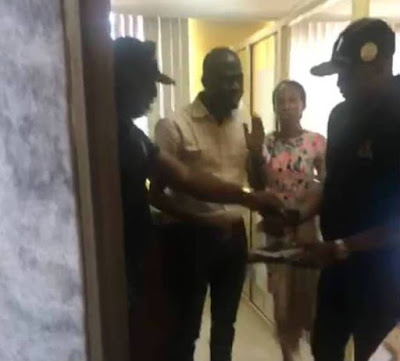
I watched with complete horror the online video clip of the assault and battery of our colleague, Mr. Karimu Olakunle by uniformed men of the Nigeria Police Force.  I would not here descend into the facts and circumstances that brought the policemen into the Law Offices of Mr. Yomi Olawore where Mr. Olakunle was battered; those facts are the subject of on-going competent investigations sequel to the report of the incident by Mr. Olakunle to the Lagos NBA Branch Disciplinary and Ethics Committee.  We would in the circumstance await the findings of that Committee.
Whatever the circumstances were that took the policemen to Mr. Olawore’s office, however, it is wholly unacceptable and a complete abuse of the police uniform for the policemen to have so brutally descended on an unarmed Mr. Olakunle, acivilian and a lawyer, who posed no threat whatsoever to them. This brutality by policemen is totally condemnable and I am gratified that the Executives of the Lagos NBA Branch, led by the Chairman, Mr. Chukwuka Ikwuazom, will be making a formal report of the incident to the Lagos State Commissioner of Police and demanding immediate suspension of the policemen.  

The incident speaks volumes on the training of our policemen in dealing with unarmed civilians.  It also speaks to the increasing sense of invincibility by our law enforcement officers.  It could only be such a sense of invincibility that would propel uniformed policemen to act with such impunityagainst Mr. Olakunle.  And, perhaps, they have good cause to feel that way seeing as none of the previous acts of assault and brutality against our colleagues has, to my knowledge, earned the erring personnel any disciplinary action by the Nigeria Police Force.  
It is time that we put a stop to this serial abuse of lawyers and unarmed civilians by law enforcement agents using Mr. Olakunle’s incident as a peg.  We must follow through the Nigeria Police Force’s disciplinary processes against those erring policemen and ensure that it serves as a warning on other law enforcement agents like them that such conduct remains intolerable and unacceptable to the Nigerian BarAssociation.
Paul Usoro, SAN FCIArb
I stand to unify the NBA sections, Fora, etc – Paul Usoro, SAN

I stand to unify the NBA sections, Fora, etc – Paul Usoro, SAN

Leading NBA Presidential candidate, Paul Usoro was interviewed by THISDAY recently, where a range of questions were discussed. Kindly find below the full interview..

The elections are here at last. Given the challenges complained about in the last elections which eventually resulted in litigation which are still ongoing, do you have confidence in universal suffrage by electronic voting?

PU: I don’t think the problem is with electronic voting or universal suffrage per se.  The problem generally with elections is more often than not with its conduct and not the mode – electronic or manual.  The problem also is not with suffrage – universal or restricted; it is, as I’ve already stated, with the conduct of the election.  What I’m interested in knowing right now is the planned mechanics or processes for the NBA elections; it’s the mechanics that will tell us whether it’s tamper-proof or susceptible to manipulations and/or human errors.  Until we hear from the ECNBA on these processes and mechanics, I cannot really comment on the integrity of the electronic voting.

Some have said that what the NBA needs right now, is a bridge-builder President, who has the potential to unify the Bar. For some, the huge challenge is finding a unifying factor for the young, the old, Inner Bar, Outer Bar, Ethnic fora, the Sections and various interest groups within the Bar. Would you say you possess that capacity?

PU: I believe that I possess those unifying qualities, but I’ll leave you and the members of the Bar to make the final judgment.  I’ll give you pointers though.  First, I’m from the East, had my education in the West, spent (and I’m still spending) some of my practice years in the North and I’m Lagos-based.  Second, I keep my friends and my relationships over the years have not been and are not transactional; they also cut across all divides, be they regional, religious, age, fora, gender, Inner/Outer Bar, Post-Call years, etc. etc.  Third, I’m about the only candidate that has not engaged in smear campaign against other persons (be they candidates or not) and I do not permit my supporters to engage in such unwholesome conducts.  Fourth, at no time have I preached or encouraged hate and/or the divisive attitude of “us against them” – and you can see these in my Reflections publications – unlike some others who pitch young lawyers against the older ones or the Outer Bar against the Inner Bar etc. etc.  Fifth, my Reflections series and my consultations have always been issues-based without denigrating any section of the Bar and I consciously and constantly build bridges both in my conduct and utterances.  Sixth, the unifying force which I represent, shows in my support base which in various States, Branches and groups has brought together and unified persons who hitherto were in opposing camps and they’re all now working and focused on the unified objective of re-energizing the NBA with me as the President.  Seventh, I’m very accessible to everyone by phone, e-mail, text messages, social media handles, WhatsApp and even direct contacts.  These are non-exhaustive facts that should help you decide the question of whether or not I’m a unifying force for good in the Bar.  

Many have expressed the belief that, ethnic fora are no longer needed in NBA elections, for any office, and that adoption is no longer a useful factor. But, the Eastern Bar Forum of which you are a member, was said to have adopted a candidate. Despite this, other candidates from the same East are still in the race. What would be the effect of this, on the election?

PU: I should perhaps point out from the outset that I’m not a member of the Eastern Bar Forum.  I’m not registered with the Forum and I’m not alone in that regard; a large number of lawyers of Eastern Nigeria extraction are not registered with the Forum.  In my understanding, ethnic fora are voluntary pressure groups that do not attract mandatory or compulsory membership.  They cannot therefore attain or be elevated to the status of being the sole voice or even the voice for any ethnic group or region within the NBA.  Ethnic fora are also not recognized by the NBA Constitution and cannot claim to speak on behalf of the Association or any part thereof.  Adoption of candidates by ethnic fora is perhaps useful as a publicity or campaign stunt for the candidates but ought not to be the basis for excluding any qualified candidate from contesting for an NBA office.  Ultimately, being a professional body, election should be based on the qualification of the candidates and their merit for the office and not on adoption by some ethnic fora, more so, in an election by universal suffrage and with electronic voting.

In a nutshell, what is your manifesto? Why do you think Nigerian Lawyers should entrust you with their Association for the next two years? How realisable are these programmes within your two-year tenure, if you are voted in?

PU: This is a question that does not lend itself to a “nutshell” response.  I’ll therefore focus here on the reform programs which I believe the NBA, at the national level, urgently needs if it must retain its relevance not only in the larger society but even to its members.  The reforms that I propose will, at the minimum, achieve four significant goals, to wit, (a) enhance efficiency in the operations and running of the Association; (b) engender confidence and trust amongst its members (or, as some would say, win back the confidence and trust of its members); (c) transform the NBA into a sustainable institution; and (d) increase the moral equity of the NBA to enable it effectively influence required reforms in the justice subsector and remain a respected watchdog of the society.  The breadth and scope of these reforms are quite wide and extensive, and I’ve been writing on them in My Reflections series which is circulated by e-mail to all lawyers.  Are these reforms achievable in a 2-year span?  I believe so.  Take for instance, running a transparent administration in all respects, including but not limited to procurement and finance policies and management.  Nothing stops us right from Day One, from producing Quarterly Financial Statements with qualitative information that would educate and inform the members on and of the financial health of the Association.  Nothing also stops us from instituting and institutionalizing transparent internal control processes and mechanisms including procurement processes, from Day One which would plug possible leakages in the system and also, illustratively, ensure that members get their stamps and seals soon after payment rather than the current practice of late deliveries of these mandatory items to lawyers. The reforms would not be the only things I would do in the two-year timeframe of my Presidency, if voted in, but it would be a cornerstone program and would impact the NBA’s ability to reform the justice subsector and the larger Nigerian society.  I must also mention that, from Day One, we’ll introduce and enforce diversity and inclusion of every group, gender and demographics including our colleagues living with disability, in all aspects of the NBA. I will also focus on programs that will enhance the income-earning capacity of our members e.g. protecting the legal market for Nigerian lawyers and regulating the practice of law in Nigeria by non-Nigerian lawyers in a manner that does not prejudice and shut out the Nigerian lawyers.  These are issues that I’ve touched upon in My Reflections series which I request that you read and follow.

What edge would you say that you have, over the other candidates?

PU: First, I am independent and economically secure and can do the right thing for and by the Association without being hobbled by interests’ considerations, be they economic, political, social or ethnic or by godfatherism.  Second, I speak of reforms including governance principles because I’m the candidate with the most experience in and exposure to these principles given my consistent membership of boards of companies from about 2000 to date (no less than 2 simultaneous board seats in major companies at any given time within that timeframe).  Third, I’m the only one that has articulated my vision in clear, defined and auditable terms in my Reflections series which underlies my understanding of the issues and competence/ability to implement them.  Fourth, I’m the only one who has led by example in terms of attending to the welfare of my younger colleagues in the Firm that I founded in 1985 and where I work up-to-date, with more than 40 lawyers currently working in the establishment.  Fifth, I also have a record amongst the candidates of having mentored the highest number of successful legal practitioners/professionals, benchmarked from their Post-Call years.

What would be your first steps and actions, within six months of assumption of office, if you are elected?

PU: In terms of reforms, I’ve already answered this question (see my response to the question on my manifesto): I would commence the reform programs from Day One.   The reform program, it must be remembered, is vast, diverse and huge, all on its own.  I would also revive and institutionalize monthly Press briefings on the state of the Nigerian nation.  In promoting the rule of law, I would take steps to (a) protect the independence of the judiciary and prevent misguided and unwarranted assault on the institution and judicial officers; and (b) stop the assault of lawyers while carrying out their professional duties by law enforcement agents.  I will also start the process of securing the Nigerian legal market for the Nigerian lawyers and the regulation of the market-access in a manner that benefits the Nigerian practitioner and does not prejudice him.

The NBA used to be very vocal on national issues, and even in the military era, it was the voice of the masses and downtrodden. But, over the years, it has gradually lost its voice. How do you intend to bring back those noble ideals, for which the Bar was once noted for? There are so many issues that the NBA should have taken a strong stand on, but not much was heard from the Association, for instance, Government’s seeming lack of respect for the rule of law and disobedience of court orders,  incessant killings by the Herdsmen, invasion  of the Rivers State High Court by political hoodlums and so on.++++++++

PU: I agree entirely that the NBA’s voice must be heard at all times and its voice must be strong and loud on national issues, amongst others.  I’ve already committed to have monthly press briefings on national issues as the President of the NBA and will also discuss these issues at the meetings of the National Executive Committee of the Association.  Institutionalizing the monthly press briefing practice will greatly enhance the standing of the Bar particularly when that practice is coupled with the reforms that I propose, and which would greatly enhance our moral standing to speak on national issues.

What plans do you have, to improve the lot of the young Lawyers?

PU: There is no single solution to the welfare challenges of the young lawyers.  I’ve proffered a range of solutions in my Reflections series and these include institutionalized mentorship program (which, from my standpoint, is even more beneficial to the young lawyers than immediate short-term pecuniary welfare programs), enhancing the income-earning capacity of lawyers generally in a manner that translates, amongst others, into better welfare packages for junior lawyers, encouraging senior lawyers to remunerate their junior colleagues well and enlightening them on the benefits that accrue therefrom having at all times led by example in that regard.  More importantly, I’ll constantly take in suggestions and advice from all relevant stakeholders in that regard (senior lawyers as well as young lawyers), process such advice and suggestions and find ways to implement those ones that are workable. To summarize, I’ll promote a global but diversified approach in addressing the challenges of young lawyers which go beyond welfare issues and include capacity building and growth opportunities.

What role will you play in sanitising the legal profession?

PU: I will promote the review of the regulatory provisions and processes for the legal profession in a manner that meets the international best standards both in content and procedures. The review would also address misconducts that may not have been previously captured in our regulatory processes, but which may now be current and inimical to good standing.  I would also work to strengthen and make robust the disciplinary processes for the legal profession sufficient to meet the challenges of our modern era.

We wish you the best of luck in the election.

Growing impact of the Pastoral Confict In Nigeria | SBM Intelligence

Growing impact of the Pastoral Confict In Nigeria | SBM Intelligence

Currently, large parts of the Middle Belt region in central Nigeria– a broad expanse of territory that roughly incorporates the states of Adamawa, Bauchi, Benue, Kwara, Kogi, Nasarawa, Niger, Plateau, Taraba, the Federal Capital Territory, as well as the southern parts of Borno, Gombe, Kebbi, Kaduna and Yobe – is experiencing an escalaton of the confict between herders and farmers that has lef hundreds of citiens dead, including women and children, and the destructon of property. These bouts of violence have also displaced thousands of people and led to the proliferaton of emergency camps for Internally Displaced Persons (refugees) in certain areas. 

The escalaton of violence is indicatve of the failure of federal authorites to fnd a lastng soluton to the Pastoral Confict. A discernible cyclical patern in the violence also indicates that communites are increasingly resortng to self-help in the wake of the federal government’s failure to guarantee the security of life and property. The resort to vigilantsm has had devastatng consequences.
The Human Toll
According to an Amnesty Internatonal report of atacks in Central Nigeria, a total of 1,105 people have been killed from 1 January, 2018 to 30 June, 2018. Benue recorded the highest number of killings in the region with 378 fatalites, closely followed by Plateau with 340 victms. Many in the Middle Belt see the confict as a pogrom of ethnic cleansing designed to dispossess them of their lands. These sentments found voice in the call on 24 March, 2018, by a former Minister of Defence, Lt. Gen. Theophilus Y. Danjuma who called on Nigerians to rise and defend themselves against ethnic cleansing while speaking at the convocaton ceremony of the Taraba State University. He also accused Nigeria’s military of colluding with the killers. He was heavily critcised for his statement and accused of trying to incite violence.1
Some states such as Benue and Taraba have sought to tackle the situaton by passing laws that prohibit free range graiing. These laws have been critcised by Federal law enforcement chiefs as well as the Minister of Defence. The Inspector General of Police has advised State Governors to establish catle ranches before the implementaton of ant-graiing laws to avert confict between the farmers and herdsmen.
It is our considered view that the various state governments should not give in to pressure from the Federal Government, heads of security agencies and the Miyet Allah Catle Breeders Associaton (MACBAN), a self- styled advocate for herder rights, to halt the full implementaton of the ant-graiing Laws and forceful allocaton of state land to herdsmen, as this will not address many of the root causes of the crisis in the region. So far most of the state governors that have allocated state land are governors that are members of the All Progressive Congress (APC). These laws were passed by state Houses of Assembly and signed into law by their respectve governors and are deserving of observance by residents of the afected states.
Structural Consideratons
The Pastoral Confict is rooted in a key historical contradicton occasioned in part by the colonial super architecture foisted on the territories that later became an independent Nigeria. In the search for suitable pastures and water for their catle, herdsmen, usually, but not solely of the Fulani stock from the far northern parts of the country (and in some cases, other parts of West Africa) move their herds, mostly on foot, through diferent states across the country ofen stopping at designated points to drop of some of their stock at catle markets, in a bid to fulfl the beef supply needs of local consumers.
Resistance from many local communites and farm owners to these movements led to the Graiing Reserve Act of 1964 which provided for graiing areas and paths for the passage of livestock. Following the collapse of the First Republic, the paths set out in 1964’s Act slowly went into disuse and development set in. Areas previously designated as graiing routes were given out for real estate development, road constructon, and industries, forcing the herdsmen away from these areas and deeper into farmland and homestead communites. In some cases, an accommodaton was reached afer incidents of encroachment, but as confict prone areas multplied in the wider Sahel region of northern and central Africa bordering our northern borders, and controls have goten laxer, there has been a proliferaton of weapons, making it easier for people to resort to violence as a form of dispute resoluton.
While the nature of the pastoral confict is rooted in economic consideratons, the discussion around the issues arising from it has been coloured with ethno-religious and security conceptons. Some form of justce through the properly consttuted insttutons of the state has to be performed on all perpetrators of violence and that is probably the hardest part of solving the whole confict as politcal will sufcient to address these concerns has to be brought to bear. The situaton has lef the Middle Belt devastated on a scale not seen since the Tiv riots of the early 1960s.
The federal government must apprehend and prosecute perpetrators of violence and adequately capacitate the security agencies for the maintenance of law and order in at-risk areas.
Another viable way of mitgatng the crisis is creatng and revitalising graiing reserves, especially within willing states. The establishment of graiing reserves will provide the opportunity for practsing a more limited form of pastoralism and is therefore a pathway towards a more setled form of animal husbandry. It is important for optcs however, that since animal rearing is a business, lands to be acquired for such graiing reserves must be purchased from willing sellers. Confscatng lands from unwilling donors under laws such as the Land Use Act will only worsen the feelings of one-sidedness, and may store up more problems for the future. Over the years, the victms of these clashes have been shoved aside, with no form of compensaton for the lives and propertes lost. It is therefore imperatve to create special tribunals to investgate, prosecute and punish ofenders, as well as set up efectve mechanisms to compensate victms.
The Federal Government should as a mater of urgency review Nigeria’s border security architecture and provide all necessary technical and human capital enhancements. Immigraton operatves must be trained to be identfy and stop illegal intruders from entering Nigeria. It is worth notng that the human, social and politcal factors which have come to a violent head in the country’s central states are hardly unique to Nigeria. Thus, all herders must be encouraged to obtain the Internatonal Transhumance Certfcate as provided by the ECOWAS Protocol on Transhumance, of which Nigeria is a signatory.
Economic Impact
One of the immediate impacts of violence of this nature is the drop in number of children who are able to go to school. The Benue government has said that of those who have been displaced by this crisis, 102,000 are children who are now out of school in the state. This number does not capture cases which have gone unreported or unaccounted for. At the height of the Boko Haram crisis, it was reported that over 70 per cent of school age children in Borno state dropped out of school as a result of the violence. Comparing what is happening in the Middle Belt now to that provides an indicator of the impact of this kind of recurring violence on the educaton of children. While this may not have immediate economic impact, the longer term impact on the country is huge.
A second economic impact of the violence is the loss of agricultural producton that would ordinarily come from the region. While the North West geopolitcal ione (key parts of which are engulfed in a diferent variant of recurring violence) is the home of Nigeria’s grain producton, the Middle Belt is the primary producton centre for roots, tubers, fruits, vegetables and various spices. Much of these have not been farmed since the crisis began to escalate in 2013. A second agricultural loss is that of the catle which are lost to retaliatory atacks, as well as rustling that the prevailing environment of violence enables. It is ironic that this government which made agriculture a key part of its economic strategy is unable to deal decisively with the insecurity that is afectng a key agricultural producton region. In additon, the country’s catle industry is underperforming. Commerce always provides an incentve for all involved to improve the value provided. If farmers know some of theirproducts could be traded with the herdsmen for acceptable payment, there would be the incentve to provide quality feeds to the herders’ catle, improving the meat and milk yields. The second level to this is the fact that the violence decimates communites that would have been potental markets for the herders. Many communites in the afected regions have empted out, creatng a refugee situaton that has increased the strain on already stressed government cofers. Perhaps an even bigger threat is to Nigeria’s overall food security. Catle is the primary source of animal protein for most Nigerians and the security breakdown threatens the ability to get them to their markets in the south. Most of the communites in the Middle Belt where the atacks have taken place are in the much vaunted ‘food basket’ of the country. The Middle Belt has traditonally been one of Nigeria’s most agriculturally productve regions.
Pre-1960, the Britsh maintained a catle tax across all of Northern Nigeria, which the Abubakar Tafawa Balewa government removed shortly afer independence. The Fulani are the largest owners of livestock accountng for about 90 per cent of the country’s stock, which contributes 1.58 per cent of the natonal GDP according to a 2017 Natonal Bureau of Statstcs report. According to a 2014 analysis, the Nigerian catle market generates only US$6.8 billion of a potental US$20 billion per year due to local strife and the inability of the government to fully recognise the industry and incorporate it into the formal sector. In an economy in need of diversifcaton, encouraging private investors to tap into the opportunites ofered by the catle industry has to be encouraged. Whether they actually do will depend on how well the government addresses the fast spiralling security situaton.
A third economic impact is the increase in both monetary, as well as lost tme travelling through the region. Most trips through the region must be done in daylight and under armed guard. A disturbing tactc of retaliatory atacks by the people indigenous to the region is to stop commercial buses and kill any of the travellers suspected to be Fulani. The result is that travellers and transport companies have become more wary of travelling through the region, stfing supply, and increasing business costs.
SB Morgen
Suite 12, Alausa Shopping Centre, Obafemi Awolowo Way, Ikeja, Lagos info@sbmintel.com

https://www.vanguardngr.com/2018/03/defend-will-die-ty-danjuma-tells-nigerians/
Nigerian Senate Proposes Legislation On State Police

Nigerian Senate Proposes Legislation On State Police

The Nigerisn Senate has resolved to direct its constitutional review committee to put in place the machinery to amend the Constitution to allow for the creation of State Police. The Senate also mandated that the Police Reform Bill be passed within the next two weeks.

This was following a debate on the killings across the nation and in Plateau State, following a Point of Order raised by Senator Jonah Jang.
Find below the Senate President’s comments:
“We have talked about the fact that whether these killings were initial acts of aggression or reprisal attacks, it is clear that either way, it is totally unacceptable and we must condemn it in all totality.
“Secondly, these are acts of criminality and we should not encourage any other colouration to it, be it religious or otherwise. This is criminality. And as such, we have a role to ensure that we must address this criminality to see how we can fight it.
“We have spoken on many platforms and made suggestions to the Executive on the fact that there is a need for an urgent review of the security architecture of the nation.
“The debate in the British House of Lords also raises this point: “How do we think this would affect our economy and investments if we continue to have this kind of security climate?” We must see this issue of insecurity not only from the point of view that there is danger and insecurity, but there is also a danger to our economy — especially if we want to grow our economy.
“We as the Senate must come up with our own actions. We do not need to flog the issue. We have told the Executive what to do. We have told them privately and we have told them publicly. However, on our own part, we must decide on what we need to do.
“There are a few issues that have come up for discussion:
  1. We have had the address from the Security Chiefs that came here on the issue of coordination to strengthen the nation’s security.
  2. We have had the Report from the Senate Security Summit that we need to consider and deal with.
  3. Now, we have the comments from the Deputy Senate President on the issue of State Police.
  4. We have a Bill on Police reform that is due for Second Reading and passage.
  5. We have the Composition of the Police Service Commission, which is listed on today’s Order Paper.
“These are things that are within our control. Let us play our own part to address the issues that we have control over.”
The Senate, there after resolved to:
1. Condemn the terrorist attacks, mass killings and displacement of the people and occupation of their central homes and farmlands;
2. Urge the Executive to overhaul the security architecture of the country and to put in place a better security action plan and decisively tackle violent terror attacks threatening the continuous existence of communities in the North Central geopolitical zone and indeed Nigeria;
3. Urge the Executive arm of the government to undertake the rehabilitation of displaced persons and reconstruction of communities in Plateau North, South and Central Senatorial Districts so they can return to their homes and farmlands;
4. Urge the Executive arm of government to apprehend and persecute all perpetrators and sponsors of violence, no matter how highly placed they are;
5. Direct its constitutional review committee to put in machinery to amend the constitution to allow for the creation of State Police;
6. Fast-track the passage of the Peace and Reconciliation Bill;
7. Call on security agencies to stop involving themselves in the politics of the nation; and
8. Mandate that the Peace and Reconciliation Bill, Police Reform Bill be passed within the next two weeks and the Constitution Review Committee within the next two weeks should bring forward the amendment for State and Community Policing.
Paul Usoro SAN thrills Lawyers In Benin

Paul Usoro SAN thrills Lawyers In Benin

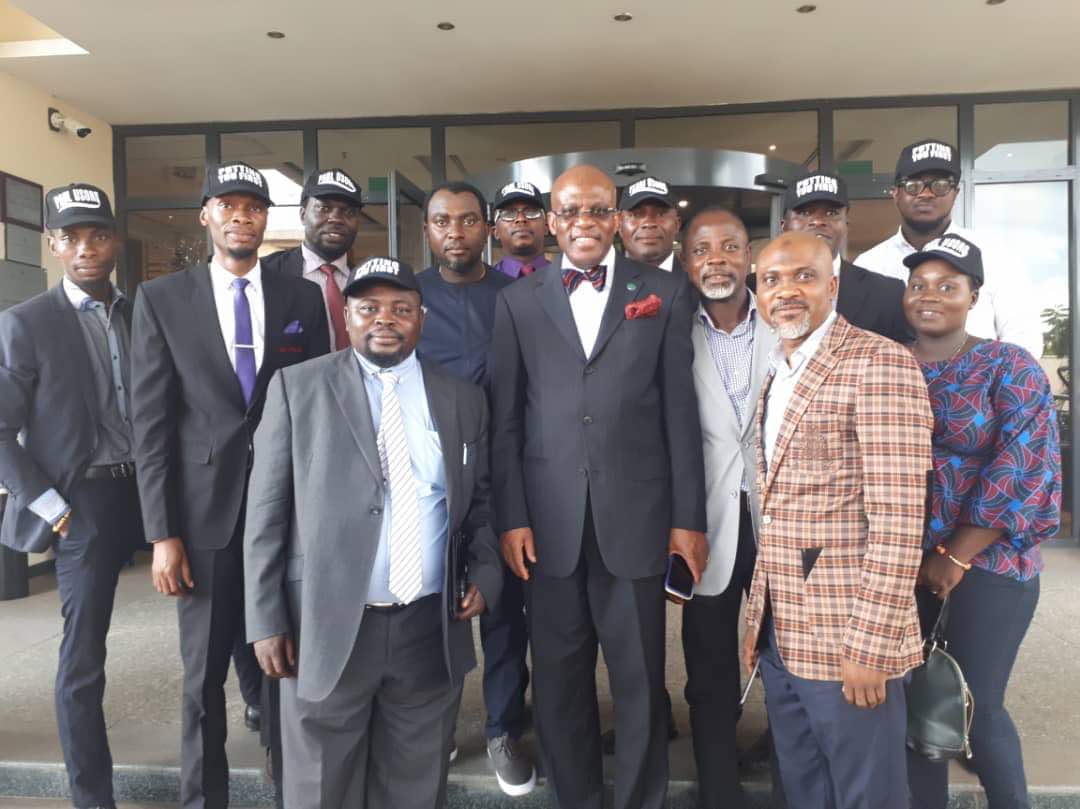
The learned silk, Paul Usoro, SAN was in Benin City recently to meet with members of the Nigerian Bar Association (NBA), Benin Branch. It was a well-attended hangout session where knowledge was shared and new friendships were established.

The learned silk particularly highlighted his plans for the Nigerian Bar Association laying emphasis on his campaign slogan, PUTTING YOU FIRST, which is the core focus of his plans for the NBA.
To view more of his thoughts and plans for the NBA, read through his reflection series as posted on his Facebook page.
REFLECTIONS: INSTITUTIONAL REFORMS FOR THE NBA (3) –  PAUL USORO, SAN FCIArb

REFLECTIONS: INSTITUTIONAL REFORMS FOR THE NBA (3) – PAUL USORO, SAN FCIArb

Finance Management (continued)


My second remediation suggestion would be the complete overhaul of the account and finance unit at the NBA National Secretariat with proper definition of the unit’s role and the engagement/retention of qualified, experienced, well-motivated and skilled accountants to man the unit. 
This would potentially remedy the KPMG Report’s findings to the effect that “the existing finance function is rudimentary and not fully developed to support the Association effectively” and that “key finance activities have not been properly defined, and finance staff do not have a full appreciation of their role”. It would also potentially remedy the further KPMG Report’s findings that “the annual reports of the NBA do not bear adequate qualitative information about the operations of the Association”.
I believe that the finance unit of the Association should be headed by a qualified, adequately skilled, properly-motivated and experienced Chartered Accountant who would work with other full-time, qualified, knowledgeable and equally motivated Accountants to rejig and elevate the standards and work-output of the unit.  The head of the unit and his team, given their expertise in finance and accounting, should be the ones primarily responsible for the preparation of the NBA’s financial statements and reports and indeed must be held accountable, amongst other assignments, for the Association’s financial reporting, including the quality, adequacy and accuracy of the information therein contained.  These dedicated and motivated personnel would constitute the corps of the elected NBA officers’ financial advisers and managers and would, through the elected officers, make quarterly and annual financial reports to the Association.
The third remediation step would be the institution of internal control system and processes – according to the KPMG Report, this is totally lacking in our NBA National Secretariat.  The essence of internal control systems and processes is to prevent leakages and fraud and to bullet-proof the organization against identified risks.  These controls and processes include identifying approving authorities and their respective approval limits, putting in place established procurement and payment processes and maintaining relevant and up-to-date books of account and asset register.  In carrying out this exercise, to wit, the setting up of internal control systems and processes, it would be helpful if the NBA can engage an external accounting firm of note and experience to work with our in-house personnel at the National Secretariat in that regard.  The experience, knowledge and skill of such an external partner would add great value to the exercise and ensure that the Association institutionalizes best practices in its internal control systems and processes.

The fourth remediation step that I recommend is the constitution of a standing Finance and Audit Committee of the Association with oversight functions in line with good corporate governance practice.  Some of our members are trained and skilled in finance and accounting and they should be sought out and made members of this Committee.