IP ABC—Unauthorized Publication of a Business Directory, Law Report, and Use of Book Title: Liable or not Liable?

IP ABC—Unauthorized Publication of a Business Directory, Law Report, and Use of Book Title: Liable or not Liable?


IP
Question

We
are Publishable, a book publisher in Nigeria. We figuratively have a loaded double-barreled
gun pointing at us. Last week, we received a demand letter from BookSilo, a
publishing house. BookSilo alleges that our business directory, Publishable
Business Directory, infringes on its copyright because we allegedly copied the
contents of their directory, ‘The BookSilo National Business Directory’.
BookSilo wants 150 million naira in damages. Though it is true that our
directory contains the same information as published by BookSilo, we didn’t
copy from BookSilo’s National Business Directory. We copied all our contents
from the Rivers State Ministry of Information’s ‘National and Local Business
Directory’. Are we liable to pay damages to BookSilo for copyright infringement?


The second demand letter is from Wigs & Bibs,
publisher of ‘Monthly Law Reports of the Supreme Court of Nigeria’. Wigs &
Bibs threatens to bring both civil and criminal law suits against Publishable
for allegedly publishing judgments of the Supreme Court of Nigeria as it also
does. Wigs & Bibs also wants 100 million naira damages for Publishable
unauthorized use of Wigs & Bib’s law-report title, ‘Monthly Law Reports of
the Supreme Court of Nigeria’. It is true that we publish a law report with
this title. Do we have any defence against Wigs & Bips’ action?

Answers 

The
answer to the first question is NO, Publishable is not liable to pay damages to
BookSilo. This is because Rivers State Government has original copyright in the
contents of the work in question. BookSilo infringed on the original work.

But if BookSilo can successfully prove that copyright belongs to it and not the
Rivers State Government, Publishable would be liable to pay damages to
BookSilo.

Copyright
infringement presupposes that copyright subsists in a work. An infringing work
has no copyright. Without copyright, there is no protection.

The
Rivers State Ministry of Information prepared and published the original
business directory. By virtue of section 4 of the Nigerian Copyright Act, only
the Rivers State Government has right to sue for infringement, not BookSilo.

Therefore, BookSilo has no ground to demand that Publishable pays any damages
to it for copyright infringement.

For
PublishAble to get BookSilo off its back, PublishAble must have evidence to
prove that BookSilo is not the original copyright owner.


In the absence of any evidence, it is presumed that in an action for copyright
infringement, copyright subsists in a work. It is also presumed that the
plaintiff is the copyright owner, not some third party. These presumptions are
contained in section 43 of the Nigerian Copyright Act.


Therefore, if Publishable fails to prove that BookSilo is not the original
copyright owner, the Copyright Act presumes that BookSilo is the copyright
owner.

Get evidence!

Regarding Wigs & Bips’s two separate claims, the answer to the first
claim is both YES and No, depending on the level of originality in the law
report in question.

Law reports are literary works, and literary works enjoy copyright protection.
But copyright in law reports do not include court decisions. Section 51, the
interpretation section of the Nigerian Copyright Act, expressly excludes
“decisions of court” from literary works eligible for copyright.


So on the first claim, the answer is YES, Publishable has a defence against
Wigs & Bips, if the law report contains only “decisions of
court”.

If
Wigs & Bips’ law reports contain only a compilation of the decisions of the
Supreme Court, it has no exclusive copyright in the work. Any other person is
allowed to also publish the same court decisions.


But the answer would be NO if Wigs & Bips has given the law report
original character.

If Wigs & Bips’ law report contained more than just court decisions but
include contents that show it expended sufficient effort to give the work
original character, Wigs & Bips has exclusive copyright to the law report.

This
exclusive right will entitle Wigs & Bips to sue any person who copies or
republishes Wigs & Bips’ law report without authorization. This includes
PublishAble (and even a publisher the Supreme Court of Nigeria authorizes to
publish its court decisions) as long as they substantially copied any part
original to Wigs & Bips.

And
regarding the second claim bordering on copyright to title, the answer is YES,
PublishAble has a defence against Wigs & Bips, since copyright does not
protect titles.

Titles do not satisfy the requirement of ‘sufficient effort’, hence titles do
not qualify for copyright protection. Under section 1(2) of the Nigerian
Copyright Act, a literary work is not eligible for copyright unless
“sufficient effort has been expended on making the work to give it an
original character”.


Titles of works are considered to be de minimis (little things). Because
copyright is not concerned with little things—however original they may
be—copyright does not protect titles.

Therefore,
Wigs & Bips has no copyright over its law-report title, ‘Monthly Law Reports
of the Supreme Court of Nigeria’. It has no right to sue any person for
infringement.

Even a trademark registration of the title may not aid Wigs & Bips since
the title is not unique, but descriptive.

If
Wigs & Bips had come up with a unique name for its law report and
trademarked that name, the story would be different—it would be qualified to
sue Publishable, not for copyright infringement, but for trademark
infringement.

And even if the title is an unregistered trademark, Wigs & Bips may
still win in an action for passing-off.


Passing-off actions apply to unregistered marks. Publishable would be liable in
an action for passing-off if Wigs & Bips can successfully prove 2
things:

(1) That its law-report title is distinctive and it has become well known and
widely associated with Wigs & Bips law-reporting business in Nigeria; and

(2)
That PublishAble has unduly used a similar or identical title to profit from
Wigs & Bip’s goodwill and reputation in the law-reporting market.

Get
professional advice.

If
not properly handled, your double-barrelled question may end up becoming a
double-edged sword. Consider consulting an IP lawyer or law firm for
professional legal advice.


Source:
Infusion Lawyers

Be A Guest Blogger On Legalnaija

Be A Guest Blogger On Legalnaija

We are welcoming all lawyers to be guest bloggers on the Nigerian Blawg 🤗. 
To have your law related articles featured on the Blawg, simply forward the article including a photo of yourself and short bio to legalnaija@gmail.com 
Start sending your articles in. Our readers may just need your legal expertise. 
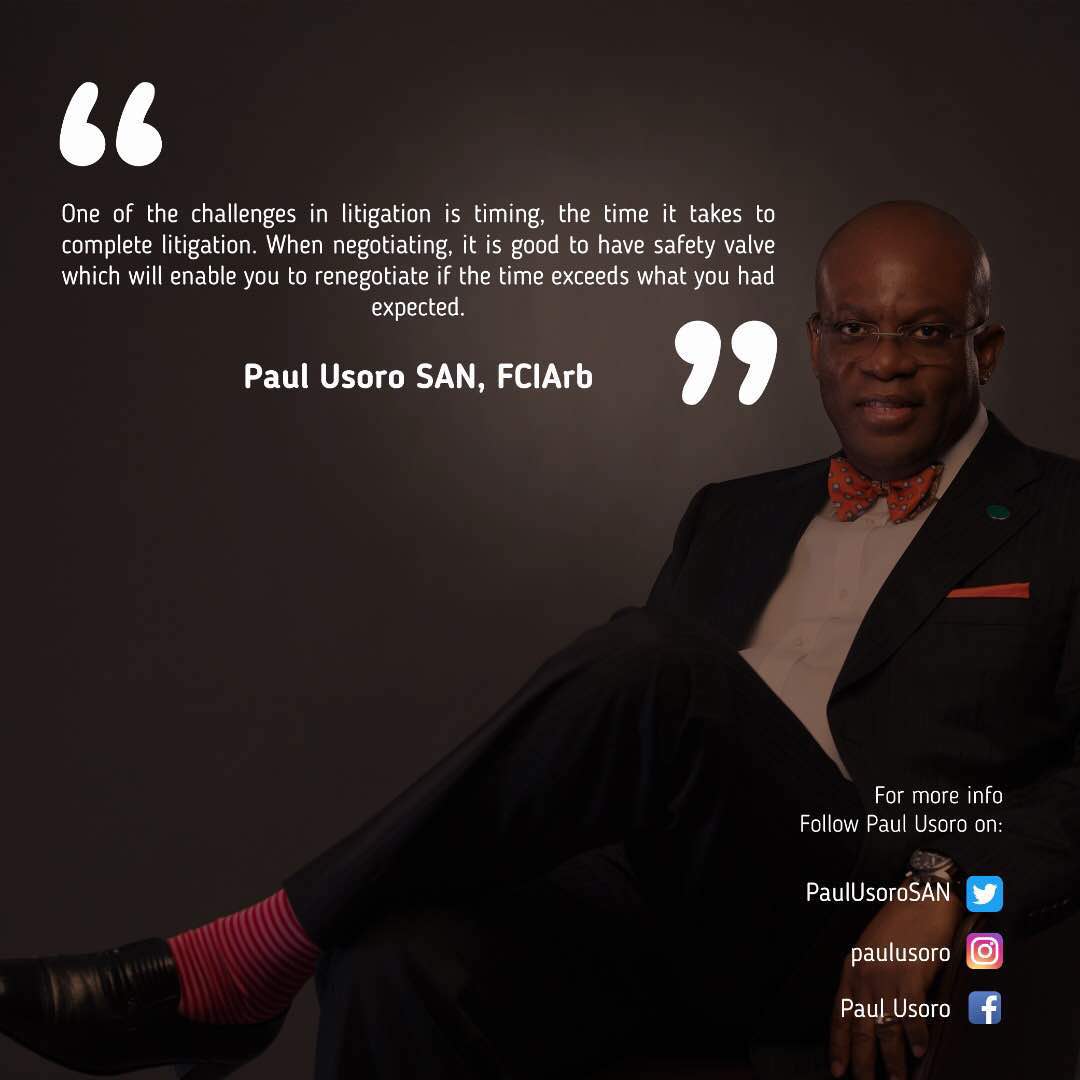
Manifesto Of Paul Usoro, SAN For The Office Of The President, NBA 2018 – 2020

Manifesto Of Paul Usoro, SAN For The Office Of The President, NBA 2018 – 2020

                        
My dear Colleagues,
I am Paul Usoro, Senior Advocate of Nigeria and the Senior Partner and Founder of Paul Usoro & Co (PUC), a full-service law firm headquartered in Lagos with branches in Abuja and Uyo. I was called to the Nigerian Bar in 1982 and was subsequently elevated to the Inner Bar in 2003. I have been engaged in legal practice since my Call to the Bar and have garnered over 30 years’ experience in all aspects of legal practice, including complex litigations and high profile commercial transactions. I sit on the Boards of several blue-chip companies and I am very well versed in corporate governance and administration. I am a Fellow of the Chartered Institute of Arbitrators and a member of the International Bar Association.

Appreciating the significance of an efficient and vibrant Bar for Nigerian lawyers and citizens and the imperative for building an enduring and sustainable institution out of the NBA, I present myself, with humility and a high sense of responsibility, as a candidate for the position of the NBA President, for the period September 2018 to August 2020. I perhaps need to mention that I am from Ukana Ikot Ntuen in Essien Udim Local Government Area of Akwa Ibom State and therefore fit into the NBA’s geographical East to which the office of the NBA President has been zoned for the 2018 Elections.
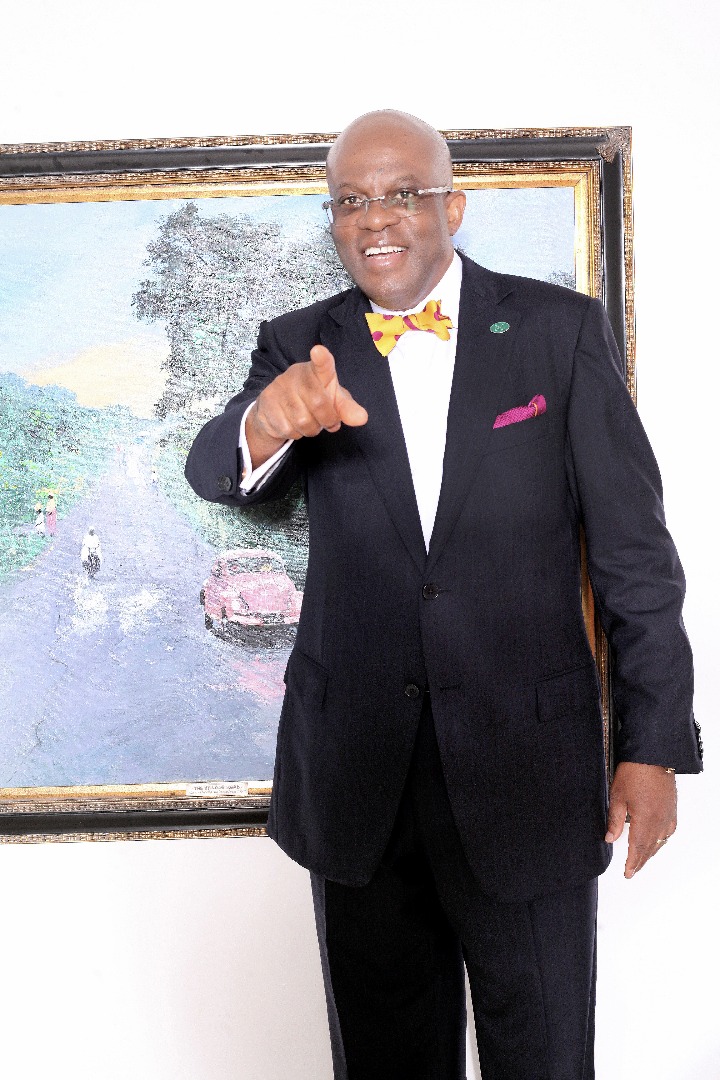
I consider it a privilege to present my ideas and thoughts on some of the issues we will focus on in uplifting the institution of the NBA and level of legal practice in Nigeria if I am elected as the NBA President. This is a non-exhaustive blueprint of my modernization and reform plans for the Bar. My agenda is not only to embark upon innovations, but also to consolidate on the foundation laid by our past leaders. In essence, we will be advancing the good legacies that we have, replacing the obsolete ones and advancing new frontiers for the Bar.
I have selected three thematic areas to drive the reform plan knowing as I do that two years would be inadequate to cover all the required reforms. The three focus areas are:
1. Institutional Development and Regulatory Reforms.
2. Human Capital Development and Welfare Programme.
3. Promotion of the Rule of Law and Good Governance in Nigeria.
The following paragraphs present a brief overview of each of the three themes and provide programme objectives to be achieved under each thematic area.
1. INSTITUTIONAL DEVELOPMENT AND REGULATORY REFORMS
a. Institutional Development
I believe that the NBA, at the national level, is in need of urgent and far-reaching reforms if it must retain its relevance not only in the larger society but even to its members. These reforms will, at the minimum, achieve four significant and immediate goals, to wit, (a) enhance efficiency in the operations of the Association; (b) engender confidence and trust amongst its members (or, as some would say, win back the confidence and trust of members who are disengaged); (c) transform the NBA into a sustainable institution; and (d) increase the moral equity of the NBA to enable it effectively influence required reforms in the justice subsector and remain a respected watchdog of the society.
As my set-out point, it is my position that no institution or organization can be deemed or classified as successful if it fails to adhere to corporate governance principles, the cornerstones of which are transparency and emplacement of established and well-defined processes and procedures coupled with strict adherence thereto. The NBA, as currently constituted and operated, lacks these basic ingredients and characteristics of an institution – and this has been confirmed by the recent KPMG Diagnostic Report on the NBA. In driving the goal of building an institution out of the NBA, we need to entrench these governance principles and thereby not only guaranty efficiency in the administration of the Association but also boost the confidence of our Members and external stakeholders. Entrenching these principles will also clothe us with the moral toga to challenge and speak truth to power, particularly in instances of financial and/or administrative malfeasance, misappropriations and misconducts.
The specific programme strands that shall enable me deliver on this agenda, if elected as President of the NBA, shall include the following:
I. Professionalize and strengthen the NBA National Secretariat for effective and efficient service delivery so as to meet the needs of our members and the public. The required reforms in the NBA must logically start from its apex, to wit, the governance structure at the national level. The operational complexities of the Association in 2018 justify the delegation of day-to-day operations and management of the NBA by the elected part-time National Officers to an executive management team made up of suitably qualified, skilled and experienced full-time personnel.
II. Entrench Corporate Governance in Financial Management: Without financial planning and accountability, a Bar Association will fail to function. We will therefore ensure a complete overhaul of the account and finance unit at the NBA National Secretariat with proper definition of the unit’s role and the engagement/retention of qualified, experienced, well-motivated and skilled accountants to man the unit. We would also institutionalize internal control systems and processes. The essence of internal control systems and processes is to prevent leakages and fraud and to bullet-proof the organization against identified risks. To enhance the Association’s corporate governance in financial management we would constitute a Standing Audit Committee of the Association that would, amongst others, assist in reviewing and monitoring the efficacy of and compliance with our internal control systems and processes. Budgeting and budget reviews will also be made standard practice and quarterly financial statements would be routinely published to members to inform on the Association’s financial health. Transparency would be the watchword in the management of the Association’s resources including its finances and assets.
III. Upgrade and improve the operational capacity of NBA Sections, Institutes, and Fora so that they would be able to fulfil their mandate. Generally speaking, the NBA organs operate at sub-optimal levels. Well organised and run, these organs should serve, amongst others, as the engine-room for planning the contents of and for the Annual General Conferences (AGC) of the NBA. These organs offer opportunities for members to deliberate on topical issues and raise the bar in advancing the course of specialisation within the NBA. They therefore constitute a veritable NBA resource for planning our AGCs, content-wise in particular. In addition, the various committees of our Sections ought to be hosting, on regular basis and annually, workshops and seminars in their respective specialized fields. Best practice also recommends that some of the committees collaborate to host such workshops where the topics are common to and touch on the specialised fields of such committees. In summary, the NBA organs as currently constituted would be deepened and made to achieve much more in terms of structure, activities, inclusion, outreach, communication, and evaluation.
IV. NBA Strategic Plan. We would review, update and ensure the implementation of the NBA Strategic Plan to ensure continuity and sustainability of programmes, policies and projects. There was a Strategic Plan that was approved by the NBA National Executive Committee (NEC) at its meeting at Aba in March 2017 but I am not aware that there has been a monitoring of its implementation. Well-run institutions routinely monitor the implementation of their Strategic Plans during the quarterly meetings of their directing organs – i.e. the Board of Directors or its equivalent. NEC is the NBA equivalent of a Board of Directors and it does not appear that the monitoring of the Strategic Plan is a staple on its quarterly agenda. That would be corrected in my tenure as the President and the Strategic Plan itself would be reviewed, widely circulated and published and made to incorporate long, medium and short term plans, complete with measurable milestone activities and timelines.
V. NBA National Electoral System and Succession Plan. No institution succeeds on a long-term basis without proper succession planning that ensures, amongst others, continuity of programmes and activities. The NBA has no such succession plan. Our current model changes the entire leadership every two years without any form of succession planning and it is no wonder that programmes, no matter how laudable, remain at the mercy of succeeding administrations and are indeed prone to being jettisoned by such new administrations. Indeed, even our national electoral system requires review and quite some tweaking. Currently, our national elections bring out different lawyers with their respective and disparate manifestoes and agenda for the various offices. Usually, there is no alignment of plans between the various contestants for the different offices. Thus, it is not uncommon for the Presidential candidate’s agenda for financial management to be fundamentally different, illustratively, from the respective agenda of the General Secretary, Financial Secretary and Treasurer for the same financial management. Upon election, these disparate persons, with their differing and uncoordinated agenda and plans are expected to miraculously coalesce and work together as a team. Such forced coalition does not always work, and I believe that we need to review the electoral system in a manner that would not only ensure some level of succession planning that guarantees continuity of programs but also be far more harmonious and coordinated than our present riotous experience. Very early in my tenure, I would encourage a roundtable dialogue of all stakeholders in that regard aimed at reforming the national electoral processes. I would also establish Standing Committees for the review of our Constitution and for the conduct of our National Election that would build on all our previous experiences and have sufficient time to deliberate upon and implement required reforms in our electoral system as well as our Constitution.
VI. Branch Administration. It is my expectation that the enthronement of governance principles at the NBA National level, with transparency and efficiency as the cornerstones, will gradually percolate and become the staple for NBA branches as well thereby strengthening the capacity of the Branches to function effectively and professionally thus earning the respect and trust of its members. In my respectful opinion, that will be a significant antidote to or panacea for the current spate of strife, brawl and infighting that is tearing our Branches apart in the bid for elective offices. As soon as we make transparency and governance principles the standard practice in the management of the Association’s finances and affairs, both at the national and branch levels, the quality of our leaderships across board would greatly improve and we would experience far less strife than we currently face. If elected President of the NBA, I would ensure these practices in the branches as well as capacity-building and the empowerment of the branches in a manner that would enable them to confidently develop programmes, manage projects, raise funds, and interface with justice sector institutions and State actors at States and local government levels.
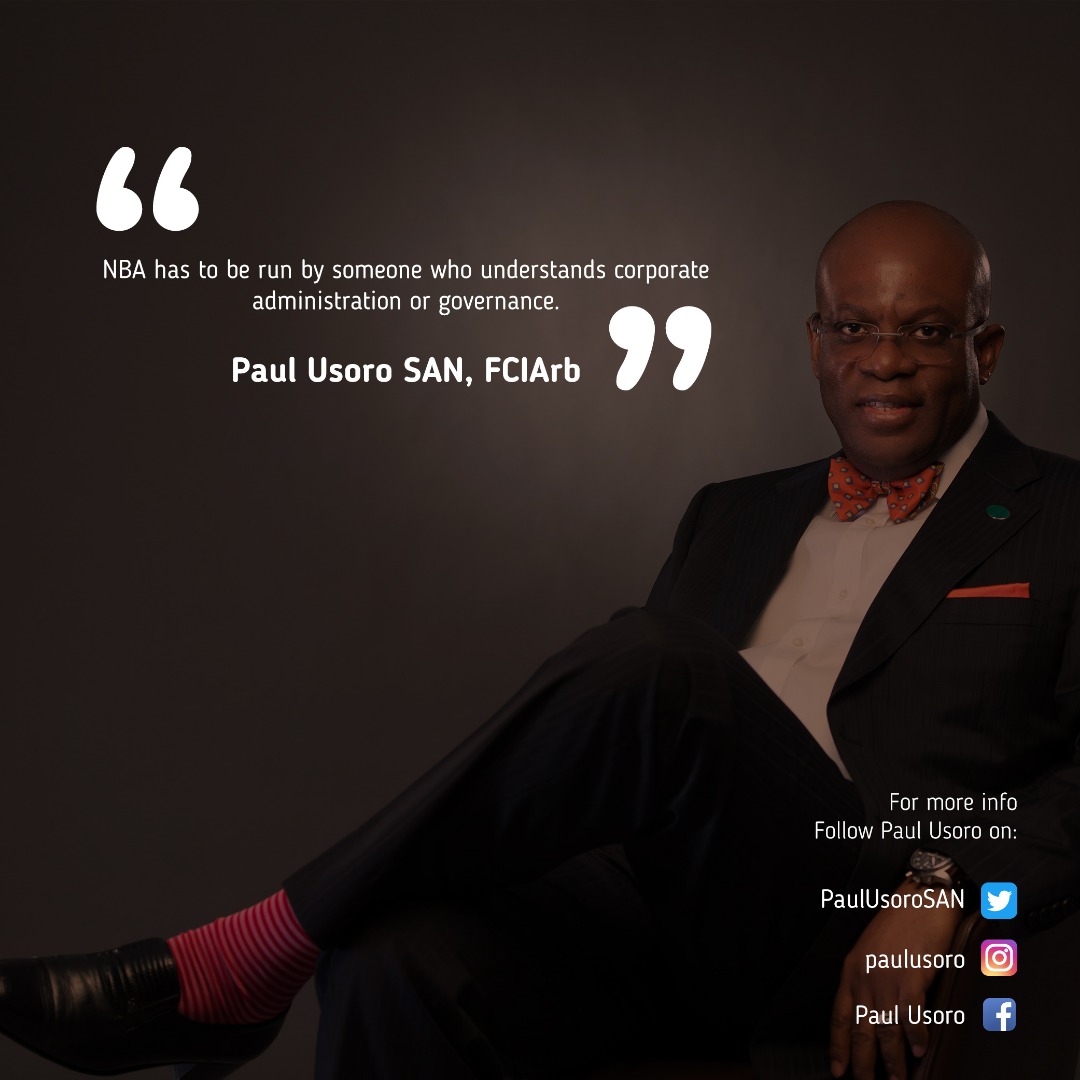
VII. Establishment of NBA Liaison Offices within the three NBA Zones. There seem to exist a gulf between the National Secretariat of the NBA and the lawyers at the NBA branches, notably those branches outside the Federal Capital Territory. That gulf will be bridged with the establishment of NBA Liaison Offices within the three NBA Zones – Lagos, Port Harcourt and Kano. These offices will take the national leadership and the national secretariat of the NBA closer to the lawyers at the branch level and would foster a more accessible and effective working relationship between the parties. Well managed and coupled with the accrued benefits from across-board improved and entrenched transparency and governance practices, these Liaison Offices would boost membership activism, confidence and trust and also increase NBA income-generation capabilities.
VIII. Revenue Generation Plans for the NBA. To alleviate the burden of members in financing the Association and its activities and administration, I would work on innovative revenue generation strategies for the Association. In particular, I would look at the possibility of generating income from the management of the Association’s assets, including its brand and real estate, and optimizing other NBA income streams and NBA revenue potentials such as sponsorships.
IX. Infrastructural Development. The NBA National Secretariat building (NBA House) is yet to be fully completed. When completed, the auditorium in the building, apart from saving the Association huge costs on venue rentals for major events, would also be a source of additional income for the NBA. If I am elected to the office of the NBA President, I would raise funds for speedy completion of the NBA Building Project.
b. Regulatory Reforms
The regulatory framework underpinning the legal profession in Nigeria calls for review, with the aim of raising the standard of the profession. I will, if elected the NBA President, embark upon regulatory reforms with a view to achieving the said goal. The envisaged reforms will cover the areas of professional ethics and discipline, legal education and criteria for admission into the profession, continuing legal education, and legal practice generally. The key components of my Regulatory reform agenda will include the following.
I. I will work in consultation and partnership with all relevant stakeholders, to facilitate the repeal and replacement of the extant Legal Practitioners Act (LPA) with a view to reflecting current trends and developments regarding admission to the legal profession, legal education, training, compulsory continuing legal education, professional ethics, discipline, and other aspects of the legal profession that are relevant to legal practice in the 21st century.
II. My administration will consult with all relevant stakeholders and work towards the implementation of the adopted recommendations of the NBA Legal Profession Regulation Review Committee one of which is the repeal and replacement of the LPA. The report, which deals with issues affecting the regulation of the legal profession in Nigeria, is far reaching and comprehensive its scope and recommendations and requires a holistic and comprehensive review by all stakeholders with a view to upscaling the regulatory framework of the legal profession, as appropriate.
III. As part of the afore-mentioned regulatory reforms, I will ensure that the Association facilitates the review of the Rules of Professional Conduct with a view to bringing them up-to-date with current and emerging global trends in the delivery of legal services. This will go a long way in enhancing the standards of professional ethics in the legal profession in Nigeria.
IV. I believe that the Nigerian Law School (NLS) Externship Programme should be designed to teach Law Students practical skills in legal practice. To attain that goal, Pupillage program could and should be incorporated into our NLS pre-qualification process and used to impart practical training to our trainee lawyers, both in advocacy and solicitor’s practice. If adopted as part of the qualifying process, the program should be regulated by the Council of Legal Education and the firms to which the trainee lawyers are attached must be firms with prescribed minimum standards.
V. I will partner with relevant stakeholders including the Nigerian Universities Commission and the Council of Legal Education to review the LL.B degree curriculum in order to enhance the quality of legal education and introduce new areas of practice into the Universities’ curricula in line with emerging trends and technological disruptions in Nigeria. I will also work with these stakeholders to review the admissions policies into Law Faculties of Nigerian Universities.
VI. The planned reforms would also inculcate and institutionalize structured mentorship programmes – a program which, I believe, the NBA should encourage and entrench. Such structured mentorship program could involve, amongst others, periodic visits by young lawyers who are practising in the provincial NBA branches to structured Law Firms in cosmopolitan cities to learn, first-hand, law office management and the practice of law.
VII. I will work to reform and revamp the management and mechanisms of the NBA complaints and disciplinary processes with the aim of making the processes more efficient and timeous. It is not uncommon to hear complaints from members of the public who get frustrated by the delays in having their complaints to the NBA against lawyers processed and treated. There is also a perception that the disciplinary process may not be vested with full autonomy and independence. Our comprehensive review and reform of the disciplinary system and processes would ensure its independence, effectiveness and efficiency and this will in turn engender public confidence.
2. HUMAN CAPITAL DEVELOPMENT AND WELFARE PROGRAMMES
The pride of a lawyer, in-house or in private practice, is in the application of his skills, knowledge and workmanship for the promotion of the rule of law, attainment of justice and protection of his client, followed by the attendant economic reward and benefits. This underscores the importance of knowledge, skills and human capital development. My plan therefore is to foster that pride by lawyers in the legal profession, irrespective of their mode of practice, livelihood and legal career, using the instrumentality of the NBA.
A. An All-Inclusive Bar
Nigeria boasts of a sizeable number of lawyers even as more lawyers are passing out of the Nigerian Law School every year. However, not many lawyers participate in NBA activities partly because emphasis seems to be placed by the NBA more on the lawyers who are in active private legal practice. Hence, corporate/in-house counsel, lawyers living with disabilities, public sector lawyers (mostly in civil service and government parastatals) and female lawyers, are generally not given the opportunity to participate in nor encouraged to attend NBA activities and as a result, they do not derive or even see any membership benefits from these activities. It is my candid view that every lawyer and member of the NBA should identify with the Association and derive some benefit therefrom.
One of the ways to sustain the interests of our members in these different lawyer-groupings is to address issues directly affecting them. If I get elected President, the NBA would offer a clear value proposition for the inculcation of an inclusive bar to our members, be they in private legal practice or not. I am indeed for and will champion the entrenchment of such an inclusive bar. There is no reason why corporate counsel, for example, cannot take up appointments or membership in NBA Committees (at both National and Branch levels) provided they are available and committed to the course for which such NBA Committees or offices are set up. Some groupings of lawyers have historically been short-changed in these appointments even though they have eminently qualified persons amongst them who can occupy these positions and acquit themselves very well. If I am elected as President of the NBA, I will address that imbalance.
B. Human Capital Development
The legal profession has been undergoing fundamental changes across the globe which have precipitated new kinds of challenges driven in part by emerging areas of legal practice. These changes come with increased costs, pressures and competition which demand innovation in the practice of law by lawyers. Meantime, Nigerian lawyers are in competition with their counterparts in other climes who are trained in and exposed to innovative technologies and complex business structures that support these emerging practice areas and business trends. While the practice of law evolves and advances around the world, the average Nigerian lawyer is unable to match that pace of development and indeed, may not even understand the dynamics of these developments sufficient to compete in the international legal marketplace consequent upon the dearth in human capital development and lack of proper training and exposure.
The NBA has a primary role to play in remediating this situation considering that one of the Association’s principal aims is the “Promotion and advancement of Legal Education, Continuing Legal Education, Advocacy and Jurisprudence”. In particular, the NBA has a significant role to play in human capital development of Nigerian lawyers and the development of competences in emerging areas of law. If I am elected to the office of the NBA President, I will tackle these challenges by doing the following, amongst others:
I. Overhaul the training of lawyers in Nigeria right from the University to the Nigerian Law School level to ensure international standards of learning and training. The results will show in greater skills and expertise, especially by the younger lawyers, in the delivery of legal services in Nigeria.
II. Restructure and upgrade the capacity of the NBA Institute of Continuing Legal Education (“ICLE”) to provide, regulate, and co-ordinate Continuing Legal Education training programme for lawyers across Nigeria. Ensure that the NBA ICLE delivers intensive CLE courses to members. I will continue to innovate and commit resources to new curricular initiatives and skills development with a renewed focus on the professional development of lawyers.
III. Introduce “Finance for Lawyers” as a compulsory module in the NBA ICLE law office management program. Lawyers are generally very wanting in keeping their financial records and also managing their finances and this reflects in the poor economic circumstances of some lawyers and their inability to meet their obligations including payment of remuneration to their younger colleagues. Some training in finance and its management as well as in investment opportunities will assist lawyers in better managing their law firms and finances.
IV. Independent of the NBA ICLE program, organize periodic workshops, seminars and training programmes on law office management generally.
V. Advocate for inclusion of mandatory Continuing Legal Education mandatory for all lawyers in the proposed Legal Practitioners Act Amendment Bill. The provisions thereon will also stipulate for the appointment of reputable certifying authorities therefor and the criteria for such appointments.
VI. Establish a model contemporary law office within the National NBA secretariat. This model office will be fully functional and operational with a library manned by a professional librarian and fully equipped with books, law reports and state of the art e-learning and resource materials. Lawyers generally will have access to the library based on prescribed eligibility criteria, but young lawyers will have priority.
C. Welfare Programme for Lawyers
One of the topical issues in our profession today, is the poor welfare package for young lawyers and this is for understandable reasons. The demographics of lawyers shows a distantly outnumbered senior lawyers as against the growing multitude of young lawyers. Indeed, the Nigerian Law School on a yearly basis, turns out a great number of young lawyers such that, it is beginning to seem that there are more young lawyers scrambling and rushing after increasingly fewer job opportunities and spaces. With this development comes consistent complaint around poor remuneration packages translating to lower living conditions for lawyers. It is therefore imperative, urgent and critical, beyond election pitches and rhetorics, that amelioration of living conditions for young lawyers be taken seriously, by the NBA at the national level.
Another category of lawyers whose welfare I will work towards ameliorating, from a professional standpoint, is that of the aged and disabled lawyers. If I am elected as the NBA President, I will work towards achieving better welfare programmes for these categories of lawyers and generally for all lawyers through the underlisted channels, amongst others:
I. Mentorship Scheme and Capacity Building for Young Lawyers. Mentorship requires the mentee to identify a role model in the profession, preferably, a successful practitioner who will guide the mentee on the path to successful legal practice and also the ethics and traditions of the Bar and practice generally. NBA under my watch will encourage and actively facilitate such mentorship programs. A modified version of such program, as earlier mentioned, would involve periodic visits by young lawyers who are practicing in the provincial branches to structured Law Firms in the cosmopolitan cities and branches to see and learn, first-hand, law office management and the practice of law in those Law Firms. This programme will be implemented in partnership with local and international law firms, Bar Associations and Law Societies of other countries, and training consultants.
II. Employment or Job creation for lawyers. Many lawyers are finding it difficult to eke out a living and this is a worrisome trend. If I get elected President of the NBA, I would spearhead NBA’s engagement with relevant stakeholders, to identify within Government Ministries, Departments and Agencies (MDAs) and from extant laws, those roles for which lawyers are best suited, given our training, and ensure that the legal market is protected for lawyers. I would also explore new vistas of opportunity for legal work that would result in enhanced income for lawyers and thereby improve the ability of senior lawyers and law firms to properly remunerate the young lawyers working with them.
III. As a corollary to the preceding proposition, my administration as the NBA President will check the incursion of non-lawyers, foreign lawyers and foreign law firms into the Nigerian legal practice. I do not believe that there is any aspect of legal services, including transaction and arbitral matters that we cannot find capable Nigerian lawyers to handle. There could be a limited access principle whereby foreign lawyers may be led in transactions and arbitral proceedings by Nigerian lawyers, the Nigerian lawyers being the ones to nominate, agree with and assign portions of the assignment to the foreign lawyers and firms. This could be made part of negotiations in the process of regulating access into the Nigerian legal market by foreign lawyers and firms.
IV. Aged Persons and Persons Living with Disability. Persons living with disability and the aged have special needs which unfortunately are not generally catered for in our Nigerian environment. These needs include access facilities into buildings, toilet facilities, specialized reading and legal practice materials and aids, customized technology aids and facilities. My administration as the NBA President will work at installing these facilities at the NBA Secretariat where the model law office would be located. The model law office at the National Secretariat would also be made friendly to and usable by agreed persons and persons living with disability. These facilities would gradually be expanded and provided at the NBA Zonal Offices in the 3 Zones of the NBA. We would also open dialogue with the Chief Justice of the Federation and the heads of various courts in the Federation and the States on the required modifications for making the courts and the court facilities accessible to and usable by the aged and persons living with disability. More importantly, we shall dialogue constantly with these categories of lawyers to continually understand their needs and how best we can assist in meeting them.
V. As a corollary to the preceding proposition, we would advocate and push for diversity in the workplace, notably in law firms, in a manner that would advantage persons living with disability as well as the aged who may still be intellectually fit and can contribute to the society and the profession. My administration, with me as the NBA President, shall actively advocate against discrimination at the workplace on grounds, amongst others, of gender, age and/or physical disability.
VI. With NBA under my watch, we shall actively develop, maintain and constantly update at the National Secretariat, a verifiable database of Nigerian lawyers who have specialized knowledge and skills in various areas of law, either through practice or by education. Such a database would come in handy not only to blunt the constant put-down by Nigerian governments and their officials against Nigerian lawyers but also to positively assist such Government Agencies and private-sector companies and individuals in identifying skilled lawyers that could assist them in handling so-called complex and “novel” transactions and matters.
VII. Business Education and Investment Planning for Lawyers. As earlier mentioned, we shall include basic business management and strategic planning, financial accounting, investment planning and opportunities modules in NBA’s Continuing Legal Education programs, all structured as part of Law Office Management courses. This will enlighten and educate lawyers on the imperative of strategic planning for sustainable law office management.
VIII. Creation of NBA Welfare Foundation or Charity Funds. Bar Associations worldwide maintain Charity or Welfare Funds that help to cushion their members and/or their families and dependents against hardship. Examples of such hardships include death in the course of NBA work, accidents and/or medical conditions that occasion disability, natural disasters, and displacements occasioned by insurgency. We shall create and maintain such NBA Welfare Foundation or Charity Funds during our administration and the funds therefor shall be sourced from extant NBA income streams, donations and through special launching events.
3. PROMOTION OF RULE OF LAW AND GOOD GOVERNANCE
Over the years, the NBA has been in the vanguard of promoting the rule of law and the entrenchment of good governance in Nigeria. This commitment stems not only from the public interest role and motto of the NBA, but also from the constitutive Act of our great Association, the Nigerian Bar Association Constitution, 2015 which stipulates promotion of the rule of law as one of NBA’s core objectives. Again, traditionally, one of the notable roles of the Bar in a relatively young but bourgeoning democracy as ours is the protection, promotion and maintenance of the Rule of Law at all times. As major stakeholders in the justice delivery sector, we are continually looked up to by the society to be its voice in critical situations. The stories of our heroes past (all of whom I salute very respectfully and may their souls rest well) will bear testimony to the NBA’s very commendable record in discharging these social duties by rising to the occasion when necessary.
There must always be a watchdog that should bark when things go against order and bite when necessary. Our experience as a country and more particularly in recent times shows that governments across board have a tendency to insist on having their way not minding the effects on our social fabrics. Judicial decisions are being disobeyed with impunity sometimes because the government believes the decisions are incorrect and they, the government, would have favoured a different outcome. This is contrary to the doctrine of separation of powers; more often than not, the judiciary ends up at the receiving end of this violation of this all-important doctrine. Executive organs and law enforcement agencies have in recent times been on a free-for-all attack on and violation of human rights including the rights of judicial officers and indeed the judiciary.
Worst of all is that lawyers who embark on protecting their clients have become victims of human rights abuses and have suffered serious infractions of their rights to dignity of the human person and dignity of labour. Again, in recent times, judicial officers have been arrested, harassed, intimidated and prosecuted only for the Courts to resolve the cases against the government. The situation is now so bad that we have a situation where the voice of the society itself, to wit, the legal profession, is being attacked with the intent of shutting its voice and shutting it down. Even the Judges are now facing occupational hazards of a new kind whereby their courtrooms are invaded by thugs and no protection is afforded the judicial officers. One can only imagine the mind-set of a Judge who has been harassed and attacked, whether by thugs or agents of and from the executive branch of the government, when called upon to determine a case involving his attackers and/or their principals.
Bearing in mind these identified problems , it becomes necessary for the NBA considering its critical role in the society, to take quick remedial steps which, under my watch shall include the following steps to safeguard the Rule of Law and Good Governance.
As it relates to Good Governance, the NBA under my leadership shall:
I. Recognize the need to build a credible and effective electoral system. To this end, the NBA will work hard and advocate for the reform of all the institutions that consolidate democracy, with a view to ensuring compliance with the principles of rule of law by all the actors.
II. Develop and execute voter education programme with a view to educating and enlightening legible voters on their role in the 2019 elections. The NBA shall in doing this not lend itself to becoming an appendage of any political party.
III. Develop and execute election monitoring programme. This programme would be used by the NBA to monitor the 2019 elections using NBA Election Working Group.
IV. To monitor election Tribunals as part of a project to be developed and called NBA Electoral Justice Project. This is a project that would be designed to monitor and observe the activities of various elections petitions tribunals, identify the challenges they are facing and advocate for solutions to such challenges as may be identified.
V. Monitor the 2019 general elections with a view to ensuring that the conduct of the elections and participation thereat comply with the principles of rule of law and due process.
VI. Develop programmes and projects relating to Child Justice Administration especially as it relates to adoption and implementation of Child Rights Act at the State level.
VII. Advocate for the strengthening of the legal and institutional framework for Anti-Corruption Crusade and also the entrenchment of international best practices in the detection and investigation of corrupt practices and financial crimes.
In regard to the promotion and protection of the Rule of Law, the NBA under my leadership shall –
I. Advocate for and promote the culture of obedience to Court Orders and compliance with the principles of Rule of Law.
II. Monitor, identify and condemn cases of impunity and executive lawlessness in Nigeria and take active steps to ensure the remediation of such impunity.
III. Advocate for access to justice by facilitating pro bono and quality legal defence and representation for certifiably poor and vulnerable persons. As a corollary thereto, re-activate and upgrade the NBA Pro Bono Scheme so as to achieve the objectives for setting up the scheme.
IV. Advocate for the respect and protection of human rights of citizens and tackle gender inequalities wherever they exist or are being perpetrated.
V. Develop and advocate for programmes and projects relating to prison decongestion in Nigeria.
VI. Launch an NBA Annual Human Rights Report. This would be achieved by monitoring and documenting cases of human rights complaints and violations through NBA human rights committees at NBA branches, the media, and other human rights stakeholders. This would help us determine the frequency (increase or decrease) of human rights abuses in Nigeria.
VII. Advocate for the approval of the National Action Plan for Human Rights in Nigeria by the Federal Executive Council.
VIII. Develop and enforce procedures for swift responses to national issues and in this regard, hold monthly press briefings on national issues.
IX. Institutionalize conflict resolution, gender and peace advocacy.
X. Propose comprehensive constitutional reforms with regard to the 1999 Constitution of Nigeria, as amended, especially as it relates to the Judicature. The proposed constitutional amendments would seek to:
a. Ensure the independence of the Judiciary
b. Strengthen judicial accountability and performance
c. Reform procedure of judicial recruitment and discipline
d. Enhance access to justice and the protection of the rule of law.
e. Strengthen financial autonomy of the judiciary.
XI. Advocate for the domestication and implementation of the Administration of Criminal Justice Act, 2015 at State levels in Nigeria.
XII. Develop a much improved and comprehensive Legislative Advocacy Programme for the NBA.
XIII. Champion the reform of Justice and Accountability Institutions for better service delivery.
Conclusion
These goals and objectives can only be achieved through sustained and constant stakeholder engagement and consultations. I will operate an open-door policy and all stakeholders will continually be consulted on issues that affect and/or relate to them. It is my belief that every lawyer must have a voice in the affairs of the Association and, in particular, in matters that affect them. There will therefore be clear channels of communication that would make it easy for NBA members to reach and have access to me and Bar leaders generally.
I also intend to lead by example in institutionalising transparency and accountability in the administration of the NBA. The programmes that I have articulated in this Manifesto, I must mention, are auditable constitute my pact with members of the NBA and I am willing to be judged by and held accountable therefor. I also commit to use my network of relationships in the corporate world in achieving these goals and for the benefit of the Association. It is my hope that at the end of my tenure as the NBA President, the Association would be the better for it and be the envy of other professional associations in and outside Africa.
PAUL USORO, SAN, FCIArb
29 June 2018

What Nigerian Music Attorneys Do In The Music Industry| Hightower Solicitors

What Nigerian Music Attorneys Do In The Music Industry| Hightower Solicitors

Every year, Hollywood’s foremost trade publication – www.hollywoodreporter.com – publishes the annual power list of Hollywood’s top music business attorneys. The contribution of these venerated elite industry professionals cannot be discountenanced. They apply their talent, expertise, time, and other resources for the benefit of the industry as a unit. Little wonder why America is the entertainment capital of the world.


In Nigeria, there is a new wave of legal practitioners seeking a piece of the action. The new found interest in the Nigeria’s burgeoning entertainment industry is caused by the realization that the ever growing music and film industry in Nigeria needs the participation of lawyers. Young lawyers seeking new opportunities are at the forefront of the new ‘wave’.

The possibilities available to music attorneys are boundless.  Their service, as advisers in business, is essential at every stage. From the conception of ideas, to the creation of original works, registration of intellectual property, and till when promises are exchanged for employment, licensing and distribution of works, administration of intellectual property assets, administration of estates, and other legal affairs.

Highlighted hereunder are various aspects of the music business where some lawyers in Nigeria already service. These areas require the intervention of seasoned music attorneys;

NEIGHBOURING RIGHTS
These are economic rights of performers/singers/session musicians and record label owners. It refers to the public performance or broadcast (internet radio, TV, live performance) of a sound recording. The record label and the artiste(s) performing on those recordings earn neighbouring rights royalties.
In the same breath, George Howard, an Associate Professor of Management at Berklee College of Music said, “You can think of neighbouring rights in the same way as public performance rights, with the difference that while public performance rights compensate the writer of the song when his/her music is publicly performed, neighbouring rights compensate the master holder (typically, the label) and the performer when music is publicly performed”.

In Nigeria, the Copyright Society of Nigeria (COSON) is responsible for the collection of these rights. Music attorneys ensure that their clients are properly represented under this body so that they can benefit from the public use of music at hotels, nightclubs, broadcast stations, restaurants, concert venues, etc.

 MUSIC DISTRIBUTION.
Music attorneys advise their clients on how best to distribute their works. Sometimes they leverage relationships and private information for the benefit of their clients.

 PROTECTION OF COPYRIGHTS AND TRADEMARK.
In the words of Ken LaMance, a US Intellectual Property lawyer, in his article “The Basics of Music Law” “Copyrights protect music and other original works of authorship. Registering a copyright for a piece of music allows the composer or songwriter to seek monetary damages”, Music lawyers would help an artist secure the rights to use music that other artists have written, comply with copyright laws as well as bring a copyright infringement suit.

They also help artistes understand what intellectual property rights they have and how the trademark and design laws in Nigeria can be of help. An example can be found in the widely reported case of Wizkid and the US singer, The Weeknd, over the use of the name “Starboy”. It is widely reported that Wizkid never trademarked the name in the United States of America. Many believe that the Weeknd had the name “Starboy” trademarked after its use as title of his 2016 album, and as such would now be associated with its use in every class of entertainment and incidental merchandise.

CONTRACTUAL MATTERS.
“Never sign any contract given to you without having a knowledgeable entertainment lawyer who you retain to represent you and review it first”, these were the words of Wallace Collins (a UK notable entertainment lawyer).

A music attorney would draft and review music contracts agreements between an artiste and a producer to ensure both parties are on an even scale as well as draft and review documents utilized in the course of the client’s business.  Examples of such agreements and documents are Music Licensing Agreements, Territorial Coverage, Producer Agreements, Royalty Split Agreements, Non-Disclosure/ Confidentiality Agreements, Label & Distribution Agreements, Recording and Music publishing Agreements and Marketing Agreements.

 ADVISORY.
A music attorney would help new artistes in the industry understand the workings of the business. The lawyer would advice on which types of contracts to choose, how to identify any hitch in business deals, what performing rights they have, where to find a manager, accountant or other business contact, act as general counsel helping with marketing and merchandising deals, as well as real estate transactions and tax issues. A music lawyer will help navigate the minefield that is the entertainment industry.

 PROTECTION OF A DECEASED ARTISTE’S LEGACY.
The expiration of copyright in a musical work is 70 years after the end of the year in which the author dies; therefore, to use or exploit the copyrighted music of a dead artist, due authorization for use must be obtained.

The role a music attorney plays here is to ensure that artists, or other handlers, seeking to use the works of dead artists in their music go through the legally provided procedures, failure of which may attract unpleasant consequences. An example of this is the case of the Nigerian artiste Skales, who was embroiled in a legal copyright battle with the estate of Fela Anikulakpo Kuti in 2017, on the remix of his music “Temper” which sampled Fela’s “Sorrow, Tears & Blood”. The music attorneys of Fela’s estate responded by instructing YouTube to take down the infringing content.

ACCOUNTING AND PAYMENT OF REVENUE TO MUSICIAN AND OTHERS.
When negotiating music contracts, music attorneys ensure that the percentage to be paid to writers, record producers, session musicians, talent managers, and other collaborators are agreed upon and stated out in contracts.

They also ensure that all streams of income are properly channeled to rightful owners.

The attorneys also prescribe the manner and time of payment of revenues due to the artiste, record producers, talent manager, and where applicable, the record company.
In conclusion, the roles played by Nigerian music attorneys in maximizing the full potentials of talents and investors, and in helping to build a viable and sustainable ecosystem in the Nigerian music industry, cannot be exaggerated. They must install their expertise and time in all spheres of the music industry for the benefit of all.

What are your thoughts on the points highlighted? We want to hear your thoughts.
If you have any questions, use the comment section, or get in touch via +2347014979879 or hightowerlawyers@gmail.com. You will be glad you did.

Every year, Hollywood’s foremost trade publication – www.hollywoodreporter.com – publishes the annual power list of Hollywood’s top music business attorneys. The contribution of these venerated elite industry professionals cannot be discountenanced. They apply their talent, expertise, time, and other resources for the benefit of the industry as a unit. Little wonder why America is the entertainment capital of the world.

In Nigeria, there is a new wave of legal practitioners seeking a piece of the action. The new found interest in the Nigeria’s burgeoning entertainment industry is caused by the realization that the ever growing music and film industry in Nigeria needs the participation of lawyers. Young lawyers seeking new opportunities are at the forefront of the new ‘wave’.

The possibilities available to music attorneys are boundless.  Their service, as advisers in business, is essential at every stage. From the conception of ideas, to the creation of original works, registration of intellectual property, and till when promises are exchanged for employment, licensing and distribution of works, administration of intellectual property assets, administration of estates, and other legal affairs.

Highlighted hereunder are various aspects of the music business where some lawyers in Nigeria already service. These areas require the intervention of seasoned music attorneys;

NEIGHBOURING RIGHTS
These are economic rights of performers/singers/session musicians and record label owners. It refers to the public performance or broadcast (internet radio, TV, live performance) of a sound recording. The record label and the artiste(s) performing on those recordings earn neighbouring rights royalties.
In the same breath, George Howard, an Associate Professor of Management at Berklee College of Music said, “You can think of neighbouring rights in the same way as public performance rights, with the difference that while public performance rights compensate the writer of the song when his/her music is publicly performed, neighbouring rights compensate the master holder (typically, the label) and the performer when music is publicly performed”.

In Nigeria, the Copyright Society of Nigeria (COSON) is responsible for the collection of these rights. Music attorneys ensure that their clients are properly represented under this body so that they can benefit from the public use of music at hotels, nightclubs, broadcast stations, restaurants, concert venues, etc.

 MUSIC DISTRIBUTION.
Music attorneys advise their clients on how best to distribute their works. Sometimes they leverage relationships and private information for the benefit of their clients.

 PROTECTION OF COPYRIGHTS AND TRADEMARK.
In the words of Ken LaMance, a US Intellectual Property lawyer, in his article “The Basics of Music Law” “Copyrights protect music and other original works of authorship. Registering a copyright for a piece of music allows the composer or songwriter to seek monetary damages”, Music lawyers would help an artist secure the rights to use music that other artists have written, comply with copyright laws as well as bring a copyright infringement suit.

They also help artistes understand what intellectual property rights they have and how the trademark and design laws in Nigeria can be of help. An example can be found in the widely reported case of Wizkid and the US singer, The Weeknd, over the use of the name “Starboy”. It is widely reported that Wizkid never trademarked the name in the United States of America. Many believe that the Weeknd had the name “Starboy” trademarked after its use as title of his 2016 album, and as such would now be associated with its use in every class of entertainment and incidental merchandise.

CONTRACTUAL MATTERS.
“Never sign any contract given to you without having a knowledgeable entertainment lawyer who you retain to represent you and review it first”, these were the words of Wallace Collins (a UK notable entertainment lawyer).

A music attorney would draft and review music contracts agreements between an artiste and a producer to ensure both parties are on an even scale as well as draft and review documents utilized in the course of the client’s business.  Examples of such agreements and documents are Music Licensing Agreements, Territorial Coverage, Producer Agreements, Royalty Split Agreements, Non-Disclosure/ Confidentiality Agreements, Label & Distribution Agreements, Recording and Music publishing Agreements and Marketing Agreements.

 ADVISORY.
A music attorney would help new artistes in the industry understand the workings of the business. The lawyer would advice on which types of contracts to choose, how to identify any hitch in business deals, what performing rights they have, where to find a manager, accountant or other business contact, act as general counsel helping with marketing and merchandising deals, as well as real estate transactions and tax issues. A music lawyer will help navigate the minefield that is the entertainment industry.

 PROTECTION OF A DECEASED ARTISTE’S LEGACY.
The expiration of copyright in a musical work is 70 years after the end of the year in which the author dies; therefore, to use or exploit the copyrighted music of a dead artist, due authorization for use must be obtained.

The role a music attorney plays here is to ensure that artists, or other handlers, seeking to use the works of dead artists in their music go through the legally provided procedures, failure of which may attract unpleasant consequences. An example of this is the case of the Nigerian artiste Skales, who was embroiled in a legal copyright battle with the estate of Fela Anikulakpo Kuti in 2017, on the remix of his music “Temper” which sampled Fela’s “Sorrow, Tears & Blood”. The music attorneys of Fela’s estate responded by instructing YouTube to take down the infringing content.

ACCOUNTING AND PAYMENT OF REVENUE TO MUSICIAN AND OTHERS.
When negotiating music contracts, music attorneys ensure that the percentage to be paid to writers, record producers, session musicians, talent managers, and other collaborators are agreed upon and stated out in contracts.

They also ensure that all streams of income are properly channeled to rightful owners.

The attorneys also prescribe the manner and time of payment of revenues due to the artiste, record producers, talent manager, and where applicable, the record company.

In conclusion, the roles played by Nigerian music attorneys in maximizing the full potentials of talents and investors, and in helping to build a viable and sustainable ecosystem in the Nigerian music industry, cannot be exaggerated. They must install their expertise and time in all spheres of the music industry for the benefit of all.

What are your thoughts on the points highlighted? We want to hear your thoughts.
If you have any questions, use the comment section, or get in touch via +2347014979879 or hightowerlawyers@gmail.com. You will be glad you did.
Photo: Nigeria’s Foremost Entertainment Lawyer, Late Efere Ozako | Pic; http://thenationonlineng.net
AT & T /Warner Merger- A Dangerous Precedent For Competition/Anti-Trust Law In Nigeria | Eseoghene Palmer Esq

AT & T /Warner Merger- A Dangerous Precedent For Competition/Anti-Trust Law In Nigeria | Eseoghene Palmer Esq


On June 2, 2018. It was announced that the federal court has approved of the 85-billion-dollar merger and acquisition deal between America’s telecommunications giant ‘AT&T” and “TIME WARNER” a formidable media behemoth based in the USA.  How big of a deal this is cannot be overstated. Already, AT&T boast of subsidiaries such as DirectTV, Appnexus, Leapwireless, Pacificbell, Southwesternbell and so many more, TIME WARNER on the other hand as media kings have CNN, Cartoon Network, Adult Swim, HBO, TNT, Hulu, Warner Bros, New Line cinema amongst a myriad of other companies in just their warner media section.


It is important to note that the two companies are not competitors in the service delivery sense, with AT&T being a wireless network provider/telecoms company and Time-Warner, primarily a media company, such a merger, although, vertical in nature still leaves a lot to worry about. It is no wonder the Department of Justice (DOJ) challenged the merger in the first place. According to Forbes, AT&T announced in 2016, that it will acquire Time Warner in a stock and cash deal valued at $85.4 billion, integrating its vast distribution network, which spans wireless and broadband services and pay TV, with Time Warner’s media asset. Now, AT&T has been increasingly interested in the media and content businesses as growth in its core wireless business has slowed, while its landline businesses are in steady decline. In 2015, the firm closed a $49 billion deal to buy DirecTV in a move that made it America’s largest pay TV operator. With the deal came over 25 million customers and a swath of highly valuable content agreements. The carrier has been focusing on widening its distribution footprint, with plans later to launch its own streaming TV service targeting cord cutters, “DirecTV Now”. By acquiring Time Warner, AT&T would own high-quality original content, besides gaining some bargaining leverage in acquiring content from other companies for distribution. Rising content costs are becoming an issue for pay TV players, as customers opt for smaller TV bundles or switch to web-based streaming services altogether. Moreover, the firm expects $1 billion in annual run rate cost synergies within three years of the deal closing, driven primarily by corporate and procurement expenditures.

The DOJ argued that the merger would run afoul of the anti-trust law or competition law. However, the court was not satisfied with the arguments of the DOJ in stating that the approval would create some kind of monopoly or pose a threat to the free market economy, especially in light of the fact that the same is a vertical merger and not a horizontal one, that is two firms producing different products and services but coming together for strategic alliances.

Nevertheless, I find reason with the DOJ in their counter, for one, in the absence of any information as to whether an MOU was reached to prevent Warner Media from unethically favoring AT&T in content usage, the cord cutting act by AT&T by expanding into online streaming services and basically owning considerable media content on pay TV, all in the name of providing better and more cost effective products, is definitely going to hurt other ‘not so big companies’ who can only offer TV subscription services, we must  bear in mind that AT&T is an already large and powerful company, hence, having acquired media content rights from TIME-WARNER by virtue of this merger, media contents which a sizeable amount of Americans and the world in general are inadvertently glued to, we are looking at the most subtle  media take over yet. 

In Nigeria, the Securities and Exchange Commission (SEC) is a commission established by the National Assembly through the promulgated 1nvestment and Securities Act 2007, it is charged with the roles of regulating the capital market and granting approval to company restructuring modes, such merger & acquisitions, takeover bids and so on. It must be established that if the “AT&T deal” was held in Nigeria, legally speaking, it would have flown freely and without any challenge from any DOJ. The reason being that, although the Telecommunications sector is a reasonably regulated sector in Nigeria, there appears to be little or no attention to anti-trust issues. The SEC also does not have the yardstick for determining, truly, as to whether a transaction would substantially restrain competition or create a monopoly. 

Thankfully, The Federal Competition and Consumer Protection Bill was passed, at the tail end of 2017, by the National Assembly. Although, awaiting consent from the President, this legislation attempts to solve the grey areas surrounding company restructuring and consumer policy. According to the Guardian newspaper, “When it receives the President’s assent and becomes law, it will repeal the Consumer Protection Act and transfer all the staff and assets of the Consumer Protection Council to the newly created Federal Competition and Consumer Protection Commission”. “To avoid confusion with the likes of the National Communications Commission, the National Electrical Regulatory Commission, the Security & Exchanges Commission (SEC) or the Corporate Affairs Commission (CAC) in matters affecting competition, the Federal Competition Commission is given supremacy over the existing government agencies. However, it may designate certain sectors as “regulated industries” and cede regulation to their supervising government agencies”. 

In all, it is important for the regulatory agency concerned with anti-trust/ competition laws to look beyond the structure of mergers and standardize the economic power that would be result from such marriage. The AT&T merger is no doubt a huge win for the AT&T company, whether or not we like it, the world would be paying AT&T from now on for Television, thus, making it too powerful for competition, a tragedy in a free market economy.
Eseoghene Palmer Esq is an associate with Adedunmade Onibokun & Co. He has cultivated interest in Corporate Law, Property, Intellectual Property, Sports, Entertainment law and Mediation
Photo Credit – www.variety.com 
Provisions of the Executive Order (No. 6) On The Preservation Of Suspicious Assets | Adedunmade Onibokun

Provisions of the Executive Order (No. 6) On The Preservation Of Suspicious Assets | Adedunmade Onibokun

On
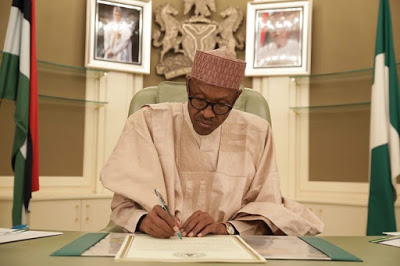
Thursday, 5th July, 2018, President Buhari signed the Executive
Order On The Preservation Of Suspicious Assets Connected With Corruption And
Other Relevant Offences. The Executive Order which is a new tool in the fight
against corruption in Nigeria seeks to inter alia restrict dealings in
suspicious assets, subject to investigation or inquiry bordering on corruption
in order to preserve such assets from dissipation, and to deprive alleged
criminals of the proceeds of their illicit activities which can otherwise be employed
to allure, pervert and/or intimidate the investigative and judicial processes.

The
Executive Order, in its Section 5, defines the term asset as including funds,
liquid assets, receivables, stocks, bonds, insurance policies, shares in listed
and unlisted companies and all manner of fixed assets. According to the
President, as provided in Section 15(5) of the Constitution, it is a fundamental
objective and directive principle of state policy for the State to abolish all corrupt
practices and abuse of power in Nigeria.

The
Order further defines corrupt practices as activity involving matters regarding
economic sabotage, including human trafficking, drug trafficking and terrorism
involving funds or assets worth N50,000,000
(Fifty Million naira) and above. It also relates to the misappropriation of
government assets; or the transfer of proceeds of corruption.

However,
one must wonder if this drive to stop the abuse of power does not include the
strict adherence to the Rule of Law and the directions of court, for President
Buhari and his administration have directly disobeyed the order of 6 (Six)
courts to effect the bail of former National Security Adviser. Consequently,
one may conclude that this present administration only chooses to uphold that
the Rule of Law when it suits them most.

Other
Provisions of the Executive Order, No. 6

Section
1

The
Order begins in Section 1, by providing that all assets of any citizen,
government officials or politically exposed persons who are complicit in
corrupt practices are to be protected from dissipation by employing lawful or
statutory means including seeking the appropriate court orders. Furthermore,
subsection B, provides that any government official or person who receives any
form of bribes or engage in corrupt and unlawful practices shall be subject to
disciplinary procedures in line with the Public Service Rules.

The
Order empowers the Attorney – General of the Federation with the authority to
enforce the Executive Order and enlist the cooperation of listed law enforcement
agencies in Nigeria. The Order also mandates the A.G Federation to publish
periodically all a list of assets protected pursuant to the Order. A very major
important part of the section is that it requires the Attorney – General to
seek appropriate Order(s) of court where necessary which is to enable the A.G,
freeze or confiscate any funds or assets which is connected to any corrupt
practices until final determination by a court.

Section
2

The
2nd Section of the Executive Order provides for the prosecution of
anyone who seeks to pervert the course of justice. For instance, by interfering
with the free exercise of the President’s authority; by destroying evidence or by
corrupting witnesses.


Section
3

This
section provides an opportunity for persons whose rights are infringed upon or
contravened by this Executive Order to seek appropriate redress in court.

Section
4

Via
this section, all enforcement authorities are directed to collaborate with the Federal
Ministry of Justice in implementing this order to ensure the preservation of
assets which come under the purview of the Order.

For
more interaction on the provisions of the Executive Order No. 6; please leave a
comment below or send a mail.

Adedunmade
Onibokun Esq.

One Side Of A Story | Kayode Omosehin Esq.

One Side Of A Story | Kayode Omosehin Esq.

My first contact with a law firm was with Paul Usoro
& Co. in 2001. I was just fresh out of Keme Balogun College, Ibeshe. Some
of my classmates thought I might venture into science because of my reputation
in mathematics, especially Bearing and Distance. That subject got me my oldest
nickname “Bearing”.

I was invited to Paul Usoro
& Co. in Lagos Island, by one Mrs. Godwin (Eme or Eneh), a lawyer and
family friend, just so that I would see how beautiful the profession could be.
Apart from her mixed-race complexion and eyes; her carriage, elegance and command
of English language were parts of what fuelled my desire to read law.

When I got to Paul Usoro &
Co., I concluded that it would be law or nothing else. Everywhere was
glittering. The people around too. By the way, it was my first time to
“enter” an elevator! In the conference room where I was waiting for
my host, I saw pictures of the then best performing lawyers for the preceding 3
years on the wall. The experience was awesome. It made a big impact on me and
inspired me throughout my legal education.

My second contact was F. O.
Fagbohungbe & Co., this time, as a law school intern, in 2010. I would have
loved to go to Paul Usoro & Co but no means. First, Mrs. Godwin relocated.
Second, Paul Usoro & Co changed address and because interns were hardly
paid then, I thought it was best to consider an easily accessible law firm of
commercial practice. God bless Hon. Justice Onibokun, who advised and gave me
the names and contacts of some law firms with buoyant practice in Lagos. I led
the interns from Law School to F. O. Fagbohungbe & Co. Marina, Lagos.

I was working like a full-time
lawyer in terms of commitment and participation in the office work. I would
take positions and express opinions even tried to research some esoteric legal
propositions conceived in my head to maintain visibility. It paid off. Apart
from a cash reward of N50k to each intern, the experience and a valedictory
party put together for us, I was glad to be informed by Justice Onibokun that
“Chief (Fagbohungbe) spoke so well of you.” This feedback fortified
my resolve to be better at it.

The next contact was with
Aelex for NYSC. At Aelex, I didn’t wait to take the job. After winning the 1st
prize in criminal litigation at the law school, I resolved to train in a 1st
tier commercial law firm. The knowledge of criminal law is good and thank God I
got it. But I didn’t want to end up being known only as a “criminal
lawyer”. So, I got posted to Aelex for NYSC.

I took tests and oral
interviews, the last panel had the highest management members. Theo Asotie was
also there. He won the 2nd prize in criminal litigation. Expectedly, he got the
job and did about 6yrs before porting to the Legal Dept of Diamond Bank at its
head office. Aelex was tough but of course promising. From my market research
in 2011, Aelex was paying a corper N95k/month! Also, NYSC stipend was about
N19k. You can pause to do the maths. But I changed my mind after the last level
of interview just before anyone of us got an offer.

I had wanted to train with
Mrs. Adekoya being a leading and Harvard-trained lawyer, but I reckoned from
the encounter that she would be a very strict disciplinarian. Then I thought of
punctuality. From Mile 12 bus stop to Falomo U/bridge, it took me 2hrs or more,
depending on the traffic, available BRT buses at Mile 12 and Keke Marwa
(tricycles) at Onikan/TBS. So, I knew my punctuality was in doubt even when I
set my alarm to go off at 5am. Why? Because I did a week trial, waking up,
dressed and went to the office building just to see how much time it took. I
was not only late on Monday and Tuesday, I was worn out.

Also, I had always believed
that NYSC was my biggest chance to get a good and sustainable job.
Sustainability was always on my mind. As a corper, I had intended to work so
hard that my employers would have no other choice but to retain me. But in
Aelex, I feared punctuality issues might stain my record and I wasn’t sure Mrs.
Adekoya and other partners could forgive that. So, I took precautions to look
for other equally good opportunities. I wrote few job tests and turned down a
few like Eternal Oil and Gas Plc offer of N30k.

Finally I to got Ajumogobia
& Okeke, Sterling Towers, Marina Lagos led by another leading and
Harvard-trained SAN, Mr. Odein Ajumogobia.

I digress. In Aug 1998, after
MKO’s death, I went with my late dad to a man’s house in Ikorodu to discuss a
project. I made the trip because I was on holiday. I didn’t ask if the man was
a lawyer. What I asked him was permission to read a magazine I found on his
table titled “Billionaire Lawyers: How they made their money.” I read
fascinating stories of successful lawyers like TOS Benson, Teslim Elias,
Adetokunbo Ademola & others. I believed the old men deliberately continued
“gisting” just to allow me read much of it.

Every lawyer interviewed in
the magazine disclosed his or her tipping point. One thing struck me in all. It
wasn’t their brilliance that made them succeed. Also, it was not just hard work
though that was said to be key. But it was opportunity combined with the
preceding two. Corollary to that was the fact that, apart from few pathfinders,
someone else gave them the opportunities that defined what they later became in
life. I once read somewhere that you should succeed in life if you have
opportunity to do what you prepare well for and you do it well without
interruption. You may read that again but not literally.

Back to Ajumogobia & Okeke (A&O). Truly, I
didn’t know Sterling Towers had any law firm in it. But after seeing a lot of #BostonLegal, I stared and imagined that if any law
firm was in the building, going by its elegance, it must have been one of the
best. I found out the building has a law firm on the day I dedicated to touring
the entire Lagos Island to compile the names and addresses of big firms.
Websites weren’t that popular and, even if any big firms existed online, it was
cheaper to move around than to “browse” in many cyber cafes around
me, most of which were offering epileptic services.

I recall telling some friends
that Lagos is a 3-region state, for the purpose of legal practice though. The
Island (Victoria Island, Ikoyi and L/Island), the Mainland (Surelere and Ikeja)
and the Rest. Those who know the names of big law firms would find them more on
the Island. I had planned to write 150 job applications with the expectation of
50 employers’ interviews, resulting in 5 offers with at least 1 job with better
rating than the rest! Yes I did the maths but didn’t apply it all. Because I
got the A&O offer with my 7th application letter!

The story of my employment
life is not complete. That’s because I left Ajumogobia & Okeke. This time
to Udo Udoma & Belo-Osagie. The job was advertised and a copy of the
advertorial clip was forwarded to me by my friend, Akoh Ocheni. I checked the
firm’s website and I was fascinated by the sterling profiles of its partners,
including a Harvard-trained lawyer, ex-Senator and current Minister of Nigeria
and a business savvy Managing Partner. The middle level team is also solid. So,
I applied.

I met familiar faces during
the written test and interview sessions. I recalled one of us joking, in the
course of waiting for test materials, that it was unnecessary for them to
continue with test because he believed if it was a single placement, Kayode
Omosehin would get it. We laughed about it. I wish I was that fantastic in the
job interviews.

Like I wrote earlier,
opportunities are the large parts of what constitute a success in any
endeavour. I was employed as other job applicants had expected. One month after
Chisom Ndubuisi. But that was because the first choice of the firm didn’t take
it. Not because it was not a good offer. But because he had accepted an earlier
offer from another equally good law firm, in the same building. So, I may not
be a fantastic job applicant, after all. But I was not bad too.

One thing is important for any
worker seeking to make a career move. Be gentle about it. I learnt that long
ago. If your employer wants you to put in additional period, do so unless you
have obligations elsewhere. The earth is getting smaller with technology. No
living thing remains the same forever, larvae or chickens. We are all in a
small space where the weak ones choke easily. But consider yourself lucky and
be grateful if you have had an opportunity to train and work with the best
hands in any sector.

Tutelage with experienced
seniors is important in all fields and it is second to nothing. Even those who
are forced to start out on their own for lack of opportunities have devised a
way out. The smart ones usually have a more experienced law firm at hand to
consult and work with. That’s how a sustainable generation is built. Thanks.

Kayode
Omosehin, EsQ.

Principal
Associate at Koriat & Co.

Franchising in Nigeria:Models and Legal Considerations

Franchising in Nigeria:Models and Legal Considerations

Introduction
In our current economic clime with the growth of consumerism, markets for goods and services have become increasingly globalised with the coming of age of information technology. Franchising provides a means of expanding a business’ reach into new markets, new products and access to a wider customer base without the need for extensive capital investment. We will discuss the various models before delving into legal/regulatory/commercial considerations.

Franchising Models
Master Franchising 
Under this model, the franchisor (Master Franchisor) grants a third party (the Master Franchisee) the right to operate the business in a given territory, vide a Master Franchise Agreement (MFA). The Master Franchisee is referred as such because it has the right to grant “sub-franchises” to third parties within that territory while also receiving franchise fees from subsequent franchisees. The Master Franchisee effectively becomes the franchisor for that territory, operating the business and recruiting, training and managing a network of sub-franchisees. 
The franchise fees obtained and other ancillary fees obtained from the sub-franchisees may be split between the Master Franchisor and the Master Franchisee, or the Master Franchisee could have a specific franchise fee obligation irrespective of the fees received from sub-franchisees. 
Direct Franchising 
In this arrangement, the franchisor grants a third party the right to operate a single item business, rather than the right to open multiple outlets in a territory as in the multi-unit Developer Franchising or the Master Franchising model. This may be appropriate where the concept is not suited to multiple units (e.g. retail, quick service restaurants etc.), or where a franchisor prefers to have a direct relationship with each franchise operator in a territory. 
Multi-unit Developer Franchising 
Here, the franchisor grants a third party the right to exploit a designated territory by opening multiple outlets. There is need for the third party franchisee to have considerable financial resources in order to fully utilise the territory being granted by the franchisor. This structure is commonly used in retail franchising.
Management Franchising
This structure is more common when the developer has sufficient capital to invest in establishing the brand in a given territory, but does not have access to the depth of operational expertise and resources required to help ensure its success in that market. The developer obtains the right to operate an outlet(s) at the location but will engage a management company to operate the business on its behalf, which could be an affiliate of the franchisor. This structure is very common in the hotel and leisure sector.
LEGAL CONSIDERATIONS 
Whatever model is adopted, the franchise attorney must ensure that strategies are put in place (dependent on the party he represents) for the efficient operation of the franchise.
Brand Protection
Businesses should invest prudently to ensure that each target market will be underpinned by registered trademarks, patents, design rights (if appropriate) etc. Intellectual Property is usually never in perpetuity and the franchisor must ensure that a mechanism is put in place for renewals. Section 23 Trademarks Act, Cap. T13, LFN 2004, for instance provides that the registration of a trademark shall be for a period of seven years, but may be renewed from time to time. Patents, on the other hand have a limited term. Section 7, Patents and Design Act, Cap. P2, LFN 2004 provides that the term of a patent shall be twenty years from the filing date of the application. 
Real Estate-Franchise Lease
It is important for the lease and franchise term to be synchronized. A key issue that could arise, where the terms do not align is that a franchisee may be left with no premises from which to operate or the franchise term ends but the lease term is still operational. Both of these scenarios are not only uncomfortable but can mean unnecessary financial exposure for franchisees.
In sorting out the real estate factor in franchising, there are two usual outcomes: either the franchisor or the franchisee holds the lease. The franchisor holding the lease is a more straightforward arrangement because at the end of the franchise relationship, the franchisor simply recovers the premises from the franchisee (tenant). It should be noted that by holding the lease, the franchisor is primarily liable if the franchisee is in default of its (‘sub-tenant’) obligations. 
Where the franchisee is to hold the lease, the franchisor may assist the franchisee to locate a suitable property and negotiate with the lessor to secure: competitive rent; rent-free period; and other incentives for the franchisee. This could be key in enhancing the profitability prospects of the franchise, especially in the start-up period. Many franchisors provide this service and even charge the franchisee an additional fee as part of their franchise package. Depending on the circumstances, it may be prescient for the franchisor to obtain an acknowledgment from the franchisee stating that the franchisee has: (1) conducted its own due diligence concerning the premises, (2) satisfied itself that the location is suitable; (3) entered into the lease as a result of its assessment of the premises; and (4) not relied on any representations or statements from the franchisor regarding the suitability of the premises. This is in order to reduce potential liability on the franchisor.
With the franchisee as lease holder, the franchisor has no control of the premises, should the franchisee exit the franchise relationship. This could result – if the franchise agreement omits to preclude it – in the erstwhile franchisee deciding to remain in occupation of the premises under a different brand. In order to avoid this, the franchisor can insist on a clause in the franchise agreement stating that upon termination of the franchise relationship, the franchisor be granted the right to ‘step into the shoes’ of the franchisee in respect of the lease. This clause would be useful where the franchisor wants to retain possession of the premises due to its marketability, customer target and range etc. 
Restraint of Trade
It may be necessary for the franchisor to include a trade restraint clause at the determination of the franchise relationship. This is to ensure that the franchisee is unable to use trade secrets garnered from the franchisor to operate as a competitor within a certain period. In Nigeria, the courts have held that trade restraint clauses are enforceable as long as same is within the scope of reasonability. In Koumolis v Leventis Motors Limited [1973] NSCC 557, the Supreme Court (SC) held that it is the role of the employer who seeks to enforce the restraint clause against the employee to show that the clause is designed for the protection of some exceptional proprietary interest of the employer and it is reasonable for such purposes. It went further to hold that an employer can lawfully prohibit the employee from setting up a competing business, or accepting a position with one of the employer’s competitors, so as to be likely to destroy the employer’s trade connection by a misuse of his acquaintance with the employer’s customers or clients.  
Labour Issues
A clause should be included stating that the franchisor cannot directly control the franchisee’s employees, including hiring or firing them. This is particularly important as globally, there is a debate being held as to whether the franchisor can be held jointly liable with the franchisee in the event of a breach of labour laws. Joint employer liability means the franchisor is jointly and severally liable for any labour or employment law violations committed by its franchisees (e.g. unpaid wages, unpaid benefits, minimum wage violations, anti-unionization activity, etc.).
In Australia, the Fair Work Amendment (Protection of Vulnerable Workers) Act 2017 (FWAA) was passed to protect employees by extending potential liability to franchisors for employment law breaches by franchisees. The liability is not automatic, but will arise where the franchisor “knew or could reasonably be expected to have known that the contravention by the franchisee entity would occur, or a contravention of the same or similar character was likely to occur”, subject to a defence that the responsible franchisor employed reasonable steps to prevent the breach (section 558B FWAA).
Co-employment refers to a situation where an employee would be regarded as being employed by two employers any one of which may be bound by the terms of the contract of employment, and where each party has duties and obligations as an employer towards the employee. The principle of co-employment has been recognised by Nigerian Courts. For example, in Onumalobi v. NNPC & Anor. [2004] 1 NLLR (Pt. 2), 304, the SC held that the two Respondents were co-employers of the Appellant, relying on section 91 Labour Act Cap L1 LFN 2004 (LA). Section 91 LA defines an employer as “any person who has entered into a contract of employment to employ any other person as a worker either for himself or for the service of any other person…” The question whether two employers could be held to be co-employers in respect of an employee, will depend on the contract of employment and the surrounding circumstances. 
Wright v. Mountain View Lawn Care, LLC Civil Action No. 7:15-cv-00224, was a case in the United States of America where an employee of a landscaping franchise could not show that the franchisor exercised enough control over her employment or that other factors suggested it should be held liable as a “joint employer” for the alleged unlawful acts of the franchisee. She relied on the franchisor’s control over logos, uniforms, letterhead, and vehicle colour. However, the West Virginia Federal District Court explained that control over the franchisee was not relevant and it was control over the plaintiff’s employment that mattered—which was lacking here.
Conclusion
Franchising is an important business tool; however it must be properly structured in order to deliver its anticipated economic benefits. In March, 2018, the United States-based doughnut and coffee franchise, Krispy Kreme, opened its doors in Nigeria; it is being promoted by Quality Foods Africa Nigeria Limited (QFA). Master Franchising might be the most suitable model of operation in Nigeria in order to ensure rapid growth and expansion whilst retaining the high standards.
However, prospective parties must ensure they conduct their due diligence. Franchisors must ensure that adequacy of process to protect themselves from labour infractions committed by franchisees. Some of these include: franchisors limiting the level of trainings offered to franchisees; trainings should be limited to franchise owners and key employees with managerial authority; online training modules for lower level employees (if available) should be licensed to the franchisees, who in turn will provide the online training to their employees. Others are non-involvement in franchisee’s employment or human resource related practices such as hiring, training, firing, disciplining, setting work hours, handling payroll, providing worker’s compensation insurance, etc. 
If job applications may be submitted through the corporate website, it should be stated clearly that they will not be reviewed by the franchisor but will simply be passed along to the appropriate franchisee. This is to ensure that the franchisor cannot be deemed an employer according under section 91 LA. A well-structured franchise would reduce future disputes between parties as well as ensure both parties’ long term investment goals are met.
Franklin Okeke is a commercial lawyer focusing on franchise arrangements and practices with Messrs LeLaw Barristers & Solicitors, Lagos
Privileged communication: does the law offer sufficient protection? | Zeniath Abiri

Privileged communication: does the law offer sufficient protection? | Zeniath Abiri


Privilege is a rule of evidence that allows
the beneficiary of the privilege to refuse to disclose information or provide
evidence about a certain subject or to bar such evidence from being disclosed
or used in a judicial or other proceeding. This principle was judicially
defined in B v. Auckland v. Society,[1]
as a right to resist the compulsory disclosure of information. Privilege acts
to protect a witness from answering questions in evidence, and/or entitles a
party to refuse to produce documents for inspection, during the course of legal
proceedings. This doctrine is thus, not just a rule of evidence, but is also a
substantive legal right. It follows that it would amount to a breach of this
fundamental legal right, for a court to draw any adverse inference, from the
making of a valid claim to privilege.[2]

Privilege
communications is protected in various forms and in varying degrees, in
different jurisdictions of the world. Part 3.10 of the Australian Evidence Act
2011,[3] deals with privileges and by Sections 117-128
thereof, the following privileges have been identified; (a) Client legal
privilege, (b) Journalist privilege, (c) Religious confession privilege and (d)
Privilege against self-incrimination.

In
Nigeria, Sections 164 – 176 0f the Evidence Act of Nigeria 2011[4] and Section 16 of the Freedom of Information Act,
L.F.N 2011,[5] provides for privileged communication. A combined
reading of those sections, reveals that the following types of privilege exist
in Nigeria; (a) Spousal privilege. [6](b) Judicial privilege,[7] (c) Legal profession privilege,[8] (d) Privilege against self-incrimination,[9] (e) Health worker – patient privilege ,[10](f) Journalist privilege,[11] and (g)Without prejudice privilege.[12]

While
some jurisdictions offer legal protection for communications between Priest and
penitent, Nigeria offers no such protection. Such protection is only offered by
the rules of the profession, where such rules exist.

In
the rest of this paper, I focus on the three most prominent instances of
privilege, as these instances cut across most jurisdictions of the world.

Legal Profession Privilege.

Legal
professional privilege seeks to protect communication between a client and his
lawyer. It is based on the need to obtain legal advice, freely, safely and
sufficiently. The rationale for the rule of legal professional privilege, was
given in Anderson v. Bank of British Columbia[13],
in the following words; “….a man, in order to prosecute his rights or defend
himself,…should have resource to the assistance of professional lawyers….he
should be able to place unrestricted and unbound confidence in the professional
agent, and the communication he so makes, should be kept secret, unless with
his consent, that he should be enabled to properly conduct his litigation.”[14]

Although,
privilege belongs to the party and not the lawyer, the right of privilege is
most often asserted by the lawyer.[15]
This privilege is also protected by Rule 19 (1) and (2) of the Rules of
Professional Conduct for Legal Practitioners, 2007, in Nigeria (“R.P.C
Nigeria”).[16]

Duration of Legal Profession Privilege: The rule is
generally, once a privilege, always a privilege and once privilege is
established, the mouth of the lawyer is ‘shut forever’.[17]
This position was reaffirmed in Nationwide Building Society v. Various
Solicitors,[18]
Blackburn J. took a differing view in where he held that the right to privilege
is absolute and the lawyer’s mouth is indeed, ‘shut forever’. In the earlier
case of R. v. Derby Magistrates Court Ex P. B.,[19] Lord Nicholls said obiter, that in circumstances
where the client has no interest in asserting the right to privilege and the
enforcement of the right would be seriously prejudicial to another, in
defending a criminal charge or in some other way, he cannot expect the law to
protect the right. I agree more with the Lord Nicholls view, as same seems to
ensure that the interest of justice is better served, which is the whole
essence of the legal system. It is important to note that the duration of this
form of privilege, continues even after employment has ceased.[20]

Categories of Legal
Professional Privilege:
There are basically two categories; (a) Legal
advice privilege: protects communication between a client and his lawyer, which
are part of the process of the giving and getting of legal advice, without the
existence or contemplation of legal proceedings; (b) Litigation privilege only
covers communications made when there a pending litigation or a reasonable
expectation of one. This form of privilege protects information which comes
into existence, for the purpose of gathering evidence for legal proceedings and
usually, includes communications made to 3rd parties, for this purpose.

Instances where information
amounting to Legal Profession Privilege may be admitted.

By
Rule 19 (3) of the R.P.C Nigeria, a lawyer may reveal confidences or secrets
with the consent of the client or clients affected, but only after a full
disclosure to them, in the following instances;

confidences
or secrets when permitted under the rules of the R.P.C Nigeria, or required law
or a Court order;

where
the privileged information reveals an intention of his client to commit a crime
and the information necessary to prevent the crime;

secrets
necessary to establish or collect his fee or privileged communication necessary
to defend himself or his employees or associates against an accusation of
wrongful conduct, and

where
a court finds that the interest of the public in having information disclosed
is greater and far more vital than protecting the attorney-client communication.[21]

This
is the general position in nearly all jurisdictions worldwide.

“Without Prejudice” Privilege.

This
refers to written or oral communications, which are made for the purpose of a
genuine attempt to settle a dispute, without having to recourse to litigation.
Such communications are not admissible in evidence.[22]

In
Cutts v. Head,[23]
Oliver C.J said the rationale for this rule, is to encourage disputing parties,
to as much as possible, settle their disputes, without recourse to litigation,
and in doing so, parties should not be discouraged by the knowledge that what
is said in the course of such negotiations, may be used to their prejudice, in
the course of legal proceedings.[24]

Information disclosed without
prejudice may be given in evidence in the following circumstances:

When
the court needs to determine whether the parties reached a
compromise/agreement.

To
determine whether an agreement apparently concluded by the parties, should be
set aside on the grounds of misrepresentation, fraud or undue influence.

To
establish a clear statement which is made by one party to the negotiations, on
which the other party to the negotiations is to act and does infact act, may be
admissible, as giving rise to estoppel.

To
explain delay or acquiescence.

To
prevent the inappropriate use of privilege. Such as where a party cites the
negotiations as reason for the delay, the other party may produce the
communications to show they do not justify the delay.

Where
the word, “without prejudice save as to cost”, is used, the communications may
be admitted on questions as to cost.[25]

In
addition to the above, communications made ‘without prejudice’ will be admitted
where the dispute has been resolved or the parties agree to waive privilege.

Privilege against
Self-Incrimination.

No
person is bound to answer any question in legal proceedings, if the answer
thereto, may expose him to any criminal charge or penalty. It also encompasses
the accused person’s right to silence. However, where the accused in a criminal
trial chooses to give evidence, he may be asked any question in relation, in
cress examination, irrespective of the fact that such questions tend to
incriminate him with respect to the offence charged. He may not however, be
asked questions tending to show he committed other offences, save for limited
situations[26].
The privilege allows a person to refuse to incriminate himself or his spouse.[27]

Because
this form of privilege is usually claimed after the holder has been sworn as a
witness, he cannot refuse to attend court, for fear of incriminating himself. [28]

It
is not enough for the witness to simply assert that answering the question
incriminates him. The court must be satisfied that there is reasonable ground
to apprehend such danger to him, from his being compelled to answer the
question.[29]

Transfer of the Right of
Privilege.

Although
unusual, where contractual rights transferred or assigned, includes a claim to
privilege, the claim may also be asserted and enjoyed, by the assignee or
successor-in-title.

Conclusion.

It
is my opinion that despite the exceptions to the rule on privileged
communication, the principle offers sufficient protection for those it seeks to
protect. As it concerns Legal Profession Privilege for instance, The R.P.C Nig.
makes it professional misconduct, for a legal practitioner to breach this
duty, and entitles the client to sue such a legal practitioner, and/report
the legal practitioner to the relevant body, for appropriate disciplinary
measures to be taken. Even though exceptions to the admissibility of privileged
communications exist, they are limited in scope and applied very strictly. It
is a right treated with highest regards and the need to waive it must outweigh
the need to protect the right, unless where the holder expressly waives it.

[1] [2003] 2 A.C.
736, para. 67,

[2] See Wentworth v.
Lloyd [1864] 10 H.L.C. 589.

[3] (hereinafter
referred to as the E.A Aust.)

[4] (hereinafter
referred to as the E..A Nig.)

[5] (subsequently
referred to as the F.I.A Nig.)

[6] S. 164, E.A.
Nig.

[7] S. 165, E.A.
Nig.

[8] .S. 170-173 E.A.
Nig, S.16 (a) F.I.A. Nig.

[9] S. 176 E.A. Nig.

[10] S.16 (b) F.I.A.
Nig.

[11] S. 16 (c),
F.I.A Nig.

[12] with respect to
disclosures made in the course of negotiations to settle a dispute. S. 28 E.A.
Nig.

[13] [1875-1876]
L.R. 2 Ch. D. 644 @ 649

[14]
  Horn v. Richard (1963)2 All N.L.R. 40 @ 41 and Three rivers D.C v.
Bank of England (No. 5) [2003] Q. B. 1556, para. 39.

[15] (except in
cases where the claim of privilege is against self-incrimination).

[16] S.126 (b) E.A.
Aust. (It must be noted that while privilege protects documents from
inspection, it does not necessarily protect them from disclosure).

[17]  The Agis
Blaze [1986] 1 Llyods Rep. 203 CA.

[18] [1999]
P.N.L.R., 52 @ 69

[19] [1996] 1 A.C.,
487

[20]   S.
170 (3) of the E.A. Nig..

[21]  S. 25
(1)(c) F.I.A Nig..

[22] GPI Leisure
Corporation v. Yuill [1997] 42 N.S.W.L.R., 225.

[23]  [1984]
Ch. 290 @ 306

[24] See also, the
Nigerian case of Chief  Oredin v. I.P.H. El Khalil & Ors. [1978] 2
OY.S.H,C. 325.

[25] See Unilever v.
Proctor & Gamble 28 [2001] 1. All E.R., 783, per Robert Walker L.J.

[26] Documentary
Evidence
Charles Hollander Q.C. Sweet & Maxwell, (9th edition),
para. 17-01. See also, Section   36 of the Constitution of Nigeria
1999 (as amended)

[27] See Blunt v.
Park Lane Hotel Limited [1942] 2 All E.R. 187 @ 189.

[28] See Boyle v.
Wiseman [1855] 10 Exch. 647. published by Sibon Books Ltd,

[29] See R. v. Coote
[1873], L.R. 4 P.C. 599. See also,
Law & Practice of Evidence
in Nigeria
, by Afe Babalola, 2001 (ch 9 p. 173).

Zeniath Abiri

Litigator, Property, Probate Consultant and
Human Rights Activist.

Source: LinkedIn 

Image – www.blog.ipleaders.in