by Legalnaija | Apr 21, 2020 | Uncategorized
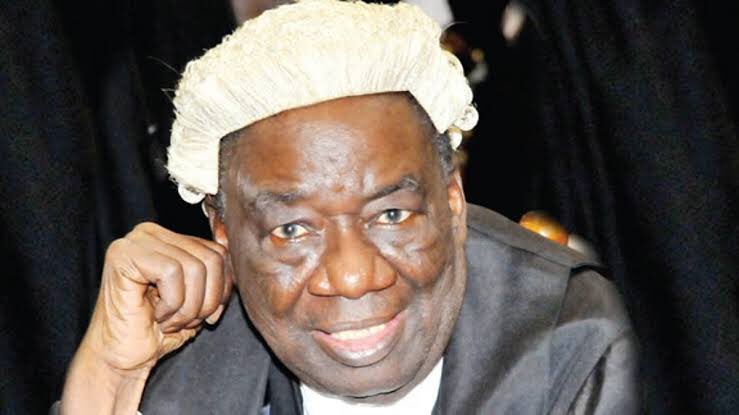
TRIBUTE TO A LEGAL COLOSSUS
The news of the passing of the eminent legal practitioner and foremost statesman, Chief R.O.A. Akinjide, SAN has just reached me. On behalf of my family and Chambers, I convey my heartfelt sympathy and condolences to the entire members of the Akinjide family and dynasty.
Without any gainsaying, Chief Akinjide lived a full cycle, whether as a lawyer, a politician, a scholar or statesman. He made a success of every venture he embarked on. As a lawyer, he was very prodigious, forensic, profound, dynamic, courageous and seminal. He was among the second set of the early lawyers in Nigeria to be conferred with the prestigious rank of Senior Advocate of Nigeria in 1978, alongside the late Chief Obafemi Awolowo, SAN, the late Chief Kehinde Sofola, SAN, the late Chief G.O.K. Ajayi, SAN among others. Before then, he had served as the President of the Nigerian Bar Association (NBA), during the military era. He distinguished himself as one of the most outstanding Presidents of the NBA. Between 1979 and 1983, he served as the Attorney-General and Minister of Justice of Nigeria.
At a point in time, he was also the Chairman of the Body of Benchers, while for several years, he was the Chairman of the Body of Senior of Advocates of Nigeria (BOSAN). In effect, he assumed and occupied every available space and position in the legal profession, and in all of them, he creditably discharged himself.
As a politician, he was first a Federal Parliamentarian before assuming the office of Minister of Education in the First Republic, and he would be remembered as one of the youngest federal ministers ever produced in Nigeria. As a statesman, Chief Akinjide stoically pursued the clamour for a true federalism in Nigeria, both in his writings and public speeches, while at the same time presenting himself as a father figure who cultivated friends across all divides. That Chief Akinjide was a scholar of very high repute is beyond any shadow of doubt. He was prolific in his writings and highly cerebral in his submissions, in and out of court.
In company of our heroes past, particularly, Chief Obafemi Awolowo, Dr. Nnmadi Azikiwe, Sir Ahmadu Bello and others, Chief Akinjide was in the forefront of the struggle for Nigeria’s independence in 1960. A titan has departed; a legal colossus and potentate has been called home; a highly distinguished statesman has gone to rest.
May the pleasant soul of this great mentor, leader and nationalist rest in peace.
Chief Wole Olanipekun, OFR, SAN, LL.D, FCIArb., FNIALS
Lagos
21st April, 2020

by Legalnaija | Apr 17, 2020 | Uncategorized
The outbreak of the novel Coronavirus
Disease- (COVID-19) – has brought about a global economic downturn and negative
impact on global commercial activities with economies at the brink of a recession.
Generally, labour relations are governed by the labour legislation in different
countries and more specifically by contracts of employment, which spell out the
terms which have been agreed to by both employer and employees to govern their
relations during the term of employment.
A pandemic of this type is unprecedented
and it is not unlikely that most employers in drawing up employment contracts
would not have contemplated circumstances which would bring about this level of
interruption and disruption to work as we now have with the COVID -19. Businesses
now have to deal with issues of non-performance of obligations in employment
contracts and situations which employment contracts, company policies and
employee handbooks cannot deal with sufficiently. In this note, The Employment
and Labour Lawyers Association of Nigeria (ELLAN)[1] gives
some guidance on some common employment and labour related issues that have
been thrown up by the pandemic.
1. Can
An Employer Terminate An Employment Contract As A Result Of The
Impracticability Of The Employee To Do Work And Earn A Salary?
It is
the duty of the employer to provide remuneration for work done. Both the
employer and the employee can agree on the nature and scope of work to be done
by the employee as well as the amount the employer will pay as remuneration and
these among other terms is usually stated in an employment contract.
As a
result of the rapid spread of the COVID 19, many governments are enforcing
different measures to restrict movement in order to contain its spread with the
attendant effect of the enforcement of such measures having an extensive
negative impact on the economy and by extension labour relations. The most
dominant effect of COVID -19 on labour relations in every industry is the change
in the workspace – employees can no longer work from their offices as agreed
with the employer and where practicable, carry out/discharge the specific
duties from home/remotely – will have to adapt to working remotely. Whilst this
arrangement is not new to the world of work and many private organisations have
integrated the idea of working remotely into the employee’s work schedule, many
private and even public institutions (especially civil servants comprising
one-third of the working population in Nigeria) are yet to fully appreciate the concept of working
remotely. In Nigeria, many business models are still quite fixated on the
traditional models of work which require an employee to resume at a physical
office in order to carry out tasks usually between 8a.m to 6p.m. As a result of
this change in workspace (and cash flow expectations for the employer resulting
from economic recession) the employee may either not have work to do or the
tools may not be available at home to do the work efficiently as the employer
would have expected.
In
view of this evolving nature of work now occasioned by COVID-19, would an
employer be acting lawfully or within the terms of the contract between parties
if it terminates the contract with its employees on the basis that those
contracts have been frustrated because the pandemic has made it impossible for
parties to perform their obligations under the employment contracts?
Employment
contracts may be susceptible to termination by frustration due to those
occurrences beyond the control of the parties, which can be illness,
imprisonment, an outbreak of war, disease (in this case epidemic/pandemic),
change in law or regulations and the death of either party. Whilst any of these
occurrences may be termed a frustrating event capable of discharging the
parties from their contractual obligations, employers must be careful not to be
too quick to terminate employment contracts on the incidence of such
frustrating events. What is crucial is that both the employer and employee must
be seen to make reasonable adjustments to ensure there is a continued exercise
of rights and fulfillment of obligations as permitted in the circumstance.[2]
Some
considerations which an employer should take into account before deciding on
termination as a result of a frustrating event such as the COVID-19 pandemic
are: adjustments in expenditures to retain liquidity and working capital, the
nature of the job and whether the employee has developed translatable skills
that can be useful to the organisation during a recession, the nature, length
and effect of the event, whether in the circumstance a reasonable employer
could have been expected to wait any longer before terminating the employment, and has the employer made any reasonable
adjustments to ensure the continued existence of the contract?[3]
On the
other hand, where a contract of employment provides for a force majeure clause which contemplates the occurrence of a
specific supervening event or circumstance that impedes or prevents an employer
or the employee from performing one or more of their respective contractual
obligations, such force majeure clause
may be relied upon in consideration of suspending their rights and obligation
under the employment contract. In that
circumstance, the employer/employee will have to prove that:
a) such occurrence was reasonably unforeseeable
at the time of the conclusion of the contract
b) such
occurrence is beyond the control of the employer/employee and could not be
reasonably avoided, and
c) due
to the occurrence of such event, the employer/employee is incapable of
performing obligations under the employment contract.
Employers must
therefore be deliberate about spelling out what constitutes a force majeure
circumstance and the mechanism for remedies available to the parties in the
contract of employment. Failure to do so means that a supervening event
such as an epidemic which prevents performance of the contract will not (and
cannot) be described as a force majeure event, so as to provide relief from
performance – because it has not been named as a qualifying event in the
contract. In the event that the employment contract provides for the force majeure consideration, the
employer can invoke the clause by a written notification informing the employee
that the parties are absolved from carrying on their obligations from the date
of occurrence of the event. In such circumstance where the contract of
employment provides for termination in the event that an impediment arises, it
is important that the due process for termination (e.g. notice pay requirement,
severance packages, terminal benefits, or consultation with union
representatives) must be followed and the employer complies with international
best practices in compensating an employee for the loss of earnings incurred as
a consequence of the termination.[4]
It is
also important to state in the notice of termination that the pandemic is the
reason for termination. This is against the backdrop of the fact that it is
contrary to international best practices for any employer to terminate an employment
contract without giving the employee the reason for such termination[5] and such
termination has in some cases been interpreted by the National Industrial Court
to amount to an unfair labour practice.[6]
2. Can
an employer suspend the payment of salaries or reduce salaries as a result of
its inability to generate income due to the outbreak of the pandemic?
By the
principles of the law of contract, parties to a contract are bound by its terms
and cannot vary the terms and conditions of the contract except with the
consent of the other party. This extends to employer – employee relationship and the
general principles relating to the construction, termination, amendment and
enforcement of a contract will apply to an employment contract unless a
specific labour legislation provides for derogation from the general
principles. The National Industrial Court of
Nigeria (NICN) in determining controversies relating to the forfeiture of an
employment benefit following a variation of the terms of a contract will
usually find in favour of the employee.[7] Variation and material changes to an
employment contract must be communicated to employees well in advance of when
the same would be made/implemented and this is to promote industrial harmony
such that material changes are not unilaterally made by the employer and
imposed on the employees if such an amendment is made effective.[8] Every employer should
engage its employees before making such changes as salary suspension or
reduction.
3.
Can an employer mandate an employee to
proceed on paid /unpaid leave in view of the compulsory stay at home period?
The Nigerian Labour Act
provides for at least six days paid annual leave[9] and most
employment contracts state in clear terms the number of annual leave days which
can be taken by the employee. Due to the compulsory stay at home occasioned by
the outbreak of the pandemic, many organisations are considering restructuring
or bringing forward the scheduled leave days/period of employees such that the
leave days are supplanted by the period now being spent at home. We reckon that
this cannot be done unilaterally and every organisation must consider its
business process before enforcing such rescheduling. If the employees are
working from home, it is likely that the courts would consider it to be an unfair
labour practice for them to be compulsorily made to take their leave days when
they are turning in expected deliverables. It has been established that
employment relationships are generally characterised by the inequality of
bargaining power.[10] It is
thus important that whatever leave structure is being proposed by an
organisation must be agreed with the employees[11] before
enforcement, otherwise it can amount to an unfair labour practice for which the
court may see the need to protect and or avail the weaker party (the employee
in this case) extra contractual protections.
4.
Can an employer mandate its employees to
take a furlough leave as a result of the lockdown occasioned by the outbreak of
the pandemic?
A Furlough
is a mandatory suspension from work for either a short or long period of time.
An organization may furlough its employees where it lacks the financial
resources to keep paying them but does not want to lay them off. During the furlough
period, the employee is not expected to do any work and receives no salaries.
Furloughed employees retain their employment rights but can take advantage of
unemployment benefits, such as government allowances like wage subsidies.
This type of leave
does not apply as a principle of employment law in Nigeria and there is no
legal framework for its application. However, the principle can be applied in
Nigeria under the permitted practice of suspension of employment contracts upon
the agreement of both the employer and the employee. If it must be implemented,
it will require the consent of the employees and trade union officials for
unionized industries. The employer and employee would equally have to determine
the terms of the suspension; which benefits and obligations will remain in the
furlough period and which will be totally suspended and what remedies will be
available to each party where there is a breach of the agreed terms. Where such
furlough terms have not been previously agreed upon, the employer must again
engage with the employees as a unilateral enforcement of this type of
arrangement can amount to the employer undermining the rights of the employee
which may give rise to claims of constructive dismissal and unfair labour
practice against the employer.
5. Can
a company suspend the onboarding of new hires whose resumption dates falls
within the lockdown period to avoid paying salary for the period of the
lockdown?
It is
not unlikely that most new hires at this time have either signed their
employment contracts virtually or agreed to the terms expressly (including the
date of resumption), by way of e-mail, a phone call or text message. Whether or
not the new hire resumes at the business premise, the resumption date which now
forms part of the contractual term is binding. The new hire has rights even
prior to the start of the employment[12] or
resumption at the business office and these rights should not be
unilaterally taken away by the employer.
To all
intents and purposes, the new hire is an employee and s/he should undergo the
onboarding process. The Human Resource department/personnel can make good use
of available virtual interaction platforms -including Zoom, Skype for Business
and Microsoft Teams- to get work going. A new hire like any other employee can
work remotely under the instructions/guidance of the assigned line manager and
is entitled to earn a salary for work done.
Where
the work of the new hire cannot be done remotely and the resumption at the
office premises is crucial to the employment, the employer can embark on a
consultative process with such employees to agree on further terms
(re-negotiation of resumption date, payment of minimum wage, reduced
compensation or termination of the contract after an agreed period of time
where the situation remains). Sufficient notice should be given prior to any
suspension, review or amendment of the employment contracts of such new hires.
6. Can
a contract of an employee be terminated where the employee claims not to have
the necessary work tools?
It is
the duty of the employer to make available to the employee proper tools (e.g.
laptops, phones, internet facility, etc.) which will aid the work of the
employee[13]
and also to ensure that Information Technology (IT) systems support working
remotely. The employee will be acting within his right to demand for these
tools if not available where the employee has to work from home. The employer
should also notify the employee of the period of time for completing any
upgrade on the IT infrastructure (e.g. creation of employee files on the internet
cloud to monitor work progression,
inclusion of sign in/out feature) especially if it would interfere with the
work deliverables of the employee.
A
termination of a contract by the employer on the basis that an employee could
not deliver on key performance objectives can amount to a breach of contract
where such employee raises the defence that s/he was not given the appropriate
tools to work with remotely. To ensure the employee has all necessary tools required
for working remotely, both the employer and employee can make reasonable
adjustments For instance, the employer
and employee can agree on the reallocation of sums which make up the salary (e.g.
part of the transport allowance (not currently expended on commuting due to the
lockdown) can be agreed to be used to procure the tools or a soft loan be given
to the employee to procure such tools or any other resource important to
efficiently deliver on his tasks while working remotely from home (e.g. fuel,
online subscriptions for e-learning or virtual interaction platforms).
7. Can
an organization defer promotions and bonuses in view of the effect of covid-19
on income generation?
Promotions are
not employment rights but conditional entitlements of employees and an
organization is at liberty to create the parameters for assessing performance
and consequently promoting deserving individuals in any given circumstance. On
the other hand, bonuses can be a part of contractual
terms (where it is inserted in the
employment contracts or in policies
which form part of the employment contract)
and such terms can be binding
on the employer.
For instance, 13th
month salary is a type of bonus which can be part of a contractual term or
where such has become a customary practice of an organization, it creates an expectation interest. An expectation
interest is capable of creating an entitlement or vesting a
right in an employee and may be recoverable against the employer and the NICN has ruled that such benefits should
not be arbitrarily deferred.
Where an expectation interest of the employee is recognised, the courts will enforce the same in favour of the
employee even where the employer gives in its defence adverse economic impact.[14]
A deferment of such bonuses by the employer without
consulting with the employee may amount to a unilateral variation of the
employment contract for which an employer can be liable for a breach. A deferment of a
promotion on the other hand will have to be considered on a case by case basis.
Where an employee has become entitled to a promotion upon an assessment of his
performance, the employer should have a consultative dialogue with such
employee so as to give the basis for possible deferments of the promotion.
8. Should
human resource policies be formulated/ implemented to reflect the control of
covid-19 infection in the workplace?
In
order to contain the spread of COVID-19 in Nigeria, the President issued the COVID-19 Regulations 2020[15] and the
Governor of Lagos state (having recorded the highest incidences) issued the
Infectious Disease (Emergency Prevention) Regulations 2020 implementing a total
lockdown of activities and a ban on all public gatherings, exempting only
essential services personnel from the restrictions. In essence, such essential
services personnel are employees who are at the risk of contracting the disease
and it is the obligation of the employers to ensure their health and safety. It is important that any organisation
carrying on its business should immediately adopt these regulations as health
and safety measures in the workplace as well as incorporate the necessary
provisions of the Regulation in the existing HR policies.
For the purpose of preventing
the spread of COVID‑19, the prescribed sanitary practices issued by the
National Centre for Disease Control should be maintained during the control period and every
employer or principal must minimize interactions by observing social distancing
practices, ensure that resumption time is alternated among staff, and make
thermometers available for taking staff temperature at the point of entry. Sitting
arrangements in an open plan office should be structured in such a way that at
least 2 metres space is maintained between two individuals. Where individuals
at the workplace form a queue or remain in an area (including a
pantry, waiting area or room, or an area with changing or sanitary facilities
or any point of convergence) for any reason, then every individual on the
queue or at the said area should maintain at least one metre distance away from
any other individual within that area. The safety policy should also highlight
that individuals other than staff who supply services to employees in the
office premises should maintain social distancing at the reception and do not
arrive the workplace at the same time with the staff. Such suppliers should not
remain in the workplace for a longer period than necessary. Physical meeting
with other employees, clients and other third parties should be kept at the
barest minimum and conferencing arrangements should be made available as
alternatives to physical meetings.
HR policies should also give considerations to emergency leave policies
that allow staff to take time off to get tested, offer paid sick days to
affected staff and discourage any form of discrimination in the workplace that
could affect the mental health of sick staff after recovery. Organisations whose
employees are currently observing the stay at home policy should implement and
give effect to these regulations and policies post COVID-19.
9. Are
there any data protection requirements that employers should consider in
relation to covid-19?
Employers
in collecting and processing
data of its employees especially as regards the health status of its employees
who have tested positive to COVID 19 should consider its obligations under the
Nigerian Data Protection Regulations (NDPR), 2019. Such employee data should
only be processed for the purpose of protecting the health interest of others,
performing a task mandated by public health officials or in compliance with a
legal obligation.[16] Public
health laws may however override the provisions of the regulations regarding
consent where applicable. For instance, public health interests will supersede
the employee’s right to consent to the processing of his personal health
information in situations where the employee needs to be compelled to be
quarantined, or tested or forced to receive medical treatment to prevent the
transmission of an infection or communicable disease.[17]
10.
Will injury
sustained while working remotely at home be considered as work injury for which
the employee can be compensated?
The disruptive forces
of technology have made working remotely possible and practicable and the
flexibility of work schedules facilitated by the use of technology are now being
considered in drafting the terms of engagement for an employee. As a
consequence, employment contracts will also have to address injury done to the
employee in the course of his employment, howbeit from a remote workplace.
The Employee
Compensation Act, 2010, the law which provides for the compensation for death
or injury, disease or disability suffered by an employee in the course of
employment defines workplace as any place a person performs work or is required
to be in the course of employment.[18] We are
of the opinion that this wide definition could cover places where remote work
is done even though not specifically mentioned. The unique facts of every death
occasioned or injury done will be considered in determining liability for
injury suffered whilst working remotely as well as the compensation the
employee is entitled to. Employment contracts which set out clear provisions on
injury in remote workplaces will enable both parties define and identify injury
which can be attributable to work being done remotely as well as the remedies
applicable.
Conclusion
Indeed the economic impact of the outbreak
of the COVID 19 has
been devastating and the consequential impact of the outbreak on the world of
work cannot be exhaustively discussed. What is crucial in these times
is for employers to continuously engage and dialogue with
their employees before any decision which can be seen to alter the employer’s
obligations or the employees’ rights is taken by the employer. Both the
employer and the employee must be seen to reasonably adjust to the harsh
realities which we now have to face in the present circumstance to ensure that
labour and employment relations do not break down post COVID-19.
This information provided by ELLAN is not a
legal opinion and should not be relied upon without seeking advice from
professional advisers. Requests for further enquiries should
be sent to ellannigeria@gmail.com
END NOTES
[1] ELLAN is a registered
NGO made up of Nigerian lawyers with expertise in employment and labour
relations. This note is a product of the Publications Committee of ELLAN
with contributions from John Asokhia, Tomilola Tobun and Adeola Osifeko.
2 In the UK case of Warner v Armfield Retail & Leisure Ltd [2013]Eq LR 122, the Employment
Appeal Tribunal held that there was no room for the application of the doctrine
of frustration once the duty of reasonable adjustment arose (as applicable by
the UK Equality Act of 2010).
3
Marshall v Harland & Wolff [1972] IRLR 90; Eggstores (Stamford
Hill) Limited [1976] IRLR 51
4 ILO Employment Promotion
and Protection against Unemployment Convention, 1988 (No. 168).
5
Section 254 (1) (f) and (h) of the 1999 Constitution of the
Federal Republic of Nigeria (Third Alteration) permits the Court to apply
international best practices or interpretation of international labour
standards. See also Section 7(6) of the National Industrial Court Act 2006, Industrial Court Act 2006 and the International Labour
Organization (ILO) Termination of Employment Convention 1982 (No. 158).
6
See Aloysius v. Diamond Bank
Plc [2015] 58 NLLR (Pt. 199) 92 at 134 where the National Industrial Court of
Nigeria took the view that reason for termination must be given. The Supreme
Court has a divergent view. In Obanye v
Union Bank of Nigeria Plc (2018) LPELR 44702 (SC), the Court maintained the
Common Law position that an employer need not justify the reason for a
termination.
7
Ajah v
Fidelity Bank (Unreported Suit No. NICN/LA/588/2017,
judgment delivered on 14th May 2019)
8
JOHESU v. Federal Ministry of Health (2016) 65 NLLR (Pt. 229) 84 NIC
9 Section 19 of the Nigerian
Labour Act Cap L1, Laws of the Federation of Nigeria 2004.
[1]0 ISCARE Nigeria
Limited v. Mrs. Victoria Akinsanya & Anor NIC/LA/484/2012.
[1]1 ILO Holidays with Pay Convention (Revised)
1970 (No. 132).
[1]2 First Bank of Nigeria Plc.
v Nnaemeka Eminike, Unreported Suit No. NICN/ABJ/195/2018, judgment delivered
on 12th April 2019.
[1]3 Lovell v Blundells and T.A
Crompton & co (1943) 77 LI.L Rep 340.
[1]4 Registered
Trustees of Union Bank Pensioners Association v Union Bank and 2 others (NICN/LA/555/2012)
[1]5 Pursuant to the Quarantine
Act, CAP Q2 Laws of the Federation of Nigeria, 2004.
[1]6 Section 2 NDPR Regulations
2019.
[1]7 Section 25 of the Public
Health Law of Lagos State,2015 CAP P16,
Laws of Lagos State.
[1]8 Section 73 of the Employee
Compensation Act, 2010.

by Legalnaija | Apr 14, 2020 | Uncategorized
There
is no gainsaying that the entire planet earth has been held hostage by the
novel Corona Virus pandemic which has spread across the different continents
and has caused its human population to run into hiding in a concerted bid to
halt the spread of the virus. The various lockdown orders issued by governments
all over the world has compelled citizens to spend entirety of their time
indoors and nearly idle, with many having little to do but scavenge the
internet in search for updates on the war against the pandemic. The increasing
idleness occasioned by the stay-at-home orders worldwide, coupled with
widespread panic and the nearing collapse of several economies have led to the surge
and development of fake news relating to the cause and effect of the virus all
over the world. Several individuals and organizations have resorted to
manufacturing and spreading fake news largely bordering on conspiracy theories
to advance their selfish interests. The continuous activities of these fake
news merchants have begun to take its toll on the global battle against the
pandemic outbreak.
Freedom
of expression and the press have always been distinguishing hallmarks of any
democratic society. Without these fundamental liberties, a government which
purports to be of the people, by the people, and for the people cannot function
as such. The practice of democracy in a populous nation is best utilized
through the use of the representative system wherein some persons are appointed
or elected to make and implement policies on behalf of the citizenry. These
representatives need to know the wishes of their constituents. Likewise, the
citizens also need feedback on the performance of their leaders. The media
provides a bridge through which the needs of the citizens are communicated to
their leaders, and vice-versa. The media therefore plays a very crucial role in
the sustenance of any democratic society.
The
media can however be sabotaged to suit the selfish interests of a select few
through the dissemination of unverified or manufactured information also known
as fake news. These selfish interest may be fueled by either pecuniary gain or
some other political benefits. Fake news is often employed to shake the
citizens’ trust in their elected representatives by discrediting the
achievements and exaggerating the shortcomings of the government. This crafty
use of fabricated news is known to have toppled past governments. Nigerian coup
plotters understand the power of the media in controlling a government, hence
they tend to take-over the media houses simultaneously as power is seized from
the Head of State.
Following
the discovery of the index case of Corona Virus in Nigeria, several citizens
characteristically took to social media to re-affirm their absolute distrust
and loss of confidence in the efforts of the Buhari-led Federal Government to
combat the spread of the virus in Nigeria. Some political miscreants and
troublemakers saw the pandemic as an opportunity to score cheap political
points as they attempted to undermine public confidence in the federal and
states governments. However, as the Federal Government reeled out its plans for
the battle against the outbreak, some persons also seized the initiative to
resort to the incessant use of fake news to frustrate the Federal Government’s
effort in the battle against the outbreak.
Dissemination
of fake news has always been a threat to the existence of any society. The
threat is more pronounced in a democratic society, given the presence of a
near-absolute freedom of expression and the press. With the advent of the
internet and the social media, the threat has aggravated to even greater
proportions. Fake news was previously curtailed under military rule by
censoring the media houses and monitoring information disseminated therefrom.
Editors-in-chief of newspapers were held accountable for their publications.
Libel suits were common as aggrieved individuals whose interests had been
slighted by fake news merchants sought succor from the courts. The duty of care
on the media to verify information was very high due to fear of the
repercussions of peddling fake news. This fear however affected the quality of
news released, as news merchants were sometimes intimidated into disguising the
truth in order to please those in power.
In
the democratic era, the constitutional freedom given to the press to
disseminate information has made the battle against fake news challenging. The
internet and social media has further been utilized by fake news merchants who
benefit from the anonymity granted by the internet to continue their
news-fabrication activities. The Nigerian government has likened the effect of
fake news on our multi-ethnic and multi-religious society to a time bomb
waiting to explode. Several campaigns have been launched to curtail the spread
of fake news capable of undermining the peace and national unity of the nation.
The
battle against fake news is met with stiff resistance from the news merchants
who are often sponsored by opposition politicians benefitting immensely from
the societal unrest created by such fabricated news. They feed on the
gullibility of innocent citizens who accelerate the dissemination of unverified
speculations through the aggressive use of social media share buttons. This can
result in widespread anarchy and societal instability which consequently leads
to democratic overthrow and a return to authoritarianism. The 1966 coup which
ushered in military rule in Nigeria was preceded by such propaganda-induced
ethnic violence.
However,
given the wide-reaching effects of the Federal Government’s Lockdown Order, the
tactics employed by previous administrations in the battle against fake news
cannot succeed in the present socio-economic clime in the wake of the outbreak
for a number of reasons. Firstly, majority of the fake news being spread about
the virus, although being carefully crafted by mischief makers are not being
disseminated through the traditional means of media via which attribution can
be easily ascertained. The sponsors of the fake news have chosen to employ the
anonymity of the internet and the social media to spread such harmful and bogus
information which is almost untraceable to them. WhatsApp BC’s, voice notes and
videos have become a favourite weapon in the arsenal of fake news peddlers who
are assured that such nefarious publications cannot be traced back to them.
Another
unsavory factor which has seriously hampered the government’s efforts in the
fight against fake news in this pandemic era is the mass ignorance and
illiteracy which has threatened to envelope the Nigerian public. Sadly, this
ignorance which is fueled by rising panic appears to have transcended beyond
the borders of Nigeria, as citizens of other Countries have also begun to
construct conspiracy theories on the outbreak and spread of the virus. In the
first week of April alone, the United Kingdom authorities were confronted with
the task of disputing the relationship between Corona Virus and 5G technology.
The UK authorities who were not quick to combat this conspiracy theory sadly
suffered casualties as several 5G installations around the Kingdom were
attacked by ignorant citizens in a series of what they termed “reprisal
attacks” against the virus. The United States has also been faced with a
similar battle against several theories linking the cause of the outbreak to
biological and economic warfare by the Chinese. Although some of these theories
have neither been conclusively proved nor disproved in the home countries where
they emanated, snippets of these theories have crept into the Nigerian
territory and the Nigerian Federal Government has an added burden of disputing
these conspiracies whilst they persevere in their efforts to halt the spread of
the virus.
The
effects of the spread of fake news in Nigeria during the pandemic has been
massive. The chief result of fake news is loss of public confidence in the
government. This in turn leads to dire consequences such as willful disobedience
to the directives of the government on preventive measures of social distancing
and personal hygiene which can degenerate to a massive spread of the virus.
Another effect of fake news which is currently being felt in Lagos and Ogun
States is public unrest which has threatened the security of some border towns
along the two states. Some selfish Nigerians have inspired other citizens to view
the lockdown order with resentment, thus creating grave security implications.
The spate of armed robbery incidents and cult clashes which can be directly
linked to information about the lockdown order have tremendously tripled in the
affected states in the past weeks. Several mischief makers also thrive on
fueling further insecurity and panic in the affected areas by sharing false
reports of robbery attacks, thus frustrating the efforts of the security forces
who are tasked with the challenge of sieving genuine cries for help from false
alarms.
The
Nigerian economy is also suffering an indirect consequence of the activities of
fake news, as some indigenous and foreign businesses are the targets of
sponsored campaigns built on false information. It is not uncommon to see an
army of Social Media Influencers leading a harshtag campaign for the boycott of
a particular brand due to reasons not unconnected to the Corona Virus pandemic.
The extent of the effect of fake news on the Nigerian economy would be greater
appreciated in the post-COVID-19 era, when we would have greater flexibility in
assessing the extensive damage suffered by each sector of the economy.
The
best way to combat fake news is by simply disbelieving the information peddled.
This is possible when the level of literacy and political tolerance is high. A
joint effort by the government, digital and traditional media agencies is
needed to educate Nigerians not to believe everything they hear and read
without verifying the source of such information. The Federal Ministry of
Communications and Digital Economy led by the tech-savvy Dr. Isa Pantami has
been remarkable in its efforts to lead the frontline in discrediting fake news
spread digitally, however, it needs to take more proactive steps to educate
Nigerians on the activities of fake news merchants and the effect of fake news on
the war against the pandemic. Furthermore, media practitioners, especially
verified digital media operators, should resist the temptation of resorting to
unsubstantiated sensationalism in exchange for quick pecuniary gains. When
objective honesty is its’ watchword, the media plays a key role in the
sustenance of democracy. Social Media stakeholders also have a crucial role to
play in ensuring that their platforms are not utilized to share fake
information. This would albeit be difficult, but not unattainable, given the
near-absolute right to information which exists in the international community.
WhatsApp has announced plans to limit the use of its “Forwarding” functionality
to limit the spread of fake news which is primarily spread by forwarding and
copying on its platform. It is suggested that other Social Media Sites like
Facebook and Twitter take similar proactive steps which include but are not
limited to deleting posts which other users have identified to be fake,
banning/suspending known peddlers and distributors of fake information from the
use of their platform, until this outbreak is over.
The
war against the Corona Virus pandemic requires active participation from
everyone. With all hands on deck to battle the counter-attack of fake news, we
can eliminate the avoidable effects of fake news and make considerable wins in
the global war against COVID-19.
Nonso Anyasi

by Legalnaija | Apr 14, 2020 | Uncategorized
The Coronavirus (Covid-19) pandemic
continues to chart a devastating course on the globe, leaving in its wake, a
trail of illness, death, overwhelmed health institutions and crumbling
economies. Governments, organisations and individuals are increasingly
constrained to deploy strategies to mitigate its impact. Nigeria is not spared
as President Muhammadu Buhari on 30th March 2020 announced a two
week lockdown in states that have recorded the highest numbers of coronavirus
cases till date, at the lapse of which was immediately extended for a further
two-week period.[ii]
Organisations have also been forced to suspend physical operations and resort to
remote working, thus altering the commercial landscape. The processing of vital
personal information for the purpose of managing risks, identifying infected
persons and contact tracing, is important in the fight against the pandemic.
Hence, the privacy and data protection implications of the situation cannot be ignored.
In view of the toughening regime for the
processing of personal data, there is a general concern as to whether the high
standards of compliance created in the operative privacy framework, is likely
to preclude the optimal implementation of requisite measures. Stakeholders[iii]
are wary of requesting and processing certain sensitive data in pursuit of anti-coronavirus objectives without
running afoul of the law. Some of the issues that have been highlighted include
but are not limited to whether employers can: (i) request specifics about
employees’ travel histories, illnesses or current symptoms or compel them to
fill health status questionnaires; (ii) demand for medical certificates to
augment responses to health related questions; (iii) disclose the health status
of employees to colleagues, third parties or the authorities; (iv) send workers
home on suspicions or confirmation of infection; (v) respond to data subjects’
requests within the stipulated timelines given the closure of physical office
spaces; and (vi) whether hospitals and health workers can disclose the
confidential information of patients to third parties and the authorities.
It is important to address these issues because
while privacy and data protection laws do not stand in the way of the management of public health, there are
important points that should be considered when handling personal data in these
contexts, particularly health and other sensitive data.
The Legal
Framework
The processing of personal data in Nigeria
falls within the purview of a rapidly developing Privacy Framework strengthened
by the coming into force of the Nigerian Data Protection Regulation (NDPR) in
2019, and comprising other sectoral laws. While the NDPR is not in itself a
superintending and exhaustive data protection law, it is a modest attempt to
raise the Nigerian data protection framework to global standards and was
inspired by its European counterpart, the General Data Protection Regulation of
May 2018 (GDPR). It pushes entities to unprecedented standards of compliance
and avails to the benefit of Nigerians, irrespective of their geographic
locations. In addition to the stated objectives of the law[iv],
it is engendering transparency in the processing of personal data, and granting
to Nigerians, control over how their personal data is requested and processed.
The NDPR defines “Personal Data” as:
“any
information relating to an identified
or identifiable natural person (‘data subject’); an identifiable natural
person is one who can be identified, directly or indirectly, in particular by
reference to an identifier such as a name, an identification number, location
data, an online identifier or to one or more factors specific to the physical,
physiological, genetic, mental, economic, cultural or social identity of that
natural person”[v].
“Sensitive Personal Data” is
identified as:
Data relating to religious or other beliefs, sexual tendencies, health, race, ethnicity,
political views, trades union membership, criminal records or any other
sensitive personal information;
“Processing” is described as:
“any operation or set of operations which is performed on personal data
or on sets of personal data, whether or not by automated means, such as
collection, recording, organisation, structuring, storage, adaptation or
alteration, retrieval, consultation, use, disclosure by transmission,
dissemination or otherwise making available, alignment or combination,
restriction, erasure or destruction”[vi].
It would appear from the above definitions
that any personal information collected by an entity from a data subject for
the purpose of devising and implementing requisite measures against the coronavirus
pandemic would fall under the scope of the NDPR. For health related matters,
supplemental provisions relating to the processing of personal data are
contained in the National Health Act[vii].
Data Processing
The NDPR identifies five (5) independent
conditions on the basis of which an organisation can lawfully process personal data[viii].
These derive from the principle of lawful processing and are commonly referred
to as legal bases. They are:
i.
Consent
of the data subject for a specified purpose(s). Such consent must not have been
obtained with fraud, coercion or undue influence[ix]
ii.
Necessary
for the performance of a contract to which the data subject is a party
iii.
Compliance
with a legal obligation of which the controller is a subject
iv.
Protection
of the vital interests of the data subject or other natural persons
v.
Performance
of a task carried out in the public interest or in the exercise of official
public mandate
In addition to the above, relevant
stakeholders are obliged to take into cognizance, the principles enshrined in
the NDPR i.e. data processing must accord with a specific and legitimate
purpose (purpose limitation); it must be conducted adequately (minimization) and
accurately (accuracy); data collected must be stored for a reasonable period
(storage limitation); and must be protected from foreseeable hazards
(confidentiality & integrity). Data Processing also creates a fiduciary
relationship between the controller and the data subject (duty of care), with
the former being obliged to demonstrate compliance with these principles
(accountability). It should be noted that while personal data can be processed
on the strength of at least one legal basis, the principles in the NDPR are
cumulative and must all be complied with for valid processing.
MATTERS ARISING
Can employers request
specifics about employees’ travel histories, illnesses or current symptoms or
compel them to fill questionnaires revealing these information?
Employers have an immutable obligation to
provide a safe working environment and protect the health of their employees.
In the pursuit of these objectives, the collection and processing of personal
data relating to health and travel histories would be justified provided they
are premised on one or more legal bases. If employees’ consent is sought to be
relied upon, such consent must be specific, informed and freely given, and the
employee must be informed of his right to to withdraw this consent at any time[x].
The use of additional measures e.g. a questionnaire, would have to be
justified, taking into consideration the evaluation of risk and the necessity
and proportionality of the measure.
Alternately, the protection of the vital
interest of the data subject or other natural persons, compliance with a legal
obligation by the controller and public interest concerns[xi]
can be conveniently relied upon as legal bases for processing personal
information in the circumstance.
Can employers demand for
medical reports to augment responses to health related questions?
The obligation of employers to protect the
health of employees also extends to other persons who may have legitimate
reasons to be present in the workplace. Requesting a medical report to augment
health related responses of employees’ in this circumstance would therefore
fall within the scope of this objective as to justify such demand. However,
cognizance must be taken of the confidentiality obligation foisted on any
entity who may be in possession of a document of this nature[xii],
the waiver of which can only be justified on the grounds of consent, order of
court and public interest[xiii].
Can data controllers disclose
health status of employees to colleagues, third parties or the authorities?
Health information is classified as
“sensitive personal data” which requires a high degree of confidentiality.
Therefore, while an employer may notify its staff of a suspected case of
coronavirus in the organisation, the identity of the affected individual must
not be disclosed without a legal basis otherwise the employer would be in
breach of privacy laws and in extension, the confidentiality clause in the
employee’s terms of employment, where applicable. Similarly, disclosure to
third parties and the authorities should only be effected in reliance on one or
more of the legal bases indicated in the NDPR and the National Health Act.
Can employers send employees
home on suspicions or confirmation of infection?
In the protection of employees’ health, employers
reserve the discretion to control access to the working premises. In a
situation where there is a suspicion or confirmation of coronavirus, the
employer can lawfully restrict the employee from gaining access to the
premises. In any event, this issue would seem to fall within the scope of
labour and employment laws, and not data protection law, and may impact on the
status of the employee’s job, remuneration and sickness benefits as per the
contractual terms of engagement.
Can data controllers respond
to data subjects’ requests beyond the stipulated timelines in view of closure
of physical office spaces?
The NDPR creates a mechanism for individuals
to request a copy of their data under a formal process. The Controller is bound
to accede to this request in a concise, transparent, intelligible and easily
accessible form, using clear and plain language. It is understandable that the
ongoing global health crises may impede the capacity of organisations to
process data subjects’ requests promptly given the challenges of operating
remotely. However, in the event of inability or failure to take action in
respect of any such request, the data controller must, not later than one month
from the date of the request, inform the data subject of the reasons for default
and a right to recourse to supervisory authorities[xiv].
Given that the NDPR does not expressly provide a specific timeline within which
a data subject’s request must be processed, it is unclear what the consequences
for breach would be.
Can hospitals can disclose the
confidential information of patients to third parties and the authorities?
The National Health Act cloaks the medical
records of all patients with confidentiality and further imposes a strict
obligation of non-disclosure to third parties. However, confidentiality can be
waived where the patient has consented in writing to the disclosure of such
medical records, or a court of competent jurisdiction has ordered the
disclosure of same, or non-disclosure would constitute a grave threat to public
health. In addition, a public health worker who may be in possession of such
confidential records may disclose same if it is necessary for a legitimate
purpose within the ordinary course and scope of his or her duties where such
disclosure is in the interest of the patient[xv].
CONCLUSION
It should be reiterated that privacy and
data protection laws aim to encourage transparency in the processing of
personal data and grant control to individuals over how their personal data is
to be requested and processed. While their construction primarily serves the
purpose of advancing the interest of data subjects, they will not operate to
impede measures necessary for the protection of public interest or health. Hence,
the existence of varied independent legal bases for processing personal data other
than the consent of the data subject. The severity of the coronavirus pandemic
is undoubtedly of a public concern and therefore, protection of data subjects’
interests, public interest and legal obligation(s) of the data controller can
conveniently avail as legal bases for processing, assuming without conceding
that the consent of the data subject cannot be reasonably procured.
Nevertheless, an organisation seeking to request
and process personal data in reliance on one or more legal bases, must
necessarily apply the fundamental principles enshrined in the NDPR. It must
ensure that the legal basis on which it seeks to rely lawfully avails it in the
circumstances and must show specificity of purpose. The collected data should
be limited to what is required and must be protected from breach and
unauthorized disclosure. The controller must refrain from abusing the existent
fiduciary relationship and must be able to clearly demonstrate compliance with
its obligations under the law, failure of which could incur liability for
breach and sanctions[xvi].
[i] Temitayo Ogunmokun is a Regulatory Compliance,
Corporate Governance and Privacy Counsel. He is an Advanced LLM Candidate of
International & European Law with specialization in Data Law at the
Institute of European Studies, Vrije Universiteit Brussels, Member of the
Internet Society (Belgium Chapter), Consultant for TechHive Advisory (Official
Training Partner of the IAPP in Nigeria) and a Volunteer at the Brussels
Privacy Hub. He writes from Brussels, Belgium.
[iii] Data Controllers, Data
Administrators, Recipients and Third Parties – see Article 1.3 of the NDPR
[vii] National Health Act, 2014 (Act No. 8
of 2014)
[ix] Section 2.3(ii) of the NDPR
[x] Section 2.3(ii)(c) of the NDPR
[xi] See
Section 26(2)(e) of the National Health Act
[xii] Section 26(1) of the National Health
Act
[xiii] Section 26(2)(a)-(e) of the National
Health Act
[xiv] Section
2.13.2 of the NDPR
[xv] Section 27
of the National Health Act
[xvi] Section
2.10 NDPR
Photo credit – www.advisory21.com