by Legalnaija | Sep 4, 2022 | Uncategorized

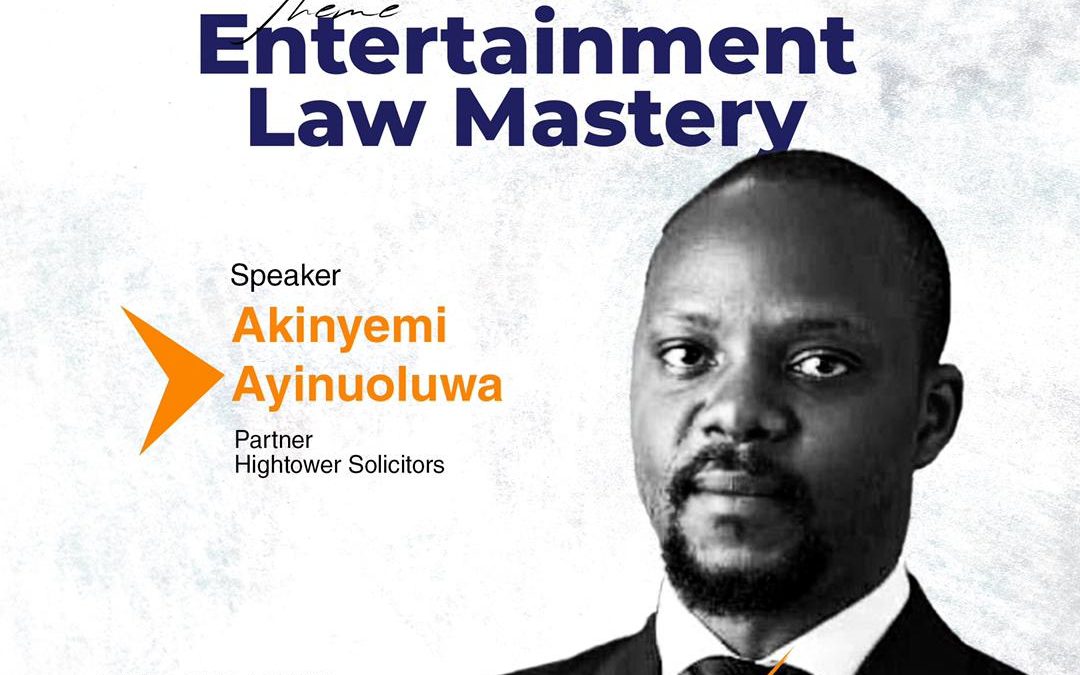
Akinyemi Ayinoluwa is a Partner and Co-founder at HighTower Solicitors and Advocates. His music law practice focuses on the representation of recording artists, songwriters, record producers, record labels, investors in music, and talent managers. He is often recommended as a lawyer who breathes, drinks and eats music. Akinyemi’s past legal experience includes: Associate at Wemimo Ogunde & Co and Awokoya & Co.
Prior to qualifying as a lawyer, he was a songwriter, recording artist, composer and performer; he was the lead singer of the defunct 100 degrees boy band. He has authored numerous articles in the field of music law, estate planning, commercial transactions, and regularly gets invited to deliver speeches and courses about these subjects.
Specialties: Intellectual Property Law- contract negotiation in TV industry, music, Production contracts, Recording contracts, Artiste Management deals, Synchronization deals, Talent negotiations, endorsement deal negotiations, trademarks, music publishing, Debt Recovery, and Reputation Management.
On a small number of clients, Akinyemi functions as a business manager, as well as the lawyer. In recent years, Akinyemi has built up a formidable roster of producer clients from Afrobeats: Masterkraft, Blaq Jerzee, Northboi, Rexxie, Magicsticks, Jaypizzle, and many others. Akinyemi Ayinoluwa prides himself in helping clients understand the value of their intellectual property rights and to be mindful of the exploitation that is rampant in the industry.

TRAINING OVERVIEW
Theme: Entertainment Law Mastery
MODULES–
- Music Contracts & Agreements
- Film & media Agreements
- Negotiation & Dispute Resolution
- Talent Acquisition & Management
- Licensing & the Film Business
- Etiquette & public speaking
MEMBERS OF FACULTY
- Beverly Agbakoba-Onyejianya (Partner, Olisa Agbakoba Legal)
- Akinyemi Ayinuoluwa (Partner, Hightower Solicitors)
- Fola Alade (Partner, FOTEFA Partners LP/ Mediation Academy)
- Oyinkansola Fawehinmi (Foza) (Founder/President, DMCE.)
- Yeye Bush (Lead Etiquette Consultant, Manners Matter)
- Nkechukwu Otike – Odibi (Senior Legal Executive, EbonyLife Media)
DATE–29th and 30th September, 2022
TIME– 9.00am – 5.00pm Daily
REGISTRATION
Register for either the physical or virtual sessions.
Physical Session:
Fee: 70,000 Naira
Early Bird: 50,000 Naira (ends 7th Sept, 2022)
Registration Link: https://bit.ly/3znIb4w
Venue: NECA House, Alausa, Ikeja, Lagos
Virtual Session (ZOOM)
Fee: 50,000
Early Bird: 30,000 (ends 7th Sept, 2022)
Registration Link: https://bit.ly/3CbB6Y9
Get 10% Off the virtual session when you use the code: LEGAL9JA
PAYMENT DETAILS–
Lawlexis International Limited
Fidelity Bank
4011176564
Participants will receive a certificate of participation.
NOTE: All payment and delegate information should be sent to lawlexisinternational@gmail.com before the date of training for proper registration. For more information and confirmation of payment, kindly contact us on 09029755663.
by Legalnaija | Sep 4, 2022 | Uncategorized

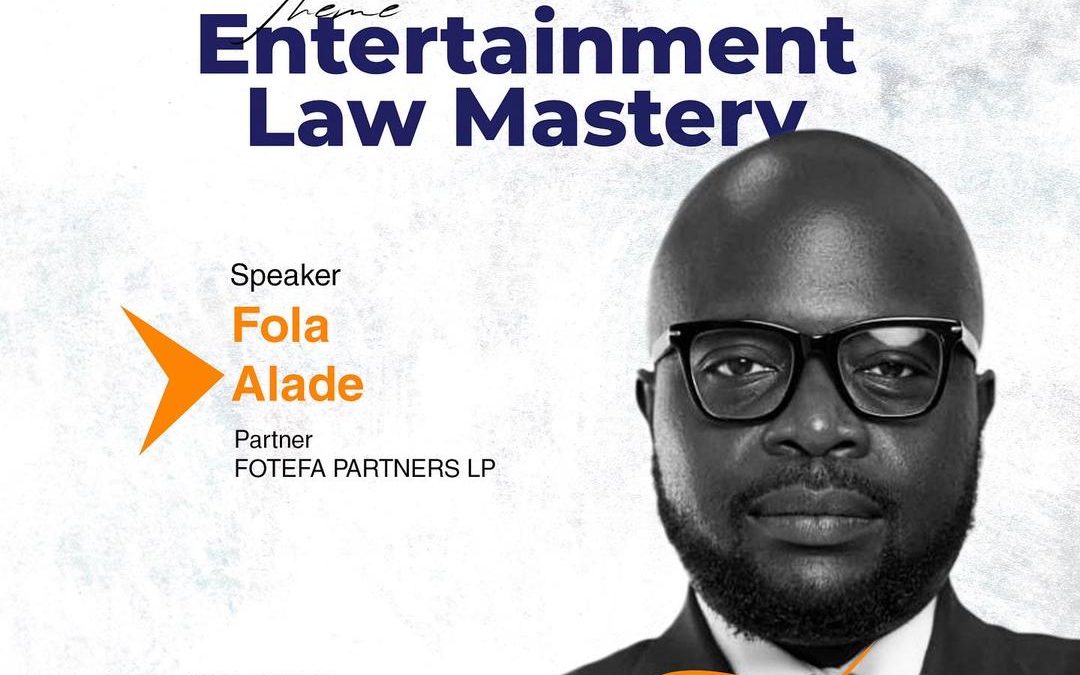
Fola Alade is a Notary Public and an Accredited Attorney- Mediator based in Lagos. He is the Founder/ Principal Partner at FOTEFA PARTNERS LP (MEDIATORS & MEDIATION ADVOCATES), a bespoke Mediation firm in Nigeria
Fola Alade is a Fellow, World Mediation Organization (WMO), Mediator of the Global Mediation Panel at the Office of the Ombudsman for United Nations Funds and Programmes, a Certified Mediation Advocate with the Standing Conference of Mediation Advocates (U.K), a trained Mediator on the Panel of Neutrals of the Federal High Court(FHC), Lagos Multi-Door Courthouse (LMDC), Edo State Multi- Door Court House(EMDC), Lagos Court of Arbitration (LCA) and Lagos Chamber of Commerce and International Arbitration Centre (LACIAC), a trained Negotiator from the Lagos Business School (LBS), a Certified Emotional Intelligence Specialist and a Certified Trainer(International Award in Delivering Training[IADT] UK) with the London Professional Training Centre.
He is the Founder/Principal of Fotefa Mediation Academy, another bespoke Mediation Training Academy where he trains on the business and practice of Mediation. He is also the Executive Director of the Incorporated Trustees of Attorney-Mediators Association (ATMA), a Consultant/Facilitator/Trainer with the Standing Conference of Mediation Advocates (SCMA Nigeria), Betaworka Cosmopolitan Partners Limited, Au Courant Legal Research Firm, Legally Engaged Academy and the Resource HQ Ltd where he trains on Negotiation, Mediation, Mediation Advocacy, Workplace Conflict and Emotional Intelligence.
He was a Judge at the 8th Edition of the 2TG-RMLNLU International Mediation Competition and the 17th Edition of the International Commercial Mediation Competition.
Fola was called to the Nigerian Bar in 2007 after obtaining his LLB Hons Degree from the University of Lagos in 2006. He is a member of the Nigerian Bar Association (NBA) and the Section on Business Law (SBL), Lagos Court of Arbitration (LCA) and a Partner member with the NCMG International (Negotiation and Conflict Management Group International).

TRAINING OVERVIEW
Theme: Entertainment Law Mastery
MODULES–
- a)Music Contracts & Agreements
- b)Film & media Agreements
- c)Negotiation & Dispute Resolution
- d)Talent Acquisition & Management
- e)Licensing & the Film Business
- f)Etiquette & public speaking
MEMBERS OF FACULTY
- Beverly Agbakoba-Onyejianya (Partner, Olisa Agbakoba Legal
- Akinyemi Ayinuoluwa (Partner, Hightower Solicitors)
- Fola Alade (Partner, FOTEFA Partners LP/ Mediation Academy)
- Oyinkansola Fawehinmi (Foza) (Founder/President, DMCE.)
- Yeye Bush (Lead Etiquette Consultant, Manners Matter)
- Nkechukwu Otike – Odibi (Senior Legal Executive, EbonyLife Media)
DATE–29th and 30th September, 2022
TIME– 9.00am – 5.00pm Daily
REGISTRATION
Register for either the physical or virtual sessions.
Physical Session:
Fee: 70,000 Naira
Early Bird: 50,000 Naira (ends 7th Sept, 2022)
Registration Link: https://bit.ly/3znIb4w
Venue: NECA House, Alausa, Ikeja, Lagos
Virtual Session (ZOOM)
Fee: 50,000
Early Bird: 30,000 (ends 7th Sept, 2022)
Registration Link: https://bit.ly/3CbB6Y9
Get 10% Off the virtual session when you use the code: LEGAL9JA
PAYMENT DETAILS–
Lawlexis International Limited
Fidelity Bank
4011176564
Participants will receive a certificate of participation.
NOTE: All payment and delegate information should be sent to lawlexisinternational@gmail.com before the date of training for proper registration. For more information and confirmation of payment, kindly contact us on 09029755663.
by Legalnaija | Sep 4, 2022 | Training

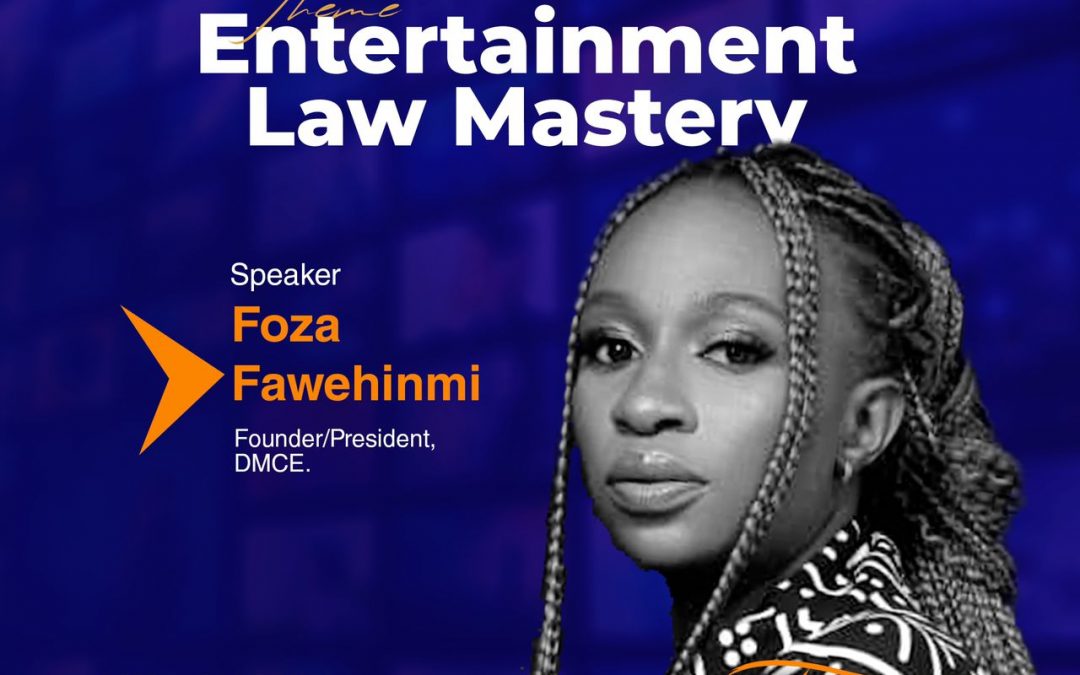
Oyinkansola Foza Fawehinmi is an award-winning lawyer and the president of Digital Music Commerce and Exchange Limited, an intellectual property valuation, management and administration company serving sub-Saharan Africa.
At the beginning of her professional career, Foza Fawehinmi made a name for herself by championing causes for entertainers, record companies and institutions in Nigeria. This saw her craft innovative solutions for her clients and partners in the creative industry, using her knowledge of law and entertainment. Since then, she has brokered deals worth over $10,000,000 working with top talents from 5 nationalities and advising several governments in the sub-saharan African region on IP matters.
Over the last 9 years, she has served as a legal advisory and business consultant for some of Africa’s most reputable entertainment companies and artists like Chocolate City Music, Premier Records, Boomplay Music, Infinix Nigeria, K1 De Ultimate, Teni, Adekunle Gold, The Sarz Academy, Sarz and more.
TRAINING OVERVIEW
Theme: Entertainment Law Mastery
MODULES–
- Music Contracts & Agreements
- Film & media Agreements
- Negotiation & Dispute Resolution
- Talent Acquisition & Management
- Licensing & the Film Business
- Etiquette & public speaking
MEMBERS OF FACULTY
- Beverly Agbakoba-Onyejianya (Partner, Olisa Agbakoba Legal)
- Akinyemi Ayinuoluwa (Partner, Hightower Solicitors)
- Fola Alade (Partner, FOTEFA Partners LP/ Mediation Academy)
- Oyinkansola Fawehinmi (Foza) (Founder/President, DMCE.)
- Yeye Bush (Lead Etiquette Consultant, Manners Matter)
- Nkechukwu Otike – Odibi (Senior Legal Executive, EbonyLife Media)
DATE–29th and 30th September, 2022
TIME– 9.00am – 5.00pm Daily

REGISTRATION
Register for either the physical or virtual sessions.
Physical Session:
Fee: 70,000 Naira
Early Bird: 50,000 Naira (ends 7th Sept, 2022)
Registration Link: https://bit.ly/3znIb4w
Venue: NECA House, Alausa, Ikeja, Lagos
Virtual Session (ZOOM)
Fee: 50,000
Early Bird: 30,000 (ends 7th Sept, 2022)
Registration Link: https://bit.ly/3CbB6Y9
Get 10% Off the virtual session when you use the code: LEGAL9JA
PAYMENT DETAILS–
Lawlexis International Limited
Fidelity Bank
4011176564
Participants will receive a certificate of participation.
NOTE: All payment and delegate information should be sent to lawlexisinternational@gmail.com before the date of training for proper registration. For more information and confirmation of payment, kindly contact us on 09029755663.
by Legalnaija | Sep 4, 2022 | Training

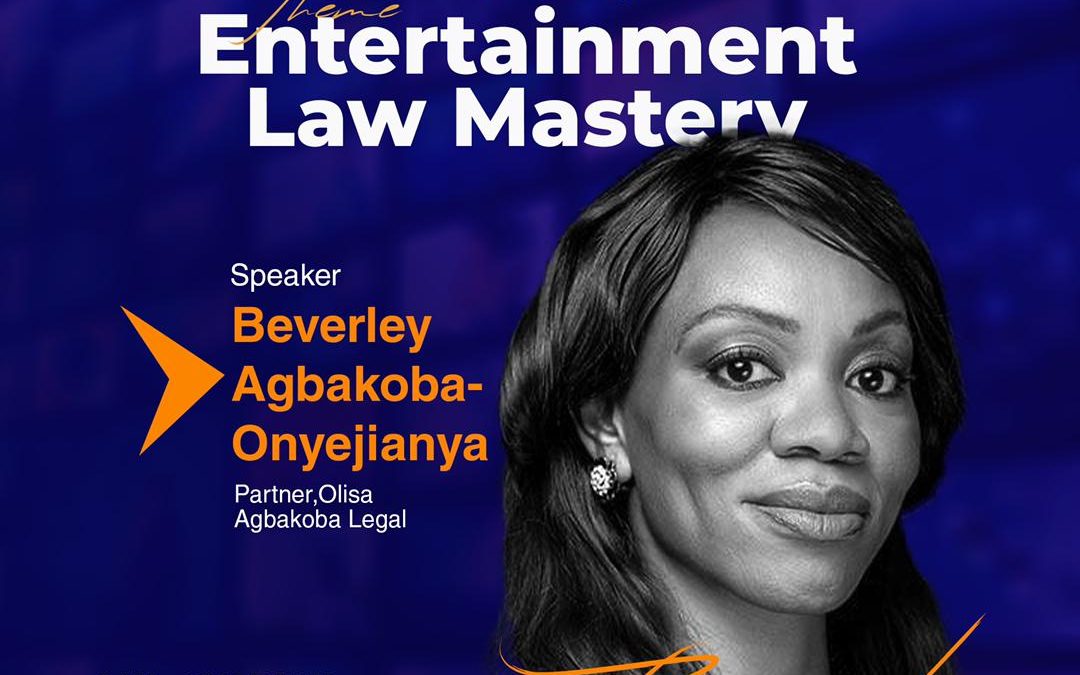
Beverley A Agbakoba-Onyejianya is currently a Partner, and Head of the Sports, Entertainment and Tech practice at Olisa Agbakoba Legal. She is also a regulatory and compliance professional. Beverly is called to the Nigerian and UK bar, she also sits on the panel of neutrals at the Lagos Multi Door Court and the Lagos Court of Arbitration.
She has over 14 years professional experience in the banking and capital markets sectors in the United Kingdom and Nigeria. Her broad experience in the regulatory and compliance industry covers investment banking, brokerage and fund management sectors and has seen her hold various leadership roles in regulatory and compliance sector. She is a member of the Nigerian Economic Summit Group (NESG) Sports thematic Industry group on Alternative Dispute Resolution and Youth Policy Development.

She is also a member of the Lagos Divisional Football Association and a Mediator -Football Tribunal at Fédération Internationale de Football Association (FIFA).
Beverley is recognised as a thought leader in sports law and has co – authored, authored and published numerous articles and materials on sports law, entertainment law, corporate governance including the A to Z of Sports Law in Nigeria.
Beverley is the founder of Lagos Tigers Football Club – a youth academy and is passionate about youth sports development. She is regularly invited to speak at international and national conferences on sports governance, intellectual property, regulatory and compliance, and personal development. Beverly is a member of faculty at the Entertainment Law Mastery class scheduled for the 29th and 30th of September.
TRAINING OVERVIEW
Theme: Entertainment Law Mastery
MODULES–
- Music Contracts & Agreements
- Film & media Agreements
- Negotiation & Dispute Resolution
- Talent Acquisition & Management
- Licensing & the Film Business
- Etiquette & public speaking
MEMBERS OF FACULTY
- Beverly Agbakoba-Onyejianya (Partner, Olisa Agbakoba Legal)
- Akinyemi Ayinuoluwa (Partner, Hightower Solicitors)
- Fola Alade (Partner, FOTEFA Partners LP/ Mediation Academy)
- Oyinkansola Fawehinmi (Foza) (Founder/President, DMCE.)
- Yeye Bush (Lead Etiquette Consultant, Manners Matter)
- Nkechukwu Otike – Odibi (Senior Legal Executive, EbonyLife Media)
VENUE– NECA House, Plot A2, Hakeem Balogun Street, Alausa, Ikeja
DATE–29th and 30th September, 2022
TIME– 9.00am – 5.00pm Daily
REGISTRATION
Register for either the physical or virtual sessions.
Physical Session:
Fee: 70,000 Naira
Early Bird: 50,000 Naira (ends 7th Sept, 2022)
Registration Link: https://bit.ly/3znIb4w
Venue: NECA House, Alausa, Ikeja, Lagos
Virtual Session (ZOOM)
Fee: 50,000
Early Bird: 30,000 (ends 7th Sept, 2022)
Registration Link: https://bit.ly/3CbB6Y9
Get 10% Off the virtual session when you use the code: LEGAL9JA
PAYMENT DETAILS–
Lawlexis International Limited
Fidelity Bank
4011176564
Participants will receive a certificate of participation.
NOTE: All payment and delegate information should be sent to lawlexisinternational@gmail.com before the date of training for proper registration. For more information and confirmation of payment, kindly contact us on 09029755663.

by Legalnaija | Sep 2, 2022 | Law
Introduction
Child labour refers to work engaged in by children which is mentally, physically, socially or morally dangerous and harmful to the children and also interferes with their schooling.[1] Article 32 of the Convention on the Rights of the Child (CRC) recognizes the rights of children to be free from economic exploitation and works that are harzardous or interfere with their general wellbeing and development. ILO 138 prescribes the minimum age for work and ILO 182 addresses the worst forms of child labour. Recommendation 146 accompanies ILO 138 and directs state signatories to develop national policies with provisions on poverty alleviation, promotion of decent jobs for adults, free education among other factors which have a direct effect on child labour.[2] Equally relevant is the United Nations 2030 Agenda for Sustainable Development which is hinged on 17 Sustainable Developments Goals (SDG). SDG 8 is for the promotion of sustained, inclusive and economic growth, full and productive employment and decent work for all. SDG (Target) 8.7 is to take immediate and effective measures to eradicate forced labour, end modern slavery and human trafficking and secure the prohibition and elimination of the worst forms of child labour, including recruitment and use of child soldiers, and by 2025 end child labour in all its forms.
SDG 8.7 in Nigeria
Nigeria is signatory to the key UN Conventions aimed at child protection and currently has a National Action Plan on the elimination of child labour for the years 2021-2025. This action plan is intended to coincide with SDG 8.7 on eliminating all forms of child labour by the year 2025. With more than half of the current year gone by, the race to accomplish target 8.7 has barely two years and four months to go. International child right actors are concerned at the slow pace of attaining to SDG 8.7 of eliminating all forms of child labour by the year 2025 globally.[3] The Durban Call to Action[4] which followed the Fifth Global Conference on the Elimination of Child Labour held between the 15th to the 20th of May 2022 in Durban reiterated the challenge to address the elimination of all forms of child labour. Based on current statistics, the COVID pandemic caused setbacks in global efforts to eliminate child labour, shrunk previous gains and ballooned the number of children trapped in child labour.[5] UNICEF data suggests that 26% of children aged 5 to 11 in West and Central Africa are subjected to child labour.[6] The Situation Analysis of Children in Nigeria 2022 report that about 14 million children between the ages of 5 -14 are currently engaged in child labour.[7] Beyond policy and print, it is not immediately obvious how Nigeria intends to close up the gap by 2025. While Nigeria anticipates a change of government in the coming year and possibly, an improvement in its economic conditions, it is not likely that the country will be sufficiently close to SDG 8.7 by 2025.
UNICEF’s multisectoral approach to child labour identifies that an effective coordination across systems is key to ensuring protection and access to services.[8] Systems include nutrition and food, private sector, services for CAAC (children and armed conflict), social protection, empowered families, and education and skills. The coordination of these systems which do not stand alone but are intricately interwoven rests on several stakeholders but squarely on the government.
One basic system in the multisectoral approach is nutrition and food. This ties into the need for food security. The challenge of food insecurity in Nigeria is not peculiar to children but affects them greatly because of their vulnerability. The causes of food insecurity in Nigeria are easily traceable to insufficient production, inefficient policies, civil insecurity, corruption and low technology for processing and storage.[9] A few of these causes are not peculiar to Nigeria such as the effects of climate change on food production which has affected some northern states with significant desert encroachment, dwindling farmlands and water scarcity.[10] The country however needs to surmount the challenge of food insecurity if there would be any gains in eliminating child labour.
Another important system is the private sector. The Government’s efforts to achieve SDG 8.7 depends greatly on stakeholder involvement. The Unicef Guidance Note for Action on Child Labour and Responsible Business Conduct charges the business community to contribute its quota to eliminating child labour by guaranteeing decent work and living wages to employees.[11] The Nigerian business community on its part is faced with a business environment where the cost of doing business is relatively high. According to the World Bank ranking on the ease of doing business for 2020, Nigeria ranked 131 out of 190 countries considered.[12] The indices used pertain to registering businesses, obtaining permits, electricity supply, getting credit, protecting minority investors, enforcing contracts, registering property, paying taxes, resolving insolvency and trading across borders. The ranking is based on select cities and thus may not reflect the actual position of other parts of the country. There are several other challenges including security concerns, high cost of generating power and needed infrastructure, multiple layers of regulatory fees and more recently, compulsory sit-at-home exercises in some parts of the country on certain days of every week which culminate in a difficult business environment for the business community. In the face of these challenges, there is little justification for the government to charge the Nigerian business community to pitch in by guaranteeing sufficient wages for employees in the fight against child labour.
Services for CAAC is fast becoming one of the most critical systems in the elimination of child labour in Nigeria. This owes to the fact that the effect of children in armed conflict cascades into every other system and threatens to wipe out the gains the country has made in its effort to eliminate child labour. Amnesty International has reported that no fewer than 1,500 children have been abducted from schools in the last eight years.[13] Insecurity in Nigeria is convoluted and spirals into depriving children of education, denying children proper nutrition, increasing the number of children at risk of armed conflicts both as recruits and hostages and clearly forcing more children into child labour at the hand of their captors. Over 11,000 schools are reported to have been shut down owing to terrorist activities in the country.[14] Erstwhile pupils and students now forced to stay home for their safety, add to the number of children aged 5 to 17 who will have to engage in work for hours longer than is suited to their age bracket including hazardous work. Abducted children turned into child soldiers in turn cause terror that keeps farmers away from their farms and raises poverty levels. The National Action Plan for the elimination of child labour runs the risk of remaining a printed policy if the challenge of CAAC is not addressed in practical terms.
The systems of social protection and empowered families are affected by factors such as inflation, high rates of unemployment and scarcity of disposable income. Though Nigeria has slipped out of the bottom rung of the global poverty ranking, the World Poverty Clock shows that poverty levels in the country are currently rising.[15] Pre COVID, 4 in 10 Nigerians were estimated to be living in poverty.[16] The pandemic necessitated the closure of schools and loss of jobs which invariably left children with the short end of the stick. Out of jobs parents meant engaging children in menial jobs not requiring much skill or training to support the family. Post pandemic, the number of Nigerians that have slipped into poverty have increased. As households become poor, members of those households who are children become more susceptible to child labour. Many more children have been made available to assist in household chores with other families. Some of such children do not go to school at all as their parents receive monthly salaries for their work. A decent number of such children do get some level of education though the value of such education may be relatively low or attendance at school may be staggered. The lack of quality education or in some cases the lack of education at all leads to low levels of literacy and vocational skills thereby impacting on the opportunities open to such child labourers in adulthood and perpetuating the cycle of child labour.[17] Article 3 of the CRC recognizes that in all actions concerning children, the best interests of the child should be a primary consideration. Set against the backdrop of the economic reality of the families of child labourers, the decision to send off their children to work for an income or in exchange for education no matter how deficient appears to them to be the best decision for the child. The decision is nonetheless questionable.
The education and the skills systems are up against the challenges of the preceding systems and cannot be meaningfully pursued by the government, until the associated systems such as insecurity and poverty are out of the way.
Conclusion
The multisectoral approach to child labour reveals a lot of gaps in Nigeria’s quest to attain to SDG 8.7. The government must first be seen to exercise political will in the right direction to achieve the much-needed collaboration with stakeholders and industry groups. Terrorism, food insecurity and poverty will need to be addressed for any meaningful gains to be made in education and the elimination of child labour. The government thus needs to take deliberate steps towards a coordinated approach to ensure that SDG 8.7 moves from print to action. Gains may be slow, and the target of 2025 may not be feasible, but meaningful collaboration among stakeholders will guarantee the rescue of many children from child labour by 2025.
 Eberechi May Okoh LLM, ACTI, MCIArb
[1] https://www.ilo.org/moscow/areas-of-work/child-labour/WCMS_249004/lang–en/index.htm, accessed 8 August 2022.
[2] https://www.ilo.org/ipec/facts/ILOconventionsonchildlabour/lang–en/index.htm accessed 8 August 2022.
[3] Guidance Note for Action, Child Labour and Responsible Business Conduct https://www.unicef.org/reports/child-labour-and-responsible-business-conduct assessed 10 August 2022.
[4] What is the Durban Call to Action? | 5th Global Conference on the Elimination of Child Labour (5thchildlabourconf.org) accessed 8 August 2022.
[5] Covid-19 Pandemic Fueling Child Labor | Human Rights Watch (hrw.org) accessed 11 August 2022.
[6] https://data.unicef.org/topic/child-protection/child-labour/ assessed 6 August 2022.
[7] Situation Analysis of Children in Nigeria https://www.unicef.org/nigeria/media/5861/file/Situation%20Analysis%20of%20Children%20in%20Nigeria%20.pdf accessed 8 August 2022.
[8] Guidance Note for Action, Child Labour and Responsible Business Conduct https://www.unicef.org/reports/child-labour-and-responsible-business-conduct assessed 10 August 2022.
[9] S. Matemilola and I. Elegbede, ‘The Challenges of Food Security in Nigeria’ (2017) 4 Open Access Library Journal 9.
[10] Bonaventure N. Nwokeoma and Amadi Kingsley Chinedu, ‘Climate Variability and Consequences for Crime, Insurgency in North East Nigeria’ 8 (2017) Mediterranean Journal of Social Sciences 173.
[11] Guidance Note for Action, Child Labour and Responsible Business Conduct https://www.unicef.org/reports/child-labour-and-responsible-business-conduct assessed 10 August 2022.
[12] NGA.pdf (doingbusiness.org) assessed 10 August 2022.
[13] https://guardian.ng/news/eight-years-after-chibok-11536-schools-closed-over-1500-pupils-abducted/ assessed 6 August 2022.
[14] https://guardian.ng/news/eight-years-after-chibok-11536-schools-closed-over-1500-pupils-abducted/ assessed 6 August 2022.
[15] https://worldpoverty.io/map accessed 8 August 2022.
[16] Nigerian Poverty Assessment 2022 https://documents1.worldbank.org/curated/en/099730003152232753/pdf/P17630107476630fa09c990da780535511c.pdf accessed 8 August 2022.
[17] Guidance Note for Action, Child Labour and Responsible Business Conduct https://www.unicef.org/reports/child-labour-and-responsible-business-conduct assessed 10 August 2022.

by Legalnaija | Aug 31, 2022 | Uncategorized
Become An Entertainment Law Expert By Learning From Award Winning Entertainment Lawyers (Career Training For Lawyers; Hybrid Session)
According to statistics, this year total revenue in the Nigerian Entertainment industry is projected to reach US$4.77m. Furthermore, a PwC report forecasts that the fast-growing industry will earn $14.8bn in 2025.
As Nigeria’s media and entertainment industry continues on its growth path, it urgently requires more lawyers who understand the business and the laws that apply to entertainment law.
Lawlexis has put together a stellar faculty of award winning entertainment lawyers and experts to provide participants with a clear mastery of the entertainment industry, and how lawyers may make more impact and take advantage of the opportunities therein.
Modules for this training include;
– Music Contracts & Agreements
– Film & media Agreements
– Negotiation & Dispute Resolution
– Talent Acquisition & Management
– Licensing & the Film Business
– Etiquette & public speaking
The Members of Faculty include;
– Beverly Agbakoba-Onyejianya (Partner, Olisa Agbakoba Legal)
– Akinyemi Ayinuoluwa (Partner, Hightower Solicitors)
– Nkechukwu Otike-Odibi, Senior Legal Executive at EbonyLife Media
– Fola Alade (Partner, FOTEFA Partners LP/ Mediation Academy)
– Oyinkansola Fawehinmi (Foza) (Founder/President, DMCE.)
– Yeye Bush (Lead Etiquette Consultant, Manners Matter)
Other details are:
Theme: Entertainment Law Mastery
Date : 29th & 30th September, 2022
Time: 9am – 5pm daily
Registration:
- Physical Session:
Fee: 70,000 Naira
Early Bird: 50,000 Naira (ends 7th Sept, 2022)
Registration Link: https://bit.ly/3znIb4w
Venue: NECA House, Alausa, Ikeja, Lagos
Virtual Session (ZOOM)
Fee: 50,000
Early Bird: 30,000 (ends 7th Sept, 2022)
Registration Link: https://bit.ly/3CbB6Y9
Persons who should attend include lawyers and stakeholders in the entertainment industry at all levels. If you want a successful practice in Entertainment law and business, you may not come across such unique opportunity to learn from these lineup of experts again.
For enquiries, please contact: Lawlexis – lawlexisinternational@gmail.com or 09029755663
by Legalnaija | Aug 30, 2022 | Uncategorized

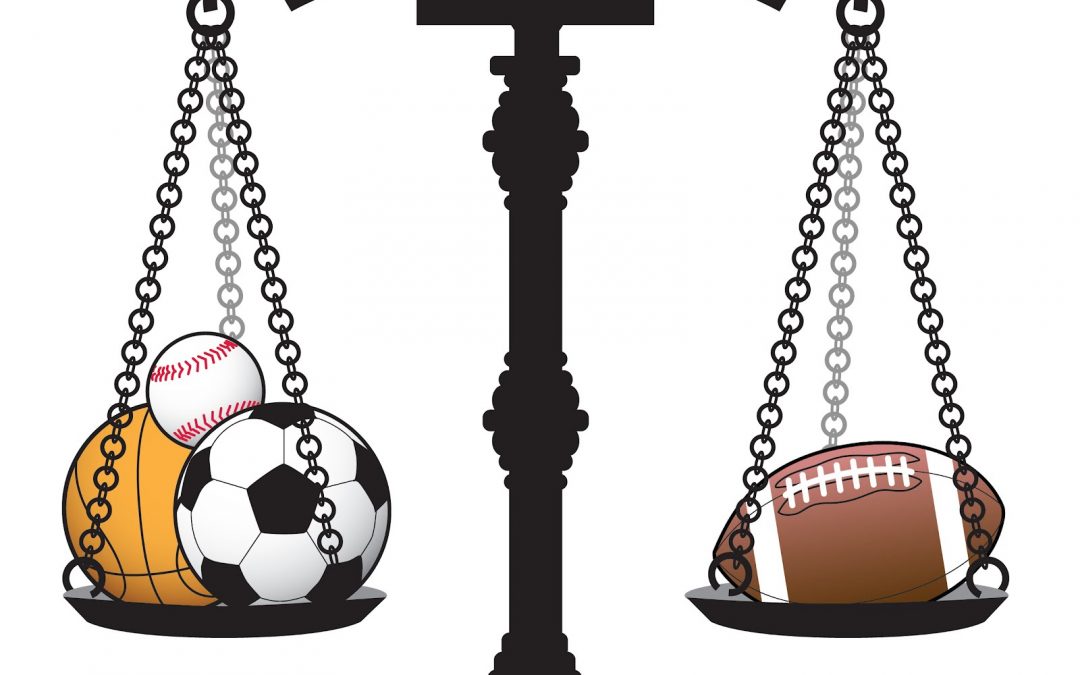
In the 2021/2022 January transfer window, Gabonese striker, Pierre-emerickAubameyang secured a move from English Premier League team, Arsenal Football Club to FC Barcelona on a free/bosman transfer. Despite the details of the move being sketchy, Arsenal Football Club reportedly paid seven million pounds to the former African footballer of the year to terminate his contract.[1]Also, Spanish giants, Football Club Barcelona have been attempting a summer overhaul with an aim to reduce the amount of players on the club’s payroll. These players are deemed surplus to requirement due to them not being considered important enough to be on the club’s wage bill as the club embarks on what seems to be a rebuild.
In light of these, it would be Important to analyze termination of footballers contract and what it entails. Can a club terminate a player’s contract unilaterally? Can a player terminate his own contract unilaterally? What happens when a player wants out of a club, and the club doesn’t want to release him? These questions and many more will be scrutinized below.
What is a contract?
Before going deep into what termination of contracts mean, it is important for the definition of contracts and its significance in football to be discussed.
According to the Cornell Law School,” a contract is an agreement between private parties creating mutual obligations enforceable by law. The basic elements required for the agreement to be a legally enforceable contract are: Mutual consent, expressed by a valid offer and acceptance, adequate consideration; capacity and legality. Contracts are promises that the law will enforce. If a promise is breached, the law provides remedies to the harmed party, often in form of monetary damages, or in limited circumstances, in the form of specific performance of the promise made”.[2]
The importance of contracts in football and sports in general cannot be overstated. It is one of the basic principles on which sports is founded. For example, when a local athlete decides to participate in a track event, likely a 100 meter sprint in return for a particular reward which might be monetary or in the form of medals. A contract has taken place between both sides as there is an offer, acceptance, consideration and legal enforceability as it is a commercial transaction. This is also applicable to football, whereby a team of agrees to participate in a competition for a reward. However, I will not be speaking on these types of contracts as they are not the focus of this paper. Top level football contracts are more multifaceted than these simple agreements. Football in recent years has become a commercially viable source of income for a lot of people: club owners, footballers, football agents, corporate bodies and brands, sportswear and kit brands and even lawyers.
The football transfer market is a global one with the English Premier League alone having a net spend of €893m in the 2021/2022 Summer transfer window.[3] These Incredible developments have also introduced a lot of intricacies in the sport and the way contracts are being signed and established in the sport. Agents and clubs have to negotiate for a lot of things, from salaries to the Image rights of a particular player.
However, when a player doesn’t find the club attractive anymore or doesn’t adapt to a club’s playing style, what does he do? What if he decides to leave a club in search of a bigger club or a new challenge? The simple way is to offer himself to clubs and hope a club deems him valuable enough to pay a transfer fee for him.
Also what happens when a club does not have need of a footballer services anymore? This leads us to the main topic of termination of contracts in football.
What is Termination of Contract?
Simply put, contract termination is the lawful ending of a contract before that contract is completed. It can be done by one of the parties for different reasons, it can also be due to a termination clause in a player’s contract, an issue concerning the payment of wages of a player, medical grounds, gross misconduct on the part of the player, criminal offenses, lack of playing time and many other reasons.
The position of the law is clear on termination of contracts between players and football clubs. The rules guiding these activities are outlined in Article 13 – 17 of the Regulations on Status and Transfer of Players (RSTP) 2016.
Article 13 of the RSTP expressly provides that:“A contract between a professional and a club may only be terminated upon expiry of the term of the contract or by mutual agreement.” [4]
This is the regular procedure for terminating a football contract, when a term ends or when the two parties (player and club) come together to end the contract mutually. However, as this is not always the case and to also protect both parties interest and rights, there are exceptions to this rules which are stated in other Articles.
Article 14 allows for the termination of a footballer’s contract provided the party that wishes to terminate the contract has a “just cause” to do so. In its words:
“1. Contract may be terminated by either party without consequences of any kind (either payment of compensation or imposition of sporting sanctions) where there is just cause.
- Any abusive conduct of a party aiming at forcing the counterparty to terminate or change the terms of the contract shall entitle the counterparty (a player or a club) to terminate the contract with just cause“[5]
The phrase “just cause” is very important as it forms the basic crux of many legal disputes and judicial battles between footballers and clubs. This phrase is classified into two main parts: “financial just cause” (nonpayment of salaries) or “sporting just cause” (appearances and playing time of players).
This is explained further in article 14:
- In the case of a club unlawfully failing to pay a player at least two monthly salaries on their due dates, the player will be deemed to have a just cause to terminate his contract, provided that he has put the debtor club in default in writing and has granted a deadline of at least 15 days for the debtor club to fully comply with its financial obligation(s). Alternative provisions in contracts existing at the time of this provision coming into force may be considered.
- For any salaries of a player which are not due on a monthly basis, the pro-rata value corresponding to two months shall be considered. Delayed payment of an amount which is equal to at least two months shall also be deemed a just cause for the player to terminate his contract, subject to him complying with the notice of termination as per paragraph 1 above.
- Collective bargaining agreements validly negotiated by employers’ and employees’ representatives at domestic level in accordance with national law may deviate from the principles stipulated in paragraphs 1 and 2 above. The terms of such an agreement shall prevail.
In summary, the article provides that a player can terminate his contract provided he is owed by the club in which he plies his trade if he is being owed for a particular amount of time depending on the basis he is being paid, either weekly or monthly. In cases whereby a player is paid weekly or based on the hours he uses at work, two months equivalent of that salary would be deemed enough as a reasonable and just grounds to terminate his contract.
This particular law been tested many times. For instance, in 2018 former Cameroonian International, Alex Song, left his former club, Rubin Kazan, after FIFA intervened and his contract terminated due to the club’s inability to pay its players’ wages. It was stated that the player was being owed 7.9 million pounds by Rubin Kazan.[6]
Also worthy of note is the case of OmoleyeTosin and Eyimnba Football Club where the footballer where the Footballer was able to terminate his contract with the club in line with Article 14 of the rules on the status and transfer of players (RSTP). His lawyer, T.C Ujah, LLD on behalf of SportHouse LP wrote:
“Under the extant laws and regulations, particularly the Regulations on the Status and Transfer of Players, the current circumstances of the treatment meted out to our Client together with the refusal and failure to pay his monthly salaries and financial entitlements (now over two months) constitute just cause for the termination of the playing contract, for which Enyimba Football club is liable.
“TAKE NOTICE, therefore, that our Client hereby formally terminates his contract with Enyimba Football Club, effective immediately.[7]
Article 15 also provides for termination of contracts due to “sporting just cause “, It explicitly states that:
An established professional who has, in the course of the season, appeared in fewer than ten per cent of the official matches in which his club has been involved may terminate his contract prematurely on the ground of sporting just cause. Due consideration shall be given to the player’s circumstances in the appraisal of such cases. The existence of sporting just cause shall be established on a case-by-case basis. In such a case, sporting sanctions shall not be imposed, though compensation may be payable. A professional may only terminate his contract on this basis in the 15 days following the last official match of the season of the club with which he is registered”.[8]
Article 15 provides players with the ability to terminate their contract for “sporting just cause” where they have played in less than 10% of their club’s fixtures in the relevant season. This allows a player to join another club without fear of the potential sporting sanctions that may be imposed upon them for a breach of contract without just cause.
The article is guided by the decision of the Court of Arbitration for Sports (CAS) in the landmark decision of O. v. FC KryliaSovetovSamara .[9]
The concept of the “established professional ” needs to be considered not only on the basis of the player’s age but also on the basis of “his sporting level as demonstrated during his career, in terms of an acceptable standard in the light of the specificity of the sport, the player’s legitimate expectations and what is expected of the player in terms of sporting performance.
The participation by a player in more or less than 10% of the official matches played by his club is calculated by reference to the number of matches in which the player played, but also according to the time he was on the field. A player cannot rely on Article 15 if he has not notified his club during the season of his dissatisfaction with the fact that he is not actively participating in the team’s games.[10]
Worthy of note is that this particular process is usually full of complications as the phrase “just cause” has to be defined in a case by case basis by FIFA Dispute Resolution Chamber (DRC) or an arbitration panel.
Also, it is important to note that a contract cannot be unilaterally terminated by one party during the course of a season. This is in accordance with Article 16 of the RSTP. Both parties have to come to a mutual agreement such as in the case of Pierre-emerickAubameyang and Arsenal Football Club.
Article 17 of the RSTP further states the consequences of terminating a player’s contract without “just cause”
“All cases, the party in breach shall pay compensation. Subject to the provisions of article 20 and Annexe 4 in relation to training compensation, and unless otherwise provided for in the contract, compensation for the breach shall be calculated with due consideration for the law of the country concerned, the specificity of sport, and any other objective criteria. These criteria shall include, in particular, the remuneration and other benefits due to the player under the existing contract and/or the new contract, the time remaining on the existing contract up to a maximum of five years, the fees and expenses paid or incurred by the former club (amortized over the term of the contract) and whether the contractual breach falls within a protected period. It then lays down a set of rules guiding the calculations contained in this particular article”[11]
In Daniel Geey“Done deal, an insider guide to football contracts, multi million pound transfers and Premier League business” hesays : “there has have been a number of cases in relation to this issue. Although perhaps not as widely known as Bosman, the cases of Andy Webster, Matuzalém and DeSanctis are examples where FIFA and CAS decided on the money paid to the player’s former club (payable jointly by the new club and the player). In the case of Webster, it was decided that only a small amount of compensation should be payable to the former club. This was calculated as £150,000, which was the remaining wages that Webster was owed by his old club. However, in the cases of Matuzalém and De Sanctis, CAS ruled that significantly more compensation should be paid to the former club. Matuzalém, and the club to which he transferred, were ordered to pay almost €12m, a sum calculated in relation to his transfer value and wages. Similarly, DeSanctis and his new club were ordered by CAS to pay €2.2m, which included taking into account the cost of finding two replacement goalkeepers.”[12]
Termination of contracts in the Nigerian scene is yet to be fully explored due to the administrative problems and epileptic nature of the League. A lot of professional footballers are cheated out of their contracts with no proper compensation. Some are kept in contracts that exploit them with many not even paying footballers salaries for months leaving the footballers to beg for what is due to them. Although there are cases in which these rules has been enforced, most times clubs get away with exploiting these players. A popular example is that of OmoleyeTosin and Eyinmba Football Club where the footballer was able to terminate his contract with the club in line with Article 14 of the Regulations on the Status and Transfer of Players (RSTP) as earlier stated.[13]
In conclusion, termination of contracts is a very important albeit risky part of the football business at it can make or mar a footballer career and also allow lengthy legal disputes which could result in heavy sanctions for defaulting players. It is therefore advisable to find solutions to avoid these issues.
 The writer, Omole Damilare Fisayo is a 200 level student of the faculty of law, AdekunleAjasin University, AkungbaAkoko, Ondo state, Nigeria. He is a sports law enthusiast. He can be reached via +2349020837174 or his email: Omoledamilare093@gmail.com.
[1] Pierre-EmerickAubameyang: Arsenal confirm striker leaves by mutual consent ahead of Barcelona move. (2022, february 2), sky sports https://www.google.com/amp/s/www.skysports.com/amp/football/news/11670/12530228/pierre-emerick-aubameyang-arsenal-confirm-striker-leaves-by-mutual-consent-ahead-of-barcelona-move.
[2]Contract, retrieved from: https://www.law.cornell.edu/wex/contract#:~:text=A%20contract%20is%20an%20agreement,consideration%3B%20capacity%3B%20and%20legality.
[3] Premier League spending table: Arsenal finish top as Chelsea make profit (2021, September 1).
https://www.google.com/amp/s/www.footballtransfers.com/en/transfer-news/uk-premier-league/2021/08/which-premier-league-club-has-spent-most-money-2021/22/amp
[4] Regulations on Status and Transfer of Players, (RSTP), Article 13, (2022, July)
[5] Regulations on Status and Transfer of Players, (RSTP), Article 14, (2022, July)
[6]Michealseares, (2018, June 24) “Ex-Arsenal player Alex Song is owed £7.9m by Russian club Rubin Kazan who will host World Cup quarter-final”. https://www.google.com/amp/s/www.dailymail.co.uk/sport/football/article-5879549/amp/Ex-Arsenal-player-Alex-Song-owed-7-9m-Russian-club-Rubin-Kazan.html
[7]TundeEludini, (2022, February 2), Nigerian player terminates contract with Enyimba over alleged unpaid salaries https://www.premiumtimesng.com/sports/football/509294-nigerian-player-terminates-contract-with-enyimba-over-alleged-unpaid-salaries.html
[8] Regulations on Status and Transfer of players, (RSTP), Article 15, (2022, July.
[9] O. v. FC KryliaSovetov Samara, CAS 2007/A/1369.
[10] Squire Battonboggs, (2016, October, 2016), Bastian Schweinsteiger and termination for sporting just cause. https://www.sports.legal/2016/10/bastian-schweinsteiger-and-termination-for-sporting-just-cause/#:~:text=He%20has%20terminated%20his%20employment,of%20the%202016%2F2017%20season.
[11] Regulations on Status and Transfer of players, (RSTP), Article 17, (2022, July)
[12]Daniel G, (2019), done deal: An Insider’s Guide to football Contracts, multi-million pound transfers and premier league big business. Bloomsbury publishing.
[13]TundeEludini (2022, February 2), Nigerian player terminates contract with Enyimba over alleged unpaid salaries https://www.premiumtimesng.com/sports/football/509294-nigerian-player-terminates-contract-with-enyimba-over-alleged-unpaid-salaries.html

by Legalnaija | Aug 12, 2022 | Uncategorized

Let me start with a quick analysis of the Law in Okafor v Nweke (2007) LPELR-2412 (SC). In simple terms, the law which has formed the basis of an age – long judicial precedence is that where any Court process is signed in the name of a law firm as opposed the name of the legal practitioner, the entire proceeding based on the process shall be null and void.
The rationale is that such processes are irregular and amounts to nothing in the face of the law. The Supreme Court has fortified this position in numerous cases such as MTN (Nig.) Ltd v. C.C. Inv. Ltd (2015) 7 NWLR (Pt. 1459) 437/465, SLB Consortium Ltd v. NNPC (2011) 9 NWLR (Pt. 1252) 312, Peak Merchant Bank v. NDIC (2011) 12 NWLR (Pt. 1261) 253, among others.
In the interest of Justice, it is time to revisit the judicial precedence in Okafor v Nweke as the law has occasioned grave injustice and non-departure will keep strengthening technicalities – an irony to the purport of the Law, the Court and our Judicial system.
In the case of Solumade & Ors v. Kuti & Ors (SC/327/2010), decided on the 11th June 2021, the suit lasted for over 23 years from the trial court to the Supreme Court. The Respondent in this case expended 23 years in a quest for Justice only for the Appellant to raise it at the first time at the Supreme Court that processes filed in the year 1998 were irregular and consequently, the litigation journey of 23 years was nothing but an exercise in futility, null and void.
Similar situation was the fate of the case of Aya v. Nkanu & Anor (SC/940/2015) also decided on the 11th June 2021. The respondent litigated its matter for a duration of 9 years only to be confronted with an objection at the Supreme Court on the ground that an originating process filed 9 years ago was signed by a law firm as opposed to a legal practitioner called to the Nigerian Bar.
The consequence, among others, of the judicial precedence in Okafor v Nweke, is huge distrust in our judicial system – perhaps how can a litigant repose confidence in a system where an objection sourced from a 23 years old irregularity throw his case into the judicial dustbin. This precedence makes resources expended in the pursuit of justice nothing but sheer futility and makes mockery of Justice.
REGISTER NOW
The Supreme Court has consistently echoed the need to pursue Justice over technicalities. In the case of Veepee Industries Ltd v. Cocoa Industries Ltd (2008) 4-5 SC (Pt 1) 16, the Supreme Court admitted the need to depart from previous decisions if consistent adherence will occasion injustice on the path of a party and result in a complete destruction of the right of access to Court.
Rule 5 of the Rules of Professional Conduct provides that a non-lawyer shall not form partnership with a lawyer in the practice of law. It is then technicalities taken too far to hold that a law firm is not called to the Nigerian Bar and a process signed by a law firm can crumble a proceeding at any time even if raised at the Supreme Court.
If this issue is to be treated with an iron hand, I think it should be a procedural irregularity which should be raised timeously and not one capable of vitiating a well-conducted proceeding. Continuous adherence to the law in Okafor v Nweke will defeat the very strong rationale of the Supreme Court in holding that the error of a counsel should not be visited on a litigant. It will consistently obstruct justice while elevating technicalities and above all, lead to loss of confidence in our Judicial system.
Daniel Adedigba is a Legal Practitioner based in Abuja, Nigeria
adedigbadaniel01@gmail.com
+2348108019481

by Legalnaija | Aug 5, 2022 | Uncategorized

Career training programs prepare you for a job in a specific field, and this training is preparing lawyers for their role in the Nigerian entertainment industry.
According to statistics, total revenue in the Nigerian Entertainment industry is projected to reach US$4.77m in 2022. Furthermore, a report from consultants at PwC forecasts that the fast-growing industry will earn $14.8bn in 2025. No doubt the Nigerian entertainment industry is a big deal globally and with high revenues come legal issues and discussions.
According to Yahaya Maikori, the role of lawyers in the entertainment industry includes, but not limited to general counsel of the client, education, advocacy, advisory services, brand protection and management services.
We have put together a stellar faculty of award winning entertainment lawyers and experts to provide lawyers with a clear mastery of the entertainment industry and how to take advantage of the opportunities therein.
Modules for this training include;
1. Music Contracts & Agreements
2. Film & media Agreements
3. Negotiation & Dispute Resolution
4. Talent Acquisition & Management
5. Licensing & Intellectual Property
6. Etiquette & public speaking
The Members of Faculty include;
– Beverly Agbakoba-Onyejianya (Partner, Olisa Agbakoba Legal)
– Akinyemi Ayinuoluwa (Partner, Hightower Solicitors)
– Fola Alade (Partner, FOTEFA Partners LP/ Mediation Academy)
– Oyinkansola Fawehinmi (Foza) (Founder/President, DMCE.)
– Yeye Bush (Lead Etiquette Consultant, Manners Matter) .
Other details are:
Theme: Entertainment Law Mastery
Date : 29th & 30th September, 2022
Venue: NECA House, Alausa, Ikeja, Lagos
Time: 9am – 5pm daily
Registration Fee: 70,000 Naira | 50,000 Naira (early bird – ends 15th September, 2022)
Registration Link: https://bit.ly/3znIb4w
Participants who should attend include lawyers and stakeholders in the Entertainment industry at all levels. If you want a successful practice in Entertainment law and business, you should make sure you are in this room on Training Day.
For enquiries, please contact:
Lawlexis
09029755663
lawlexisinternational@gmail.com

by Legalnaija | Jul 29, 2022 | Blawg

DIY Legal Agreements!
Do you know you can generate customized legal documents on our website and it takes less than 10 minutes?
Using our smart contract templates is cheaper, faster and easier than any other alternative. Documents available include;
– Affidavits
– Tenancy Agreement
– MOUs
– Employment Agreement
– Uber Agreement
– Non Disclosure Agreement
– Licensing Agreements
And more.
Visit our website to get started https://app.legalnaija.com/shop/templates
Bet your friends, colleagues and family members will find this useful.
@legalnaija
www.legalnaija.com
One-stop-shop for legal
09029755663