REFLECTIONS: INSTITUTIONAL REFORMS FOR THE NBA (1) – PAUL USORO, SAN FCIArb

REFLECTIONS: INSTITUTIONAL REFORMS FOR THE NBA (1) – PAUL USORO, SAN FCIArb

Introductory

I believe that the NBA, at the national level, is in need of urgent and far-reaching reforms if it must retain its relevance not only in the larger society but even to its members.  These reforms will, at the minimum, achieve four significant and immediate goals, to wit,

(a) enhance efficiency in the operations of the Association; (b) engender confidence and trust amongst its members (or, as some would say, win back the confidence and trust of members who are disengaged); (c) transform the NBA into a sustainable institution; and (d) increase the moral equity of the NBA to enable it effectively influence required reforms in the justice subsector and remain a respected watchdog of the society.

These objectives are interlinked.  Creating an institution out of the NBA, for example, requires a much higher level of efficiency than we currently have.  In like manner, the confidence of NBA members would be greatly boosted or won back through efficient operations and institutional reforms and, in the process, the NBA would be vested with an enhanced moral authority to propagate required reforms in the justice subsector and speak out against societal ills.  To further illustrate, efficiency in operations that ensures delivery of stamps and seals to members within weeks of the payments of their respective Practice Fees and the completion of required verifications, would go a long way in heightening the confidence of NBA members in the Association.  This would contrast with the current unexplained practice of some members receiving their stamps and seals very late and sometimes close to the expiration of the validity period/year and some others not at all within the said period.
There are several ingredients and elements that work into the building of an institution and one of these is the efficiency of its operations.  There is no institution or successful organization that does not adhere to corporate governance principles, the anchors of which include transparency alongside established and defined processes and procedures and strict adherence thereto.  Embedded in the DNA of all successful organizations is the setting out of well-defined strategies/goals (usually spanning 5-10 years’ timeframes) to which the institution’s relevant stakeholders and workforce have signed up to.  Such strategic plans are communally developed by the said stakeholders and workforce and are usually documented, periodically reviewed and/or revised and faithfully implemented.  Successful institutions also have in their structures efficient succession plans that promote continuity of the Institution’s programs and strategic plans and objectives.
As you would see from the journey that we are undertaking in this series of Reflections, starting with this piece, the NBA, as currently constituted and operated, lacks these basic ingredients and characteristics of an institution.  Not having these building blocks, the NBA is unfortunately bedeviled with and by avoidable inefficiencies in its operations – the delays in delivery of stamps and seals to members and over reliance on ad-hoc committees are symptomatic of these inefficiencies – leading, in parts, to members’ dissatisfaction.  The absence of institutional efficiencies amongst others, shows in the lack of corporate governance practices in the operations and procedures of the Association, absence of published strategic plans, goals and objectives, absence of performance monitoring mechanisms and want of continuity in the implementation of the NBA’s programs consequent upon the absence of an established transition culture and plan that promotes such continuity of programs.
These deficiencies are not irremediable, in my respectful opinion. I firmly believe that they can be remedied, and the Association turned into a sustainable institution that will not only earn and retain the respect of its members but that of society at large and also have a commanding voice that cannot be ignored.  My focus in this set of Reflections, I must reiterate will be on the NBA at the national level knowing and believing as I do, that if the reforms are successfully implemented at that level, it will gradually and ultimately percolate to the branch levels.
I therefore invite you, my friends and colleagues, on this journey that will x-ray the non-exhaustive reforms that the NBA needs in order to achieve, amongst others, the four goals that I set out at the beginning of this piece, to wit, (a) the enhancement of efficiency in the operations of the Association; (b) boosting confidence and trust amongst its members; (c) transforming the NBA into a sustainable institution; and (d) increasing the moral equity of the NBA to enable it effectively influence required reforms in the justice subsector and remain a respected watchdog of the society.
Dear Creatives, protect your tradename

Dear Creatives, protect your tradename

Creatives in the fashion industry understand the importance of a brand name, ask @dolcegabbana @gbemisokeshoes or @kimonokollection. 
Other brands in various industries also need to protect their brand names, ask @wizkidayo, @mercedesbenznigeria
Or @hennessy

One other important factor is ensuring your brand name or trade name is not infringed upon and your clients can clearly identify your brand from others. 
It’s thus importance that you register your Trade name to protect your image and business. 
You can simply do this by registering your trade name or logo as a trademark. It’s done at the Federal Ministry of Trade & Commerce and a lawyer can help you with it. 
Got questions? Send a DM or comment. 
#creatives
#creativeindustrynarrative
#legalnaija 
#nigerianlaw 
#trademarks 
#IntellectualProperty
Winners emerge from the 2nd edition of the Paul Usoro Pro bono Challenge

Winners emerge from the 2nd edition of the Paul Usoro Pro bono Challenge

Following submission of entries and a rigorous screening exercise, three winners have emerged from the second edition of Paul Usoro Pro bono Challenge. Paul Usoro Challenge is an initiative of the Law Firm of Paul Usoro & Co (“PUC”), which encourages young lawyers to take on pro bono cases, as a way of rendering selfless services to the community and supporting persons who are not able to afford legal fees. 
The lucky winners were selected after entries received were evaluated by a panel of independent judges, comprising senior lawyers including a Deputy Director of the Legal Aid Council and a senior counsel in a reputable top tier Nigerian law firm. To ensure transparency, the entire process of collation was conducted and facilitated by DKK Nigeria, an independent and leading Public Relations consultancy agency in Nigeria.
According to the results, the winner of the first prize for this second edition of the Challenge is Halimat Adeniran of the Uniosun Legal Clinic. She is the team lead of Uniosun Legal Clinic, a group of young lawyers who have handled up to 35 pro bono matters within the South-Western part Nigeria. Halimat received a cash prize of N100,000 while the first runner up,  Olanipekun Nelson received the sum of N70,000 and second runner up, Tonye Clinton, received the sum of N50,000.
Speaking on the second edition of the Challenge, Paul Usoro, SAN said, “the competition was born out of an overwhelming desire to reward young Nigerian lawyers who render free and selfless legal services to their communities. Lawyers should show empathy towards the less privileged persons in the society, especially women and children, most of whom are not able to pay for legal services. It requires a lot of patience and personal sacrifice to take steps to listen, recognize, understand and/or address the complaints of persons from whom one ordinarily expects no pecuniary or other rewards”.  
In the same vein, Munirudeen Liadi, Head of Chambers at PUC stated that, “this second edition provided a wider range of opportunities for more lawyers between 1-15 years post call experience to showcase and inspire colleagues with their touching Pro Bono cases, as against the 1-10 years post call eligibility criteria adopted for the first edition. The initiative is intended to reward the selfless and sacrificial efforts of lawyers who go the extra mile to defend the defenseless, ultimately restoring confidence and respect to the rule of Law in Nigeria”.  
Commenting on the pro bono initiative, Halimat Adeniran, the first prize winner, expressed her gratitude to the organizers of the challenge for encouraging young lawyers to render professional service at no cost. “I feel happy and excited winning the challenge. It is an amazing experience for me considering that with my few years at the Bar and engagement in pro bono services, I have been able to give back to humanity. It is also very inspiring to know that Paul Usoro, SAN and the PUC team have taken it upon themselves to reward young lawyers who are engaged in pro bono services”.
She added that being the first female winner, “I feel so proud of this lofty achievement. For me, it is a firm recognition of my advocacy for the less privileged who cannot afford the services of a lawyer.  More importantly, it is a collective achievement for all young female Counsel, and in particular our female Law Students in Osun State University, College of Law Ifetedo Campus’’. She encouraged young lawyers especially the females to take up more pro bono legal services most especially on issues that concern women.
The second edition of the competition mostly featured humanitarian issues, particularly brutality to civilians by law enforcement agents, gender related issues and child abuse.
The Court of Appeal’s decision on Pre-Action Protocol Form 1 in Spog Petrochemicals Limited & Anor. v Pan Pennisula Logistics Limited

The Court of Appeal’s decision on Pre-Action Protocol Form 1 in Spog Petrochemicals Limited & Anor. v Pan Pennisula Logistics Limited


The ice-breaking Court of Appeal’s decision on Pre-action
Protocol Form 1 in Spog Petrochemicals Limited & Anor. v Pan Pennisula
Logistics Limited (2017) LPELR – 41853 (CA). 

When Hon. Justice Inumidun Akande (Rtd), an erstwhile
Chief Judge of Lagos State unveiled the extant High Court of Lagos State (Civil
procedure) Rules in 2012, a major striking feature was the introduction of the
Pre-action Protocol Form 01 as one of the documents that must necessarily
accompany a writ of summons or originating summons by virtue of Order 3 rules 2
and 8 which inexplicably omitted originating motions from the processes that
must be so accompanied. 


The arrival of Pre-action Protocol Form 01, which was
inspired by the Lord Woolf’s Reforms, unexpectedly drew diverse reactions from
legal circles in the mould of reviews, opinions, scholarly articles and
ultimately, rulings and judgements emanating predominantly from the Lagos High
Court bench until recently when the Court of Appeal sitting in Lagos had its
say on the said Form 01 in a case that shall be considered shortly.

While Dr. Muiz Banire, SAN, in a paper
titled “A consideration of
the Alternative Dispute Resolution under the Lagos State High Court (Civil
Procedure) Rules 2012
” submitted that:

“To further underscore the importance of attempts at ADR
as a condition precedent to the institution of an action, Order 3, rule
2(1)(e) and rule 8(2)(d) of the 2012 Rules make Form O1 a mandatory process
that must accompany a writ of summons and originating summons respectively.
Proof of Pre-action attempts at ADR is, therefore, condition precedent
to the institution of a suit under the 2012 Rules. By virtue of Order 5, rule
1(1) of the 2012 Rules, failure to show proof renders the action a nullity”

On the other hand, Mr. Oluwole Kehinde, in his
article titled “Pre action
Protocol and right of access to court”
submitted thus:

“One is not oblivious of the decisions of the Supreme
Court in the line of cases of Amadi v. N.N.P.C (2000) 10 NWLR (Pt. 674) 76, to
the effect that regulations of the right of access to court, like pre-action
notice, are legitimate and constitutional. However, it is respectfully
submitted that those authorities do not exactly accommodate the species of
rules relating to pre-action protocol like mandatory or compulsory mediation
under consideration. Accordingly, such cases are clearly distinguishable and
therefore inapplicable here.”


Regrettably, the High Court of Lagos State has been
inconsistent in its decisions on the effect of non – compliance with Pre-action
protocol Form 01 and issues surrounding it. One would have thought that such a
document with noble intents would not have its purport and effect enmeshed in
judicial uncertainty.

The court had in the following decisions upheld the
mandatoriness of compliance:See the ruling of Obadina, J in Suit No:
LD/506LM/2015 between Mrs. Olubukunola Osomo v. Gov. of Lagos State & 2
Ors. delivered on February 2, 2016); the ruling of Alogba, J. in Suit No
LD/192/2013 between Nitol Textiles Manufacturing Co. Nig. Ltd. v. Coastal
Services Nigeria Ltd. delivered on June 19, 2013) and the ruling of Ighile, J.
in Suit No. BD/1100LMW/15 between Dr. Lateef Seriki-Abass & Ors. v. Wasiu
Seriki-Abass & Ors (delivered on February 8, 2016).

Contrariwise, in the case of Stanbic Bank v Ehiremhen
Suit No. LD/261CMW/15
delivered by Hon. Justice J.E. Oyefeso in a case where
the Claimant did not even file any Pre-action Protocol Form 01 at all but when
the Defendant raised an objection, the learned judge held thus:

“The essence of Pre action Protocol is to ensure that
genuine efforts are made at trying to settle matters amicably before resorting
to litigation.…

Even if we were to look at the Pre action Protocol Form
01 in the sense of a type of pre-action notice, failure to even serve a
pre-action notice merely gives a defendant a right to insist on such notice
before the Claimant can approach the court. It merely puts the jurisdiction of
the court on hold pending compliance with the precondition. I have gone through
the case file. No pre-action protocol Form 01 was file….We must understand that
the rules of court are made for the convenient and orderly hearing of cases…I
am satisfied that the substantive requirements of the law have been complied
with and I so hold.”

This is no doubt, one out of the numerous decisions of
the High Court of Lagos state dismissing any objection on pre-action protocol
as leaning towards technicalities as opposed to substantial justice.

Thankfully, the Court of Appeal sitting in Lagos had been
invited by Tunde Adejuyigbe, SAN in the case of Spog Petrochemicals Limited
& Anor. v Pan Pennisula Logistics Limited (2017) LPELR – 41853 (CA)
to
interpret the effect of non-compliance with Pre-action protocol requirements.

Facts

The Respondent (Peninsula) took out a writ of summons
against the Appellant (Spog) at the High Court of Lagos State claiming $750,000
being balance of the sum of vehicles supplied to Spog by Peninsula. Upon
receipt of the originating processes, Spog filed a preliminary objection to the
suit on the grounds that:

(a)That the pre-action protocol form 01 which is an
affidavit attached to writ of summons filed by the Respondent was deposed to by
the Respondent which is not a natural person.

(b)That the Respondent failed to set out its claims and
an option for settlement in the written memorandum filed along with the
pre-action protocol Form 01.

The trial court heard the objection but dismissed same on
the 18th day of December 2015 which decision culminated in the appeal under
consideration. 

Sole issue before the Court of Appeal 

By aggregating the issues distilled by both parties, the
Court of Appeal formulated the sole issue thus:

 “Whether the High Court was right that the
Respondent’s writ of summons has substantially and sufficiently
complied with provisions of Order 3 Rule 2(1)(e)”

 Determination

In order to fully appreciate the Court of Appeal’s
decision, I will endeavour to quote their lordships extensively while driving
home the points made therein, bearing in mind the gravamen of the appeal being
an allegation surrounding incompetence of the Pre-action protocol Form 01 which
was allegedly signed by a company without stating the name of the natural
person that signed on its behalf as well as its failure to be accompanied by a
memorandum sent to the Defendant stating the claims.

On the requirement of pre-action protocol, the court
had this to say:

“The requirement of the Pre-action Protocol Form 01 is
only a statement that the other processes for the commencement of the action
have been filed in accordance with the rules of that court.”

On whether incompetence of Pre-action Protocol Form 01
vitiates the writ:
“Clearly,
the Form 01 has nothing to do with the validity or competence of writ of
summons which it is to accompany or the suit commenced thereby.”

On the effect of swearing to the Form 01 before a
Commissioner for oaths
: “The
fact that the Form was sworn to before a duly authorized Commissioner for Oath
and signed by the person who swore to the facts contained therein,
substantially complies with the requirement of the statement in the Form, the
fact of making the statement in the name of Respondent notwithstanding.”

On whether Form 01 is a condition precedent: “Form 01 is not alone a
condition precedent for the commencement of an action by writ of
summons but as stipulated in the Sub-rule to accompany the writ.”

On effect of failure to comply with the pre-action
protocol,
the court held: “In
any case, Sub-rule (2) of 3 provides for the consequence of failure to comply
with the provision of Sub-Rule (2) by saying that:

“Where a claimant fails to comply with Rule 2(1)
above, the originating process shall not be accepted for filing by the
Registry. The above provision did not say that failure to accompany a writ of
summons with any one of the processes listed in Sub-rule (1) would render an
otherwise valid writ incompetent. In unambiguous terms, the provisions
only provide that where writ was not accompanied by all the processes listed
therein, it shall not be accepted for filing by the Registry. However, once
accepted and assessed by Registry of the Court and the requisite fees paid by
the claimant and duly filed, the consequence of any non-compliance with the
provisions cannot go to affect the validity and competence of the writ.”

On the form of memorandum:“The
Rules of the High Court did not state, stipulate or prescribe any form or
manner the memorandum should be in except that it be written. Admittedly, the
purport of the said memorandum is to set out claims of a claimant against the
defendant and the discretion to settle them amicably without the need to go to
trial.”
 

In conclusion, however regrettable it may appear that the
Court of Appeal’s attention was not drawn to the provision of Order 5 Rule 1
of the
rules, it is nevertheless the writer’s humble but forceful opinion that, an
interpretation of the said provision would nevertheless have no damning effect
on the posture of the law as encapsulated by the Court of Appeal for the
following reasons:

First, the provision of Order 5 rule 1 is impliedly
subject to the provision of Order 3 rule 2, hence, it is inferior to the
express provisions of Order 3 Rule 2. See Oloruntoba-Oju v. Abdul-Raheem (2009) 13 NWLR (Pt. 1157)
83 S.C.

Second, Order 5 rule 1 is general in
its application to the entire provision of Order 3 rules 2 and 8 while Order 3
rule 2 sub-rule 2 is specific on the penalty for non-compliance. Again, it is
trite that a general provision cannot override specific provision on an issue.
See Kraus Thompson Org.
v. N.I.P.S.S (2004) 17 NWLR (Pt. 901) 44.

Third, Order 5 rule 1 provides for the effect of
non-compliance and the court of Appeal also ruled on the effect of
non-compliance, hence it is our opinion that, the court had, by implication,
interpreted the intendment of the said provision.

From the foregoing, one can safely opine that, the
decision of the Court of Appeal herein represents a demystification of the
Pre-action Protocol monster that has unwittingly snuffed lives out of
legitimate claims on the ground of experimental technicality with blatant
disregard for its purpose, not being an end to litigation but as preliminaries
of dispute resolution. Confirming the probable counter-productivity of the
procedure, Dr. Banire
, SAN
noted in his paper that:

“Also worthy of consideration is the suitability of
mandating every claimant and his legal practitioner to comply with the
requirements of Pre-action Protocol. By virtue of Order 3, Rule 2(1)(e) and
Order 3, Rule 8(2)(d), compliance with pre-action protocol is a pre-condition
to filing a writ of summons or originating summons under the Rules. This may
turn out to defeat the very essence of litigation in matters where exigency of
time requires an immediate intervention by the court.” 

Olumide Babalola
Editor at Babalola’s Law Dictionary

Olumide Babalola writes from
Lagos.
Source: LinkedIn
IP ABC—Printing a LinkedIn Mark on a Book Cover without Permission: Lawful or unlawful? | Infusion Lawyers

IP ABC—Printing a LinkedIn Mark on a Book Cover without Permission: Lawful or unlawful? | Infusion Lawyers


Question of the Week 

I am Ola Peters, a
digital-marketing expert. For over 7 years, I have been writing and speaking
about digital marketing to help both organizations and individuals succeed.
Last April, I decided to publish a book titled Connecting to Succeed: How
to Get the Best of LinkedIn
. I used a self-publishing platform, Dotpages.
To my shock, Dotpages has contacted me over a trademark-infringement letter
it received from LinkedIn. According to the letter, by printing the LinkedIn
mark on my book cover without LinkedIn’s due permission, I have allegedly
infringed on LinkedIn’s trademark. They demand I either withdraw my book from
circulation or face legal action! I’m still shocked. Is it really unlawful to
print LinkedIn mark on my book cover?

Answer 

The answer is YES; use of LinkedIn’s trademark on your book
cover without permission is unlawful.

LinkedIn mark is LinkedIn’s registered trademark. Any person who wishes to use
the mark on his or her work—such as books, film, and other materials—must first
seek and obtain LinkedIn’s permission. Without permission to use the mark, use
amounts to trademark infringement.

‘LinkedIn’ mark and other marks belong to LinkedIn Corporation.

The name ‘LinkedIn’, the LinkedIn logo, the ‘IN’ logo and ‘InMail’ are
registered trademarks or trademarks of LinkedIn Corporation. LinkedIn
Corporation’s affiliates in the United States and other countries also enjoy
rights over these trademarks.

No other person is permitted to use any of these trademarks except in
accordance with LinkedIn Corporation’s guidelines or policy.


Trademark law entitles LinkedIn Corporation to legally stop any unauthorized
use of any of its marks. LinkedIn is entitled to sue you, get damages, and even
apply for an account of profits (You will pay to LinkedIn’s account all the
profits you have made from the book so far. Absolutely!).

The illegality of printing LinkedIn mark on your book cover without
permission is not only by the working of trademark law but also LinkedIn’s policy.

Though trademark law generally entitles LinkedIn to restrict use of its
LinkedIn mark, LinkedIn Corporation reserves the right to allow any person to
use these marks in their publications or other works in accordance with its own
guidelines or policy. By having a policy that controls use of its marks, this
is what LinkedIn has done.

LinkedIn has a policy that expressly prohibits unpermitted use of its mark for
certain purposes.

For the purpose of publication in books or printed materials, LinkedIn has a
special provision that guides this.


According to LinkedIn, it “does not allow the use of its logos or the name
“LinkedIn” in the title or otherwise on the cover of books or other
publications without prior written permission of LinkedIn.”


LinkedIn requires that any person who is “interested in using the LinkedIn
name or logos in a publication” should request permission. Request for
permission can be submitted by using LinkedIn’s Request for Permission Form
(available on its brand-policy website).

Is LinkedIn’s trademark restriction the standard amongst all social media
platforms such as Facebook and Instagram?


Generally, you are prohibited from using trademarks belonging to these social
media platforms in merchandize. This means you can’t lawfully print them on any
products for commercial purposes.


Apart from the prohibition above, each social media platform has its policy and
guidelines on use of its trademark by third parties.

Facebook, for instance, does not say anything about use of its mark in books or
printed materials, but it warns that when using its ‘F’ logo, you “[d]on’t
make it the most distinctive or prominent feature of what you’re
creating”. But for use in TV and film, you must request permission.

Instagram also has guidelines for use of its logos and name. Regarding use for
print, it restricts this to print larger than A4 size. According to one of the
guidelines on Instagram’s brand-policy page, “[o]nly those planning to use
Instagram’s assets in any broadcast, radio, out-of-home advertising or print
larger than 8.5 x 11 inches (A4 size) need to request permission.

To be on the right side of the law, it is best to carefully read these
policies and guidelines.

When it comes to publications, always consider that you might have infringed on
intellectual property. Do not fail to get help when you still can. This is
vital.

To enable you make the best decision for your book or subsequent books and
avoid demanding love letters from LinkedIn’s lawyers and other lawsuits, you
may consult an IP lawyer or law firm to professionally guide you.


IP ABC wants your book to be a bestseller, not a bread winner for lawyers when
you find yourself in the box.

Best wishes
IP ABC

Follow-up questions, if any, are welcomed.

Source: Infusion Lawyers

Photo Credit – www.linkedin.com

Recovery Of Premises: The Law And A Lanldord’s Right to Self Help | Eseoghene Palmer Esq

Recovery Of Premises: The Law And A Lanldord’s Right to Self Help | Eseoghene Palmer Esq

A nightmare commonly shared by
property owners is that of an erring tenant unwilling or unable to pay the rent
as agreed on the due date. This is simply because real estate is as much a business
entity as a commercial bank. Many Landlords cannot resist the need for
self-help at the perception of this would-be-insipient and unfortunate dream.

To be sure the court frowns at a
Self-Help, as seen in Hemmings V. Stoke Poges Gulf Club Ltd
[i],  Scrutton LJ stated clearly that “…when the
grievance complained of is the removal by no more force than is necessary of a
trespasser and his property  from the
premises which the landlord has a right to enter for the purpose, the justification
covers not only the entry but the forcible expulsion which is the object of the
entry and which makes the entry a forcible one”. Lord denning was more decisive
when he reaffirmed the above view in the case of
McPhail v. Persons Unknown[ii]
“if (a tenant) remains in possession (after the expiration of his tenancy)
there is high authority for saying that the owner is not entitled to take the
law into his own hands and remove the tenant by force. He should go to the court
and get an order for possession”. The Nigerian courts pay tribute to this
reasoning. In the case of
Oni v. Dada[iii]
where a tenant breached the terms of his tenancy agreement, his
landlord wrote to him of the determination of the tenancy forthwith and shortly
after, let the premises to a third party who trespassed into the premises. The
court held that the breach of covenant on the part of the tenant did not in any
way justify the rapid trespass in the premises.

Recovery of premises is a
delicate one. Because the law is natured to protect the weakest party in its
bid to do justice. In a recovery of premises matter, the court is seen to weigh
matters so as not to render a tenant suddenly homeless. The weaker party is prima facie the tenant. An act of
self-help usually enrages the court and serves to frustrate the landlord in the
event that such tenant is fully aware of his legal right and applies it at the
slightest infraction.

Usually the rights of a tenant
asides the content of a tenancy agreement, statutorily includes freedom from
encumbrance and quiet possession. Once this statutory rights are challenged
without an order for possession at the palm of the Landlord, it is deemed an
act of self-help.

The standard procedure for
recovery of premises should be followed by all property owners. The following
paragraph will discuss these in detail.

1.      
WRITTEN
AUTHORITY

The Landlord should contact an
attorney who is sound in recovery of premises law, and authorize him in writing
to act on his behalf in the recovery process.

2.      
QUIT NOTICE

Usually, when a tenancy has been
determined either by effluxion of time or expiry of rent or a breach of
covenant or most commonly rent due in arrears, a ‘quit notice’ shall be needed.
A ‘quit notice’ life span is determined by the nature of the tenancy agreement.
The formula used to determine the period of a notice is

a.       Tenancy
at will or weekly tenancy- a week’s notice

b.       Monthly
tenancy – a month’s notice

c.       Quarterly
tenancy- a quarter’s notice (3 months)

d.       Yearly
tenancy- a half year’s notice

 It must be issued by the Landlord Himself or
an authorized agent. A quit notice should be well dated, with the name of the
Landlord, the full description and location of the target property, the name of
the tenant, the date in which the tenant should quit and deliver up possession.
However, it must be noted that a fixed tenancy/tenant, that is, a tenancy that
was already designed to end at a particular time and not simply an annual
agreement subject to renewal, needs no
letter of notice to quit

3.      
NOTICE
OF OWNERS INTENTION TO RECOVER PREMISES

This is a very important notice
and so because without it, no Landlord can bring an action in court for an
order to recover possession. It is pertinent to note that this Notice unlike a
‘Notice to quit’ has a 7-day life span. According to J. A Agaba
[iv]
“it would appear that the use of the phrase ‘the
tenancy shall lapse and the court shall make in order for possession and
arrears of rent
’ used severally in section 13 of the tenancy law (of Lagos)
does not obviate the need for this notices. After the notice of quit has
expired, the notice of the owner’s intention refers to the landlord as the
owner and no more as the landlord because at the time of serving of the 7-day
notice it is deemed in law that by the ‘Notice to quit’ the tenancy has been
further determined.

4.      
CIVIL
PROCESS BY WRIT OR PLAINT FOR REFUSINGTO DELIVER UP POSSESSION

Upon expiration of all the
aforementioned notices, the landlord should be able to go to court to recover
possession by seeking an order of possession from the court- section
16(1) of Rent Control Law of Lagos state and section 10 Recovery of premises
Act, Abuja.
The fact that must be stated in the writ includes:

1.       The
fact that the claimant is entitled to possession of the premises in question

2.       Accurate
description and location of the premises

3.       The
nature of tenancy and rent payable

4.       The
date of expiration

5.       The
fact that notwithstanding of the service of the notices the tenant has refused
to give up possession

6.       The
claim section may contain the arrears of rent and mesne profit due

Certain documents must be
attached:

1.       Evidence
of service of the notices, usually by picture

2.       Duplicate
copies of the notices

5.      
SERVICE
OF COURT PROCESSES TO THE TENANT

the tenant is to be served with
the processes personally by the court sheriff. However, where it appears that
he is trying to evade service, an application can be made to apply a
substituted service process.

In conclusion, a tenant is
protected by law until the landlord can prove that He has done the needful in
evicting the former. The protection supplied to the tenant earns Him the name
of a “Statutory Tenant” the moment the landlord result to court action and
until the order for possession is issued. In other words, aperson becomes
statutory tenant by operation of law the moment his tenancy is determined but
the order for possession has not be handed to the landlord. Some tenant abuse
the leniency of the court by counterclaiming and appealing   until te landlord becomes knocked out by
frustration, this was the sad fact in the case of
Ap V. Owodunni[v]
where a tenant refused to give up possession for 14 years but instead
resulted to sinister ways to frustrate the legal process for eviction. At this
junction it is pertinent to give alternative dispute resolution a chance in
sensitive issues like this. Over the years, the landlord has been observed as becoming the weaker party and must
tread carefully on this issue of repossession. Whereas, Alternative dispute resolution
is fast, seamless and cost effective in the long run. It aims at bringing the
party to a consensus, it could take the form of a win-win format or a win-lose
format at the core, it aims to solve the problem without unnecessary earth
tremors.

Landlord should please consult a
lawyer on matters concerning recovery of possession, and tenants should do the
same.

Eseoghene Palmer Esq is an
Associate with Adedunmade Onibkun & Co, with a flair for property law
and Mediation


[i]
(1920) 1 KB 720
[ii]
1973) 2 Ch 447, 458-9
[iii](1957)
SCNLR 258
[iv] CIVIL
LITIGATION IN NIGERIA BY M.M STANLEY-IDUM & J.A AGABA
[v]
(1991) 8 NWLR (pt. 210) 391

Paul Usoro SAN’s Reflections (PT 6) – Welfare of Young Lawyers

Paul Usoro SAN’s Reflections (PT 6) – Welfare of Young Lawyers

REFLECTIONS 6: WELFARE OF YOUNG LAWYERS AND RELATED ISSUES – PAUL USORO, SAN FCIArb

Related Issues (II): Mentorship
Without intending to downplay or diminish the need for reasonable remuneration and welfare packages for young lawyers, I believe that what young lawyers need the most is mentorship in law practice.

Mentorship, by the way, is not synonymous with pupillage. Pupillage, properly defined, is a mandatory pre-qualification process whereas mentorship is generally voluntary and without any defined and agreed pecuniary compensation for the mentor and/or mentee. Mentorship has no age-at-the-bar limit; it could benefit and be practiced by lawyers, no matter their ages at the Bar. The focus in this piece however is on mentorship for young lawyers. Mentorship requires the mentee to identify a role model in the profession, preferably, a successful practitioner who will guide and advise the mentee on the path to successful legal practice and also the ethics and traditions of the Bar and practice generally.

Most if not all successful practitioners have stories of their climb to the top of the profession, sometimes from rather humble beginnings. These stories, if shared with mentees, would help to dispel the notion that successful practitioners were all or mostly born into success and didn’t have to work for it. Depending on the level of relationship and trust, the mentor may share with the mentee the twist and turns of his personal experiences in the climb to the pinnacle of the profession and also the principles that guided and girded him to success. He could also give the mentee a peep, more importantly, into how he manages his success and the foundations for his remaining successful. Such a mentorship program could assist the mentee in handling difficult real-live legal situations and cases. It also comes in handy in equipping and advising the mentee on how to operate his own law practice and relate with clients and other justice sector stakeholders.

Most times, utmost patience and perseverance may be required of the mentees if the mentorship program must succeed and be rewarding. If the mentor is a busy successful practitioner, the demands on his time would be enormous and, despite his enthusiasm for the program, mentorship may not be in the upper rungs of his scale of priorities. It may also be worth the mentee’s time to study and know the mentor’s work schedule and, in particular, the times when the mentor may be free and/or receptive to calls from the mentee. The meetings between the mentor and the mentee do not have to always be formal settings; informal meetings, away from the office settings, may sometimes be very rewarding and relaxing for both parties.
I must enter a critical caveat here: mentorship programs can open doors for mentees, but they are not designed as door-openers. Some of us mistake mentorship for door-opening opportunities; mentorship is intended to provide practical guidance and advice to the mentee on legal practice, based on the experience and knowledge of the mentor. Introduction of prospective clients to mentees and facilitating the opening of doors isn’t part of mentoring; these may be add-ons benefits and, should not be bundled with the mentorship program. The mentee needs to understand that, the wealth of experience, knowledge and skills that the mentor may be willing to share with and impart to the mentee, if the mentee is patient, hard-working and ready to learn, could open innumerable doors and bring in premium clients for the mentee.
I believe that the NBA should encourage and actively facilitate such mentorship programs. A modified version of such program could involve periodic visits by young lawyers who are practicing in the hinterland to structured Law Firms in the cosmopolitan cities and branches to see and learn, first-hand, law office management and the practice of law in those Law Firms. It would be most beneficial to institutionalize a structured mentorship program for junior colleagues.
Paul Usoro’s reflections on the welfare of young lawyers & related issues

Paul Usoro’s reflections on the welfare of young lawyers & related issues

Related Issues (I): Pupillage
Pupillage has in recent times been mooted as a way of remediating the deplorable welfare packages for most junior lawyers.  The proposal is for junior lawyers to work with senior lawyers for a mandatory period of a year or two before they can establish their own firms if they so decide.  In those mandatory years, the junior lawyers, according to the proposal, would be paid a minimum wage similar to the allowance paid to medical doctors during their residency years.
I see a number of challenges and flaws with and in this proposal.  First, pupillage, as it is practised in the United Kingdom and South Africa is a pre-qualifying process and not a post-qualification requirement.  The focus of pupillage in those countries is to foster practical training for the trainee barristers during the mandatory period of one year that they will be attached to senior lawyers and will have the privilege of learning directly from them.  It is not my understanding that this is what the proponents of pupillage are proposing.

The second challenge, is the expectation that governments, at different levels, will accept to pay a minimum wage to junior qualified lawyers, most of whom may not, during that period of mandatory “pupillage” be working for the various governments and their agencies.  I am sceptical of that prospect given the aversion of our governments to social spending but if it can be swung and the welfare package proves to be reasonable, it would be a great day for the profession and its junior members and the architects of such a success would all deserve tonnes of accolades.  If we are however unsuccessful in getting the various governments to pick up the bills for these junior lawyers’ mandatory “pupillage” program, it is my belief that most law firms will refuse to engage these junior members of the profession based on imposed minimum wage standards; we would, in that event, end up at the starting block of the problem that we are all trying to resolve.  
Even if our various governments accept to pay the fresh lawyers specified welfare packages during their compulsory “pupillage” years, we would, in point of fact, be deferring the current welfare challenges of the young lawyers considering that the mitigating period of mandatory “pupillage” would only last for 2 years at most, and thereafter, the young lawyers would enter the job markets, complete with its present-day vagaries and inadequate remuneration structures.  With that scenario, it is desirable that we work at a sustained and sustainable solution to the welfare challenges of young lawyers, deploying, amongst others, the solutions that I have proffered in the preceding segments of this Series.

But, is pupillage – in its pre-qualification sense – absolutely unrequired in our current training process?  Definitely not.  It could and should be incorporated into our pre-qualification process and used to impart practical training to our trainee lawyers, similar to what obtains in the United Kingdom and South Africa.  This is imperative given the widespread discontent with the standards and quality of practice by some junior members of the profession.  The closest to such pre-qualification pupillage program in Nigeria is the attachment of Nigerian Law School students to law firms for a period of 6 weeks during which period they are expected to be exposed to advocacy in practice and law practice generally.  I’m not sure how rigorous the Law School has been in supervising these attachment students and whether indeed it forms part of the final scores for the Call to Bar of the law students.  I’m not also sure that the current very limited period of the attachment makes as much impact on the law students and actually enables them to learn much and imbibe the best practices of the Bar.  
In addressing these issues, it may be wise for the Nigerian Law School and the NBA to periodically review the attachment processes and tighten the required bolts and loose ends in order to gain the best value therefrom.  Returning to the issue of welfare for junior members of the Bar, it would be helpful if some stipend is recommended for the Law School students during the mandatory attachment period, particularly if the attachment period gets to be extended.  However, such mandated or mandatory stipend must not be confused with the required steps for ameliorating the poor welfare packages for junior lawyers.  For one, the Nigerian Law School students are not lawyers, as at the attachment period, and the welfare of qualified junior lawyers cannot be equated with, measured by or with the standards of the Nigerian Law School students.  In any case, the welfare challenges of junior lawyers which requires urgent attention and relief relates to their Post-Call years and not the pre-Call student period. 
The point here is to develop practical, implementable and sustainable solutions to the welfare challenges of young lawyers.

Paul Usoro SAN calls for collective interest to make the NBA an Institution

Paul Usoro SAN calls for collective interest to make the NBA an Institution

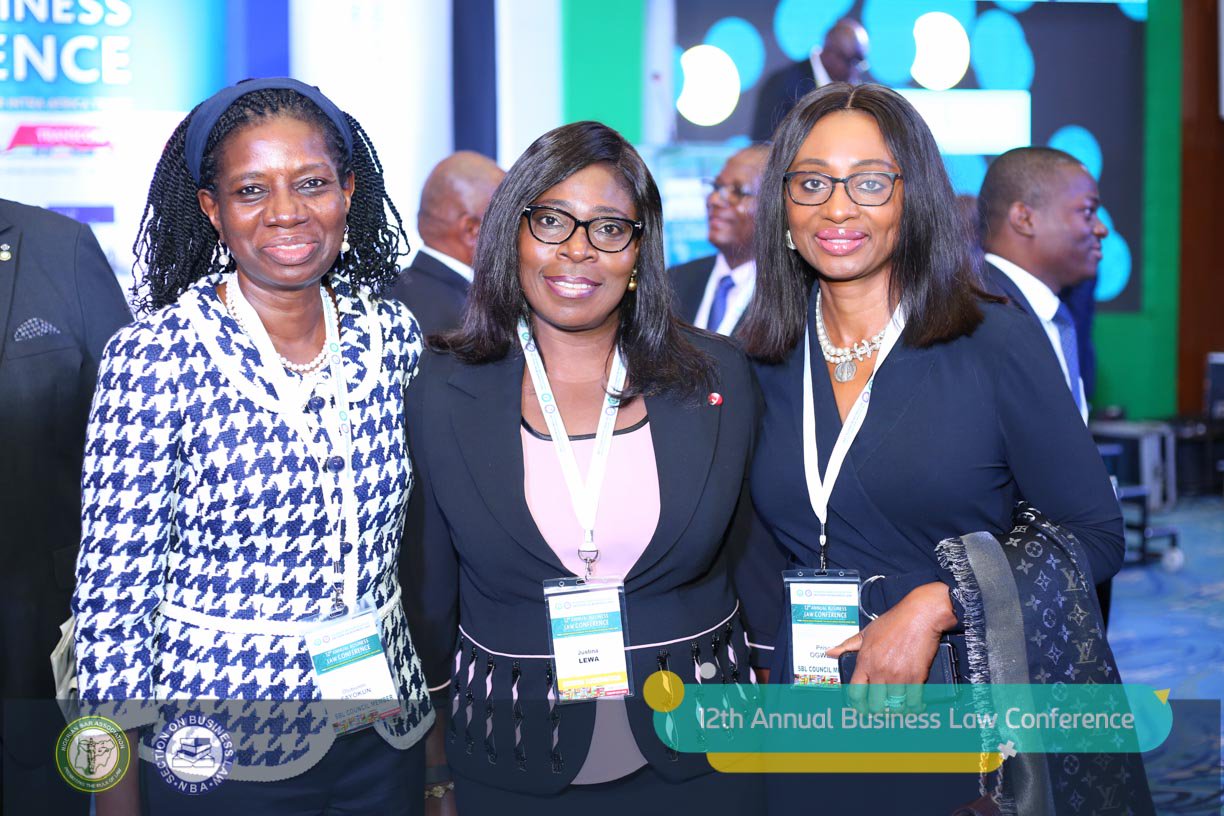
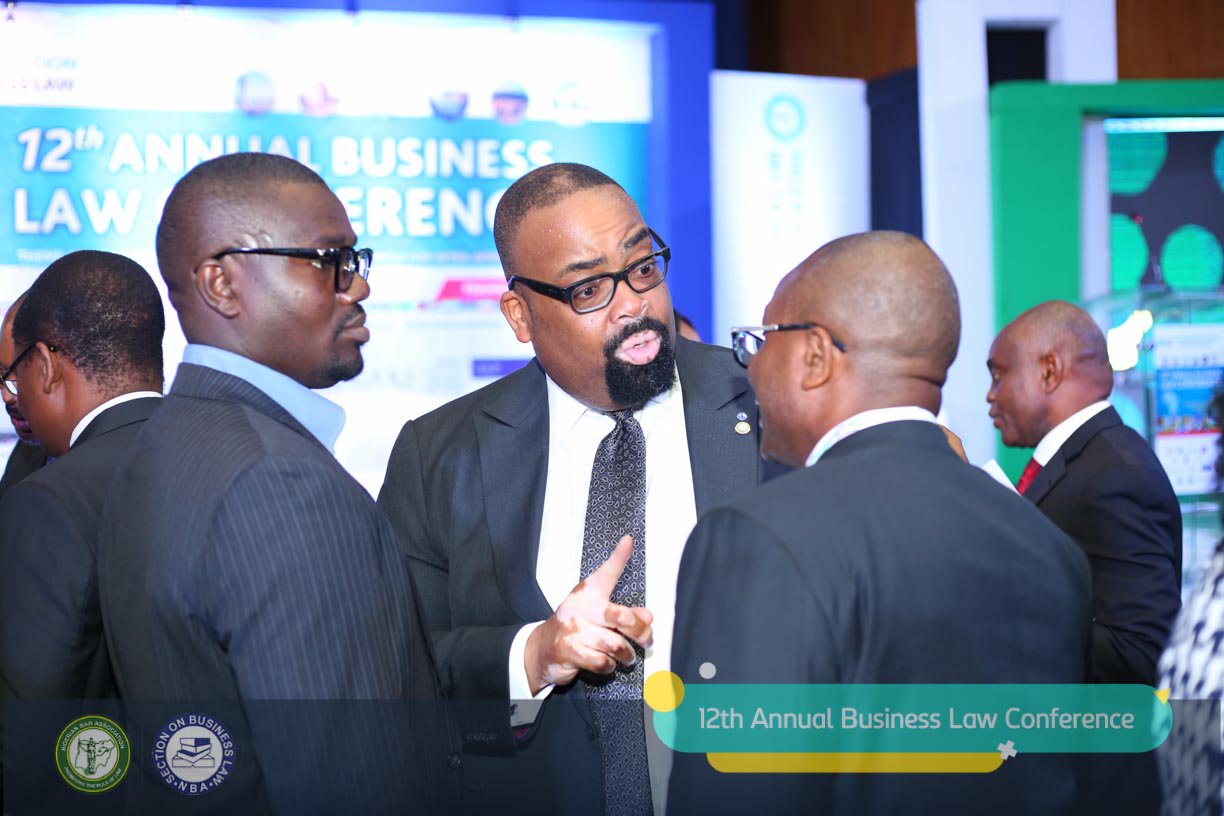
                        Lawyers of various branches of the NBA in Lagos State on Friday evening, 08 June 2018, gathered to hang out with Astute Litigator and Strategist, Paul Usoro, SAN. At the event, called for strategic plans and initiation of reforms to institutionalize the Nigerian Bar Association (“the NBA”).

                                   
Addressing the audience, Paul Usoro, SAN enjoined every lawyer to take interest in the activities and affairs of the NBA for one significant reason. According to him, the NBA has the potential and capability not only to direct the affairs of the profession but of Nigeria as a whole. It is the only association that, if well managed, could change the course of Nigeria’s history provided it has good leadership and is properly run.
An association laden with such potential should ride on the heels of good corporate governance practices to become an institution of repute. The learned silk entrenched that the NBA at the moment is yet to infuse processes and procedures into the system, which are the fundamentals of corporate governance. “I come from a background where I am used to processes and procedures. From the year 2000 and up to date, at any given time, I sit on the boards of a minimum of two companies and sometimes on the boards of up to five companies. One of the things boards do which I want to bring into the NBA is to put processes into the system, which is essence is corporate governance. These fundamental structures must be put in place as these are the basic principles to building an institution.”.


                      
Paul Usoro, SAN added that in building an institution out of the NBA, these processes and procedures must be guided by strategic and sustainable plans. This will bring about transparency as there would be corporate governance principles overriding everything. “The NBA can work towards charting a 10 year or 15-year strategic plan, that everybody buys into. That is what we will collectively do when we get into office. Working out a succession plan is not so difficult and it is not an impossible thing to do. We will also be introducing a succession plan, similar to does inculcated in all institutions, to help sustain our plans. It simply means that certain things will get changed. I have a few ideas with regards to how this can be done”, he explained.
                             
The legal luminary further disclosed that one of such strategic plans is judicial reforms. “One of the ingredients of judicial reform is to ensure that there is a system of electronic recordings in the courts. Even in the NBA of today, we do not have electronic recordings of minutes of meetings and sometimes people contend that what is contained in the minutes is not exactly what happened. All these can be resolved if we have electronic recording systems in place. How can an NBA of 2018 that does not have electronic recordings for its minutes, fight for electronic recordings in the courtrooms? If we have an electronic process in the court rooms, it will speed up the processes and reduce the time the judges have to write long hand which customarily delays the justice that is to be administered”.
Paul Usoro also spoke on one of the primary reason the NBA is set up, which is to promote the rule of law. “The rule of law gets assaulted when you have judges being locked up unjustifiably. The rule of law gets undermined when you have lawyers assaulted. The rule of law gets violated when court rooms are attacked. The rule of law gets degraded when the independence of judges is tampered with. These are things the NBA ought to stand up to. The NBA needs a president with courage to stand up to defend the rule of law”.
Earlier in his welcome address, Martin Ogunleye, immediate past Chairman of the NBA, Lagos Branch disclosed that Paul Usoro is a man that has stood the test of time, and this is a function of his integrity. For him, integrity and experience in corporate governance will indeed make the NBA an institution of repute.
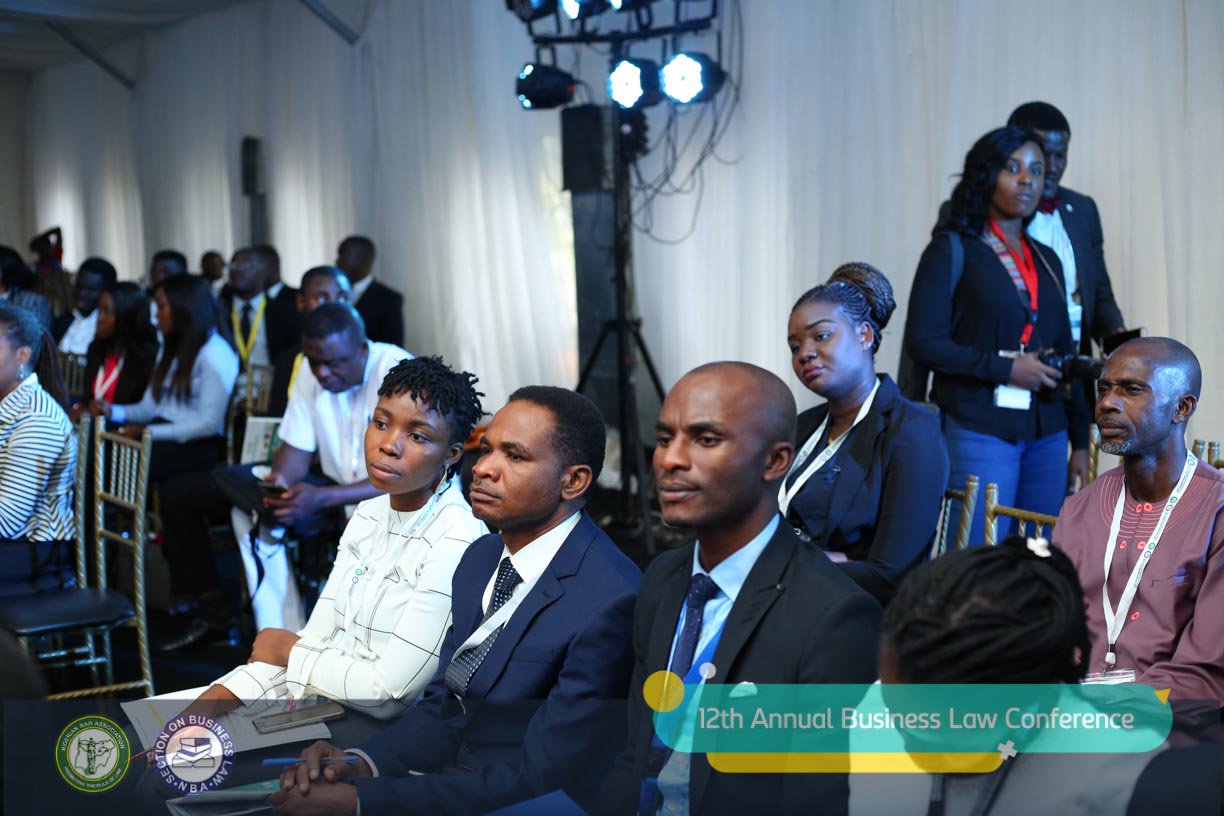
The event which held at the serene Freedom Park in Lagos Island was a relaxing atmosphere, with soulful music. It was well attended by lawyers and members of all 5 branches of the NBA in Lagos State.