2018 NBA ELECTIONS – Scholarly works of Presidential Candidates

2018 NBA ELECTIONS – Scholarly works of Presidential Candidates

This is the last post in our
series on comparisons of the profiles of the 2018 NBA Presidential candidates
and we would be examining the scholarly works and papers delivered by the
candidates as provided in the public profiles which could be found in the
following links;  Mr. Paul
Usoro, SAN, FCIArb
; Prof.
Ernest Ojukwu, SAN
; Mr.
Arthur Obi Okafor, SAN FCIArb
and Mazi
Afam Osigwe, LLM, FCIArb
.

To read all the other
assessments in the series, you may view the 1st, 2nd, 3rd,
4th and 5th post which cover issues such as the backgrounds
of candidates, their contribution to lawyer welfare, their NBA activities and
their contributions to law reforms.

PAUL USORO SAN

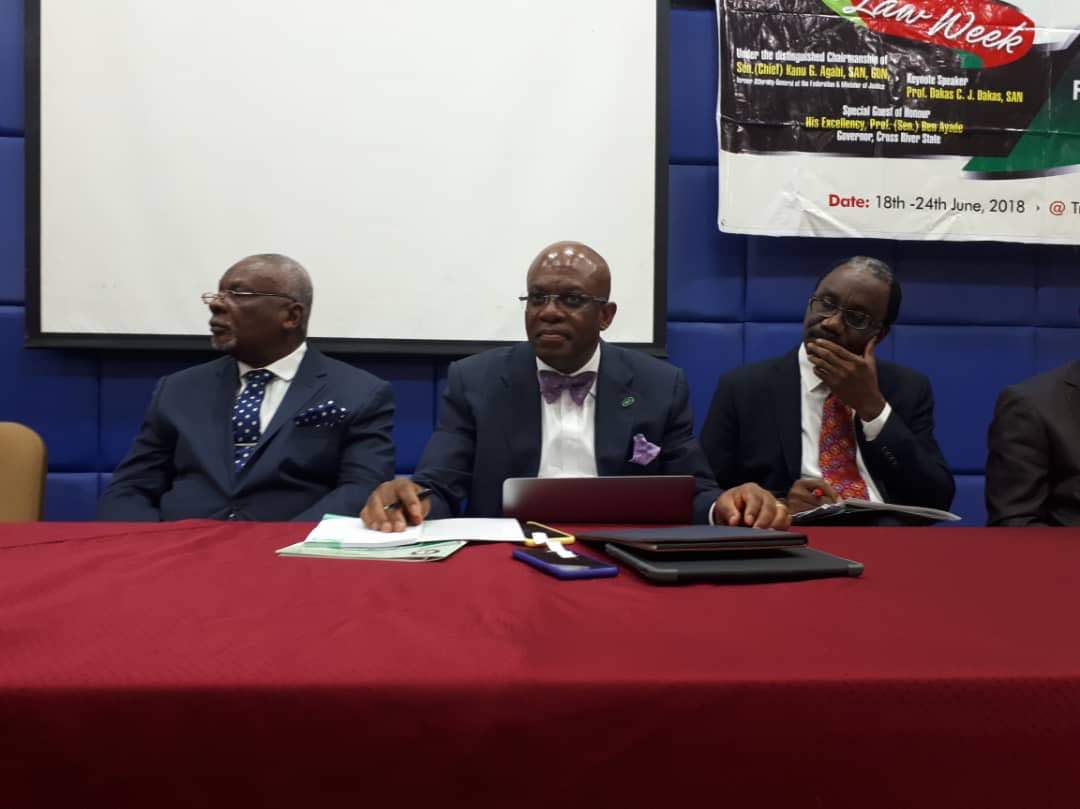
Paul has presented several
papers at NBA programs, using the platform to share knowledge with old and
young lawyers. Some of these papers include:  
1. “Good Governance, Corruption and Economic Development: Nigeria’s
Experience and the Journey so Far”. Presented at the Nigerian Bar Association
Kano Branch 2018 Law Week, Kano. 

2. “The Impact of
Legislation, Regulations and Policies on the Ease of Doing Business in
Nigeria”. Delivered at Manufacturers Association of Nigeria, Business Luncheon
for Managing Directors/CEOs, Lagos, April, 2018. 

3. “The Place of Pupillage
and Mentorship in the Future of Legal Practice in Nigeria”. Delivered at the
Nigerian Bar Association, Makurdi Branch 2018 Law Week, Makurdi.  

4. “The Integrity of the Bar
and Bench as a Panacea for Socio-Economic Development of Nigeria” Presented at
the 2018 Ife Bar Law Week, Conference Centre, Obafemi Awolowo University,
Ile-Ife. 

5. “Governance, Regulation
and Compliance: Beyond Rhetorics”. Keynote address at 32nd ICSAN Annual
Conference. 

 6. Keynote Address delivered on 27 October
2017 at the Hackcess Cybersecurity Conference on the Progress of Data Access
and Privacy Laws in the Sub-Region Holding, Lagos.

7. “Telecommunications Law
and Regulations”. Paper presented at the Legal Advisers/Law Officers Course
organized by the Nigerian Institute of Advanced Legal Studies.  

8. “Drafting Commercial
Agreements and Banking Documents: Telecommunications Contracts”. Paper
presented annually from 2003 to Course participants at Nigerian Institute of
Advanced Legal Studies, Lagos Campus.

9. “Frontloading under Akwa
Ibom State High Court (Civil Procedure) Rules 2009”. Lead Presentation at Joint
Workshop by the 3 Nigerian Bar Association Branches (Uyo, Ikot Ekpene and Eket)
in Akwa Ibom State. 

PROF. ERNEST OJUKWU, SAN

1.     Author
and co-author of law books


ARTHUR OBI – OKAFOR

1. Economic Recession in
Nigeria: The Legal Practitioners Survival Strategy.

2. Understanding Appellate
Practice in Nigeria.

3. Enhancing Access to
Justice through Alternative Dispute Resolution.

4. Enhancing Consumer Rights
of Protection Under the Law, Visa- Vis The Impunity of Bills and Charges by
Power, Network and Energy Service Providers in Nigeria… Is the Consumer
Helpless?

5. Opportunity and
Challenges in the Gaming Industry.

6. Strengthening the
Nigerian Legal Framework for the Effective Prosecution of Gender Based
Violence.

7. 21st Century Legal
Profession and its Social Responsibility Paradigm.

8. The Bar: Professional
Ethics in Decline?

MAZI AFAM OSIGWE

Not available on profile
released for public records.

Provisions of the Constitution Alteration Bills signed by President Buhari

Provisions of the Constitution Alteration Bills signed by President Buhari

President Buhari on Friday,
8th June, 2018, signed into law the  Constitutional Alteration Bills and with this
comes great news for the Nigerian justice administration system and Nigerian
democracy.

The constitutional amendments
signed by President Buhari include;

1.     Constitution
Alteration Bill, number 16, which disallows any vice-president or deputy
governor who succeeds his boss on account of death or resignation from seeking
2nd term in office.

2.     The
2nd constitutional amendment coming into force is Constitution
Alteration Bill, number 21, which relates to the determination of pre-election
matters. The amendment authorises the conclusion of disputes arising from the
nomination of candidates for elections before the general election and reduces
the date and time of determining pre-election matters to ensure that
pre-election matters in court do not get into the time of the elections and do
not pend thereafter.

3.     The
3rd amendment is the Fourth Alteration Bill which grants autonomy to
Houses of Assembly and the judiciary in the 36 states of the federation.
Meaning state houses of assembly and state judiciaries will have their
budgetary allocations automatically transferred to their accounts by the
Federal Ministry of Finance, rather than being subject to the budgets of the
State Executives.

4.     Alteration
Bill Number 9 was also signed into law by Buhari, the new amendment increases
the number of days that the electoral commission has to conduct election
run-off from seven to 21 days.

This is great news as the Nigerian
constitution can only get better.

The Nigerian Police – A system built on extortion, blackmail and human rights violation | Adedunmade Onibokun

The Nigerian Police – A system built on extortion, blackmail and human rights violation | Adedunmade Onibokun

Amnesty International

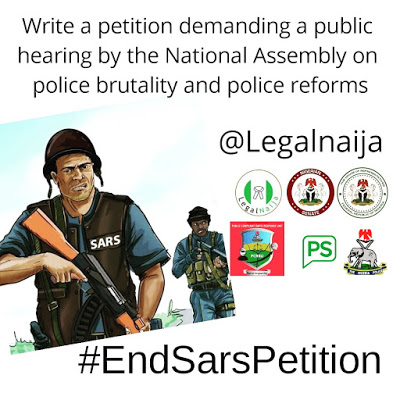
Over the past few months, there has been public
outcry against a unit of the Nigerian Police known as the “Special Anti – Robbery
Squad (SARS)”. With the hashtag #EndSars, many Nigerians have called for the
disbandment of the rogue unit within the police or in the alternative its
complete reform. Albeit, despite the national outcry of the atrocities committed
by these police officers, there seems to be no end to their reign of terror,
extortion and blackmail as on the contrary, they seem to have been emboldened
in their actions and social media is filled with daily reports of the inhuman
treatment metered to Nigerian citizens by these gun wielding extortionist. 


According to Amnesty International, in its 2016 report on SARS, titled; Nigeria: You have signed your death warrant, former detainees told
Amnesty International they had been subjected to horrific torture methods,
including hanging, starvation, beatings, shootings and mock executions, at the
hands of corrupt officers from the feared Special Anti-Robbery Squad (SARS).


The following is an excerpt from Amnesty  – 


“Our research has uncovered a pattern of
ruthless human rights violations where victims are arrested and tortured until
they either make a ‘confession’ or pay officers a bribe to be released.”
Amnesty International has received reports
from lawyers, human rights defenders and journalists and collected testimonies
stating that some police officers in SARS regularly demand bribes, steal and
extort money from criminal suspects and their families.
SARS officers are getting rich through
their brutality. In Nigeria, it seems that torture is a lucrative business,”
said Damian Ugwu.


You may ask yourself if justice would ever
inhibit this land? Or if we have a government?  And you will not be wrong to let your heart
fall to the feeling of despair and frustration resulting from the discovery
that in a nation like ours, one must not look to the government to provide adequate
security, rather one must secure oneself with a high fence and tough vicious
dogs. But how do you protect yourself from the person who is constitutionally
vested with the authority to protect you? how can we be assured that our cries
would lead to the reforms we so desperately seek in the Police force. 


Is SARS ever going to change? The answer is “NO”
and below are the reasons why our cries have not changed anything till now.

1.    
POLICE WELAFARE

The issue of police
welfare has been on the burner for many years and is a factor critically responsible
for the unlawful actions of the police. The Nigerian police is underfunded and
underequipped and most officers have been forced to use extortion as a means of
acquiring extra financial support for themselves and their families. In essence the need for better welfare packages for officers of the police force is of supreme importance. 


Another is recruitment, there are an estimated 350,000 police officers in Nigeria with a mandate to police a population of over 180 Million people. Which leaves an average of 500 citizens to one police officer. However, about 150,000 of these officers are assigned to VIP protection units. Leaving a little over 250,000 police officers to cater to the country. 


The issues of poor remuneration and gear also raise their ugly heads. Every officer should have a bulletproof vest as a standard part of his uniform but we find our officers are sent into duty with minimum forms of body protection or armour. 


The Police have stated that it would take an average budget of 1 Trillion Naira yearly for the Agency to leave up to its mandate, however with the current estimates of the Nigerian budget, the police alone would not be able to come close to such an amount in funding. A solution may however appear in the creation of State Police, an initiative the Nigerian Police has usually approached with caution due to the opportunity it would provide for State Governors to control the said state police for political gain, however, this must not be the reason why Nigerians should be denied the opportunity to give the creation of state police a try. Since the current Nigerian police will not be equipped to police the nation effectively within all territorial lines and also because community policing is now a globally accepted standard. 

2.    
POLICE ADMINISTRATION

The system of the Nigerian
police is one that supports extortion and as long as the system is not
reformed, nothing will come of our cries. According to Wikipedia, there
are over 1300 police stations in Nigeria. Have you ever wondered how these
stations are funded? The DPO of a police station is expected to run the station
and usually this requires some finances. Does the Police Headquarters provide
these finance? NO. 


It can then be assumed that Police Stations are meant to fund themselves and since the
police does not have any business, how are they supposed to carry out their
functions? You guess is as good as mine, they support the stations through
funds they get from the public and how do they get those funds? you may answer that question to the best of your knowledge. Moreso, like the branch of a business, it has been alleged severally
that each police station also has to forward financial returns up the chain,
this therefore allows the police to run like a profit making company and when
there are no goods to sell, how do they make profit?

3.    
POLICE SUPERVISION

On social media and
on other forms of traditional media, the Police Complaints commission has
requested citizens who are unlawfully treated by Police officers to make
official complaints and reports, however, the police complaints commission is
not well equipped to come to the aid of every Nigerian and there have been queries
of unanswered and untreated complaints.


According to the Police Complaints website, in the first quarter of 2017, over 498 complaints were received by the unit, about over 355 were resolved and closed, while over 65 were false/unrelated. This number represents only a limited number of the acts of unlawful treatment that happen daily and it would be interesting to see recent numbers of complaint form the unit.   

From reports, the acts of extortion are openly done at the police stations and is no secret between the
officers. They all know are deemed to know what is going on but are all unwilling to put an end to
it because it serves their purpose. It can be likened to the system of a racket that is
inbuilt into the system and as long as there is no mechanism to check these
human right violations at the police stations, there would be no reprieve to
the common Nigerian as the Police Complaints Unit cannot effectively cover all
1300 police stations within the country.

Truth is usually, the
DPO of every station and every other officer in the station is usually informed of the on-goings at the station and therefore it has become part and parcel of the system.

4.    
POLITICAL WILL

The hard truth is
that in Nigeria, the political class are most concerned about themselves and
not the general populace. And it is only when it concerns them directly that
they seem to seem to swing to action. For instance, in Nigeria courts, trials
could take years to complete but election petitions are the only proceedings
that have a maximum timeline of 180 days. This timeline was put in the law by
politicians who were concerned about the security of their positions but they
have not thought well to introduce time limits to other court proceedings
because they believe it does not concern them as hardly do they fall victims of
these unholy acts of the police.

5.    
THE LACUNA IN THE
CRIMINAL JUSTICE SYSTEM

When a citizen is
beaten and unlawfully arrested by SARS what are the instant remedies available to
such a person. Obviously one cannot make a call as your phones are seized and
crying for help is fruitless as one is usually beaten in the premises of the
police station while other officers turn a blind eye. Such citizen is then
asked to bail oneself after the police officers must have gone through the
phone with the aim of discovering the person’s account balance before they are
then allegedly lead to the bank ATMs to make cash withdrawals.

The only remedy
available to such person upon arrest is usually to be taken to court to prove
his innocence of the crime but that includes being charged to court, being
remanded by the Magistrate while bail is granted or denied and the requirement
of having to instruct a lawyer to defend one’s case in court. Usually these
only work in theory because most Nigerians rather than go before a judge who
has now become as hardened as the wooding bench would rather pay their way out
to secure their freedom.

6.    
LACK OF PENALTY

Until the law says
that all police officers who collect bribes or act unlawfully will be removed
from the force, then no form of reforms will come to the police. When there is
no repercussion for the acts of extortion by the police it emboldens the
officers to continue in the unjust ways. One may ask Yomi Shogunle how many
officers have been dismissed after being found guilty of these acts, more often
they are given lesser penalties like a demotion or a transfer to another unit,
however, they are usually retained in the force to continue their acts of
bitterness towards citizens and only a few are either prosecuted or jailed.

The above stated factors are the problems
faced by Nigerians in the fight to reform the police and without the political
will to reform the police, Nigerians will continue to be victims of the police
and will always be oppressed by the institution whose duty is to protect them.
So how can we turn our faith around and
demand a system that works? By doing the following –
1.     By making police and
especially SARS reforms a KPI for the current political administration. The
only time to get the attention of Nigerian politicians is in an election year
and as we move towards the 2019 elections, the current APC government should be
made to note that if they do not reform the police or disband SARS then there
would be no re-election for them. Trust me, this will work.

2.     By every Nigerian standing
up to challenge unlawful SARS officials anywhere they may be found.  If you see a SARS official around you, make a
recording of all their actions and put same out on social media, let them know
that they are being watched everywhere the go and the people will hold them
accountable.

3.     Sue the police. The
more people are able to enforce their legal rights and obtain judgment against the police for the unlawful acts
they commit, the more government attention will be brought to these despicable
acts.
The above may not be exhaustive in providing
solutions to the acts of human right violations by the police, if you have any way by which we can
promote and achieve police reforms, pls provide same in the comment section below and to end in the famous
words of Senator Dino Melaye “If you speak the truth, you die.
If you lie, you die. I, Dino Melaye has decided to speak
the truth and die”.
Most obliged. 

Adedunmade Onibokun Esq.

Provisions of the Not Too Young To Run Bill | Lealnaija

Provisions of the Not Too Young To Run Bill | Lealnaija

Many young Nigerians have
been elated since arrival of the news that President Buhari signed into law  on May, 31, 2018; what has now been popularly recognized
as the #NotToYoungToRunBill. The significant effect of this new law is that it
reduces the age requirement for persons who wish to contest for political
office thereby giving young Nigerians the opportunity to show they are not too
young to serve and help grow Nigeria either.

Special kudos should also be
given to the Bukola Saraki led National Assembly for also ensuing the law was
passed into barely a year after it was introduced.

However, many have asked how
this law will come to be effected as it contradicts the provisions of the
constitution which provides for the minimum limit of statutory age requirement
for persons who wish to contest political office.

At this point, it is
important to note that the new law signed by President Buhari does not in any way
conflict with the constitution as the Bill itself was a Bill to amend the Nigerian
Constitution as the title of the Bill reads – A BILL FOR AN ACT TO ALTER THE PROVISION OF THE CONSTITUTION OF THE
FEDERAL REPUBLIC OF NIGERIA, 1999 AND FOR OTHER MATTERS CONNECTED THEREWITH
.

 Constitutional Amendments –

The Amendments to the Nigerian
Constitution by the Bill include –

1.      Qualifications
for Membership of National Assembly-  

Section
65 (1) (b) is amended by substituting the provisions with a new provision as
follows:    A person shall be qualified
for election as a member of –

(b)
the House of Representatives, if he is a citizen of Nigeria and has attained
the age of twenty-five years.

2.      Qualifications
for Membership of House of Assembly

Section
106 (b) and (d) is amended by substituting the provisions with new provision as
follows:  A person shall be qualified for
election as a member of a House of Assembly if – 

 (b) he has attained the age of twenty-five
years;

3.     
Qualifications for election as President

Section 131 (b) and (c) is amended by
substituting the provisions with new provisions as follows: A person shall be
qualified for election to the office of the President if –  

(b) he has attained the age of thirty-five
years;

It should however be noted
that some of other aspects of the Bill were however not signed into the amendment.
For instance, the age requirement for a member of the Senate was retained at 35
years as well as those of the Governors. Though, the initial contained a
provision to reduce both requirements to 30 years.

@Legalnaija

2018 NBA ELECTIONS: Corporate Governance & Leadership profiles of the Presidential Candidates.

2018 NBA ELECTIONS: Corporate Governance & Leadership profiles of the Presidential Candidates.

This is the 5th post in our series on the comparison and qualitative assessment of the 2018
NBA, Presidential Candidates. Our comparison has been based on the profiles of
the candidates as provided online, though some of these profiles were silent on
certain criteria which we have used for our comparisons, we have stated same
where applicable.

Please note that you can
view the complete profiles of all the Presidential candidates, you may find
same via this links;  Mr. Paul
Usoro, SAN, FCIArb
; Prof.
Ernest Ojukwu, SAN
; Mr.
Arthur Obi Okafor, SAN FCIArb
and Mazi
Afam Osigwe, LLM, FCIArb
.

Our first post examined the Background
of the Candidates; the second examined their contributions to lawyers welfare
and law reforms; the third had a look at their respective NBA
Activities
; while the fourth examined their Advocacy
and Practice Skills.

The choice of the most preferred
candidate to lead the Bar is critical to national development and also to the
welfare of legal practitioners. Such member of the Bar must be the best man for
the job. Therefore, study carefully our comparisons of the profiles of these
aspirants and pick the best man to lead the Nigerian Bar Association.

You may also download the
full report here.

Corporate
Governance & Leadership


PAUL USORO, SAN        

1.         Paul at various times, served on the Boards of several
blue-chip companies including:

a.         Premium Pensions Ltd,

b.         CR Services (Credit Bureau) Plc (representing Zenith Bank
Plc),

c.         Nigerian Bulk Electricity Trading Plc,

d.         Boards of PZ Cussons Plc,

e.         Airtel Networks Limited,

f.          Marina Securities Ltd,

g.         Access Bank Plc, one of Nigeria’s leading banks.

2.         Paul is a pioneer director of Airtel Nigeria Limited,
Nigeria’s leading mobile telephone company, having been appointed to the
Company’s Board in 2001, then known as Econet Wireless Networks Limited; the
company has over the years undergone major ownership and structural changes
prior to being acquired by Bharti Airtel of India in 2010.  Paul was the only pioneer director of the
company that survived the several changes in ownership of the company until his
resignation in February 2018.

3. Chairmanship of Boards
and Critical Board Committees

Exposure in the boardroom as
chair of key committees refined Paul’s skills on essential development and
growth factors for successful organizations with focus on corporate governance,
strategic thinking and financial accountability. Paul’s robust leadership
experience in the boardroom are listed hereunder:

a.         Chairman, Board of Marina Securities Limited.

b.         Chairman, Access Bank Plc Board Remuneration Committee. 

c.         Chairman, Access Bank Plc Board Governance & Nomination
Committee.

d.         Chairman, PZ Cussons People & Governance Committee of
the Board.

e.         Member, Access Bank Plc Board Audit Committee,

f.          Member, Access Bank Plc Risk Management Committee

g.         Member, Access Bank Board Risk Credit and Finance Committee.

h.         Past Chairman, Airtel Board Audit Committee.

i.          Past Chairman, Premium Pensions Limited Board Audit
Committee.

j.          Past Chairman, Nigerian Bulk Electricity Trading Plc Board
Audit Committee.

4. On 22nd February 2018,
Paul was awarded the Corporate Governance Rating System (GCRS) “Rating
Certificate” by the Board of the Nigerian Stock Exchange and The Convention on
Business Integrity. The award of the Rating Certificates was in recognition of
Paul’s excellent scores in the Fiduciary Awareness Certification Test (FACT) of
the CGRS administered to directors of Access bank as part of the CGRS
certification exercise in Nigeria.

 5. The leadership and membership of corporate
board committees gives Paul the opportunity to implement skills acquired in the
executive trainings he has attended over the years some of which are listed
below:

a.         Making Corporate Boards More Effective, Harvard Business
School, Boston, USA (November 2014)

b.         Audit Committees in a new Era of Governance, Harvard
Business School, Boston, USA (July 2013)

c.         Leadership Best Practices, Harvard Business School, Boston,
USA

d.         Finance for Executives Program at the Fontainebleau Campus
of INSEAD, France (April 2017)

e.         Finance and Accounting for the Nonfinancial Executive,
Columbia Business School in New York, USA (March 2018)

6. President, Law Society,
University of Ife. Even at a young age, Paul contested for and won the
Presidency of the Law Society of the then University of Ife, (now OAU) becoming
the first student from Nigeria’s ethnic minorities as at that time to occupy
such office.


PROF. ERNEST OJUKWU, SAN          

1.         Chairman, Chartered Institute of Arbitrators, Asaba (2011 –
Present)

2.         President, University of Calabar Alumni Association, Onitsha
Chapter (2003 – Present).

3.         Member, Defunct Idemili Local Govt. Town Planning Authority,
Anambra State 1995.

4.         Member, Idemili South Local Government Town Planning
Authority, Anambra State.

5.         An Assessor with the Delta State Multi-Door Court House for
listing Arbitrators, Mediators and Conciliators.

6.         Author and co-Author of Law Books. 


ARTHUR OBI-OKAFOR, SAN

1.         Chairman, Chartered Institute of Arbitrators, Asaba (2011 –
Present)

2.         President, University of Calabar Alumni Association, Onitsha
Chapter (2003 – Present).

3.         Member, Defunct Idemili Local Govt. Town Planning Authority,
Anambra State 1995.

4.         Member, Idemili South Local Government Town Planning
Authority, Anambra State.

5.         An Assessor with the Delta State Multi-Door Court House for
listing Arbitrators, Mediators and Conciliators.

MAZI AFAM OSIGWE   

1.         Chairman of NBA Abuja Branch, December 2010 to December
2012.

2.         Editor-In-Chief of the Unity Voice (the monthly newsletter
of NBA Abuja) from 2011-2013.

3.         He is also the Company Secretary/ Legal Adviser of many
companies.

2018 NBA ELECTIONS: Advocacy Experience of Presidential Candidates

2018 NBA ELECTIONS: Advocacy Experience of Presidential Candidates


The comparison of the Advocacy skills of the NBA Presidential Candidates will be the focus of this 4th post in our series. Our 1st post was centered on the background of the candidates while our 2nd and 3rd post were centered on their contributions to lawyer welfare and law reforms and their NBA activities respectively.
Kindly note that the information provided below has been derived from the profiles of the candidates published online via the following links; Mr.
Paul Usoro, SAN, FCIArb
; Prof.
Ernest Ojukwu, SAN
; Mr.
Arthur Obi Okafor, SAN FCIArb
and
Mazi
Afam Osigwe, LLM, FCIArb
.

Pls note that you may also download the full report here

Advocacy Experience of Presidential Candidates 

PAUL USORO SAN

1.      Paul has been
involved in virtually all major transactions and regulatory reforms in the
Nigerian communications sector.

2.      The world-acclaimed,
first-ever and all-round successful Nigerian Digital Mobile Spectrum Auction
conducted in 2000. The transaction earned the Federal Government of Nigeria
US$855,000,000.00 for 3 Digital Mobile Licences.

3.      Has been the primary
adviser to the Nigerian Communications Commission (NCC) in most of its reform
initiatives till date

4.      Served as and was the only African and the sole Legal practitioner in
the six-member Auction Control Team for the Global Systems of Mobile
Communications (GSM) Spectrum Licence Auction that introduced Econet Wireless
Networks Limited (now Airtel), MTN Communications Limited and NITEL GSM to the
Nigerian market.

5.      Additional core ICT
regulatory and transaction experiences are highlighted hereunder:

i.      Acted as sole legal
consultant to the NCC in respect of the Mobile Number Portability;

ii.    Preparation,
on behalf of NCC, of a National Carrier Licence and an International Gateway
Licences for NITEL, a hitherto unlicensed monopoly;

iii. Acted as
lead legal consultants to NCC for the Second National Operator licensing
processes, including the auction and preparation of the 3 SNO licences;
the process produced
Globacom Limited as Nigeria’s Second National Carrier;

iv. Preparation of the
Interconnectivity Agreement between NITEL and licensed private network
operators;

v.    Represented NITEL in
the negotiation of the Construction and Management Agreement for the laying of
the SAT-3/SAFE/WASC trans-continental fibre-optic cable project which spans the
sub-Saharan African Continent and extends to Far East Asia through Southern
Africa, with European landing points. 
This was the first trans-continental cable project in sub-Saharan
Africa.

6.       On account of Paul’s
acknowledged eminence as Nigeria’s leading Communications Lawyer, Akwa Ibom
State Government appointed and relied on him to manage its portfolio investment
in Airtel in 2001. Paul negotiated this investment, valued as at the date of
entry at the sum of US$75,000,000.00. 
Akwa Ibom State Government cashed out most of its investments in this
enterprise in 2006, in the transaction by which Celtel BV successfully invested
over US$1,000,000,000, by way of share purchase from existing shareholders and
injected fresh capital into Airtel (“Celtel Transaction”), which transaction
was chiefly negotiated by Paul.

7.    Paul led
the Airtel Shareholders Committee in negotiating the Celtel Transaction as the
Committee Chairman, which, at the time, ranked as one of the biggest private
sector equity transactions in Nigeria’s history. Paul represented the interest
of all the shareholders which included three Nigerian State Governments and
blue-chip corporate citizens like First Assets Limited, a wholly-owned
subsidiary of First Bank of Nigeria Limited. It is a testimony to Paul’s
leadership quality that Celtel BV insisted after the Transaction that he
remains on the Board even though Akwa Ibom State Government whom he initially
represented had about sold out completely from the Company. 

8.    Celtel BV
in 2010 sold out its equity entirely to the Bharti-Airtel Group of India
resulting again in the reorganization of the Airtel Board.  Again, Bharti-Airtel, the new 65% owners of
Airtel insisted that Paul remains on the Board of the Company where, as at
date, he chairs the only Committee of the Board i.e. the Audit Committee.

9.    A founding
Secretary General, Telecommunications Law Association, Mr Usoro was named ‘Best
Pan African Telecoms Lawyer of All Times’ by the IT and Telecom Digest,
Nigeria’s leading and one of Africa’s foremost ICT magazines.

Matters Reported in The Nigerian Weekly Law
Report

A. SUPREME COURT:

1.   
A.G Rivers State v A.G Akwa Ibom State (2011) 8 NWLR
(Pt. 1248) 31 (SC)

2.   
Engr. Frank Okon v INEC (2015) 9 NWLR (Pt. 1463) 113
(SC)

3.   
INEC v Umana (No. 1) (2016) 12 NWLR (PT 1526) 260 SC

4.   
INEC v Umana (No. 2) (2016) 12 NWLR (Pt 1526)289 SC

5.   
PDP v Umana (No. 1) (2016) 12 NWLR (Pt 1526)299 SC

6.   
PDP v Umana (No. 2) (2016) 12 NWLR (Pt 1526) 307 SC

7.   
Udom v Umana (No. 1) (2016) 12 NWLR (Pt. 1526) 179 SC

8.   
Udom v Umana (No. 2) (2016) 12 NWLR (Pt 1526) 270 SC

9.   
A.G Lagos v A.G Federation
(2003) 12 NWLR (Pt.833) SC

10.   
A.G Ondo v A.G Federation
(2002) 9 NWLR (Pt. 772) 222 SC

11.   
Societe Bancaire (NIG.) Ltd
v De Lluch (2004) 18 NWLR 341 SC

12.   
Nitel v Okeke (2017) 9 NWLR
(Pt. 1571) 439 SC

B. COURT
OF APPEAL:

13.   
Archibong v State (2006) 14
NWLR (Pt. 1000) 349 (CA)

14.   
A.G. Federation v A.G. Abia
State & Ors (2002) 6 NWLR (Pt. 784) 542 (CA)

15.   
A.G. Abia State v A.G.
Federation (2005) 12 NWLR (Pt. 940) 542 (CA)

16.   
Idiok v State (2008) 13 NWLR
(Pt. 1104) 225 (CA)

17.   
SEC v Osidero (2009) 5 NWLR (Pt. 1134) 377 (CA)

18.   
Habeeb Bank v Opomulero (2000) 15 NWLR (Pt. 690) 315
(CA)

19.   
Technip v AIC Ltd (2011) 15 NWLR (Pt. 1270) 326 (CA)

20.   
Union Bank v Sadiku Lawal (2008) 7 NWLR (Pt. 1087) 613
(CA)

21.   
NITEL v Ugbe (2002) 3 NWLR (Pt. 753) 1 (CA)

22.   
Mobil v Yusuf (2012) 9 NWLR (Pt. 1304) 47 (CA)

23.   
Leasing Company Nigeria Ltd
v Tiger Industries Ltd (2007) All FWLR (Pt. 347) 659 (CA).

Matters Reported in Law Pavilion Electronic Law Report

COURT OF APPEAL

1.     Star Deepwater Petroleum &
3 Ors v AIC Ltd Limited & 3 Ors (2010) LPELR – 9165 (CA)

2.     NITEL v Emos Dynamic Nig. Ltd
(2008) LPELR – 4618 (CA)

3.     Hon. Iquo Nyong of PDP v Elder
(Dr.) Ini Akpan of Achan Congress Party (AC) & 3 Ors (2008) LPELR – 4656
(CA)

4.     Scanad Nigeria Ltd v Prima
Garnet Communication & Anor (2014) LPELR- 23313 (CA)

5.     Hon. Minister of Environment
& Anor v County & City Bricks Development Co. Ltd (2011) LPELR – 4256
(CA); (2011) All FWLR (Pt. 644) 66

6.     Edet Udo v Akpabio (2013)
LPELR-22119(CA)

7.     Nigerian
Agricultural Co-op & Rural Development Bank Ltd. Anor. v Mbio Oku Ikot Oku
Odung Multi-Purpose Co-op Society Ltd. & ORS. (2013) LPELR-20202(CA)

8.     Gordon
Tom Iwok & Ors. v. University of Uyo & Anor (2010) LPELR-4345(CA)

Ogundipe v NITEL (2015) LPELR
– 24920 (CA).

PROF. ERNEST OJUKWU SAN

     
Information was not provided on public
profile –


ARTHUR OBI OKAFOR SAN

1.         Onuorah v. KRPC Ltd. (2005) 6 NWLR (Pt. 921) 393.

2.         Balonwu v. Governor of Anambra State 2009 18 NWLR 13 (Pt.
1172).

3.         Peter Obi v. INEC (2007) 11 NWLR (Pt. 1046) 565.

4.         Edward Nkwegu Okereke v. Nweze David
Umahi & Ors. (2016) LPELR-40035(SC).  

5.         Ikechukwu v. Nwoye (2015) 3 NWLR (Pt. 1446) 367.

6.         Ilobachie v. Ilobachie (2005) 13 NWLR (Pt. 943) 695.

7.         Odedo v. I.N.E.C (2008) 17 NWLR (Pt. 1117)554. 

MAZI
AFAM OSIGWE

At various times Afam has
had cause to carry out research and litigation in various areas of the law
including Corporate and Business Law; Land law, Banking law, Intellectual
Property; International Commercial Law, Tele-communications, Energy, Oil and Gas
Law; Domestic arbitration, International Commercial Arbitration etc. He has a
special bias for commercial and financial practice and litigation

National Transport Commission Bill Crosses Final Hurdle In National Assembly

National Transport Commission Bill Crosses Final Hurdle In National Assembly

Following the passage of the National
Transport Commission Bill by the Senate on Thursday 15th of
March, 2018, the Senate on Wednesday 6thJune, 2018 passed the report
of the Conference Committee of the National Assembly on the National Transport
Commission Bill.

The Conference Committee, which was Chaired
by Senator Gbenga Ashafa representing Lagos East Senatorial District, was set
up by both chambers of the National Assembly with a view to harmonise the
differences between the versions of the Bill as passed by the House of
Representatives and the Senate respectively.

With the passage of the conference committee
report, which was first sponsored in the National Assembly in 2008,
stakeholders now eagerly await the transmission of the said bill to the
Executive arm of Government for the assent of His Excellency, President
Muhamadu Buhari.

While addressing the press after the passage
of the Bill by the Senate in April, Ashafa had stated that “the National
Transport Commission when signed into law is capable of setting the transport
sector on the path of positive development. With this bill, we would
successfully create a multi-modal transport sector economic and safety
oversight regulator for the transport sector. This is very good for business as
it brings standard and structure to the transport sector while also increasing
the revenue of Government.” 

He stated further that, “The Joint Senate
Committee worked with the understanding that this is one of the priority
Economic Bills of the 8th Senate and therefore ensured that all
imputes from stake holders were considered and the best possible version of the
bill was presented to the Senate.”


The National Transport Commission Bill when
signed into law is expected to create a multi-modal transport sector economic
and safety oversight commission, that will drive the National Transport Policy.

Resolutions passed by #NASSJointSession on 5th June,2018

Resolutions passed by #NASSJointSession on 5th June,2018

The following are the resolutions passed at the Joint Session of the National Assembly on 5th June, 2018. 

1.The Security Agencies must be given marching orders to contain all the sustained killings of Nigerians and protect the lives and properties of Nigerians — as this is the primary duty for any responsible government.
2.The systemic harassment by the executive of perceived political opponents — people with contrary opinions in the legislature and the judiciary — by the police and other security agencies must stop.
3.There must be strict adherence to the rule of law and protection for all citizens by the President and all his appointees. 
4.The President must be held accountable for the actions of his appointees and must be ready to sanction, those that carry out any act, that will ridicule or endanger the country and our democracy.
5.The government should show sincerity in the fight against corruption by not being selective and also prosecute current appointees that have cases pending against them.
6.The sanctity of the National Assembly should be protected and preserved by the federal government… and prosecute those who invaded the Senate to seize the mace.
7.Democratic elections must be competitive and inclusive by removing the current reign of fear and intimidation — particularly as we approach the forthcoming 2019 elections. 
8.The National Assembly will liaise with the international community through the IPU, the APU, ECOWAS Parliament, Pan-African Parliament, EU, US Congress and the United Nations to secure our democracy. The National Assembly will also engage with civil society organizations, trade unions and NGOs to further deepen and protect our democracy.
9. The President must take immediate steps to curtail the growing level of poverty and unemployment in Nigeria — especially now that we have an advantage of high oil prices.
10. Both chambers of the National Assembly hereby pass a vote of confidence on the Senate President, the Speaker and the entire leadership of the National Assembly.
11. We also hereby reaffirm our earlier resolution on the vote of no confidence on the Inspector General of Police, who does nothing but preside over innocent Nigerians with an outright disregard for constitutional authority of both the executive and the legislature.

12. The National Assembly will not hesitate to invoke its constitutional powers if nothing is done to address the above resolutions passed today.
REFLECTIONS: Welfare of Young Lawyers & Related Issues  – PAUL USORO, SAN FCIArb

REFLECTIONS: Welfare of Young Lawyers & Related Issues – PAUL USORO, SAN FCIArb

Contributing Factors (I):
Contracting Market for Legal Services

It is axiomatic that one cannot
give what he does not possess or have.  Ironically, most lawyers only
apply that saying to intellectual matters forgetting or ignoring the fact that
it applies just as well to economic circumstances.  The senior lawyer or
firm that is earning little cannot afford to pay their younger colleagues any
reasonable income.  Why do some lawyers and firms earn such poor income?
 Several factors account for this and one of these is the contracting size
of the Nigerian legal services market.  This contraction which has
insidiously been creeping in on us over the years is caused, in part, by the
unceasing, widespread and unregulated encroachment into the Nigerian legal
services market by Nigerian non-lawyers as well as foreign lawyers and law
firms.


At the very base level, the level
which affects most lawyers whether in the urban or rural branches, there is,
illustratively, serious and persistent encroachment by non-lawyers and touts
into the legal services market as it relates to land transactions, to the
detriment and disadvantage of lawyers.  Lawyers in literally all branches
of the NBA, both cosmopolitan and provincial branches (a term that was
generously donated recently to me by the Okitipupa NBA Branch), feel the impact
and brunt of and lament these encroachments.  At the upscale level,
in-house counsel positions in multinational companies are increasingly being
taken over and occupied by foreign lawyers who have not been called to the
Nigerian Bar and are not licensed to practice or offer legal services in
Nigeria.


Foreign law firms are also
increasingly taking over a disproportionate share of the Nigerian legal
transaction market, with the active connivance of governments, at the Federal
level mostly and sometimes at the States levels, and also with the complicity
of some of our colleagues.  In some instances, governments are, perhaps,
unwitting accomplices, and this occurs mostly when multilateral credits or aids
are taken from foreign donors and/or agencies with the collateral
conditionality which requires the engagement of donor country consultants and
foreign law firms to manage the transaction, ostensibly because Nigerian
lawyers, as we hear so often, are not experienced, have never handled such
transactions, do not have the discipline to handle such transactions and cannot
be trusted to handle them.  In some other instances, government officials,
with the support of some of us, boldly pronounce, even without prompting from
those multi-lateral agencies and donors that they, the government officials,
find Nigerian lawyers unfit and totally inexperienced and undisciplined to
handle certain transactions.

I have always found these excuses
by Nigerian governments and their officials totally inexplicable and untenable
and indeed insulting to and demeaning of the intellect and capabilities of
Nigerian lawyers and it is rather unfortunate that some of us join in mouthing
and condoning these feckless excuses.  Happily, and thanks in part to
Awolowo v The Hon Mallam Usman Sarki & another (1966) LPELR-25290 (SC),
these excuses are not applied to court litigation matters and this is rather
ironic.  Ironic in the sense that Nigerian lawyers who can be trusted to
argue matters in court, no matter how recondite or novel, cannot be trusted by
their governments and some private sector organizations and individuals to handle
novel/recondite and/or complicated transactions.  How will the Nigerian
lawyers gain experience when they’re so excluded from those transactions and in
instances where they’re not totally excluded or banished, they’re fed crumbs
and assigned low-level reviews of Nigerian law portions of the deal by the
foreign lawyers and their firms, with the active connivance of Nigerian
governments, organizations and persons?

Just before leaving the issue of
court litigation, I must mention that a multinational company operating in
Nigeria, about a year or two ago, engaged a foreign counsel to negotiate an
out-of-court settlement with the Nigerian government in a matter that was then
pending in Court.  That may perhaps have signalled a creeping encroachment
even into the court litigation arena by foreign lawyers and firms which, if
unchecked and nipped in the bud, could blossom into a full-blown incursion
similar to what we’re experiencing in transactions.  In the broader
dispute resolution arena, there’re unchecked incursions by foreign law firms
and lawyers notably in arbitration matters.  I am aware of instances where
parties to arbitral proceedings that are conducted in Nigeria engage foreign
counsel to represent them in those proceedings and in matters that Nigerian counsel
are very capable of handling.  

I do not believe that there’s any
aspect of legal services, including transaction and arbitral matters, that we
cannot find capable Nigerian lawyers to handle.  I also believe that, if
we must involve foreign counsel in delivery of legal services in Nigeria, there
must be open dialogue and negotiations led by the NBA and our Attorney General
of the Federation/Trade Ministry with relevant foreign Bar Associations and
their countries’ trade negotiators.  This is standard practice in
developed and developing countries where Bar Associations work with Trade
Ministries in market access negotiations as it relates to legal services. A
limited access principle whereby foreign lawyers must be led by Nigerian
lawyers, the Nigerian lawyers being the ones to nominate, agree with and assign
portions of the assignment to the foreign lawyers and firms, could be put on
the table in such negotiations.

Incidentally, I speak from
well-heeled and vindicated experience.  At the time of the first Nigerian
international spectrum auction which ushered GSM services into Nigeria in 2000,
the same arguments of novel and recondite transaction were raised against my
engagement as the Counsel for the transaction, but thank Heavens and the
strong-will of the Board and Executive Management of the Nigerian
Communications Commission (“NCC”) that was led respectively by Alhaji Ahmed
Joda and Engr Ernest Ndukwe, OFR, I was retained for the assignment and I
turned out to be the only lawyer in the 5-man Auction Control Team that
conducted the spectrum auction which has remained a landmark Nigerian
transaction and the template for subsequent such transactions beyond Nigeria.
 The License and other transaction documents and framework which I
prepared then, in conjunction with NCC in-house Counsel, all Nigerians,
including Michael Ikpoki who later joined MTN and rose to become its first and
only Nigerian Managing Director, Osondu Nwokoro, currently the Legal Director
of MNTel and Josephine Amuwa, currently a Director at NCC, remains, up till
date, the model and template for such transactions. Not even our then
detractors and traducers could find fault in them.

Exactly the same scenario played
out when we had the responsibility for preparing the Nigerian Communications
Act, 2003 – the subsisting regulatory framework for the Nigerian communications
industry.  Naysayers rose and claimed, at the time, that no Nigerian
lawyer had the experience or skill to prepare such a landmark legislation; they
indeed they went as far as hiring foreign firms who prepared drafts of the
legislation for them.  Again, we working with the same set of NCC in-house
Counsel that I mentioned earlier who worked with me during the GSM Auction –
defeated them solely because we produced a far superior and unsurpassable
legislation, entirely and wholly Nigerian-made!  As at date, almost 15
years after the passage of that Act, no fault has been found in the legislation
and no amendment has been made thereto.

To summarize, I propose that the
NBA intervene to protect the Nigerian legal services market for the Nigerian
lawyers by pushing back on the encroachment of the market by non-lawyers and
foreign lawyers and law firms – both at the base and upscale levels.
 Every land transaction that is handled by a non-lawyer results in loss of
income to the Nigerian lawyer.  Each legal position that is occupied in
multinational organizations by foreign lawyers amounts to a lost opportunity
and loss of income for the Nigerian lawyers; ditto in respect of Nigerian transactions
particularly Nigerian financed transactions that are handled by foreign law
firms and also arbitral proceedings that are conducted in Nigeria.  Of
course, I’m aware of the globalization of services and our commitments to the
World Trade Organization, but then these commitments and the globalization
trends should be domestically regulated in a manner that do not prejudice and
marginalize the Nigerian lawyers in the way that they’re currently totally
prejudiced, marginalized and excluded.  Incidentally, we would not be the
only ones to have such domestic regulations in place; in developed and other
developing countries, they’re such regulations which, in varying degrees,
regulate the influx of foreign lawyers and firms into their respective domestic
market, as I’ve pointed out earlier. By championing such protective measures,
the NBA would, in some ways, be guaranteeing decent income and opportunities
not to mention skills development, not only for the Nigerian young lawyers but
for Nigerian lawyers generally.

It may also serve us well for the
NBA to actively develop, maintain and constantly update at its National
Secretariat, a verifiable database of Nigerian lawyers who have specialized
knowledge and skills in various areas of law, either through practice or by
education.  Such a database would come in handy not only to blunt the
constant put-down by Nigerian governments and their officials against Nigerian
lawyers but also to positively assist such Government Agencies and
private-sector in identifying skilled lawyers that could assist them in
handling these so-called complex and “novel” transactions and matters.

2018 NBA ELECTIONS: List of NBA Activities & Commitments by Presidential Aspirants (Part 3)

2018 NBA ELECTIONS: List of NBA Activities & Commitments by Presidential Aspirants (Part 3)

This is the 3rd
post in our series on the Qualitative Assessment of all 2018 NBA Presidential
Candidates. Our aim is to critically evaluate the profiles of these candidates
in order to give lawyers the opportunity to carefully peruse their background and
get insights into their candidacy.

In this 3rd
part of our analysis of the profiles of all 4 (four) NBA Presidential
Candidates, we shall be examining their NBA commitments and activities so far.
As Bar men, all four candidates have participated in various activities of the
NBA, both at the Branch and at the National Levels.

Our first analysis and assessment
covered the Background of all candidates in this post, while the 2nd
part covered their contributions to law reforms and also the welfare of lawyers
in this post.

Please note that all
information provided has been sourced from the profiles of the candidates as
provided online. Through this series, lawyers will be able to identify who the
best man for the job is.

Nba Commitments And Activities Of Candidates


PAUL USORO SAN

1. 
Member of the National Executive Committee
(NEC) of the NBA and attends most NEC meetings.

2. 
Member of the NBA Legal Profession Regulation
Review Committee.

3. 
The pioneer Chairman of the Communications
Committee of the NBA Section of Business Law (“SBL”).

4. 
Attended the NBA Legal mission to the UK Bar
Standard Commission and Solicitors’ Regulatory Authority to understudy their
system in 2017.

5. 
Fully sponsored the Elders’ Night of NBA Lagos
Branch 2017 Law week and routinely sponsors Lagos Bar events.

6. 
PUC was the sole sponsor of one of the most
attended Break-out sessions at the 2017 NBA Conference: “Emerging Trends in
Global Legal Practice”. PUC paid for travel costs of the four (4) foreign
speakers at the session.

7. 
Hosted entire delegates to NBA NEC Meeting
held in Uyo, Akwa Ibom State in November, 2017.

8. 
Member, planning committee, November 2017 NEC
Meeting.

9. 
Chief organizer and major sponsor of the Akwa
Cross Dinner for delegates to the NBA AGC held in Calabar.


PROF
ERNEST OJUKWU

1.    
Chairman,
NBA Aba Branch 1997 – 1999.

2.    
Secretary,
NBA Aba branch 1992-93.

3.    
Chairman,
NBA Law Reform Committee 2003 to 2004.

4.    
Chairman,
NBA Academic Forum 2006 to 2010 & 2012-2014.

5.    
Chairman,
NBA Editorial Committee 2006-2008.

6.    
Chairman,
NBA Legal Education Committee 2006-2008.

7.    
Chairman,
NBA Strategic Plan Working Group 2012.

8.    
Project
Director, NBA Institute of Continuing Legal Education (Set up the Institute of
Continuing Legal Education and commenced the MCLE as the Pioneer Director) 2006
to 2010; and 2012- 2014.

9.    
Alternate
Chairman, 2003 NBA Annual Conference Planning Committee; Alternate
Chairman/Editor-in-Chief, Editorial Board Nigerian Bar Journal, October 2002 to
2004.

10. Alternate Chairman, NBA Summit on the future of
legal education in Nigeria 2006.

11. Member, NBA Special National Committee on Abuse of
Executive, Legislative and Judicial powers, 1998 to 2000.

12. Member, Joint working committee of the NBA &
CLEAN on continuing legal education for practicing members of the legal
profession August 1999 to 2000.

13. Sole Member, NBA Standing Sub Committee to
investigate complaints against legal practitioners October 1999.

14. Member NBA Legal Education Committee, 2002 to 2004.

15. Member, Steering Committee of HURILAWS-NBA National
Action Plan for justice sector reform in Nigeria, 2002.

16. Member, 2002 NBA Annual Conference Planning
Committee.

17. Member, NBA Practicing fee, stamp and seal
committee, Jan 2003 to 2004.

18. Member, NBA Committee on the state of the NBA, March
2005.

19. Member, NBA Special Committee on the Review of the
Rules of Professional Conduct 2006/07.

20. Member, NBA Working Group on the Review of the Legal
Practitioners’ Act and Council of Legal Education Act, 2011.

21. Pioneer Chairman/Founder, NBA Eastern Bar Forum
(EBF) 2004-2011.

22. Member of the National Executive Counsel of the NBA.

ARTHUR
OBI-OKAFOR SAN
1.  Member,
Legal Profession Review Committee.

2.       Chairman,
Resource Committee of the NBA.

3.       Chairman,
NBA Disciplinary Committee for Anambra, Enugu and Ebonyi States.

4.       Member,
Land Committee of Nigerian Bar Association, Onitsha Branch 2009.

5.       NBA
Representative on NEITI Civil Society Steering Committee.

6.       Chairman,
NBA Legislative Advocacy.

7.       He
was recently appointed Chairman of the Administration of Criminal Justice
Reform Committee of the Nigerian Bar Association.

8.       Member
of the National Executive Committee (NEC) of the NBA.

9.       Member,
Body of Benchers – From May 2016

10.     Member,
Council of Legal Education from 2015 till date.

11.     Member,
Legal Aid Council of Nigeria – from September 2014 – 2016.

12.     Member,
General Council of the Bar – from 2015 till date.

13.     Life
Member, National Executive Committee of NBA.

14.     Member,
Elders Committee, NBA Abuja December 2010- August 2015.

15.     Life
Member, Advisory Committee, NBA Abuja.


MAZI
AFAM OSIGWE

1.       Member,
Law Reporting Committee – 2003-2005,

2.       Member,
Bar Dinner/Awards Committee – 2004.

3.       Secretary,
Committee on Continuing Legal Education – 2005-2007.

4.       Secretary,
Committee on Continuing Legal Education – 2009 -2011.

5.       Alternate
Chairman for the LOC of the NEC hosted by NBA Abuja Branch – June 2011.

6.       Alternate
Chairman of the LOC for the 2012 Annual General Conference.

7.       Co-opted
member of the TCPC of 2012 Annual General Conference.

8.       Member
of the National Executive Council (NEC) of the NBA from 2011 to 2013

9.       Chairman
of NBA Abuja Branch in 2012

10.     Prosecutor
at the Legal Practitioners’ Disciplinary Committee of the Body of Benchers from
2012 -2014.

11.     General
Secretary of the Nigerian Bar Association in 2014 and served till August 2016.

12.     Publicity
Secretary (PRO) of NBA Abuja, from 2006-2008.

13.     Committee
for the Review of High Court (Civil Procedure Rules) of the FCT- 2011- 2013.

14.     Committee
on the Review of ADR Laws and Rules – 2011 till 2013.

15.     Member
Body of Benchers – From May 2016

16.     Member
Council of Legal Education from 2015 till date

17.     Member
Legal Aid Council of Nigeria – from September 2014 – 2016

18.     Member
General Council of the Bar – from 2015 till date

19.     Life
Member National Executive Committee of NBA

20.     Member,
Elders Committee, NBA Abuja December 2010- August 2015.

21.     Life
Member, Advisory Committee, NBA Abuja