
IVF: Matters Arising: A Critique Of Evans V. United Kingdom |Emaediong ofonime akpan

IVF: Matters Arising: A Critique Of Evans V. United Kingdom |Emaediong ofonime akpan

1.0     Introduction

Few technologies arrive
unannounced and few remain unchanged overtime. The development of techniques to
facilitate the fertilization of human eggs or ova is no exception. The medical
sector has not been let off the hook of the technological wave that has blown
across nearly all sectors of human lives. While IVF is now recognized as an
acceptable medical technique to combat the surging problems of infertility, it
is still being considered relatively novel. 
It is pertinent to not that the innovation of IVF has not met with the
same response like other medical intervention like; vaccines and the like.  


The new reproductive technologies constitute
a broad range of technologies aimed at facilitating, preventing, or otherwise
intervening in the process of reproduction. 
In this piece of legal opinion the focus is on the legal and ethical
issues associated with in-vitro fertilization in Nigeria. On 25th July 1978, Louise
Joy Brown was born in Great Britain, being the first successful birth through
the use of in-vitro-fertilisation. The IVF in its simplest form involves the
hormonal monitoring and stimulation of the woman producing ova, harvesting the
ova, mixing same with sperm in a petri dish containing a culture medium. It
involves a three day waiting period (approximately) for embryo development,
before the embryo is transferred back to the woman. IVF has come to challenge
traditional views and positions on abortion. This has been occasioned by the
right to destroy embryo with the consent of the couple. It the United Kingdom
the traditional stand against abortion has been threatened by the freedom of a
partner to withdraw from the procedure at any time and ordered the fertilised
eggs or preserved spermatozoa to be destroyed.

2.0     Statement of the Problem

          The filial relationship that results from an IVF procedure
is unprecedented and it comes with attendant problems which the legal framework
ought to cater for. Legal disputes may include the determination of who has
parental responsibility over a child begotten from IVF. The persons who have
the natural rights have become expanded from the usual two (mother and father)
to; the sperm donor, the egg donor, the surrogate womb mother, and the couple
who raises the child. IVF also raises questions of rights and liabilities as
they apply to the fetus, donors, and adoptive parents, as well as the role of
physicians and parenthood organisations, researchers, corporations, and government
in ensuring that the practice of IVF is not performed without adherence to
strict rules of ethical guidelines.

          According to Mccartan the role of the law in guiding
scientific development has not been clearly established, and in fact regulation
of scientific advancement has not been welcomed by those active in progressive
areas of medical research. She cites Burger, who opined that the law does
govern the advancements of medical science. 
This article is necessary to bring to the fore the challenges inherent
in the practice of IVF and innovative roles the law can play to cushion the
adverse effect of such challenges.

3.0     Legal/ Ethical Aspects of IVF

          Practical concerns raised by IVF which have ethical and
legal implications are disposal of surplus embryos created in vitro that prove
unnecessary or unsuitable for a couple’s reproductive requirements,
implantation of several embryos that results in high, multiple pregnancy, and
creation of the same result by natural conception following medically induced
super ovulation, and the option of so called ‘selective reduction’ to reduce
multiple pregnancy. Multiple pregnancy involves health care of mothers,
foetuses in utero, and newborn children, possibly born prematurely with low
birth weight and risk of associated complications.  

          Central legal issues in assisted reproduction are the
consent of both members of an infertile couple, consent of gamete or embryo
donor, and the legal status of a resulting child. A husband’s consent to his
wife’s insemination by donor is usually required, in order that any legal
presumption of his fatherhood be maintained. His objection would render the
child not his legal responsibility, and he may disclaim paternity if the wife
is serving as a surrogate mother to another man’s child. Sperm or ovum donors
must consent for lawful donation, but recovery of sperm from unconscious and
recently deceased men raises concerns such as how one can prove that his
consent was obtained in his unconscious state or before his death. Legal questions
that are also unresolved in many countries arise when donation of a couple’s
cyro-preserved embryo is possible, but only one member of the couple consents.

          One of the consequences of assisted conception is the issue
of parental responsibility of a child begotten of IVF. This is adequately
demonstrated in the American case of the Calverts. Crispina and Mark Calvert
were unable to conceive a child due to the fact that Crispina had had
hysterectomy. Her ovaries, however, were intact and capable to produce valid
ova. Therefore, they drew up a contract with Anna Johnson who agreed to be a
surrogate mother and later relinquish the child to the Calverts. Calverts
agreed to compensate Johnson $10,000 in three installments part paid before and
part after the birth of the child. After successful in vitro fertilization and
transfer of the embryo to Johnson’s womb, Anna required full payment of the sum
threatening that otherwise she would keep the baby. Three successive courts
decided in favour of Calverts. The basis of the decision was different in
different courts: two courts relied directly on genetic relatedness of the
Calverts to the child and invoked the assumptions of other possible ways of
determination of parenthood. The third and final court based its decision
purely on the concept of ‘intent’ of the parties, that is, what was the intent
of them when they entered the contract?

          The court case reveals two aspects of the impact of the new
reproductive technologies in defining kinship and gender. First, it
demonstrates that due to the new reproductive technologies, society is forced
to re-evaluate its assumptions about what is the basis of kinship and gender
relations. Second, they show that the ‘biogenetic’ basis, although perceived as
the basis, cannot be applied in the real situations. The procreative act,
marriage, donors of genetic material and the ones that engage in the nurturing
of the new creature (embryo and later the child) can all now be separated.
Prior to the new reproductive technologies, they all were supposed to be parts
of the same biologically grounded process. Since these roles can be delegated
now to different people, one cannot use the biological processes as the
determining factor to identify the kin persons. The intention of the court to
put more emphasis on the social seems to be logical since it still can identify
one person. While the biological facts have become confusing, the social ones
remain the same as before.`

          The above attests to the fact that the implications of IVF
spans beyond legal implications to, medical, societal and psychological
implications

4.0     Evans v. United Kingdom: A Critique

The
facts

          Natalie Evans and her partner, Howard Johnston, began
treatment for Assisted Conception at clinic In Bath July 2000. Sadly, preliminary
tests revealed that Evans had serious precancerous tumors in both her ovaries;
as soon as some eggs has been harvested for the purposes of IVF, her ovaries
were to be remove. It was during the same hour-long consultation in October
2000 that Evans and Johnston were informed both of the existence of the tumors
and of the policy regarding consent to IVF. Eleven eggs were harvested and six
embryo’s created and placed in storage, in November 2000, Evans underwent an
operation to remove her ovaries. The plan was for the implantation to take
place once Evan’s health permitted, following a recommended minimum period of
two years. The alternative and less certain procedure of freezing unfertilized
eggs was not available at that clinic at the time. Unfortunately, in May 2002
the relationship between Evans and Johnston broke down. In July, Johnston wrote
to the clinic withdrawing his consent to implantation

In viewing the decision of the court through the lens of a
contract, with Natalie Evans as the offeror and Howard Johnston being the
offeree, there remains the question of appropriate remedy where the contract is
breached by one of the parties in this case Howard Johnston. The question that
is pertinent to ask is; whether the acceptance communicated by the offeree to
the offeror contributed to her decision to have her ovaries removed. While it
may be argued that the removal of her ovaries were inevitable, the acceptance
to be a part of the IVF procedure by her partner led her to carrying out the
procedure knowing it was her only chance to bear children. Granted that the
Human Fertilisation and Embryology Act 1990 provides that either partner may
withdraw his or her consent in writing at any time before implantation in the
woman’s uterus. However, a marriage of the provisions of the Article 16 of the
United Nations Declaration of Human Rights (1948) and Article 23 of the
International Covenant on Civil and Political Rights, would enable one to realize
that the right to marry, found a family and reproduce are inalienable rights.
It is not known to the writer at the time of writing this work whether there
exists a prototype of a pre-nuptial agreement for IVF procedures to protect
women like Natalie Evans. The object of the contract being the expected results
of the IVF procedure which would have seen that Natalie is not denied the right
to found a family.     

5.0     Conclusion/ Recommendations

          The court’s decision in Evans V. United Kingdom rests the
deciding swing of the pendulum in the decision to withdraw consent. IVF comes
with a plethora of implications for inheritance laws, family law and adoption
law to mention but a few. The question remains as to what the response of the
law is in the face of these teeming challenges. It is largely unclear whether
there exists a demarcating line between one partner’s right to found a family
and the other partner’s right to withdraw from an IVF procedure. The law will
need to re-evaluate the traditional underpinnings of the ban on abortion.
Future research may examine with a view to charting a new course on the
modalities to be put in place for timeous regulation of IVF in Nigeria.

REFFERENCES

1.     R B
Bernholz and G N Herman, ‘Legal Implications of Human In Vitro Fertilization
for the Practicing Physician in North Carolina’ (1984) 6(1)Campbell Law
Review,p.44.

2.     M K
McCartan, ‘A Survey of the Legal, Ethical, and Public Policy Considerations of
In Vitro Fertilization’ (2012)2(3) Notre Dame Journal of Law, Ethics &
Public Policy, p.696.

3.     W E
Burger, ‘Reflections on Law and Experimental Medicine’, (1968) 15 UCLA Law
Review, p. 436, 440

4.     R J Cook.,
B.M. Dickens and M.H. Fathalla Reproductive
Health and Human Rights
. (New York: Oxford University Press. (2003).

5.     The
case of R. V. Human Fertilization and Embryology Authority, exp. Blood (1997) 2
All ER 687 (Court of Appeal, England).

6.     K
Sedlenieks, Klavs, ‘New Reproductive Technologies: Towards Assisted Gender
Relations.’ (1999) An Essay for MPhil Degree, Department of Social Anthropology,
University of Cambridge.

Akpan, Emaediong Ofonime is currently undergoing
postgraduate studies at the University of Uyo and majors in Consumer
Protection. She can be reached at akpanemaediongofonime@gmail.com


Photo Credit – www.fitpregnancy.com 
NBA President, Paul Usoro SAN Reacts To The Kidnap Of A Member Of The Bar

NBA President, Paul Usoro SAN Reacts To The Kidnap Of A Member Of The Bar

Please find below the statement by the
Honourable President on the kidnap of Barrister Adeola Adebayo.

1. Our Ikole-Ekiti Branch Secretary, Adeola Adebayo,
was kidnapped on Saturday, 17 November 2018 at Erio, a small town in Ekiti
State and today, he spends his eighth day in captivity even though a ransom
amount was paid to his captorsfor his release last Thursday, 22 November
2018.  Adeola was driving from Osogbo with his wife and parents where they
attended a social event when he was stopped and kidnapped. 

2. One can only imagine the trauma that the
Adebayos – Adeola’s parents, wife and young children – are undergoing. 
Our hearts go out to them even as we ceaselessly pray for the immediate release
of Adeola from captivity.  Meanwhile, we must commend His Excellency, Dr.
Kayode Fayemi, the Ekiti State Government for his commitment to the immediate
release of Adeola.  We have been in touch with His Excellency as well as
with the Attorney-General and Commissioner for Justice of Ekiti State, Wale
Fapohunda and they give us confidence in this regard.  We can only urge
them not to relent in their efforts to secure the immediate release of Adeola.

3. As for the criminals who have kept Adeola
in captivity these eight days, we will not stop praying that God touches their
souls and consciences – or more correctly, the residue, if any, of their souls
and consciences–sufficient for them to release Adeola to us, more so as the
ransom amount has been paid.  We press on them to please conjure for a
moment the pitiable state of the Adebayos, the terrible distress and trauma
that they are all undergoing right now, particularly, Adeola’s wife, kids,
mother and father. If not for any other reason, we pray them, in the Name of
God, to have some consideration for Adeola’s innocent and very young children
and release their father to them forthwith.

4. This unfortunate incident again brings to
the fore the state of insecurity and frequency of violent crime in our
society.  Lawyers appear to be under siege.  Between September 2018
and now, we have experienced three reported incidents of violent crime – the
murder of our ObolloAfor Branch Chairman, Emeka Agundu, the kidnap of our Auchi
Branch Past Chairman, A AAtemoagbo and the attendant assassination of his wife,
Joan, and now, the kidnap of Adeola Adebayo.  These three incidents
illustrate the abysmal state of security in our land and the pervasive and
countrywide nature of these incidents.

5. Governments, through our law enforcement
and security agencies, needs to seriously crackdown on these criminals in our
midst.  It must not be said or even considered that our law enforcement
and security agencies are helpless in the face of these assault by a few
criminal elements.  We know that the national election season is upon us
and there is the tendency for Governments at all levels, in these periods, to
have a tunnel-view focus and deployment of resources primarily for their success
at the polls.  They must however resist that urge and remember that a safe
environment makes for peaceful, free and fair elections; they must also
remember that the primary reason for the election of governments into power is
to secure the lives and property of the Nigerian people and provide an enabling
environment for their socio-economic welfare.  They must therefore focus
on rounding up and bringing to book these criminals who make our lives so
unsafe and hellish.  

6. In particular, the intelligence gathering
capabilities of our security and law enforcement agencies must constantly be
enhanced; the agencies need to be well kitted and retooled, with superior
weapons and ammunition with which they can combat these hoodlums; there is,
furthermore, the urgent need for pervasive deployment of technology including
the installation of CCTVs in all the nooks and crannies of our country for
preventive crime detection.  These suggestions are not exhaustive neither
are they novel or out of the ordinary; we of the NBA as well as other
well-meaning persons and associations have proffered these and other
suggestions to Governments and their agencies on the issue of combating
crime.  Perhaps, what remains is the political will by our various
governments to do execute these suggestions and do something about the crime
virus that threatens our safety and lives. If there are challenges that are not
known to the rest of us, Government needs to be forthcoming and open in
discussing them with the citizenry and finding solutions thereto.  

7. The time to act is now before the
impression fully gains ground that a small band of bandits and hoodlums have
the capability to overrun the State and its security and law-enforcement
apparatus as it relates to the safety of our lives and property.  That is
an impression that this Government and indeed no government can ill afford.

Paul Usoro, SAN

NBA President

Event: BNLF Welcomes Young Lawyers In Lagos

Event: BNLF Welcomes Young Lawyers In Lagos


The British Nigeria Law Forum (BNLF) welcomes you to the Nigerian launch of its Junior Lawyers Division (JLD)

Wednesday, 5 December 2018 from 1:30 pm to 4.30pm

The Sun Heaven Hotel, Plot 8, Onikoyi Lane, Parkview Estate, Ikoyi, Lagos.

Join us for an afternoon of networking and light refreshments in the company of colleagues from the UK and Nigeria. Find out more about JLD and BNLF and future opportunities from the following speakers:

Opening Address by George Etomi, Founder & Principal Partner, George Etomi & Partners

Introduction to the British Nigeria Law Forum, activities in UK/Nigeria and how to join BNLF by Seye Aina, Chair, British Nigeria Law Forum 

Information about BNLF Junior Lawyers Division, engaging with junior and aspiring lawyers in the UK and Nigeria and how to get involved by Aji Ayorinde, Co-Head, BNLF Junior Lawyers Division

Cross Border collaboration by Boma Ayomide Alabi OON, Founding Partner, Primera Africa Legal

Information on how to get involved in the Law Society’s rule of Law and Human Rights programme by Lizzette Robleto de Howarth, International Programmes Manager, Law Society of England & Wales – opportunities 

This event is by invitation only and is kindly sponsored by George Etomi & Partners

RSVP  www.bnlf.org.uk

TIMI, the AI Companion For Every Young Lawyer

TIMI, the AI Companion For Every Young Lawyer


@LawPavilion is raising the bar with a new App to ease the work of young Lawyers, particularly new wigs. 

TIMI is Nigeria’s First Artificial Intelligence Legal Assistant designed to assist lawyers with legal research, legal opinions, litigation, and legal drafting. With TIMI, a new wig will have access to the  LawPavilion Electronic Law Reports, LPELR (online version); be able to chat with TIMI on Civil Procedure and litigation Rules and also get assistance on precedent Forms and Agreement Templates.

Imagine the possibilities if you could draft an originating process, a motion or any other court process, without getting stuck or confused, when you chat with TIMI; she can give you a step-by-step guide on how to go about filing or drafting those processes. Also, she provides notes with legal authorities, to support Civil procedure principles. This quick and easy access would definitely aid legal research and collation of relevant data to draft processes.

There is no other application that guides a young lawyer this way. Follow @lawpavilion and you may be the first person to meet Timi 🙂🚀.

Paul USoro; Keeping His Promises To The Bar

Paul USoro; Keeping His Promises To The Bar


I
believe that the NBA, at the national level, is in need of urgent and
far-reaching reforms if it must retain its relevance not only in the larger
society but even to its members.  These reforms will at the minimum,
achieve four significant and immediate goals, to wit;
(a) enhance efficiency in the operations of the
Association;

(b) engender confidence and trust amongst its
members (or, as some would say, win back the confidence and trust of members
who are disengaged);

(c) transform the NBA into a sustainable
institution; and

(d) increase the moral equity of the NBA to enable
it effectively influence required reforms in the justice subsector and remain a
respected watchdog of the society.

Paul
Usoro SAN

Reflections:
Institutional Reforms For The NBA (Part 1)

It is currently election season in Nigeria
and many politicians have begun sharing their plans for reviving the economy, developing
infrastructure  and promoting
opportunities for Nigerians to thrive. Many Nigerians usually take these
promises with a pinch of salt because often times, these politicians hardly
live up to their word. It is a cycle we have experienced over again.

Despite this lack of trust in politicians, it
is actually brightening to note that some people still keep their promises and
one of such esteemed leaders is Paul Usoro, SAN, current President of the Nigerian
Bar Association. Many lawyers will remember the promises given by Paul Usoro
SAN during his campaign and it is a breath of fresh air to actually see the
learned silk living up to his word. In the Honorable President’s Reflections published
here. He mentioned his plan to reform the NBA, and his actions are definitely
going in that direction as illustrated below.

(a)  Promise to enhance efficiency
in the operations of the Association
;

According to the NBA Publicity Secretary, the next NBA NEC meeting
coming up in December will be introducing the use of less paper as participants
have been advised to come with smart devices and will be forwarded all relevant
documents for the meetings prior to the event. Thus promoting environmental
protection, cost reduction and efficiency. This is a first of its kind
initiative within the NBA.

(b) Promise to engender confidence
and trust amongst its members  

Paul Usoro has introduced corporate governance and financial
accountability at the NBA by introducing the first ever publicly published
financial statement of the NBA.

(c)  
Promise to transform the NBA into a sustainable institution;

The NBA has appointed some of the best brains in the legal profession to
lead its work including; Iyabo Ogunseye, who was appointed to the Presidential
Panel on the reform of the Special Anti –Robbery Squad (SARS); Prof. Ngozi
Ezeilo, OON who was nominated to represent the NBA at the EU-Nigeria-UNODC –
CTED Partenrship III on strengthening criminal justice responses to terrorism
and violent extremism; and the nomination of Prof. Konyin Ajayi SAN as a
representative of the NBA in the council of the International Bar Association.

(d)   Promise to increase the moral equity of the NBA;

The NBA released the Report of the NBA Ad-Hoc Election
Working Group On The Rerun Gubernatorial Election held in Osun State and the
NBA’s report was fair and unbiased. The NBA raised an inquiry into the assassination
of Barrister Emeka Agundu, Chairman NBA, Obollo-Afor Branch. The NBA President
also entered talks with the Inspector – General of Police on issues bothering
on victimization of lawyers by the Police.

It has just been a few
months since the Learned Silk took up leadership of the NBA and obviously there
are still a number of far –reaching innovative strategies which Paul Usoro will
introduce to the Nigerian Bar Association. Certainly all these go with the
Honourable President’s mandate to #PuttingTheBarFirst. 

Legalnaija

False Advertisement and Vulnerable Persons in Nigeria (2) | Akpan, Emaediong Ofonime

False Advertisement and Vulnerable Persons in Nigeria (2) | Akpan, Emaediong Ofonime

Flawed and
insignificant research propagated in advertisements amount to misleading
advertisements. In the same vein, where an advertisement, is based on flawed
and insignificant research or are contradicted by prevailing authority or
research section 43(a) of the Lanham Act
refers to such advertisements as false. In Alpo
Pet Foods v. Ralston Purina Co.[ii]
the claimant brought a claim of false advertising against Purina whose
adverts that its dog food was beneficial for dogs with canine hips dysplasia
demonstrating that the claims was supported by test results conducted by Purina
which showed that the methods used to conduct the tests were inadequate and the
results could therefore not support Purina’s claims. 


The case involving Purina
is a common re-occurence in Nigeria specifically the Uyo Metropolis in Akwa
Ibom State. Adverts that make claims that have been rebutted by prevailing
scientific authority can be sighted within the city. (Discovery Park ” Eat a Plate of Isi-Ewu or Nkwobi daily its
is good for your health
) such adverts pose health risks for vulnerable
consumers especially the elderly. They lure consumers to make decisions
(purchase decisions) that are based on such claims that have been unseated by
superior evidence like the opinion of Ballentyne[iii] which
states that goat meat though healthy should not be consumed daily. Another
popular case of advertisements that makes flawed research claims are the likes
of Iguedo Goko cleanser, Dazzle Shea
butter.
These adverts claim to cure all kinds of ailments and make
diagnosis based external symptoms of a person example rashes, heat flushes,
painful urination etcetera which are not enough base medical diagnosis. The
adverse impacts of these advertisements have led consumers into going against
established medical precaution s and placing their confidence in these products
can eventually worsen their condition and send them to intensive care.

Trade marks
infringement also constitutes false advertisements as it is intended to mislead
and confuse consumers. In Edina Really
Inc. v. TheMLSOnline.com[iv]
the use of a key word in an advert amounted to trade mark infringement and
false advertisement as it was purported to mislead consumers. In Hamzik v. Zale Corps/Delware,[v]
the use of another’s trademark to trigger online advertisements (i.e to
generate traffic) was regarded as a clear cut case of false advertisement and
trademark infringement.[vi]
The case of Polariod Corp v Pzlora
Electronics Corp
laid the test for such confusion. False labelling on
products constitutes false and misleading advertisements; it may take various
subtle ways like images that are suggestive, false production origin, false
nutritional value. The Pre-Packaged food (Labelling) Regulations 1995 and
Regulation 18 of The Nigerian Food Products (Advertisement) Regulations[vii]
prohibits false labeling. The Food and Drugs Act 1955 makes it an offence to
give any food exposed for sale a label that falsely describes the food or is
calculated to mislead as to its nature, substance, or quality. Quality was been
defined in the case of Aness v. Grivell[viii]
to mean the commercial quantity and not the commercial description. Quality
also includes nutritional or dietary value of the food and any label construed
to mislead the public on such grounds are misleading advertisements. In Kingston-upon-Thames Royal London Borough
Council v. F.W Woolworth and Co. Ltd,[ix]
the test of false labeling or advertisement as depends on whether a label
or advertisement falsely described food seems to depend on how an ordinary
individual would interpret the description in question. The publishing, giving
or display of such product is a strict liability offence without the element of
mens rea needed to secure a
conviction as decided in Kat v Diment.[x]
The NAFDAC Guidelines for Advertisements of Regulated Products in Nigeria[xi]
recognises the prevalence of herbal medicine amongst Nigerians. In a bid to
protect the consumer from misleading adverts or labeling of herbal medicines
states that such labels and advert shall include the caveat, “These claims have
not been evaluated by NAFDAC.”[xii]
This is not enough protection especially where most adverts by herbal medicine
dealers are aired on public address systems in the local languages and since
the caveat by NAFDAC only requires that it be stated in English language by
implication, it is this lacuna that herbal medicine advertisers exploit and
deceive consumers. Furthermore the NAFDAC regulation does not foresee the
protection of animals even though that is beyond the scope of this work. The
Medicines Act[xiii]
the United Kingdom counterpart of the NAFDAC Regulation takes a more holistic
definition which includes substances or articles manufactured sold or supplied
to be administered to human beings or animals for a medicinal purpose. The
Medicines Act prohibits the issuance of false advertisements relating to
medicinal products. It also states that an advertisement is false or misleading
only if it falsely describes the medicinal properties of the medicinal product
to which it relates.

Advertisements on
weight loss product have also come under scrutiny for being false and
misleading. While some consumers do not live to tell the story, on a daily
basis vulnerable consumers are influenced by the idea of a perfect body sold by
the media to purchase quick weight loss products. In the Indian case of Smt Divya Wood v Ms Gurdeep Kaur Bhuhi,[xiv]
the court decided that a refund be made to a consumer who paid for a body care
programme that promised weight reduction. After payment and undergoing
treatment the plaintiff did not lose any weight. The apex consumer court said
“we entirely agree with this findings recorded by the fora below such
tempting advertisements, giving misleading statements with regard to the
alleged treatment, are increasing day-by-day and are required to be checked so
that persons may not be lured to pay large amounts in a hope that they can
reduce their weight by undergoing the so-called treatment.” In Jody Gorran v Atkins Nutritional Inc,[xv]  the plaintiff Jody Gorran lured by the advert
Atkins Nutritional Inc. proceeded to begin their diet as advertised. Rather
than lose weight Jody Gorran gained high cholesterol levels, angina and some
other heart complications that needed emergency surgery to save his life. He
sued Atkins the courts however did not rule in his favour stating that the
Atkin’s diet book did not constitute advertisements. It appears the decision of
the court was based on the fact that safe and effective methods of weight loss
often involve a modification of behaviour, decreased calorie intake and
exercises. This is not particularly appealing as a result some consumers opt
for weight loss products that promise rapid weight loss with little or no
effort.[xvi]
Despite efforts to curb false and misleading adverts, they have continued to
grow in weight-loss advertisements, this is problematic because some vulnerable
consumers base their decision making on advertising, and advertisements with
false and misleading information pose threats to them. Furthermore, if the
entire field of ‘weight-loss’ advertisement is subject to wide-spread
deception, advertising will lose its role in the efficient allocation of
resources in a free-market economy. This is because other manufacturers end up
advertising the impossible in order to compete and the deceptive promotion of
quick and easy weight-loss solutions could potentially fuel unrealistic
consumer expectations.

Making false promises
in order to sell a product is another unfair and misleading advertising tool.
Promotional advertisements in general encourage the consumption of these
products in large quantities in avid to win the lucky reward. In the case of Bonn Nutrients Pvt. Ltd v Jagpal Singh[xvii]
a consumer brought a complaint that in order to promote a brand of bread
called “Bonn” the manufacturers announced through advertisements that
each packet will contain a scratch and win coupon. The consumer-complainant claimed
he bought several quantities of the product but every time he scratched the
coupon it read “try again”. The court ruled in his favour and stated
that the advertisements misled the general public and it had not made good on
the statements it made in its advertisements. Cases like “Bonn” exists
howbeit; the regulatory agency saddled with the responsibility is the Nigerian
Lottery Commission. They appears to be only concerned with ensuring that the
lucky prize exists and nothing more. It can be said conclusively that these
regulatory agencies do not provide protection for the consumer who might be
harmed by his efforts to win the coveted prize, however, the efforts include
excessive consumption of the product.

END NOTES


[i] Akpan, Emaediong Ofonime is
currently undergoing postgraduate studies at the University of Uyo and majors
in Consumer Protection. She can be reached at akpanemaediongofonime@gmail.com.
[ii]    913 F.2d 958 (D.C. Cir. 1990)
[iii]   D Ballentyne, www.supplementsource.co.ca
accessed 9th January 2017.
[iv]    (2006) WL 737064. See also F.T.C v. Sili Neutralceutical 154
F.SUPP 2D 497.
And Playboy Enterprises               Inc.
v. Netscape Communication Corps
55 F. SUPP 2D 1070 (C.D CAL). 
[v]     NO3 : 06-CV-1300
[vi] The Trademark Act CAP T 13 LFN
2004 regulates the use of a trademark. Consequently, the use of a trademark
identical to that of COCACOLA by
AJE[vi] to sell an identical
product ‘Big Cola’ amounts to only an infringement of trade mark because the
existing framework’s definition of false advertisement does not bring into its
purview trademarks infringement. Consumers were under the impression that it was
coca cola. One trader noted that she was mislead to  purchase ‘Big Cola’ thinking it was Coca
cola, she lost customers who came to purchase coca cola because she sold ”Big Cola’ to consumer unknown to her
that it wasn’t Coca-Cola which the
customer requested.
[vii]   1994 NO.15. S.I 13 of 1996
[viii]  (1915) 3KB 685, at p.691.
[ix]    (1968) 1Q.B. 802.
[x]     (1951) 1 K.B. 34.
[xi] NAFDAC
is empowered by the NAFDAC Act CapN1 LFN 2004 to regulate and control the
manufacture,               exportation,
importation, and advertisement of medicines, cosmetic, medical devices, bottled
water and              chemicals. The
Advertisement Control Division in the directorate of Registration and
Regulatory Affairs of        NAFDAC.
[xii]
Regulation 10
[xiii] 1968
[xiv] (1989) L.P.A No. 646
[xv]   No. 2004-CC-006591-MB(Fla. Palm Beach County
Ct.May 26,2004)
[xvi] J
Cawley et all, ‘The Effect of Advertising on Consumption: The Case of Over-the
Counter Wight Loss Products’ (2011)
University of Cornell Law Review
[xvii] IV (2005) CPJ 108 NC.
Akpan, Emaediong Ofonime is
currently undergoing postgraduate studies at the University of Uyo and majors
in Consumer Protection. She can be reached at akpanemaediongofonime@gmail.com

Photo Credit – Here
Disrespect for Orders of Courts: The Laker Airways Case and Some Lessons for Nigeria | Orji Uka

Disrespect for Orders of Courts: The Laker Airways Case and Some Lessons for Nigeria | Orji Uka

Donald J. Trump, the 45th President of the United States of America can be accused of a number of things, but disrespect for, or disobedience of, orders of court is not one of them. A very recent case in point is the no love lost between him and CNN’s Chief White House Correspondent, Jim Acosta which came to a head last week during a feisty press conference held by Mr Trump after the November 2018 mid-term elections. The saga culminated in the revocation of Jim Acosta’s White House press pass for allegedly using inappropriate force to resist a White House intern’s attempt to take a microphone away from him.

On Friday 16th November 2018, a US Federal Judge, Timothy Kelly in a preliminary ruling in a suit filed by CNN and Acosta, found that Acosta was not provided with the due process required to legally revoke his press pass and therefore ordered the White House to reinstate the press pass. On the same day of the ruling, the White House Press Secretary, Sarah Huckabee Sanders issued a statement in response to the ruling which read in part, “in response to the court, we will temporarily reinstate the reporter’s hard pass”. Just like that.

This is not the first time a court in the United States has ruled against the Trump administration and they promptly obeyed while also exploring the only constitutional avenue to challenge unfavourable rulings, which is to appeal to the higher courts. Earlier in the life of the administration, the courts in separate rulings struck down, in whole or in part, the so called ‘Muslim travel ban’ imposed by the Trump administration. Before the Supreme Court upheld one of the versions of the travel ban in June 2018, separate Federal Courts had held that the travel ban was unconstitutional in that it was, “tainted with animus towards Islam”. Despite the fact that [whether rightly or wrongly] the issue of imposing restrictions to immigrants entering the United States is very close to the President’s heart and those of his supporters, in all the instances where the lower courts injuncted or struck down the bans, the Trump administration either complied with the orders or tweaked the ban to conform with the rulings. Guess what, the heavens did not fall. It is also not the first time that Governments in other civilised societies have obeyed unfavourable orders of courts.
Regrettably, this is a stark contrast to the attitude of the successive executive arms of Government in Nigeria to judgments and orders of courts. While previous administrations, military and civilian (particularly under former President Olusegun Obasanjo) disobeyed orders of courts at various times in the past, the current administration of President Muhammadu Buhari has to go down in history as the most notorious democratic government in Nigeria in terms of wanton disregard for judgments and orders of courts.
There is no case more symptomatic of this attitude than the case of Ibrahim Yaqoub El-Zakzaky the foremost Shi’a Muslim cleric in Nigeria and the head of Nigeria’s Islamic Movement. Following a clash in December 2015 between the Shi’ites Group and the Nigerian Army that resulted in the death of hundreds of the group’s faithfuls, El-Zakzaky was ultimately arrested and incarcerated alongside his wife by the Nigerian authorities and they have remained behind bars till date. The Federal High Court in Abuja ordered their unconditional release and berated the Government for violating their fundamental rights. Rather than comply with the orders of court, the Nigerian Government has continued to advance different reasons, most of which border on the absurd and ridiculous to justify their continued defiance and disrespect for the courts. Sadly, this is neither an isolated case nor an exception to the rule.
There is also the case of the former National Security Adviser, Sambo Dasuki who was arrested on multiple charges of mismanaging public funds and charged before different courts in Abuja. Mr Dasuki remains in custody in spite of consistent and repeated orders of the different courts admitting him to bail. Even the judgment of the ECOWAS court ordering his release was disregarded. It has therefore become a signature of the Buhari administration to disregard and disobey lawful and valid court orders in the name of fighting corruption. Things are so bad that the human rights advocacy group, Socio-Economic Rights and Accountability Project (SERAP) in June 2018, petitioned the United Nations to prevail upon the Buhari administration to put a stop to the wilful disobedience of court judgments. According to them, the Government’s notorious habit of picking and choosing court judgments to obey would ultimately put the rule of law under siege.
One of the questions that must be asked is whether the Nigerian Government appreciates the adverse consequences of their willful disobedience of orders of Nigerian courts. Do they truly expect other countries to recognize and/or enforce Nigerian judgments for which they treat with disdain? Have they ever paused to consider the extent to which the governments of other civilized nations go to accord or demand respect for the judgments of their courts? This brings me to a consideration of the consolidated cases of British Airways Board v Laker Airways Ltd. and Others; British Caledonian Airways Ltd v Laker Airways Ltd. and Others; and Laker Airways Ltd. and Another v Secretary of State for Trade and Industry [1985] A.C. 58.
These cases involved different airlines including Laker Airways which went into liquidation as a result of the alleged predatory pricing activities of British Airways and other airlines. Lakers Airways then brought anti-trust proceedings against the other airlines before a US court. In response, the airlines brought proceedings in England to obtain an ‘anti-suit injunction’ to restrain Lakers Airways from continuing the US proceedings. Although the English High Court first granted the interim anti-suit injunction before rescinding it, the case ultimately got to the UK House of Lords, then the highest court in the United Kingdom. On its part, Laker Airways also obtained an injunction precluding the defendants from bringing proceedings in England to obtain antisuit injunction against it.
Acting on the basis that the US proceedings constituted an invasion of UK sovereignty, the British Secretary of State made an order prohibiting British airlines flying to the United States from giving the US authorities any documents or information relating to the case or from otherwise complying with any order under the US antitrust law made in the case. The case was ultimately settled through diplomatic channels when then British Prime Minister Margaret Thatcher intervened and requested the then US President, Ronald Reagan to drop an investigation being carried out by the US Department of Justice. Nevertheless, the case signified the extent to which the governments were willing to protect their judiciaries and the sanctity of their judgments and orders. It is partly because of cases like these that London has over the years served as the epicentre for the global financial market, while the English legal system serves as the dispute resolution capital of the world. Unsurprisingly, this has significant positive effect on the legal profession in England in particular and the economy of the United Kingdom in general.
Cases like these leave you wondering whether Nigerian governments have what it takes to go the same length to defend a judgment of Nigerian courts. The irony is that in July 1985 when the Laker Airways judgment was delivered by the UK House of Lords, the Nigerian Head of State was a certain Major Gen. Muhammadu Buhari. Unfortunately, when the activities of this administration are chronicled for the next generation, a chapter must be reserved for the wanton disregard for judgments and orders of court. What is worse is that the society appears to have accepted the status quo as normal. In the past, groups like the Nigerian Bar Association understood that the disobedience of court orders will result in the erosion of public confidence in the judiciary, and that being the case, the legal profession will be the direct victim and so they rose to condemn and take actions against disobedience of court orders. Why the group is mum today stretches credulity.
One of the inevitable conclusions that must be drawn is that this Government is unable to see beyond its nose and take cognizance of the adverse consequences of their action. For a government that has made the attraction of foreign investments and the improvement of the country’s ease of doing business ranking a cardinal policy thrust, the actions of the Buhari administration amount to cutting one’s nose to spite one’s face. And it is all the more ironic that this Government has arguably the largest number of lawyers in its ranks, including at least six Senior Advocates of Nigeria in one capacity or the other, including the Vice President. It simply beggars belief.

Orji is a Nigerian born legal practitioner currently undertaking a Masters Degree in International Business Law


Source: Medium.com 

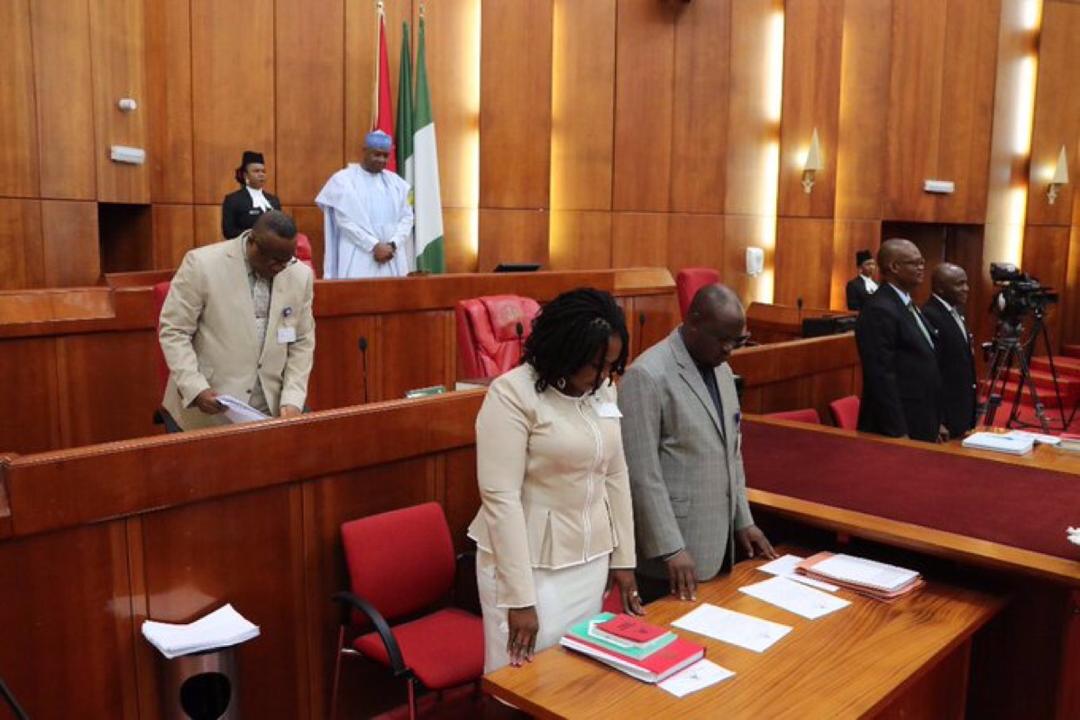
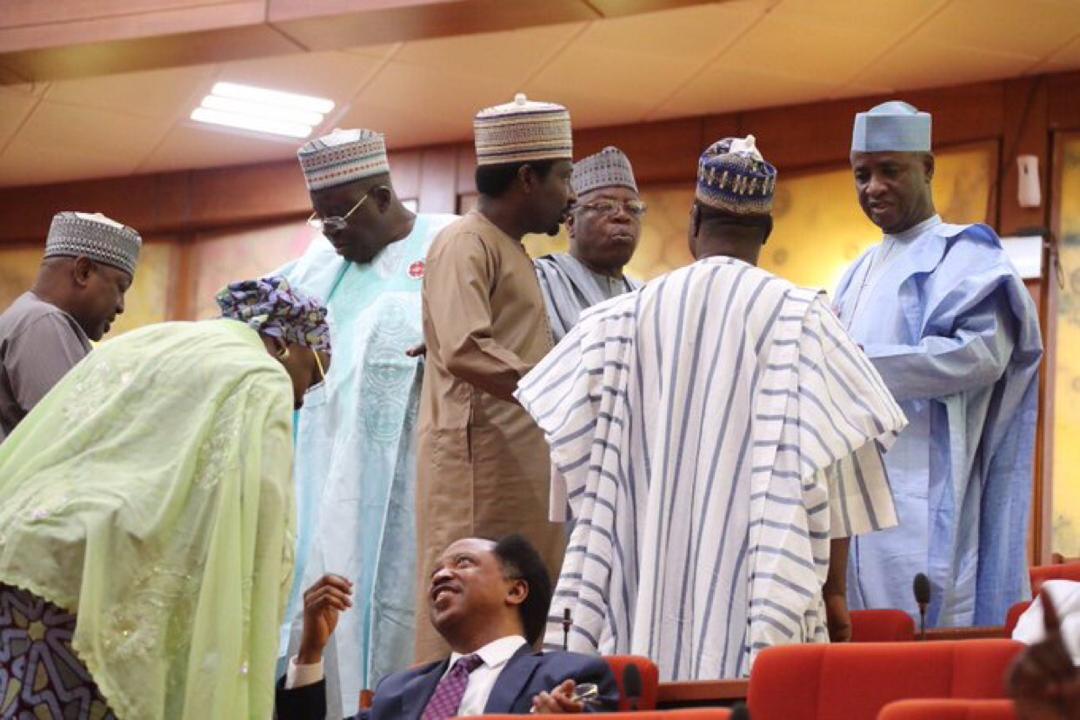
Legislative Intervention On Police Reform In Nigeria By The 8th Assembly | Legalnaija

Legislative Intervention On Police Reform In Nigeria By The 8th Assembly | Legalnaija


The 8th Senate led by Dr. Bukola Saraki is definitely stamping its legislative authority by not only out-doing its predecessor assemblies but also by introducing dynamic and much needed legislation for the growth and development of the nation. The list of over 200 Bills passed by the Senate can be viewed here. 


However, one significant bill we would be tracking is The Bill for an Act to repeal the Police Act, 2004 and establish the Police Act (Amendment) Bill, 2018 (SB. 683).

Most certainly all Nigerians especially police officers agree that the Nigerian Police needs to be reformed as a matter of supreme urgency. Social Media calls with the hashtag #ReformNigerianPolice; #Reformsars and #Endsars have led to presidential executive orders on police reforms. 


However, the 8th Assembly seeks to achieve more far reaching results by the #PoliceReformBill sponsored by Senator Bala Ibn Na’allah, (Kebbi South). The #PoliceReformBill came up for first reading on the 30th May, 2018 and second reading on the 10th July, 2018. While on 12th November, 2018; The Bill was referred to the Senate Committee on Police Affairs.

The Bill seeks to deliver the much needed legislative intervention required to amend the Nigerian Police Act; which has been in existence without any form of amendment since 1979. Most certainly the current law is out of date and not in line with current national realities.

Some of the strategic provisions of The Bill include an amendment to the functions of the police; where it provides that; 

The functions of the #PoliceReformBill shall include:
I.Creating and establishing a functioning system that can easily detect crimes, apprehend offenders and effect proper punishment of perpetrators within its jurisdiction.

II.Creating a safer environment for Nigerian citizens using a new policing structure that will ensure the protection of the rights and freedom of Nigerians.

III.Make room for more collaboration between the police and citizens and communities they protect.

Other critical provisions of The Bill will also include provisions such as;

I.Prohibition of a Police Officer from being the prosecutor in any matter that said officer participated, this is to help promote justice and allow for a free and fair trial.

II.Prohibition and criminalization of drinking while on duty.

III.Establishing an authority responsible for the collection of complaints from Nigerian citizens against police officers, ensuring more competent service for the police.

IV.Ensuring that the police officers are held accountable for every action taken, particularly in the areas of arrest and detention of persons.

V.The Nigerian Police will no longer be referred to as the Nigerian Police Force.

VI.Provision of bail for any citizen arrested without a warrant, ensuring that such person are not allowed to be kept in detention for more than 24 hours without being charged to court.

Most certainly when this Bill becomes law it would lead to the growth in expertise and operations of the Nigerian Police.

Legalnaija

Photo Credit – Twitter.com/NGRSenate 


Style Focus: Mrs. Mfon Usoro

Style Focus: Mrs. Mfon Usoro

The legal profession like we all know is very conservative. From their mannerisms and style of dressing, lawyers are trained to always appear modest and decent. For lawyers who like to express their style through dressing, finding creative ways to look stylish without breaking the code is always an interesting journey. 

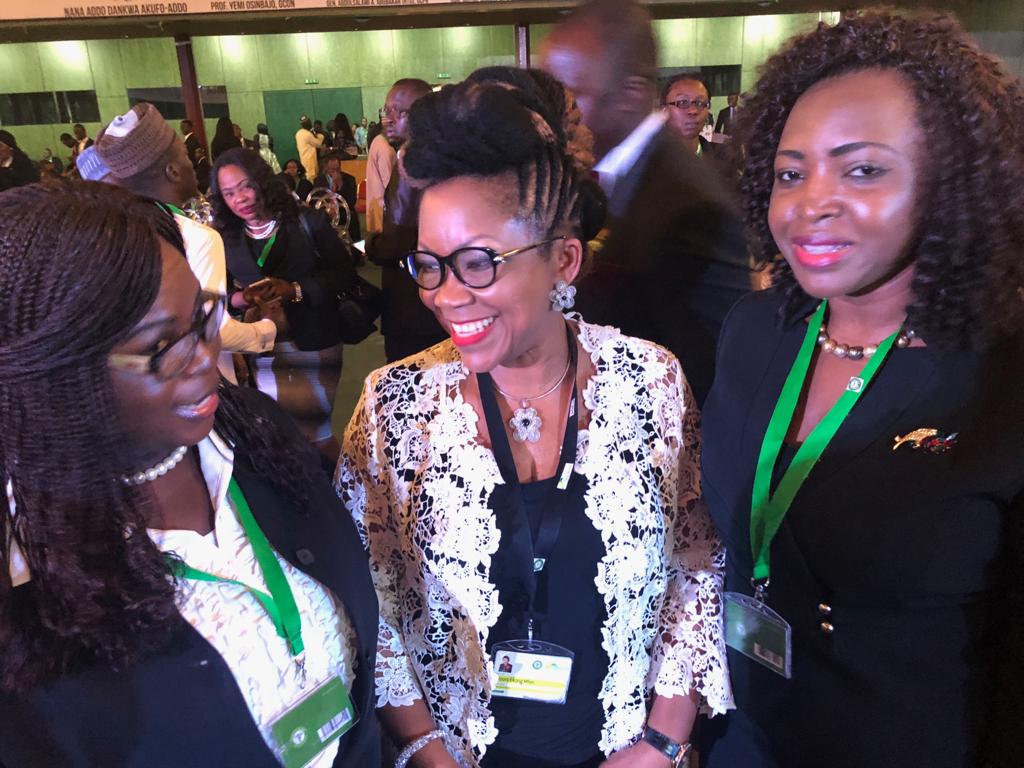
In focus today, is a very successful and amazing Nigerian lawyer who despite her conservative profession continues to appear with so much elegance, style and grace every time she attends a function. 

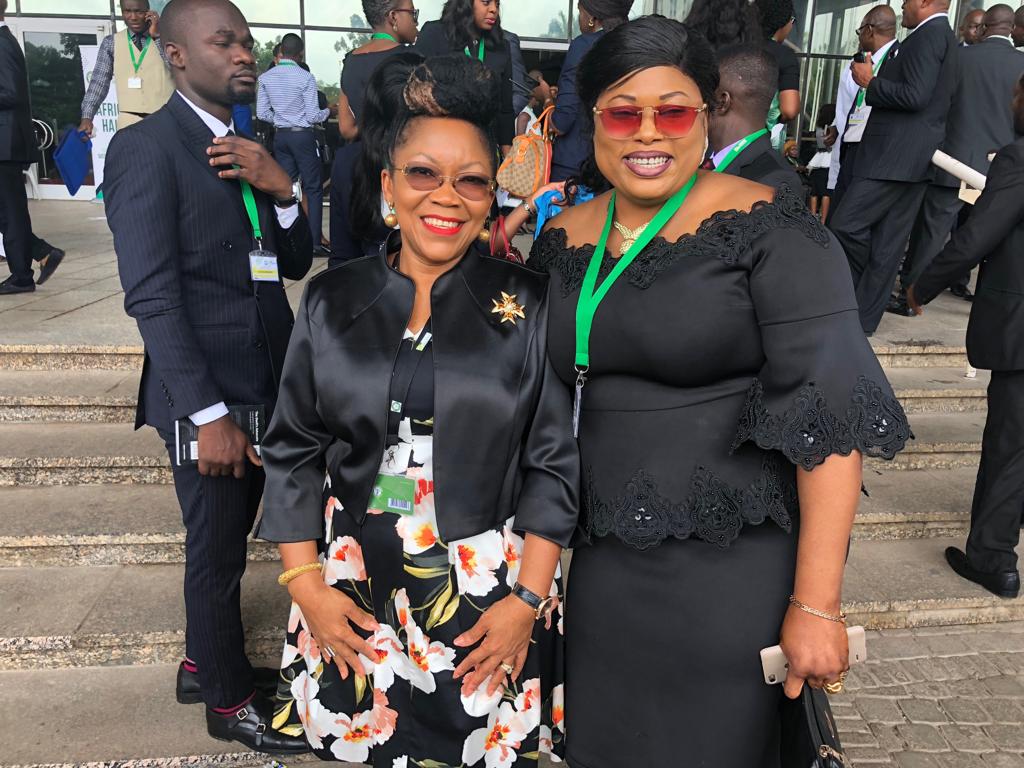
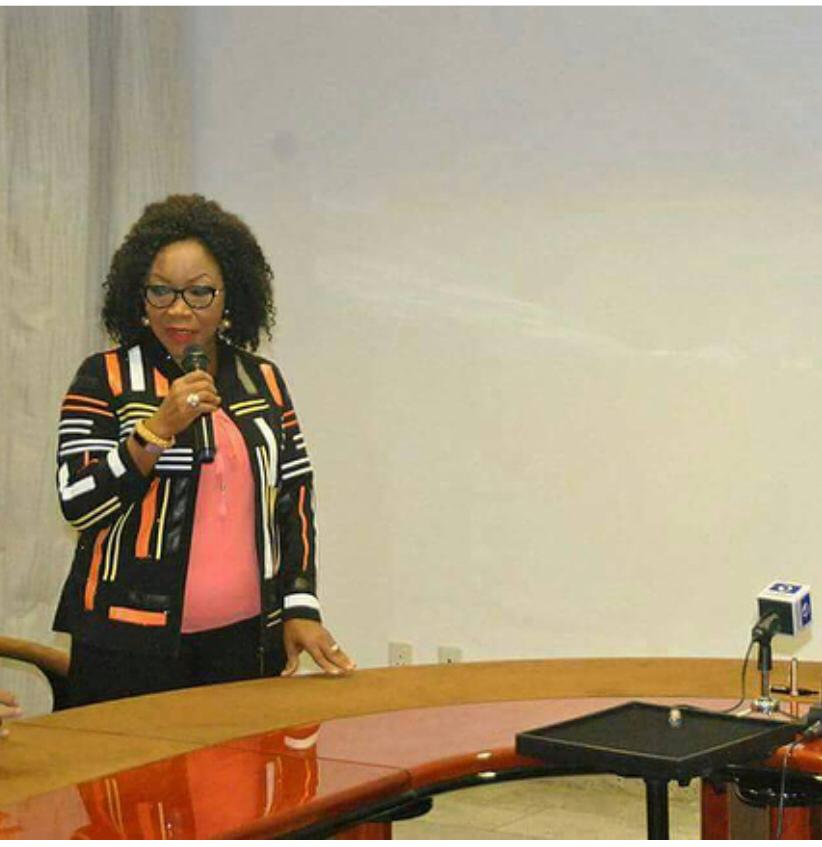
Be it a gathering of friends, a state function, a board meeting, an annual conference, a legal proceeding or a formal dinner, Mfon Usoro oozes so much style, female lawyers need to learn the tricks from her. 

Mrs Mfon Usoro, an internationally acclaimed expert in transport laws and project finance is the Managing Partner of the firm, Paul Usoro & Co.; her deep knowledge of transaction and commercial practice makes her highly recommended by both domestic and international organisations. 


She leads the firm’s team in maritime, aviation, project finance and energy matters actively participating in complex domestic and cross-border transactions. Under her supervision, the firm’s transaction team provides first-in-class legal advisory services to satisfied clients in the private and public sectors cutting across diverse areas.

As a pioneer Director-General and Chief Executive Officer of the Nigerian Maritime Administration and Safety Agency (NIMASA), she set the administrative landscape of the Agency in motion; in compliance with the Nigerian Maritime Administration and Safety Agency Act 2007. 

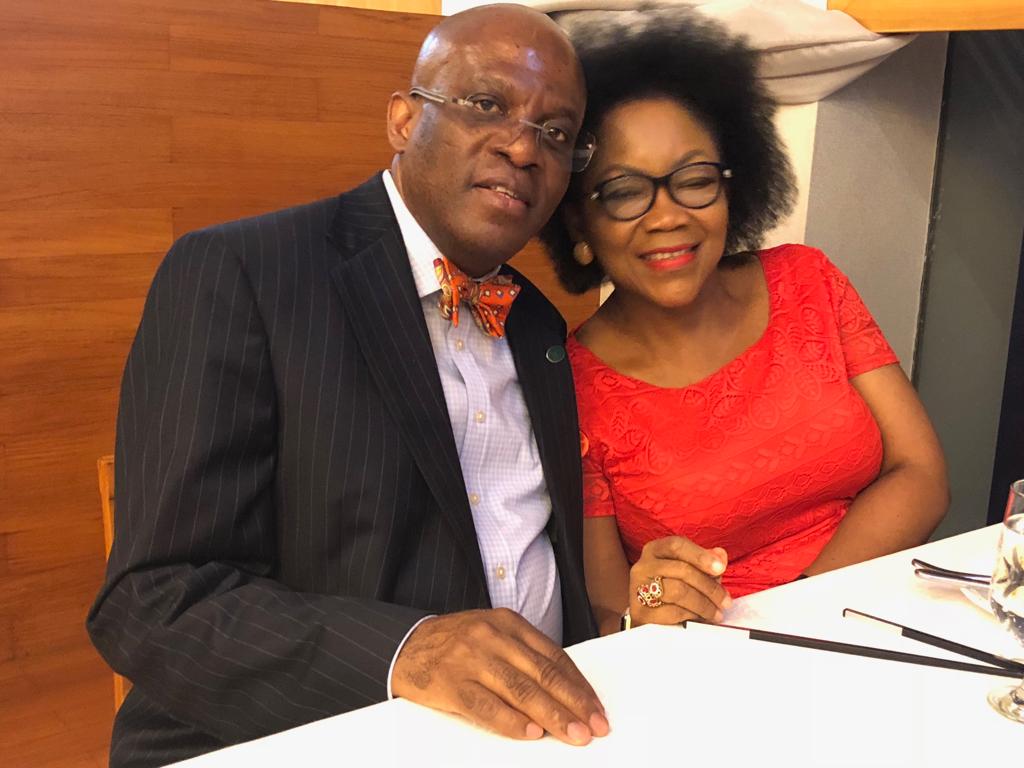
Mrs. Mfon Usoro is happily married with an adoring family and her husband, Mr. Paul Usoro SAN is currently the President of the Nigerian Bar Association. We look forward to seeing her grace more events in her usual elegant fashion. 


See more photos below –


Legalnaija