


On 20 July 2026, the Federal High Court sitting in Lagos delivered a very consequential regulatory judgment in the case of Wireless Application Service Providers Association of Nigeria Ltd/Gte v Federal Competition and Consumer Protection Commission, Suit No. FHC/L/CS/760/2026, Hon. Justice A. Lewis-Allagoa dismissed WASPAN’s challenge to the Digital, Electronic, Online or Non-Traditional Consumer Lending Regulations 2025, the DEON Regulations, and affirmed the FCCPC’s authority to regulate the digital consumer lending market. Within twenty-four hours, WASPAN had filed a Notice of Appeal on nine grounds and moved for an injunction pending appeal. The FCCPC, for its part, announced the same day that the Regulations are once again fully operational and enforceable.
The case matters well beyond its parties. Airtime and data credit services, the ₦100 and ₦200 advances recovered on the subscriber’s next recharge, reach an estimated 40 million Nigerians, in a market industry sources value at several hundred billion naira annually. It matters doctrinally too, because the question at its heart confronts every regulated industry in Nigeria: when a sector-specific regulator and a cross-sectoral regulator both claim the same conduct, whose writ runs?
How the Dispute Arose
The DEON Regulations were made in 2025 pursuant to section 163 of the Federal Competition and Consumer Protection Act 2018. They were not made in a vacuum. As the judgment records, they were the culmination of a process that began with consumer complaints about predatory digital lending, hidden and excessive charges, the harvesting of borrowers’ personal data without consent, and oppressive debt recovery methods. Few would quarrel with regulating that market.
WASPAN’s members, however, are wireless application and value-added service providers whose primary regulator is the Nigerian Communications Commission under the Nigerian Communications Act 2003. Their complaint was that the DEON Regulations reached into the telecommunications space and encroached on the NCC’s domain, subjecting services that had operated for years under an existing licensing framework to a second regulator’s registration, approval and sanction regime. In April 2026, the Association obtained interim orders restraining enforcement; the Commission suspended implementation in compliance, and major operators that had withdrawn airtime lending services restored them while the case proceeded. It is against that backdrop that the court delivered its composite ruling on both the Commission’s preliminary objection and the substantive originating summons.
What the Court Decided
The judgment is notable for where it begins: not with section 163 of the Act, but with the Constitution. The court held that the FCCPC’s jurisdiction over competition and consumer protection is constitutional in origin, founded on the anti-concentration directive in section 16(2)(c), the mandate in section 16(3) that a body be established to review the ownership and control of business enterprises, the anti-exploitation directive in section 17(2)(d), and the legislative competence in Item 60(a) of the Exclusive Legislative List. On this reading, the FCCPA 2018 is not ordinary legislation; it is the institutional discharge of an express constitutional directive, and the Commission’s reach is economy-wide.
From that foundation, the court construed sections 104 and 105 of the Act as giving the Commission precedence on competition and consumer protection questions while establishing a concurrent, not exclusive jurisdiction with sector regulators. Applying that principle, the court held that the impugned paragraphs of the DEON Regulations are intra vires and constitutionally valid. Consumer lending, it reasoned, sits squarely within the field of consumer protection that section 163(2)(e) expressly covers — the terms on which credit is offered, the transparency of charges, and the methods used to recover debts are the very heart of the consumer protection mandate. Paragraph 24, which requires regulated undertakings to maintain at least two intermediaries for service activation, was upheld as a structural competition measure tied provision-by-provision to the Act’s restrictive agreement and abuse-of-dominance architecture, and as a proportionate limitation on any section 40 association right by virtue of section 45.
Significantly, the court also drew a boundary. It held in terms that the FCCPC has no power to issue telecommunications licences, that a regulator may not do indirectly what it cannot do directly, and that nothing in the DEON Regulations creates a telecommunications licensing regime. Paragraph 8 of the Regulations, which conditions any lending arrangement on the operator holding a valid licence from the relevant sector regulator, was treated as decisive: the instrument is built to sit on top of the NCC’s licence and to defer to it, not to replace it.
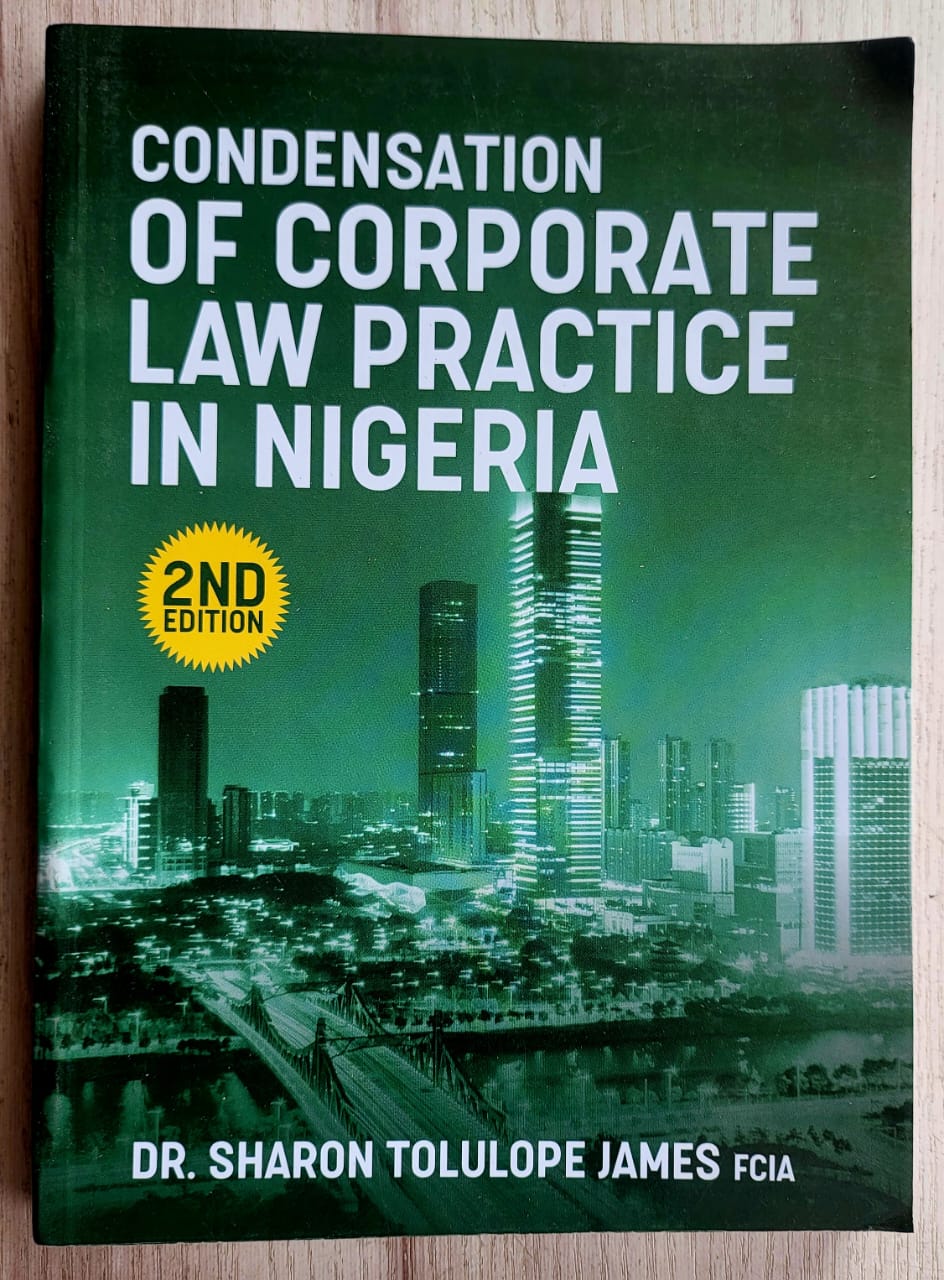
Order at Legalnaija.com/store
The Nine Grounds: Where the Appeal Will Be Fought
The Notice of Appeal filed on 21 July 2026 puts nine grounds before the Court of Appeal, and three lines of attack carry the doctrinal weight. They include;
Ground One — The lower court erred in holding that section 2(1) FCCPA is “economic wide legislation.” The phrase “as may be indicated otherwise” in section 2(1) is a built-in limitation, and section 90 of the NCA, vesting the NCC with competition and consumer protection responsibility for telecoms, is exactly the “indication” envisaged.
Ground Two — Error in holding that section 163 gives the FCCPC absolute rule-making power. The power is limited to matters the Act expressly contemplates, and the DEON Regulations fall outside them.
Ground Three — Internal inconsistency: having found the FCCPC cannot take over regulation of an NCC-regulated industry, the court should have granted the claims dismissing the Originating Summons contradicts its own findings.
Ground Four — The licensing contradiction: having held the FCCPC has no licensing powers, the court should have struck down paragraph 7 of DEON, which requires the Commission’s approval before offering lending services. This is where the “legal summersault” phrase appears — particular (e).
Ground Five — The court wrongly resolved Questions (a)–(f) of the Originating Summons against the Appellant, failing to consider the FCCPA’s own limits and the NCC’s sector-specific powers.
Ground Six — The doctrinal core: specific law prevails over general law. Section 104 FCCPA cannot be read to displace the comprehensive sector framework in the NCA 2003; the court’s holding subordinates a specific statute to a general one.
Ground Seven — Section 163 regulations must arise from implementing the FCCPA itself; it does not empower the FCCPC to regulate all commercial sectors “under the broad and unfettered guise of consumer protection.” Cites Fawehinmi v. I.G.P. and State v. Egigia.
Ground Eight — The section 40 constitutional ground: the court erred in holding the freedom to enter contractual arrangements is of no legal effect; the case doesn’t fall within section 40’s exceptions.
Ground Nine — A placeholder: additional grounds to be filed upon receipt of the CTC of the judgment, meaning the appeal may still expand now that the certified copy (dated 22 July) exists.
The first is the specific-versus-general rule. Ground Six contends that the Nigerian Communications Act 2003 is the specific statute governing telecommunications, that section 90 of that Act vests the NCC with responsibility for competition and consumer protection within the sector, and that on settled interpretation principles a specific law prevails over a general one to the extent of any inconsistency. The trial court’s answer was that no genuine conflict arises — the two statutes operate on different planes, the NCA governing carriage, licensing and technical regulation while the FCCPA governs lending conduct — and that any supremacy in play belongs to section 104 of the FCCPA itself, an Act of the National Assembly later in time and enacted in fulfilment of a constitutional directive. The Court of Appeal must now choose between two respectable theories of how Nigeria’s regulatory statutes fit together, and its answer will echo across banking, aviation, insurance and power, where the same dual structure exists.
The second is the scope of section 163. Grounds Two and Seven argue that the rule-making power is not absolute but bounded by the matters the Act itself enumerates, and that the DEON Regulations stray beyond them into a sector already governed by a comprehensive scheme. The trial court accepted the premise — the power is bounded by the field of competition and consumer protection — but rejected the conclusion, holding that the field is vast and consumer lending falls expressly within it.
The third, and perhaps the most interesting, is the licensing characterisation. Ground Four fastens on an apparent tension in the judgment: the court found that the Commission has no licensing power, yet declined to strike down paragraph 7 of the Regulations, which requires operators to obtain the Commission’s approval before providing consumer lending services. The appellant’s argument is blunt — an approval one must obtain before one may operate is a licence by another name, whatever label it wears — and the Notice of Appeal describes the court’s position, with characteristic advocacy, as an inconsistency. The court’s own characterisation was that paragraph 7 is conduct and arrangement regulation, reasonably incidental to sections 17 and 18, which no more usurps the NCC than the Commission’s established consumer protection jurisdiction over electricity distribution companies usurps the electricity regulator. The distinction between market-entry licensing and conduct approval is one Nigerian law has never had to draw with this precision, and the appeal will force the drawing of it.
Ground Eight renews the constitutional complaint that paragraph 24 infringes the section 40 right to associate freely and to select commercial partners. The trial court’s response, that section 40 protects associational liberty rather than an unregulated commercial freedom to contract, and that a plurality-of-intermediaries requirement is a proportionate competition safeguard, engages a genuinely underexplored intersection of commercial freedom and structural competition remedies in Nigerian constitutional practice.
The Question the Judgment Could Not Answer
The judgment resolves, for now, the question of legal precedence. It does not, because no court can answer the policy question underneath: whether concurrent regulation of the same market activity serves consumers better than a single competent regulator. Duplication is not costless. An operator in the airtime and data lending chain must now satisfy two regulators, with two approval processes, two reporting obligations and two enforcement regimes, and the experience of every regulated market is that compliance costs are ultimately passed through to the consumer. In an economy where the product is a ₦100 advance used as working capital by riders, traders and students, the pass-through is not an abstraction.
Other jurisdictions manage the overlap deliberately. The United Kingdom operates a formal concurrency regime under which sector regulators exercise competition powers alongside the general authority, managed through cooperation rather than exclusivity; the Court of Justice of the European Union has likewise held that a competition authority may assess conduct governed by a sectoral regime provided it has regard to the sector regulator’s findings and to a duty of sincere cooperation. The trial court cited both with approval. The logical next step in Nigeria is the one the judgment’s own reasoning demands and industry has already requested: a published coordination framework between the FCCPC and the NCC, calibrated to the actual risk profile of airtime credit, so that coexistence is a working arrangement rather than a litigation on repeat.
Conclusion
Three things are worth watching. The first is the pending motion for an injunction pending appeal, which will determine whether the DEON Regulations remain enforceable while the Court of Appeal deliberates. The second is the appellate treatment of the specific-versus-general question, which will set the template for every future contest between the FCCPC and a sector regulator. The third is whether the regulators convert the court’s coexistence principle into a coordination framework before enforcement produces the next dispute. Whichever way the appeal is decided, the judgment has already performed one service: it has forced Nigerian law to confront, with precision, the architecture of its own regulatory state. The analysis should stand on the legal reasoning and on that footing, the last has certainly not been heard of this matter.