Nigerian Senate Takes Action On Illicit and Excessive Bank Charges

Nigerian Senate Takes Action On Illicit and Excessive Bank Charges

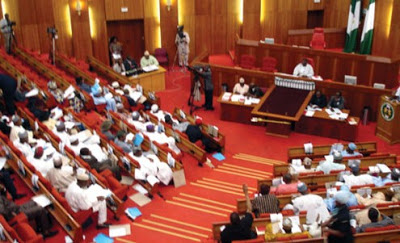
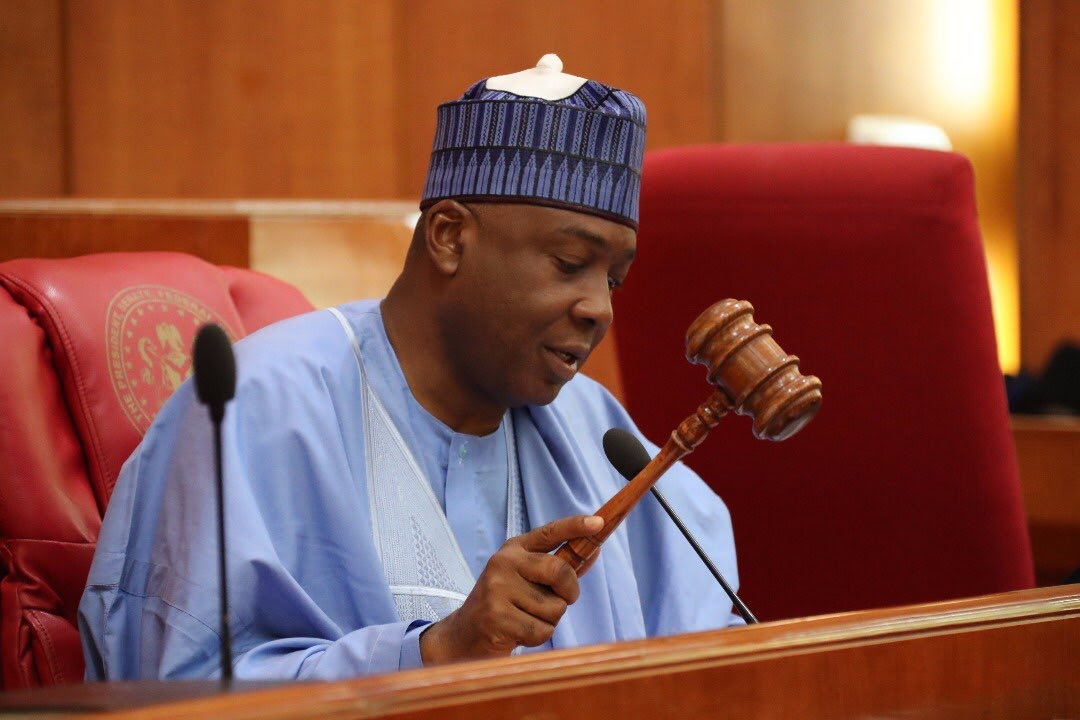
Today, 17th October, 2018, the Nigerian Senate passed a resolution calling on the Central Bank of Nigeria (CBN) to suspend the excessive ATM card maintenance charges being deducted from customers. This resolution came as part of a motion on the illicit and excessive bank charges on customers accounts, sponsored by Senator Olugbenga Ashafa (Lagos East, APC).

The Senate also called on commercial banks operating in the country to configure their machines to dispense up to N40,000 per withdrawal pending the outcome of the investigation by the Senate committees tasked with investigating the excessive and illicit bank charges.

Speaking on the Motion, the President of the Senate, Dr. Abubakar Bukola Saraki said: “This is a motion that affects the lives of every Nigerian — irrespective of what part of the country you come from or whatever political affiliation you might have. This is why we are here: to always defend and protect the interests of the Nigerian people.”

The Senate President stated that the Senate must work to ensure that the Senate’s resolutions on the excessive bank charges goes beyond the debate stage, so that whatever action the Upper Legislative Chamber takes, would come into effect.

“This Senate has done this many times before; when there was a hike in the mobile telecommunication data charges, we intervened and put an end to that. When there were discrepancies and increases in electricity prices, we also took action. We have done this on a number of similar cases. Therefore, on this, I want us to take effective resolutions,” Saraki said.

Other Senators who contributed to the debate, called on banks to review their charges.

“The common man is also a victim,” said Senator Emmanuel Bwacha, “Banks declare profits and you wonder where these profits are coming from — it’s from the sweat of the common man. Let us come up with a law that puts banks on their toes.”

“It won’t be out of place to institute a committee that will call on the CBN to tell us what these charges are about. The Senate by fiat should abolish charges if they can’t be verified,” said Senator Bala Ibn Na’Allah.

“The Senate must take a serious stand on this issue. Nigerians are really suffering. The banking system is not encouraging. I had an issue, took it to the bank and was refunded but how many Nigerians can do this? The issue needs to be addressed,” stated Senator Kabiru Gaya.

“For me, this is a major step that we are taking. This is because I introduced the first ATM machine that came into Nigeria over 25-years ago,” the Senate President, Dr. Saraki told his colleagues, “Now, after 25-years, we should have grown out of these excessive charges and moved on. So, I believe that this something that we must address to create an environment that protects all Nigerians, because these kind of charges in this economy affects everyone.”

The Senate further directed its Committees on Banking, Insurance & other Financial Institutions and Finance to conduct an investigation into the propriety of ATM card maintenance charges in comparison with international best practices and report back to the Senate.

The Senate also directed the aforementioned committees to invited the Governor of the CBN to appear before it to explain why the official charges as approved by the CBN are skewed in favour of the banking institutions as against the ordinary customers of the banks.

Finally, the Senate called on the Consumer Protection Council to look into the various complaints of excess and unnecessary charges by Nigerian Banks.
Bill Tracker: National Student Financial Aid Scheme Bill

Bill Tracker: National Student Financial Aid Scheme Bill

If you are a Nigerian undergraduate studying in Nigeria or abroad, you might have at some point wondered why government scholarships and bursaries to students in tertiary institutions have all but dried up. Well, there is a reason why.

Upon assuming office, the Buhari-led administration pulled funding for many government scholarships and bursaries leaving many students distraught and unable to complete their studies. In 2017, the President of The Senate, Dr Bukola Saraki, on the sidelines of the 137th Assembly of the Inter-Parliamentary Union, met with Nigerian students in Russia to hear first-hand the plight of those whose scholarship funding had dried up. Most of them felt abandoned by Nigerian authorities and had become stranded; barely able to make ends meet.

Speaking with them, Dr Saraki noted that the feeling of abandonment must be quickly dissipated by working urgently to alleviate the difficulties faced by these students. According to him “we must look for ways to reestablish the pipelines and remove the bottlenecks, so that our students who went abroad with the promise and assurance of scholarship funding, will get their stipends as at when due” .

Back here in Nigeria, parents and guardians find that they cannot rely on government awarding scholarships or bursaries to students of public tertiary institutions as a means of supporting the education of their wards. It has become critical to come up with solutions to the problems of financial aid being faced by Nigerian students both locally and internationally.

It was in response to this that Senator Isah Misau (Bauchi Central) sponsored the Student Financial Aid Scheme Bill. The Bill seeks to provide for the granting of loans to eligible students at higher institutions and repeal the provisions of the Nigerian Education Bank Act 2004.

The Student Financial Aid Scheme Bill went for the first reading in the National Assembly on the 20th of October, 2015 and second reading on the 15th of November, 2017. Lending support to the bill, Senator Sam Egwu (Ebonyi South) recalled that he benefited from scholarship in the old Anambra state and that the scheme would help indigent students studying in higher institutions.

The function of the bill shall be to:

– Develop criteria and conditions for the granting of loans and bursaries to eligible students in consultation with the Minister of education.
 – Raise funds in  accordance to section 13 (1) of the bill.
  – Recover loans
    – Maintain and analyze a database and undertake research for the better utilization of financial resources
    
– Advise the Minister on matters relating to student financial aid
    
– Perform other functions assigned to it by this Act or by the Minister.

The power of the scheme includes the power to:

 –  Promote and control staff as may appear to the scheme necessary and expedient
    

– Dismiss, terminate, consider the resignation or withdrawal of appointment and exercise disciplinary control over the staff of the scheme, other than the Director-General.

The Student Financial Aid Scheme Bill shall maintain a fund which will consist of:

 – Money appropriated by the National Assembly
    

– Foreign aid and assistance from bilateral and multilateral governments and agencies;
    
– Interests repaid or repayable by borrowers
   
– Any other assets that may from time to time accrue to the scheme.

The Bill as of now has been referred to the Committee on Tertiary Institutions and TETFUND.

Source: www.thepublicsenate.com.ng
Duty Of Police Is Not To Recover Debts

Duty Of Police Is Not To Recover Debts

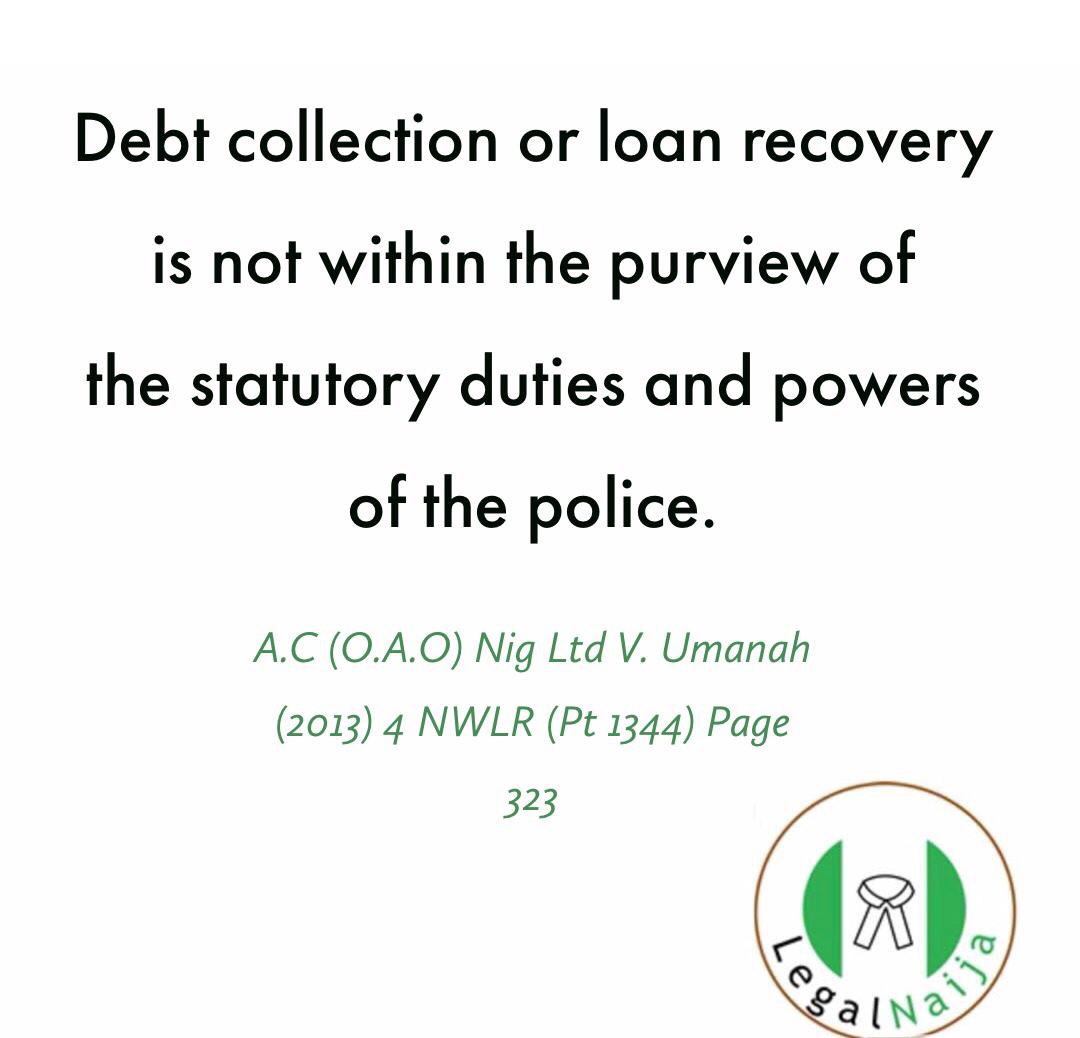
In the case of A.C (O.A.O) Nig Ltd V. Umanah (2013) 4 NWLR (Pt 1344) Page 323 the Court of Appeal held that:

“The statutory duties of the police under the Police Act is to maintain peace, law and order in the society. Debt collection or loan recovery is not within the purview of the statutory duties and powers of the police”.

Learn and Share
@legalnaija

Constitutional Requirements For Aspiring To The Office Of The Nigerian President

Constitutional Requirements For Aspiring To The Office Of The Nigerian President

This
article was first published on 17/10/2014;
however due to the Constitutional Amendment signed by President Buhari on the
#Nottoyoungtorunbill, it is necessary that we amend the post to reflect the
necessary reforms.

General elections in Nigeria are fast approaching, political
parties, candidates, party thugs agents, INEC and the whole country is
immensely interested in how events at the elections will play out.

This post seeks to educate on constitutional requirements for
contesting presidential elections in Nigeria,

The Constitution provides for the law regarding eligibility into
the position of the President and other electoral positions such as the
position of the Governor, Senators and members of the National and State
Assemblies. Section 130 of the 1999 Constitution says that “there shall be for
the Federation, a President” and such “President shall be the Head of State,
the Chief Executive of the Federation and Commander- In –Chief of the Armed
Forces of the Federation”.

Qualification to the position of the President is provided for in
Section 131, which states that – A person shall be qualified for election to
the office of President if –

  • he
    is a citizen of Nigeria by birth;

  • he
    has attained the age of forty – years.

  • he
    is a member of a political party and is sponsored by that political party;
    and

  • he
    has been educated up to at least School Certificate level or its
    equivalent.

However, on May, 31, 2018; via what has now been popularly recognized as
the #NotToYoungToRunBill, President Buhari, On the say,
Section 131 (b) and (c) was amended by substituting the
provisions with new provisions as follows: A person shall be qualified for
election to the office of the President if –  

(b) he
has attained the age of thirty-five years; 


It is the duty of INEC to appoint a date for election into the
office of the President and the elections must hold on a date not earlier than
sixty days and not later than thirty days before the expiration of the term of
office of the last holder of that office as provided in Section 132.  

A candidate for an election to the office of President shall be
deemed to have been duly elected to such office where, being the only candidate
nominated for the election – 

  1. he
    has a majority of YES votes over NO votes cast at the election; and
  2. he
    has not less than one – quarter of the votes cast at the election in each
    of at least two-thirds of all the States in the Federation and the Federal
    Capital Territory, Abuja, but where the only candidate fails to be elected
    in accordance with this section, then there shall be fresh nominations.
    (section 133)

Section 136 provides that if the person elected as President dies
before taking the Oath of Allegiance and oath of office, or is for any reason
is unable to be sworn in, the person elected as his Vice-President shall be
sworn in as President. However, when both die before the inauguration of the
National Assembly, INEC will have to conduct fresh elections. 

As stated in the Constitution, the following people are
disqualified from seeking elections into the office of the President- 

  • persons
    who have voluntarily acquired the citizenship of another country other
    than Nigeria

  • he
    has been previously elected as President twice

  • he
    is under a death sentence imposed by a competent court of law or tribunal

  • within
    10 years before elections, he has been found guilty and sentenced of a
    crime involving dishonesty or contravention of the code of conduct.

  • he
    is an undischarged bankrupt  

  • he
    is employed into the civil or public service of the Federation or of any
    State, he has not resigned or retired from the employment.

  • he
    is a member of any secret society

  • he
    has been indicted for embezzlement or fraud by a Judicial Commission of
    Inquiry or an Administrative Panel of Inquiry.

  • he
    has presented a forged certificate to INEC

  • he
    has been adjudged a lunatic or person of unsound mind.

The position of the President is a very sensitive one as such
person is the leader of the nation, he determines a lot about policy
development and execution and as such must be a person with a heart to serve
and the drive to move the nation forward. Everyone who is eligible to vote in
the coming election is urged to vote wisely and not sell their votes. 

Adedunmade Onibokun, Esq

@adedunmade

dunmadeo@yahoo.com

Adedunmade is a lawyer who practices in Lagos, Nigeria.

Legality Of Buhari’s Travel Ban On Nigerian Citizens

Legality Of Buhari’s Travel Ban On Nigerian Citizens

Over
the course of the past week, Nigeria’s President
Muhammadu Buhari approved travelling restriction on no fewer than 50 high
profile persons directly affected in investigations by security agencies
in the country.
By this, the persons cannot
travel out of Nigeria pending the determination of their cases. Furthermore,
the presidency states that the measure is part of the implementation of
Executive Order Number 6, which seeks to ensure “that all assets within a minimum
value of N50 million or equivalent, subject to investigation or litigation are 
protected from dissipation by
employing all available lawful means, pending the final determination of any
corruption-related matter.”
The Presidency seeks to support this
directive with the recent decision of the Federal High Court which supports the
powers of the president to make the Executive Order in the first place. You may
view the provisions of Executive Order, No. 6, here.

However, it is important to note the decision of the court in
relation to the powers of the Attorney – General of the Federation, as the
court
further
noted that the order seemed to accord the AGF the discretion to decide when to
seek court’s permission to seize any suspected property and the court held that
the AGF must at all times, obtain a court order before confiscating any asset.

We must therefore ask
ourselves, did the Attorney – General of the Federation or presidency seek a
court order before directing that travelling restrictions be placed on over 50
Nigerian citizens? Sadly, no information has been provided by the Presidency on
this point.

Also, it important we
examine what the constitution says? Section 41of the Constitution provides for
the right of all Nigerian citizens to move freely. Furthermore, Subsection (2)
provides that nothing shall invalidate any law that is reasonably justifiable in a democratic society imposing
restrictions on the movement of any person who has committed or is reasonably
suspected to have committed a criminal offence in order to prevent him from
leaving Nigeria.  

Therefore, in determining if
the President’s directive has breached the rights of any persons concerned, one
must ask if the President’s actions are lawful and reasonably justifiable in a
democratic society. The legal position however states that for it to be
justified, such travel ban must be in accordance of a lawful court order.

THEREFORE FOR THE PURPOSES
OF THIS POST, IF THE PRESIDENT CONSENTED TO THE TRAVEL BAN AND ORDERED SAME WITHOUT
THE LAWFUL ORDER OF THE COURT, THEN HIS ACTIONS ARE NOT JUSTIFIABLE IN A
DEMOCRATIC SOCIETY AND IS THEREFORE A BREACH OF THE CONSTITUTIONAL RIGHTS OF
ALL 50 PERSONS WHOSE NAMES APPEAR ON THAT LIST. CONSEQUENTLY, THE AGF CAN BE
SUED FOR THE FUNDAMENTAL BREACH OF THEIR HUMAN RIGHTS.

Adedunmade Onibokun

Adedunmade is a lawyer and
founder of the legal educational blog, @Legalnaija.

@adedunmade  

We Must Consider The Importance Of Legislative Bills Not Assented To By The President

We Must Consider The Importance Of Legislative Bills Not Assented To By The President

Over the
course of the past 4 (four) years, the 8th Nigerian Senate has
outperformed all others before it. Having passed over 200 bills and counting,
it is safe to say members of the incoming 9th Assembly will have
their work cut out for them and big shoes to fill. 

Lawmaking
however does not rest solely on the shoulders of the National Assembly,
according to Section 58(3) of the Constitution; all Bills passed by the
National Assembly are presented to the President for assent. Furthermore, the
President has 30 days to either assent to the Bill or withhold assent. Does
this mean, a Bill cannot become law without the presidential assent, the answer
is no. Sub section (5) allows a Bill to become law if two – thirds majority of
both legislative chambers pass the Bill regardless of the President’s assent. 

Recently,
President Buhari communicated his decision to withhold his assent and not sign
about 15 Bills presented to him by the Senate. His reasons boarder on
legislative drafting issues which he has requested are amended, some of the
laws include the National Research and Innovation Council (Est.) Bill, 2017;
National Institute of Hospitality and Tourism (Est.) Bill, 2018; National
Agricultural Seeds Council, 2018 and Subsidiary Legislation (Legislative
Scrutiny) Bill, 2018. Others are Stamp Duties (Amendment) Bill, 2018; Chattered
Institute of Entrepreneurship (Est.) Bill, 2018; Industrial Development (Income
Tax Relief) (Amendment) Bill, 2018; Advance Fee Fraud and Other Related
Offences (Amendment) Bill, 2017 and Nigerian Maritime Administration and Safety
Agency (Amendment) Bill, 2017.

Though the
President is entitled to his reasons for withholding his assent, it is my fear
that these very important Bills may be swept under the carpet and Nigerians may
be deprived of the social, economic and developmental inputs these pieces of
legislation would provide to our nation. For instance, the Electronic
Transactions Bill, passed in 2017 by the National Assembly was rejected by the
President on the grounds of drafting issues, however, it is almost the end of
2018 and the Electronic Transactions Bill is yet to become law.

Many of the
benefits these rejected laws will bring to our nation include the tax
incentives for companies of pioneer status as proposed by the Industrial
Development (Income Tax Relief) (Amendment) Bill, 2018;
the introduction of
specialized training in hospitality management and the provision of a legal
structure for the certification and training of hospitality personnel in the
country as proposed by the National Institute of Hospitality and Tourism
Bill.

Other benefits include, the
facilitation of stronger cooperation between government agencies and business
entities as proposed by the Institute of Entrepreneurial Establishment Bill,
which ultimately seeks to among
other things, promote stronger collaboration between banks and entrepreneurs,
as well as empower
instructors of entrepreneurship education in both
senior secondary and tertiary institutions via specially packaged trainings,
meetings, exhibitions, industrial exposures and other platforms.

The Suppression of Piracy and other
Maritime Offences Bill (2018)
on
the other hand seeks to
curtail illegal activities of pirates at sea as
well as to reduce the incidence of oil theft in domestic and international
waters. While the National Agricultural Seeds Council Bill, 2018 seeks to create a robust seed
industry that is regulated and will in turn will provide farmers with high
quality seeds among other things.  

The National Research and Innovation
Bill
seeks to provide for the establishment of the National Research and
Innovation Council to among other things, set national priorities on Research,
Innovation and Development and promote the gains of the application in line
with national priorities. Another important piece of legislation is the Petroleum
Industry Governance Bill, 2018,
which
incorporates various legislative, regulatory, Fiscal policies,
instruments and institutions that govern the Nigerian petroleum industry.

The Advance Fee Fraud and Other
Related Offences (Amendment) Bill, 2017,
also seeks to provide adequately for our nation’s fight against
corruption, as it seeks to p
rohibit and punish offences pertaining to
Advance Fee Fraud and other fraud related offences and to repeal other Acts
related therewith.

The Stamp
Duties (Amendment) Bill
addresses
the transformation of NIPOST into a thriving revenue generating company and
last but not the least, the Electoral Act (Amendment) Bill of 2018, which
seeks among other things to reform the Electoral Act in the following
ways –

a.    
Provide for the instant
transmission of election results as a replacement of the manual transmission of
results;

b.    
Provide a platform for
online publication of voter registers;

c.      Give INEC powers to utilize biometric accreditation of voters

d.    Remove unfair qualification processes

e.     Set out a more rigorous process for the determination of candidates, as
well as creates dispute resolution mechanisms.

f.       Set the maximum expense incurable by politicians  

From the above, the expedience of passing these laws is made clearer as
their importance and effects cut across all sectors of everyday life including
security, ease of doing business, governance and administration. Therefore, I
urge the President and the National Assembly to quicken any processes that are
currently outstanding and ensure the speedy assent of these bills. More
importantly, I urge Nigerians to provide oversight on these issues to the
government to ensure these Bills become law and do not remain unsigned like the
Electronic Transactions Bill which is yet to see the light of day.

Adedunmade Onibokun is a lawyer and founder of the online legal
educational  platform, Legalnaija
. 

First Published on Ynaija
IP ABC—Use of a popular Ankara pattern in a design. Are we liable for copyright infringement? | Infusion Lawyers

IP ABC—Use of a popular Ankara pattern in a design. Are we liable for copyright infringement? | Infusion Lawyers


Question – 
I am Bode Balogun, a
creative artist and CEO of Bright Prints Media, a new startup that specializes
in 2D & 3D arts and textile prints in Osun State.

Two months ago, I was contracted by Segun Saka, a staunch supporter of a
governorship aspirant in the state to design and make materials for the purpose
of boosting the aspirant’s electoral campaign. According to Mr Saka, this
design would be a customized Ankara with blue, green, and yellow colour themes,
having the portrait of the aspirant in black and white, with a stripe around
the circle bearing the party motto above the portrait and the candidate’s name
below it. This design is a popular concept used in Nigerian political,
religious, and traditional events.My company made over 100,000 yards of the
textile to the specification and delight of our client. As campaigns
intensified with each passing day, we printed more textiles for our
clients. 

But on 27 July, my company received a court process demanding our appearance
before the High Court of Osun State. Pink Media, a reputable print-media
company in Lagos, is claiming 10 million naira damages against Bright Prints
Media for allegedly infringing on their copyright in the design we used for Mr
Saka. Pink Media also wants an injunction to stop Pink Media from continuing to
print the Ankara materials.

After a quick check, we discovered that another supporter of the governorship
aspirant had contracted Pink Media to make customized wax-print. The picture on
their design and colour theme is quite similar to ours. They had completed and
delivered theirs before ours. But we honestly did not know about their design
before we started ours. Is there anything we can do? We are in despair as 10
million naira damages would damage our business.


Answer
You
want to know if your design infringes Pink Media’s ‘copyright’ in the Ankara
design. The answer is NO. Your design in the textile material does not infringe
on Pink Media’s ‘copyright’.

This is because though your work is an artistic work under section 1(1)(c) of
the Nigerian Copyright Act, section 1(3) provides that an “artistic work shall
not be eligible for copyright, if at the time when the work is made, it is
intended by the author to be used as a model or pattern to be multiplied by any
industrial process.”
So there is no copyright to infringe on.


Since Pink Media’s design—just as yours—is “used as a model or pattern to be
multiplied by any industrial process”, it is not protectable as copyright but
industrial design.


Section 12 of the Patents and Designs Act is the relevant law. It provides that
“any combination of lines or colours or both, and any three-dimensional form,
whether or not associated with colours, is an industrial design, if it is
intended by the creator to be used as a model or pattern to be multiplied by
industrial process and is not intended solely to obtain a technical result.”

And unlike copyright which exists in a work once it is created, industrial
designs have to be registered. To be registered, section 13 (1) of the Act
requires that (a) the design is new; and (b) it is not contrary to public order
or morality.

Therefore, for Pink Media to be successful in its action, it would have to
register its design with the Trademarks, Patents and Designs Registry (if it
has not already registered the design). But since—as you have mentioned—the
design is a popular concept used for different social events in the country, it
may not be regarded as new anymore.

Always endeavour to survey the design market before deciding to use any
design or pattern already in use in the public.

A
‘popular concept’ is not the same as a public-domain design. If Pink Media had
registered the design as an industrial design, the story would have been
different, putting your business on the line. Always check, and check again.

By the way, the court vested with jurisdiction to hear the matter is the
Federal High Court, not the High Court of Osun State.

Under
both the Nigerian Copyright Act, and Patent and Industrial Designs Act,
jurisdiction over intellectual-property matters is vested in the Federal High
Court—section 38 Copyright Act; section 26 Patents and Industrial Designs Act.

So do not despair as sometimes the difference between despair and hope is just
a different way of telling stories from the same set of facts. To properly
respond to Pink Media’s claims before the High Court of Osun State, please
consult an IP lawyer or law firm.

Best
wishes
IP
ABC
Follow-up
questions, if any, are welcomed.