
Payment Service Banks in Nigeria (PSBS): A Review of the Proposed Guidelines for Licensing and Regulation by the CBN

Payment Service Banks in Nigeria (PSBS): A Review of the Proposed Guidelines for Licensing and Regulation by the CBN

The Central Bank of Nigeria (CBN) by its letter dated 5th October 2018, written to all banks, telecommunication companies, mobile money operators, banking agents and the Nigerian Communication Commission, circulated draft guidelines and regulations of Payment Service Banks in Nigeria (PSB) for comments and observations.
Payment Service Banks in Nigeria The Payment Service Banks in Nigeria is CBN’s initiative to promote a sound financial system in Nigeria in order to enhance access to financial services for low-income earners and unbanked segments of the society.
PSBs are expected to leverage on mobile and digital services to enhance financial inclusion in Nigeria and stimulate economic activities at the grassroots through the provision of financial services.
PSBs will also enable high volume low-value transactions in remittance services, micro-savings and withdrawal services in a secured technology-driven environment to further deepen financial inclusion.
The draft guidelines issued by CBN was issued pursuant to the CBN Act 2007 and (Banks and Other Financial Institutions Act (BOFIA) 1991.
The guidelines cover definition, objectives, and eligible promoters, licensing requirements, corporate governance, business conduct and permissible activities. The requirements for prudential regulation, supervision, Know Your Customer (KYC)as well as risk management of the proposed Payment Service Banks is also covered.
Some of the key provisions of the Regulations include:
1. Objectives of Establishing Payment Service Banks in Nigeria:
Section 2 of the proposed regulations reiterate the objective of setting up payment service banks as primarily to enhance financial inclusion in Nigeria, especially in rural areas by increasing access to deposit products, payment services to small businesses, low-income households and other entities through high-volume low-value transactions in a secured, technology-driven environment.
2. Structure of Payment Service Banks in Nigeria:
The structure for establishment of PSBs is provided in Section 3 and includes; operations in rural areas and unbanked locations with not less than 50% physical access points, establishment of ATMs in some of the areas, operation through banking agents, use of other channels including electronic channels, establishment of coordination centers, technology-driven operations, and setting up of help desks strategically to attend to consumer-related issues.
3. Permissible And Permissible Activities of Payment Service Banks in Nigeria:
Section 4 (4.1) and (4.2) of the proposed guidelines provide the services PSBs shall carry out. They include maintaining savings accounts and accepting deposits from individuals and small businesses, carrying out payments and remittance services through various channels within Nigeria, issuing debit and pre-paid cards, operation of the electronic purse, investment in FGN and CBN securities.
PSBs are however restricted from granting any form of loans, advances and guarantees, trade in the foreign exchange market, insurance, underwriting or undertaking any transaction not prescribed by the guidelines. It is also mandatory for a PSB to use the words “Payment Service Banks” in its name to differentiate it from other banks.
4. Eligible Promoters:
Eligible promoters include Banking agents, Telecommunications companies (through subsidiaries) retail chains and mobile money operators. The list is however not exhaustive and CBN is at liberty to consider other entities not provided in the guidelines.
5. Licensing Requirements for Payment Service Banks in Nigeria:
By the provisions of Section 6 of the guidelines, a PSB license is required. Promoters of PSBs are required to submit a formal application in this regard to the Governor of the Central Bank. An Approval in Principle will first be granted within 90 days of the application for the establishment of a PSB, and not later than 6 months after the grant of an Approval in Principle; a Final License will be granted.
a. Approval in Principle: The requirements for the grant of approval in principle are as contained in Section 6.1 of the guidelines. The requirements include payment of an application fee, evidence of minimum share capital, name reservation, business plan or feasibility report, draft copy of Memorandum and Articles of Association, Undertaking to meet capitalization requirements, Shareholders Agreements, Technical Services Agreement, Financial Management Policy, anti-Money Laundering and Combating Financing Terrorism Policy, Code of Ethics etc.
                                            Payment Service Banks in Nigeria
b. Final License: For a final license to be granted pursuant to Section 6.2, the CBN shall conduct an inspection of the premises and facilities of the proposed PSB, sight original copies of documents submitted, meet with the board and management, verify capital contributions and verify the integration of its infrastructure with the National Payments System.
6. Requirements For Commencement Of Operations And Post-Commencement Requirements:
As provided in Section 6.4 and 6.5 of the proposed guidelines, the PSB shall through a letter inform the CBN of its readiness to commence operations and the application shall be accompanied a by a list of documents specified.
A PSB as part of the post-commencement requirements is also mandatorily required to comply with all guidelines and regulations issued by CBN, maintain adequate accounting system and records, maintain an unimpaired minimum capital at all times and comply with the requirements incidental to the authorization to perform banking operations as stipulated by CBN.
7. Financial Requirements for Payment Service Banks in Nigeria:
The financial requirements are as provided in Section 6.6 of the proposed guidelines and are as follows:
a. Minimum Capital N5,000,000,000.00
b. Non-refundable application fee N500,000.00
c. Non-refundable License Fee N2, 000,000.00
The share capital deposit as stated by the guidelines is subject to availability of instruments and upon the grant of a license or otherwise, the CBN shall refund the sum deposited together with the investment income if any, after-tax and administrative expenses have been deducted.
8. Corporate Governance And Business Conduct (Fair Competition):
Section 7 provides that the code of corporate governance applicable to banks as well as the Revised Assessment Criteria for Approved Persons’ Regime for Financial Institutions shall be applicable to PSBs.
The proposed regulations further provide that where a PSB is related to an existing infrastructure service provider which provides services to other financial institutions, the PSB shall ensure that its dealings with the infrastructure provider are at arm’s length.
Payment Service Banks in Nigeria The guidelines interestingly incorporate a provision to ensure fair competition amongst PSBs. Section 8 of the proposed guidelines mandate a parent company of a PSB which renders services to its subsidiary PSB, to also offer the same services to other PSBs on the same terms and conditions.
It also prohibits parent companies of Payment Service Banks in Nigeria from offering any preferential treatment, which negates fair competition, to its subsidiary. The failure to abide by the fair competition clause may lead to revocation of the PSB license.
9. Capital Adequacy Ration And Investment Of Deposit Liabilities: 
The capital adequacy ratio of a PSB shall be measured as a percentage of the shareholders’ funds unimpaired by its risk-weighted assets.
The minimum capital adequacy ratio shall be 10% or as may be prescribed by the CBN. PSBs shall be required to maintain not less than 5% of their deposits in treasury bills and other short terms Federal Government debt instruments at any point in time.
10. Supervision, KYC Requirements And Risk Management:
PSBs shall be supervised by the CBN and shall comply with the relevant provisions of the Money Laundering (Prohibition) Act, Terrorism Prevention Act, CBN AML/CFT Regulations for banks and other financial institutions and other extant laws and regulations on KYC issued by the CBN.
Primarily, since Payment Service Banks in Nigeria are prohibited from granting loans, provisions of credit risk management do not apply. However, management of other risks shall be as applicable to Direct Money Banks as may be prescribed by the CBN.
Conclusion / Recommendations 
Without any doubt, the establishment of Payment Service Banks in Nigeria is a welcome development particularly as it aims to promote financial inclusion and enhance access to financial services. It also provides investment and employment opportunities for promoters as well as service providers.
However, a critical review of the proposed guidelines with specific reference to restrictions contained in the guidelines appears to be a deal-breaker. The restrictions with respect to the scope of services a PSB can render including restriction on advancing loans, restriction on investment platforms, capital and mandatory infrastructural requirements all appear to be disincentives to the establishment of a PSB is a worthy venture.
It has been argued that the establishment of a PSB pursuant to the proposed guidelines may not be profitable.
As a corollary, the unavailability of some services including loans advancement may seem to defeat the purpose of establishing PSBs. This is because the low-income earners and unbanked segments of the society, who are the target market, are still left out of vital financial services thus defeating the primary purpose of establishing the PSB.
The CBN claims that by establishing the Payment Service Banks in Nigeria, it aims to enhance financial inclusion and stimulate economic activities at the grassroots through the provision of financial services however this may likely not be achieved having regard to the proposed guidelines.
It is comforting that the guidelines have not been finalized and can still be reviewed. It is suggested that the CBN in reviewing the guidelines reduce the restrictions and offer more incentives to make the PSB more attractive to investors.
This would also enhance services available to the target market and ensure that purpose of establishing the PSB is achieved. It is our recommendation that in finalizing the regulations the CBN takes into account contributions from core stake-holders to the proposed regulations to ensure that mutually beneficial guidelines are issued.
The content of this article is intended to provide a general guide to the subject matter. Specialist advice should be sought about your specific circumstances.
Written by –  

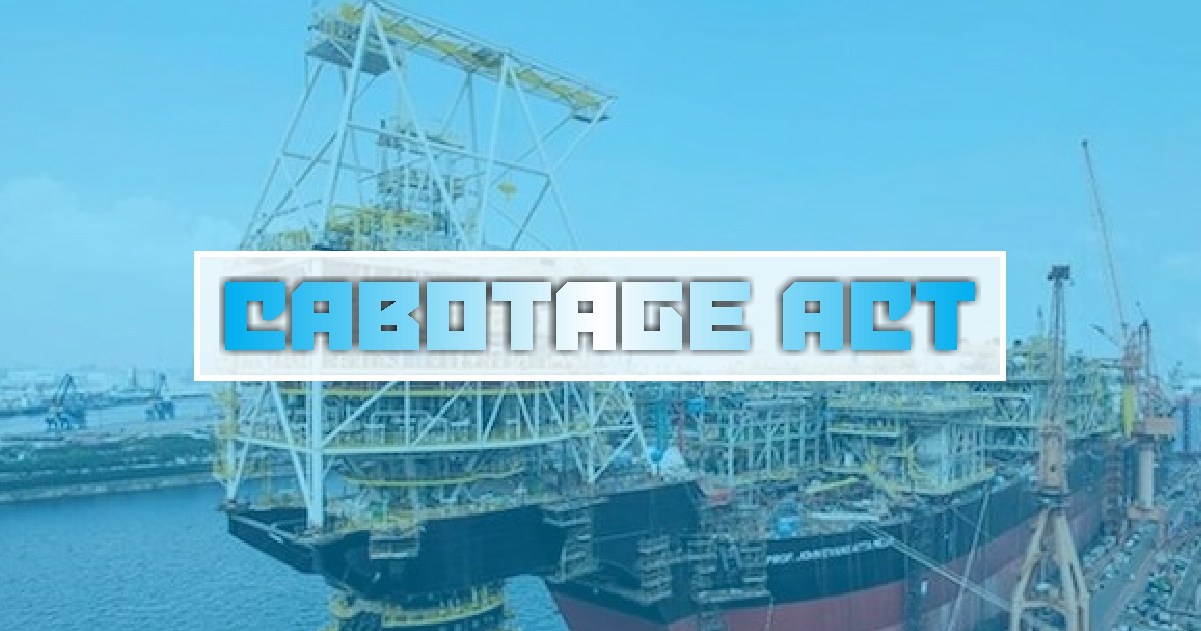
Oil Rig as Vessel under the Cabotage Act 2003 and the Cabotage Amendment Bill 2016

Oil Rig as Vessel under the Cabotage Act 2003 and the Cabotage Amendment Bill 2016

Over the years, the Nigerian maritime industry has witnessed the uncontrolled and illegal participation of foreign shipowners which has been detrimental to the industry. This position necessitated the enactment of the Coastal and Inland Shipping (Cabotage) Act in 2003.
The Cabotage Act was enacted to restrict the participation of foreign vessels in the Nigerian Coastal Trade, to promote the development of local tonnage, to establish a Cabotage Vessel Financing Fund and to build human capacity.
However, it is unfortunate that the Cabotage Act has not produced the desired effect considering that it is bedevilled with various shortcomings. One of such shortcomings is the failure of the Act to expressly include an oil rig as one of the vessels to be subject to the operation of the Act. This position has generated a lot of controversies which appears to have been taken advantage of by foreign shipowners.
Nigeria as a Maritime Nation stands the chance of losing about $2,000,000,000($2 Billion Dollars) of revenue through taxes and rates that oil rigs and drilling operations are charged if steps are not taken in the right direction.
Presently, there is a Bill pending before the National Assembly which has the aim of amending the Cabotage Act. This Article seeks to focus mainly on the Bill to Amend the Cabotage Act with emphasis on Section 13 (definition section) of the Bill to Amend the Act.

THE
CABOTAGE ACT 2003

The Cabotage Act 2003 was enacted with the aim of enhancing the participation of indigenous shipowners in the domestic coastal trade and restricting the use of foreign vessels engaging in the domestic carriage of goods and passengers within Nigerian coastal waters.
In seeking to enhance the promotion and development of indigenous tonnage in Nigeria’s cabotage trade, sections 3 6 of the Act provides that only vessels that are wholly built in
Nigeria, wholly owned by Nigerian, wholly crewed by Nigerians and registered in Nigeria can engage in cabotage trade.
However, sections 15 20 of the Act stipulates that foreign vessels may be permitted to participate in cabotage trade if the necessary application for a restricted license and waiver has been made to the relevant authority and approved. Section 30 of the Act empowers NIMASA to enforce and implement the provisions of the Act.
The Cabotage Act with all its positive intent and purposes has so far not achieved its objectives due to various drawbacks in the provisions of the Act. One of such drawbacks is represented by the position in which the Act failed to expressly include an oil rig/platform as one of the vessels specifically falling under the operation of the Act.
This drawback has generated controversy and foreign shipowners have in recent times contested that oil rigs cannot be considered as vessels falling within the operation of the Act which is presently the subject of litigation.

DRAWBACK
OF CABOTAGE ACT – FAILURE TO EXPRESSLY CLASSIFY OIL RIG AS A VESSEL

Section 2 of the Cabotage Act defined a vessel to include;any description of vessel, ship, boat, hovercraft or craft, including air cushion vehicles and dynamically supported craft, designed, used or capable of being used solely or partly for marine navigation and used for the carriage on, through or under water of persons or property without regard to method or lack of propulsion
It is of importance to note that section 2 of the Act as quoted above, did not expressly define a vessel as a specific thing. Rather, it simply identified certain requirements for determining what could be regarded as a vessel for the purposes of the Act.
Interestingly, foreign shipowners are aware of the failure of the Act to classify a particular thing as a vessel and have advanced this position for arguing that an oil rig is not a vessel under the Act.
oil rig 2
However, it is posited that the argument of foreign shipowners cannot be sustained. This is because close scrutiny of section 2 of the Act reveals that a crucial requirement for determining that a thing can be regarded as a vessel under the Act is that such a thing must have been described as a vessel.
In other words, any available description of a thing as a vessel will render such a thing to be recognized as a vessel under the Act.
Given this position, it is important to identify those laws that have expressly described an oil rig as a vessel which provides a premise for arguing that oil rigs are subject to the operation of the Act.

LEGISLATION
CLASSIFYING OIL RIGS AS VESSELS

It is of importance to note here that there are local legislation that expressly described an oil rig as a vessel/ship. They are outlined below:

The
MERCHANT SHIPPING ACT (MSA) 2007 

The MSA 2007 expressly included oil rig/platform in its definition of a vessel. Section 337 of the Act provides that a “vessel” meansany ship, craft, machine, rig or platform whether capable of navigation or not which is involved in a collision”.

ADMIRALTY
JURISDICTION ACT (AJA) 2004:

  • The AJA 2004 defines a Ship to mean “a vessel of any kind used or constructed for use in Navigation by water, however it is propelled or moved and includes; A barge, lighter or floating vessel, including a drilling rig, a hovercraft, an offshore industry mobile unit, and a vessel that has sunk or is stranded and the remains of such vessel, but does not include a vessel under construction that has not been launched. 
THE
NIGERIAN MARITIME ADMINISTRATION AND SAFETY (NIMASA) ACT 2007:

  • The NIMASA Act 2007, expressly described an oil rig as a vessel. Section 64 of the Act provides that a “vessel “ means “any kind of vessel that is used, or capable of being used, in navigation by water, however propelled or moved, and includes: a barge, lighter, floating platforms, restaurant or other floating vessel; and an air-collusion vehicle; or other similar craft that is used in navigation by water.
It must be noted that Nigeria is not a standalone jurisdiction in describing an oil rig as a vessel as it appears that other maritime countries have also described an oil rig as a vessel. Reference is made below to some maritime countries that have expressly described an oil rig as a vessel.

INTERNATIONAL
PRACTICES

In the Netherlands, a ‘ships’ or “vessel” is defined as “all objects which, according to their construction, are destined to float and which float or have done so”. This means that all floating offshore structures (including oil rigs) are registered in the Netherlands and fall within Coastal trade.
In the United States of America, under the Jones Act, the following are classified as vessels: ocean-going ships, Tug boats, barges, dredgers, pile drivers, commercial fishing boats, offshore oil platform service boats, oil drilling rigs, Jack-up rigs, Semi-submersible rigs, Drilling ships, Tension leg platforms, and other types of maritime craft. This list practically covers all forms of structure.
In the case of Offshore Co. v. Robison, 266 F.2d 769 (5th Cir. 1959) it was held that a mobile drilling platform was a vessel and that “vessel” had a “wide range of meaning”.
In the United Kingdom, The Merchant Shipping Act defines a ship “to include every description of vessel used in Navigation”. There is no specific type of vessel mentioned, thus covers all forms of structures. The author of Admiralty & Maritime Law (4th ed. 2004) further buttress this fact by stating emphatically that virtually every type of movable rig or structure qualified for vessel status.
oil rig 3
Having established that the description of an oil rig as a vessel is not peculiar to Nigeria but is prevalent in other maritime countries, it is pertinent to consider the position of the Nigerian courts on the matter.


CURRENT
CASE LAW ON OIL RIG AS A VESSEL UNDER THE CABOTAGE ACT

The controversy regarding whether an oil rig is to be regarded as a vessel and subject to the operation of the Cabotage Act has been the subject of judicial consideration.
In the case of Noble Drilling (Nigeria) Limited v The Nigerian Maritime Administration and Safety Agency (“NIMASA”) and The Minister of Transportation, the Federal High Court was presented with the opportunity of determining whether an oil rig could be regarded as a vessel for the purpose of the Cabotage Act.
The Plaintiff, Noble Drilling (Nigeria) Limited, argued territorial waters (drilling operations) did not amount to defined under the Cabotage Act.
The Defendants, (Nigerian Maritime and Safety Administration (NIMASA) and the Minister of Transportation) argued that because drilling rigs carry oil and other substances from the sea bed to the surface, they are regarded vessels within the contemplation of Section 2 of the Cabotage Act. They argued further that the definition of the word “ship” or “vessel” includes a drilling rig under the Act thereby rendering the use of a drilling rig within the Nigerian Coastal Waters subject to the operation of the Cabotage Act.
However, the Court held that the definition of the word “vessel” in the Cabotage Act did not include an Oil rig by laying emphasis on the fact that oil/drilling rigs were not expressly mentioned in the Act as one of the vessels to be subject to the Cabotage Act.
It is respectfully submitted that the position of the Honourable Court is flawed upon the premise that while the Cabotage Act failed to expressly include an oil rig as a vessel to be subject to the operation of the Act, the list of vessels expressly identified in the Act to be subject to the operation of the Act is neither exhaustive nor a closed list.
Oil rig
It is important to note that the case is presently on appeal and it will be interesting to see the decision which the appellate court will arrive at in its determination of the appeal.
In any event, it is crucial to note that the failure of the Cabotage Act in expressly classifying an oil rig as a vessel appears to have been addressed in the recent Cabotage Amendment Bill presently undergoing consideration at the House of Assembly.
A brief consideration of the Bill is undertaken below:

CABOTAGE
AMENDMENT BILL – REMEDYING OIL RIG DEFINITION DRAWBACK

The Cabotage Amendment Bill seeks to make certain amendments to the Cabotage Act. A notable amendment sought to be made to the Act is in respect of expressly classifying an oil rig as a vessel to be subject to the operation of the Act. This amendment will deal with the existing controversies concerning whether oil rigs are to be regarded as vessels and subject to the Cabotage Act.   Section 13 of the Bill provides that:
Vessel” includes any description of vessel, ship, boat hovercraft or craft, including air cushion vehicles and dynamically supported craft, designed, used or capable of being used solely or partly for marine navigation and used for the carriage on, through or underwater of persons or property without regard to method or lack of propulsion and include rigs, floating, production, storage and offloading platforms (FPSOJ floating, storage and offloading platforms (FPSO);”
The importance of this section of the Bill cannot be overemphasized. The lack of inclusion of an Oil rig/platform as a vessel has resulted in a number of suits being instituted at the Federal High Court.
The failure of the Cabotage Act to expressly describe an oil rig as a vessel has also been used by foreign shipowners as an avenue for contesting the statutory powers of NIMASA to levy its statutory fees on oil rigs employed by these shipowners in their drilling operations.
Against this position, a number of shipowners trading within the Nigerian Coastal Waters are refusing to register their oil rigs as required by the NIMASA Act thus denying the Nigerian Government of the required taxes and rates.
Nigeria as a Maritime Nation now stands the chance of losing about $2,000,000,000 ($2 Billion Dollars) if this is not tackled promptly and accordingly.
The provision of Section 13 of the Cabotage Amendment Bill is therefore welcome as it provides a remedy to the existing drawback in the Cabotage Act represented by the failure to expressly describe an Oil rig/platform as a vessel.

CONCLUSION

The need to pass the Bill pending before the National Assembly cannot be overemphasized. The passing of the Bill will help generate lost revenue and further boost our maritime trade, and importantly, it will finally put an end to the controversy regarding whether an Oil rig/platform is to be regarded as falling within the operation of the Cabotage Act.
WRITTEN BY: 
CAROLINE TOKULAH-OSHOMA (Associate – Olisa Agbakoba Legal)
Email: caroline@oal.law
Source – OAL Nigeria 

Banks as Collecting Agents For FIRS – A Conundrum | Ifeatu Medidem

Banks as Collecting Agents For FIRS – A Conundrum | Ifeatu Medidem

The Federal Inland Revenue Service has intensified its drive to recover outstanding tax liabilities from taxpayers in default of tax obligations. To this end, FIRS has been writing to taxpayers’ bankers, appointing the banks’ agent of the banks’ customer, to collect outstanding tax liabilities from the taxpayers’ bank account balance. This is referred to as tax substitution.
Banks and FIRSFIRS bases its appointment of the banks as collecting agents on the provisions of Section 49 of the Companies Income Tax Act 2004, and Section 31 of the Federal Inland Revenue Service (Establishment) Act 2007.
Section 31 of the Federal Inland Revenue Service (Establishment) Act 2007 provides:
  • The Service may by notice in writing appoint any person to be the agent of a taxable person if the circumstances provided in sub-section (2) of this section makes it expedient to do so.
  • The agent appointed under sub-section (1) of this section may be required to pay any tax payable by the taxable person from any money which may be held by the agent of the taxable person
  • Where the agent referred to in subsection (2) of this section defaults, the tax shall be recoverable from him.
  • For the purposes of this section, the Service may require any person to give information as to any money, fund or other assets which may be held by him for, or of any money due from him to, any person.
  • The provisions of this Act with respect to objections and appeals shall apply to any notice given under this section as if such notice were an assessment.”
Section 49 of the Companies and Income Tax Act, 2007 also empowers the FIRS to collect tax due from companies and appoint agents to collect tax due from companies, thus:
“The Board may by notice in writing appoint any person to be the agent of any company and the person so declared the agent shall be the agent of such company for the purposes of this Act, and may be required to pay any tax which is or will be payable by the company from any monies which may be held by him for or due by or to become due by him to the company whose agent he has been declared to be, and in default of such payment, the tax shall be recovered from him”.
Banks and FIRSTypically, FIRS instructs the bank to set aside an amount equivalent to the tax payer’s outstanding tax liability and remit same to FIRS. FIRS also directs that the bank place a restriction on the tax payer’s accounts and inform FIRS of any transaction on the tax payer’s account prior to execution on the accounts. The bank is also expected to release the tax payer’s bank statements and other financial records to FIRS.
The banks, probably concerned about compliance and cooperation with government agencies are quite swift to comply with the directives. Some valued customers are lucky to receive some notification, prior to the bank’s execution of FIRS’ directives; others, not so much.
Understandably, given how difficult it often is to recover outstanding debts from recalcitrant debtors, it may not be so surprising that FIRS devised this strategy. But the appointment of banks as collecting agents has stoked several fundamental issues in relation to the propriety or otherwise of the action. Chief of which, is the constitutionality of FIRS’ appointment of banks as collecting agents to collect and remit outstanding tax liabilities of taxpayers, without court orders. This is beside the conversation around the hardship that may be occasioned the taxpayer who has had its bank account restricted, particularly where it turns out that the restriction is unjustifiable.
However, a salient issue that seems to have eluded discussion is the query, “Is a bank legally enabled to act as collecting agent to collect outstanding tax liabilities from its customers’ bank account(s) on behalf of the FIRS?”
FIRS’ Appointment of A Bank As A Collecting Agent Imposes a Mandatory Responsibility
On a cursory reading of the provisions of Section 31(3) FIRS Establishment Act and Section 49 of the Companies Income Tax Act, it may appear that the provisions create an ordinary principal/agent relationship between FIRS and the appointed collecting agent. By principles of law, an agency relationship presumes a payment obligation between the principal and the agent. This is not the case with tax substitution, because the appointed/declared agent is the agent of the taxpayer and not FIRS.
The provisions of Section 31(3) of the Federal Inland Revenue Service (Establishment) Act 2007 and Section 49 of the Companies and Income Tax Act, 2007 impose a mandatory responsibility on the Bank appointed as collecting agent, rather than a commission earning activity. By these provisions, where the FIRS appointed Bank fails to remit the outstanding tax liability from the taxpayers’ funds in its custody, such bank would be personally liable to FIRS for the tax payer’s outstanding liability. This certainly places the banks between the devil and the deep blue sea.
Banks Owe A Duty Of Confidentiality/Secrecy To Their Customers With Some Exceptions
A pressing issue for concern, as to the propriety of the banks’ appointment as collecting agents for FIRS, is the unavoidable breach of a bank’s fiduciary duty to its customer. This issue has raised a lot of hue and cry, over FIRS’ appointment of banks as collecting agents over their customers’ outstanding tax liabilities.
Banks and FIRSA bank and its staff are obliged to keep secret, information regarding the business and account(s) of its customers. In Tournier v National Provincial and Union Bank of England, (1924) 1KB 461, Bankes LJ of the Court of Appeal of England held that confidentiality was an implied term in the customer’s contract and that any breach could give rise to liability in damages if loss results. As with every general rule, there are exceptions to the duty of the bank to keep secret, every information regarding the customer’s account(s). These exceptions are:
  1. Where the bank has a duty to the public to do so.
  2. Where the bank’s own interest requires disclosure: – This occurs for example, where legal proceedings are required to enforce the repayment of an overdraft or where a surety has to be told the extent to which his guarantee is being relied upon.
  3. Where the bank has the express or implied consent of its customer to do so: – where he supplies a reference to its customer or where it replies to a status inquiry from another bank.
  4. Where disclosure is required by law.
FIRS’ appointment of banks as collecting agents in respect of the bank’s customer’s outstanding tax liability, ostensibly falls under the exception (d) above; given the provisions of Section 31(3) FIRS Establishment Act and Section 49 of the Companies Income Tax Act.
Yet, the manner in which the banks typically respond, with swift compliance, undeniably raises issues of conflict of interest and breach of the bank’s fiduciary duty to its customer. The banks’ compliance with the directives imposed by the FIRS, against ‘tax defaulters’ (customers of the banks) involves a glaring breach of the duty.
A bank cannot perform the obligations of tax substitution, without impairing the confidential obligation it owes its customers. This confidentiality obligation is the pillar of banking.
Clearly, the banks, as collecting agents for FIRS, are conflicted, in that they are torn between complying with directives of FIRS, a government agency; and fulfilling their obligations to their customers.
There is however no positive law to safeguard the relationship between a bank and its customers. It is advisable that banks tread with caution, and take steps to secure their position.
Banks As Collecting Agents For FIRS – Possible Safeguards
In light of the foregoing, where a bank is faced with tax substitution directives from FIRS, the bank may rely on Section 31(5) FIRS Establishment Act to protect itself. The bank ought to take into consideration that as with all tax assessments and notices, a taxpayer has the right to object or appeal.
Banks rather than rushing to comply with FIRS’ directives, should ensure that adequate inquiries are made, to confirm that the notice in respect of a taxpayer relates to a tax liability that is final, due and outstanding.
Banks and FIRSA tax payer’s liability is payable when a taxpayer defaults in paying its tax liability on a tax assessment that is undisputed, either on the basis of a self-assessment or upon the tax payer’s specific agreement to FIRS’ assessment. Where an assessment is disputed, the tax liability is payable when the assessment has become final and conclusive. This may either be upon expiration of the statutory time for objection or payment, and the taxpayer fails to object to the assessment, or upon the determination by the Tax Appeal Tribunal or the Courts, in the absence of an appeal of the decision of the Tribunal or Court.
Final Word
Pending the interpretation of the Courts on the constitutionality of FIRS’ powers to appoint a tax payer’s banker as its agent to collect outstanding tax liabilities from the tax payer’s bank account, taxpayers are best advised to take steps to comply with statutory requirements to compute and remit their outstanding tax obligations. Where however the taxpayer has already had its bank accounts restricted under FIRS’ directives, it would be prudent to seek professional counsel to explore resolution mechanisms best suited to the peculiar circumstances.
FIRS’ appointment of banks as collecting agents in respect of the banks’ customers’ outstanding tax liability, places the banks in the precarious position of potentially impairing the confidentiality obligation owed to customers. Banks are also exposed to legal action, particularly where the tax liability is disputed. It is the writer’s view that a bank should consider all possible options to secure its position, in addressing the mandatory obligation imposed by FIRS’ appointment to act as collecting agents from its customer’s bank accounts.
The banks are also at liberty to test their appointment by FIRS, as collecting agents, pursuant to the provisions of the Federal Inland Revenue Service (Establishment) Act 2007 and Section 49 of the Companies and Income Tax Act, 2007. A determination by the Courts would certainly bring welcome development to our jurisprudence.
Besides, there is the danger of taking the now largely banked economy a few steps back. Individuals and business organizations may refuse to bank, for fear of having their funds subjected to seizure without recourse to them, or to avoid having their financial activities monitored, or to maintain their financial privacy.
Tax evasion is a criminal offence under the law. FIRS may choose to lay more emphasis on prosecuting offenders as a deterrent to intending tax evaders. It is quite commendable that FIRS is actively widening the tax net, particularly with the proposed imposition of 5% value-added tax on lottery and gambling activities.

Written by: Ifeatu Medidem
Senior Associate/Practice Manager
Olisa Agbakoba Legal

Health Tech In Nigeria: A Legal Perspective

Health Tech In Nigeria: A Legal Perspective

Health tech in Nigeria, just like the general healthcare sector, is in a precarious state. It is evident that the government’s healthcare plan is not only under-resourced but largely overwhelmed and incapable of meeting the needs of millions of people, not just in the urban areas, but also in the most remote parts of the country.
With more than 180 million people living in Nigeria, the opportunities abound for health tech entrepreneurs to invest, leave a significant footprint, make a social impact and a profit. This sounds like an entrepreneur’s utopia but the reality for emerging and established health tech entrepreneurs in Nigeria is that the health tech landscape has various obstacles such as lack of standardisation, regulatory gaps, underfunding as well as the problem of weak enforcement.  

Current
Regulatory Landscape of Health Tech in Nigeria

There is still no single legal framework for the regulation of health tech in Nigeria. Instead, there is a reliance on the guidance of the different traditional health care areas each having their own set of guidelines and regulations e.g. Medical and Dental Practitioners Act Cap M8, 2004, Pharmacists Council of Nigeria Act, National Health Act, 2014.

These pieces of legislation currently cover the orthodox health care service providers and represent the extant regulatory framework. However, as it preceded the advent of digital healthcare solutions it has extremely limited regulatory coverage over health tech service providers.

In some subsectors of health-tech in Nigeria, such as telepharmacy, entrepreneurs have lamented on the lack of a regulatory framework to address the nuances of the emerging industry. Having no clear cut guidelines on setting up cloud-based services, many health tech providers resort to reliance on the licenses for traditional health care e.g. a cloud-based pharmacy will rely on provisions for setting up a brick and mortar pharmacy.
According to TechCabal’s health tech report, the sector has been in existence since 2004  which makes it a relatively young industry in Nigeria. A gradual and slow acquiescence to novel solutions can take time to reflect in the national framework. As the technologies continue to develop at top speed, it is now the time more than ever for pioneer health tech providers to play an active part hand in hand with the regulators towards framing the policy guidelines for the health tech industry.

Health
Tech in Nigeria: What Entrepreneurs Should Keep in Mind

health-tech in NigeriaHealth tech entrepreneurs are required to obtain the regular licenses applicable to operate in any of the brick and mortar health sectors. Since there are a number of regulatory requirements for setting up, it is important for health tech providers to seek legal advice, even at the idea stage, to understand the best structure to incorporate. Setting up a business will require registration with the Corporate Affairs Commission (CAC) primarily with the entrepreneur demonstrating expertise and proof of proficiency in the area of business they are incorporating.
The following is a list of the licenses required by startups/entrepreneurs who intend to practice health tech in Nigeria:
  • Certificate of Incorporation with CAC;
  • Certificate of Proficiency for doctors, pharmacists, dentists and nurses;
  • Registration of Technology Transfer certificate of approval;
  • License to practice as a medical practitioner or health caregiver;
  • Nigerian business permit and License;
  • Practising license authorised by the Medical and Dental Council of Nigeria (MDCN);
  • Authorization by the Federal Ministry Of Health.
Entrepreneurs will also need to keep in mind existing laws regulating the unauthorised disclosure of patient records or hacking and unsecured records. In May 2018 the Consumer Protection Council (CPC) in collaboration with the Federal Ministry of Health launched the inaugural ‘Patients Bill of Rights’ (PBoR) to bridge this gap. The bill of rights is aimed at ensuring easy access to quality health care service in the country.
The PBoR is an aggregation of existing rights already contained in extant laws but reduced into a single set of rights to sensitize the members of the public. It gives patients receiving health care a set of 12 uncompromising rights which include: the right to information, right to fair treatment, right to privacy, right to receive urgent care, right to transparent billing among others.
Here is a link to a more detailed regulatory checklist for health tech entrepreneurs.

The
Future of Health Tech in Nigeria (Regulation)

health-tech in NigeriaAlthough there is a National Health ICT Strategic Framework document, which was created in 2015 and runs until 2020, it doesn’t adequately address the regulatory and policy gaps that exist in the health tech industry. The National Information Technology Development Agency (NITDA), the Ministry of Health and the Ministry of Communications have begun working with entrepreneurs to develop a policy document for health-tech in Nigeria. Entrepreneurs should pay attention to the National Health ICT Strategic Framework while they expect the regulatory and policy document to be launched and implemented.
In as much as our laws, particularly as it relates to the extant laws that abound in the healthcare industry, were made without the contemplation of technological disruption, there is nothing stopping us to rejig these laws to accommodate novelty inspired by technology. We just have to adopt what is possible, contextualize it and explore its offerings.

It is time to implement a robust regulatory and legal framework which encompasses the heath tech segment. An upheaval in the regulatory framework of the Nigerian Health sector is needed more than ever. Paying attention to frameworks that have been tried and tested in other jurisdictions, a model best suited for Nigeria which will encourage innovation without compromising the safety and quality standards is what we require to move forward.
This article was written as part of the TechCabal health tech content series.
Source – Olisa Agbakoba Legal 

Alternative Dispute Resolution in Nigeria: New Frontiers in Law | OAL Nigeria

Alternative Dispute Resolution in Nigeria: New Frontiers in Law | OAL Nigeria

Alternative Dispute Resolution in Nigeria is not a new field. Without doubt, disputes are invariable and recurring decimal in human and commercial interactions. Thus, the need for effective dispute resolution mechanisms to be adequately put in place arises. Traditionally, Litigation and Alternative dispute resolution mechanisms have been identified as the major means of resolving disputes. 


Alternative Dispute Resolution in Nigeria
While Litigation, on one hand, involves recourse to a structured court system which allows for adversarial discourse and analysis of the dispute followed by a judgment which traditionally takes the form of a win-lose situation, Alternative dispute resolution includes a non-adversarial method of resolving disputes by intercession and assistance of a neutral and impartial third party.

As is obvious, litigation is generally fraught with a plethora of irregularities, majorly time wastage. However, that is not the crux of this discourse.
This paper aims to highlight the recent incursion of Alternative dispute resolution into dispute resolution laws and address the need for properly defined procedural frameworks.
Commercial disputes occur on a daily and hourly basis. The Nigerian situation is however spectacular being a highly litigious society. In Lagos State alone, over 30,000 new civil cases are filed each year.
With the introduction of the various ADR Mechanisms, this ugly trend has been reversed as parties can get a final determination of their disputes within days and still maintain a cordial relationship, a possibility which is alien to litigation.

Alternative Dispute Resolution in Nigeria: An Overview

The success of Alternative Dispute Resolution in Nigeria cannot be overestimated in the past few years. This success started in Lagos and has been replicated across the country.
When the Lagos Multi-Door Courthouse (LMDC) opened in 2002, it was Africa’s first court-connected Alternative Dispute Resolution centre. Adapted from a concept first articulated by a Harvard law professor, but embracing indigenous dispute resolution practices, the LMDC was both innovative and rooted in Nigeria’s past. It offered an appealing alternative to litigation. Cases are consistently resolved more quickly, cheaply and amicably than those heard in Nigeria’s congested courts.Alternative Dispute Resolution in Nigeria
By diversifying the dispute resolution options available to Nigerians, the LMDC has eroded a long-standing national bias towards litigation. Fourteen Nigerian states and the Federal Capital Territory (Abuja) in October 2003 established its own Multi-Door Court, have replicated the model showcasing the efficacy of dispute resolution mechanisms that resonate with local culture and practice.
Similarly, at the highest level of the judiciary, the Honorable Chief Justice of the Federation, Honorable Justice Walter S. N. Onnoghen, (has then was ) pledged to establish a dedicated mediation centre at the Supreme Court in Abuja. This would ensure that even parties in litigation at its most advanced stage can resolve their disputes amicably while on-site.
In the same vein, the National Industrial Court of Nigeria which is responsible for hearing employment disputes and grievances brought by trade unions has established ADR centres at its divisions in Abuja, Kano, Gombe, Enugu, Calabar and Ibadan.
All these have gone on to reveal the impact of Alternative Dispute Resolution in Nigeria over the years.

Procedural Framework for Alternative Dispute
Resolution in Nigeria

In recent times, an ever-increasing plethora of laws, Acts, Rules and Guidelines have begun to make viable provisions to aid and enhance the adoption of ADR and also stipulate clear-cut procedures to follow when ADR methods are adopted, especially in relation to disputes which arise out of commercial interactions. 
It is thus essential to highlight and examine some of the various innovative provisions for ADR proceedings under the various Rules of Court:
  • National Industrial Court of Nigeria Civil Procedure Rules 2017:
The National Industrial Court of Nigeria Civil Procedure Rules 2017 makes provisions for an “Alternative Dispute Resolution Centre”.
Section 24 of the Rules provides thus:
(1). The President of the Court or a Judge of the Court may refer for amicable settlement through Conciliation or Mediation any matter filed in any of the Registries of the Court to the Alternative Dispute Resolution Centre (hereinafter referred to as the Centre) established within the Court premises pursuant to Section 254C (3) of the 1999 Constitution (as amended by the Third Alteration Act, 2010) and Article 4(5) (a)–(e) of the Instrument of the Alternative Dispute Resolution Centre.
(3). The Centre shall endeavor to take all necessary steps to conclude the Mediation or Conciliation process with respect to matters referred to it within twenty-one (21) working days of the date the process commences provided that an extension of ten (10) working days may be granted by the President of the Court or a Judge of the Court on request if the Mediation or Conciliation process(s) is/are not completed within twenty-one (21) working days.
(5). (1) Upon receipt of the report of an amicable settlement of a matter from the Centre, the Court shall cause hearing notices to be issued and served on the parties and their counsel, if any, for the adoption of the settlement agreement as to the Judgment of the Court.
(6). (1) Where parties to any mediation or conciliation process are unable to settle their dispute amicably, the Director of the Centre shall submit a report to that effect to the President of the Court or the Judge of the Court who made the referral without the record of the mediation or conciliation session(s).
  • Federal Capital Territory High Court Civil Procedure Rules
One radical improvement made by the 2018 Abuja Rules is the substantial provision for the procedural framework of ADR. In contrast, under Order 17 of the 2004 Abuja Rules, there was only little provision for ADR and it was discretionary and subject to the consent of the parties. However, under the new 2018 Abuja Rules, the scope of ADR is wider. Not only is the court or judge now duty bound to encourage settlement of matters via ADR, but there are also elaborate provisions for the procedural framework.
Where a matter is suitable for ADR, the Judge shall by enrolment order refer the case to the Abuja Multi-Door Court House (AMDC) for resolution within 21 days except otherwise ordered by the court. Where a party refuses to submit to ADR and loses the case in court, he shall pay a penalty as may be determined by the court. The court or judge shall, on the application of parties enrol the terms of settlement both in heading and content reached at the Abuja Multi-Door Court as consent judgment; such terms shall thereupon have the same force and effect as a judgment of the court.
Alternative Dispute Resolution in NigeriaIt should be noted that under the 2018 rules, an application to enforce an award on an arbitration agreement or order may be made ex-parte, but the court hearing the application may order it to be made on notice.
  •      High Court of Lagos State (Civil Procedure) Rules 2019;
The High Court of Lagos State (Civil Procedure) Rules 2019 lays down a very comprehensive procedural structure of ADR in Lagos State. Order 28 provides for Alternative Dispute Resolution (ADR) proceedings and states thus:
  1. When pleadings are deemed closed; the case shall be referred to Lagos multi-door courthouse or other appropriate ADR institutions or practitioner
  2. Upon the directive of the judge in sub-rule (2) of this rule, the claimant shall, within fourteen (14) days file his statement of case and the defendant shall file his response within 14days of service of the statement of claim
  3. Any judgment given under rule (3) above may be set aside upon an application made within 7 days of the judgment or such other period as may be allowed by the ADR judge. 

Mode Of Alternative Dispute Resolution
 Application

  • An application in any ADR proceedings under these rules shall be by originating motion on notice. 
  • The originating motion, as provided under this order shall-
  1. State in general terms the grounds of the application
  2. Where the motion is founded on evidence by affidavit, it shall be accompanied by a copy of the affidavit was intended to be used; and be supported by a written address.
  • A party applying for enforcement of an award shall supply the-
  1. Duly authenticated original award or certified copy of the award
  2. Original arbitration agreement or a duly certified copy of same.
An application to set aside or remit any award may be brought at any time within three months after such award has been made and published to the parties; provided that a judge may by order before or after the expiration of three months extend the time allowed by the rule to set aside or remit an award.

Other Regulations and Guidelines Which Make
Provisions for ADR Proceedings

Apart from the above-listed Rules of Court, other bodies have embraced ADR and have consistently promoted its use. One of such bodies is the “Chartered Institute of Bankers of Nigeria” which has promoted the use of ADR within financial disputes.
Alternative Dispute Resolution in Nigeria
Also, the Central Bank of Nigeria (CBN) in encouraging the use of ADR has established a sub-committee on Ethics and Professionalism for Mortgage Bankers. The committee will ensure the settlement of disputes between mortgage banks and their customers on one hand and mortgage banks on the other.
The sub-committee which is a self-regulatory body is the Alternative Dispute Resolution (ADR) Platform/Financial Ombudsman for the mortgage banking sub-sector, has the Chartered Institute of Bankers of Nigeria (CIBN) as the Secretariat. The body, however, will not entertain cases that are more than six years old in line with the Statute of Limitation Act.

Regulation for Direct Debit Scheme In Nigeria 2018 (Revised)

As it relates to disputes arising from the direct debit scheme, The Act states that “Any dispute, controversy or claim arising out of or relating to this Regulation or the breach, termination or invalidity thereof shall be settled in accordance with the CBN’s dispute resolution mechanism and if unresolved, may be referred to an Arbitral panel, as provided under the Arbitration and Conciliation Act Cap. A18 LFN 2004”.

Lagos State Mortgage Board Dispute Resolution

Some Lagosians already appear to recognize the potential of ADR. Businesses have adopted ADR with zeal, offering additional means of resolving disputes. Lagos now hosts several specialist centres some of which have enacted bespoke Arbitration rules for adoption and use by disputants. While others use the rules annexed to the Nigerian Arbitration and Conciliation Act. Such centres are increasingly targeting regional and international clients, as the state judiciary does not refer cases to private providers.
A key example of the above is the Lagos State Mortgage Board. A major component of the Lagos State Mortgage Board Scheme is the dispute resolution mechanism between the Lagos State Mortgage Board (LMB) and the HomeOwner.
The Scheme has an effective dispute resolution mechanism by Arbitration through a single Arbitrator appointed by the President of the Lagos Court of Arbitration (LCA).
The proceedings will be conducted under specially designed Lagos HOMS Housing Arbitration Rules that are expressly incorporated in all Lagos HOMS documentation.

Recommendations  for the Future Practice of Alternative Dispute Resolution in Nigeria

Not minding the various improvement of ADR generally, there still exist a number of hindrances to its full-scale adoption by commercial disputants in Nigeria. One of such hindrances is the lack of updated Legislation to regulate Arbitration and ADR practices.
With the exception of the Lagos High Court Civil Procedure Rules and the Federal Capital Territory, Abuja High Court Civil Procedure Rules which came into force in 2019 and 2018 respectively, all other major Legislations on Arbitration and ADR are old. For instance, the Arbitration and Conciliation Act which is the most important legislation on Arbitration was enacted as far back as 1990 Thus, such a law can hardly reflect the current trends in the society.
Another issue relates to the lack of adequate legislation to cover other forms of ADR. From the title of the Arbitration and Conciliation Act, it can be seen that the Act only makes relevant provisions for merely Arbitration and Conciliation amongst the plethora of ADR options which exists. There is, therefore, a need for the Parliament to create a Legislation that would encompass all relevant ADR forms.
Also, there is a need for Legislators to look beyond commercial disputes for our Arbitration practice in Nigeria by considering a legal framework to accommodate other forms of disputes to our Arbitration system.
Finally, it has been discovered that our practice of Alternative Dispute Resolution in Nigeria lacks a vibrant awareness mechanism, which means that laypersons lack a proper understanding of how the Arbitration system operates and how it is practised. Perhaps, it is due to the fact that the 1999 Constitution (As Amended) doesn’t specifically make provisions for the adoption of Arbitration as a dispute resolution mechanism.
There is always room for further integration of Alternative Dispute Resolution in Nigeria into the formal justice system through recognition under the Nigerian Constitution or laws clarifying their relationship with the State enforcement apparatus. Such steps would increase disputants’ confidence in the process and reassure them that participation in Alternative Dispute Resolution is equivalent to having their “day in court”.
Written By: Victor Akazue Nwakasi  (Partner, Corporate Commercial/ ADR) & Kikelomo Lamidi (Associate)
Source: OAL Nigeria 

MTN Nigeria Subsidiary YDFS Launches MoMo Agent Network

MTN Nigeria Subsidiary YDFS Launches MoMo Agent Network

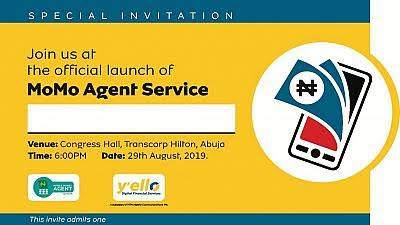
Following the successful award of a Super-Agent License, Y’ello Digital Financial Services, “YDFS,” a subsidiary of MTN Nigeria has opened its doors, announcing the launch of its super-agent network service named ‘MoMo Agent’ at an event in Abuja on August 29, 2019.

The extensive network of MoMo Agents will immediately begin providing safe and accessible money transfer services to underbanked and unbanked people across Nigeria. With this, the company joins ongoing efforts to accelerate the Central Bank of Nigeria’s drive for financial inclusion. 
Speaking at the launch, the Chief Executive Officer of MTN Nigeria, Ferdi Moolman said, “I am excited by the possibilities. We are fortunate to be part of the telecoms industry which underpins the digital economy and is critical to inclusive development and the future economic growth of this great nation. The launch of the YDFS MoMo Agent is especially significant to us. It further demonstrates our commitment to remain focused on enhancing Nigerian’s access to financial services, and in so doing, connect them to what is most important to them.”
The MoMo Agent Network compliments existing banking services by extending access to simple money transfer services and other financial services nationwide.
YDFS Director, Usoro Usoro, noted “Our MoMo Agent network opens up a host of opportunities, creating employment and facilitating business in rural and urban areas. Leveraging MTN’s extensive distribution network and capabilities, we are putting financial services within easy reach. 
“Going forward, anyone, anywhere in Nigeria can send and receive money through a MoMo Agent in their neighbourhood. We intend to expand the range of financial services offered once the Central Bank grants approval for a Payment Banking license.”
Y’ello Digital Financial Services plan to rollout about 500,000 Agents spread across all states and the Federal Capital Territory. 
End
About YDFS
Yello Digital Financial Services (YDFS) is a financial service provider licensed to deliver agency banking services under the CBN agent banking framework. It is a subsidiary of MTN Nigeria and operates the MoMo Agent service. 
About MTN Nigeria
MTN Nigeria is Africa’s largest provider of communications services, connecting 61.5 million people in communities across the country with each other and the world.  Guided by a vision to lead the delivery of a bold new digital world, MTN Nigeria’s leadership position in coverage, capacity and innovation has remained constant, since its launch in 2001. MTN Nigeria is part of the MTN Group – a leading emerging market operator, connecting more than 200 million subscribers in 21 countries in Africa and the Middle East. To learn more about MTN Nigeria and its various initiatives, visit www.mtnonline.com
For more information, please contact: 
Onome Okwah on:
+234 (0) 803 200 0430
mediaenquiries.NG@mtn.com
Follow us:
www.twitter.com/MTNNG
www.linkedin.com/company/mtn-Nigeria
International Adoptions: Legality of Adoption By Non – Nigerians in Nigeria | Elvira Salleras

International Adoptions: Legality of Adoption By Non – Nigerians in Nigeria | Elvira Salleras

Over the last few years, I have received several enquiries from non-Nigerians living abroad, wishing to be advised on the correctness of the statement published by the US embassy in Nigeria on its official website: “Individuals who are not Nigerian citizens are not legally allowed to adopt in Nigeria.  When a married couple is adopting, both must be Nigerian citizens.  Only U.S. citizens who also have Nigerian citizenship are allowed to adopt children in Nigeria.  Nigerian adoption laws are complex and vary from state to state.”

By this statement, the US embassy is asserting that all non-Nigerians who adopt Nigerian children are doing so illegally. This article seeks to throw more light on the subject and set the records straight. For clarity, I have numbered each sentence comprised in the statement and will address them sequentially:
1.  Individuals who are not Nigerian citizens are not legally allowed to adopt in Nigeria.
2. When a married couple is adopting, both must be Nigerian citizens.   
3. Only U.S. citizens who also have Nigerian citizenship are allowed to adopt children in Nigeria.
4. Nigerian adoption laws are complex and vary from state to state. 
Sentences nos.1 and 2 are sweeping, categorical assertions, which when read together with Sentence no.4, suggest that the US Embassy had read and analyzed the relevant laws of each of the thirty-six Nigerian states plus that of the Federal Capital Territory, before concluding that they all prohibit adoption by non-Nigerians. Interestingly, such a position seems to be contradicted by the same Sentence no.4, which states that Nigerian adoption laws vary from state to state. 
In practice, while the adoption laws or policies of some states such as Rivers and Enugu as well as the Federal Capital territory expressly prohibit adoption by non-Nigerians, others including Cross River and Lagos, provide exceptions for adoption by non-Nigerians. Indeed, when the Lagos state government amended its Child’s Rights Law (CRL) in 2015, it completely removed the mention of “non-Nigerian” from the section relating to restrictions on the making of adoption orders. This was done to eliminate the pre-existing ambiguity on adoption by non-Nigerians (see Section 121, CRL). Furthermore, in Section 133, CRL which provides for the “licence to give child for Inter-state adoption”, the best interest of the child is the paramount consideration (Section 133 (3)) and no mention of the adopter’s nationality is made.
Hence such sweeping generalizations as reflected in Sentences no.1 and 2 above, at best constitute a subjective opinion calculated to serve the purposes of the US government. Indeed, the US government is at liberty to prohibit its citizens who are non-Nigerians from adopting Nigerian children in line with its immigration policies. But in seeking to justify this stance by leveraging on a subjective interpretation of all the adoption laws in Nigeria, the US government could be unwittingly pushing the limits of fact. 
Sentence no.3: Such a position is obviously a matter of US government policy which is therefore valid for their purposes and consequently outside the scope of this article. 
Sentence no.4: The statement, “Nigerian Adoption laws are complex”, without supporting evidence or explanation is at best, a simplistic expression of opinion or judgment.
In light of the above, I am of the opinion that the publication in issue, in so far as it tars all adoptions by non-Nigerians with the same brush of illegality and complexity, is hasty, ill-informed and likely to mislead the public. Therefore, it should be modified to reflect the reality of international adoptions in Nigeria.
Elvira Salleras, BL, LLM, ACTI 
Elvira was called to the Nigerian bar in 1989 and is an expert in inter-country adoptions and cross-border transactions. She is the Managing Partner of Elvira Salleras + Associates, a multi-disciplinary legal practice based in Lagos and founder of Literacy, Integration and Formal E

ducation Foundation, a child-focused NGO.


Register For Dispute Resolution and Forensic Document Examination Training for Lawyers

Register For Dispute Resolution and Forensic Document Examination Training for Lawyers

For Lawyers advocacy means
representing the interests of the client in the best manner possible, therefore
an advocate must be equipped with a variety of skills. 

This training is
designed to offer intensive legal advocacy and dispute resolution training to
lawyers and equip participants with the necessary skills mandatory for every
lawyer as they engage with the civil or criminal legal system vis-à-vis the
innovation and competence required in today’s global business and legal world.


Please note the following
details about the training –
TRAINING OVERVIEW
Theme
The Art of Legal Advocacy
Modules:
 
         
Litigation
         
Arbitration 
         
Mediation
         
Forensic Documents Examination
         
Legal Writing  
         
Law Firm Profitability
Date:
26th and 27th September, 2019
Time:
9am – 5pm daily
Duration of Class:
2hrs each
Venue:
Neca House, Hakeem Balogun Street, Alausa, Ikeja, Lagos 

Members of Faculty
·        
Mr.
OlabodeOlanipekun SAN, Partner, Wole Olanipekun  Co.,
·        
Dr.
AbiodunOsiyemi; President, Forensic Science Academy
·        
Mr.
FolaAlade ASCMA (UK); Principal Partner, Fotefa Partners 
·        
Dr.
Chinua Asuzu, Dean, The Write House; Senior Partner, Assizes Law Firm
·        
Miss
BusolaAjala , CEO, Strictly Law Business 
·        Mr. Tolu Aderemi LLM
(Netherlands), Partner, Pearchstone  & Graeys       


Registration
Details 


Fee per delegate    
– N60,000    


Early Bird (Ends September, 5, 2019) – N40,000

REGISTER FOR THE EARLY BIRD HERE TO SAVE #20,000 NOW

We look
forward to welcoming you as the session promises to be impactful and help put
you well on the way to achieving your career goals.

For registration details, please call Lawlexis on
+2348055424566; +2349095635314 or email lawlexisinternational@gmail.com or
follow this link –
https://paystack.com/pay/Lawlexis

#NBAAGC2019 #nbaconference #facingthefuture #NBA2019AGC #NBA2019AGC #nigerianlawyers #AOCLegal 
Wages and Salaries In Nigeria: A Human Rights Issue? | Fifehan Ogunde

Wages and Salaries In Nigeria: A Human Rights Issue? | Fifehan Ogunde

In April 2019, the Federal government signed into law the Miminum wage Repeal and Enactment Bill increasing the minimum wage across Nigeria from 18,000 Naira per month (US$50) to 30,000 Naira per month (US$83). Some have regarded this as good news for workers and labour unions in Nigeria are pushing earnestly for its implementation. 

The discussion surrounding wages and salaries in general have always been considered an economic issue but there may be a case for a view that making it a fundamental rights issue could provide greater legitimacy for labour standards advocates.
Article 7 of the International Convention on Economic, Social and Cultural Rights (ICESCR) recognizes the right of everyone to ‘just and favourable conditions of work’ part of which include remuneration which provides workers with fair wages. This right is also recognized by the African Charter on Human and People’s rights. Remuneration for work under these instruments must also provide a decent standard of living for one and his family. Minimum wages under the ILO Convention are expected to take into consideration among others, costs of living and the needs of workers and their families. Average living costs for a single person in Lagos, Nigeria’s commercial capital is about 171,000 a month ($475) without rent and 622,000 is needed for the living expenses of an average family. Many internships in Nigeria offer a stipendiary pay of 40,000($146) per month or less. The average salary for skilled labour in Nigeria is 57,200 naira per month ($209) and the 25,200 per month for low skilled labour. An average salary which is less than a third of the living costs of a single individual is grossly insufficient for the maintenance of a ‘decent’ standard of living as envisaged by ICESCR, The International Labour Organization Minimum Wage fixing Convention 1970 and the African Charter on Human and People’s Rights. As bad as this appears, this may not be the worst. At different times, labour workers in Nigeria have embarked on industrial actions over unpaid salaries at federal government level. Unpaid salaries by certain state governments have resulted in more tragic consequences of government workers begging on the street. These are all in themselves violations of international law obligations by the Nigerian government at different levels and should be seen as such
Surprisingly, other than isolated strike actions by the Nigeria Labour Congress, there is limited advocacy on the need for pay to protect decent living standards and in any case, the body only acts with respect to public sector workers. Why is this so? One can only attribute the limited agitation to a lack of awareness as to the status of just and favourable conditions of work as fundamental rights. When human rights issues are discussed in Nigeria even by international organizations such as Human Rights Watch and Amnesty International, focus is normally directed towards issues such as police brutality, domestic violence and extrajudicial killings. Employment rights are also critical human rights that deserve protection by both government and non-government actors. Not only are they recognized as explicit rights under international law, they are inextricably linked to other fundamental rights. 
Can we improve things? The answer to this is that improvement is difficult but not impossible. A vast majority of employers of labour are micro-businesses and SMEs in the informal economy with high running costs that are not matched by revenue. It is difficult to not only mandate private employers of labour to pay proper living wages but also enforce such mandates. Nevertheless, making fair wages a human rights issue brings into play matters of national, regional and international law and the added pressure may compel the government to take steps in this regard. Perhaps the best place to start is holding the government accountable with respect to the public sector. Where government fails to pay workers as at when due, redress of some sort should be available for workers, ideally in the courts of law. Private sector operators registered with the Corporate Affairs Commission should be placed under an obligation to pay workers fairly and equitably with fines and revocation of licenses possible sanctions for organizations that breach these obligations. This function must be diligently exercised by either the Corporate Affairs Commission or the National Salaries, Income and Wages Commission which is the body responsible for monitoring the compliance with minimum wage obligations at federal and state government level. This commission should also be responsible for monitoring living standards and making recommendations on an acceptable minimum wage based on decent living standards.
Monitoring for compliance with international standards should also extend to our student and graduate schemes particularly with respect to unpaid internships. 48% of young people in the UK have undertaken an unpaid internship and more than half of internship schemes in Europe are unpaid. As at 2016, About half of the 1.5 internships in the US were unpaid. Internship schemes are also on the rise in Nigeria and while specific data on unpaid in Nigeria may not be available, a number of companies offer unpaid internships. This does not change the fact as non-volunteer work without remuneration, unpaid internship may violate the right to just working conditions. For corporate organizations that offer internship schemes, pay must be commensurate with an individual’s educational and professional qualifications. It must also take into context current living standards as with other forms of full-time employment.
Wages and salaries are not just financial or economic subjects. They also raise human rights issues that must be recongized as such.
Register For Early Bird At The Career Training For Lawyers

Register For Early Bird At The Career Training For Lawyers

This training is designed to offer intensive legal advocacy and dispute resolution training to lawyers and equip participants with the necessary skills required in today’s global business and legal world.

TRAINING OVERVIEW
Theme: The Art of Legal Advocacy
MODULES – ·  Litigation ·  Arbitration ·  Mediation ·  Legal Writing ·  Forensic Document Examination ·  Law Firm Marketing & Profitability
MEMBERS OF FACULTY
1.  Mr. Olabode Olanipekun SAN, Partner, Wole Olanipekun & Co., 2.  Dr. Abiodun Osiyemi; President, Forensic Science Academy
3.  Mr. Fola Alade ASCMA (UK); Principal Partner, Fotefa Partners 
4.  Dr. Chinua Asuzu, Dean, The Write House; Senior Partner, Assizes Law Firm
5.  Miss Busola Ajala , CEO, Strictly Law Business
6.  Mr. Tolu Aderemi LLM (Netherlands), Partner, Pearchstone & Graeys 
VENUE – 
NECA House, Plot A2, Hakeem Balogun Street, Alausa, Ikeja, Lagos
DATE – 
26th and 27th September, 2019 
TIME – 
9.00am – 5.00pm Daily
REGISTRATION
Fee per delegate:
N60,000 – Registration
N40,000 – Early Bird (Ends 5th September, 2019)
All Payment and Delegate Information should be sent to lawlexisinternational@gmail.com before date of training for proper registration. For more information and confirmation of payment, kindly contact us on  09095635314 or 08055424566.