
Introduction To Sports Law In Africa

Introduction To Sports Law In Africa

The
Sports Industry is fast becoming a growing industry which accommodates various
professional from all works of life. It is very pertinent to note that due to
the growing nature, it has become paramount to find a medium to regulate the
activities within the sector. Owing to this fact, legal professionals within
the industry have developed the legal framework that pertains to sports and the
developing issues that evolve from the sector.


The
immense development of sports around the world cannot be over emphasized; talk
more of its impact in the progress of a nation.Football,
for example is the  first team sport in Spain by number of
practitioners, has become an important phenomenon that involves cultural,
social, economic and even political factors. Although it sounds like a cliché,
football is much more than two teams of eleven people running after a ball.[1]Sports has been recognized
as the only event which bring together all personalities; whether Black, Asian,
White or Australoid.

Historically,
sports was generally seen as a past time that didn’t require serious
formalization and regulation. For instance, when the ancient Olympic Games
started, there were limited rules and regulations binding the athletes and the
organizers. In the past few decades however, we have seen sporting activities
and tournaments become much more complex. These days there are events like the
World Cup and Olympic Games, African Cup of Nations (AFCON), sporting
federations like FédérationInternationale de Football Association (FIFA),
Confederation of African Football (CAF) and the American National Basket Ball
Association (NBA), players and agents all involved in complex web of
organizing, hosting and playing of games and tournaments. These days players
sign contracts, teams have relationships with the governing federations and the
governing federations have connections with the governments of each country.
These complexities have led to the growth and emergence of sports law and
practice[2]around the world without excluding
Africa.

A
distinct Forbes list just for highest paid athletes evidences the rising
popularity of the sports industry in the past few decades. The history of
sports extends as far back as the existence of people as purposive and
competitive. It simultaneously portrays as how the beliefs of the society have
changed and what changes have been brought in the rules and regulations. The
most eminent legal scholars have always unanimously held that law is essential
for a society because it serves as norms of thecode of conduct. It keeps the
community running. Without law, there would be a state of chaos where only the
fittest will survive. Similarly, even though law and sports often get
considered as “separate realms”; sports laws form the backbone of the
sports industry regulating the myriad of interlinking legal issues ranging from
anti-doping, gambling,andmatch-fixing to the choice of legal structure for
sporting organizations. Sports without the governance of a body of law can be
comparable to a football match without a referee; havoc.  These laws have
an unusually well-developed pattern of globalized regulation and overlap
substantially with multitude areas of other distinct laws.[3]

One
of the major sports that emerged in Africa and has stood the test of time is
Football which has been evidenced in the great African players who have also
made their marks not just in Africa but in Europe. Amongst them are Austin
Okocha, KanuNwankwo, Samuel Etto, Didier Drogba, Rasheed Yekini et al.

The
development in African football has over the years been astonishing and rather
controversial. For the sports lawyer and other interested parties, this is a
remarkable opportunity to examine and critically analyze further the perennial
battle between state regulation and self-regulation. It is a well-established
fact that FIFA and CAF regulations prohibits attempts to seek remedies before
national courts in matters which is of purely sporting nature and by pursuing
this one risks violating specific FIFA regulations. The general position is
that national courts are usually reluctant to interfere with cases of a
sporting nature as the sports associations are private bodies as opposed to
public bodies. Courts cannot intervene in matters conducted by private
associations, however when a matter is presented in court against a private
association the courts will nevertheless go ahead with the hearing of the
matter.[4]


Oluwatobiloba Adesemowo

“Tobi is a tax and sports lawyer. He is currently a
management strategist at Lagos Tigers Football Club. He is also a tax associate
at SIAO partners. During his leisure, he loves to research on sports and tax
related issues.”

Picture Credit – www.legaldesire.com

Dispute Resolution In The Sports Industry. Part 1 | Oluwatobiloba Adesemowo

Dispute Resolution In The Sports Industry. Part 1 | Oluwatobiloba Adesemowo

It
is often said that as long as relationship is being established, dispute is
inevitable. For as long as we interact with each other as humans in our daily
routine, there is every likelihood to have disagreements, different opinions
and ideas which could bring about dispute; however, the beauty is ensuring that
disputes are resolved amicably. To facilitate a fast and easy means of settling
dispute especially in the sports industry, it has been encouraged that the
Alternative Dispute Resolution mechanisms should be adopted.  


There
are various types of disputes that can emanate from the sports industry because
of the large size of the industry and based on the area of specialization of
the athletes or personnel. These disputes include but not limited to sports
commercial disputes, on-field of play disputes, contractual disputes and
organizational/ institutional disputes. It is no doubt that the Alternative
dispute resolution (ADR) is utilized to resolve a variety of sports-related
dispute which could come in various forms as mentioned earlier.

ADR
provides parties with fair, independent, and impartial forums to resolve
disputes. The most common forms of ADR proceedings are mediation and
arbitration. An increasing number of sports organizations are including mediation
and arbitration as the primary means for resolving disputes that arise on the
field of play as well as commercial business matters.[1]ADR
can provide quick, private, and fair dispute resolution among sports atheletes
and sports organization which has been made evident in various circumstances
using the Court of Arbitration for sports as an example.

ADR
is a flexible, time and cost efficient mechanism that helps parties in sports
disputes to come to practical and satisfactory solutions. Parties benefit from
having a neutral forum for resolving an international dispute through a single
procedure. ADR can be set up in a way that facilitates efficient enforcement of
the outcome. It is interesting to note that other independent bodies asides the
CAS has found it important to create a platform to help sports athletes resolve
disputes amicably.

 One of such bodies is the World Intellectual
Property Organization which is based in Geneva Switzerland with various ADR
options in particular arbitration and mediation for the resolution of
international commercial disputes between private parties. WIPO’s ADR services
for specific sectors include dispute resolution advice and case administration
services to help resolve disputes in the field of sports.[2]

While
the efforts of the WIPO is very much appreciated, we shall subsequently be
looking at the jurisdiction the CAS and examine the need for a sports tribunal
to help facilitate ADR mechanisms.

Oluwatobiloba Adesemowo

“Tobi is a tax and sports
lawyer. He is currently a management strategist at Lagos Tigers Football Club.
He is also a tax associate at SIAO partners. During his leisure, he loves to
research on sports and tax related issues.”


[1]
American Arbitration Association journal on using adr to resolve collegiate,
professional, and sports-business dispute

[2]www.wipo.int/resolving-disputes-in-sports
last accessed on 23rd Nov.2019

Register for the International Trade Law and Conflict Management Training for Lawyers

Register for the International Trade Law and Conflict Management Training for Lawyers

Register for the “International Trade Law & Conflict Management” Training for Lawyers-

Details –

· Theme:  “Lawyers at the center of African Trade”

· Modules:
– Negotiation & Conflict Management
– International Arbitration
– Cross Border Finance
– International Trade Law
–  Production Sharing Contracts
– Intellectual Property Law

· Date: 30th and 31st of January, 2020

·Time: 9am – 5pm daily

·Venue: Neca House, Hakeem Balogun Street, Alausa, Ikeja, Lagos.

·Audience: Lawyers

Registration Details
Fee per delegate     – N50,000                                                         
Early Bird (Ends January 7, 2020) – N35,000

For registration, Please contact Lawlexis on 09095635314; 08055424566 Or send a mail to lawlexisinternational@gmail.com

Some Key Policy Issues in Nigeria’s Sustainable Energy Challenges and Environmental Sustainability | Michael Dugeri

Some Key Policy Issues in Nigeria’s Sustainable Energy Challenges and Environmental Sustainability | Michael Dugeri

Nigeria, like other nations, has long
recognised the potentials of renewable energy in the promotion of environmental
sustainability. However, unlike countries such as China, Brazil and Germany,
Nigeria’s huge renewable energy potentials have not been fully utilised. This
is due to a number of factors, such as Nigeria’s overdependence on the crude
oil revenue, lack of an overarching legal framework that articulates a
comprehensive strategy for promotion of renewable energy and political will to
drive enforcement and implementation of extant policies on renewables. One of
the overarching objectives of Nigeria’s National Energy Policy is to guarantee
adequate, reliable and sustainable supply of energy at appropriate costs and in
an environmentally friendly manner, to the various sectors of the economy, for
national development.

However, a review of Nigeria’s legal and institutional
framework on renewal energy development shows that the approach is not well
focused on the ideals of environmental sustainability, as the emphasis seem to
be more on energy access and sufficiency than on environmental sustainability.
The many regulatory institutions that exist in both the power sector and the
environment sometimes have overlapping mandates and responsibilities, resulting
in disagreements between agencies over jurisdictional boundaries.

Environmental sustainability forms
one of the pillars of sustainability development, the others being social
sustainability and economic sustainability. It is an aspect of the development
process which emphasises the harnessing of natural and social resources with
major considerations for continuity and the future. Renewable energy sources
such as biomass, geothermal, hydropower, solar and wind, energy sources are by
their nature infinite and environmentally friendly when compared to
conventional energy sources such as coal, oil and natural gas. There is,
therefore, a global shift to support the promotion of renewable energy.
Investment in renewable electricity would be desirable for increasing energy
security, mitigating climate change and promoting economic development.
However, Nigeria’s energy sector is dominated by oil and gas consumption. Most
investments in the sector are currently in oil and gas generating plants. Owing
to prolonged investments and economies of scale, the cost of generation of
electricity from oil and gas is lower than that of renewable energy installations.
Apart from hydropower, renewable energy sources hardly feature as part of
Nigeria’s energy mix. 

In many ways, Nigeria has
demonstrated awareness of the need to promote sustainable development. However,
while the post-1988 environmental law development period in Nigeria placed the
environment at the center of sustainable development objectives of the country,
it did not translate actual protection of the environment. Our environmental
protection laws are not strictly enforced because the Nigerian economy relies
heavily on fossil fuel, and serious environmental protection measures and/or
enforcement would affect revenue from crude oil production and transactions. It
then appears then that what Nigeria need is a way to balance its energy
interests with environmental concerns, hence the importance of a legal and
institutional framework for promoting renewable energy.

Nigeria is endowed with huge energy
resources, yet it perennially suffers energy poverty. Moreover, the reliance on
fossil fuel to meet Nigeria’s energy need has been attended with many problems
such as physical deterioration of energy transmission and distribution
facilities, inadequate metering system, increase in the incidence of power
theft through illegal connections, manpower constraints and inadequate support
facilities, high cost of electricity production, inadequate basic industries to
service the power sector, poor billing systems, poor settlements of bills by
consumers, inadequate generation capacity, deforestation, desertification,
erosion and a host of other environmental problems. There is also the problem
of energy access for the vast populated of Nigeria that reside in the rural
areas. Adoption of renewable energy sources as alternatives to fossil fuel will
greatly assist in addressing many of these challenges. Renewable energy is
cheap because its resources are naturally replenished, evenly distributed and
readily available, renewable at a reasonable rate, environmental-friendly,
divisible into small units, and flexibly transmittable.

Nigeria is a signatory to the Kyoto
Protocol and also has in place a National Policy on Climate
Change and Response Strategy (2011) for implementing climate change
activities in the country. The Kyoto
Protocol
 is the international treaty which extends the 1992 United
Nations Framework Convention on Climate Change (UNFCCC) that commits state
parties to reduce greenhouse gas emissions, based on the scientific
consensus that, firstly, global warming is occurring and secondly, it
is extremely likely that human-made CO2
emissions have predominantly caused it. The Kyoto Protocol was adopted in
Kyoto, Japan, on 11 December 1997 and entered into force on 16 February 2005.
The National Policy on Climate Change and Response Strategy is a framework
for tackling environmental challenges occasioned by global changes in climate.
It is expected that this Policy will enhance Nigeria’s abilities to meet her
obligations towards reduction of emission of noxious substances in the
environment. The policy envisages a shift away from fossil fuel or
coal-generated energy towards renewables as the resources to meet the local
growing energy demand using clean technologies. Given Nigeria’s status as a
fossil-fuel dependent economy with a large climate sensitive agricultural
sector, the development of a climate change policy and response strategy is
critical; as climate change portends a serious threat to poverty eradication
and sustainable development in general. One of the key pillars of Nigeria’s Vision
20:2020 is investment in low carbon fuels and renewable energy. There are
however, the challenges of effective implementation of the policy. The impacts
of climate change in Nigeria require the widest cooperation and participation
in an effective and appropriate national response comprising mitigation and
adaptation measures that are efficient, concrete and targeted.

Since crude oil earnings have
continued to contribute the largest share of government revenue, and since
fossil fuel dominates the Nigerian energy mix, it has been a challenge for
Nigeria to reduce carbon emission from energy activities, and this has
continued to be detrimental to the environment. However, a careful balance of
renewable and non-renewable energy sources in Nigeria’s energy mix will not
necessarily result in a drop in revenue, if global best practices are followed
in the design and implementation of the required policy, legal and
institutional framework. The actual design of renewable energy support
mechanisms is more important for effective and efficient support than the mere
choice of support schemes a jurisdiction employs. Support systems for renewable
energy can be investment or generation focused, wherein the regulation may be
price-based or/and quantity-based.

The issue of deciding which policies
for renewable energy development to choose cannot be answered in a general way.
There is not one perfect support scheme that could be recommended for all
countries. The choice depends upon different factors such as: the current market
stage of the technologies, the budget available or the means of finance, the
anticipated renewable energy targets, as well as the desirability and
feasibility of the technology mix, with regard to the natural conditions in the
respective country. A country’s choice of support system depends on its
objectives and peculiar conditions. The support systems can be actualised
through policy objectives and legal instruments. Policy framework for renewable
energy can be direct or indirect, optional or mandatory. Lessons from other
jurisdictions show that technology-specific support mechanisms have been the
most effective and efficient, and that production-based support mechanisms are
better for the development of renewable energy projects than investment-based support.

Nigeria needs a support scheme which
is both effective and efficient. This is what the 2015 Regulations on Feed-In
Tariff for Renewable Energy Sourced Electricity in Nigeria aim to achieve.  Feed-in tariffs have become the policy
instrument of choice for so many diverse economies around the world because
feed-in tariffs are empirically proven to promote the fastest expansion of
renewable electric power, at the lowest cost. They also do so more simply,
transparently and democratically than other schemes. Unlike other mechanisms,
such as tax credits or research and development subsidies, feed-in tariffs need
cost governments nothing, being usually funded through costs spread among all
electric utility customers, as part of their regular bill. They are
performance-based, only paying for the actual output of renewable electricity,
not just given out as a grant for purchasing the equipment. Feed-in tariffs
work so well because they are simple and inclusive, allowing all players to
invest. They are more transparent than other schemes, have lower administration
costs, and when designed properly (and supported by appropriate planning laws)
can get deployment moving very quickly. Generally, feed-in tariffs also
accelerate the cost reduction of renewable energy technologies, making them
cost-competitive with conventional energy sources at a much faster pace. At
that point, no more support will be necessary. The question of how long support
is necessary also depends on the ambition of the country in question. Although
they can be used to meet a minimal target, they can also be applied
aggressively to redirect money flows in a significant way towards creating a
domestic renewable energy industry large enough to compete in the global
market.

Using the law to
integrate renewable energy into the Nigerian power sector will promote energy
security and access, a clean environment and economic development.
In order to effectively harness the
potentials afforded by renewable energy, Nigeria needs to have a robust legal
regime that promotes and regulates the development and utilization of renewable
energy. With an abundance of natural gas in the country and with the potential
of this form of fossil fuel serving as a transition fuel, the policy and
regulatory framework must carefully balance Nigeria’s need for economic
development vis-à-vis preservation of its environmental resources.

Michael Dugeri

mikedugeri@gmail.com

Photos From The NBA-SBL Employment, Labour and Industrial Relations Committee Annual Seminar

Photos From The NBA-SBL Employment, Labour and Industrial Relations Committee Annual Seminar

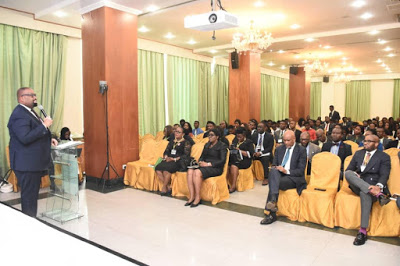
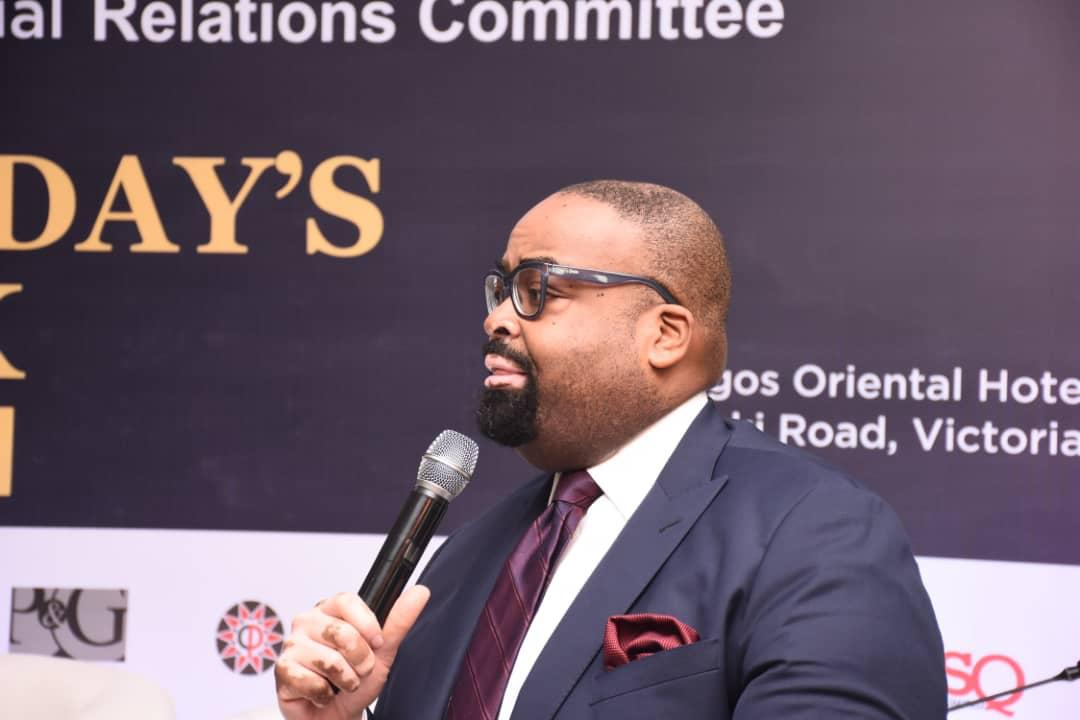
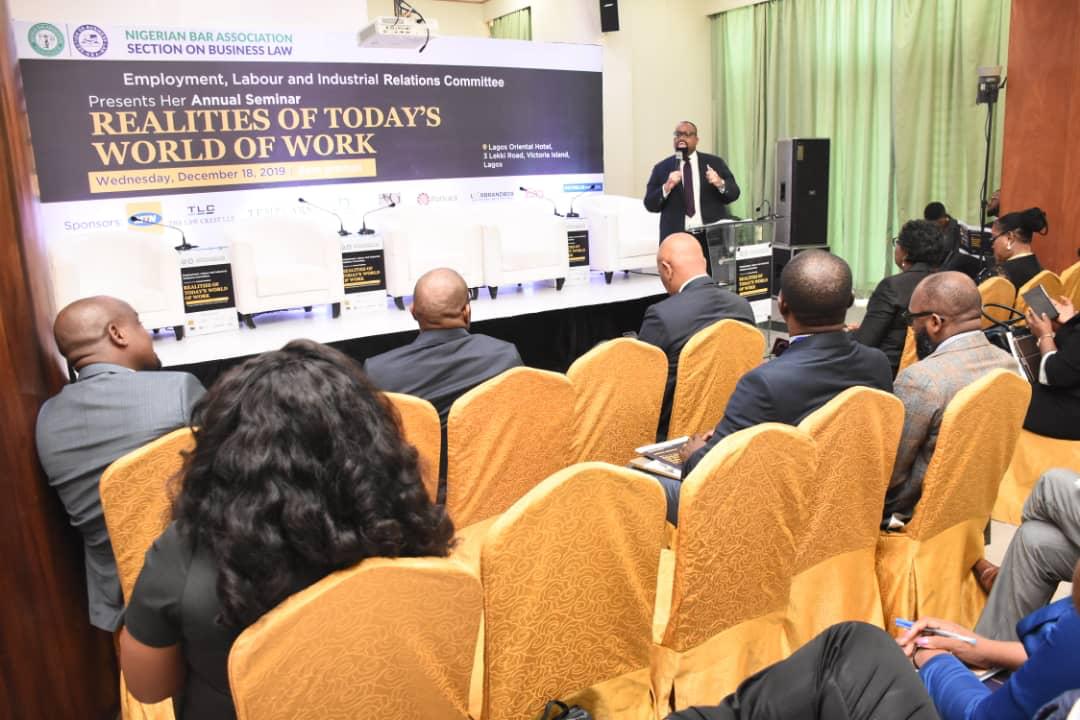
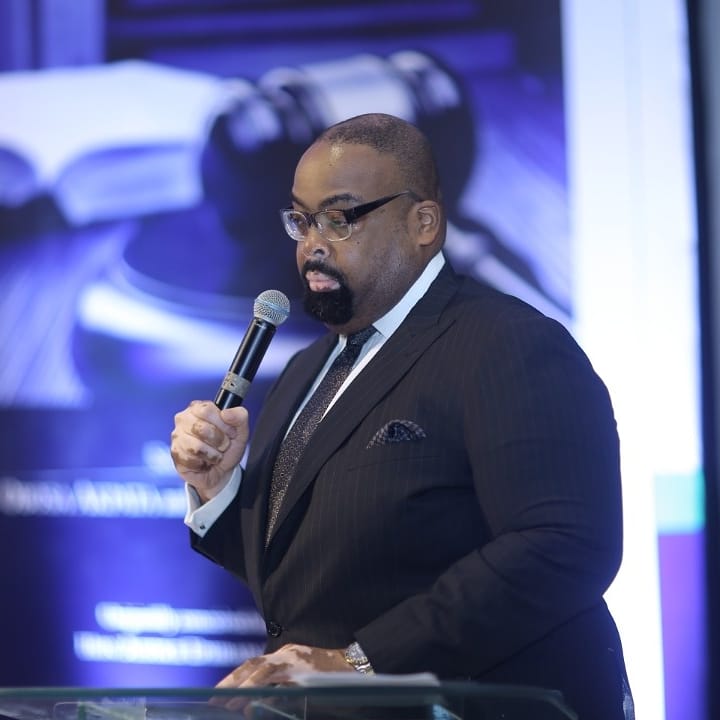
Templars’ Partner and immediate past Chairman of the NBA-SBL, Olumide Akpata speaking at the NBA-SBL Employment, Labour and Industrial Relations Committee annual seminar held today Wednesday, December 18, 2019 at the Oriental Hotel, Victoria Island, Lagos. 
The theme, “Realties of Today’s World of Work” is informed by the current realities and in the today’s world of work. 
The seminar interrogated these issues extensively with the help of a very rich faculty of experts comprising seasoned legal practitioners, in house lawyers, human resource management experts and Justices of the National Industrial Court. They shared insight on the theme and took on very hard questions from participants.
For this year’s seminar the committee also created a special Question and Answer session with judges of the National Industrial Court.
NBA Ikeja Meets Lagos Chief Judge

NBA Ikeja Meets Lagos Chief Judge

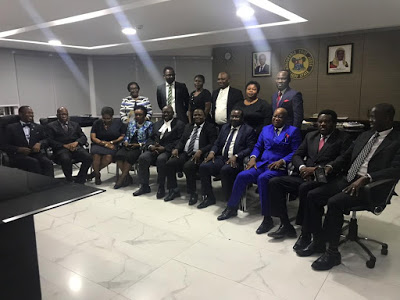
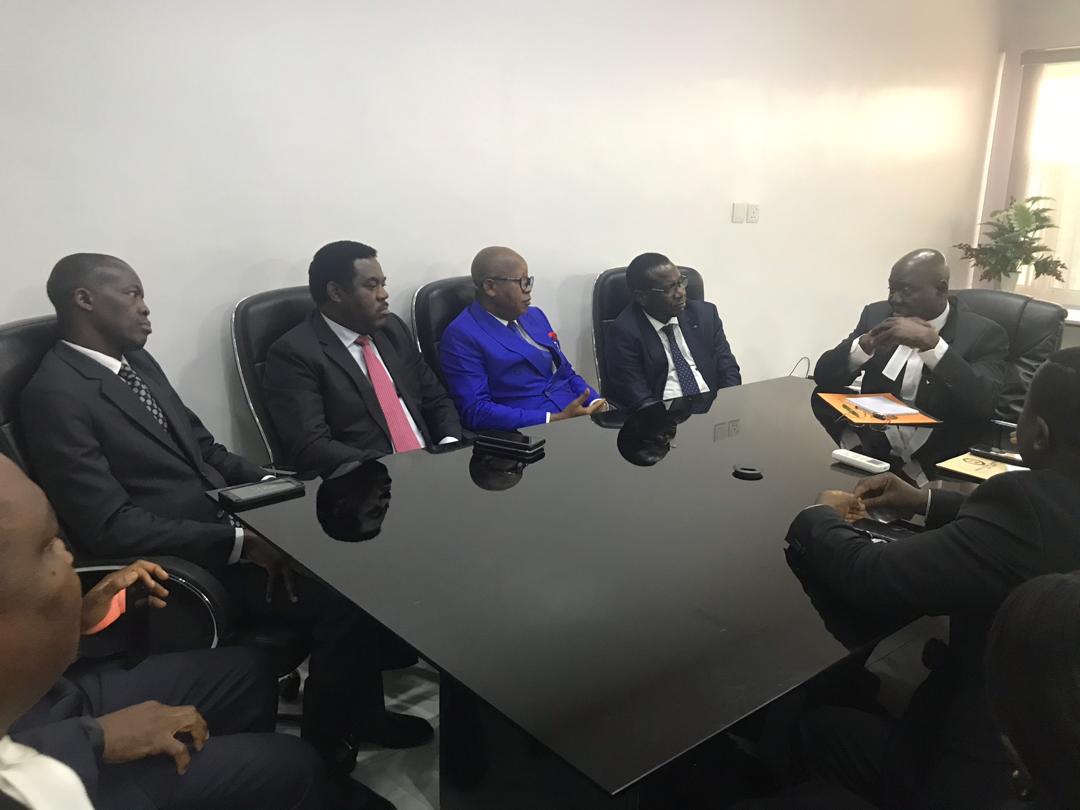
The executives of the Nigerian Bar Association met with the Chief Judge of Lagos state, Hon. Justice Kazeem Alogba today 16th December,2019.
You will recall that there has been a face off between the NBA Ikeja and the immediate past Chief Judge on the recently amended Rules of Court. This meeting marks a reunion of two key Stakeholders in the Justice administration of Lagos state.
In the NBA delegation was Chief Layi Babatunde,SAN; Roland Otaru,SAN; Dele Adesina,SAN; Olatunji Adejuyigbe,SAN; Kayode Enitan,SAN and Mr. Akeem Aponmade. 
The Chief Judge received the delegation in the company of the Chief Registrar; Hon. Justice Dabiri; Hon. Justice Femi Adeniyi.
The Chief Judge proposed a quarterly Bar and Bench forum to ensure that issues are dealt with speedily. He further promised to look into the Rules of Court and urged that input be sent for consideration. He assured the delegation that the issues of service of Court Processes is being seriously looked into.
The Hon. Chief Judge complained about the unwholesome antics of Counsel that frustrates  cases in court. He promised to work closely with the Bar to deliver the Justice system we all desire.
He urged the Senior members of the Bar to assist the bench in sanitizing the bar and not leave it to the Judges alone. He mentioned that where Counsel is recalcitrant, same can be brought the attention of the Court before sitting commences.
The CJ mentioned the creation of Resource Centre’s to assist Counsel to interface with the digitalization of the Judiciary. He mentioned the progress that has been recorded in the E-Probate section and advised lawyers to interact with the E-Probate as well as name and shame any staff who attempts to debase the system. The CJ intimated the delegation on the challenges of the Judges and the staff of the Judiciary. He also mentioned the laudable steps taken so far on E-filing in lagos state and the Archives section.
Judges Need To Be Courageous Like The Late Justice Akpata

Judges Need To Be Courageous Like The Late Justice Akpata

Senior Partner at Templars, Mr. Olumide Akpata has called on Judges to be courageous like the Late Justice of the Supreme Court, Ephraim Omorose Ibukun Akpata the 2nd Edition of whose book, The Nigerian Arbitration Law in Focus, was launched earlier on today at the Agip Recital Hall of the MUSON Centre.

Mr. Akpata, while conceding that it was incumbent upon Lawyers and the public to do their utmost to protect the Judiciary in the face of attack from any quarter, made the point that the Judges themselves must also be bold enough to resist any attempt to emasculate that arm of Government by anyone no matter how highly placed. 
Mr. Akpata reminded the audience that Justice Akpata was known for his courage while on the Bench and also as Chairman of INEC and he was not afraid to speak truth to power.
The 2nd Edition of the book, The Nigerian Arbitration Law in Focus was co-authored by Mrs. Obosa Akpata and Mrs. Olusola Adegbomire and was published by West African Book Publishers.
Olumide Akpata Gives Free Concert Ticlets To 100 Lawyers In Abuja

Olumide Akpata Gives Free Concert Ticlets To 100 Lawyers In Abuja

In recognition of the increasing importance of the entertainment industry to the Nigerian economy, Olumide Akpata will be giving away 100 free tickets to lawyers to attend the Burna Boy and WizKid Concerts at Transcorp Hilton Hotel, Abuja on Saturday 14th and Sunday 15th December 2019, respectively.

Mr. Akpata is of the view that  Entertainment Law has the potential of becoming one of the most lucrative areas of legal practice in Nigeria and in this regard young lawyers  must strategically position themselves and get fully acquainted with the sector which is worth over USD5 Billion with an estimated revenue of over USD10 billion by 2022.
During his time as Chairman of the Nigerian Bar Association Section on Business Law (NBA-SBL), Mr. Akpata also sponsored 100 young lawyers to watch ‘SARO THE MUSICAL’, a stage play produced by Bolanle Austen-Peters at Terra Kulture Victoria Island, Lagos.
Asides from the strategic career-focused rationale for this  gesture, Mr. Akpata believes that lawyers should also find time to unwind, de-stress and enjoy the festive season after a long and tough year.
To be eligible to win one of the  give-away tickets, respondents were asked to:
1. Follow Olumide Akpata on his social media handles (Twitter: @oluChub IG: @olumide_akpata LinkedIn: Olumide Akpata
2. Answer the following questions:
a. Since the inception of the Senior Advocate of Nigeria (SAN) rank, Name 5 (five) Past Presidents of the Nigerian Bar Association who were not Senior Advocates of Nigeria when they occupied that position?
b. Name 3 entertainment Law experts in Nigeria.
Olumide Akpata Devotes 13 December 2019 To Young Lawyers

Olumide Akpata Devotes 13 December 2019 To Young Lawyers

Templars’ Senior Partner and immediate past chairman of the Nigerian Bar Association – Section on Business Law (NBA-SBL), Mr. Olumide Akpata, is a leading voice among established lawyers who are committed to defining a clear and broader career path for young lawyers in Nigeria. 

Every year, thousands of lawyers are admitted to the Nigerian bar with little or no knowledge about the variety of career paths in the profession. At best, a majority of the practicing lawyers believe that litigation is the only pathway for lawyers, without having any meaningful clue regarding the diverse opportunities that lawyers could tap into. This misconception has exercebated unemployment and underemployment, as many lawyers are forced to pursue  career paths that are entirely unrelated to law in order to make ends meet. 
Mr. Akpata believes in changing this narrative by constantly engaging young lawyers and creating awareness on the endless opportunities in the legal profession. His message remains simple and direct: young lawyers must be given the required support and guidance to navigate through the wide spectrum of legal practice. In his words, “[y]oung lawyers must take capacity-building very seriously. This is why I have made it my primary responsibility to be a part of the process. I believe that lawyers must be ready for the dynamics of the legal profession. Disruptive technology is reshaping the legal profession; digital economy is on the rise and buzzwords like artificial intelligence, fintech, internet of things, blockchain and the rest are fast becoming familiar terms in the delivery of legal services. Therefore, lawyers must take commercial awareness very seriously in order to leverage on the opportunities in Nigeria’s emerging legal market.”
Mr. Akpata also believes in reorganising legal practice in Nigeria to make it more attractive and profitable. According to him, “the Nigerian bar is one of the largest in the world in terms of population. We have a very large economy and at a time where legal practice is becoming global with  increasing cross-border transactions, there is no reason why Nigerian lawyers (young lawyers especially) should fail to position ourselves strategically to have a share of the global legal market. In view of the Africa Continental Free Trade Agreement (ACfTA) which was recently signed, the NBA must articulate a clear position in terms of policy and regulations that will enable us leverage on ACfTA. Most young lawyers are not aware of these developments and I have decided to take it up as my responsibility to engage young lawyers in this regard.” 
As part of that ongoing engagement with young lawyers, Mr. Akpata devoted yesterday, 13 December, to speaking to, and with, young lawyers across the country. He  gave a keynote speech at the NBA Young Lawyers Forum (YLF) Summit that held at Owerri, Imo State. He also spoke at other NBA-YLF events that held concurrently at Benin, Edo State and Gombe, Gombe State. Amongst other things,  these outings focused on preparing young lawyers for the future by identifying the challenges young lawyers face and providing the requisite guidance through capacity-building or mentorship. 
At the Benin event, Mr Akpata was represented by another Templars’ Parther, Mr. Godwin Omoaka, S.A.N., whilst Mr. Melah Yussuf represented him at the Gombe event. 
Both Mr Omoaka, S.A.N. and Mr Melah Yussuf spoke on the very interesting future ahead for young lawyers if they explore the vast opportunities in the legal profession which go way beyond the traditional litigation. 
Their messages on Mr Akpata’s behalf resonate with the aspirations of every young lawyer in Nigeria. And some of the attendees at these NBA-YLF events used this medium to call on the NBA and other senior lawyers with the requisite experience to complement Mr Akpata’s drive.
According to Mr. Elehibiri Oweiware, a member of the NBA-YLF, the NBA must drive a new process that will restructure the legal profession by making it more attractive and profitable. 
In their respective reactions, the leadership of the YLF at Benin, Owerri and Gombe thanked Mr. Akpata for devoting the whole day to the YLF cause and commended him for being exemplary during his tenure as chairman of the NBA-SBL.
Olumide Akpata Calls For Capacity Building At Young Lawyers Forum (YLF) Summit

Olumide Akpata Calls For Capacity Building At Young Lawyers Forum (YLF) Summit

Earlier today, a Senior Partner at Templars, Mr Olumide Akpata, moderated a discussion session at the Young Lawyers Forum (YLF) Summit that held in Owerri, Imo State. 

The YLF is a wing of the Nigerian Bar Association (NBA) set up to articulate and actualize the aspirations of young lawyers (0 – 7 years post call to the Nigerian bar) within the NBA. The YLF also serves as a bridge between young lawyers and the rest of the NBA.  
This year’s YLF Summit attracted several stakeholders from within and outside the State. 
Mr. Akpata, who moderated the penal discussion on “Pathways to a Successful Legal Career: Opportunities for Young Lawyers,”  weighed in on the importance of capacity-building among young lawyers. 
In his words: ‘Young lawyers must take capacity-building very seriously. This is why I have made it my primary responsibility to be a part of the process. I believe that lawyers must be ready for the dynamics of the legal profession. Disruptive technology is reshaping the legal profession; digital economy is on the rise and buzzwords like artificial intelligence, fintech, internet of things, blockchain and the rest are fast becoming familiar terms in the delivery of legal services. Therefore, lawyers must take commercial awareness very seriously in order to leverage on the emerging legal market’. 
After the fruitful panel discussions, the leadership of the YLF thanked Mr. Akpata for his accessibility and continuous efforts towards building capacity within the NBA.