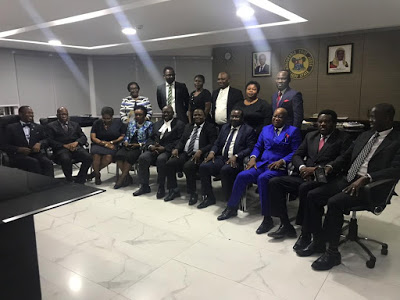
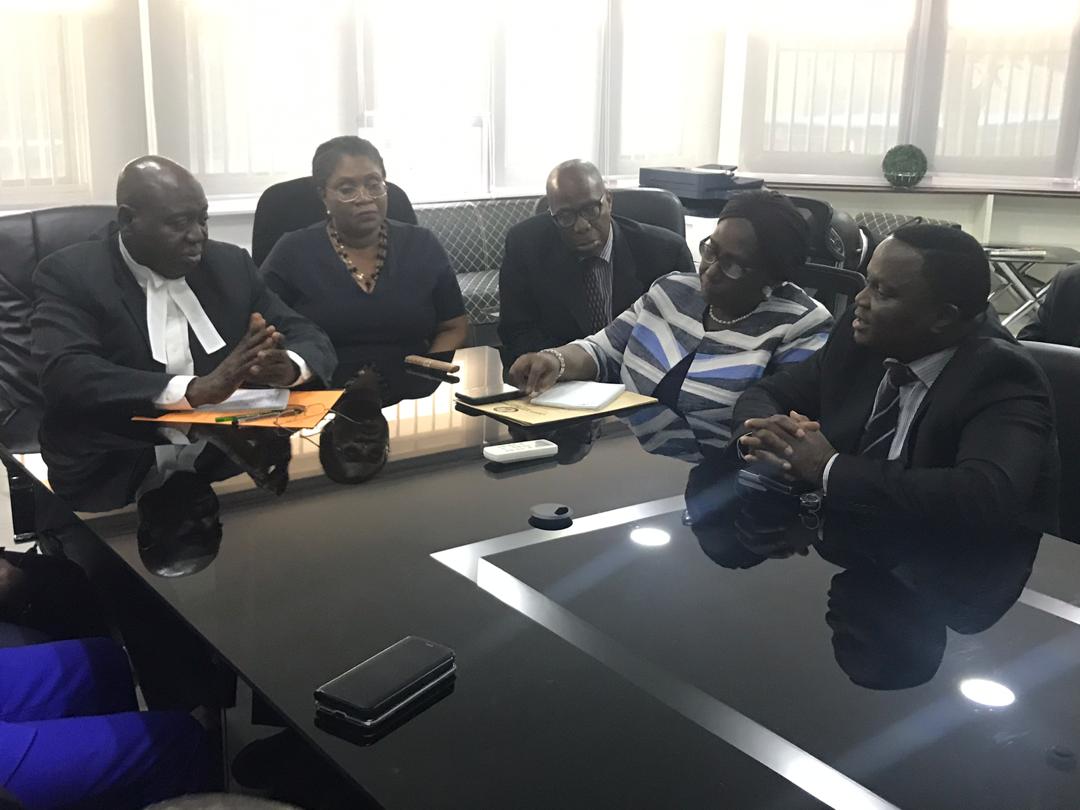
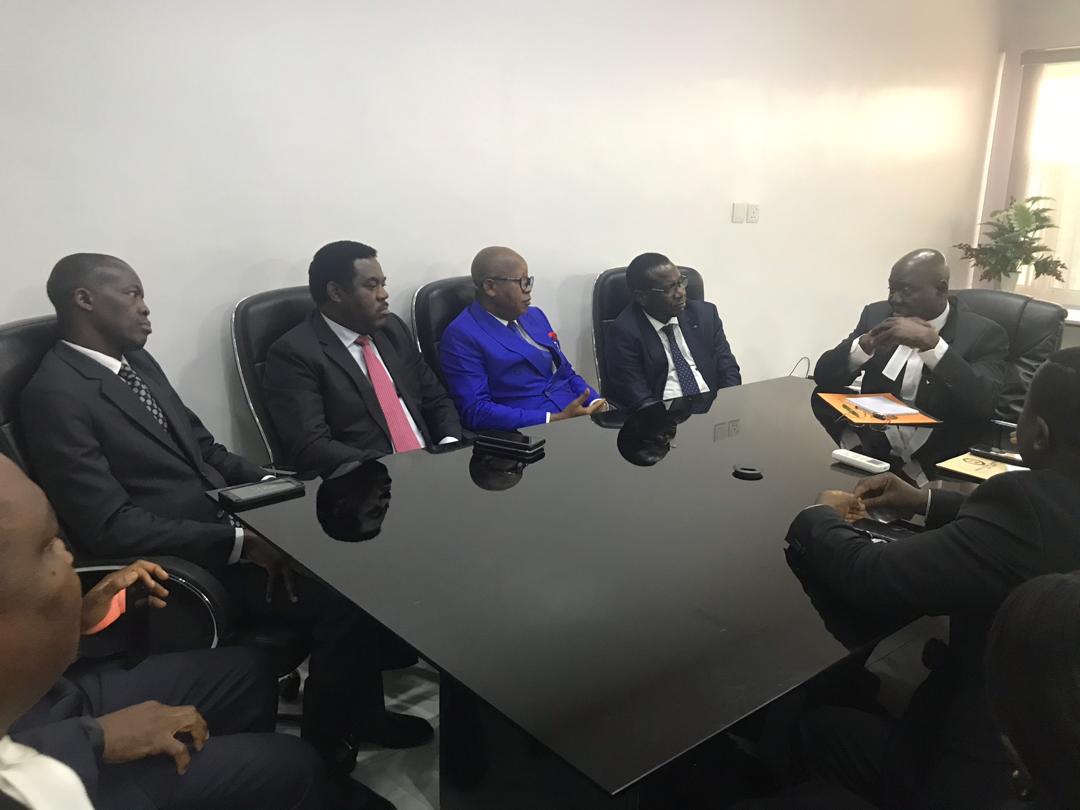
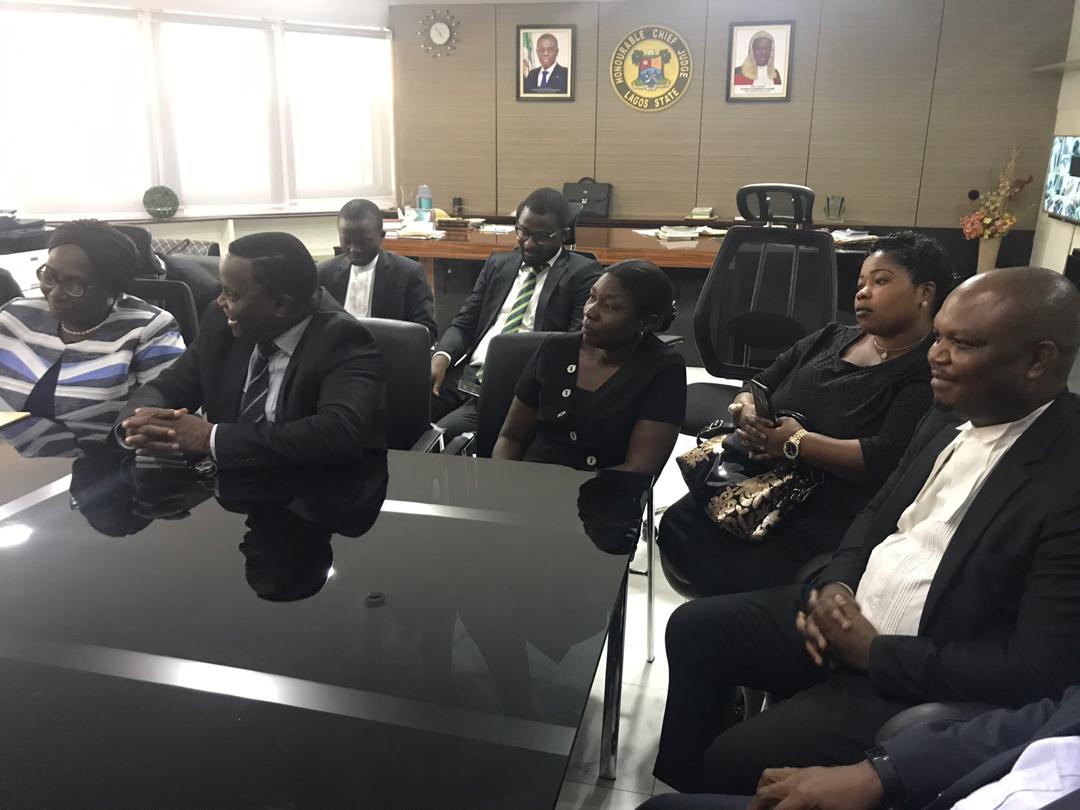
Photos From The NBA-SBL Employment, Labour and Industrial Relations Committee Annual Seminar

Photos From The NBA-SBL Employment, Labour and Industrial Relations Committee Annual Seminar

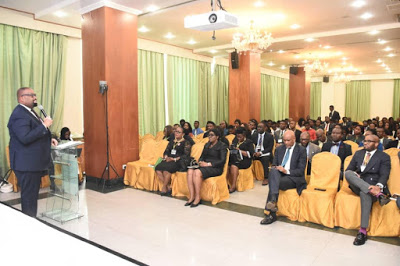
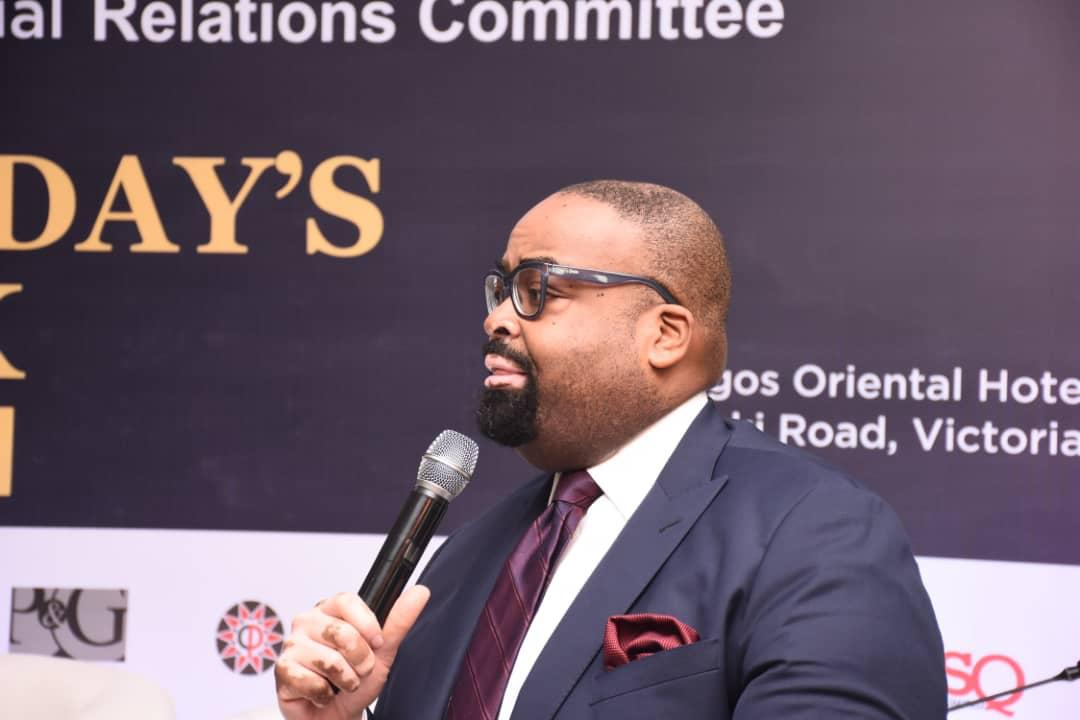
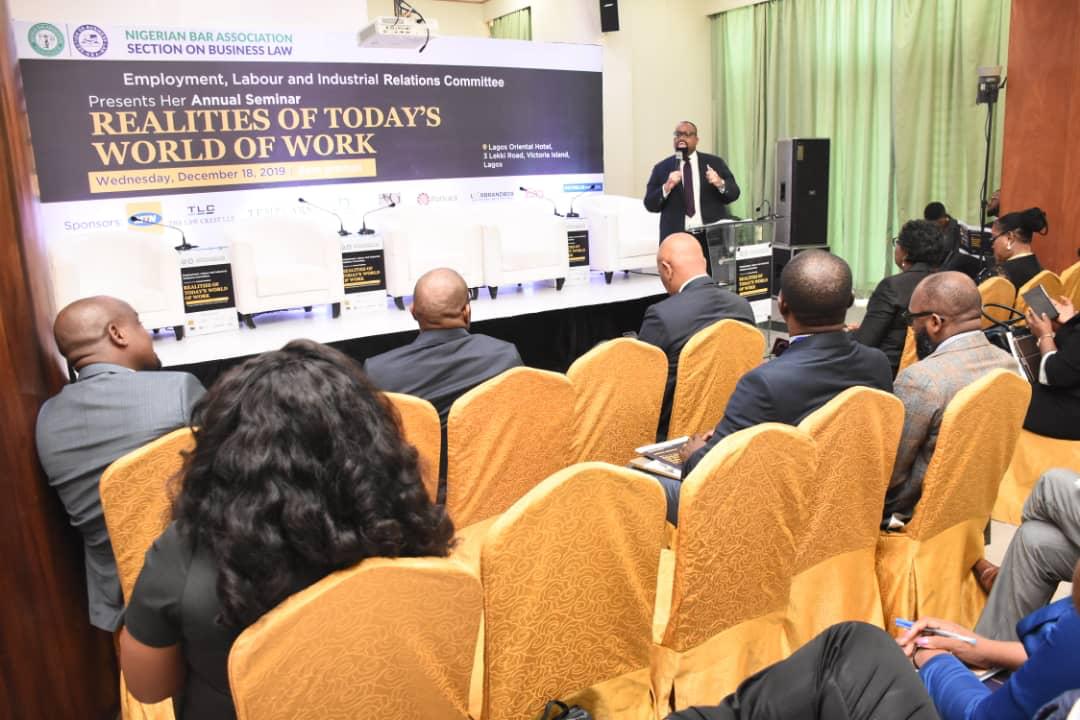
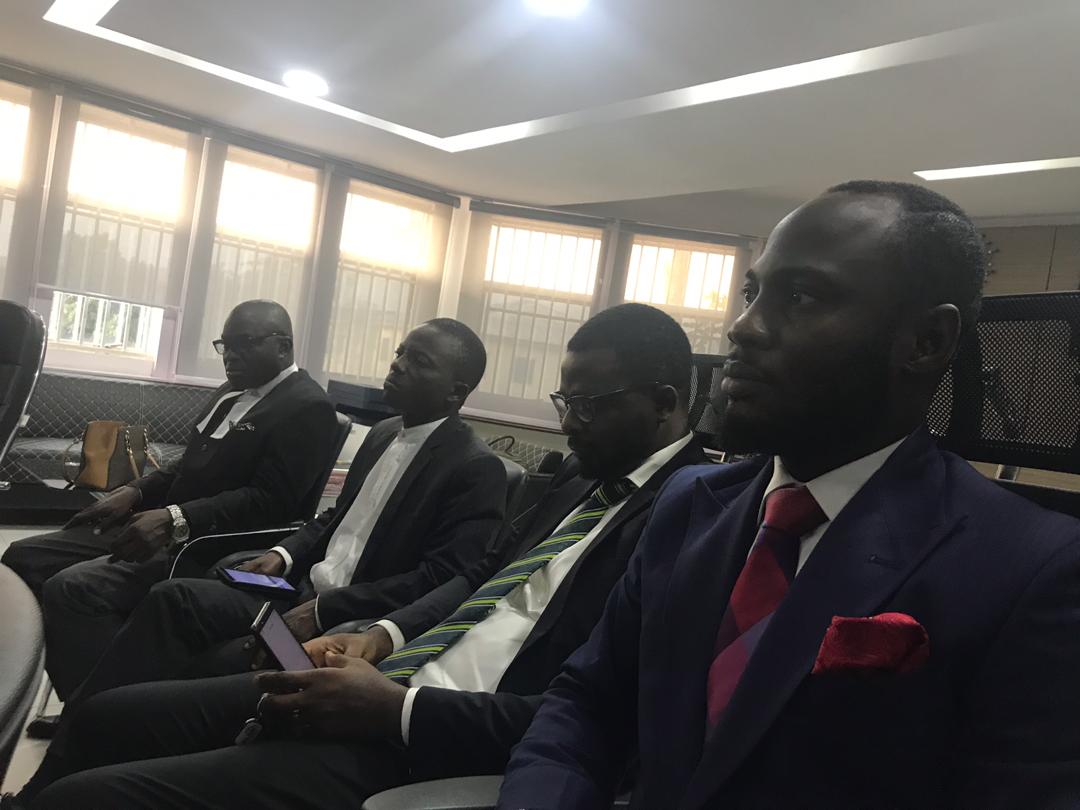
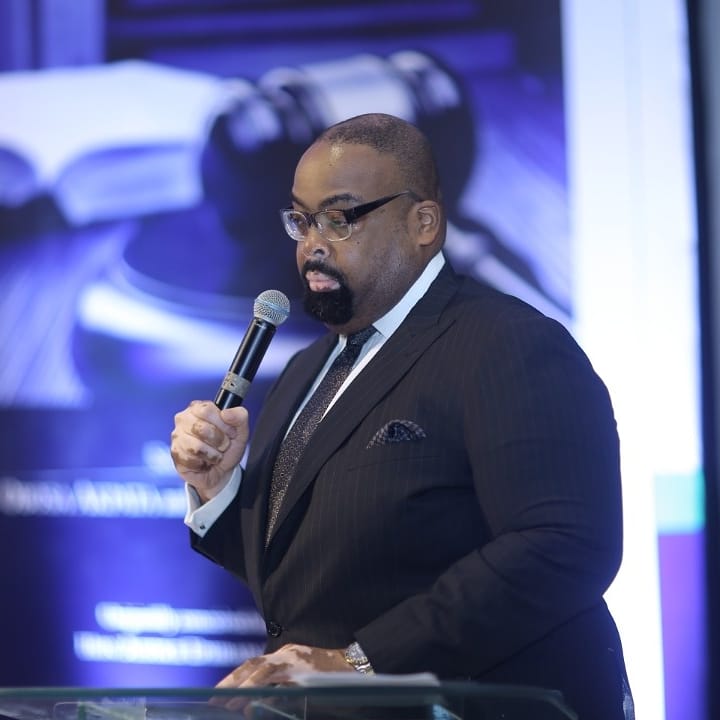
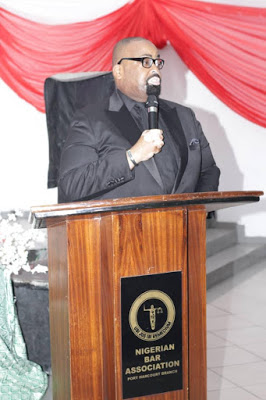
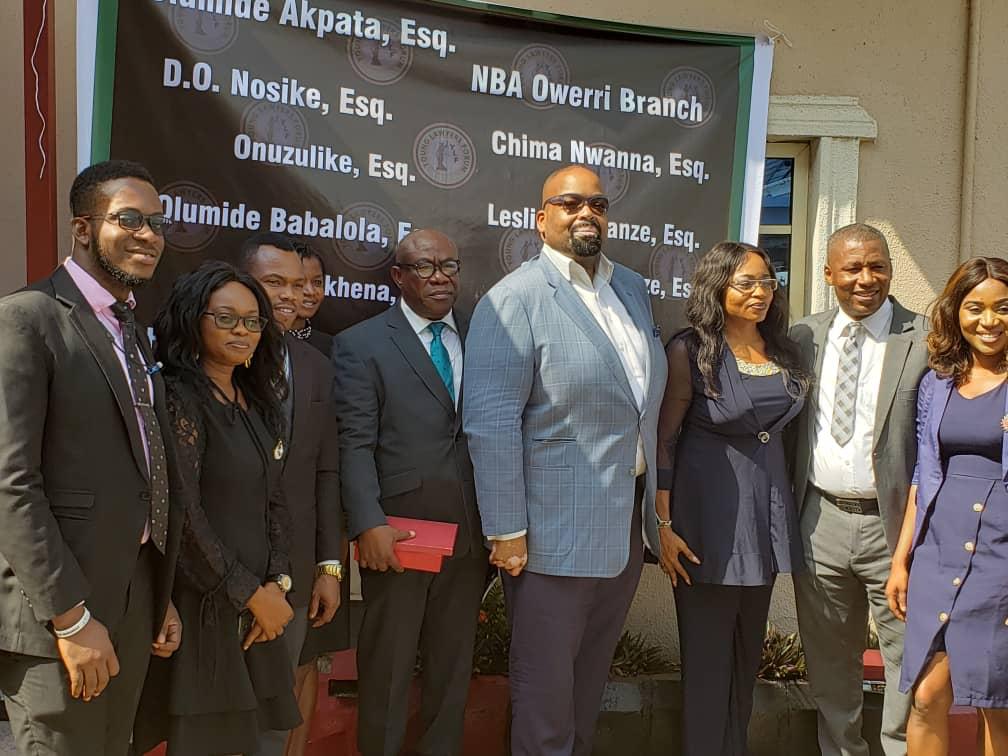
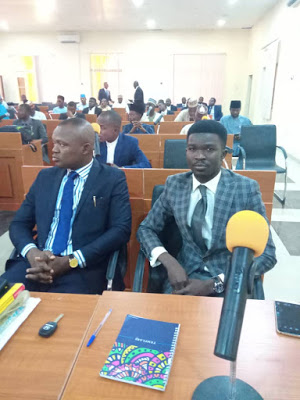
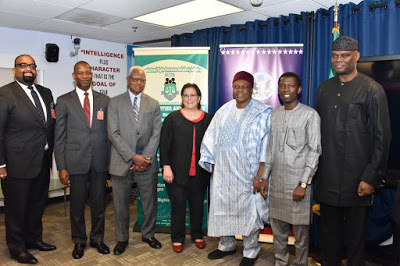
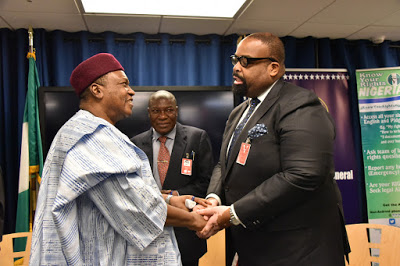
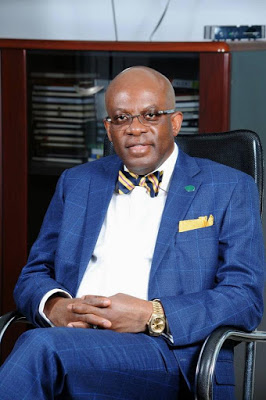
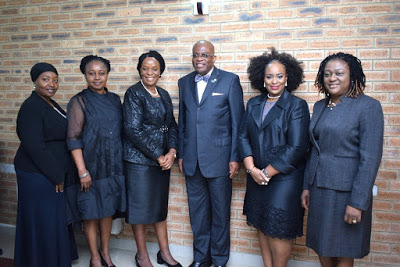
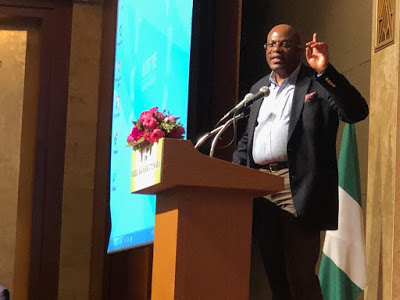
Templars’ Partner and immediate past Chairman of the NBA-SBL, Olumide Akpata speaking at the NBA-SBL Employment, Labour and Industrial Relations Committee annual seminar held today Wednesday, December 18, 2019 at the Oriental Hotel, Victoria Island, Lagos. 
The theme, “Realties of Today’s World of Work” is informed by the current realities and in the today’s world of work. 
The seminar interrogated these issues extensively with the help of a very rich faculty of experts comprising seasoned legal practitioners, in house lawyers, human resource management experts and Justices of the National Industrial Court. They shared insight on the theme and took on very hard questions from participants.
For this year’s seminar the committee also created a special Question and Answer session with judges of the National Industrial Court.
NBA Ikeja Meets Lagos Chief Judge

NBA Ikeja Meets Lagos Chief Judge

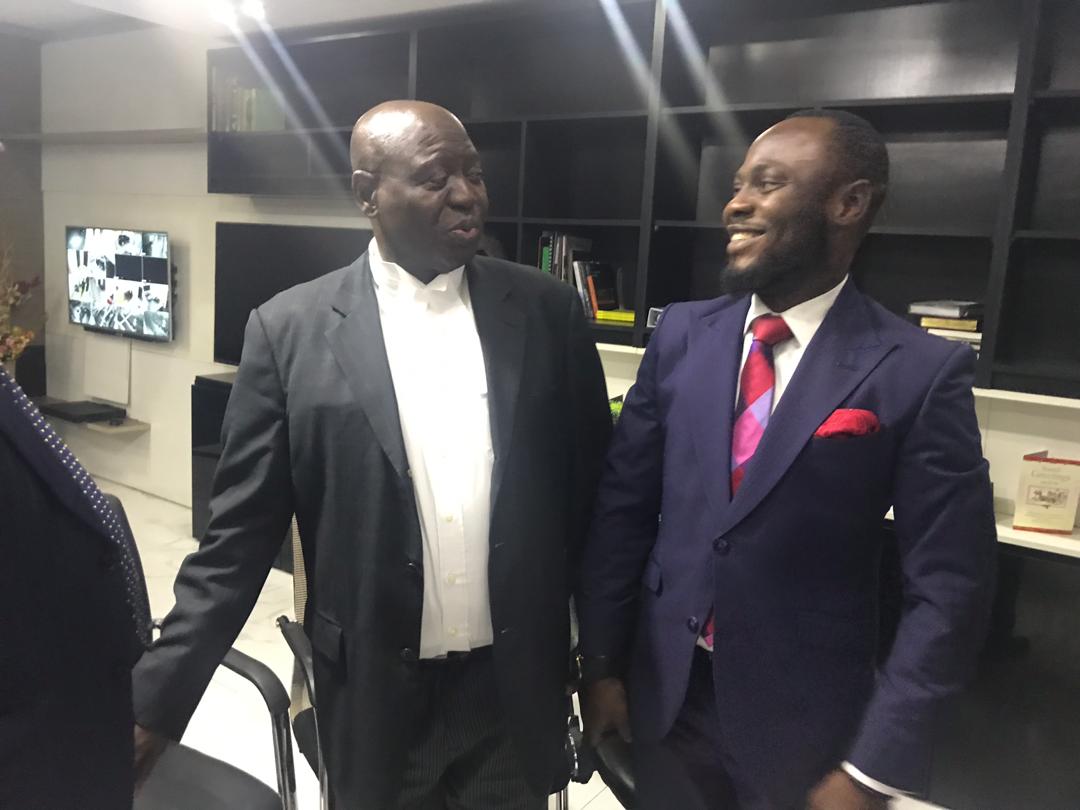
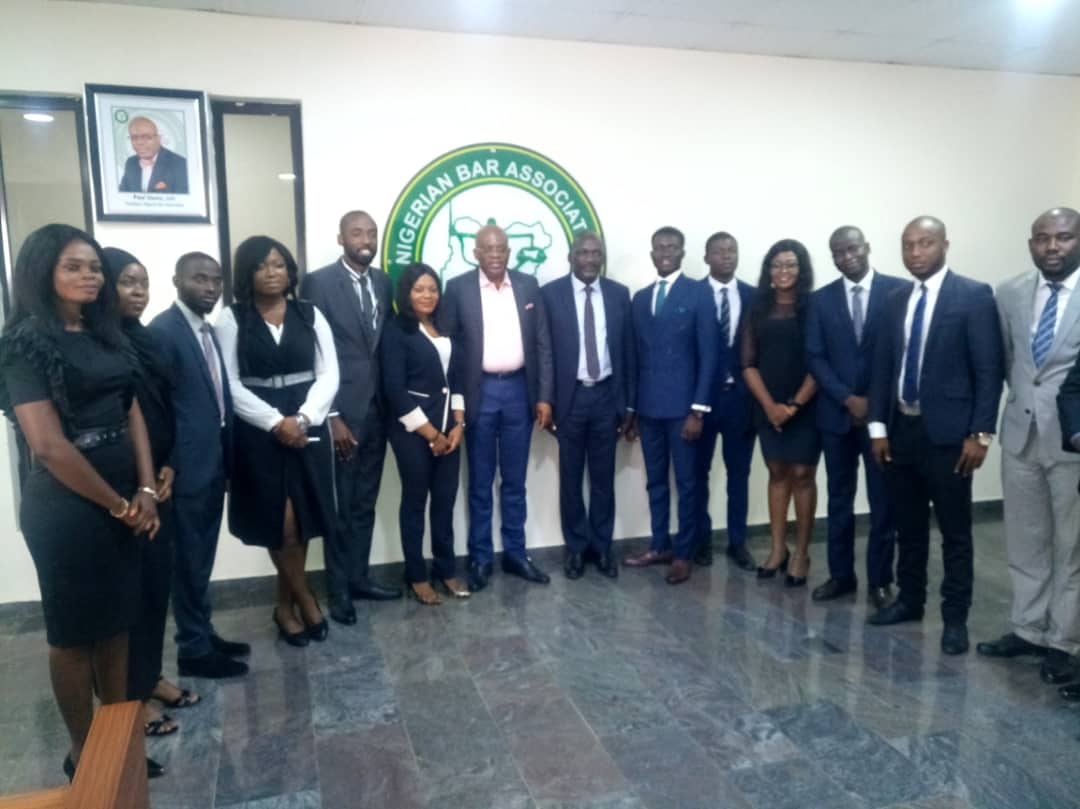
The executives of the Nigerian Bar Association met with the Chief Judge of Lagos state, Hon. Justice Kazeem Alogba today 16th December,2019.
You will recall that there has been a face off between the NBA Ikeja and the immediate past Chief Judge on the recently amended Rules of Court. This meeting marks a reunion of two key Stakeholders in the Justice administration of Lagos state.
In the NBA delegation was Chief Layi Babatunde,SAN; Roland Otaru,SAN; Dele Adesina,SAN; Olatunji Adejuyigbe,SAN; Kayode Enitan,SAN and Mr. Akeem Aponmade. 
The Chief Judge received the delegation in the company of the Chief Registrar; Hon. Justice Dabiri; Hon. Justice Femi Adeniyi.
The Chief Judge proposed a quarterly Bar and Bench forum to ensure that issues are dealt with speedily. He further promised to look into the Rules of Court and urged that input be sent for consideration. He assured the delegation that the issues of service of Court Processes is being seriously looked into.
The Hon. Chief Judge complained about the unwholesome antics of Counsel that frustrates  cases in court. He promised to work closely with the Bar to deliver the Justice system we all desire.
He urged the Senior members of the Bar to assist the bench in sanitizing the bar and not leave it to the Judges alone. He mentioned that where Counsel is recalcitrant, same can be brought the attention of the Court before sitting commences.
The CJ mentioned the creation of Resource Centre’s to assist Counsel to interface with the digitalization of the Judiciary. He mentioned the progress that has been recorded in the E-Probate section and advised lawyers to interact with the E-Probate as well as name and shame any staff who attempts to debase the system. The CJ intimated the delegation on the challenges of the Judges and the staff of the Judiciary. He also mentioned the laudable steps taken so far on E-filing in lagos state and the Archives section.
Judges Need To Be Courageous Like The Late Justice Akpata

Judges Need To Be Courageous Like The Late Justice Akpata

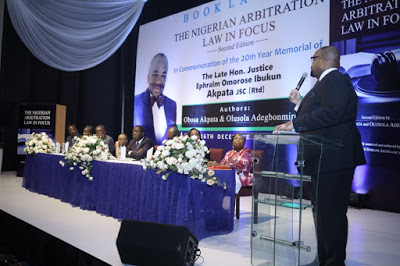
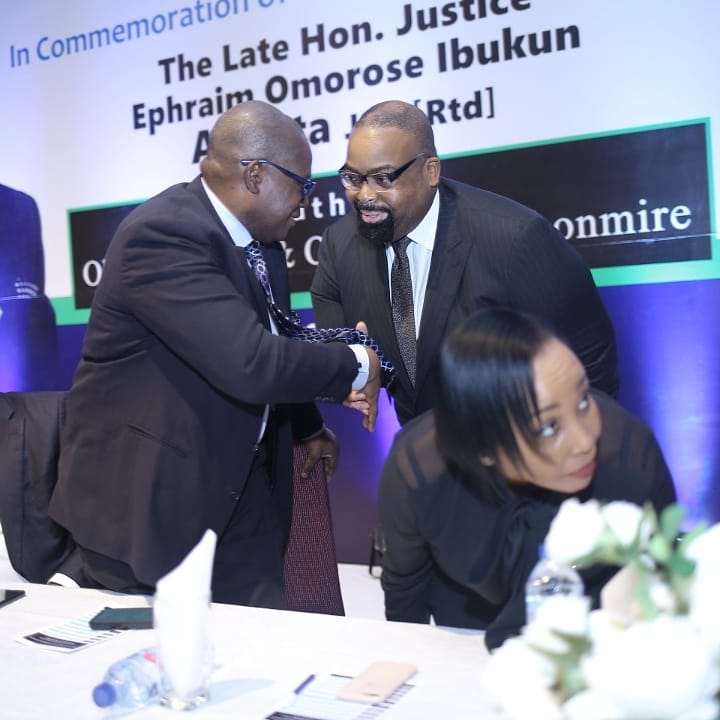
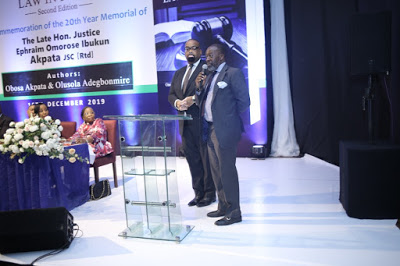
Senior Partner at Templars, Mr. Olumide Akpata has called on Judges to be courageous like the Late Justice of the Supreme Court, Ephraim Omorose Ibukun Akpata the 2nd Edition of whose book, The Nigerian Arbitration Law in Focus, was launched earlier on today at the Agip Recital Hall of the MUSON Centre.

Mr. Akpata, while conceding that it was incumbent upon Lawyers and the public to do their utmost to protect the Judiciary in the face of attack from any quarter, made the point that the Judges themselves must also be bold enough to resist any attempt to emasculate that arm of Government by anyone no matter how highly placed. 
Mr. Akpata reminded the audience that Justice Akpata was known for his courage while on the Bench and also as Chairman of INEC and he was not afraid to speak truth to power.
The 2nd Edition of the book, The Nigerian Arbitration Law in Focus was co-authored by Mrs. Obosa Akpata and Mrs. Olusola Adegbomire and was published by West African Book Publishers.
Olumide Akpata Gives Free Concert Ticlets To 100 Lawyers In Abuja

Olumide Akpata Gives Free Concert Ticlets To 100 Lawyers In Abuja

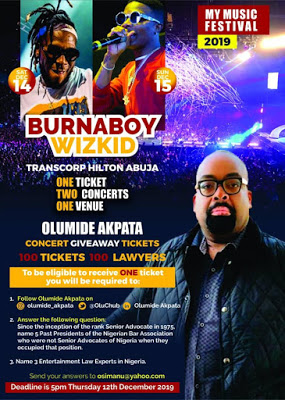
In recognition of the increasing importance of the entertainment industry to the Nigerian economy, Olumide Akpata will be giving away 100 free tickets to lawyers to attend the Burna Boy and WizKid Concerts at Transcorp Hilton Hotel, Abuja on Saturday 14th and Sunday 15th December 2019, respectively.

Mr. Akpata is of the view that  Entertainment Law has the potential of becoming one of the most lucrative areas of legal practice in Nigeria and in this regard young lawyers  must strategically position themselves and get fully acquainted with the sector which is worth over USD5 Billion with an estimated revenue of over USD10 billion by 2022.
During his time as Chairman of the Nigerian Bar Association Section on Business Law (NBA-SBL), Mr. Akpata also sponsored 100 young lawyers to watch ‘SARO THE MUSICAL’, a stage play produced by Bolanle Austen-Peters at Terra Kulture Victoria Island, Lagos.
Asides from the strategic career-focused rationale for this  gesture, Mr. Akpata believes that lawyers should also find time to unwind, de-stress and enjoy the festive season after a long and tough year.
To be eligible to win one of the  give-away tickets, respondents were asked to:
1. Follow Olumide Akpata on his social media handles (Twitter: @oluChub IG: @olumide_akpata LinkedIn: Olumide Akpata
2. Answer the following questions:
a. Since the inception of the Senior Advocate of Nigeria (SAN) rank, Name 5 (five) Past Presidents of the Nigerian Bar Association who were not Senior Advocates of Nigeria when they occupied that position?
b. Name 3 entertainment Law experts in Nigeria.
Olumide Akpata Devotes 13 December 2019 To Young Lawyers

Olumide Akpata Devotes 13 December 2019 To Young Lawyers

Templars’ Senior Partner and immediate past chairman of the Nigerian Bar Association – Section on Business Law (NBA-SBL), Mr. Olumide Akpata, is a leading voice among established lawyers who are committed to defining a clear and broader career path for young lawyers in Nigeria. 

Every year, thousands of lawyers are admitted to the Nigerian bar with little or no knowledge about the variety of career paths in the profession. At best, a majority of the practicing lawyers believe that litigation is the only pathway for lawyers, without having any meaningful clue regarding the diverse opportunities that lawyers could tap into. This misconception has exercebated unemployment and underemployment, as many lawyers are forced to pursue  career paths that are entirely unrelated to law in order to make ends meet. 
Mr. Akpata believes in changing this narrative by constantly engaging young lawyers and creating awareness on the endless opportunities in the legal profession. His message remains simple and direct: young lawyers must be given the required support and guidance to navigate through the wide spectrum of legal practice. In his words, “[y]oung lawyers must take capacity-building very seriously. This is why I have made it my primary responsibility to be a part of the process. I believe that lawyers must be ready for the dynamics of the legal profession. Disruptive technology is reshaping the legal profession; digital economy is on the rise and buzzwords like artificial intelligence, fintech, internet of things, blockchain and the rest are fast becoming familiar terms in the delivery of legal services. Therefore, lawyers must take commercial awareness very seriously in order to leverage on the opportunities in Nigeria’s emerging legal market.”
Mr. Akpata also believes in reorganising legal practice in Nigeria to make it more attractive and profitable. According to him, “the Nigerian bar is one of the largest in the world in terms of population. We have a very large economy and at a time where legal practice is becoming global with  increasing cross-border transactions, there is no reason why Nigerian lawyers (young lawyers especially) should fail to position ourselves strategically to have a share of the global legal market. In view of the Africa Continental Free Trade Agreement (ACfTA) which was recently signed, the NBA must articulate a clear position in terms of policy and regulations that will enable us leverage on ACfTA. Most young lawyers are not aware of these developments and I have decided to take it up as my responsibility to engage young lawyers in this regard.” 
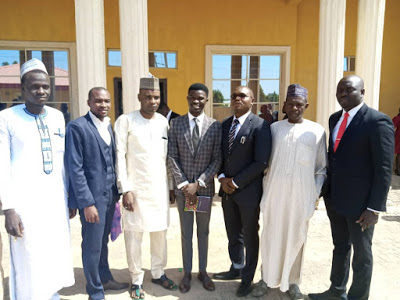
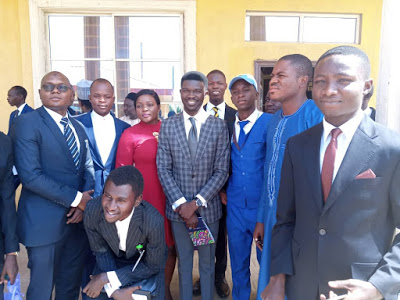
As part of that ongoing engagement with young lawyers, Mr. Akpata devoted yesterday, 13 December, to speaking to, and with, young lawyers across the country. He  gave a keynote speech at the NBA Young Lawyers Forum (YLF) Summit that held at Owerri, Imo State. He also spoke at other NBA-YLF events that held concurrently at Benin, Edo State and Gombe, Gombe State. Amongst other things,  these outings focused on preparing young lawyers for the future by identifying the challenges young lawyers face and providing the requisite guidance through capacity-building or mentorship. 
At the Benin event, Mr Akpata was represented by another Templars’ Parther, Mr. Godwin Omoaka, S.A.N., whilst Mr. Melah Yussuf represented him at the Gombe event. 
Both Mr Omoaka, S.A.N. and Mr Melah Yussuf spoke on the very interesting future ahead for young lawyers if they explore the vast opportunities in the legal profession which go way beyond the traditional litigation. 
Their messages on Mr Akpata’s behalf resonate with the aspirations of every young lawyer in Nigeria. And some of the attendees at these NBA-YLF events used this medium to call on the NBA and other senior lawyers with the requisite experience to complement Mr Akpata’s drive.
According to Mr. Elehibiri Oweiware, a member of the NBA-YLF, the NBA must drive a new process that will restructure the legal profession by making it more attractive and profitable. 
In their respective reactions, the leadership of the YLF at Benin, Owerri and Gombe thanked Mr. Akpata for devoting the whole day to the YLF cause and commended him for being exemplary during his tenure as chairman of the NBA-SBL.
Olumide Akpata Calls For Capacity Building At Young Lawyers Forum (YLF) Summit

Olumide Akpata Calls For Capacity Building At Young Lawyers Forum (YLF) Summit

Earlier today, a Senior Partner at Templars, Mr Olumide Akpata, moderated a discussion session at the Young Lawyers Forum (YLF) Summit that held in Owerri, Imo State. 

The YLF is a wing of the Nigerian Bar Association (NBA) set up to articulate and actualize the aspirations of young lawyers (0 – 7 years post call to the Nigerian bar) within the NBA. The YLF also serves as a bridge between young lawyers and the rest of the NBA.  
This year’s YLF Summit attracted several stakeholders from within and outside the State. 
Mr. Akpata, who moderated the penal discussion on “Pathways to a Successful Legal Career: Opportunities for Young Lawyers,”  weighed in on the importance of capacity-building among young lawyers. 
In his words: ‘Young lawyers must take capacity-building very seriously. This is why I have made it my primary responsibility to be a part of the process. I believe that lawyers must be ready for the dynamics of the legal profession. Disruptive technology is reshaping the legal profession; digital economy is on the rise and buzzwords like artificial intelligence, fintech, internet of things, blockchain and the rest are fast becoming familiar terms in the delivery of legal services. Therefore, lawyers must take commercial awareness very seriously in order to leverage on the emerging legal market’. 
After the fruitful panel discussions, the leadership of the YLF thanked Mr. Akpata for his accessibility and continuous efforts towards building capacity within the NBA.
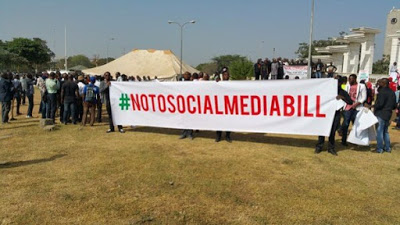
The Social Media Bill: The Government’s Attempt At Monopolizing Truth | Michael Orekoya

The Social Media Bill: The Government’s Attempt At Monopolizing Truth | Michael Orekoya


 INTRODUCTION

According to a recent BBC
report, false information and incendiary images on Facebook have contributed to
more than a dozen killings in Plateau state.[1] In 2018 there was a false
alarm, on Facebook, of an impending massacre of the Christian Berom people of
Plateau state by Fulani Muslims.  Grim
images of murdered children and corpses buried in mass graves were circulated
online.

 It then goes without saying that there is an
urgent need to combat the menace of falsehood online. It must be noted that the
raging menace of falsehood online is not peculiar to Nigeria as various
jurisdictions around the globe have taken deliberate legislative and
non-legislative steps in addressing it.[2] In 2016 the Nigerian
legislature proposed the “Frivolous Petitions (Prohibition) Bill” also called the
Anti-Social Media Bill by those who criticized it. Section 3(4) of the bill
sought to regulate social media by criminalizing “abusive statements” online
known to be false by the author. This bill was however vehemently rejected by
majority of Nigerians and was subsequently withdrawn by the Senate following
the recommendations of the Committee on Judiciary, Human Rights and Legal Matters
which stated inter alia that the passage of “the bill will do more harm than
good”.

 Recently Senator Muhammed Sani Musa of the
Niger State East Senatorial District sponsored the “Protection from Internet
Falsehoods and Manipulations and Other Related Matters Bill 2019”. On the 20th
of November the bill reached second reading in the Senate. Like the frivolous
Petition Bill, this bill has stirred up controversy and questions regarding its
validity have been asked in several quarters. This article intends to discuss
the constitutional validity of the bill, examine specific provisions in the
bill and their implications, and proffer recommendations upon engaging in a
comparative study.

THE
RIGHT TO FREEDOM OF EXPRESION

Section 39(1) of the 1999
constitution states that; every person shall be entitled to freedom of
expression, including freedom to hold opinions and to receive and impart ideas
and information without interference. Subsection (2) provides that every person
shall be entitled to own, establish and operate any medium (including social
media) for the dissemination of information, ideas, and opinions. Freedom of
expression is, however, not an absolute right as they carry duties and
responsibilities, meaning government can restrict it. Article 19(3) of the
ICCPR provides that every lawful restriction on the freedom of expression must
comply with the following:

1.     
The restriction must be provided by law

2.     
The restriction may be based on :

i.                   
Public order, morality or health

ii.                 
Respect for  the right and reputation of others

3.     
The restriction must be proportionate and
necessary. 

Section 45(1) of the 1999
constitution contains similar provisions. According to the Oakes test[3]
developed by the Supreme Court of Canada, proportionality involves comparing
the importance of the right and the likely effect of the restriction on the
exercise of that right with the importance of the goal or the legitimate aim
which is sought to be protected. Also the Supreme Court of India in Ranagarajan
v. P.J Ram[4]

held that there must be a very close link between an expression and a threat of
a disturbance for a law restricting such expression to be deemed necessary.

 Hence for restriction on freedom of expression
on the basis of public order or safety to be considered necessary:

i.                   
There must be a pressing need as minor
threats to protected interests do not pass the threshold test for restricting
freedom of expression.

ii.                 
The government should adopt measures that are
least intrusive and are most conducive to freedom of expression.

iii.               
Legitimate expressions should not be hampered
by the restriction as harmful expressions should be the focus.

iv.               
The limitation should be proportionate. This
means a limitation should not cause more harm than good.

In R v Zundel[5]
the defendant was convicted for spreading false news contrary to
Section 181 of the Canadian Criminal Code which stated: “Everyone who willfully publishes
a statement, tale or news that he knows is false and that causes or is likely
to cause injury or mischief to a public interest is guilty of an indictable
offence…
” Upon appeal, the Canadian Supreme Court held that Section 181
of the Criminal Code violated Section 2(b) of the Canadian Charter of Rights
which guaranteed freedom of expression as even lies and false statements are
protected forms of expression. In this case, the Canadian court examined the
legislative objective of the Code and determined that there was no pressing and
substantial objective attached to it. It was further held that Section 181 suffered
from vagueness and was overly broad hence it could affect a broad range of
expression and speech.

SPECIFIC PROVISONS OF THE
BILL

Clause 3 of the bill
states that a person who does any act within or outside Nigeria in order to
transmit in Nigeria a statement knowing or having reason to believe it is false
and the transmission in Nigeria is likely to, among other things, be
prejudicial to public health, public safety, public tranquility or public
finances and diminish public confidence in the performance of any duty or
function of, or in the exercise of any power of the government is liable upon
conviction, in the case of an individual, to a fine not exceeding N300,00 or to
imprisonment to a term not exceeding 3years or both, while in any other case, to
a fine not exceeding 10 million.

 Going by this provision it is pertinent to
note that there’s a great risk that the law will be misused to clamp down on
opinions or information that are critical of the government as the General Interpretation
Section of the Bill states that “a declaration is false if it is false or
misleading, whether wholly or in part, and whether on its own or in the context
in which it appears”.
A lack of clear definition of what the bill
regards as falsehood would not serve the ends of justice as the bill, if signed
into law, will end up targeting a wide range of expressions. Just like Section
181 of the Canadian Criminal Code, this provision suffers from vagueness and is
overly broad.

It must be noted at this
point that the bill bears direct semblance with Singapore’s Protection from
Online Falsehoods and Manipulation Act.[6]  Singapore is a ‘democratic’ country but it is
ranked 151 out of 170 countries in the World Press Freedom Index, hence Singapore
is a bad model when it comes to laws regulating falsehood online.[7] Among other things, the
stated objective of the Bill is to prevent the transmission of false statements
on the internet and to enable measures to be taken to counter the effect of such
transmission.

The bill also grants the
Law Enforcement Department (The Police) the power to direct the Nigerian Communications
Commission (NCC) to order the internet access service provider to take
reasonable steps to disable access by end users to a declared online location.
Contrary to popular opinion, the Access Blocking Order does not grant the
government the power to shut down the internet, it could however be used to
prevent Nigerians from accessing online platforms that check the excesses of
the government in the name of ‘falsehood’. Clause 18 of the bill also provides
for a Disabling Regulation which can be issued to an internet intermediary like
Facebook or Google to disable access by end-users in Nigeria to a particular
publication that is deemed ‘false’. 

Clause 7 and 8 of the
Bill respectively make provision for ‘Correction’ and ‘Stop Transmission’
Regulations. Under this regulation, the government can order a person to make a
declaration, in such terms as may be specified by the government, that a
transmitted material contains a false declaration of facts. In Singapore, where
a similar law applies, a Facebook post by an opposition politician that
questioned the governance of the state’s sovereign wealth funds and accused the
government of mismanagement were considered by the Singapore government as
“false”.[8] The Singapore officials
ordered the accused to publish the government’s refutation at the top of their
posts. The original post was then published with the word “FALSE” boldly
stamped across its pages. In another development, Facebook announced that it
had applied a label to a post “determined by the Singapore government to
contain false information”, as required under the “fake news” law. This post by
an Australian based blog which claimed the police had arrested a
“whistleblower” who “exposed” a political candidate’s religious affiliations
was issued a corrective label by Facebook.[9]

 Regarding appeals to the High Court, in Clause
13 (2), the bill stated that no appeal may be made to the high court by any
person unless the person has first applied to the Law Enforcement Department
(The Police) to vary or cancel the sanctions imposed. It has been argued that
Clause 13(2) is necessary to prevent falsehood from spreading quickly. It must
however be stated that this provision makes the Police the judge and the jury
in its own matter. Furthermore, the red tape in the Nigerian Police might
discourage individuals from appealing against a sanction hence defeating the
ends of Justice.

The provisions of Clause
34 gives the government power to make regulations “necessary” or “convenient”
in carrying out or giving effect to the act. 
This blank cheque given to the government, particularly the police force
in enforcing the provisions of the act is a source of worry to many, including
the author, as it could serve as a leverage for violating the right to freedom
of expression by a police force that is notorious for its ruthlessness in
dealing with dissidents.

COMPARATIVE ANALYSIS:

CANADA: Canada currently
does not have any specific law prohibiting the dissemination of falsehood
online unless that information is defamatory and is covered by libel laws or
within the sphere of broadcasting regulations.[10] Section 181 of the
Canadian Criminal Code which prohibits the spreading of false news was declared
unconstitutional by the Supreme Court of Canada. However the hate propaganda
provisions in Section 318 and 319 of the Criminal Code can be used to deal with
false news which promotes hatred. 

FRANCE: France has no
specific regulation prohibiting the dissemination of fake news; it however has
legislations against fake news in general. The 1881 Law on Freedom of the Press
can be used by the government to stop the spread of fake news that could
disrupt public peace. However France recently adopted a new law that requires
large-scale online platform operators to adhere to certain standards during the
three months preceding general elections.[11] The new law, among other
things, provides that a judge may order any proportional and necessary measure
to stop the dissemination of fake or misleading information online.

Kenya: In 2018 Kenya
enacted the Computer Misuse and Cyber Crimes Act. This act criminalizes “false
publications” and the “publication of false information”. However major
provisions of the Act were suspended by the Constitutional and Human Rights Division
of the Kenyan High Court.[12] The provisions remain
suspended to date.  

The United Kingdom: The
UK does not currently have any specific regulation on false news online.
However several reports have been issued, recommending tech companies to remove
content identified as harmful or they will be penalized. The UK has adopted a
pre-emptive response strategy targeted at predictable events such as elections.
There is a rapid response unit that is comprised of specialists including
analyst-editors, data scientists, media and digital experts. The rapid response
monitors news and information been shared online, assesses the scale of
engagement to determine whether it is appropriate to respond to the content and
creates appropriate content with the aim of balancing the narrative. The rapid
response targets the content such that the “correct content” is visible to the public.

RECOMMENDATIONS:

From the comparative
study it can be deduced that in the “free world” laws specifically regulating
news on social media are considered unconstitutional and a violation of the
right to freedom of expression. Also the difficulty in defining “false or fake
news” raises the risk of an overbroad government legislation that might
eventually clamp down on opposition or any form of criticism as it is with
Singapore. Unfortunately there is no hard and fast or permanent fix to the
menace of falsehood on the internet; nonetheless there is is a need to address this
menace:

Internet
users should be better educated so that they can easily distinguish credible
sources from sources notorious for peddling news that are false. Internet users
should be better enlightened on the actors and stakeholders and their
affiliations in a given story. Critical news consumption skills that would help
to identify and question unverified details should be incorporated into school
curriculum or promoted through government sponsored programs. For example in
2018 the United States Embassy in Kenya started a media literacy campaign known
as “YALI Checks: Stops.Reflects.Verify” to counter the spread of false
information online in Kenya.[13] This campaign provides a
mix of online activities, including an email series, an online quiz, blog posts,
online chats, public outreach, educational videos, and an online pledge. This
solution is long term and it requires the government’s commitment to yield
results.

Counties
like Japan, Canada, Sweden and the United Kingdom have refused to enact
legislations that expressly address or regulate news on social media; rather
they apply relevant provisions of existing laws regulating the media. These
laws could however be amended to reflect current technological and
telecommunications development. Despite being unconstitutional, the Cyber
Crimes (Prohibition, Prevention etc.) Act 2015 already addresses falsehood
online. Section 24 of the Act provides that; anyone who sends a message or other matter by means of computer knowing
it to be false, for the purpose of causing annoyance, inconvenience, danger,
obstruction, insult, injury, criminal intimidation, enmity, hatred, ill will or
needless anxiety to another commits an offence.
Section 2 of the act
further states that; any person, who intentionally transmits any
communication through a computer system or network to bully, threaten or harass
another person, where such communication places another person in fear of
death, violence or bodily harm to another person commits an offence
.
Also Section 373, 375 and 376 of Nigeria’s Criminal Code as well as the
Defamatory and Offensive Publications Act all criminalize defamation. Section
59(1) and (2) of the Criminal code are also used to try false publication
offences.

The
NCC recently created a technical framework for the use of social media Network
in Nigeria.[14]
This framework attempts to provide a baseline for social media governance,
policy and guidelines to help the individual, businesses or the government.
However, in addition to this, the NCC should create an accreditation system and
a fact-checking portal for content creators and distributors. This accreditation
system will inculcate and promote existing news gathering and reporting norms
and best practices for online platforms. Independent accreditation institutions
could be created as long as they do not undermine the right to the freedom of
expression. The accreditation system should be designed and closely monitored in
such a way that it will not be manipulated by the government in silencing
online news platforms or promoting government-approved news.

CONCLUSION:

It is common sight to see
countries rated low in the freedom of speech indices to enact legislations with
broad definitions in an attempt to further restrict free speech and stifle
opposition. In Canada and Kenya such laws have been deemed unconstitutional and
have been suspended. The Protection from Internet falsehood and manipulation
Bill 2019 which shares a direct similitude with Singapore’s oppressive
Protection from Online Falsehoods and Manipulation Act has no place in
Nigeria’s democracy as it specifically grants the government monopoly over the
truth.


[1] BBC
News, Fake news and Nigeria’s herder crisis, 29 June 2018,

 https://www.google.com/amp/s//www.bbc.com/news/amp/world-africa-44655148/

[2]
BBVA, Fake news: the figures and solutions of a global phenomenon, 16 May 2018 https://www.bbva.com/en/fake-news-the-figures-and-solutions-of-global-phenomenon/

[3] R
v Oakes, (1986) 1 SCR 103

[4]
1989 SCR (2) 204

[5]
(1992) 2 S.C.R. 731

[6][6]
The Cable, Fact Check: Is Nigeria’s ‘social media bill’ truly a replica of
Singapore’s act? https://www.google.com/amp/s/www.thecable.ng/fact-check-is-nigerias-social-media-bill-truely-a-replica-of-singapores-act/amp

[7]
Reporters Without Boarders, 2019 World Press Freedom Index

[8] Theguardian.com,
Singapore invokes ‘fake news’ law for the first time over Facebook post https://www.google.com/amp.theguardian.com/world/2019/nov/25/singapore-fake-news-law-facebook-brad-bowyer

[9]
Reuters, Facebook Issues Label on user’s post under new Singapore fake news law
https://www.google.com/amp/s/mobile.reuters.com/article/amp/iduskbn1y4043

[10]
CBC, MPs Look For Ways to Fight ‘Fake News’ in Wake of Mosque Shooting, Kathleen
Harris, Feb. 2, 2017, https://www.cbc.ca/news/politics/canada-fake-news-google-facbook-twitter-1.3961992

[11]
Organic Law No. 2018-1201 of 22 December 2018 Regarding the Fight Against
Information Manipulation

[12]
Bloggers Association of Kenya (Bake) v Attorney General & 5
others(2018)eKLR at 1,

[13]
U.S. Embassy in Kenya, Ambassador Godec and U.S Embassy Counter Fake News with
Media Literacy Campaign, March, https://ke.usembassy.gov/ambassador-godec-u-s-embassy-counter-fake-news-media-literacy-campaign/

[14]
NCC, Technical Framework for the Use of Social Media Network in Nigeria version
1.0, June, 2019

https://www.ncc.gov.ng/documents/871-igov-technical-framework-social-media/file

Competition Law in Nigeria | Ayotunde Abiodun

Competition Law in Nigeria | Ayotunde Abiodun

Over years, the business practices of Market
traders, guilds and Governments have always been subject to scrutiny, and
sometimes severe sanctions. The history of Competition Law reaches back to the
Roman Empire. Competition Law is a legal framework put in place to promote or
maintain Market Competition by regulating anti-competitive conduct by
Companies.
[1]  Competition Law is implemented through public
and private enforcement.

The major aim of Competition Law is to ensure
a deep supply market for Consumer goods and services, not just to ensure that
there are many Suppliers in the market for particular goods and services, but
to ensure that such Suppliers play according to a set of rules that would make
it difficult for any of them, individually or as a group, to lessen or
eliminate Competition in the Market.
[2]  According to Leonard Ugbajah,”In a free market economy (in a
market where there is competition), the consumer is King”. The underlying
factor for Competition Law is Consumer Protection. Competition Law is also  known as “anti-trust law” or “anti-monopoly
law” in other Jurisdictions.

Substance and Practice of Competition Law
varies from Jurisdiction to Jurisdiction. The important objectives of Competition
Law are to protect the interests of consumers and ensure that Entrepreneurs
have an opportunity to compete in the Market economy. Competition Law has been
viewed as a way to provide better public services.

Nigeria was yet to have a codified set of
rules promoting Competition in the Marketplace before 2019. On the 5th
of February 2019, the Federal Competition and Consumer Protection Act (FCCPA)
2019, was signed into law. This can be regarded as the first comprehensive
Competition law in Nigeria.
[3] 
Prior
to the enactment of this Act, there was no single legislation regulating
competition in Nigeria. This Act supersedes all other laws regulating
Competition in Nigeria such as the Investment and Securities Act 2007, the
Nigerian Communications Act 2003, the Electric Reform Act 2005, except the 1999
constitution of the Federal Republic of Nigeria.
[4] These Acts were
Sector-specific. The FCCPA introduced a consolidated legal-regime for
Competition in Nigeria. The Provisions of the FCCPA have an overriding effect on
other regulations dealing with Competition and Consumer Protection matters in
Nigeria.
[5]
The FCCPA establishes the Federal Competition
and Consumer Protection Commission and the Competition and Consumer Protection
Tribunal for the promotion of competition in the Nigerian markets at all levels
by eliminating monopolies, prohibiting abuse of a dominant market position and
penalizing other restrictive trade and business practices.
[6] The activities of
the Consumer Protection Commission have been taken over by the Federal
Competition and Consumer Protection Commission, established by the FCCPA.

The key objectives of the FCCPA include,
promoting and maintaining a Competitive market in Nigeria, promoting economic
efficiency, protecting consumer interests and welfare, prohibiting restrictive
and unfair business practices and ensuring that the development of the Nigerian
economy.
[7] This would bring
about more taxable businesses, more spending by the consumers, variety of goods
and services, business striving for more quality in their manufacturing and
packaging etc. These are beneficial to the Nigerian Economy. 

The key reforms of the FCCPA are laudable.
Firstly, it establishes the Federal Competition and Consumer Protection
(Commission) and the Competition and Consumer Protection Tribunal for the
promotion of competition in the Nigerian markets at all levels by eliminating
monopolies, prohibiting abuse of a dominant market position and penalizing
other restrictive trade and business practices. The activities of the consumer
Protection Commission have been taken over by the Federal Competition and
Consumer Protection Commission, established by the FCCPA.

The Commission carries out functions like the
issuance of rules and regulations to govern competition and consumer protection
matters and the elimination of all anti-competitive agreements.
[8] The Commission also
resolves disputes, address complaints, issue directives and apply sanctions
when necessary.
[9]
The FCCPA also grants the Commission
concurrent jurisdiction to regulate matters relating to competition and
consumer protection with other sector-specific regulatory bodies. The
Commission is also empowered to determine appeals or requests to review the
exercise of power by sector regulators on matters affecting competition.
[10] This implies that
the Commission may overturn a decision made by any sector-specific regulator.

Another remarkable provision of the FCCPA is
the establishment of a Competition and Consumer Protection Tribunal to conduct
trials over activities, which are prohibited by the Act. Sections 39(2) and
Section 47(1) of the FCCPA provides that the Tribunal can also hear appeals on
decisions made by the Commission or Sector-specific regulatory authorities and
impose penalties for prohibited acts. The Tribunal can also review decisions
made by any sector-specific regulatory authority on issues arising from
competition and consumer protection. The Tribunal can only exercise this power
where such appeals or reviews have been heard by the Commission.
[11] The Act also provides
that the decisions of the Tribunal must be registered at the Federal High Court
prior to its enforcement.
[12]

The Federal Competition and Consumer
Protection Act has also created a new regime for Mergers. Sections 118 to 128
of the Investment and Securities Act (ISA), which deal with mergers and
acquisition, have been repealed by the Act. The Commission has been empowered
to prohibit and approve mergers. That is, the Securities and Exchange
Commission no longer regulates mergers and acquisitions in Nigeria. The FCCPA
has a key difference as it provides for the inclusion of a Joint venture as a
means by which a merger can occur in (section 92(1) (b) (iii) of the FCCPA.
Intermediate mergers are not contemplated under the FCCPA as it prescribes only
two categories of mergers- small and large mergers.
[13] Approval of small
mergers will be granted within 20 business days of filing the merger
notification
[14]; whilst the approval
of large mergers will be granted within 60 days following the satisfaction of
the merger notification requirements.
[15]

The Act is binding upon a Body Corporate or
an agency of Government of the Federation or agency of the Subdivision of the
Federation and all commercial activities aimed at making profit and geared
towards the satisfaction of demand from the public. The Act also regulates
Conduct outside Nigeria by a citizen of Nigeria or a person ordinarily resident
in Nigeria; a body Corporate incorporated in Nigeria or carrying out business
within Nigeria; any person in relation to the supply or acquisition of goods
and services by that person in relation to the acquisition of shares or other
assets outside Nigeria resulting in the change of control of a business, part
of a business or any assets of a business, in Nigeria.

The effective implementation of this Act will
bring about the advancement of the Nigerian economy by creating an enabling
business competition for healthy competition in the various sectors and
industries across the Nigerian Market.


[1] (Tyler, Martin. 2006)

[2] www.wikipedia.com

[3] ACAS-LAW; Federal Competition and Consumer Protection Act 2019

[4] O.
Isiadinso & E. Omoju, “The Federal Competition And Consumer Protection Act
2019: Regulatory Implications For Merger Transactions In Nigeria” available at
http://www.mondaq.com/Nigeria/x/791502/Securities/The+Federal+Competition+And+Consumer+Protection+Act+2019+Regulatory+Implications+For+Merger+Transactions+In+Nigeria
(accessed 2nd September 2019)

[5] Section 104 of the FCCPA

[6] Explanatory Memorandum
of the FCCPA

[7] Section 1 of the FCCPA
2019

[8] Section 17(g) of the
FCCPA 2019

[9] Section 17(h) of the
FCCPA 2019

[10] Section 47(2) of the
FCCPA 2019

[11] Section 47(2) of the FCCPA 2019

[12] Section 54(b) of the
FCCPA 2019

[13] Section 92(4) of the
FCCPA 2019

[14] Section 95(6) of the
FCCPA 2019

[15] Section 97 of the
FCCPA 2019

US Consulate Marks International Human Rights Day In Lagos – Fapohunda, Akpata Speak On Human Rights

US Consulate Marks International Human Rights Day In Lagos – Fapohunda, Akpata Speak On Human Rights

Yesterday, in Lagos, the United States Consulate-General, in collaboration with the Constitutional Rights Awareness and Liberty Initiative (CRALI), hosted a panel discussion as part of its event to mark the International Human Rights Day for 2019. The theme of the panel discussion was “Respect for Human Rights: A Panacea for National Peace and Development and the roles of State Government in Nigeria”.

Attendees at the event included members of the judiciary, Nigerian Bar Association and civil liberties organizations, as well as human rights activists from different parts of the country.
In her address, the U.S. Consul-General, Claire Peirangelo, reflected on the Annual Human Rights Report which is published every year by the US State Department to document human rights violation-related issues in Nigeria. She emphasized the importance of civil liberties and the need for the government, as the custodian of power, to put in place strong institutions that would guarantee the rights of the ordinary citizen always.
Mr. Olumide Akpata (a Senior Partner at Templars and the immediate past Chairman of the NBA Section on Business Law), who was a speaker during the panel discussion, called on the Nigerian government to safeguard the rights of its citizens. In his words ‘there is only so much that civil liberty organizations can do; the government must play a critical role in guaranteeing the rights of its citizens’. He also noted that the rights to freedom of expression and assembly are necessary for peace and development in any society.
Other guests and speakers at the event included the Governor of Taraba State, Dr. Darius Ishaku, Ekiti State Attorney-General and Commissioner for Justice, Mr. Olawale Fapohunda, and Former Ogun State Attorney General and Commissioner for Justice, Dr. Olumide Ayeni.
The PUSAN Milestones: 31 Prominent Reasons The Paul Usoro NBA National Leadership Stands Out

The PUSAN Milestones: 31 Prominent Reasons The Paul Usoro NBA National Leadership Stands Out

I read a few days ago that as at September end 2019, the NBA National leadership had saved over N800 million in the NBA COFFERS. The truth is, the PUSAN NBA National leadership has brought probity and transparency to the Bar. Everyone is now following suit. Hear what MR. Dele Oloke, Chairman, NBA, Ikeja Branch: 

it is no longer news that the hallmark of both the Paul Usoro (SAN)-led National and Dele Oloke-led branch executive of NBA is transparency and financial probity. It was to this end that the Ikeja branch at its monthly meeting of July 2018, prohibited cash collection of any kind.”
 I think it is pertinent at this juncture to point out just a few of the numerous landmark achievements already recorded by the current NBA National Leadership ably led by Paul Usoro.
1. The PUSAN NBA National Leadership was the first to introduce an online platform for payment of Bar Practicing fees (BPF) and some other fees by NBA Members. 
2. The PUSAN NBA National Leadership has  launched NBA into core Corporate Governance principles and concepts.
3. The present NBA Administration has prioritised as a matter of policy financial transparency, discipline and prudence. It  has  cut down all costs in the running of NBA affairs. 
4. The PUSAN NBA National Leadership has given NBA the first Conference that ensured that ALL registered delegates collected conference materials in the most seamless manner. 
5. The PUSAN NBA National Leadership  was the first NBA leadership to introduce the use of an Online Mobile interactive App during an NBA-AGC. The Whova App became the talk of the town and the story of the whose experience would take long to depart from the lips of an overwhelming majority of Nigerian lawyers.
6. The PUSAN NBA National Leadership broke all existing records when it launched the NBA Women Forum that’s set to give prominence to promotion of women-Lawyers’ rights and privileges while for the first time bringing to the front burner gender-related issues and ensuring that all prejudices and over-shadowy discriminatory practices against women lawyers become a thing of the past. 
7. The PUSAN Leadership kept its promise to amend NBA’s Constitution, by effecting a seamless amendment that is set to launch NBA into a future that is full of promises for Nigerian lawyer. 
8. The PUSAN NBA National Leadership was the first NBA National leadership to slash the workforce at the NBA National secretariat and still perform at a faster, more effective and efficient rate than those before it. 
9. The PUSAN NBA National Leadership  has eliminated much of the complaints, hassles and difficulties hitherto associated with the process of issuance of the Stamp and seal, an innovation introduced into NBA’s life by the AUSTIN ALEGEH Administration.  Under the PUSAN NBA National Leadership , seals are now being issued promptly. 
10. The PUSAN NBA National Leadership  was the first NBA National Leadership to give full recognition to Academics in all aspects of  planing and running of NBA’s affairs. With this, the PUSAN leadership has rekindled the zeal of law teachers in NBA’s affairs. 
11. The PUSAN NBA National Leadership is a most pragmatic and  dynamic NBA Leadership, whose major motto is “PUTTING YOU FIRST,” and who has gone ahead to actualize this promise in a manner that ensures the best interest of NBA Members is the centerpiece of all planning and policy implementation within the NBA. Did we not witness firsthand the level of responsiveness a true leadership can demonstrate with the manner the PUSAN-leadership-constituted TCCP for the NBA-AGC-2019 handled all complaints by delegates to the conference on 26 August 2019. The TCCP and Mr. PUSAN himself had launched a midnight meeting that lasted till 3.00am the result being a 100 percent reversal the next day, of the reasons for the complaints of the previous day. Nigeria lawyers saw firsthand what it truly means to PUT THEIR INTERESTS FIRST. 
13. The PUSAN NBA National Leadership has made Promotion of Rule of Law & Fight against Executive Lawlessness, Arbitrariness and Disobedience of Court Orders an integral working code of the NBA; NBA no longer sits on the fence! The PUSAN Leadership has energized and resuscitated the traditional role of NBA as the watchdog of Nigeria’s constitutional democracy, having the responsibility of promoting and sustaining independence of the judiciary, separation of powers and supremacy of rule of law. NBA can now be truly called fearless judging from its sustained and consistent efforts in speaking up and fighting against arbitrariness, lawlessness and abuse of power. The facts speak for themselves. Besides, there is another related major achievement of the PUSAN leadership: Protection and promotion of the independence of the NBA. Under this administration, the NBA is not used as a tool by the Federal or State Government. The NBA is completely independent of Government. None of its decision is influenced by Governement. 
14. To ensure that NBA remains independent, and free to pursue and fulfil its core mandate, the Paul Usoro leadership has put a stop to the hitherto rampant attitude of  NBA national Leadership accepting State Governors’ offer of sponsorship of NBA National Executive Committee (NEC) Meetings in a manner that had forced the NEC meetings to rotate around different venues and places in the country, while the NBA House, a giant architectural edifice located in the heart of Abuja, FCT, lied fallow. NBA under Mr. Usoro, SAN, has now insisted and ensured that NBA NEC Meetings are held in the NBA House in Abuja. Apart from several other benefits recorded with this innovative prudent step, this has also contributed in extricating the NBA from its previous attachment and hobnobbing with various State Governments in a manner that constituted a sort of hindrance to NBA’s independent-mindedness in  pursuit of set goals.  
15. Financial and human resources audit in the NBA by the PUSAN leadership  has consequently prevented unnecessary expenses and debt. NBA under Paul Usoro, SAN has made and saved more money instead incurring debt. The PUSAN Leadership of the NBA has successfully undertaken both financial and human resources audit of the NBA to forestall leakages and waste of resources — human, material and financial resources. This has saved millions for the NBA. 
16. Bridging the gap between NBA National and the Branches. Under this administration, there is a constant interaction with the Branches. The Branch Chairmen have a sense of belonging. The PUSAN Presidency has established a solid platform for seamless interaction and synoptic synergy with all branch Chairmen and secretaries of the NBA across Nigeria for a more effective administration of the branches, prompt feedback and reporting.
17. perating under a policy of “Any attack against one lawyer anywhere in Nigeria is an attack against all lawyers in Nigeria and attack against NBA itself,” the Paul Usoro-led NBA leadership has successfully waded into and resolved all reported cases of harassment of Nigerian Lawyers in the course of the lawful discharge of their professional responsibilities, and on many occasions risen in defence of members of the legal profession who are unlawfully harassed by security agencies. PUSAN has reiterated that NBA under his leadership would never fold its arms and watch any member either of the Bar or of the Bench to be illegally harassed or victimized! 
18. Constitution and inauguration of the NBA YOUNG LAWYERS FORUM (YLF) is still very fresh in our minds 
The PUSAN NBA National Leadership has resuscitated the lond-abandoned payment of 10 percent of the collected Bar Practising Fees to NBA Branches  across the country. All branches can testify to this fact. One Branch Chairman in appreciation observed that this was a huge improvement on the past. 
19. The PUSAN NBA National Leadership, unlike predecessors, has not borrowed any money. On the contrary, the PUSAN NBA National Leadership has saved more money for the NBA than had anyone before it. 
20. For the first time, NBA’s AGC was organized with huge success and turnout with NBA NOT borrowing any money for this purpose  and without any money being taken from the NBA administration purse/account. Instead, after the Conference, unspent portion (over N200 million) of the monies (realized storm registration fees, donations, sale of products and services during the conference, etc) were remitted to the NBA administration account for use in running the NBA. Which administration had ever done this? None!
21. The PUSAN NBA National Leadership has completed work on provision of  permanent, pervasive internet services at the NBA NATIONAL SECRETARIAT. This unprecedented innovation was launched during the December 2019 NBA NEC Meeting and internet has been steady since then.  
22. The PUSAN NBA National Leadership has started working to create a permanent online database for all NBA activities to ensure a seamless transition and continuation of NBA activities by future NBA national leaderships. This is unprecedented because in the past, every new administration usually started afresh from the scratch since it was difficult to retrieve the work of preceding/previous administrations. 
23. Promotion, sensitization and awareness program, in collaboration with MacArthur, for the domestication of the Administration of Criminal Justice Act in 3 States – Niger, Imo and Nasarawa  States.  This is another milestone recorded by the current NBA LEADERSHIP. 
24. ANOTHER FEAT: Effective and quality representation at international professional bodies like the IBA and other organizations.  
25. Organising the most attended and well organised NBA AGC – The 2019 NBA AGC held in Lagos is adjudged by lawyers as the best AGC ever. 
26. Constantly mediating and aiding amicable resolution of disputes in various branches of the NBA. 
27. The Paul Usoro led administration has established a system where the National Executive Committee (NEC) of the Association examines the account of the association every quarter, approves of every expenditure and the financial statement of the association is published every quarter for the benefit of members and the public.  The administration has made it a duty to lead and show example of financial propriety  to the larger society by engaging one of the big accounting four – PWC to offer the NBA National leadership accounting services and their audited account and the figures therein including but not limited to the liability of the past administration is a product of the painstaking and professional services offered to the NBA by this reputed accounting firm. 

28. What about election monitoring Committees set up by the current NBA National leadership & prompt publication of observer/monitoring reports? It should be noted that hardly had any previous NBA National leadership published results of such election-observer exercise. It is also instructive that nobody or organization has challenged any of the  election monitoring reports published under the PUSAN Leadership. Have you read NBA’s reports on the just-concluded 2019 Bayelsa and Kogi States’ governorship elections? 
29. The PAUL USORO NBA National Leadership has just launched & published an *NBA-AGC Policy Book,* a compendium of the action-plans & policy directives from the 2019 NBA-AGC. It was launched during the last NEC. Such had never before been published. 
30. What about the insurance scheme put in place by the PUSAN LEADERSHIP FOR NBA MEMBERS? A great milestone! Mr Usoro’s address to THE December 2029 NEC meeting captured this innovation very well.
31. Finally, I need to observe here that feelers from the NBA SECRETARIAT, verified by me, show that MR PAUL USORO is the only President in history for whom NBA money has never been spent. He pays all his bills from his personal resources & also he (not the NBA) foots all the bills of his Personal Assistants (PA’s).  When asked why, I heard that MR. Paul Usoro had answered, “I am here to serve NBA and Nigerian lawyers & that’s all  I am doing and I am doing so at  my personal cost.”
This list is not exhaustive. But I think it’s become pertinent to point out where a people have done well. It would serve as a pat on the back for a job well done and an encouragement to do more. I now invite objective comments from Nigerian Lawyers on this personally-compiled list. Please feel free to verify or disprove any item of this list.  Let’s have a discussion. Meanwhile, I would like to reiterate my earlier words in March 2019 when I referred us to the words of Ronald Regan (40th president of the United States of America): “the greatest leader is not necessarily the one who does the greatest things. He is the one that gets the people to do the greatest things.” 
This is one attribute, among many, that stands the Paul Usoro NBA leadership out — humility and foresight in selecting the right people for jobs and putting square pegs in square holes! But it is not just that; Mr Paul Usoro also gives his team members the freedom and liberty to operate freely within the rules. This accords with Theodore Roosevelt advice, that “the best leader is the one who has sense enough to pick good men to do what he wants done, and the self-restraint to keep from meddling with them while they do it.” As the Paul Usoro leadership continues in its giant strides towards repositioning the Nigerian Bar Association for a greater future, I heartily congratulate Mr Usoro on his successful hosting of the NEC meeting for March 2019. However, I once again urge Mr. Paul Usoro, SAN to Remain Focused and carrying along his team members and indeed everyone, in all his plans and programs. 
Thank you & RemainFocused .
Respectfully 
Sylvester Udemezue 
(UDEMS)