by Legalnaija | Jan 7, 2020 | Uncategorized
FROM THE DESK OF THE GOVERNING COUNCIL OF THE NIGERIAN BAR ASSOCIATION, YOUNG LAWYERS FORUM (NBA YLF): NBA YLF TO FOCUS ON CAPACITY BUILDING AND PROFESSIONAL DEVELOPMENT OF YOUNG LAWYERS
On behalf of the Governing Council of the Nigerian Bar Association, Young Lawyers Forum (NBA YLF), we welcome everyone to the New Year 2020. A new year presents the opportunity of a new beginning and of renewed hope in accomplishing great things. Therefore, it is our hope that 2020 will be significantly marked by unprecedented growth and professional development for young lawyers.
It is trite that it is not enough to hope and we seize this opportunity to reaffirm our commitment to achieving the purpose for which the noble Forum (NBA YLF) was established, which borders on articulating the welfare of Young Lawyers (lawyers within the first seven years of post-call to the Nigerian Bar), addressing concerns raised by Young Lawyers and facilitating measures for the professional development of Young Lawyers.
In furtherance of the above objective, the NBA YLF will be implementing initiatives focused on capacity building, continuing legal education, mentorship, enhanced welfare and support for Young Lawyers. We are especially interested in ensuring that Young Lawyers are better prepared to assess and take advantage of the opportunities presented by changes in policies, laws and technology.
As we proceed, we will be counting on the support and cooperation of all Young Lawyers, our Learned Seniors and other associations within and outside the legal profession to accomplish our objectives for the benefit of the legal profession and the Nigerian society at large.
May the Year 2020 be a fulfilling one for everyone.
Tobi Adebowale (Chairman) Patricia Udeh (Secretary)
by Legalnaija | Jan 6, 2020 | Uncategorized
1.0
Introduction
It
would appear that since time immemorial, the rights of women in Nigeria have
been subjected to the wishes and aspirations of their male counterpart. The
legal framework for women’s rights in Nigeria is based on the Constitution
primarily, other local laws and international treaties relating to women
ratified by the country.[i]
Women in Nigeria constitute more than two – thirds of the country’s 70% adult
non literate population. Despite the fact that women also constitute about 49%
of the total population, they are discriminated against in all spheres of their
lives.
[ii]
The marginalisation of Nigerian women is much more pronounced in the native
laws and custom which constitutes a major aspect of the sources of Nigerian
law.[iii]
Women
have been subjected to various forms of violence ranging from rape, battering,
trafficking and even murder. Although the
degree differs
from society to society, the occurrence has profound and destructive
consequences including psychological, physical, emotional and social disorders.
The fact that domestic violence prevails across all strata of the Nigerian
society is no longer debatable. Despite the spirited efforts made by the world bodies such as
the United Nations (e.g. Universal Declaration of Human Rights, the
International Convention on Civil and Political Rights) and Nigeria’s
constitutions to eliminate discrimination and violence against women, and
promote the idea of freedom, equality and justice, the Nigerian woman is often
violated on several fronts. Getting justice for a woman who is abused at the
family level is most times difficult and wrongly treated by the law, leaving the victim
dejected, rejected and dehumanized. There is no specific or direct national law that protects the right of women
against violence in Nigeria.[iv]
Even where laws exists, they are inadequate or limited in scope by virtue of
the undue burden placed on the victims to discharge the burden of proof. Most
of the times some of these laws are couched in provisions that are gender
biased and sometimes the women victims are not even aware of the existence of
the laws. [v]
Women
are not entitled to tax deductions, even if they are the bread winners of the
family.[vi]
For example, a married woman who seeks relief for expenditure on children or
other dependants must show documentary evidence that the father is not
responsible for their upkeep or that she incurs substantial expenses
independent of him. However, men are not subjected to this requirement.[vii]
As noted earlier, the assumption is that men are the bread winners of the
family. But in practice, this has been proved to be false.[viii]
Meanwhile, the fact is that single mothers are normally taxed without considering
their dependants. In other words, they
are often taxed as if they were childless.
Another
discriminatory provision of the law that impedes the protection of women’s
right as regards nationality is section 26 of the 1999 Constitution of Nigeria,
which makes it impossible for a Nigerian woman to pass on her Nigerian
nationality to her children that were gotten by a foreigner. Again, her husband
cannot become Nigerian by virtue of the marriage. In another respect, Nigeria
is a federating unit, and by this arrangement, matters of legislative powers
could either fall under exclusive or concurrent lists.[ix]
Any item not listed in the exclusive or concurrent lists is considered as
residual matters.[x]
In this respect, issue of marriages other than marriages under Islamic law and
customary law are outside the exclusive list.[xi]
What this means is that each federating states of the federation can legislate
on that matter, and by extension, there would always be conflicting laws by
each of the federating states in that regard, depending on the local
circumstances of each of the federating states.
Domestic
violence has been given a prime place under the Penal Code section 55 which
allows as permitted in some customary rules and traditions, husbands to inflict
physical punishment on their wives. Marital rape is also encourages as the
husband cannot be said to commit an offence of rape on his wife.[xii]This
is irrespective of any resistance made by the wife or the extent of the use of
force employed by the husband.
Another
social problem facing women is the issue of male chauvinism in most of our
local systems. This is seen in the attitude of most of our judges and indeed in
protecting women from rape by their husbands. In fact, the Nigerian Penal Code
provides that a man is not able to rape or indecently assault his wife. This
was the common law stance as stated in the case of R v. Steel[xiii]
their mutual matrimonial consent and contract, the wife had given up herself in
this kind … to her husband from which she cannot retreat.”. On the strength of
the foregoing, a wife is duty bound to submit herself at all times whenever her
husband requested her for sex. This is immaterial of her mood, health or bodily
conditions at that time. This is however absurd and strange because a marriage
contract is supposed to be deeply rooted on mutual understanding and reciprocal
rights of the couple, not a one sided affair. In fact, it does not tally with
good reasoning and common sense. Thus, Lord Denning,[xiv]
in discussing the rights and duties of spouses under a marriage contract, also
shared this view. He said, to decide by agreement, by give and take, and by
imposition of the will of one over the other. Each is entitled to an equal
voice in the ordering of the affairs which are their common concern. Neither
has a casting vote.
Early
and forced marriage are still prevalent in Nigeria and indeed some parts of
Africa, early marriage comes in the form of child betrothal, this involves
marrying out a girl child immediately after she is delivered.[xv]
While forced marriage on the other hand is simply marrying out a girl against
her wish, it could also be referred to as induced marriage. In some cases the
girls are withdrawn from school or even denied access to education. There are
cases in which parents have forced their grown daughters into marriages against
their wishes either due to cultural, social, economic or political reasons.
Another
challenge facing women in Nigeria is the issue of Female genital mutilation
which is executed with blunt and non-sterile instruments in very unhygienic
circumstances.[xvi]
The mystical reasons behind the harmful practice are that it prevents
promiscuity in women, it controls female sexuality and to preserve the
virginity of young girls until marriage. However, studies have shown that there
is no truth in these myths, but rather a gross violation of women’s human
rights to dignity of persons as contained in section 34 of the 1999
constitution.[xvii]
CONCLUSION
The growth of any nation lies in the
strength of its women. Are its women allowed to exist like equals with men or
they subjected to forms of discrimination that put them in shackles? The last decade saw Nigeria as a country
lagging behind in its achievement of the SDG’S. If real
progress is to be achieved there has to be a paradigm shift and a conscious effort to place the Nigerian woman in her prime place to fully achieve her full potentials. The
problems facing women must be addressed with legislations tailored to specifically address these issues.
[i]
The World Bank in a 2009 estimate records the Nigerian population to be 154,
728, 892 3 Dr C.O. Isiramen, Humanism
[ii] F
O Dada, ‘The Justiceability and Enforceability of Women’s Rights in Nigeria’
(2014) 14(5) Global Journal of Human-Social Science: E Economics.
[iv] J
E Chukwuma, ‘Eliminating Domestic
Violence (Lagos: Mbeyi & Associate. (2005).
J N Ezeilo, A Cry for Justice: The Truth About Sexual
Violence Against Women in Nigeria (Enugu: Forth Dimension Publications. (2003).
[v] H
I Bazza, ‘Domestic Violence and Women’s Rights in Nigeria’ (2010) 4 (2) Societies Without Borders pp.175-192.
[vi] In
some parts of the country, especially in Northern Nigeria, where the Islamic
law is in operation, a girl could be given out for marriage at an age that is
less than 18 years.
R Muftau, An
Appraisal of the Legal Rights of Women in Nigeria’ (2016) 52 Journal of Law, Policy and
Globalization
[vii] The Communique of the Joint Tax Board,
issued on 21st day of April, (1998).
[viii] T
Akumadu, ‘Patterns of Abuse of Women’s Rights in Employment and Police Custody
in Nigeria’ (1995) Civil Liberties Organization p. 3.
[ix]
While the former falls under purview of the National Assembly, the former is
under the States Assemblies.
[x]
From this, the states may legislate on residual matters. From this stand point
of view, the Child Rights Act of 2003 is only applicable to the Federal Capital
Territory (Abuja). To this extent, different age definition may apply on who a
child is, and by extension the legal definition of a woman.
[xi]
Item 61, part 1, Second Schedule to the 1999 Constitution of Nigeria. See also
section 4 (2) and (7) of the same Constitution.
[xii]
Hale, IPC, 269, quoted in Smith and Hogan, Criminal Law, (1983).
[xiv] Dunn v Dunn (1948) 2 ALL ER 282.
[xv] M
T Shija, ‘Domestic violence and its impact on women’s rights’ (2004) Paper presented at a consultative Forum of
stakeholders to discuss the Domestic Violence Draft Bill in Benue State –
Nigeria.
[xvi] H I Bazza, ‘Domestic Violence and Women’s
Rights in Nigeria’ (2010) 4 (2) Societies
Without Borders pp.175-192.
[xvii] O
Nwankwo, Female Genital Mutilation
(IRDOC Publication Education series No. 15 Enugu. Fourth Dimension Pub. Co.
Ltd. (2002).

by Legalnaija | Jan 5, 2020 | Uncategorized
Technological advancements and the growing importance of the role they play in our lives have necessitated jurisdictions to take a deeper look into data protection with a view to ensuring that safeguards are put in place to handle the proper processing, management and storage of personal data.
Section 37 of the Constitution of the Federal Republic of Nigeria 1999 (as amended) guarantees and protects the privacy of citizens, their homes, correspondence, telephone conversations and telegraphic communications. Although this provision can be said to generally protect privacy, it fails to adequately address data protection in light of current realities. Sector-specific legislations in Nigeria also contain provisions protecting privacy and confidentiality[1].
The National Information Technology Development Agency (NITDA) recently released the Nigeria Data Protection Regulation 2019 (NDPR 2019). Thus far, it is the most comprehensive data protection regulation in Nigeria.
The NDPR 2019 has the effect of protecting the personal data of Nigerian citizens and that of non-Nigerians who are resident in Nigeria.[2] Therefore the Regulation, like its European counterpart the General Data Protection Regulation (GDPR), not only applies to persons in Nigeria but it also applies to foreign entities outside Nigeria who handle data of Nigerian citizens. These entities are expected to comply with the Regulation when handling data of Nigerian citizens and foreigners who are resident in Nigeria.
Although this is laudable, it raises questions as to the practicability of enforcing the Regulation outside Nigeria. In spite of the difficulties that may arise in ensuring enforcement of the Regulation, the Federal Government of Nigeria recently made a move to investigate popular smartphone application Truecaller over allegedly violating privacy rights of Nigerians.[3]
Scope and Application of the NDPR 2019.
A cursory look at the Regulation reveals that the major players in Nigeria’s data protection regime are the Data Subject, the Data Controller and the Data Administrator. The Regulation defines the terms as follows under Regulation 1.3:
‘ix. “Data Administrator” means a person or an organization that processes data
x. “Data Controller means a person who either alone, jointly with other persons or in common with other persons or a statutory body determines the purposes for and the manner in which Personal Data is processed or is to be processed.
…
xiv. “Data Subject” means any person, who can be identified, directly or indirectly by reference to an identification number or to one or more factors specific to his physical, physiological, mental, economic, cultural or social identity…’
The type of data that is the subject matter of protection as envisaged by the Regulation is “Personal Data”. The main feature of Personal Data is that it should relate to an identified or identifiable natural person.[4] This reveals that the Regulation did not have data from a legal person in mind when considering the guiding principles of data processing. The possible effect this may have on legal persons is, however, yet to be seen.
The Regulation mentions the term “Sensitive Personal Data” to mean data relating to religious or other beliefs, sexual orientation, health, race, ethnicity, political views, trades union membership, criminal records or any other sensitive personal information.[5] However, a detailed examination of the Regulation shows that no distinction is made in the protection that is to be accorded to Sensitive Personal Data.
The Data Controller has certain responsibilities to the Data Subject. Before data can be lawfully processed, consent must be obtained from the Data Subject. Regulation 2.3(1) provides that the specific purpose of data collection must be made known to the Data Subject. Consent must have been obtained without fraud, coercion or undue influence. The provision governing the consent requirement emphasizes the importance of transparency and ensuring that consent is freely granted.
By virtue of Regulation 2.3(2)(c), a Data Subject has the right to withdraw their consent at any time. However, the Regulation goes on to state that the withdrawal of such consent does not affect the lawfulness of processing based on consent that took place before said consent was withdrawn.
Regulation 3.1(1) makes it mandatory for the Data Controller to provide any information relating to processing to the Data Subject. The information should be provided in a concise, transparent, intelligible and easily accessible form, using clear and plain language. Likewise, the Data Controller must inform the Data Subject about the purpose(s) of the processing.[6]
Regulation 4.1(2) mandates every Data Controller to designate a data protection officer to ensure compliance with the regulation, relevant data privacy instruments and data protection directives. The Data Controller may outsource data protection to a verifiably competent firm or person. This may have the effect of creating jobs and business opportunities through creating a need for data protection officers and experts.
Personal data is to be protected from hazards and data breaches such as theft, cyberattack, viral attack, dissemination and manipulation.[7] Those involved in data processing or control of data have the responsibility of developing security measures to ensure data security. By virtue of Regulation 2.7, data processing handled by a third party shall be governed by a written contract between the third party and the Data Controller. Such third party will be required to adhere to the provisions of the NDPR 2019. In situations where personal data is transferred to a foreign country for processing, Regulation 2.11 places such transfer under the supervision of the Attorney General of the Federation.
Conclusion
NDPR 2019 is indeed a welcome development as far as Data Protection in Nigeria is concerned. Data security increases trust and can positively impact investment in the digital space. In spite of the initial skepticism involved in the possibility of its enforcement, it is important for organisations to ensure compliance to avoid being liable.
[1] For example, see Section 38(5) Cybercrime (Prohibition, Prevention, etc.) Act 2015
[2] Regulation 1.2(b) NDPR 2019
[3] Adeyemi Adepetun, “FG moves against Truecaller over alleged breach of privacy in Nigeria,” The Guardian, September 25, 2019 < https://guardian.ng/technology/fg-moves-against-truecaller-over-alleged-breach-of-privacy-in-nigeria/ > (Accessed on September 26, 2019)
[4] The Regulation provides examples of identifiers that can be used to identify a natural person: a name, an identification number, location data, an online identifier, address, photo, email address, bank details, social media posts, medical information, factors specific to the physical, physiological, genetic, mental, economic, cultural or social identity of that natural person, or unique identifiers that include MAC address, IP address, IMEI number, IMSI number, SIM, Personal Identifiable Information (PII), etc.
[5] Regulation 1.3(xxv) NDPR 2019
[6] Regulation 3.1(7)(c) NDPR 2019
[7] Regulation 2.1(1)(d) NDPR 2019
Judy-Vallery Imasuen is Tech lawyer with over a decade of experience in programming. She has her expertise in intellectual property law, blockchain technology and artificial intelligence. She can be contacted through imasuenjudy@gmail.com.
by Legalnaija | Jan 4, 2020 | Uncategorized
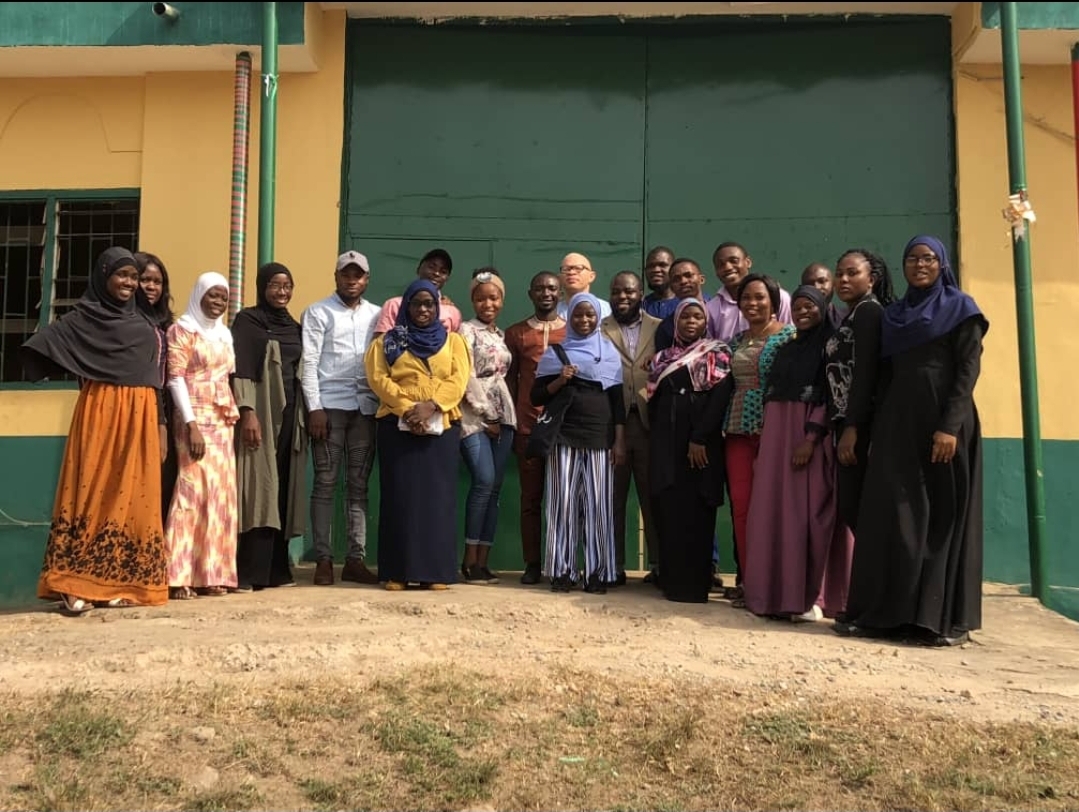
Over the last few weeks, PRAI Nigeria has been visiting correctional centres for children (below the age of 18). Kids in these centres have either committed a crime, been regarded as children beyond parental control or were found homeless and wandering on the streets.
The visits by PRAI Nigeria commence with a brief introduction of what the Juvenile Justice Support Program is all about and the purpose for paying them a visit followed by brief sessions focused on encouraging the juveniles to take charge of their lives and determine to lead a better law abiding and successful life.
For instance, Suliat Subair, Adebara Adebimpe, Mr Victor & Mr Ahmad discussed “MAKING A CAREER OUT OF YOUR GIFT”, an interactive and story telling session as the panelist shared their personal stories on what gifts they have and how they have made it a source of income and in fact a career. The kids asked questions and got satisfactory answers.
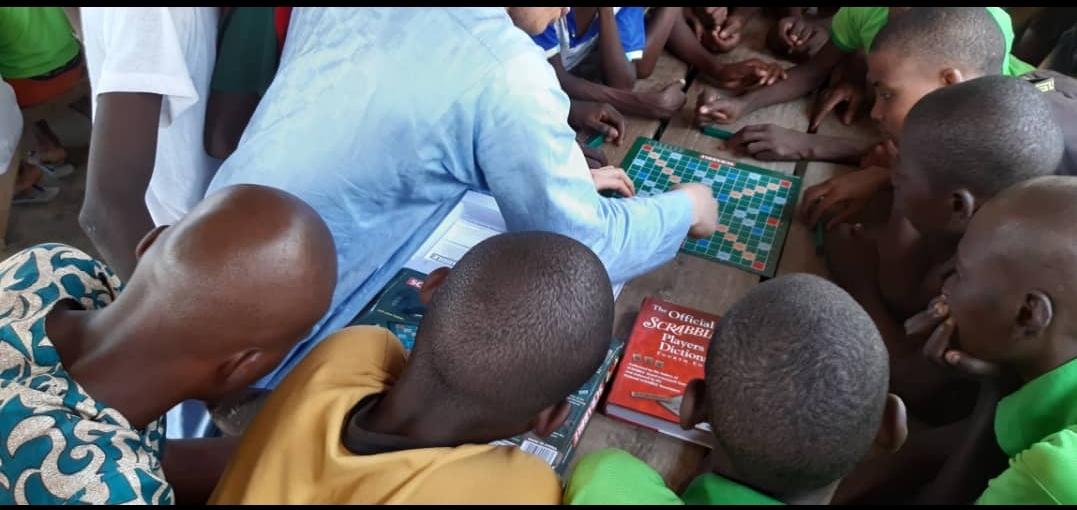
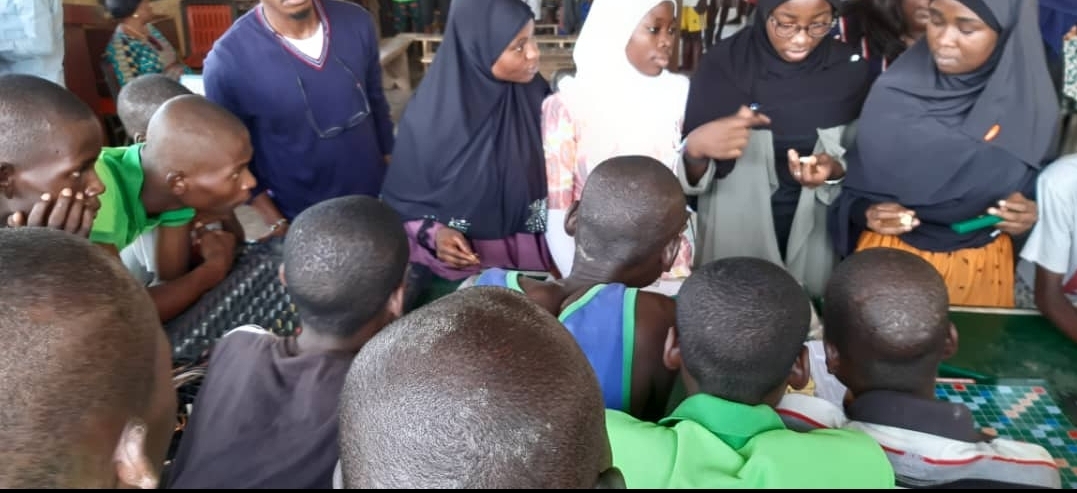
Furthermore, the kids were divided into groups where each group partook in different activities like SCRABBLE, MONOPOLY and DESIGN THINKING SESSION. The kids showed exceptional knowledge and enthusiasm towards these activities,they picked up the techniques of the game real quick and even challenged themselves.

As feedback, the kids from the Design thinking session came forward to present what they had learnt. They dealt with various topics,identified key issues as well as feasible solutions to solving them.
To round it all up, the group played a final game tagged “YOU THINK YOU KNOW NIGERIA?” A game of cards with various questions and answers on the history,composition and other general knowledge about Nigeria. The kids at this point also did excellently well,they gave well thought answers and only missed few of the questions.
In all,it was a great experience as the kids responded pretty well to our one on one conversations with them. According to a participant “We saw promising leaders, who only need the right parental support,societal protection and guidance to excel in whatever field”.
PRAI hopes to do more for these kids and bring out the best in them and will be visiting the Juvenile detention centres at Oregun, Ikeja and Idi – Araba on the 4th of Januar, 2020.

by Legalnaija | Jan 1, 2020 | Uncategorized
Yes, it’s the first TGIF in 2020 and you might decide to rock the weekend in a pair of trendy shoes or sneakers BUT have you ever wondered how much LAW goes into producing those fancy shoes for you?
Here is a rundown of fun facts about your shoes.
1. It’s Trademarked
If the designer of your shoe is worth its salt, then it has definitely definitely Trademarked its name and logo.
2. Patent & Desings
Did you know that
Nike’s trademark for its “Air Force 1” shoe covers the stitching on the outside, the design of the panels on the outside, the design of the eyelets for the laces, the design of a vertical ridge pattern on the sides of the sole, and the placement of those features in relation to each other.
3. Contracts
Obviously someone was employed and paid to make your lovely pair of shoes. That relationship is based on an employment and all necessary employment laws and statutes will apply.
4. Contracts
Some of the contracts and agreements concerning your hot and trendy shoes may include wholesale and retail contracts between the manufacturers and sellers. Not to exclude any manufacturing contracts that may also apply.
So when rocking your shoes, respect the law that made it available for your style pleasures.
@Legalnaija
by Legalnaija | Dec 30, 2019 | Uncategorized
May 2013 marked the Golden Jubilee
celebrations of the formation of the Organisation of African Union/ African
Union and African heads of state and government signed the 50th Anniversary Solemn Declaration .
The declaration marked the re-dedication of Africa towards the attainment of
the Pan African Vision of An
integrated, prosperous and peaceful Africa, driven by its own citizens,
representing a dynamic force in the international arena and Agenda 2063 is the
concrete manifestation of how the continent intends to achieve this vision
within a 50 year period from 2013 to 2063.[1]
African Leaders recognized the need to refocus and reprioritize Africa’s agenda
to an inclusive social and economic development, from the struggle against
apartheid and the attainment of political freedom and economic development.
Agenda 2063
integrates the 2030 Agenda for Sustainable Development (Sustainable Development
Goals), which is a commitment to eradicate poverty and achieve sustainable
development by 2030 world-wide, ensuring that no one, that is
no country is left behind.[2]
Agenda 2063 encapsulates not only Africa’s aspirations for
the future but also identifies key flagship programmes which
can boost Africa’s economic growth and development and lead to the rapid
transformation of the continent.
In Agenda 2063,
are laid out seven key aspirations for Africa: inclusive growth and sustainable
development; good governance and respect for human rights; a strong cultural
identity; people-driven development; and an Africa that is a global player and
partner. Agenda 2063 has been termed a strategic framework for inclusive and
sustainable development to make Africa, a dominant player in the global arena.
It is
interesting to note that Agenda 2063 is to be run in a series of five ten year
plans over the fifty year horizon of Agenda 2063’s time frame. The First Ten
Year Implementation Plan (FTYIP) of Agenda 2063, (2013 – 2023) is the first in
the series and it is currently on.
The purpose for developing the ten year plans
are to:
- Identify priority areas, set
specific targets, define strategies and policy measures required to
implement the FTYIP of Agenda 2063.
- Bring to fruition the Fast Track
programmes and initiatives outlined in the Malabo Decisions of the African
Union (AU) to provide the big push and breakthroughs for Africa’s economic
and social transformation.
- Provide information to all key
stakeholders at the national, regional and continental levels on the
expected results / outcomes for the first ten years of the plan and assign
responsibilities to all stakeholders in its implementation, monitoring and
evaluation
- Outline the strategies required to
ensure availability of resources and capacities together with citizen’s
engagement in the implementation of the First Ten Year Plan.[3]
Africa is expected to show improved
standards of living; transformed, inclusive and sustained economies; increased
levels of regional and continental integration; a population of empowered women
and youth and a society in which children are cared for and protected;
societies that are peaceful, demonstrate good democratic values and practice
good governance principles and which preserve and enhance Africa’s cultural
identity. [4]
THE ROLES
OF YOUNG PEOPLE IN THE ACTUALIZATION OF AGENDA 2063
Helen Keller once said, ‘It
is not possible for civilization to flow backwards while there is youth in the
world. Youth may be headstrong, but it will advance it allotted length.’ For
Africa to experience the positive transformation, she desires, the youths have
a great role to play, they are very vital to championing the course of Agenda
2063.
The future
success of the world rests with the continued commitment and contributions of
the young people in promoting sustainability. This relates to Africa, which has
the youngest and fast growing population in the world. According to UNDP
Africa, “By 2055 the continent’s youth population (aged 15-24), is expected to
be more double the 2015 total of 226 million.” This can offer a possible
demographic dividend to reap the benefits for the continent in the next coming
years.[5]
The writer would
discuss the roles, the youth can play and can take up to achieve Agenda 2063
under the seven key aspirations for Africa.
OUR ASPIRATIONS FOR THE AFRICA WE WANT
1. A
prosperous Africa based on inclusive growth and sustainable development:
Youths can help Africa become prosperous by embracing the entrepreneurship
spirit. Youths should regard themselves as individuals, capable of creating
wealth and reducing the rate of unemployment in Africa. Youths all over Africa
should network and empower themselves. Young people should become social actors
of change and progress.
2. An integrated continent, politically united
and based on the ideals of Pan-Africanism and the vision of Africa’s
Renaissance: The continuous existence of an African Continent free of
disunity and neo-colonialism, is up to the youths. Africa’s history is full of
instances of the disruption of the political order and the youths have a great
role to play for Africa to be politically united.
The youths have
to be more politically conscious and be engaged in the governance of their
respective countries. The youths must carry out actions and show a high level
of discipline to help preserve the African descent and way of life. The youths
must try as much as possible to wade off the negative influence of the western
culture on Africa’s culture.
Pan-Africanism
and African Renaissance stress the need for a collective self-reliance. African
countries must support one another to develop at a collective rate. At this
point, the initiative of the African Continental Free Trade Area, must be commended.
The youths have to network and create an all-African alliance that would
empower African people globally. The Government of every African Country must
do all they can, to prevent the migration of youths out of the Continent. Also,
the youths must be the major participants in economic involvement on the
continent.
3. An
Africa of good governance, democracy,
respect for human rights, justice and the rule of law: The youths must
stand up to the occasion and act as watchdogs to the Government of their
respective countries. Youths are the best agents of social change. They are
capable of initiating the consciousness and participation that would make
respective governments accountable to its people. The youths should get
involved in politics and query the unfavourable policies of the government and
the acts of all public office holders.
The youths
should speak up whenever the respect for human rights is being breached. The
youths should ensure that the rule of law is being adhered to; the youths
should also keep a close eye on the Judiciary and ensure that Justice is served
at all times.
The young can
therefore contribute by organizing themselves in small groups of leadership,
civil groups that counter check and fight for democracy and human rights. These
small groups of leadership can participate in policy level, also rally fellow
youth to participate in democratic activities such as elections and also
encourage each other to run for offices that coincide with their voting ages.
4. A
peaceful and secure Africa: It is saddening to note that anywhere in the
world, the youths are the major participants in crime. Time is running out for
Africa to ‘silence the guns by 2020’ and end all wars – a target set by the
African Union (AU) in its Agenda 2063
plan for a peaceful and secure Africa. With greater youth involvement in
Africa’s peace processes, this target might be more achievable.[6]
Young people have directly felt the consequences of violent conflict in Africa.
The fall of president François Bozizé in 2013, for example, plunged the Central
African Republic into conflict. This led to high unemployment, exclusion from
political participation and extreme poverty, making the Central African
Republic the worst
country in the world to be a young person.
The youth must be included in peace processes
if the guns are to be silenced in Africa by 2020, the youths should also
participate in the African Union’s new Youth for Peace Africa Programme,
launched in Lagos, Nigeria, on 4 September 2018.
There are
specific actions that the AU needs to take to give all African youth the chance
to be peacemakers through Youth for Peace Africa. First, it needs to define the
duties that the youth are expected to play in peace processes. This includes
what youth are required to do at local, national and continental level. Second,
the AU should encourage states to dismantle social, economic, institutional and
geographic obstacles that prevent young people from playing leading roles in
conflict resolution. Third, ‘Youth for Peace Africa’ should push for a review
of peace and security policies of the AU and Regional Economic Communities to
ensure they enhance the visibility and rights of young people. The African
Union should also consider making ‘Youth for Peace Africa’ an integral pillar
of the African Governance Architecture
Youth Engagement Strategy.[7]
Young people make up the majority
of Africa’s population. They need to be seen – not just as part of the problem
or as victims of conflicts – but as a positive resource that can help the
continent achieve sustainable peace. What the youths need to do is to rise up
to the challenge and resolve that Africa must be a peaceful continent.
5. An
Africa with a strong cultural identity, common heritage, shared values and
ethics: The youths have a role to play to ensure that our diversity in
culture, heritage, languages and religion shall be a cause of strength and
unity in Africa. If the youths can break all forms of differential barriers,
Africa is on her path to great fulfilment. The youths have an important role as
drivers of change. The youths must
champion the course of an inter-generational dialogue, which will ensure that
Africa as a continent adapts to social and cultural change.
6. An
Africa whose development is people-driven, relying on the potential of African
people, especially its women and youth, and caring for children: Over
years, the continent that has suffered brain-drain, the most, is Africa. This
has really affected in every aspect of her existence. The youths must be
actively involved in the decision making process in all aspects of development,
including social, economic, political and environmental.
The youths
should empower themselves in all spheres of life. The youths should fight against all forms of
gender-based violence and discrimination (social, economic, political) against
women. The youths should embark on awareness programs and ensure that all
harmful social practices (especially female genital mutilation and child
marriages) be ended and barriers to quality health and education for women and
girls eliminated.
The youths
should clamour for full gender parity, with women occupying at least 50% of
elected public offices at all levels and half of managerial positions in the
public and the private sectors. The youths are capable of making this happen.
Also, the youths should devote themselves to innovation and entrepreneurship.
7. Africa
as a strong, united and influential global player and partner: The youths
should harness their potentials and portray a good image of the continent
abroad since they account for the bulk of Africans in Diaspora. The youths
should undertake to continue the global struggle against all forms of
exploitation, racism and discrimination, xenophobia and related intolerances;
to advance international cooperation that promotes and defends Africa’s
interests. The youths should speak with one voice and act collectively to
promote our common interests and positions in the international arena.[8]
The youths should speak with one voice on priorities and views on global
issues.
CONCLUSION:
The youthful population of Africa can
help to actualize the agenda 2063 if they are empowered and engaged.
Empowerment of the young people regardless of sex will create a self-sustaining
pool of young people that are ingenious and talented. The youth can do peer to
peer mentorships, health and sex education that will help bring about healthy
and well-nourished citizens.[9]
Consecutively,
climate change is currently a world problem with repercussions being felt
heavily on Africa. The youths around the continent should mobilize each other
towards sustainable use and protection of natural resources through start-ups
on conservation and initiatives that seek to leverage on renewable energy,
water resource management, rehabilitating lands by planting trees and
advocating towards all that through activism. The youth can voice their
opinions against deforestation which is fundamentally challenging the existence
of livelihoods; it increases a continent’s risk of experiencing disasters such
as extreme drought and floods.
The young people
of today are the force, hope and leaders of tomorrow. The position of the young
people in achieving Agenda 2063 is very vital, allowing for participation and
inclusion of them in policy making in all the sectors will bring fresh
perspective to handle modern problems. Our role as African youths lies in or begins with grassroots implementation.
Finally, the
youth must embrace education and exposure.
[6] https://reliefweb.int/report/world/africa-s-youth-gain-recognition-peacemakers
[7] https://reliefweb.int/report/world/africa-s-youth-gain-recognition-peacemakers
[8] https://www.un.org/en/africa/osaa/pdf/au/agenda2063.pdf
by Legalnaija | Dec 30, 2019 | Uncategorized
The concept of tax is as old as mankind
itself and had taken different shapes and dimensions dating back to the
earliest primitive period to the present modern time. It should be noted that
there is no legislative definition for tax; hence there has been various
definitions and meanings given by various authors. Tax has been defined as a feecharged
by agovernmenton
aproduct,income
oractivity. Tax is defined
as “the
compulsory exaction of money by a public authority for public purpose or
raising money for the purpose of government by means of contribution from
individual persons.”
Already
since ancient times, sport has played an important role in human life,
providing health and social benefits, entertainment and leisure. Competitions
and championships, inherent in the pursuit of sport, have always attracted
athletes and spectators alike, as celebrations of universal values, fair
competition and human skills. However, it soon became apparent that athletic
meetings may also serve as an effective political, sociological and marketing
tool, given their enormous potential to communicate messages to a mass
audience. Sports mega-events, such as the Olympic Games and the soccer World
Cup, are now a powerful business machine, fueled by modern media and generating
huge revenues. At the heart of this phenomenon are athletes who can derive
significant benefits from participating in the sports events. The types of
income that the players receive from competitive sports, and related tax
implications, are the most complex and diverse in the case of international
events involving numerous athletes from various countries.[1]
Article
17 of the OECD Model Tax Convention on Income and on Capital adopted by the
Organisation for Economic Co-operation and Development (OECD) as it read on 22
July 2010 (the “OECD Model”) provides for the taxation of international
athletes. This provision provides a special rule for the allocation of taxing
rights, which only applies to performing artists and sportsmen. With respect to
Article 17(1) of the OECD Model, income derived by a resident of a contracting
state obtained as an entertainer, such as a theatre, motion picture, radio or
television artist, or as a musician or sportsman, from his personal activities
as such exercised in the other contracting state, may be taxed in that other
state. Article 17(2) of the OECD Model states that if the income in respect of
personal activities exercised by an entertainer or sportsman in his capacity as
such accrues not to the entertainer or sportsman himself but to another person,
then that income, notwithstanding the provisions of articles 7 and 15, may be
taxed in the contracting state in which the activities of the entertainer or
sportsman are exercised.
The
primary right to tax certain income of athletes falls to the state of
performance of sporting activities (taxing state) even if businesses in some
other states are not performed through a permanent establishment situated
therein, to which income covered by article 17 of the OECD Model may be
attributable. Similarly, income of an athlete who provides services in the form
of employment is taxable in the taxing state, regardless of the length of stay
of the athlete in that country, and regardless of who bears the costs of
remuneration. This means that the 183-day rule resulting from article 15(2) of
the OECD Model does not apply in the case of sportsmen. In their bilateral
relations, most countries use article 17 of the OECD Model when they negotiate
agreements on the avoidance of double taxation. By including an equivalent of
article 17 in a double tax treaty, the source state can protect its taxing
right that often would be excluded in the light of the general principles laid
down in articles 7 and 15 of the OECD Model, due to the fact that sports events
typically do not require a prolonged presence in the state of performance.[2]
The
consequence of double taxation is to tax certain activities at a higher rate
than similar activity that is located solely within a taxing jurisdiction. This
leads to unnecessary relocation of economic activity in order to lower the
incidence of taxation, or other more objectionable forms of tax avoidance. The
problems that double taxation presents have long been recognized, and with the
growing integration of domestic economics into a world of economy, countries
have undertaken several measures to reduce the problem of double taxation.
Article
17 of the OECD Model allows the taxing state to impose tax in accordance with
national law. This provision does not contain any restrictions regarding the
tax base, tax rate or tax collection forms. Moreover, it lacks the rules on deductibility
of expenditure. All of these elements are left to the national tax laws of the
taxing state. As part of its internal system of tax on personal income, the
country may also waive the right to tax athletes at source or design friendly
tax regimes for particular sporting events. In the light of article 17, the
residence state of the athlete also retains the formal right to tax. This
provision constitutes an open distributive rule, which indicates that the
income “may” be taxed in the taxing country, but fails to grant that state the
exclusive right to collect the tax. The issue of taxation of income from sports
activities in the country of residence thus remains open, which means that if
the taxing state grants certain tax exemptions for athletes, and the state of
residence exempts income from tax under national law or an agreement on the
avoidance of double taxation, it may result in double non-taxation. If both
states use their taxing rights, the necessity to grant the exemption by the
residence state or permit the deduction of the tax paid at source from tax
payable in the country of residence depends on article 23A or 23B of the OECD
Model. These regulations give rise to numerous problems of interpretation and
practical difficulties even in the case of cross-border activities of
individual athletes, and international multi-participant sports competition
raises doubts that call into question the appropriateness of the tax treatment
model proposed by article 17 of the OECD Model, based on unlimited taxation at
source.[3]
Given
the current situation of the taxation of international atheletes as brilliantly
enunciated by the OECD, the writer is convinced that there is a need to review
the OECD Model to ensure that international sports atheletes do not evade
payment of tax either at the taxing state or the state of residence and also
ensure that the international athletes are not subject to unnecessary taxation
and in fact double taxation; hence the goose that lays the golden egg does not
die.
Oluwatobiloba Adesemowo
Tobi is a tax and sports lawyer. He is currently a management
strategist at Lagos Tigers Football Club. He is also a tax associate at SIAO
partners. During his leisure, he loves to research on sports and tax related
issues.”
by Legalnaija | Dec 27, 2019 | Uncategorized
INTRODUCTION:
In
Hong Kong, protesters have adopted Bruce Lee’s famous quote, “Be formless,
shapeless, like water” as their guiding strategy in protesting a proposed law
permitting the extradition of criminal suspects to China.[1] The non-hierarchical
nature of these protests has given the government a hard time suppressing them as
they hold spontaneously and simultaneously in different locations. In
Catalonia, sequel to the Spanish Supreme Court’s judgment, jailing nine
Catalonian separatist leaders, thousands of people have matched to the streets
demanding “justice”.
In
Lebanon taxes imposed on What’sApp voice call, tobacco and petrol have prompted
protests and led to the resignation of the prime minister. In Algeria on the
other hand, mass protests have been happening almost throughout the year sequel
to ailing Abdelaziz Bouteflika’s intention to run for a fifth term, these
protests eventually prompted him to resign. In France, the gilets jaunes or yellow
vest protests that began last year were sparked off by a rise in petroleum taxes.
While in Chile it was a hike in bus fares that got people into the streets. In
Iran an increase in fuel price and economic hardship have sparked up populist
protests. In neighboring Iraq thousands of protesters have blocked public facilities
in a bid to demand the appointment of an independent prime minister.
Like
we have not seen it all, Todd Philip’s controversial movie, The Joker, was released
in August, portraying the chronicles of a mentally ill loner who eventually
became a symbol of a leaderless resistance against the wealthy elite after he
murdered three investment bankers. Julie Norman of University of London
described 2019 as a historically notable year of protest because of the “degree
of mobilization.”[2]
Mass populist protests have broken out all around the world in 2019, they
however share a common characteristic, they are usually leaderless; they were
products of social media awareness and advocacy rather than sentiments stirred
up by populist demagogues.
POPULISM DEFINED:
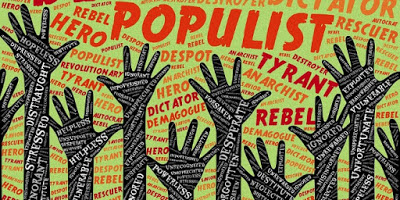
Populism
means different things to different people; it is from the Latin word populus
meaning, “Of the people”. The word was first used by the American Populist
Party in 1891. The party was a union of farmers, union leaders and workers
organizations. They agitated for the recognition of labour unions, regulation
of the rail road industry, a progressive income tax, women suffrage and direct
election of senators; the word populism was used to describe the promotion of
democracy in the late 19th century. Some historians have described
populism as a popular engagement of the population in political decision making.
Ernesto Laclau, renowned Argentine political theorist, described populism as an
emancipatory social force through which marginalized groups challenge dominant
power structures. Today the term has been used negatively to refer to
political demagogues who present over simplistic answers, illogic arguments and
sometimes lies to complex sociopolitical questions, promising to shake up “the
establishment” in a bid to gather popular support from the people. This
explains why populist leaders are often viewed with suspicion and the term is
derogatorily used to describe politicians who promise radical change or make
promises that on closer look may not be feasible. The populist leader claims to
represent the unified will of the people. He stands in opposition to an enemy,
often embodied by the current system, aiming to take down the ruling elite. Populism
is not necessarily a good or bad ideology as both Adolf Hitler and Winston
Churchill could be described as populists as they appealed to and addressed the
growing frustrations of their people.
POPULIST DEMAGOGUES:
In
talking about the rise of populism it is pertinent also to talk about the rise
of 21st century populist demagogues, particularly in Europe.
Populist demagogues are notorious opportunists that claim to represent the
interests of the average or working class citizens and also claim to unite the
population against a common enemy. Populist demagogues appeal to the people,
their fears, anxieties, and dreams of a better world. The common enemy often
varies depending on the political spectrum of the politician. During his
campaign, Donald Trump depicted immigrants and the Republican establishment as
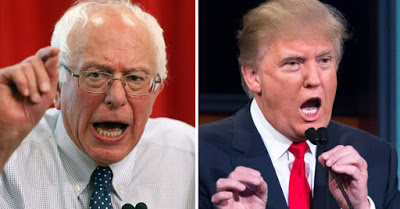
the common enemy, while Bernie Sanders constantly refer to Wall Street’s
billionaires as the enemy of the people.[3] They are often charismatic
as they are successful at galvanizing the masses. These populist demagogues
have gained momentum throughout Europe and South America in recent years,
convincing the people that socialist or left leaning policies negate the
collective will of the people. Populist demagogues choose a popular enemy like
the establishment, immigration or corruption and rally voters to get behind
that cause, sometimes this has led to popular movements and legal reforms, other
times it has snowballed into wide spread ultra-nationalism and nativism. Donald
Trump, while campaigning made a populist appeal to the economic and social
insecurity of many Americans, portraying his political opponents and the media
as the elite and employing a nativist and divisive tone.[4] Hungarian Prime Minister
Viktor Orban was overwhelmingly reelected for a third term after he has over
the years presented himself as anti-immigrants and anti European Union,
employing populist rhetoric to play upon the fears of the people. He once told
Hungarian media that: “We will never
allow Hungary to become a target country for immigrants. We want to keep
Hungary as Hungary.”[5]
By equating migrants with terrorists, Orban offered an oversimplified
answer to complex sociopolitical questions.
There
are three core character traits of populist demagogues.
·
They make an appeal to the people,
championing their cause against the despised elite.
·
They use crisis or manufacture crisis to
justify their cause to revolt against the ‘establishment.’
·
They use inflammatory language when
addressing opposition.
Because
populists make up big and simplistic promises to shake up the society and
overthrow the establishment, they often seek to bypass democratic checks and
balances, particularly the judiciary and the media. They then tag these
institutions as elite conspiracies to block the will of the people.[6] Politicians like Nigel
Farage and Boris Johnson preyed on the nativism of British voters concerned
about increased immigration and manipulated these sentiments against the EU. They capitalized on British dissatisfaction
with the status quo and helped turned the Brexit referendum into a catch-all
protest vote against everything that was wrong in the country. In France, Marine
Le Pen uses populist rhetoric to oppose and blame the EU for mass immigration.[7] Some of her supporters
include anti-Semitic abuse in their angry campaign.
Africa
has had and continues to have its fair share of populist demagogues. The end of
colonialism in Africa in the 60s led to the emergence of a handful of nationalist
leaders without intellectual depth or character to handle the challenges of
modern governance. They rather capitalized on the fears and emotions of their
people, positioned themselves as strong men objecting western ideals. They
emphasized nationalism and often used xenophobia to consolidate political
power. The likes of late Robert Mugabe of Zimbabwe, Paul Biya of Cameroon and
Omar al-Bashir of Sudan are notable examples. In 2015 President Muhammadu
Buhari rode on a populist rhetoric and promised to bring change, he portrayed
himself as an “enemy of the corruption”, promising to take down the
establishment that had held the country down for fifteen years. He provided
simplistic answers to intricate and complex economic and policy questions,
playing the “us” versus “them” card.
POPULISM IN EUROPE AND THE U.S
The
Occupy Wall Street protests of 2011, which blamed corporations and the rich for
creating economic instability for the rest of the country, was a protest
against political corruption and wealth inequality in the U.S and was a major
demonstration of distrust in the established political order.[8] Some have blamed the rise of
populism in Europe and the United States on the failure of the neo liberal
economic model and the collapse of traditional political structures that were less
global and multi ethnic. This grievance has been channeled into wide support
for populist demagogues in the U.S, the U.S, France, Italy and several other
countries. This is evident in the Brexit vote and the election of Donald Trump
in 2016. By voting to leave the EU, the Brits demonstrated that the unification
of Europe was at the expense of their survival as a people , a rhetoric that
Trump’s campaign employed by calling for the U.S to pull back from its commitments around the world and to focus
on “America first.” These populist
demagogues scapegoat refugees, immigrant communities, and minorities. Nativism,
xenophobia, racism, and Islamophobia are on the rise and not even Germany,
Europe’s largest economy, looks stable. It has felt the backlash of slow
economic growth and mass migration across Europe. A poll in November showed
that 42% of Germans want a referendum on E.U membership.[9] According to Norbert
Roettgen, a senior lawyer in Merkel’s Christian Democratic Union, there is a
re-emergence of state egotism and Nationalism. In Europe voters are generally
frustrated with the political establishment, they have concerns about
globalization. In France the anti-establishment protests over the cost of
living have posed the biggest challenges to Macron’s presidency.
RISE OF ‘LEADERLESS’ POPULIST
PROTESTS
Despite
the negatives associated with populism today, it is important to note that
“leaderless” populist protests in South America, Africa, Asia and Europe have
been responsible for key democratic reforms and regime change. These movements
do not appeal to specific categories, they appeal to the entirety of the
citizenry who feel defrauded by the political class. End-to-end encryption and
online anonymity have played huge roles in fuelling these protests. Instant
messaging and social media have proven really useful in getting people who
share the same views together.[10] Technology has abated “leaderlessness” in an
unprecedented manner. Technology means that you do not need a leader to
disseminate strategy, the strategy disseminates horizontally. Messaging apps
like Telegram that offer end-to-end encryption have been used, Twitter and
Facebook have also enabled horizontal and decentralized protest movements.
“Our revolution did not have a head
but it did have a body, a heart and a soul,” an Egyptian
protester told Reuters.[11]
These
protests have been sparked by several common factors like:
Economic Inequality and a high cost
of living: Governments are adopting austere measures
that have not been well received by a huge fragment of the citizenry. In
Ecuador for example, the government’s decision to stop fuel subsidy has sparked
massive protests. The government eventually suspended its fuel hike but the
protests continued, tackling wider social issues.
Political Freedom:
The protests in Hong Kong are results of the growing need of a people to be
politically free. Young people have taken to the street en masse. While the
proposed extradition bill has been dropped, the protests have evolved into a
wider call, demanding that China recognizes Hong Kong’s autonomy. In Algeria protests
demanding political freedom from the ruling elite eventually led to the
resignation of Abdelaziz Bouteflika’s, the same can be said of the protests in
Sudan that eventually ousted Al-Bashir and in Catalonia against the Spanish
government.
Corruption:
In Egypt viral videos revealing high level of corruption and abuse of public funds
in the Egyptian army sparked series of protests and agitations. In Lebanon for example, the failure of the
government to provide basic socioeconomic benefits have been blamed on
corruption and has resulted in a popular demand for government resignation. The
protesters argue that while austere measures are imposed on citizens, the
political leaders are enriching themselves. The government eventually approved
a wide range of reforms including slashing the salaries of politicians.
Social
media enables a movement in one place to take inspiration from protests in
other places. In Sudan, for example, protests over rising bread prices quickly
spread to other small towns before eventually reaching the capital Khartoum.
For four months protesters stood their ground against the oppressive regime,
government violent crackdown on protesters eventually left over 50 people dead
and scores injured and jailed. With the unrelenting tenacity of the people,
Al-Bashir was ousted. The protests in Barcelona against the Spanish government
adopted the tactics and strategies used by protesters in Hong Kong and videos
of Hong Kong protesters carrying the Catalan flag have circulated on social
media.
In
Hong Kong demonstrations are largely leaderless and decentralized as activists,
to avoid being targets of China’s sophisticated surveillance system, coordinate
and mobilize anonymously on social media. Display pictures are shared on
Telegram group chats to thousands who print them and post them in public
places. Apple’s Airdrop function has also been used at points of protest, to
disseminate information instantly. Also the protests in Catalonia have been
partly coordinated by an anonymous online platform known as Tsunami Democratic.
Tsunami Democratic has used Twitter and Telegram to instruct activists on where
to protest.
In
Lebanon, people across religious inclinations, in towns and villages across the
country have staged leaderless populist protests chanting: “All Means All”,
demanding the ousting of all political leaders. Protesters have used hash tags
to mobilize themselves, spread news and share memes, videos, opinions and
sarcasm targeting politicians.
It
is however important to note that these leaderless protests come with their
challenges and difficulties. Oftentimes the leaderless nature of these populist
protests make it difficult to negotiate as different protest groups may
incoherently make different or contradictory demands. For example in Chile,
protests have evolved from demanding reversal in the hike of bus fares to
multifarious demands like pensions, government corruption and student loan.
This has made it difficult for government to provide an all-encompassing
solution and often times they have no idea whom to negotiate with.
There is also a tendency that demonstrations
will degenerate into violent clashes with the police as it is in Hong Kong,
Chile and Iraq, making governments justify forceful crackdown on protests. Demonstrations
in Algeria and Russia, though leaderless, have however remained peaceful. But
the truth remains that, without some form of command structure and
organization, leaderless protests might be outmaneuvered by governments, hence
there is a need to build coherent leadership structures or form alliances with
existing organizations making similar demands.
THE NIGERIAN SITUATION
It
must be said that since the mid-90s the voices of populist protests have been
muffled in Nigeria. As the country’s streets and campuses have not felt the
reverberating effects of protests the likes that occurred in the 90s where a
coalition of student activists, labour leaders, academics, civil societies, and
professional organizations staged powerful populist protests that requested the
removal of despotic military regimes. The Occupy Nigeria protests of 2012, like
the protests in Hong Kong, Chile and Algeria were largely mobilized by young
people, a generation that has come to see social media as its primary means of
activism. However one of the major reasons for the crumble of the protests was
the lack of a central command structure as the central labour unions (the
Nigerian Labour Congress and the Trade Union Congress) that were initially
entrusted to lead the protests made certain unpopular concessions and caved in
to accusations by government that they had plans to overthrow the regime.[12]
It
goes without saying that the Nigerian political elites have a strong aversion
to populist protests that seek to demand basic dividends of democracy. This is
obvious from the violent crackdown on Shiite protesters demanding the release, from
unlawful detention, of their leader to the violent response of security
operatives to “Revolution Now” protesters. They are ever ready to tag peaceful
protests as attempts to overthrow the government and threats to national
security. The government is ever willing to make scapegoats of these movements.
It is however important to note that a “democratic” regime that furiously
clamps down on peaceful protests has climbed down the abyss of despotism and
should respectfully rescind the tag “democratic”.
CONCLUSSION:
There
is a global political awakening and this awakening has been amplified by the
digital information age with more than half of the planet connected to the
internet. Facebook accounts for more than 2.4 billion users while Twitter has
over 300 million users, this has enabled more people to be exposed to
torrential and ceaseless news updates, this is not to ignore the fact that some
of this information is false and over sensationalized. Social media has also
made it possible for people to connect locally and globally, therefore drawing
comparison and inspiration from protests and revolts across the world. These
protests are however not ends in themselves, they are means to an end as the
angst on the streets should eventually lead into dialogue and sociopolitical
reforms. Governments should exact efforts into addressing legitimate grievances
and harness youth political participation to the ends of nation building.
Meaningful proposals should be made to revamp failed systems while the
agitations of the protesters should eventually culminate into dialogue and
participation in electoral politics only when the ruling elites have
demonstrated genuine intentions of creating change by establishing independent
institutions to chart lasting paths of accountability and good governance.
by Legalnaija | Dec 26, 2019 | Uncategorized
1.0 Introduction
The African Continental Free Trade Agreement (AfCFTA) is
a trade agreement in force between 27 African Union member states.[1] It
was signed in Kigali, Rwanda, on March 21, 2018. As of July 2019, 54 of the 55
African Union states had signed the agreement, with Eritrea the only country
not signing the agreement. Of these member states, 27 have deposited their
instrument of ratification.[2] As
of fact, Nigeria was one of the last countries to sign the agreement.
Nigeria has a population of 200 million people and is
Africa’s most populous country. Nigeria’s population exceeds that of the second
and third most-populous countries in the ladder, Ethiopia and Egypt combined, each
with its population around 98 million.
With a nominal GDP of US$376 billion, which represents
17% of Africa’s GDP, Nigeria is just ahead of South Africa which accounts for
16% of Africa’s GDP. Because Nigeria is so significant in terms of its
population and economy, its absence at the initial signing of the agreement was
particularly conspicuous. South African President, Cyril Ramaphosa,
underscored that in comments made on the 12th of July 2018, that; “The
continent is waiting for Nigeria and South Africa. By trading among ourselves,
we are able to retain more resources in the continent.”.[3]
Initially, 44 countries signed the agreement on 21
March 2018. Nigeria was one of 11 African Union Nations to abstain from
signing. At the time, the Nigerian President, Muhammadu Buhari, said that
Nigeria could not do anything that would undermine local manufacturers and
entrepreneurs.[4] The Manufacturers
Association of Nigeria, which represents 3,000 Nigerian manufacturers, praised
the decision to back out of the agreement. The Nigerian foreign minister
tweeted that more domestic consultation was needed before Nigeria could sign
the agreement.[5] Former president Olusegun
Obasanjo said Nigeria’s delay was regrettable.[6]
The Nigeria Labour Congress called the agreement a “renewed, extremely
dangerous and radioactive neo-liberal policy initiative“, suggesting
increased economic pressure would in turn pressure workers into migration under
difficult and unsafe conditions.[7]
On 21 July 2018, five more nations signed the
agreement, including South Africa. At that time, the Nigerian government
emphasized its non-participation was a delay, not a withdrawal, and promised to
soon sign the agreement.[8] As
the foreign minister had earlier emphasized, the Nigerian government intended
to consult further with local businesses in order to ensure private sector
buy-in to the agreement.[9]
Nigeria’s president announced on 2 July, 2019 that the
country would sign the AfCFTA in Niger the following week and this promise was
delivered as Nigeria signed the AfCFTA on 7 July, 2019.[10]
2.0 UNDERSTANDING THE AFRICAN CONTINENTAL FREE TRADE
AGREEMENT
2.1 What does AfCFTA Mean?
The proposed Continental Free Trade Area for Africa is
a market integration agreement that presents an equal opportunity open market
to all participating countries in the region. The plan is to substantially
remove obstructions and barriers to movement of goods and services across the
continent at the initial implementation stage with the hope of progressing into
a customs union with free movement of capital and business persons.[11]
The agreement aims to provide for a good reduction or
elimination of customs tariffs on qualifying imports between member countries.
However, unlike other free trade agreements, AfCFTA provides that the signatory
countries have agreed to be bound by the agreement even though the text of the
agreement has not yet been finalized. For example, the “rules of origin”
provisions under the agreement are still being negotiated, but reportedly these
negotiations are at an advanced stage. Similarly, negotiations for reductions
or elimination of customs duty on 90% of products are in process but not yet
finalized.[12]
The agreement comes at a critical moment for Africa.
For centuries Europe, the United States, and more recently China have stripped
the continent of its raw materials. Today, more than 75% of Africa’s external
exports are extractives, namely oil and minerals. Increasingly, African nations
hoping to secure sustainable economic growth are shifting away from the
volatility associated with extractive exports towards industrialized goods.
While overall intra-African trade is minuscule, 42% of it consists of
industrial goods and this number is expected to grow under AfCFTA. A focus on
industrial goods promotes African industrialization and the advancement of its
manufacturing sector, providing employment opportunities for the continent’s
booming youth population. Amidst growing U.S.-China trade tensions and China’s
efforts to decrease its dependency on export markets, some are betting that
Africa is a prime successor to become the manufacturing hub of the developing
world.[13]
Underlining the above reality, Judd
Devermont told CNBC that “This agreement underlines how Africa is
moving in a different direction than other regions in the world.” He
further added that “The continent’s leaders are embracing integration, while
some global counterparts have turned away from multilateralism.”[14]
3.0 OBJECTIVES OF THE AFRICAN CONTINENTAL FREE TRADE
AGREEMENT
The primary aim of the Agreement is to achieve an
increased volume of trade amongst African countries. Trade remains a key driver
in the economic advancement of nations and getting intra- African trade right
may be the much-needed catalyst to stir the African economy up. There is no
doubt that it will bring about the much-needed economic expansion of African
countries by taking the focus off extractives to other non-mineral products. It
is believed that AfCFTA will be a catalyst for the diversification of the
African economy. It is also expected that it will bring about a consciousness
for African economies to make a shift towards building a production-based
continental economy as no nation would want to be entirely on the consumption
scale of the competition. This will create more job opportunities that would
further absorb the millions of unemployed young Africans.[15]
According to the Agreement Establishing the African
Continental Free Trade Area, the general objectives of the AfCFTA are to:
A) create
a single market for goods, services, facilitated by movement of persons in
order to deepen the economic integration of the African continent and in
accordance with the Pan African Vision of “An integrated, prosperous and
peaceful Africa” enshrined in Agenda 2063;
B) create
a liberalized market for goods and services through successive rounds of
negotiations;
C) contribute
to the movement of capital and natural persons and facilitate investments
building on the initiatives and developments in the State Parties and RECs;
D) lay
the foundation for the establishment of a Continental Customs Union at a later
stage;
E) promote
and attain sustainable and inclusive socio-economic development, gender
equality and structural transformation of the State Parties;
F) enhance
the competitiveness of the economies of State Parties within the continent and
the global market;
G) promote
industrial development through diversification and regional value chain
development, agricultural development and food security; and
H) resolve
the challenges of multiple and overlapping memberships and expedite the
regional and continental integration processes.[16]
4.0 POTENTIAL OF THE AfCFTA: THE FUTURE OF AFRICA
Looking at the promising new African free trade area,
there is an effulgent future for Africa. The agreement is considered critical
to growth and job creation for Africa and its 1.27 billion people. Perhaps, the
issue of poverty engulfing Africa will finally be, if not completely taken care
of, reduced.
The removal of tariffs and non-tariff barriers is
likely to increase intra-African trade by 52.3% by 2020 as estimated by the UN
Economic Commission for Africa (ECA). This will increase employment, facilitate
better use of local resources for manufacturing and agriculture, and increase
access to cheaper products. Analysts say that successful implementation of the
trade pact has the potential to transform the continent, arguing that it would
create a market of about 1.27 billion people with a combined gross domestic
product (GDP) of $2.14 trillion. This market is expected to grow to about 2.5 billion
consumers by 2050.[17]
The AfCFTA free-movement rules will also allow people
to access government-funded health services in any member country. This will
increase the number of foreign patients seeking treatment in countries with
relatively strong health-care systems, such as Kenya and Uganda. The new
free-trade area is also expected to drive growth in private health care,
including medical tourism. For example, as demand for cancer treatment soars,
visa-free travel will enable people in the 15 African countries without
radiotherapy services to seek care elsewhere.[18]
The praises of AfCFTA echoes beyond Africa as Arancha Gonzalez Laya, the Executive
Director of the International Trade Centre (ITC), while speaking during a
session at the World Economic Forum on Africa, developed with the Forum’s
Platform for Shaping the Future of International Trade and Investment, said
that “We now have leaders of 54 countries putting their neck on the line for
this agreement. It’s a game-changer. There’s much more political energy today
than there has ever been on integration.”[19]
5.0 SHORTCOMINGS OF THE AfCFTA
Just as there are pros and cons to everything, and
nothing that exists in the world is perfect, the AfCFTA also has its downsides.
Agreeably, AfCFTA is an opportunity for countries and companies to help each
other grow, still, trade liberalization has the potential to damage the poorest
within those countries, which is why it is important for the AfCFTA to have
supportive policies as the government will deem necessary for its smooth
running.[20]
Furthermore, its possible negative impact on African’s
health should not be ignored. Private health services and medical tourism
induce clinicians to migrate from poorer to richer countries, and from public
to private health care. This results in weaker, understaffed public-health
systems, especially in poorer countries. Moreover, influxes of foreign
clinicians will irk local medical professionals by increasing competition for
jobs.
There are also worries that big pharmaceutical
companies will push for restrictions on imports of generic drugs into the
AfCFTA, as happened in Guatemala after the Central America Free Trade Agreement
took effect. Such restrictions push up the cost of these drugs and hurt poor people
the most.
Free movement of people also increases the risk that
diseases will spread across borders, especially given weak disease-surveillance
systems and the instability of some African countries. The continuing Ebola
epidemic in the Democratic Republic of Congo is a pressing concern. Other
dangerous infectious diseases, such as cholera, may also spread farther and
faster. With respect to this issue, global health and development stakeholders
need to become more aware of not only the opportunities but also the challenges
of AfCFTA implementation for health market expansion, universal health coverage
and health security, so that policies can be made to combat its possible
negative outturn.
Trade liberalization can also pose some challenges for
governments in promoting competition in local markets as some firms that are
taking advantage of economies of scale may grow faster than others and capture
dominant positions in markets. In order to ensure a smooth transition during
these episodes, complementary policies such as consumer protection and
competition policies need to be put in place.[21]
Some arguments against the AfCFTA is that it is in
contrast with the principles of state sovereignty. However, in contradiction to
concerns about loss of sovereign power, some others argue that the AfCFTA as
currently proposed is about economics, not politics. AfCFTA is a basic trade
agreement. Also, trade agreements have numerous precedents all over the world,
none of which has been directly implicated in the sort of collapse in
sovereignty being alluded to.[22]
6.0 CONCLUSION
The negotiation
stage is relatively the easy part of the puzzle; the real challenge is in the
implementation of the AfCFTA. If the AfCFTA is to achieve its
objectives of boosting intra-African trade and industrial competitiveness
across the continent, African countries must not only conclude and ratify the
AfCFTA Agreement, they must also implement it. That means domesticating the
agreement as a national law and ensuring that all relevant government agencies
are prepared for, and able to apply the required changes, and that they
actually do so. These steps cannot be taken for granted.
For one reason or another, many African countries have
not properly implemented their regional trade agreements. As a result,
intra-regional trade in Africa is still plagued by high tariffs, numerous
non-tariff barriers and other complications arising from the patchwork of
partially implemented regional trade agreements with overlapping memberships.
It is imperative for the government of nations within
the continent to set things in order as are necessary for the successful
execution of the agreement. For example, improving the electricity situation
within the state and creating a suitable environment enabling industries to not
only survive but to thrive.
The fate of the
AfCFTA ultimately depends on African leaders following through on the high
expectations they have set for the AfCFTA. They must show progressive
leadership and commitment to ratifying and implementing the AfCFTA (and their
other regional trade agreements), and not just under the bright lights of AU
Summits. This also means engaging meaningfully with the private sector and
African citizenry, as they are the ultimate intended beneficiaries of all this,
after all. This will be crucial to ensure the AfCFTA avoids the implementation
gap into which so many African agreements have fallen.[23]
The credibility of African integration is at stake. Therefore, complacency is
not an option. It is hoped, after all is said and done, that the enforcement of
the AfCFTA will promote economic growth and its advantages would subsequently
outweigh whatever apparent disadvantages.
Written by:
Adeniran Oluwabukunmi.
[1]
African Union, “Summary of the key decisions and declarations of the 31st
African Union Summit”. Published July 6, 2018. Retrieved 17 September
2019;
[2]
African union, “List of Countries Which Have Signed, Ratified/Acceded to
The Agreement Establishing the African Continental Free Trade Area” (PDF).
Published 8 October 2019. Accessed December 24, 2019.
[4]
Daniel Mumbere, “Nigeria’s Buhari explains failure to sign continental free
trade agreement”. Published March 23, 2018.
[11]
Kemi Arosanyin, “Understanding the African Continental Free Trade Area”.
Published August 27, 2018. Accessed December 23, 2019.
[12]
KPMG, “
Africa: Free trade
agreement for African continent”. Published July 9, 2019.
[18]
Walter Ochieng, “This is how an African free trade area could impact people’s
health”. Published April 18, 2019.
[21]
Mesut Saygili, Ralf Peters, Christian Knebel, “African Continental Free Trade
Area: Challenges and opportunities of Tariff Reduction”. Published February
2018. Accessed December 23, 2019.
[22]
Prince C. Oguguo, “Debate: Nigeria isn’t buying into Africa’s free-trade area –
but should”. Published February 7, 2019.