
by Legalnaija | Feb 20, 2024 | Uncategorized
How to balance your personal and professional life as a lawyer
Being a lawyer can be rewarding, but also demanding and stressful. You may have to deal with long hours, tight deadlines, complex cases, and high expectations from your clients, colleagues, and yourself. You may also have to balance your work with your personal life, which may include your family, friends, hobbies, and health.
How can you achieve a healthy work-life balance as a lawyer? How can you manage your time, energy, and priorities effectively? How can you cope with the challenges and pressures of your profession, while also enjoying life beyond work?
In this post, I want to share some tips and resources that have helped me balance my personal and professional life as a lawyer. I also want to connect and empathize with you on a personal level, and to hear your thoughts and experiences on this topic.
Tip #1: Set boundaries and communicate them clearly
One of the first steps to achieving a healthy work-life balance is to set boundaries between your work and personal life. This means defining what is acceptable and unacceptable for you in terms of your workload, schedule, availability, and expectations. For example, you may decide to limit your work hours to a certain number per day or week, to avoid checking your emails or phone after a certain time, or to decline taking on extra tasks or projects that are not aligned with your goals or values.
Once you have set your boundaries, you need to communicate them clearly to your clients, colleagues, supervisors, and anyone else who may be affected by them. You need to explain why these boundaries are important for you, and how they will benefit your work performance and quality. You also need to be consistent and firm in enforcing your boundaries, and to avoid making exceptions or compromises that may undermine them.
Setting and communicating boundaries can help you reduce stress, avoid burnout, and improve your focus and productivity. It can also help you respect and protect your personal time, space, and needs, and to enjoy your life outside work.
Tip #2: Prioritize and plan your tasks and activities
Another step to achieving a healthy work-life balance is to prioritize and plan your tasks and activities. This means identifying what is important and urgent for you, and what is not. You can use tools such as the Eisenhower matrix, the Pareto principle, or the SMART criteria to help you sort and rank your tasks and activities according to their importance and urgency.
Once you have prioritized your tasks and activities, you need to plan how and when you will accomplish them. You can use tools such as a calendar, a to-do list, or a project management software to help you organize and schedule your tasks and activities. You can also use tools such as a timer, a pomodoro technique, or a batch processing method to help you manage and optimize your time and energy.
Prioritizing and planning your tasks and activities can help you increase your efficiency, effectiveness, and satisfaction. It can also help you avoid procrastination, distraction, and overwhelm, and to achieve your goals and deadlines.
Tip #3: Delegate and outsource some of your work
Another step to achieving a healthy work-life balance is to delegate and outsource some of your work. This means assigning or transferring some of your tasks or responsibilities to someone else who can do them better, faster, or cheaper than you. For example, you may delegate or outsource some of your administrative, technical, or legal work to your staff, colleagues, or external services.
Delegating and outsourcing some of your work can help you free up some of your time and energy, and to focus on the core and strategic aspects of your work. It can also help you leverage the skills, expertise, and resources of others, and to improve the quality and outcome of your work.
However, delegating and outsourcing some of your work also requires some skills and strategies. You need to choose the right tasks and people to delegate or outsource to, and to provide clear instructions, expectations, and feedback. You also need to trust and empower the people you delegate or outsource to, and to monitor and evaluate their performance and results.
Tip #4: Take care of yourself and your well-being
Another step to achieving a healthy work-life balance is to take care of yourself and your well-being. This means paying attention to your physical, mental, emotional, and spiritual health, and to do things that nourish and support them. For example, you may take care of yourself and your well-being by eating well, sleeping well, exercising regularly, meditating, relaxing, having fun, learning new things, expressing your feelings, connecting with others, and pursuing your passions.
Taking care of yourself and your well-being can help you maintain and enhance your energy, motivation, and passion. It can also help you cope with the stress, challenges, and pressures of your work, and to prevent or recover from burnout, depression, or anxiety.
However, taking care of yourself and your well-being also requires some commitment and discipline. You need to make time and space for yourself and your well-being, and to treat them as a priority and a necessity. You also need to be aware of your needs and limits, and to seek help or support when you need it.
Conclusion
Balancing your personal and professional life as a lawyer can be challenging, but also rewarding and fulfilling. You can achieve a healthy work-life balance by setting boundaries, prioritizing and planning your tasks and activities, delegating and outsourcing some of your work, and taking care of yourself and your well-being. These tips and resources can help you manage your time, energy, and priorities effectively, and to enjoy your life beyond work.
I hope you found this post helpful and interesting. I would love to hear your thoughts and experiences on how you balance your personal and professional life as a lawyer. Please feel free to share your comments, questions, or feedback below. Thank you for reading! 😊

by Legalnaija | Feb 19, 2024 | Uncategorized
This discussion will not be well explained if the concept of aeroplane accidents is not explained. An aeroplane accident can be said to be that which can occur on a flight leading to injury on passengers between the times of embarking and disembarking a plane. These injuries can come in various forms either minor or major injury depending on the nature of the accident.
Perhaps you have been involved in or know someone who has been involved in an aeroplane accident, you might be eligible to make an aeroplane accident compensation claim against the airline company you flew with either local or international flight.
Aeroplane accidents happen every day onboard aircrafts, aircraft can be classified into various categories. either jet, Helicopter, amphibious airplane or fighters. Most of the time, these accidents are through no fault of their own. Aeroplane accidents differ from minor injuries to severe injuries, depending on the nature of the accident as stated earlier.
The reason why all of this happens is that aircraft travel is generally the safest means of transportation; however, aeroplane accidents on board a flight are still common. Aeroplanes are usually a scary place, especially for people who are afraid of flying. It may interest you to know that most times some aircraft operators themselves are usually afraid of flight too. Haven stated this, let’s delve into the legal aspect of aeroplane claims in Nigeria. Globally speaking and considering international coverage that aviation provides, Nigeria is a party to the Convention for the Unification of Certain Rules for International Carriage by Air (Montreal Convention) 1999, a major international law air treaty governing an air carrier’s liability for damages caused to its passengers during an aeroplane accident, including death. The Montreal Convention of 1999 has replaced the Warsaw Convention, 1929 and has been ratified by the Nigerian Legislature in line with Section 12, 1999 Constitution of the Federal Republic of Nigeria, it has been currently incorporated into Nigerian Law, as captured in Section 48(1) of the Civil Aviation Act, 2006.
Consequently, the case of Harka Air Services (Nigeria) Ltd v Keazor stated that liabilities of an air carrier to its passengers could arise from Injury sustained while onboard or Death of a passenger during the course of a journey, Loss, damage of goods/baggage, Delay or cancellation of flights.

Furthermore, the Consumer Protection Regulations which are contained in Part 19 of Nigeria Civil Aviation Regulations 2015 form the bedrock of liability of air carriers. Both regulations are sacrosanct as they fill in gaps left in the Montreal Convention and the Civil Aviation Act. This has paved a way for victims of air disasters to make claims under the law of torts because most air disasters give rise to tortious liability.
The claims for damages in aeroplane accidents can either be special or general. Note that For a claim of general damages to succeed, the claimant need not specifically prove fact. However, special damages must be particularly pleaded. The purpose of general damages is to compensate for damages suffered from wrongful acts, done deliberately. Where the act done is deliberate, it is said to be implied hence it need not be specifically proved.
An example of a deliberate act that resulted in damages is the Germanwings Flight 9525 which was a scheduled international passenger flight from Barcelona–El Prat Airport in Spain to Düsseldorf Airport in Germany. The flight was operated by Germanwings, a low-cost carrier owned by the German airline Lufthansa. On 24 March 2015, the aircraft, an Airbus A320-211, crashed 100 km (62 mi; 54 nmi) north-west of Nice in the French Alps. All 144 passengers and six crew members were killed. The crash was deliberately caused by the co-pilot, Andreas Lubitz, who had previously been treated for suicidal tendencies and declared unfit to work by his doctor. Lubitz kept this information from his employer and instead reported for duty. Shortly after reaching cruise altitude and while the captain was out of the cockpit, Lubitz locked the cockpit door and initiated a controlled descent that continued until the aircraft hit a mountainside.
By 2017, Lufthansa had paid €75,000 to the family of every victim, as well as €10,000 in pain and suffering compensation to every close relative of a victim.
In conclusion, there is a general maxim of law which posits that Ubi jus ibi remedium. Ubi jus ibi remedium is a Latin legal maxim that translates to “where there is a right, there is a remedy.” It encapsulates the principle that when a legal right is violated, the law provides a corresponding remedy or relief to the aggrieved party.
by Legalnaija | Feb 14, 2024 | Uncategorized
6 Books For Oil and Gas Lawyer
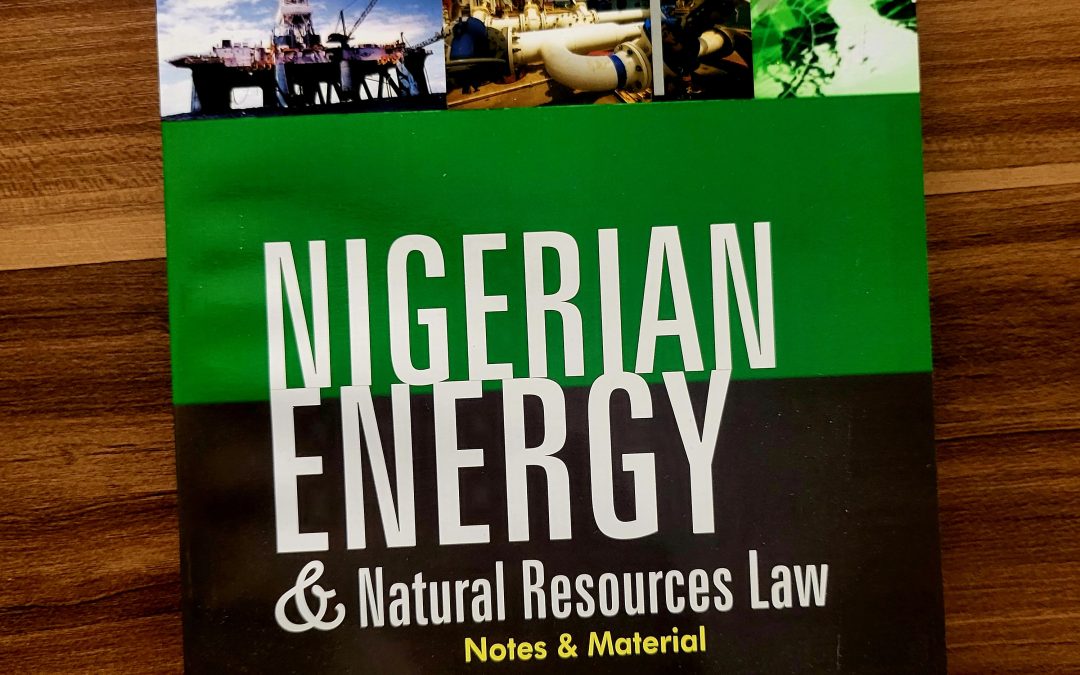
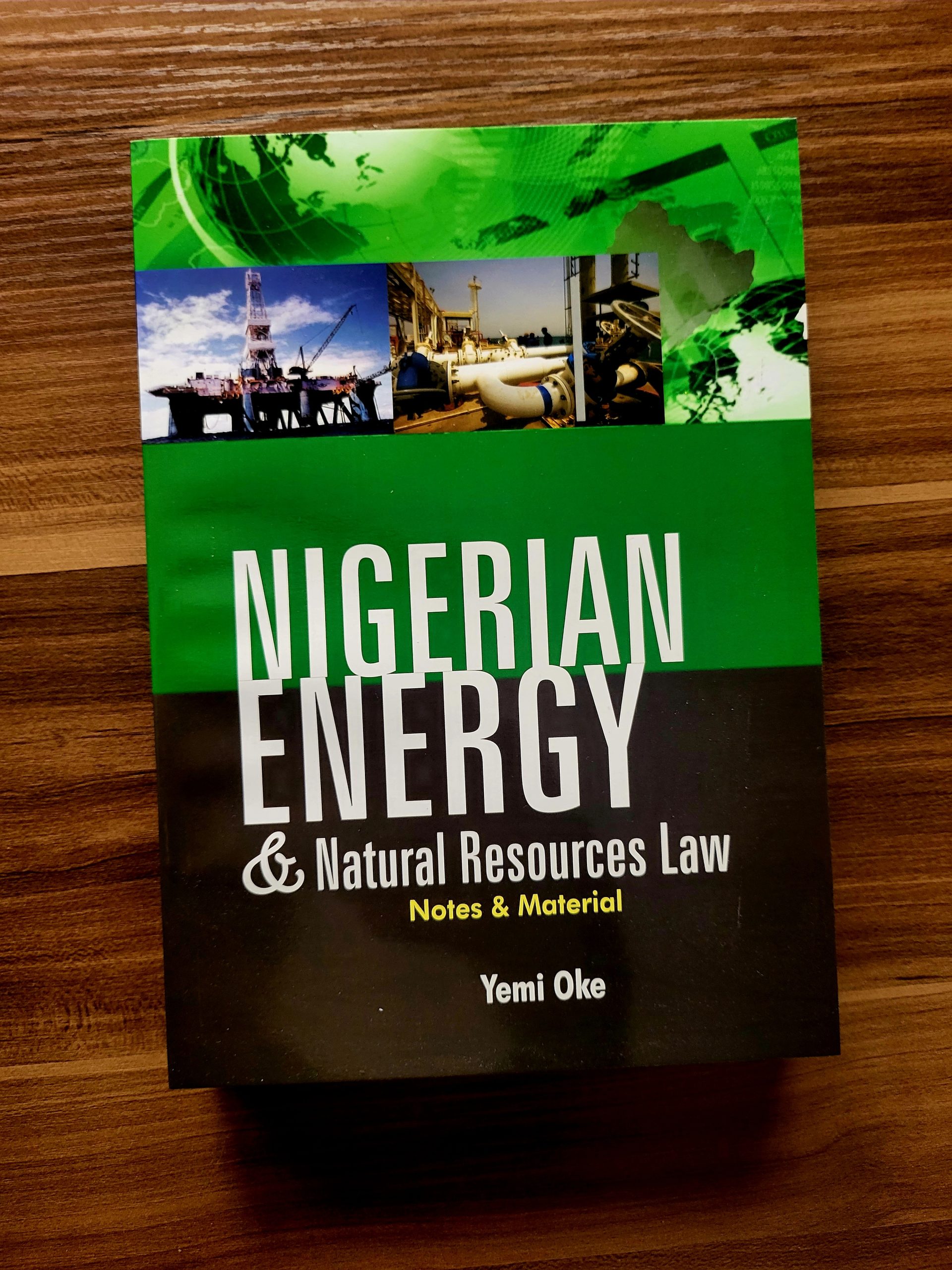
Oil and gas law is a complex and dynamic field that requires specialized knowledge and skills. If you are an oil and gas lawyer or aspiring to be one, you might want to check out these four books that cover various aspects of the Nigerian energy and petroleum industry. These books are written by experts and practitioners who have extensive experience and insight into the legal, regulatory, and commercial issues that affect the oil and gas sector in Nigeria. All six books are available on Legalnaija, a leading online platform for legal resources and services in Nigeria.
1. Nigerian Energy And Petroleum Industry Law https://legalnaija.com/product/nigerian-energy-and-petroleum-industry-law/ #legalnaija via @legalnaija
2. Nigerian Petroleum, Energy and Gas Resources Law https://legalnaija.com/product/nigerian-petroleum-energy-and-gas-resources-law/ #legalnaija via @legalnaija
3. Understanding Petroleum (Oil & Gas) Transactions and the Nigerian Market https://legalnaija.com/product/understanding-petroleum-oil-gas-transactions-and-the-nigerian-market/ #legalnaija via @legalnaija
4. Oil and Gas Laws In Nigeria https://legalnaija.com/product/oil-gas-laws-in-nigeria/ #legalnaija via @legalnaija
5.Nigerian Energy And Natural Resources Law https://legalnaija.com/product/nigerian-energy-and-natural-resources-law/ #legalnaija via @legalnaija
6. Nigerian Energy Resources Law And Practice https://legalnaija.com/product/nigerian-energy-resources-law-and-practice/ #legalnaija via @legalnaija
Order all the books via the links above or send a mail to hello@legalnaija.com or whatsapp 09029755663.

by Legalnaija | Feb 11, 2024 | Uncategorized
The Latterhouse Publishers Ltd. announces the official launch of “Lawyer-Client Relation,” a publication by Oluwemimo Ogunde SAN
On February 15th 2024, the legal community will witness the formal launch of the highly anticipated book, “Lawyer-Client Relation: Beating swords into ploughshares, authored by Oluwemimo Ogunde SAN
This comprehensive guide delves into the intricate dynamics of lawyer-client relationship, offering invaluable insights for legal practitioners and enthusiasts alike.

The occasion will be chaired by distinguished lawyer and banker ,Mr Yemi Adeola, Chairman, Sterling Financial Holdings Company Plc.
Special guest-of-honour: Dr Festus Alani Fadeyi, Chairman Pan Ocean Group.
Special guest- of-honour: Mr Adamu Atta. Chairman, M. I.A holdings
Renowned legal scholar Pro Deji Adekunle, SAN, formerly Director-General, Institute of Advanced Legal Studies, will grace the event as the esteemed Book Reviewer. His expertise and critical analysis are set to shed light on the significance of this work in the legal field.
The public lecture will be delivered by the distinguished legal luminary Mr. Tayo Oyetibo SAN whose profound experience and wisdom promise to enrich the discourse surrounding the book’s themes.
This event is anticipated to draw various legal luminaries, scholars, practitioners, and enthusiasts, creating a platform for engaging discussions, networking opportunities, and the celebration of legal scholarship at its finest.
Join us on February 15th as we embark on a journey through the intricacies of lawyer-client relationships and explore the profound impact of this essential publication on the legal landscape.

by Legalnaija | Feb 11, 2024 | Uncategorized
Dear subscribers,
As lawyers, we know how important it is to network and collaborate with our peers in the legal profession. Networking and collaborating can help us to:
Expand our professional network and build valuable relationships with colleagues, industry experts, and potential clients.Access expert advice and insights from seasoned practitioners on specific legal issues, strategies, and best practices.Stay updated with the latest legal developments, trends, and opportunities in the legal market.Enhance our skills, knowledge, and career prospects by learning from others and sharing our expertise.
But how can we network and collaborate effectively in the digital age, especially when traditional in-person events and meetings are not always feasible or convenient?
That’s where Legalnaija comes in. Legalnaija is the one-stop-shop for all things legal in Nigeria. It is a platform that provides access to:
A network of qualified and experienced lawyers and law firms in various areas of practice and locations.A library of over a thousand articles educating you on your legal rights and obligations under Nigerian laws.A bookstore where you can order recent and relevant legal books and publications.A drafting tool where you can create and download your contracts and agreements.A streaming service where you can watch professional training courses online.
Click Here
By joining LegalNaija, you will also enjoy exclusive discounts, offers, and benefits from our partners and sponsors. You will also be part of a vibrant and supportive community of legal practitioners and enthusiasts who share their knowledge, insights, and experiences on various legal topics and issues.
So what are you waiting for? Join LegalNaija today and start networking and collaborating with other lawyers online. Visit www.legalnaija.com to learn more and sign up.
We look forward to seeing you on Legalnaija and hearing from you on our online forums. Don’t forget to invite your friends and colleagues to join as well. The more, the merrier!
Happy networking and collaborating!

by Legalnaija | Feb 5, 2024 | Uncategorized
The best way to resolve a dispute is to prevent it from happening in the first place. It is pertinent to state clearly here that even the best managed businesses can sometimes find themselves in dispute with customers, suppliers, partners or employees. Especially in the aviation industry which brings people from different continents, races, tribes, and all works of life together. The aviation industry is among the largest industries in the economy of all nations of the world. It will be irrational and misleading to state that while operating and managing such a large and sensitive sector there won’t be disputes.
Resolving disputes can take a lot of time and effort, which could also affect running your business. It is advisable to take steps to avoid disputes completely, or if they do arise, they can be resolved quickly, with minimal cost and impact on business relationships.
To manage or avoid disputes in the aviation industry managers, operators and passengers must ensure that you confirm details in writing. It is worth mentioning that disputes occur because there is no clear agreement, contract, policy or procedure in place for parties to refer to. This can be avoided by having a written agreement or contract in place before you supply (or buy) goods or services.
do well to ensure that all terms, including payment details, are included in the agreement and that it is signed by all the parties involved. you should ensure that if there is need to vary the agreement or contract ensure the variations are also put in writing and agreed to by all parties. This may be as simple as obtaining an email confirming acceptance of the variation or something more formal. Make sure that business policies and procedures should be developed for employees and contractors to avoid future disputes. Employees should also have an employment contract.
It is advisable to seek legal advice when you are developing contracts. Secondly, there is this saying that you start dying the day you stop reading. To prevent this saying from taking effect, the aviation industry, airline, passengers and users of different services in aviation should note that If you sign a contract you will usually be bound by its terms and conditions. Make sure that you read and understand all contracts before signing and seek legal or other professional advice if you do not understand any of the terms.
be warned, do not rely on information from the other party as to the meaning and effects of the contract.
Again, the airline industry and the aviation service providers must take note of this point because more often than not it is because this aspect is poorly managed and not given adequate attention that most disputes originate in the aviation industry, Having good communication and relationships with your customers and suppliers will help to avoid disputes. Make sure they know how to provide feedback to you if something is not right and, if you do receive complaints, make sure you deal with them promptly. Be honest with your customers if your business is at fault. ensure you don’t ignore problems it will only make matters worse.
Furthermore, managers, service providers and airline owners and operations as well as manufacturers must Keep copies of all your signed agreements and contracts in one place so they are easy to find. Have a system to remind you of key dates and details included in the contract so you don’t breach any terms and conditions. Don’t file and forget as it could lead to a dispute down the track.
To avoid disputes in the aviation industry, Staff should be trained in how to handle customer complaints or negative feedback in an appropriate and professional manner. Develop and document a complaint handling process for staff to refer to if required. Ensure all staff are aware of the scope of their authority to enter into contracts on your behalf. The training should be a routine exercise.
This is the crux of this discussion that must be strictly adhered to. The reason is that ignorance of the law is not an excuse. so There are many legal obligations you must be aware of when operating a business. It is important to understand and comply with these obligations in order to avoid disputes and additional costs for your business.
In conclusion, Don’t wait for a problem to occur. Seek assistance and feedback from your lawyer. ask aviation experts questions. It is not all the time that your flight is cancelled that you want compensation or refunds especially when the reason for such delay or cancellation was accurately communicated to you timeously. There could be technical challenges or weather reports that must be complied with from the meteorological agency. If these instructions are adhered to, there will no doubt be minimal cases of disputes in the aviation industry.
GONJI MONDAY STANLEY
by Legalnaija | Feb 5, 2024 | Uncategorized

The Justice Aderemi Annual Law Series Foundation (JAALS Foundation), a Nigerian non-governmental organization at the weekend announced that it would train 50 Senior Registrars of the Federal Hight Court.
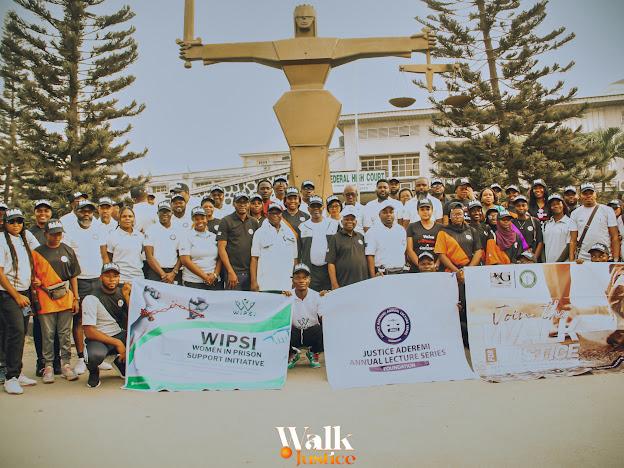
The Secretary of the Board of Trustees of the JAALS Foundation, Mr. Tolu Aderemi made the disclosure of this groundbreaking initiative during the 2024 Walk4justice event held on Saturday February 3, 2024.
The Walk4justice, which had in attendance Distinguished members of the Bar, the Bench, and corporate Nigeria started from Falomo-Ikoyi to the premises of the Federal High Court in Queens Drive, Ikoyi, Lagos State.
Aderemi said that the training program comes as the Federal High Court celebrates its 50th anniversary.
Aderemi, the Convener of the #Walk4justice, a Partner at Perchstone & Graeys and also chairman, International Law Association Arbitration Committee, expressed concern about the avoidable congestion in prisons and the state of Nigerian court infrastructure and personnel.
He called for swift action to ensure that justice remains accessible to all, stating that the perception of justice being out of reach for the common man must be addressed.

In his welcome address, the Chairman of the Board of Trustees, JAALS Foundation, Emeritus Professor Michael Omolewa, described the Foundation’s commitment as a significant step towards reforming Nigeria’s justice system.
He called on other individuals of means to support the Foundation’s cause while emphasizing the importance of the Court as the last hope of the common man.
Hon. Justice Munta Abimbola, the immediate past Chief Judge of Oyo State, commended the JAALS Foundation for its dedication to training Court Registrars.
Recognizing the pivotal role played by Court Registrars in the administration of justice, he stressed the importance of providing them with regular training.
Justice Abimbola also expressed his gratitude to the Foundation for its support of justice and urged other well-meaning Nigerians to join in supporting the cause.
The Chairman of the Nigerian Bar Association, Mr. Bisi Makanjuola, eulogised the JAALS Foundation for its laudable initiative.
He encouraged judges to continue their hard work, citing Hon. Justice Faji as an exemplary model.
Mr. Osaro Eghobamien, SAN, a member of the National Judicial Council, commended the Foundation’s unwavering commitment to improving the administration of justice.
He also highlighted the urgent need for infrastructure improvement in the Nigerian court system and expressed confidence that the training sponsored by the JAALS Foundation would contribute significantly to addressing these challenges.
Babatomiwa Adesida of Sahara Group, a private sector player, joined the voices advocating for an improved justice system in Nigeria.
Adesida emphasized the court system as the true hope of the common man and called on more Nigerians to support the JAALS Foundation’s cause.
Hon. Justice Faji, the host Judge, expressed his gratitude to the organizers of the Walk and specifically thanked the delegation and the JAALS Foundation.
He pledged to transmit the letter to the Honourable Chief Judge of the Federal High Court, expressing his thanks on behalf of the Court.
The event received support from organizations such as the International Federation of Women Association (FIDA), the Women In Prison Initiative (WIPSI), and various private sector players.
The JAALS Foundation’s commitment to training Senior Registrars of the Federal High Court marks a significant milestone in the ongoing efforts to reform Nigeria’s justice system. With the support of various stakeholders, including the legal community and private sector players, the Foundation’s initiatives are poised to make a lasting impact on the administration of justice in the country.

by Legalnaija | Dec 28, 2023 | Uncategorized
Are you looking for a way to enhance your legal skills, knowledge, and career prospects? Do you want to learn from the best experts in the field, at your own pace and convenience? Do you want to access a rich library of courses and videos, on various topics related to law and practice?
If you answered yes to any of these questions, then you need to check out the Lawlexis page on Selar. You can stream hours of professional training content for lawyers of all levels and backgrounds. Whether you are a student, a junior associate, a senior partner, or a solo practitioner, you will find something useful and relevant for your needs and interests.
Lawlexis International covers a wide range of subjects, such as:
– Film & Media Contracts
– Startup Compliance
– Negotiation & Dispute Resolution
– Startup Funding
– And much more!
You can stream the content anytime, anywhere, on any device, with a simple payment as low as 2,500 Naira. At Lawlexis we have provided training courses to over 500 lawyers, and we are excited to offer videos of our training sessions to help build the capacity of lawyers across Nigeria.
Don’t miss this opportunity to join the Lawlexis community and access the best legal content available online. To get started, visit the Lawlexis selar page at https://selar.co/m/lawlexis-international1 and sign up today. You won’t regret it!
@Lawlexis

by Legalnaija | Dec 22, 2023 | Uncategorized

DRIVE INCREASED FOREIGN DIRECT INVESTMENT INTO NIGERIA USING ARBITRATION- TOLU ADEREM
Arbitration experts in Nigeria have called for a stronger commitment to foreign direct investment and the enforcement of arbitral awards in the country. This call was made at the 2023 Annual Dinner of the International Law Association (ILA), Arbitration Commission, held in Lagos State. The theme of the dinner was ‘International Arbitration: Putting Our House In Order’.

Leading this charge, Prof. Tolulope Aderemi, Chairman of the Arbitration Committee, expressed concerns about the increasing number of appeals on arbitration-related matters reaching the Supreme Court. He emphasized the need to reconsider such appeals on weak grounds, as they hinder Nigeria’s potential as a preferred foreign investment destination. Aderemi also called for strict penalties to be imposed on those who violate the ethics of the industry.
Aderemi urged his colleagues to continue to practice arbitration with integrity and within ethical boundaries. He proposed the establishment of a national code of ethics for arbitrators, the evaluation of legal provisions relating to misconduct, and the enhancement of accountability and probity in the conduct of arbitrators. He also called on the Nigerian government to conduct an audit of contracts similar to the P&ID contract to assess the government’s exposure and mitigate risks.
Prof Damilola Olawuyi, SAN, President of the International Law Association, Nigerian Branch, commended the efforts of the Arbitration Committee in leading change in the Nigerian arbitration landscape. He emphasized the importance of aligning arbitration practices in Nigeria with international best practices and standards.
The keynote speaker, Mr. Babatunde Fagbohunlu, SAN, discussed the challenges faced by African arbitrators in accessing the global arbitration market and the significant arbitral awards against the Nigerian government. Fagbohunlu emphasized the need for Nigerian arbitrators to equip themselves for global opportunities. He proposed the establishment of a single arbitration institution for the African continent to enhance its attractiveness and participation in international arbitration. Fagbohunlu also stressed the importance of supporting the judiciary in enforcing arbitration agreements and awards.
During the Fireside chat, Mrs. Hairat Balogun, a Life Bencher and the first female Attorney General and Commissioner for Justice, Lagos State, addressed the ethical issues within the legal profession. She attributed the decline in the profession’s standing to the lack of adherence to ethical rules and the diluted training of lawyers. Balogun criticized the current method of admission into the Nigerian Law School and called for a reconsideration of the suggestion to admit only students from accredited schools.
The 2023 ILA Dinner concluded with a unanimous recognition of the need for practitioners to uphold integrity, accountability, and probity in arbitration. The event highlighted the importance of attracting foreign direct investment and enforcing arbitral awards in Nigeria. The discussions emphasized the role of arbitration in economic development and the need for practitioners to practice with diligence and integrity to support governments worldwide.

by Legalnaija | Nov 25, 2023 | Uncategorized
ESG Due Diligence in Nigerian Commercial Transactions
A traditional due diligence (DD) is performed to verify details in a transaction and detect potential defects in a deal or investment prospect. This process would usually include considerations of environmental, health, and safety (EHS) issues.
However, given the increasing emphasis on sustainability by stakeholders and regulatory bodies, it has become imperative to integrate Environmental, Social, and Governance (ESG) metrics into the due diligence procedures to steer clear of bad investments.
Consequently, investors are now inclined to allocate higher financial resources for sustainable targets. Unlike the relatively narrower scope of EHS, ESG introduces a more comprehensive array of sustainability risks and opportunities directly influencing transaction valuation.
Investors and creditors are increasingly employing Environmental, Social, and Governance (ESG) criteria to evaluate risks and opportunities for value creation. Businesses now face mounting pressure from various sources, including regulatory bodies, investors, and local communities, compelling them to adopt a proactive stance on ESG issues.
As said above, while the due diligence process traditionally encompassed Environmental, Health, and Safety (EHS) considerations, there’s a discernible shift toward a more comprehensive review utilizing ESG standards that span environmental, social, and governance topics. This shift is propelled by heightened expectations from stakeholders and growing concerns about the climate and environmental impact of business activities. In commercial transactions such as Mergers and Acquisitions (M&A), the integration of ESG due diligence is crucial during the negotiation phase, as significant ESG findings can exert a tangible influence on the valuation of the target company.
Conducting ESG due diligence serves several key objectives within the context of commercial transactions. Primarily, it aims to comprehensively grasp the risk profile and exposure of the company to environmental, social, and governance (ESG) considerations. This process involves a detailed examination of associated ESG risks and the identification of any red flags that may arise during the due diligence process. Additionally, it aims to ferret potential risk mitigation measures.
Given that a company’s ESG performance significantly influences its operations (its capacity to secure financing, maintain employee satisfaction and morale, capitalize on growth opportunities, and retain and expand its customer base), ESG considerations become crucial in decision-making. As a result, stakeholders such as investors, employees, customers, regulators, and others are increasingly holding companies accountable for their ESG practices.
In a comprehensive survey covering Europe, the Middle East, and Africa, a 2022 KPMG study found that over two-thirds of dealmakers expressed a readiness to offer a premium for a target exhibiting advanced ESG maturity in alignment with their specific ESG priorities.1 In another survey of 200 ESG practitioners including corporate investors, financial investors, and M&A debt providers, it was found that 74% of professionals are already integrating ESG considerations as part of their M&A agenda, with the identification of ESG risks and opportunities given as the top reason for conducting ESG due diligence, by 46% of respondents, followed by requirements by investors, cited by 19%, and preparation for regulatory requirements by 14%.2
Evaluating a company’s environmental, social, and governance (ESG) practices through due diligence provides insights into its value creation and sustainability. Beyond assessment, this process empowers investors to anticipate and implement post-closing strategies to mitigate identified risks. Investors often place a premium on sustainable targets, driven by the belief in a positive, long-term relationship between sound ESG practices and financial returns. Essentially, strong ESG performance is considered a proxy for effective management, recognizing its pivotal role in determining a company’s financial value.
Materiality
Determining which ESG activity to scrutinize might be taxing because ESG is a broad term. I liken it to a skilled fisherman navigating the open sea. ESG, akin to a boundless ocean, teems with various sea monsters representing diverse aspects. Much like a fisherman’s cautiousness deepens with the water’s depth, the scrutiny of ESG factors intensifies depending on the specifics of the transaction and the nature of the company involved.
Close to the shore, where waters are shallower, a fisherman may only concern himself with a few threats. Similarly, in the realm of ESG, the level of scrutiny hinges on the subject of the transaction. ESG, being extensive and at times complex, encompasses different topics under each pillar. For instance, within the Environmental (E) pillar, considerations span biodiversity, climate change, decarbonization, air pollution, deforestation, water contamination, and more. The Social (S) pillar addresses matters such as minimum wage, child labor in the value chain, cybersecurity, data privacy, diversity and inclusion, and human rights. Governance (G) encompasses business ethics, corporate governance, responsible tax records, regulatory compliance, and anti-corruption measures.
During negotiations, it is evident that not all these issues would be equally applicable. Identifying the pertinent (material) ESG topics for scrutinizing a transaction represents the initial and significant challenge. There is no one-size-fits-all approach; hence, the scope of an ESG due diligence must be tailored on a case-by-case basis, considering the unique sustainability-related risks and opportunities associated with each transaction.
Nigeria
The Financial Reporting Council of Nigeria’s recent emphasis on sustainability risk disclosures, coupled with the proposal for a carbon tax and the escalating concerns about data privacy from both stakeholders and regulators, reflects a notable shift towards more rigorous ESG regulatory practices in Nigeria. This shift underscores the importance of conducting thorough ESG due diligence. Investors and financiers adopting ESG due diligence procedures enhance their readiness to navigate evolving regulatory requirements.
Incorporating ESG due diligence into the deal process not only distinguishes organizations in a competitive field but also positions them to secure deals successfully. This strategic approach demonstrates a commitment to long-term value creation, providing investors with a competitive advantage. Also, prioritizing ESG due diligence ensures a comprehensive understanding of the broader spectrum of sustainability risks and opportunities directly influencing deal valuation.
While ESG considerations have been around for many years, ESG due diligence is still a relatively new concept at its nascent stage of adoption. As a result, there is no uniform standard or guideline for organizations to comply with. The good news is organizations can develop their ESG due diligence template or framework aligned to their unique business needs.
It’s essential, however, for an organization to already have an established ESG strategy as a prerequisite for building a robust ESG due diligence framework. Before delving into the specific ESG considerations relevant to a transaction, it’s crucial to evaluate the ESG priorities that will shape decision-making processes. Subsequently, the ESG strategy can be seamlessly connected to the ESG due diligence process, enabling the development of a tailored ESG due diligence framework for the deal at hand.
I agree, it is not as easy as it sounds – condensing a practical concept into words is a trap for ridiculous simplification. Nonetheless, I’ve managed to deconstruct the concept into its prime elements. It is crucial to underscore that ESG due diligence casts its net over all entities involved in a transaction. Also, undertaking conventional financial due diligence while neglecting non-financial facets such as ESG is akin to disregarding factors that may become legal and financial risks in the long run (See FTX, Binance, OpenAI, Terra, Gemini Trust and BlockFi). ESG considerations wield the power to either fortify, erode, or forge value. Investors sidestepping ESG due diligence do so at their own peril.
Source: www.linkedin.com/peterokediya