Dele Adesina Congratulates Hon. Justice O.A. Olayinka on her Retirement from the Bench

Dele Adesina Congratulates Hon. Justice O.A. Olayinka on her Retirement from the Bench


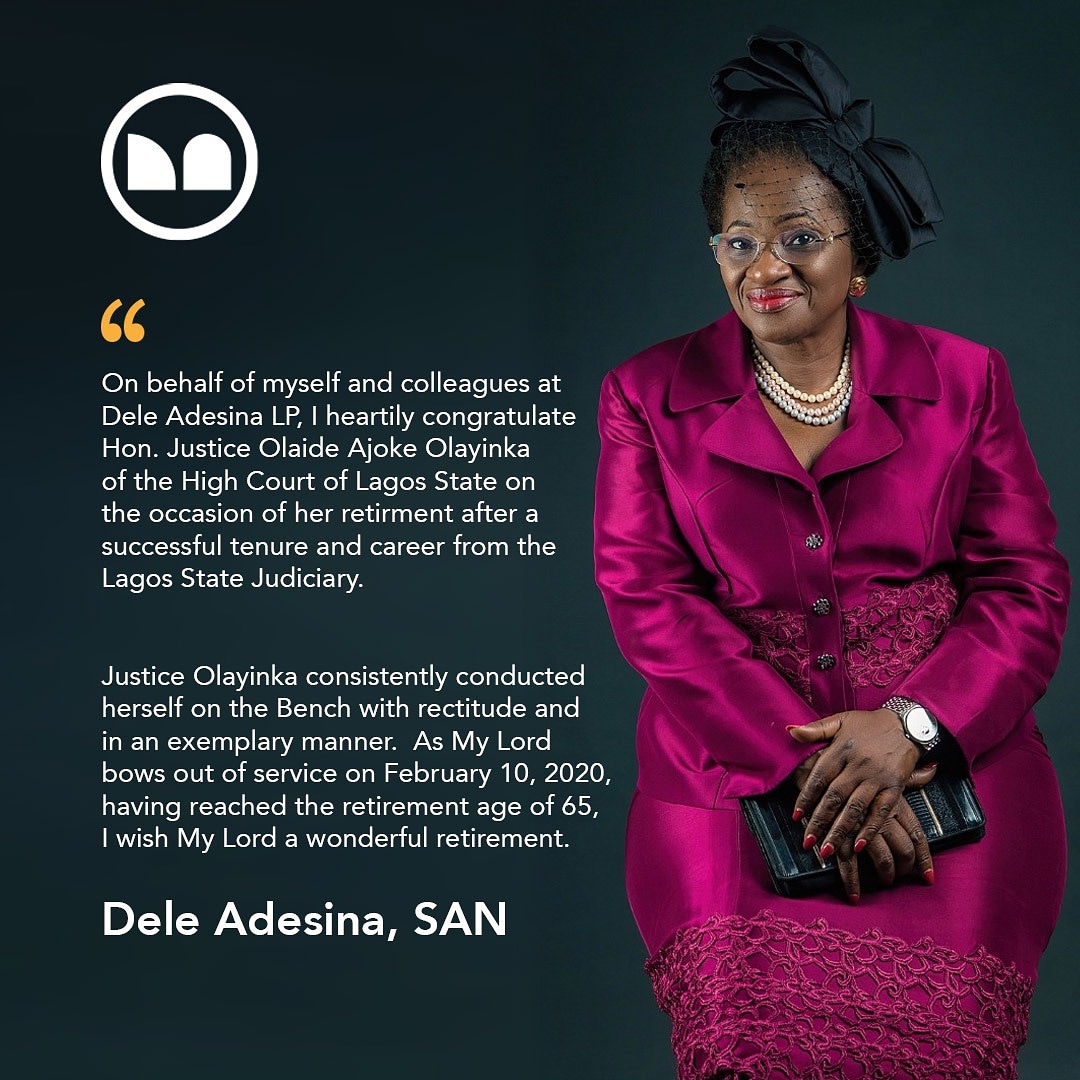
On behalf of myself and colleagues at Dele Adesina LP, I heartily congratulate Hon. Justice Olaide Ajoke Olayinka of the High Court of Lagos State on the occasion of her retirment after a success tenure and career from the Lagos State Judiciary.

Justice Olayinka consistently conducted herself on the Bench with rectitude and in an exemplary manner. As My Lord bows out of service on February 10, 2020, having reached the retirement age of 65, I wish My Lord a wonderful retirement.

Dele Adesina, SAN 

The Court of Appeal clears the air on the difference between class actions and representative actions | Olumide Babalola

The Court of Appeal clears the air on the difference between class actions and representative actions | Olumide Babalola

Christmas
came quite early for me as the Court of Appeal delivered a landmark judgment in
my appeal against Apple Inc. clarifying the difference between class actions
and representative actions. It was a journey of three years which began on the
5th day of September 2016 when I filed a class action against the
makers of iPhone (Apple Inc.) over their defective iPhone 6 which was universally
plagued with the touch-screen disease.

The
suit was certified as a class action by Hon. Justice D. T. Okuwobi after which
the certification order was advertised in national dailies and the originating
processes subsequently served on the American company at their office in California,
USA.

The Defendant was represented
by the first female maritime lawyer to take silk, Mrs. Funke Agbor, SAN of the
Firm of Adepetun Caxton Martins, Agbor & Segun who filed an objection to
the competence of my suit on the ground of non-fulfilment of condition
precedent under the now repealed Consumer Protection Council Act, LFN 2004. 

My Lord, Okuwobi, J. agreed
with the learned silk, upheld her objection and consequently struck out the
suit. The court specifically held that:

“It is a fact that
every iPhone user has a separate contract of sale when the purchase was made. The
Claimant did not at any time negotiate as an agent of all iPhone users in
Nigeria when the phones were purchased. A contractual relationship is founded
on the basis of privity. There is no evidence of assignment of the contractual
rights of       other members of the class
or that an enforceable trust has been created in his favour. There are also no
statutory exception, it is therefore my considered view that the breach of
warranty sought in    this action is not
proper in a class action.”
(Emphasis mine) 

The
emphasized part of the above holding formed the plint of Ground 1 of my notice
of appeal. The appeal was heard in October and judgement delivered on the 6th
day of December, 2019 as follows:

On
the meaning of class action
, My Lord, J.Y. Tukur, JCA who read
the leading judgement held at page 15 thus:

“As a first port of
call, it is very expedient to draw a distinction between class actions and
representative actions. According to Black’s Law Dictionary, Eighth Edition,
page 267, defines a class of actions as:

“A lawsuit in which the
court authorizes a single person or a small group of people to represent the
interests of a larger group, specifically a lawsuit in which the convenience
either of the public or of the interested parties requires that the case be
settled through litigation by or against only a part of the group of similarly
situated persons and in which a person whose interests are or may be affected
does not have an opportunity to protect his or her interests by appearing
personally or through a personally selected representative, or through a person
specially appointed to act as a trustee or guardian.”

On
the peculiarity of class action
, the court held at
page 16 that:

“In a class action, the
class must be so large that individual suits would be impracticable. There must
be legal or factual questions common to the class. The claims or defences of
the representative parties must adequately protect the interests of the class.”

On
the distinction between class action and representative action
,
the court held at page 17 that:

“(1)In my view, class
action is restricted to interpretation of written instruments, statutes,
administration of estates, property subject to trust, customary, family or
communal property, whereas a representative action on the other hand, may be
brought on any cause of action.

(2)A class action
requires appointment by the judge whereas a representative action does not
require leave of court.

(3)In a class action,
notice of appointment is required, whereas notice of representation is not
required in a representative action.

(4)Class members may
not be identifiable and ascertainable in a class of action, but interested
persons are ascertainable in a representative action.

(5)No doubt, I am aware
that in class actions, members are only to have interest whereas in
representative actions, members must have same interest. See: Order 13, Rule 12
and Order 13, Rule 13 of the High Court of Lagos State Civil Procedure Rules,
2012.”

Conclusively on the
issue, the court summed it up as follows:

There is no gainsaying the
fact that a judge is empowered to appoint one or more persons to represent a
person or class or members of the class in instances where a judge is satisfied
that a person, the class or some members of the class interested cannot be
ascertained, the person, the class or some members of the class interested,
cannot be found, the person, class and the members thereof cannot be
ascertained and be found…Thus, the lower court, in my view, went on a frolic of
its own in its position that there must be assignments of contracts of members
represented or that, an enforcement trust must be created in a class action. Accordingly,
issue 1 is resolved in favour of the Appellant and against the Respondent.”

Although, I lost the
appeal on the ground relating to non-fulfilment of condition precedent (which
ought to be tested at the Supreme Court) the silver-lining in this decision for
me, is the comprehensive consideration given to class action procedure which has
been repeatedly, in different fora, been confused with the representative
actions.

On the whole, I am
grateful to the learned Justices of the Court of Appeal for pronouncing extensively
on this procedural phenomenon which remains underutilized in our courts even
till this day.

Olumide
is
the Managing Partner of Olumide Babalola LP and he writes from Lagos, Nigeria.

Do not propagate falsehood against professional colleagues in the name of NBA politics | Olumide Olaiya Esq

Do not propagate falsehood against professional colleagues in the name of NBA politics | Olumide Olaiya Esq

I do not expect lawyers to play politics this way. Do not propagate falsehood against professional colleagues in the name of NBA politics. As against the false entry salary of 35K being touted around, I know as a fact that Corps members get far above 35K as allowance per month in Dele Adesina & Co. I worked for over six years in the Firm and I am in a position to state the true position. Young and discerning members of our Profession should not be misled!

Indeed, similar propaganda was used against Presidential candidates in the 2018 NBA Elections. Since this Exco assumed office, have they compelled law firms in Nigeria to pay what Paul Usoro SAN pays lawyers in his office? NO!
Will Olumide Akpata or Ajibade SAN compel law firms in Nigeria to pay what they pay their lawyers as salary? Or will they employ all junior lawyers in their Firms? How many young brilliant lawyers without connection can get employment in their Firms?

Think of someone who can create enabling environment for young lawyers to be gainfully employed. Dele Adesina was the head of the Secretariat of the NBA administration that performed creditably well in the history of NBA with legacies including but not limited to the creation of the Section of Business Law and Legal Practice and the only attempt at fixing remuneration for junior Lawyers in 2002 with a view to addressing the exploitation of junior members of the Bar at the time.

Lawyers deal with facts not fiction. I am compelled to respond to this falsehood as several unsuspecting young lawyers appear to believe this wicked and demeaning propaganda.

I am Olumide Olaiya Esq. and I just want lawyers to play politics with decency.

Dele Adesina, SAN felicitates with NBA Okitipupa On The Occasion of its 2020 Annual Law Week

Dele Adesina, SAN felicitates with NBA Okitipupa On The Occasion of its 2020 Annual Law Week

I thank the Chairman, the Executive and members of this great Branch of our beloved Association for giving me the honour and privilege of presenting this goodwill message. 

I must also not fail to thank you all for keeping faith with our corporate social responsibility first as Lawyers and as Nigerian Bar Association, which responsibility I believe is one of the reasons for the holding of this annual Law Week. One of our great predecessors in the Profession, Sapara Williams Esq., stated a guiding principle which is highly fundamental when he said that Lawyers exist for the advancement of its people. The Law Week is one of the veritable platforms of discharging this corporate responsibility.
I have been closely associated with this Branch for a long time. It is an Association that has not only advanced our mutual interests but also has produced and will continue to produce several personal friends for me. I recall with excitement the very wonderful support and visible role that the Branch and the Leaders of this Branch, some of who are today highly respected Judges and State Board Members, played in getting me elected as the General Secretary of the Nigerian Bar Association in 2002. I must also seize this opportunity to thank you all for the wonderful support I enjoyed from you in 2014.
The theme of this year’s Law Week I understand is “Security as the Bedrock of a Prosperous Nation: Rejigging Nigeria’s Constitutional Federalism”. This double barrel theme is not only topical and contemporary; it couldn’t have come at a more auspicious time than now. First, insecurity in Nigeria today constitutes the most concerned issue, the most debated and discussed and the greatest challenge confronting our Nation. As Lawyers, we all know that all over the world, government exists for the safety and security of its people. The Constitution of the Federal Republic of Nigeria, 1999, as amended unambiguously stated that the security and safety of the people shall constitute the primary responsibility of government. That is why I said that this topic couldn’t have been more timely.
Talking also about rejigging Nigeria’s Constitutional Federalism I submit is a wakeup call. Some people have described the 1999 Constitution as a document that tells lies against itself. Others have said that the document is a fraud. All these descriptions of the 1999 Constitution are expressions of the peoples understanding of the Constitution regarding whether indeed it is a Federal Constitution, a Unitary Constitution, or an amalgamation of Federal and Unitary Constitutions in one document. The renowned Professor of Constitutional Law, Professor Ben Nwabueze SAN, described the 1999 Constitution as an illogical document because it is a unitary constitution operating in a federal setup. I know as you probably do that if the foundation be destroyed, there is nothing the righteous can do. The 1999 Constitution which is the organic and foundation of all laws in Nigeria is the bane of our problem. The contradictions, inconsistencies and incongruities in our brand of Federalism as espoused by our Constitutional democracy have been eloquently brought forth by the needless controversy enveloping the Amotekun Security Initiative of the South-West Governors. An initiative I consider to be the biggest achievement of these Governors in drawing attention in a calculated manner to the plight of the people under their control. I trust the guest lecturers will do justice to the theme of this Law Week.
The first step towards success in life is taken when you refuse to be a captive of the environment in which you live. To be a captive of course is to do nothing about a situation and resign yourself to fate even when things seem to be going wrong around you. Many people want a better tomorrow without any attempt to do anything today, forgetting that tomorrow belongs to those who prepare for it today. The theme of this Law Week is indicative of the fact that, both as a Branch and as a Lawyer, you are doing something definitive today for a better tomorrow for this Nation.
So, the Nigerian Bar Association has a great responsibility to reconstruct this Nation. True Federalism as a system of government dejure and defacto is inevitable if Nigeria must become a secured and a prosperous Nation. Indeed, I believe that Nigeria in this connection has technically avoided its problems for too long, forgetting that no problem is ever solved by technically avoiding the problem. Times such as this require for the Nigerian Bar Association a tested hand and experienced leadership with honesty of purpose with appropriate focus and  requisite character, competence, capacity and verifiable conviction of courage to galvanize our members, both leaders and followers nationwide, to play more active roles in reconstructing this Nation. The Nigerian Bar Association has the capacity. All we require is the leader with the complementary productive capacity.
I wish you a very successful Law Week.
Dele Adesina SAN FCI Arb.
Past General Secretary
Nigerian Bar Association
And Life Member, Distinguished
Body of Benchers
Dele Adesina Condemns Police Assault On Female Lawyer

Dele Adesina Condemns Police Assault On Female Lawyer

The news of the Police invasion of the office of the Women Aid Collective (WACOL) and the brutal assault on two of its female lawyers who are members of the Nigerian Bar Association is not only shocking and worrisome but clearly depicts impunity and abuse of power by Police officers of the Enugu Police Command. 
To learn that Ibangah Goodness Esq., one of our colleagues, was beaten to coma by the same Police officers who are charged to protect every Nigerian citizen is an affront to the rule of law and should hurt the senses of all well meaning Nigerians. 

Sadly, this unlawful act of Police brutality and assault on members of the Legal Profession is one too many and the Nigerian Bar Association must continually take pragmatic steps to put an end to the unlawful assault of its members by officers of the Nigerian Police. 

I commend the Nigerian Bar Association President, Mr. Paul Usoro, SAN and other members of the Nigerian Bar Association who have called for an investigation and resolution of the incident. I also condemn the actions of the Police officers who undertook this dastardly act. 

We must all work together to secure the future of the legal profession. 

Commissioning  of Court of Appeal, Awka, another step to ensuring swift Administration of Justice – Dele Adesina SAN

Commissioning  of Court of Appeal, Awka, another step to ensuring swift Administration of Justice – Dele Adesina SAN


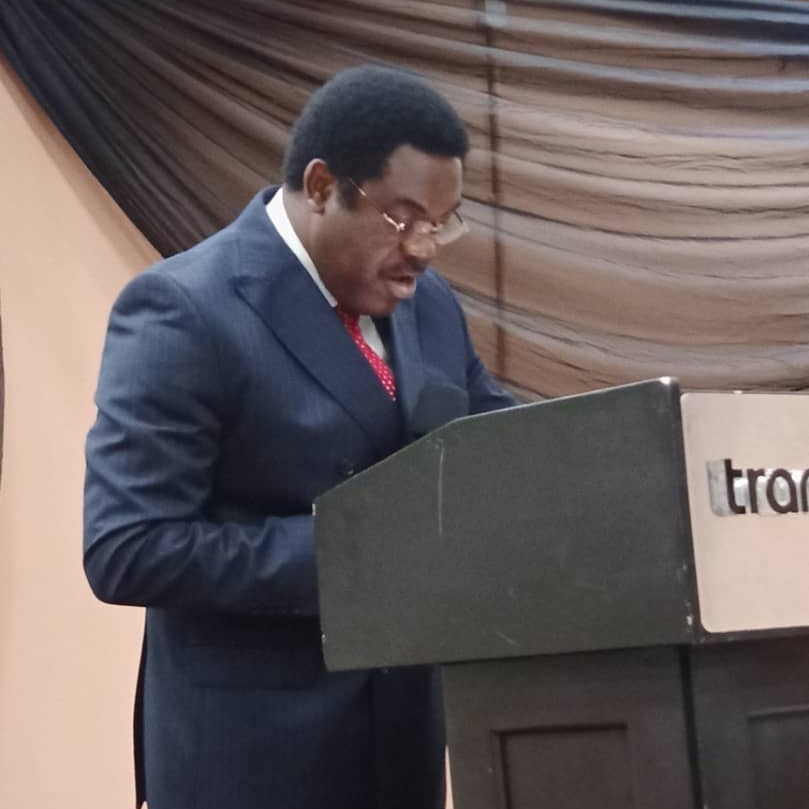
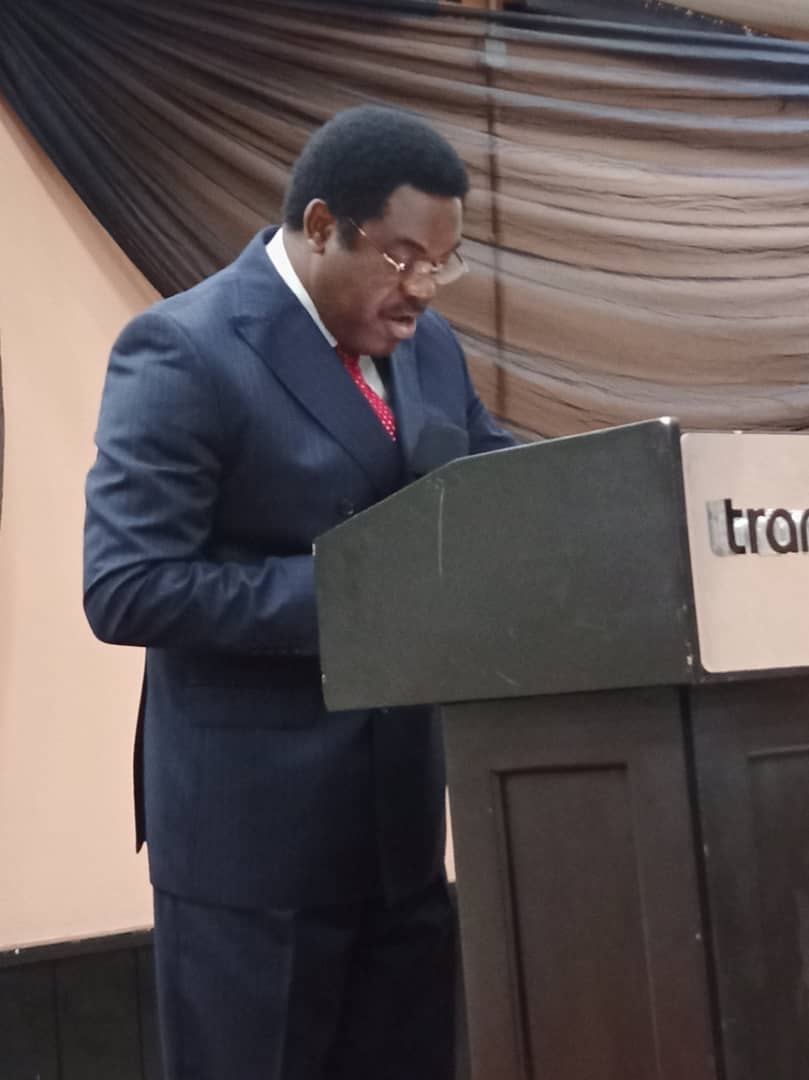
The commissioning of another edifice for the Court of Appeal in Awka, Anambra State is yet another reason to commend my Lord, the President of the Court of Appeal, Honourable Justice Zainab Adamu Bulkachuwa.


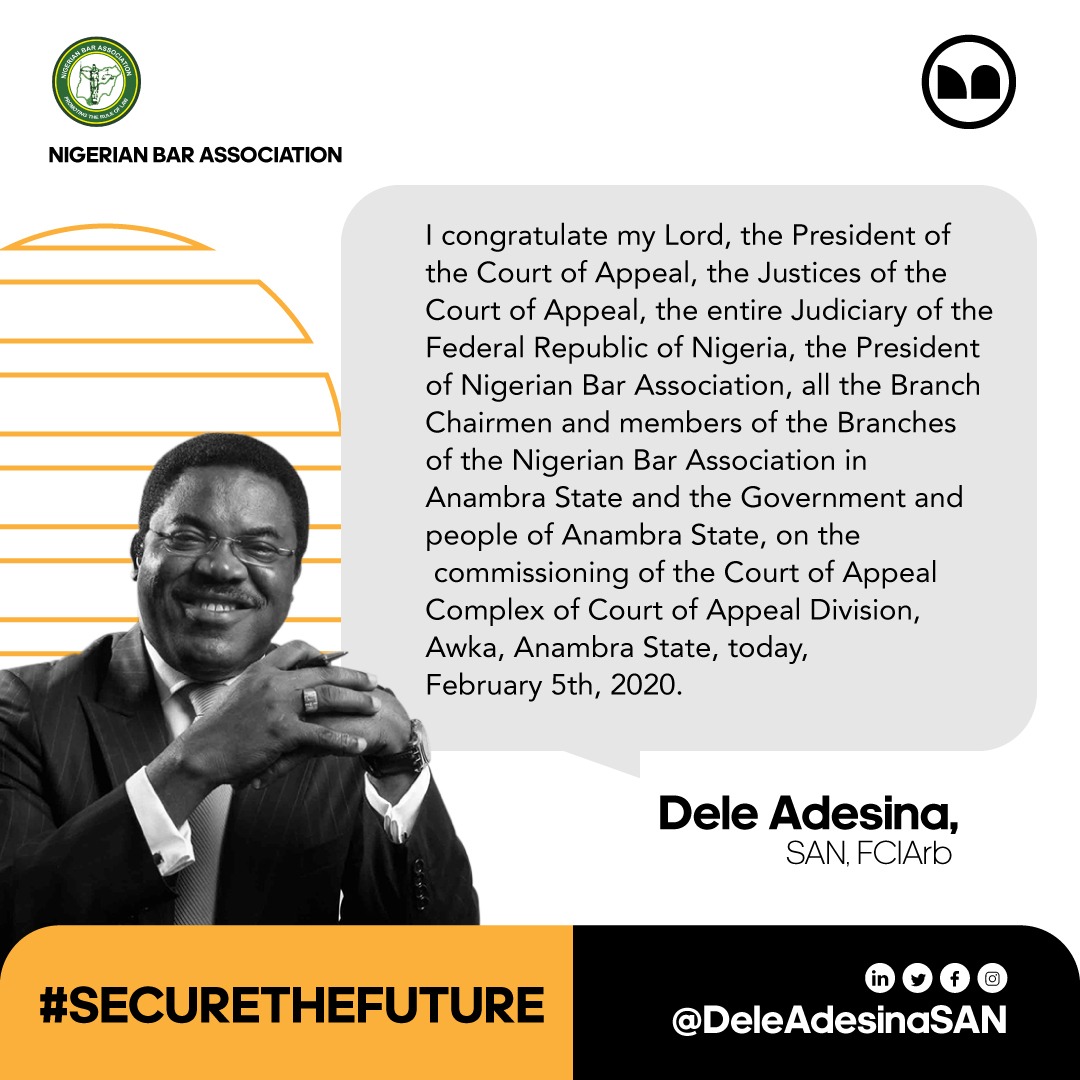
Once again, I congratulate the Justices of the Court of Appeal, the entire Judiciary of the Federal Republic of Nigeria, the President of Nigerian Bar Association, Mr. Paul Usoro SAN, all the Branch Chairmen and members of the  Branches of the Nigerian Bar Association in Anambra State and the Government and people of Anambra State, on the commissioning of the Court of Appeal Complex of the Court of Appeal Division, Awka, Anambra State, today, February 5th, 2020.

This commissioning will aid the swift dispensation of justice and will certainly address the high number of appeals before my noble Lords at the Court of Appeal, Benin and the recently commissioned Asaba Division, thereby making justice more accesible to Nigerians. 


Once again, I congratulate my Lord, the President of the Court of Appeal, Honourable Justice Zainab Adamu Bulkachuwa, and I hope and trust that the incoming President of the Court of Appeal will take the development further.

DELE ADESINA SAN, FCI. Arb
Commissioning  of Court of Appeal, Asaba, a great step for our System of Justice Administration – Dele Adesina SAN

Commissioning  of Court of Appeal, Asaba, a great step for our System of Justice Administration – Dele Adesina SAN

Let me congratulate my Lord, the President of the Court of Appeal, Honourable Justice Zainab Adamu Bulkachuwa, the Justices of the Court of Appeal, the entire Judiciary of the Federal Republic of Nigeria, the President of Nigerian Bar Association, Mr. Paul Usoro SAN, all the Branch Chairmen and members of the nine Branches of the Nigerian Bar Association in Delta State and the Government and people of Delta State, on the commissioning of the Court of Appeal Complex of Court of Appeal Division, Asaba, Delta State, today, February 3rd, 2020.
This commissioning represents a great step forward in our administration of Justice. The positive impact of which can never be over emphasised. Apart from directly addressing the problem of delay and congestion at the Benin Division of the Court of Appeal, the sighting of the Asaba Division will not only reduce the cost of seeking justice but will also make it more assessable to the people.

I am particularly happy at this positive development in our Judiciary because just a few weeks ago in my interview published by ThisDay Newspaper I was making a case for why every State should have a Division of the Court of Appeal with a view to proactively and strategically address the issue of delay and congestion in our justice system, not knowing that some steps such as these are already being taken. Once again, I congratulate my Lord, the President of the Court of Appeal, Honourable Justice Zainab Adamu Bulkachuwa, and I hope and trust that the incoming President of the Court of Appeal will take the development further.

DELE ADESINA SAN, FCI. Arb*

Dele Adesina, SAN Urges Government To Enhance Police Efficiency

Dele Adesina, SAN Urges Government To Enhance Police Efficiency

Deacon Dele Adesina, SAN has urged the Federal Government to enhance police efficiency by providing  requisite security equipments and communication machinery to aid in detecting and combating crime.
Mr. Adesina, SAN made this statement via his social media handles while commenting on the abduction of Zainab Kishimi, a member of the Nigerian Bar Association, Jalingo Branch, Taraba State.

Mr Adesina said “the criminal abduction of Zainab Kishimi Esq., the Vice Chairman of NBA Jalingo Branch came as another rude shock. Information has it that Zainab was kidnapped right at her residence behind Central Bank Headquarters, Jalingo, Taraba State at around 8:00 pm on Thursday, the 30th of January, 2020.

This kidnap incident is one too many and I totally condemn it. The question is if one is not safe in his or her home which is his or her sanctuary, where else will one be safe. I urge the Police and other security agents to urgently rescue Zainab from her abductors, arrest the abductors and have them prosecuted accordingly.

I seize this opportunity to call on the government to provide requisite security equipments and communication machinery to the Police in order to enhance their efficiency and effectiveness, particularly in detecting and preventing criminal activities of this nature.

Mr. Adesina also prayed for the safe return of Zainab Kishimi Esq. to her home & family.

The Cultural Yet Universalist Outlook Of The African Charter On The Rights and Welfare of The Child |Oludayo Olufowobi

The Cultural Yet Universalist Outlook Of The African Charter On The Rights and Welfare of The Child |Oludayo Olufowobi

Introduction
The African Charter on the Rights and Welfare of the Child (ACRWC) entered into force in 1999 under the auspices of the African Union (AU). The ACRWC was promulgated upon the consideration of the consideration of the Declaration on the Rights and Welfare of the African Child, adopted by the Assembly of Heads of State and Government of the Organization of African Unity, at its 16th Ordinary Session in Monrovia, Liberia from 17 to 20 July 1979, that recognized the exigency of taking appropriate measures to promote the rights and welfare of the African Child.  
It is worthy of note that the ACRWC further consolidated the central theme of the Charter of the Organization of African Unity centered around the promotion of human rights and that of the African Charter on Human and People’s Rights which proclaims the egalitarian nature of humans and the dire need to protect their rights as enshrined in the African Charter on Human Rights, without any distinction as to race, ethnic group, color, sex, religion or other status.
Inherent Problems with the Convention on the Rights of the Child (CRC)
At this juncture it is important however that we avert our mind to the fact that, prior to the promulgation of the ACRWC, the CRC was already in existence supposedly covering the field on issues bordering on children’s rights. However, as encapsulated by Lee Muthoga, the idea to promulgate a separate ACRWC “originated from a desire to address certain peculiarly African problems”. 
This was coupled with the fact that the CRC was rife with certain inadequacies regarded as threefold; the underrepresentation of Africans during the drafting process of the CRC, omission of potentially divisive and emotive issues in the search of consensus between states from diverse backgrounds, insufficiency of specific provisions addressing certain aspects peculiar to Africa in a bid to reach a compromise among United Nations Member States. This was further bolstered by the school of thought which advocates for regional arrangements such as an African equivalent of the CRC; because each region, with its unique culture, traditions and history is best placed to handle and resolve its own human rights situations; as opposed to meddling in certain Eurocentric and more sophisticated rights in Europe (such as the right of children conceived through artificial insemination to know their origin) .  Some of the peculiarities of the African situation omitted from the Convention were; the situation of children living under apartheid, harmful traditional African practices such as female genital mutilation and circumcision, socioeconomic conditions such as illiteracy and low-levels of sanitary conditions with all their threats to survival, issue of child-soldiers and minimum age for conscription, position of children in prison and that of expectant mothers amongst many other issues. 
The ACRWC was thus promulgated with an aim of substantially addressing this issue. Hence, Frans Viljoen’s statement regarding the ACRWC being apace with African traditions and values and well-suited to its unique socioeconomic, political and cultural environments, yet still retaining its Universalist outlook is apt.
Afrocentric Innovations of the ACRWC
The provisions of the ACRWC clearly put primacy over African cultural practices.  In article 2(1) of the Charter, states are required to abolish customs and practices harmful to the welfare, normal growth and development of children. In article 21, reference is made to pertinent cultural practices that are prejudicial to the health or life of a child and those customs and practices that are discriminatory to the child on the grounds of sex or other status.  There is specific proscription of harmful practices such as child marriage and the betrothal of boys and girls through legislation specifying the minimum age of marriage to be 18 years and the compulsory registration of all marriages in an official registry.  It is of crucial importance to bear in mind the fact that this despite not making specific references, this provision also serves as a blanket provision for a host of other harmful traditional practices such as killing of twins, female genital mutilation and dietary taboos. It is imperative to note that this provision ought to be read with the guideline that the best interests of the child “shall be the primary consideration” , and not merely “a primary consideration as required by the CRC”.
Bearing in mind the fact that Africa has a number of conflict-torn zones, owing to incendiary interests, revolutions, overthrow of governments and children being at the center of these direct hostilities, a case in sight is Rwanda, there is a broader protection of children in armed-conflict under the ACRWC. There is an effective effort at stemming the phenomenon of child-soldiers, as no person under the age of 18 is allowed to be conscripted.  There are equally direct measures obliging states towards the protection of children in armed conflicts, taking cognizance of the African context rife with internal armed conflict, tension or strife . Flowing from this, the ACRWC explicitly recognizes internally displaced children as refugees.  
The kind of displacement is not restrictive as it could be political, from breakdown of socioeconomic order or however it is caused. In sync with the socioeconomic affairs at the time of promulgation, specific reference is made to special needs of children living under apartheid and areas subject to military destabilization by the apartheid system. 
The ACRWC in cognizance of current world realities realizes the need for partnerships for the realization of the protection of this right. Hence, duties are set out for not only states, but parents and children. Hence, it is no surprise that implementation for this Charter is stronger under the auspices of the African Committee. Further, in order to keep a pulse on the yearnings of right-holders, these efforts are strengthened by the explicit provision for dissemination of information on the rights of the African child. 
Conclusion
Without any gainsaying, the ACRWC covers the inherent lacunae in the global instrument; through specific provisions on socioeconomic crisis plaguing the region which gives it its unique African undertone; making it a more Afrocentric equivalent of CRC. It certainly succeeds in achieving a higher benchmark for child rights in Africa. There are even better efforts at implementation through the mechanism which makes room for individual complaints about violations of these rights to be filed. Certainly, it heralds an era of higher threshold for the protection of the rights of children in Africa, as Member States even have the volition to make written requests for the amendment or revision of the present Charter subject to an approval by a simple majority of the committee.

 – African Charter on the Rights and Welfare of the Child, 1999 preamble.
 – SA Wako, “Towards an African Charter on the Rights of the Child (paper delivered at a workshop on the Draft Convention on the Rights of the Child, Nairobi,9-11 May 1968).
  – African Charter on the Rights and Welfare of the Children, article 21(1)
 – African Charter on the Rights and Welfare of the Children, article 21(2)
  – African Charter on the Rights and Welfare of the Children, article 4(1)
 – Convention on the Rights of the Child, article 3(1)
  – Convention on the Rights of the Child, article 38(2)
 – African Charter on the Rights and Welfare of the Children, article 22(3)
 –  African Charter on the Rights and Welfare of the Children, article 23(4)
 –  African Charter on the Rights and Welfare of the Children, article 26
  – African Charter on the Rights and Welfare of the Children, article 42(a)

The author is a fourth year law student at the University of Lagos. He is an avid researcher with  interests in crossroads between law, finance and technology.  In his spare time, he is the deputy editor-in-chief of the Unilag Law Review.