Shares – What does it mean in a company? by Teingo Inko -Tariah (Part 3)

Shares – What does it mean in a company? by Teingo Inko -Tariah (Part 3)


Ed’ Note – This is the 3rd part in the series of articles on Shares by Teingo, the first part is an introduction into the topic while the second part is a further presentation on the subject. 


Introduction
Certain industries require a minimum share capital in
order to have a strong base to support their business operations. Usually, the
regulatory agencies for such companies set a minimum capital requirement at the
point of registration. The lawyer engaged to register the company is saddled
with the responsibility of advising on the minimum share capital for a
prospective company based on the nature of business desired. Some examples are
as follows:


Air transport (local) – N300 million
Air transport (regional) – N1 billion
Air transport (Int’l) – N2 billion
Bureau de Change – N35 million.
Commercial banks with regional authorization –
N10billion
Commercial banks with national authorization –
N25billion
Commercial banks with international authorization –
N50billion
Lottery Company – N5 million.
Merchant Banks – N35 billion
Private Security company/consultant – N10 million
Shipping company/agent –N25 million
Stockbroking companies – N200 million
Where a company is registered with a basic share
capital such as N1m and the company desires to venture into a business that
requires a higher minimum capital base, there would be need to increase the
share capital to meet the higher limit for e.g. increase from N1m to N10m. Some
companies may wish to increase share capital to meet some other requirements
for e.g. banks in Nigeria have had to shore up their capital base a number of
times to meet up with regulatory guidelines. Thus there has been need for
continuous increase in share capital.

Procedure for increase in share
capital
1.     Special resolution of the company for increase in
share capital signed by directors or director & secretary.

2.     Duly stamped CAC form for notice of increase in
authorized share capital with stamp duty paid.

3.     Updated annual return filing by the company.

4.     Payment of prescribed official fees at CAC.

5.     Evidence of compliance with s. 553 CAMA (where
applicable: for banking and insurance companies, deposit, provident or benefit
societies).

6.     Evidence of payment of FRC dues, (where applicable).
The notice of increase shall be filed with CAC within
15days of passing the resolution for increase and the increase shall not take
effect unless within 6months, the directors deliver to CAC a statutory
declaration that not less than 25% of the share capital (including the
increase) has been issued.
Procedure for share
relinquishment
Relinquishment of shares is the process whereby a shareholder
returns shares back to the company. All that is required is for the shareholder
to write to the company stating the desire to relinquish the shares of the
company held. The company can either re-allot the relinquished shares
immediately in which case a resolution and re-allotment would be required to be
filed at the CAC. In the alternative, the shares could remain unissued until
the company wishes to re-allot the relinquished shares.
Procedure for transfer of
shares
1.     Completion of share transfer form/instrument of
transfer
2.     Payment of stamp duty on completed form/instrument of
transfer
3.     Payment of official fees at CAC
4.     Payment of FRC annual dues (where applicable).
Notice of transfer of shares shall be filed at CAC
within 14 days of the transfer.
Procedure for transmission of
shares
Private company
1.     Provide evidence of transmission e.g. letters of
administration (no will) or probate (will).
2.     Application to company to effect change in membership.
3.     Upon acceptance, the name of the new holder will be registered
in the register of members.
Public Company (listed on Nigerian Stock Exchange)

Usually processed through registrars e.g. First
Registrars
1.     Completion of prescribed form/request letter for
transmission of shares.
2.   2 copies of letters of administration (no will) or
Probate (will) and original for sighting.
3.     2 copies of death certificate and original for
sighting.
4.     Original banker’s confirmation of
Administrator/Executor’s signature duly executed by authorized signatories and
containing date account was opened, account number & duly endorsed passport
photo of Administrator/Executor. *Note that disclaimer on bankers confirmation
is not acceptable.
5.     Copy of gazette/newspaper publication and original for
sighting.
6.     Original share certificate and dividend warrants for
endorsement.
7.     Physical presence of Administrator/Executor with valid
means of identification.
8.     Payment of prescribed fee.
This brings us to the end of the series on shares and
what they mean in a company. Hope you have learned something from the
three-part series. Please feel free to engage by leaving a comment.

Photo Credit – www.stepupmoney.com 
Contractual Relations between Employer And Employee by Oluyemisi Dansu

Contractual Relations between Employer And Employee by Oluyemisi Dansu

The
regulation of the relationship between an employer and an employee is derived
from 2 primary sources i.e. (i) statutes and (ii) the contract of employment.
The contractual terms are either expressly stated in the contract of employment
or they may be implied by statute, custom/practice, Staff Handbook and
collective agreements.
It is trite law that where
parties have entered into a contract or an agreement, they are bound by the
provision of that contract or agreement as this is the whole essence of the
doctrine of sanctity of contract. Consequently in any dispute as to the rights
and obligations of parties arising out of the contract of employment, it is
vital that the contractual terms be proved in order for an aggrieved party to
be entitled to a relief.

Termination
of Employment
In Nigeria, an employer or employee has the right to terminate
the employment for any reason or no reason at all. As long as he acts within
the terms of his employment, his motive for terminating the employment is not
relevant. The rationale behind this is the common law principle that you cannot
force an unwilling employee on an employer and vice versa thus the Nigerian
Courts will not impose an employee on an employer and vice versa.
For a termination of
employment to be lawful, it must be done in accordance with the provisions/
terms of the contract of employment and conditions of service. Where the
termination is not in accordance with conditions of contract, the termination
is wrongful and a claim for breach of contract becomes tenable.
Generally, contracts of
employment are terminated by giving the prescribed notice provided for under
the Contract and where notice is not given, the employment can be terminated by
payment of salaries the employee would have been entitled to for the period of
notice in lieu of the said notice.
Where a contract of
employment is wrongly terminated, the remedy available to an aggrieved party is
monetary damages for breach of contract (the quantum of damages is what the
claimant would have been entitled to if the employment had been rightly
terminated) save for contracts of employment with statutory flavour i.e. where
an employee is appointed pursuant to the provision of a statute putting it over
and above the ordinary master and servant relationship. The courts took an
early stand that a remedy of specific performance/ reinstatement would not be
decreed in cases of contracts of service.
For contracts with statutory flavour, a claim for reinstatement
of employment can be sought however this remedy is not available to an employee
whose employment is based on a simple contract of employment. The Supreme Court
made this point clear in the case of Ilodibia .v. N.C.C. Ltd. (1997) 7 N.W.L.R (Pt.512)174 where Wali J.S.C stated:

“Where the master has purported
to dismiss the servant, even though not in accordance with the laid down
procedure in the contract, the servant cannot treat the contract as still
subsisting but he must proceed as if he had been wrongfully dismissed. For a
wrongful incomplete disregard of the terms of the contract of service is
obviously a repudiation by master and the servant’s remedy is an action in
damages only”
When
does a Notice of Termination/Resignation takes Effect
A notice of resignation/termination of appointment becomes
effective the moment it is received by the person or authority to whom it is
addressed. This is because, there is absolute power to resign/ terminate an
employment and no discretion to refuse to accept notice and it is not necessary
for a person to whom the notice of resignation/termination is addressed to
reply that the resignation/termination is accepted.
Dismissal
From employment
An employer has the right to dismiss an employee without notice
for gross misconduct however this right is not to be abused to the detriment of
the employee. It cannot be exercised at the whims and caprices of the employer,
it must be exercised in accordance with the terms of the contract of employment
and conditions of service.
Where an employee challenges
his dismissal, the onus is on the employer to justify the basis or grounds of
the dismissal by establishing that the employee in fact misconducted himself as
contained in the letter of dismissal and where the employer fails to justify
the dismissal, the dismissal is wrongful.
Propriety
of Dismissal sequel to termination/resignation of employment

The Supreme Court held in the case of Jombo .v. P.E.F.M.B (2005) 14 NWLR (Part
945) Page 457
, (where an employee had filed an
action for unlawful termination of his employment and thereafter his employer
issued him with a dismissal letter in a bid to frustrate his claims for damages
and terminal benefits) as follows:

“What then can be the meaning
of dismissing an employee from a relationship, which no longer exists arising
from the earlier termination? The two Courts below should have seen that the
latter dismissal of Plaintiff/Appellant as irrelevant and diversionary
following his earlier termination.”


“The behavior of the 1st
Defendant/Respondent shows bad faith and bad taste. What is however more
worrying is the lame manner in which the Courts below threw up their hands in
surrender thus allowing a litigant manipulate to its advantage the adjudicatory
process”
In line with the foregoing
authority and the position of the law which stipulates that upon receipt by the
recipient, a notice of termination or resignation takes effect from the date of
termination/resignation stipulated in the notice. It is clear that a subsequent
dismissal after the termination date is in-effective as there no longer exists
an employment from which the employee can be dismissed from.
The
Place of Fair Hearing in Dismissal From Employment

Where allegations of misconduct have been levied against an employee, it is
pertinent that the employee be given a fair opportunity to defend himself
against the allegations prior to dismissal. In the case of F.M.C
.v. Ido Ekiti .v. Alabi
(2012) 2 NWLR (Pt. 1285) 411
pp; 447, paras C-E
, Abba Aji, JCA held as follows:

“Now in view of the testimony
of the respondent, can the respondent be said to have been given fair hearing
before his appointment was terminated? I think not. The importance of fair
hearing cannot be scuttled away with the administration of justice. The courts
insistence on the right of fair hearing is surely not a matter of mere
formality nor is it merely for the purpose of meeting procedural requirements.
The courts have always insisted on fair hearing because it is the surest
safeguard against injustice. In the matter of employee employer relationship,
there must be an allegation of misconduct or wrong doing which is disputed and
it is for the purpose of ascertaining the truth or otherwise of the alleged
misconduct that the courts insist on fair hearing.”
Claims
for Salaries, Allowances and Terminal Benefits
Claims for salaries, allowances, terminal benefits etc. must be
specifically pleaded and strictly proved and evidence on how a claimant arrives
at the sums claimed must be adduced before the Court. Bare assertions and
testimony without more is not sufficient. The claim must be specifically proved
by adducing concrete evidence in support of it.
An employee cannot proceed on
the basis that his contract of employment is still subsisting and claim for
loss of salaries and other perquisites of his employment after his employment
has been terminated or dismissed from employment even if the termination or
dismissal is wrongful.
An employee who was
validly/lawfully dismissed from employment is generally not entitled to
terminal benefits such as gratuities etc. save as to contributory pension which
is mandated by law and to be paid into the employee’s account with his Pension
Fund Managers.
Enforceability
of Conditions of Service Contained in Employee Handbook
 

It is now settled law that an employee handbook shall only govern the contract
of employment if it is expressly incorporated into the employee’s contract of
employment. The implication of this is that if the Handbook is not specifically
incorporated into the contract of employment, it is a mere gentleman agreement
and if there is a breach of same, it is not enforceable in court.
Enforceability
of the Collective Agreement
The general position of the law is that a Collective agreement
cannot be enforced by an employee (even if same was made for his benefit) if he
is not a direct party or signatory to the Collective Agreement. This position
of the Law is based on the doctrine of privity of contract which stipulates
that the proper parties to sue for enforcement or breach of a contract are
parties or signatories thereto.
The law however recognises
the right of an employee to sue for the enforceability of a collective
agreement where the collective agreement has been expressly or impliedly
incorporated in the contract of employment/conditions of service of employment
or subsequently adopted by an employer as part of the Conditions of service.
Where a collective agreement
is not expressly incorporated into a Contract of employment, a crucial
determinant of the fact that same has been adopted by an employer is where
salaries have been paid based on the salary structure contained in the
Collective Agreement.
The Nigerian courts in
determining if a collective agreement has been incorporated into a Contract of
employment will consider a number of factors such as their incorporation into
the contract of service if one exists, the state of the pleadings, the evidence
before the court, and the conduct of the parties.
Redundancy
Claims

A claim for redundancy entitlement is a claim for special damages which must be
specifically pleaded and strictly proved. Such a claim will not be granted
unless redundancy provisions or terms are provided for in an employee’s
contract of employment or conditions of service. The contract of employment
will provide what redundancy means and where no definition is provided, resort
will be made to the Labour Act for what constitutes redundancy.
Section 20 (3) of the Labour Act defines redundancy as follows:

“In this section “redundancy”
means an involuntary and permanent loss of employment caused by an excess of
manpower.”
Our courts have expounded the meaning of redundancy as defined
by the Labour Act as follows:


“There can be no redundancy
unless the loss of employment is caused by an excess of manpower. This does not
mean that every man whose employment is terminated may regard himself as made
redundant. To ascertain what it means I turn to the English Redundancy Payments
Act, 1965, to which counsel for the plaintiff referred me. The notion of
redundancy payments in Nigeria is clearly derived from English legislation and
it is therefore appropriate to refer to the Act to discover what it means. The
plaintiff will only be entitled to regard himself as redundant if, in the words
of section 1 (2) of the English Redundancy Payments Act, 1965, “the
dismissal is attributable wholly or mainly to:–


(a) the fact that his employer
has ceased, or intends to cease, to carry on the business for the purposes of
which the employee was employed by him, or has ceased, or intends to cease, to
carry on that business in the place where the employee was so employed, or


(b) the fact that the
requirements of that business for employees to carry out work of a particular kind,
or for employees to carry out work of a particular kind in the place where he
was so employed, have ceased or diminished or are expected to cease or
diminish.”


In other words there must be a
change in the circumstances of the business in which the employee is or has
been employed and this change must result in a state of affairs where the
employers find themselves with too many employees or too many employees in a
particular place or for work of a particular kind. This is what excess of
manpower means and it must be shown to exist before a claim to have been made
redundant may properly succeed.”
Jurisdiction
& Limitation Period in Employment Matters


By virtue of the Third Alteration to the Nigerian Constitution, the National
Industrial Court is the sole Court vested with exclusive jurisdiction in civil
matters causes and matters relating or connected with employment and matters
incidental or connected therewith.

An action for enforcement or
breach of a contract of employment must be commenced at the National Industrial
Court within 6 years from the date cause of action accrued otherwise the action
will be statute barred i.e. an aggrieved party will no longer have a right of
enforcement in Court if he doesn’t initiate an action within 6 years.
Ed’s Note: – This article was originally posted by the author on 29th June, 2016 at https://www.linkedin.com/pulse/contractual-relations-between-employer-employee-oluyemisi-dansu (Last Accessed on 29th June, 2016) 

UNIVERSITY OF BRADFORD SCHOOL OF MANAGEMENT ALUMNI ANNUAL LECTURE 2016

UNIVERSITY OF BRADFORD SCHOOL OF MANAGEMENT ALUMNI ANNUAL LECTURE 2016

On Friday, 22nd April, 2016, several brilliant Nigerian minds and alumni of the University of Bradford, School of Management, gathered at the Jade palace, Adeola Odeku, Victoria Island, Lagos for the Alumni Association Annual Lecture Event which turned out to be a evening of fun, friendly re-unions, networking and laughter.


.

The Alumni President, Henry Ikem Obih in his opening speech which was delivered by the
Vice-President, Sola Olubadejo, expressed how for 50 years the University of
Bradford’s School of Management, has drawn young men and women from all over
the world including Nigeria and has sent forth alumni who carry the School of
Management’s dynamic and entrepreneurial spirit with them as they pursue their
lives and careers to all parts of the world.


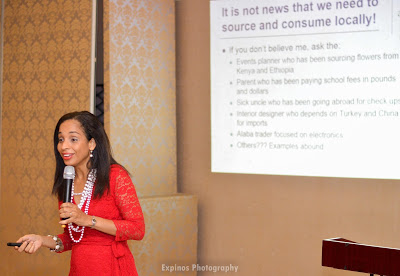
This year, the theme centred on
‘Entrepreneurship’ and in attendance were two wonderful speakers who delivered
excellent lectures on the topic especially as it revolved around doing business
in Nigeria. The first speaker,
Mrs. Ukinebo Dare, CEO POISE Graduate Finishing School and also a
proud alumni of the School of Management delivered a paper on “
Impression
Management and Networking” while the keynote speech was delivered by
Mrs.
Ndidi Nwuneli MFR.

Mrs. Ndidi, one of the
biggest social impact accelerators in Nigeria,
founder of LEAP Africa,  
Ndu Ike Akunuba (NIA), co-founder of AACE Food Processing &
Distribution Ltd. (AACE Foods), and one of the directors of Sahel Capital &
Advisory Partners, an advisory and private equity firm in Nigeria, which
focuses on the agribusiness and manufacturing sectors delivered her paper on
“Consume
Local” – How to tap in as an Entrepreneur”.

Mrs. Ndidi brought to the
fore her passion for the Agriculture sector in Nigeria and shared the immense
opportunities available to would be participators in the agric business. Mrs.
Ndidi also shared her experience with AACE Foods and the challenges the company
had to overcome while executing their business strategies.

Nigeria remains a viable
source for many raw materials to the international market and our exports will
boom if entrepreneurs focused on  the
agriculture business in Nigeria.

Both presentations were
brilliant and indeed impactful. In attendance, also were other alumni from the
School of Management who represented across board, many professionals from
various industries such as the Oil and Gas, Telecoms, Legal and Banking
industries. The Bradford School of Management has indeed groomed many Nigerian
professionals who are contributing immensely to the Nigerian economy and
society at large.

The event will be hosted yearly with the aim of
exploring and making available resources that can help alumni whether old or
new develop and contribute to the community and the University of Bradford. Also
to provide an
unequalled opportunity to network, see old friends, meet new ones,
learn about the alumni’s recent advances, and participate in discussions about
some of the most important issues facing our Nation.
Adedunmade Onibokun, Esq.
Bradford School of
Management Alumni (2014)
How to Mortgage a Ship by Osinuga Damilola

How to Mortgage a Ship by Osinuga Damilola

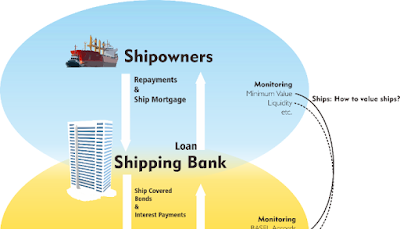
Ship mortgage is a form of security wherein the
ship-owner (“Mortgagor”) gives a lender (“Mortgagee”) an interest in a ship as
security for a loan via a Deed and same is discharged upon repayment of the
loan. Mortgages may either be equitable or statutory. The essential feature of
a mortgage is that it is only a security transaction, where the property is
redeemable by the mortgagor upon satisfaction of the debt.  By Section
326(1) of the Merchant Shipping Act 2007 (“MSA”),
 the mortgagee shall
not by reason of the mortgage be deemed the owner of the vessel or share of it
nor shall the mortgagor be deemed to have ceased from being the owner thereof.

Statutory Mortgage
Pursuant to Section 54(1) of the MSA, a ship registered in
Nigeria, or a share in the ship may be made a security for a loan or other
valuable consideration, and there shall be a proper written instrument creating
the security. The document used for creating this security is a Deed of
Mortgage. It is best that such mortgage be registered with the Corporate
Affairs Commission (CAC) and Nigerian Maritime Administration and Safety Agency
(NIMASA).
 Mortgage
of ship creates the status of propriety claim pursuant to the Admiralty
Jurisdiction Act 1991 which is usually superior to general maritime claim. This
entitles the Mortgagee to institute an action in rem against the ship to
realise its security. An action in rem is an action, which is brought directly
against a property.
 Usually, statutory mortgage creates a superior security and ranks
in priority over all unregistered mortgages or subsequently registered
mortgages. Section 57(1) of the MSA states that a registered
ship shall be entitled in priority over the other, based on the date on which
each mortgage is recorded in the register and not according to the date of each
mortgage itself.
 In principle, the property is realizable by the mortgagee if it is
not redeemed by the stipulated date.  The law as regards the realization
of mortgage on a ship is that if the mortgagor defaults or does anything that
tends to jeopardize the security, the mortgagee of a controlling number of
shares may take possession of the ship.  This was the position of the
court in NATIONAL BANK OF NIGERIA LTD. V. OKAFOR LINES LTD. (No. 3)
1967 1 NSC 110. 
Upon taking possession, the mortgagee may use the ship within limits or
sell her.  The mortgagee may use the ship for the purpose of earning
freight.  The mortgagee is however not at liberty to do whatever he likes
with the ship.  He must consider the interest of the mortgagor and
succeeding mortgagees and the law requires him to use the ship only as a
prudent man will use her.  He will be liable to the mortgagor for any loss
sustained through the imprudent use of the ship. See ADALMA TANKER
v. MERCANTILE BANK & ORS.  (1986) FHCLR 414.
Equitable Mortgage
Equitable
mortgage is a mortgage in which the lender is secured by taking possession of
all the original title documents of the property that serves as security for
the mortgage. Sometimes it could be created by words. The most important
element in this type of mortgage is that there is intent by parties to create
mortgage. It is safe to state that this type of mortgage is only used where
legal formalities are not complied with. Equitable mortgage is not a reliable
and dependable security interest.
In practical
terms, the lender who has an equitable mortgage acquires some preferential or
recognizable interest in the vessel concerned, subject always to the
over-riding interest of existing legal mortgages and maritime lien holders.
Where there is a breach of the mortgage deed by the Mortgagor or a default in
payment, the Mortgagor can take a number of actions as listed below:
·        
Action in personam against the ship-owner;
·        
Entitled to arrest the ship by an action in rem at
the Federal High Court pursuant to Section 251 of the Constitution of Federal
Republic of Nigeria and Section 5(2) of Admiralty Jurisdiction Act;
·        
Right to repayment;
·        
Right to take possession for the sale of a ship;
and
·        
Take benefit of insurance (if applicable).

This Article was produced by ‘Damilola Osinuga. LL.B, LL.M, ACIArb. A
Legal Practitioner and expert in the areas of Maritime, Insurance,
International Trade and Ship Brokerage.
Ed’s Note: This article and photo were published by the author on 26th April, 2016 via https://www.linkedin.com/pulse/ship-mortgage-osinuga-damilola-b-l-aciarb-uk-?trk=hp-feed-article-title-publish
Shares: What does it mean in a Company? PT 2 By Teingo Inko-Tariah

Shares: What does it mean in a Company? PT 2 By Teingo Inko-Tariah

Credits  stepupmoney.com 
Ed’s Note: You can begin by reading the first part of this blog series by Teingo on Shares and what they mean in a company  Here


Share Capital explained
In my last post [Shares: What does it mean in a Company? By Teingo Inko-Tariah] I attempted to explain what shares
in a company mean and how they can be acquired. This post will explain some
other related issues for a better appreciation of the subject.
Femi opted out of his paid job to set up his own company – Naija4Life Ltd.
He registered the company at the CAC with a share capital of N1m. There was no
N1m anywhere except on paper i.e. the CAC documentation. Femi took up 500,000
shares in the company and gave another 10,000 shares to his younger brother,
Yemi who was also made a Director of the company.The operations of the block
moulding and interlocking tiles company was largely funded by Femi but he
realized that he needed additional funds to scale up the business and open
branches in other locations. He began to consider how to raise money. If you
are like Femi, please read on to understand the basics of equity funding.

Generally, companies get funding for their operations through debt or
equity. Debt funding includes personal/family loans, bank loans, etc. This type
of funding usually comes with the condition to pay interest on the loan amount
though some loans could also be without interest. Equity funding on the other
hand, is the kind of funding generated by sale of shares of the company to
raise capital for its operations. The implication is that the person funding
becomes a shareholder of the company and becomes entitled to share in the
benefits thereof.
The funds raised by a
company by issuing shares for cash or other considerations is referred to as
‘share capital’.
At the time of
incorporation of a company, the share capital would normally be stated in the
Memorandum of Association and issued to the first subscribers. For e.g.,
Naija4Life share capital in our hypothetical case was N1million naira at
incorporation. This does not mean that the sum of N1m has to be paid or has to
be available at the bank. If the money is available, great. However even if it is
not, what it would mean is that the value of the company at incorporation is
stated to be N1m. It also means that every shareholder who has not actually
paid any money to the company account for his shares owes the company. Shares
could also be paid for by consideration other than cash so for instance,
contributing office furniture, laptop, printer etc. The item contributed will
be valued and the monetary value will be used to ascertain the amount of the
shareholder’s contribution.
Using our hypothetical case, if Femi owns 500,000 shares of N1.00 each,
he owes the company N500,000 while Yemi owes the company N10,000 for his 10,000
shares. As Femi contributes towards the operations of the company, the amount
could be used to defray this debt such that his contribution becomes payment
for his shares.However, If the company goes into liquidation, the shareholders
who have unpaid shares would be liable for the debts of the company to the
extent of the amount owed for the shares taken up by them. So, for e.g., if Femi
had contributed N500,000 in exchange for his shares in Naija4Life Ltd, he will
not be liable as he is no more indebted to the company. However, if he had only
paid up N300,000 by way of contribution of same towards the operations of the
company, he would have an outstanding N200,000. Therefore, if for instance,
Naija4life is owing a supplier, Femi has to provide the money to defray that
debt because he owns shares he has not paid for so his liability is not yet
extinguished.
 

Credits – moneymorning.com 

The Authorised share capital of a company could be issued or unissued.
Issued share capital is the portion of a company’s share capital that has been
taken up by shareholders. The law requires a minimum of 25% of a companies
authorized share capital to be allotted at the time of incorporation. So, in
the case of Naija4Life, they are well above the specified minimum which would
be 250,000 shares because they already allotted 510,000. The shares may have
been paid for in full, in instalments or unpaid for. Unissued share capital is
the portion of a company’s capital that has not been issued to any shareholder.
Where shares are unpaid for, the shareholder could be called upon to pay for
those shares in accordance with the terms stipulated in the articles of association
of the company. This is referred to as a ‘call on shares’ which is a formal
request by a company to the shareholders to pay for shares they have taken up.
Further issue of
shares can be made by a company in future to raise more capital, provided it is
within the stipulated maximum amount authorised by the articles of association.
Thus the authorised share capital refers to the maximum value of the shares
that a company can legally issue. For instance, Naija4Life has an authorised
share capital of N1m. Femi has 500,000 units, his brother Yomi has 10,000
units. They have an outstanding 490,000 units which can raise N490,000 if they
allow other people buy shares in the company. Naija4Life Ltd cannot sell any
more than the balance of shares left which is 490,000 units to raise N490,000.
If they need more capital, they need to increase the share capital from N1m.
Alteration of shares
The share capital of a company can be altered in various ways:
cancellation, increase or decrease. Cancellation of shares is the process of
annulling or extinguishing unissued i.e. shares that have not been taken up or
shares that are yet to be issued. The effect is to reduce the authorised share
capital by the amount of shares cancelled. Share capital could also be altered
by an increase or decrease in the authorised share capital after the necessary
amendments have been made to the articles of association of the company.
An increase in authorised share capital requires the creation of new
shares which will normally be issued to rank in similar status i.e. paripassu
as the shares already in existence. In the case of reduction, the issued share
capital of a company is decreased by any of the following means: extinguishing
liability on any unpaid shares so that the holder of the balance is excused
from paying. For instance, if a company has issued 1,000,000 ordinary shares of
N1 each of which N750,000 has been paid up, the balance of N250,000 could be
extinguished thereby reducing the share capital to N750,000.
Reduction could also take place by cancellation of any paid up share
capital which is lost or unrepresented by available assets. For instance if the
value of net assets of the company is N1m and the share capital is N750,000,
the share capital could be reduced to reflect the realistic value of assets but
nothing is returned to shareholders who have paid N250,000 more. The third form
of reduction in share capital is the cancellation of any paid up share capital
in excess of the company’s needs in a manner similar to the second form of
reduction above. In all cases of reduction, the share capital must have been
issued. It may be paid up or unpaid. Reduction of share capital must be
distinguished from cancellation of share capital earlier mentioned. A company
can only cancel part of its unissued share capital while in the case of
reduction; it is the issued share capital that is dealt with.
Reconstruction of shares
Company shares can be reconstructed and if this is done, it will affect
the value of each share. Reconstruction of share capital is the process of
reconstituting the shares such that the value of each share is either increased
or decreased. However, this does not affect the total value of the share
capital. Reconstruction could either be by way of consolidation or sub-division.
Consolidation of shares is the process of reconstituting shares of a certain
denomination to a greater denomination so that the value of each share is
higher than the original value. For example existing 10,000 shares of 10k each
can be reconstituted into 1000 shares of N1.00 each. The final value will be
the same but the worth of each share has changed from 10k to 100k or N1.00. Consolidation
is usually undertaken to reduce the number of shares in issue while increasing
the nominal value. The purpose is to increase the share price of the
company.Consolidation could also be undertaken to meet the minimum trading bid
size to ensure its listing status on the stock exchange (in the case of a
listed public company).
Subdivision is the opposite of consolidation where shares of a certain
denomination are reconstituted into a lesser denomination. Example existing
10,000 ordinary shares of N1.00 each can be subdivided into 20,000 shares of
50k each. Subdivision is undertaken to increase the number of shares in issue
while reducing the nominal value of each share .Subdivision would usually be
embarked upon to improve liquidity and trading activity on the shares by making
the shares more accessible and affordable and thereby increase shareholder
base. Reconstruction applies to shares that have been issued.
In my next post, I will highlight some procedural steps on increasing
share capital and transferring shares from one shareholder to another.

Sujimoto’s empty apartments in Ikoyi  By Sijibomi Ogundele

Sujimoto’s empty apartments in Ikoyi By Sijibomi Ogundele

www.linkedin.com 

Is it
possible to ask for the price of a Bentley in exchange for the quality of
a Toyota? Impossible! Any sane person would say. While many will
consider this outrageous, it is indeed a stark reminder of the realities
experienced in Nigeria’s Real Estate Industry.

 As an avid Property Enthusiast, Developer or an Observer,
you must have noticed the surge in the number of empty apartments in Ikoyi over
the last few years. To avoid drawing hasty conclusions and to guide our
investment choices, let’s use familiar examples to understand why such
phenomena have festered.

www.linkedin.com 
‘What’s the difference between Ipekere – locally
fried plantain bits sold in remote areas, 
and the Plantain-Chips sold in urban areas?
Have you ever wondered why a good meal prepared in Ijebu Ode would cost less
than one sold in Lagos? An estimated rental for an Apartment in Ikoyi is
about $80,000, while the same apartment in Lekki would cost $30,000. What do
you think makes the difference? It’s Value! In Real Estate, when you put price,
quality and location put together in the same place, what you get is Value. If
Location is a fundamental principle in Real Estate, how much more Luxury Real
Estate?
The argument for
Demand exceeding Supply, over empty Apartments in Ikoyi, is unfounded. Luxury
apartments are in high demand
. Poorly
finished buildings with exorbitant prices constitute the pile of empty
apartments constantly being alluded to. A developer who compromises on the
quality of materials, no matter how highbrow the Property’s location, has no
right to place an exorbitant price on it.

Consider
these – Are Developments such as Tango Towers and Ultimate Towers in Ikoyi,
empty? If such Developments are not empty, imagine what would happen when the
LorenzoBySujimoto with its high-end features, state-of-the-art facilities,
exceptional Returns on Investment and Competitive Pricing, is completed? 

Luxury is not expensive; it is the intention to deliver luxury
that is expensive. While the cost of a nice Three Bedroom Apartment in
Johannesburg would go for about $350,000 the same apartment in Ikoyi would cost
$1M. If the cost of construction materials is the same all over the world, the
price of marble, granite, cement, tiles, kitchen, doors, paints etc, why are
these materials 300% more expensive in Nigeria?
www.linkedin.com 

‘Obe to dun, owo lo paa‘  an adage in
Yoruba parlance, means a delicious meal requires a lot
of money
. You cannot offer a Toyota for the price of a Bentley. One
might argue that both cars will eventually ply the same road but the efficiency
and prestige of a Bentley speaks for itself. Luxury sells itself. Listen, I
have sold crap before and I have sold luxury and I can tell you from experience
that it is easier to sell luxury than crap. When you sell luxury, you sell
peace of mind; you have not only sold something that would last for
generations, but you win the heart of your client who now becomes
your Evangelist. Our biggest marketers are our clients. 

The era of ‘Monkey dey work, Baboon dey chop’
is over. Nigerian Property Developers must realize that times have changed.
The ‘quick fix – quick gain’ syndrome has ended. A research
recently conducted indicates that the biggest problem in the Nigerian Real
Estate Industry is Developers’ emphasis on
cost minimization rather than value maximization, and
this is driven by the need for immediate gratification. What these
Developers fail to understand is that the current Investors and Real Estate
Enthusiasts are upbeat about quality and finishing. This demography is very
exposed and has decided to start requesting value for its money.
Over the next 24-30 months,
the change in Investors’ perception would mean that only developers who
understand that customer is king and those who have the capacity
to deliver exceptional value at a reasonable price, will survive.
Real Estate Developers in Nigeria must rise to the occasion. Clients must get
full value for their money. Otherwise, one day we all would wake up to find all
our apartments empty.

Ed’s Notes: Please note that this article alongside the images were originally published by the author on www.linkedin.com on 5th February, 2016. 

Mapping the Nigeria Gaming Industry (1): Legal & Socio – Cultural factors By Yahaya Maikori

Mapping the Nigeria Gaming Industry (1): Legal & Socio – Cultural factors By Yahaya Maikori

Photo Credit – www.financialnigeria.com 

In
recent times there has been lots of excitement about the African gaming market
for reasons which are not farfetched, given its demographic asset, which presents
a growth opportunity for many companies. Of the 53 African countries Nigeria is
undoubtedly the largest market by virtue of its population making it the
preferred investment destination for most gaming companies, but beyond the
excitement about the industry and its prospects, what is the value of Nigeria’s
gaming industry? Do we have any supporting data? As always we have looked to
companies like PWC and a host of other institutions to guide us. For example
PWC’s 2015 – 2019 gaming outlook while projecting that gaming revenues were up
by 17%, based its projections on only 3 licensed casinos in Nigeria. In reality
casinos occupy the lowest rung of the Nigerian gaming ladder, PWC’s gaming
outlook distorts the impact of the industry and how it permeates our economic
life. A cursory look at the assumptions indicates a lack of understanding or
appreciation of the industry.

Our industry is grossly misconceived
and this misconception manifests itself in frequently asked questions like “do
Nigerians’ gamble?” “Is gambling legal in Nigeria” etc.? The National lottery
Act defines lottery to”… include games of chance or skill”; though the
definition may be unwieldy it definitely expands the frontiers of the industry
beyond what it is traditionally known. If the NLRC definition is anything to go
by then it means that even the “Ayo Ayo’ played across Africa forms part of the
industry and it predates any form of contemporary gaming device, which
currently exists in Africa.
 The legality of
gambling in Nigeria has been questioned severally partly because of controversy
surrounding the1977 slot machine prohibition act; the act was not meant to
prohibit gambling in general, the law simply sought to regulate indiscriminate
littering of slot machines across the length and breath of the country. On
whether Nigerians gamble or not, that depends on the class you belong to. The
truth is that the generality of our people are casual gamblers but we are
certainly active when it comes to mobile based wagering, raffles draws, promos
etc. At the lower end of the spectrum pools betting and lottery has been part
and parcel of our lives from colonial times. Though we are a religious set of
people our religious sensibilities ironically endear us to the fundamental
principles of gambling, the concept of miracles, sowing a seed and reaping
large and immediate rewards.
 Traditionally
gaming has been stigmatized in our climes but casinos and slot institutions
have been the biggest victims of our selective moralization of the industry,
while raffle draws and similar schemes have become widely accepted without so
much thought as to the underlying fact that they are laundered forms of gambling.
If the NLRC’s definition is anything to by it means that even the video games
played with consoles or preloaded on the phones of our 133million mobile
subscribers or those played on desk /laptops, promos, raffle draws by corporate
organizations i.e. telcos , banks, fmcgs etc. form a significant portion of the
industry ,though they run into billions of Naira every year they have never
been considered as part of the industry.
 In
general we may have our reservations about sports betting we however subconsciously
rationalize this type of wagering because it is tied to our passion for sports,
in any case sports betting cannot survive on its own, it piggy bags on sports
events. Interestingly while we consider Lotteries a form of gambling it has
never really been stigmatized maybe because of its historical and religious
roots.
 Now
that we have defined gambling in accordance with Nigeria’s law; as well as
established that almost all Nigerians are involved at some level , what is the
size of the gaming industry in Nigeria? How does it contribute to our GDP? Was
is ever captured during the rebasing of the economy? If it was under which
subsectors was it captured? under ICT, entertainment or tourism?