
Beyond Boko Haram: Exploring the Crisis of Definition in Nigeria’s Counter-Terrorism Legislations

Beyond Boko Haram: Exploring the Crisis of Definition in Nigeria’s Counter-Terrorism Legislations

“Let
it be told to the future world, that in the depth of winter, when nothing but hope
and virtue could survive, that the city and country, alarmed at one common
danger, came forth to meet and to repulse it”
Thomas Paine, December 23, 1776

“Above
the gate of hell is the warning that all that enter should abandon hope. Less
dire but to the same effect is the warning given to those who try to define terrorism”
-David Tucker, Skirmishes at the Edge of
Empire: The United States and International Terrorism 1997

INTRODUCTION
Starting from 9/11, terrorism evolved to
new levels of savagery unheard of in history. The magnitudes of the acts (9/11)
went beyond terrorism as was
known, and statements from various capitals
around the world pointed to a need to develop new strategies to confront a new
reality (Maogoto, 2003).
Groups long contented with hijacking planes
became emboldened to launch multiple attacks at world capitals and major cities.
These attacks succeeded in in banding States together in what is now known as
the global war on terror.
Within eight years of 9/11, the world
witnessed the birth of Jama’atu Ahlis
Sunnah Lidd awatiwal Jihad (Popularly known
as Boko haram). Nigeria, long respected as a regional power, especially in ensuring
peace and stability in West Africa was ensnared in a vicious circle of violence.
At the height of its infernal reign, boko haram was able to project power
beyond its base in Sambisa forest, even into Nigeria’s capital. Despite being a
signatory to several counter-terrorism Conventions, Nigeria was legally
ill-equipped to confront terrorism. It took the country almost two years after
the first boko haram attack to enact a national legislation to punish acts of
terrorism.
The question, what is terrorism is perhaps
as old as the first terror attack. This paper explores this question,
particularly, within the Nigerian legal framework. Understanding what
constitutes terrorism is the first step in the war against terror, as it will
be futile in fighting what we don’t understand. It is our argument that the
definition of terrorism within the Nigerian legal framework leaves much to be
desired. It is our submission that there is need for a total overhaul of the
prevailing legal framework on terrorism in Nigeria.
THE CRISIS OF DEFINITION: WHAT IS TERRORISM
Growing interest in the field of terrorism
and increased funding allotted to
academic research and teachings budgets
post 9/11 has spurred and supported the publication of hundreds of books and
articles in the past few
years, many professional and academic
conferences and a general flourishing of the field (Ganor, 2009). Despite the
growth of interests in terrorism, a universally acceptable definition of terrorism
continues to elude the international community. The unanimity of States in the
fight against terrorism has not been rewarded with unanimity of definition.
The absence of a consensus definition has
precipitated what we refer to as ‘the crisis of definition’. Attempts by the
international community to define
terrorism can be traced to the League of
Nations’ 1938 Convention for the
Prevention and punishment of Terrorism.
Adopting a State-centric view, the CPPT defined terrorism as ‘criminal acts
directed against a state and intended or calculated to create a state of terror
in the minds of particular persons, or group of persons or the general public
(CPPT, 1938).
Schmid and Jongman define terrorism as “an
anxiety-inspiring method of
repeated violent action, employed by
(semi-) clandestine individual, group or state actors, for idiosyncratic,
criminal or political reasons, whereby in contrast to assassinations, the
direct targets of violence are not the main target” (Schmid & Jongman,
1988).
The United Nations General Assembly in a
1994 resolution opted to describe what terrorism is rather than offer a definition.
The Resolution described terrorism as “criminal acts intended or calculated to
provoke a state of terror in the public, a group or persons or particular persons
for political purposes”( A/RES/49/60). The definition by the General Assembly
is limited when compared to the definition offered by the UN Security Council,
which sees terrorism as “ criminal acts, including against civilians, committed
with the intent to cause death or serious bodily injury or taking of hostages,
with the purpose to provoke a state of terror in the general public, or in a
group of persons or particular persons, intimidate a population or compel a
government or an international organization to do or to abstain from doing an
act (UNSCS/RES/1566R ) .
The definition by the Security Council
eliminates the controversial elements of political or religious motivations.
This definition mirrors the position contained in the Arab League Convention
for the Suppression of Terrorism 1998. The Convention defines terrorism as “any
act of violence, whatever its motives or purposes, that occurs in advancement
of an individual or collective criminal agenda and seeking to sow panic among people,
causing fear by harming them, or placing their lives, liberty or security in
danger or seeking to cause damage to the environment, or to public or private
installations or property or to occupy or seizing them, or seeking to jeopardize
national resources”. Evolving variants of terrorism like cyber terrorism which
is devoid of violence continue to exacerbate the crisis of definition. The
availability of conflicting and competing standards further widens the rift,
thereby ensuring that attempts at advancing a consensus definition in the
nearest future remains impossible.
Definition of Terrorism within the Nigerian
Legal System
The legal framework for the suppression of
terrorism in Nigeria is essentially codified in two enactments: The Terrorism
(Prevention) Act 2011 (hereinafter TPA, 2011) and the Terrorism (Prevention)
(Amendment) 2013 (hereinafter TPA 2013). As the dreaded boko haram fanned out
from its hideouts, annexing territories in Nigeria and boldly declaring war,
policy makers in Abuja found themselves at wits end on how to stem the
dangerous tide. Having been spared the wrath of mainstream terrorism since
independence, the country had no legal framework to combat the boko haram
menace. The military offensive against the sect created a legal problem for
Nigeria. Under what laws were captured members of boko haram to be tried?
Charging them under the Criminal Code Act would have produced an absurdity as
the group had already been designated as a terrorist group by the UN Security
Council and the United States. The TPA 2011 came to create the offence of terrorism
and a myriad of related offences. The Act in an unprecedented contains no
description or definition of terrorism. The act simply defines what it considers
as ‘acts of terrorism’ which for the purposes of this work will be taken as a
definition of terrorism. Section 1 (2) of the TPA, 2011 defines “act of
terrorism” (terrorism) as an act which is deliberately done with malice
aforethought and which: (a) may seriously harm or damage a country or an
international organization;
(b) is intended or can reasonably be
regarded as having been intended
to—
(i) unduly compel a government or
international organization to perform or abstain from performing any act;
(ii) seriously intimidate a population;
(iii) seriously destabilize or destroy the
fundamental political, constitutional, economic or social structures of a
country or an international organization; or
(iv) otherwise influence such government or
international organization by intimidation or coercion; and
(c) involves or causes, as the case may be—
(i) an attack upon a person’s life which may
cause serious bodily harm or death;
(ii) kidnapping of a person;
(iii) destruction to a Government or public
facility, a transport system, an infrastructure facility, including an
information system, a fixed platform located on the continental shelf, a public
place or private property, likely to endanger human life or result in major
economic loss;
(iv) the seizure of an aircraft, ship or
other means of public or goods transport and diversion or the use of such means
of transportation for any of the purposes in paragraph (b)(iv) of this
subsection.
(v) the manufacture, possession,
acquisition, transport, supply or use of weapons, explosives or of nuclear, biological
or chemical weapons, as well as research into, and development of biological
and chemical weapons without lawful authority ;
(vi) the release of dangerous substance or
causing of fire, explosions or floods, the effect of which is to endanger human
life;
(vii) interference with or disruption of
the supply of water, power or any other fundamental natural resource, the
effect of which is to endanger human life ;
(d) an act or omission in or outside
Nigeria which constitutes an office within the scope of a counter terrorism protocols
and conventions duly ratified by Nigeria.
(1) An act which disrupts a service but is
committed in pursuance of a protest. However, demonstration or stoppage of work
is not a terrorist act within the meaning of this definition provided that the
act is not intended to result in any harm referred to in subsection (2) (b)(i),
(ii) or (iv) of this section.
The above definition extends to encompass
criminal conducts prohibited in other legislations. Hence the justified but one
–sided exclusive equation of
boko haram with terrorism in Nigeria is at variance
with the TPA 2011.
The Act does not entertain the
controversial religious or political motives
usually associated with terrorism. For
instance, the crime of hostage taking which is mostly motivated by financial considerations
is designated as an act of terror by the Act. By dispensing with religious and
political considerations, the TPA2011 seeks to avoid the controversial
profiling approach adopted by Western experts in their definition of terrorism.
The TPA 2011 subjects certain persons and groups whose agenda, tactics and
ideologies differ significantly from that of book haram to its jurisdiction. It
follows that the destruction of oil installations by Niger-Delta militants (who
also engage in hostage taking) constitutes an act of terrorism under the TPA 2011.
Either by seeking to compel the government to perform an act (pay amnesty
allowances) or abstain from performing any act (withdrawal of troops from the
Niger-Delta), militants have assumed the status of terrorist within under the
Act.
The above position is evidenced by
Nigeria’s refusal to adopt the international norm which embodies a distinction
between national liberation fighters (insurgents) and terrorists. TheTPA 2011
repudiates the age-long aphorism that one man’s terrorist is another man’s freedom
fighter by advancing the argument that line between terrorism and national
liberation is invisibly thin, if not non-existent. Flowing from this, we can safely
argue that members of the Indigenous People of Biafra (IPOB) and other active
separatist groups in Nigeria are engaged in acts of terrorism. The ultimate
goal of IPOB which is secession of Biafra would seriously destabilize or
destroy the fundamental political, constitutional, economic or social structures
of Nigeria, contrary to Section 1(2) (b) iii of the TPA, 2011.
Nigeria’s approach to the crises of
definition [of terrorism] leaves much to be desired. If terrorism was a complex
phenomenon, the TPA’s definition of the term produced an even more twisted
dimension to it. Are we permitted to designate attacks by Fulani herdsmen in
Nigeria as acts of
terrorism? The answer will be in the
affirmative insofar as attacks by herdsmen intimidate a population and includes
attacks upon peoples’ lives which may cause serious bodily harm or death.
CONCLUSION
The TPAs, 2O11 and 2013 are far from
perfect. These legislations aptly represent the times in which they were enacted;
when the threat of boko haram had to be countered with everything and anything
(including hurriedly enacted counter-terrorism legislations) at Nigeria’s
disposal.
Though boko haram has been degraded, the
threat of terrorism is ever present. The war on terrorism should be waged with the
mindset of eternal vigilance. Overhauling the existing legal framework and
representing it with a comprehensive unified legislation would be a good place
to start. Such amendments should whittle down the definition of what
constitutes ‘acts of terrorism’. The present state of the TPAs, 2011, 2013
makes reading difficult. With numerous deletions, insertions and renumbering,
the Acts stand out as one of Nigeria’s most disjointed legislations.
References
Convention for the Prevention and
Punishment of Terrorism
(1938) 19 League of Journal Official Manual
23 (not in force).
Schmid, Jongman et al. Political terrorism:
a new guide to actors,
authors, concepts, data bases, theories,
and literature.
Amsterdam: North Holland, Transaction
Books, 1988.
 Ganor Boaz (2009) Trends in Modern
International Terrorism,
in D. Weisburd et al. (eds.), To Protect
and To Serve: Policing in
an Age of Terrorism, Springer New York.
 Maogoto Jackson, (2003) War on the Enemy:
Self-Defence and State- Sponsored
Terrorism. 4 Melbourne Journal of
International Law
United Nations General Assembly Declaration
on Measures to
Eliminate International Terrorism (1994) ,
49/

United Nations Security Council resolution
1566 (2004)


By: – 
Uduak
Nsungwara

awittyud@yahoo.com


Anemuyem Akpan 
aloyanem@gmail.com 
www.linkedin.com/in/anemuyem-akpan-71b922120


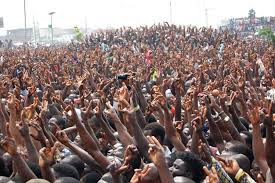
Photo Credit – www.naij.com 
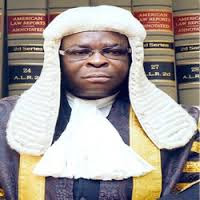
Profile – Hon. Justice Walter Onnoghen GCON CJN

Profile – Hon. Justice Walter Onnoghen GCON CJN


Hon. Justice W.S. Nkanu Onnoghen was born
on the 22nd December, 1950 at Okurike Town, Biase L.G.A. of Cross Rivers State.He
attended the Presbyterian Primary School, Okurike Town between 1959 and 1965.
He later proceeded to Accra, Ghana to attend Odorgorno Secondary School,
Adabraka, Accra, Ghana between 1967 and 1972 for his West African Examination
Council (WAEC) Exams.

He was at Accra Academy, Accra Ghana
between 1972 and 1974 for his WAEC (A-Levels) before proceeding to the
University of Ghana, Legon, Ghana between 1974 and 1977 to obtain his Bachelor
of Law Degree (LL.B (Hons)) and graduated with 2nd Class Upper Division.

He attended the Nigerian Law School, Victoria Island, Lagos between 1977 and
1978 for his B.L certificate. 


Her previous professional appointments/positions held include: 

  • Pupil State Counsel, Ministry of Justice,
    Ikeja, Lagos, Ogun State (1978 – 1979)
  • Partner in the Law Firm of Effiom Ekong
    & Company, Calabar (1979 – 1988)
  • Principal Partner/Head of Chamber of Walter
    Onneghen & Associates, Calabar (1988 -1989)
  • High Court Judge, Cross Rivers State
    Judiciary (1989 – 1998)
  • Chairman, Cross Rivers State Armed Robbery
    and Fire Arms Tribunal (1990 – 1993)
  • Chairman, Judicial Enquiry into the Crisis
    between Student of the University of Calabar and Obufa Esuk Orok Community,
    Calabar (1996)
  • Chairman, Failed Bank Tribunal, Ibadan Zone (1998)
  • Judge, High Court of Rivers State (1992 –
    2004)
  • Justice of the Court of Appeal (1998 – 2005)

A Fellow, Chaterred Institute of
Arbitrators, Hon. Justice W.S. Nkanu Onnoghen has attended several conferences
and seminars around the world. He is a member of the Body of Bencher and Life
Bencher.
Hon. Justice W.S. Nkanu Onnoghen was appointed a Justice of the Supreme Court
of Nigeria (JSC) since 2005 and further appointed as the Chief Justice of
Nigeria in 2017. 
5 Misconceptions about Tenancy Law in Nigeria | Adedunmade Onibokun

5 Misconceptions about Tenancy Law in Nigeria | Adedunmade Onibokun

A lot of Nigerians have misconceptions about
some of the principles and laws regarding tenancy law. Having received quite a
number of emails over some of these areas of tenancy law, this topic will in no
small way help shed light on questions regarding tenancy laws and practice which
a number of readers might have.
 Here are
five misconceptions about Tenancy Law in Nigeria;

1.    
Notice to Quit is
to be served after rent has expired
The first
misconception many tenants have, is that a Notice to Quit should be served
after the expiration of the tenancy, thus allowing them appropriate notice to
vacate the premises.  Most who may have received
a Notice to Quit during the term of the tenancy are thus surprised and often
wonder if this is the right practice.  
The Court in Akpokiniovo
v. Air Liquide Nigeria Plc. (2012) LPELR-9582(CA)
held that 
“In order to be
effective a notice to quit should terminate the tenancy at the end of the
current term of the tenancy. Thus any notice given and due to end at the middle
of the term of the tenancy will be invalid.”
The above decision
in essence means that a Notice to Quit can be served at any time, the only
condition stipulated by the law is that the length of notice must terminate at
the expiry of the tenancy and not a even day before.  Therefore, a Notice to Quit served within the
duration of tenancy but stated to expire after the date the tenancy is proper
and in line with the provisions of the law.  
2.    
Tenant is not
supposed to pay rent during the period within Notice
Another
misconception is that a tenant is not meant to pay rent within the period of Notice
given to handover possession of the property. This is not true but is generally
believed to be true by many. A property owner is entitled to collect rent when
due for the occupation of his premises and this right is also recognized by the
courts.  
3.    
Landlord can
recover possession by self help
Many Landlords or
property owners often result to self-help in evicting tenants which is a wrong
procedure as a Landlord may be liable to the tenant for payment of damages. Even
where a tenancy has come to an end, the landlord is not entitled to go out into
the premises and physically throw out the tenant but must give the statutory
notice required to the person in possession. Neither can such landlord try to
frustrate the tenant out the premises by actions such a removing the roof,
disconnecting water and power supply e.t.c.
4.    
It is the Sheriff’s
Department of the High Court that decides tenancy issues.
The Sheriff’s
department is not a court of law and therefore cannot adjudicate over legal
matters. They are however empowered to carry out and institute court orders.
5.    
A Notice to Quit
can be back dated
Many tenants have
often complained of being served a backdated Notice to Quit by their landlords
or agents. It should be noted that a Notice to Quit cannot be backdated and it
begins to count on the date the tenant was served.
All tenants and landlords must note to
always get professional advice from a lawyer as it concerns their tenancy
agreements.
Adedunmade
Onibokun, Esq.  
Principal Partner
Adedunmade Onibokun & Co.
Dunmade’s legal practice focuses on
corporate and commercial law, regulatory compliance, due diligence, corporate
advice and commercial transactions.  

Life of a Lagos Lawyer – Silk  (Episode 8)

Life of a Lagos Lawyer – Silk (Episode 8)

I
am rounding up my workout when a phone rings, it’s my iphone so I am wondering
who has been calling me continously at 6.30am in the morning, both my home and
work phones had also rang in quick succession 3 minutes ago. The caller id says
Alhaji, one of the select few who have all my 3 numbers outside close family
members.  

“Good
morning Alhaji, how are you today sir”

 “Learned Silk, I am doing fine”

“How
are Hajia and the rest of the family?”

”No
problem sir, can I drop by on my way to the office this morning”

“No,
I am on my way to the airport as we speak, the President is arriving from his
vacation this morning and I may be occupied for some considerable time, can you
make dinner at the house at 7pm?”

“Yes
I can sir”

“Ok,
see you then”

“Most
obliged sir”.

Alhaji
is one of my biggest clients; he is worth over Forty Billion Dollars and made
his money from investments in companies and properties all over the world. He had
ventured into business as a young man after receiving a loan of N500,000 from his uncle and forty years
later, he had built that sum of into one of the largest companies in Africa.   I
always look forward to dinner at his house in Maitama, it was custom to sit on
the floor with other members of the family and eat together. Moreover, whenever
Alhaji called, big money was involved and the retainership  he was paying had earned him a right to call
me 247, even if I had to connect the call in my dreams. After texting my
Personal Assistant to ensure Enrique gets the Lear ready for 4pm. I can’t wait
to hit the office, obviously, today was going to be a great day.

Though,
I have lived in Lagos most of my life, I have never been able to get used to
the traffic and the long distance from Bourdillon to my office in VI, so for
ease of transportation, I had to buy a Boat. There is something about the sea
that keeps me upbeat during the day. As we sail over the waves, along the Lagos
Marina, my mind drifts to my 10am meeting with The Rear Admiral, as the Honourable
Ex-Minister of Defence, the CPCC was prosecuting him for a series of financial
irregularities that occurred under his watch, we had spent most of the week
conducting mock trials and judgment from the mock was to be delivered at 11am today.
He was facing up to 15 years in prison if convicted and he had made it clear,
that was not an option, so all hands were on deck for this trial, moreover, the
media coverage had been huge and there was no way my firm was going to lose
this one. Thankfully, the prosecution had done a good job of presenting little
evidence to support their 150 count charge but we were leaving no stone
unturned.

Five
hours, three meetings and one interview later. I am glad to have the office to
myself when the intercom comes on and my P.A informs me that the car is waiting
to head to the Airport. ‘Yes, Alhaji, I sigh”. Dinner at Alhaji’s residence is splendid
as always, I am quickly filled from the variety of delicacies spread across the
living room floor and Alhaji invites me to his libary. After lighting his Cuban
and settling into his arm chair, Alhaji moves on to the business of the day”

“Learned
 Silk, a group of German investors are interested
in investing in my business”

‘Which
one sir?”

“The
Oil block, they hope to invest 150 million dollars if we are able to enter a
partnership”

“Are
you interested in partnering with them”

“That’s
why I called you, I want you to do a due diligence on the company and their
financials”

“No
problem sir, hope the details can be forwarded to the office in the morning”

“Yes,
first thing, also i want you to oversee the sale of my property in Houston, Texas,
it’s a gated community of condos  and Mr.
Grump’s company is interested in buying, details will also be forwarded to the office”
“Consider
them done, anything else”

“That
will be all for now, let’s join the rest of the family in the movie room”
 One and a half hours later at 70,000 ft above
sea level blazing back to Lagos, the hostess hands me the Satellite phone, the
President of Guinea is on the line, after a brief conversation with His
Excellency, I drop the phone and sigh deeply, like my father said ‘the only
reward for good and hard work is more work”. Grudgingly, I pick up the phone
and jasmine, the Egyptian hostess picks up, “Tell Enrique to turn around and
head for Ivory Coast”.

It’s
been a long day I say to myself as I lie back to catch some sleep.
Join us next time for
another episode of “Life of a Lagos Lawyer”. An exclusive Legalnaija series.

PLESE
NOTE: This is a work of fiction. Names, characters, places and incidents either
are products of the author’s imagination or are used fictitiously. Any
resemblance to actual events or locales or persons, living or dead, is entirely
coincidental.
Quote: Lord Lugard’s opinion of the average African/Nigerian

Quote: Lord Lugard’s opinion of the average African/Nigerian


“In character and temperament”
wrote Lord Lugard, the typical African of this race-type is a happy, thriftless,
excitable person. Lacking in self control, discipline, and foresight.
Naturally courageous,and naturally courteous and polite, full of personal
vanity, with little sense of veracity, fond of music and loving weapons
as an oriental loves jewelry. His
thoughts are concentrated on the events and feelings of the moment, and
he suffers little from the apprehension for the future, or grief for the
past.

His mind is far nearer to the animal
world than the that of the European or Asiatic, and exhibits something of
the animals placidity and want of desire to rise beyond the State he has reached.
Through the ages the African appears to have evolved no organized religious creed,
and though some tribes appear to believe in a deity, the religious sense seldom
rises above pantheistic animalism and seems more often to take the form of
a vague dread of the supernatural”.He lacks the power of
organization, and is conspicuously deficient in the management and control
alike of men or business. He loves the display of power, but fails to
realize its responsibility ….he will work  hard with a less incentive
than most races. He has thecourage of the fighting animal -an instinct rather
than a moral virtue……In brief, the virtues and defects of this
race-type are those of attractive children, whose confidence when it is
won is given ungrudgingly as to an older and wiser superior and without envy…….Perhaps
the two traits which have impressed me as those most characteristic of the
African native are his lack of apprehension and his ability to visualize
the future” 

Pg 70
of The Dual Mandate by F. D. Lugard 1926
Photo Credit – www.wikipedia.com 
Central Bank of Nigeria’s Draft Guidelines on Direct Debit and Billing Payments in Nigeria

Central Bank of Nigeria’s Draft Guidelines on Direct Debit and Billing Payments in Nigeria


E-commerce
has made tremendous growth in Nigeria since the massive penetration of internet
services in Nigeria and with it came lots of gaps in the Nigerian payments
system. The Central Bank of Nigeria (“CBN”) which is responsible for the
overall management of Nigeria’s financial system has the specific power to
regulate, promote and facilitate payments. Section 47 (2) and (3) of the
Central Bank of Nigeria (Establishment) Act (the “Act”) empowers the CBN to
promote and facilitate the development of efficient and effective systems for
settlement of transactions (including development of electronic payment
systems).

The CBN is also empowered to prescribe
rules and regulations for the effective operations of all clearing and
settlement systems.[1] In line with this mandate, the CBN has continued
to develop regulations, guidelines and circulars that define, regulate and
control payment activities within and beyond the traditional banking system.
Some of these regulations and guidelines have been discussed in my previous
articles.
On January 30th 2017, the CBN published an
exposure draft of the ”Guidelines for the Direct Debit Scheme (Revised),” and
”Guidelines Bills Payments in Nigeria”. The CBN explains that the revised
version of the guidelines on direct debit “recognizes the existing and emerging
multi-channel options (Online platforms, Instant Payments etc.) applied for
Direct Debit instructions in Nigeria. In addition, the provisions of these
guidelines are harmonized with developments in the payments system since the
release of the last version.”[2] 
According to Wikipedia, “[a] direct debit
or direct withdrawal is a financial transaction in which one person withdraws
funds from another person’s bank account. Formally, the person who directly
draws the funds (“the payee”) instructs his or her bank to collect
(i.e., debit) an amount directly from another’s (“the payer’s”) bank
account designated by the payer and pay those funds into a bank account
designated by the payee. Before the payer’s banker will allow the transaction
to take place, the payer must have advised the bank that he or she has
authorized the payee to directly draw the funds. It is also called
pre-authorized debit (PAD) or pre-authorized payment (PAP).”[3] As such, once the payer has given an initial
authorisation to the payee to collect funds from an account he holds with a
financial institution (a commercial bank), that authorisation is continuous and
the right of the payee to keep collecting that sum (or an expected variation of
the sum) becomes running except the payer stops or revokes the authorisation.
When you think of a direct debit,
subscription fees for your LinkedIn account, Netflix etc. quickly comes to
mind. Some important features of a direct debit are that 1), the amount to be
debited is does not have to be fixed, it may vary from one payment to another,
2) the date that the debit is to occur is known and fixed, 3) the bank is not
an integral part of the contract and 4) the payment is usually initiated by the
payee and not the payer/account owner. Please note that a direct debit is not
direct deposit or a standing order, which are instructions by the account owner
or payer to his bank to credit a certain amount of money to a payee at a
pre-determined date.
This initiative by the CBN is ripe and
commendable, considering the volume of online transactions in Nigeria and our
participation in international e-commerce transactions on a daily basis. It is
important to note that the CBN already had an existing guideline for direct
deposit and Nigerians have been able to utilize their bank cards, (both
MasterCards and Visa Cards) to make direct debit payments to both foreign and
local merchants. However, this revision is aimed at bringing the said
guidelines up to date with trends in the payments industry and to ensure that
all parties to such transactions are protected, regulated and monitored.
The provisions of the two guidelines are
standard and comparable to those of other developed countries. However, some of
them are noteworthy:
1.      Biller’s
bank must be a member of the clearing system or integrated with Payment Service
providers that accept Direct Debit for processing.
2.      The
Biller’s bank shall hold an account for the Biller to receive proceeds of
Direct Debit.
3.      Payer’s
bank must be a member of the clearing system or integrated with Payment Service
providers that accept Direct Debit for processing.
4.      Payment
Service Providers must be duly licensed by the Central Bank of Nigeria and
subject to electronic payment guidelines.
5.      Direct
Debit transactions are of 2 types: a. Fixed Direct Debit: allows fixed amounts
to be debited from a payer’s account. b. Variable Direct Debit: allows variable
amounts to be debited from a Payer’s account. Typically used for payments where
amounts cannot be predetermined in advance. In this instance, there is need for
the service provider to intimate the subscriber (payer) of the invoice amount before
the debit is sent to his/her bank.
6.      A
penalty should be applied to the payer for Direct Debit instructions not
honored due to insufficient funds. The penalty prescribed for dud cheques shall
apply.
Point 1 through 4 above suggests that the
merchant’s (biller’s) bank must be a Nigerian bank or the merchant must employ
the services of a local payment service provider. As such, one would imagine
that international merchant that intend to continue to use this medium must
comply with these requirements, if that have not been the case.
 The CBN has called for comments from
stakeholders before the final version of the two guidelines are issued. The
draft guidelines can be downloaded athttps://www.cbn.gov.ng/Out/2017/BPSD/GUIDELINES%20FOR%20THE%20DIRECT%20DEBIT%20SCHEME%20AND%20BILL%20PAYMENTS%20IN%20NIGERIA.pdf
[1] Section 47 (3) of the Central Bank of Nigeria
(Establishment) Act.
[2] Debit Guidelines for Direct Debit Scheme in
Nigeria, 2017 (revised)
[3] Wikipedia, Direct debithttps://en.wikipedia.org/wiki/Direct
debit
 Retrieved on 07/02/2017
Magnus Amudi
Corporate, Energy and Environmental Law
Practitioner.

Ed’s Note – This article was first posted here
The Indolent Generation of Talkatives| Magnus Amudi

The Indolent Generation of Talkatives| Magnus Amudi

“No
generation can choose the age or circumstance in which it is born, but through
leadership it can choose to make the age in which it is born, an age of
enlightenment, an age of jobs and peace and justice.” Jesse Jackson
.
I write today with a heart full of gloom,
filled with questions whose answers may strike me like an archer’s bow, passing
and piercing through my heart, leaving me broken. I write to my fellow
compatriots to ask what joy, what fulfilment, and what luxury lie in dormant
silence.

What pleasure in abject penury? Do we all but fold our hands, and wait
for the second coming of our lord, who promised to build our power plants,
plough our lands and rise against those that have made what is ‘ours,’
‘theirs.’ Have we not heard the raging trumpet of hunger ravaging the land. In
few years, we shall be but that generation of Nigerians that sat like
spectators, watching a gloomy soap opera, but can neither help the characters
to escape impending doom. Except in reality, we truly are both the spectator and
the characters. We have chosen not to act and that is a choice.


A generation
that frequently decry and vehemently condemn our predecessors for the
mediocrity of their actions and choices. A generation that ride a high horse of
criticism and satire. Standing in the safe havens of homes to throw diatribes
at those that dare to do. Sitting on fences, observing decades speed by, like a
drunk okada rider. A generation of underaged-adults.
Like Jesse Jackson, I say, “only
leadership – that intangible combination of gifts, the discipline, information,
circumstance, courage, timing, will and divine inspiration – can lead us out of
the crisis in which we find ourselves. The leadership can mitigate the misery
of our nation. Leadership can part the waters and lead our nation in the
direction of the Promised Land. Leadership can lift the boats stuck at the
bottom.”
That change will not come to us. We will
not wake up from sleep one morning to discover this change wrapped in gift bags
like Easter eggs or Christmas gifts from santa. If anything, we must become
santa to deliver this desired leadership and change to our children, born and
unborn. To the future generation. It is our duty to give the next generation of
Nigerians a country to be proud of, a country that would not demand but earn
their devotion. A country whose flags and anthems will mean more than the
colours on the fabric and the words of the lyrics. We must agree that this
generation has watched on for far too long. We must today stand and engage in
profitable activities, activities that would be the harbinger of national
reawakening, precursors to industrialisation and economic independence. The
time to sit on the fence is long gone. As Malcom X stated: “Nobody can
give you freedom. Nobody can give you equality or justice or anything. If
you’re a man, you take it.”
 Has activism died? If it did, it
certainly did of apathy, starvation, and neglect. Today, grown men with
certificates cannot assert any rights or challenge any unfavourable policy or
decision. Whether it is as a result of dissonance or lack of will power, the
result is the same: indolent and dormant adults. Those that we have constantly
berated and condemned did a lot as young men, right or wrong, but they acted. I
dare say that refusal to take action is cowardice. And it is said, a coward
dies several times before his death. We have expended so much energy in
analysing and discussing the problem with our country, are we all but pundits?
Common commentators? No pun intended. What we require today are not talks but
walks, not conversations but construction, we need not champagnes but campaigns
to disdain mediocrity. In no better time did the words of Theodore Roosevelt
resonate more to us, compatriots, than now, “It is not the critic who counts;
not the man who points out how the strong man stumbles, or where the doer of
deeds could have done them better. The credit belongs to the man who is
actually in the arena, whose face is marred by dust and sweat and blood; who
strives valiantly; who errs, who comes short again and again, because there is
no effort without error and shortcoming; but who does actually strive to do the
deeds; who knows great enthusiasms, the great devotions; who spends himself in
a worthy cause; who at the best knows in the end the triumph of high
achievement, and who at the worst, if he fails, at least fails while daring
greatly, so that his place shall never be with those cold and timid souls who
neither know victory nor defeat.”
 If the story of our nation is told
today, we would regretfully be remembered, as the giant that never woke, as the
mighty oak that never grew, and as the sun that never rose! A stich in time,
has to save nine! We must go beyond asking questions to taking actions, to
filing law suits, to demanding that the most reasonable and the most good is
done to the most people. That people are held accountable to their words and
their pledges. And that government remains a trust for the benefits of
citizens. That goods and services, that properties and resources belonging to
the people are managed and appropriated for the benefit of the people, this is
the essence and the primary fiduciary of government. That elections become a
system of choosing representatives and not a national project, whose planning
commences immediately at the completion of the last.
Lastly, I believe as a people, we are bound
by shared passions and aspirations. Shared dreams of a peaceful, economically
vibrant, educationally glorious and religiously tolerant country. A home to
technological innovations as well as a culturally enriched modernity. In this
great task of nation building, we must not allow our differences define us. We
must accept the existence of such differences, respect them and capitalise on
the visible strengths of these different people to build a nation that will be
deserving of our God-giving nomenclature, the most populous black nation on
earth and the giant of Africa.
Magnus Amudi
Corporate, Energy and Environmental Law Practitioner. 

Ed’s Note – This article was first posted
here
Photo Credit – www.jimidisu.com 
Ivie Omoregie: Here Are Vital Things to Consider If You’re Thinking of Coming Into Nigeria to Set Up a Business

Ivie Omoregie: Here Are Vital Things to Consider If You’re Thinking of Coming Into Nigeria to Set Up a Business


Recently someone called me with excitement
about the new value of the Naira. She had been hearing about Nigeria’s economic
challenges, but had never really considered what this meant to her, as she was
not directly affected by it (her entire immediate family are spread across
America and the UK).

It was when she sent some money to her aunt
that she realised that $1000 was now almost N500,000. Oooh boi! To say she was
excited was an understatement. She started calculating the things she could now
afford to do in Nigeria. At the top of the list was buying property and
starting a small business.
She called me to discuss some of her ideas;
however, when I cautioned that many popular businesses are actually running at
a loss she was confused. I had to break it down for her and explain that many
business owners simply do not understand the basic principles of accounting and
tend to run their limited liability companies as sole traders (I know some
people will be reading this and thinking ‘huh!’)
Small and Micro Businesses
Over the years I have seen many people
doing business in Nigeria without the proper training or even a basic
understanding of the various types of structures available for their business
operations.
The obstacles faced by small and micro
businesses are universally established; entrepreneurs in this sector inherently
face many challenges that limit their long-term survival and the rate of their
development.
There are currently many high-profile
initiatives and training programs available to empower and support small and
micro businesses. Uunfortunately, many entrepreneurs are not aware or do not
have the skills or network to take advantage of these developmental aids. As
you can imagine, where the promoter of a business is cash rich but knowledge
and experience poor, the likelihood of the business succeeding is slim to none.
In this article I will briefly run through
the things that one needs to do when thinking about doing business in Nigeria.
Why Nigeria?
For many Nigerians in diaspora, most of
which might have spent most of their adult lives abroad, a question which
resonates is “Why Nigeria?”
To this my answer is always: –
1. Nigeria has the largest population in
Africa, thus a relatively cheap labour force and a large market for initial
sales;
2. We have abundant natural resources (not
just oil and gas, coal, copper, livestock, poultry etc);
3. We have vast and fertile land for
agricultural projects;
4. There are significant government
incentives for small and micro businesses, as well as for foreign investors;
5. We have the largest economy in Africa
and have been identified by Goldman Sachs as being amongst the “next eleven”
economies.
Things to Consider
The following are things to consider when
setting up a business in Nigeria
a.
Incorporation
Local
incorporation is compulsory in most instances. Investors may consider
registration of a business name or forming a private limited company. There are
pros and cons to either option. The final choice will be largely dependent on
the nature of business you wish to set up. Where you decide to incorporate a
private limited company, it would be advisable to outsource the companies
secretarial and accounting needs. This tends to be menial, but the correlation to
the success of the business unquantifiable.
b.
Importation of Capital
This
may be done by either importing the raw cash, or done in kind (i.e equipment,
plant, machinery). Either way, prior to the importation of the required
capital, business promotors should research and obtain a Certificate of Capital
Importation (“CCI”). The CCI is required by investors who plan to remit profits
for either non-resident shareholders or loan and interest repayments
attributable to the investment. It enables the holder, by presenting the CCI,
to purchase foreign currency from the official foreign exchange market.
c.
Registration with NIPC
Any enterprise in
which there is foreign participation (foreign here means a non-Nigerian
national) must be registered with the Nigerian Investment Promotion Commission
(“NIPC”). NIPC provides services and facilitates the grant of business permits,
licenses, authorizations and incentives.
d.
Business and immigration permits
These are necessary
where there is foreign participation in the undertaking of any business in
Nigeria. The relevant companies would also need an expatriate quota for each
expatriate it wishes to employ; this could be either a Temporary Work Permit
for expatriates engaged in short term assignments or a Combined Expatriates
Residents Permit and Aliens Card for expatriates wishing to stay in Nigeria for
longer periods of time; and
e.
Industry permits and registrations
The type of permits
and registrations one would typically apply for is determined by the nature of
the proposed business, I would advise that the applicable permits and
registrations be thoroughly researched beforehand to avoid unnecessary
governmental intervention. Tax registrations are necessary at both federal and
state level, and a Tax Clearance Certificate tends to be a prerequisite for
most applications for regulatory approvals.
Key
Investment Issues
There are some
areas where there is a statutory requirement that the business is owned by a
certain percentage of Nigerians in order to be eligible for certain government
incentives. These include the oil and gas sector, as well as the Nigerian
maritime sector. When intending to partner with a foreigner for any project, it
is important to research if the proposed venture is caught within these
exceptions and discuss ways around it.
Other investment
issues which most people do not factor into their business plans, are the
mandatory contributions required by eligible organisations.
These
are specifically: –
i. Industrial
Training Fund – 1% of payroll for organisations with more than 5 employees
and an annual turnover in excess of N50,000,000 (fifty million naira);
ii. Pension
fund – applicable where the employer has up to three employees in any
sector. The employer is to contribute 7.5 – 10%, and the employee is to
contribute 7.5 – 8.5% of the employee’s monthly emolument;
iii. Employee
Compensation Fund – the minimum monthly contribution of 1% of the total
monthly payroll;
iv. National
Health Fund – An employer with a minimum of 10 employees is to contribute
at a rate of 10% whilst the employee pays 5%, thus representing 15% of the
employees’ basic salary; and
v. National
Housing Fund – A Nigerian worker earning an income of N3,000 (three
thousand naira) and above per annum in both the public and the private sectors
of the economy shall contribute 2.5% of his basic monthly salary to the Fund
Lastly, I cannot over stress insurance.
Many people don’t believe in insurance in Nigeria, as they don’t think the
insurance companies pay out. This is a popular misconception; insurance
companies do.
Conclusion
On a funny note, one time I was discussing
with a group of friends, some of which were business owners. They mentioned
that one of the main reasons businesses fail in Nigeria is because of people
owe the business money.
I disagreed with them and said it was due
to mismanagement. When I went on to say that, in balancing the books of any
business a debt is an asset to the company, the whole room lit up in debate.
Many simply could not fathom this;
generally a debt is not a favourable thing nor would the lay man consider it an
asset. It took a while for the room to understand that for a company, a debt is
an asset and that it is when this debt remains unpaid that it then becomes a
bad debt. Only then is it recorded as a loss in the company’s accounts.
(P.S. Abeg if you are working for a small
organisation and they are not paying any of the above mentioned mandatory
contributions… report them )
Ivie Omoregie

Ed’s Note – This article was first
published here

Photo Credit – www.lawpadi.com 
Nigeria’s Nuclear Energy Programme and the Question of Legality under International Law

Nigeria’s Nuclear Energy Programme and the Question of Legality under International Law

Introduction
The history of Nigeria’s nuclear technology
started after her independence when the Federal Radiation Protection Service
was established in 1964 (Mundu & Umar, 2004). However, Nigeria’s nuclear
programme emerged tentatively in 1976 with the establishment of the Nigerian
Atomic Energy Commission (NAEC), primarily as a response to South Africa’s
acquisition of nuclear weapons and India’s test of a nuclear device
(Lowbeer-Lewis, 2010).

By 1979, about 617,000 km2 of land area had
been covered by aerial radiometric surveys and another 90,000 km2 had been
covered by other surveys around potential Uranium basins (Energy Commission of
Nigeria, 2003). The government also established two pilot nuclear research
centers at the Obafemi Awolowo University, Ile-Ife and the Amadu Bello
University, Zaria to fast-track the nation’s nascent nuclear energy programme.
In 1995, the Nigerian Nuclear Regulatory
Authority (NNRA) was created as national regulator and licensing authority
empowered to develop and enforce regulations governing all operations in the
nuclear industry (Ibitoye, 2014). With the number of nuclear research centers
having risen to six, Nigeria acquired its first reactor which was commission at
the Ahmadu Bello University in 2004 (Lowbeer-Lewis, 2010). The Nigerian energy
policy, 2003 which included nuclear energy to the national energy basket set in
motions chains of evens that culminated in the approval of sites at Geregu,
Kogi State and Itu, Akwa Ibom State for the construction of the country’s
pioneer nuclear power plants.
Nigeria’s determination to harness nuclear
energy has not been without fears and questions. The announcement of the
proposed nuclear plant sites was greeted with protest and stiff opposition that
resonates to this day. Questions bothering on the legality of such programme in
international law, safety and security of nuclear materials and possible
diversion to military use have been and continue to be raised. The research
investigates the legality of Nigeria’s nuclear programme under international
law.
Nigeria’s Nuclear Energy Programme
and the Question of Legality.
The Non Proliferations of Nuclear Weapons
Treaty and the Statute of the International Atomic Energy (IAEA) constitutes
the primary legal frameworks for international nuclear programme, whether for
weapons or for energy. The NPT which was opened for signature in 1968 and
ratified in 1970 is built around three pillars: non-proliferation,
disarmament and peaceful use of nuclear technology (Arsalan, 2008).
Nigeria joined the first wave of countries
that signed and ratified the NPT in 1968. Having concluded a Comprehensive
Safeguard Agreement (CSA) , with the IAEA in 1988, the country  continues
played host to IAEA inspectors ( on inspection and verification tour)  in
compliance with the CSA. The country’s nuclear programme is built on the
questionable NPT pillar of peaceful utilization of nuclear energy by states.
Article IV of the NPT recognizes the inherent right of Nigeria to “develop,
research, production and use of nuclear energy without discrimination…”
(NPT.1968).The only restriction placed on this right is that, it must be
exercised in strict compliance with article and II of
the NPT which prohibits the proliferation of nuclear weapons. In the absence of
breach of the said articles, Nigeria is qualified to participate in, the
fullest possible exchange of equipment, materials and scientific and
technological information for the peaceful uses of nuclear energy (NPT, 1968).
Article 4 of the CSA between the IAEA and
Nigeria reconfirms Nigeria’s right to develop nuclear energy by providing that
the safeguards contained in the CSA shall be implemented in a manner that does
not hamper the economic and technological development of  Nigeria
international co-operation in the field of peaceful nuclear activities (CSA,
1988). Furthermore, Nigeria effectively renounced nuclear weapons proliferation
when it ratified the African Nuclear Weapons Free Zone Treaty (Treaty of
Pelindaba) in 1996. The treaty of Pelindaba however encourages the peaceful use
of nuclear science and technology for economic and social development by member
states.
Finally, the establishment of nuclear
energy regulatory agencies (NAEC & NNRA) meets IAEA’S requirement of the
existence of a national system of accounting for and control of all nuclear
materials.
CONCLUSION
With the exception of the threat to build
nuclear weapon in the 80’s, Nigeria’s nuclear energy programme has been
developed within the permissible parameters of international nuclear law. The
country now stands as a responsible but budding nuclear player in the
international community. The question that remains to be answered is how long
can Nigeria sustain its compliance with international nuclear law?
The road to acquisition of nuclear weapons
usually commences with supposed peaceful nuclear energy programmes. Hence,
there is need for the strengthening of nuclear energy institutions in the
country to allow for greater supervision and regulation of nuclear
technologies. This is to guard against the diversion of nuclear materials for
military purposes or proliferation of such materials to other non-nuclear
weapons states.
References  
African Nuclear-Weapons-Free Zone Treaty
(Treaty of Pelindaba) 1996
Agreement of 29 February 1988 between
Nigeria and the Agency for the Application of Safeguards in Connection with the
Treaty on the Non-Proliferation of Nuclear Weapons. IAEA-INFCIRC/358
Arsalam, S. (2008) Arsalan Suleman, “The
NPT, IAEA and the Nuclear Non-Proliferations Negotiations “,(2008) Berkeley
Journal of International Law
. Vol.28. Iss.1.p.206
Energy Commission Nigeria (2003), National
Energy Master Plan. Federal Republic of Nigeria: Abuja.
Ibitoye, F.,(2014) An Overview of Nigeria’s
Nuclear Energy Programme in the INPRO Methodology area of Infrastructure .
Seminar Paper, 8th INPRO Dialogue Forum, Vienna, Austria. 26-29 August,
2014.
Lowbeer-Lewis Nathaniel (2010 ), Nigeria
and Nuclear Energy: Plans and Prospects Nuclear Energy Futures Paper  No.
11 January 2010, the Centre for International Governance Innovation.
Mundu A., & Umar, A.M (2004), The Quest
for Nuclear Technology and the Challenges of Knowledge Management in
Nigeria. Proceedings of the International Conference on Nuclear on
Nuclear Management
, 7-10 September, Saclay, France. IAEA-11-CN-123.
Statute of the International Atomic Energy
Agency, 1956.
The Treaty on the Non-Proliferation of
Nuclear Weapons-NPT- (1 July 1968) 729 UNTS 161,

Anemuyem Akpan is a Lagos-based Legal Practitioner. For
feedback, send an sms/mail to08063624048,
aloyanem@gmail.com
Ed’s Note – This article was first published here