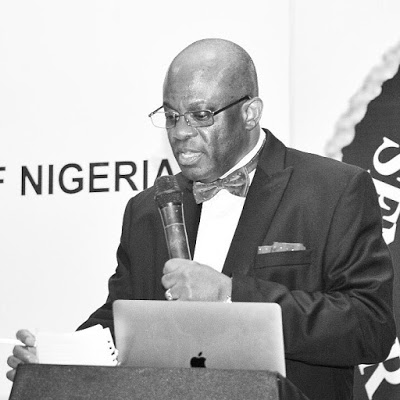
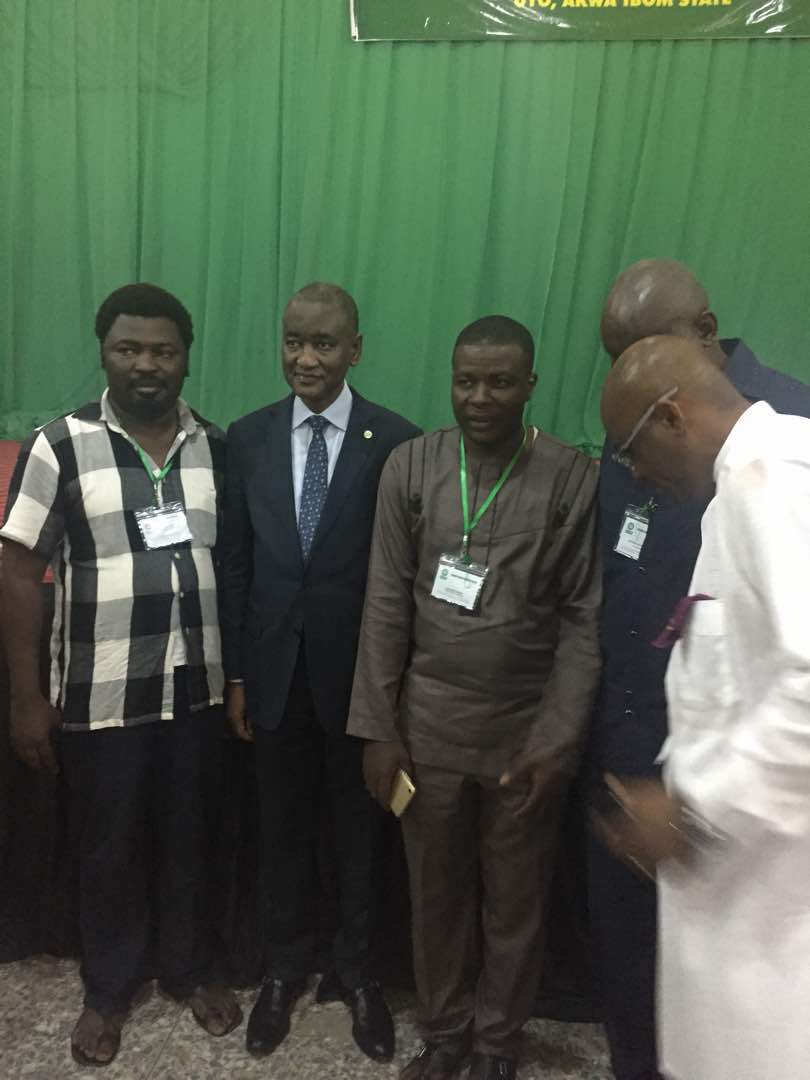
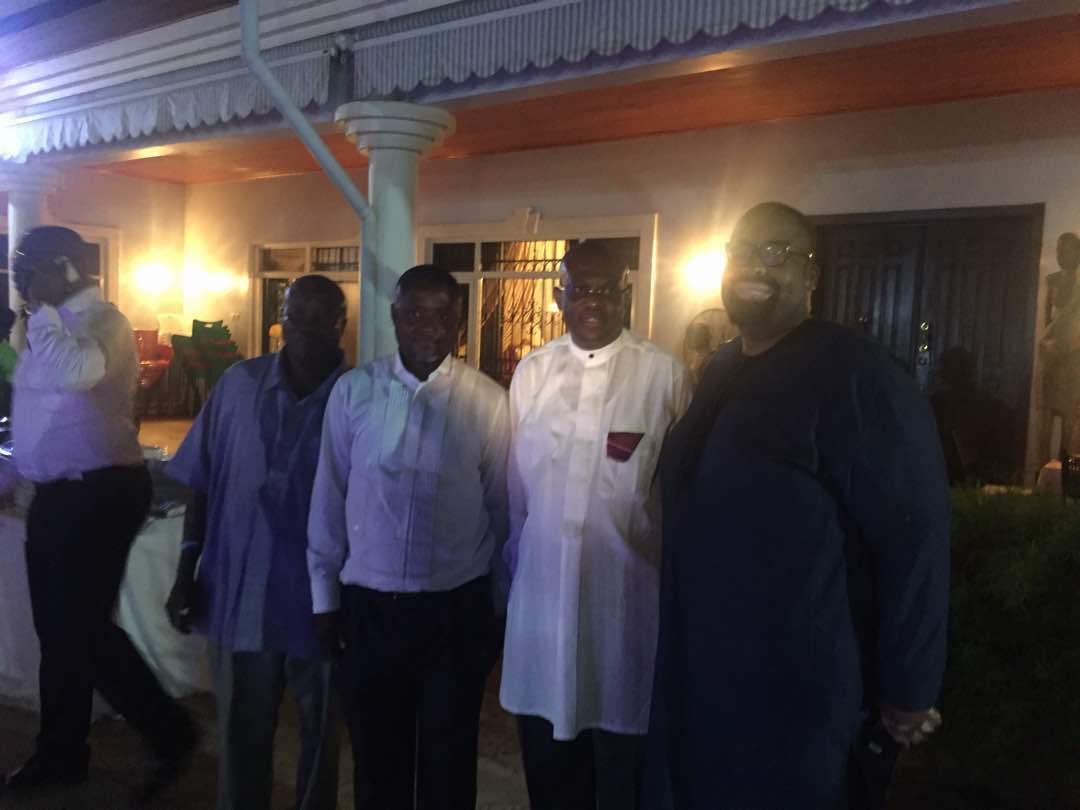
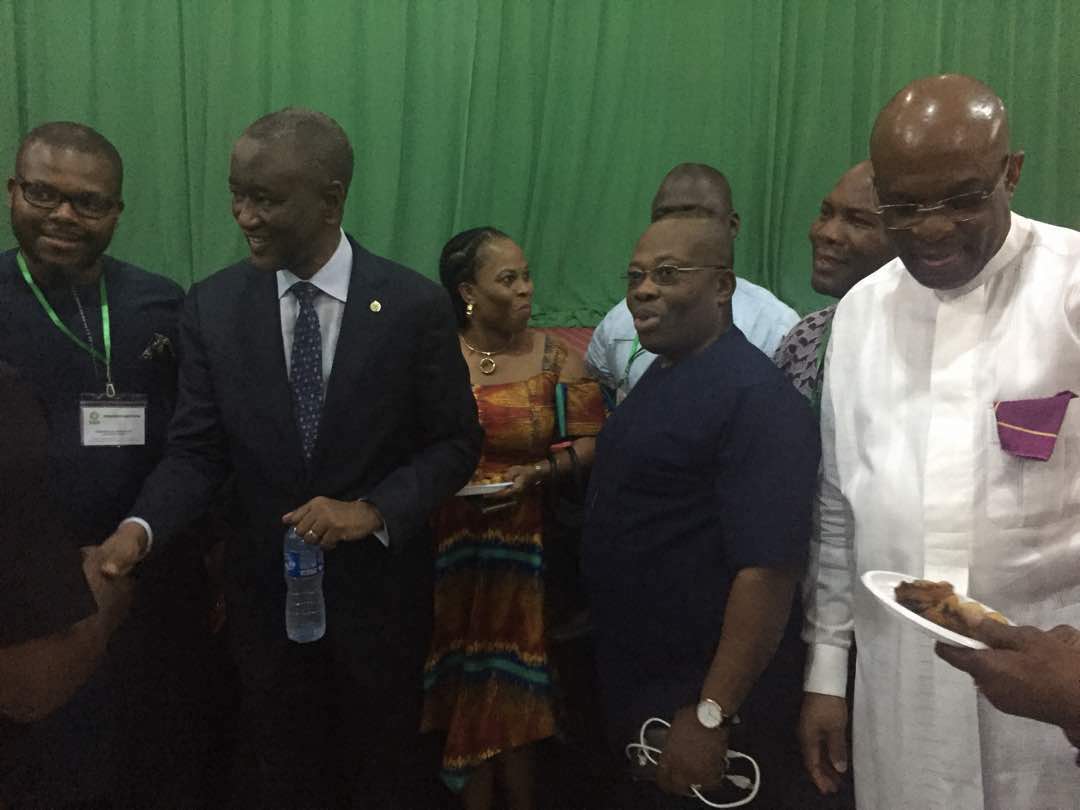
Paul Usoro SAN’s Goodwill Message to Bwari Branch of the NBA

Paul Usoro SAN’s Goodwill Message to Bwari Branch of the NBA


It is with immense delight that I
felicitate with the executive Committee and the entire members of the Nigerian
Bar Association, Bwari Branch, on the auspicious occasion of the Branch’s 2017
Law Week, which commenced on the 7th of December 2017, and accords with the
long established legal tradition witnessed every year.


Instructively, the theme of this year’s Law week, to wit: “Making impacts amidst
institutional Challenges: Re-working the Bar Vision” depicts the can-do spirit
which lawyers must inculcate and imbibe to enhance the delivery of justice to
all and enthrone the rule of Law.
The road is truly rough and tough but the end, upon consistency and
perseverance, will justify the means. Quitters never win, just as winners never
quit.

Indeed we must as Lawyers and leaders, persistently strive to make positive
impacts despite organizational and institutional impediments, to achieve
meaningful contributions and service to humanity.
I congratulate members of the Branch once again for this giant stride and pray
that this Years’s Law week shall usher in tremendous advancements in all
ramifications to the Legal profession.

Long Live NBA Bwari Branch!

Long Live the Nigerian Bar Association!
Long Live the Federal Republic of Nigeria!
Yours sincerely

Paul Usoro, SAN, FCIArb. 
How to Compensate for Mental Stress at Our Workplaces|  Michael Dugeri

How to Compensate for Mental Stress at Our Workplaces| Michael Dugeri


Work-related mental stress has been
described as the adverse reaction experienced by workers when workplace demands
and responsibilities are greater than the worker can reasonably manage or are
beyond the workers’ capabilities. Therefore, it has been advocated that
employers need to balance both demands and resources in the workplace in order
to manage work-related mental stress.  This is because high levels of
job demand and low levels of job resources could easily result in mental stress
for the workers.

Mental health is an integral component of
Occupational Safety and Health (OSH), which is a primary concern of labour and
employment law. A safe workplace is not only about physical safety – it’s
about the worker’s psychological safety too. This means that employers
have a duty of protecting the safety, health and welfare of their workers. The
enjoyment of these standards at the highest levels is a basic human right that
should be accessible by each and every worker. Regardless of the nature of
their work, workers should be able to carry out their responsibilities in a safe
and secure working environment, free from all forms of hazards.
The law provides for compensation to
workers who have experienced mental stress in the course of their employment.
The Employee’s Compensation Act, 2010 (“ECA”) provides that compensation is
available to an employee who suffers mental stress, where the mental stress is
an acute reaction to a sudden and unexpected traumatic event arising out of or
in the course of the employee’s employment; or if the employee has been
diagnosed by a medical practitioner as suffering from mental stress arising out
of the nature of work or the occurrence of any event in the course of the
employee’s employment. See section 8 ECA.
Section 8 (2) of the ECA provides that
where the mental stress is caused by the decision of the employer to change the
work or the working condition in such a way as to unfairly exceed the work
ability and capacity of the worker (thereby leading to mental stress), such
situation shall be liable to compensation to the degree as may be determined
under any regulation made by the Nigeria Social Insurance Trust Fund (NSITF).
The NSITF is the statutory body charged with the responsibility of
administering the Employee’s Compensation Scheme (ECS) established under the
ECA.
It is pertinent to note that the ECS is a
social security/welfare scheme that provides comprehensive compensation to
employees who suffer from occupational diseases or sustain injuries arising
from accidents at the workplace or in the course of employment. The basis for
‘compensation’ is the employer’s duty of care. The idea of compensation
suggests that someone has suffered a wrong for which he has to be compensated
monetarily. This implies that another person has a duty to prevent the
occurrence of the wrong suffered. Payment of compensation by the employer to
the worker is rooted in the accepted common law principle that the employer has
a duty of care, a duty to protect the health, welfare and safety of the
workers. Where the worker sustains injuries, gets ill or dies under work-related
circumstances, the employer is liable to pay compensation to the worker or to
his dependents, in the event of death. The ECS is funded by monthly
contributions from employers for the purpose of this compensation, as may be
required from time to time by deserving workers.
The system of compensation for occupational
mental stress established under the ECA is laudable, even though it also poses
certain challenges for affected workers. First, having to prove that the
worker’s mental stress actually relates to his/her work is tough, especially in
an environment like Nigeria that is plagued with many other intervening
factors. Second, it is doubtful if monetary compensation is adequate for
victims of occupational mental stress or if full rehabilitation of the victim
is possible in all cases. It is against the foregoing that it is argued that a
better system of compensation is the type that mirrors contemporary frameworks
for OSH, which are designed to be proactive rather than reactive to the
physical, social and mental aspects of the workers’ health. Just like physical
infirmities, mental health problems in the workplace are a global phenomenon.
In Nigeria, the typical work environment is full of precipitating factors such
as:
i. High quantitative
and qualitative workload,
ii. Inconsiderate
work schedules,
iii. Poor
remuneration, deficient welfare package, delayed/unpaid salaries,
iv. Neglect of
safety measures, etc.
All these translate to an increase in the
risk of mental health problems in the workplace. Unlike the ‘loud’ nature of
physical health problems, mental health problems in workers is a ‘silent’
phenomenon, which goes unnoticed and may be confused with lack of commitment to
the job. Unrecognized mental health problems in the workplace can affect
performance and productivity, hence the need for organizations to be
proactively pre-occupied with promoting and ensuring both the physical and
mental health of its employees. Beyond the issue of high quantitative and
qualitative workload, closer attention should also be paid to physical features
of the workplace like lighting, ventilation, work space, sanitation and noise
levels.
Organisations can manage and prevent stress
by improving conditions at work. While the common treatment for mental health
problems is prescriptive medication, employers have a role in making
adjustments and helping the affected individual to manage the problem at work.
Some of the suggestions that have been advanced by experts in the field of OSH
include the following:
1.     Having senior
management committed to reduce workplace stress;
2.     Consulting with
workers to create and promote a mentally healthy workplace culture;
3.     Use validated risk
assessment processes;
4.     Ensuring the
organisation has appropriate policies and procedures in place and workers are
aware of these;
5.     Managing workplace
psychosocial risk factors and stressors;
6.     Providing regular
and respectful performance feedback;
7.     Having a
‘Harassment Contact Officer’ in place for workers to speak to;
8.     Provide training
around managing workplace and individual stress levels;
Mental health is an intricate but pressing
workplace issue with multiple consequences. Occupational demands can be highly
stressful and many jobs make severe demands in terms of responsibility, time,
and performance. Rather than continuing with a culture of indifference, denial
and evasion, there is need for Nigerian workplaces to recognize mental health
as a realistic and legitimate concern, as well as display total commitment to
the implementation of policies and practices that will ensure a supportive
framework for workers.

Michael Dugeri

Regulatory compliance & commercial law advisor



Source: Linkedin

10 Things Some Sars Officers Don’t Want You To Know

10 Things Some Sars Officers Don’t Want You To Know


1.    
Bail is free
2.    
Upon arrest, you are liable to remain
silent; Section 6 of the ACJA Act 2015; Section 35(2) 1999 Constitution
3.    
When been questioned, you must have your
lawyer present. Section 6(2)(a) Administration of Criminal Justice Act (2015)

4.    
No one should be subject to torture or

unlawful treatment. Section 8, Administration of Criminal Justice Act (2015);
Section 34, 1999 Constitution.
5.    
Upon arrest, suspect must be charged to
court immediately. Section 32 of the Administration of Criminal Justice Act
(2015)
6.    
Police officer making an arrest must state

reason. Section 6, Administration of Criminal Justice Act, 2015.
7.    
Suspect is innocent until proven guilty.
Section 36(5) of the 1999 Constitution.
8.    
No one can be arrested in lieu of another
person
9.    
Police cannot unlawfully search your phones
10.           
Anyone unlawfully arrested is entitled to
compensation. Section 35(6) 1999 Constitution.

If your rights have been breached in relation to any of
the laws mentioned above, you can make a formal complaint to the Police
Complaint Commission via @PoliceNG_PCRRU npf.gov.ng/complaint or contact
your lawyer.
10 tips for participating in the World Human Rights Day protest  #EndSars

10 tips for participating in the World Human Rights Day protest #EndSars


1. Know the law – no Nigerian law requires a police
permit before one can participate in a protest.

2. Dress appropriately- wear comfortable shoes &
clothes to cover your skin.

3. Charge your phones – for communication &
recording incidents of police brutality against protesters.

4. Make bold and legible signs on cardboard indicating
your protest message.

5. Tell a friend whose not going of your location and
have them check in on you at intervals.

6. Write an emergency contact number on your person.

7. Don’t allow thugs hijack your protest, it’s the only
excuse given by Nigerian police when breaking up a protest.

8. Don’t act unruly or attack police officers.

9. Share your experience via a hashtag, social media or
blog post.

10. Plan your exit in case violence erupts.

Appeal Court holds Sentaor Akpan as winner Akwa Ibom North-East Senatorial District

Appeal Court holds Sentaor Akpan as winner Akwa Ibom North-East Senatorial District

Yesterday, the 30th of November 2017, marked the date of the long-awaited judgement in the dispute regarding the PDP Primaries for the North-East Senatorial District of Akwa Ibom State. 
After the Judgement of the Federal High Court sitting in Uyo, the Appellant, Senator Bassey Albert Akpan, sought to rectify the several manifest inconsistencies in the judgement by appealing through his Counsel Mr Paul Usoro SAN, to the Court of Appeal.

The Court of Appeal, in giving a detailed and well-considered judgement, dealt with a wide range of issues arising from the Appeal. The first determination of the Court was regarding the Preliminary Objection to the Appeal raised by the 1st Respondent. He had sought a dismissal of the Appeal on the grounds that the Notice of Appeal upon which the Appeal was based was incompetent. In his counter-arguments to the Preliminary Objection, Mr. Paul Usoro, SAN had emphasised to the Court that the competence of a Notice of Appeal is not determined by the Records of Appeal as an Appeal is a constitutional right as long as the said right was exercised within the prescribed time limit. It was further argued by Mr Usoro that the Courts were inclined towards substantial justice as opposed to technical justice and urged the Court to dismiss the Preliminary Objection and determine the Appeal on its Merits. In giving its Judgement on this point, the Court agreed with all the arguments of Mr. Paul Usoro, SAN and noted in addition that the Learned Silk had ensured that the proper steps had been taken to regularize the processes. The Preliminary Objection was therefore dismissed and the Court proceeded to determine the Appeal on its merits.
In delivering its judgement on the substance of the Appeal, the Court extensively analyzed the arguments canvassed by the parties. Mr. Paul Usoro, SAN had earlier submitted that the trail of evidence adduced by the Appellant was neither broken nor controverted at any point in time. He pointed to admissions made by the 1st Respondent regarding the officer appointed for the purpose of conducting the election and reminded the Court that the same officer had affirmed the facts as adduced by the Appellant. He further argued, providing several legal authorities in support, that the 1st Respondent had failed to prove his claims satisfactorily at the Lower Court and submitted that the Lower Court had therefore exceeded its jurisdiction when it gave judgement to the 1st Respondent. These arguments formed the basis for the decision of the Court of Appeal and it was unanimously held by the Honourable Justices that the decision of the Lower Court was perverse, misplaced in Law and unsupported by the facts and evidence adduced by the parties.
Following from the determinations and judgement of the Court of Appeal, the victory of Mr. Bassey Albert Akpan at the PDP primaries has been reaffirmed and the decision of the Lower Court sitting in Uyo, Akwa Ibom State has been reversed.
Onigegewura on Paul Usoro: The Viewpoint of An Amateur Historian

Onigegewura on Paul Usoro: The Viewpoint of An Amateur Historian

The Paul Usoro that I know is not a greenhorn as far as leadership position is concerned. As an undergraduate in then University of Ife, Paul displayed exemplary leadership qualities as the President of the Law Students Society.

When there was allegation of examination leakages in the famous institution, it was Paul Usoro’s petition as the leader of law students that led to the setting up of Adegbola Commission. And of course, Paul was the first witness to testify. If you have not, please go and read the case of Akintemi v. Onwumechile (1985) 1 NWLR [Pt. 1] for the full facts of the incident. By the way, that’s the first volume of Gani Fawehinmi’s Nigeria Weekly Law Report.

That’s Paul Usoro for you. Bold, fearless and courageous. That’s the type of leader the Bar deserves at this time. Leaders in the mould of Jubril Martin, the first president of the Nigerian Bar Association. Leaders like Chief FRA Williams, who had the longest tenure from 1959 to 1968. Leaders like the legendary Alao Aka-Bashorun. We need leaders who will speak for what is right, and who will use their voices to defend the Bar, promote excellence and champion the best traditions of the bar.
Let’s talk about Paul Usoro, the detribalized Nigerian. Ever since he set up his Paul Usoro and Company in mid-eighties, the firm has remained an equal opportunity training platform for all Nigerians irrespective of tribe or religion. You don’t need to bring a letter from a Judge or a politician for you to be employed in the firm. Notable alumni of the firm include Abdullahi al-Ilory, the scion of Sheikh Adam Al-Ilory of Markaz; Otunba Tokunbo Wahab who was a onetime gubernatorial candidate in Lagos State; and Ms. Bola Akande who has carved a niche for herself with Lotus Capital, to mention but a few.
You may not know this, but the Head of Chamber of Paul Usoro & Co for many years is a Yoruba man. Alhaji Munirudeen Liadi, a devout Muslim, who is a partner in the firm has been the HOC for as long as I remember. That’s Paul Usoro for you.
Is there any need for me to talk about his professionalism and competence? Paul is regarded as the foremost expert in communication law in Nigeria. Before  telecommunication became what it is today, Paul has distinguished himself as an authority in the field. Not only that, Paul has successfully trained generations of lawyers who have gone on to excel in their various fields.
One quality that I admire about Paul Usoro is his resilience. In mid-2000s, the Bank of Industry Building on Broad Street which housed Paul Usoro and Company went up in flames. The gigantic edifice came crashing down with the chambers that Paul Usoro had spent decades building. That singular incident was enough to kill the spirit of an average man. But not Paul.
Like Phoenix – the legendary bird which rises from its ashes with renewed vigour – Paul Usoro rolled up his sleeves and started all over again. That’s Paul, the man with the indomitable spirit.
When Prof. William Henderson, the director of the Center for Global Legal Profession said that: “the golden era [of legal profession] is gone, but this is not because the law itself is becoming less relevant. Rather, the sea change reflects an urgent need for better and cheaper legal services that can keep pace with the demands of a rapidly globalizing world” he could have been talking about the challenges confronting the Nigerian Bar.
It is in order to ensure that the Bar that we all belong to is not left behind in the global scheme of things that I support the candidature of Paul Usoro. There are many challenges facing the Bar, both from within and from without. Young lawyers need to be assisted to gain foothold in the profession. Old wigs need to be provided with platform to keep abreast of changes in the profession. The golden era of the Bar must be brought back. Paul Usoro, Senior Advocate of Nigeria is the best man for this task.
Paul Usoro has my vote
Onigegewura is my name and I am voting Paul Usoro for NBA President.
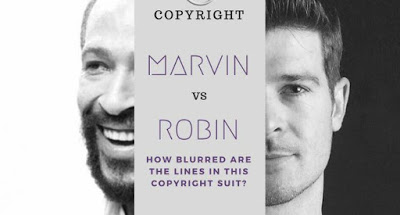
Marvin Gaye v. Robin Thicke: How Blurred Are The Lines In This Copyright Suit?

Marvin Gaye v. Robin Thicke: How Blurred Are The Lines In This Copyright Suit?

On 6th October 2017, Robin
Thicke and Pharrell Williams filed an appeal at the United States Court of
Appeals for the Ninth Circuit against the decision of the District Court for
the Central District of California (District Court) which decided that they had
infringed Marvin Gaye’s copyright in the song “Blurred Lines”.


As the legal fireworks in
the appeal commences, we have decided to examine the issues surrounding this
copyright infringement suit and explain its importance to the intellectual
property community. 

One of the most successful
songs in modern history
The song “Blurred Lines”
was released in 2013 by Robin Thicke and featured fellow musicians, Pharrell
Williams and Clifford Harris (also known as T.I). It was a huge hit when it was
released, ruling the airwaves for over a year.

In the United States (US),
the song debuted at No. 94 on the Billboard Hot 100 charts. However, by June
12, 2013, “Blurred Lines” was No. 1 on the charts and had sold over 1 million
copies in the US[1].

“Blurred Lines” later
peaked at No. 1 in 25 countries, including the United Kingdom (UK) and the US.
The song was so successful that it was certified quadruple platinum in
Australia and triple platinum in New Zealand[2].

In Canada, the song was
the No. 1 song for 13 consecutive weeks. It became the longest-running No. 1
single of 2013 and was Canada’s best-selling song of 2013[3]. In the US, it sold over 5 million copies in just 22
weeks and 6 million in 29 weeks thereby becoming the fastest selling song in
digital history[4].

By April 2014, the Blurred
Lines” single had reached the 7 million mark in sales[5] and by April 2015, it had sold 7,380,000 copies in
the US, making it the eighth all-time best-selling digital single[6]. According to the International
Federation of the Phonographic Industry (IFPI), the song had sold 14.8 million
copies by the end of 2013, becoming the best selling song of the year worldwide[7] and one of the best selling
songs of all times[8].

It broke the record for
the largest radio audience in history[9] and
is currently the seventh best-selling digital single of all time. It was the
second best-selling song of 2013 in the US and the best-selling song of 2013 in
the UK[10]. Subsequently, it was
nominated for two Grammys at the 56th
Annual Grammy Awards
 in the Record of the Year and Best Pop Duo/Group Performance categories.[11]
Earnings from the song
It is estimated that a
total of $16,675,690 was realized in profits for “Blurred Lines.”
Subsequently, $5,658,214 went to Robin Thicke, $5,153,457 was made by Pharrell
Williams and $704,774 went to T.I[12].
The record companies (Interscope, UMG Distribution and Star Trak Entertainment)
took the rest of the profits with an executive at Universal Music Group stating
that overhead costs on the creation of “Blurred Lines” amounted to
$6,900,000[13].

Authorship of the song
In a May 6 2013 interview
with GQ Magazine, Robin Thicke claimed that he wrote the song along with
Pharrell Williams. He stated that he was in the studio with Pharrell Williams
and he informed Pharrell 
Williams that
Marvin Gaye’s “Got to Give It Up” was 
one of his favourite songs.. His
statement inspired Pharrell Williams who started playing something with a
similar tune as the Marvin Gaye song and both artists supposedly wrote “Blurred
Lines” in about half an hour and subsequently recorded it.[14]
Clearly, Robin Thicke had
a hit on his hands. However, unknown to him, the storms were beginning to
gather as the Estate of the late Marvin Gaye had heard the “Blurred Lines” song
and would soon commence an action that in my opinion, could affect our perception
of copyright protection.

Copyright infringement
allegations
The legendary Marvin Gaye
is reputed to be one of the greatest soul singers.. He penned several songs
such as “Sexual Healing” and “What’s Going On”. He wrote a smash hit titled
“Got To Give It Up” in 1977. It was released under Motown Records (now a
subdivision of Universal Records). Marvin Gaye died in 1984 leaving the
copyright to his collection of songs to his children.

After reading several
interviews which Robin Thicke gave to the press, the Mavin Gaye family started
to insist that Robin Thicke had infringed on Marvin Gaye’s copyright by
sampling some portions of “Got to Give it Up”. Robin Thicke did not take too
kindly to these accusations and he proceeded to file a suit against the Estate
of Marvin Gaye at the District Court in August 2013. He was not seeking
monetary reliefs but sought a declaration from the court to determine if the
composers of “Blurred Lines” can be held liable for copyright infringement on
the basis that they were influenced by Marvin Gaye’s song, but did not actually
sample such prior works or literally copy any of Marvin Gaye’s music or lyrics.
Put differently, could they be deemed liable for copyright infringement if all
they did was evoke an era and the “feel” of Marvin Gaye’s music?

Marvin Gaye’s family took
the bait and counter-sued in April 2014, claiming that they were entitled to
damages as “Blurred Lines” infringed on Marvin Gaye’s copyright. In
addition to Robin Thicke, the producer and co-writer Pharrell Williams, guest
rapper T.I. and Universal Records were also joined in the suit.

In a shocking twist during
the trial, Robin Thicke informed the jury that he did not compose “Blurred
Lines” as he claimed he was drunk and high on alcohol and vicodine when he
recorded the song. He also claimed that he was inebriated when he gave the GQ
Magazine interview and other interviews where he claimed authorship of the
song. He also informed the court that he did not consider himself an honest
person[15]

On his part, Pharrell
Williams asserted that he wrote the song and that although he drew influences
from Marvin Gaye, he intended to replicate the “vibe feeling” of the genre. He
stated that there was no intention to rip off Marvin Gaye’s song.

In the second part of this
series, we will consider the arguments that were raised by both parties to the
lawsuit and examine the decision reached by the jury at the close of the
arguments. This will be considered in line with the position of the copyright
laws to determine if the eventual decision reached by the jury was proper in
law.

Partner, Intellectual property and brand protection at
ǼLEX/Corporate & Commercial Lawyer
Source: Linkedin 
References
[1]Gary Trust, ‘Robin Thicke’s ‘Blurred
Lines’ Hits No. 1 on Hot 100’ (Billboard Articles 6 December 2013)
<http://www.billboard.com/articles/news/1566519/robin-thickes-blurred-lines-hits-no-1-on-hot-100>
[2] Australian Recording Industry
Association, ‘RIA Charts – Accreditations – 2013 Singles’ <http://www.aria.com.au/pages/httpwww.aria.com.aupagesaria-charts-accreditations-singles-2013.htm>
[3] Billboard, ‘Canada’s Digital
Music Sales Rise in 2013 Unlike the U.S.; Eminem, Robin Thicke Among Top Selling
Artists’
[5] Paul Grein, ‘Chart Watch: Former
Teen Stars Make Good!(Yahoo, 23 April 2014)
[6]Rumor
Mill, ‘The Rise of “Uptown Funk”: Could It Become the All-Time #1
Seller’
[7]Stuart Dredge, ‘Global music sales
fell in 2013 despite strong growth for streaming services’ (The Guardian 18
March 2014)
[8] IFPI,
‘Digital Music Report 2014’
[9] Robin Thicke’s ‘Blurred Lines’
sets radio audience record
[10] Chart Watch: The Top 10 Albums
and Songs of 2013
[11] Grammy Awards 2014: Full
Nominations List
[12]Nolan Feeney, ‘Here’s Exactly How
Much Money ‘Blurred Lines’ Made (Time 4 March 2015) < http://time.com/3731556/blurred-lines-profits/>
[13]Pamela Chelin, ‘Court case reveals
exactly how much money Pharrell and Robin Thicke made off ‘Blurred Lines’ (Business
Insider 
4 March 2015)
http://www.businessinsider.com/court-case-reveals-exactly-how-much-money-pharrell-and-robin-thicke-made-off-blurred-lines-2015-3?IR=T
[14] Stelios Phili, ‘Robin Thicke on
That Banned Video, Collaborating with 2 Chainz and Kendrick Lamar, and His New
Film’ (GQ Magazine 6 May 2013)
[15]Eriq
Gardner , ‘Robin Thicke’s ‘Blurred Lines’ Deposition Unsealed: “I Was High
and Drunk” (Hollywood Reporter 24 October 2015)

Wills And Codicils 101 | eberechi may okoh

Wills And Codicils 101 | eberechi may okoh

 Lawyer: Have you written a
Will?

Client: Nope, not ready to
die yet.

A Will is a testamentary
deposition of a person’s assets, and in some cases, liabilities. Simply put, a
Will is a document a person prepares to communicate how he/she will want
his/her estate distributed after death. Being ambulatory, it only takes effect after
the death of the testator (maker of the Will). A Codicil on the other hand is a
document supplemental to a Will in which a testator makes further provisions
for his/her estate. It may be used to distribute assets to which the testator
got entitled after executing his/her Will, revoke gifts given in the Will,
appoint new executors to replace previously appointed executors who may be
unable to act, or such other supplemental issues that may arise after the
execution of the Will.


A good number of people may
leave writing a Will to a much older age due to a foreboding that writing a
Will may hasten demise. Some others consider their assets too few to warrant
any formal distribution. Whatever the case, it is important that Wills when
written are properly done and in a manner that the Courts will readily give
effect to.

In Nigeria, Wills are
administered by state laws. This informs the preference of most testators to
engage the services of lawyers in preparing Wills. Lawyers engaged for these
services help guide the testator along the lines of legality to ensure a
testator’s Will is enforceable after his death. Case in point, the Rivers State
Wills Law provides in section 2 that a spouse, child, parent or sibling of the
deceased who immediately before the death of the deceased was being maintained
either wholly or partly, by the deceased may apply to the court for an order on
the ground that dispositions of the deceased’s estate according to his Will is
not such as to make reasonable financial provision for the applicant. 

The Court
on certain considerations such as the time of making the
application and what constitutes “reasonable financial provision” in the
circumstances may make an order for the applicant’s maintenance from the estate
of the deceased. This of course is irrespective of the fact that the order
departs from the exact provisions of the Will. It is also pertinent to note
that some hereditary customs have long been recognized by case law and may
override certain provisions of a Will.

Another legal point to be
noted is that a valid Will must be signed by the testator before two witnesses
who must be present at the same time, or if previously signed by the testator,
the testator’s signature must be acknowledged by both witnesses in the presence
of each other. Where the witnesses were not present at the same time, the Will
may be invalid.

If it is established that
a deceased left a Will, the lawyer or such other person with whom the Will was
reposed will inform the executors who are in turn, required to apply to the
relevant Probate Registry for the Will to be read and subsequently for a Grant
of Probate. The Probate Registry will issue the necessary forms to be filled
and advise on the estate taxes to be paid before the Grant of Probate.

Where a person dies
intestate, i.e. without a Will, close relatives or associates would apply to
the Probate Registry for letters of administration for the estate. The Registry
will request sureties and interview them to ensure the applicants are the
proper persons to make the application. Publications would also be made in
Newspapers to inform the public that the applicants have come forward to obtain
letters of administration for the estate of the deceased. 

Where there are no
objections following the Newspaper publications, the Probate Registry will upon
the payment of all relevant fees and estate tax, issue Letters of
Administration to the applicants. It is noteworthy that Letters of
Administration may often omit certain assets of the deceased unless the
deceased had close family members or associates who were aware of every single
asset belonging to the deceased. In contrast, a testator sets out all his
property in the Will including assets which no other person may have possibly
had knowledge of.

Notwithstanding the advantages
of Wills, in practice, Wills often get contested. Most times, such objections
are raised by family members and close relatives and culminate in long years of
litigation. In re Morgan (1893), 3 Ch. 228, Nathaniel Lindley, Baron Lindley, L.J. said “I
do not see why, if we can tell what a man intends, and can give effect to his
intention as expressed, we should be driven out of it by other cases or
decisions in other cases”
. Put differently Wills should be plainly
construed without subjecting it to litigation, citing of cases and their
decisions thereof. Unfortunately, Wills do and have continued to be the subject
of many litigation cases. Some of the common grounds on which Wills are usually
challenged are:

1.     The
testamentary capacity of the testator at the time of making the Will, i.e. his
mental disposition;
2.    Due
Execution of the Will;
3.    Marriage
by the testator subsequent to the execution of the Will;
4.   Inadequate
provision for dependants;
5.    Undue
influences; and
6.   Alterations
to the Will.

If not properly managed,
disputes over a Will may survive the beneficiaries and depreciation of
bequeathed assets may set in. 

In conclusion, whether a
Will is written to express emotion as Sara Clarke of Bournmouth who directed in
her will: To my daughter, I leave £1 – for the kindness and love she
has never shown me
[1] or to ensure one’s assets are properly
administered after death, Wills will continue to be written and in all cases,
will affect not the deceased but those who are or are not mentioned in such
Wills. It is therefore important that people understand the essence of Wills
and how Wills affect them.


Eberechi May Okoh

Senior Associate at
Streamsowers & Kohn

Source: Linkedin 

Photo Credit – www.ilawconnect.com 
NEC Quarterly meeting begins with NBA President, Paul Usoro SAN and other distinguished members of the Bar

NEC Quarterly meeting begins with NBA President, Paul Usoro SAN and other distinguished members of the Bar

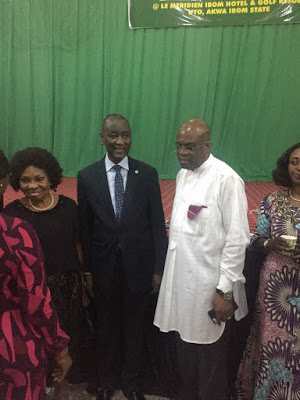
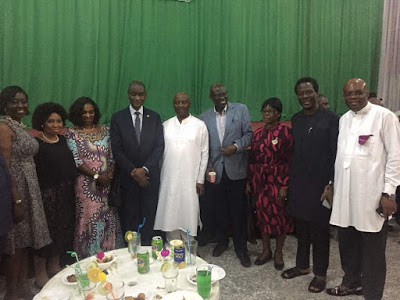
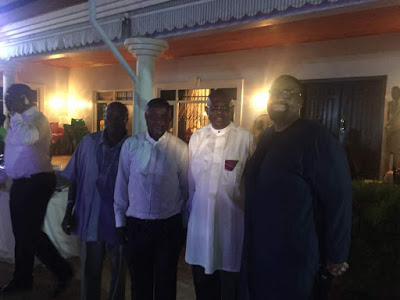
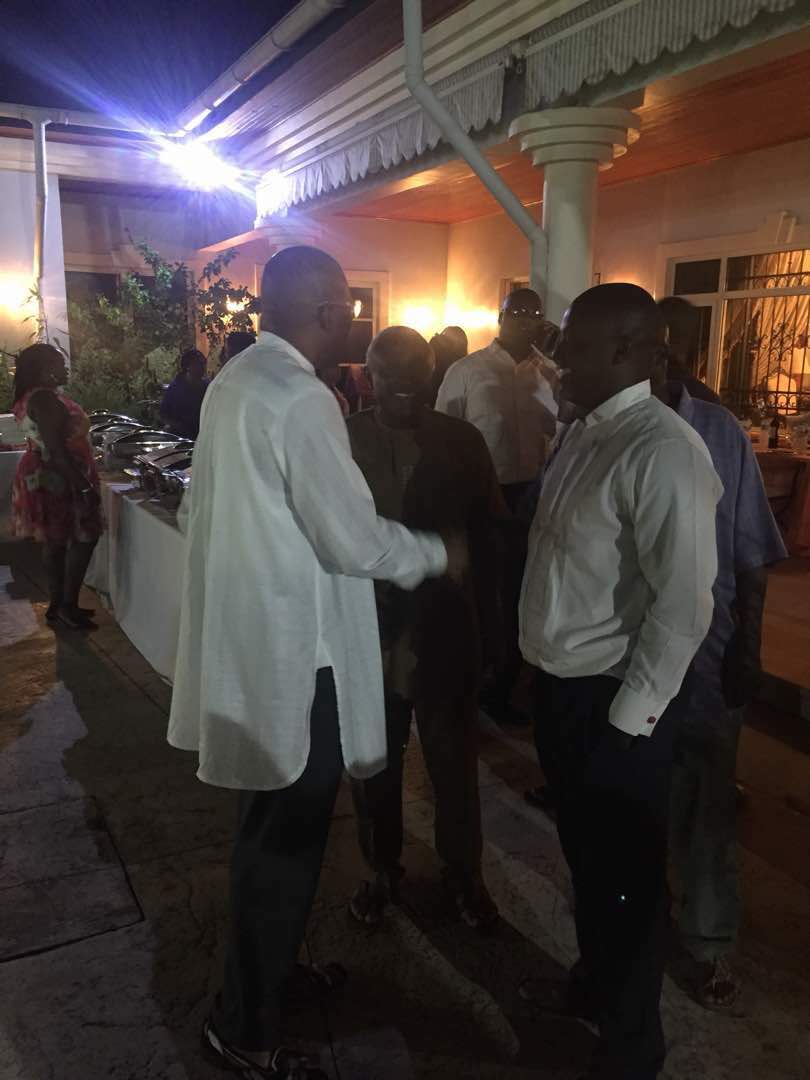
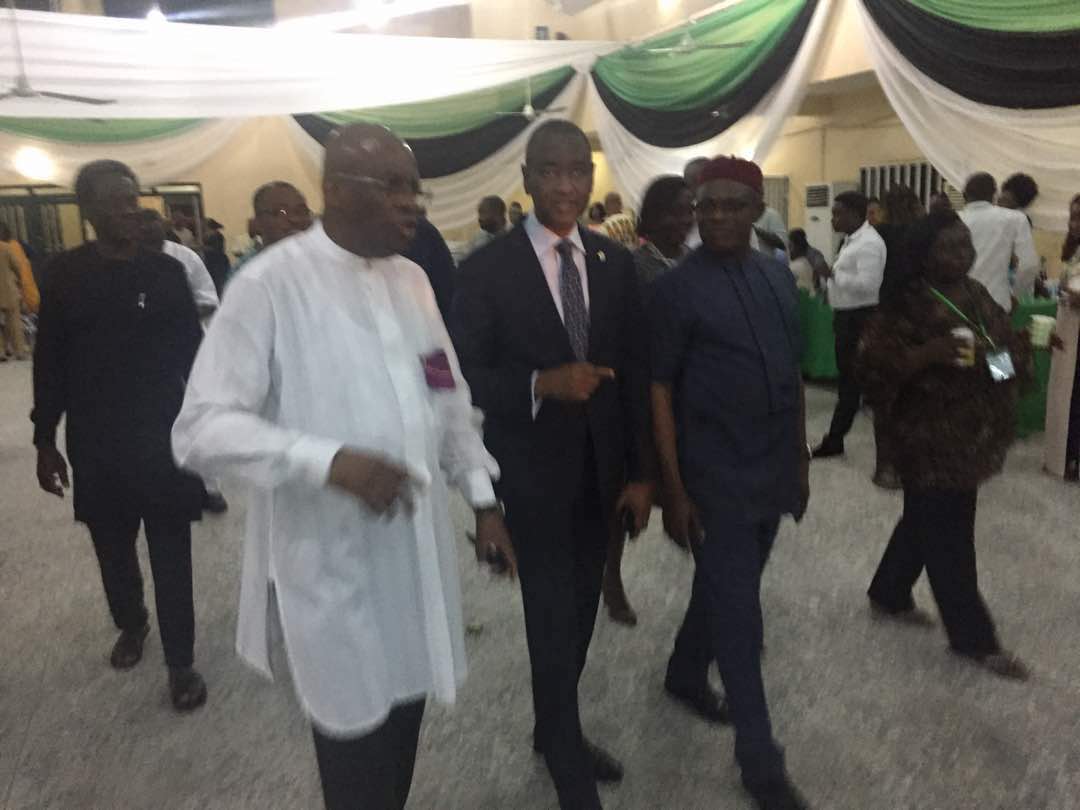
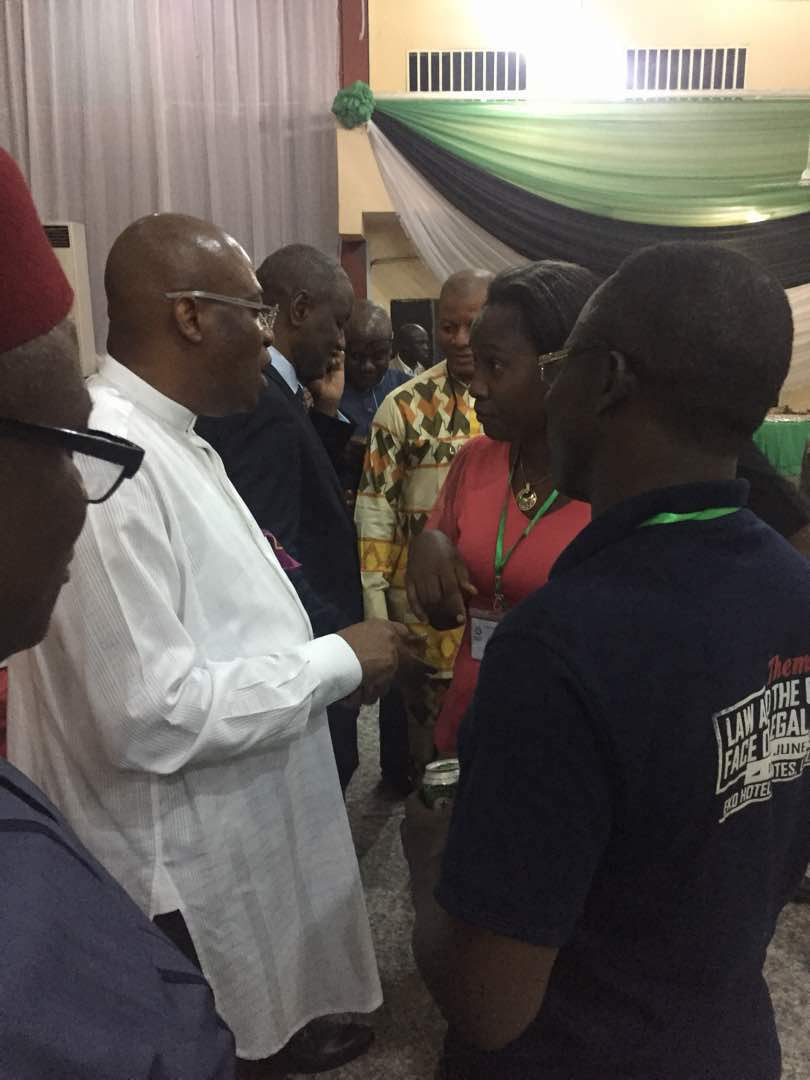
NBA President, Usoro, others kickstart the NEC Quarterly meeting

Nigeria’s foremost communications law expert and astute litigator, Paul Usoro, SAN, joined other legal luminaries in a cocktail event today.

The event was the curtain raiser for the National Executive Council Meeting of the Nigerian Bar Association holding tomorrow, Thursday and Friday in Uyo, Akwa Ibom.
The cocktail hosted by the Chief Judge of the state, Honorable Justice Godwin Abraham, was well attended by representatives of the various branches of the NBA.
Paul Usoro, SAN, also seized the opportunity to fete the members of the bar at a welcome party held later that evening. Usoro who hails from Akwa-Ibom, encouraged the members of the bar to always uphold integrity of the profession and seek out creative ways of advancing the legal practice in the zone.
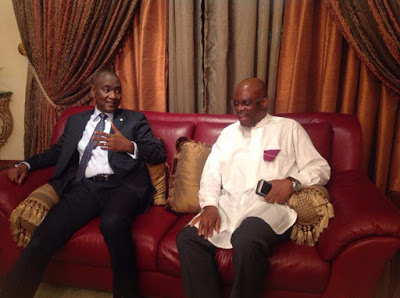
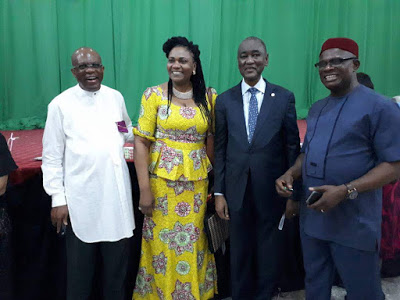
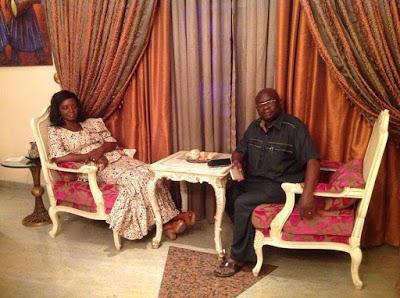
See highlights of the evening in the photos

Why Legal Due Dilligence is important for corporate transactions/Chidiebere Odoemenam

Why Legal Due Dilligence is important for corporate transactions/Chidiebere Odoemenam

The importance of conducting a “legal health check” on corporate organizations which are the subject of corporate transactions such as mergers, acquisitions and financing cannot be overemphasized. 

It is critical that purchasers and lenders conduct a comprehensive legal due diligence to ensure that all potential risks and issues which may affect or shape the transaction are recognized and appropriately dealt with during the structuring and negotiation phase of the transaction.
What is Legal Due Diligence?
Broadly, due diligence is a risk assessment. It is the investigation and/or evaluation of an entity or person, prior to entering into an agreement or transaction.
A legal due diligence is a comprehensive legal analysis conducted by legal advisors on a target or subject corporate organization. This involves a detailed investigation into the corporate structure of the company and its compliance with applicable sector laws and regulations. For example, a legal due diligence conducted on a company operating in the Nigerian insurance sector would apart from focusing on its compliance with general corporate laws, also focus on the company’s compliance with the Insurance Act and various regulations of the National Insurance Commission. The ultimate goal of the investor/financier is to understand the full legal situation of the company and issues the company is facing or would face post-transaction.
Transaction – Specific Legal Due Diligence
Capital Markets – Transactions in the capital markets include debt and equity securities themed offerings such as issuance of bonds (Vanilla, Sukuk, Eurobonds), commercial papers (including asset backed CPs), structured notes and shares.
A legal due diligence conducted on the Issuer in a bonds offering, commercial papers issuance or an initial public offering of shares is required to satisfy the regulatory authorities and prospective investors that the Issuer has the requisite capacity to issue the securities, and to reveal the Issuer’s credit-worthiness. 
A legal due diligence on XYZ PLC seeking to list commercial papers on the floor of the FMDQ would ask questions such as: (i) has the board/shareholders of XYZ PLC approved the offering?, (ii) are there restrictions on the corporate documents of XYZ PLC which may inhibit the offering process?, among others.
Mergers & Acquisitions – A properly conducted legal due diligence on a target company reduces the likelihood of unpleasant surprises after the completion of a mergers and acquisition process. This would provide the purchaser the opportunity to gain as much background information and understanding about the target’s business. The information obtained in a legal due diligence may also serve as a platform to renegotiate the purchase price of the target’s shares or assets.
The legal due diligence highlights major and minor issues bordering on corporate structure of the target, legal ownership of assets (including legal status of real properties, investments and cash-in-bank), contractual obligations of the target, current or pending litigation or disputes involving the target, regulatory or statutory breaches, financial liabilities, compliance with sector-regulators, tax status among others.
A robust legal due diligence in an M&A transaction uncovers issues and acts as an early warning signal to a purchaser.
For instance, if ABC PLC had agreed to purchase 80% ordinary shares of XYZ PLC for US$100 million, if after a legal due diligence it is revealed that XYZ PLC owes US$50 million to tax authorities, and another US$15 million to its employees and suppliers, ABC PLC would surely revisit the drawing board and re-evaluate its valuation of XYZ PLC, and whether it would be prudent to withdraw or continue with the transaction.
Financing – A financing transaction may be structured as a bilateral, multilateral or syndicated financing, and may also be solely project based. Legal due diligence in a financing transaction is undertaken by the lender(s) to investigate the business, financial condition and creditworthiness of each relevant obligor and the terms of the underlying finance documents.
A typical legal due diligence in a financing would ask questions such as: (i) are the obligors duly constituted and existing relevant laws? (ii) are there requisite corporate authorizations by the relevant obligors approving the transaction? (iii) are there current financial obligations of the obligors which the borrowers should take note of?
Conclusion
A legal due diligence report and the issues uncovered from the report can be addressed in the structuring and transaction phase prior to closing of the transaction. The issues uncovered allows the purchaser/lender the opportunity to seek adequate contractual protection from the target/borrower in the contract negotiation process.
Therefore, a properly conducted legal due diligence gives the investor/financier confidence and relative peace of mind to continue with the transaction knowing that all loopholes have been plugged.
The Author
Chidiebere Odoemenam is a corporate and commercial lawyer, with experience advising international and local corporates on big-ticket and high value transactions on a wide range of legal issues and on various sectors. He can be reached via email on odoemenamchidi@gmail.com and via mobile on 07031781991.