Law on Treatment of Gun Shot Victims

Law on Treatment of Gun Shot Victims

Doctors, Nurses and Hospital Managements should note the duty placed on them by the recently signed Compulsory Treatment for Victims of Gunshot Act 2017.

Section 12 provides that “. It shall be the duty of the hospital that receives any person with gunshot wounds to notify the family members or relations of the victim as far as they may ascertain within twenty-four hours of becoming aware of the victim’s identity”.

Learn & Share

Number 1 Nigerian Legal Resource Blawg

Number 1 Nigerian Legal Resource Blawg

We are devoted to making the complicated world of the law a little easier to understand. The law touches on literally every aspect of our day-to-day lives, whether we realize it or not.

you can follow the Legalnaija Blawg, receive updates and new articles every day, and interact with us both through our site or through our Facebook, Twitter, or Instagram pages.

Help share with your friends and followers. Some say: “ignorance is bliss”. However, if you know your rights you can assert those so people or the government cannot take advantage of you.

Follow Legalnaija

Paul Usoro SAN hosts young Lawyers

Paul Usoro SAN hosts young Lawyers

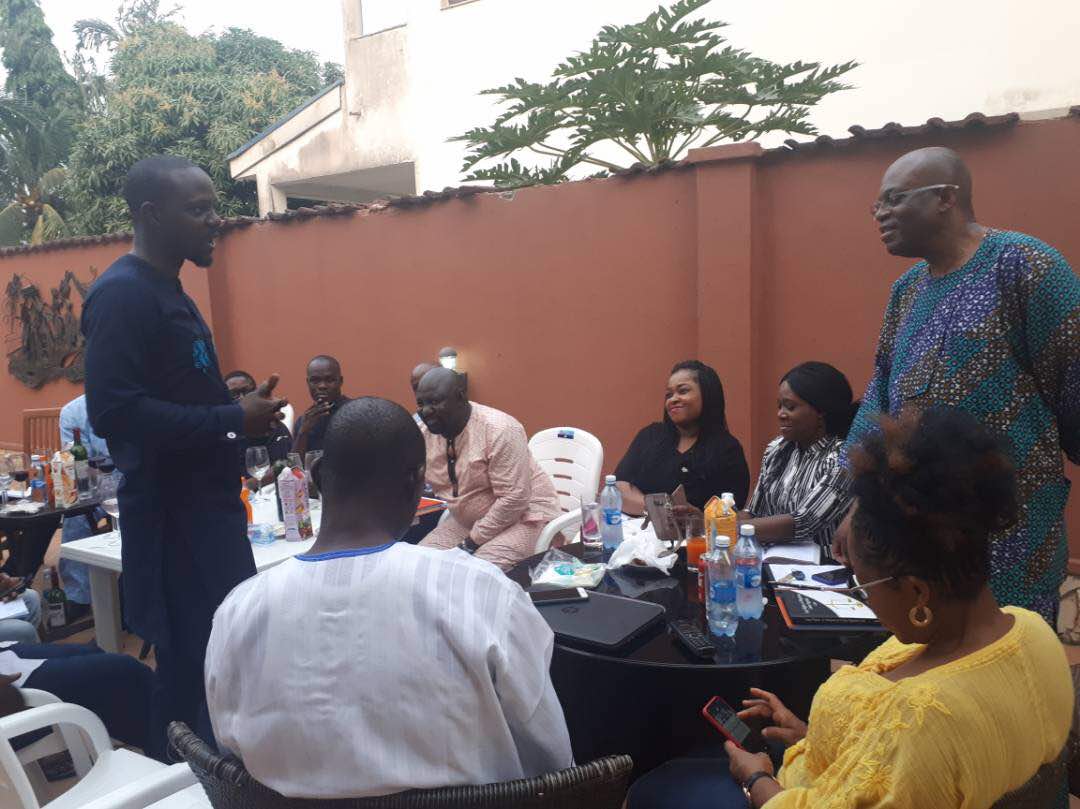
Adedunmade Onibokun presenting a copy of his book – Legal Rights and Obligations Under Nigerian Law – to the Learned Silk @paulusoro

@Akinyemilaw speaking to the Learned Silk and sharing ideas.

#legalrights #legaleducation #instalawyer #instablogger #naija #lagos #abuja #legalnaija #paulusoro #paulusoroconnect #PUC #PU

When a Contract is Frustrated

When a Contract is Frustrated

If a high-rise office block is destroyed by an earthquake just before you complete its renovation, must the building owner still pay you? Can you be sued for failure to complete?

The absurdity of a positive answer in either case is assumed by the doctrine of frustration.

 – Mindy Chen – Wishart
Learn & Share

Paul Usoro SAN in court with members and leaders of the NBA Lokoja Branch

Paul Usoro SAN in court with members and leaders of the NBA Lokoja Branch

Paul Usoro SAN with the past and present NBA Chairmen, Lokoja Branch, Mr. Lima Salihu and A. Y. Abdullahi respectively, including other Executive members and PUC lawyers at the Federal High Court Lokoja today, 19 January 2018.

As part of the learned silk’s mentoring culture he held a review session with following lawyers, who expressed their appreciation for the opportunity to learn from Paul Usoro SAN.

#lawyersrock #nba #paulusoroconnect #paulusorosan

Taxation of Non- Resident Company | Theophilus Olufemi

Taxation of Non- Resident Company | Theophilus Olufemi

Introduction

Section 105 (1) of CITA 2004 defines a Nigerian company as “any company or corporation (other than corporation sole) established by or under any law in force in Nigeria or elsewhere” while a non-residence company is “any company or corporation (other than a corporation sole) established by or under any law in force in any territory or country outside Nigeria. For income tax purposes, a person may be resident, non-resident or possesses dual residence.

The concept of residence determines the extent to which the income of a taxpayer is liable to tax under a tax jurisdiction. In Nigeria, a resident company is assessable on the global income. The profit of a Nigerian company is deemed to accrue in Nigeria regardless of the jurisdiction from which it is earned. In other words, a Nigerian company is assessed to tax on its global profits. On the other hand, in the case of a non-resident company, only the profit that is deemed to be derived from Nigeria is assessable to tax in Nigeria. Profits from any trade or business are deemed to be derived from Nigeria to the extent that the profits are attributable to that part of the company’s operations in Nigeria.

Profit/Income “deemed to be derived from Nigeria

To ascertain if a profit/income of a company is deemed to be derived from Nigeria, the following are the important questions that must be answered:
Does the Company have a “fixed base” in Nigeria?
Where anon-resident company has a “fixed base” from which it carries on its business or trade in Nigeria, the profits from such activities would be deemed to be derived from Nigeria. The CITA has failed to define fixed base but an FIRS circular, which is not binding, has explained it to include:
a) facilities such as a factory, an office, a branch, a mine, oil and gas;
b) where there is a controlling interest in the Nigerian company;
c) activities such as building, construction, assembly, or installation; and
d) furnishing of services in connection with the activities mentioned above
On the contrary, the CITA states that the following do not constitute a fixed base:
a) facilities used solely for storage or display of goods or merchandise; and
b) facilities used solely for the collection of information
Does the Corporation operate in Nigeria through a dependent agent authorized to conclude contracts or deliver goods or merchandise on its behalf?
A non-resident company can have two types of agents in Nigeria – an independent agent or a dependent agent. An agent is regarded as possessing independent status when he acts on behalf of a non-resident company in the ordinary course of his business. The status may however change if he devotes his activities wholly or almost wholly on behalf of the company.
Is the corporation executing a turnkey project in Nigeria?
A turnkey project is defined as a ”single contract involving survey, deliveries, installation or construction.” The profit on a turnkey project is liable to tax in Nigeria. Such a profit would not be split between the so-called “Nigeria source” and “off-shore” profits but taxed wholly in Nigeria.
Is the operation between the corporation and its Nigerian subsidiary at arm’s length? 
The Law allows the Board to make appropriate adjustment to the profits of Nigerian companies where the following circumstances prevail: 
a) the presence of a control of a Nigerian company may be exercised directly or indirectly by a parent company or any other company associated to it;
b) the imposition of conditions in the financial and commercial relationship by the controlling interest;
c) the conditions imposed must be different from what would obtain between independent parties or in an open market situation;
d) such relationship and conditions lead to the transfer of goods and services at prices not at arm’s length; and
e) Consequently, the profits declared for the Nigerian tax are understated.
The ‘imposition of conditions’ or control and influence as mentioned above can move in various appearances like over-invoice of goods and services, packaging of the terms of payment of interest on loans, frivolous charges for management fees, royalty, patent and rent, convenient shifting of profits between companies or in the allocation of expenses, all with the objective of minimizing, avoiding or evading the Nigerian tax.
When the conditions analysed above hold, the profit deemed to be derived from Nigeria shall be as determined by the Board. In such circumstance, the Board will carry out comparative cost and price to establish the true market prices and make necessary adjustments to determine the true profit for tax purposes.
Decided Court Case
Considering the case between: JGC Corporation and Federal Inland Revenue Service. The appellant, JGC Corporation filed an appeal before the Tax Appeal Tribunal (Lagos Zone) on April 17, 2014. 
Subject of the case:
a) Whether the Appellant has a fixed base and therefore is liable to pay tax in Nigeria.
b) Whether the Appellant can be assessed to tax under Section 30(1) of Companies Income Tax Act?
The Appellant filed its Appeal sequel to the Respondent’s Notices of Refusal to Amend the Assessment of company income tax for the years ending 31st December 2004, 31st December 2005, 31st December 2006, 31st December 2007 and 31st December 2008.The Appellant seeks the following orders:
a) declaration that the issuance of the Notices of Refusal to Amend/Revised Assessments numbered R/ A 001, R/ A 002, R/ A 003, R/ A 004 and R/ A 005, all dated 23rd August 2012 by the Respondent is contrary to law and wrongful.
b) a declaration that the Appellant has fully discharged its tax obligations to the Respondent and is therefore not liable to pay the cumulative sum assessed in the Notice of Refusal to Amend/Revised Assessments or any other sum at all.
c) An order setting aside the Notice of Refusal to Amend/Revised Assessment and the assessments of tax contained in them.
d) An order of perpetual injunction restraining the Respondent from issuing any Notice or Notices of Assessment to the Appellant in respect of income and/or earnings forming the subject of the Notices of Refusal to Amend/Revised Assessments.
e)  And such other orders as the Honourable Tribunal may see fit to make upon the hearing of this appeal.
The Respondent contended that the Notices of Additional/Revised Assessments were valid because: The Appellant did business in, and derived income from Nigeria. The contract for engineering, procurement, constructing transporting, installing and commissioning of facility on the worksite, was awarded in Nigeria. The worksite was in Bonny Nigeria, payment was by a Nigerian company, fabrication was to be installed in Nigeria, contract could not have been wholly performed outside Nigeria, and profit was therefore deemed to be derived from Nigeria. The Appellant had a fixed base in Nigeria.

“The Appellant counters that it is a foreign company with no fixed base in Nigeria, and thus not subject to Nigerian taxation under section 13(2)(a).
Besides, the subject contract was performed wholly outside Nigeria, the Appellant maintains.
JUDGMENT 
The appeal was lost on the following grounds:
v Documents show that the main obligation of the contract is the work which was performed in Bonny, Nigeria.
v The contract was executed in Nigeria.
v The Appellant obtained licences for the building of the facility in question. The Appellant could not establish that Mobil Producing Nigeria Unlimited obtained the licenses and permits in Japan and that Japan is the country of operation.
v The contract allows Mobil Producing Nigeria Unlimited and other contractors reasonable access to worksite. With this, it is evident that the facility or worksite is the fixed base.
v The contract also provides that the Appellant shall provide and cause its subcontractors and suppliers to provide Mobil Producing Nigeria Unlimited and other contractors reasonable access to the worksite. In the light of this, it is evident that the facility or worksite is the fixed base. This confirms the fact that the contractors are independent of the contract between Mobil Producing Nigeria Unlimited and the appellant.
v The contract puts the obligation of making VAT payments, shipment charges, custom duties, all importation levies and undertaking operational functions in respect of the importation of the facility in Nigeria on the appellant.

TAKEAWAY
From the above, it is imperative that fixed base concept is understood. Going by the law and the decided case highlighted above, It is crystal clear that all non-resident companies carrying on business in Nigeria will be liable to pay taxes to the Nigerian Government provided that such entities have a fixed base in the Country. FIRS should therefore put deliberate efforts into issuing more public notices that will shed light on the grey areas of the law with respect to the taxation of non-residents.
v The contract puts the obligation of making VAT payments, shipment charges, custom duties, all importation levies and undertaking operational functions in respect of the importation of the facility in Nigeria on the appellant.
TAKEAWAY
From the above, it is imperative that fixed base concept is understood. Going by the law and the decided case highlighted above, It is crystal clear that all non-resident companies carrying on business in Nigeria will be liable to pay taxes to the Nigerian Government provided that such entities have a fixed base in the Country. FIRS should therefore put deliberate efforts into issuing more public notices that will shed light on the grey areas of the law with respect to the taxation of non-residents.

Theophilus Olufemi

Senior Tax Advisor at TAC
Source –  LinkedIn 

Don’t be Ignorant

Don’t be Ignorant


We are devoted to making the complicated world of the law a little easier to understand. The law touches on literally every aspect of our day-to-day lives, whether we realize it or not. 

you can follow the Legalnaija Blawg, receive updates and new articles every day, and interact with us both through our site or through our Facebook, Twitter, or Instagram pages. 

Help share with your friends and followers. Some say: “ignorance is bliss”. However, if you know your rights you can assert those so people or the government cannot take advantage of you. 
Follow Legalnaija
Celebrities, Perception Management & Tax | Taiwo Oyedele

Celebrities, Perception Management & Tax | Taiwo Oyedele

I was invited last Thursday to speak at an event organized for entertainers. The aim was to encourage celebrities to pay tax and embrace the ongoing voluntary assets and income declaration scheme (VAIDS).

Interestingly many of the entertainers opened up about the myriad of challenges they face ranging from piracy, to lack of access to finance, society’s expectations of them often involving maintenance of expensive lifestyles while living on handouts. While some of the celebrities may be financially buoyant, the vast majority of them are really struggling to stay afloat. 
I know that nobody is excited paying taxes and so people will find any excuse to avoid paying taxes but here are some of the key lessons I took away from the event which I thought to share as some of them affect everyone, whether you are a celeb, self employed, high-networth or just a regular individual. 
  1. Documentation is key – No matter how compelling your story may be, nobody will believe you without proper evidence or documentation and it’s almost impossible to get finance or attract investors to your business. You may not even have tax to pay if you haven’t made a profit but even then you have the obligation to file returns. Wesley Snipes went to jail for failure to file returns. As much as possible get receipts for your purchases, use credit/debit cards and online banking instead of cash. Make sure you know your income and expenses and you can substantiate if required. 
  2. Tax is a legal matter – Society agrees that tax is important for there to be a government but most people wish they don’t have to pay. You can say all you want about whether government deserves your money but make sure you are on the right side of the law. The fact that other people are not compliant is not an excuse neither is ignorance.
  3. You can do something about the Law, Tax and Governance – Some of our laws are clearly obsolete and unfit for modern day realities such as the stamp duty act which was enacted in 1939 but being applied to electronic banking when in fact there was no internet at the time. But the good news is that it doesn’t have to be this way, you and I can change it for good. We can hold government to account and ensure that only credible people who have paid the right amount of tax get elected or appointed into office to manage our collective resources – taxpayers money! 
  4. Perception management inflicts pain – You don’t have to live up to society’s expectation even if you can afford it. Some people share their pictures on social media regularly but don’t ever want to wear the same outfit twice (check the richest people in the world, they can’t be bothered). If you are trying to prove a point by showing off (flying business or first class, expensive jewelries and accessories, gadgets, luxury cars etc), you may unknowingly be exposing yourself to not only kidnappers, robbers but also the taxman – it’s like blowing the whistle on yourself, there is everything to lose and nothing to gain.
#LEADwithTaiwo #mentorshipseries

Taiwo Oyedele

Source: LinkedIn

Limits To The Powers Of The NICN To Award Damages Wrongful Termination | Faruq Abbas

Limits To The Powers Of The NICN To Award Damages Wrongful Termination | Faruq Abbas

Although the law is quite clear that an
employee whose employment was wrongfully terminated would be entitled to
damages from his employer, there seems to be some of sort of confusion
regarding the quantum of damages, which an employee whose employment was
wrongfully terminated would be entitled to. The source of this confusion can be
traced to some recent decisions of the National Industrial Court of Nigeria
(NICN), delivered after the 1999 Constitution of the Federal Republic of
Nigeria was amended in 2010 to expand the jurisdiction of the NICN and to
confirm its status as a superior court of record.

Prior to the 2010 amendment of the 1999
Constitution, the law was quite settled that if the termination of an
employment was wrongful, the employee would only be entitled to damages in
terms of payment in lieu of notice, as stated in his/her contract of
employment. This position was confirmed by the Supreme Court of Nigeria in the
case ofIfeta v. SPDC (Nig.) Limited (2006) 8 NWLR (Pt. 983) 585
where the apex Court held that although the termination of the Appellant’s
employment was wrongful, he would only be entitled to three months’ salary in
lieu of notice and his other entitlements which he would have collected if his
employment was terminated lawfully. It is instructive to note that in Ifeta
v. SPDC
, the Appellant’s contract of employment provided for a notice
period of three months where either of the parties decides to terminate the
contract of employment. The position of the Supreme Court was also followed by
the Court of Appeal in the case of Bemil Nigeria Limited v. Marcus
Emeribe & Ors
 (2009) 3 CLRN 94 at 113 Para 20-30.
Notwithstanding the Supreme Court’s
position on the quantum of damages which an employee whose employment has been
wrongfully terminated will be entitled to, the NICN has, in certain cases,
applied its discretion in awarding damages to employees whose employment were
wrongfully terminated by their employers. Two of such cases would be considered
in this paper.
In the case of Mrs. Titilayo
Akisanya v. Coca-Cola Nigeria Limited & 2 Ors
 (Unreported) Suit
No. NICN/LA/40/2012, the NICN in its judgment delivered on 7th April 2016
awarded the sum of N17,368,468.00
representing the Claimant’s annual salary as damages for the wrongful
termination of her employment notwithstanding that her contract of employment
provided for one-month notice in the event of the termination of the contract.
Also, in the case of Mr. John Muir
v. Batelitwin Global Services Limited 
(Unreported) Suit No.
NIC/LA/151/2011, the NICN in its judgment delivered on 13th May 2013, awarded
the sum of US$193,050.00 representing the unpaid salary for the unexpired
period of the Claimant’s contract of employment as damages for the wrongful
termination of his employment notwithstanding that his contract of employment
provided for one-month notice in the event of the termination of the contract.
The pertinent facts ofMr. John Muir v. Batelitwin Global Services Limited are
as follows: the Claimant was employed on a fixed contract for a period of one
year as a Senior Piping Designer. About 4 months after the commencement of his
contract, his employer terminated his employment without notice on the ground
of incompetence and the Claimant challenged the termination of his employment
at the NICN for being null and void. He also claimed the sum of US $ 208,800.00
being the total sum of his salaries from December 2009 to August 2010, amongst
other reliefs, but the NICN only awarded him the sum of US$193,050.00 as
damages for the wrongful termination of his employment.
Interestingly, the Court of Appeal has set
aside the decisions of the NICN in Mrs. Titilayo Akisanya v. Coca-Cola
Nigeria Limited & 2 Ors
 and Mr. John Muir v. Batelitwin
Global Services Limited
 on the ground that the damages which were
awarded to the Claimants in the two cases have no basis in law since they were
based on the exercise of the discretionary powers of the NICN and not on the
settled position of the law regarding the award of damages to an employee whose
employment was wrongfully terminated.
In Coca-Cola Nigeria Limited &
2 Ors v. Mrs. Titilayo Akisanya
 (Unreported) Appeal No. CA/L/661/2016
the Lagos Division of the Court of Appeal in its judgment which was delivered
on 17th November 2017 reduced the damages which was awarded to the Respondent
by the NICN from N17,368,468.00 to
the sum of N1,447,373.33 representing
the Respondent’s one month emoluments in lieu of notice.
Also, in Batelitwin Global Services
Limited v. Mr. John Muir
 (Unreported) CA/L/566/2013 the Lagos Division
of the Court of Appeal in its judgment which was delivered on 3rd November 2016
reduced the damages which was awarded to the Respondent by the NICN from
$193,050.00 to the sum of $24,750.00 being the sum commensurate to the
Respondent’s one month salary in lieu of notice of termination of his
employment.
Conclusion
The implication of the Court of Appeal’s
recent decisions in Coca-Cola Nigeria Limited’s case and Batelitwin Global
Services Limited’s case is that the NICN would now be expected to ensure that
damages awarded in cases of wrongful termination of employment are commensurate
with the notice period contained in an employee’s contract of employment, as
against using its discretionary powers to award damages at large.
In addition, Counsel also have a duty to
ensure that they do not file claims for exaggerated reliefs in respect of
lawsuits pertaining to wrongful termination of employment since the Court of
Appeal, which is the final Court on employment related matters, has settled the
issue of the quantum of damages, which an employee would be entitled to, if
his/her employment has been wrongfully terminated.
It should be noted that this article
is for general information only. It is not offered as advice, on any particular
matter, whether legal, procedural or otherwise. If you have any questions about
this article, please contact the author.
Faruq Abbas
Managing Partner at Abdu-Salaam Abbas &
Co.

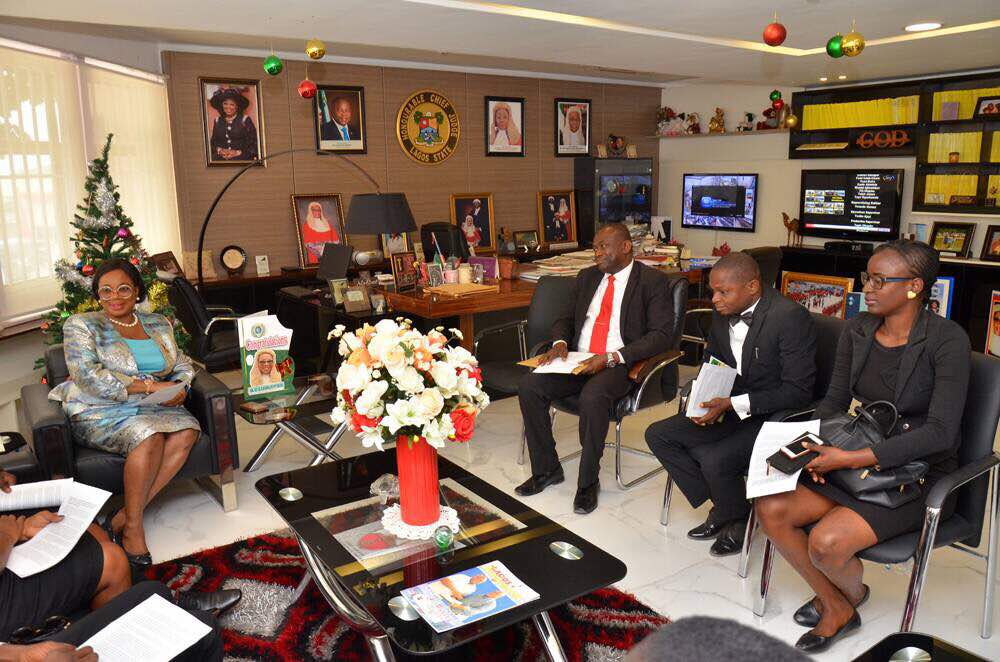
NBA -YLF Chairman and Others Visit Lagos Chief Judge

NBA -YLF Chairman and Others Visit Lagos Chief Judge


Yesterday, I took the initiative to ask the over two hundred active members of The Young Lawyers’ forum on Whatsapp what they would have loved to tell the Hon. Chief Judge if they were to meet her in person; the first comment was that “ I would tell her that I love her world class goggle…”. It is from here I chose to pick my ‘World Class’ prefix for the my amiable Chief Judge and her working team. 


I must start by multiple congratulations, first on your appointment as the Chief Judge of Lagos State and also compliments of the Season. We bring you greetings from the leadership of the Nigerian Bar Association, Ikeja Branch and we consider it indeed a great privilege to be considered as important enough to commence your year with us. We do not take it for granted.


The Young Lawyers’ Forum of Ikeja branch is the pioneer Young Lawyers Forum, prior even to the National body of the forum. It stands arguably as the most vibrant Young Lawyers Forum in the country. The forum has not been known to pay lips service or flatter and it will not start now. But it is important to state at this time that The YLF is proud to have you. It is obvious that you are different. Your prompt response to our letter despite your busy schedule and the holiday season speaks volumes. Eventually hope has come for the profession we belong to. 

My Lord, please accept our apology, for the very late invitation to our 2017 Annual Summit, I take full responsibility and assure you of diligence in subsequent engagements with your office. Your representation by the Hon. Justice Opensanwo was of a kind, My Lord did Justice to the seat and we are glad of My Lords’ choice.  


At the summit our theme was ‘The Sustainability of the Legal Profession’ and in fact the first session discussed the sub-theme ‘Breaking the chain of corruption in the Judiciary’ whilst the other session discussed the ‘4th Industrial revolution and its impact on the legal practice’. We Young Lawyers are scared, we wonder whether there will be any practice by the time we are much more senior. Corruption has become the order of the day and the level corruption operates has remained at an all time high.
We have come to pledge our support for the great work you are set to do. We assure you that we are with you.  A yoruba adage which our amiable Chairman, Mr. Adesina Ogunlana often says to us is interpreted as follows ‘ It is the youth that saves you in public, but the elders will deliver you in the board room’. My Lord, we assure you that the streets are save for you, the Young Lawyers’ of your constituency are with you. Let those who want evil to prevail try hard, you will remain above. We will save the Judiciary, we will save our profession, we will work with you to ensure that Justice is true to its definition.


My lord, we are aware that the stakeholders forum, your detailed visit to the courts across the state has exposed so much that you need to do and we will not stress them. We have only come to bring to the notice of Your Lordship that you have ready and willing hands in us.


As a forum, we undertake several initiatives for the development of young lawyers; we hold monthly Continous Legal Education Seminars, Annual Summit, Mentoring sessions with seniors, as well as social activities for bonding. We went ahead to visit the Ikoyi prisons in December, 2016 in celebration of the World International Human Rights Day and inherited about 97 case files of persons being held for minor offences. As at today, we have dispensed with 93 of the cases.

Despite the forums’ challenge of funds, which we hope your Lordship will assist with, we have consistently worked to ensure we are visible and active in the journey towards a better justice delivery system.

We have come to humbly request of my lord to adopt the ongoing discussion of ‘not too young to run’ in her engagements with a slight modification ‘not too young to serve’. All young lawyers are not incompetent as we are made to seem, we are not all lazy, we are strong, hardworking and forward thinking professionals too. We are not lesser than other young professionals simply because we are lawyers. We need My Lord to trust us, we need your lordship to engage us. Give us the opportunity to work with your administration, to serve in your committees, to make recommendations that can save the future of the judiciary, which indeed is ours.

A good example of areas which we know you already have in focus is the Sheriffs section, there is so much to do there. We suggest that the department be automated. The process of auction is the highest embellishment of corruption, the e-filing system needs  complete overhauling, the registrars are a great torture, as it is we are the most hit because we do more interaction with them. The need to demand due respect for lawyers with law enforcement authorities can also not be over emphasized.
We shall continue to intimate you of our activities as at when they come up, we shall continue to seek your support and involvement, we shall continue to be available to notify you of things that may interest you to ensure you succeed in your cause.


My Lord, we are here for you, we want to work with you. We want to save the future of the practice. We know it is in our interest to do so as you will soon leave us to it, we hope you won’t consider our offer as insignificant.

Thank you