The Potential Of Sports In Developing Nigeria | Oluwabukunmi Adeniran
ABSTRACT
In the
words of Beverly Agbakoba-Onyejianya; “There has been an explosion in
the Entertainment industry. It is time for the sporting industry to begin to
add value. We are a populous country, we have a young population, so there is
no reason why sports should not be bigger than it is now”.[1]The
introduction of sports law as a field has gained a lot of prominence around the
world, especially in Europe. In Nigeria however, it is yet to spread its wings,
owing to certain factors, most of which are based on the structure of the
sporting associations in the country. Also, It is yet to be realized that
sports has gone beyond mere recreational activity and is now a highly lucrative
business and a means of making money across the board, for clubs, sponsors, footballers, agents, and
even lawyers.[2]This
Article highlights the current issues in the Sports sector and provides an
insight to the profitability and potential of sports law in Nigeria and its
possible effect on the Nigerian economy if duly exploited.
words of Beverly Agbakoba-Onyejianya; “There has been an explosion in
the Entertainment industry. It is time for the sporting industry to begin to
add value. We are a populous country, we have a young population, so there is
no reason why sports should not be bigger than it is now”.[1]The
introduction of sports law as a field has gained a lot of prominence around the
world, especially in Europe. In Nigeria however, it is yet to spread its wings,
owing to certain factors, most of which are based on the structure of the
sporting associations in the country. Also, It is yet to be realized that
sports has gone beyond mere recreational activity and is now a highly lucrative
business and a means of making money across the board, for clubs, sponsors, footballers, agents, and
even lawyers.[2]This
Article highlights the current issues in the Sports sector and provides an
insight to the profitability and potential of sports law in Nigeria and its
possible effect on the Nigerian economy if duly exploited.
1.0
INTRODUCTION
INTRODUCTION
Sports has the capacity to be one of
the most lucrative areas for the Nigerian economy if properly explored. The
constant neglect and manipulation in that space has however limited its
potential. According to Sport for Development and Peace International
Working Group, sport has the potential to promote social integration,
gender equality, and social capital development amongst others.[3]
Sports Law touches on a variety of matters, including contract, tort, agency,
constitutional, labor, trademark, copyright, discrimination based on sex,
criminal, and tax issues.[4]
These laws vary, depending on the status of the athlete, the kind of sport, and
some laws vary for other reasons.
the most lucrative areas for the Nigerian economy if properly explored. The
constant neglect and manipulation in that space has however limited its
potential. According to Sport for Development and Peace International
Working Group, sport has the potential to promote social integration,
gender equality, and social capital development amongst others.[3]
Sports Law touches on a variety of matters, including contract, tort, agency,
constitutional, labor, trademark, copyright, discrimination based on sex,
criminal, and tax issues.[4]
These laws vary, depending on the status of the athlete, the kind of sport, and
some laws vary for other reasons.
Sports has always been an important
part of human social existence. They have been used as forms of exercise,
sometimes just for leisure, or as a hobby. They are so ingrained in our lives
and have thus become an exciting part of our daily lives. However, in recent
time sports has transcended from pure entertainment or leisure and has now
gained commercial and economic significance, especially in the United States,
the United Kingdom and all through the European Union. Through marketing,
promotion, franchising, merchandising and brand building of professional sports
teams, teams in these countries have become more economically significant,
viable and have assumed the influences associated only with multi- national
companies. Sportsmen and women have also become more commercially important
surpassing previously existing notions with respect to their financial worth,[5]
thereby bringing value to their respective localities or countries, thus
inviting investors. There has been an evolution of the most popular sports,
such as football, tennis, basketball, cricket, car- racing, and so on into mega
international events. They have also evolved into profitable domestic sports
events like; Major League Soccer (MLS), the English Premier League (EPL) and
the Spanish La Liga. The organizers of these sporting events on the
international level have been able to reap immense financial rewards by inter
alia exploiting and leveraging on aggressive marketing campaign, taking
advantage of the marketable potential resident in these sports.[6]
part of human social existence. They have been used as forms of exercise,
sometimes just for leisure, or as a hobby. They are so ingrained in our lives
and have thus become an exciting part of our daily lives. However, in recent
time sports has transcended from pure entertainment or leisure and has now
gained commercial and economic significance, especially in the United States,
the United Kingdom and all through the European Union. Through marketing,
promotion, franchising, merchandising and brand building of professional sports
teams, teams in these countries have become more economically significant,
viable and have assumed the influences associated only with multi- national
companies. Sportsmen and women have also become more commercially important
surpassing previously existing notions with respect to their financial worth,[5]
thereby bringing value to their respective localities or countries, thus
inviting investors. There has been an evolution of the most popular sports,
such as football, tennis, basketball, cricket, car- racing, and so on into mega
international events. They have also evolved into profitable domestic sports
events like; Major League Soccer (MLS), the English Premier League (EPL) and
the Spanish La Liga. The organizers of these sporting events on the
international level have been able to reap immense financial rewards by inter
alia exploiting and leveraging on aggressive marketing campaign, taking
advantage of the marketable potential resident in these sports.[6]
According to PricewaterhouseCoopers,
the North American sports industry generated $60.5 billion in 2014, and is
expected to reach $73.5 billion by 2019. Sources of revenue include
merchandizing, sponsorship, media rights and gate receipts, which is the
biggest source of revenue. But revenue derived from media rights deals is
projected to surpass gate revenues. The industry also provides employment in
different areas ranging from the athletes to coaches, scouts, umpires,
referees, commentators, amongst others.[7]
the North American sports industry generated $60.5 billion in 2014, and is
expected to reach $73.5 billion by 2019. Sources of revenue include
merchandizing, sponsorship, media rights and gate receipts, which is the
biggest source of revenue. But revenue derived from media rights deals is
projected to surpass gate revenues. The industry also provides employment in
different areas ranging from the athletes to coaches, scouts, umpires,
referees, commentators, amongst others.[7]
In Europe, the data is even
more compelling. The sports industry’s contribution to the European economy is
enormous. The industry contributes more to the European economy than
agriculture, forestry and fisheries combined. If other sectors that benefit
from sports are included, the share of the continent’s sports GVA jumps to
2.98% or 300 billion Euros.
more compelling. The sports industry’s contribution to the European economy is
enormous. The industry contributes more to the European economy than
agriculture, forestry and fisheries combined. If other sectors that benefit
from sports are included, the share of the continent’s sports GVA jumps to
2.98% or 300 billion Euros.
In terms of jobs, the sports
labour market accounts for 2.12% of the total employment in Europe, equivalent
to about 4.5 million sports-related jobs. The largest number of sports-related
jobs is in Germany, estimated at 1.5 million jobs. Sports and sport-related
activities are estimated to supply over 400,000 full-time jobs in England, or
2.3% of the country’s jobs market.[8]
Nigeria should really tap into the huge prospects of the sports sector.
labour market accounts for 2.12% of the total employment in Europe, equivalent
to about 4.5 million sports-related jobs. The largest number of sports-related
jobs is in Germany, estimated at 1.5 million jobs. Sports and sport-related
activities are estimated to supply over 400,000 full-time jobs in England, or
2.3% of the country’s jobs market.[8]
Nigeria should really tap into the huge prospects of the sports sector.
2.0 LIMITING FACTORS TO THE POTENTIAL OF SPORTS IN
NIGERIA
NIGERIA
2.1
Lack of Sporting and Recreational Facilities
Lack of Sporting and Recreational Facilities
Poor management of facilities and
lack of adequate ones are said to be largely responsible for the poor
performance of the nation’s sports men and women in both continental and world
championships, making it difficult to develop and inject fresh blood into Team
Nigeria’s contingent. It has made a country like Nigeria, with a population of
over 167million people, to keep recycling athletes for major international
competitions.[9]
lack of adequate ones are said to be largely responsible for the poor
performance of the nation’s sports men and women in both continental and world
championships, making it difficult to develop and inject fresh blood into Team
Nigeria’s contingent. It has made a country like Nigeria, with a population of
over 167million people, to keep recycling athletes for major international
competitions.[9]
2.2
Lack of Medical Care and Insurance
Lack of Medical Care and Insurance
The unavailability of adequate
medical care and insurance packages for athletes on national and club
assignments has negatively affected sports in Nigeria. At the Namibian 2014
African Women’s Cup of Nations, Gloria Ofoegbu, a Nigerian player, suffered a
career-threatening injury, as reported by the Punch Newspaper, which ruled her
out of the game for two years. The player’s club could not afford the cost of
the surgery required to ensure she returned to football and Ofoegbu was left on
the sidelines for two years until a “Good Samaritan” paid for the surgery in
2016.
medical care and insurance packages for athletes on national and club
assignments has negatively affected sports in Nigeria. At the Namibian 2014
African Women’s Cup of Nations, Gloria Ofoegbu, a Nigerian player, suffered a
career-threatening injury, as reported by the Punch Newspaper, which ruled her
out of the game for two years. The player’s club could not afford the cost of
the surgery required to ensure she returned to football and Ofoegbu was left on
the sidelines for two years until a “Good Samaritan” paid for the surgery in
2016.
2.3
Poor Remuneration
Poor Remuneration
Most football clubs take on players
from academies without the proper contractual agreements between the clubs and
the players, thus meaning that the clubs do not own the players and can
therefore lay no claim to the profits whenever a player is being sold. By
virtue of section 9(4) of the Nigeria Labour Act: “No contract shall
provide for the payment of wages at intervals exceeding one month unless the
written consent of the State Authority has been previously obtained.”
from academies without the proper contractual agreements between the clubs and
the players, thus meaning that the clubs do not own the players and can
therefore lay no claim to the profits whenever a player is being sold. By
virtue of section 9(4) of the Nigeria Labour Act: “No contract shall
provide for the payment of wages at intervals exceeding one month unless the
written consent of the State Authority has been previously obtained.”
Also following is the issue of
professional footballers being owed months/years of salaries without being able
to enforce payment of their salaries, as agreed initially. One of the reasons
would be their inability to acquire the services of a lawyer, who would be able
to secure a favorable contract on their behalf, with Nigerian football clubs.
professional footballers being owed months/years of salaries without being able
to enforce payment of their salaries, as agreed initially. One of the reasons
would be their inability to acquire the services of a lawyer, who would be able
to secure a favorable contract on their behalf, with Nigerian football clubs.
Similarly, the reluctance of clubs to
pay off players whose contracts have been terminated is also a bug wonder. The Labour Act provides in section
11(7) that: “All wages payable in money shall be paid on or before the
expiry of any period of notice”. However, in Nigeria, most players are
rarely paid their wages after being offloaded by their clubs and that is due to
their inability to make sure they signed enforceable contracts. This has become
a major problem for Nigerian players, who are thus unable to make ends meet.[10]
pay off players whose contracts have been terminated is also a bug wonder. The Labour Act provides in section
11(7) that: “All wages payable in money shall be paid on or before the
expiry of any period of notice”. However, in Nigeria, most players are
rarely paid their wages after being offloaded by their clubs and that is due to
their inability to make sure they signed enforceable contracts. This has become
a major problem for Nigerian players, who are thus unable to make ends meet.[10]
2.4
Recycling of Old Athletes
Recycling of Old Athletes
It is not a surprise that the
country’s habit of recycling old and past athletes contributes to the lack of
improvement and growth in the Sports sector. This recycling results from the
lack of recreational and sporting facilities in primary and secondary schools which stifles talent
discovery. It can also be as a result of the poor remuneration thereby
discouraging the youths from the consideration of participating in sports
within the country. Hence, the reason we see natives of the country playing for
other countries is attributable to the fact that it is more secure and
profitable for them. The Government should show interest and encourage the
youths by providing the necessary training facilities and opportunities and
select new athletes or players, thereby refreshing the sporting community and expelling the aged among them
so as to enhance quality performance and create a more competitive team.
country’s habit of recycling old and past athletes contributes to the lack of
improvement and growth in the Sports sector. This recycling results from the
lack of recreational and sporting facilities in primary and secondary schools which stifles talent
discovery. It can also be as a result of the poor remuneration thereby
discouraging the youths from the consideration of participating in sports
within the country. Hence, the reason we see natives of the country playing for
other countries is attributable to the fact that it is more secure and
profitable for them. The Government should show interest and encourage the
youths by providing the necessary training facilities and opportunities and
select new athletes or players, thereby refreshing the sporting community and expelling the aged among them
so as to enhance quality performance and create a more competitive team.
2.5
Insufficient Policy Regulations
Insufficient Policy Regulations
The National Sports Commission
(NSC), established in 2007,[11]
is the apex Federal Government Agency charged with the responsibility of
implementing the policy and programs of the Federal Government with respect to
sports administration, management and
facilities development, with a vision statement; “To Develop Sports
Sector to a World Class Level”.
(NSC), established in 2007,[11]
is the apex Federal Government Agency charged with the responsibility of
implementing the policy and programs of the Federal Government with respect to
sports administration, management and
facilities development, with a vision statement; “To Develop Sports
Sector to a World Class Level”.
As a commission, it has its primary
objectives enshrined in the National Sports Policy of 1989, but the
sports management structure suffered some setbacks as a result of poor or
non-implementation of the 1989 policies. Since 2007, an Executive Bill has been
put to the National Assembly for an Act in respect of the establishment of the
N.S.C. Up to this moment, this Bill has not been passed into law. The impact of
the non-passage of this Bill into law is weighty and ramifying and does not
make the NSC to be as strong as it would have been with its enabling law is in
place.[12]
It has been argued that the Nigerian National Sports Policy is a richly crafted
document which, if followed to the letter, could catapult the country into
being a sports giant. Some of the key aspects of the policy include the
co-ordination of sports development programs at all levels of government. For
instance, the Federal Government, through the National Sports Commission, is
expected to initiate programs aimed at identifying, nurturing and developing
talents through a national elite development program. This is to be done
through state sports festivals, the national sports festival, national youth
games, etc.
objectives enshrined in the National Sports Policy of 1989, but the
sports management structure suffered some setbacks as a result of poor or
non-implementation of the 1989 policies. Since 2007, an Executive Bill has been
put to the National Assembly for an Act in respect of the establishment of the
N.S.C. Up to this moment, this Bill has not been passed into law. The impact of
the non-passage of this Bill into law is weighty and ramifying and does not
make the NSC to be as strong as it would have been with its enabling law is in
place.[12]
It has been argued that the Nigerian National Sports Policy is a richly crafted
document which, if followed to the letter, could catapult the country into
being a sports giant. Some of the key aspects of the policy include the
co-ordination of sports development programs at all levels of government. For
instance, the Federal Government, through the National Sports Commission, is
expected to initiate programs aimed at identifying, nurturing and developing
talents through a national elite development program. This is to be done
through state sports festivals, the national sports festival, national youth
games, etc.
2.6
Poor Funding/ Corruption:
Poor Funding/ Corruption:
Poor funding
is one of the problems inhibiting the growth of Nigerian sports.
is one of the problems inhibiting the growth of Nigerian sports.
And most
times, when funds are even made available, officials siphon the
times, when funds are even made available, officials siphon the
money, leaving the athletes underfed,
underpaid and under motivated.[13]
underpaid and under motivated.[13]
3.0
RECOMMENDATIONS; THE WAY FORWARD.
RECOMMENDATIONS; THE WAY FORWARD.
Fairly speaking, Sports has had an
appreciable impact on national development in Nigeria.[14]
However, there is no denying the fact that there is still more to be done in
terms of administration and providing the enabling environment for sports to
thrive. As the saying goes; Rome was not built in a day.
appreciable impact on national development in Nigeria.[14]
However, there is no denying the fact that there is still more to be done in
terms of administration and providing the enabling environment for sports to
thrive. As the saying goes; Rome was not built in a day.
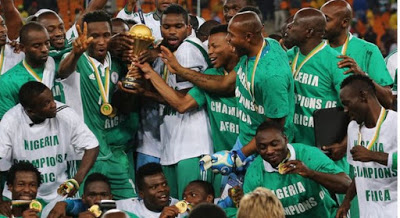
From the investment in sporting
facilities in the wake of the oil boom to the African Nations Cup successes in
1980 and 1994, Olympic gold medals in 1996, sport has frequently been regarded
as perhaps the most potent unifying factor in the multi-ethnic country.[15]
With the recent failures in sports competitions, there have been calls for a
revamp of sports administration.
facilities in the wake of the oil boom to the African Nations Cup successes in
1980 and 1994, Olympic gold medals in 1996, sport has frequently been regarded
as perhaps the most potent unifying factor in the multi-ethnic country.[15]
With the recent failures in sports competitions, there have been calls for a
revamp of sports administration.
As of 2017, the Nigerian population
was estimated to be 190.9 million.[16]
For both males and females, the median age of the country is 18.4 years of age.[17]
Agreeably, a high percentage of the population is of sport-able age.
Considering that Nigeria is ranked 7th most populous country in the
world, it is clear that with provision and maintenance of more sporting and
recreational facilities, with improved technical competence and a clear cut and
enforceable government policy on sports development as well as government
policies encouraging parents , the sporting sector will flourish.
was estimated to be 190.9 million.[16]
For both males and females, the median age of the country is 18.4 years of age.[17]
Agreeably, a high percentage of the population is of sport-able age.
Considering that Nigeria is ranked 7th most populous country in the
world, it is clear that with provision and maintenance of more sporting and
recreational facilities, with improved technical competence and a clear cut and
enforceable government policy on sports development as well as government
policies encouraging parents , the sporting sector will flourish.
It becomes imperative that
professional sports clubs and sports events organizers within Nigeria not only
join this highly profitable global bandwagon but also take into consideration
the various areas of Law that have a nexus with Sports. The role of skilled
lawyers in the media, sports and entertainment sector in Nigeria cannot be
overemphasized. The most eminent legal scholars have always unanimously held
that law is necessary to keep the world running. Without law, there would be a
state of chaos. In the same vein, Sports without the governance of a body of
laws can be comparable to a football match without a referee; havoc.[18]
professional sports clubs and sports events organizers within Nigeria not only
join this highly profitable global bandwagon but also take into consideration
the various areas of Law that have a nexus with Sports. The role of skilled
lawyers in the media, sports and entertainment sector in Nigeria cannot be
overemphasized. The most eminent legal scholars have always unanimously held
that law is necessary to keep the world running. Without law, there would be a
state of chaos. In the same vein, Sports without the governance of a body of
laws can be comparable to a football match without a referee; havoc.[18]
It would be important for
professional players, as well as clubs in Nigeria, to acquire the services of
lawyers, in order to make the footballing environment comfortable for clubs and players as well.[19]
professional players, as well as clubs in Nigeria, to acquire the services of
lawyers, in order to make the footballing environment comfortable for clubs and players as well.[19]
The National Assembly should revisit
the National Sports Commission Act, giving it the necessary organizational
empowerment to exercise discretion on matters concerning it, allowing it
exercise creativity and initiative as sports operations demand without any
unnecessary encumbrance. It is however important to note that Sports law does
not control the rules within games, this is left to the internal governing
bodies to make rules for enforcement. For example, FIFA( stands for Federation Internationale de
Football Association, in French…put this in the footnote….use the full
English name) makes the majority of rules and regulations for football.[20]
the National Sports Commission Act, giving it the necessary organizational
empowerment to exercise discretion on matters concerning it, allowing it
exercise creativity and initiative as sports operations demand without any
unnecessary encumbrance. It is however important to note that Sports law does
not control the rules within games, this is left to the internal governing
bodies to make rules for enforcement. For example, FIFA( stands for Federation Internationale de
Football Association, in French…put this in the footnote….use the full
English name) makes the majority of rules and regulations for football.[20]
It is argued that Nigeria would be
better served by the introduction of a sui generis intellectual
property law that will solely protect aspects of intellectual property in
Nigerian sports. This Law would be in the shape of a unique sports proprietary
rights to protect innovation and creativity in Nigerian sports. This would
ensure that Nigerian sports associations, sports events organizers, as well as
sports professionals would have a one-stop-shop for the protection of their
intellectual property rights and innovations rather than having to rely on
piecemeal protection.[21]
better served by the introduction of a sui generis intellectual
property law that will solely protect aspects of intellectual property in
Nigerian sports. This Law would be in the shape of a unique sports proprietary
rights to protect innovation and creativity in Nigerian sports. This would
ensure that Nigerian sports associations, sports events organizers, as well as
sports professionals would have a one-stop-shop for the protection of their
intellectual property rights and innovations rather than having to rely on
piecemeal protection.[21]
4.0 CONCLUSION
Nelson Mandela’s speech in 2000, that “Sport has the power to
change the world … to inspire … to unite people … create hope … is more
powerful than governments …”[22]
is reflective of the immense potential of sport in the modern day.
change the world … to inspire … to unite people … create hope … is more
powerful than governments …”[22]
is reflective of the immense potential of sport in the modern day.
From a football club making profit
from commercial partnerships, sale of match day tickets, players, and other
sources of club revenue, to the kit and sporting goods manufacturers making
profit from the sale of replica kits, down to the match day steward who earns
income with his back to the game, it can be seen that the economic benefits of
commercialization of sport reach beyond the athlete and the sports club only.[23]
from commercial partnerships, sale of match day tickets, players, and other
sources of club revenue, to the kit and sporting goods manufacturers making
profit from the sale of replica kits, down to the match day steward who earns
income with his back to the game, it can be seen that the economic benefits of
commercialization of sport reach beyond the athlete and the sports club only.[23]
[1]
B. Agbakoba-Onyejianya, “Why I am Passionate About Sports Law” (2019)
Available at: https://thenationonlineng.net/why-im-passionate-about-sports-law/
(Accessed 5th December, 2019)
B. Agbakoba-Onyejianya, “Why I am Passionate About Sports Law” (2019)
Available at: https://thenationonlineng.net/why-im-passionate-about-sports-law/
(Accessed 5th December, 2019)
[2]
O. A. Eribake, “What Students And Aspiring Sports Lawyers Need To Know About
Sports Law In Nigeria” (2019) Available
at:
https://www.lawyard.ng/what-students-and-aspiring-sports-lawyers-need-to-know-about-sports-law-in-nigeria-by-eribake-ayomide-oloruntoba/
(Accessed 5th December, 2019)
O. A. Eribake, “What Students And Aspiring Sports Lawyers Need To Know About
Sports Law In Nigeria” (2019) Available
at:
https://www.lawyard.ng/what-students-and-aspiring-sports-lawyers-need-to-know-about-sports-law-in-nigeria-by-eribake-ayomide-oloruntoba/
(Accessed 5th December, 2019)
[3]
H. O. Oloko, “Sports Law in Nigeria and its Prospects”
H. O. Oloko, “Sports Law in Nigeria and its Prospects”
[5]
U.J. Amadi, “Intellectual Property Rights In Sports: A Trick Or Two
Nigeria Can Learn From The Global Game” (201…) LLM [Leeds Beckett University]
U.J. Amadi, “Intellectual Property Rights In Sports: A Trick Or Two
Nigeria Can Learn From The Global Game” (201…) LLM [Leeds Beckett University]
[6] P.
Kandiah, “Sports and Intellectual Property”, (201…) Available at:
http://EzineArticles.com/5202279 (Acessed on 4th December, 2019)
[7] Olajide
Olutuyi, Sports should be part of Nigeria’s economic diversification.
(Published on 15 June, 2017).
[8]
Olajide Olutuyi, Sports should be part of Nigeria’s economic diversification.
(Published on 15 June, 2017).
[9]
Salifu Usman, Mike Ubani and Phillips Adefioye, Nigeria: State of Sports
Facilities in Nigeria (2012). Available at:
https://allafrica.com/stories/201209230339.html (Accessed 4th December, 2019)
Salifu Usman, Mike Ubani and Phillips Adefioye, Nigeria: State of Sports
Facilities in Nigeria (2012). Available at:
https://allafrica.com/stories/201209230339.html (Accessed 4th December, 2019)
[10]Eribake
Ayomide Oloruntoba, “Sports Law in
Nigeria; The Need for Enforceable Contracts For Footballers” (201…)
Available at: (insert website) (Accessed 5th December, 2019)
Ayomide Oloruntoba, “Sports Law in
Nigeria; The Need for Enforceable Contracts For Footballers” (201…)
Available at: (insert website) (Accessed 5th December, 2019)
https://www.lawyard.ng/sports-law-in-nigeria-the-need-for-enforceable-contracts-for-footballers/
(Accessed 5th December, 2019)
(Accessed 5th December, 2019)
[11]
https://en.wikipedia.org/wiki/National_Sports_Commission
[12]
Has sports development suffered setback in the National Assembly? By Professor
Emmanuel Ojeme
[13]
U. Jeremiah, “Nigeria sport:Falling standards, result of leadership
vacuum” (2017l Available at: (insert website link) (Accessed 5th December,
2019)
U. Jeremiah, “Nigeria sport:Falling standards, result of leadership
vacuum” (2017l Available at: (insert website link) (Accessed 5th December,
2019)
[14]
K.C. Omuojine, “The Legal Framework For Sports Development In
Nigeria” (201..) Available at (insert website link) (Accessed 5th
December, 2019)
K.C. Omuojine, “The Legal Framework For Sports Development In
Nigeria” (201..) Available at (insert website link) (Accessed 5th
December, 2019)
[15]
Ibid.
[16]
Sources include: World Bank, United States Census Bureau.
Sources include: World Bank, United States Census Bureau.
[17]
World Population Review, “Nigeria Population 2019 (Demographics, Maps,
Graphs)” (201…) Available at:
http://worldpopulationreview.com/countries/nigeria-population/ (Accessed 5th
December, 2019)
World Population Review, “Nigeria Population 2019 (Demographics, Maps,
Graphs)” (201…) Available at:
http://worldpopulationreview.com/countries/nigeria-population/ (Accessed 5th
December, 2019)
[18]
Worldwide: Global Overview Of The Sports
by George SK and Smriti Ganotra. Last updated: 21 March 2018.
Worldwide: Global Overview Of The Sports
by George SK and Smriti Ganotra. Last updated: 21 March 2018.
[19]
Ayomide ‘Toba Eribake, Sports Law in Nigeria; The Need for Enforceable
Contracts For Footballers.
Ayomide ‘Toba Eribake, Sports Law in Nigeria; The Need for Enforceable
Contracts For Footballers.
[20]
Sports Law by Richard Ubah, May 19, 2015
Sports Law by Richard Ubah, May 19, 2015
[21]
African Sports Law and Business Bulletin. Issue 3/2017
African Sports Law and Business Bulletin. Issue 3/2017
[22]
Nelson Mandela, “Speech by Nelson Mandela at the Inaugural Laureus Lifetime
Achievement Award, Monaco 2000”, World Laureus Sports Awards Limited, 25 May
2000, viewed on 07 November 2018,
https://db.nelsonmandela.org/speeches/pub_view.asp?pg=item&ItemID=NMS1148.
Nelson Mandela, “Speech by Nelson Mandela at the Inaugural Laureus Lifetime
Achievement Award, Monaco 2000”, World Laureus Sports Awards Limited, 25 May
2000, viewed on 07 November 2018,
https://db.nelsonmandela.org/speeches/pub_view.asp?pg=item&ItemID=NMS1148.
[23]
Why Africa urgently needs to commercialize its sports sector. Published 29
November 2018 By: Kelvin C. Omuojine
Why Africa urgently needs to commercialize its sports sector. Published 29
November 2018 By: Kelvin C. Omuojine