
FUEL SCARCITY WAS PREDICTED DESPITE NNPC’S ASSURANCE OF ADEQUATE SUPPLIES

FUEL SCARCITY WAS PREDICTED DESPITE NNPC’S ASSURANCE OF ADEQUATE SUPPLIES

The current hardship of fuel scarcity being experienced by Nigerians could be attributed to allegations of non-granting of permission for 16 vessels to offload millions of metric tonnes of Petrol by the security officials at the ports which have caused tax payers several millions of dollars and the un-told suffering by Nigerians in search of fuel.

The Chairman, House of Representatives Committee on Treaties and Agreements, Hon. Dayo Bush-Alebiosu had on February 13, 2014 raised a motion under matters of urgent public National importance, where he informed the House that on a daily basis, the government paid $4.8m as demurrage to the owners of the 16 vessels in the last three months which had not been able to offload the petroleum products on board and consequently could lead to scarcity of the products and also, economic wastage.

Hon. Dayo Bush-Alebiosu while fielding questions from Newsmen on his arrival in Abuja said he believes the Joint Committee on Petroleum (Downstream), Navy and Public Accounts saddled with the task of investigating how much the Federal Government had paid to the owners of the foreign vessels operating in the country will submit its report in due cause as the House has been busy with the considerations of the 2014 Appropriations Act.

Hon. Bush- Alebiosu remarked that  hardship being experienced now was avoidable because he  had expressed grave concerns that the last  batch of fuel being consumed then,  was not replenished due to the delay in the offloading of the vessels and could lead to scarcity ,a prediction which has now come to past.

The lawmaker said inability to offload these vessels was responsible for the current scarcity of petrol in some  parts of the country as the assurance by NNPC that enough fuel was in circulation could not be justified.

 “At least, it is now obvious that my concerns are now true. I was reliably informed that there were about 16 vessels containing petroleum products in our territorial waters, but were not given the security nod to discharge their contents while they were being paid $300,000 per day on each of the 16 vessels.

“The vessels have been hanging there for over three months now. I got this information a week before February 13, when I raised the alarm that we were in for another round of fuel scarcity if those vessels were not allow to discharge their contents and the authorities never deemed it fit to correct this anomaly until Nigerians are made to pay through their nose before getting fuel or commuting.”. Hon. Bush-Alebiosu remarked.

“The implication is that the 16 ships are said to be paid $4.8m per day multiplied by the number of days they have been hanging there. The signal I got was that these ships were even found safe to enter our territorial waters; so, all that was left was the discharge to smaller vessels and the subsequent discharge into tank farms.”

This development he says was hugely responsible for the scarcity of petrol currently being experienced in many parts of the country even as the assurance by the NNPC that there is enough fuel in circulation could not be justified.

THE BRITISH NIGERIA LAW FORUM (BNLF)

THE BRITISH NIGERIA LAW FORUM (BNLF)

BNLF is an independent, bi-lateral group which has been internationally established for more than ten years. It was formed in 2001 following the British Council’s first African British Law week held in Abuja.
Over a period of 5 days senior lawyers from Nigeria and Britain met to discuss issues including the rule of law, access to justice, human rights, policing, prisons, globalisation, capital punishment and environmental law. Most of the delegates were from Nigeria, however there were 20 from the UK, including members of the Bar, solicitors, senior academics, Baroness Kennedy QC (Chair of the British Council), Roy Amlot (the then Chair of the General Council of the Bar) and one of the Law Society’s Council Members, Michael Franks.

BNLF was formed during this monumental week as it became clear there was a need to form a group which could successfully sustain a British-Nigerian Law Partnership. From inception the BNLF continues to go from strength to strength and are extremely fortunate to have retired Justice of the Supreme Court of Nigeria, Justice Ayoola as its Patron. Two of the most recognised members include BNLF founder and Immediate Past Chair Prof. Oba Nsugbe QC, SAN and from our Nigeria and West Africa office Boma Ozobia – Past President of the Commonwealth Lawyers Association. All of the executive members of the BNLF are leading legal professionals in their field from the UK and Nigeria of which members of BNLF are exceptionally proud.

AFTER OVER A DECADE OF SUCCESSFUL EVENTS AND INITIATIVES.

THE BNLF IS GETTING A FACELIFT – The Change We Want To See

ARE YOU SOMEONE WITH NEW IDEAS, ENERGY, DRIVE AND AMBITION WHO CAN CONTRIBUTE?

BNLF NEEDS YOU!

BNLF – THE WAY FORWARD 

AN EVENING OF IDEAS AND STRATEGIES

6TH MARCH, 2014. 6.30PM – 9PM
THE LAW SOCIETY
113 CHANCERY LANE, LONDON

FOR MORE INFO CONTACT

Vivien Aghimien
BNLF Administrator,
Email: info@bnlf.org.uk
Web: www.bnlf.org.uk

19 OFFENCES AGAINST MORALITY

19 OFFENCES AGAINST MORALITY

 Morality is the belief or recognition that certain behaviours are either “good”
or “bad and our morality plays a crucial role when formulating laws and
policies. Take for instance, the recent Same Sex Marriage Prohibition law or as
is most popularly called the “anti-gay law” passed into law in Nigeria, the protagonist
of this legislation argue that it is a reflection of our morality and
represents the voice of majority of the Nigerian public on the subject. But before
we go into a never ending debate on gay rights, let’s stay on course.  There are other numerous offences in Nigeria
which are seen as an offence against morality and some are provided for in the
Criminal & Penal Codes, this blawg will be outlining the offences against
morality as stated under Chapter 21 of the Criminal Code.

1.      
It is an
offence to have carnal knowledge

of any person against the order of nature; or have
carnal knowledge of an animal; or permit a male person to have carnal knowledge
of him or her against the order of nature. This basically means anal sex is not
allowed and practitioners of this sex act should be informed that they are
liable to fourteen years in prison. Even an attempt to commit the above stated
act can earn a guilty person 7 years in prison. Sec 214 & 215 Criminal
Code

2.      
Any person,
who unlawfully and indecently deals with a boy under the age of fourteen years,
is guilty of a felony and is liable to imprisonment for seven years. Section
216

3.      
Acts of
public indecency by any male person or attempt to procure the commission of
such acts is a felony and is liable to imprisonment for three years.

4.      
Any
person who has or attempts to have unlawful carnal knowledge of a girl under
the age of thirteen years is guilty of a felony and is liable to imprisonment
for life, with or without caning. Section 218

5.      
Any
person who, being the owner or occupier of any premises, induces or knowingly
permits any girl to be unlawfully carnally known by any man, If the girl is of
or above thirteen and under sixteen years of age, he is guilty of a
misdemeanour and is liable to imprisonment for two years, with or without
caning. If the girl is under the age of thirteen years, he is guilty of felony,
and is liable to imprisonment for life, without caning. Section 219

6.      
Attempting
to or having unlawful carnal knowledge with a woman or girl known to be an
imbecile is a misdemeanour and liable to imprisonment for two years, with or
without caning.

7.      
Any
person who unlawfully and indecently deals with a girl under the age of sixteen
years is guilty of a misdemeanour, and is liable to imprisonment for two years,
with or without caning. If the girl is under the age of thirteen years, he is
guilty of a felony and is liable to imprisonment for three years, with or
without caning. Section 222

8.      
Whoever,
having the custody, charge or care of a girl under the age of sixteen years,
causes or encourages the seduction, unlawful carnal knowledge or prostitution
of, or the commission of an indecent assault upon, such a girl, shall be liable
to imprisonment for two years.

9.      
Whoever,
having the custody, charge or care of a child or young person who has attained
the age of four years and is under the age of sixteen years, allows that child
or young person to reside in or frequent a brothel, is liable to a fine of one
hundred naira or to imprisonment for six months or to both such fine and
imprisonment.

10.  
Any
person who, procures a girl or woman who is under the age of eighteen years to
have unlawful carnal connection with any other person or persons either in
Nigeria or elsewhere; or procures a woman or girl to become a common prostitute
either in Nigeria or elsewhere; or procures a woman or girl to leave Nigeria
with intent that she may become an inmate of a
brothel elsewhere; or procures a woman or
girl to leave her usual place of abode in Nigeria, with intent that she may,
for the purposes of prostitution, become an inmate of a brothel either in
Nigeria or elsewhere, is guilty of a misdemeanour and is liable to imprisonment
for two years.

11.  
Any
person who‐ by threats or intimidation of any kind procures a woman or girl, to
have unlawful carnal connection with a man either in Nigeria or elsewhere; or by
any false pretence procures a woman or girl to have unlawful carnal connection
with  a man either in Nigeria or
elsewhere; or administers to a woman or girl, or causes a woman or girl, to
take, any drug or other thing with intent to stupefy or overpower her in order
to enable any man, whether a particular man or not, to have unlawful carnal
knowledge of her, is guilty of a misdemeanour and is liable to imprisonment for
two years. Section 224

12.  
Any
person who, with intent that an unmarried girl under the age of eighteen years
may be unlawfully carnally known by any man, whether a particular man or not,
takes her or causes her to be taken out of the custody or protection of her
father or mother, or other person having the lawful care or charge of her, and
against the will of such father or mother or other person, is guilty of a
misdemeanour and is liable to imprisonment for two years. Section 225.

13.  
Every
male person who‐ knowingly lives wholly or in part on the earnings of
prostitution; or persistently solicits is liable to imprisonment for two years.
Section 225A

14.  
Whoever‐
keeps or manages or permits his or her premises or any part thereof to be used
as a brothel or for the purposes of habitual prostitution; or is wilfully a
party to the continued use of such premises or any part thereof as a brothel,
is liable‐ (i) to a fine of one hundred naira or to imprisonment for six
months; and (ii) on a second or subsequent conviction, to a fine of three
hundred naira or to imprisonment for one year. Section 225B

15.  
Any
person who‐ detains a woman or girl against her will in or upon any premises in
order to her being unlawfully carnally known by any man, whether a particular
man or not; or detains a woman or girl against her will in a brothel, is guilty
of a misdemeanour and is liable to imprisonment for two years. Section 226

16.  
Any
person who conspires with another to induce any woman or girl, by means of any
false pretence or other fraudulent means, to permit any man to have unlawful
carnal knowledge of her, is guilty of a felony, and is liable to imprisonment
for three years. Section 227

17.  
Any
person who, with intent to procure miscarriage of a woman, whether she is or is
not with child, unlawfully administers to her or causes her to take any poison
or other noxious thing, or uses any force of any kind, or uses any other means
whatever, is guilty of a felony and is liable to imprisonment for fourteen
years. Section 228

18.  
Any
woman who, with intent to procure her own miscarriage, whether she is or is not
with child, unlawfully administers to herself any poison or other noxious
thing, or uses any force of any kind, or uses any other means whatever, or
permits any such thing or means to be administered or used to her is guilty of
a felony and is liable to imprisonment for seven years. Section 229

19.  
Any
person who‐ wilfully and without lawful excuse does any indecent act in any
public place; or wilfully does any indecent act in any place with intent to
insult or offend any person, is guilty of a misdemeanour and is liable to
imprisonment for two years.
 
Adedunmade Onibokun Esq.
tweets @adedunmade
DAYO ALEBIOSU: NON – DOMESTICATION OF TREATIES HURTING OUR ECONOMY

DAYO ALEBIOSU: NON – DOMESTICATION OF TREATIES HURTING OUR ECONOMY

Chairman, House of Representatives Committee on Treaties and Agreements, Hon.Yacoob Bush-Alebiosu, in this interview with Festus Akanbi says failure to domesticate some of the treaties, which Nigeria is signatory to, is robbing the country of vital gains from such international cooperation. Excerpts:
Why has it been difficult for Nigeria to implement some of the treaties and agreements signed with other members of the international community?

The committee I chair is a new committee of the house and it is a pioneer committee. We are dealing with a lot of issues and the house deems it necessary to put the committee in place because of the lackadaisical attitude with which the country has been dealing with some of the treaties it signed. Sometimes, I wondered if those that signed the treaties on Nigeria’s behalf really have a good understanding of the documents they signed. For example, they are talking about the small arms treaty, it still hasn’t been domesticated. Nigeria is a signatory to over 400 treaties and we have a record of less than 250 and I doubt if up to 30 has been domesticated
. The reason why the family members of the victims of the Dana crash were able to get any form of compensation was because that treaty was domesticated, which means it becomes legal here in Nigeria. If it hasn’t been so, it means all the family members would have to go abroad to file a suit or it would mean the airlines won’t be offending any law of the land if it had refused to pay. So, it makes you wonder what is the rational for signing these treaties. Another example is the BASA treaty. I believe it was looked at in good faith, but the question is, are we benefiting from the treaty? This is not peculiar to Nigeria but the failure to take the right step is what is peculiar to Nigeria. South Africa refused to renew some treaties because it asked the question, how has these treaties benefitted us? In spite of the ECOWAS treaty, Ghana has been able to put some measures in place in order to ‘municipalise’ the treaty. For instance if you are going to Ghana from Nigeria, you have to be prepared to invest not less than $300,000. I have heard people say this is unfair? I disagree. They are only trying to protect Ghanaians and they have accepted that you are free to come and invest without restriction in adherence to ECOWAS treaty.
If you fly to United Kingdom now and you land in Heathrow, if you are going to Manchester, you have to patronise their local airlines by taking a local flight, which means you are helping them to build their local aviation industry but here you see international airlines flying directly to Enugu and Portharcourt. What it means is that it has taken away from local market and this is why if you look round you begin to wonder how come the lifespan of these local airlines are not more than two or three years before they fold up or bought over. How do you expect these airlines to break even? They are bound to cut corners and in doing so safety standards are compromised and that is when you will see air crash happening.

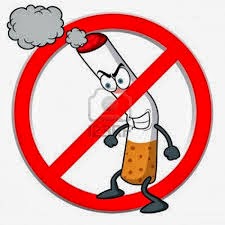
What is the state of the Tobacco Control Bill, which you sponsored?
It has scaled through the first and second reading and it is presently at the committee stage for hearing but there has been a backlog of bills referred to the committee. I believed the public hearing for the Tobacco Control Bill should be announced very soon.

How confident are you that the bill will get the concurrence of the Senate?
The bill is Tobacco Control bill and it is not to witch-hunt the tobacco companies but it’s looking at achieving a few things. One of these is how to get tobacco out of the hands of the young ones. Members of the Senate are parents and everybody is a parent in the house of reps so I think from that angle, nobody should have any problem with the bill or its concurrence in the Senate.

What happens to the treaty regulating the sale of tobacco products?
You are referring to the framework on Convention on Tobacco Control, which is a guideline on how to control tobacco in the way it is sold in municipalities as they say the world is a global village and Nigeria is a signatory to that convention. The first robust bill on the subject matter was sponsored by Senator Mamowora and it passed through both houses but unfortunately, the executive refused to assent to it.

However, there were a few things which were absent in the last bill which we are now planning to reintroduce. For instance, we are looking at licensing. Who are those that have something to lose, we want to see who is more careful. Today, you can decide you want to sell tobacco and you can just do it but we are saying now you have to be licensed. If we say we want to control how it is sold to young children, if we say we do not want young ones to touch tobacco products, how do you achieve that in the position it is now?
How do you guarantee that roadside marketers or those who sell cigarettes in traffic conform? In Lagos today, you can buy cigarettes on the road, so how are you sure they will not sell to under-ages? That is why we are introducing licensing into it so that if you want to sell or trade in tobacco, you have to be licensed and you know when you flout the laws, there will be a strong penalty recommendation.
As we all know, nicotine is the most addictive substance in the world today much more addictive than alcohol and heroine which we all fear. Should it be sold loosely on the street? The FCTU just give a guideline to help you regulate the sale of cigarette in your localities and we have borrowed a few recommendations from there. It is a treaty but the question is how do we localise it? For example, what happens in Lagos does not happen in Kano so we have come up with a framework on how the convention on tobacco can be effectively adapted in Nigeria.

Can we say that the decline in revenue is behind the reluctance of the executive to sign the bill in its earlier format, considering the huge tax paid by tobacco firms in Nigeria?
What we have come up with has nothing to do with an attempt to chase out tobacco firms from the country. Like I said, we are seeking to achieve certain things and the duty of any government is to protect lives and properties. Adult are old enough to make rational decisions and say I’m ready to take the risk but what about that youngster who sees it as a thing for the adults? How do you protect that youngster? And don’t forget that we are dealing with so many diseases. A recent report said eight million Nigerian die of cancer annually. It did not specify the kind of cancer that killed these people. It’s a matter of control and we have not said tobacco should be banned in Nigeria. There is control in other countries, so what makes our own different? They are also dealing with economic issues. It is a global problem and so it is not peculiar to Nigeria. So if they were able to fight and tackle the issue there, we should be able to do so here.

Can you throw light on your effort to compel airlines to be accountable for any delay or inconvenience caused their passengers?
We are working on a new bill, it has been approved and it has been sent in for gazette. I believe the first reading will come up anytime from now. It’s called the Customer Compensation Bill or Consumer Compensation Bill, whichever way you want to look at it. There is this unaccepted attitude of operators in the aviation industry where passengers are treated shabbily.
Nobody will book flight to the next destination for no reason. When you travel through aeroplane it means you have a specific target. When you buy flight tickets, it means an agreement has been reached. When you sell your ticket to me, it means your plane will leave at a particular time but when flights are delayed, what you get is we are sorry. How fair is that? For some airlines, you can’t get your money back and the highest you can get is a refund after two weeks or months and we are saying this is not acceptable. Passengers put their luggage in the care of airlines and during flight the luggage are damaged and all you get is sorry, we are saying they should be held responsible and that is what this bill seeks to achieve, taking responsibility for your actions.

How far have you gone with the bill on the sale of energy drinks in the country?
That one is also at the committee level, it is receiving attention. It is the Caffeinated Energy Motion. It is a motion on caffeinated energy drinks. We discovered that there are over 300 energy drinks being sold in the country of which more than half are unregistered by NAFDAC. I have suffered from the proliferation of such energy drinks in Nigeria where I was close to losing my life but I was fortunate to have family members and friends coming to my support by paying my medical bills. I was extremely lucky to have gotten away with this. I therefore feel it would be ungodly of me to keep this experience to myself. I feel I needed to do something as a representative of the people by saying we need to monitor the sale of these products very closely and you will discover that those falling victims are those who do not like alcohol per se. People are misinformed thinking energy drink is a think of class. When I came up with this motion, some people thought I was crazy.

But what is the role of NAFDAC in this?
Unfortunately, these things are still finding their way into Nigeria. If they are being sold in the market and they are not registered with NAFDAC, how are they finding their ways into the market? This is one of the reasons we say there is need for investigation. If they are found to be dangerous then the government has to do something.

LAW ON REMOVAL OF NIGERIAN CBN GOVERNOR

LAW ON REMOVAL OF NIGERIAN CBN GOVERNOR


On Thursday, 20th February, 2014, the Nigerian government
announced the suspension of the Central Bank Governor, Lamido Sanusi. Not only
did it come as a shock to many but it also resulted into a large debate and social
commentary on the whether the President has the power to suspend the CBN
Governor. The relevant provision of the law that deals with this matter is the
Central Bank (Establishment) Act, 2007 which was signed into law by then
President Olusegun Obasanjo.
Section 11 of the CBN Act provides for the disqualification and cessation
of office of the Governor, it provides that;

(1) A person shall not remain a Governor, Deputy Governor or Director
of the Bank if he is-
(a) a member of any Federal or State legislative house; or
(b) a Director, officer or employee of any bank licensed under the
Banks and Other Financial Institutions Act.
(2) The Governor, Deputy Governor or Director shall cease to hold
office in the Bank if he-
(a) becomes of unsound mind or, owing to ill-health, is incapable of
carrying out his duties;
(b) is convicted of any criminal offence by a court of competent
jurisdiction except for traffic offences or contempt proceedings arising in
connection with the execution or intended execution of any power or duty
conferred under this Act or the Banks and Other Financial Institutions Act;
(c) is guilty of a serious misconduct in relation to his duties under
this Act ;
(d) is disqualified or suspended from practising his profession in
Nigeria by order of a competent authority made in respect of him personally;
(e) becomes bankrupt;
(f) is removed by the President:
Provided that the removal of the
Governor shall be supported by two-thirds majority of the Senate praying that
he be so removed (emphasis supplied).
Apparently, the provision of the
law on this topic is clear, however, it is expected that if the suspension is
challenged in court, the honourable court will further shed more light on the
validity of the order and if the president does in fact have the powers to
suspend Sanusi Lamido. 
The section further provides
that;
(3) The Governor or any Deputy Governor may resign his Office by giving
at least three months’ notice in writing to the President of his intention to
do so and any Director may similarly resign by giving at least one months’
notice in writing to the President of his intention to do so.
(4) If the Governor, any Deputy Governor or Director of the Bank dies,
resigns or otherwise vacates his Office before the expiry of the term for which
he has been appointed, there shall be appointed a fit and proper person to take
his place on the Board for the unexpired period of the term of appointment in
the first instance if the vacancy is that of-
(a) the Governor or a Deputy Governor, the appointment shall be made in
the manner prescribed by section 8 (1) and (2) of the Act.
Section 8 provides that;
(1) The Governor and Deputy-Governors shall be persons of recognised
financial experience and shall be appointed by the President subject to
confirmation by the Senate on such terms and conditions as may be set out in
their respective letters of appointment.
(2) The Governor and Deputy Governors shall be appointed in the first
instance for a term of … years and shall each be eligible for re-appointment
for another term not exceeding five years:
Provided that, of the first four Deputy Governors to be so appointed,
one shall in the first instance be appointed for three years and two shall in
the first instance be appointed for four years.
(3) The salaries, fees, wages or other remuneration or allowances
including pension and other allowances payable to the Governor and to the
Deputy Governors shall be as stipulated from time to time by the Board subject
to the approval of the President.
(4) The Governor shall appear before the National Assembly at
semi-annual hearings as specified in paragraph (b) regarding-
(a) efforts, activities, objectives and plans of the Board with
monetary policy; and
(b) economic development and prospects for the future described in the
report required in subsection (5) (a)
of this section.
(5) The Governor shall, from time to time-
(a) keep the President, informed of the affairs of the Bank including a
report on its budget; and
(b) make a formal report and presentation on the activities of the Bank
and the performance of the economy to the relevant Committees of the National
Assembly.
Adedunmade Onibokun
@adedunmade
CRIMINAL CODE ON ABUSE OF PUBLIC OFFICE

CRIMINAL CODE ON ABUSE OF PUBLIC OFFICE


According to the Criminal Code Act, CAP C38, Laws of the Federation of Nigeria 2004, a “public official” means any person employed in the public
service or any judicial officer who may be a member of a customary court; juvenile
court; an arbitrator, umpire or referee; a person called upon to serve as an
assessor in any civil or criminal proceedings; a jury; a member of a tribunal
of inquiry constituted under the Tribunals of Inquiry Act; and any person
before whom, under any law in force in Nigeria or any part thereof, there may
be held proceedings in which evidence may be taken on oath.
The Criminal Code in Section 98 defines official corruption by public
officers to mean acts where a
public official invites bribes, etc., on account

of own actions either by
– corruptly asking for, receiving or obtaining any property or benefit
of any kind for himself or any other person; it could also be that he corruptly
agrees or attempts to receive or obtain any property or benefit of any kind for
himself or any other person, on account of anything already done or omitted, or
any favour or disfavour already shown to any person, by himself in the
discharge of his official duties. Such public official is guilty of the felony
of official corruption and is liable to imprisonment for seven years.

It is also an offence for person
on behalf of a public official to agree to commit the above stated acts and it’s
no defence in court that the act was never carried out or never intended to be
carried out. If particularly, a police officer or other public official whose
duties involve – the act to arrest, detention or prosecution of any person for
an alleged offence; or the investigation of an alleged offence, when prosecuting
the official in court, it makes no difference if the officer actually believed
that the offence he was arresting or failing to arrest someone over had been
committed. 
Under Section 98A, any person who
‐ corruptly gives, confers or procures any property or benefit of any kind to,
on or for a public official or to  any
other person; or corruptly promises to do so is also guilty of the felony of
official corruption and is liable to imprisonment for seven years. The provision
of this law also applies to instances when such person is seeking to procure a
government license or contract from the public official. However, no
proceedings shall be brought against a judicial officer except on a complaint
or information signed by or on behalf of the Attorney ‐ General of the
Federation or by or on behalf of the Attorney‐General of the State in which the
offence is alleged to have been committed.
Section 99 also prohibits Extortion by public officers and any
person who, being employed in the public service, takes, or accepts from any
person, for the performance of his duty as such officer, any reward beyond his
proper pay and emoluments, or any promise of such reward, is guilty of a felony
and is liable to imprisonment for three years. When public officers also give
government contracts to companies that they have direct or indirect stake in
except where such company is a joint stock company with more than 20 members, he
shall be guilty of a felony and is liable to imprisonment for three years and
to be fined at the discretion of the court. The offender cannot be arrested
without warrant. 
Public officers according to
Section 103 who make false claims in other seek compensation are guilty of a
felony and liable to imprisonment for three years.  By virtue of Section 104 any person who, being
employed in the public service, does or directs to be done in abuse of the authority
of his office, any arbitrary act prejudicial to the rights of another, is
guilty of a misdemeanour and is liable to imprisonment for two years. If the
act is done or directed to be done for purposes of gain he is guilty of a
felony, and is liable to imprisonment for three years. The offender cannot be
arrested without warrant. 
Impersonating a public official
is a felony and is liable to imprisonment for three years. Where a person falsely
personates a member of the armed forces of Nigeria, such person is guilty of a
misdemeanour and is liable to imprisonment for one year. Any person who also fraudulently
sells such clothing belonging to members of the armed forces shall also be guilty
of the offence.
Adedunmade Onibokun
@adedunmade
ADVERTISE ON THE LEGALNAIJA BLOG

ADVERTISE ON THE LEGALNAIJA BLOG

As Publisher of the distinct contemporary law blog ‘Legalnaija.’ I would like to introduce your company to the Nigerian Law Blog,inform you about the details of the content and offer the opportunity to associate your brand with Legalnaija by advertising on the webpage and put your business in front of our audience.

Since its inception, Legalnaija has contributed significantly to informing Nigerians about their rights in law by blogging on legal issues and providing free legal information to the public. Legalnaija partners with legal practitioners, law firms, law societies and members of parliament who contribute legal persuasion topics and articles to the blog.
The legal information on the blog is free and shared by social media and other online mediums. Our viewers consists of legal professionals, Nigerian public officers, business people, law students, law researchers and readers seeking legal information through out the Nigerian diaspora. The law articles on the blog range across diverse legal areas such as criminal, civil, administrative, family, tax, jurisprudence and Human Rights law among others. Also the blog contains a daily news section called Legalnaija daily which provides both local and international news stories to our readers.
As interest in the forum’s activities continue to rise and with Nigerians becoming politically and socially conscious, the Legalnaija blog is strategically placed and has been viewed over 280,000 times with an average of 1000 views daily and 31,000 views monthly in the past year and a half of it’s existence. Legalnaija also continually enagages the public via social media platforms with over 2000 followers on twitter and more on facebook. A number of our readers also come from other countries including: the United States of America, United Kingdom, Indonesia, Kenya, India, Germany, France, Vietnam and Russia. Also our audience continues to grow daily.
The publisher of Legalnaija is a Nigerian legal practitioner with an LLM in International Business Law, as such the blog can be relied on for a honourable reputation, accuracy and depth. As you can imagine interest in the Legalnaija blog is very high and we would like you to benefit from its success by aligning your brand with the blog and purchasing good value advertising space for your brand which would sit perfectly on the blog. Your single unit banner advert will be placed on the top side bar of the blog for maximum impact and subscription is divided into 4 categories namely:
1. Monthly
2. Quarterly
3. 6 Months; and
4. Yearly
Kindly note that all advert banners must be provided by the advertisers themselves and must be a maximum of 300 x 250 in size. You may also join our social media network via @legalnaija on twitter and our facebook page www.facebook.com/legalnaija.
This is a great opportunity to promote your brand via the Legalnaija blog and generate interest for your products and services within and outside of Nigeria.
For enquires contact
Name:  Adedunmade Onibokun
Mobile: +2348055424566
                +447919681524
             
Email: adedunmadeonibokun@gmail.com