THE INTERNATIONAL CRIMINAL COURT

THE INTERNATIONAL CRIMINAL COURT


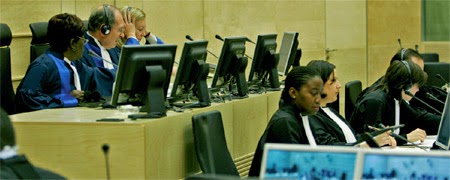
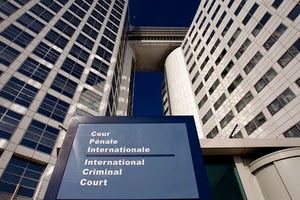
The International Criminal Court (ICC), governed by the Rome Statute, is the first permanent, treaty based, international criminal court established to help end impunity for the perpetrators of the most serious crimes of concern to the international community.

The ICC is an independent international organisation, and is not part of the United Nations system. Its seat is at The Hague in the Netherlands. Although the Court’s expenses are funded primarily by States Parties, it also receives voluntary contributions from governments, international organisations, individuals, corporations and other entities.The international community has long aspired to the creation of a permanent international court, and, in the 20th century, it reached consensus on definitions of genocide, crimes against humanity and war crimes. The Nuremberg and Tokyo trials addressed war crimes, crimes against peace, and crimes against humanity committed during the Second World War. 

In the 1990s after the end of the Cold War, tribunals like the International Criminal Tribunal for the former Yugoslavia and for Rwanda were the result of consensus that impunity is unacceptable. However, because they were established to try crimes committed only within a specific time-frame and during a specific conflict, there was general agreement that an independent, permanent criminal court was needed. 

On 17 July 1998, the international community reached an historic milestone when 120 States adopted the Rome Statute, the legal basis for establishing the permanent International Criminal Court.

 As of July 2013, the ICC had 122 states parties, opened investigations in eight countries, and issued two verdicts (Lubanga case and Ngudjolo case). Over the last decade as the court has gotten up-and-running, it has made significant headway in putting international justice on the map, giving rise to increased expectations wherever the world’s worst crimes occur. 

This was poignantly demonstrated by the signs held by Syrian anti-government protesters that read “Assad to The Hague,” a reference to abuses of the country’s president. But while the ICC is now the primary address for international criminal accountability, its daunting mandate and world-wide reach have made the flaws in its workings more visible. 

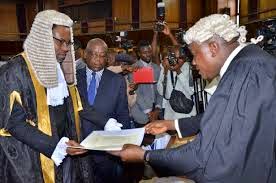
The governments on which the ICC depends to carry out its mandate have been inconsistent in their support, particularly when it comes to arrests. In June 2012, Fatou Bensouda was sworn in as the court’s new head prosecutor. Arrest warrants are pending for suspects in the Libya, Sudan, Uganda, Cote d’Ivoire, and Congo investigations. The court and its member countries face major challenges in meeting expanded expectations for the court in its second decade.

Source: http://www.icc-cpi.int
               m.hrw.org 

EBOLA OUTBREAK: IS IT A FORCE MAJEURE EVENT?

EBOLA OUTBREAK: IS IT A FORCE MAJEURE EVENT?

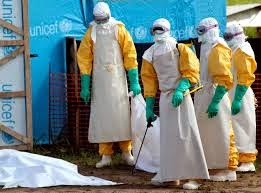
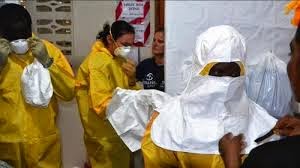
On 8 August 2014 the World Health Organisation
(WHO) categorised the Ebola outbreak in Guinea, Sierra Leone and Liberia as a
Public Health Emergency of International Concern
.
 

The potential impact of this epidemic is of interest to all
multinational corporations with a presence in Africa, and in particular to
those with projects, assets and personnel in those countries affected. The fact
that the WHO has only twice previously described an outbreak in these terms
underlies the severity of its impact, and potential impact, on construction
projects in West Africa.

On the date of the WHO’s announcement, a leading steel producer published
a press release noting that contractors undertaking expansion works at its
mines in Liberia had declared the outbreak a force majeure event and were
moving personnel out of the country. The company noted that it was assessing
the potential impact on the project schedule. This assessment will no doubt
involve a review of its key contracts and the impact of the outbreak on
completion dates and cost. A number of airlines have also cancelled flights to
West Africa, and several mining companies have cut back on nonessential travel
to the region.

Multinational
companies with interests in West Africa are implementing measures in order to
manage the impact on their businesses in the region and beyond. Our clients are
assessing potential exposure to the consequences of this outbreak and we
highlight below two critical contractual issues that parties must be aware of
in responding to this crisis.
Force majeure
There is no English common law doctrine of force majeure. Force
majeure is a principle borrowed from the French civil code, whereby a party
will not be liable for its failure to perform an obligation where this failure
has been caused by the occurrence of exceptional events outside that party’s
control. If there is no force majeure provision in your contract, you will need
to consider other remedies.
It follows that employers and contractors faced with a real or
potential impact from the Ebola outbreak will be asking themselves two high
level questions: 1) Does this event fit within the definition set out in my
particular contract or contracts?; and 2) Has (or will) the outbreak, as a
matter of fact, impacted (or will it impact) upon my performance or that of my
counterparty under the relevant agreement?
Interpretation of force majeure clauses
As noted
above, the English courts have been reluctant to set out a precise meaning of
the term ‘force majeure’. It follows that where the term is used in a contract;
the ordinary rules of contract interpretation are applicable, such that each
case will be different and turn on the particular words used in the contract.
This English law approach is different to civil law jurisdictions
in which the civil codes prescribe definitions of what is meant by force
majeure. As a result, English law construction/engineering contracts typically
contain an express definition of the phrase to avoid, insofar as it may be
possible, uncertainty and the potential for disputes.
Given the wide use of the FIDIC forms in international
construction projects, it is instructive to consider whether the Ebola outbreak
could be considered a force majeure event within the meaning of the relevant
FIDIC clause, and whether the outbreak would give rise to an entitlement for
additional time or money.
By way of example, Clause 19.1 of the FIDIC Red Book sets out a
broad definition of a force majeure event as
“…an exceptional event or circumstance:
a) which is beyond a Party’s control,
b) which such Party could not reasonably have provided against
before entering into the Contract,
c) which, having arisen, such Party could not reasonably have
avoided or overcome, and
d) which is not substantially attributable to the other Party.”
Provided an event satisfies the above conditions, then under FIDIC
it is a force majeure event (if Clause 19.1 is read in isolation).
The FIDIC Red Book then goes on to set out a non-exhaustive list
categories of examples for force majeure events, including war, rebellion,
riot, and natural catastrophes (such as earthquake, hurricane, typhoon or
volcanic activity).
Clause 19.1 does not expressly reference an epidemic as a force
majeure event (some forms of contract do), though that does not prevent it
being such an event. The critical question to determine whether or not an Ebola
outbreak is a force majeure event, is whether the four criteria set out above
have been satisfied.
There can
be little doubt that the Ebola outbreak is an event which is exceptional;
outside the control of commercial parties to a construction contract; could not
have been avoided/overcome once it arose; and is not substantially attributable
to either party. It would also be difficult to argue that a party to a
construction contract could have provided against the risk of an Ebola outbreak
before entering into the contract (though query whether or not such an outbreak
was foreseeable).
Entitlement to a force majeure event may well be very different in
circumstances where the relevant clause includes a requirement that the event
be unforeseeable (the FIDIC example does not). The element of foreseeability is
incorporated in Article 1148 of the French Civil Code, which stipulates that a
force majeure event must be unforeseeable, render performance impossible and be
outside of the control of the party invoking suspension of the relevant
contractual obligation. This is a higher threshold than that in FIDIC and we
have seen agreements where parties have agreed to allocate risk in this way.
Given that, in recent history and in certain parts of West Africa, there have
been Ebola outbreaks, albeit occasional and confined and not necessarily in the
countries currently affected, an Ebola outbreak may fall foul of a force
majeure provision that will not bite where an event is foreseeable.
In any event, under the FIDIC Red Book, a contractor would almost
certainly be entitled to obtain an extension of time in cases where it can
demonstrate delay affecting completion. This would, of course, be subject to
the time bar provisions found in Clause 19.2 relating to notice.
The question of an entitlement to additional cost (remembering
that cost is defined so as to exclude profit in FIDIC RED Book) arising from a
force majeure event is more complex. Clause 19.4 makes a distinction between
different kinds of force majeure events and where they occur. In fact, the
entitlement to cost refers back to the categories of force majeure events
listed in Clause 19.1. For example, an entitlement to additional cost will
accrue in the event that war and/or hostilities in a neighbouring country (or
indeed anywhere) effect the progress of the works. In contrast the balance of
the ‘categories’ of events listed in Clause 19.1 must occur in the country of
the works so as to qualify as a relief event and give rise to an entitlement to
costs.
An Ebola epidemic does not sit well in any of the categories
listed in Clause 19.1, thus creating an uncertainty in the drafting. Is there
an entitlement to an extension of time but no money? Further, if parties are
undertaking projects in adjoining countries, even if they are proximate to the
sites of the Ebola epidemic, does that preclude entitlement to cost?
Whilst the
drafting is unclear on this issue and there is no case-law on epidemics that
would provide useful guidance, the best interpretation of the contract when
read as a whole must be that there is an entitlement to an extension of time,
but not necessarily any cost.
Frustration – A Brief Refresher
Parties to contracts without an express risk allocation for
force-majeure-type events may need to consider alternative routes through which
to escape sanction/obtain relief. In such circumstances the English common law
doctrine of frustration may be invoked to provide some level of protection to
the party who would otherwise be in default.
A contract will be frustrated only in very limited circumstances,
where, for reasons attributable to none of the relevant parties, performance
has become impossible, illegal or would be totally different to what was
contemplated by the parties when the contract was formed.
It is difficult to imagine a scenario where it might be said that
the effects of the Ebola outbreak could not be mitigated through alternative
methods of performance (for example, procurement of raw materials from
alternate countries/sources unaffected by the outbreak, imposition of stringent
quarantine and medical controls and different techniques and policies to
protect the health and well-being of personnel on site). The English courts
have made it very clear that parties will not be entitled to relief from
performance for frustration merely when performance is rendered more difficult,
time-consuming or expensive.
Conclusion: The Contractual
Consequences of Ebola
In summary, the rights and obligations of employers and
contractors undertaking construction projects in West Africa will be determined
by a close reading of the provisions of the relevant contracts (and employing
modern means of interpreting contracts holistically). In many circumstances, we
consider it will be at least arguable that where an outbreak of Ebola has a
demonstrable effect on the progress of a project, it will qualify as a force
majeure event giving rise to an entitlement for time and/or monetary relief,
depending on the express terms of the relevant contract. It may also be the case
that in some civil law jurisdictions parties will be entitled to rely on the
provisions of the civil code in that country to obtain relief.
As the
leader of the Eversheds Africa Law Institute network, and with a presence in 32
African jurisdictions, including Liberia and Sierra Leone, Eversheds is
uniquely placed to assist construction clients across the region.
By:       Paul Giles
Partner,
Eversheds LLP
0845 497 8680
paulgiles@eversheds.com
Julian Berenholtz
Senior
Associate, Eversheds LLP
0845 497 0767
Source:
legalweeklaw.com

PROFILE: MRS FUNKE ADEKOYA SAN

PROFILE: MRS FUNKE ADEKOYA SAN


Mrs.
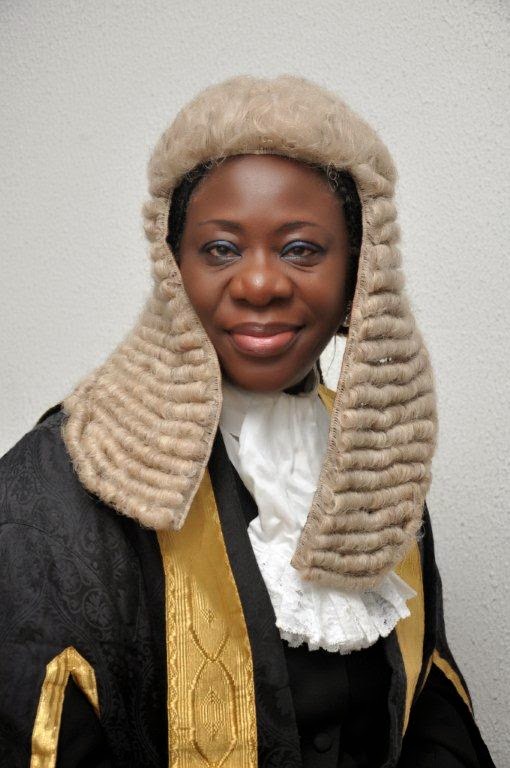
Funke Adekoya, SAN is a partner in the prestigious Nigerian law firm ‘AELEX” and she began her law career at the University of Ife where she
graduated with honours after attaining her LL.B in 1974. She was called to the
Nigerian Bar in 1975 before proceeding to study an LL.M at the prestigious
Harvard Law School, Boston, Massachusetts, USA in 1977. Mrs. Adekoya became a
Solicitor in England and Whales in 2004 and her practice areas include:
Commercial Litigation, Corporate Dispute Resolution, Business Turnaround and Corporate
Insolvency, Competition Law and Policy.

Mrs
Funke Adekoya was appointed as a Notary Public in 1986 and became the 5th
woman to be elevated to the rank of Senior Advocate of Nigeria (SAN) in 2001,
She became a Member of the Body of Benchers in 1999 and was elevated to Life
Bencher in March 2007.
Mrs Adekoya has a
long list of awards which she has received in the course of her work such as
being nominated and voted as the Most Outstanding female legal practitioner of
the year 2007 by Financial Standard Newspaper and Women Entrepreneurs African
Network. She was also nominated and voted as currently the 2nd Vice Chairman of
the Nigerian Branch of the Chartered Institute of Arbitrators. Has represented
parties as counsel in several arbitration proceedings and acted in numerous
disputes as either – party appointed Arbitrator, Sole Arbitrator and Presiding
Arbitrator.
She also regularly
lectures on arbitration law and procedure and has been approved by the
Chartered Institute as a Tutor at the Associate/ Entry Course level. Also acts
as visiting Faculty at the Centre for African Law and Development Studies,
Lagos where she lectures on arbitration and Civil Procedural issues.
As a litigator, she represents
clients regularly before the Nigerian courts at all levels, and has provided
expert opinions and appeared as an expert witness on Nigerian law issues before
the courts of England, United States and Turkey.
 
Mrs Adekoya is the 1st Vice President (2002/04) of the Nigerian Bar
Association, and has served the Bar Association as Assistant National Secretary
(1979/80), Secretary Lagos Branch (1984/85, 1985/86), National Treasurer
(1990/91, 1991/92), and represented the Nigerian Bar Association at the
Consultative Assembly on the Reform of Company Law in Nigeria (1989).

Mrs Adekoya is a Member, National Judiciary Committee of the NBA (2001);
Member, of the Editorial Committee that produced the Companies and Allied
Matters Act in 1990; Member, of Lagos State Government Committee appointed to
review and draft new High Court Civil Procedure Rules 2004. Funke Adekoya is a
life member of the International Federation of Women Lawyers (FIDA); Member, of
the International Bar Association’s Legal Practice Division (Arbitration and
Business Organisations Committees), Professional and Public Interest Law
Division (Law Firm Management Committee. She is a Council Member of the
Professional and Public Interest Law Division and the Deputy Secretary General
[Africa West] for the IBA. She is also a Fellow of the Chartered Institute of
Arbitrators, UK (2002); Member, Practice Management and Technology Committee
Section on Legal Practice Nigerian Bar Association(2005).
Mrs Adekoya recently contested for the position of the President of the Nigerian bar Association. 
PENALTY FOR ARMED ROBBERY IN LAGOS

PENALTY FOR ARMED ROBBERY IN LAGOS


Stealing/Robbery
is a crime, we all know that right?
If you
don’t, why do you think your parents beat the living day light out of admonished
you when you were caught stealing meat from the pot taking what didn’t belong
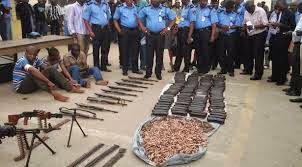
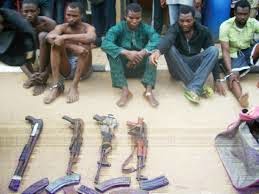
to you. Remember those gentlemen and women always paraded by the police as
armed robbers, with guns, live ammunitions and cartridges lying in front of
them, everyone who has seen a Nigerian edition of Crime Fighters will know what
I mean, well that’s another sign for you that stealing is a crime.

Stealing
is a moral wrong that’s why all religions and societies frown against it. Stealing,
burglary and armed robbery are all crimes in many legal jurisdictions around
the world including Nigeria and Lagos State has its fair share of laws and punishments
for anyone caught stealing.
According
to Section 294 and 295 of the Lagos State Criminal Law 2011, any
person who steals anything and uses or threatens to use actual violence to retain
the thing stolen or to prevent or overcome resistance to its being stolen or
retained, is said to be guilty of robbery. And anyone who commits the offence
of robbery shall on conviction be sentenced to imprisonment for not less than
twenty-one years, Shikena. When the person is particularly armed with
firearms or offensive weapons or any obnoxious and chemical materials, such
offender shall be sentenced to death.  
You must
now see reasons why if you have chosen a career in armed robbery, you must
begin to have a rethink. Section 296 says just merely having an intention to
steal and assaulting someone in the process or just threatening to use force
while stealing is a felony and such offender is liable to imprisonment for not
less than fourteen (14) years but not more than twenty (20) years. That means
such person still goes to jail for up to 20 yrs even if the robbery was not successful.
If the robber wounds anyone or uses violence on anyone kperen, that’s
even life imprisonment.  Oboy, na to
face my law practice o, it’s not like mama & papa raised a thief anyway, *shrugs
*.
  

Also any
person found in any public place in possession of any firearms whether real or
imitation and in circumstances reasonably indicating that the possession of the
firearms is with intent to the immediate or eventual commission by that person
or any other person of any of the offences in Sections 294 – 296 of the Law is
guilty of a felony and liable to imprisonment for not less than fourteen (14)
years but not more than twenty (20) years. Of course, you must know this doesn’t
include kids with toy guns, lol.
Don’t
even think one can escape punishment solely because the person was not at the
venue of the crime because according to Section 297, any person who conspires
with another to commit any of offences stated above whether or not he is
present when the offence is committed or attempted to be committed, shall be
deemed to be guilty of the
offence
as a principal offender and shall be punished accordingly. Gbam, so like
people say, for hearing la san
, So for planning, the person sef go chop
yawa
gets punished.
 “Firearms” includes any cannon, gun,
flint-lock gun, revolver, pistol, explosive or ammunition or other firearm,
whether whole or in detached pieces.
 “Offensive weapon” means any article apart
from a firearm made or adapted for use for causing injury to the person or
intended by the person having it for such use by him or by some other person
and it includes an air gun, air pistol, bow and arrow, spear, cutlass, machete,
dagger, cudgel, or any piece of wood, metal, glass or stone capable of being
used as an offensive weapon.
Ordinary
to buga person sef to rob am na 3 years
. Also by virtue of Section 299, any person who,
with intent to steal anything, demands it with threats of any injury or
detriment of any kind to be caused to him, if the demand is not complied with,
is guilty of a felony, and is liable to imprisonment for three (3) years.

Now you know say thief work no easy, the risk wey
dey there plenty pass the risk wey Antelope dey face if e jam lion for bush
. Armed
robbery is a very grave and serious crime as seen from the above provisions of
the law, though the above laws are laws of Lagos State, all other states also
have their anti – stealing/robbery laws. It is wise to also note that there has
been gossip & rumours unofficial and unverified reports that the
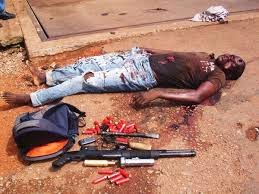
Police have beef for armed robbers and always shoot them upon arrest, but no
be for my mouth you go hear say teacher mama die
like I said they are unofficial,
unverified and anonymous reports.
Adedunmade Onibokun, Esq
@adedunmade
PROFILE: MOYOSORE JUBRIL ONIGBANJO, SAN

PROFILE: MOYOSORE JUBRIL ONIGBANJO, SAN

Moyosore is a first class
litigator. In recognition of his excellence in this regard the Legal
Practitioners Privileges Committee, chaired by the Chief Justice of
Nigeria, the Hon. Justice Aloma Mukhtar GCON conferred Mr. M.J.
Onigbanjo with the rank of Senior Advocate of Nigeria on 23rd September 2013.

Mr. Onigbanjo was
appointed by the Nigerian Bar Association in July 2012 as a prosecutor
of disciplinary matters before the Body of Benchers and the Legal
Practitioners Disciplinary Committee (both of whom are statutory
bodies). Mr. Onigbanjo offers his services pro bono in this regard.
In recognition of his
wealth of experience in commercial law practice Mr. Onigbanjo was
appointed as a Council Member of the Nigeria Bar Association’s Section
on Business Law (www.nba-sbl.org) on 30th March 2011. Mr. Onigbanjo is also a member of the National Executive Committee of the Nigerian Bar Association (www.nba.org.ng, www.niegerianbar.org).
Moyosore has vast and
considerable court room experience in commercial litigation particularly
in the areas of Debt Recovery, Breach and Enforcement of contracts,
Companies Winding Up Proceedings, Aviation, Receivership, Marine claims,
Arbitration and Oil and Gas. He has for the past twenty-three years
participated extensively in commercial litigation in Nigeria. Moyosore
is a member of the Nigerian and International Bar Associations and on
the 31st March 2001, He was appointed a Notary Public.
Moyosore also has
considerable appellate Court experience, having been privileged to
successfully argue numerous appeals before the Court of Appeal and
Suprem

e Court of Nigeria. He also has experience in labour matters and
has practiced before the National Industrial Court as well as the
Miscellaneous Offences Tribunal. Over twenty-two cases handled by
Moyosore have been reported in Nigeria’s foremost law reports (Nigeria
Weekly Law Reports).

Mr Onigbanjo is also a keen golfer.
source: www.mjonigbanjo.com 
ADVERTISE FREE FOR ONE MONTH

ADVERTISE FREE FOR ONE MONTH


As
Publisher of the distinct contemporary law blog
‘LegalNaija’
via
www.legalnaija.blogspot.com.’ I would like to introduce your company to the
Nigerian Law Blog, inform you about the details of our content and offer you the
opportunity to associate your brand with Legalnaija by advertising on the
webpage FOR FREE FOR ONE MONTH and
put your business or service in front of our audience.
TAKE
ADVANTAGE OF THE FREE AD SPACE IN 3 STEPS
1.      SEND US A COPY OF YOUR BANNER
2.      SEND US A LINK TO YOUR WEB PAGE
3.      WE PUT YOUR BRAND IN FRONT OF OUR
AUDIENCE

For
enquires contact
Name:
 Adedunmade Onibokun

Mobile:
+2348055424566

              
+2349095635314

Email:
adedunmadeonibokun@gmail.com

Note: Bespoke advert services as
also available on the law blog.
ARBITRATION RULES UPGRADED AT LONDON COURT

ARBITRATION RULES UPGRADED AT LONDON COURT

A new set of rules has been introduced in the London Court of International Arbitration (LCIA) – but they are ‘largely intended’ to bring the centre ‘up-to-date’, according to Allen & Overy.

The new rules take effect from 1 October and are little different to a draft which was published in February, says Allen & Overy. The firm comments that the changes are ‘largely intended to bring the LCIA Rules up-to-date with contemporary arbitration practice’. 
The firm continues: ‘Some of the amendments follow those seen in the recent wave of revisions to major sets of arbitral rules (including to the UNCITRAL Arbitration Rules in 2010, the ICC Arbitration Rules in 2012 and the HKIAC Administered Arbitration Rules in 2013).
The introduction of an emergency arbitrator mechanism is a notable example; another example is the new provisions allowing consolidation of arbitrations.’
Source: JDSupra
Africans call on rich nations to crack down on money laundering

Africans call on rich nations to crack down on money laundering

The world’s richest nations must toughen their laws against money laundering, tax havens and tax evasion if a global drive against corruption and illicit finance is to deliver results, senior African diplomats said on Thursday.
“There are two sides to this coin. If there were no facilitators on their side, the miscreants on our side would not have succour,” said Liberia’s Foreign Minister Augustine Kpehe Ngafuan in an interview.

“The G7 needs to walk the talk on this and deal with tax havens and opportunities created on their side of the divide that make it possible for those on the other side to loot the continent,” he said.
The United States and African nations agreed at their summit this week to set up a high-level working group to develop a plan of action to address the losses suffered by the African continent from illicit financial flows and corruption.
Money leaving the continent from crime, corruption and other illicit means outstrips the amount of foreign development aid to Africa, causing mounting concern amongst African leaders who raise the issue with increasing frequency at international meetings.
Global Financial Integrity, a Washington-based research group, estimates that Africa lost $55.6 billion each year in the decade that ended 2011, the latest period for which data was available, with outflows from Sub-Saharan Africa growing at the rate of 20 percent annually.
“Illicit financial flows are by far the most damaging economic problem facing Africa. By announcing the creation of the U.S.-Africa Partnership to Combat Illicit Finance, President Obama and African leaders have taken the first step towards tackling the most pernicious global development challenge of our time,” said GFI President Raymond Baker in a statement.
COMPLEX TAXES, POWERFUL LAWYERS
No details were immediately available regarding who would lead the new U.S.-African effort or how its work would be structured. The Group of Seven leading industrial nations, as part of a drive against dirty money and terrorist financing, already has committed to share tax information and develop registries of shell companies, which are frequently used to hide the transfer of illicit funds.
Also under scrutiny are multinational corporations that use complex structures to reduce their profits in certain countries and lower their tax burdens.
Sierra Leone’s Foreign Minister Samura Kamara said in a separate interview that sometimes multinationals will form subsidiaries in joint partnership with governments and then load the subsidiary with debt, reducing any dividends the government had expected to receive.
“The tax structures used by multinationals must be addressed,” he said, calling for greater transparency, particularly in the extractive industries.
One issue discussed at the summit was providing developing countries with expert technical assistance to negotiate fair contracts on oil, gas and mining with multinationals who seek to exploit the natural resources in their countries.
“It is important to get these contracts right,” Kamara said. “Everyone acknowledges today we lack capacity to negotiate with these international companies – they are so powerful, they have so many lawyers, so much expertise and creative accounting.”
Jubilee USA Network, a coalition of religious groups fighting poverty, called the U.S.-Africa summit’s initiative to address illicit flows and corporate tax avoidance a step in the right direction.
“We know the problem, we know how to track it, and we even know how to stop it. The working group needs to implement tracking and enforcement measures sooner than later. The drain on Africa’s resources is incredible,” said Eric LeCompte, Jubilee USA’s executive director.
Source: www.trust.org
STUDY SHOWS JUDGES WITH DAUGHTERS ARE LIKELY  TO VOTE FOR WOMEN’S RIGHTS

STUDY SHOWS JUDGES WITH DAUGHTERS ARE LIKELY TO VOTE FOR WOMEN’S RIGHTS

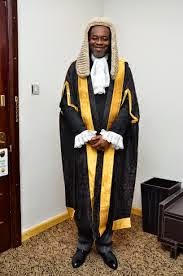
Hon. Justice Phillips 
More than
law and ideology goes into a judge’s court ruling — and includes having a
daughter, a new study shows
The research, conducted by Harvard University professor Adam Glynn and University of Rochester political scientist Maya Sen, found that judges with daughters are more likely to vote in favour of women’s rights. Ms Sen notes that judges learn about what it is  like to raise a young woman dealing with issues like pay equity, university admissions or taking care of children. The effect is most seen among male judges appointed by Republican presidents, the study found.. 

Influence of daughters 
The study considered about 2,500 votes by 224 federal appeals court judges. The study found that having at least one daughter corresponds to a 7 per cent increase in the proportion of cases where judges will vote in a feminist direction, Ms Sen told the New York Times. Having one daughter as opposed to one son is linked to an even higher 16 per cent increase of judges ruling in a feminist direction.  

Source:The New York Times

MALAYSIA OPENS LEGAL MARKET

MALAYSIA OPENS LEGAL MARKET

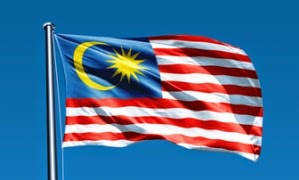
Malaysia is now allowing foreign
firms to open within its jurisdiction and join ventures with domestic firms.
Malaysia’s
legal services market has opened to the rest of the world, allowing foreign
firms to open within its jurisdiction and from joint ventures with domestic
firms. 
The measures were introduced under
the Legal Profession Act of 2012 and came into effect 3 June, as announced by
Malaysian attorney general Tan Sri Gani Patail. 
Discussions to liberalize the market
have been occurring since 2002. Lawyers are permitted to continue providing
services by entering Malaysia using national passports, but they must not
exceed the maximum stay of 60 days per lawyer per year.
Source- globallegalpost.com