STUDY SHOWS JUDGES WITH DAUGHTERS ARE LIKELY  TO VOTE FOR WOMEN’S RIGHTS

STUDY SHOWS JUDGES WITH DAUGHTERS ARE LIKELY TO VOTE FOR WOMEN’S RIGHTS

Hon. Justice Phillips 
More than
law and ideology goes into a judge’s court ruling — and includes having a
daughter, a new study shows
The research, conducted by Harvard University professor Adam Glynn and University of Rochester political scientist Maya Sen, found that judges with daughters are more likely to vote in favour of women’s rights. Ms Sen notes that judges learn about what it is  like to raise a young woman dealing with issues like pay equity, university admissions or taking care of children. The effect is most seen among male judges appointed by Republican presidents, the study found.

Influence of daughters 
The study considered about 2,500 votes by 224 federal appeals court judges. The study found that having at least one daughter corresponds to a 7 per cent increase in the proportion of cases where judges will vote in a feminist direction, Ms Sen told the New York Times. Having one daughter as opposed to one son is linked to an even higher 16 per cent increase of judges ruling in a feminist direction.  

Source:The New York Times

MALAYSIA OPENS LEGAL MARKET

MALAYSIA OPENS LEGAL MARKET

Malaysia is now allowing foreign
firms to open within its jurisdiction and join ventures with domestic firms.
Malaysia’s
legal services market has opened to the rest of the world, allowing foreign
firms to open within its jurisdiction and from joint ventures with domestic
firms. 
The measures were introduced under
the Legal Profession Act of 2012 and came into effect 3 June, as announced by
Malaysian attorney general Tan Sri Gani Patail. 
Discussions to liberalize the market
have been occurring since 2002. Lawyers are permitted to continue providing
services by entering Malaysia using national passports, but they must not
exceed the maximum stay of 60 days per lawyer per year.
Source- globallegalpost.com


TRADEMARK JUDGEMENT ON THOMAS PINK V. VICTORIA SECRET

TRADEMARK JUDGEMENT ON THOMAS PINK V. VICTORIA SECRET

VICTORIA’S SECRET NO LONGER IN THE PINK: THOMAS PINK WINS IN TRADE MARK FIGHT
On 31 July 2014, the High Court of Justice handed down its judgment in Thomas Pink Ltd v Victoria’s Secret UK Ltd [2014 EWHC 2631 (Ch)]. Birss J ruled that Victoria’s Secret’s use of its sub-brand PINK had infringed Thomas Pink’s trade marks for PINK, as the average consumer was likely to be confused by the similarity of the signs.

Business impact 
Fashion brand owners are likely to welcome the decision as it allows them to protect their trade marks against other fashion brands even if they operate in very different market segments. The High Court’s decision is an interesting application of the principles of non-use and acquired distinctiveness in relation to
trade marks, with Birss J upholding the validity of Thomas Pink’s UK trade mark, despite the fact that it had not been used in precisely the form registered.

Background
The claimant, Thomas Pink Limited (“Thomas Pink”), began trading in London in 1984, primarily selling men’s shirts, but its business has since diversified to include other clothing items and all of its goods are sold under and by reference to the names Thomas Pink and PINK. Thomas Pink is the proprietor of two trade mark registrations: (i) Community Trade Mark No. 3,949,906 filed on 14th July 2004 in Classes 3, 14, 18, 25, 26 and 35 (the “CTM”):

The defendant, Victoria’s Secret UK Ltd (“Victoria’s Secret”), is part of a group which sells the famous Victoria’s Secret line of lingerie which is known worldwide. In 2004, the Victoria’s Secret group launched a
sub-brand in the US called PINK, which now has stand-alone PINK branded stores. In 2012, Victoria’s Secret began opening retail outlets in the UK. In its UK PINK stores (although there was some debate in
the case as to whether Victoria’s Secret had stand alone PINK UK stores), Victoria’s Secret sell a wide variety of casual clothing, many of which present the word PINK alone in a prominent way.

From: legalweeklaw.com

PROFILE:  HON. YACOOB EKUNDAYO BUSH-ALEBIOSU

PROFILE: HON. YACOOB EKUNDAYO BUSH-ALEBIOSU

Otunba Hon. Yacoob Ekundayo Bush- Alebiosu, popularly known as D-Bush is a humane and optimist for a just and egalitarian society.


An Architect by profession, Hon. Dayo Bush –Alebiosu has distinguished himself as a thoroughbred and proficient professional in the Nation’s building and construction industry before his foray into partisan politics. His candour, charisma, humility and philanthropy are rare among his generation.

Hon. Dayo Bush-Alebiosu’s adventure was not by a coincidence. He comes from a prominent political dynasty of Otunba Busura Alebiosu, a former Majority leader in the Lagos State House of Assembly during the Second Republic regime of Governor Lateef Jakande’s administration.
He cut his political teeth under the master strategist and great leader of all times-the Asiwaju of Africa-the former Governor of Lagos State-Senator Bola Ahmed Tinubu where he served as a Special Assistant on Housing. He carved a unique niche for himself during the tenure of Asiwaju Bola Ahmed Tinubu as a reliable, diligent and focussed officer of government as he effectively collaborated and served as a proficient team player in the realisation of Housing Programmes of the administration.
His sterling performance in office was immediately rewarded as the good people of Kosofe Federal Constituency of Lagos State chose him in the April 2007 National Assembly  general elections as their “eyes and voice” in the lower chamber of the National Assembly.  
Since then, the story has been that of blessings and rapid transformation and provision of basic amenities to the good people of the Federal Constituency. His ardent love and compassion for the development of the area is unrivalled as several countless Federal projects had been brought to the Federal Constituency.
He has proficiently combined the primary goal of representation which is lawmaking for the general well-being of the people and the enhancement of the development of his constituency.
Kosofe LGA, Ikosi –Isheri LCDA and Agboyi-Ketu LCDA all within the Federal Constituency which are the grassroots’ council areas closest to the people have all been touched by the lifting spirit of Hon. Dayo Bush-Alebiosu whose passion is to accelerate the well-being of the area.
Due to his vast knowledge and experience and relationship with his fellow representatives, Hon. Bush-Alebiosu has served in many committees of the House including National Security, Petroleum (Upstream) and was a former sub-committee Chairman of the Economic and Financial Crimes Commission (EFCC) and other committees. He had at one time or the other, served in different      ad-hoc and special tasks teams on varying national assignments.
As a loyal party man, he had toed the line of his Political Party on all issues that the party supports and had always sought the inputs of those he represents before saying “YES” or “NO” on issues of discourse on the floor of the house.
He is a staunch advocate of “ONE MAN,ONE VOTE” ideology and had supported his party-The ALL PROGRESSIVES CONGRESS (APC) on the endless calls for total reformation of the electoral process, rule of law and true federalism for Nigeria.
As a Representative with human face, he had at several times implemented interventionist programmes in the area of roads, security, electricity, water supply and educational support projects in some primary schools within the Federal Constituency.
He is presently the Chairman of the House Committee on Treaties and Agreements.
Hon. Dayo-Bush Alebiosu believed that although the primary responsibility of Lawmakers is to make laws for the good governance of the country, he will always put in his efforts in the provision of developmental projects and amenities for the constituency.
Below is the breakdown of projects facilitated by Hon. Bush-Alebiosu to Kosofe Federal Constituency since 2007;
EDUCATION
1 Block of Three (3) Classrooms at Expressway Primary School, Ikosi-Ketu
1 Block of Three (3) Classrooms at Oworonshoki Primary School, Oworonshoki
1 Block of Three (3) Classrooms in Orishigun Primary School, Ketu
Provision of desks, benches and chairs to these primary schools as well as teaching aids for their teachers and instructors.
Textbooks, instructional materials and other teaching aids were also provided for some primary schools in the area.
WATER PROJECTS 
Provision of water (borehole) Magodo ,community and market
Provision of pipe borne water Araba area
Provision of water (borehole) Omobanta community, Mile 2
Provision of water (borehole) Anthony community, Agbole Area
Provision of water (borehole) at Ifako-Market, Ifako-Gbagada.
Hand Pump Borehole at S. Omojumi Street, Ajegunle area
Provision of Public toilet in Mende, Maryland 
HEALTH CARE
Provision of drugs and Pharmaceutical products worth over ten million naira for two Primary Health Care Centres (Mascara in Alapere-Ketu and Mende in Maryland)
 OTHER PROJECTS AND SUPPORT SCHEMES
Provision of three motorised water boreholes- Ifako, Oworonshoki and Ojota (under-construction) with a value of fifteen million naira per borehole.
Road repairs (sand & grading) of Tawakalitu Central Mosque Road in Anthony.
Provision of financial support schemes to constituents in the three (3) Local Govt Areas that constitute Kosofe Federal constituency
Provision of empowerment programmes for some unemployed youths to assist them before gaining employment
Distribution of several JAMB and GCE forms to over five hundred candidates and the convening of special tutorial and remedial programmes to aid their success in the examinations.
YOUTH EMPOWERMENT
Several youth groups and associations have been provided with various forms of assistance. He had bankrolled sporting competitions (boxing and football) in the length and breadth of the Federal Constituency. These schemes were aimed at improving the lots of youths and making them shun social vices.
Many of the youths had also, benefitted from other support schemes to enhance their self-sustenance and developments
Several Transformers were also provided to over fifteen areas within the Federal Constituency towards boosting electricity supply in the affected areas.
Magodo and Mende areas were not left out of these dividends as they were also with provided with Solar-Powered streetlights which boosted night-life economy and security in these two areas.
Apart from his cerebral contributions in debates and important functions during plenary, Hon. Bush-Alebiosu has sponsored numerous legislations (Motions and Bills) which include:  
MOTION FOR ADEQUATE COMPENSATION FOR DANA AIR CRASH VICTIMS 
MOTION ON THE BRUTAL KILLING OF FOUR STUDENTS OF THE UNIVERSITY OF PORT-HARCOURT, POPULARLY CALLED “ THE ALUU FOUR”
MOTION ON THE PREVENTION AND CONTROL OF THE  OUTBREAK OF BIRD FLU IN NIGERIA
MOTION ON THE CONTROVERSIAL MERGERS AND ACQUISITIONS IN THE FINANCIAL SYSTEM AS RELATED TO THE INTERCONTINENTAL BANK SCANDAL 
THE CONTROVERSIAL BAKASSI ISSUE WHICH THE COMMITTEE ON TREATIES AND AGREEMENT REALLY WORKED TIRELESSLY ON BEFORE THE EXPIRATION OF THE DEADLINE.
TOBACCO CONTROL AND REGULATION BILL
MOTION ON THE DOMESTICATION OF TREATIES SIGNED BY NIGERIAAS WELL AS THE STREAMLINING OGF TREATIES SIGNING PROCEDURES.
MOTION ON THE REGULATION OF THE CONSUMPTION OF CAFFEINATED ENERGY DRINKS 
MOTION CALLING FOR THE REVIEW OF ALL BILATERAL AIR SERVICE AGREEMENTS (BASA)
THE INITIATION OF BILL PROCEDURE FOR THE AIR PASSENGERS’ RIGHTS BILL,ALCOHOL CONTROL BILL AND THE PHCN TRANSFER OF LIABILITY BIL 
Otunba Hon. Dayo Bush-Alebiosu is happily married with children.

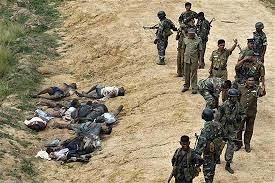
NIGERIA: GRUESOME FOOTAGE IMPLICATES MILITARY IN WAR CRIMES

Amnesty International released this video on 5th August, 2014 showing persons alleged to be members of the Nigerian military and civilian Joint Task Force committing war crimes as they continue to fight Terrorism in the Northern part of the country. The video also shows the aftermath of a Boko Haram attack on a civilian population. The Nigerian military has reacted to the allegations by stating it will carry out an investigation to ascertain the authenticity of the video.  

Sadly, the North-Eastern states in Nigeria are still marred in violence but hopefully the Nigeria military and other security agencies  will get ahead of the terrorist and we had be rid of this senseless killings for good.

#LawForLayMen hosted by @BarEnclave

#LawForLayMen hosted by @BarEnclave

On Sunday, 3rd August, 2014, @BarEnclave hosted @ayosogunro
to the maiden edition of the  #LawForLayMen lecture series in Lagos titled “A
ONE DAY GUIDE TO THE NIGERIAN CONSTITUTION”. Participants comprising of young
professionals from diverse fields attended and it was simply amazing to be
there. 


@ayosogunro, a lawyer and writer delivered his paper brilliantly while
sharing the basics of the Nigerian legal system and fundamental principles of
the Nigerian Constitution with the participants who payed rapt attention.
@adedunmade who represented @LegalNaija at the event engaged with many of the
participants after the lecture and the feedback was amazing. 
Participants included renowned people’s lawyer @topeatiba and other
amazing people including @zebbook, @ronaldnzimora, @oddy4real, @finegurl and
@wildeyeq among others. Plus everyone got a free autographed copy of @ayosogunro’s
book titled “The Wonderful Life of Senator Boniface and other Sorry Tales”,
even Legalnaija got a copy too and we are excited about it.  
Legal literacy is very important to the development of a Nation’s
social and political development and as such @BarEnclave efforts at putting together
the lecture is extremely commended. See more pictures below.

TIPS FOR BETTER LEGAL DRAFTING SKILLS

TIPS FOR BETTER LEGAL DRAFTING SKILLS

“The brief of arguments of the appellants
consisted of forty-two pages. It was unnecessarily long, windy, confused,
confusing, repetitive, and it contained too many narratives rather than
arguments
….. The brief of arguments
of the appellants in this appeal is a clear example of how not to draft a brief
of arguments”
.   
         
Abiru, J.C.A.
Nagebu Co (Nig.) Ltd v. Uniy Bank Plc [2014]7 NWLR(Part 1405) 42


The above quote is the comment of
a Honourable Judge on the brief of argument of one of the parties in the suit,
well if you cannot recognise one, this is a classic bench slap and I wonder how
the lawyer must have felt listening to the Justice in open court, if it were
me, I will ask the floor to split open and swallow me whole have been slightly
embarrassed, well maybe not slightly. 
In the legal profession, there
happens to be a lot of writing, that’s why one of the invaluable assets that a
counsel must always possess is good drafting skills. Briefs of arguments contain
the story of a party on which the courts Justices are called upon to
adjudicate. Like all good stories, the arguments in brief must flow; they must
be consistent, they must be concise, they must be comprehensive, they must be
comprehensible; and they must be accurate. 
Some of the eternal qualities of
a good brief of arguments are brevity and precision, no one wants to read pages
of unnecessary information that will not help a client or like some lawyers do,
include lines from popular poems or dramas. A brief of argument must not be too
short as to leave out the essentials and must not be too long as to become
otiose. The goal must be to achieve maximum brevity consistent with accuracy
and clarity. 
A good brief does not allow for
verbosity and must be a succinct statement of a party’s argument in the appeal.
A well crafted brief makes for joyful reading while a badly crafted one is
tedious and laborious to understand and it is like a bad story which leaves an
audience disgruntled, disgusted and unhappy. This point was well made by the
Supreme Court in Ports & Cargo Handling services Company Limited & 3 Ors v.
Migfo Nigeria Ltd. & Anor (2013) 3 NWLR (Pt. 1333) 555 at para. G where
Galadima
, JSC stated thus:
“A brief of argument has the connotation of a really concise and succinct
expression of the appellant’s complaint and the respondent’s reaction on the
issue or issues presented to the court for consideration. Clarity, simplicity
and directness of expression are the hallmarks of a good brief. ‘Although the
rules of the Supreme Court do not limit a party to a number of pages in a brief
of argument, the brief should not be unnecessarily voluminous and contain
repetitive arguments of the issues settled.”
Counsel must understand that a
long and windy brief is discouraging to the court Justices saddled with the
determination of an appeal and can only amount to disservice to the cause of a
litigant. Litigation is not a long essay competition where success is
determined by the length of the brief of arguments and it has been said that repetition
does not improve an argument – Uwazurike v. Nwachukwu (2013) 3 NWLR (Pt.
1342) 503
The court of Appeal, speaking on
the necessary drafting skills a counsel must possess, said in SCOA
(Nig) plc v. Danbatta (2002) 13 NWLR (Pt. 785) 461 at 472 paras. D –F
thus:
“Drafting is an important tool in advocacy. A solicitor who could not
resent his client’s case clearly in the brief, if it is a case in the appellate
courts, or in the pleadings, if it is a case before the High Court or Federal
High Court, could not adequately represent the interest of his clients. An
otherwise good case is destroyed and lost by bad pleadings, …counsel should
pay more attention to drafting as no counsel could be good and make marks in
advocacy if he is poor in drafting mechanism”.  
As a lawyer,
being excellent at brief writing sounds like an awesome advantage but it takes
a lot more than wishes to make it happen. There is no substitute for committing
to perfecting both your written and spoken English by reading more, learning
new words and writing over and over and over again. Don’t forget that practise
makes perfect.


WHY YOU NEED A COMPANY SECRETARY

WHY YOU NEED A COMPANY SECRETARY

Every Company shall have a gateman
Secretary, so says the HR Manager law in Section 293 of The Companies and Allied Matters
Act, CAP. C20, Laws of the Federation of Nigeria. By secretary, I do not mean a
receptionist or a customer care practitioner; neither do I mean a person who
just assists with correspondences or making appointments nor that stern looking
woman who sits in front of the Executive- Director’s office and acts like she’s
the gate-keeper to the Promised Land. By Secretary, I mean a corporate officer
in charge of the official correspondences of the company, minutes of board
meetings, and records of stock ownership and transfer. 

 A company secretary is appointed
and can be removed by the Directors of a company, and like the Directors of a
company, the secretary plays a very important role in the company’s daily
administration. The part played by the Company Secretary is further strengthened
by the Corporate Affairs Commission (CAC) directive that all companies appoint a
Company Secretary and file evidence of same before the commission.

CAMA, in Section 298 provides that
the functions of a Company Secretary includes;
a. Attend
the meeting of the company, the board of directors and its committees,
rendering all necessary secretarial services in respect of the meeting and
advising on compliance by the meetings with the applicable rules and
regulations;
b.  Maintaining
the registers and other records required to be maintained by the company under
this Act;
c.  Rendering
proper returns and giving notification to the commission required this Act; and
d. Carrying
out such administrative and other secretarial duties as directed by the
director, or the company.  
It is the duty of the Company
Secretary to maintain certain statutory registers on behalf of the company
including; 
  • Register of members and shareholders.

  • Index of members where they are more than 50.
  •  Register of Debenture Holders 
  • Register of Directors/ Secretaries.
  •  Accounting records
  • Register of charges, and  
  • Register of interest in shares.

Furthermore, a secretary shall
not owe fiduciary duties (duty to act with good faith) to the company except where
he is acting as its agent, then he shall owe fiduciary duties to it, and as
such shall be liable to the company where he makes secret profits or lets his
duties conflict with his personal interests, or uses confidential information
he obtained from the company for his own benefit (Section 297).  

To be a Company  Secretary, such person must have the requisite
knowledge and experience to discharge the functions of a secretary, and in the
case of a public company, he shall be either a member of the Institute of
Chartered Secretaries and Administrators; or a legal practitioner; or a member
of the Institute of Chartered Accountants; any person who has held the office
of company secretary for a period of 3 years; or a corporate body or firm
consisting of the above mentioned people (Section 295).
Adedunmade Onibokun Esq. 
@adedunmade
LEGAL HURDLES OF REGISTERING BUSINESS IN NIGERIA: TAX PERSPECTIVE

LEGAL HURDLES OF REGISTERING BUSINESS IN NIGERIA: TAX PERSPECTIVE


Credits: fearlessforlife.com

Nigeria is a developing economy
and an economy which recently overtook South Africa to become the continent’s
largest economy following the recalculation of GDP and the world’s 26th largest
economy, the economy attracts foreign investors and local investments. An
entrepreneur plays an important role in economic growth and development and
there is an impressive rise in the number of self-employed individuals we have
in the country today, former American President – Ronald Reagan 1986 address to
the White House Conference on Small Business said, “the government’s view of
the economy could be summed up in a few short phrases: If it moves, tax it” as
the economy is moving its crystal clear the government will become stricter
with tax policies. Most entrepreneurs or intending entrepreneurs do not know
the basics of taxation have regards starting business in the country and will
be found wanting by the law.

Registration of business with
Federal Board of Inland Revenue Department of the Ministry of Finance for
income tax and VAT
.
(FIRS) requires that an applicant
who seeks registration for Income tax and VAT completes tax registration forms
for corporate income tax registration as well as VAT. The applicant submits an
application letter to the tax authority for a tax clearance certificate and,
for income tax purposes, registers at the integrated tax office. The
registration process requires submitting a completed tax office–issued
application (taxpayer registration input form, TRIF/2006/001 COYS) and the following
documents:
1) Completed FIRS questionnaire
 2) Memorandum and articles of association
(copy)
 3) Certificate of incorporation (copy)
 4) Directors’ names and addresses
 5) Tax advisor’s name and address
 6) 
Letter of appointment of a tax adviser and corresponding letter of
acceptance
 7) The date the company commenced business
And for larger companies:
 i) Names, addresses and mobile numbers of
major promoters and the chairman of the company, including their email
addresses
 ii) Other sources of income of the chairman
and the promoters of the company
 iii) Name and addresses of the principal
officers of the company including the chairman, managing director, legal
adviser and accountant
To register, the company must
submit the taxpayer registration input form in triplicate, and the original
certificate of incorporation must be presented for review by the controller.
Upon the completed taxpayer registration input form and all other documents
being received, a tax reference number is allocated. An application must be
filed for the tax clearance certificate; its issuance is not automatic.
There are Fee schedule for tax
clearance certificate:
 • Registration within 6 months of
incorporation: no cost will be incurred on this.
 • Registration after 6 months of incorporation
this will attract:
1. A pre-operation levy of NGN 20,000 for first-year
requests and NGN 25,000 for each subsequent year request, until the company
files a notice of commencement of business as per amendment to section 29 of
the Companies’ Income Tax Act No. 11 of 2007.
2. Companies that register after the start of operations
must file a set of audited accounts. TCC is issued based on tax paid for 3
years. If the position is at a loss, the TCC will be issued to reflect the
position.
Companies required to register for VAT
complete the VAT registration form VAT Form 001, which is obtainable free of
charge from all FIRS offices and return it to the integrated tax office, which
will issue a taxpayer identification number . Companies required to register
for VAT must do so within 6 months from the date of starting business
operations. Since the registration for corporate income
tax and VAT are done in the same place; 1 Tax Identification Number (TIN) is
issued to companies for all federal taxes. 
 Registration of personal income tax PAYE at
the State Tax Office
Employers shall register with the relevant
state tax authority for income tax withholding. Once the application is filed,
with a copy of the certificate of incorporation attached, a reference file is
opened for the company. It is safer to adhere to the law
than face its wrath, and adequate compliance to the tax authorities puts the
mind of an entrepreneur at rest.

BY: Sogo Akinola
Sogo Akinola
Nathan(sogoakinola@gbc-law.com) is a young commercial lawyer at Gbenga Biobaku
and co. He specializes in Taxation, oil and gas law and intellectual property.
He is a graduate of obafemi awolowo university and the Nigerian law school
lagos campus. He is a member of the Nigerian bar association and a member of
the Young International Arbitration Group and also an intending associate
member of the Chartered Institute of Taxation of Nigeria.
AMENDMENTS TO THE CABOTAGE ACT: IMPLICATIONS FOR THE NIGERIAN  OIL AND GAS INDUSTRY

AMENDMENTS TO THE CABOTAGE ACT: IMPLICATIONS FOR THE NIGERIAN OIL AND GAS INDUSTRY


Credits- google

Introduction

The  establishment of the  Coastal and Inland Shipping(Cabotage) Act
2003 (the Act)  to restrict the use of
foreign vessels in inland and coastal shipping trade and promote the
development of Indigenous man power in the Nigerian maritime industry. Under the
Cabotage Act, only Nigerian-built vessels wholly owned and manned by Nigerian
citizens may engage in coastal trade or cabotage within Nigerian waters.
Foreign vessels or tugs cannot tow within Nigerian waters except when rendering
assistance to persons, vessels or aircraft in danger or distress. Nigerian
waters include coastal, territorial and inland waters, and islands or waters
within the Nigerian Exclusive Economic Zone of Nigeria.

Hon, Emeka Ihcdioha and Hon.
Ifcanyi Ugwuanyi of the Federal House of Representative sponsored a bill to the
legislative house for the amendment of the Act. This bill is an obvious
reaction to the pronouncement of the Nigerian Federal High Court; Lagos
Division recently issued its decision in “Noble Drilling Nigeria Limited v
Nigerian Maritime Administration and Safety Agency”. 
Fact Of the Case
The Plaintiff, Noble Drilling
(Nigeria) Limited, an offshore drilling contractor operating in the Nigerian
oil and gas industry, was of the opinion that its activities within Nigerian
territorial waters (drilling operations) did not amount to “coastal trade” or
“cabotage” as defined under the Cabotage Act. The Plaintiff sought a
determination from the court on the questions of whether drilling operations
fall within the definition of the “coastal trade” or “cabotage” under Section 2
of the Cabotage Act; whether, upon a proper interpretation of the Cabotage Act,
drillings rigs fall within the definition of the ”vessel”; and whether the
Minister of Transportation acted ultra vires his powers under the Cabotage Act
to make regulations by including “Rigs” under the classification of vessels to
be subject to waiver fees in the Guidelines on Implementation of Coastal and
Inland Shipping (Cabotage) Act 2003; revised and issued in April 2007 (the
Guidelines). The Defendants on the other hand contended inter alia that the
definition of the word “ship” or “vessel” includes a drilling rig and so the
use of a drilling rig in the coastal trade or cabotage is as defined in Section
2 of the Cabotage Act. They also contended that since drilling rigs carry oil,
mud and other substances from the sea bed to the surface, they are vessels
within the contemplation of Section 2(a) and 2(d) of the Cabotage Act. The
decision of the court was greatly influenced by the definition given to the
word “vessel” in the Cabotage Act. Under Section 2 of the Cabotage Act, a
vessel is said to include “any description of vessel, ship, boat, hovercraft or
craft, including air cushion vehicles and dynamically supported craft, designed,
used or capable of being used solely or partly for marine navigation and used
for the carriage on, through or under water of persons or property without
regard to method or lack of propulsion;” In this case, the court stated that
the Defendant failed to show that a drilling rig is “designed, used or capable
of being used solely or partly for marine navigation for the carriage of
persons or property through, on and under the water” and so a drilling rig
could not be a vessel.
Furthermore, the court was quick
to point out that drilling rigs were not expressly mentioned as one of the
vessels eligible for registration under Section 22(5) of the Cabotage Act and
that the phrase “marine navigation” is crucial to the definition of a vessel
under Section 2 of the Cabotage Act. In reaching it conclusion, the learned
judge went on to state that the process of navigation was a horizontal movement
and so a drilling rig that exist solely to move crude oil from the oil well to
the surface of the sea cannot be termed a vessel within the purview of the
Cabotage Act as its operation amounts to a vertical movement of goods (crude
oil). In addition, the court held that the listing of rigs under the caption
“Foreign vessels” in clause 9.1.1 of the Guidelines issued by the Minister of
Transportation in April 2007 was wrongful on the ground that a drilling rig did
not fall within the definition of a “vessel” under Section 2 of the Cabotage
Act. The court however held that the Minister of Transportation did not act
outside his powers to make regulations under Section 46 of the Cabotage Act
with regards to the provisions on “Rigs” in the Guidelines.
Proposed Amendments to the
Cabotage Act
The proposed amendments include:
1)            Section 2(a) of the Act is replaced with “The carriage of
persons or goods by vessels from any place in Nigeria to any place above or
under Nigerian waters to any place in Nigeria, or from any place above Nigerian
waters to the same place or to any other place above or under Nigerian waters
where the carriage of the persons or goods is in relation to the exploration
and or exploitation of the mineral or nonliving resources in or under Nigerian
waters.”
2)            An alteration to Section 2b of the Act i.e the
definition of cabotage that replaces “persons” with “passengers” .
3)            Section 2(c ) of the Act is to be replaced with “The
carriage of persons or goods by vessels from any place in Nigeria to any place
in Nigeria or from a place above Nigerian waters whose carriage of persons or
goods is in relation to the exploration and, or exploitation of the Mineral or
non-living resources in or under Nigeria.”
4)            “Transportation” from the definition of Cabotage in
Section2 (d) of the Act.
5)            An alteration to extend the definition of “place above
Nigerian waters” under the Act to include “pipe rigs”, “FPSOs” and “floating,
storage and offloading platforms(FSO).” Also to expand the meaning of “vessel”
under the Act to include “rigs”, “FPSO” and “FSO”. Furthermore to expand the
list of vessels eligible for registration to include: “rigs”, “FPSO” and“FSO”.
Implications of the proposed
Amendment
It is important to note that the
Cabotage Act provides that vessels must be:
(I) wholly owned by Nigerian
Citizens
(ii) Registered in Nigeria
(iii) Manned by Nigerian citizen;
and
(iv) Built in Nigerian shipyards
Also, a surcharge of 2% of the contract sum performed by any vessel
engaged in cabotage is Payable. The application of cabotage to drilling rigs
and the like will trigger the need for the operators of such vessels to pay the
surcharge together with the 1% Nigerian Content Development Levy and ensure
compliance with the provisions of the Act. This will definitely increase the
cost of doing business for those companies. It is therefore important for the
oil producing companies involved in
drilling operations in Nigeria to proactively evaluate the l implications of
the proposed Amendments.The proposed amendment provides that the utilisation of any vessel in
any marine activity of a commercial nature will be subject to the Cabotage Act
and specifically lists rigs and similar vessels as cabotage vessels.

Sogo Akinola
08166205499 

– See more at: http://legalnaija.blogspot.co.uk/2014/07/the-new-pension-act-hope-for-nigerian.html#sthash.GWMPQtkD.dpuf

Sogo Akinola 
sogoakinola@gbc-law.com 
08166205499

*Sogo Akinola Nathan
a young commercial lawyer at Gbenga Biobaku and co. He specialises in
Taxation,oil and gas law and intellectual property. He is a graduate of
obafemi awolowo university and the Nigerian law school lagos campus. He
is a member of the nigerian bar association and a member of the Young
International Arbitration Group and also an intending associate member
of the Chartered Institute of Taxation of Nigeria

Sogo Akinola
08166205499 

– See more at: http://legalnaija.blogspot.co.uk/2014/07/the-new-pension-act-hope-for-nigerian.html#sthash.GWMPQtkD.dpuf

Sogo Akinola
08166205499 

– See more at: http://legalnaija.blogspot.co.uk/2014/07/the-new-pension-act-hope-for-nigerian.html#sthash.GWMPQtkD.dpuf

Sogo Akinola
08166205499 

– See more at: http://legalnaija.blogspot.co.uk/2014/07/the-new-pension-act-hope-for-nigerian.html#sthash.GWMPQtkD.dpuf