By Oluwaseun ‘Dayo Omotoso*
Dear Uncle Joe,
I must concede Mr. President that this moment in the
nation’s history isn’t so easy for you with the volume of information you have
to process almost every minute and the several political activities in which you
have to engage despite all. To borrow the words of Woodrow Wilson however, ‘the
ear of a leader must ring with the voices of his people’. For this reason, I’d like
to say these few words to you and to draw your attention to a couple of things
you ought to consider, which I am sure the band of ‘sweet talkers’ around you
dare not say for fear of losing their livelihood.
It is often admonished among the Yorubas of Western
Nigeria that “ki sobia to d’egbo, olugambe ni aa ke si” (it is wise to seek a
surgeon before a simple ringworm attack festers). Mr. President, ringworm has
attacked the polity called Nigeria; I suppose it’s time, not only to seek a
surgeon but also to identify the political ringworms before the wound in the
Nigerian polity festers.
Permit me to begin by expressing my sincere admiration
of your person. You rose to become the number one citizen of the country from
the ranks of persons I had always advocated for during my active days as a
member of Amnesty International; the Niger-Deltans, who had long remained at
the butt end of bad governance and corrupt leadership in the nation. Indeed my
concern for them during my university days was so deep that it informed the
choice of topic for my final year thesis; ‘Natural
Resources Exploitation and Management; the Derivative Rights of Natives and
Landowners in Law’, in which publication much of the deprivation suffered
by people of your region was addressed. Your story has indeed rightly been
stated to be that of movement from grass to grace, having defeated all odds to
become the number one citizen of the nation.
I’d also wish to commend you, Uncle Joe (as I’d like to
address you) for your doggedness, which has been of immense benefit to your
administration. Indeed not many governments on this side of the globe could
survive what you have withstood since the inception of your administration. Right
from the word go, rumours had it that some individuals swore to make the nation
ungovernable under you. The events that were later to unfold seemed to lend
credence to the unpleasant tiding. Without doubt, yours was a government
greeted by a barrage of bombs going off almost in quick successions; the
erstwhile ragtag vermin in the north-eastern Nigeria transformed at the wake of
your administration to a devious and defiant guerrilla army which constantly held
the nation at the jugular and almost dragged it to its knees. The climax of the
crises was the abduction of over two hundred young schoolgirls at the
Government Secondary School, Chibok, Borno State. Through all these
difficulties, you remained undaunted in the proclamation of your transformation
gospel. Indeed I have great respect for persons who remain true to their
convictions.
Your doggedness was not entirely commendable however,
for the same quality almost proved the bane of your administration. You will
agree with me sir, that often in life, we get condemned for the same reasons we
earlier were commended. The saying goes in my village that ‘afifila p’erin, ojo
kan ni o nniyi mo’ (the hunter that kills an elephant with his hat doesn’t
enjoy commendation for long; people will soon avoid him for such tendencies).
Uncle Joe, I’ll apply the same reasoning to your attitude to governance, using
the notorious abduction of the Chibok schoolgirls as case in point. Much as your
resilience in the face of opposition and difficulties is commendable, your
handling of the matter was not fatherly; it could have even been rightly
described as inhuman, for rather than visit the affected parents of the
abducted schoolgirls to commiserate with them and perhaps prove the human side
of your personality, you were reported to have rather invited them for a
meeting at a venue of your own choosing. Mr President, in civilized societies
across the world, sympathizers visit the mourning, not the other way round, you
need not be told sir. The second instance was your melodramatic performance at
the people’s Democratic Party rally in Kano barely 48 hours after the April 15,
2014 bomb explosion at the Nyanya Motor Park, Abuja. Hours after the nation was
thrown into mourning at the wake of such grim event, you were spotted dancing
at a political rally like a gambler who just won jackpot! Such disaster befell
the nation yet you had the nerves to dance a couple of hours after; the cause
of disaster your government has not succesfully addressed till date. These acts
of yours Mr. President do not anywhere across the world cut the image of a good
leader. Since you have proved in recent interviews to be a fan of parables and
analogies, perhaps one would not be out of place here. Imagine the nation
Nigeria being your home and you being the father of the home. Hoodlums break
into your home and carry your daughters away or burn down your home, would you
dance days after? You might be quick to say the abducted ‘Chibok girls’ are not
your daughters and that Nyanya isn’t your home but that would only accentuate
allegations of your meanness. A leader is like a father to all. On him lies the
responsibility for the welfare of all his subjects. Your response was woeful,
both to the abduction of the schoolgirls and the bomb blast at Nyanya and on
this score you failed the nation Mr. President and lost my respect and the
respect of several other well-meaning Nigerians. What more, you refused to
visit the victims Chibok abduction for months until another rounds of elections
starred you in the face. Since you have been seen kneeling on altars of all
manners of registered and unregistered places of worship in recent times, I
will refer you at this point to the foundation of what you profess to be your
faith; the Holy Bible. I commend to you the words of Jesus Christ in John
10:11-13 where he said:
“I am the good shepherd. The good shepherd
lays down his life for the sheep. He who is a hired hand and not a shepherd,
who does not own the sheep, sees the wolf coming and leaves the sheep and
flees, and the wolf snatches them and scatters them. He flees because he is a
hired hand and cares nothing for the sheep.”
Uncle Joe, your response to the abduction and indeed
the whole Boko Haram episode was not that of a shepherd but of a hired hand that
cared nothing for the sheep; you saw the wolf coming and fled. Need we be told
again that the wolves snatched your sheep?
Your wife did not do any better. One would have expected
her to fare better being a mother but her unbridled remarks and careless
utterances made her the butt of wicked jokes and offered comic relief through
the entire episode. This leads me to the second issue that bothers me about you
sir.
One of my favourite quotes by leadership guru, John C.
Maxwell is “if it doesn’t work at home, don’t export it.” If your leadership
does not reflect in your home, do not attempt to sell it to the world outside
your home. Uncle Joe, your leadership, I regret to inform you, does not reflect
in your home and your wife tells it all. I need not repeat the diverse toxic
utterances which have found their way out of your wife’s mouth. These do not
present her in any way as a good mother. So sublime is the image of a mother
that some have adopted same as objects of worship. Forgive me if I tell you sir
that you wife falls short of this image. Her penchant for confrontation and
overt insults launched at individuals some of who stood by you at the wake of
your administration has won her the enmity, not of a few persons. What started
as a histrionic performance by a carefree woman has degenerated to verbal
assaults at anyone she perceives to be your political antagonist.
Recently your wife was reported to have stated during
one of her performances that anyone heard chanting the slogan of a rival party
should be stoned. Uncle Joe, that was extreme. A leader is and ought to remain
a rallying point. That statement credited to your wife was divisive and
inciting and could have precipitated a serious crisis but for the wisdom of
those who waived her words aside as mere political ranting.
Uncle Joe, your silence in the face of such behavior by
your wife and your refusal to retract some of such foul utterances betray your
position as a father and leader of a nation. It leaves one with no other
conclusion than the fact that you have no control over the woman who lives
under your roof and leaves the right thinking minds to wonder how you intend to
control a nation if you have failed to control your wife. However, I am quick
to add, how would you correct your wife for speaking foul when about the same
time you also referred to a revered political figure in the country as a ‘motor
park tout’? Indeed you have proved by such utterance to be no better than your
wife.
Another recurrent feature of your administration sir is
the ‘transformation’ of hitherto faceless individuals and ex-convicts into
celebrities overnight. Twice you were taken on by journalists for this tendency
of yours to hobnob with individuals of questionable character; twice you were
offered the opportunity to clear the air on the allegations of crass corruption
which hangs like a storm cloud over your government and you flunked the two
opportunities, on one occasion even theorizing that stealing and corruption are
mutually exclusive. You seemed at that moment to have forgotten sir that six
and half a dozen are one and the same. Mr. President, this left many of us with
no other conclusion than that you either do not even understand what corruption
means, in which case you would be too naïve to rule the nation or you deliberately choose to ignore acts of
corruption around you, in which case you would be complicit and also unfit to
rule. Your refusal to take a firm stand against corruption betrayed the trust
of all who committed their mandate into your hand at the last elections. It is
not surprising however Uncle Joe, that you cannot clearly define corruption since
you are in the midst of it and the band of praise singers around you are either
those who benefit from the status quo or those who are hoping to. If thus the
hackneyed saying that “show me your friends and I’ll tell who you are” remains
valid, Uncle Joe, the group of persons you surround yourself with leaves us
with clear ideas of who you are too.
At
the height of your administration, twice were secret arms purchase deals
foisted by a government that proved itself more responsible than yours;
incidences that were to further bury your already soiled image in the mud. On
the first occasion two Nigerians and an Israeli were nabbed while they
attempted to smuggle US$9.3 million stashed in three suitcases into South
Africa on board a private jet from Abuja, ostensibly to purchase arms on behalf
of the Nigerian Government.
Just three weeks after the initial attempt, the South African
Government, through the Asset Forfeiture Unit of its National Prosecuting
Authority seized US$5.7 million yet smuggled to South Africa under your watch,
Mr. President. The succession of these embarrassing events left many Nigerians
wondering why your government was so desperate to discreetly purchase arms
through the back door. As if that was not enough, your government barely weeks
after the two incidences was yet complicit in the purchase by ex-militant,
Government Ekpemupolo (a.k.a. Tompolo) who trades under the name Global West
Vessel Service, of six decommissioned war ships, purportedly under a contract
to fight piracy on the Nigerian territorial waters. Uncle Joe, this contract
awarded by your government to the ex militant warlord has left me wondering
what reasoning underlies some of your decisions. Much as you might want to
argue that the warlord had undergone the amnesty rehabilitation programme, the
fact remains that he has a history of violence and ought not be trusted with
the security of the Niger Delta creeks much less the nation. Perhaps this
illogicality in your choice of whom to entrust with the security of the nation
led to the insinuation in some quarters that you cared little for the security
of the nation and that you were deliberately underfunding the Nigerian Army
while empowering your own Niger Delta militia in fear that the political tides
might someday turn against you. Indeed you need not dispel this fear already
nursed by some Nigerians as to the genuineness of your interest for the nation
as your words do not appear anymore to be your bond and no volume of lofty
promises at this point can change the mind of those who are resolved to vote
you out of power.
Uncle Joe, I remember your words in 2011 when the whole
nation was agog with the ‘goodluck’ bug. You were the cynosure of many eyes
then and your name was the mantra of many a Nigerian. In the euphoria of your
short-lived popularity, you raised the hopes of many and made hundreds of
promises, many of which have found their way down the drain.
The most relevant at the moment was the promise you
made in January 2011, when you sought to cut a good image in the face of
Nigerians by declaring you would not stay beyond a term in office. Of course
you were under no obligation at the relevant time to make such promise, neither
was there a constitutional or legal restraint on you. However, having made such
public declaration, honour would require you to stand by your words. On this
count, you failed again as your desperation to return to power at the end of
that single tenure is almost unprecedented.
I remember as well that in the course of your campaign
in 2011, you vowed to create a constitutional role for traditional rulers
across the country. The only role you have created for then till date was that
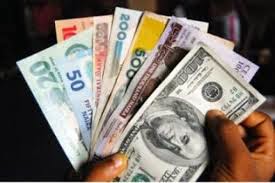
of beneficiaries of dollars you are reported to have doled out to them to seek
their support for your re-election bid. Which brings up another serious issue;
the huge sums of money you are said to have been ‘sharing’ to borrow your
wife’s words, across the country. Uncle Joe, the Yorubas are wont to say that
anyone called a thief ought not play with a lamb (the assumption would be that
he wants to steal it).
You need not be reminded sir that allegations of crass corruption
swing heavily around the neck of your administration like a hangman’s noose. Many
indeed are the instances of mismanagement of funds that you have failed to
address, the climax of which was the alleged disappearance of US$20 million
from the NNPC coffers. Indeed the first reaction of your cronies, like your
government did to the Chibok abduction was flat denial until a recalcitrant CBN
governor, now His Highness the Emir of Kano insisted that the funds were
missing. Uncle Joe, at a period when your government finally accepted that the
funds were indeed missing but refused to publish the findings made after
inquiries to how the funds got missing, you were reported to be dolling out
dollars in political campaigns across the nation. Mr. President, would it be
out of place for even a buffoon to see a link between the missing funds and the
dollars shared clandestinely, more so that your government was quick to cover
up the facts surrounding the whereabouts of the funds?
Uncle Joe, I have taken the time to put down these
worries of mine so that you would see things the way the ordinary Nigerians,
one of whom I assume I am, see things and why many clamour for your removal from office during
the next round of elections. Indeed so much is your undoing that the constraint
of space would not allow one to recite. If you are truly a man of honour, one
would have expected you to clear the air on the many allegations made against
your administration before even presenting yourself for re-election. I however do not suppose it is too late to
make amends. If you ask me, I would advise you bow out silently at this point.
If you however chose to go on, I wish you ‘goodluck’. I will conclude though by
referring you to the book of Daniel, chapter 5 verses 25-26:
“This is the inscription that was written:
MENE, MENE, TEKEL, PARSIN
This is what these words mean:
Mene: God has numbered the days of your
reign and brought it to an end.
Tekel: you have been weighed on the scales
and found wanting.
Peres: your kingdom is divided…”
Uncle Joe, it might be easy for you now to seek
re-election, which a couple of millions of dollars can purchase for you but
believe me sir, you won’t find it easy ruling a nation that is at the moment so
severely divided along ethnic and political lines. It is not out of place for
your praise singers to draw your attention to your perceived achievements and
advise that you ignore such words as mine. While you might have recorded
marginal breakthroughs on some fronts, the misdeeds of your administration are
gaping holes that have indeed started sinking the ship of your administration. Your
kingdom is divided, Uncle Joe, if you have ears, hear what the spirit is saying
to you, I wish you well.
*Oluwaseun ‘Dayo Omotoso is a Lagos based Legal
Practitioner, Consultant and Political Strategist.