
SUIT NO. IKD/10199HD/2022: ADIO vs. ADIO: ORDER FOR SUBSTITUTED SERVICE
SUIT NO. IKD/10199HD/2022: ADIO vs. ADIO: ORDER FOR SUBSTITUTED SERVICE
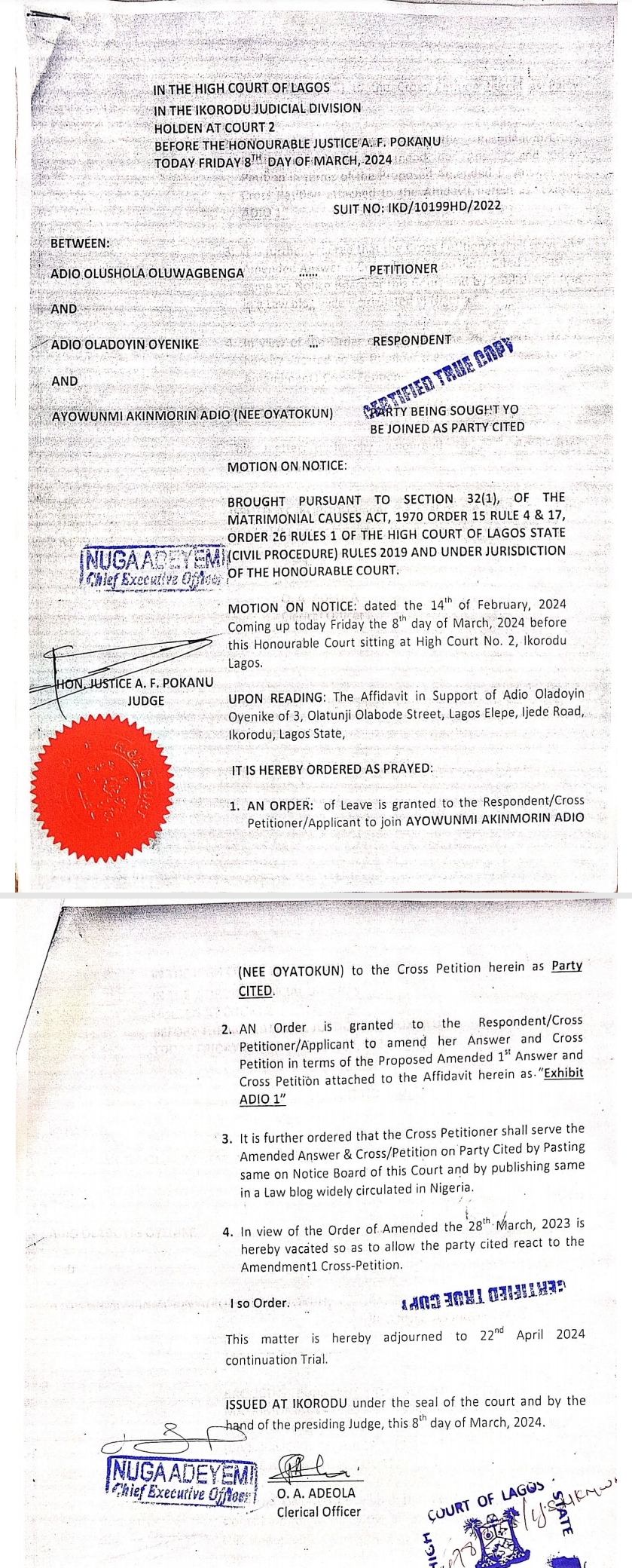
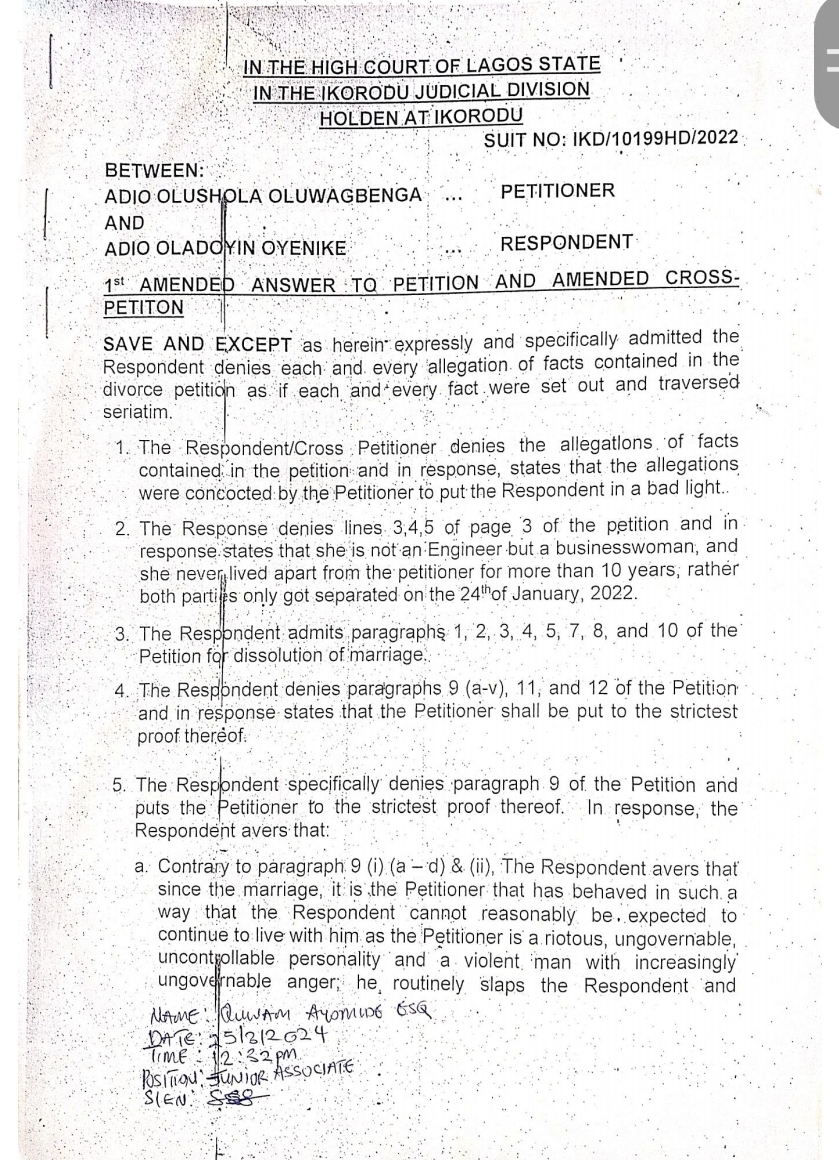
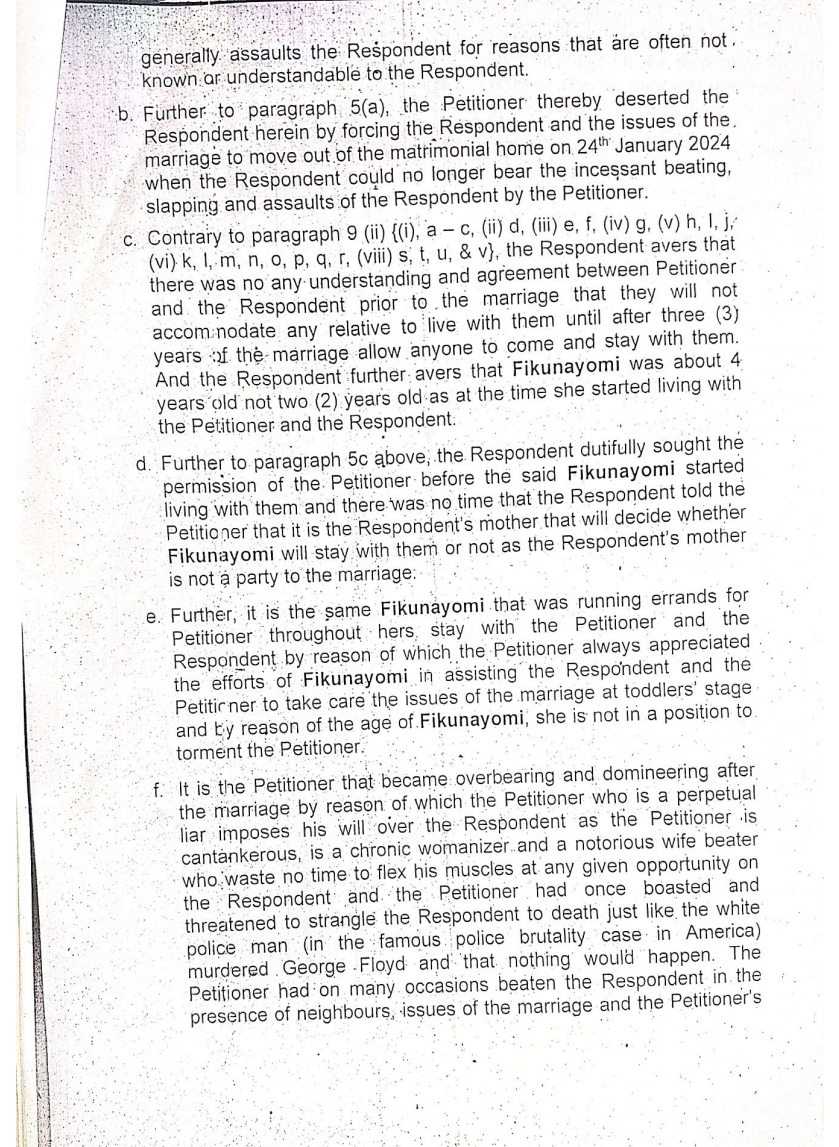
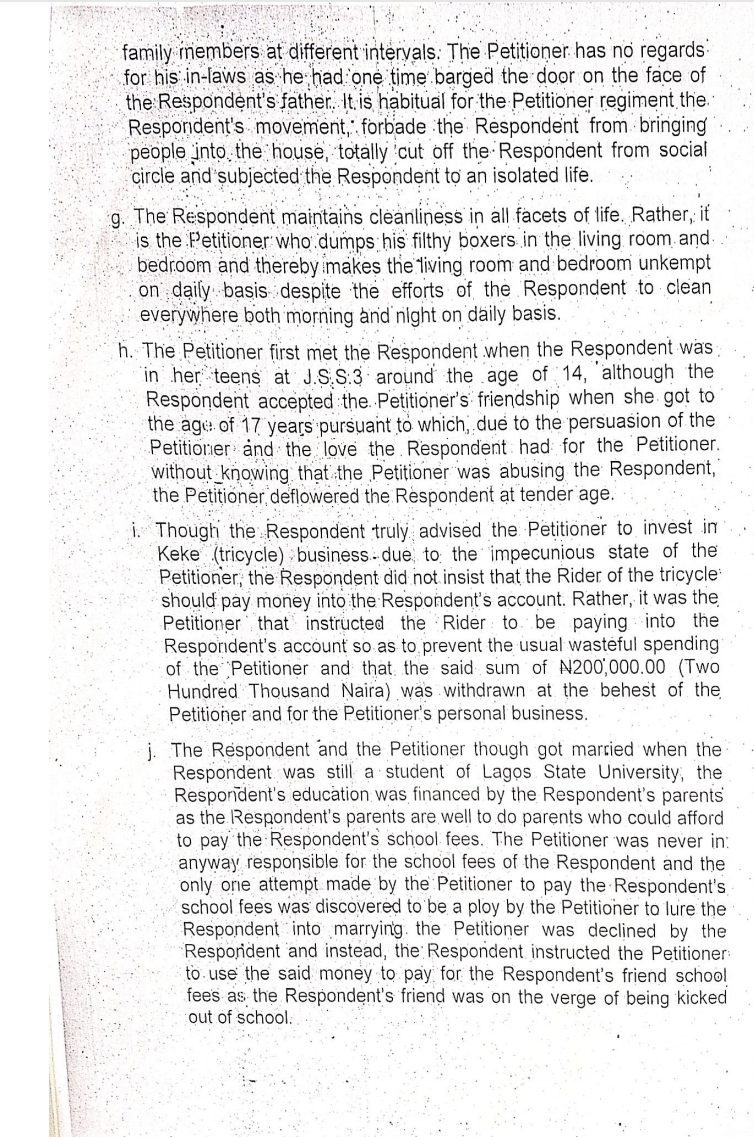









SUIT NO. IKD/10199HD/2022: ADIO vs. ADIO: ORDER FOR SUBSTITUTED SERVICE

Introduction
In recent times, there are growing debates as to whether a lawyer can depose to an affidavit for and on behalf of his client in a case he is handling. While some contend that a lawyer is forbidden from making depositions on behalf of his client, others are of the view that a lawyer, being a person familiar with the facts and circumstances of a case, could as well depose to an affidavit especially where the issues in controversy are contentious. But, what does the law really say?
Section 109 of the Evidence (Amendment) Act, 2023 provides that “any affidavit sworn before any judge, officer or other person duly authorized to take affidavits in Nigeria, whether in person or through audio visual means may be used in the Court in all cases where affidavits are admissible.” Similarly, Section 115(1) of the Evidence Act, 2011 provides that every affidavit used in the court shall contain only a statement of facts and circumstances to which the witness deposes, either of his own personal knowledge or from information which he believes to be true.
However, Rule 20 of the Rules of Professional Conducts (RPC) for Legal Practitioners, 2007 provides that a lawyer shall not accept to act in any contemplated or pending litigation where he knows or ought to reasonably know that he or a lawyer in his firm may be called or ought to be called as a witness. This is in spite of the clear provision of Section 175 of the Evidence Act, 2011 that declares all persons, competent to testify or give evidence in Court.
The rule in Akinlade v INEC
In Akinlade and Anor. V INEC &Ors. (2020) 17 NWLR 439 at 537, the Appellant’s counter-affidavit to a Motion on Notice filed by the 2nd Respondent was deposed to by one “Mubarak Imam” who was a legal practitioner in the law firm of Ahmed Raji & Co, counsel to the Appellant. The Supreme Court discountenanced the said counter-affidavit on the basis that it offended Rule 20 of RPC, 2017.
The Court of Appeal recently followed Akinlade v INEC in the case of Mr Nimideinbofa Matthew & Ors v Chevron (Nig.) Limited (2023) LPELR-59523(CA). In that case, it was held that “both the affidavit and the counter-affidavit relied upon by the parties on both sides were deposed to by legal practitioners who should not have done so, it is my view that there is no value to be placed on the affidavit or counter affidavit placed before this Court in the application argued. There was mutual, symbiotic and/or infectious abuse of the process of this Court by the parties on both sides”. In short, the affidavits in the case were discountenanced on the basis that they were deposed by lawyers representing the parties when the issue in controversy was contentious.
Nwite v PDP: The New Perspectives
Interestingly, in the case of Nwite v PDP (2023) 7 NWLR (pt. 1883) 357, counsel to the 3rd Respondent deposed to an affidavit at the trial court and same was held competent and admissible. The Appellant contested the admissibility of the affidavit by the trial court despite the ‘settled’ position of law in Akinlade v INEC. Curiously, the Supreme Court held that the Rules of Professional Conduct (RPC) do not render evidence given or deposed to by a legal practitioner in a client’s case inadmissible in the proceedings of Court. The Apex Court further held that they merely render such legal practitioner liable for professional misconduct, in contravention of the Rules. Indeed, this appears to be a clear departure from the celebrated case of Akinlade v INEC even though the Apex Court did not expressly reverse itself.
Order on the Lawyers Bookstore
The Law Lords of the Apex Court cannot be more correct in Nwite v PDP. By Rule 55 of the RPC, any perceived contravention of the rules is merely a professional misconduct that exposes the lawyer to punishment under the Legal Practitioners Act, 1975. Clearly, invalidating the affidavit cannot by any stretch of imagination be included as punishment when no law or rule provides for such. From this most recent decision in Nwite v PDP, it can be safely said that though it is not desirable for counsel to double as witness in a matter in which he is handling in Court, nothing in the RPC or the Evidence Act suggests that in the event of contravention, the affidavit should be rendered invalid or discountenanced. This naturally flows from the age-long principle recognized by our system of administration of justice that mistakes or even blunders of counsel may occur from time to time but it is wrong to deny a litigant the right to have his case decided on its merits because of the blunder, mistake, or, negligence of his counsel. See: Collins v. Vestry of Paddington (1880) 5 Q.B.D. 380, p. 381; Adeleke v. Awoliyi & Ors (1962) 1 SCNLR 401; (1962) 1 All NLR 260, p. 262; Ojikutu v. Odeh (1954) 14 W.A.C.A. 640
That said, it is also necessary to consider this issue in the context of some proceedings generally conducted and dispensed with by affidavit evidence, particularly garnishee proceedings. Generally, garnishees are mere custodians of funds belonging to the judgment debtor and as such, the brunt of the responsibility of the Judgment debtors should not be shifted or passed to the garnishees. The relationship is not one of Agent and Principal. It will therefore be unfair, unjust and inequitable to adopt an interpretation of the law in Mr Nimideinbofa Matthew & Ors v Chevron (Nig.) Limited (2023) LPELR-59523(CA) which invariably haunts the interest of garnishees.
Whilst the garnishees may have to review their processes to ensure that they are not caught in the web of needless and distracting appeals which can be prevented by simply filing affidavits deposed to by staff of the garnishees, we must note that insisting on the rule in Akinlade v INEC creates unnecessary bottlenecks in the businesses of garnishees. How do we address situations where the Service Manager who should be attending to Customers at a Branch of a Bank is now a frequent visitor of the Court Registry to depose to affidavits to show cause? The delays in customer service and conflict of job description will invariably affect business interest.
Conclusion
In the final analysis, the Evidence Act clearly allows anyone to depose to an affidavit of facts obtained, either of his own personal knowledge or from information which he believes to be true. Similarly, Section 87 of the Sheriffs and Civil Processes Act (SCPA) provides that “if the garnishee appears and disputes his liability, the Court, instead of making an Order that execution shall issue, may order that any issue or question necessary for determining his liability be tried or determined in any manner in which any issue or question in any proceedings may be tried or determined, or may refer the matter to a referee.
It is therefore submitted that the Courts must always be perceived to have done justice in every case by adopting the provision of Section 87 of the SCPA which provides for ordering the presence of the garnishee staff to aid the Court in the dispensation of justice. Where the affidavits are contentious in regular suits and proceedings, the position of the Supreme Court in Nwite v PDP should be adopted. The affidavit remains admissible and at best only raises issues of professional misconduct against the Counsel deponent.
Dunjoyin Adegboye is a Legal Officer at Keystone Bank Limited and Festus Ogun is a Dispute Resolution Lawyer at FOLEGAL, Lagos.

Art law encompasses various legal aspects related to creating, selling, and safeguarding art and cultural heritage. For artists, collectors, dealers, and other participants in the art world, understanding key contractual issues in Art Law is crucial and essential. Contracts play a pivotal role in the art world. They govern terms of sale, transfer of ownership, and the rights and obligations of parties involved.
A contract is a legally binding agreement between two or more parties that establishes the rights and obligations of each party involved. In the art industry, contracts play a crucial role in outlining the terms and conditions of various transactions, collaborations, and agreements. Contracts in the art industry cover a wide range of scenarios, such as the sale of artworks, commissioning of works, licensing of art, exhibition arrangements, and more.
Why Are Contracts Important When Dealing With Art
Contracts are essential in the art industry for several reasons:
Clarity: Contracts provide clear terms that both parties agree to, reducing the potential for misunderstandings and disputes. Clarity is important, for instance galleries and artists who enter into an exhibition agreement must be clear of what the terms are.
Protection: Contracts protect the interests of artists, collectors, galleries, and other stakeholders by outlining rights, responsibilities, and expectations. When parties enter into contracts, the rights and obligations of each party are clearly stated, therefore leaving no ambiguity.
Legal Enforceability: A well-drafted contract is legally binding and can be enforced in court if one party fails to fulfill their obligations.
Risk Management: Contracts can help mitigate risks by addressing issues such as intellectual property rights, payment terms, delivery timelines, and liability.
Professionalism: Using contracts demonstrates professionalism and seriousness in business dealings within the art industry.
Different types of contracts in the Art Industry
There are various types of contracts that artists, collectors, galleries, and other art industry stakeholders might encounter:
Sale Agreements: These outline the terms of the sale of artworks, including price, delivery, condition, and payment terms.
Commission Agreements: When an artist is commissioned to create a custom artwork, this contract specifies details such as the scope of the work, compensation, and deadlines.
Licensing Agreements: These agreements grant permission for others to use an artist’s work under specified conditions, such as reproducing an artwork for commercial purposes.
Exhibition Agreements: When an artist’s work is exhibited, the contract details the responsibilities of both the artist and the gallery or venue hosting the exhibition.
Consignment Agreements: Galleries might enter into consignment agreements with artists, specifying terms for displaying and selling artworks on behalf of the artist.
Collaboration Agreements: In cases of artistic collaboration, a contract outlines each collaborator’s contributions, rights, and responsibilities.
Contractual Issues In Art Law
In the art industry, several contractual issues may arise. This includes
Intellectual Property: Contracts should address who retains ownership of intellectual property rights, including copyright and reproduction rights.
Payment: Contracts must clearly outline payment terms, including the total amount, due dates, and methods of payment.
Delivery and Acceptance: Contracts should specify details about the delivery of artworks, inspection, and acceptance criteria.
Dispute Resolution: Including clauses for resolving disputes, such as through arbitration or mediation, can help avoid costly legal battles.
Termination: Contracts should outline conditions under which the contract can be terminated by the parties and the consequences of termination.
It’s important to note that while contracts provide a legal framework; their effectiveness depends on their clarity, completeness, and adherence to applicable laws and regulations. When dealing with contracts in the art industry in Nigeria, it’s advisable to consult with legal professionals who are knowledgeable about both contract law and the specific nuances of the art industry in the country.
For more information on Art Law, do post a comment or send us a mail via info@aocsolicitors.com.ng


Nigeria’s 2024 Bid-Round: Ensure Nigeria’s Net-Zero Emission Commitment
– Tolu Aderemi
An oil and gas expert, Tolu Aderemi, has emphasized the importance of competence, capacity, and patriotism in guiding Nigeria’s 2024 oil and gas bid round, which opened on April 29, 2024.
Aderemi, a Visiting Professor at Afe Babalola University and Partner at Perchstone & Graeys, LP highlighted the significance of meeting Nigeria’s OPEC quota of 1.38 million barrels per day.
According to him, “Statistics from the fourth quarter of 2023 show Nigeria’s struggle to meet its OPEC quota, with production levels falling below the target. The OPEC Monthly Oil Market Report (MOMR) for March 2024 revealed a decline in Nigeria’s output from 1.427 million barrels per day in January to 1.322 million barrels per day in February, attributed to challenges such as crude oil theft, insecurity, asset vandalism, and sabotage.
Despite these obstacles, Aderemi, who is also the Chairman, International Law Association (ILA) Arbitration Committee,
expressed cautious optimism about the success of the 2024 bid round, citing the government’s implementation of a robust Regulatory Action Plan (RAP) and a transparent bidding timetable.
He noted that the regulator has set out a robust, realistic and transparent bidding timetable and a credible data partner and that where it (the regulator) is faithful to its own processes, the exercise will not only be successful but will deliver increased foreign exchange revenue to Nigeria, improved job creation and create a robust and vibrant market with new technologies and infrastructural development.
“It is also bound to birth greater opportunities for indigenous players.
As the bid round progresses, Aderemi stressed the importance of bidders’ commitment to Nigeria’s net-zero emission target. He also raised concerns about market exits following the passage of the Petroleum Industry Act in 2021, urging the government to attract competent investors while ensuring transparency and sustainability in the sector,” he stressed.
However, Aderemi warned against potential pitfalls in the bid round, including forced mergers of bidders, allegations of favoritism, unrealistic signature bonuses, and inflated asset values, which could result in failure if not addressed.
In his final analysis, whilst Mr Aderemi praised government’s initiative and doggedness to consistently stimulate the Nigerian oil & gas market with robust and friendly legal and regulatory framework and urged the world to look at the new Nigeria and its market landscape under the President Bola Ahmed Tinubu’s business-friendly administration.
Lagos, Nigeria – The Nigerian Bar Association, Section on Business Law (NBA/SBL) is excited to announce the opening of registration for its highly anticipated 18th Annual Law Conference. Legal professionals are invited to register starting May 1st, marking the commencement of what promises to be another transformative event in the legal community.
Scheduled to take place from from the 26th to the 28th of June, 2024 at the Abuja Continental, Federal Capital Territory, Abuja, the NBA/SBL 18th Annual Law Conference themed survive and THRIVE is focused on discussions around emerging trend, insights, and innovative strategies for navigating and shaping the future of law.
In addition to offering valuable learning and networking opportunities, the conference will feature sponsorship opportunities specifically tailored for young lawyers. Lawyers with 0 to 3 years of post-call experience, not more than 25 years of age, and have paid for their 2024 Bar Practicing Fees (BPF) and NBA-SBL dues, are eligible to apply for these sponsorships.
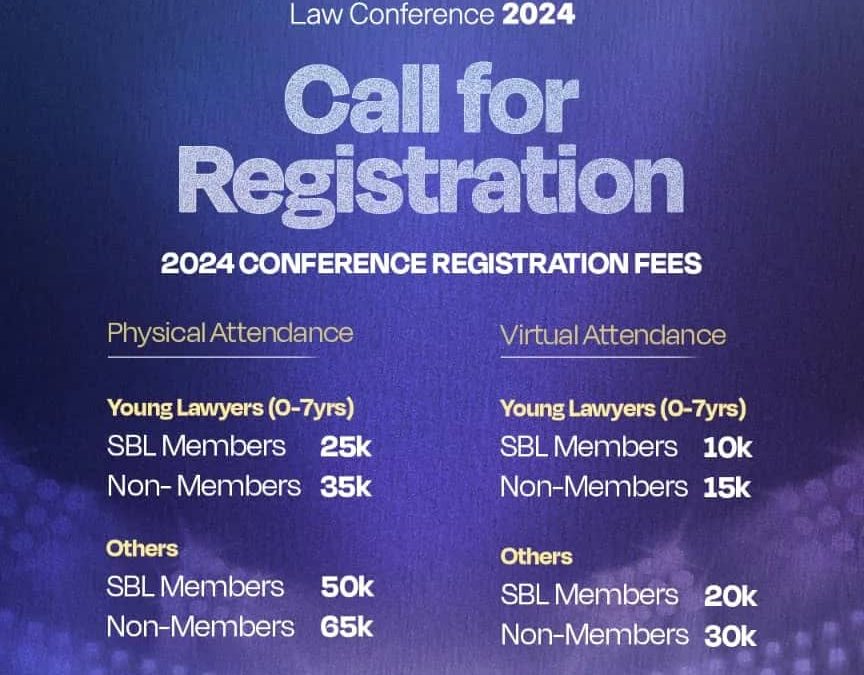
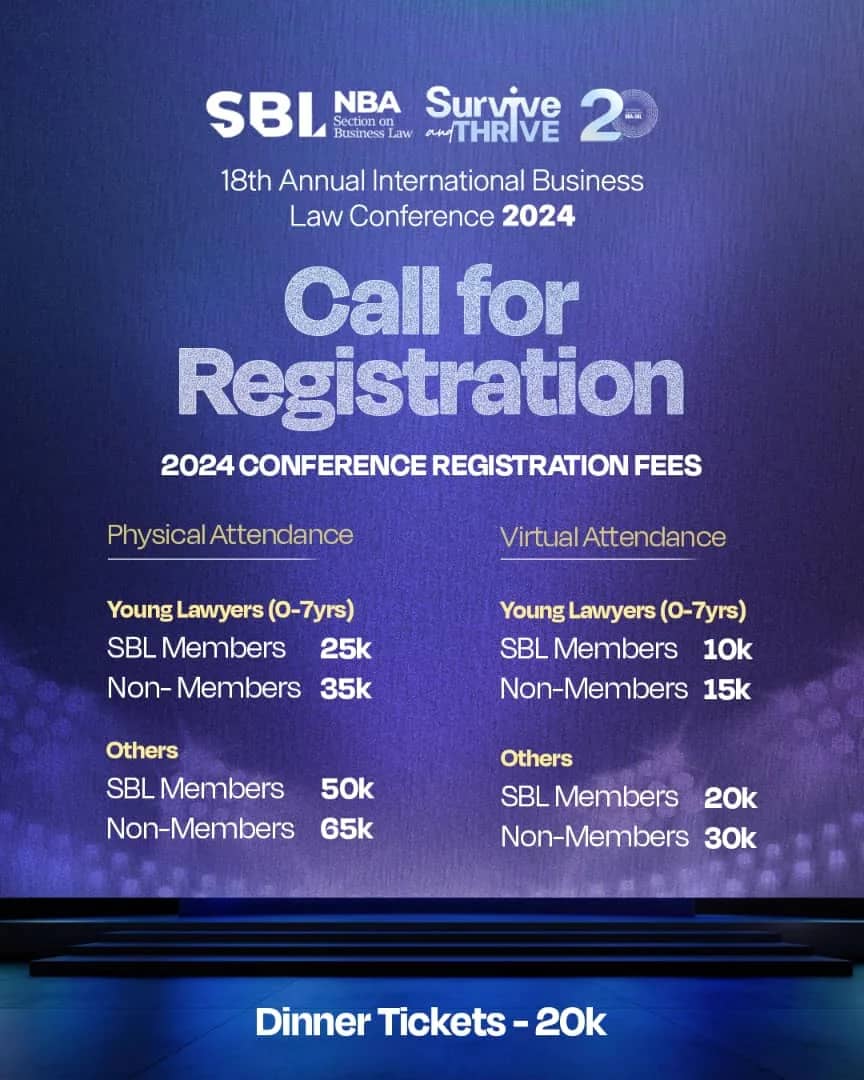
Registration fee for the NBA/SBL conference is as follows: Physical attendance for young lawyers with 0-7 years post-call experience who are members of the SBL are to pay the sum of N25,000 while Non-members are to pay N35,000. Practicing lawyers with more than 7 years post-call experience who belong to the SBL are to pay N50,000 while Non-members are to pay N65,000.
Virtual attendance on the flip side for young lawyers with 0-7 years post-call experience who are members of the SBL are to pay the sum of N10,000 while Non-members are to pay N15,000. Practicing lawyers with more than 7 years of experience who belong to the SBL are to pay N20,000 while Non-members are to pay N30,000. With dinner tickets slated for N20,000.
“We are thrilled to open registration for the NBA/SBL 18th Annual Law Conference and to introduce yet again sponsorship opportunities for young lawyers,” said Ose Okepu, Chair of the NBA/SBL Conference Planning Committee. “More details about these sponsorships will be shared shortly, so stay tuned for updates.”
Registration will be available exclusively through the official conference website, https://conference.nbasbl.org. Attendees can visit the website starting May 1st to secure their spot at this premier legal event. Early registration is encouraged to take advantage of special rates.
Don’t miss your chance to be a part of this transformative event. Register on May 1st and join us for an enriching experience at the NBA/SBL 18th Annual Law Conference.
For more information, please visit the NBA-SBL website at www.nbasbl.org or contact the Conference Secretariat at info@nbasbl.org. Also follow us on all social media platforms to stay updated. Please visit NBA-SBL on Instagram – @nbasbl and Twitter – @nbasblofficial.
************************************
About the NBA SBL: The Nigerian Bar Association Section on Business Law Is committed to advancing the practice of business law within the legal community. Through conferences, publications, and educational initiatives, NBA SBL provides a platform for legal professionals to stay informed and connected.


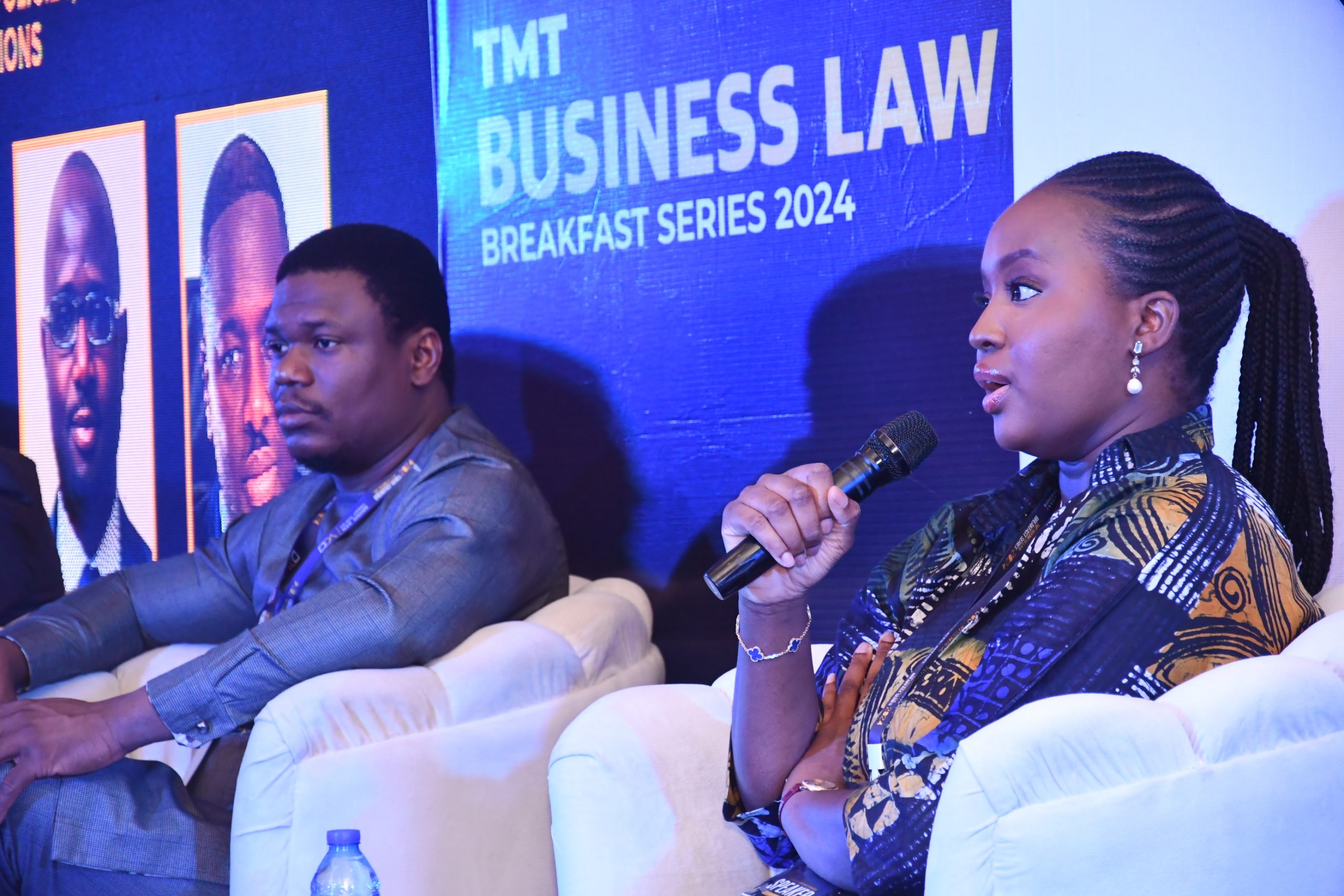
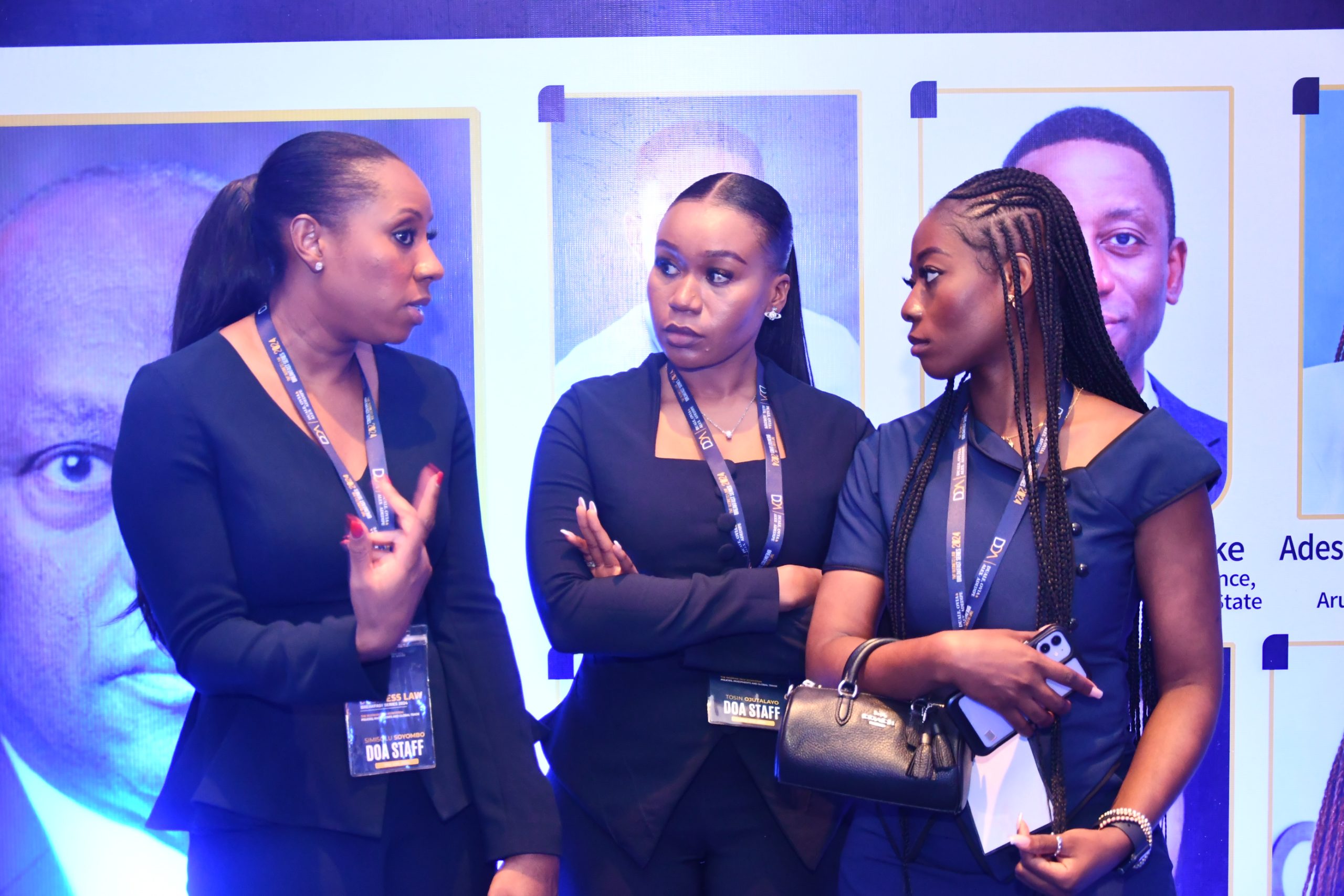
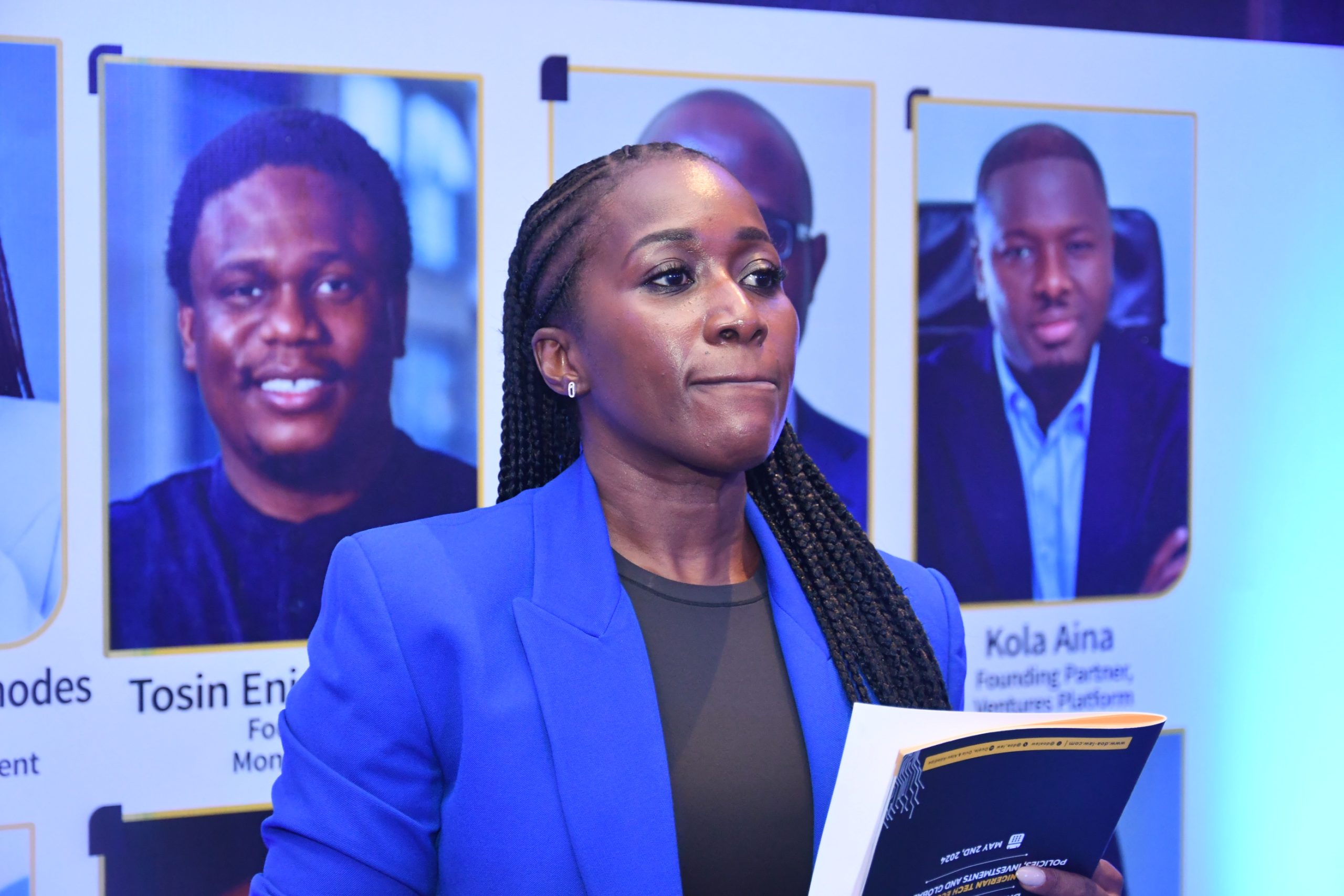
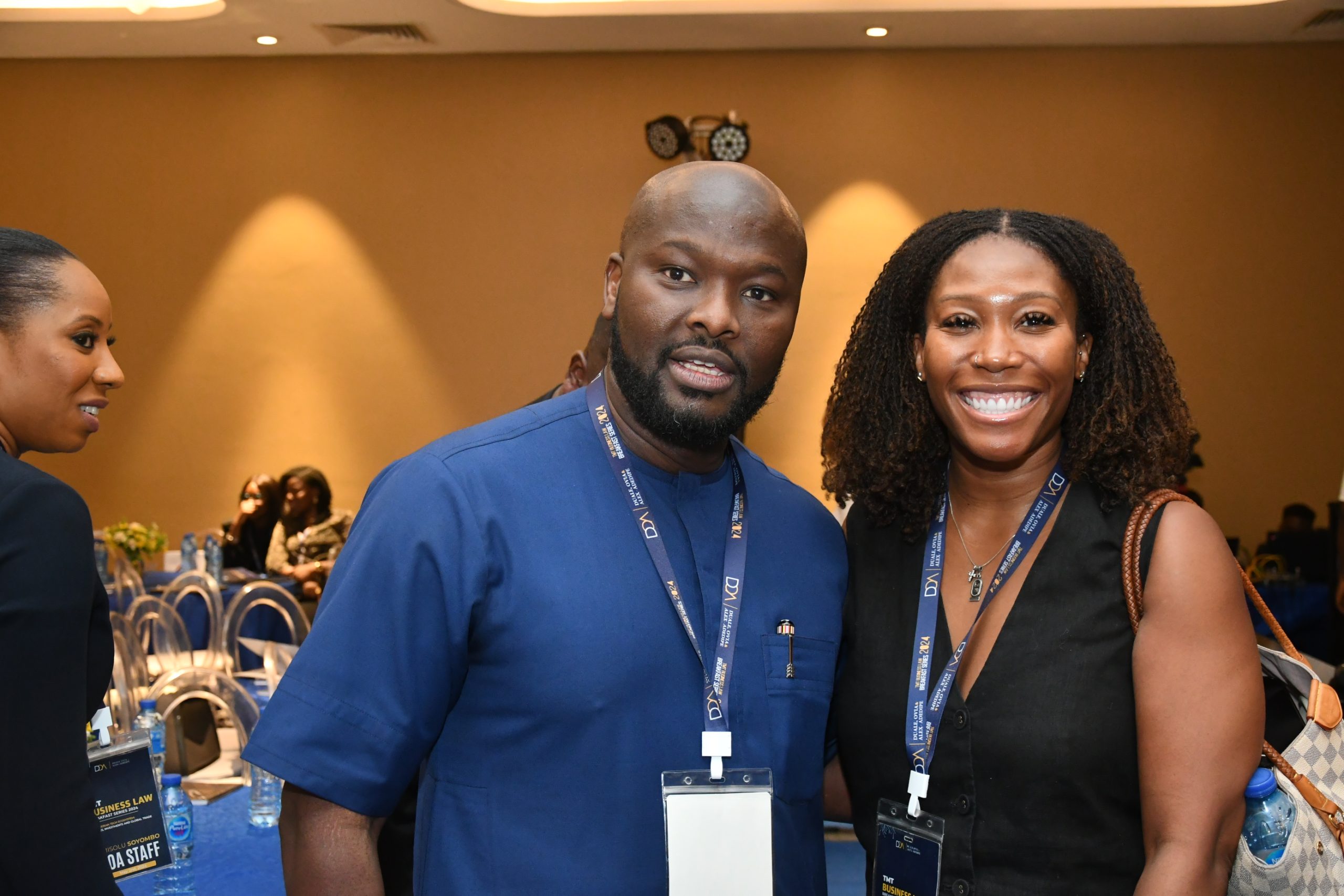
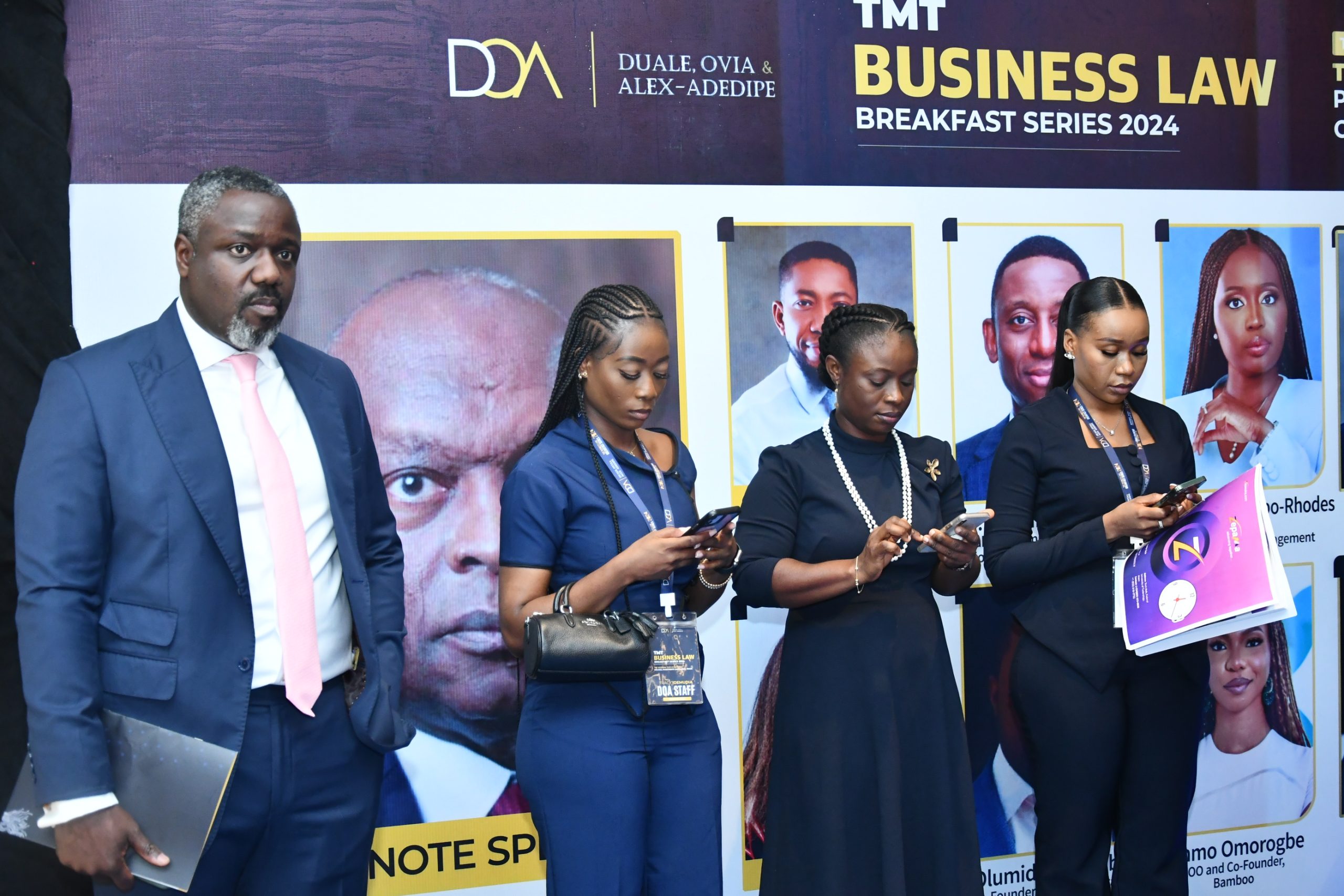
The event took place on the 2nd of May, 2024 at the Ebony Life Place, Victoria Island, Lagos State. The event opened with welcome speech and opening remarks by Adeleke Alex- Adedipe, Managing Partner, Duale, Ovia&Alex-Adedipe after which a keynote address was given by Chairman, ARCA Payment Limited. Upon conclusion of the keynote address, a fireside chat commenced. In this session Mr. kyari Abba Bukar was asked questions by Aruoture Oddiri “Rotus” regarding his business, experience, challenges and insights about technology and policies. The members of the audience were also given the opportunity to ask questions.
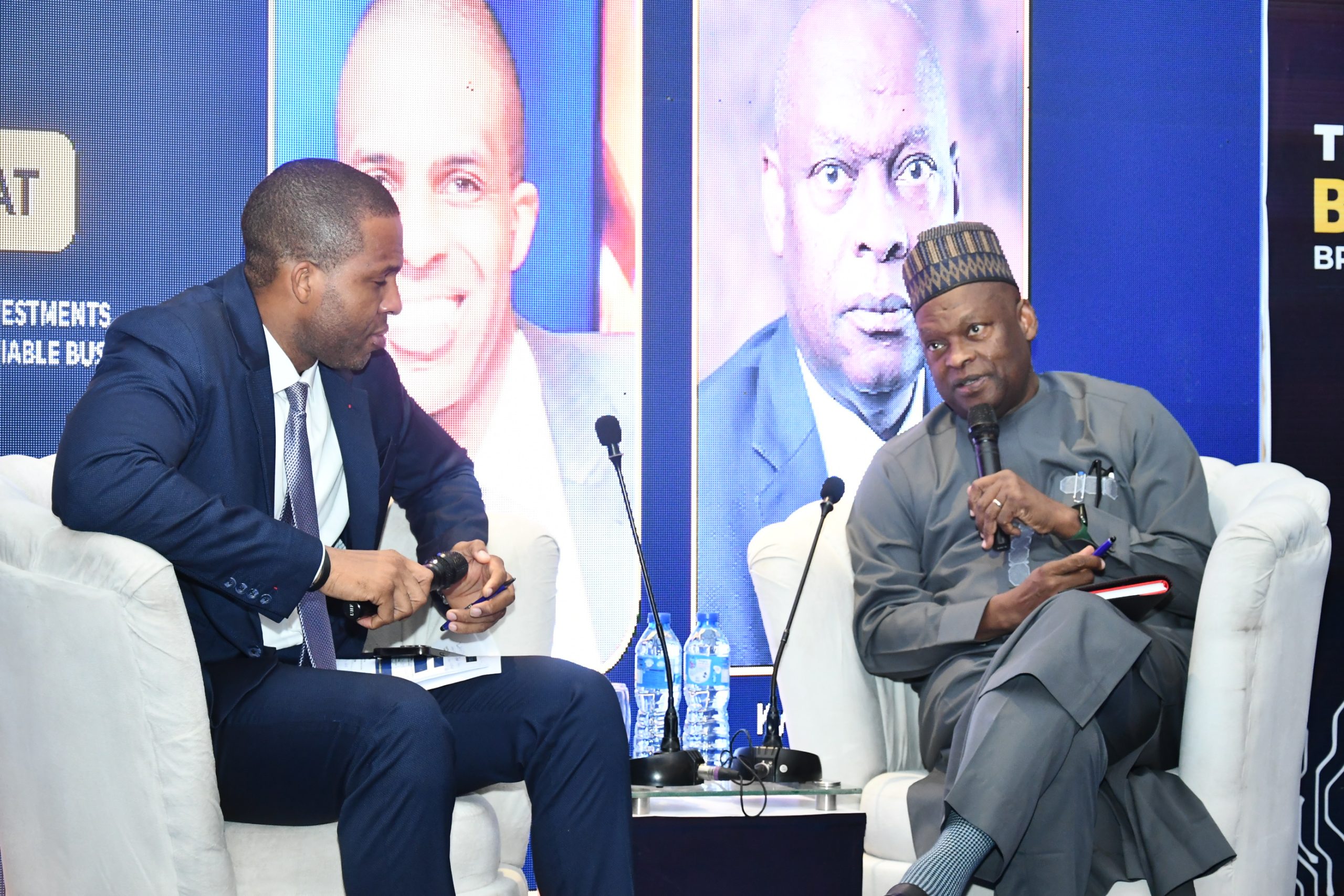
Subsequently, the first panel discussion began following a brief interlude for tea. This panel comprised esteemed figures and emerging leaders within the financial technology realm, including Olatubosun Alake, the Honourable Commissioner for Science, Innovation, and Technology; Adesuwa Okunbo-Rhodes, the Founder of Aruma Capital Management; Kola Aina, the Founding Partner of Ventures Platform; Femi Ogunjimi, the Co-Founder of Cardinal Stone Capital Advisers; and Tosin Eniolorunda, the Founder of Moniepoint. This session was moderated by Adeniyi Duale, Partner at DualeOvia&Alex-Adedipe.

The interaction commenced with the moderator inviting Adesuwa to share insights on potential reforms for venture capital to fortify the ecosystem. Adesuwa highlighted significant declines in venture capital and advocated for leveraging local investments as a remedy. She proposed the establishment of a government-backed venture capital fund to bolster the economy, suggesting that untapped funds could be redirected for this purpose. Additionally, Adesuwa recommended implementing a framework for Local Capital Mobilization.
Tosin Eniolorunda was tasked with offering advice to startups. He began by stressing that the primary goal of any startup, like any other company, is profitability to provide dividends or returns to investors. He asserted that a startup must offer a product or service that resonates with customers and identify an industry to target for sales. He recommended that startups generate significant publicity for their offerings and ensure they have a plan to provide returns to investors while also focusing on the growth of their products and services.

Femi addressed the hurdles faced by Nigerian tech startups, emphasizing both internal and external challenges. He focused particularly on internal obstacles, emphasizing the importance of business model and strategy. He challenged the common narrative among founders, which typically revolves around identifying problems, developing solutions, and expecting product adoption. Instead, he proposed key questions that businesses should consider at the outset, such as how to generate revenue, the timeline for profitability, revenue projections, scalability of the product or service, and the business culture. He believed that addressing these questions comprehensively would not only help businesses thrive but also mitigate challenges encountered during the business-building process.
The moderator directed a question about mentorship to Kola Aina, who personally expressed his divergence from the concept for entrepreneurs. However, Kola emphasized the importance of entrepreneurs recognizing that capital alone is insufficient for business success; they also need to establish advisory boards and cultivate a supportive community. He concluded by highlighting the correlation between entrepreneurial promotion and business success.
The Honourable Commissioner was then asked to elaborate on the Lagos state government’s contributions to venture capital and startups. He explicitly mentioned that the government has awarded grants to 70 startups across various sectors and has consistently provided a launchpad for startups to prepare them for venture capital investments.
Subsequently, the panelists addressed another round of questions. Tosin discussed the challenges faced by startups during the scaling-up process, which encompassed regulatory hurdles, compliance issues, funding, talent acquisition, and the impact of external factors like the “Japa wave” and manipulations by crypto operators, prompting government policy shifts affecting fintech startups.
Kola tackled the measures required to bolster investor confidence in Nigeria’s fintech sector. He stressed the necessity of creating a robust investment environment in Nigeria to attract foreign investors and instill faith in startups. The first panel session concluded with an interactive question-and-answer segment involving both panelists and audience members.
The second panel session was moderated by Nichole Yembra, the founding partner of The Chrysalis Company. This panel featured Olumide Soyombo, the Co-founder of Voltron Capital and Bluechip Technologies Limited; Yanmo Omorogbe, the COO and Co-Founder of Bamboo; Olu Oyinsan, the Managing Partner of Oui Capital; Dr. Femi Kuti, the CEO of Reliance Health; and Tosin Faniro-Dada, a Partner at Breega. The session focused on the theme “Show me the money,” where panelists shared their experiences in securing funding for their startups.
Yanmo encouraged startup owners to consider several key factors to effectively reach their target customers. These factors include bringing on board founders with prior experience, understanding the market and the needs of the target audience, evaluating competitors, selecting co-founders who complement each other, and recognizing the significance of timing. Additionally, Yanmo advised entrepreneurs to pitch their ideas to themselves first before presenting them to others, emphasizing the importance of self-assessment in gauging investment potential.

Tosin addressed the question of “How to navigate choosing the right partners and attracting investors,” echoing Yanmo’s emphasis on timing. He also underscored the importance of thoroughly evaluating potential partners and investors to ensure alignment with the startup’s vision and goals.
Olu Oyinsan shared his experience as a startup owner, highlighting the importance of taking calculated risks despite unforeseen challenges. He emphasized that before anything else, startup founders must determine if their venture is necessary, assemble a capable team, and define what success looks like for the company. Answering these fundamental questions guides critical decision-making for startup owners.
All panelists emphasized the importance of clarity in defining the problem a startup aims to solve, crafting a compelling narrative to attract investors, and ensuring the business can generate returns for its investors. The event concluded with closing remarks from Soibi Ovia, a Partner at Duale, Ovia & Alex-Adedipe.
See more photos below;













Advantages Of DIY Contracts To Entrepreneurs
DIY contracts, or “Do-It-Yourself” contracts, are agreements that individuals can create and customize on their own without necessarily hiring a lawyer. These are legally binding agreements that individuals draft using templates or guides. They are designed to be straightforward enough for non-lawyers to understand and use, while still providing the necessary legal protection. DIY contracts can cover a variety of interactions, from business agreements to personal arrangements.
DIY contracts are particularly useful for simpler agreements where the stakes are not excessively high and the terms can be clearly defined by the parties involved. However, for more complex transactions or where significant assets or risks are involved, it’s advisable to seek professional legal advice.
Key advantages of DIY contracts include:
1. Cost-Effective: Entrepreneurs often operate with limited budgets, especially in the early stages of their business. DIY contracts can save on legal fees as they can be drafted without the immediate need for an expensive attorney.
2. Time-Saving: DIY contracts can be created using templates and tailored to specific needs, which is much faster than starting from scratch or waiting for a lawyer to draft them.
3. Flexibility: Entrepreneurs can customize DIY contracts to suit the unique aspects of their business dealings, allowing for greater control over the terms and conditions.

4. Legal Protection: Even a simple contract can provide legal protection by clearly outlining the rights and responsibilities of all parties involved.
5. Clarity and Prevention of Disputes: Contracts help prevent misunderstandings by making the terms of a business relationship clear from the outset².
6. Professionalism: Having a written contract can enhance the professional image of an entrepreneur and demonstrate seriousness about their business.
7. Building Trust: Contracts can help build trust between parties by showing a commitment to honor the agreed terms.
8. Reference Point: They serve as a reference for the obligations and expectations of each party, which can be particularly useful in long-term business relationships.
9. Risk Management: By defining the scope of work, payment terms, and other key elements, contracts help manage and minimize business risks.
10. Enforceability: A well-drafted contract can be enforceable in court, providing a remedy if one party fails to meet their obligations.
These advantages make DIY contracts a valuable tool for entrepreneurs looking to establish clear, legally sound, and cost-effective business arrangements.
Legalnaija’s tailor-made DIY agreements are for entrepreneurs. Our legal templates save you time and money, while ensuring your ventures are protected. Get started today and feel the confidence of sound legal backing!
Empower your business with #Legalnaija’s DIY. Follow this link to select your template https://app.legalnaija.com/shop/templates
#InnovateLegally #DIYLaw

Are you in need of legal documents but dread the thought of hefty legal fees? Worry no more! At LegalNaija (www.legalnaija.com), we empower you with the tools to Do-It-Yourself!
For Individuals: Whether you’re renting a property, protecting your ideas or entering a personal contract, our platform offers a plethora of templates that you can customize to suit your needs. It’s legal made easy, accessible, and affordable!
For Businesses: From employment contracts & more, our extensive library has got you covered. Save time and resources by drafting your own legal documents with confidence, backed by the expertise of LegalNaija.
Why Choose LegalNaija?
– User-Friendly: Our platform is designed for ease of use. No legal jargon, just straightforward guidance.
– Cost-Effective: Cut down on legal expenses without compromising on quality and compliance.
– Instant Access: Get your documents ready in minutes, not days!
Take control of your legal needs today. Visit www.legalnaija.com and start crafting your documents like a pro!
@Legalnaija

ICSAN Lagos State Chapter gets new Chairman and Executives
Lagos State Chapter of the Institute of Chartered Secretaries and Administrators of Nigeria (ICSAN), ushers in a New Chairman and Executives.
Last weekend, the Lagos State Chapter held the Investiture Ceremony of its 12th Chairman, Efosa Ewere, FCIS, and induction of the Executive Committee Members at Radisson Blu Anchorage, Victoria Island, Lagos
The formal event Chaired by Mr. Olatunde Busari, SAN, FCIS, C.Arb was attended by seasoned governance professionals including members of the Governing Council of Institute of Chartered Secretaries and Administrators of Nigeria (ICSAN) and Non- members.
Busari praised Ewere’s attributes of discipline, hard work and commitment to excellence which he said remained consistent through the years he worked with her in various professional capacities.
Mr. Tolu Odukale, a partner and Head of Governance, Risk and Compliance at the Lagos office of KPMG Advisory Services delivered the keynote address themed, “The Triad of Effective Governance: Engage, Empower and Excel,”
Highlighting the germane role of effective governance to business growth and sustainability, Odukale charged members of corporate boards to deploy these tripartite structure of engagement , empowerment and excellence in the strategic governance of their respective organisations.
In her address, the President Institute of Chartered Secretaries and Administrators of Nigeria (ICSAN) and Chairman of the Governing Council, Mrs. Funmi Ekundayo, FCIS, urged members to continue to promote professionalism and ethical standards ICSAN represents.
Congratulating Ewere and the newly inducted executive committee members, Ekundayo expressed a strong conviction that Ewere was capable of leading the Lagos Chapter to achieve greater strides as the flagship chapter.
She advocated for increased collaboration among the different chapters of ICSAN for the benefit of the institute.
In her acceptance speech, the 12th Chairman of ICSAN Lagos Chapter, Ewere, acknowledged the strong foundation laid by past leaders of the Lagos State Chapter and pledged to grow the Lagos Chapter by strengthening capacity of members across all cadres, and promoting knowledge of corporate governance to the grassroots.
High points of the ceremony included the decoration of the 12th Chairman and Oath taking of Allegiance by the EXCO members-
Adebola Babatunde, FCIS – Vice Chairman
Chief Adewale Adeniji, ACIS – Honourary Secretary
Clementina Ramsey-Osere, ACIS- Treasurer
Dauda Amedu Young-David, ACIS- Financial Secretary
Julie Bassey, ACIS – Mobilisation Secretary
Temidayo Odulaja, FCIS – Social Secretary
Irene Attoe, ACIS – Publicity Secretary
Damilola Akinpelu ,ACIS- Assistant Honourary Secretary
Oyekunle Olunukola Idowu, ACIS- Assistant Financial Secretary
Ufuoma Mamoke Ovesuor, ACIS – Assistant Publicity Secretary
Oladoyin Onanuga, ACIS – Assistant Mobilisation Secretary
Alaba Ekundayo, FCIS – Ex-Officio
We bid the 12th Chairman Ms. Efosa Ewere FCIS and the EXCO hearty Congratulations and a successful tenure.

Why Legal Agreements and Proper Records are Essential, Even Among Friend
When entering into business with friends, it’s easy to rely on trust and verbal agreements. However, the importance of formalizing such arrangements through legal agreements and maintaining proper records cannot be overstated. Here’s why:
Clarity of Terms: Legal agreements ensure that all parties have a clear understanding of their rights and obligations. This clarity prevents misunderstandings that could strain relationships.
Protection of Interests: Contracts protect the interests of all involved. They serve as a safeguard against unforeseen circumstances, ensuring that personal relationships do not cloud business judgments.
Dispute Resolution: Should disagreements arise, a written agreement provides a framework for resolution. It outlines the agreed-upon terms and can prevent costly legal battles.
Professionalism: Maintaining proper records and legal agreements reflects a professional approach to business. It demonstrates respect for the venture and the individuals involved.
Future Growth: As businesses grow, the need for formal documentation becomes even more critical. Early adoption of this practice sets a strong foundation for future expansion.
Remember, friendships are precious, and so are your business endeavors. Protect both by insisting on proper legal documentation, no matter how close you are with your business partners.
If you need to document your business dealings with friends or others, you can create, customize and download your agreements in less than 5 minutes using our automated contracts available via this link: https://app.legalnaija.com/shop/templates
#LegalAgreements #BusinessEthics #FriendshipAndBusiness