by Legalnaija | Jun 28, 2024 | Blawg
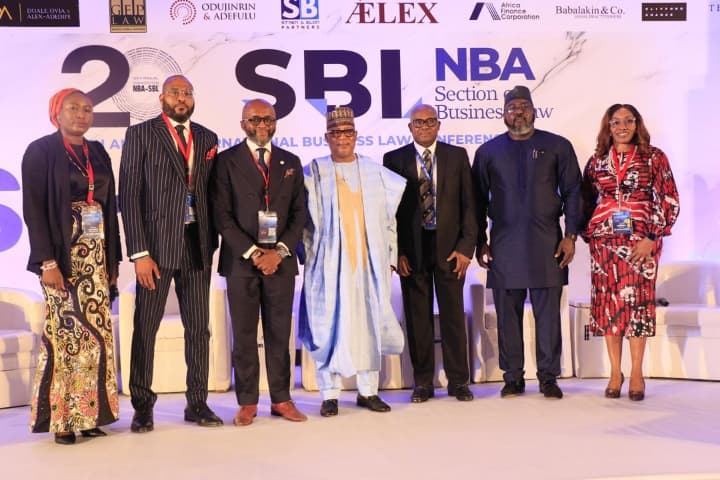
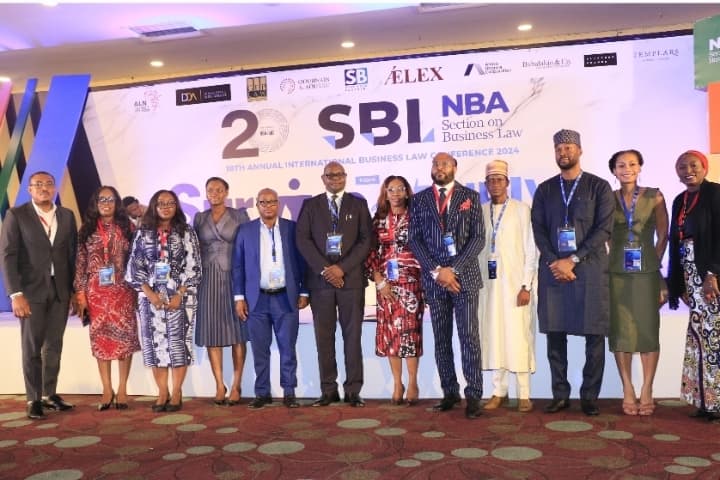
The Nigerian Bar Association Section on Business Law (NBA-SBL) continued its 18th Annual International Business Law Conference on the 27th of June, 2024, marking the first full day of the event. Themed “Survive and THRIVE,” the conference is designed to equip legal practitioners and businesses with the tools and knowledge to navigate the complexities of the modern economic landscape.
The event began with a welcome address from the CPC Chair, Mr. Ose Okpeku. In his opening remarks, Mr. Okpeku emphasized that “Survive and THRIVE” is not just a theme but a positive affirmation and a mantra. He highlighted the organization’s ongoing efforts to create value for its members, ensuring they not only survive but thrive. He urged the speakers to provide honest and critical insights that attendees could use to develop strategies for success.
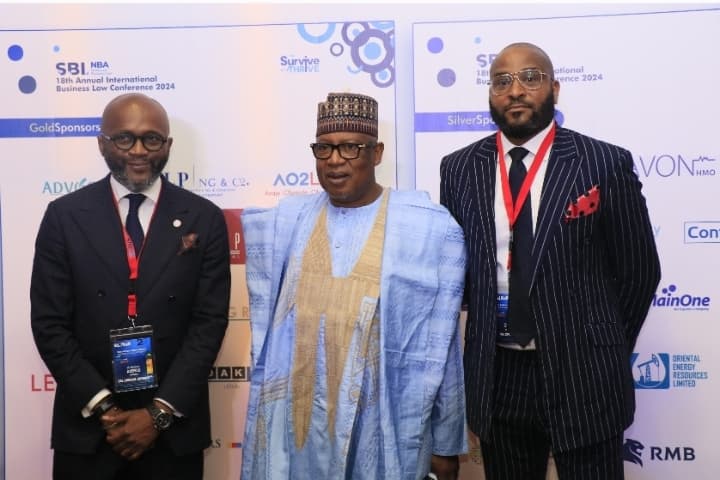
Following the welcome address, a keynote address was delivered by H.R.H. Dr. Sanusi Lamido Sanusi, OON, represented by Alhaji Suleiman Barau, OON. Dr. Sanusi praised the conference theme, noting its relevance in today’s economy. He discussed the roles of government, businesses, and individuals in fostering survival and growth, emphasizing the need for a mindset shift and cultural change. He also highlighted the importance of cost management in financial planning and encouraged businesses to explore untapped opportunities.
Next, Dr. Tayo Aduloju, CEO of NESG, delivered a guest speech. Dr. Aduloju stressed the importance of delivering measurable and tangible outcomes that positively impact citizens. He noted that for organizations to thrive in this economy, they would need to first stabilize; and for their ideas to yield results, it would need to be properly sequenced.
Following this speech were plenary sessions which covered a range of critical topics:
Plenary One: Capital Markets – Reviving the Nigerian Economy: The Capital Markets to the rescue. This was moderated by Ms. Olubukola Olabiyi, the session featured discussions on reviving the Nigerian economy through capital markets, with insights from experts including Ms. Ummahani Amin, Ms. Mabel Okereke, Ms. Abiola Adekoya, and Ms. Frana Chukwuogor.
Plenary Two: Cultivating prosperity: Is Agriculture our lifeline? This session was moderated by Mr. Fidelis Adewole, this session explored strategies and banking infrastructures that can be adopted to promote agricultural storage in Nigeria. Speakers included Dr. Kabir Yusuf, Sen. Saliu Mustapha, Mr. Aminu Nyako, and Ms. Affiong Williams.
Plenary Three: Tech & Innovation: Twin tools for surviving and thriving. This session, moderated by Mr. Basil Udotai, focused on how technology and innovation can help legal practitioners and businesses survive and thrive. Panelists included Mr. Adeleke Alex-Adedipe, Mr. Kazeem Oladepo, Mr. Muyiwa Matuluko, and Ms. Sumbo Akintola.
Plenary Four: Legal Practice Management: Prospects and challenges for legal practice in Nigeria. Moderated by Mrs. Rebecca Ebokpo, this session addressed the prospects and challenges of legal practice in Nigeria. Attendees were urged to work towards offering so much value in their career such that it meets international standards. Esteemed speakers such as Mr. George Etomi, Ambassador Yonov Fred Agah, Ms. Taiwo Afonja, and Mr. Defolu Olufon shared their perspectives on this.
The day concluded with the recognition of sponsors, closing remarks, and the much-anticipated “Lawyers Got Talent 2.0,” which showcased the diverse talents within the legal community.
As the conference progresses to Day 2, which doubles as the final day, participants can anticipate more insightful discussions, breakout sessions, and networking opportunities. The NBA-SBL remains committed to providing a platform for legal professionals to exchange knowledge and ideas, fostering growth and innovation in the field of business law.
For further information and updates on the conference, visit the NBA-SBL website at www.nbasbl.org or contact the Conference Secretariat at info@nbasbl.org. Follow us on social media platforms to stay updated. Please visit NBA-SBL on Instagram – @nbasbl and Twitter – @nbasblofficial.

by Legalnaija | Jun 27, 2024 | Blawg

As legal professionals, our ability to communicate effectively through written documents and oral advocacy is paramount. Whether you’re drafting contracts, motions, or presenting your case in court, honing your legal writing and advocacy skills is essential.
Legal writing is any type of writing within the legal profession that aims to convey legal information to others. It is characterized by clarity, conciseness, and accuracy. Good legal writing offers several advantages:
Credibility: Clear, well-structured writing enhances your professional reputation.
Effective Communication: It ensures your arguments are understood by judges, lawyers, and clients.
Winning Cases: Precise writing reduces ambiguity, increasing your chances of success.
Client Attraction: Demonstrating legal expertise through writing can attract clients.
Let’s dive into some practical tips:
a. Clarity and Precision:
– Know Your Audience: Consider who will read your document—clients, judges, or opposing counsel. Use plain language and avoid jargon.
– Be Concise: Eliminate unnecessary words. Short sentences are powerful.
– Structure Matters: Organize your document logically. Use headings, subheadings, and bullet points.
b. Legal Research:
– Thoroughness: Research extensively to support your arguments. Use reliable sources.
– Cite Properly:Follow citation rules (e.g., Bluebook for legal citations).
c. Persuasive Writing:
– Issue Framing: Clearly state the legal issue. Use a concise question format.
– Rule Application: Apply legal rules to the facts. Explain how they support your position.
– Analogies and Precedents: Use relevant cases or analogies to strengthen your argument.
– Counterarguments: Address opposing viewpoints. Show why they fail.
Remember, legal writing and advocacy are skills that improve with practice. Seek feedback, learn from experienced lawyers, and adapt your approach based on the context. To get more resources for your legal practice, visit the lawyers online bookstore www.legalnaija.com/store
@Legalnaija
by Legalnaija | Jun 27, 2024 | Blawg
NBA SBL Kicks Off 18th Annual International Business Law Conference with Grand Opening Nigh
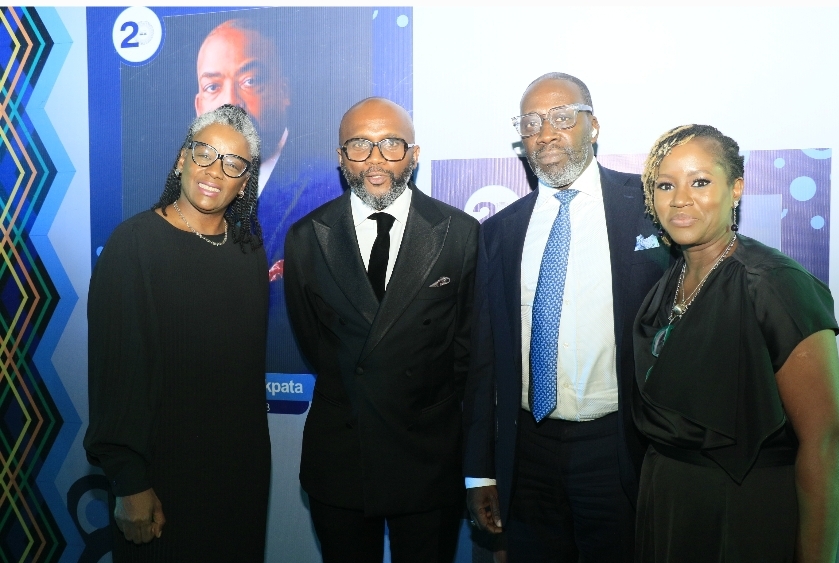
The Nigerian Bar Association Section on Business Law (NBA-SBL) commenced its 18th Annual International Business Law Conference on the 26th of June, 2024, marking the beginning of an event that promises to set new benchmarks in the legal profession. Themed “Survive and THRIVE,” this year’s conference is a beacon for legal practitioners and businesses navigating the complexities of the modern economic landscape.
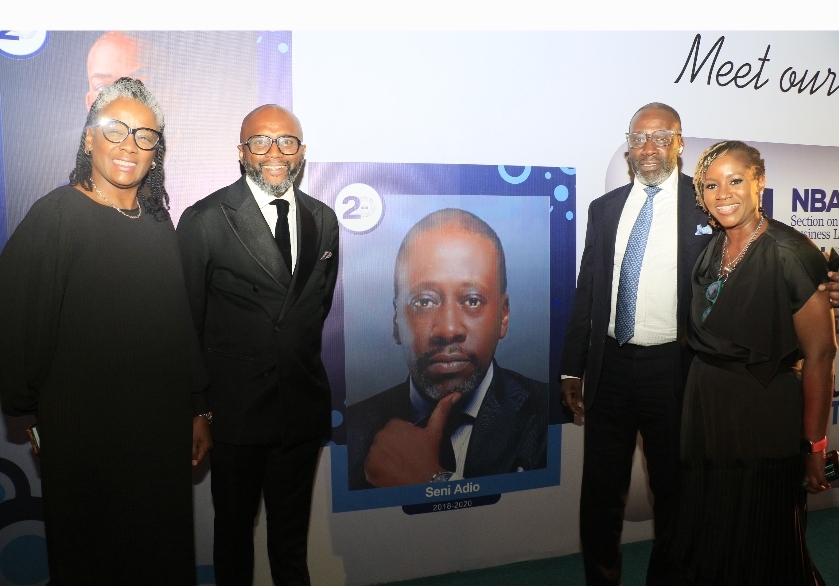
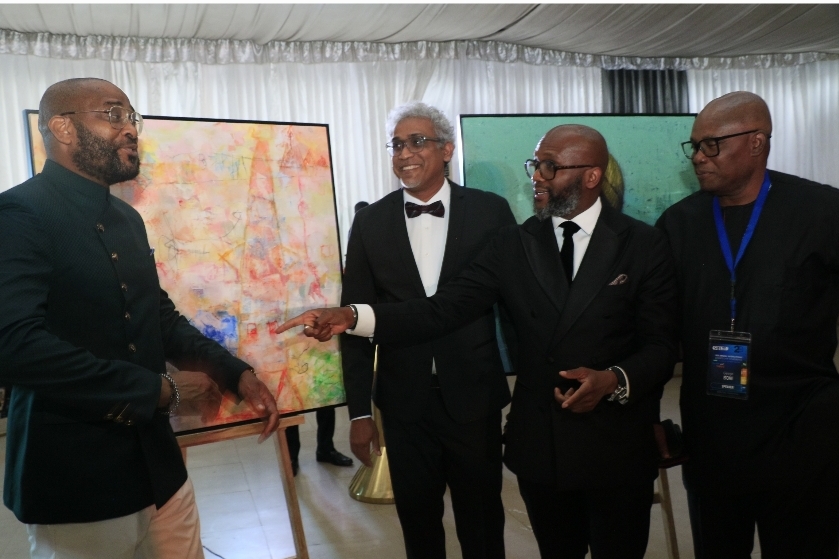
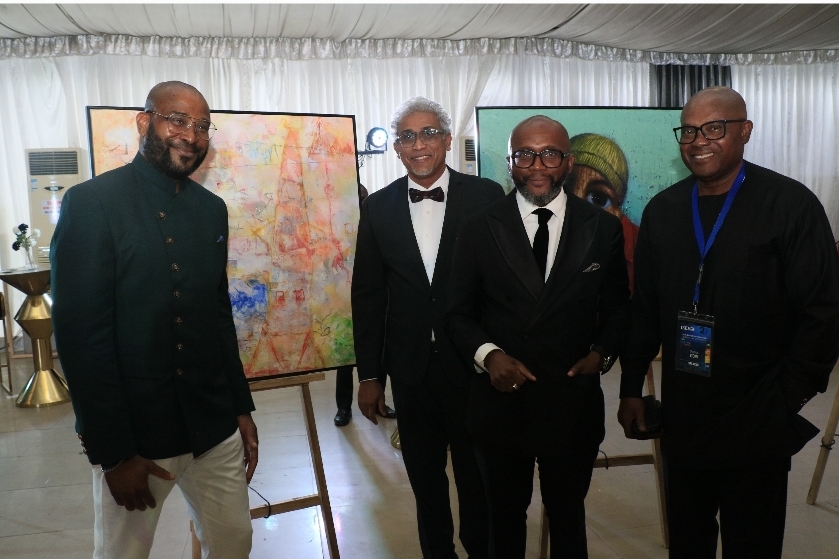
The opening night, held at the Rainbow Event Marquee, was a celebration of art, heartfelt speeches, and intellectual exchange. The evening began with a stunning art exhibition, formally opened by Mr. Gbenga Oyebode, represented by Olujoke Aliyu. Attendees were treated to a vibrant display of creativity, setting a sophisticated tone for the events to follow.
Following the exhibition, SBL Chairman Dr. Adeoye Adefulu delivered a welcome remark. He emphasized the importance of survival in the face of challenges, stating, “Survival is not a dirty word. People undermine the importance of survival, especially given the challenges we face as a nation.” Dr. Adefulu urged lawyers and legal practitioners to adopt tactical approaches to surviving and thriving in the evolving landscape.
The evening continued with remarks by NBA President Y.C Maikyau SAN, who highlighted the necessity of resilience and foresightedness implicit in the theme “Survive and THRIVE.” He added, “We only survive to thrive,” encouraging attendees to remain purposeful and focused.’’
Next, the Attorney General of the Federation/Chief Justice of Nigeria, Mrs. Jumoke Oduwole, delivered a goodwill message. She urged legal practitioners to leverage recent key legislations, such as the Business Association Act signed into law in February 2023, and participate in ongoing reforms like the Omnibus Bill 2.0. She emphasized the importance of collaboration in supporting business reforms.
The highlight of the evening was the conference dinner speech by Mr. Ademola Akinrele SAN. Mr. Akinrele reflected on the high standards of the legal profession historically and called for unity among practitioners. He encouraged resilience and unity, stating, “The only basis to have business reforms is unity. If we show messianic zeal and a sense of togetherness, we will be surprised at the quantum of reform that can be achieved in Nigeria.”
The evening concluded with a sumptuous three-course meal, networking opportunities, a vote of thanks expressing gratitude to all participants and organizers, and an after-party allowing guests to unwind and celebrate the beginning of this significant event.
As the conference progresses, attendees can look forward to a series of panel discussions, plenary sessions, breakout sessions, and more keynote speeches from reputable individuals.
For further information and updates on the conference, visit the NBA-SBL website at www.nbasbl.org or contact the Conference Secretariat at info@nbasbl.org. Follow us on social media platforms to stay updated. Please visit NBA-SBL on Instagram – @nbasbl and Twitter – @nbasblofficial.
by Legalnaija | Jun 26, 2024 | Blawg
Join the Excitement at the NBA 2024 Annual General Conference Sports Events!
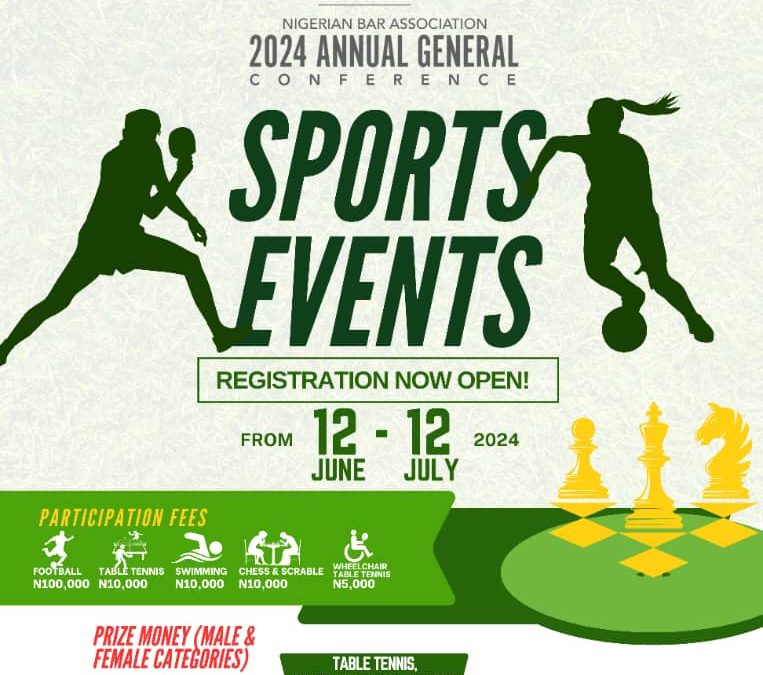
Get ready to showcase your athletic prowess and competitive spirit at the 2024 Annual General Conference of the Nigerian Bar Association.
This year’s conference promises not only intellectual stimulation but also an array of thrilling sports activities designed to foster camaraderie and healthy competition.
Sports Activities Include:
Football
Table Tennis
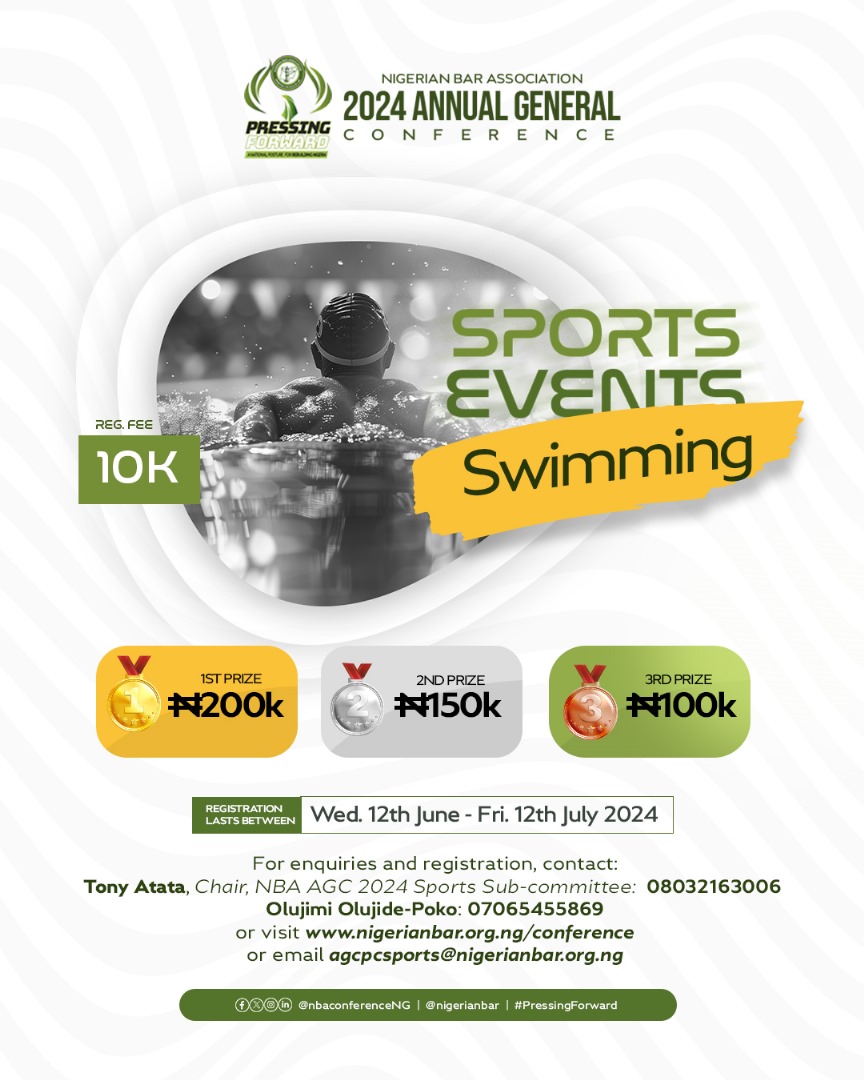
Swimming
Wheelchair Table Tennis
Chess
Scrabble
Prizes to be won:
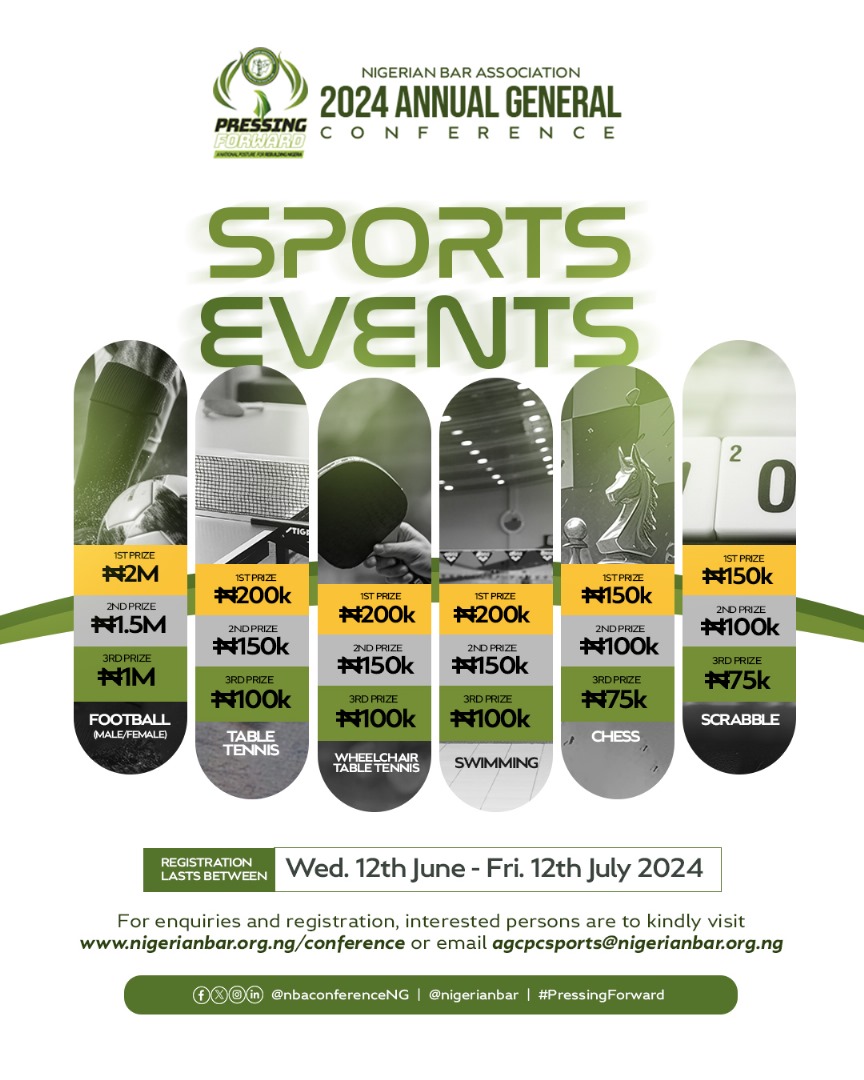
FOOTBALL PRIZE MONEY (MALE & FEMALE CATEGORIES)
1st Prize – N2,000,000
2nd Prize – N1,500,000
3rd Prize – N1,000,000
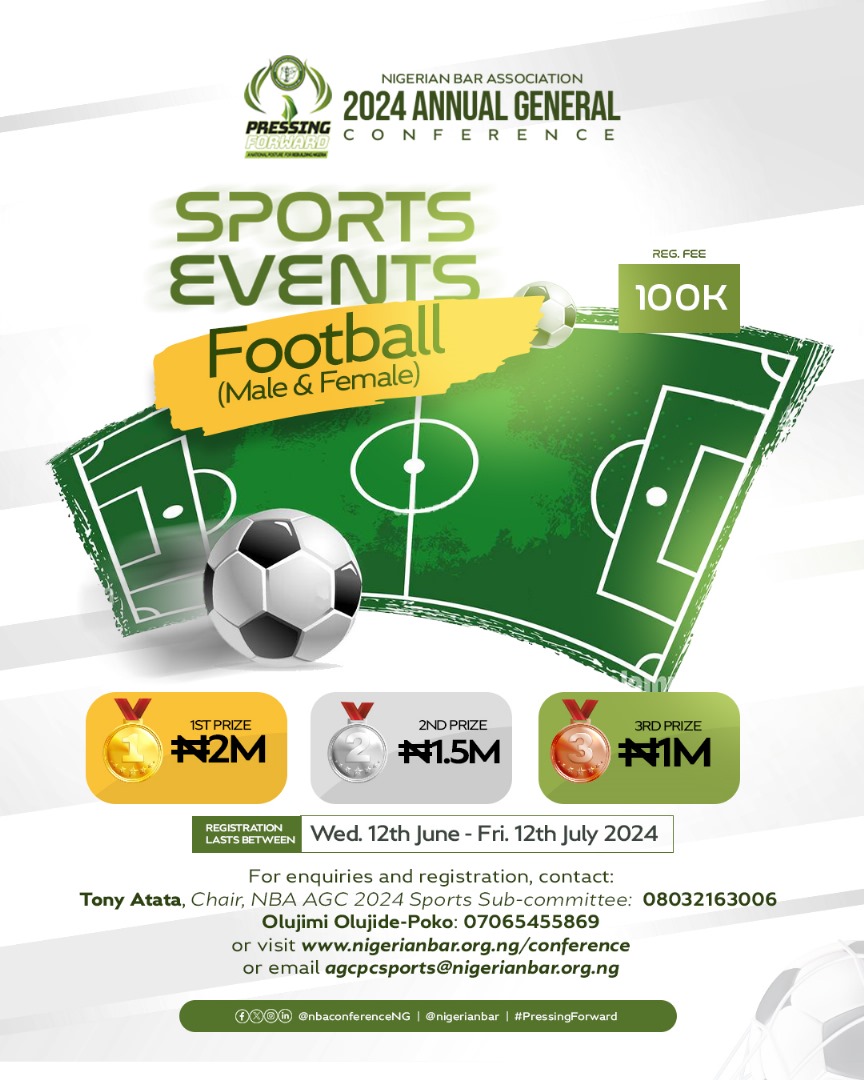
TABLE TENNIS, WHEELCHAIR TABLE TENNIS & SWIMMING*
200,000.OO 1st Prize
150,000.OO 2nd Prize
100,000.OO 3rd Prize
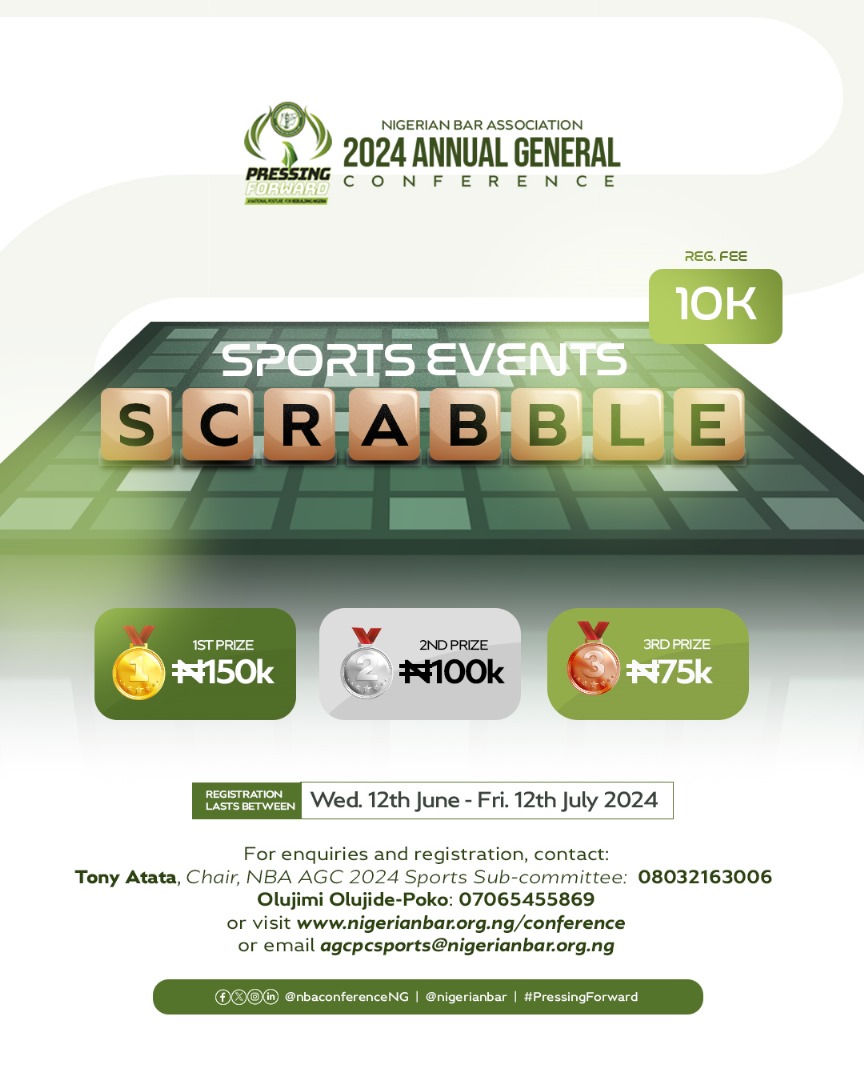
CHESS & SCRABBLE
N150,000.OO – 1st Prize
N100,000.OO -2nd Prize
N75,000.OO -3rd Prize
Registration opens at: www.nigerianbar.org.ng/conference or send an email to agcpcsports@nigerianbar.org.ng.
Registration Timeline: Wednesday, 12th June 2024 to Friday, 12th July 2024
For enquiries, please contact: Tony Atata, Chair, NBA AGC 2004 Sports Sub-committee: *08032163006*
Olujimi Olujide-Poko: *07065455869*
Farida Umar Usman, Secretary, NBA AGC 2024 Sports Sub-committee –
08035811935
Do not miss out on this fantastic opportunity to engage with fellow lawyers outside the courtroom and enjoy a memorable conference experience filled with sportsmanship and networking. You can register for the 2024 Annual General Conference here: https://www.nigerianbar.org.ng/conference
Stay connected and follow us for updates:
Twitter: @nbaconferenceNG
Instagram: @nbaconference2024
Hashtags: #nbaconference2024 #PressingForward
by Legalnaija | Jun 24, 2024 | Blawg
Exciting Reasons Lawyers Should Attend the NBA Annual General Conference (AGC) 2024
The Nigerian Bar Association (NBA) Annual General Conference (AGC) is a must-attend event for legal professionals, and this year’s edition promises to be exceptional. Whether you’re a seasoned lawyer or a fresh graduate, here are compelling reasons why you should mark your calendar for this legal extravaganza:
1. Networking Opportunities
The AGC provides an unparalleled platform for networking. Lawyers from diverse practice areas, backgrounds, and regions converge to exchange ideas, collaborate, and build professional relationships. Don’t miss out on connecting with potential clients, mentors, and colleagues.
2. Cutting-Edge Legal Insights
Stay ahead of the curve by attending sessions led by renowned legal experts. Topics range from emerging areas of law to practical tips for improving your practice. Whether it’s intellectual property, contracts, or art law, you’ll find relevant sessions to enhance your legal knowledge.
3. Inclusive Sessions
This year’s AGC emphasizes inclusivity.
4. Friendship Center Fun
The Friendship Center isn’t just about breaks—it’s a hub of entertainment! Expect games, lounges, and networking. Vendors with exciting offerings can leverage the huge traffic at the center.
Who knew legal conferences could be this fun?
How to Register
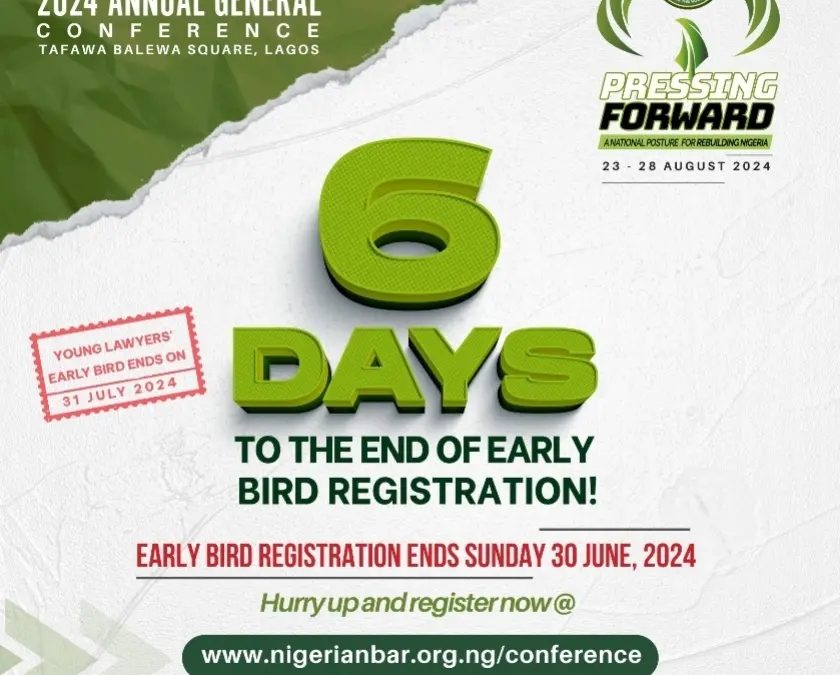
Don’t miss the early bird deadline! With just **6 days** left, secure your spot by registering https://www.nigerianbar.org.ng/conference
Let’s make this AGC unforgettable!
Remember, legal knowledge is power, and the NBA AGC is where you’ll find it. See you there!
@legalnaija

by Legalnaija | Jun 23, 2024 | Blawg
Elevate Your Brand at the NBA 2024 Annual General Conference
Are you ready to make waves and showcase your cutting-edge innovations? Join us at the Nigerian Bar Association’s 2024 Annual General Conference from August 23-28, 2024, and be part of “Pressing Forward: A National Posture for Rebuilding Nigeria.”
Why Exhibit?
1. **Maximize Exposure**: Reach a diverse and influential audience of legal professionals.
Order on the Lawyers Bookstore
2. Network & Connect: Engage with key stakeholders, potential clients, and industry leaders.
3. Showcase Innovation: Highlight your products, services, and solutions to a targeted audience.
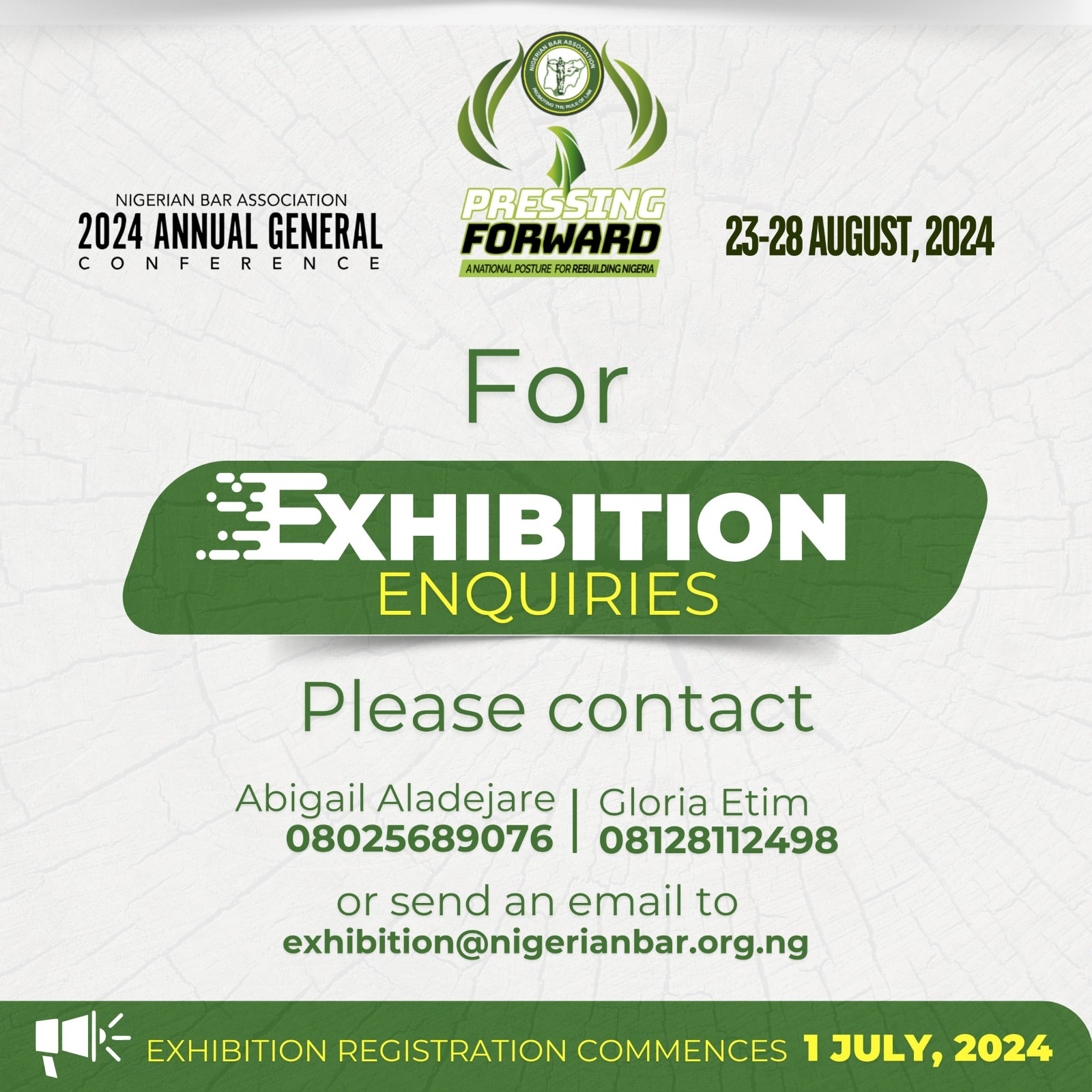
For exhibition inquiries, contact:
👩💼 Abigail Aladejare: 08025689076
👩💼 Gloria Etim: 08128112498
📧 Or send an email to: exhibition@nigerianbar.org.ng
Don’t miss this unparalleled opportunity to **transform your brand**. Secure your spot now and be part of this game-changing event!
#legalnaija #nbaagc2024

by Legalnaija | Jun 20, 2024 | Uncategorized
INTRODUCTION
In Nigeria, there are several laws and regulations that govern art transactions and art laws, such as the Sale of Goods Act, the Copyright Act, the National Gallery of Art Act, the Value Added Tax Act, the Customs and Excise Management Act, etc.
- CONSTITUTION OF THE FEDERAL REPUBLIC OF NIGERIA 1999 (as amended)
Section 21 of the constitution provides that the state shall protect, preserve and promote the Nigerian cultures, which enhance human dignity. It also provides that the state shall encourage development of technological and scientific studies which enhance cultural values.[1]
Section 44(1) of the constitution guarantees the right to own and acquire movable property in Nigeria. Thus a person has a right to purchase and own an art work in Nigeria.
- SALE OF GOODS ACT, 1893
Although artists create artworks to express their thoughts and emotions, selling these pieces is also a common practice. When an artist sells an artwork, a contract of sale sets out the terms and conditions of the transaction. This process involves various legal considerations governed by both general sales law and specialized art law. The Sales of Goods Act, 1893, is a key legislation regulating contracts of buying and selling in Nigeria. While it allows parties to set their own terms of agreement, it also provides certain implied terms to ensure fair and standard practices in sales contracts.
When artworks are bought and sold, the principles of the Sales of Goods Act often apply, but with specific considerations unique to art:
- Implied Terms and Quality: Determining whether an artwork meets implied terms can be complex due to issues of authenticity, condition, and provenance[2].
- Transfer of Property: Ownership and title transfer are critical, especially in ensuring there are no disputes over stolen art or unclear provenance[3].
- Warranties and Representations: Sellers often provide warranties about the authenticity and provenance of art, which can lead to significant legal issues if breached[4].
- Remedies: Buyers of art may seek rescission (cancellation) of the sale, damages, or other remedies if the artwork is found to be a forgery or misrepresented[5].
- COPYRIGHT ACT, 2022
The copyright Act is the major legislation that protects the rights of original creators and authors in Nigeria.
Section 1 of the act expressly states out the objectives of the Act to include;
- protect the rights of authors to ensure just rewards and recognition for their intellectual efforts ;
- provide appropriate limitations and exceptions to guarantee access to creative works ;
- facilitate Nigeria’s compliance with obligations arising from relevant international copyright treaties and conventions ; and
- enhance the capacity of the Nigerian Copyright Commission for effective regulation, administration, and enforcement of the provisions of this Act.
Section 2 of the Copyrights Act lists the categories of works eligible for Copyright in Nigeria. They include;
- literary works ;
- musical works ;
- artistic works ;
- audiovisual works ;
- sound recordings ; and
Section 10 of the Copyrights act provides that Subject to the exceptions specified in Part II of the Act, copyright in an artistic work shall be the exclusive right to do and authorise the doing of any of the following acts —
- reproduce the work ;
- publish the work ;
- include the work in an audiovisual work ;
- broadcast the work ;
- communicate the work to the public ;
- make the work available to the public by wire or wireless means in such a way that members of the public are able to access the work from a place and at a time individually chosen by them
- make any adaptation of the work and
- do in relation to an adaptation of the work any of the acts specified in relation to the work under subsection (1)(a), (b) and (c).
Section 14(1) (a) & (b) of the Copyright Act provides for the moral right of an artist. The author of a work in which copyright subsists has the right to claim authorship of his work, in particular that his authorship be indicated in connection with any of the acts referred to in sections 9, 10 and11of the Act, except when the work is incidentally or accidentally included in a broadcast when reporting current events. The author of a work also has the right to object and to seek relief in connection with any distortion, mutilation or other modification of, and any other derogatory action in relation to his work.
Section 17 of the act provides that, notwithstanding any assignment or sale of the original work, an author of an artistic work shall have an inalienable right to a share in the proceeds of any sale of that work by public auction or through a dealer, subsequent to the first transfer by the author. The right conferred by this section shall apply only to originals of such work. The condition for the exercise of the right conferred by this section shall be determined by regulations made by the Commission.
The duration for copyright in artistic works is provided in Section 19 of the act. Copyright in artistic works shall subsist until 70 years after the end of the year in which the author dies[6]. In the case of an anonymous artist, copyright shall subsist until 70 years after the year in which the work was first made available to the public with the consent of the author or 70 years after the work was created, if not made available to the public within that time, provided that when the author becomes known, known, the duration of copyright shall be in accordance with the provisions of subsection (1)[7].
Except as otherwise provided in an agreement, copyright conferred by this Act, shall initially vest in the author[8]. For the purpose of Chapter 4 of the Constitution of the Federal Republic of Nigeria 1999, copyright shall be deemed to be movable property and shall be transferable by way of assignment, testamentary disposition or operation of law[9].
Copyright is infringed by any person who without the authorisation of the owner of the copyright;
- does or causes any person to do an act, which constitutes a violation of the exclusive rights conferred under this Act ;
- imports or causes to be imported into Nigeria any copy of a work which if it had been made in Nigeria would be an infringing copy under this Act ;
- sells, offers for sale or hire any work in respect of which copyright is infringed under paragraph (a) ;
- makes or has in his possession, plates, master tapes, machines, equipment or contrivances used for the sole purpose of making infringing copies of the work ;
- permits a place of public entertainment or of business to be used for a public performance of the work, where the performance constitutes an infringement of copyright in the work, unless the person permitting the place to be used was not aware and had no reasonable ground to suspect that the performance constitutes an infringement of the copyright ;
- permits within its premises, the reproduction of a copyright work ; or
- performs or causes to be performed for the purposes of trade or business or the promotion of a trade or business, any work in which copyright subsists[10].
- THE VALUE ADDED TAX ACT
Value Added Tax (VAT) is a consumption tax levied on the value added to goods and services at each stage of production or distribution. The current rate of VAT in Nigeria is 7.5%.
The sale of artworks by artists, galleries, dealers, and auction houses is typically subject to VAT. Understanding VAT and its implications on the sale and purchase of artworks is crucial for both artists and buyers. It ensures compliance with tax laws and helps manage the financial aspects of art transactions effectively.
- CUSTOMS AND EXCISE MANAGEMENT ACT
In Nigeria, the Customs Act and Art Law intersect in several significant ways, particularly concerning the import and export of artworks. Understanding these legal frameworks is essential for artists, collectors, dealers, and cultural institutions engaged in international art transactions.
- NATIONAL COUNCIL FOR ARTS AND CULTURE ACT
This act establishes the National institute for Cultural Orientation with the objective of promoting and fostering the appreciation, revival and development of Nigerian Arts and Culture.
- THE NATIONAL ART GALLERY ACT
This Act establishes the National Gallery of Art, which is responsible for collecting, preserving, and promoting Nigerian visual arts. It also provides for the regulation of art exhibitions and the promotion of art education.
- TRADEMARKS ACT (CAP T13, LAWS OF THE FEDERATION OF NIGERIA 2004)
The Trademarks Act protects the intellectual property rights of artists and creators by allowing them to register trademarks for their works. This can include logos, symbols, and other distinctive marks used in commerce.
CONCLUSION
The legal framework of art law in Nigeria is multifaceted, involving various laws and institutions aimed at protecting and promising the heritage of art works as well as protecting the rights and interest of art stakeholders.
References
[1] Section 21, 1999 Constitution of the Federal Republic of Nigeria.
[2] Section 10, 12, 14 and 15 of the Sale of Goods act, 1893.
[3] Ibid at 2
[4] Section 12, Sale of Goods Act, 1893.
[5] Section 39, Sale of Goods Act, 1893..
[6] Section 19(1) Copyright Act, 2022
[7] Section 19 (2) Copyright Act, 2022
[8] Section 28, Copyright Act, 2022
[9] Section 30, Copyright Act, 2022
[10] Section 36, Copyright Act, 2022
Source: AOC SOLICITORS
by Legalnaija | Jun 19, 2024 | Blawg

Dear Lawyers,
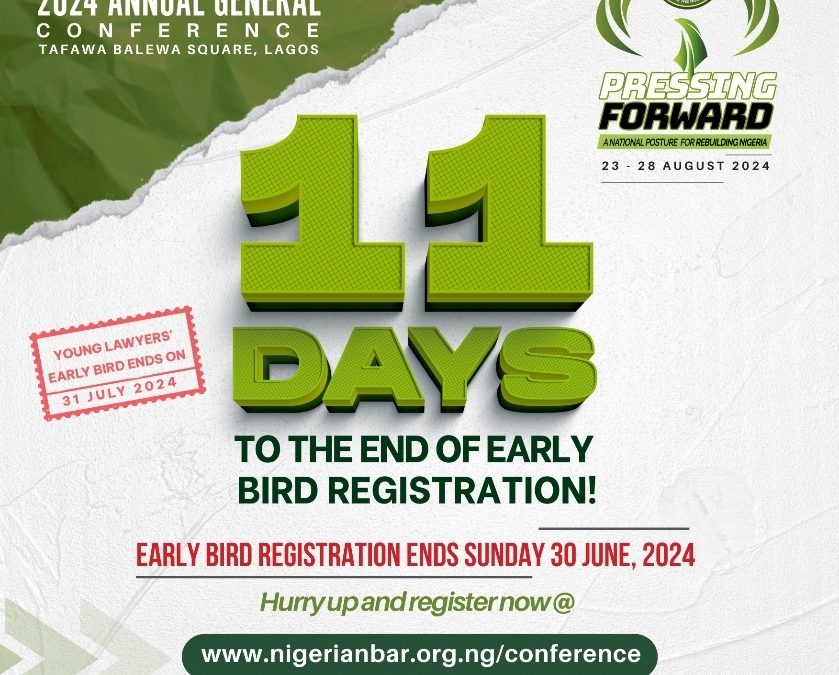
The #NBAAGC2024 is almost here and we are looking forward to another amazing gathering of the largest Bar in Africa. So don’t miss out on the Early Bird Registration for the 2024 NBA Annual General Conference!
Time is Ticking – Only 11 Days Left!
Key Details:
Event Date: August 23-28, 2024
Location: Tafawa Balewa Square, Lagos
Early Bird Deadline: June 30, 2024
Why Register Early?
Save Money: Take advantage of discounted rates before prices go up.
Secure Your Spot: Guarantee your attendance at the most anticipated legal event of the year.
Network with Peers: Connect with top legal minds and expand your professional network.
Special Note for Young Lawyers:
Don’t forget, your early bird registration ends on July 31, 2024. Act fast to secure your discounted rate!
How to Register:
Head over to [www.nigerianbar.org.ng/conference](http://www.nigerianbar.org.ng/conference) and complete your registration today.
Hurry up, the clock is ticking!
Let’s press forward together for a brighter future in the legal profession. See you there!
Remember, no time to waste!
<span;>#nbaconference2024 #pressingforward
by Legalnaija | Jun 15, 2024 | Blawg
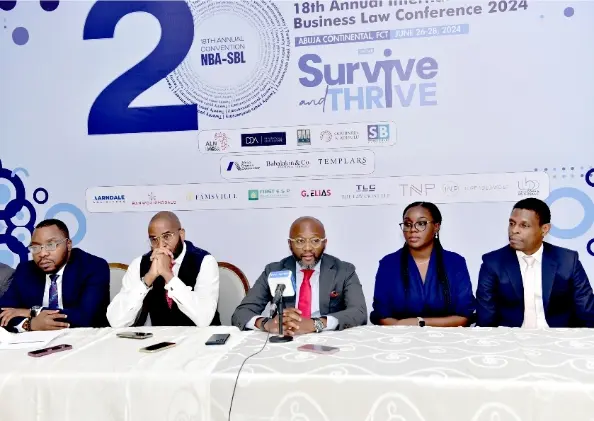
The Nigerian Bar Association Section on Business Law (NBA-SBL) recently hosted a press conference on Thursday the 13th of June, 2024, providing a detailed overview of the much-anticipated 18th Annual International Business Law Conference, which also marks the organization’s 20th anniversary.
The annual conference, themed “Survive and THRIVE,” is set to take place from June 26 to June 28, 2024, at the Abuja Continental Hotel at the Federal Capital Territory, Abuja, Nigeria. The press conference highlighted the key features and agenda of the upcoming event, which promises to be a wholesome experience for all attendees.
Speaking at the press conference, Dr. Adeoye Adefulu, Chairman of NBA-SBL, noted that the theme was chosen to capture the mood of the country and the economy.
He said, “Our 18th annual conference is quite different from what we used to have in the past. We see that there is a significant economic challenge in the business space, affecting our businesses, our clients, and our homes.
According to him, the SBL is doing something different this year, as it’s not just going to be all talks.
He further added “We have an art exhibition and a section on mental health, and one of the plenary sessions will address capital markets, agriculture, technology and innovations, and sports betting, discussing gambling regulations and social responsibility.”
Chairman of the Planning Committee, Mr. Ose Okpepu, said the NBA-SBL was intentional in choosing the theme and the speakers for the conference. He expressed his enthusiasm for the event: “We are excited for this year’s conference as it is set to provide invaluable insights, and strategies for legal professionals, young and old, to navigate today’s evolving economic landscape.”
Key Highlights of the Conference:
● Panel Discussions
● Keynote Speeches from the former Governor of the Central Bank of Nigeria and the newly reinstated Emir of Kano, Sanusi Lamido
● LAWYERS’ GOT TALENT
● Law Dinner
Conference Details:
● Date: June 26-28, 2024
● Venue: Abuja Continental, Federal Capital Territory, Abuja, Nigeria
● Theme: Survive and THRIVE
The NBA-SBL is committed to delivering a conference that not only addresses current challenges but also equips participants with the knowledge and tools needed to foster resilience and success in the legal profession.
For more information please visit… https://conference.nbasbl.org.
You can also check out the NBA-SBL website at www.nbasbl.org or contact the Conference Secretariat at info@nbasbl.org for further inquiries. Also follow us on all social media platforms to stay updated. Please visit NBA-SBL on Instagram – @nbasbl and Twitter – @nbasblofficial.

by Legalnaija | Jun 13, 2024 | Blawg
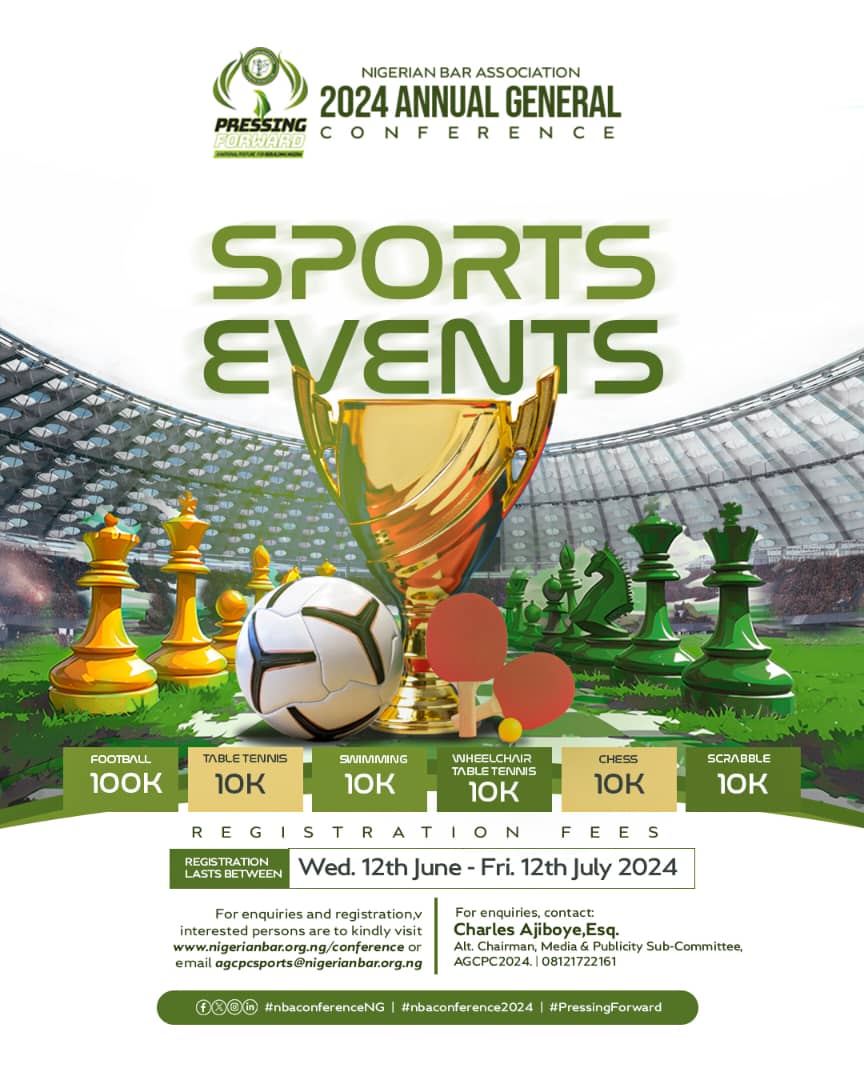
Are you interested in winning cash prizes at the #NBAAGC2024 Games?
Join the Excitement at the NBA 2024 Annual General Conference Sports Events!
Get ready to showcase your athletic prowess and competitive spirit at the 2024 Annual General Conference of the Nigerian Bar Association.
This year’s conference promises not only intellectual stimulation but also an array of thrilling sports activities designed to foster camaraderie and healthy competition.
Sports Activities Include:
Football
Table Tennis
Swimming
Wheelchair Table Tennis
Chess
Scrabble
Prizes to be won:
FOOTBALL PRIZE MONEY (MALE & FEMALE CATEGORIES)
1st Prize – N2,000,000
2nd Prize – N1,500,000
3rd Prize – N1,000,000
*TABLE TENNIS, WHEELCHAIR TABLE TENNIS & SWIMMING*
200,000.OO 1st Prize
150,000.OO 2nd Prize
100,000.OO 3rd Prize
*CHESS & SCRABBLE*
N150,000.OO – 1st Prize
N100,000.OO -2nd Prize
N75,000.OO -3rd Prize
Registration opens at: www.nigerianbar.org.ng/conference or send an email to agcpcsports@nigerianbar.org.ng.
Registration Timeline: Wednesday, 12th June 2024 to Friday, 12th July 2024
For enquiries, please contact: Tony Atata, Chair, NBA AGC 2004 Sports Sub-committee: *08032163006*
Olujimi Olujide-Poko: *07065455869*
Do not miss out on this fantastic opportunity to engage with fellow lawyers outside the courtroom and enjoy a memorable conference experience filled with sportsmanship and networking. You can register for the 2024 Annual General Conference here: https://www.nigerianbar.org.ng/conference](http://www.nigerianbar.org.ng/conference)
Stay connected and follow us for updates:
Twitter: @nbaconferenceNG
Instagram: @nbaconference2024
Hashtags: #nbaconference2024 #PressingForward