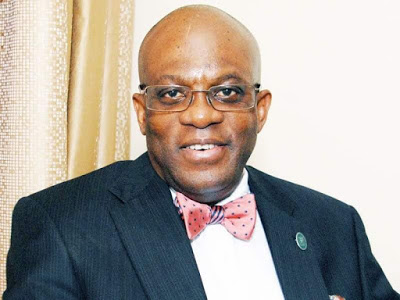

Wills And Codicils 101 | eberechi may okoh

Wills And Codicils 101 | eberechi may okoh

 Lawyer: Have you written a
Will?

Client: Nope, not ready to
die yet.

A Will is a testamentary
deposition of a person’s assets, and in some cases, liabilities. Simply put, a
Will is a document a person prepares to communicate how he/she will want
his/her estate distributed after death. Being ambulatory, it only takes effect after
the death of the testator (maker of the Will). A Codicil on the other hand is a
document supplemental to a Will in which a testator makes further provisions
for his/her estate. It may be used to distribute assets to which the testator
got entitled after executing his/her Will, revoke gifts given in the Will,
appoint new executors to replace previously appointed executors who may be
unable to act, or such other supplemental issues that may arise after the
execution of the Will.


A good number of people may
leave writing a Will to a much older age due to a foreboding that writing a
Will may hasten demise. Some others consider their assets too few to warrant
any formal distribution. Whatever the case, it is important that Wills when
written are properly done and in a manner that the Courts will readily give
effect to.

In Nigeria, Wills are
administered by state laws. This informs the preference of most testators to
engage the services of lawyers in preparing Wills. Lawyers engaged for these
services help guide the testator along the lines of legality to ensure a
testator’s Will is enforceable after his death. Case in point, the Rivers State
Wills Law provides in section 2 that a spouse, child, parent or sibling of the
deceased who immediately before the death of the deceased was being maintained
either wholly or partly, by the deceased may apply to the court for an order on
the ground that dispositions of the deceased’s estate according to his Will is
not such as to make reasonable financial provision for the applicant. 

The Court
on certain considerations such as the time of making the
application and what constitutes “reasonable financial provision” in the
circumstances may make an order for the applicant’s maintenance from the estate
of the deceased. This of course is irrespective of the fact that the order
departs from the exact provisions of the Will. It is also pertinent to note
that some hereditary customs have long been recognized by case law and may
override certain provisions of a Will.

Another legal point to be
noted is that a valid Will must be signed by the testator before two witnesses
who must be present at the same time, or if previously signed by the testator,
the testator’s signature must be acknowledged by both witnesses in the presence
of each other. Where the witnesses were not present at the same time, the Will
may be invalid.

If it is established that
a deceased left a Will, the lawyer or such other person with whom the Will was
reposed will inform the executors who are in turn, required to apply to the
relevant Probate Registry for the Will to be read and subsequently for a Grant
of Probate. The Probate Registry will issue the necessary forms to be filled
and advise on the estate taxes to be paid before the Grant of Probate.

Where a person dies
intestate, i.e. without a Will, close relatives or associates would apply to
the Probate Registry for letters of administration for the estate. The Registry
will request sureties and interview them to ensure the applicants are the
proper persons to make the application. Publications would also be made in
Newspapers to inform the public that the applicants have come forward to obtain
letters of administration for the estate of the deceased. 

Where there are no
objections following the Newspaper publications, the Probate Registry will upon
the payment of all relevant fees and estate tax, issue Letters of
Administration to the applicants. It is noteworthy that Letters of
Administration may often omit certain assets of the deceased unless the
deceased had close family members or associates who were aware of every single
asset belonging to the deceased. In contrast, a testator sets out all his
property in the Will including assets which no other person may have possibly
had knowledge of.

Notwithstanding the advantages
of Wills, in practice, Wills often get contested. Most times, such objections
are raised by family members and close relatives and culminate in long years of
litigation. In re Morgan (1893), 3 Ch. 228, Nathaniel Lindley, Baron Lindley, L.J. said “I
do not see why, if we can tell what a man intends, and can give effect to his
intention as expressed, we should be driven out of it by other cases or
decisions in other cases”
. Put differently Wills should be plainly
construed without subjecting it to litigation, citing of cases and their
decisions thereof. Unfortunately, Wills do and have continued to be the subject
of many litigation cases. Some of the common grounds on which Wills are usually
challenged are:

1.     The
testamentary capacity of the testator at the time of making the Will, i.e. his
mental disposition;
2.    Due
Execution of the Will;
3.    Marriage
by the testator subsequent to the execution of the Will;
4.   Inadequate
provision for dependants;
5.    Undue
influences; and
6.   Alterations
to the Will.

If not properly managed,
disputes over a Will may survive the beneficiaries and depreciation of
bequeathed assets may set in. 

In conclusion, whether a
Will is written to express emotion as Sara Clarke of Bournmouth who directed in
her will: To my daughter, I leave £1 – for the kindness and love she
has never shown me
[1] or to ensure one’s assets are properly
administered after death, Wills will continue to be written and in all cases,
will affect not the deceased but those who are or are not mentioned in such
Wills. It is therefore important that people understand the essence of Wills
and how Wills affect them.


Eberechi May Okoh

Senior Associate at
Streamsowers & Kohn

Source: Linkedin 

Photo Credit – www.ilawconnect.com 

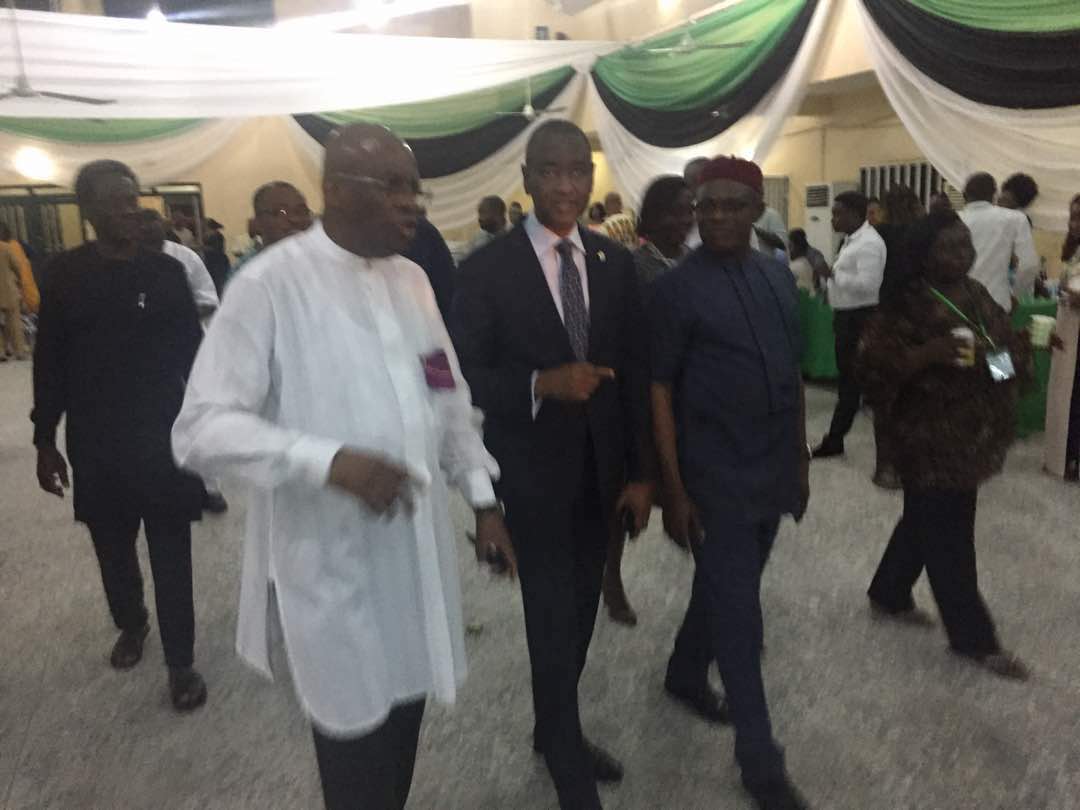
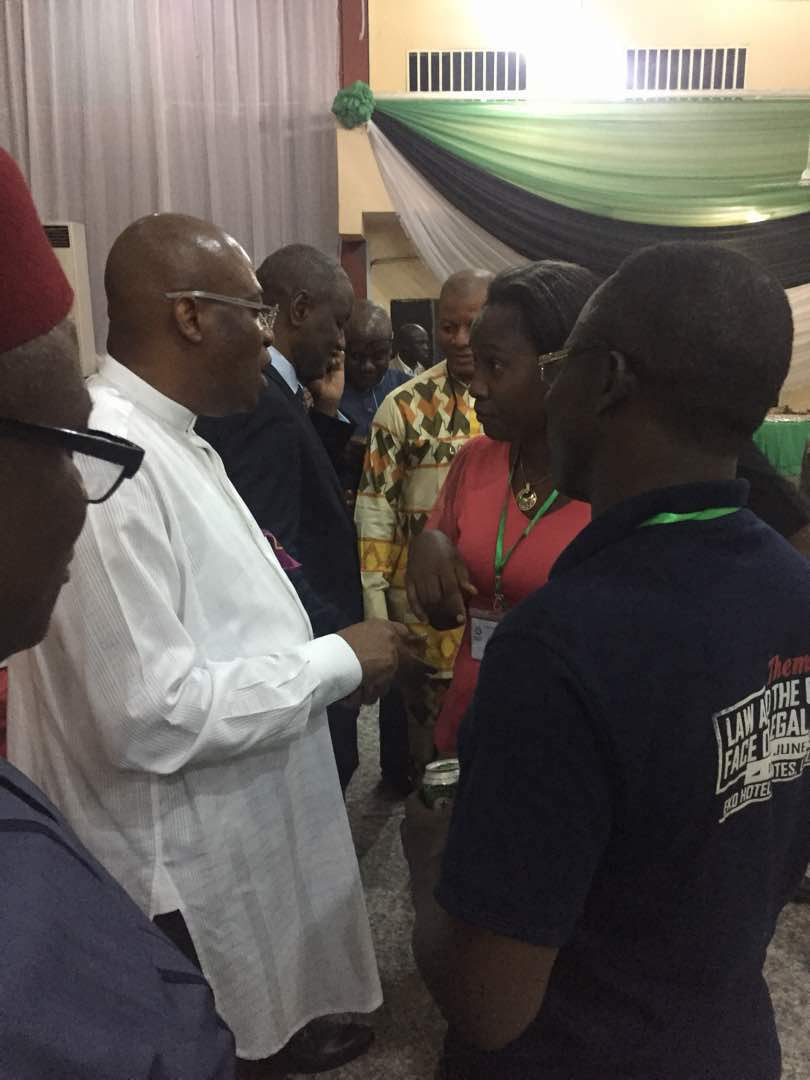
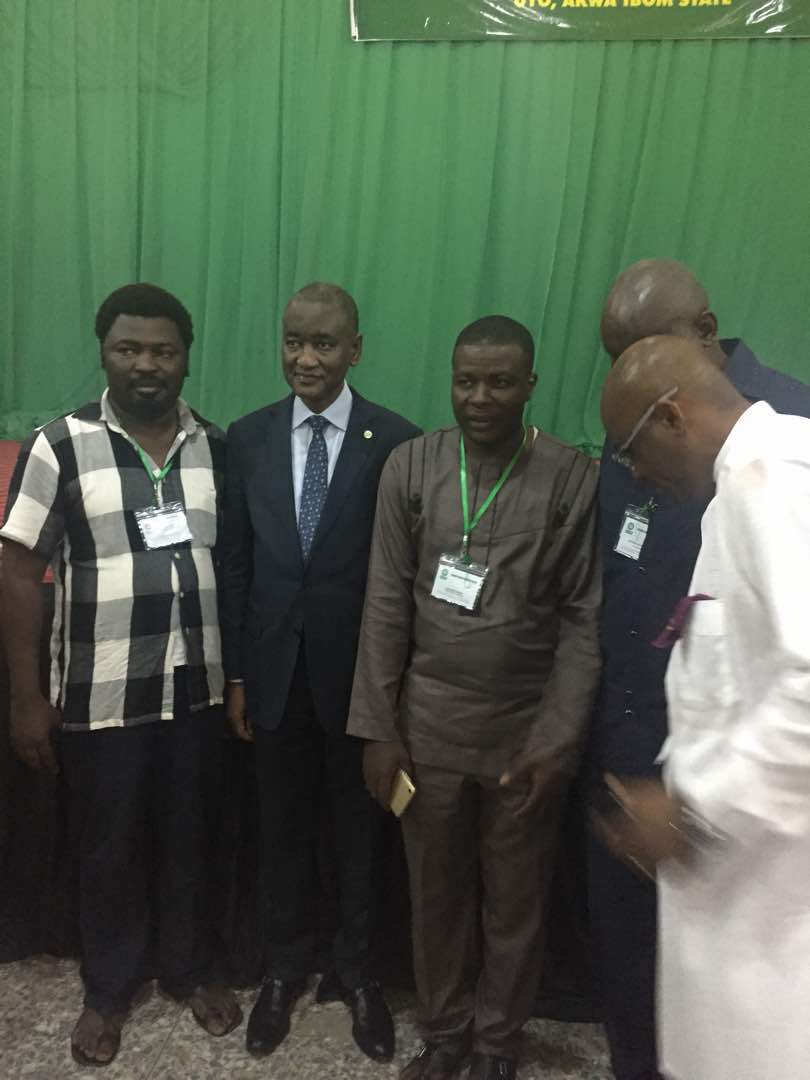
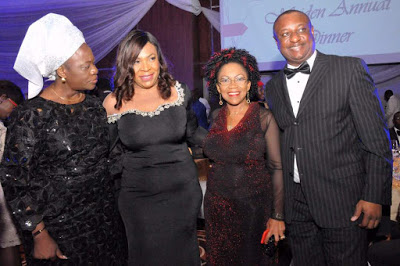
NEC Quarterly meeting begins with NBA President, Paul Usoro SAN and other distinguished members of the Bar

NEC Quarterly meeting begins with NBA President, Paul Usoro SAN and other distinguished members of the Bar

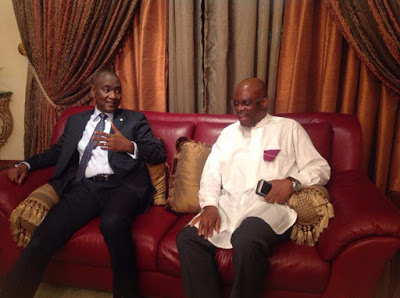
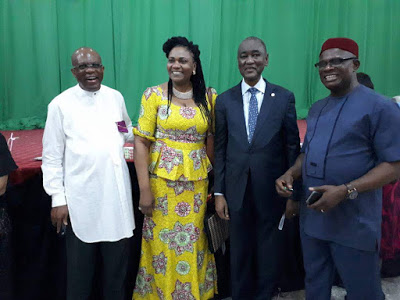
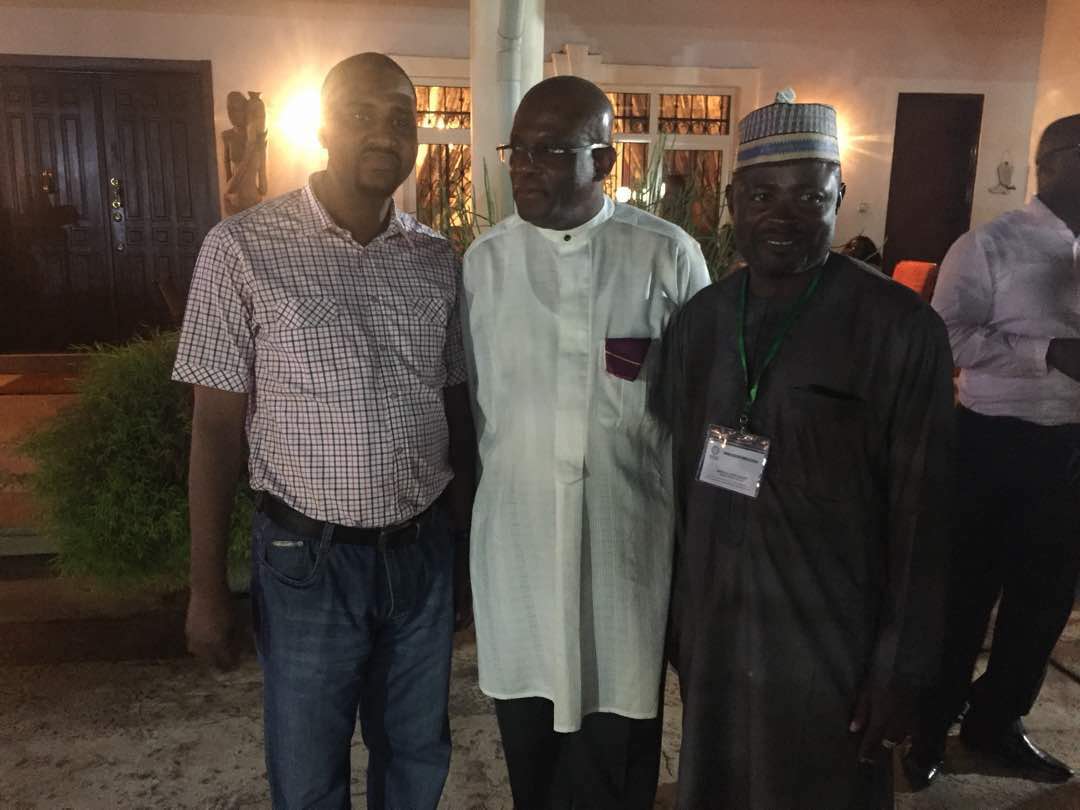
NBA President, Usoro, others kickstart the NEC Quarterly meeting

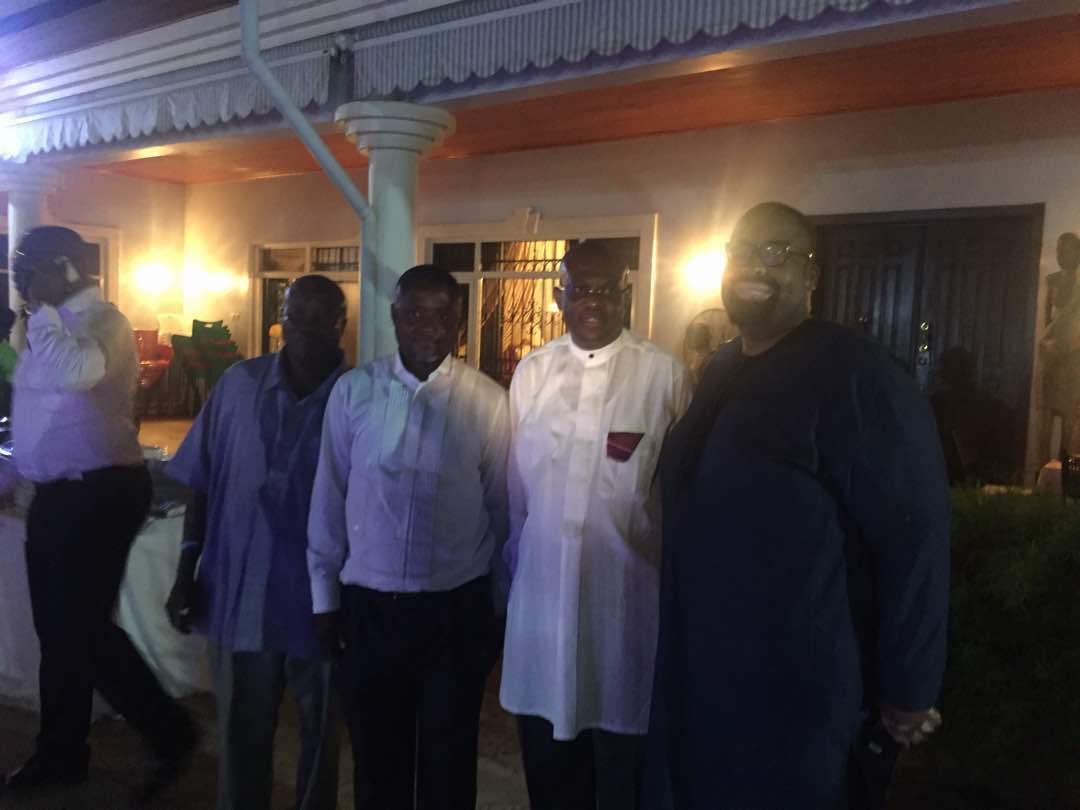
Nigeria’s foremost communications law expert and astute litigator, Paul Usoro, SAN, joined other legal luminaries in a cocktail event today.

The event was the curtain raiser for the National Executive Council Meeting of the Nigerian Bar Association holding tomorrow, Thursday and Friday in Uyo, Akwa Ibom.
The cocktail hosted by the Chief Judge of the state, Honorable Justice Godwin Abraham, was well attended by representatives of the various branches of the NBA.
Paul Usoro, SAN, also seized the opportunity to fete the members of the bar at a welcome party held later that evening. Usoro who hails from Akwa-Ibom, encouraged the members of the bar to always uphold integrity of the profession and seek out creative ways of advancing the legal practice in the zone.
See highlights of the evening in the photos

Why Legal Due Dilligence is important for corporate transactions/Chidiebere Odoemenam

Why Legal Due Dilligence is important for corporate transactions/Chidiebere Odoemenam

The importance of conducting a “legal health check” on corporate organizations which are the subject of corporate transactions such as mergers, acquisitions and financing cannot be overemphasized. 

It is critical that purchasers and lenders conduct a comprehensive legal due diligence to ensure that all potential risks and issues which may affect or shape the transaction are recognized and appropriately dealt with during the structuring and negotiation phase of the transaction.
What is Legal Due Diligence?
Broadly, due diligence is a risk assessment. It is the investigation and/or evaluation of an entity or person, prior to entering into an agreement or transaction.
A legal due diligence is a comprehensive legal analysis conducted by legal advisors on a target or subject corporate organization. This involves a detailed investigation into the corporate structure of the company and its compliance with applicable sector laws and regulations. For example, a legal due diligence conducted on a company operating in the Nigerian insurance sector would apart from focusing on its compliance with general corporate laws, also focus on the company’s compliance with the Insurance Act and various regulations of the National Insurance Commission. The ultimate goal of the investor/financier is to understand the full legal situation of the company and issues the company is facing or would face post-transaction.
Transaction – Specific Legal Due Diligence
Capital Markets – Transactions in the capital markets include debt and equity securities themed offerings such as issuance of bonds (Vanilla, Sukuk, Eurobonds), commercial papers (including asset backed CPs), structured notes and shares.
A legal due diligence conducted on the Issuer in a bonds offering, commercial papers issuance or an initial public offering of shares is required to satisfy the regulatory authorities and prospective investors that the Issuer has the requisite capacity to issue the securities, and to reveal the Issuer’s credit-worthiness. 
A legal due diligence on XYZ PLC seeking to list commercial papers on the floor of the FMDQ would ask questions such as: (i) has the board/shareholders of XYZ PLC approved the offering?, (ii) are there restrictions on the corporate documents of XYZ PLC which may inhibit the offering process?, among others.
Mergers & Acquisitions – A properly conducted legal due diligence on a target company reduces the likelihood of unpleasant surprises after the completion of a mergers and acquisition process. This would provide the purchaser the opportunity to gain as much background information and understanding about the target’s business. The information obtained in a legal due diligence may also serve as a platform to renegotiate the purchase price of the target’s shares or assets.
The legal due diligence highlights major and minor issues bordering on corporate structure of the target, legal ownership of assets (including legal status of real properties, investments and cash-in-bank), contractual obligations of the target, current or pending litigation or disputes involving the target, regulatory or statutory breaches, financial liabilities, compliance with sector-regulators, tax status among others.
A robust legal due diligence in an M&A transaction uncovers issues and acts as an early warning signal to a purchaser.
For instance, if ABC PLC had agreed to purchase 80% ordinary shares of XYZ PLC for US$100 million, if after a legal due diligence it is revealed that XYZ PLC owes US$50 million to tax authorities, and another US$15 million to its employees and suppliers, ABC PLC would surely revisit the drawing board and re-evaluate its valuation of XYZ PLC, and whether it would be prudent to withdraw or continue with the transaction.
Financing – A financing transaction may be structured as a bilateral, multilateral or syndicated financing, and may also be solely project based. Legal due diligence in a financing transaction is undertaken by the lender(s) to investigate the business, financial condition and creditworthiness of each relevant obligor and the terms of the underlying finance documents.
A typical legal due diligence in a financing would ask questions such as: (i) are the obligors duly constituted and existing relevant laws? (ii) are there requisite corporate authorizations by the relevant obligors approving the transaction? (iii) are there current financial obligations of the obligors which the borrowers should take note of?
Conclusion
A legal due diligence report and the issues uncovered from the report can be addressed in the structuring and transaction phase prior to closing of the transaction. The issues uncovered allows the purchaser/lender the opportunity to seek adequate contractual protection from the target/borrower in the contract negotiation process.
Therefore, a properly conducted legal due diligence gives the investor/financier confidence and relative peace of mind to continue with the transaction knowing that all loopholes have been plugged.
The Author
Chidiebere Odoemenam is a corporate and commercial lawyer, with experience advising international and local corporates on big-ticket and high value transactions on a wide range of legal issues and on various sectors. He can be reached via email on odoemenamchidi@gmail.com and via mobile on 07031781991.
Living Apart As A Ground For Dissolution of Marriage | Simileoluwa Owotomo

Living Apart As A Ground For Dissolution of Marriage | Simileoluwa Owotomo

INTRODUCTION AND RELEVANT FACTS
Under the Matrimonial Causes Act, 1970, the grounds for dissolution of marriage are succinctly stated in Section 15(1), (2), (a)-(h), (3) with supplementary provisions in Section 16, MCA. For the purposes of this write up, the provisions of Section 15(2) (a)- (h) and 15(3) of the Matrimonial Causes Act will be stated as follows;

15 (2) The Court hearing a petition for a decree of dissolution of a marriage shall hold the marriage to have broken down irretrievably if, but only if, the petitioner satisfies the court of one or more of the following facts–
a.   That the Respondent has willfully and persistently refused to consummate the marriage;
b.   That since the marriage, the Respondent has committed adultery and the Petitioner finds it intolerable to live with the Respondent;
c.   That since the marriage, the Respondent has behaved in such a way that the Petitioner cannot reasonably be expected to live with the Respondent;

d.   That the Respondent has deserted the Petitioner for a continuous period of at least one year immediately preceding the presentation of the petition;
e.   That the parties to the marriage have lived apart for a continuous period of at least two years immediately preceding the presentation of the petition and the Respondent does not object to a decree being granted;
f.    That the parties to the marriage have lived apart for a continuous period of at least three years immediately preceding the presentation of the petition;
g.   That the other party to the marriage has, for a period of not less than one year, failed to comply with a decree or restitution of conjugal rights made under this Act;
h.   That the other party to the marriage has been absent from the Petitioner for such time and in such circumstances as to provide reasonable grounds for presuming that he or she is dead
In addition to the listed facts under S. 15 (2) of the Act, S. 16 (1) of the Matrimonial Causes Act stipulates Fourteen (14) other circumstances, facts, out of which if proved would constitute the fact that the Respondent has behaved in such a way that the Petitioner cannot reasonably be expected to live with the Respondent. These facts include: The commission of rape, sodomy, or bestiality by the Respondent, habitual drunk, or drug addiction for two years, frequent convictions for crime coupled with habitually leaving the Petitioner without reasonable means of support, attempting to murder the Petitioner or inflicting grievous bodily harm on her refusal to comply with a maintenance order and confinement in a mental institution for five years during the six years period immediately preceding the presentation of the petition.
The law therefore requires that every petition for dissolution of marriage contain specific ground or grounds that will fall within the set out facts under S15 (2) and 16 (1) of the Matrimonial Causes Act. See:-Harriman v. Harriman (1989) 5 NWLR (Pt 119) 6 C.A Megwalu v. Megwalu (1994) 7 NWLR , Ibrahim v. Ibrahim (2007) 1 NWCR (Pt 1015) 383 C.A Ash v. Ash (1972) WLR 347                        
From the foregoing, it can be deduced that one or more of the following grounds herein are provided for by the MCA as grounds for dissolution of marriage.
2.   ISSUE(S) FOR DETERMINATION
LIVING APART AS A GROUND FOR DISSOLUTION OF MARRIAGE
It is important to note that the onus of proof with regards to the facts set out in Section 15 (2), (a) – (h) of the Matrimonial Causes Act, lies on the Petitioner.
Success or otherwise of the petition depends largely on how diligently and adequately this burden is discharged. Failure in this regard will entail a dismissal of the petition, moreso, where one of the parties opposes the dissolution of the marriage.

Thus, by virtue of the said provision of the law, a Petitioner at the hearing in a matrimonial causes proceeding, must satisfy the trial court of the fact or facts alleged or relied upon.
Again, by virtue of Section 82 (1) and (2) of the said Act, such matter or fact shall be established to the reasonable satisfaction of the court put differently, the matter or fact as alleged shall be sufficiently proved once the court is reasonably satisfied of the existence of the ground, fact or matter as alleged.
 It is noteworthy, that the phrase reasonable satisfaction, has not been defined in the Act. Nevertheless, it connotes adducing all available relevant and adequate evidence in support of the averments before the trial court and reasonably satisfactorily too
By virtue of Section 15 (2) (d) of the Matrimonial Causes Act, a court is bound to hold that a marriage has broken down irretrievably if it is established that the respondent has deserted the petitioner for a continuous period of at least one year immediately preceding the presentation of the petition.
So, what is desertion? Desertion is the withdrawal of support and cessation from cohabitation without the consent of the other spouse and with the avowed intention of abandoning allegiance, fidelity or responsibility and remaining separated in perpetuity. Put differently, desertion means abandonment or voluntary withdrawal from all marital obligations by a married person, without any just cause.  Thus, to establish the allegation of desertion, a petitioner must establish:
(a) Physical separation.
(b) Avowed or manifest intention to remain separated on a permanent basis.
(c) Absence of consent from the other spouse.
(d) Absence of any good, just cause or justification.
It is to be noted also, that the law gives recognition to two types of desertion, namely, simple desertion and constructive desertion.
In the former, it is the absentee spouse who has abandoned the matrimonial ship and abdicated responsibility for requisite duties, while in the latter; it is the spouse who remains aboard the matrimonial ship who is in desertion, in that the said spouse has by his or her conduct expelled the other.
Having established desertion under the purview of the MCA, It is necessary to discuss what can be termed as living apart. In discussing what is termed as ‘living apart”, it has been stated that mere physical separation of the parties to a marriage does not by itself constitute “living apart,

For living apart to arise, there must be in addition to physical separation, the intention or mental element expressed by one or both parties to terminate and bring the marriage to an abrupt end.

Hence, so long as both the husband and wife do not regard the marriage as having been torpedoed, then it cannot be said that the marriage has broken down irretrievably, even though the parties are physically separated. In this connection, the mere compliance with an order of transfer or movement by a worker from the location of his matrimonial home to another location without his wife accompanying him for one reason or the other, does not render the worker liable to be classified or described either as a deserter or as living apart. This is moreso, because compliance by such a worker with the order of transfer cannot by whatever means be regarded as unreasonable or irresponsible. See MRS. HELEN ANIOKE v. MR. BEN CHARLES ANIOKE (2011) LPELR-3774(CA)
In Omotunde v. Omotunde (2001) 9 NWLR (Pt.718)525 per ADEKEYE, J.C.A. (Pp. 62-63, paras. D-E), it was held as follows; 
“In my view, what is reasonable satisfaction of court is difficult to define. There is no kind of blanket description for same either – but it must depend on the exercise of judicial powers and discretion of an individual Judge. It however entails adducing all available evidence in support of an assertion before the court. By section 15(2)(1) of the Act: a court hearing a petition for the dissolution of a marriage shall hold the marriage to have broken down irretrievably if the parties to the marriage lived apart for a continuous period of three years immediately preceding the presentation of the petition. The law is that the provision is mandatory and the court has no discretion to exercise.
The section has the factor of absence of fault element characteristic of other matrimonial offences-the law behind the section that is 15(2)(1)as far as the living apart is concerned is not interested in right or wrong or guilt or innocence of the parties. Once the parties have lived apart, the court is bound to grant a Decree.“
From the above, it can be deduced that the main ingredient for divorce proceedings, is that the parties must have lived apart.
According to Common Law,however, constructive desertion, where there was an emotional rather than a physical removal of one spouse from the marriage, could be grounds for a divorce even though the parties still resided on the same house
The 2006 case of Ricketts v. Ricketts (393 Md. 479) appears to have created loophole in the steadfast requirement for a physical separation. In that case, the husband and wife had moved to separate bedrooms after one spouse had stated that she would never resume marital relations with the other.
The Court allowed the divorce to proceed, even though they had been living under the same roof, under the theory of constructive desertion, stating: it is “constructive desertion, as ground for divorce, when the misconduct of one spouse makes it impossible for the other to continue to live with the erring spouse without loss of his or her health or self-respect or gives reasonable apprehension of bodily injury, justifying the innocent spouse in leaving the other.” The Court found that the final decision by one spouse to never be intimate with the other again created a situation of desertion. The Court went on to state that constructive desertion, where there was an emotional rather than a physical removal of one spouse from the marriage, could be grounds for a divorce even though the parties still resided on the same house.
However, in Nigeria, it is necessary to note that parties are said to be living apart unless they are living with each other in the same household, See Section 15 (3) MCA
Thus, parties cannot be said to be living apart if they are indeed living together in the same household
It is also necessary to note that the reasons that a Petitioner gives for living apart is not held to unreasonable scrutiny by the Court. The most important factor is to establish that parties have indeed lived apart for a continuous period preceding the presentation of the petition.
In UZOCHUKWU v. UZOCHUKWU (2014) LPELR-24139(CA), it was held as follows;
”The parties thus lived apart for a continuous period of at least two years immediately preceding the presentation of the petition. The lower court therefore erred in holding that there was no evidence that the living apart was for a continuous period of at least two years preceding presentation of the petition.
I must add that it is immaterial who has between the parties caused them to live apart as it seems to me that Section 15 (2) (e) of the MCA does not permit the court to go into a fault-finding expedition. See OMOTUNDE V. OMOTUNDE supra in which the Court of Appeal expressed a similar view on Section 15 (2) (f) of the MCA which view is applicable to Section 15 (2) (e) of the MCA. See also IBEAWUCHI V. IBEAWUCHI (1974) UILR (103) 67 and ORUGOH V. ORUGOH (1974) 4 UILR (1) 120. Per EKANEM, J.C.A. (Pp. 22-23, paras. E-B)
3.   CONCLUSION
In Nigeria, a court cannot dissolve a marriage or, declare a marriage to have broken down though it appears the marriage has broken down irretrievably unless one of the facts listed in S. 15(2) of the Matrimonial Causes Act is established by the Petitioner. See Ibrahim V. Ibrahim (supra), Damulak V. Damulak (2004) 8 NWLR pt 874 page 151 Per NDUKWE-ANYANWU, J.C.A. (Pp. 12-14, paras. C-D)
It is also noteworthy to state that a decree of divorce or of nullity of marriage must not be made absolute, and a decree of judicial separation must not be granted unless the Court is satisfied that arrangements have been made for the welfare of every child of the family. Welfare of the child is of paramount consideration. If possible the court could consult the child’s wishes in considering what order ought to be made. See Odogwu v. Odogwu (1992) NWLR (Pt. 215)(1992) 2 SCNJ 357, Re A (all infant) (1955) 2 ALL ER 202 (also in (1955) 1 WLR 46
Simileoluwa Owotomo
Associate Counsel at Ayodele,Olugbenga & Co. 
That we be governed by law and not by the whims of men | Adedunmade Onibokun

That we be governed by law and not by the whims of men | Adedunmade Onibokun

Our founding fathers and our powers-that-be have opted
for the rule of law in preference to the rule of force and absolute totalitarianism.
 – Nnaemeka – Agu JSC;
A.G Bendel V.
Aideyan(1989) 4 NWLR (Pt. 118)671[i]

The term “Rule of Law” is one used very
often. To the Nigerian layman, it sums up to his or her ability to exercise the
legal rights and freedoms guaranteed by the Constitution; it also includes the
access to quick and fair dispensation of justice. In Nigeria, all governments
come into power with the promises of strengthening the rule of law and to look
out for the common man. The reality however is not the case, for if you carried
out an opinion poll, you will discover that almost all Nigerians believe justice
is reserved only for the rich and powerful.
Despite the current state of the justice
administration system in Nigeria, the rule of law cannot expressly be
jettisoned while we all embrace anarchy. It is through the propagations of the
rule of law that we will build our society, our democracy and our government. One
may begin to question the exact definition of the rule of law at this point and
may even further wonder how it relates to the lot of the average Nigerian.
 The
term rule of law was coined by A.V Dicey in his book, “Law of the Constitution”10th
Edition, published in 1885, to mean the –
“the absolute supremacy or predominance of regular law
as opposed to the influence of arbitrary power, and excludes the existence of
arbitrariness, of prerogative or even of wide discretionary authority on the
part of government
”[ii].
  
(Emphasis Mine)

To further understand what the term rule
of law means, Sir Adetokunbo Ademola, first indigenous Chief Justice of Nigeria
stated that, “as soon as you accept that Man is governed by law and not by
whims of men, it is the rule of law”. To put it simply, the rule of law means
that as Nigerians within the territorial space of our nation, we should be
governed by a system of laws and that such laws must be supreme. That our justice system should be efficient as opposed to being governed by decisions
of individual government officials.
 In
Nigerian history, the greatest enemy of the rule of law, as always been the
government and its officials. In this regard all governments, whether past or
present are inclusive. The political class has always unscrupulously shelved
the rule of law for their personal gains and whims, usually bending the law to
act in their favour and applying force to cement their acts and silence public
criticism. This situation is aptly put by Denton West JCA in the case of
Balonwu V. Obi (2007) 5 NWLR (Pt. 1024) 563, where Milord stated that, “indeed
for politicians, the rule of law is non-existing until it suits their purpose,
and it is only then it is observed to the letter”.  

 A national policy on justice administration is long overdue as currently, there are thousands of prison inmates awaiting trial in Nigerian prisons and have been there for many years; millions of Nigerians are unable to get access to justice as they cannot afford the cost of legal fees and the years it takes to conclude matters in courts; neither is the police and other security agencies doing any better in bolstering the confidence of the average Nigerian in the legal system as it stands today.
Recently, the Attorney – General of the
Federation and Minister of Justice, Abubakar Malami (SAN) on the 7th
of November, 2017, raised hopes of a structural balance in the nation’s justice
delivery system, when he spoke on the new national policy on justice and how it
will mitigate the challenges of effective administration of justice in Nigeria. These raised hopes could however be dashed, as the national policy on justice is still at
the road map stage and may take a long time for same to come in
effect, let alone for its benefits to be felt by the average Nigerian.
It is however important to point out, that
if we must strengthen the rule of law in Nigeria, the Judiciary must truly be
independent in funding and in administration. The powers of the State Governor
and the President over the funding of the judiciary at all levels must be
removed and the Judiciary should be truly empowered to deliver justice as it
deems fit to the average Nigerian. All policies of government that does not
first address the issue mentioned above is merely a present relief to the sore
justice system but will deliver a long lasting solution.  
It is our duty as Nigerians to always
strive for the promotion of justice and the rule of law at all levels. That our
laws be upheld and no Big-Man be allowed to escape through the nets of justice
while the poor suffer innocently. It is our obligation, not only for ourselves
but also the future generations.
Adedunmade Onibokun
Lawyer & Author

www.adedunmadeonibokun.com 


[i]
Witty Sayings & Quotes of Nigerian Judges. Femi Daniel, 2012.
[ii]
Impeachment and Removal in Nigerian Democracy, Kayode Omosehin, 2009. 
We hit 5000 followers on Twitter

We hit 5000 followers on Twitter


Yaaay, Legalnaija is making hits back to back 🕺🏽💃🏼🥁🎺🎸🎻⚖️⚖️⚖️⚖️⚖️⚖️⚖️⚖️⚖️⚖️

Just yesterday we trended on Twitter and today we hit 5000 followers 😃👌😍
Special thank you 🙏 to everyone of our followers and to everyone whose ever liked, shared or retweeted our post and a warm hug 🤗 to everyone whose visited the Blawg. We love ❤️ you so much 😘
We shall continue to provide you with information on your legal obligations and how you may protect your legal rights under Nigerian laws. 
Keep learning & sharing😀👌👍🏿, let’s build Nigeria 🇳🇬 together 😀🙂

Thank you ⚖️😄👌😘😀😃🙏
Paul Usoro, VP Osinbajo, Chief F.O Fagbohungbe Joins Other SANS to Welcome New Members Into BOSAN

Paul Usoro, VP Osinbajo, Chief F.O Fagbohungbe Joins Other SANS to Welcome New Members Into BOSAN


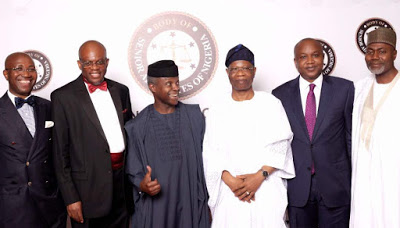
Vice Chairman of the Event Planning Committee of the umbrella body for SANs, Body of Senior Advocates of Nigeria (BOSAN), Paul Usoro, SAN, has challenged the newly inducted SANs to uphold the legal profession with integrity and honor.


While congratulating the newly inducted SANs, he added that they had proven themselves through hard work and consistency.

He said: “I would like to commend the learned silks here today. They have proven themselves as deserving members of this body through hard work and consistency. I enjoin them to continue to adhere to the highest standards of this prestigious profession and ensure that they serve as beacons of light to the society,” he said  


The Vice President of Nigeria, Professor Yemi Osinbajo, who was the special guest of honor at the occasion, also lent his voice to the call made by Usoro. While stressing that the legal profession bestows great responsibilities on practitioners, he charged the newly inducted SANs to preserve the dignity of the profession through ethical conducts.

“There is a need for a consensus on how to ensure that the greatest gift that we have received is not destroyed in our own time. It is a consensus that will be built only on sacrifice. Sacrifice in ethnic and other parochial loyalties, where our profession can be threatened, enabling a system of discipline that truly fears neither friend nor foe,” he said.


“For professional elites, such as ourselves, we owe a responsibility to ensure that the profession that refers us to the rank that we occupy that is the highest in our profession continues to thrive and flourish, first for a selfish reason; it confers greater respect and prestige on the rank we enjoy, second; that we be leaders so the profession can even become more successful.”


The event which held the impressive Intercontinental hotel saw the induction of 20 new SANs including Nigeria’s youngest SAN, Kehinde Olamide Ogunwumiju  into the body.


Some of the newly inducted members include Festus KeyamoSAN, Dr. Joshua Yusuff Musa SAN, Ekeme Iwoveruele SAN, Kamaldeen Adeyemi Ajibade SAN, Suleiman Usman SAN, Sani Garuru Gabas SAN, Ibrahim Sani Muhammmed SAN, Gboyega Oyewole SAN, John Olusegun Odubela SAN, Akin Osibanjo SAN, Francis Forum Egele SAN, Prof. Sadiq SlyvesterShikyl SAN, Chiezono Ukpoko SAN, Emeka Ukpoko SAN.

How Young Lawyers can participate successfully in today’s Political and Economic Climate

How Young Lawyers can participate successfully in today’s Political and Economic Climate


Paper
delivered at the Legal Marathon Summit, 2017

Oduduwa
Hall
Obafemi
Awolowo University

3rd
November, 2017.

On Friday, 13th
October, 2017, I was invited by Global International College, a secondary
school located in Lekki, Lagos, to speak to the students at their University
and Career Fair day.  As a lawyer, I was
particularly to address students who desired a career in law on the
profitability and fulfillment of having a legal career.


The Career Fair had picked
up on an interesting note but there was a sudden turn of events when another
speaker, who happened to one of the administrators of the school, expressly
advised the students not to study law. The scenario was further compounded when
the speaker asked me,  “how much a young
lawyer just out of law school would reasonably earn?” and I responded “between
Eighty to Hundred Thousand Naira”. My response added fuel to the fire and the
speaker went further to paint a picture of penury and doom for any of the
students who chose to study law. I suddenly felt the need to defend my
profession and I did so accordingly for
the
profession is so wide that everyone can succeed.  

However, since that day, I
have continued to ask myself;


1.    How can a young lawyer make his
practice stand out enough to attract the needed compensation?
2.   How could the new set
of emerging lawyers break new grounds in the legal profession?
3.   How could young lawyers
participate and excel in the current political climate? 
4.  How
could a young lawyer, participate in the global economy while acting locally
within the territorial borders of our nation?

I shall be providing
answers to these questions and if you are a good listener and above all can
apply creative thinking, you will discover how best to navigate your path in
the legal profession and your exclusive role in the political and economic
development of our country, our continent and the world.
Question 1;
–        
How
can a young lawyer make his practice stand out enough to attract the needed
compensation?

In the words of F. Lee
Bailey, author of ‘To be a Trial Lawyer”, “A lawyer’s education is far too
important to be left entirely to law schools. No school, regardless of how good
it may be, is capable of teaching the potential lawyer all there is to know
about the profession and business of law”. No law school graduate should regard
his or her legal education as complete unless he or she has begun to develop
skills of advocacy, legal drafting, legal research and negotiation.


Many of you want to be
revered like many senior lawyers, some of which you will have the opportunity
to listen to during this Legal Marathon Summit. The recipe for becoming an outstanding
lawyer is not beyond your grasp, neither is it too far-fetched. To be
successful, it takes a conscious, consistent and continuous resolve at self – development.
A lawyer must garner the requisite knowledge and skill and keep abreast of
changes in the law and its practice, including the benefits and risks
associated with relevant technology and engage in continuing study and
education. More importantly, a lawyer must be excellent in all things and at
all times.

Also, success in your
legal career is all based on the measuring stick you use.  If it’s
financial reward, you may never feel you’ve achieved success or if you do, it’s
fleeting.  If your measuring stick is how much you help pull others up and
lend a hand, you may reach success at a young age and never lose grasp of
it. My advice is don’t chase the money.  Chase the best lawyer in the
practice area you want to pursue and go work for him or her even if you can
make more elsewhere.  You will more than make up for that
compensation over your career by learning from the best. 


A competent lawyer must
possess great communication skills (oral and written), the ability to explain,
analytical skills, problem-solving and attention to detail. Management skills
also rank very highly. Like the former Commonwealth Lawyers Association (CLA)
President, Boma Ozobia has said, “You must have specific skills of fluency in
both written and spoken English, appreciate and analyse issues and  above
all must appear very clean at all times.”

Every lawyer no matter how
brilliant and smart must at all times bear in mind the strict rules of
professional conduct for Nigerian lawyers and lawyers everywhere. A high regard
for ethical standards and rules of professional conduct is an absolute
necessity for success in the legal profession. The legal profession places a
high premium on integrity, honesty, decency, dedication and discipline all over
the world. A successful lawyer must always represent the high moral values and
discipline which distinguishes lawyers in the society.

Question 2
–        
How
could the new set of emerging lawyers break new grounds in the legal
profession?
In other to break new
grounds in the practice of law,
young
lawyers must embrace new areas of law or less developed areas of law as Legal
practice in Nigeria is still in the 3rd world. For instance, young lawyers can
concentrate on areas of law such as Telecoms, Cyberlaw, ADR and Intellectual
Property.  Young Nigerian lawyers need to
be more creative, enterprising, and industrious. As lawyers, our orientation
should enable you open your minds to new learning and opportunities, not make you
learned robots. Young lawyers should embrace Internet technology as the Internet
provides boundless opportunities for professional development. Young lawyers
must open their minds to new ways of doing things and take the lead in
innovation.
Question 3;
–        
How
could young lawyers participate and excel in the current political climate
?
Lawyers play a very unique
role in the protection of the rule of law. Lawyers by virtue of our status,
have unique obligations to support law reform enhancing individual rights and
open, representative government. In modern democracy, lawyers are specially
competent and inclined to promote these values. Lawyers are usually sensitive
to process concerns and help to create a climate in which democracy can
flourish. However, the above in itself does not guarantee that a lawyer who is
an administrator would generally support progressive ideals.

As a lawyer, I am inspired
by the contributions of lawyers in Nigerian History, starting with Founding
Fathers including Chief Obafemi Awolowo,
Sir Adeyemo Alakija and Samuel Ládòkè Akíntọ́lá to
mention a few. Other lawyer heroes include the likes of Chief Gani Fawehinmi
SAN and Bola Ige SAN.  

In
a democratic society like ours, lawyers play a vital role as the custodian of
justice. The conscience of the people and a bridge between the government and
its people. Alexis De Tocqueville once stated that “When one visits
Americans and when one studies their laws, one sees that the authority they
have given to lawyers, and the influence they have allowed them to have in the
government, form the most powerful barrier today against the lapses of
democracy”. The above quote shows the vital role lawyers have played in
developing and nurturing the United States of America.However, in recent times,
not many Nigerian lawyers have been at the forefront of promoting democratic
values and revolutions.

No
doubt, Nigeria is experiencing pretty interesting times. Corruption has finally
reached epic proportions as stolen loot is now usually calculated in billions
of naira and dollars. Terrorism is threatening from the North-East, the
protection of human rights are not issues on the front burner, the rule of law
is not sacrosanct and there is a major lack of enforcement of legal rules,
regulations and procedures. There is a complete lack of accountability in
government and the moral fabric of society itself is falling apart at its
seams.
However, in order to be
particularly involved in Nigerian politics, young lawyers must now determine to
be lawyer-activist and honourable lawyer statesmen. There are lots of political
opportunities for young lawyers and you are the mechanics of the Nigerian Legal
System.

To be politically
relevant, you must understand that as a lawyer you are part of the fabric of the
constitution, so why not become part of the fabric of your community as well.
Society has created many
rules and regulations for the co-existence of mankind and it is also the role
of lawyers to interpret these rules to society.

A very good way to begin
is not only by joining a political party, but by participating in community
organizing because to get things done, you need to mobilize people in a collaborative
way. Community organising is
the work of building relationships and networks in communities to activate people and create social and
political change through collective action.

It
is important that the advocates’ skills be used not only to gain benefits for
those communities but also to consciously build organizational power and
community leadership.

True sustainable change
comes only from building large-scale, democratic organizations focused on
building the power and conscious leadership of poor and working people.
Additionally,
community participation provides access points for new emerging community
leaders to develop their experience, confidence and skills, thereby building
community capacity, which increases voluntary action through “people power” and
insures greater sustainability and staying power due to the increased
commitment and follow through by community members.

Essentially, citizen
participation builds social capital while
increasing
connections among individual community members by strengthening social ties,
relations, and networks.

In
1985, freshly graduated from Columbia University and working for a New York
business consultant, Barack Obama decided to become a community
organizer. Today, he has served as the 2 – term President of the United
States of America.

I don’t think I have
always wanted to be a lawyer  but I was
destined to be one, I remember my father once asked me if I wanted to be a
lawyer or a business man when I kept brimming with business ideas. I also
remember in primary school, I was less than 5 years old and we were having a
costume party at school, I adorned the lawyer’s wig and gown and sang the words
“I am a lawyer in my country and everybody knows me well”. Maybe an angel was
flying by that day and decided to grant me my wish because I am now a lawyer in
my country, Nigeria. However, as I grew to understand my role and
responsibility in the larger society, I knew it was my duty as a lawyer to use
my services to make my country and the world at large a better place.

Hence, I and my friend,
Temitope Atiba, who is currently the Senior Legislative Aid to Senator Gbenga
Ashafa at the National Assembly, started a Facebook group in 2010 called
“Nigerian Youth Development Initiative”, a group which quickly became popular
due to our constant advocacy for the rights of the common Nigerian. After
sometime, I felt the group was not having its required effect in promoting
social change the way we deemed fit, I realized the problem was that I was one
of the few who knew the quantum of legal rights available to all Nigerians and
the common ignorance of the law prevented my message from being heard. So I set
out to create what is today known as Legalnaija, the Nigerian Blawg that has
contributed significantly to the education of Nigerians on their legal rights
and obligations under the law.  Legalnaija currently has over 1.5 Million
views and thousands of followers across all social media platforms.

At Legalnaija, we believe
in the promotion of justice and equality for all Nigerians, regardless of
status or origins and we look forward to a society where every Nigerian can
equally get justice without needing to have money to hire the most expensive
Senior Advocate as legal representation.
I humbly urge you to
become one of the lawyers that would catapault our legal and political system,
so we may take our rightful place among the comity of Nations.  
Question 4
–        
How
can a young lawyer, participate in the global economy while acting locally
within the territorial bounds of our nation?
Young lawyers in legal
practice must venture beyond usual borders in order to succeed in business. In
the words of Chief Arthur Obi Okafor (SAN), “There is increased demand
for specialisations in areas of practice in the global legal services sector
that requires multidisciplinary skills, for instance a decent knowledge of
accounting and finance in order to have a basic understanding of corporate
governance issues etc”.
Law
is increasingly becoming multidisciplinary in nature and as a lawyer, you will
be required to understand many socio-political issues, and happenings in other
areas such as oil and gas, capital market etc. Furthermore, as a young lawyer,
you must improve on your business skill and not legal skill alone. This is the
effect of globalisation on legal practice.

The reality is therefore
that a lawyer should continuously pursue skills in related fields to remain
relevant and employable in today’s rather overpopulated legal landscape.”
knowledge and proficiency
in ICT is also a mandatory requirement in the 21st century legal marketplace.

The global legal market is
currently on siege by very aggressive tech disruption and a Nigerian lawyer and
indeed any lawyer anywhere in the world must therefore be abreast of latest
developments in ICT as it is a requirement for effective use of ICT systems and
devices.

To succeed globally, the
best way to make yourself valuable is to solve problems and find innovative
solutions to legal problems that you encounter in your chosen area of practice.

A lawyer is a better asset
to himself and society if he can demonstrate excellent skills in a niche within
the profession. It makes you significantly more valuable and gives you
potential to attract more clients. If you are known as a specialist in a
particular area, for instance; medical negligence cases, your value will
greatly increase.

Conclusion
I hope that from the
above, you have garnered the required knowledge to take your legal and
political career to the heights reserved strictly for the greats and I wish for
someone in this hall today, that your career will be what legends are made of.

Thank you.

Adedunmade Onibokun
Principal
Partner
Adedunmade
Oniboun & Co.
Founder/
Legalnaija
“Uncle, Stop Touching” “Sorry Madam, Sorry | Chika Maduakolam

“Uncle, Stop Touching” “Sorry Madam, Sorry | Chika Maduakolam

For some of us not in the know, there is a hot-cake scandal of a big Hollywood exec who has been alleged to have assaulted and harassed several women in Hollywood. Following the allegations, the #MeToo movement on social media is to enable other women around the world identify if they have been victims of sexual assault and harassment. In brief, the purpose of this movement is to stand against sexual assault and harassment, saying enough is enough.

As per my usual style, permit me to find an avenue to share my thoughts and unburden my jobless overworked legal mind:
What has a scandal from all the way in America got to do with us? Quite a lot! I muse over the fact that if Nigerian women; and it may surprise a few of us, men too, should share our #MeToo stories, we would actually shut down Twitter and any other social media outlet that exists. 
This is not saying that it only happens in Nigeria but I am Nigerian so this piece is fashioned to the environment I know. To return to my train of thought: I believe what catches my attention is not even the stories of blatant assault and harassment suffered by countless people, but actually the accepted standards of sexual misconduct within Nigeria which has drawn its weave within our society to the point where we are numb to various displays of this egregious acts daily.
Case in point: Boy and Girl are on the dancefloor, one or the other gets into the rhythm of the music and starts to close the ‘gap’ between both bodies. Before we say “Yeba” , one person lays their hand on another person’s waist suggestively and the dance takes another turn. 
Now, the person who is being touched tries to put some distance between the bodies, not appreciating the familiarity, the other person terms it as “shakara” and starts to apply more pressure to getting his or her way (with the erroneous thought that “yanga” will end after some persistence). If the offended now shows their offence, they are termed as overreacting. Bringing it home, when everyone is chilling and mingling, how often do we digress into sexual innuendos and then guys start touching you suggestively but mind you, as a “joke”. 
After all, we are not overly sensitive people!  And I could recount countless stories of some friends who go in for a business meeting and the potential client thinks it is okay to move from his seat to the seat right beside her and start stroking her, telling her “why are you being so serious?” and then when she wants to leave, he says “ahn ahn, someone cannot play with you again? It’s like you don’t want this account from me ooo”. What strikes me as funny is even as people recount these stories, we on the listening end laugh it off and say “all these men sef”.
We are desensitized to the gravity of what happens to us daily. Imagine my surprise when Nigerians reacted to a certain incident that occurred when the last Big Brother Nigeria aired. My surprise came from the fact that we could actually recognize what sexual assault looks like because to be honest, the alleged action is one that occurs on a regular and we shrug it off as a guy making a move on a girl he likes “Naija-style”. 
I will be the first to admit that even when a friend brought it to my attention, my first response was “Why are Nigerians attacking the guy, but guys do that” and I will apologize because it shows that even I am part of the problem!
To cut my long story short, I know some of us think that we have become on overly sensitive generation, following in the “western” footsteps but I would like to think that the principle of the lesser of two evils  applies here. I would rather be sensitive than condone inappropriate conversation, banter, touch or any other form of assault or harassment on my person. It is time to wake up because if we continue to permit our desensitization, very soon, even incidences like rape lose their shock factor and become commonplace (if it already hasn’t gotten there, but tale for another day!)
This is a decision that the court of public opinion has to take because our present laws in Nigeria (The Criminal Code, Penal Code and VAPPA) are limited in the protection they offer us. But the change starts with us first before we call for the attention of the lawmakers.
Disclaimer: I love the song “Yeba” so I use it as an illustration. I am in no way discussing the merits of the song.
My Adventure into Communications Law  – Paul Usoro SAN

My Adventure into Communications Law – Paul Usoro SAN

Before the GSM revolution in Nigeria, communication was a huge nightmare. The age-old cable telephone system in the country was as inefficient as it was costly.  Except for those at the topmost stratum of the society, possession of a telephone line was largely a luxury.  And it almost cost a fortune to get hooked up to the national trunk.  

However, the Federal Government took a bold step to break the monopoly of NITEL, which was in control of the industry. And so, the GSM came and the private network providers changed the face of things in the blink of an eye. Thanks to the great innovation, possession of a telephone has ceased to be a symbol status. Everybody is now communicating without tears. Today, Nigeria is one of the fastest growing telecom markets in the world. The tele-density too has grown beyond imagination.
But one strange thing about this phenomenal innovation is that relatively little is known about the behind-the-scene actors who midwifed the process of auction of the sales of the licenses of operation to the various network providers.  One of those unsung heroes of that revolution is Mr. Paul Usoro, a Senior Advocate of Nigeria (SAN).  He took an adventure into advocacy on communication matters when the field was relatively unknown.  Right from the outset of the negotiation of the deal, he provided the required legal advice for the liberalization of the sub-sector.
Today, Usoro, who is widely acknowledged as Nigeria’s father of communication law, remains a reference point in this specialized area of legal practice.  Listen to his story:
“I think much of my life has simply been structured by God.  He gave me the presence of mind to seize the moment.  I set up my practice in 1985.  Before then, when I finished my youth corps, I had joined a firm in Kaduna during which time I met a gentleman who happened to be a permanent secretary in the Federal Ministry of Communication.  And we got to be very close and became more of family even till today. When I decided to set up my law practice, I mentioned it to him and he encouraged me.  He said it would be a success because the people I was working for thought very highly on me.
That was how I set up my law practice.  Coincidentally, it was the time the Federal Government was setting up NITEL, excising it from the P & T. And he was responsible for the process.  Because of the confidence he had in me, he listed me as one of the external pioneer soliciting counsel to NITEL. That was how I became NITEL’s counsel. Of course, being a NITEL counsel doesn’t necessarily translate you to an advocate in communications matters.  But gradually, I became interested in core communication. At a point, I literally became a counsel of choice for NITEL. During the initial negotiation with regards to P & T on interconnect, it came naturally and they said, ‘Paul, you will be the one to do it.’  That was novel; it was a new thing.  Again, when it got to the level of having to negotiate SAT 3, International cable, somebody needed to represent NITEL and they said, ‘Paul, you have to negotiate with the consortium.’ Gradually, it became natural for them to give me core communication assignments.  To equip myself with the skill needed to confront the challenge, I went for conferences and researched to understand the language of communication. With that, I understood the intricacies of communications as far as the laws relating to it areconcerned.  And then, of course, some other significant developments came up later. When the Nigerian Communications Commission (NCC) was reorganized, they also started using me for their specialized needs.  To an extent, this area of specialization is a small industry. So, everybody knows each other and individual competences.”
By the time Ernest Ndukwe came in and decision was taken to do the GSM auction, he took me as their legal adviser.  It was exciting and groundbreaking. As I applied myself in NITEL, I also started applying myself here too, doing groundbreaking work and setting the standard. I began to produce some publications which served as agenda setting for the industry. I actually had to prepare the documents needed by the commission to work with the National Assembly. I give thanks to the Almighty God for opening the door for me.”
Interestingly, when Paul got admission to read English at the University of Ife (now Obafemi Awolowo University) in 1977, little did it occur to him that providence has a different plan.  But for peer influence, he probably would have ended up in class as aPioneering a new field of knowledge could not have come easy.  In any human endeavor, there is always this initial challenge of doing-it-alone. But he never allowed himself to be distracted.  He saw a bright future in the profession and went all out to acquire the much needed tool, especially the semantics. Recalling how he managed to overcome the initial challenges, Usoro recounts: “In terms of global context of practice, there were initial challenges. At that initial stage, you really could not have had the opportunity of mega-million naira paying assignments.  Even if there were, they were not as frequent. 
Therefore, if I had focused only on that, perhaps I wouldn’t have been able to pay salaries or maintain myself.  So, what I did was to focus on developing those skills I knew I needed for the profession. At the same time, I did not forget my primary role as a lawyer. So, I still went to court to do my advocacy as an advocate to those who believed very strongly in my advocacy.
“In the same vein, there were also some who believed that I am a specialist in communication related matters only.  In fact by the time I became a Senior Advocate of Nigeria (SAN), there were some people who were skeptical as to whether or not I go to court.  On the other hand, some who knew me within the communication industry saw me as an advocate in the communication field. In other words, doing only core communication couldn’t have been sufficient to sustain me at the very initial stage.
“The second challenge I had was to build myself and develop the necessary skills.  And as I used to tell people, one of the things you have to do if you are going to be specialist in communication is to have good mastery of the language.  You must speak the language; you must understand the linkages. If you do not understand, it will be very difficult for you to apply the law. For example, if you don’t understand the intricacies of the structure of lending, it will be difficult for you to prepare an agreement of lending document that would protect the parties you represent. You must understand the structure and how they want to do it. 
The same thing applies to communications; if you do not understand what needs to be understood and how to achieve it, it will be difficult for you to apply the law very well.  In this regard, I must pay tribute to my friends in NITEL.  I usually would go to some of them and ask them to lecture me on technical issues and the language as well.  And they would spend time to break it down for me. I actually used to ask for materials to read so that I could understand those technical language aspects.”
For the simple fact that Usoro was part of the process that gave birth to the successful operation of the GSM in Nigeria, at the snap of a finger he can narrate, blow-by-blow, how the hitherto dormant telecommunication industry was nurtured to become a competitive player in the ever-growing global market.  He saw it all and understands the intricacies of the deals that culminated in the opening up of the once-constricted industry.
Why was the operation fee paid to roll-out so expensive?  His answer: “It is a very simple thing.  You have a scare resource and you want to dispose of that scare resource. The fairest way you can dispose it off is to have people to bid so that each individual pays according to his appetite.  
That is the equivalent of putting your money where your mouth is.  The logic is this: You want it so badly; then let’s see how much you can pay in the process. Those who don’t have the deep pocket to be able to pay will gradually fall out; until it gets to a stage where only those who can afford it and really want it as much pay for it. That is one aspect of it. If the person values it that high, definitely, he would want to do something to be able to actualize it. He is not going to allow it to go fallow because he needs a return of his investment.

An English teacher or a lecturer at the tertiary level, depending on how far his luck could carry him.  But unconsciously, he strayed into the law programme.  This was how he came about that: “I believe I strayed into the profession.  I had an admission to read English at the University of Ife in 1977. There were two of my friends – Dipo Kalejaiye, now in the U.S., and the late Anthony Opop – studying English with me. By the time we finished the first year, Dipo said we should change to law.
“I knew he had an idea of what he wanted to do with law. And I also reasoned that it might be very interesting to go in for studying law than reading basically English. That was how I strayed into law. Then, they used to look into students’ result at the end of the session to decide those who can change courses.  When they looked into my result, I was one of the few students admitted into the law programme.”
The fairer way to do all this is to throw it open and set a minimum price.  Then, you start bidding from that base price. That way, those who are gambling will fall off.”

Nigeria’s experience is a peculiar one. Unlike most countries which had earlier embraced the new technology, Nigerians have had to pay through their nose for the epileptic service provided by the various networks. Drop calls, inter-connectivity problem and outright rip-off are still issues customers grapple with.  Usoro believes that with time, all these problems will be a thing of the past. His words: “What we have at present in Nigeria is much of voice telephony. Data hasn’t been developed as much as it ought to be.  The speed is not also as well as developed as it ought to be and even with regards to the voice, the quality still needs to be enhanced. The customer needs to have his money’s worth. Even the structure as well as convergence of all the technologies has not been fully developed. It is not a day’s journey so there are some things that need to be developed as far as the industry is concerned.”

Usoro however notes that one of the things that have been responsible for the growth in the communication industry is the stability of the regulatory agency, which is statutory. The credit still goes to Usoro, who practically single-handedly prepared the bill that was eventually passed into law by the National Assembly.

Usoro is an indigene of Ikot-Ekpene in Akwa-Ibom State and is married to Mfon, his childhood sweetheart, who is  the star maritime lawyer of Paul Usoro & Co. They are richly blessed with children.

Culled from the book For the Love of Their Nation: Lawyers as Agents of Change in Nigeria by Mustapha Ogunsakin