Tips For Foreign Companies Investing in Nigeria

Tips For Foreign Companies Investing in Nigeria

–  Foreign companies intending to
carry on business in Nigeria should note the following- 

1. Foreign
companies must be registered as corporate entities in Nigeria with the
Corporate Affairs Commission 

2. Penalty for
foreign companies who fail to comply with the directive above shall be guilty
of an offence and liable to conviction to a fine and every officer or agent of
the company who permits the default shall also be liable to a fine.

3. Foreign
companies may apply to the President for exemption via the Secretary to the
Govt of the Federation.

4. Exemptions are
granted on the basis that the company was invited to Nigeria by the Federal
Govt or International Organization to carry out a specific project.

5. Such exempted
company shall have the status of an unregistered company. 

Adedunmade Onibokun and Co.,

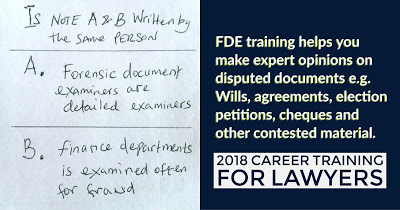
Forensic Document Examination at the 2018 Career Training For Lawyers

Forensic Document Examination at the 2018 Career Training For Lawyers


As a lawyer, training in Forensic Document Examination will aid you in preparing expert opinions on the authenticity of documents from Wills, Agreements, Cheques, Signatures and many more. 


REGISTER NOW 
Early Bird Registration for the 2018 Career Training For Lawyers ends in 2 days. Register  on or before the 31st of March, 2018 to earn a 5,000 Naira discount. 
Training modules include – •  Sports Law •  Mediation •  Entertainment Law •  Finance for Lawyers •  Forensic Document Examination; and •  Intellectual Property Law


Training Information –
Date – 26th and 27th April, 2018
Venue – LCCI Conference & Exhibition Centre, Nurudeen Olowopopo Drive, Alausa, Ikeja, Lagos
Time :- 9am – 5pm Daily 

Registration Details
Fee per delegate:
N25,000 – Early Bird (Ends 31st March, 2018)
N30,000 – Regular 

Account Details –
Lawlexis International Limited
Fidelity Bank
4011176564 

Note that all Payment confirmation and Delegate Information should be sent to lawlexisinternational@gmail.com. For contact and sponsorship details, Call Lawlexis on  09095635314; 08055424566
Learn Nigerian Laws | Order Now

Learn Nigerian Laws | Order Now


Learn Nigerian laws and stay informed of your legal rights by getting your copy of “Legal Rights & Obligations Under Nigerian Law” 


The book covers over 80 Nigerian laws and is written in plain language so non-lawyers can understand. 

Topics include various laws on crimes and punishments, family law, property law, business law, tenancy law, civil law and also law enforcement laws. 

To order simply text “Legal Rights” space “Your Name” space “Location” to 08055424566. E.g. – “Legal Rights,  Ade Abubakar Chinedu,  Ikeja Lagos “

Order Now to take advantage of the 50% special discount for the easter period. Terms & Conditions apply.
Senator Ashafa Commends Fec On N20 Billion Approval For Ikorodu-Sagamu Road Rehablitation

Senator Ashafa Commends Fec On N20 Billion Approval For Ikorodu-Sagamu Road Rehablitation

The Senator representing Lagos East Senatorial District and the
Chairman of the Senate Committee on Land Transport, Senator Gbenga Ashafa has
commended His Excellency President Muhammadu Buhari and the Honourable Minister
for Power, Works and Housing, Babatunde Raji Fashola SAN, for approving the sum
of N20 Billion Naira for the rehabilitation of the Ikorodu –Sagamu express way.  


In a statement released to the press on Thursday, 29th
March, 2017, Ashafa stated that: “On behalf of the good and hardworking people
Lagos East Senatorial District in general and the good people of Ikorodu in
particular, I seize this opportunity to commend His Excellency, President
Muhamadu Buhari and the Honourable Minister for Power, Works and Housing, Mr.
Babatunde Raji Fashola on the recent approval of the sum of N20 Billion for the
rehabilitation of the Ikorodu – Shagamu road. We called and you answered.” 

“I also thank His Excellency, Governor Akinwunmi Ambode our dear
Governor for the role he has played at the executive level in ensuring the
approval of the funding for the construction/rehabilitation of this project.”

Noting
the efforts and the role that the lawmakers of the Eastern District of Lagos
State, ably led by himself, Ashafa stated further that “Having observed the
perennial strain and discomfort that the above stated road project has caused
our teeming constituents, I led the clamour of other legislators from the Lagos
East Senatorial District via my letter dated 24th July, 2017 in
urging the Hon. Minister for Power, Works and Housing to prioritize the award
of the said project. The Honourable Minister graciously directed the Permanent
Secretary of the Ministry to respond vide a letter dated 18th
October, 2017 with Reference Number: DDHMS/CR/62/NASS/111/409 confirming that
the said project has been prioritized and that the procurement process for the
project had indeed commenced. Yesterday’s approval of funding by the Federal
Executive Council therefore marks the end of the award process.”                                              
                   

In
conclusion, Ashafa therefore expressed his excitement with regards to the
positive effect of the road construction on the people of Ikorodu as well as
his confidence in the Federal Government to ensure the speedy completion of the
project stating that  “I am deeply excited because, the completion of this
project would greatly improve the quality of life of our constituents, by
easing the stress they currently face commuting that route while also easing
the stress on the Lagos-Ibadan Expressway, by serving as a viable alternative
to commuters. I am confident that work would commence in earnest towards the
speedy completion of this important infrastructural project soonest.”

Vice President Osinbajo Commends Ashafa’s Consistency

Vice President Osinbajo Commends Ashafa’s Consistency


– Says Ashafa contributed immensely towards
success of Lekki Deep Sea Port project.

The
Vice President, Professor Yemi Osinbajo SAN, on Thursday 29th March,
2018 commended the Senator representing Lagos East Senatorial District, Senator
Gbenga B. Ashafa for his consistency in attracting developmental initiatives to
the district. This the Vice President noted has been the manner of approach of
the Distinguished Senator even since his days as the Executive Secretary of the
Lands Bureau of Lagos State.

Osinbajo
who stated this while representing His Excellency President Muhamadu Buhari, at
the Flag Off of the construction of the deep sea port, stated that “I must
commend Senator Gbenga Ashafa for the role he played in the actualization of
the Lekki Deep Sea port project. The land we are on today to flag off the
construction of this project was acquired during the tenure of Senator Ashafa
as the Executive Secretary of the Lands Bureau of Lagos State. The Senator who
now represents this district at the National Assembly has been consistent in
his activities geared towards the development of this district and the state
and I am honoured to be sharing this platform with him today.”

The Vice President in
his speech also stated that the project, when completed is expected to create up to 170,000 direct and indirect jobs in the economy.

“It is a landmark project for several reasons — the promoters of
this project are targeting, we are told, about 1.5 million TEUs (Twenty
Equivalent Units) container capacity annually, which they expect to grow to
about 2.7 million and 4.7 million TEUs when the project commences.

”With this feat, this sea port will become one of the largest in
our region and serve as a hub for ports operations in the whole of West Africa.

”There is no question at all that the project will be the
largest in Sub-Saharan Africa and possibly, the largest in Africa.

On
his part, Senator Ashafa commended the Muhamadu Buhari Government for its
dedication to ensuring that every nook and cranney of Nigeria enjoys
infrastructural projects. He also thanked the Federal Government and the Lagos
State Government led by Governor Akinwunmi Ambode on behalf of the people of
Ibeju Lekki and Lagos East for making the project a reality.


Image – www.independentnigeria.com 

HOW INHUMAN IS THIS LAGOS LAND USE CHARGE 2018? | Eseoghene Palmer

HOW INHUMAN IS THIS LAGOS LAND USE CHARGE 2018? | Eseoghene Palmer

The Lagos State Government would
surely have gaped its mouth at the reactions of its ever praise-giving
residents; did the Ambode’s administration get this one wrong? The answer would
be a partial “Yes” and at the same time an anemic “no”. No doubt, it would be
agreed that the promulgation of the Land Use Charge (hereinafter, “LUC”) Law of
2018 did not come as a surprise, indeed, the former LUC Law of 2001 was in dire
need of repeal.  

At least judging from the
more recent legislation, we can identify one unique benefit contrasting the old
law, that is, a consolidation of all land related taxes such as ground rent,
tenement rate, neighborhood improvement levy etc. into one absolute and unique
tax. The new law also appears to have taken cognizance of the dynamics of modern
housing in the state, flowing from the recognition of the possibility of a
landed property used for both residential and commercial activities. An example
would be a 4 story building wherein the first 2 stories are used for
residential functions and the lowers stories are used for commercial activity
like schools or stores.
To criticize, there appears
to be nothing wrong in the legal process that gave birth to this law. All boxes
appear ticked, consultations were made, town hall meetings held, legislators
had swung into action and stakeholders were abreast of the situation.  
In a State where the major
natural resource is “Tax”, one might begin to wonder why the sudden outbursts
emerging from the masses. The following paragraphs may identify some of the
reasons.
1.      
TAX
RATE FORMULA:
Classification
OLD RATE
NEW RATE
Pensioner’s
property
0.000%
0.000%
Lagos
State Government properties
N/A
0.000%
Owner
occupied residential property
0.150%
0.076%
Vacant
properties and open empty land
0.000%
0.076%
Industrial
premises of manufacturing concerns
0.500%
0.256%
Residential
property occupied by owner and 3rd party
Unclear
0.256%
Residential
property not occupied by owner
0.650%
0.760%
Commercial
property (used for business purposes)
1.750%
0.760%
Family
compounds
0.000%
Any rate
above
The tax rate differs per the
classification of the property as seen in the schedule of the LUC Act 2018, the
Old rate is also shown to further the difference


Furthermore, the formula for
calculation of tax required as seen in the same schedule is thus:

(Land Value + Building
Developments Value) x Relief Rate x Charge Rate

That is:

LUC=
(LA X LR) + (BA X BR X DR) X RR X CR

Where in (in summary):

LUC
is
“the annual chargeable tax fee being the LAND USE CHARGE”

LA
is
“area of land per square meter”

LR
is
“average market value of the land per square meter as determined by the professional
values “

BA
is
“value of total developed floor area on a plot of land in square meters

BR is
“average construction value of medium quality buildings and improvement in the
neighborhood based on the market value done by values”

DR
is
“depreciation rate for the buildings and improvements on the land.

RR is
“relief rate where applicable to owner occupier”

CR
is
“the annual charge rate expressed as a percentage of the assessed market value
of the property which may vary at the governor’s discretion”.

Clearly, the above expressed
formula is complex and calls for the applications of mathematicians. According
to Kenneth Erikume, ‘the formula … could have led to complexity by the
assessors in computing the reliefs. For example, rather than give a pensioner
100% relief, multiplying by 100% to arrive at the LUC (which is what the
formula seems to suggest) would give no relief at all. It is important for the
State to clarify and simplify the computation so that an average property owner
can compute it without any external assistance. Giving taxpayers the option for
self-assessment would also reduce controversy. It seems that it is still too
complicated even for the assessors.’

Some reports state that LUC
rates have increased by 200% to 500%. This is not exactly correct in all cases,
based on the rates alone. In some critical economic and social areas, rates
have dropped as shown in the table above.

It is pertinent to note that
there has been a downward review of the LUC law which was announced on the 15th
of May, 2018. The implication of this amendment is that commercial property
owners are to be granted a 50% discount. Properties used by owner and third
party and also property used by for Industrial and Manufacturing purposes are
to enjoy a 25% discount. A solely owner occupied property will enjoy a 15%
discount.

Additionally, the penalty
for late payment has been waived completely.

2.    
FINANCIAL
STANDING OF LOW-INCOME PROPERTY OWNERS

The minimum wage issue has
been a perfect challenge to this new law. The National Minimum Wage Act of 2011
provides N18, 000 as the least ‘take-home-pay’
for a public servant. Although Lagos State appears to house all the
billionaires in Nigeria, the percentage of low income earners, however, still outweigh
the upper class.  Areas such as Ikorodu,
Badagry, Magboro in Lagos State still consists of relatively cheap properties,
a galore for the minimum wage worker. If the intention is to use the property
for residential and commercial purposes then the LUC Act will present a hurdle
in the maintenance of such ownership of property.

3.     TRANSLATED IMPACT ON RENT

For many landlords,
particularly those in Lagos, property is a thriving business, one in which no
loss occurs, just appreciation and profits. The presence of the LUC Act 2018
has definitely adjusted that narrative. With no research or polls conducted we
can safely assume that Lagos landlords will transfer the aggression of the 2018
Act on their tenants, many of which may be minimum wage earners. Judging from
the steady inflation and the rise in food prices (as a result of the unrest in
the middle belt and Northern area of Nigeria), Lagos may, for the first time,
experience an efflux of residents to neighboring states.   

4.     PENSIONERS UNDER THE ACT

It is observed that in both
the LUC 2001 and 2018 Law, pensioners are exempt from land taxes. However,
under the interpretation section (section 1) the new law introduces a
definition of “pensioner” as a person
who retires from a pensionable office in the State (Lagos State of Nigeria)
.
There are 2 interpretations of this, depending on what is considered as
‘pensionable office’. According to Kenneth Erikume, “ It could either mean that
the pensioners that get the exemption must have retired as workers in the
government of Lagos State or that the pensioners must have retired as workers
in Lagos State. The first interpretation would be very discriminatory and it is
doubtful whether this was the intention of the drafters. The second
interpretation would be logical as Lagos State is at liberty to grant an
exemption only to those who have contributed to its economy during their more
active days in terms of taxes and driving the economy.”

Another misconception may
arise, as to whether the grace of the law extends to all properties owned by a
pensioner everywhere in the state. For example, will tax be paid by a pensioner
on all his many properties in Lagos (both residential and commercial) save the
one he currently resides in? or are all the properties covered under his
status?

Despite the criticism
cloaking this new law, amid the swift reaction of the government, it cannot be
held to be true that this law is Draconian. Several reasons point to the
benefits of the LUC Law 2018. The following paragraphs shall highlight just a
few.

1.     DEBT PORTFOLIO

As at 2017, Lagos State
amassed a debt profile of N603.25
Billion (both foreign and domestic) as against its revenue of N410.5 Billion. In light, of this
distressing fact, it would only be logical for a government to offset this
insipient financial doom. The perceived slight increase in the LUC may be an
approach by the Ambode’s administration in bridging the gap towards financial
autonomy and leverage.

2.     LAND USAGE

Looking at the rates
marshaled out in the new law, LUC Law 2018, it is obvious even to the blind
that, a vacant land owner would be at a loss, if he fails to utilize his
property. The implication of this new law is that all lands will be utilized;
this will go a long way in solving the housing deficit plaguing the Lagos
Government. Similarly, it could also instigate a rise in commercial entities,
thereby adding to the internally Generated Revenue (IGR) of the state.

3.    
CONSOLIDATED
TAX

As has been observed earlier
in the first paragraph, the new LUC Law has attempted to consolidate all land
related taxes as opposed to the former LUC Act. As seen in section 1 of the new
Law, the land use charge is said to include “all property and land based
rates and charges payable under the land rates law, the Neighborhood
Improvement Charge Law and Tenement Rate
”. This is a sure improvement on
the culture of never ending land related bills.

Conclusively, I would argue
that the Land Use Charge is not an inhuman law, it is an ambitious one.
However, just like an electronic application, the Lagos State Government may
need to debug and update this new law. The reasons for this update would be to
tackle the problems and glaring disadvantages this new enactment portends. The
government will also need to educate its residents on the importance of paying
taxes. There is no gain saying that all thriving economies get their nutrients
from the tax payer’s commitment. 

Eseoghene Palmer Esq.

Adedunmade Onibokun &
Co.

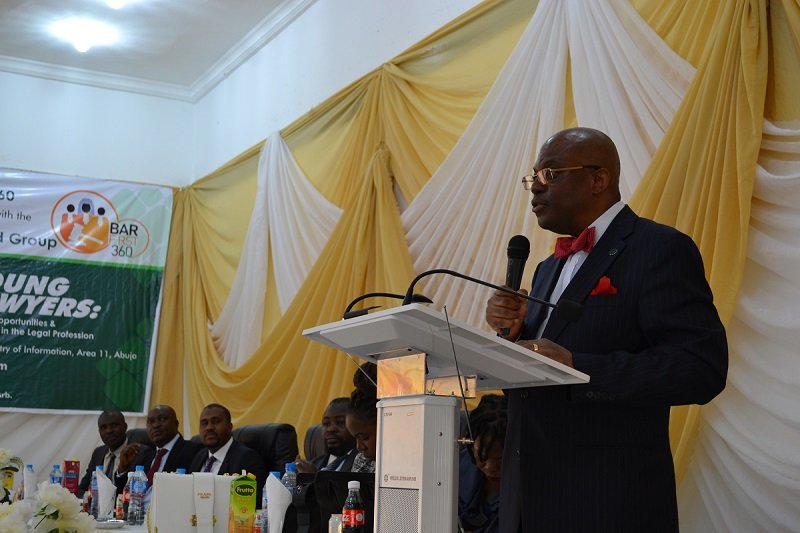
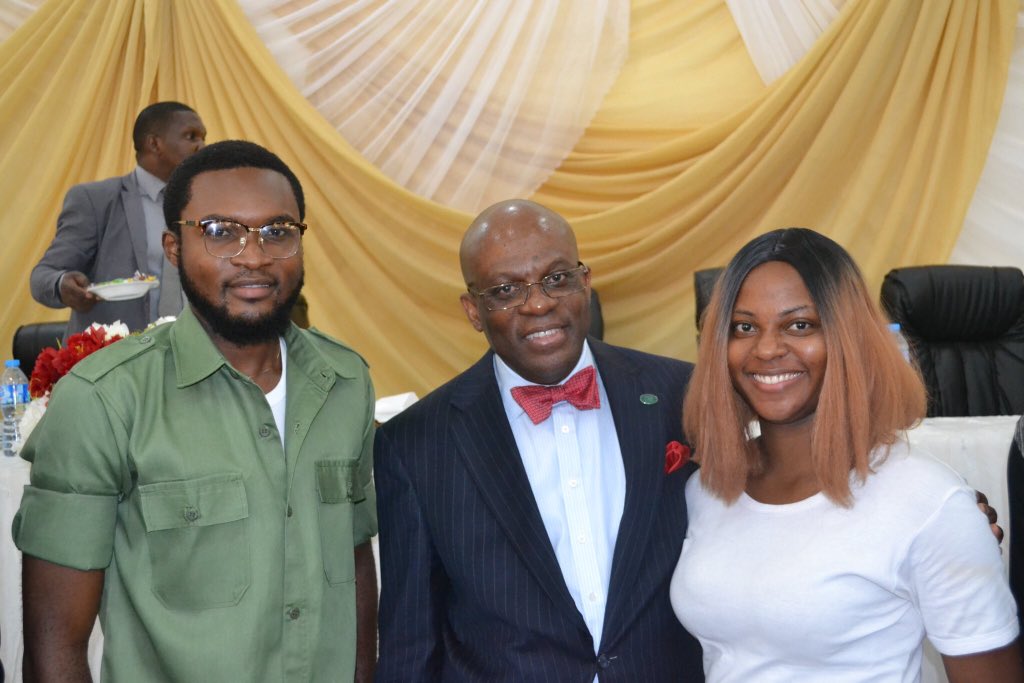
Paul Usoro doing one of the things he loves best; mentoring

Paul Usoro doing one of the things he loves best; mentoring

Paul Usoro SAN @paulusoro Speaks on Career Opportunities/Prospects in the Legal Profession 

The Learned Silk, Paul Usoro, SAN, is currently in Abuja addressing young lawyers at a Seminar, speaking on the topic “Young Lawyers: Career Opportunities and Prospects in the Legal Profession”. The event which is holding at the Radio House Auditorium Abuja, is in collaboration with the NYSC Legal Aid Group in Abuja. 

While addressing the young Lawyers; Paul Usoro states “it is not only about your credentials or knowledge but also your personality, attitude, integrity”. The Learned Silk seeks to impact relatable knowledge to Young Lawyers with a passion for the rule of Law in Nigeria.

Career Training for Lawyers

Career Training for Lawyers

Lawyers play a very vital role in the Nigerian Creative Industry and Business World. This training aims to increase and develop the competence of lawyers by providing adequate knowledge to further understand the needs of clients in the entertainment, sports, creative and financial business industries.


Training Overview
The scheduled modules for the training are directed at how lawyers can best take advantage of new areas of law including –

• Sports Law
• Mediation
• Entertainment Law
• Finance for Lawyers
• Forensic Document Examination; and
• Intellectual Property Law.

Training Information –
Date – 26th and 27th April, 2018
Venue – LCCI Conference & Exhibition Centre, Nurudeen Olowopopo Drive, Alausa, Ikeja, Lagos
Time :- 9am – 5pm Daily

Registration Details
Fee per delegate:
N25,000 – Early Bird (Ends 31st March, 2018)
N30,000 – Regular

Account Details –
Lawlexis International Limited
Fidelity Bank
4011176564

Note that all Payment confirmation and Delegate Information should be sent to lawlexisinternational@gmail.com. For contact and sponsorship details, Please contact Lawlexis on 09095635314; 08055424566

Representing a Guilty Man | Oliver Omoredia

Representing a Guilty Man | Oliver Omoredia

Lawyers are liars!” This represents the
view of the larger population of society about lawyers. A view drawn from the conclusion
that a lawyer’s duty is to misrepresent facts to suit his client for whom he
intends to win at all costs. The position of a defence counsel in criminal
proceeding is even the more precarious and is sometimes even seen as
condemnable. Many wonder why an Accused person caught in the act of committing
a crime should spend years on trial with the aim of “proving” that he
committed the crime he was caught committing. Clearly, to these people, it
takes a man without conscience or a sense of morality to be a lawyer to a “guilty
man”. Despite these widely held views, a close inspection of a lawyer’s duty
and calling vis-à-vis the rules regulating his professional conduct, makes it
apparent that such views are misplaced and very far from serving the true
object of justice.

As a preliminary question, one may ask; under law, who
is a guilty man? This question is succinctly answered by our most essential
body of law: our constitution. Section
36 (5) of the Constitution of the Federal Republic of Nigeria 1999 (As Amended)

Every person charged with a criminal offence is presumed innocent until proven
to be guilty! In other words, under law, no man is guilty until he is proven to
be guilty! This is the first rule upon which a legal practitioner is called to
represent an Accused most would regard as guilty. A legal practitioner never
represents a guilty man! He only represents an innocent man who may or may not
be proven guilty! Whether a person was caught in the act may only lend credence
to the ease with which his guilt will be proven, it does not in itself
conclusively establish guilt. If this doesn’t make sense, then does it make
sense that four young boys were gruesomely murdered by an angry mob who
believed beyond doubt that they were caught in the act of crime, only to later
find out they were innocent? Indeed, it only makes sense for this presumption
of innocence to continue to free several guilty men than for the application of
the opposite argument to lead to the condemnation of an innocent man.

Therefore, there is no guilty man;
only a man whom the law is trying to establish his guilt. In the process of
proving his guilt it would be greatly unfair that Prosecution knows the law,
the Judge knows the law, but the person to whom it is sought to be applied does
not! It would be too much injustice to proceed from a temple of justice. To
this end, the innocent man whose guilt the law seeks to establish, becomes
entitled to get a person who also knows the law. A lawyer!

However, what if the lawyer
personally knows the Accused person is guilty? He is caught in between his job
and his sense of morality. At this stage the conflict resolution for a properly
trained lawyer is simple: He must be a lawyer! Not a lawyer that lies but a
lawyer that is professional in conduct and guided by the Rules of his
profession! Now let us look at what the Rules tell a lawyer to do in such
situation.

The Rules of
Professional Conduct for Legal Practitioners 2007
states under Rules 24. (1):

“It is the duty of a lawyer to accept
any briefs in the Court in which he professes to practice provided the proper
professional fee is offered unless there are special circumstances which
justify his refusal.”

In interpreting this provision of the
Rules, the opinion of Obi Okoye, a learned author on the subject of
Professional Ethics and whose text is recommended material at the Nigerian Law School,
is incisive and he says:

” a legal practitioner is
obliged to accept the brief from the client….(he) is not only bound to accept
the brief, he should put his best in discharging his responsibilities towards
the cause. The rationale behind this rule is that legal practitioners should
not pick and choose briefs they should handle in court. As officers of the
court, they are not at liberty to select the cases to appear in since the
primary duty of a legal practitioner appearing in a case in court is to assist
the court in arriving at a just decision.

The fact that a
case is unpopular or that a client has a very bad criminal record or public
record or that the legal practitioner believes that the accused person is
guilty, may not justify his refusal to accept the client’s case.
        (This) …cab rank rule is mostly
applied in criminal cases to prevent accused persons from being denied legal
representation by lawyers owing to their bad record… “

It
is highly unprofessional therefore for a legal practitioner to reject a
client’s case, and more particularly in a criminal trial, just because he
believes the client is guilty. A lawyer’s calling is to render service to all.
As a Medical Doctor should treat a patient before him irrespective of whether
he caused his sickness or is a robber, a lawyer must render legal service to
all before him and put his personal sentiments away when he acts professionally.
 

While
a legal practitioner is not to reject the brief of a “guilty man” on the
grounds that he knows he is guilty, this should not be mistaken to mean that he
has been placed with the burden of perverting the cause of justice. A legal
practitioner for an Accused ensures a fair trial and in doing so has a duty to
the court; the temple of justice before whom he appears as minister. He should
only do what is honourably accepted in professional regards.

The
above submissions were capture by the Supreme Court in UDOFIA V. THE STATE (1988) LPELR-3305(SC) where the court Per Oputa, J.S.C held that:

“Every person accused of crime has a
right to a fair trial, including persons whose conduct, reputation, or alleged
violations may be the subject of public unpopularity or clamour. This places a
duty of service on the legal profession and, where particular employment is
declined the refusal of the brief or to undertake a defence may not be
justified merely on account of belief in the guilt of the accused, or
repugnance towards him or to the crime or offence charged… The following appear
in bold relief: – 1. Every person accused of crime has a right to a fair trial.
2. Persons whose crimes are so heinous that they constitute a shock to the
accepted norms of behaviour are also entitled to a fair trial. 3. A legal
practitioner should not refuse to defend such people. 4. When a legal
practitioner does accept such brief, and in fact any brief, he should urge any
and everything that can be honourably urged in favour of the accused. 5. He
should collect the facts, weigh them and put them across to the Court courageously
and fearlessly. This is the advocate’s noble duty to render efficient, honest
and conscientious service; to put across his own side of the case with all the
force at his command, so that the trial Judge would be able to consider both
sides and decide where the justice of the case lies. 6. It is the paramount
duty of a defence counsel to defend the accused – which means to ensure that an
accused person is never left unrepresented at any stage of the trial. If
counsel for the defence has obviously and scandalously not discharged his duty
to the accused he is defending, I do not know how one can call the trial
fair.”

The
above quote of the apex court on the issue, puts this discussion in proper
perspective and answers the subject of this write-up beyond peradventure.
However, to further consolidate the point (and I do urge you follow this point
through) , I further refer to the quote of One of the greatest proponents of
legal ethics and advocacy, Lord Denning
MR
in the case of Rondel v. Worsley
(1967) I QB 443
which was cited with approval by the Court of Appeal in Free Ent (Nig) Ltd v G.T.O.S.A (1998) 1
NWLR (Pt. 532) Pg 1 @ 21-2 Paras. E – C, per Per Onalaja JCA
thus:

By the ethics of this profession, the
credo of which was clearly stated in Rondel v. Worsley (1967) I QB 443 wherein
LORD DENNING MR, the greatest MASTER of THE ROLLS OF ENGLAND in this century
observed as follows: – “As an advocate, he is a Minister of Justice
equally with the Judge. He has a monopoly of audience in the higher courts. No
one save he can address the JUDGE, unless it be a litigant in person. This
carries with it a corresponding responsibility. He must accept that brief and
do all he honourably can on behalf of his client. I say “all he honourably
can” because his duty is not only to his client. He has a duty to the
court which is paramount. It is a mistake to suppose that he is the mouth piece
of his client to say what he wants or his tool to do what he directs. He is
none of these things. He owes allegiance to a higher cause. It is the cause of
truth and justice. He must not consciously mis-state the facts. He must not
knowingly conceal the truth. He must not unjustly make a charge of fraud, that
is, without evidence to support it. He must produce all the relevant
authorities even those that are against him. He must see that his client
discloses, if ordered, the relevant documents, even those that are fatal to his
case. He must disregard the most specific instructions of his client if they
conflict with his duty to the court. The code which requires a barrister to do
all this is not a code of law. It is a code of honour. If he breaks it, he is
offending against the rules of profession and is subject to its discipline. But
he cannot be sued in a court of law. Such being his duty to the court the
barrister must be able to do it fearlessly. He has time and time again to
choose between his duty to his client and his duty to the court. This is a
conflict often difficult to resolve and he should not be under pressure to
decide wrongly if a barrister is to be able to do his duty fearlessly and
independently, he must not be subject to the threat of an action for negligence.”

The above decision has been followed
and adopted in T. Oseni v. Brossettee Nig. Ltd. (1981) Jan/March CCRCJ 310-320, The
Shell Petroleum Development Company of Nig, Ltd v. Chief George Uzoaru & 3
Ors (For themselves and as representing the UMUNNAKA UKWU Village of OGUTA)
(1994) 9 NWLR (Pt. 366) page 51, OPUTA,J.S.C.’s BOOK OUR TEMPLE OF JUSTICE.        
                  

These past months, I have noted with
concern that some lawyers have been intimidated by the media, and even booed at
public fora for defending some persons in the “corrupt political class”. Such
conduct by the members of the public is sheer ignorance and a betrayal of
proper understanding of the calling of a lawyer’s profession. A lawyer as a
professional does not and should not act on the sentiments of the public in the
execution of his duties but should apply the law and ensure its application is
proper towards his client in every case he conducts while upholding his most
paramount duty to the cause of justice. A lawyer is not a liar, He only ensures
the other party properly elicits the truth!

IN
CONCLUSION

While a lawyer can professionally, and is in
fact encouraged to, represent a guilty man, He need not be a liar covering up or
misrepresenting facts to do so. Representing a guilty man is not unprofessional
but misrepresenting facts to the court is. Therefore, as response to the “lawyers
are liars” rhetoric, I adopt the position of Honorable Justice Belgore JCA (As he then was) in P.I.P.C.S. Ltd v. Vlachos (2008) 4 NWLR
(Pt. 1076) 1 at P. 17,
when he said

“Counsel must be conscientious in the
performance of their duties. They owe it a duty to assist the court to arrive
at a just decision and they must not set out to confuse the court in order to
satisfy their clients for a paltry sum. Unless lawyers perform their duties by
the dictate of their calling and conscience, the public (layman’s) perception
of lawyers as liars will never change.
I must state, and with all emphasis, that lawyers are not liars, but honourable
gentlemen who are trained to assist litigants and the court. Their first duty
is to the court as ministers in the temple of justice.”

OLIVER
OMOREDIA ESQ.

ASSOCIATE

OBIAGWU
& OBIAGWU LLP

08100193573,
oliveromoredia@yahoo.com