
Advertisements: An Offer Or An Invitation To Treat? | Eseoghene Palmer

Advertisements: An Offer Or An Invitation To Treat? | Eseoghene Palmer


“A communication by which a party is invited to make an offer is commonly
called an invitation to treat. It is distinguishable from an offer,
primarily on the ground that it is not made with the intention that it
shall become binding as soon as the person to whom it is addressed simply
communicates (his or her) assent to its terms. A statement is clearly not an
offer if it expressly provided that the person who makes it is not to be bound
merely by the other party’s notification of assent but only when he himself has
signed the document in which the document is contained”- per Oduyemi JCA[1]
(emphasis mine)

A few weeks ago, in an interview with a client it was
revealed that he (my client) was a past winner of one beauty pageantry; he had
been dubbed the King of some item or theme of the competition, and had a
co-winner, a counterpart who had won the Queen category of the competition. His
major grouse, amongst others, was that having fulfilled all obligations set by
the organizers, including selling tickets and paying the levies, the promise of
a cash price as stated in the advertisement along with other benefits and
packages was yet to be fulfilled, and if the organizers still had the mind to
live up to the promise, it would be coming almost a year late. Of course there
was no signed agreement nor was there a handshake as evidence of acquiescence.
So the question is, was there a contract?

The truth is, this story is just one of the many realities
confronting many winners of show biz competitions. In court the usual defense
for such glaring breach of contract is usually the term “invitation to treat”.

The case of CBN V. S.A.P.N which ruling is stated at the
beginning of this article has given a strict answer to the fundamental question
on “what is an “invitation to treat” and how can it be differentiated from an “Offer”? It must be understood,
however, that not all contracts, particularly, the one in this story, are made
in writing.

There are several classes of contract. It must be noted that
the formation of a contract involves: Offer, Acceptance and Consideration.
Under Simple contracts, we may involve contracts that are merely written on
paper and devoid of complexities or contracts that are merely expressed by word
of mouth between two parties, that is parole contract (oral contract). In
ascertaining whether a person was directly offered something or simply invited
to negotiate between offers, it is pertinent to bear in mind that not all
contracts are clear cut. Much like the above story, a contract agreement can be
inferred by conduct in lieu of signature.

 In Trade Bank PLC v. Dele Morenikeji & Anor[2],
here the answer to the question on whether
an agreement can be oral or inferred from conduct of parties
was
reiterated. A brief summary of the case is thus: the Respondents agreed with
the Appellant Bank for a loan for the exportation of cocoa produce, this was
agreed in writing and executed; the respondent similarly introduced another
contract to import caustic soda with the proceeds of the Cocoa export.
Although, there was no signed agreement in relation to the latter venture, the
bank availed the respondents the money from the proceeds of the cocoa exports.
However, the bank summarily decided to recover all debt due from the respondent
and placed a lien over the caustic soda already imported. The bank went ahead
to sell the caustic soda without informing the respondents. The court had this
to say:

“An agreement can be oral or can be implied from conduct of the parties
thereto. In the instant case, although the initial agreement between the
parties was written, the conduct of the parties shows that there was an extension
of agreement to cover the transaction relating to the importation of caustic
soda, though not in writing.”

In application of this ruling to the
modeling agency story earlier painted, it must be appreciated therefore that for
an agreement to take place between parties there must be a consensus ad idem or a meeting of minds between them, hence, the
terms Offer and Acceptance.

So, at this junction, was the advert,
acted upon by my client, an offer? The locus classicus case of Carlil v.
Carbolic Smokeball Company[3]
readily comes to mind. In that case the defendant company advertised on
newspapers to the effect that it would pay 100 pounds to any person who used a
smoke ball manufactured by it for a minimum of two weeks, and nevertheless
succumbed to influenza. The plaintiff bought one smokeball and used it as specified
and still caught influenza. The company was held liable to the plaintiff for
the 100 pounds. The court held that by the terms of the contract, there was no
need to notify the defendant company of the fact of acceptance. This had
apparently been waived by the company and acceptance took a form of performance.
According to Bowen LJ

“An advertisement is an offer made to all the world: and why should not
an offer be made to all the world which is to ripen into a contract with
anybody who comes forward and performs the condition? It is an offer to become
liable to anyone who, before it is retracted performs the condition…”

Summarily, the answer is simple and
straight. An offer is simply a promise or an undertaking to do something if
certain terms are followed. Whether this is stated orally or in writing, on a bill
board or on the telephone, It becomes a contract when it Is accepted as
evidenced by the conduct or the signature of the other party.

Do not forget that at the very core a
contract is simply: OFFER, ACCEPTANCE and CONSIDERATION.


Eseoghene Palmer

Legal Practitioner

Adedunmade Onibokun & Co.


[1]CBN
V. S.A.P.N LTD  (2004) 37 WRN P. 103
[2](2005)
6 NWLR (PT. 921) P. 309
[3]
(1893) 1 QB 246

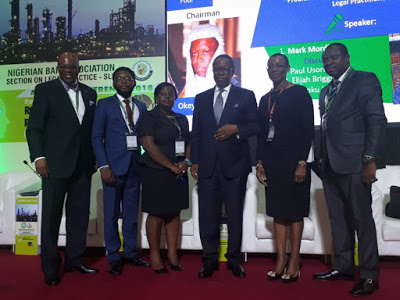
Paul Usoro sends goodwill message to Young Lawyers Forum (YLF)

Paul Usoro sends goodwill message to Young Lawyers Forum (YLF)

We must
embrace IT and the innovations it engenders in the practice- Paul Usoro sends
goodwill message to Young Lawyers Forum (YLF)


The learned silk who has pledged
his commitment to the young lawyers’ forum today has sent out his well wishes
to the forum and it has been captured below:

It is with immense delight that I
felicitate with the National Chairman, the Governing Council and the entire
members of the Nigerian Bar Association (NBA) Young Lawyers Forum (YLF) on this
auspicious occasion of its summit, which is scheduled to hold from today,
Wednesday 18 April, 2018 to Friday, 20 April 2018 in Lagos.
Undoubtedly, the theme of this year’s
summit; “Transforming Legal Practice for Young Lawyers: The option of
information and communication Technology”, clearly resonates with the desire of
every progressive lawyer, particularly as it relates to the development of
legal practice in the area of Information and Communication Technology (ICT).
Indeed, legal practice globally, has become IT based, and we will be stagnating
the legal practice in Nigeria if we do not embrace IT and the innovations it
engenders in the practice.

The future of legal practice in
our dear country, Nigeria, rest in the hands of the young lawyers, and as
seniors at the bar, whether individually or collectively, we have a
responsibility to make legal practice more enthralling, formidable and
lucrative for the young Lawyers, in line with global trends. Moreso, the
Nigerian government obviously has a critical role to play in making the
internet access seamless and affordable. The NBA leadership must, therefore, be
able to prevail on government to live up to this expectation. It is only by
this means that we can be certain of a bright future of the legal practice in
Nigeria.


I congratulate and thank members
of the YLF immensely on/for this giant stride and wish you all a propitious
summit.

Long Live the NBA Young Lawyers
Forum!

Long Live the Nigerian Bar
Association!

Long Live the Federal Republic of
Nigeria!

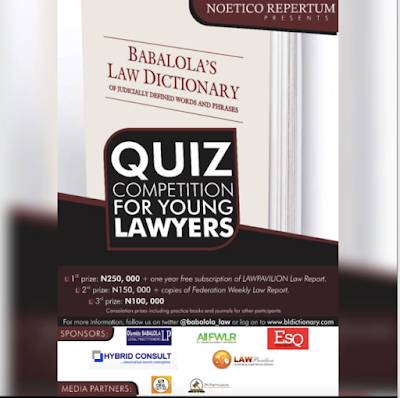
40 young lawyers shortlisted for 2018 Babalola’s Law Dictionary Quiz competition

40 young lawyers shortlisted for 2018 Babalola’s Law Dictionary Quiz competition

In a bid to further deepen the
culture of reading and mastery of legal terminologies, about 40 young lawyers
practicing nationwide have been shortlisted for this year’s edition of the
Babalola’s Law Quiz Competition for young lawyers between 0 and 7 years’ post
call. The competition which would hold at the Onikan Youth Centre, Lagos on Friday,
the 1st day of June 2018
 promises to be keenly contested as the
shortlisted young lawyers are drawn from all the states of the federation
including the FCT.


The prizes to be won are:


1st Prize = N250, 000 and one
year free subscription of law pavilion electronic law report.


2nd prize = N150, 000 and FWLR
report


3rd prize = N100, 000


And other consolation prizes.


The names of the shortlisted
contestants are as follows:


1.    
Nathaniel
Ojobo      (Portharcourt)

2.     Temidayo
Adewoye (Lagos)

3.     Uche
Amahalu (

4.     Evelyn
Aniete James

5.     Abdulateef
Abdul

6.     Henrietta
Ogunbor

7.     Emmanuel
Ejim

8.     Anthony
Sidi

9.     Promise
Ajumebor
10. Samuel
Jacob

11. Yvonne
Nweke

12. Omowunmi
Akinmuleya

13. Wesley
Tamara Kemefa

14. Fisayo
Okuboyejo

15. Morisola
Alaba

16. Afurmchi
Ottah

17. Ahmed
Danfulani

18. Emmanuel
Okpara

19. Adam
Ndakudu

20. Olajide
Abiodun

21. Chidebere
Samuel

22. Adavize
Alao

23. Emmanuel
Ogazi

24. Eniola
Ojo

25. Olabisi
Ahmed

26. Ogbudike
Christabel

27. Sheriff
Tijani

28. Esohe
Omoruyi

29. Emmanuel
Ejim

30. Mojisola
George

31. Chizorom
Nweke

32. Chisom
Akabogu

33. David
Oyero

34. Maryanne
Nwokolo

35. Benedict
Onyeodi

36. Francis
Afolabi

37. Aderinboye
Clement

38. John
Chikaelo

39. Henry
Ikwunemere

40. Binta
Salam


Entry is still open till 30th
April 2018
. To enter the competition, log on to  www.bld.com 

If You Ever Get To See Paul Usoro SAN In Court, Do Not Forget To Say Hi

If You Ever Get To See Paul Usoro SAN In Court, Do Not Forget To Say Hi


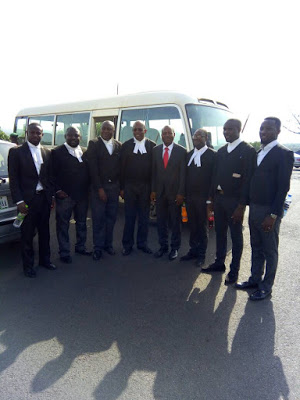
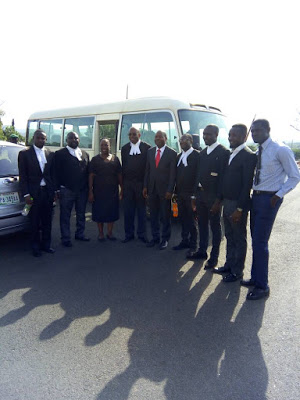
Paul Usoro SAN was at the Federal High Court
Lokoja yesterday, 16 April 2018, in respect of a Suit scheduled for the hearing
of highly contentious applications principal of which was one aimed at setting aside
injunctive orders earlier made by the Court.

Paul Usoro was not alone as he appeared
alongside a hand full of young lawyers and some members of the NBA Lokoja
Branch.


As is customary with the Learned Silk, he
used the opportunity (a matter in which incidentally another SAN and two PHD
holders were on the opposing side) to do what he does best – nurture, mentor
and tutor young and upcoming lawyers. In a brief session held at the end of the
Court Session, Paul Usoro SAN shed light on the skills and art of in-court
advocacy which he demonstrated in the course of the proceedings. Principles of
law on the exception to the general rule that a Court cannot set aside its own
orders, the question of fair hearing and its critical importance to the
adjudicatory process and the  conduct of
a party as one of the factors a court will consider in exercising its
discretion were some of the areas of law, Mr Usoro SAN shed light on. The law
students were not left out as the basics of moving a motion, the frontloading process
and pleadings were areas he lectured them on. How good it feels to learn from
the master!

At the end of the session, the Learned Silk,
in the company of his mentees, proceeded to pay a courtesy visit to the Kogi
State Attorney General and Commissioner for Justice, Mr Ibrahim Mohammed SAN.
It was indeed an iconic day in the lives of
all the young lawyers involved
Register for Career Training For Lawyers

Register for Career Training For Lawyers

Dear Lawyer, 
 The
modules for the Career Training are engineered to equip you with relevant
skills & knowledge necessary for servicing clients in the following
emerging and lucrative areas of law & practice;

        •      Sports
Law 
        •      Mediation
        •      Entertainment
Law 
        •      Finance
for Lawyers 
        •      Forensic
Document Examination;&
        •      Intellectual
Property Law. 
The tutors
are experts and have a track record of excellence in their chosen fields and
specializations. They include; Dr. Abiodun Osiyemi , President,
Forensic Science Academy and President, Association of Forensic Sciences and
Expert Witness; Mrs. A. B Agbakoba – Onyejianya ACIArb (UK); Head of Regulatory
& Compliance, Olisa Agbakoba Legal and OACO Professional Services, a
firm of Chartered  Accountants. 
The
details of the training include – 
Date
– 26th and 27th April, 2018
Venue –
LCCI Conference & Exhibition Centre, Nurudeen Olowopopo Drive, Alausa,
Ikeja
Time 
– 9am – 5pm daily
REGISTRATION
Fee per
delegate: N30,000 
ACCOUNT
DETAILS–
Lawlexis
International Limited
Fidelity
Bank
4011176564
Note that
all Payment confirmation and Delegate Information should be sent to lawlexisinternational@gmail.com
or call 08055424566. 

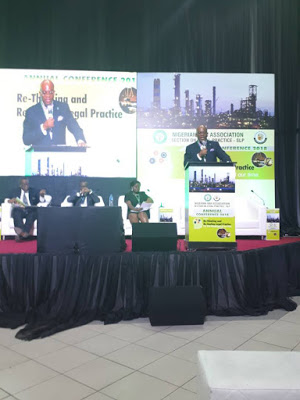
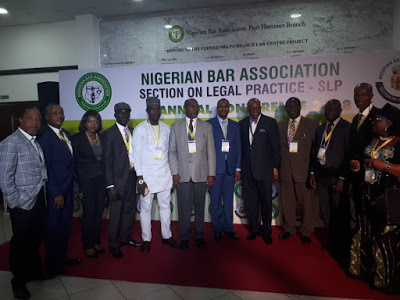
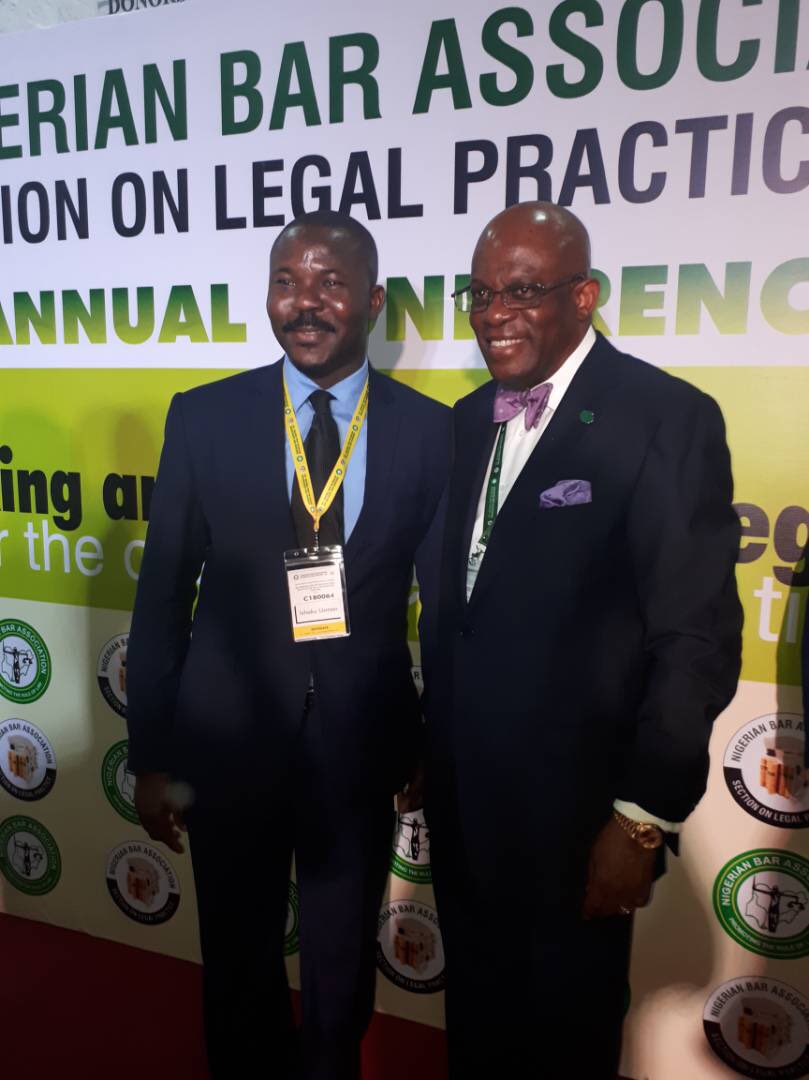
NBA – SLP Conference: Quality Work Determines Earning | Paul Usoro SAN

NBA – SLP Conference: Quality Work Determines Earning | Paul Usoro SAN


Good afternoon learned Silks, Seniors and
colleagues, as a guest speaker at the NBA section on the Legal Practice
conference live in Port Harcourt, here are a few of my thoughts which I believe
will go a long way in giving an uplift to your practice.

These are practical observations using my
practice as an example.  Firstly it is a
good pointer that the quality of your work determines what you earn.  We as lawyers are not always good at
planning, we try to go into everything and that is what makes “Jack of all
trades the master of none”.


When the GSM auction was to take place,
argument was canvassed that no Nigerian has ever done it before which is true.
We did it and it was internationally rated as the best. The same argument was
also canvassed when we were drafting the communication Act. Since 2003 that the
Law has been passed, there has not been a single amendment to it because the
law is adjudged to be the best.

When I was to prepare the telecommunications
law, there were doubts whether a Nigerian lawyer can do it and the conclusion
was that Nigerians cannot handle it. 
Eventually, I prepared d it and when they went through it, it became the
best in the world. Since 2003 that I prepared the law, it has not been challenged
anywhere and it has never been amended.

The quality of your work determines the fee
you will earn and by planning this helps you to be at the top level of your
earnings. “Aim to be at the top level of your practice and that will determine
the fees you command”.  Lawyers really
must have a safety valve when dealing with clients and companies in particular.
If you do not keep records, it will be very difficult to put a cost to your
work.

One of the challenges in litigation is timing
(the time it takes to complete litigation). When negotiating, it is good to
have a safety valve which will enable your ability to renegotiate if the time
exceeds what you had expected.

It is also good to point out that your
environment also plays a big role in determining the type of fees you charge.
If your office appears tattered, the client is likely to price you the way you
appear.  So appearance is very key in our
practice. In a scenario where a client enters your office and it looks well
taken care of, it automatically determines your fees.

The issue of fees is essential because it is
from the fees we are able to take care of our juniors. It cannot be ignored or
taken lightly.

Your ability to create and maintain client
relationship is very critical to your practice. Client service relationship
also goes a long way to determine your fees. If you take home anything I have
said today, understand that a relationship with your client is very
important.  Make clients your friend;
update them on the level of their cases and quite naturally you will have a
good working relationship.

Paul Usoro Challenge: A Bold Initiative at Advancing the Pro Bono Culture

Paul Usoro Challenge: A Bold Initiative at Advancing the Pro Bono Culture

Paul Usoro Challenge: A Bold
Initiative at Advancing the Pro Bono Culture Though life was not perfect for
24-year old Jimi Oladapo, at least he managed to get by. A graduate of
Accounting from the University of Benin, Oladapo eked out a living working as a
machine operator in a plastic production factory. After three fruitless years
of job hunting, he was forced to swallow his pride, put away his impressive
university degree and take up his present job. While the job was hardly his
preferred option, it was, at least, a stop-gap measure that guaranteed him
daily bread.

However, the young man’s
relatively stable life came crashing down after he was arrested for allegedly
murdering his landlord’s son. Oladapo maintains that he acted in self-defense.
According to him, he was attacked by the deceased and his brother and in a bid
to defend himself, he killed the young man.

One year after the incident
and Oladapo is still languishing in prison even as he waits for the matter to
be taken to court. Bereft of legal representation, abandoned by family, friends
and the society as a whole, Oladapo’s fate mirrors the pathetic situation of
Awaiting Trial Persons (ATP) in Nigeria.

He is not alone. According
to a fact sheet released by the Prisoners’ Rehabilitation and Welfare Action
(PRAWA), a Lagos based Non-Governmental Organization (NGO); over 70 percent of
inmates in Nigerian prisons are ATPs. They are left at the mercy of a legal
system that simply has not lived up to its responsibility of guaranteeing much
needed access to legal services for indigent citizenry. In truth, Oladapo and
thousands of ATPs that are wasting away in prisons all over the country reflect
the sad state of the Pro Bono culture in Nigeria’s legal space.

The obvious dearth of Pro
Bono, that is, the provision of free legal services for indigent people, is not
limited to the criminal law scene in Nigeria. It also spills into civil disputes.
Incidences of widows who are deprived of their late spouse’s estates, workers
whose employments are terminated without receiving benefits due to them,
amongst others, make headline news daily. A number of these cases go unresolved
simply because the victims cannot afford the high cost of engaging counsel.

Interestingly, Nigeria’s
legal space has witnessed a number of initiatives put in place to provide legal
support for indigent people. For instance, the Legal Aid Council (LAC), a
department under the Federal Ministry of Justice was established in 1976, to
provide free legal services to indigent Nigerians.  In 2012, the Lagos State Government announced
the establishment of the Lagos State Public Interest Law Partnership (“LPILP”)
a partnership initiative between the State Government and over 100 law firms,
to provide free legal assistance to indigent members of the public.

In 2009, came the Pro Bono
Declaration for Members of the Nigerian Bar Association (NBA), the Umbrella
Body of Nigerian lawyers, which requires each member to provide more than 20
hours or three days of pro bono legal services per annum. In 2015, NBA took its
stance on Pro Bono a notch further by encouraging law firms and lawyers to
provide free legal services to at least five indigent families yearly. In
addition to the aforementioned, several other NGOs like the Prisoners’
Rehabilitation and Welfare Action (PRAWA) have been in the forefront of
providing pro bono services to people who cannot afford legal services.

So, why has the culture of
pro bono not gotten traction in Nigeria despite these laudable moves? The
reasons are not farfetched. Quite simply, there are not enough lawyers and law
firms stepping in, to provide free legal services to indigent people. With the
exception of a few established law firms, a significant number of lawyers and
law firms in the country are too enmeshed in the bread and butter struggle, to
keep afloat, to bother about providing free legal service. True, the economic
situation may well be a good reason for the dying culture of Pro Bono in
Nigeria. However, is this excuse really tenable given that pro bono service in
itself remains a sacrosanct responsibility which the legal profession prides
itself in?

James Etaghene runs a law
chamber in Abuja. He admits to cutting down on his pro bono work to focus more
on his business. “My brother, I have to look out for myself and my business
before I think of helping others. In any case, the pro bono work would be
funded by my business and things have not exactly been rosy with my firm, hence
the decision to leave pro bono work for now,” he explained.

All may not be gloom
however, as legal luminary and foremost communications law expert, Paul Usoro,
SAN announced the donation of N600, 000 as prize money to six lawyers in a new
initiative tagged Paul Usoro Challenge. The Paul Usoro Challenge, a novel idea
from the distinguished lawyer, is a social media driven campaign set up to
recognize and encourage young lawyers to buy into the pro bono culture. The
Challenge called on lawyers, between 1-10 years of practice, to send in short
videos of their pro bono work which would be assessed by a special panel
comprising top legal practitioners (members of PBC panel). 

According to Usoro, the
Challenge is a platform to celebrate the efforts of lawyers who were giving
back to society through pro bono legal services and encourage others to join.
He said: “From our experience in doing pro bono work, we realized that there
are lots of young lawyers out there who are doing so much for the society,
through free legal services. The Pro Bono challenge is a platform for us to
share the fantastic stories of these young lawyers and challenge not only their
peers but the entire legal space to emulate them,” he said.

Speaking on Pro Bono
practice in Nigeria, Mrs L. Y. Salau, Deputy Director, Legal Aid Council,
stated that “Pro Bono is a way veritable way in which lawyers can give back to
the society. Unfortunately, most lawyers shy away from this area except when
they want to meet the requirements for the rank of SAN. A lawyer who genuinely
does pro bono cases will a have sense of fulfilment.

The second edition of the
Paul Usoro challenge is already underway with modifications to its scope. Head
of Chambers, Paul Usoro & Co, Munirudeen Liadi revealed that this edition
has been packaged to accommodate a broader spectrum of pro bono services.
Contestants have also been extended to include lawyers between 1 and 15 years’
experience at the bar. Specifically, lawyers who have handled pro bono cases in
areas of law enforcement agents’ brutality, domestic violence, gender related
issues, child abuse can now participate in the Challenge.

Speaking on the notion
behind this, Liadi said that “Our aim is to cover more areas of pro bono work.
Based on experience, we’ve been convinced of the need to open the opportunity
to lawyers handling these cases and also expand the scope in terms of years of
practice. It is no secret that abuse of human rights is rife in Nigeria. In one
breath, we’re encouraging pro bono work and as well helping to get more hapless
Nigerians out of difficult situations,” he said.

The current Challenge is
expected to run from 9th of February till 9th of April. Six Lawyers with the
most compelling cases, after evaluation by a designated panel of judges, will
be rewarded with N100, 000 each for their efforts. Interested lawyers are
advised to visit the PUC website, www.paulusoro.com for modalities on
participation or via the learned silk’s social media pages; Facebook: Paul
Usoro SAN, Twitter: @paulusorosan, Instagram: @paulusoro

IP – How to protect your domain name in Nigeria (2) | Davidson Oturu

IP – How to protect your domain name in Nigeria (2) | Davidson Oturu


Registration of a domain name

The
technical management of the domain name system is handled by ICANN. However,
the registration of the TLDs are managed by ICANN accredited Internet registrars.
A company can also confirm the availability of a domain name by searching a
registrar’s site or by using a ‘WHOIS’ search. WHOIS is an internet database
that contains information on domain names, the domain registrars, registrants
and the domain’s Administrative and Technical contacts. By performing a WHOIS
search, one can also confirm who registered a domain name and its expiration
date.

For
registrations of a domain name in the ccTLDs, a company will need to contact
the registration authority designated for each ccTLD. WIPO has set up a ccTLD
database that provides useful guidance on how to register a cTLD. WIPO has
established a Trademark Database Portal
(http://ecommerce.wipo.int/databases/trademark/index.html) to assist in the
domain name search.

Domain Name Conflicts

The
UDRP (<https://www.icann.org/udrp/udrp-policy24oct99.htm>)
sets out the legal framework for the resolution of disputes between a domain
name registrant and a third party (i.e., a party other than the registrar) over
the abusive registration and use of an Internet domain name.

The
essence of the UDRP is to enable anyone in the world file a domain name
complaint concerning a gTLD or ccTLD using the UDRP Administrative Procedure.
The complaint may be submitted to any accredited dispute resolution service
provider accredited by ICANN.

All ICANN
accredited registrars
 that are authorized to register names in
the gTLDs and the ccTLDs that have adopted the Policy have agreed to
abide by and implement the UDRP Rules for those domains. Any person or entity
wishing to register a domain name in the gTLDs in question is required to
consent to the terms and conditions of the UDRP. According to the ICANN policy,
a domain registrant must agree to be bound by the UDRP — they cannot get a
domain name without agreeing to this. To effect this, a Dispute Resolution
Policy clause is usually inserted in the domain name registration agreement
stating that if the registration of the domain name is challenged by a third
party, the registrant shall be subject to the provisions specified in the UDRP.

Resolution of disputes and the
UDRP

Paragraph
4(a) of the UDRP provides that it is mandatory for a registrant
to submit to administrative proceedings in the event that a third party brings
a complaint before any of the approved dispute resolution provider concerning
an alleged abusive registration of a domain name under the following
circumstances:

a.                                                              
the
domain name registered by the domain name registrant is
identical or confusingly similar to a trademark or service mark in which the
complainant has rights; 
and

b.                                                              
the
domain name registrant has no rights or
legitimate interests in respect of the domain name in question;
 and

c.                                                               
the
domain name has been registered and is
being used in bad faith.

Consequently, where a domain name offends the
provisions of the UDRP Policy, such a domain name registration must be
cancelled and the name transferred in favour of the person who possesses the
registered trademark.

ICANN approved providers

Paragraph
3 (a) of the UDRP Rules states that any person or entity may initiate an
administrative proceeding by submitting a complaint to any provider approved by ICANN.

The
implication of this provision is that the Complainant can institute
administrative proceedings before any of ICANN’s approved providers. The
approved providers as listed on the ICANN website are:

a)          Asian
Domain Name Dispute Resolution Centre

b)          The
National Arbitration Forum

c)          World
Intellectual Property Organization

d)          The
Czech Arbitration Court

Procedure for commencing
transfer of a domain name

The
procedure for commencing the transfer of the domain name is as follows:

–         The
filing of a Complaint with an ICANN-accredited dispute resolution service
provider chosen by the Complainant

–         The
filing of a Response by the person or entity against whom the Complaint was
made

–          The
appointment by the chosen dispute resolution service provider of an
Administrative Panel of one or three persons who will decide the dispute

–         The
issuance of the Administrative Panel’s decision and the notification of all
relevant parties; and

–         The
implementation of the Administrative Panel’s decision by the registrar(s)
concerned where there is a decision that the domain name(s) in question be
cancelled or transferred.

Conclusion

The
importance of domain names cannot be emphasized enough in this era of
e-commerce. A protected domain name is indispensable for prominence, and
profitability of a business like an internationally protected trademark or
service mark. It is therefore necessary to protect ones domain name as a
trademark and under the ICANN and WIPO procedure.

Some
points to note on this include the following:

·                                                 
Registered
trademarks/service marks protect a brand name while a registered domain name
protects against any unauthorized use of the domain name;

·                                                 
Trademark
supports the value of a business while a domain name draws traffic to the
business from any part of the world where there is access to the internet and
the World Wide Web.

You
may contact me at doturu@aelex.com for more information on
intellectual property, franchising and brand protection. 

Davidson Oturu 
Partner at AELEX 
Source: LinkedIn 
IP – How to protect your domain name in Nigeria | Davidson Oturu

IP – How to protect your domain name in Nigeria | Davidson Oturu

What
is a domain name?

Simply
put, a domain name can be considered as the name that a person or business
chooses for his/its website. It is used to identify a registered Internet
Protocol (IP) address which online visitors can use to access a website.
Examples of some domain names are “google.com”, “facebook.com” and
“linkedin.com”.

A
domain name can be regarded as a company’s unique identity and most individuals
and businesses usually invest in registering a domain name. A domain name can
comprise of a combination of letters and numbers. It is however advisable to
choose a name that is distinctive so users can easily identify it. If a common
domain name is selected by a company, it may be difficult building a reputation
with the name and impossible to prevent other competitors from using it.

Every
domain name is required to have a word (Second-Level Name) and a suffix (Top
Level Domain Name). For example, with the domain name linkedin.com, “linkedin”
is the Second-Level Name and the suffix, “.com”, is the Top Level Domain (TLD).
TLDs can be classified as generic Top Level Domains (gTLDs) and Country-Code
Top Level Domain (ccTLDs). Companies can register their domain names in any
number of TLDs. The company may choose from gTLDs (such as “.com”, “.net”), or
ccTLDs (such as “ng’” for Nigeria and “.za” for South Africa).

Importance
of protecting a domain name

It
is important that you protect your domain name by registering it with a Second
Level Name that is closely related to your brand. Examples of some relatively
popular domain name disputes highlighted below may help to put this in
perspective.

IKEA

IKEA is a company that designs and sells ready
to assemble furniture and is the world’s largest furniture retailer[1]. In 2001, IKEA won a high-profile domain name regarding
the domain name “ikea.com.cn.”  The matter was instituted in China against
a Chinese company as IKEA, which had registered its well-known trademark, was able
to show that the Chinese company (CINet) had registered multiple domain names
for financial gain and was potentially misleading consumers about the
relationship between IKEA and CINet. 

Bruce
Springsteen

In
2001, Bruce Springsteen commenced an action when he discovered that a domain
name, “BruceSpringteen.com”, had been registered to a cybersquatter, Jeff
Burgar. He however lost the domain name dispute when the World Intellectual
Property Organization (WIPO) panel ruled 2-1 in favour of Burgar as there was
no evidence to show that Bruce Springsteen’s name was trademarked[2].

Google

Google
is reported to have lost a dispute over the domain name, “Oogle.com”. They have
also lost other domain name disputes involving “Groovle.com” and “Goggle.com.”[3]

Apple

In
2012, long before the iPhone5 had been manufactured, Apple filed and won a
domain dispute claim against the domain name owners of iPhone5.com.[4] Apple has also secured ownership of other sites such as
iPhone4.com and WhiteiPhone.com.

Can
a domain name be protected as a trademark?

In
several instances, it can be argued that a domain name performs similar
functions as a trademark. While the trademark is a mark that customers can use
to identify a brand or a product, the domain name serves as an identifier and
draws visitors from any part of the world to the company’s website.

In
considering the protection of a domain name, one needs to be aware that in most
jurisdictions, it is possible to register domain names as trademarks, provided
that the domain names satisfy all conditions for it to be registered like the
trademark and service marks. Thus, if the domain name is distinctive and is
capable of distinguishing the goods or services of a company from that of other
companies, it may be registered and protected as trademark or a service
mark.

Furthermore,
in order to qualify for registration as a trademark or service mark, it must be
distinct from other domain names and well-known trademarks so that it does not
mislead or deceive customers or violate public order or morality.

Trademark
Protection vs. Domain Name Protection

Generally,
trademarks are only protected in jurisdictions where they are registered. In
other words, where trademarks are registered with a trademarks registry in a
particular country, they may not enjoy worldwide protection as the protection
they enjoy is limited to the country where they are registered.

Due
to this limitation, it may not be advisable to register a domain name only as
a trademark as this would limit its protection. Due to this limitation and
other factors, the Internet Corporation for Assigned Names and Numbers (ICANN)
was established to oversee and regulate the domain name industry. The tasks of
ICANN includes the responsibility for IP address allocation, protocol
identifier assignment, TLDs system management and root server system management
functions.

Furthermore,
ICANN exercises such regulatory powers as accrediting domain name registrars,
setting base prices for domain names, protecting domain name trademarks, and
punishing wrong-doers. It is also the responsibility of ICANN to address the
issue of domain name ownership resolution for gTLDs and it has, in conjunction
with WIPO, developed the Uniform Dispute Resolution Policy (“UDRP”) and UDRP Rules.

Through
the UDRP, ICANN and WIPO have provided a mechanism for rapid, cheap and
reasonable resolution of domain name conflicts by avoiding the traditional
court system for disputes and allowing cases to be brought to a set of bodies
that determine domain name disputes.

This
is the end of Part 1 of this article. In part 2, we will consider how a domain
name can be registered and the dispute resolution procedure that can be adopted
where a company intends to challenge the ownership of a domain name.

You
may contact me at doturu@aelex.com for more information on intellectual
property, franchising and brand protection.

[1]IKEA Is a World-Wide Wonder (Forbes)
https://www.forbes.com/sites/walterloeb/2012/12/05/ikea-is-a-world-wide-wonder/#5a188a5427b9

[2] Landmark Domain Name Dispute Cases (Hutcherson Law LLC)

[4]Apple wins WIPO dispute, secures ownership of iPhone5.com
domain
http://www.idownloadblog.com/2012/05/17/apple-wins-iphone5-com-dispute
Davidson
Oturu

Partner
at Aelex

Source: Linkedin