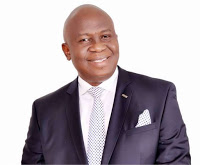
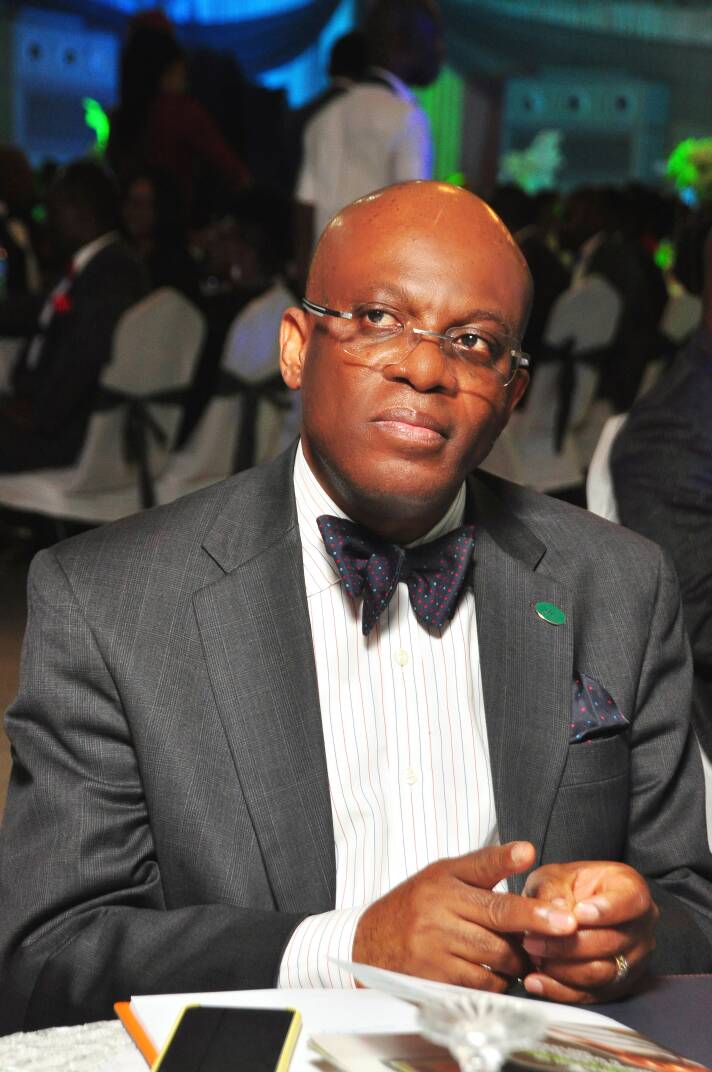
Paul Usoro SAN’s Independence Is Intact

Paul Usoro SAN’s Independence Is Intact

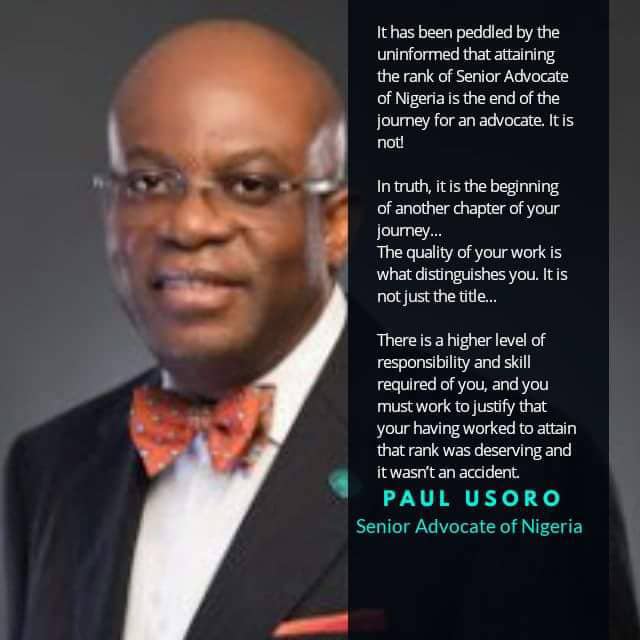
Our attention has been drawn to some social media chats concerning a statement credited to the Hon AG of Akwa Ibom State. PU Team had immediately earlier in the week issued statements affirming the independence of Mr Usoro and denying any knowledge of the existence of any polling centers sponsored by AKSG or any sponsorship howsoever by any State Government including Akwa Ibom State. For avoidance of doubt, we reiterate that Mr Paul Usoro, SAN is self sponsored, has not received any acts of sponsorship howsoever from AKSG.  In the SAN’s words:

“I AM INDEPENDENT AND ECONOMICALLY SECURE AND CAN DO THE RIGHT THING FOR AND BY THE ASSOCIATION WITHOUT BEING HOBBLED BY INTERESTS/ CONSIDERATIONS  BE THEY ECONOMIC, POLITICAL AND SOCIAL  OR BY “GODFATHERISM”

TEAM PAUL USORO

# Putting You First.

Guest Blogger – What Every Lawyer Should Know about Pro Bono Work|Bukola Helen Olusolade

Guest Blogger – What Every Lawyer Should Know about Pro Bono Work|Bukola Helen Olusolade

Abstract
There is no denial that lawyers play a very important role in global development. Just like every public-spirited people from every profession seek to contribute to the developmental cause, our knowledge as lawyers and our problem-solving ability can greatly contribute to the wide ranging skills needed to promote development worldwide. This work focuses on how lawyer’s dedication to pro bono legal services can help in community development. 

Introduction
Lawyers generally have a moral responsibility when representing clients and when choosing methods by which their clients’ interests can best be preserved. Beyond this, there is an overriding moral premise that lawyers, having benefited greatly from the gift of a legal education, and having been well equipped with useful skills, have an obligation to help those who are less fortunate in the society.
This is the community foundation of legal ethics which demands that a lawyer should be more than an officer of the court or guardian of the law, but one who also posseses the virtue of good character. 
A character through which he or she personally influences and affects people positively. The moment a lawyer who has integrity realizes how privileged he or she is to have been favourably placed in the society, he is impelled to do good. This is not to downplay any efforts each lawyer made to become who they are, but without the good fortune of finding oneself in a community where a lifetime gift of knowledge and discernment can be imparted, those efforts might not have yielded the expected results. Why then should we not give back to that community which made it possible for us to be who we are today?  There is no doubt that lawyers have had to go through a widespread opprobrium over the years as our profession and practice often make us seem like the enemy. The image of lawyers is a topic of great debate, and most often than not, lawyers are the subject of criticism, both just and unjust. Criticisms read about the legal profession would often quote the line from Shakespeare, “The first thing we do, let’s kill all the lawyers”. 
It is understandable that a negative image of lawyers may always exist, given the fact that lawyers will continue to play a part in an adversary system that produces winners and losers. The effect of this view, however, can be dissipated by our direct involvement in the community. This is not an advocacy for a complicated or over the top involvement. It is simply a call to help those who are less fortunate than ourselves, with the sincerest desire. Until our focus is directed to how we can capitalize on those possessed abilities, skills and motivations to generate good, we cannot expect great adulation from the public.
To generate good, therefore, lawyers need to get involved in the business of those who are disadvantaged. We have a responsibility to provide legal services to those unable to pay. Lawyers who are already involved in pro bono legal services can testify that helping these group of persons can be one of the most rewarding experiences in the life of any lawyer. The reward ranging from the gratitude of the person who you have just gotten out of a difficult situation to you forming an established and remunerative relationship when the person’s story changes for the better.
For young lawyers who may not always get the opportunity to handle things on their own as a result of the complexity of the law, pro bono work is beneficial. Not only does it feel good and give a sense of satisfaction, it also gives experience and creates an avenue for exercising and developing skills and techniques that would later be put to use in matters of greater substance. As such, pro bono work confers an immediate benefit on young lawyers in both satisfaction and experience. 

For more senior lawyers, there may come a time in their legal career when they start to feel unsatisfied, uninspired and bored.  When they have tackled and conquered the legal world and amassed a huge fortune for themselves. The question ‘what then?’ begins to resonate in their minds. This is the time when they wonder if what they have been doing was really what they wanted to do. It takes a lot more to feel a sense of satisfaction and personal pride, than material enrichment. Marshall Jones in his memoir, ‘A Lawyer’s Mid-Career Memoir’ acknowledged that despite having been involved in literally hundreds of business transactions and lawsuits, most of which fortunately involved the payment of a legal fee, his most fond recollections involved matters where he earned no fee. His narration of how he argued Sarah Hoffman’s case, a brave child born with no arms and unusable lower limbs, before the Caddo Parish School Board, that federal law required the School Board to provide handicap access to physically disabled children is compelling as well as inspirational. 

Conclusion
Success in the legal profession should be understood as less related to the financial rewards of the practice and more related to the established relationships and lives that feel the touch of humanity through us. If your life in the legal profession does not have a great purpose, it will not produce great joy. I implore every one out there who can make a difference to not hesitate to make that choice today! 

Bukola Helen Olusolade
LL.B, BL, LL.M
helenahb2k@gmail.com 
Bukola Helen Olusolade is a hardworking, enthusiastic and vision-driven legal practitioner, writer and legal researcher. Her guiding light has always been her desire to take part in projects and researches that have developmental impacts. She believes that we all can make a difference, if we try. 
7 Things You Need to Know About the #PoliceReformBill

7 Things You Need to Know About the #PoliceReformBill

Today, the Nigerian Senate passed for Second Reading A Bill to Repeal and Re-enact the Police Act of 1943. This is following last week’s resolution by the Senate to direct its constitutional review committee to put in place the machinery to amend the Constitution to allow for the creation of State Police and the mandate that the Police Reform Bill must be passed within the next two weeks.

The current Police Act of 1943 , which has been in existence for over 70 years — without any amendments, is being repealed and re-enacted to meet the current security challenges of a changing nation.

Highlights of the Bill include:

1. The establishment of a service-oriented and modern Police that will meet globally acceptable policing standards in a democratic setting.

2. The modernization of the current Police Force (which was conceptualized and established in the Colonial environment to protect colonial interests) with a Police Force that is geared towards protecting and safeguarding the lives and properties of Nigerian citizens.

3. The establishment of guiding principles to ensure effective policing in Nigeria. These principles include efficiency and effectiveness; accountability, and transparency; protection of human rights and fundamental freedoms; and partnership with other security institutions.

4. Methods of dealing with abuse of weapons by police officers. The Bill also ensures that the police and police officers are held accountable in their actions especially in the areas of arrest and detention of persons and searches.

5. Clauses that mandate record keeping by the police and clauses that ensure that citizens are fully protected from abuse by Police officers.

6. The establishment of a Community Police and Boards in all the States of the Federation that will consist of broad representatives of the community and the State to ensure effective, efficient and participatory community policing.

7. The establishment of an independent complaint authority to receive and investigate and effectively deal with complaints against police officers’ misconduct from the public.

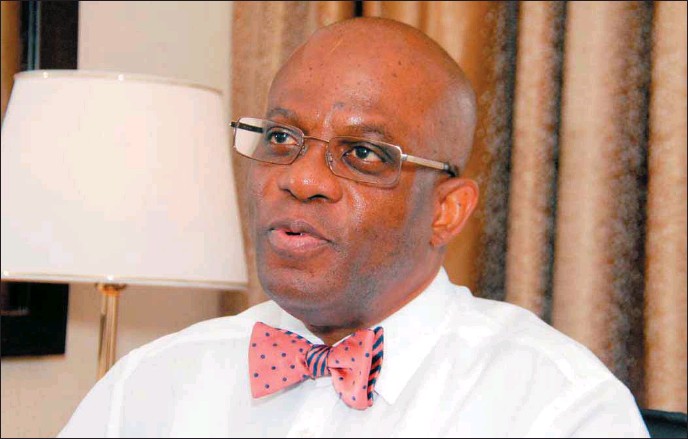
Reflections: Institutional Reforms For The NBA (4) – Paul Usoro SAN

Reflections: Institutional Reforms For The NBA (4) – Paul Usoro SAN

Technology and the NBA
       
The KPMG Report made the following findings in regard to the NBA’s Accounting System: (a) “The Association adopts manual processes for its financial reporting activities.  A significant number of processes are executed manually, including but not limited to, invoice processing, budgeting, fixed asset management, bank reconciliations and journal postings”; (b) “Currently, financial transactions are captured on manual ledgers maintained on MS Excel spreadsheets.  At the month-end, a trial balance is manually prepared to show the summary of transactions for each class of account”.
On the risk and impact of the NBA’s antediluvian accounting system, the Report states as follows: (a) “Use of a manual accounting system leaves room for fraud or significant accounting errors”; (b) “Financial information may not be available timely, which could hinder sound or prompt decision making”.  In concluding, the Report recommends that “the Association should perform a technology needs assessment for the financial reporting activities and select a suitable accounting software with the required reporting capabilities and functions”.
In point of fact, it is not only our accounting system that is antediluvian and technology non-compliant; the Association itself and its various processes, operations and activities are technologically backward and non-compliant.  At the last NEC meeting in Kano, for example, there was disputation amongst NEC members on the recording of the previous meeting’s proceedings and specifically as to whether a certain motion was moved or not moved.  The mover and seconder of the motion insisted, during the review of the previous meeting’s Minutes, that the motion was moved and that it was not captured in the reviewed Minutes; the Secretariat advanced reasons why this could not have been the correct position of the proceedings. 
Such disputation could have been avoided if the NBA had introduced electronic recording for its NEC meetings and other proceedings and had also evolved and perfected a system of ensuring, protecting and preserving the integrity of such electronic recordings.  One could ask, how can a Bar Association that still depends primarily if not solely on manual recording of its proceedings ever rise up to the challenge of championing the cause of and prodding the judiciary towards electronic recording of court proceedings in all the hierarchies of courts, notably, at the trial courts where the primary work of recording and processing evidence is still handwritten by Our Lordships?
If we had put our house in order, the NBA ought to be in the forefront of championing ubiquitous use of electronic recordings in all our Courts given the obvious advantages and benefits that would accrue therefrom not only to the litigants but also to justice administration generally and indeed the Courts and our Lordships.  To the naysayers who scoff at the prospects and practice of such electronic recordings in the courts, NBA should be able to give assurances based on its own practice of recording the Association’s meetings and other proceedings; we should in the process also be able to provide tips to the sceptics as well as those who are genuinely well-intentioned and need assurances on how best to ensure the integrity and preservation of such recordings. 
Sadly, the NBA robs itself of that prime advocacy role by remaining technologically backward in its own operations and activities. It definitely would smack of hypocrisy if the Association were to champion a cause it appears not to believe in and does not practice.  And yet, the NBA is structured to be the voice, not only of the Bar, but of the society and the Nigerian citizenry who ultimately would benefit from the elevation of our courtroom recordings to electronic standards. From a different perspective, how can a Bar Association that is technologically challenged and backward be in a position to encourage its members to embrace modern technologies that would give them competitive and competitive edge and advantage in the international legal marketplace? 
The truth is that, a technology-driven NBA will greatly propel the Association towards achieving the primary aims of my reform agenda for the Association, to wit, (a) enhance efficiency in the operations and running of the Association; (b) engender confidence and trust amongst its members (or, as some would say, win back the confidence and trust of its members); (c) transform the NBA into a sustainable institution; and (d) increase the moral equity of the NBA to enable it effectively influence required reforms in the justice subsector and remain a respected watchdog of the society.

IP ABC—Unauthorized Publication of a Business Directory, Law Report, and Use of Book Title: Liable or not Liable?

IP ABC—Unauthorized Publication of a Business Directory, Law Report, and Use of Book Title: Liable or not Liable?


IP
Question

We
are Publishable, a book publisher in Nigeria. We figuratively have a loaded double-barreled
gun pointing at us. Last week, we received a demand letter from BookSilo, a
publishing house. BookSilo alleges that our business directory, Publishable
Business Directory, infringes on its copyright because we allegedly copied the
contents of their directory, ‘The BookSilo National Business Directory’.
BookSilo wants 150 million naira in damages. Though it is true that our
directory contains the same information as published by BookSilo, we didn’t
copy from BookSilo’s National Business Directory. We copied all our contents
from the Rivers State Ministry of Information’s ‘National and Local Business
Directory’. Are we liable to pay damages to BookSilo for copyright infringement?


The second demand letter is from Wigs & Bibs,
publisher of ‘Monthly Law Reports of the Supreme Court of Nigeria’. Wigs &
Bibs threatens to bring both civil and criminal law suits against Publishable
for allegedly publishing judgments of the Supreme Court of Nigeria as it also
does. Wigs & Bibs also wants 100 million naira damages for Publishable
unauthorized use of Wigs & Bib’s law-report title, ‘Monthly Law Reports of
the Supreme Court of Nigeria’. It is true that we publish a law report with
this title. Do we have any defence against Wigs & Bips’ action?

Answers 

The
answer to the first question is NO, Publishable is not liable to pay damages to
BookSilo. This is because Rivers State Government has original copyright in the
contents of the work in question. BookSilo infringed on the original work.

But if BookSilo can successfully prove that copyright belongs to it and not the
Rivers State Government, Publishable would be liable to pay damages to
BookSilo.

Copyright
infringement presupposes that copyright subsists in a work. An infringing work
has no copyright. Without copyright, there is no protection.

The
Rivers State Ministry of Information prepared and published the original
business directory. By virtue of section 4 of the Nigerian Copyright Act, only
the Rivers State Government has right to sue for infringement, not BookSilo.

Therefore, BookSilo has no ground to demand that Publishable pays any damages
to it for copyright infringement.

For
PublishAble to get BookSilo off its back, PublishAble must have evidence to
prove that BookSilo is not the original copyright owner.


In the absence of any evidence, it is presumed that in an action for copyright
infringement, copyright subsists in a work. It is also presumed that the
plaintiff is the copyright owner, not some third party. These presumptions are
contained in section 43 of the Nigerian Copyright Act.


Therefore, if Publishable fails to prove that BookSilo is not the original
copyright owner, the Copyright Act presumes that BookSilo is the copyright
owner.

Get evidence!

Regarding Wigs & Bips’s two separate claims, the answer to the first
claim is both YES and No, depending on the level of originality in the law
report in question.

Law reports are literary works, and literary works enjoy copyright protection.
But copyright in law reports do not include court decisions. Section 51, the
interpretation section of the Nigerian Copyright Act, expressly excludes
“decisions of court” from literary works eligible for copyright.


So on the first claim, the answer is YES, Publishable has a defence against
Wigs & Bips, if the law report contains only “decisions of
court”.

If
Wigs & Bips’ law reports contain only a compilation of the decisions of the
Supreme Court, it has no exclusive copyright in the work. Any other person is
allowed to also publish the same court decisions.


But the answer would be NO if Wigs & Bips has given the law report
original character.

If Wigs & Bips’ law report contained more than just court decisions but
include contents that show it expended sufficient effort to give the work
original character, Wigs & Bips has exclusive copyright to the law report.

This
exclusive right will entitle Wigs & Bips to sue any person who copies or
republishes Wigs & Bips’ law report without authorization. This includes
PublishAble (and even a publisher the Supreme Court of Nigeria authorizes to
publish its court decisions) as long as they substantially copied any part
original to Wigs & Bips.

And
regarding the second claim bordering on copyright to title, the answer is YES,
PublishAble has a defence against Wigs & Bips, since copyright does not
protect titles.

Titles do not satisfy the requirement of ‘sufficient effort’, hence titles do
not qualify for copyright protection. Under section 1(2) of the Nigerian
Copyright Act, a literary work is not eligible for copyright unless
“sufficient effort has been expended on making the work to give it an
original character”.


Titles of works are considered to be de minimis (little things). Because
copyright is not concerned with little things—however original they may
be—copyright does not protect titles.

Therefore,
Wigs & Bips has no copyright over its law-report title, ‘Monthly Law Reports
of the Supreme Court of Nigeria’. It has no right to sue any person for
infringement.

Even a trademark registration of the title may not aid Wigs & Bips since
the title is not unique, but descriptive.

If
Wigs & Bips had come up with a unique name for its law report and
trademarked that name, the story would be different—it would be qualified to
sue Publishable, not for copyright infringement, but for trademark
infringement.

And even if the title is an unregistered trademark, Wigs & Bips may
still win in an action for passing-off.


Passing-off actions apply to unregistered marks. Publishable would be liable in
an action for passing-off if Wigs & Bips can successfully prove 2
things:

(1) That its law-report title is distinctive and it has become well known and
widely associated with Wigs & Bips law-reporting business in Nigeria; and

(2)
That PublishAble has unduly used a similar or identical title to profit from
Wigs & Bip’s goodwill and reputation in the law-reporting market.

Get
professional advice.

If
not properly handled, your double-barrelled question may end up becoming a
double-edged sword. Consider consulting an IP lawyer or law firm for
professional legal advice.


Source:
Infusion Lawyers

Be A Guest Blogger On Legalnaija

Be A Guest Blogger On Legalnaija

We are welcoming all lawyers to be guest bloggers on the Nigerian Blawg 🤗. 
To have your law related articles featured on the Blawg, simply forward the article including a photo of yourself and short bio to legalnaija@gmail.com 
Start sending your articles in. Our readers may just need your legal expertise. 
Manifesto Of Paul Usoro, SAN For The Office Of The President, NBA 2018 – 2020

Manifesto Of Paul Usoro, SAN For The Office Of The President, NBA 2018 – 2020

                        
My dear Colleagues,
I am Paul Usoro, Senior Advocate of Nigeria and the Senior Partner and Founder of Paul Usoro & Co (PUC), a full-service law firm headquartered in Lagos with branches in Abuja and Uyo. I was called to the Nigerian Bar in 1982 and was subsequently elevated to the Inner Bar in 2003. I have been engaged in legal practice since my Call to the Bar and have garnered over 30 years’ experience in all aspects of legal practice, including complex litigations and high profile commercial transactions. I sit on the Boards of several blue-chip companies and I am very well versed in corporate governance and administration. I am a Fellow of the Chartered Institute of Arbitrators and a member of the International Bar Association.

Appreciating the significance of an efficient and vibrant Bar for Nigerian lawyers and citizens and the imperative for building an enduring and sustainable institution out of the NBA, I present myself, with humility and a high sense of responsibility, as a candidate for the position of the NBA President, for the period September 2018 to August 2020. I perhaps need to mention that I am from Ukana Ikot Ntuen in Essien Udim Local Government Area of Akwa Ibom State and therefore fit into the NBA’s geographical East to which the office of the NBA President has been zoned for the 2018 Elections.
I consider it a privilege to present my ideas and thoughts on some of the issues we will focus on in uplifting the institution of the NBA and level of legal practice in Nigeria if I am elected as the NBA President. This is a non-exhaustive blueprint of my modernization and reform plans for the Bar. My agenda is not only to embark upon innovations, but also to consolidate on the foundation laid by our past leaders. In essence, we will be advancing the good legacies that we have, replacing the obsolete ones and advancing new frontiers for the Bar.
I have selected three thematic areas to drive the reform plan knowing as I do that two years would be inadequate to cover all the required reforms. The three focus areas are:
1. Institutional Development and Regulatory Reforms.
2. Human Capital Development and Welfare Programme.
3. Promotion of the Rule of Law and Good Governance in Nigeria.
The following paragraphs present a brief overview of each of the three themes and provide programme objectives to be achieved under each thematic area.
1. INSTITUTIONAL DEVELOPMENT AND REGULATORY REFORMS
a. Institutional Development
I believe that the NBA, at the national level, is in need of urgent and far-reaching reforms if it must retain its relevance not only in the larger society but even to its members. These reforms will, at the minimum, achieve four significant and immediate goals, to wit, (a) enhance efficiency in the operations of the Association; (b) engender confidence and trust amongst its members (or, as some would say, win back the confidence and trust of members who are disengaged); (c) transform the NBA into a sustainable institution; and (d) increase the moral equity of the NBA to enable it effectively influence required reforms in the justice subsector and remain a respected watchdog of the society.
As my set-out point, it is my position that no institution or organization can be deemed or classified as successful if it fails to adhere to corporate governance principles, the cornerstones of which are transparency and emplacement of established and well-defined processes and procedures coupled with strict adherence thereto. The NBA, as currently constituted and operated, lacks these basic ingredients and characteristics of an institution – and this has been confirmed by the recent KPMG Diagnostic Report on the NBA. In driving the goal of building an institution out of the NBA, we need to entrench these governance principles and thereby not only guaranty efficiency in the administration of the Association but also boost the confidence of our Members and external stakeholders. Entrenching these principles will also clothe us with the moral toga to challenge and speak truth to power, particularly in instances of financial and/or administrative malfeasance, misappropriations and misconducts.
The specific programme strands that shall enable me deliver on this agenda, if elected as President of the NBA, shall include the following:
I. Professionalize and strengthen the NBA National Secretariat for effective and efficient service delivery so as to meet the needs of our members and the public. The required reforms in the NBA must logically start from its apex, to wit, the governance structure at the national level. The operational complexities of the Association in 2018 justify the delegation of day-to-day operations and management of the NBA by the elected part-time National Officers to an executive management team made up of suitably qualified, skilled and experienced full-time personnel.
II. Entrench Corporate Governance in Financial Management: Without financial planning and accountability, a Bar Association will fail to function. We will therefore ensure a complete overhaul of the account and finance unit at the NBA National Secretariat with proper definition of the unit’s role and the engagement/retention of qualified, experienced, well-motivated and skilled accountants to man the unit. We would also institutionalize internal control systems and processes. The essence of internal control systems and processes is to prevent leakages and fraud and to bullet-proof the organization against identified risks. To enhance the Association’s corporate governance in financial management we would constitute a Standing Audit Committee of the Association that would, amongst others, assist in reviewing and monitoring the efficacy of and compliance with our internal control systems and processes. Budgeting and budget reviews will also be made standard practice and quarterly financial statements would be routinely published to members to inform on the Association’s financial health. Transparency would be the watchword in the management of the Association’s resources including its finances and assets.
III. Upgrade and improve the operational capacity of NBA Sections, Institutes, and Fora so that they would be able to fulfil their mandate. Generally speaking, the NBA organs operate at sub-optimal levels. Well organised and run, these organs should serve, amongst others, as the engine-room for planning the contents of and for the Annual General Conferences (AGC) of the NBA. These organs offer opportunities for members to deliberate on topical issues and raise the bar in advancing the course of specialisation within the NBA. They therefore constitute a veritable NBA resource for planning our AGCs, content-wise in particular. In addition, the various committees of our Sections ought to be hosting, on regular basis and annually, workshops and seminars in their respective specialized fields. Best practice also recommends that some of the committees collaborate to host such workshops where the topics are common to and touch on the specialised fields of such committees. In summary, the NBA organs as currently constituted would be deepened and made to achieve much more in terms of structure, activities, inclusion, outreach, communication, and evaluation.
IV. NBA Strategic Plan. We would review, update and ensure the implementation of the NBA Strategic Plan to ensure continuity and sustainability of programmes, policies and projects. There was a Strategic Plan that was approved by the NBA National Executive Committee (NEC) at its meeting at Aba in March 2017 but I am not aware that there has been a monitoring of its implementation. Well-run institutions routinely monitor the implementation of their Strategic Plans during the quarterly meetings of their directing organs – i.e. the Board of Directors or its equivalent. NEC is the NBA equivalent of a Board of Directors and it does not appear that the monitoring of the Strategic Plan is a staple on its quarterly agenda. That would be corrected in my tenure as the President and the Strategic Plan itself would be reviewed, widely circulated and published and made to incorporate long, medium and short term plans, complete with measurable milestone activities and timelines.
V. NBA National Electoral System and Succession Plan. No institution succeeds on a long-term basis without proper succession planning that ensures, amongst others, continuity of programmes and activities. The NBA has no such succession plan. Our current model changes the entire leadership every two years without any form of succession planning and it is no wonder that programmes, no matter how laudable, remain at the mercy of succeeding administrations and are indeed prone to being jettisoned by such new administrations. Indeed, even our national electoral system requires review and quite some tweaking. Currently, our national elections bring out different lawyers with their respective and disparate manifestoes and agenda for the various offices. Usually, there is no alignment of plans between the various contestants for the different offices. Thus, it is not uncommon for the Presidential candidate’s agenda for financial management to be fundamentally different, illustratively, from the respective agenda of the General Secretary, Financial Secretary and Treasurer for the same financial management. Upon election, these disparate persons, with their differing and uncoordinated agenda and plans are expected to miraculously coalesce and work together as a team. Such forced coalition does not always work, and I believe that we need to review the electoral system in a manner that would not only ensure some level of succession planning that guarantees continuity of programs but also be far more harmonious and coordinated than our present riotous experience. Very early in my tenure, I would encourage a roundtable dialogue of all stakeholders in that regard aimed at reforming the national electoral processes. I would also establish Standing Committees for the review of our Constitution and for the conduct of our National Election that would build on all our previous experiences and have sufficient time to deliberate upon and implement required reforms in our electoral system as well as our Constitution.
VI. Branch Administration. It is my expectation that the enthronement of governance principles at the NBA National level, with transparency and efficiency as the cornerstones, will gradually percolate and become the staple for NBA branches as well thereby strengthening the capacity of the Branches to function effectively and professionally thus earning the respect and trust of its members. In my respectful opinion, that will be a significant antidote to or panacea for the current spate of strife, brawl and infighting that is tearing our Branches apart in the bid for elective offices. As soon as we make transparency and governance principles the standard practice in the management of the Association’s finances and affairs, both at the national and branch levels, the quality of our leaderships across board would greatly improve and we would experience far less strife than we currently face. If elected President of the NBA, I would ensure these practices in the branches as well as capacity-building and the empowerment of the branches in a manner that would enable them to confidently develop programmes, manage projects, raise funds, and interface with justice sector institutions and State actors at States and local government levels.
VII. Establishment of NBA Liaison Offices within the three NBA Zones. There seem to exist a gulf between the National Secretariat of the NBA and the lawyers at the NBA branches, notably those branches outside the Federal Capital Territory. That gulf will be bridged with the establishment of NBA Liaison Offices within the three NBA Zones – Lagos, Port Harcourt and Kano. These offices will take the national leadership and the national secretariat of the NBA closer to the lawyers at the branch level and would foster a more accessible and effective working relationship between the parties. Well managed and coupled with the accrued benefits from across-board improved and entrenched transparency and governance practices, these Liaison Offices would boost membership activism, confidence and trust and also increase NBA income-generation capabilities.
VIII. Revenue Generation Plans for the NBA. To alleviate the burden of members in financing the Association and its activities and administration, I would work on innovative revenue generation strategies for the Association. In particular, I would look at the possibility of generating income from the management of the Association’s assets, including its brand and real estate, and optimizing other NBA income streams and NBA revenue potentials such as sponsorships.
IX. Infrastructural Development. The NBA National Secretariat building (NBA House) is yet to be fully completed. When completed, the auditorium in the building, apart from saving the Association huge costs on venue rentals for major events, would also be a source of additional income for the NBA. If I am elected to the office of the NBA President, I would raise funds for speedy completion of the NBA Building Project.
b. Regulatory Reforms
The regulatory framework underpinning the legal profession in Nigeria calls for review, with the aim of raising the standard of the profession. I will, if elected the NBA President, embark upon regulatory reforms with a view to achieving the said goal. The envisaged reforms will cover the areas of professional ethics and discipline, legal education and criteria for admission into the profession, continuing legal education, and legal practice generally. The key components of my Regulatory reform agenda will include the following.
I. I will work in consultation and partnership with all relevant stakeholders, to facilitate the repeal and replacement of the extant Legal Practitioners Act (LPA) with a view to reflecting current trends and developments regarding admission to the legal profession, legal education, training, compulsory continuing legal education, professional ethics, discipline, and other aspects of the legal profession that are relevant to legal practice in the 21st century.
II. My administration will consult with all relevant stakeholders and work towards the implementation of the adopted recommendations of the NBA Legal Profession Regulation Review Committee one of which is the repeal and replacement of the LPA. The report, which deals with issues affecting the regulation of the legal profession in Nigeria, is far reaching and comprehensive its scope and recommendations and requires a holistic and comprehensive review by all stakeholders with a view to upscaling the regulatory framework of the legal profession, as appropriate.
III. As part of the afore-mentioned regulatory reforms, I will ensure that the Association facilitates the review of the Rules of Professional Conduct with a view to bringing them up-to-date with current and emerging global trends in the delivery of legal services. This will go a long way in enhancing the standards of professional ethics in the legal profession in Nigeria.
IV. I believe that the Nigerian Law School (NLS) Externship Programme should be designed to teach Law Students practical skills in legal practice. To attain that goal, Pupillage program could and should be incorporated into our NLS pre-qualification process and used to impart practical training to our trainee lawyers, both in advocacy and solicitor’s practice. If adopted as part of the qualifying process, the program should be regulated by the Council of Legal Education and the firms to which the trainee lawyers are attached must be firms with prescribed minimum standards.
V. I will partner with relevant stakeholders including the Nigerian Universities Commission and the Council of Legal Education to review the LL.B degree curriculum in order to enhance the quality of legal education and introduce new areas of practice into the Universities’ curricula in line with emerging trends and technological disruptions in Nigeria. I will also work with these stakeholders to review the admissions policies into Law Faculties of Nigerian Universities.
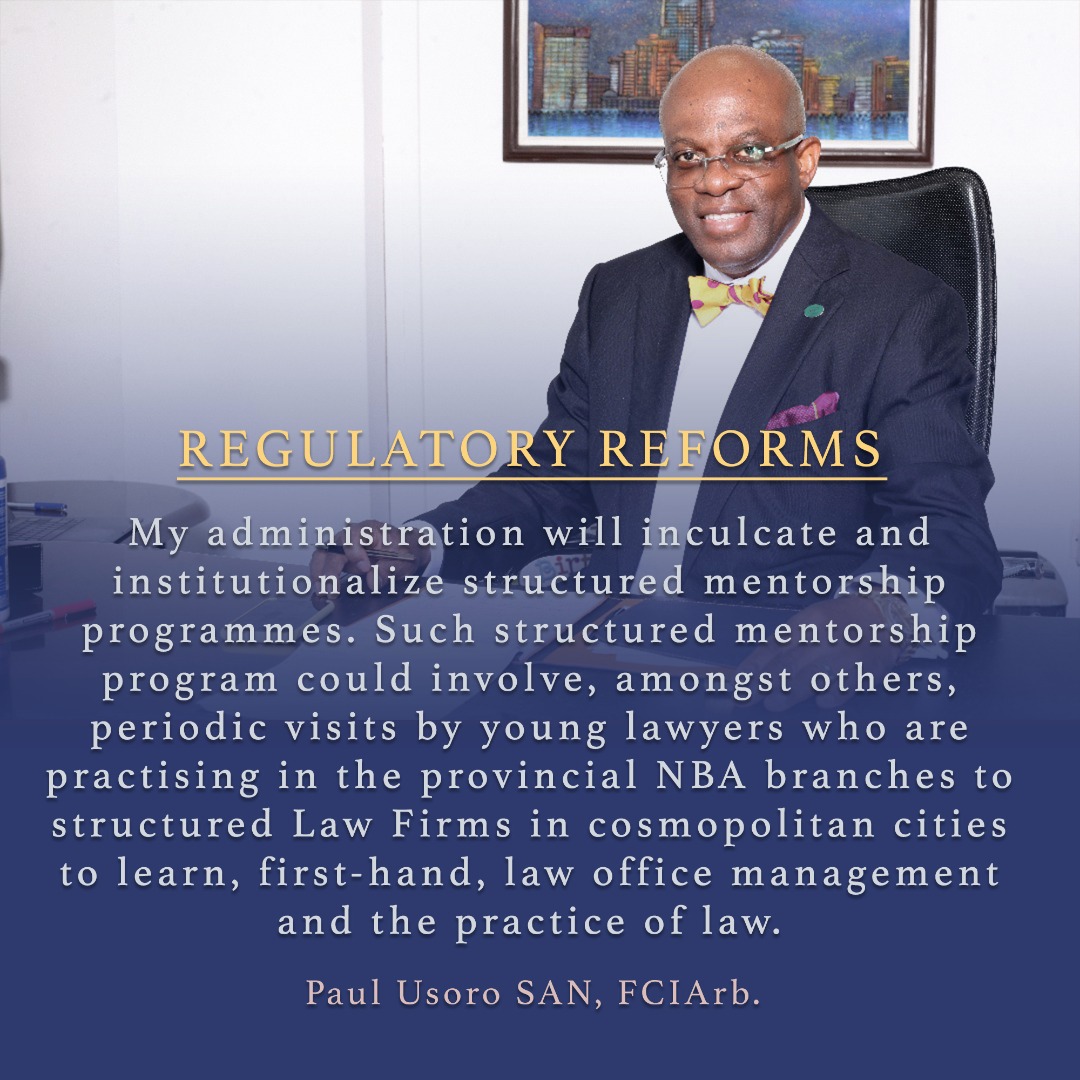
VI. The planned reforms would also inculcate and institutionalize structured mentorship programmes – a program which, I believe, the NBA should encourage and entrench. Such structured mentorship program could involve, amongst others, periodic visits by young lawyers who are practising in the provincial NBA branches to structured Law Firms in cosmopolitan cities to learn, first-hand, law office management and the practice of law.
VII. I will work to reform and revamp the management and mechanisms of the NBA complaints and disciplinary processes with the aim of making the processes more efficient and timeous. It is not uncommon to hear complaints from members of the public who get frustrated by the delays in having their complaints to the NBA against lawyers processed and treated. There is also a perception that the disciplinary process may not be vested with full autonomy and independence. Our comprehensive review and reform of the disciplinary system and processes would ensure its independence, effectiveness and efficiency and this will in turn engender public confidence.
2. HUMAN CAPITAL DEVELOPMENT AND WELFARE PROGRAMMES
The pride of a lawyer, in-house or in private practice, is in the application of his skills, knowledge and workmanship for the promotion of the rule of law, attainment of justice and protection of his client, followed by the attendant economic reward and benefits. This underscores the importance of knowledge, skills and human capital development. My plan therefore is to foster that pride by lawyers in the legal profession, irrespective of their mode of practice, livelihood and legal career, using the instrumentality of the NBA.
A. An All-Inclusive Bar
Nigeria boasts of a sizeable number of lawyers even as more lawyers are passing out of the Nigerian Law School every year. However, not many lawyers participate in NBA activities partly because emphasis seems to be placed by the NBA more on the lawyers who are in active private legal practice. Hence, corporate/in-house counsel, lawyers living with disabilities, public sector lawyers (mostly in civil service and government parastatals) and female lawyers, are generally not given the opportunity to participate in nor encouraged to attend NBA activities and as a result, they do not derive or even see any membership benefits from these activities. It is my candid view that every lawyer and member of the NBA should identify with the Association and derive some benefit therefrom.
One of the ways to sustain the interests of our members in these different lawyer-groupings is to address issues directly affecting them. If I get elected President, the NBA would offer a clear value proposition for the inculcation of an inclusive bar to our members, be they in private legal practice or not. I am indeed for and will champion the entrenchment of such an inclusive bar. There is no reason why corporate counsel, for example, cannot take up appointments or membership in NBA Committees (at both National and Branch levels) provided they are available and committed to the course for which such NBA Committees or offices are set up. Some groupings of lawyers have historically been short-changed in these appointments even though they have eminently qualified persons amongst them who can occupy these positions and acquit themselves very well. If I am elected as President of the NBA, I will address that imbalance.
B. Human Capital Development
The legal profession has been undergoing fundamental changes across the globe which have precipitated new kinds of challenges driven in part by emerging areas of legal practice. These changes come with increased costs, pressures and competition which demand innovation in the practice of law by lawyers. Meantime, Nigerian lawyers are in competition with their counterparts in other climes who are trained in and exposed to innovative technologies and complex business structures that support these emerging practice areas and business trends. While the practice of law evolves and advances around the world, the average Nigerian lawyer is unable to match that pace of development and indeed, may not even understand the dynamics of these developments sufficient to compete in the international legal marketplace consequent upon the dearth in human capital development and lack of proper training and exposure.
The NBA has a primary role to play in remediating this situation considering that one of the Association’s principal aims is the “Promotion and advancement of Legal Education, Continuing Legal Education, Advocacy and Jurisprudence”. In particular, the NBA has a significant role to play in human capital development of Nigerian lawyers and the development of competences in emerging areas of law. If I am elected to the office of the NBA President, I will tackle these challenges by doing the following, amongst others:
I. Overhaul the training of lawyers in Nigeria right from the University to the Nigerian Law School level to ensure international standards of learning and training. The results will show in greater skills and expertise, especially by the younger lawyers, in the delivery of legal services in Nigeria.
II. Restructure and upgrade the capacity of the NBA Institute of Continuing Legal Education (“ICLE”) to provide, regulate, and co-ordinate Continuing Legal Education training programme for lawyers across Nigeria. Ensure that the NBA ICLE delivers intensive CLE courses to members. I will continue to innovate and commit resources to new curricular initiatives and skills development with a renewed focus on the professional development of lawyers.
III. Introduce “Finance for Lawyers” as a compulsory module in the NBA ICLE law office management program. Lawyers are generally very wanting in keeping their financial records and also managing their finances and this reflects in the poor economic circumstances of some lawyers and their inability to meet their obligations including payment of remuneration to their younger colleagues. Some training in finance and its management as well as in investment opportunities will assist lawyers in better managing their law firms and finances.
IV. Independent of the NBA ICLE program, organize periodic workshops, seminars and training programmes on law office management generally.
V. Advocate for inclusion of mandatory Continuing Legal Education mandatory for all lawyers in the proposed Legal Practitioners Act Amendment Bill. The provisions thereon will also stipulate for the appointment of reputable certifying authorities therefor and the criteria for such appointments.
VI. Establish a model contemporary law office within the National NBA secretariat. This model office will be fully functional and operational with a library manned by a professional librarian and fully equipped with books, law reports and state of the art e-learning and resource materials. Lawyers generally will have access to the library based on prescribed eligibility criteria, but young lawyers will have priority.
C. Welfare Programme for Lawyers
One of the topical issues in our profession today, is the poor welfare package for young lawyers and this is for understandable reasons. The demographics of lawyers shows a distantly outnumbered senior lawyers as against the growing multitude of young lawyers. Indeed, the Nigerian Law School on a yearly basis, turns out a great number of young lawyers such that, it is beginning to seem that there are more young lawyers scrambling and rushing after increasingly fewer job opportunities and spaces. With this development comes consistent complaint around poor remuneration packages translating to lower living conditions for lawyers. It is therefore imperative, urgent and critical, beyond election pitches and rhetorics, that amelioration of living conditions for young lawyers be taken seriously, by the NBA at the national level.
Another category of lawyers whose welfare I will work towards ameliorating, from a professional standpoint, is that of the aged and disabled lawyers. If I am elected as the NBA President, I will work towards achieving better welfare programmes for these categories of lawyers and generally for all lawyers through the underlisted channels, amongst others:
I. Mentorship Scheme and Capacity Building for Young Lawyers. Mentorship requires the mentee to identify a role model in the profession, preferably, a successful practitioner who will guide the mentee on the path to successful legal practice and also the ethics and traditions of the Bar and practice generally. NBA under my watch will encourage and actively facilitate such mentorship programs. A modified version of such program, as earlier mentioned, would involve periodic visits by young lawyers who are practicing in the provincial branches to structured Law Firms in the cosmopolitan cities and branches to see and learn, first-hand, law office management and the practice of law in those Law Firms. This programme will be implemented in partnership with local and international law firms, Bar Associations and Law Societies of other countries, and training consultants.
II. Employment or Job creation for lawyers. Many lawyers are finding it difficult to eke out a living and this is a worrisome trend. If I get elected President of the NBA, I would spearhead NBA’s engagement with relevant stakeholders, to identify within Government Ministries, Departments and Agencies (MDAs) and from extant laws, those roles for which lawyers are best suited, given our training, and ensure that the legal market is protected for lawyers. I would also explore new vistas of opportunity for legal work that would result in enhanced income for lawyers and thereby improve the ability of senior lawyers and law firms to properly remunerate the young lawyers working with them.
III. As a corollary to the preceding proposition, my administration as the NBA President will check the incursion of non-lawyers, foreign lawyers and foreign law firms into the Nigerian legal practice. I do not believe that there is any aspect of legal services, including transaction and arbitral matters that we cannot find capable Nigerian lawyers to handle. There could be a limited access principle whereby foreign lawyers may be led in transactions and arbitral proceedings by Nigerian lawyers, the Nigerian lawyers being the ones to nominate, agree with and assign portions of the assignment to the foreign lawyers and firms. This could be made part of negotiations in the process of regulating access into the Nigerian legal market by foreign lawyers and firms.
IV. Aged Persons and Persons Living with Disability. Persons living with disability and the aged have special needs which unfortunately are not generally catered for in our Nigerian environment. These needs include access facilities into buildings, toilet facilities, specialized reading and legal practice materials and aids, customized technology aids and facilities. My administration as the NBA President will work at installing these facilities at the NBA Secretariat where the model law office would be located. The model law office at the National Secretariat would also be made friendly to and usable by agreed persons and persons living with disability. These facilities would gradually be expanded and provided at the NBA Zonal Offices in the 3 Zones of the NBA. We would also open dialogue with the Chief Justice of the Federation and the heads of various courts in the Federation and the States on the required modifications for making the courts and the court facilities accessible to and usable by the aged and persons living with disability. More importantly, we shall dialogue constantly with these categories of lawyers to continually understand their needs and how best we can assist in meeting them.
V. As a corollary to the preceding proposition, we would advocate and push for diversity in the workplace, notably in law firms, in a manner that would advantage persons living with disability as well as the aged who may still be intellectually fit and can contribute to the society and the profession. My administration, with me as the NBA President, shall actively advocate against discrimination at the workplace on grounds, amongst others, of gender, age and/or physical disability.
VI. With NBA under my watch, we shall actively develop, maintain and constantly update at the National Secretariat, a verifiable database of Nigerian lawyers who have specialized knowledge and skills in various areas of law, either through practice or by education. Such a database would come in handy not only to blunt the constant put-down by Nigerian governments and their officials against Nigerian lawyers but also to positively assist such Government Agencies and private-sector companies and individuals in identifying skilled lawyers that could assist them in handling so-called complex and “novel” transactions and matters.
VII. Business Education and Investment Planning for Lawyers. As earlier mentioned, we shall include basic business management and strategic planning, financial accounting, investment planning and opportunities modules in NBA’s Continuing Legal Education programs, all structured as part of Law Office Management courses. This will enlighten and educate lawyers on the imperative of strategic planning for sustainable law office management.
VIII. Creation of NBA Welfare Foundation or Charity Funds. Bar Associations worldwide maintain Charity or Welfare Funds that help to cushion their members and/or their families and dependents against hardship. Examples of such hardships include death in the course of NBA work, accidents and/or medical conditions that occasion disability, natural disasters, and displacements occasioned by insurgency. We shall create and maintain such NBA Welfare Foundation or Charity Funds during our administration and the funds therefor shall be sourced from extant NBA income streams, donations and through special launching events.
3. PROMOTION OF RULE OF LAW AND GOOD GOVERNANCE
Over the years, the NBA has been in the vanguard of promoting the rule of law and the entrenchment of good governance in Nigeria. This commitment stems not only from the public interest role and motto of the NBA, but also from the constitutive Act of our great Association, the Nigerian Bar Association Constitution, 2015 which stipulates promotion of the rule of law as one of NBA’s core objectives. Again, traditionally, one of the notable roles of the Bar in a relatively young but bourgeoning democracy as ours is the protection, promotion and maintenance of the Rule of Law at all times. As major stakeholders in the justice delivery sector, we are continually looked up to by the society to be its voice in critical situations. The stories of our heroes past (all of whom I salute very respectfully and may their souls rest well) will bear testimony to the NBA’s very commendable record in discharging these social duties by rising to the occasion when necessary.
There must always be a watchdog that should bark when things go against order and bite when necessary. Our experience as a country and more particularly in recent times shows that governments across board have a tendency to insist on having their way not minding the effects on our social fabrics. Judicial decisions are being disobeyed with impunity sometimes because the government believes the decisions are incorrect and they, the government, would have favoured a different outcome. This is contrary to the doctrine of separation of powers; more often than not, the judiciary ends up at the receiving end of this violation of this all-important doctrine. Executive organs and law enforcement agencies have in recent times been on a free-for-all attack on and violation of human rights including the rights of judicial officers and indeed the judiciary.
Worst of all is that lawyers who embark on protecting their clients have become victims of human rights abuses and have suffered serious infractions of their rights to dignity of the human person and dignity of labour. Again, in recent times, judicial officers have been arrested, harassed, intimidated and prosecuted only for the Courts to resolve the cases against the government. The situation is now so bad that we have a situation where the voice of the society itself, to wit, the legal profession, is being attacked with the intent of shutting its voice and shutting it down. Even the Judges are now facing occupational hazards of a new kind whereby their courtrooms are invaded by thugs and no protection is afforded the judicial officers. One can only imagine the mind-set of a Judge who has been harassed and attacked, whether by thugs or agents of and from the executive branch of the government, when called upon to determine a case involving his attackers and/or their principals.
Bearing in mind these identified problems , it becomes necessary for the NBA considering its critical role in the society, to take quick remedial steps which, under my watch shall include the following steps to safeguard the Rule of Law and Good Governance.
As it relates to Good Governance, the NBA under my leadership shall:
I. Recognize the need to build a credible and effective electoral system. To this end, the NBA will work hard and advocate for the reform of all the institutions that consolidate democracy, with a view to ensuring compliance with the principles of rule of law by all the actors.
II. Develop and execute voter education programme with a view to educating and enlightening legible voters on their role in the 2019 elections. The NBA shall in doing this not lend itself to becoming an appendage of any political party.
III. Develop and execute election monitoring programme. This programme would be used by the NBA to monitor the 2019 elections using NBA Election Working Group.
IV. To monitor election Tribunals as part of a project to be developed and called NBA Electoral Justice Project. This is a project that would be designed to monitor and observe the activities of various elections petitions tribunals, identify the challenges they are facing and advocate for solutions to such challenges as may be identified.
V. Monitor the 2019 general elections with a view to ensuring that the conduct of the elections and participation thereat comply with the principles of rule of law and due process.
VI. Develop programmes and projects relating to Child Justice Administration especially as it relates to adoption and implementation of Child Rights Act at the State level.
VII. Advocate for the strengthening of the legal and institutional framework for Anti-Corruption Crusade and also the entrenchment of international best practices in the detection and investigation of corrupt practices and financial crimes.
In regard to the promotion and protection of the Rule of Law, the NBA under my leadership shall –
I. Advocate for and promote the culture of obedience to Court Orders and compliance with the principles of Rule of Law.
II. Monitor, identify and condemn cases of impunity and executive lawlessness in Nigeria and take active steps to ensure the remediation of such impunity.
III. Advocate for access to justice by facilitating pro bono and quality legal defence and representation for certifiably poor and vulnerable persons. As a corollary thereto, re-activate and upgrade the NBA Pro Bono Scheme so as to achieve the objectives for setting up the scheme.
IV. Advocate for the respect and protection of human rights of citizens and tackle gender inequalities wherever they exist or are being perpetrated.
V. Develop and advocate for programmes and projects relating to prison decongestion in Nigeria.
VI. Launch an NBA Annual Human Rights Report. This would be achieved by monitoring and documenting cases of human rights complaints and violations through NBA human rights committees at NBA branches, the media, and other human rights stakeholders. This would help us determine the frequency (increase or decrease) of human rights abuses in Nigeria.
VII. Advocate for the approval of the National Action Plan for Human Rights in Nigeria by the Federal Executive Council.
VIII. Develop and enforce procedures for swift responses to national issues and in this regard, hold monthly press briefings on national issues.
IX. Institutionalize conflict resolution, gender and peace advocacy.
X. Propose comprehensive constitutional reforms with regard to the 1999 Constitution of Nigeria, as amended, especially as it relates to the Judicature. The proposed constitutional amendments would seek to:
a. Ensure the independence of the Judiciary
b. Strengthen judicial accountability and performance
c. Reform procedure of judicial recruitment and discipline
d. Enhance access to justice and the protection of the rule of law.
e. Strengthen financial autonomy of the judiciary.
XI. Advocate for the domestication and implementation of the Administration of Criminal Justice Act, 2015 at State levels in Nigeria.
XII. Develop a much improved and comprehensive Legislative Advocacy Programme for the NBA.
XIII. Champion the reform of Justice and Accountability Institutions for better service delivery.
Conclusion
These goals and objectives can only be achieved through sustained and constant stakeholder engagement and consultations. I will operate an open-door policy and all stakeholders will continually be consulted on issues that affect and/or relate to them. It is my belief that every lawyer must have a voice in the affairs of the Association and, in particular, in matters that affect them. There will therefore be clear channels of communication that would make it easy for NBA members to reach and have access to me and Bar leaders generally.
I also intend to lead by example in institutionalising transparency and accountability in the administration of the NBA. The programmes that I have articulated in this Manifesto, I must mention, are auditable constitute my pact with members of the NBA and I am willing to be judged by and held accountable therefor. I also commit to use my network of relationships in the corporate world in achieving these goals and for the benefit of the Association. It is my hope that at the end of my tenure as the NBA President, the Association would be the better for it and be the envy of other professional associations in and outside Africa.
PAUL USORO, SAN, FCIArb
29 June 2018
What Nigerian Music Attorneys Do In The Music Industry| Hightower Solicitors

What Nigerian Music Attorneys Do In The Music Industry| Hightower Solicitors

Every year, Hollywood’s foremost trade publication – www.hollywoodreporter.com – publishes the annual power list of Hollywood’s top music business attorneys. The contribution of these venerated elite industry professionals cannot be discountenanced. They apply their talent, expertise, time, and other resources for the benefit of the industry as a unit. Little wonder why America is the entertainment capital of the world.


In Nigeria, there is a new wave of legal practitioners seeking a piece of the action. The new found interest in the Nigeria’s burgeoning entertainment industry is caused by the realization that the ever growing music and film industry in Nigeria needs the participation of lawyers. Young lawyers seeking new opportunities are at the forefront of the new ‘wave’.

The possibilities available to music attorneys are boundless.  Their service, as advisers in business, is essential at every stage. From the conception of ideas, to the creation of original works, registration of intellectual property, and till when promises are exchanged for employment, licensing and distribution of works, administration of intellectual property assets, administration of estates, and other legal affairs.

Highlighted hereunder are various aspects of the music business where some lawyers in Nigeria already service. These areas require the intervention of seasoned music attorneys;

NEIGHBOURING RIGHTS
These are economic rights of performers/singers/session musicians and record label owners. It refers to the public performance or broadcast (internet radio, TV, live performance) of a sound recording. The record label and the artiste(s) performing on those recordings earn neighbouring rights royalties.
In the same breath, George Howard, an Associate Professor of Management at Berklee College of Music said, “You can think of neighbouring rights in the same way as public performance rights, with the difference that while public performance rights compensate the writer of the song when his/her music is publicly performed, neighbouring rights compensate the master holder (typically, the label) and the performer when music is publicly performed”.

In Nigeria, the Copyright Society of Nigeria (COSON) is responsible for the collection of these rights. Music attorneys ensure that their clients are properly represented under this body so that they can benefit from the public use of music at hotels, nightclubs, broadcast stations, restaurants, concert venues, etc.

 MUSIC DISTRIBUTION.
Music attorneys advise their clients on how best to distribute their works. Sometimes they leverage relationships and private information for the benefit of their clients.

 PROTECTION OF COPYRIGHTS AND TRADEMARK.
In the words of Ken LaMance, a US Intellectual Property lawyer, in his article “The Basics of Music Law” “Copyrights protect music and other original works of authorship. Registering a copyright for a piece of music allows the composer or songwriter to seek monetary damages”, Music lawyers would help an artist secure the rights to use music that other artists have written, comply with copyright laws as well as bring a copyright infringement suit.

They also help artistes understand what intellectual property rights they have and how the trademark and design laws in Nigeria can be of help. An example can be found in the widely reported case of Wizkid and the US singer, The Weeknd, over the use of the name “Starboy”. It is widely reported that Wizkid never trademarked the name in the United States of America. Many believe that the Weeknd had the name “Starboy” trademarked after its use as title of his 2016 album, and as such would now be associated with its use in every class of entertainment and incidental merchandise.

CONTRACTUAL MATTERS.
“Never sign any contract given to you without having a knowledgeable entertainment lawyer who you retain to represent you and review it first”, these were the words of Wallace Collins (a UK notable entertainment lawyer).

A music attorney would draft and review music contracts agreements between an artiste and a producer to ensure both parties are on an even scale as well as draft and review documents utilized in the course of the client’s business.  Examples of such agreements and documents are Music Licensing Agreements, Territorial Coverage, Producer Agreements, Royalty Split Agreements, Non-Disclosure/ Confidentiality Agreements, Label & Distribution Agreements, Recording and Music publishing Agreements and Marketing Agreements.

 ADVISORY.
A music attorney would help new artistes in the industry understand the workings of the business. The lawyer would advice on which types of contracts to choose, how to identify any hitch in business deals, what performing rights they have, where to find a manager, accountant or other business contact, act as general counsel helping with marketing and merchandising deals, as well as real estate transactions and tax issues. A music lawyer will help navigate the minefield that is the entertainment industry.

 PROTECTION OF A DECEASED ARTISTE’S LEGACY.
The expiration of copyright in a musical work is 70 years after the end of the year in which the author dies; therefore, to use or exploit the copyrighted music of a dead artist, due authorization for use must be obtained.

The role a music attorney plays here is to ensure that artists, or other handlers, seeking to use the works of dead artists in their music go through the legally provided procedures, failure of which may attract unpleasant consequences. An example of this is the case of the Nigerian artiste Skales, who was embroiled in a legal copyright battle with the estate of Fela Anikulakpo Kuti in 2017, on the remix of his music “Temper” which sampled Fela’s “Sorrow, Tears & Blood”. The music attorneys of Fela’s estate responded by instructing YouTube to take down the infringing content.

ACCOUNTING AND PAYMENT OF REVENUE TO MUSICIAN AND OTHERS.
When negotiating music contracts, music attorneys ensure that the percentage to be paid to writers, record producers, session musicians, talent managers, and other collaborators are agreed upon and stated out in contracts.

They also ensure that all streams of income are properly channeled to rightful owners.

The attorneys also prescribe the manner and time of payment of revenues due to the artiste, record producers, talent manager, and where applicable, the record company.
In conclusion, the roles played by Nigerian music attorneys in maximizing the full potentials of talents and investors, and in helping to build a viable and sustainable ecosystem in the Nigerian music industry, cannot be exaggerated. They must install their expertise and time in all spheres of the music industry for the benefit of all.

What are your thoughts on the points highlighted? We want to hear your thoughts.
If you have any questions, use the comment section, or get in touch via +2347014979879 or hightowerlawyers@gmail.com. You will be glad you did.

Every year, Hollywood’s foremost trade publication – www.hollywoodreporter.com – publishes the annual power list of Hollywood’s top music business attorneys. The contribution of these venerated elite industry professionals cannot be discountenanced. They apply their talent, expertise, time, and other resources for the benefit of the industry as a unit. Little wonder why America is the entertainment capital of the world.

In Nigeria, there is a new wave of legal practitioners seeking a piece of the action. The new found interest in the Nigeria’s burgeoning entertainment industry is caused by the realization that the ever growing music and film industry in Nigeria needs the participation of lawyers. Young lawyers seeking new opportunities are at the forefront of the new ‘wave’.

The possibilities available to music attorneys are boundless.  Their service, as advisers in business, is essential at every stage. From the conception of ideas, to the creation of original works, registration of intellectual property, and till when promises are exchanged for employment, licensing and distribution of works, administration of intellectual property assets, administration of estates, and other legal affairs.

Highlighted hereunder are various aspects of the music business where some lawyers in Nigeria already service. These areas require the intervention of seasoned music attorneys;

NEIGHBOURING RIGHTS
These are economic rights of performers/singers/session musicians and record label owners. It refers to the public performance or broadcast (internet radio, TV, live performance) of a sound recording. The record label and the artiste(s) performing on those recordings earn neighbouring rights royalties.
In the same breath, George Howard, an Associate Professor of Management at Berklee College of Music said, “You can think of neighbouring rights in the same way as public performance rights, with the difference that while public performance rights compensate the writer of the song when his/her music is publicly performed, neighbouring rights compensate the master holder (typically, the label) and the performer when music is publicly performed”.

In Nigeria, the Copyright Society of Nigeria (COSON) is responsible for the collection of these rights. Music attorneys ensure that their clients are properly represented under this body so that they can benefit from the public use of music at hotels, nightclubs, broadcast stations, restaurants, concert venues, etc.

 MUSIC DISTRIBUTION.
Music attorneys advise their clients on how best to distribute their works. Sometimes they leverage relationships and private information for the benefit of their clients.

 PROTECTION OF COPYRIGHTS AND TRADEMARK.
In the words of Ken LaMance, a US Intellectual Property lawyer, in his article “The Basics of Music Law” “Copyrights protect music and other original works of authorship. Registering a copyright for a piece of music allows the composer or songwriter to seek monetary damages”, Music lawyers would help an artist secure the rights to use music that other artists have written, comply with copyright laws as well as bring a copyright infringement suit.

They also help artistes understand what intellectual property rights they have and how the trademark and design laws in Nigeria can be of help. An example can be found in the widely reported case of Wizkid and the US singer, The Weeknd, over the use of the name “Starboy”. It is widely reported that Wizkid never trademarked the name in the United States of America. Many believe that the Weeknd had the name “Starboy” trademarked after its use as title of his 2016 album, and as such would now be associated with its use in every class of entertainment and incidental merchandise.

CONTRACTUAL MATTERS.
“Never sign any contract given to you without having a knowledgeable entertainment lawyer who you retain to represent you and review it first”, these were the words of Wallace Collins (a UK notable entertainment lawyer).

A music attorney would draft and review music contracts agreements between an artiste and a producer to ensure both parties are on an even scale as well as draft and review documents utilized in the course of the client’s business.  Examples of such agreements and documents are Music Licensing Agreements, Territorial Coverage, Producer Agreements, Royalty Split Agreements, Non-Disclosure/ Confidentiality Agreements, Label & Distribution Agreements, Recording and Music publishing Agreements and Marketing Agreements.

 ADVISORY.
A music attorney would help new artistes in the industry understand the workings of the business. The lawyer would advice on which types of contracts to choose, how to identify any hitch in business deals, what performing rights they have, where to find a manager, accountant or other business contact, act as general counsel helping with marketing and merchandising deals, as well as real estate transactions and tax issues. A music lawyer will help navigate the minefield that is the entertainment industry.

 PROTECTION OF A DECEASED ARTISTE’S LEGACY.
The expiration of copyright in a musical work is 70 years after the end of the year in which the author dies; therefore, to use or exploit the copyrighted music of a dead artist, due authorization for use must be obtained.

The role a music attorney plays here is to ensure that artists, or other handlers, seeking to use the works of dead artists in their music go through the legally provided procedures, failure of which may attract unpleasant consequences. An example of this is the case of the Nigerian artiste Skales, who was embroiled in a legal copyright battle with the estate of Fela Anikulakpo Kuti in 2017, on the remix of his music “Temper” which sampled Fela’s “Sorrow, Tears & Blood”. The music attorneys of Fela’s estate responded by instructing YouTube to take down the infringing content.

ACCOUNTING AND PAYMENT OF REVENUE TO MUSICIAN AND OTHERS.
When negotiating music contracts, music attorneys ensure that the percentage to be paid to writers, record producers, session musicians, talent managers, and other collaborators are agreed upon and stated out in contracts.

They also ensure that all streams of income are properly channeled to rightful owners.

The attorneys also prescribe the manner and time of payment of revenues due to the artiste, record producers, talent manager, and where applicable, the record company.

In conclusion, the roles played by Nigerian music attorneys in maximizing the full potentials of talents and investors, and in helping to build a viable and sustainable ecosystem in the Nigerian music industry, cannot be exaggerated. They must install their expertise and time in all spheres of the music industry for the benefit of all.

What are your thoughts on the points highlighted? We want to hear your thoughts.
If you have any questions, use the comment section, or get in touch via +2347014979879 or hightowerlawyers@gmail.com. You will be glad you did.
Photo: Nigeria’s Foremost Entertainment Lawyer, Late Efere Ozako | Pic; http://thenationonlineng.net