
Why Nigeria Needs The Electronics Transactions Bill | Legalnaija

Why Nigeria Needs The Electronics Transactions Bill | Legalnaija

The Electronics Transactions Bill upon
assent by President Buhari, will be a
n Act to facilitate the use of information
in electronic form for conducting transactions in Nigeria. Furthermore, the
Bill seeks to provide a legal and regulatory framework for:  (a) conducting transactions using electronic
or related media; (b) the protection of the rights of consumers and other
parties in electronic transactions and services;  (c) the protection of personal data; and  (d) facilitating electronic commerce in
Nigeria.

Though the National Assembly passed
the Bill in 2017, it is yet to be signed into law by Nigeria’s President Buhari
due to what has been described as drafting issues, despite calls by industry
experts such as the Chattered Institute Of Bankers (CIBN) and the
Cyber Security Expert Association of Nigeria
(CSEAN)
.

The e-Commerce market in Nigeria is worth around
$13 billion; according to a report by London based Economist Intelligence Unit
(EIU). Experts in the Nigerian financial service sector have also estimated
that Nigeria’s e-commerce market value could rise to $50 billion
(N15.45trillion) over the next 10 years. Recently, the National Bureau of
Statistics (NBS) predicted that the e-commerce sector is expected to contribute
about 10 per cent, of a projected N10trillion, to the nation’s Gross Domestic Product
(GDP) by 2018[i].
However, as e-commerce opportunities expand in Nigeria, so does the risk to
unsuspecting users and customers. Hence the need for the immediate signing of
the Electronics Transactions Bill by President Buhari.

Some of the notable provisions of the Bill
include Section 2, which provides that the Act shall apply to the use of all information
in the form of electronic or other media. Subsection (2), also lists certain
exceptions that come under the purview and jurisdiction of the Act, which
include  –  

(a)
the creation or execution of a will;

(b)
the execution of negotiable instruments;

(c)
the creation, performance or enforcement of an indenture, declaration of trust
or power of attorney with the exception of constructive and resulting trusts;

 (d) any contract for the sale or other
disposition of immovable property, or any interest in such property; 

(e)
the conveyance of immovable property or the transfer of any interest in
immovable property; 

(f)
documents of title for movable or immovable property; and

(g)
where such application would involve a construction of a rule of law that is
clearly inconsistent with the manifest intent of the lawmaking body or
repugnant to the context of the same rule of law:  Provided that the mere requirement that
information be in writing, written or “printed” shall not by itself be
sufficient to establish such intent
. 

The Bill also provides that notwithstanding
anything in the Stamp Duty Act, in relation to this Act, documents whose media
are not paper, shall be liable to stamp duties as may be prescribed by the
appropriate regulatory body and it shall be lawful to transmit and send
documents as defined in the Act.   

Other important provisions of the Bill includes clauses,
which provide for application and scope of electronic records, as well as the
validity, administration and certification of electronics signatures.
Particularly, Section 11 of the Act provides that –

“Where the signature of a person is required, that requirement is met
in relation to an electronic communication if:

 (a) any method is used to
identify the person and to indicate the person’s approval of the information
communicated; 

(b) having regard to all the relevant circumstances at the time the
method was used, the method was as reliable as was appropriate for the purposes
for which the information was communicated; and 

(c) the person to whom the signature is required to be given consents
to that requirement being met by way of the use of the method mentioned in
paragraph (a)”.
 

A novel introduction of the Bill is
also its provision for the validity of electronic contracts as seen in Part IV
of the Bill. As well the provisions of Part VI which provide for consumer
protection. 
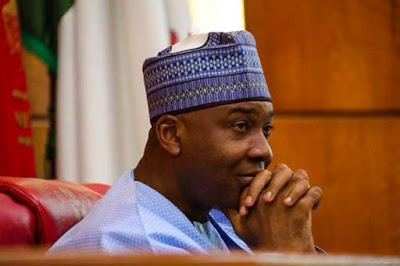
According
to the
Senate President, Dr. Abubakar Bukola Saraki, there is need to
validate e-commerce transactions as fraudulent activities online, commercial
disputes arising from sale and delivery; and other undesirable outcomes are on
the rise. In the 44-page report, the Senate President stressed
that an estimated 60 per cent of micro and small businesses advertise and sell
their wares online, either through their own sites or using social media.
“This has also opened up a floodgate of fraudulent activity online, commercial
disputes arising from sale and delivery; and other undesirable outcomes.

Also, he
said, large businesses have also taken advantage of the ease offered by
technology to conduct and transact their official businesses online. “Contracts
and agreements are being concluded without parties being physically present.
But conversely, extant laws provide inadequate protection for e-commerce
businesses and consumers,” he declared[ii].

From the
above, it is crucial that President Buhari signs the Electronics Transactions
Bill into Law as it will bring sanity and protection to Nigerians and investors
who carry on business through electronic transactions.

You may download a copy of the Bill here.  

Legalnaija 
Learn & Share 
www.legalnaija.com 
@Legalnaija 

Photo Credit – Abbakin


[i] Abbakin.
(2018). The Nigeria Online Ecommerce Market Size and Trends. Available:
https://abbakin.com/nigeria-online-ecommerce-market-size/. Last accessed 22nd
September, 2018.
[ii] ITRealms. (2018 ). Why NASS
passed Electronic Transactions Bill – Saraki – ITREALMS.

Available: https://www.itrealms.com.ng/2018/08/why-nass-passed-electronic-transactions.html.
Last accessed 22nd September, 2018.

The NBA Osun State Election Monitoring Team Is Very Knowledgeable And Articulate | Paul Usoro SAN

The NBA Osun State Election Monitoring Team Is Very Knowledgeable And Articulate | Paul Usoro SAN

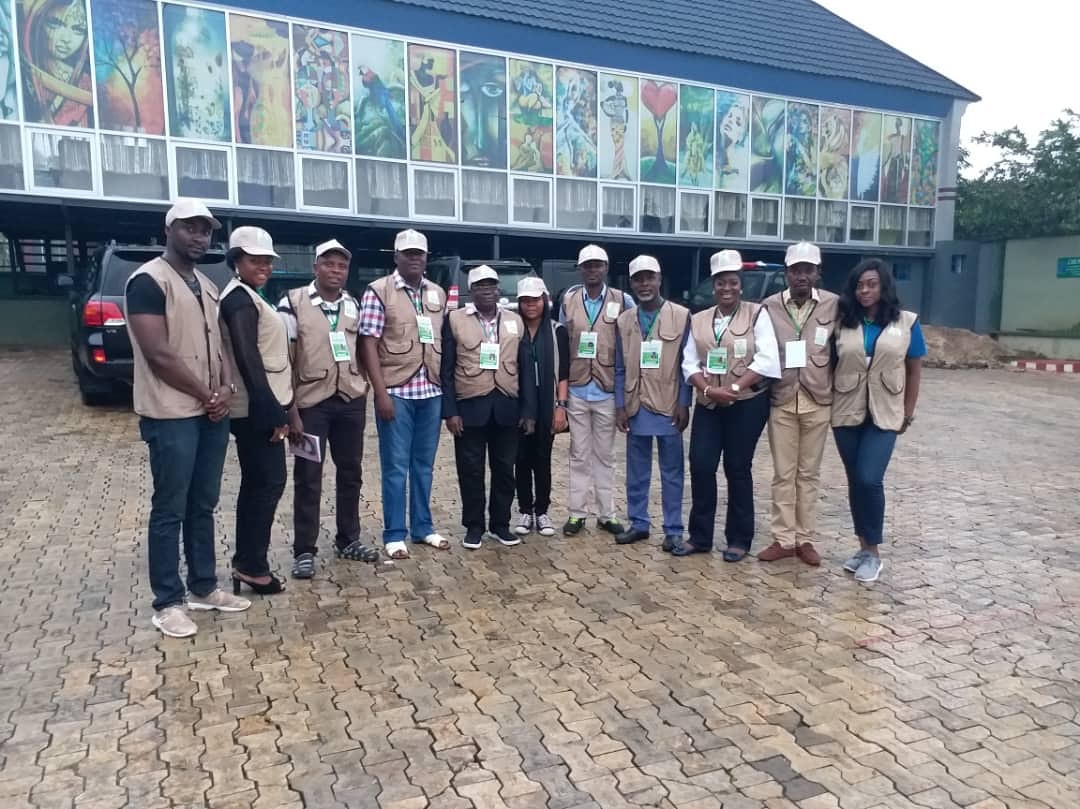
Osun state is currently in the process of electing a new governor at the #OsunDecides2018 and It’s great to see the NBA playing an active role in election monitoring and governance. 
The NBA President, Paul Usoro SAN has described the NBA representatives as very 
knowledgeable and articulate. Certainly all members of the Bar and Bench are proud of them to.  

The NBA President stated in his official statement that – 
“I’ve just finished proudly watching our Osun State Governorship Election Monitoring Team Chairman, Tawo Tawo, SAN & member, Abibat on AIT right now. Very articulate, very knowledgeable & representing us so well. 
I am following the Team’s activities real time & I’m fully satisfied with their work so far. Very proud of the entire Team. Without doubt, we have great men & women in the NBA. 
I thank & commend the entire Team for their devotion & selfless service on our behalf. God bless the NBA. God bless us all.” 
– Paul Usoro SAN 

#PuttingYouFirst #paulusoroconnect #PaulUsoroSAN #nbapresident #nigerianbarassociation #blawg #legalnaija
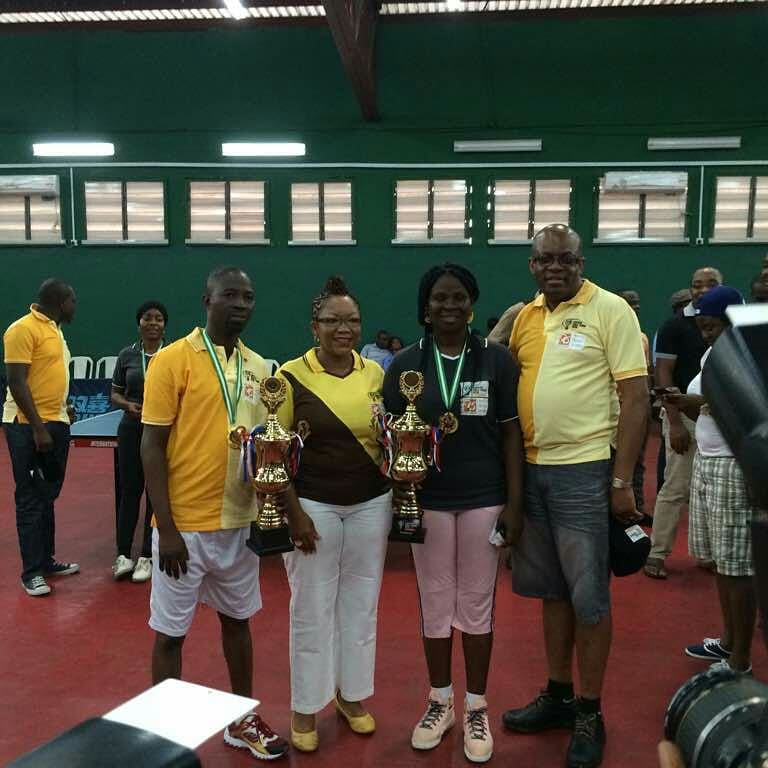
The Mfon Usoro Lawyers Table Tennis Championship is back

The Mfon Usoro Lawyers Table Tennis Championship is back

The Mfon Usoro Table Tennis Championship For Lawyers is back 😃🏅 The 2018 finals of Lawyers Table open (Mfon Usoro)cup will hold on Saturday 27th of October at the National Stadium, Surulere, Lagos. Training will continue tomorrow at the facility of the Nigerian Table Tennis Federation, at the National stadium in Lagos and in all other parts of the country.
       
The hall will be opened specifically for lawyers from 8am every Saturday for training and shall continue to be opened every Saturday until the preliminaries begin in mid October. Lawyers  are expected to come for the training with their Rackets(bats) and balls.

The following number should be contacted as when you arrive National Stadium for training-08034543700,07082280202.

The 2018 event will be the 10th anniversary of the event . Also Lawyers outside of Lagos are encouraged to register for the Tournament. They can train where they reside but are expected to arrive Lagos for the finals on 27 October 2018.
ICT Vital Tool For Good Governance & Administration Of Justice | Paul Usoro SAN

ICT Vital Tool For Good Governance & Administration Of Justice | Paul Usoro SAN

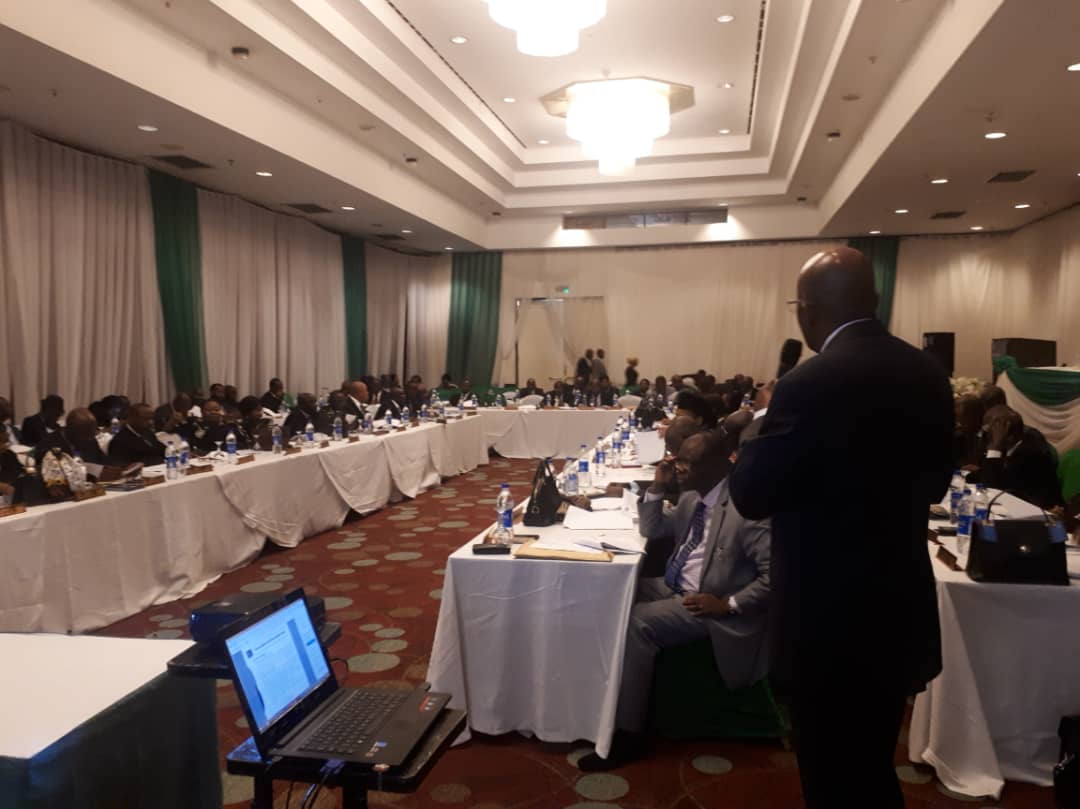
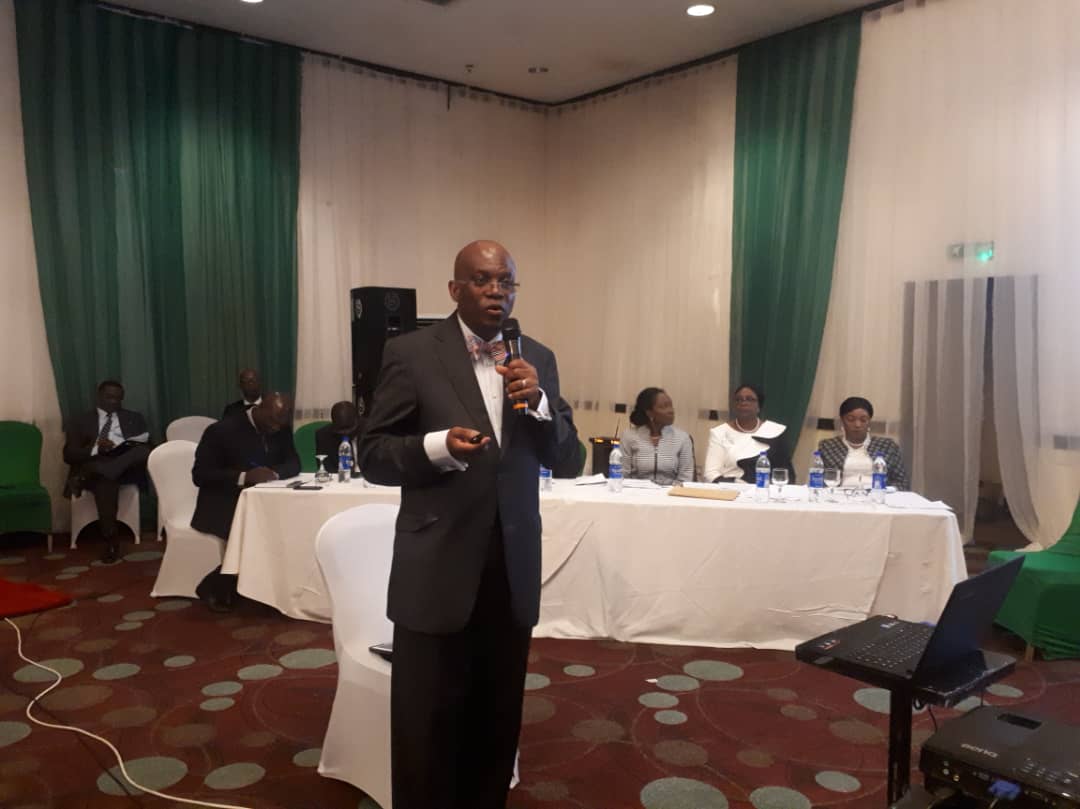
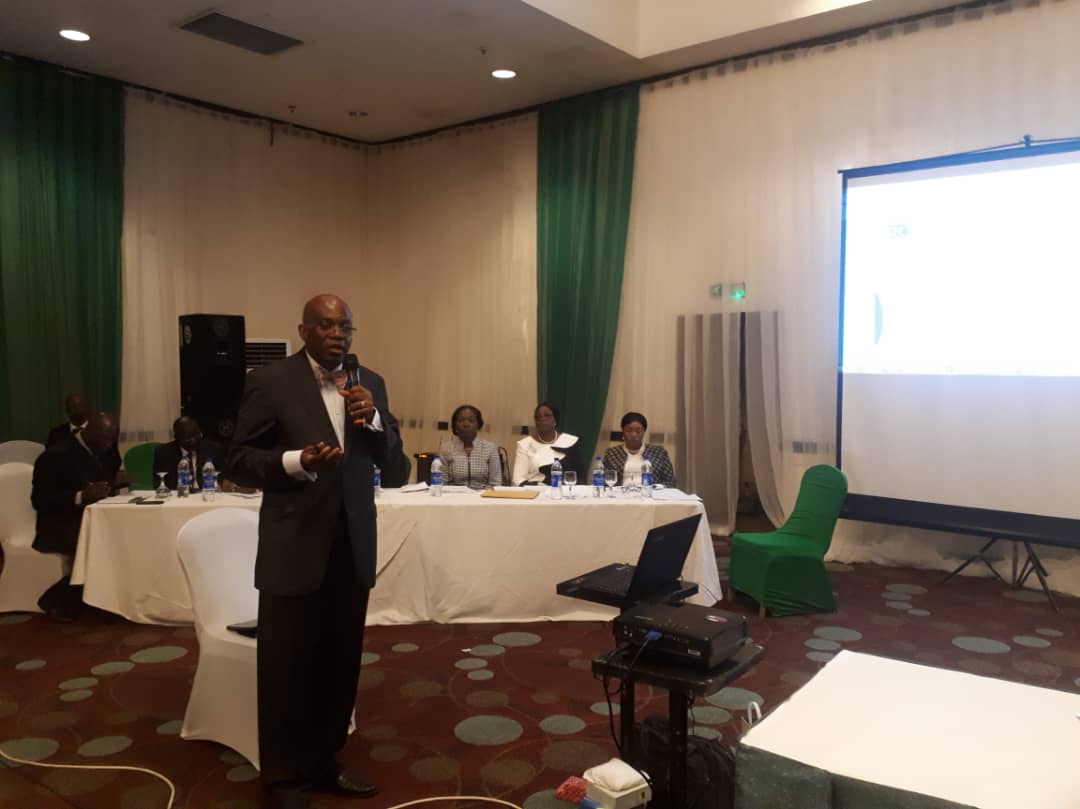
Paper delivered by NBA President,  Paul Usoro SAN on Information and Communication Technology and Administration of Criminal Justice in Nigeria – Prospects, Development and Challenges, at the 2018 Federal High Court Annual Judges Conference today 20 September 2018.

Information and Communication Technology (“ICT”) has positively impacted all spheres of modern life, increasing efficiency and the delivery of high-quality services
Globally, ICT has become a vital tool for growing sustainable economies, good governance, and administration of justice.

The Nigerian justice system, among other challenges, is marred with avoidable delays in the dispensation of justice. ICT is replete with new opportunities to improve the Nigerian justice system, particularly in proffering solutions to the issue of delay associated with traditional methods of justice delivery
ICT in the administration of justice helps to improve efficiency. For example, through adopting an electronic case filing and management system; transcribing equipment to record court proceedings; the use of Digital Evidence Presentation System etc


It helps in the Efficiency of Key professionals: The ease of access to online databases (such as legislations, case laws, articles, law offices, lawyers etc.) allows for a more efficient and speedy legal research, as against poring through voluminous paper materials.

It helps in the Ease of Access to Justice and Transparency • ICT could be used as a tool to promote public access to relevant information, such as court procedures and judgments, case reviews and law reports, amendment to legislations etc.  Adopting ICT in sensitizing the public of their rights and means to address any breach of same. For example publishing such via social media outlets, SMS alerts, blogs etc.

It helps in checking Malpractices • Obtaining court documents is sometimes aided by having to “see” Court Officials. An electronic system of obtaining such documents would eliminate or at least considerably reduce these incidents of malpractices.
It helps to reduce corruption in legal systems, the 2007 Transparency International’s “Global Corruption Report” recommended, inter alia, transparency through publication of judicial activities, and providing reliable public access to law related information.

One way of making law related issues public is through the Web 2.0 (social-media based web interface).
Boosts Public Confidence in the Justice System • ICT comes in handy in speedy disposal of cases. Justice delayed is justice denied. Where justice is constantly denied, litigants tend to lose confidence in the justice system and adopt self-help methods. •

A widespread use of an ICT-based system will save time in resolving disputes, hereby instilling public confidence in the judicial system.


Easy and Faster Access to Information: Electronic storage of court documents ensures a 24-hour availability of information. Lawyers and litigants are also not hindered by distance in accessing them.

My immediate recommendation would be Implementing the NJIT Policy Document • Generally courts should endeavour to adopt the provisions of the NJIT Policy Document. • This will include the deployment of ICT infrastructure such as Electronic Case Management Software, Electronic Document Management System, Video Conferencing equipment, Voice recorders, Virtual Libraries etc. • The foregoing will encourage e-filing; easy storage, retrieval and access to court documents; clear backlog of cases etc.

Update of Court Websites • Some courts do not have functioning websites. Even the courts with functioning websites display outdated information. Ideally, a court’s website should be the first point of call for information related to the court. Such information would aid compilation of statistics, which could be used for research purposes, amongst others. Training of Judicial Officers and Lawyers •

Adopting a computerized court system will rise to its full potential where the stakeholders possess the minimum skill required to operate them. It is in this vein that the training of judicial officers, lawyers and other relevant parties become pertinent.

Long Live the Nigerian Bar

See You At The #LIJC2018 Holding Tomorrow

See You At The #LIJC2018 Holding Tomorrow


The Lagos Innovating Justice Conference is just tomorrow, Friday, 21st September, 2018. Thank
you for registering to attend. 


Major players in the justice and legal sector will be
gathering to share deep and valuable insights. Some of the confirmed
speakers are; Gov. Rotimi Akeredolu SAN
– Governor of Ondo state and former NBA President, Dr. Oby
Ezekwesili
– Co-founder Transparency International and
Senior Economic Advisor to the Africa Economic Development Policy
Initiative, Olasupo Shasore SAN –
Former Attorney General of Lagos state, James Peters –
VP New market initiatives Legalzoom, Laure Beaufils – British
Deputy High Commissioner to Nigeria, Dr.Joe Odumakin – President
Women Arise for Change, Adeniji Kazeem – Attorney
General &am p; Commisioner for Justice Lagos state, Yetunde
Longe
– Deputy Commisioner of Police Lagos State and many
more.

Also, some of the best innovators from the 2018 Innovating
Justice Challenge will pitch their justice innovation at the
conference. 

Please note that the dress code for the event is Business
Formal Attire
.
Registration/check-in will begin at 8:00 am and
the event will begin promptly at 9:30 am at Landmark
Event Centre, 
Oniru, Victoria Island, Lagos. 

You don’t want to miss this historic event which will serve as
a cornerstone of the Lagos justice innovation community for years to come.

We look forward to seeing you on Friday!

High Court of FCT Gets New Judicial Division Commissioned By Paul Usoro SAN

High Court of FCT Gets New Judicial Division Commissioned By Paul Usoro SAN

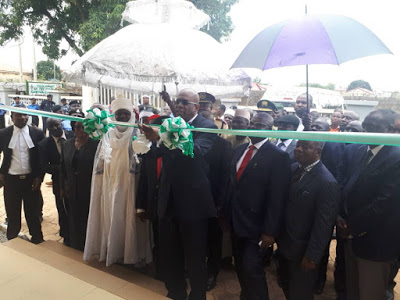
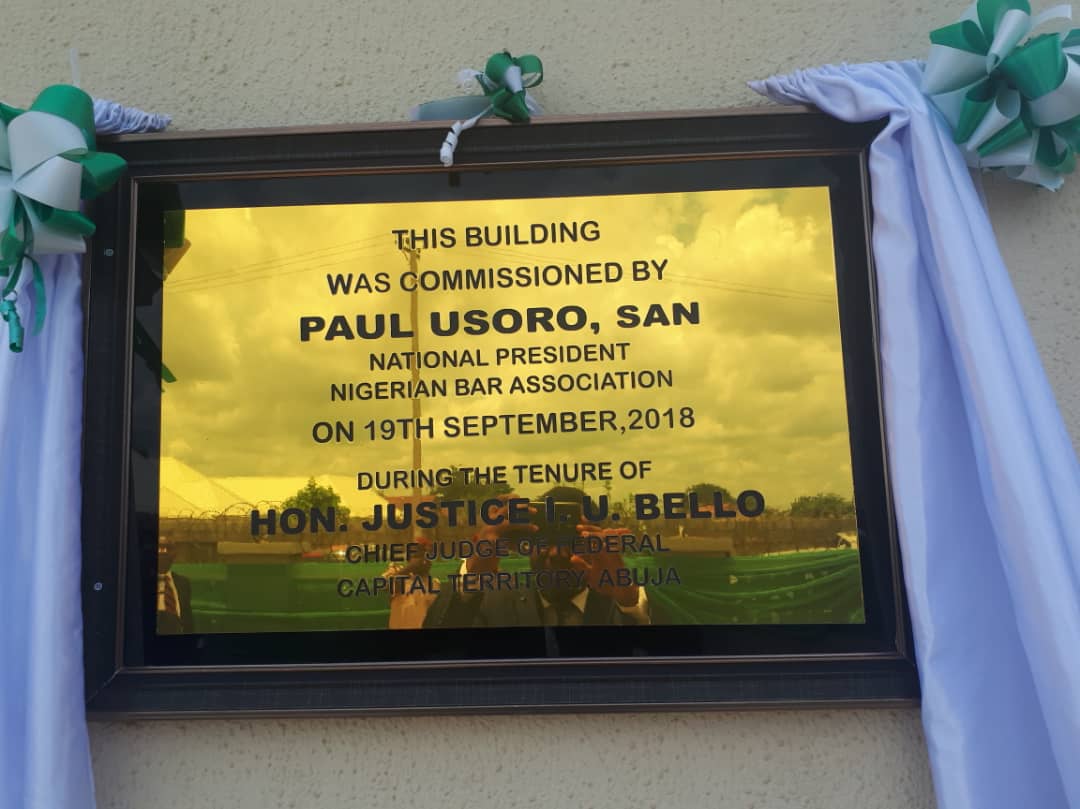
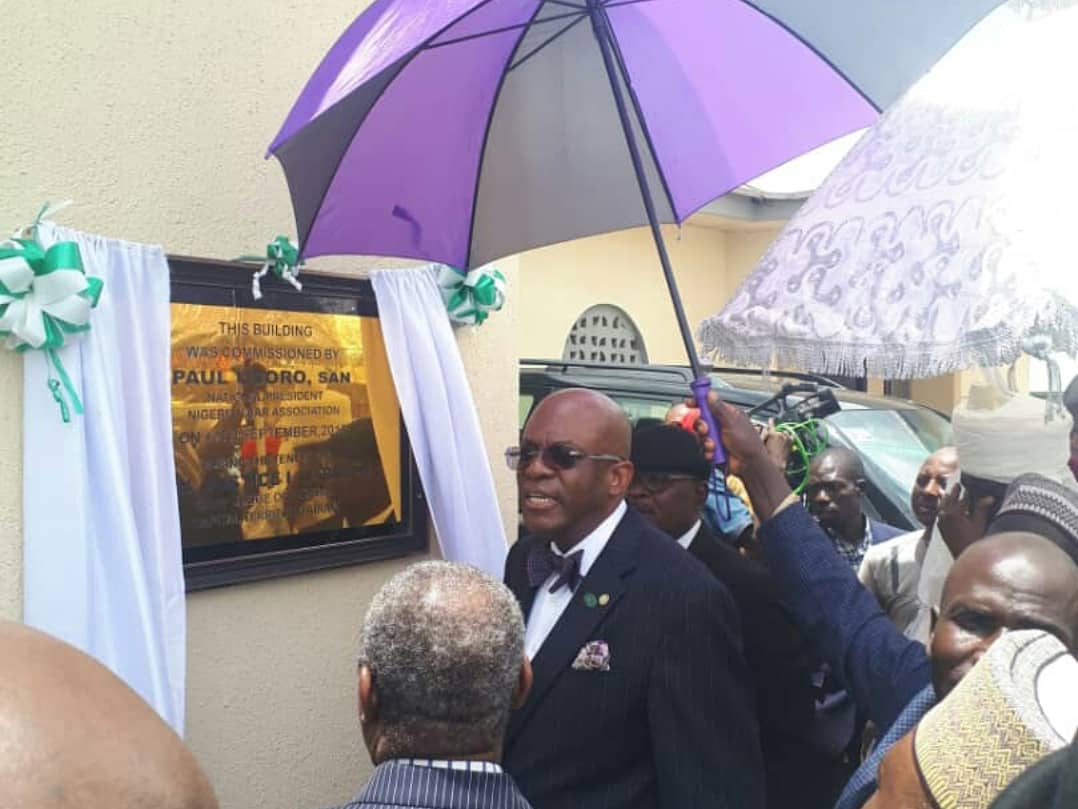
The President of the Nigerian Bar Association (NBA), Mr. Paul Usoro, SAN, FCIArb, today, Wednesday, 19 September 2018, commissioned the Nyanya/Karu Judicial Division of the High Court of the Federal Capital Territory (FCT).

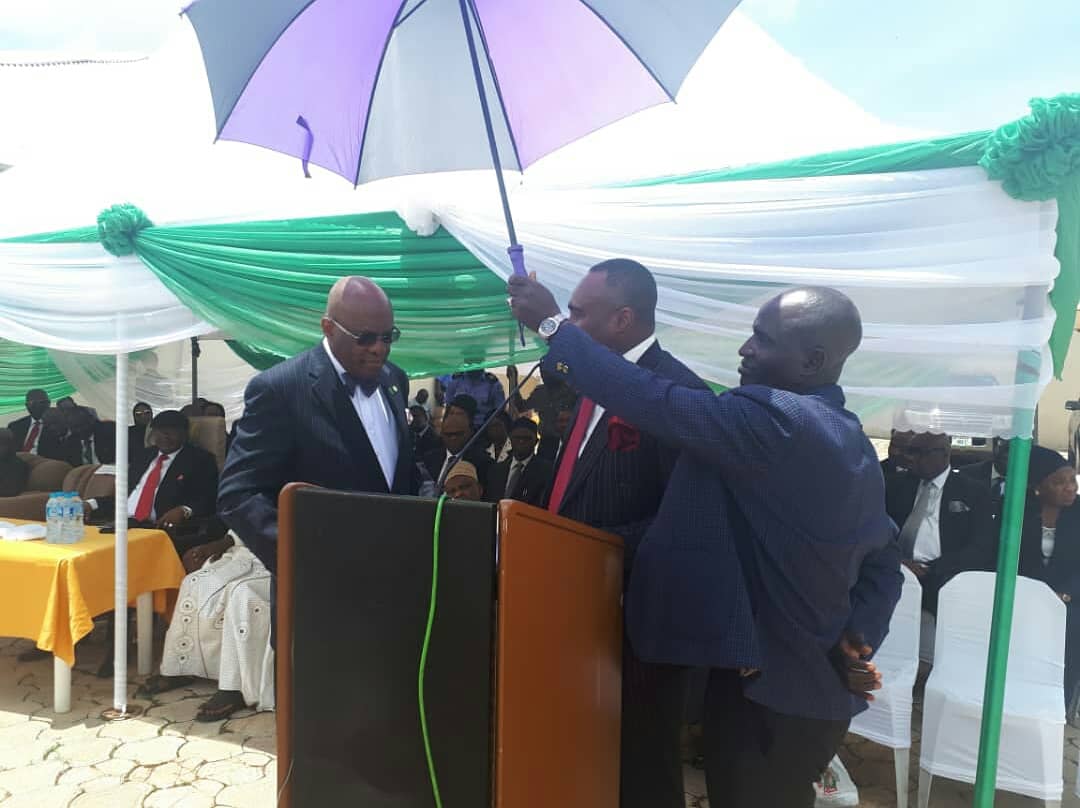
In his goodwill message to the Chief Judge of the FCT, Honourable Justice I. U. Bello, Mr. President congratulated His Lordship and members of the FCT Judiciary for the latest addition to the FCT Judiciary. He noted that the creation of the Nyanya/Karu Judicial Division has enhanced access to justice to litigants and has also deepened the Bar as far as Nyanya/Karu Judicial Division is concerned.

He appreciated the FCT Judiciary for achieving this milestone and congratulated the FCT Judiciary for having a very forward looking head – the Chief Judge. Mr. President pointed out that the body generally takes the direction of the head, if the head has a problem, then the rest of the body will have a problem.

In closing his Remarks, Mr. President assured His Lordship that the Bar will continue to support His him in the dispensation of justice. He also admonished members of the Bar not to degrade the dignity of the Bench because in the process, the rule of law is degraded.

Prior to the President’s goodwill message, the Chief Judge of FCT, Honourable Justice I. U. Bello, disclosed that the wisdom in requesting the NBA President to commission the Nyanya/Karu Judicial Division is to demonstrate to the world that the relationship between the Bar and the Bench in the Federal Capital Territory is in the superlative class.
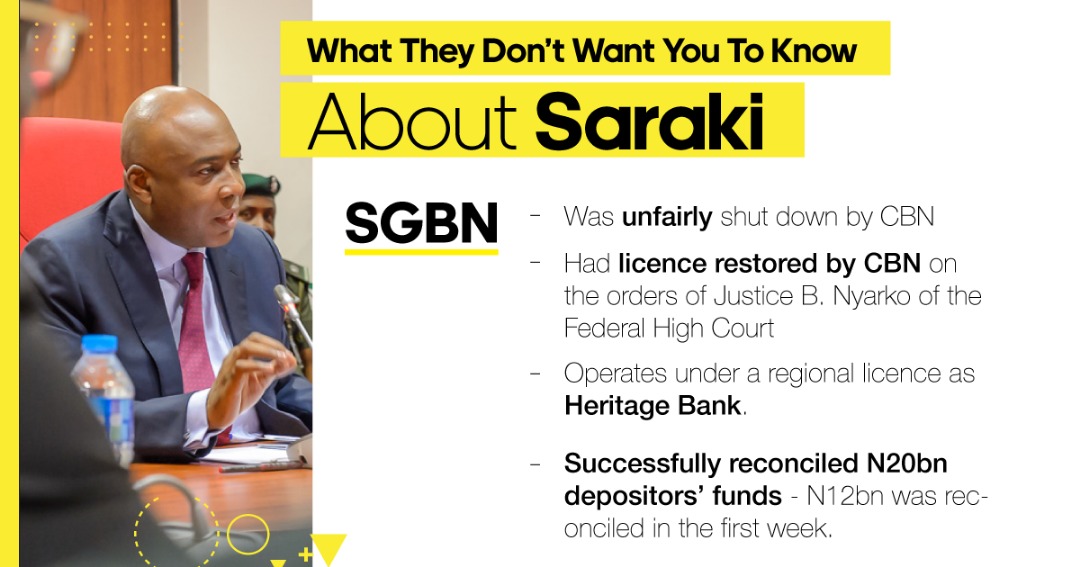
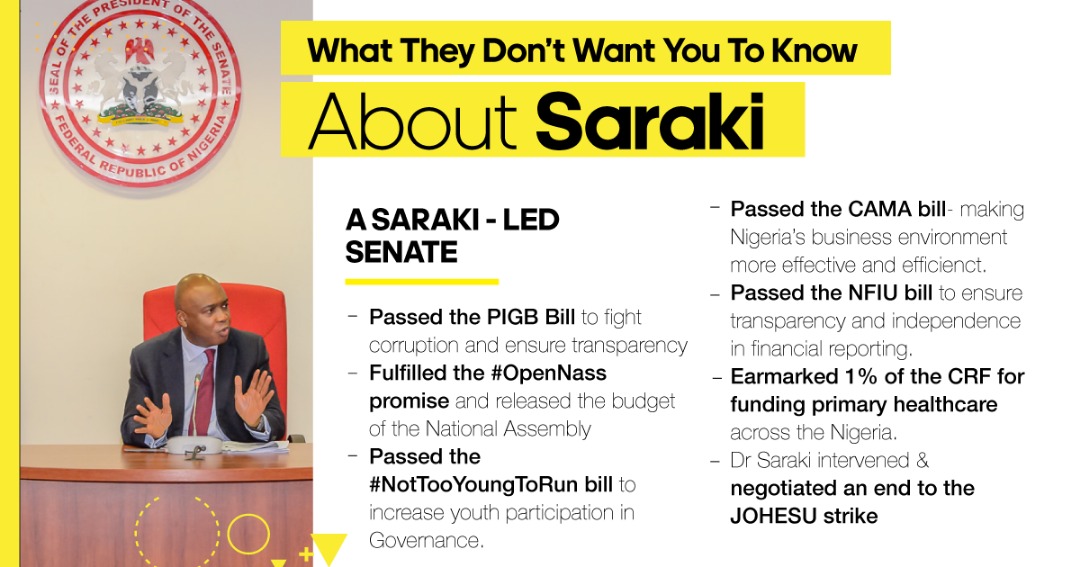
List of Bills Passed By The Saraki Led Senate Since 2015

List of Bills Passed By The Saraki Led Senate Since 2015


The 8th Assembly Under the leadership of Dr. Abubakar Bukola Saraki compared to other Assemblies has achieved great feats in regard to its legislative duties. The 8th Assembly has achieved so much more in 3 years than what the 6th and 7th Assemblies achieved in a similar period. 
The Bills passed by the Senate include: 

1. National Railway Corporation Act 1955 N129 LFN 2004
(Repeal & Re-enactment Bill 2015

2. Bankruptcy and Insolvency Act CAP B2 LFN 2011 (Repeal and
Re-enactm  ent) 2015

3. National Institute for Cancer Research and Treatment (est)
Bill 2015

4. Forestry Research Institute of Nigeria (est., etc) Bill 2015

5. Electronic Transaction Bill 2015

6. Agriculture Credit Guarantee Scheme Act (Amendment) Bill
2015

7. Commercial Agriculture Credit Scheme (Est,etc) Bill, 2015

8. Discrimination Against Persons with Disabilities
(Prohibition) Bill 2015

9. National Poverty Eradication Commission (Est,etc)Bill
2015

10. North East Development Commission (NEDC) (Est,etc) Bill
2015

11. Erosion Control and Prevention Commission (Est, etc)
Bill, 2015

12. Counterfeit and Fake Drugs and Unwholesome Processed
Foods (Miscellaneous provision) Amendment Bill 2015

13. Federal University of Petroleum Resources Effuru (Est,
etc) Bill 2015

14. Food Security Bill 2015

15. Nigerian Agricultural Quarantine Service (Establishment,
etc) Bill 2015

16. Environmental Managers Registration Council of Nigeria
(Establishment, etc) Bill 2015

17.Nigeria Institute of Soil Science (Establishment, etc)
Bill 2015

18. Nigeria Football Federation (Establishment, etc) Bill
2015

19. National Sports Commission (Establishment, etc) Bill
2015

20. Federal Competition and Consumer Protection Bill 2015

21. Witness Protection Programme Bill 2015

22. Supplementary Appropriation Bill 2015

23. Defence Space Agency (Establishment, etc) Bill 2015

24. High Court of the Federal Capital Territory Abuja
(Amendment) Bill 2015

25. Air Force Institute of Technology (Establishment, etc)
Bill 2015
Credit Bureau Reporting Bill 2015

26. 2015 Appropriation Act (Amendment) Bill 2015

27.  2016
Appropriation Bill

28. Federal Roads Authority (Establishment, etc) Bill 2016

29. National Assembly Budget and Research Office
(Establishment, etc) Bill 2016

30. Mutual Assistance in Criminal Matters Bill 2016

31. Federal Capital Territory Statutory Appropriation Act
(Amendment) Bill 2016

32. Federal University of Petroleum Resources Effurun Bill
2016

33. National Lottery Act 2005 (Amendment) Bill 2016

34. Electoral Act №6 2010 (Amendment) Bill 2016

35. Public Procurement Act (Amendment) Bill 2016

36. Petroleum Industry Governance Bill 2016

37. National Inland Waterways Act Cap N47 LFN 2004 (Repeal
and Re-enactment) Bill 2016

38. Nigerian Ports and Harbours Authority Act (Amendment)
Bill 2016

39. JAMB Act (Amendment) Bill 2016

40. Nigerian Customs Service Bill 2016 and Nigerian Customs
Service Act (Repeal and Re-enacment) Bill 2016

41. Warehouse Receipts Bill 2016

42. Secured Transactions in Movable Assets Bill 2016

43. Sexual Harassment in Tertiary Educational Institution
Bill 2016

44. Federal University of Wukari (Establishment, etc) Bill
2016

45. Maritime University of Nigeria, Okerenkoko
(Establishment, etc) Bill 2016
2016 FCT Appropriation Bill

46. Appropriation Bill, 2017

47. Nigerian Peace Corps (Establishment, etc) Bill 2015 and
the National Unity and Peace Corps (Establishment, etc) Bill 2015

48. National Open University of Nigeria Act (Amendment) Bill
2017

49. Federal University of Maritime Studies, Oron Bill, 2017

50. National Institute for Legislative Studies Act
(Amendment) Bill 2017

51. National Research and Innovation (Est, etc.) Bill, 2017

52. Compulsory, Free Universal Basic Education Act 2004
(Amendment) Bill 2016 and Universal Basic Education Act 2003 (Amendment) Bill
2016

53. Nigeria Financial Intelligence Agency (Est, Etc.) Bill,
2017

54. Institute of Chartered Biochemist and Molecular
Biologist Bill, 2016

55. Whistle Blowers Protection Bill 2015

56. Abduction, wrongful restraints and wrongful confinement
for ransom bill 2017

57. Prohibition and Protection of persons from lynching, mob
action and Extra Judicial Executions Bill, 2017

58. Nigerian Tourism Development Corporation Act (Repeal and
Re-enactment) Bill 2017

59. Hydroelectric Power Producing Area Development
Commission (Amendment) Bill 2015

60. Chartered Institute of Entrepreneurs (est., etc.) Bill
2015

61. Chartered Institute of Capital Market Registrars Bill
2017

62. Presidential Inauguration Bill 2016

63. National Institute for Hospitality and Tourism
(Establishment, etc) Bill 2016

64. FCT Statutory Appropriation Bill 2017

65. Niger Delta Development Commission (NDDC) Act
(Amendment) Bill, 2017

66. Federal University of Agriculture Kaaba (Establishment,
etc) Bill 2016

67. Federal Colleges of Education Act (Amendment) Bill 2017

68. Niger Delta Development Commission (Amendment) Bill 2017

69. Nigeria Arabic Language Village, Ngala (Establishment,
etc.) Bill, 2017

70. Nigeria French Language Village, Badagry (est., etc.)
Bill, 2017

71. Demutualization Bill, 2017

72. The Revised Edition (Laws of the Federation of Nigeria)
Bill, 2018

73. 2017 FCT Appropriation Act (Amendment) Bill, 2018

74. Arbitration and Conciliation act cap A18 LFN 2004(Repeal
and re-enactment) Bill 2018

75. Emergency Powers (Repeal and re-enactment) Bill, 2018

76. Federal University Gashua (establishment, etc.) Bill,
2018 (SB459)

77. National Transport Commission (Est., etc.) Bill, 2018
(SB. 242)

78. Real Estate (Regulation and Development) Bill, 2018 (SB.
216)

79. River Basin Development Act CAP R9 LFN 2004 (Amendment)
Bill, 2018 (SB. 358)

80. National Centre for Disease Control Prevention
(Establishment, etc) Bill, 2018 (SB. 256)


CONCURRENCE BILLS PASSED BY THE
SENATE SINCE JUNE 9TH 2015

81. Environmental Health Officers (Registration, etc.) Act (Amendment) Bill,
2016

82. Federal University of Petroleum Resources, Effurun Bill,
2016

83. National Judicial Institute Act (Amendment) Bill 2016

84. Prevention of Crimes Act (Amendment) Bill 2016

85. Water Resources Act (Amendment) Bill 2016

86. Endangered Species (Control of International Trade and
Traffic) Act (Amendment) Bill 2016

87. Agricultural and Rural Management Training (Amendment)
Bill 2016

88. Telecommunications and Postal Offences Act (Amendment)
Bill, 2016

89. Treaty to Establish African Economic Community Relating
to the Pan-African Parliament (Accession and Jurisdiction) Act (Amendment) Bill
2016

90. Utilities Charges Commission Act (Amendment) Bill 2016

91. Chartered Institute of Stockbrokers Act (Amendment)
Bill, 2016

92. Petroleum Product Pricing Regulatory Agency Act
(Amendment) Bill, 2016

93. Petroleum Training Institute Act (Amendment) Bill, 2016

94. Quantity Surveyors (Registration, etc.) Act (Amendment)
Bill 2016

95. Bees (Import Control and Management) Act (Amendment)
Bill 2016

96. Advertising Practitioners (Registrations, etc.) Act
(Amendment) Bill 2016

97. World Meteorological Organization (Protection) Act
(Amendment) Bill, 2016

98. Currency Conversion (Freezing Orders) (Amendment) Bill
2016

99. Builders (Registration, etc.) Act (Amendment) Bill 2016

100. Town Planners (Registration, etc.) Act (Amendment) Bill
2016

101. University of Abuja Act (Amendment) Bill, 2016

102. Corrupt Practice and other Related Offences Act
(Amendment) Bill, 2016

103. Small and Medium Scale Enterprises Development Agency
(Amendment) Bill 2016

104. National Agricultural Land Development Authority Act
(Amendment) Bill 2016

105. Produce (Enforcement of Export Standards) (Amendment)
Bill 2016

106. National Crop Varieties and Livestock Breeds
(Registration etc.) Act (Amendment) Bill 2016

107. National Archives Act (Amendment) Bill, 2016

108. Value Added Tax Act (Amendment) Bill, 2016

109. Advance Fee Fraud and Other Fraud Related Offences Act
(Amendment) Bill, 2016

110. Chartered Institute of Human Capital Development of
Nigeria Bill 2016

111. Dangerous Drugs Act (Amendment) Bill, 2016

112. Chartered Institute of Loan and Risk Management of
Nigeria Bill 2016

113. Veterinary Surgeons Act (Amendment) Bill, 2016

114. Federal Capital Territory Civil Service Commission Bill
2016

115. Chartered Institute of Public Management Bill 2016

116. Nigerians in Diaspora Commission (Establishment) Bill
2016

117. Oaths Act (Amendment) Bill, 2016

118. Institute of Local Government and Public Administration
Bill 2016

119. Chartered Institute of Project Management of Nigeria
(Establishment) Bill 2016

120. Nigerian Council for Social Work (Establishment, etc.)
Bill 2016

121. Code of Conduct Bureau and Tribunal Act (Amendment)
Bill, 2016

122. Mortgage Institutions Act (Amendment) Bill, 2016

123. National Film and Video Censors Board Act (Amendment)
Bill, 2016

124. Official Secrets Act (Amendment) Bill, 2016

125. Federal Capital Territory Districts Courts Act
(Amendment) Bill, 2016

126. Pensions Rights of Judges Act (Amendment) Bill, 2016

127. Anti-Torture Bill, 2016

128. Federal Capital Territory Hospitals Management Board
(Establishment, etc.) Bill, 2016

129. National Child Protection and Enforcement 2016

130. Police Procurement Fund Bill, 2016

131. Federal Capital Territory Water Board Bill 2016

132. Senior Citizen Centre Bill, 2016

133. Animal Health and Husbandry Technologist (Registration,
etc.) Bill 2016

134. Compulsory Treatment and Care of Victims of Gunshots,
Bill 2016

135. Corporate Manslaughter Bill 2016

136. Railway Loan (International Bank) (Amendment) Bill,
2016

137. Legislative Houses (Powers and Privileges) Act
(Amendment) Bill, 2016

138. Chartered Institute of Export and Commodity Brokers of
Nigeria Bill, 2017

139. Avoidance of Double Taxation Between the Federal
Republic of Nigerian and the Kingdom of Spain Bill, 2017

140. Avoidance of Double Taxation Between the Federal
Republic of Nigerian and the Republic of South Korea Bill, 2017

141. National Postgraduate College of Medicine Laboratory
Science Bill, 2017

142. Avoidance of Double Taxation Between the Federal
Republic of Nigerian and the Kingdom of Sweden Bill, 2017

143. National intelligence Agency Pension Bill 2017

144. Nigeria Academy of Science (establishment etc.)

145. Chartered Institute of Treasury Management (Est, Etc.)
Bill 2017

146. Federal School of Medical Laboratory Technology Science
(Est, Etc.) Bill 2017
Franchise Bill

147. Federal College of Dental Technology and Therapy Bill,
2017 (HB1,018)

148. Federal Capital Territory Transport Authority
(Establishment) Bill HB. 91

149. Nigerian Automotive Industry Development Plan (Fiscal
Incentives Assurances and Guarantees) Bill, 2017 HB. 896

150. Chartered Institute of Customer Relationship Management
Bill, 2017 HB. 69

151. Dishonoured Cheques (Offences) Act (Amendment) Bill,
2017

152. Vigilante Group of Nigeria (Est., etc.) Bill, 2017
HB718

153. Subsidiary Legislation (Legislative Scrutiny) Bill,
2017 HB13

154. Courts and Tribunal Fines and Financial Penalties Bill,
2017 HB 642

155. Radiographers (Registration, etc.) Act (Amendment)
Bill, 2017 HB 676

156. Medical Residency Training Bill, 2017 (HB.982)

157. National Road Funds (Est, etc.) Bill, 2018

158. National Climate Change Bill (HB1020)

159. National Agricultural Seeds Council Bill, 2018 (HB.
472)

160. Chartered Institute of Logistics and Transport of
Nigeria Bill, 2018 (HB. 973)

161. National Security Agencies Protection of Officers
Identity Bill, 2018 (HB. 830)

162. Institute of Environmental Practitioners of Nigeria
(HB. 1022)

163. National Biotechnology Development Agency (Est., etc.)
Bill, (HB. 33)

164. Nigeria Aeronautical Search and Rescue Bill, 2018 (HB.
139)

165. Federal Audit Service Commission Bill (HB. 107)

166. Pharmacy Council of Nigeria (est., etc.) Bill, 2018 (HB
364 & 656)

167. Digital rights and freedom bill, 2018(HB490)

168. Energy Commission Act (Amendment) Bill, 2018(HB72 &
446)


CONSTITUTIONAL ALTERATION BILLS PASSED

169. Alteration of the Constitution to provide for time passage of laws
(assent)

170. Alteration of the Constitution to provide for funding
of the State Houses of Assembly directly from the Consolidated Revenue Fund.

171. Alteration of the Constitution to include former heads
of the NASS in the council of state.

172. Alteration of the Constitution to reduce the period
within which the President or Governor may authorise withdrawal from the CRF in
absence of an appropriation act from 6 to 3 months.

173. Alteration of the Constitution to provide for immunity
of legislature in respect of words spoken or written at plenary…

174. Alteration of the Constitution to abrogate the State
Joint Local Govt Accounts and empower each local govt council to maintain its
own special account.

175. Alteration of the Constitution to strengthen local govt
administration in Nigeria

176. Alteration of the Constitution to provide the INEC with
sufficient time to conduct bye-elections and grounds for de-registration of
political parties.

177. Alteration of the Constitution to delete the public
complaints commission Act from the constitution.

178. Alteration of the Constitution to delete the National
Securities Agencies Act from the constitution.

179. Alteration of the Constitution to delete the National
Youth Service Decree from the Constitution.

180. Alteration of the Constitution to delete state
independent electoral commission from the constitution.

181. Alteration of the Constitution to specify the period
within which the President or Governor shall present the Appropriation Bill
before NASS or SHA

182. Alteration of the Constitution to reduce the age for
the qualification for the offices of president, house of reps and state house
of assembly.

183. Alteration of the Constitution to reflect the
establishment of the ISA in the constitution.

184. Alteration of the Constitution to remove law making
powers from the Executive Arm of Govt.

185. Alteration of the Constitution to provide for the
procedure for passing a constitution alteration bill, where the president
withholds assent.

186. Alteration of the Constitution to reflect the
establishment and core functions of the Nigeria Security and Civil Defence
Corps.

187. Alteration of the Constitution to provide time for the
determination of pre-election matters.

188. Alteration of the Constitution to further strengthen
the judiciary for speedy dispensation of justice.

189. Alteration of the Constitution to establish the AGF and
separate the office from that of the minister for justice (likewise in the
states).

190. Alteration of the Constitution to establish the office
of the accountant general of the federal govt separate from the office of the
accountant general of the federation

191. Alteration of the Constitution to make the office of
the auditor general of the federation and states financially independent by
placing them on the CRF (states).

192. Alteration of the Constitution to disqualify a person
sworn-in as president or governor to complete the term of the elected person
from being elected to the same office for more than a single term.

193. Alteration of the Constitution to change the name of
the police from the Nigerian Police Force to the Nigerian Police.

194. Alteration of the Constitution to provide for
independent candidature in elections.

195. Alteration of the Constitution to provide for a change
in the names of some local govt councils.

196. Alteration of the Constitution to provide for the
appointment of a minister from the FCT to ensure FCT is represented in the FEC.

197. Alteration of the Constitution to require the President
and Governor to submit names of nominated ministers or commissioners within
thirty days of taking the oath of office for confirmation.


Emmanuel Aguma SAN affected people’s lives across all divides including geographical space, gender and religion  – Paul Usoro SAN

Emmanuel Aguma SAN affected people’s lives across all divides including geographical space, gender and religion – Paul Usoro SAN

ADDRESS BY PAUL USORO, SAN FCIArb, PRESIDENT, NIGERIAN
BAR ASSOCIATION AT THE VALEDICTORY SESSION HELD
ON SATURDAY, 15 SEPTEMBER 2018 IN HONOR OF LATE
EMMANUEL CHINWENWO AGUMA, SAN – IMMEDIATE
PAST ATTORNEY-GENERAL, RIVERS STATE OF NIGERIA

Protocols
1.​We are gathered here today to celebrate the life of our friend, brother, father and colleague, Emmanuel Chinwenwo Aguma, SAN who left us suddenly and without farewells on Friday, 10 August 2018.  At 56, having been born on 21 April 1961, Emmanuel’s life was just beginning when he passed on.  He had barely worn his deserved rank of Senior Advocate of Nigeria for 3 (three) years before departing to join the saintly ranks, having been elevated into the Inner Bar in 2015.  The loss of a loved one at any age is always painful, indeed most painful.  However, the loss of a young man of 56, at the prime of youth, with the future beckoning, full of promise and hope, such death is not only excruciatingly painful but extremely tragic and invariably fills and leaves the living with unsurpassable grief.  That has been our portion with the passage of our late Attorney-General.


2.​And yet, we celebrate Emmanuel Aguma life.  Why and in what circumstance do we celebrate his life?  We do so because, his life, short as it was serves as a mirror for us, the living, to ponder over and reflect on our lives.  His life serves as an object lesson for us, the living.  His life packed in so much positives, it was as if he knew that he had a short time to live and needed to cram in all he could.  The lessons of our brother’s life are plenty, but I will, in the short time that I have, highlight but a few of them.  First, the outpouring of emotions across the land tells us how much Emmanuel was loved by all that came across him and all that he came across.  There are people who die un-mourned and unloved.  Not Emmanuel.  His passage has touched the core of all of us.  Clearly, he affected people’s lives across all divides including but not limited to geographical space, gender and religion.  How much of other people’s lives do we impact and touch?  That’s one significant lesson that Emmanuel has left us with.

3.​Turning to the legal community, Emmanuel’s primary constituency, his life was a lesson in service to the Bar.  Yes, he had friends across board, but we of the Bar claim him the most and he served us very well, as Secretary of NBA Port Harcourt Branch between 2000-2002, as NBA NEC Member between 2000-2002 and 2004-2016, as Chairman of NBA Port Harcourt Branch between 2006-2008, as the Secretary of the NBA Section on Legal Practice between 2007-2008 and as a member of the NBA Prosecution Team between 2012-2015.  Emmanuel was also a member of the Body of Benchers up to his death.  In these various positions and assignments, he was not found wanting howsoever.  His diligence was exemplary and so was his passion. The Bar mourns and misses him enormously.

4.​And yet, he was a successful legal practitioner and not just a Bar politician – and that is Lesson No. 3 from Emmanuel’s life.  In these days that we have some professional Bar politicians, whose practice center solely around Bar politics, Emmanuel’s life reminds us that it is possible to serve the Bar and still be an active and full-time legal practitioner who aspires to and attains the highest ranks of the legal profession – the coveted rank of a Senior Advocate of Nigeria.  He did not earn that rank through Bar politics; he worked assiduously for it and was duly recognized and elevated by his peers and superiors.  Of course, he and I had and still have a mentor in our revered elder brother OCJ Okocha, SAN OON who has always shown us the pathway in combining scholarship and professional work with service to the Bar – may he, our dear OCJ live long. What rank has OCJ not attained?  Is it SAN, Attorney-General of Rivers State, President of the Bar, name it!  Same with our brother, Emmanuel Aguma, SAN, immediate past Attorney-General of Rivers State and consummate Bar man even if not the President.  We will and do miss him.

5.​The fourth lesson that Emmanuel’s passage reminds us is the need to take the issues of our health seriously.  Of course, our lifespan is entirely in God’s hands and by His Grace and Mercies, but He has provided us with health-tips, some of which are contained in His Word, the Bible – the Holy Book which Emmanuel coveted greatly as the Deputy Registrar of the Church of Nigeria, Anglican Communion, Diocese of Niger Delta from 2008 until his untimely passage.  There are of course other health-tips that come from the fecund minds and intellect of medical experts and practitioners around us.  We do need to take advantage of these health-tips and the medical experts and practitioners and their facilities, all around us.  We all know how stressful a lawyer’s work, in the best of times could be not to mention in these unusual times that we live in, with strife and conflicts all around us.  We need to take care of our health and be diligent in managing our stress levels while living a healthy lifestyle that would, by His Grace, lengthen our days.  This we must do, not only for our own sakes but, even more importantly, for the sakes of our loved ones.


6.​Indeed, our hearts go out to Emmanuel’s loved ones, his immediate and extended family.  His wife, Inimefien, and children, Onyiyechi, Emmanuel (Jnr) and Ezekwesili must know that they’re not alone; we, the members of Emmanuel’s larger family, will always be with them.  We must show them love and care.  That’s what we owe Emmanuel.  To HE Nyesom Wike, CON, the Governor of Rivers State and the people of the State who have just lost a devoted and trusted Counselor, we mourn with you and pray for Divine strength and fortitude for you all.  And finally, we must all know and believe that Emmanuel, as his name suggests, is now with His Maker and at peace even as we continue to pray for his repose.  May he rest well.
IP ABC: Does Sampling Music Amount To Coyright Infringment | Infusion Lawyers

IP ABC: Does Sampling Music Amount To Coyright Infringment | Infusion Lawyers

We are The Dambu Guys,
a rap and hip-hop group in Nigeria. In 2006, we used 20 seconds of music
fromAhmed Daura’s ‘Ina Sonki’ in one of our songs, ‘Dambu Dose’. Ahmed
Daura is an established and popular flute player in Nigeria. ‘Ina Sonki’ is one
of the tracks in Ahmed Daura’s 1988 album published by Tarouni Times, a leading
music-publishing company and record label in Kaduna. We since released ‘Dambu
Dose’ and it has been enjoying air play and downloads.


Last week, we received a demand letter from Tarouni Times’ lawyers. They are
demanding 250 million naira from us for allegedly infringing their copyright in
the sound recording of ‘Ina Sonki’. They also demanded a separate 150 million
naira for allegedly infringing on Ahmed Daura’s copyright in the musical
composition of the song.

But we find the demand
surprising. This is because we used only 20 seconds of the over 4-minute song.
Only 20 seconds! Our song ‘Dambu Dose’ is original. If we remove Ahmed Daura’s
sound recording and musical composition from the song, it won’t take anything
away from it. Besides, ‘Ina Sonki’ is an old song and Ahmed Daura has since
retired from the game, decades ago. So we ask, are we liable for copyright
infringements as alleged?

Answer

What The Dambu Guys has done
is an act of sampling; and sampling a song without the copyright owner’s
permission amounts to copyright infringement, except the sampling is found not
to be substantial or the original song is in the public domain. What amounts to
substantial is as determined by a court of law based on the circumstances of
each case.

Sampling involves taking a portion of a sound recording for use in another
sound recording.

Sampling is not defined in
the Nigerian Copyright Act. But according to Wikipedia, sampling is “the act of
taking a portion, or sample, of one sound recording and reusing it as an
instrument or element of a new recording.” So incorporating pre-existing
recordings into a new recording is what sampling is all about. Sampling is a
common activity in music creation but if done wrongly—without due permission
for instance—the user is risking a lawsuit.


The Dambu Guys’ liability for copyright infringement depends on the nature
of copyrighted work allegedly infringed upon.

If in the 20-second sample
of ‘Ina Sonki’, The Dambu Guys uses the sound recording only—the sequence of
sound such as beat, melody, or tune—this touches on the record label’s
copyright in the sound recording.

And if the sample contains a part of the musical composition (lyrics) only
without the sequence of sound, The Dambu Guys is liable for infringing the
music publisher’s or songwriter’s copyright in the musical work.

But if in the sample of the song, The Dambu Guys uses a part of the musical
composition (lyrics) along with the sequence of sound, The Dambu Guys has
infringed on both the music publisher’s or songwriter’s copyright in the
musical work andthe  record label’s copyright in the sound recording
respectively.

The distinction above is vital because songs typically contain both sound
recording and musical composition, with each one enjoying separate copyright
protection, thus requiring separate licence from the copyright owners.
 

First, a song comprise musical composition, eligible for copyright protection.
Under section 51 of the Nigerian Copyright Act, a musical work is defined as
any musical composition and includes works composed for musical accompaniment.
In this regard, Ahmed Daura (or the songwriter as the case may be) has
copyright in the musical work, ‘Ina Sonki’. Section 6 of the Nigerian Copyright
Act gives the copyright owner exclusive control over acts such as commercial
distribution of the work, performance of the work, publication of the work,
reproduction of the work, etc. It is immaterial that the song is no longer in
vogue or the artist ‘has retired from the scene’, except the artist is no more
and seventy years has passed the year of artist’s death.

Second, a song may typically comprise sound recording and this recording qualifies
for copyright protection under the Nigerian Copyright Act. Sound recording
means the first fixation of a sequence of sound capable of being perceived
aurally and of being reproduced. Copyright owners of sound recordings do not
enjoy as much exclusive control as copyright owners of musical works do. This
is because the exclusive rights given to copyright owners under section 6 of
the Nigerian Copyright Act only apply to a literary or musical work {section
6(1)(a)}, artistic work {section 6(1)(b)}, and cinematograph film {section
6(1)(a)}. The reason for this is that originality is not a requirement for
copyright protection of sound recordings.

Therefore, as far as sound recording is concerned, only the rights granted
under section 7 of the Nigerian Copyright Act apply. Section 7 expressly states
that copyright in a sound recording is the exclusive right to control two
things: (1) the direct or indirect broadcasting, communication, or reproduction
to the public of the whole or substantial part of the recording either in its
original form or in any form recognizably derived from the original; and (2)
public distribution of copies of the work for commercial purposes. Tarouni
Times, the record label, controls sound recording.

Also, copyright in the sound recording of ‘Ina Sonki’ subsists for 50 years
after the end of the year in which the recording was first published. Since the
recording was published in 1988, the recording is not in the public domain yet.

The question now is this: Does The Dambu Guys’ 20-second sampling of Ahmed
Daura’s ‘Ina Sonki’ amount to substantial part of the recording either in its
original form or in any form recognizably derived from the original?

Ordinarily a 20-second sample of a 4-minute song does not appear substantial, but
this is a question of fact that only a court of law can make a finding on.
Every case is decided on its own merit. For instance, a court may find that the
20-second sample of the song is a major or significant part of the original
song, ‘Ina Sonki’.

So for the unauthorized use
of musical composition or the unauthorized use of sound recording in ‘Ina
Sonki’, The Dambu Guys may be liable for damages. Damages may be compensatory
damages for loss of licensing fee.  Alternatively, an account of profits
may be awarded. This means payment of a reasonable part of the profits from
‘The Dambu Dose’ as determined by the court.

Therefore, to use a sample
of a copyrighted song, it’s safer to either get a licence to use the sound
recording or licence to use the musical composition, or both, depending on the
sample.

For licence to use the sound
recording of the song, this is often controlled or owned by the label, in this
case Tarouni Times; while licence to use the composition of the song is
typically controlled or owned by the music publisher or songwriter.

To determine if your act of
sampling without permission specifically amounts to copyright infringement, get
professional advice from an IP lawyer or law firm. 

Best wishes

IP ABC

Source: – Infusion
Lawyers