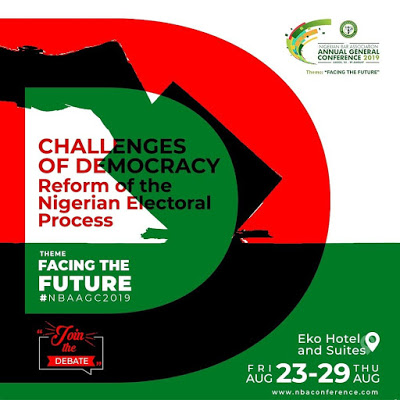
Challenges of Democracy in Nigeria: Reform of the Nigeria Electoral Process

Challenges of Democracy in Nigeria: Reform of the Nigeria Electoral Process

Every country operates a
form of system of governance, for example, Democracy, Oligarchy, Monarchy,
Theocracy and Autocracy. Democracy has been seen as the government of the
people, by the people and for the people. One of the numerous problems that
have worked against democracy in Nigeria is electoral malpractices. 


Nigeria’s
democracy in the past was on a good platform with the existence of democratic institutions,
active civil society organizations and a good and critical mass media. But it
is necessary to mention that Nigeria this present day have been unable to
conduct and attain free and fair elections.

In the contemporary world,
elections have become the most acceptable means of changing leadership in any
given political system. It is the conduct of free and fair electoral process
that justifies a government to be referred to as democratic one because the
authority of the government is derived from the citizens.

The integrity of the
electoral system is a major issue facing democratic governance in Nigeria.
Currently, elections in the country are held under the 2015 Electoral Act and
from the conduct of the last general election, 2019, there is a pressing need
for a reform. Thus, Electoral reform remains a pressing challenge for
democratic governance.

Thus various questions
easily come to mind, how can the electoral process be strengthened by our
electoral laws through reform? What can Nigeria learn from other developed
nations while conducting their elections?

These questions and
challenges of achieving democracy in Nigeria through a reformed electoral
process would be discussed at the Plenary Session of the NBA Annual General
Conference scheduled to hold on;

Date:
Monday, 26th August 2019

Time:  15.30 – 17.00

Venue:
Pats – Ocholonu Hall, Harbour Point (Tent 2)

Speakers:          

Moderator: May
Mbu-Agbamuche (Director, INEC)

Panelists:     Clement Nwankwo

Dr
Onyinyechi Ikpeazu, SAN, OON

Jude Ilo

Prof. Adebayo
Olukoshi

Dr. Isa Ali Pantami
           

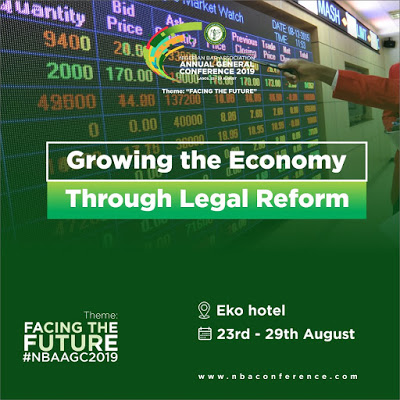
Growing the Economy through Legal Reform: The Challenges and Interventions

Growing the Economy through Legal Reform: The Challenges and Interventions

The role of law forms the
basis for economic growth of a nation and it has been said that a sound economy
is the surest engine of growth and the shortest route to tackling the challenges
posed by poverty in Nigeria. Taking other developed nations as an example, they
have sound laws which contribute to their country’s development and in turn
strengthen their political stability and good governance. These developed
nations use law as a catalyst for economic development. 


To ensure a sound
economy, the legal regime must be sound and equally provide that there is a
sound regulation for every sector of the country.

The Nigerian legal regime
for economic development is faced with a myriad of problems, ranging from archaic
laws to multiplicity and overlaps of the laws and weak institutional systems.
Our laws on economic development are to take cognizance of social conditions,
emerging trends and international development. For example, in some developed
nations, business laws help small and medium scale enterprises to grow and
manage their businesses. 
However, in Nigeria, we see a little bit of this in
“the ease of doing business in Nigeria” where small business owners are
encouraged to register their businesses online. Although, this is a good step
in the right direction. However, there are no laws regulating this and we still
have a long way to go. Thus, in a bid to grow the economy, legal reforms must
be carried out by the National Assembly on every aspect of the economy- Agriculture,
Taxation, Justice, Banking, and Investment and so on with a view to removing
legal and other impediments and ensuring the development of the country.

Nigeria is currently
facing serious challenges in terms of shrinking economic growth, high inflation
rate, high unemployment and unstable foreign exchange and the only way we can
grow the economy is through appropriate legal reforms in every sector.

The various issues and
interventions of driving regulatory compliance without stunting the growth of
business would be discussed at the Plenary Session of the NBA Annual General
Conference scheduled to hold on;

Date:
Tuesday, 27th August 2019

Time:  11.00 – 12.30

Venue:
Kayode Eso Hall, Harbour Point

Speakers:          

Moderator: Emeritus
Professor Isaac O. Agbede

Panelists:     Dr. Jumoke Oduwole

Yewande Sadiku

Dr Doyin Salami

Toyin Bashir


Join the discussion

Dispute Resolution And Forensic Document Examination Training For Lawyers

Dispute Resolution And Forensic Document Examination Training For Lawyers

To be an exceptional and successful advocate,
a lawyer must have a particular set of skills including expert knowledge in legal
writing, negotiation, court room advocacy, alternative dispute resolution
mechanisms and a brilliant understanding of the business of law to mention a
few. 

 This training is designed to offer
intensive legal advocacy and dispute resolution training to lawyers and equip
participants with the necessary skills required in today’s global business and
legal world.

TRAINING
OVERVIEW

Theme: The
Art of Legal Advocacy

MODULES – 
·       
Litigation
·       
Arbitration
·       
Mediation
·       
Legal
Writing
·       
Forensic
Document Examination 
·       
Law
Firm Marketing & Profitability

MEMBERS
OF FACULTY

1.     Mr. Olabode
Olanipekun SAN, Partner, Wole Olanipekun & Co.,

2.     Dr. Abiodun
Osiyemi; President, Forensic Science Academy

3.     Mr. Fola Alade
ASCMA (UK); Principal Partner, Fotefa Partners 

4.     Dr. Chinua Asuzu, Dean,
The Write House; Senior Partner, Assizes Law Firm
5.     Miss Busola Ajala ,
CEO, Strictly Law Business

6.     Mr. Tolu Aderemi
LLM (Netherlands), Partner, Pearchstone & Graeys    


VENUE – 
NECA House, Plot
A2, Hakeem Balogun Street, Alausa, Ikeja, Lagos
DATE – 
26th and 27th September, 2019  
TIME – 
9.00am – 5.00pm
Daily


REGISTRATION
Fee
per delegate:
N60,000 – Registration
N40,000 – Early Bird
(Ends 5th September, 2019)

All Payment and Delegate Information should
be sent to 
lawlexisinternational@gmail.com before date
of training for proper registration. For more information and confirmation
of payment, kindly contact us on  09095635314 or 08055424566.

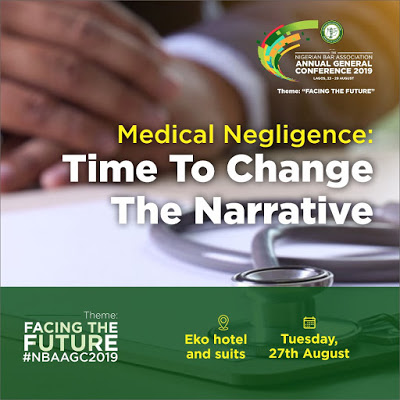
#NBAAGC2019 Session – Medical Negligence: Time to Change the Narrative

#NBAAGC2019 Session – Medical Negligence: Time to Change the Narrative

Medical
negligence is the failure of a health care provider to exercise the ordinary care
and skill a reasonable, prudent and qualified person would exercise under the
same and similar circumstances. The reason why there is a high rise on the
issue of medical negligence in Nigeria is as a result of the fact that our
health system has deteriorated.

Our
health care system is faced with a myriad of problems ranging from poor infrastructure,
to being understaffed, unpaid doctors, intermittent power supply and so on. Several
of the cases are due to negligence or human error. Examples of some scenarios
is being misdiagnosed or not being diagnosed properly and then given the wrong
medication, leaving foreign objects in the body of the patient after a surgical
operation or lack of adequate care after a surgical operation.

Medical
negligence just like every other negligence cases requires the same
ingredients: that there was a duty of care owed, a breach occurred in the performance
of the duty and the breach caused injury. Doctors and nurses and other medical
professionals owe a duty of care to their patient. This does not mean that the
work must be perfectly done but that the treatment received from them was of a
reasonable standard. And when reverse is the case, the patient should be able
to sue the doctor and claim compensation.

The
problem with medical negligence is that the court has been very reluctant to
find medical practitioners liable for medical negligence except in very extreme
and rare cases. As a matter of fact, in Nigeria, it is very difficult if not
impossible to successfully prosecute a medical practitioner for medical
negligence. This act cannot be said of other jurisdictions where regulations
have been put in place to monitor and supervise the adherence of the
professional codes, standards and conducts by medical practitioners under their
employment.

The
various  issues and challenges of
instituting actions against Medical Practitioners and the way forward would be discussed
at the Plenary Session of the NBA Annual General Conference scheduled to hold
on;

Date: Tuesday, 27th August
2019

Time: 
9.00 – 10.30

Venue: Eko Hotel

Speakers:      

Moderator:
Laolu Osanyin (VP, World Association for Medical Law)

Panelists:     Dr Francis Faduyile

Abiodun
Olayiwole

Akinyemi
Sofiyyullah Oladipo

Dr.
Joel Akande

Alex
Muoka


If
you or any close family member have received poor or substandard diagnosis or
treatment from a doctor, nurse, dentist or any medical professional, then this
plenary session is for you.

Examining Security and Human Rights Issues in Nigeria’s Extractive Industry

Examining Security and Human Rights Issues in Nigeria’s Extractive Industry

Extractive
industry means any processes that involve the extraction of raw materials from
the earth to be used by consumers. It consists of any operations that remove
metals, mineral and aggregates from the earth. Examples of extractive processes
include oil and gas extraction, mining, quarrying and dredging.

Though the
oil, mining and gas industries are central to the economies of many developing
countries. At the same time, these industries often give rise to human rights
problems so serious that they can devastate vulnerable communities.
The
whole essence of Human Rights is to traditionally protect its populace against
any abuses that they are likely to face. Transnational companies (TNCs) which carry
out these extractive activities violate various human rights. In Niger Delta,
the local populace is not usually given prior notice before its commencement,
and as a result, they violate their right to land through expropriation, right
to safe environment, health, life and displacement of the population. 

These
violations occur as a result of the machineries that pollutes the atmosphere.
In Zamfara state, the crushing and grinding of ore to extract gold has brought
about lead poisoning within the state.

Under International law, Nigeria have the primary obligation
to protect, promote and fulfill human rights and must thus ensure that the
companies involved in extractive activities, operating within their territory
must comply with international standards.

On the
issue of security, with the recent killings in Zamfara state, the illegal
mining of gold in this state has brought about a high level of insecurity. The
activities going on are illegal. The individuals and companies carrying on
miming activities does not have the requisite license to do so. It is appalling
that some traders from South Asian countries with the collaboration of some
locals and elites are involved.  

What
can be done to compel TNCs to respect Human Rights in Nigeria? What step should
the Federal Government take to curb illegal mining activities in Zamfara state?

These issues and questions
would be addressed at the Plenary Session of the NBA Annual General Conference
scheduled to hold on;

Date: Monday, 26th
August 2019

Time:  15.30 – 17.00

Venue: Orchid, Eko Hotel

Speakers:      

Moderator: Deputy
Ambassador, Switzerland Embassy in Nigeria

Panelists:     Adaeze Nwakobi

Prof. Wahab
Egbewole, SAN

                  
Isreal Usman


@Legalnaija
www.legalnaija.com 


Did You Know

Did You Know

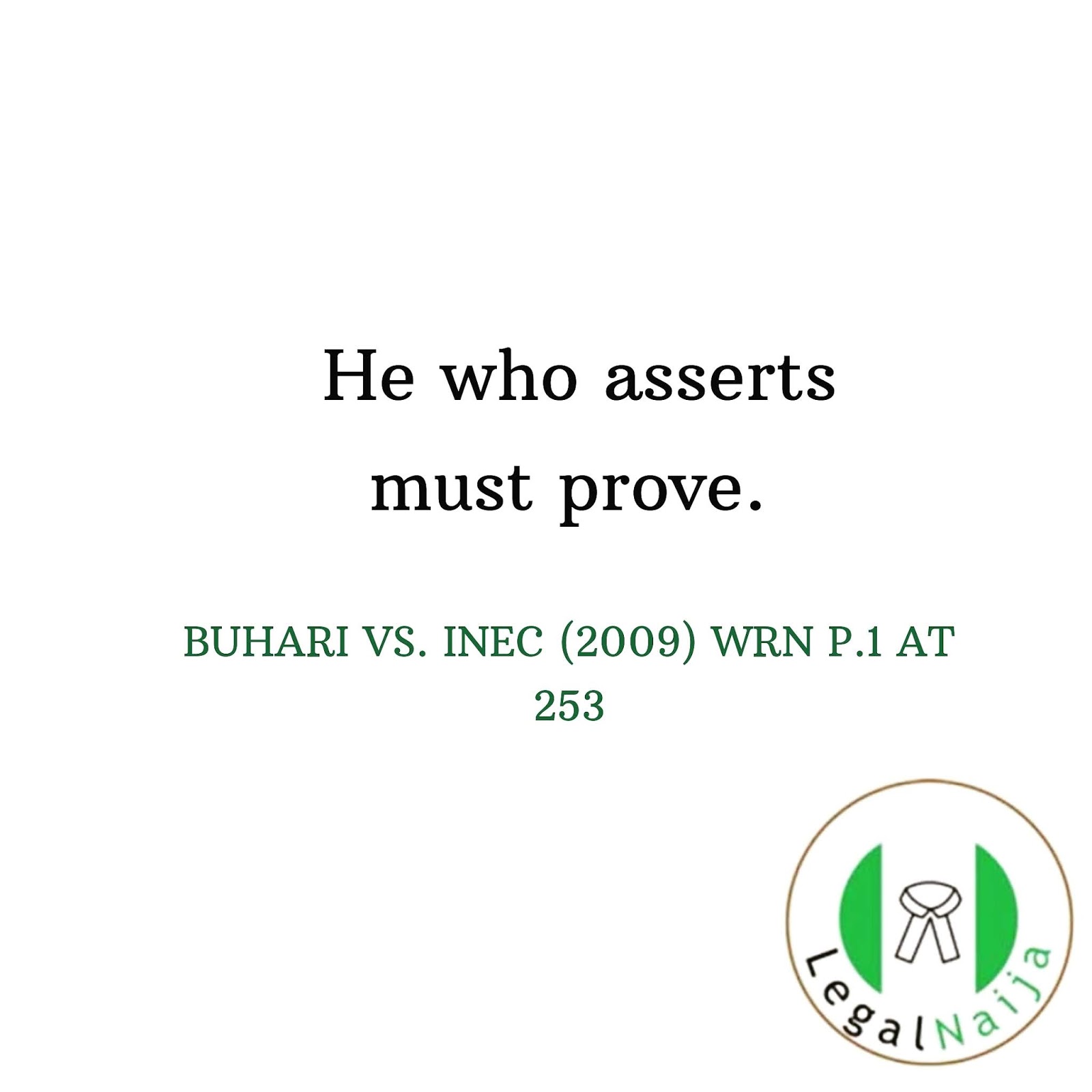
This is a trite principle of law that states that the onus or burden of proving a fact lies with the person who asserts that fact. 
Learn & Share 
#Legalnaija #nigerianlawyers #aoclegal #nigerianblawg 
FUSS:  Legally, Why El-Zazakky Would Never be Released from Prison: – Richarmond O. Natha-Alade

FUSS: Legally, Why El-Zazakky Would Never be Released from Prison: – Richarmond O. Natha-Alade

To every layman, rumour and suspicion endures as one; when missed with ignorance it savors every part of the heart and soul with fantasies: Richarmond O. Natha-Alade

When you are not a layman to the subjects of law and you are not ignorant, you may have to battle with your emotions and the common noise in respect of the realities and technicalities involved in governance, government and law.
Under Nigerian Laws, Sheik El-zakzakky may never be released, and his none release would always find root and justification under the law. Yes! You ‘read’ me right.
Agitations may endure as to his release, but the powers that be is ultimate in the circumstance and situation as that of El-zakzakky.
Be careful of any offence you may have to commit; some of those offences have multiplier effects
El-Zakzakky, by one of his charges, though granted bail by the Federal High Court years ago cannot be released under the law once an appeal is lodged at the court of appeal and a stay of execution pending appeal is filed along with such appeal. The appeal of the ruling granting bail to El-zazakky would likely be premised on the none judicious and/or judicial use of the discretionary power of the lower court to have admitted the accused to bail despite the serious nature of his offence and his constitution of threat to national peace and security; such appeal and/or stay of execution is arguable and same would ordinarily have merit once raised along other serious issues of national security and concerns.
One of such appeal, was recently decided by the Court of Appeal in one of the charges El-zakzakky faces; of which the Court of Appeal ordered El-zakzakky to be released on bail (probably due to his deteriorating health issues), yet, despite the court of appeal order as to his admittance to bail, be rest assured that another appeal and stay of execution of the appeal court order would be lodged at the Supreme Court. So therefore, since there are several appeals on a single charge, do you then expect El-zakzakky to come out of prison so soon from now despite facing multiple charges? Your guess is as good as mine.
Also, it is necessary to state that El-Zakzakky faces multiple charges before different courts on different offences. And once an individual faces different multiple charges in different courts, the courts where such charges are filed would hear application for bail separately and distinctively based on the offences brought before them as if it knows nothing of other pending cases, this notwithstanding the fact that such person (may) have been granted bail in one court or the other before his current arraignment.
Recently, in one of El-zakzakky charges freshly filed before a Kaduna Court, El-zakzakky bail application was refused by the Kaduna lower court; I do not know on what ground, but for El-Zakzakky to be released on bail in respect of the fresh charge, he would have to appeal such order refusing him bail all the way to Supreme Court, if need be.
As it is today under our laws, which are numerous and fragmentally duplicated by scopes, relationship and definition of offences, it is possible for El-Zakzakky to be arraigned in more than 10 courts for different offences and each of those court would have to decide on his bail application in one way or the order. Such decision is also not final until all gets to Supreme Court, unless the prosecution backs down or chooses to obey any granted bail application without appeal.
Can you then blame President Buhari or our law makers for the loopholes in our laws? Relevant sub-sections under section 36 of the Constitution of Nigeria relating to prohibition double jeopardy would only operate in respect of same offence, not different offences brought under same facts and/or different laws?
In the light of the above, do you then expect El-Zakzakky to be out so soon?
Government is powerful, particularly the Executive arm, and since tit is the duty of the executive arm of government to arraign any person charged with any offence, they have the power to charge all offences together in a court, if such court has jurisdiction in respect of all the offences, or they exercise their choice by separating those offences and filing them in different courts that has jurisdiction on either or both the (legal) territorial facts and/or Subject-matter of facts.
Since no law expressly bars the law enforcers or prevail on them to file all the alleged crimes in one court at the same time or at a particular time, and since any crime committed cannot be statute-barred, pray you are never at their mercy as El-zakzaky.
I tell you, under our laws, it is possible to file ten or more charges of different offences with same and/or similar facts in ten different courts at different times. Charges may even be withdrawn and refilled with amendments. In such situation, if the matter had not been heard in merit, such person’s bail would still have to be re-negotiated by application to court.
Nnamdi Kanu may today be thanking his stars on his forced disappearance, yet, he may have to die exile except he chose to come back to prison till all facts and defaults in laws hanging on his neck is determined. In determining if multiple charges on him would be placed before the court so quick or forever, the Federal Government of Nigeria has hands holding the piper to dictate the tone of his life, except the unusual happens.
Stay out of crime; especially the crimes that threatens national security or collective interest and well-being of Nigerians
Richarmond O. Natha-Alade is a legal Practitioner and Principal Partner at
Sun Natha-Alade & Partners (SNATHAP)
lordricharmond@gmail.com
www.snathap.com
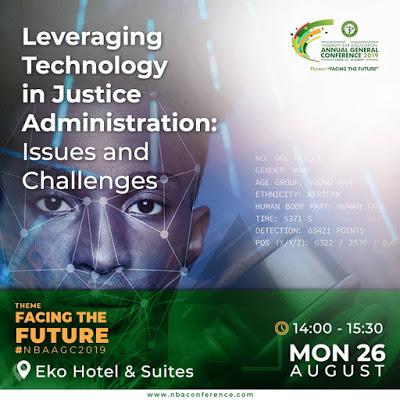
Leveraging Technology in Justice Administration: Issues and Challenges

Leveraging Technology in Justice Administration: Issues and Challenges

Technology has become an
inevitable part in the day-to-day life of the society and given the workload
and volumes of information and data in the judicial process, applying
technology in justice administration will increase efficiency, promote easy
research and allow for easier information to retrieval and in the long run,
reduce stress and promote the health of judicial administrators.

In the Nigerian justice
system, it is safe to mention that we are still in the process of embracing the
modern trend of technology. Although the Administration of Criminal Justice Act
provides for a 180-day trial period for criminal trials, however, justice
delivery is painfully slow.

Thus, applying technology in
justice administration would reduce inefficiency, inaccuracy, lack of
transparency and so on. The major area where technology has been deployed in
justice administration is E-filing. This is a good step in the right direction.

Another area where it would
be safe to deploy technology is the Case Management System. It is appalling
that Nigerian Judges still make use of short hand in recording proceedings.
Deployment of court room technology would ease the burden of the judges.

Irrespective of the fact
that technology in justice administration has its advantages, there are still
some challenges facing it. One of such is the provision and maintenance of
equipment and poor power supply, the failure of our rules of procedure to
accommodate digital evidence presentation system and also, the fact that some
of our rules and laws are not technology proactive.

With the world becoming a
global village with the advent of computers, it is necessary that the Nigerian
judiciary be carried along. It is therefore important that judges of every
state and at all levels are meant to be technologically inclined. They are all
meant to be computer literates so that Nigeria would remain relevant in this
global world.

The issues and challenges of
deploring technology in the administration of justice would be discussed at the
Plenary Session of the NBA Annual General Conference scheduled to hold on;

Date:
Monday, 26th August 2019

Time:  14.00 – 15.30

Venue:
Iris, Eko Hotel

Speakers:

Moderator: Dr Tammy Dangogo
(Secretary to Rivers State Government)

Panelists:     Hon. Justice Alaba Ajileye

Hon.
Justice Nelson Ogbuanya

Dr.
Amanim Akpabio

Mrs
Hadizatu Uwani  Mustapha

Nnamdi Ezeigbo

Please join the discuss at
the upcoming #NBAAGC2019

Bullying and Sexual Harassment in the Legal/Justice Community #NBAAGC2019

Bullying and Sexual Harassment in the Legal/Justice Community #NBAAGC2019


Bullying and Sexual
Harassment are cankerworms that has eaten deep into the workplace in Nigeria.
Bullying is the use of coercion, force, or threat, to abuse, aggressively
dominate or intimidate. 


This behavior occurs repeatedly. Examples of bullying
include, spreading malicious rumors, excluding or isolating someone socially,
undermining a person’s work, physical abuse, making offensive jokes, intruding
on a person’s privacy, yelling or using profanity, blocking applications for
training, leave or promotion, intimidating a person, establishing impossible
guidelines, unwarranted punishment and so on. The sad thing is that it has
become the Nigerian workplace culture to protect and even promote bullying.
Senior colleagues and employers are guilty of this when they use terms like
“orange´’ or “dull” head to their subordinates.
It is easy to understand
that sexual harassment can be a form of bullying, especially when it is used to
intimidate or dominate over that person. Sexual Harassment has been defined as
any unwanted behavior of sexual nature which makes one feel offended,
uncomfortable, intimidated or humiliated. Examples of sexually harassing
behavior include, unwelcome touching, staring, suggestive comments or jokes,
requests for sex, intrusive questions about a person’s private life or body,
unnecessary familiarity, sexually explicit physical contact, unwanted
invitations to go on dates and so on.
Everyday, thousands of men
and women are constantly bullied and sexually harassed by their employers and
colleagues. Bullying and Sexual Harassment occurs everywhere – law firms,
companies, government and even in the judiciary and the victims are usually the
subordinates – interns and new wigs.
The reason why many of the
victims are silent is because of the status of the perpetrator, fear of
repercussions and not knowing the appropriate authority to report to.  
The Nigerian Labor Act
failed to criminalize both bullying and sexual harassment. Although Section 262
of the Criminal Law of Lagos State criminalized Sexual Harassment. 
How do you win with a man or
woman upon whom your livelihood depends but is determined to frustrate you just
to demonstrate superiority? What are the steps to follow when bullied or
sexually harassed at your workplace?
In legal practice, what are
the forms of bullying and sexual harassment faced by lawyers, judges and even
law students? These issues and so much more would be discussed at the Plenary
Session of the NBA Annual General Conference scheduled to hold on;
Date:
Tuesday, 27th August 2019
Time: 
11.00 – 12.30
Venue:
Zinnia Hall
Speakers:
Moderator:
Hon. Justice Teddy Aruba
Panelists:   
Ogaga Emoghwanre
Mia Essien SAN
We look forward to having
you contribute and join the discuss at the NBA Session on Bullying and Sexual
Harassment in the Legal Community.

@Legalnaija