
Doing Business in Nigeria – Immigration Visas And Their Tax Implications (Part 2)

Doing Business in Nigeria – Immigration Visas And Their Tax Implications (Part 2)

Find Part 1 here
BACKGROUND
Essentially, the tax implication of a visa
or permit held by a foreigner may be dependent on the reason for which the visa
or permit was applied for and granted and whether the foreigner worked and
earned income in the course of that visit to Nigeria. In this regard, the
Nigerian Personal Income Tax Act as amended (“PITA”) and the Double
Tax Agreements (“DTA”) between Nigeria and several other contracting
States spell out rules in determining the liability of foreign individuals to
the Nigerian personal income tax and the quantum of their incomes that would be
so liable to tax though PITA provisions are not clear enough on all possible
instances when foreigners may be liable to Nigerian tax and thus, leaving room
for conjectures and speculations in certain instances.

However, the general position of the law as
encapsulated in section 3(1)(a) of PITA is that every individual that
derives income from any trade, business, profession or vocation, for whatever
period of time such trade, business, profession or vocation may have been
carried on or exercised in Nigeria is liable to the Nigerian personal income
tax on that income except those specifically exempted by law. This provision
contains no qualification as to whether the individual that derived the income
is a Nigerian resident or non-resident or otherwise attaches any importance to
the amount of time such person stayed in or outside Nigeria though residency
may be of crucial significance in determining the tax exposure of individuals
in Nigeria. Meanwhile, a non-resident individual is essentially one that has
spent less than 183 days (i.e. 6 months) in any 12-month period commencing in a
calendar year and ending either in the same year or the following year in
Nigeria – Ecodrill Nigeria Limited V. Akwa Ibom Board of Internal Revenue
(2014) LPELR-23502(CA) is instructive on this point. This however excludes
holders of Subject to Regularization (“STR”) visa or the Combined
Expatriate Resident Permit and Aliens Card (“CERPAC”) who are
generally deemed Nigerian residents irrespective of their period of stay in
Nigeria.
With specific regard to non-resident
individuals, section 6 of PITA provides that a foreign individual
that partly carries on a trade or business in Nigeria and derives income
therefrom will be liable to the Nigerian personal income tax if:
i.                  
He
carries on the trade or business through a fixed base in Nigeria (i.e. a fixed
place of business in Nigeria); or
ii.               
He
habitually carries on the trade or business through a dependent agent that concludes
contracts on his behalf in Nigeria; or
iii.            
He
habitually maintains a stock of goods or merchandise in Nigeria from which
deliveries are regularly made on his behalf; or
iv.            
He
executes a turnkey contract in Nigeria; or
v.               
He
carries on the trade or business with a connected person in a manner the tax
authority considers artificial or fictitious.
The categories of persons captured under
the above referenced section 6 of PITA are essentially foreign independent
contractors, sole proprietors/self-employed persons (other than those in the
employment of foreign organisations). These categories of persons are assessed
to tax on direct assessment basis.
On the other hand, for non-resident
individuals in the employment of foreign organisations/employers abroad who are
sent to Nigeria by their employers to perform the duties of their employment
(assessed to tax on Pay As You Earn basis), the provision of
section 6 of PITA above does not apply to them. Such persons are subject to 2
different legal regimes outlined below – depending on whether they are
residents of countries that have DTA with Nigeria or not.
1.    Foreign
Employees resident in non DTA countries
The taxation of a foreign employee that
comes under this category is guided by section 10 of PITA which
provides that such an expatriate shall be deemed liable to the Nigerian
personal income tax, if the duties of his employment are wholly or partly
performed in Nigeria, unless he can establish all of the
following joint conditions
:
a)    
The duties are
performed on behalf of an employer who is not resident in Nigeria and the
remuneration is not borne by a fixed base of the employer in Nigeria; and
b)    
The expatriate is
not in Nigeria for a period or periods amounting to an aggregate of 183
days (inclusive of annual leave
or temporary period of absence) in a 12-month period; and
c)    
The remuneration of
the employee is liable to tax in another country that has a DTA with Nigeria.
Essentially, such expatriates would be
deemed liable to the Nigerian personal income tax having failed to satisfy the
last condition above (i.e. 1(c)).
2.    Foreign Employees resident in DTA countries
By the combined provisions of section
38 of PITA (which gives the DTAs supremacy over PITA) and Article 15(1)
and (2) of the Nigerian DTAs with various countries, remuneration derived
by a resident of a DTA country in respect of an employment exercised in Nigeria
shall be taxable only in his country of residence if all of the
following conditions can be established
:
a)     the employee/expatriate is
present in Nigeria for a period or periods not exceeding in the aggregate 183
days in a year of assessment; and
b)    the
remuneration is paid by, or on behalf of, an employer who is not a Nigerian
resident, and
c)     the
remuneration is not borne by a permanent establishment or a fixed base which
the employer has in Nigeria.
Following from the above, it is important
to note that the computation of the 183 days rule in 2(a) above differs from
one Nigerian DTA with a contracting State to another. The Nigerian/United
Kingdom DTA was adopted above for the purposes of this article. Suffice it to
say also that the major difference between section 10 of PITA provision and
Article 15(2) of the DTAs lies on how the 183 days rule mentioned in both legal
documents are computed.
Thus, the DTA in its computation emphasizes
on the number of days the foreigner is physically present in Nigeria within the
period covered by an assessment while section 10 of PITA on the other hand focuses
more on the foreigner’s dates of first entry and exit from Nigeria in a
12-month period in determining whether he/she has exceeded the 183 days
threshold in Nigeria. For instance, a foreigner who comes into Nigeria firstly
on 1st May, 2017 and leaves Nigeria for a temporary break or annual leave on
31st August, 2017 but returns again on 20th December, 2017 and leaves finally
on 30th December, 2017 would be deemed to have triggered tax under section 10
of PITA provision having exceeded 183 days in Nigeria because his period of
absence in the months of September, October, November and some part of December
would be counted in determining whether he has stayed up to 183 days in
Nigeria.
On the other hand, such a person would have
been held to have spent only 143 days in Nigeria during 2017 year of assessment
under Article 15(2) of the DTA since the DTA focuses on the actual number of
days the foreigner was physically present in Nigeria.  
Tax
Implications Of Nigerian Visas And Permits
Relating these ground rules discussed above
to the topic at hand, the tax implications of Nigerian visas and permits are as
follows:
1.    
Transit Visa and
Visiting Visa: Holders of these forms of visas are not entitled to work in
Nigeria and therefore have no tax liability in Nigeria. However, where a holder
breaches his visa condition by working and deriving income from Nigeria, tax
may apply. Immigration offence is further disclosed and the individual may be
prosecuted by authorities as such.
2.    
Business Visa: This
visa before now, covered restrictively, entry into Nigeria for purposes of
business meetings, seminars, conferences, workshops and their likes. Holders of
the visa were therefore not expected to work/derive income from Nigeria and as
such generally had no tax exposure in Nigeria.
However, the scope of this visa has
recently been extended by the Nigeria Immigration Service (“NIS”) to
include entry for the purposes of contract negotiation, marketing, sales,
purchase and distribution of Nigerian goods, training of Nigerians etc.
These additional scopes may be construed as
work related and may thus give rise to tax exposure though the NIS will
typically require a foreign applicant that wishes to come in on this visa for
any of these purposes above and with the intention of staying in-country for
longer duration (e.g. 60 days) or who comes in on repetitive basis through this
visa to apply and obtain a Temporary Work Permit (“TWP”).
In any case, the tax implication of coming
in on this visa under any of the additional scopes above would amongst others
be dependent on the nature of the foreigner coming in on the visa (e.g. foreign
employee, independent contractor, sole proprietor/self-employed person,
entertainer etc. – this will be discussed further below) and whether he/she did
derive income from Nigeria in the course of such visits:  
i)                 
Foreign
Employees: The tax implication of business visa on a foreign employee
would be dependent on whether the individual is a resident of a DTA or non DTA
country. Please see comments above on section 10 of PITA and Article 15(1) and
(2) of the DTAs applications to foreign employees.
ii)              
Independent
Contractors, Sole Proprietors/Self-Employed
Persons/Investors/Entertainers/Sportsmen: Where such a person is
considered a Nigerian resident, he would automatically become taxable in
Nigeria without further ado on his worldwide income. But where he is deemed a
non-resident, he should be liable to tax on his Nigerian sourced income only if
any of the conditions in section 6 of PITA enumerated above is satisfied.
However, it has been argued on the contrary that such persons are caught up by
the omnibus provision of section 3(1)(a) of PITA and are therefore generally
liable to tax on their Nigerian sourced income, irrespective of section 6
qualification. 
In practice though, the default position of
the Nigerian counter parties in contract with these non-resident individuals is
to deduct tax at source unless the foreigner can provide an exemption
certificate issued by the relevant tax authority exempting such income to
Nigerian tax before the local party will agree not to make withholding tax
deductions.
3.    
Visa on Arrival: This
visa may be termed a hybrid of transit visa, business visa and TWP as it
is in some cases issued to persons who are unable to procure any of these other
types of visas. See therefore my comments on transit visa, business visa and TWP
for the tax implication of this visa.
4.    
TWP: This
permit connotes that its holders would work in Nigeria though on a short
term basis (usually for a period not exceeding 90 days in the first instance).
Therefore the tax implication of this permit is essentially dependent on the
character of the holder of the permit (i.e. whether a foreign employee,
independent contractor etc.). See comments above on taxation of foreign
employees, independent contractors etc. 
5.    
Diplomatic Visa: By
the provisions of paragraph 11 of the Third Schedule to PITA, Article 27
of the DTAs and the Diplomatic Immunities and Privileges Act,diplomatic
or consular officials are not taxable (on their salaries) in Nigeria while
exercising their official functions for their home countries in Nigeria as they
are treated as residents of the sending countries paying their remunerations in
Nigeria in line with theVienna
Convention on Diplomatic Relations and the Vienna Convention on Consular Relations. However, it
is expected that where a diplomat engages in a private trade, business,
profession or vocation in Nigerian, the income from such a personal endeavour
should become liable to Nigerian personal income tax where any of the
conditions discussed above are satisfied.
6.    
 STR Visa and CERPAC: Holders of STR
Visa and/or CERPAC are Nigerian residents and as such are liable to tax in
Nigeria on their incomes.
Managing
The Tax Exposure
Persons inviting and assuming the
immigration responsibilities of foreigners coming into Nigeria are advised to
monitor and keep proper documentation on the movements of the foreigners in and
out of Nigeria (e.g. copies of the endorsed visa pages of their passports
showing their dates of arrival and exit from the country, records of their
locations in Nigeria etc.). They should also take the filing of their
Emigration Monthly Returns to the NIS seriously because these are documents tax
authorities usually look out for in determining whether a foreigner has
triggered tax in Nigeria and which of the tax authority has the jurisdiction to
collect the foreigner’s personal income tax. Failure to provide these documents
upon request by a tax authority may lead to an adverse tax assessment against
such persons or the tax payer.
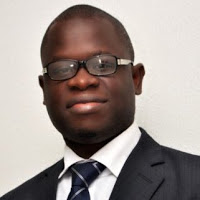
Anthony Ezeamama is a corporate commercial
lawyer and a tax specialist.

Source – Linkedin 
National Transport Commission Bill laying Foundation for Smart Mobility in Nigeria – Senator Ashafa

National Transport Commission Bill laying Foundation for Smart Mobility in Nigeria – Senator Ashafa

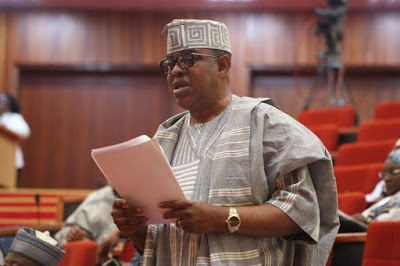
The Chairman Senate Committee on Land Transport, Senator Gbenga Ashafa has stated that the National Transport Commission Bill will set the tone for an integrated, multi-modal and smart transport Sector in Nigeria.
The Senator made this statement while delivering his Goodwill message at the opening session of the Transportation Growth Initiative’s 2ndInternational Conference themed “Smart Mobility Africa; Issues, challenges and opportunities”.
Ashafa who was also the chairman of the occasion, stated that “One of the priority bills of the Bukola Saraki  led 8th Senate is the National Transport Commission Bill which the Joint Senate Committee on Land Transport, Marine Transport and Aviation that I chair has just concluded work on. All things being equal, we expect to lay our report before the senate this week.”
Speaking further he stated that “When this Bill is eventually passed into law, it would establish a multi-modal transport regulator, which would amongst others conduct economic and safety oversight regulation, drive the National Transport Policy of Government etc. I am therefore confident that we have already laid the legislative groundwork for the creation of a smart multi-modal transport sector in Nigeria.”

The opening session of the program also had in attendance other dignitaries in the transport industry, including Dr. Aminu Musa Yusuf, the Director General of Nigerian Institute of transport Technology and also the Current Chairman of the Transportation Growth Initiative, Dr. Mrs. Anthonia Ekpa the Director Road Transport and Mass Transit in the Ministry of Transportation who represented the Honourable Minister for Transport, Rt. Honourable Chibuike Rotimi Amaechi, the representative of the Corp marshal of the Federal Road Safety Corps, Asst Corp Marshal Kayode Olagunju and Mr. Tunde Adeola who represented of the Managing Director of Sterling Bank, amongst others.
The Session considered various topical issues including the lead paper captioned Smart Mobility Africa; Issues Challenges and Opportunities by Professor. Iyiola Oni of the University of Lagos who was represented by Dr. Emanuel Egeh also of University of Lagos; Vulnerability of Highway Side Markets of Road Traffic Accidents; a case study of the Kaduna to Kano Expressway by Mr Joshua Akinfolahan of the Nigerian Institute of Transport Technology, Building Cities for People; Equity in Mobility delivered by Engr. John Emanuel and a paper on the Personal Expenditure of Nigerians on Transportation; 2010 versus 2016.
On her part, Dr. Ekpa while responding to the issues raised by Engr. John Emanuel of the Transportation Growth Initiative highlighted the need for transport equity and fairness in infrastructural development across board. She said that of further importance is the need for infrastructural designs to be fair to the physically challenged, weak and vulnerable in the society as well. She called on more attention to be placed on mass transit and the consideration of trams and other contemporary mass transit modes in the nearest future.
Dr. Kayode Olagunju on his part highlighted the need to have both a socio-cultural and Legislative/enforcement approach to the issue of road side markets. He observed that according to a research work conducted by the FRSC, there were over 400 roadside markets along major highways in Nigeria, which has led to the death and injury of so many people.
At the end of the event, Ashafa commended the organisers of the event and stressed that in the age of information Technology, the time had come for government policy to be geared towards intelligent integrated transport systems and intelligent traffic management among others. He harped on the opportunities being created by ride sharing applications which connect car owners to commuters and concluded that these sort of applications must be developed through a PPP approach for every form of public transportation.
The LTTO Legend: Titilayo Osagie

The LTTO Legend: Titilayo Osagie

The buzz around the LTTO event was raring up; it was a few hours till expected kick off at the indoor hall of the national stadium. 

Stepping into the venue you could see the participants warming up and receiving pep talks from their colleagues I had the opportunity to have a chat with Mrs Titilayo Osagie who happened to be the all-time record winner since the inception of the competition over 9 years ago. She has been a regular at the competition paving the way for more ladies to play a big role in the sport and law generally.


Our conversation went like this:

Good morning Titilayo, no need to introduce yourself, we know who you are. (Laughs) How do you feel going into yet another LTTO competition?

Titilayo: I feel particularly great, but with more experience now I am grateful to be a part of the games.

MyselfYou have won this competition for 7 years in a row, are you relishing more competition this year?

Titilayo: It has been such a learning curve, and I am excited for the competition, we need to encourage more female lawyers to be a part of this tournament yearly.  This year looks stronger already with the female presence in the building.

Myself: In unrelated news how long have you been a lawyer in the Nigerian bar?

Titilayo: Over 17 years currently (Laughs)

That ended my first round of interviews with her, and it left me amazed at her humility, she is being viewed as a pioneer for female lawyers in the competition and on both fronts she has been representing with full commitment. 17 years as a dedicated member of the Nigerian Bar, and a 7 time winner of the Tennis open. 

She went on to lose in a very tense and yet exciting final against Yetunde Martins, it was a pleasure having a chat with the LTTO legend herself. 
Martins Topple Osagie To Lift Mfon Usoro Cup

Martins Topple Osagie To Lift Mfon Usoro Cup

Lawyers, Yetunde Martins and Tunji Abdulhameed have emerged winners of the prestigious Lawyers Table Tennis Open (Mfon Usoro Cup).

The memorable tournament which held at the Tennis Hall of the National Stadium yesterday saw Martins upset the odds to topple Titilayo Osagie, ending her 7 year reign.

A tense affair was settled in the final set that saw Martins win by 2-1 (11-7, 8-11, 11-9)

Commenting on her victory, the delighted Martins stated that it was a testament of her hard work over the years. She also commended the organizers for providing the sporting platform for Lawyers.

“I’m very happy to have won today. I practiced real hard for this game and I’m glad I got the results I wanted. I’d like to thank the organizers and sponsors for this initiative. It’s has been very helpful for us Lawyers, helping us to network and bond,” she said

In the male category, Tunji Abdulhameed successfully defended the title he won last year. He defeated Raphael Ipinyomi in two straight sets

In his remarks, Senior Advocate of Nigeria, and husband of the patron of the competition, Paul Usoro expressed delight at the spirit of sportsmanship exhibited by the participants.

“I am quite happy at the scenes here today, the spirit of sportsmanship exhibited here by all the Lawyers. Everyone is a winner,” he declared.

While congratulating the winners, Usoro also noted that the tournament was inspired by a vision to promote a culture of healthy living among lawyers using sports as a platform.

“In 2009, we saw a gap. We saw the need to create a platform for Lawyers to meet, relax and compete in a friendly manner away from the rigours of practice and we decided to come up with this competition. Our aim as always is to promote healthy living among Lawyers and we are delighted with the progress we have made,” he said.

The event was well attended by Lawyers such as the National Welfare Secretary of the NBA, Barrister Adesina Adegbite, Provost of the NBA Lagos Branch, Emmanuel Orhoroh, Table Tennis enthusiasts and journalists.

5 things That Made LTTO 2017(Mfon Usoro’s Cup) The Best Ever

5 things That Made LTTO 2017(Mfon Usoro’s Cup) The Best Ever

Since the Lawyers Table Tennis Open tourney made its debut nine years ago, the tournament has stealthily grown to become one of Nigeria’s foremost sporting events for lawyers in the country. 


Sponsored by Mfon Usoro, with her husband, Paul Usoro, SAN, both heavyweights as far as Nigeria’s legal ecosystem is concerned, the competition attracts members of the Bar from far and wide.  While the event is now firmly a permanent fixture in Nigeria’s legal space, the buzz around this year’s edition was certainly a couple of decibels higher than usual.


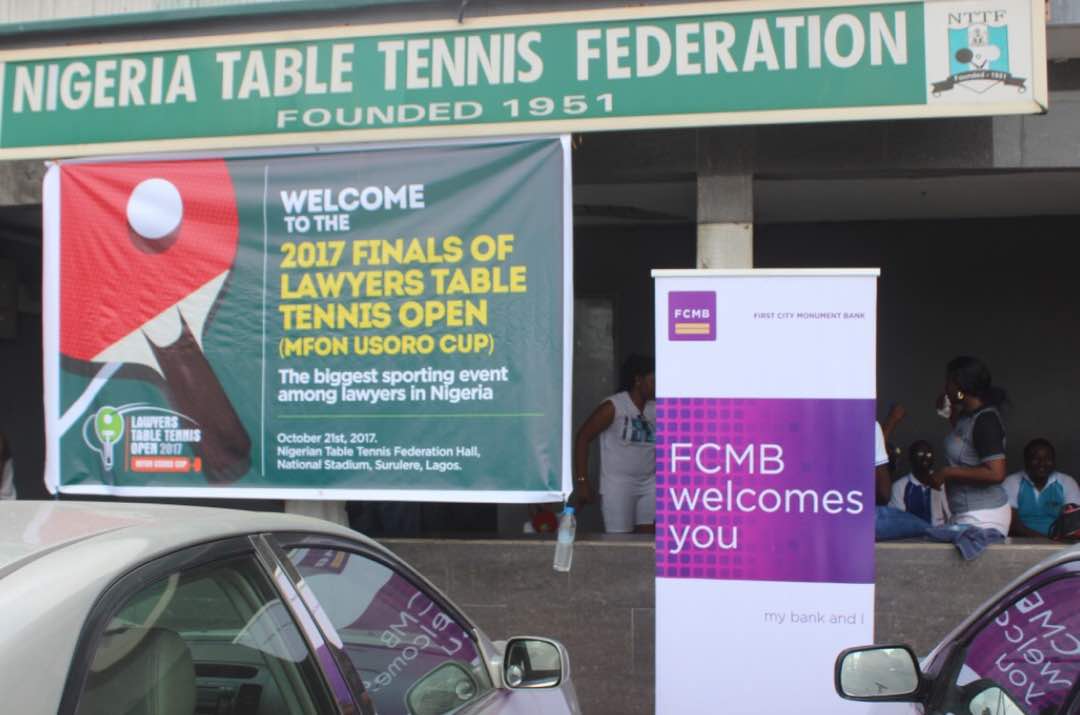
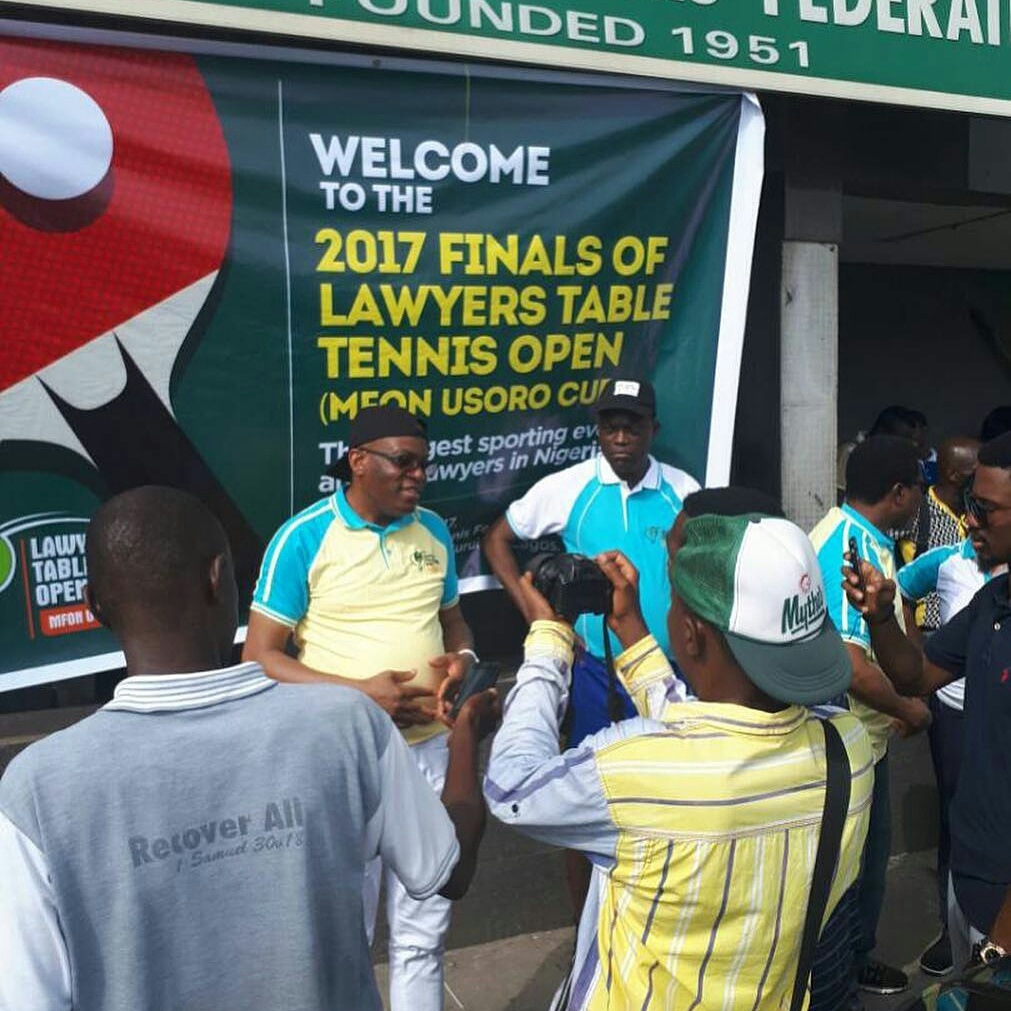
The finals of the competition took place at the National stadium in Lagos on Saturday the 21st of October and it was certainly worth the hype.

Here is a recap of some of the key moments just in case you missed out on it.


1. The kids were not left out!

For a split second, it seemed like the kids were also in the race for the prize money. What with the large turnout of children that turned up for the tournament (courtesy of their parents who brought them of course), one was tempted to think that the organizers had included a category for children in this year’s edition. And they weren’t there just to show support for their parents as they had a grand time playing around the venue. Maybe it’s time for a Children’s category. Amen somebody?


2. We have a new Women’s champion
After 7 consecutive years as Women’s Champion, Titilayo Osagie finally yielded the throne to Yetunde Martin after an intriguing battle.  We still don’t know which is more shocking: the dethroning of Titilayo or the ascension of Yetunde. Be that as it may, Yetunde walked away with the cash prize of N250,000, a trophy and an undisclosed cash prize from Mr.Paul Usoro. The ink is barely dried on this year’s edition and we can’t wait for next year: Will Yetunde manage an encore or will Titilayo attempt a comeback. Or maybe a new champion will emerge? We can’t wait 

3. Paul Usoro challenges Alex Muoka

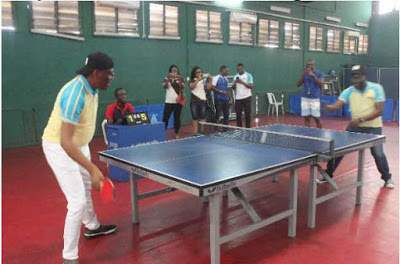
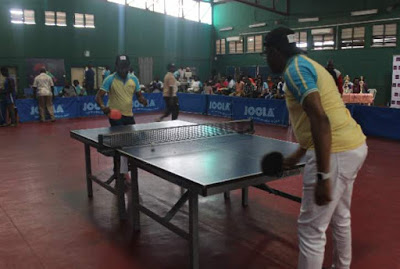
Now this escalated quickly. Paul Usoro, the quintessential lawyer’s lawyer and patron of the competition squared up against and Alex Muoka,former Chairman of the NBA, Lagos Chapter, in a novelty match. Good to see both distinguished lawyers ditch the robe and wig to wield their table tennis bats.  

4. Aerobics Session

This had to be the highlight of the day! Midway into the competition, Mr Udie Peter, the personal trainer for Mrs Mfon Usoro challenged everyone to a quick session of Aerobics. This was particularly hilarious with the various styles of aerobics displayed. Find below pictures and videos.

5. Lawyers Know How To Unwind
Whoever said lawyers don’t know how to have fun? Beyond the enthralling ping-pong duels the event was certainly an opportunity for members of the bar to let their hair down and have fun. And boy did they seize the opportunity with both hands!
Congratulations to all that participated in the 2017 edition! It was particularly fun and we look forward to seeing you at the next year’s edition. 
What to prove to get a divorce in Nigeria | Adedunmade Onibokun

What to prove to get a divorce in Nigeria | Adedunmade Onibokun

Official statistics from
the National Bureau of Statistics suggest that divorce is exceedingly uncommon
in Nigeria with just 0.2% of men and 0.3% of women having legally untied the
knot and well under 1% of couples admit to being separated. But as a Legal practitioner,
I seek not to agree with this statistic especially as I witness many divorce
proceedings in family courts and the newspapers are regularly awash with
reports of petitions for dissolution for marriages.


Moreover, it has been
argued in several quarters that the above statistics do not put into
consideration the number of marriages conducted under traditional law and also Islamic
law.

Under Nigerian law, a statutory
marriage can only be dissolved by a court order and divorce is guided by the
Matrimonial Causes Act. It is also worthy to note that under Nigerian law, marriage
is between a man and a woman, as Nigerian law does not recognize same sex marriages
or unions. The law also further provides a 14 year jail term, for anyone who participates
in same – sex unions or relationships.

With regard to petitions
for dissolution of marriage, Section 15(1) of the Matrimonial Causes Act provides
that, a petition may be presented to the court by either party to the marriage upon
the ground that the marriage has broken down irretrievably.

Submitting a petition for
dissolution of marriage does not however automatically mean that the divorce
will be granted, as the petitioner must be able to prove sufficient grounds to
warrant the prayer being granted. If the petitioner fails to prove this, even
if the divorce is desired by both parties, the petition will be dismissed.

The grounds that a petitioner
must prove to show that the marriage has broken down irretrievably are stated
in Section 15(2) of the Matrimonial Causes Act, they include –

a.      That the other partner (i.e.
respondent) has willfully and persistently refused to consummate the marriage,
meaning that the other spouse has refused to have sexual intercourse since the
celebration of the marriage.  
b.     That since the marriage the respondent
has committed adultery and the petitioner finds it intolerable to live with the
respondent.
c.      That since the marriage the respondent
has behaved in such a way that the petitioner cannot reasonably be expected to
live with the respondent.
d.     That the respondent has deserted the petitioner
for a continuous period of at least one year immediately preceding the
presentation of the petition;
e.      That the parties to the marriage have
lived apart for a continuous period of at least 2 years immediately preceding the
presentation of the petition and the respondent does not object to a decree being
granted;
f.       That the parties to the marriage have
lived apart for a continuous period of at least 3 years immediately preceding
the presentation of the petition;
g.     That the other party to the marriage
has, for a period of not less than one year, failed to comply with a decree or
restitution of conjugal rights made under this act;
h.     That the other party to the marriage
has been absent from the petitioner for such time and in such circumstances as
to provide reasonable grounds for presuming that he or she is dead.

The dissolution of
traditional or customary marriage is however not as stringent as that under the
marriage act. A customary law marriage can be dissolved without judicial
pronouncement or intervention.

For more information about
how to get a divorce, you can talk to a lawyer or send a mail to the
undersigned.

Adedunmade Onibokun
Principal
Partner
Adedunmade
Onibokun & Co.

The solution to Nigeria’s problems | Adedunmade Onibokun

The solution to Nigeria’s problems | Adedunmade Onibokun


What
is Nigeria’s biggest problem?
What
is the single factor responsible for the myriad of socio –political and socio –
economic problems Nigeria is faced with?
Recently, I attended a social event and the
main theme was discovering Nigeria’s problems and how the youth could engineer
solutions to our various challenges. Speakers included senior lawyers,
politicians, former and current senior security personnel and members of the
civil society. I watched as each speaker put the blame on the other, the police
blaming the politicians and elite of the society, politicians blaming former
elected government officials and only a few accepting the blame for our country’s
woes.

I sat and listened, knowing that though
there were little atoms of truth in their individual arguments, all of them had
missed the mark and were off tangent. Our problems do not stem from the
political class or from the security agencies or even past presidents and
political parties. Our problem lies with every single Nigerian that make up of
the over 180 million of us.
Now, do I sound like I am off tangent
myself? Follow me a bit more before you totally judge. What I now know to be
the greatest Nigerian problem, I discovered sometime in 2013 and it came to me
during the normal course of my day but while I was on foreign soil.
I was living in London at that time while
studying as an international student for my LL.M in International Business Law
at the University of Bradford. On this jolly good day, I was walking into a building
and to my surprise, the person ahead, held the door open for me. As little and inconsequential
as this act was, it caused a stir in my heart. This person did not know me, had
never met me, was not going to get anything from me and would probably never
see me again but was kind enough to hold the door for me. This single act was
of mindfulness was so strange that it changed something inside me.
In a place like Lagos where I was coming
from, this act of kindness was very weird. It had never happened to me before. Where
I came from, the person ahead of me at the door would not have cared if the
door hit me in the face, would not have looked back for one second to be
mindful of me but would have walked on and if the door had hit me on the face, I
would have had no cause for complaint as everyone would have asked me one
question “wetin you dey look” or in other words “why were you not paying
attention to the door” or better still “am I your door man”?. If you are
reading this post I am sure you must have had a similar experience before.
Ever since that day, I have always held the
door for anyone coming behind me because I later got to notice that it was the
norm in my new environment. It was a culture to be mindful of others, a culture
of respect. Do we have a similar culture in Nigeria? No way. In Nigeria, the
culture can be described in one sentence, “GET
WHAT YOU CAN, WHILE YOU CAN, NO MATTER WHO BEARS THE CONSEQUENCES OF YOUR
ACTIONS
”.
This is why;
1.     A politician can
amass so much stolen wealth from the public purse and damn the consequences.
2.     A fellow driver in
traffic will not allow you cut into his lane.
3.     Some youths are involved
in online scams reaping innocent people off their life savings.
4.     Herdsmen will
attack the farms in other communities, have their cows eat up the crops and
kill the farmers who complain or challenge them.
5.      Policemen will assault, intimidate and extort
citizens.
6.     Tribes would be at
each other’s throats crying about marginalization and each President or
Governor will be expected and seen to cater to only the needs of his local
government or tribe.
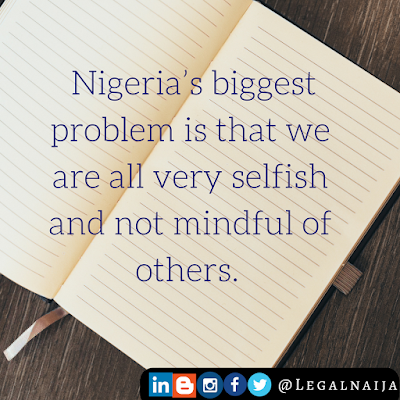
Nigeria’s biggest problem is that we are
all very selfish and not mindful of others, we do not respect others rather we
focus only on thinking about ourselves, our egos, our families, our purses and
our wants. Take something as simple as holding the door for the person coming
after you, no way; we are too busy going ahead with our personal agendas. We deliberately
do the wrong things to make life difficult for everyone else and its like that
with everything.
You cannot feel like royalty, because people
will not serve you with a smile and warmth. You patronize a business and you
wonder if they made a corporate decision to throw good customer service out the
window; the culture of disrespect creates an unsafe environment, you cannot
leave your phone, laptop or valuable in a busy place and come back to find it,
it will have been stolen, even in churches. You can park your car outside and it
may not be there when you get back or you may return to find its window broken
and your valuables gone.
The solution to Nigeria’s problem is to
cultivate a society where people are mindful of others and life will be better
for everyone.  It’s a lesson, Nigeria
must learn from the rest of the world, if we must lead Africa and change the
conversation.
Adedunmade Onibokun
Lawyer | Writer

Lawyers Table Tennis Open Finals To Hold on Saturday

Lawyers Table Tennis Open Finals To Hold on Saturday

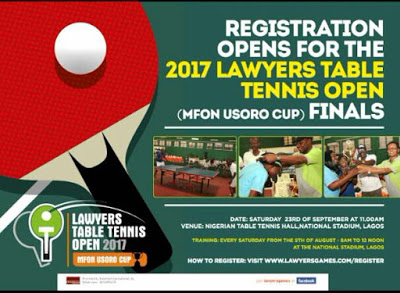
The final of the
prestigious Lawyers Table Tennis Open (Mfon Usoro Cup) will hold this Saturday
at the indoor hall of the National Stadium, Lagos. 

This year’s edition will
feature members of the Calabar Bar, who will be making their first appearance
in the tourney while their Ibadan counterpart will also be aiming to clinch the
trophy.

Speaking ahead of the
finals, foremost Lawyer, Paul Usoro SAN expressed delight that the tournament
has become a rallying point for lawyers from across the country.
“I’m quite delighted
about this year’s edition of the LTTO tournament. The beautiful thing about
this tournament is that it is a platform for lawyers to bond and connect with
themselves away from the tense setting of the chambers and courts. I am
particularly delighted because this edition is featuring debutants which is an
indication of the growing profile of the tourney among Lawyers. I look forward
to seeing good sportsmanship on Saturday,” he said.
Also speaking on the
tourney, Mrs. Mfon Usoro, stressed that that LTTO was inspired by a vision to
promote the culture of healthy living among lawyers using sports as the
platform.
Since it started in 2009,
the Lawyers’ Table Tennis Open has grown to become one of the leading annual
sporting events amongst lawyers in Nigeria. 
Participation in the
tourney cuts across Nigeria and it enjoys a wide appeal amongst lawyers, the
public, the leadership of the Nigerian Bar Association and Judges. 
More than two hundred
lawyers have participated in the tournament since inception, with the numbers
expected to increase in the coming years.

Human Rights In The Ivory Tower | Ahmed Adetola-Kazeem, MCIArb(UK)

Human Rights In The Ivory Tower | Ahmed Adetola-Kazeem, MCIArb(UK)

I thank the Students’
Judicial Council of the Lagos State University Students’ Union, for inviting me
as a speaker at this auspicious occasion. I am particularly pleased to be
delivering my 1st official speech in Lagos State University when my
friend and mentor is the Vice-Chancellor. I congratulate the Vice-Chancellor,
Lecturers and Students of this great school on its recent strides both home and
abroad.


The University is a mirror
of the larger society and that is why we have the Executive, Legislature and
Judiciary in the university as well as in the larger society. The Students’
Judicial Council comprises of the High court and the Court of Appeal which are
constituted by Law Students.  Law
Students of the University equally acts as lawyers in the courts. These courts
are statutorily established by the Supreme Constitution of the Students’ union
to deal with election matters, misappropriation or embezzlement of funds by any
elected officer, flagrant disregard to the constitution and abdication of
duties by an elected officer amongst others.

It is pertinent that
students are aware of the courts and what they stand for. They should be bold
to approach the courts when they feel aggrieved. They must also hold officers
of the court accountable. If students are able to govern themselves and hold
officers of the three organs of the students’ union accountable, then the
future of our nation will be brighter.

I was informed that one of
the activities slated for today is the launch of the Code of Conduct for
Judicial Officers and Legal Practitioners of the Students’ Union. I was equally
informed that one of the reasons for the enactment of the Code of conduct is
the unruly behavior of some counsel who appear before the courts. I must say
that this is very unfortunate. The rights of citizens will be in jeopardy if we
have bad and unruly lawyers. Student Legal Practitioners who appear before the
courts should learn to follow good examples of lawyers past and present rather
than the very many bad examples we see on TV and Newspapers irrespective of how
rich they might be. As budding lawyers, you must set your priorities right and
do not allow money and fame be your driving factor.

Professor L.C.B. Gower, a jurist
and well-known legal educator, warned that the public responsibilities of the
legal profession in a developing country are even greater than in the highly
developed industrial states. About the needs of developing countries, he said
with characteristic forthrightness, inter alia:
“They need commercial, corporation, and property lawyers if they are to
achieve an economic take-off. They need bilingual, international, comparative
and constitutional lawyers if they are to survive as states and to enter into
large unions which Pan-Africa sentiment and economic development demand…. They need courageous lawyers with the
highest ethical standards if the atrophy of the rule of law and of personal and
academic freedom and the corrosive growth of corruption, nepotism and elitism
are to be arrested, and if military and police power is to be kept within
bounds. Most of all, perhaps, they need constitutional lawyers sophisticated in
other disciplines if they are to find a viable substitute for the Westminster
model of parliamentary democracy.”

Professor Orojo, equally noted the
remarks by Sir, AdetokunboAdemola, Chief Justice of Nigeria (Rtd) (of blessed
memory), who emphasised the role of Nigerian legal practitioners as that of
legal advisers to the government, commerce, industry and private citizens, as
champions of reform and as defenders of human rights and concluded
significantly that “the respect in which the Bar in any country is held is the
best indication of freedom in that country.” The learned author finally stated
thus:

“The Nigerian legal practitioner (as in other developing
countries) bears a much heavier responsibility to his society than his
counterpart in a highly developed country. In the first place, the Nigerian
legal practitioner has to face not only the problems of the developing society
but also many of those of the developed one into which Nigeria is moving at a
hectic rate; the present rate of change in every facet of life could not have
been foreseen. Secondly, he is one among the very few privileged people in an
environment where the vast majority are not only illiterate but also ignorant,
superstitious and poor; his social and traditional environment clogs him and he
requires to make a great effort not only to break through but to play his proper
role of social catalyst. In the circumstances, Nigerian legal practitioners
must be able not only to perform their traditional functions of catering for
the professional needs of the citizens, of administering justice and manning
the various legal institutions of the state, but they must also be involved in
social change; they must be committed to law reform to ensure the harmonization
of law with the culture of the people and they must strive to ensure a strict
adherence to the rule of law and among other things, ensure that the newly
acquired political power is carefully watched and controlled so that it is not
used to protect or perpetuate the status quo or class domination. As the
watchdog of the people, they must, through their independence and total
commitment to social justice, provide the necessary support to sustain equally
independent and fearless judiciary, the last hope of man for law and order,
peace and progress.”

If the Students’ Union Government of LASU will be
successful, the law students who are judges and lawyers in the court have a
huge role to play. Do not think the roles you play now, whether good or bad don’t
matter, they will determine a lot about your future.

The second perspective to this
topic is Human Rights of students vis-à-vis the school management and
government.

 The media has been awash
with news of expulsion of some students recently based on their outspokenness
or rudeness depending on which side of the divide you are looking at it. The
cases of Kayode Bello expelled from the Law School, Olorunfemi Adeyeye expelled
from the University of Lagos and Debo Adedayo who was recently expelled from
Redeemers University, come to mind. Kayode Bello was expelled from the Nigerian
Law School on the allegation of disorderly behavior and
lacking the core attributes, disposition
and comportment of an aspirant to the Bar.
Olorunfemi Adeyeye was
expelled from the University of Lagos for his facebook post titled, “The Senate of Unilag: A conglomeration of
Academic Ignorami.”
 Debo Adeyeye was
expelled for his post on social media where he allegedly portrayed some
principal officers of redeemers’ university in bad light.

Back in the days, the
average Nigerian student of the university or other tertiary institution is
politically mature, intelligent and exuberantly involved in the affairs of
his/her community and country. Nigerian students have a history of radical
action. After Nigeria’s independence in 1960, Britain sought to retain her
hegemony by pressuring the Prime Minister, Abubakar Tafawa-Balewa’s government
into signing an Anglo-Nigerian Defence Pact. Nigerian students rejected the
pact and embarked on protests and demonstrations against what they clearly
understood to be an attempt to undermine Nigeria’s independence and perpetuate
colonial influence.

All over the world,
students and the youth in general are change agents. The students’ revolts that
jolted the American society in the early 60s was a warning that unchannelled
youthful energy could lead to an explosion that would devastate society. [1]
In South Africa, the youth were in  the
vanguard of the liberation struggle. The apostle of “Black Conciousness”, the
ideological fulcrum on which the struggle for an end to apartheid was anchored
was Steve Biko.[2]
The African students in the United Kingdom in the early  ’50s were forced by experience to take up the
gauntlet of the liberation of their countries from colonialism: Leopold
Senghor, Kwame Nkrumah, Nnamdi Azikiwe, Obafemi Awolowo and a host of first-generation
nationalists in several African countries were able to influence the course of
events as they sojourned in the metropolitan capitals of the colonizing power.[3]

Edwin Madunagu said
“Students acquire a critical consciousness which will naturally struggle to
express itself in action. Students and academics, historically tend more
towards being dissidents and critics who inspire debates and lead social
causes.”

It is this critical ardour
that had propelled Nigerian students into actually being the vanguard of
popular opposition to military rule, the demand for true democracy and popular
participation. One of the major champions of students’ rights was Gani
Fawehinmi.[4]
He said:

“Students
are young minds and must not be cut down in their prime by disengaging them
from the university system. The students have remained the most reliable group
of radicals.
It
is not easy to cow students. Why they last longer than governments is that they
have that purity of thought, independence of disposition, rational analysis of
events from a detached standpoint. And they have not committed the cultural,
political and socio-economic sins of adulthood. Then they have the raw
unpolluted strength of character. The combination of all these which only a
highly disciplined adult can possess, make students a unique specie in our
society”

It
is very doubtful if the description above defines the present crop of Nigerian students,
in view of recent happenings, particularly when one considers the hobnobbing of
students’ union leaders with politicians and the immaturity displayed by
students on social media with the use of abusive and uncouth language when
addressing issues they feel strongly about.

It
used to be that the power of a university senate was perceived as exclusive of
the jurisdiction of the courts because it would amount to the invasion of the
domestic domain of the university. The Supreme Court decision in Akintemi & 2 Ors V. Onwumechili (1985) 1
NWLR (Pt. 1) 68
lent credence to this perception. The appellants had been
alleged to be involved in the cheating. They claimed that the university had
denied them fair hearing in the processes leading to the expulsion. They lost
in the High Court of Ile-Ife and appealed to the Court of Appeal which also
dismissed their appeal. The Supreme Court affirmed both lower court decisions.[5]
The Supreme Court decision in Garba V.
University of Maiduguri
marked the turning point

By
far the most impactful of court decisions on students’ rights filed by
Fawehinmi was Garba v. University of
Maiduguri(1985) 2 NWLR (pt. 18) 559.
It was the first case concerning
students that had gone to the Supreme Court.

For
taking part in a protest in 1983 against the perceived high handedness of the
university authorities, scores of students of the University of Maiduguri were
expelled by the then Vice-Chancellor, Professor Jubril Aminu. In an action
filed at the Borno High Court sitting in Maiduguri, Fawehinmi challenged their
dismissal, contending that the fundamental human rights of the students to a
fair hearing had been breached by the university authorities and thereby asking
for a mandatory order reinstating the expelled students. The learned trial High
Court Judge, Justice Adagun, (as he then was) upheld Fawehinmi’s submissions
and ordered the reinstatement of the expelled students. The university appealed
to the Court of Appeal which reversed the decision of the lower court. The
students further appealed to the Supreme Court.

In the leading judgment of
the apex court read by Justice Andrews Obaseki, a powerful Supreme Court Bench
consisting of Justices Eso, Uwais, Nnamani, Coker and Oputa unanimously allowed
the appeal on grounds inter alia that
the University authorities had no power to try and punish students for the
alleged criminal offences, namely: assault and arson, the trial of which, by
the University Disciplinary Committee amounted to usurpation of judicial
functions.

The Garba decision has become a powerful precedent on student rights.
It is a benign decision that has gone a long way in curbing the excessive
resort by university authorities to damaging sanctions which has the capacity
to compromise students’ future aspiration.

It must however be noted
that in the more recent case of Unilorin
V. Oluwadare (
2006) 14 NWLR (Pt.
1000) 751
 the Supreme Court held that:

in
matters which involve serious criminal allegations against the State such as
arson, stealing, indecent assault, etc., the suspects should, for obvious
reasons, be tried in a Court or tribunal properly so called under the
Constitution. But where the matters involve the award of degrees, diplomas and
certificates and matters incidental thereto like examination malpractices, an
aggrieved party, be he a student or a lecturer should first exhaust all the
internal machineries for redress before a recourse to Court. Where he rushes to
Court without first exhausting all the remedies for redress available to him
within the domestic forum, as was the case of Akintemi v. Onwumechili (supra),
he would be held to have “jumped the gun” and the matter would be declared bad
for incompetence.
University management must
ensure that all the fundamental rights enshrined in the constitution are strictly
adhered to in its dealings with students. These rights include:
  
1. Right to life – (Section
33) Every person has a right to life, and no one shall be deprived
intentionally of his life, save in execution of a criminal offence of which he
has been found guilty in Nigeria.

2. Right to dignity of human person
– (Section 34) Every individual is entitled to respect for the dignity of
person and accordingly no person shall be subject to torture or to inhuman or
degrading treatment.
  
3. Right to personal liberty
(Section 35) Every person shall be entitled to his personal liberty and no
person shall be deprived of such liberty.
  
4. Right to fair hearing –
(Section 36) In the determination of a person’s civil rights and obligations, every
person shall be entitled to fair hearing.

5. Right to private and family life–(Section
37)The privacy of citizens, their homes, correspondences and telephone
conversations  is guaranteed and protected.
  
6. Right to freedom of thought,
conscience and religion
– (Section 38)Every person shall be entitle to
freedom of thought, conscience and religion, including freedom to change his
religion or belief.
  
7. Right to freedom of expression and
the press
– (Section 39) Every person shall be entitled to freedom of
expression, including freedom to hold opinions.
  
8. Right to peaceful assembly and
association
– (Section 40) Every person shall be entitled to assemble
freely and associate with other persons or political party.
  
9. Right to freedom of movement
– (Section 41) Every citizen in Nigeria is entitled to move freely throughout
Nigeria and to reside in any part thereof.
  
10. Right to freedom from discrimination
– (Section 42) No Nigerian shall be discriminated upon on the basis of his
community, ethnic group, sex, place of origin and political opinion.
  
11. Right to acquire and own
immovable property anywhere in Nigeria
– (Section 43) Every Citizen
shall have right to own immovable property anywhere in Nigeria.
  
12. Right against compulsory
acquisition of property
– (Section 44)  
The above are fundamental human rights enshrined in the 1999 Constitution and
accorded to all Nigerians.
Students must however
realize that their rights under the constitution are not absolute. They must
pursue their rights within the confines of the law with maturity and tact.
According to the Dean of
the Faculty of Law of Lagos State University, Professor F.A.R Adeleke,
“Generally students have right to all the rights that are contained in the
Nigerian constitution, those rights that are already recognized and had been
given effect to by judicial authorities and those rights that are contained in
the students’ handbooks. In addition, students also have right to defend these
three categories of rights.” He went further to list students’ rights within
the university, thus:

1.    
Right to be tried within reasonable time
for any act of misconduct.

2.    
Right to defence including right to be
defended by a legal practitioner against any allegation of misconduct.

3.    
Right to participate in any lawful students
union activities subject to the extant rule of the university.

4.    
Right to receive lectures and to
participate in any academic activities.

5.    
Right not to be discriminated against on
account of sex or sexual orientation.

6.    
Right to marry and not to be prejudiced on
account of same during the pendency of the study.

7.    
Right to privacy.

8.    
Right to fair hearing at all times in
respect of any allegation involving any misconduct.

9.    
Right to resist any lecture fixed outside
the university recognized timetable, particularlyon weekends and public
holidays.

10.     
Right to see your scripts and to be shown
your marks in case of tests or examination and to reasonably contest same
within the established rules and regulations of the university.

11. Right to freedom of religion on campus
subject to university regulations.

12.     
Right to appeal any decision of the
university senate

13. Right to protest in writing any act or
directive that stand prejudicial to the interest of the students through the
HOD, DEAN or VICE CHANCELLOR.

14. Right to be shown scripts either
examination or tests for confirmation of scores and to contest score through
the appropriate channel in the university including demand for a remarking of
such scripts without any prejudice.

15. Right to say No to any sexual overture and
to resist any act of sexual harassment.

16. Right to use Hijab and to wear cross or
exhibit any religious inclination, all with moderation.

17.     
Right to refuse and report any act of
lecturers that forces students to buy their books or academic materials and
where any book is to be sold at all such book should be bought directly from
the university bookshop and in any event record of the buyers should not be
kept.

18.     
In all other cases, journals, Faculty book
of reading and similar books that foster the advancement of learning may be
sold to students subject to clarification from the Dean or Deputy Vice
Chancellor Academic.

19.     
Right to speedy response to students
request and rtesolution of issues bordering on students interest.

Without necessarily
pointing who is wrong or right in the recent expulsion of students from the
Universities mentioned earlier, my observation is that while the agitation of
the students might be justified, the manner of venting their anger could have
been more mature.

When I was in the law
school we wrote a petition against two lecturers to Mr. Onadeko, the immediate
past DG of the law school, that expelled Kayode Bello. He was then the head of
Lagos Campus. Our petition succeeded and the lecturers involved apologized.

The fact of the case was
that, we were denied the opportunity to go for Jumat service because the two
lecturers extended their classes beyond the allotted time thereby breaching the
rights of Muslims to worship. I and my firend,  Daud Momodu had notified the lecturers during
the class that it was almost time for Jumat via a note. They asked us to put
our names on the note and we did. We wrote them another note that it was time
for Jumat and the class should end, but they ignored. Some of us left the
class, but many Muslims stayed in class and missed the Jumat service.

Infuriated, we wrote a
powerful but civil petition against the two lecturers to the head of campus, Mr
Onadeko SAN. We cited relevant provisions of the Public Holidays Act and the
Constitution. We copied the affected lecturers.
We were summoned along
with the lecturers to the office of head of campus. We were asked to vocalize
our complaint and the lecturers were asked to respond. The authorities
apologized for the breach of our right to freedom of worship and promised not
to let it happen again. It never did.

My point is, your voice
can be heard without shouting.  Students
must refuse the temptation to go overboard by playing the hero and seeking the
spotlight in a foolish manner. The advent of Social Media has made Student
Activists more vulnerable, their activities are easily monitored and tyrannical
school authorities can easily latch on defamatory posts made by such students
and deal with them decisively.

In Conclusion, I urge the
Students’ Judicial Council and Student Legal Practitioners who appear before
them to be upright and disciplined, only then can we have a sane Students’
Union. Students should make efforts to be aware of their rights and should do
all that is legally acceptable in ensuring that their rights are enforced. The
university management should refuse the temptation to always silence the
opposing voices of students. They should create an avenue whereby students can
air their views without fear of intimidation. The university should recognize
the fact that every disciplinary process should comply with the rule of natural
justice and fair-hearing. These are the basic principles of fundamental rights
of every civilized society and which the constitution seeks to protect and
guarantee. The Student Union leaders and activists must display increased
maturity in dealing with the school management or government. They must be
careful not to unwittingly put their studentship on the line by actions that
cannot be remedied in the law courts. They must look at the legal implications
of their actions and not be deceived by the hailing of their followers who
would forget them the moment they are expelled from the University.

*This paper was delivered on the
17th of October 2017 at the 1st Judicial Summit organized
by the Judicial Committee of the Students’ Union of Lagos State University, Ojo
Campus.
Ahmed Adetola-Kazeem,
MCIArb(UK)
2017 Mandela Washington
Fellow

Photo Credit – ofm.co.za


[1]
C.T. Rowan: Dreams Makers, Dream
Breakers: The World of Justice Thurgood Marshall
; Little Brown& Co.,
1993, p.365.
[2]
Biko, a law student, was subsequently tortured to death while held captive by
the South African Police.
[3] R.
W. Logan: “The Historical Aspects of Pan-Africalism: A Personal Chronicle “African Forum”, Vol.1, No.1/Summer,
1965; p.90
[4]
Akin Ibidapo-Obe and F. Abayomi-Williams, “Gani:
Crusader for Justice” ;
Concept Publications 2008, p.141
[5]
Akin Ibidapo-Obe “In the Public Interest:
A study of the Legal Interventions of Femi Falana
” p. 94
ǼLEX sponsors 2nd edition of the annual Nigeria Mining Week

ǼLEX sponsors 2nd edition of the annual Nigeria Mining Week


ǼLEX is pleased to sponsor
the 2nd edition of the annual Nigeria Mining Week organised by the Federal
Ministry of Mines & Steel Development and the Miners Association of
Nigeria. The Nigeria Mining Week is taking place from the 16th to the 19th of
October 2017 in Abuja, Nigeria. It will provide a unique forum and opportunity
for discussing the legal, regulatory and policy issues regarding Nigeria’s
mining sector and the available financing options. It also offers exclusive
networking opportunities for stakeholders and service providers who are seeking
new investment opportunities and reliable business relationships.