
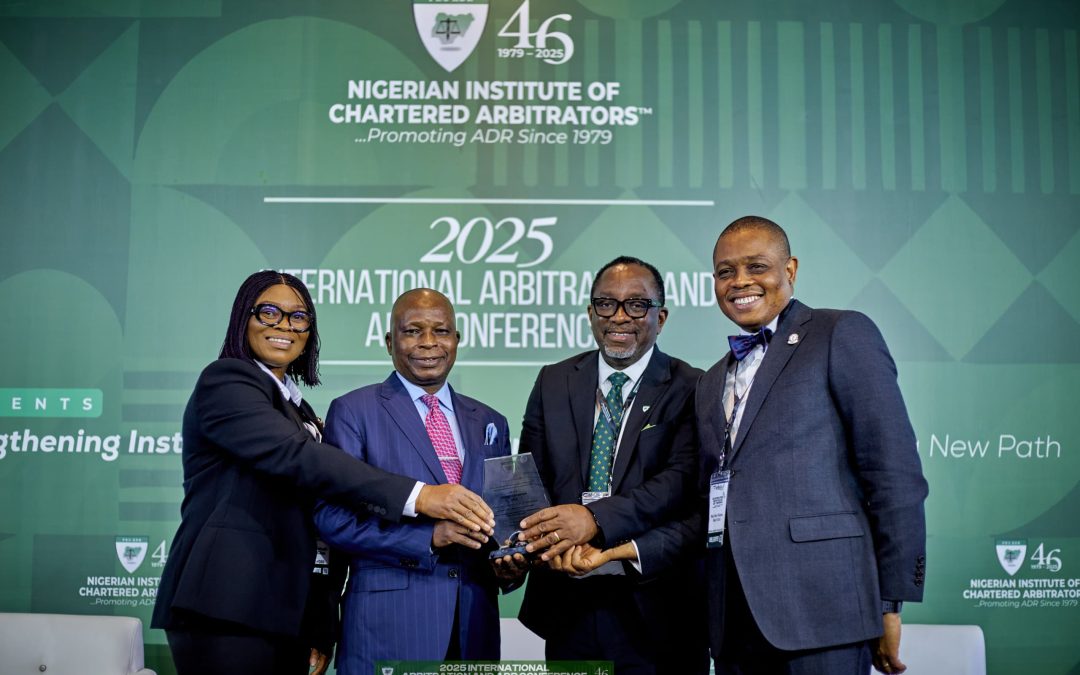
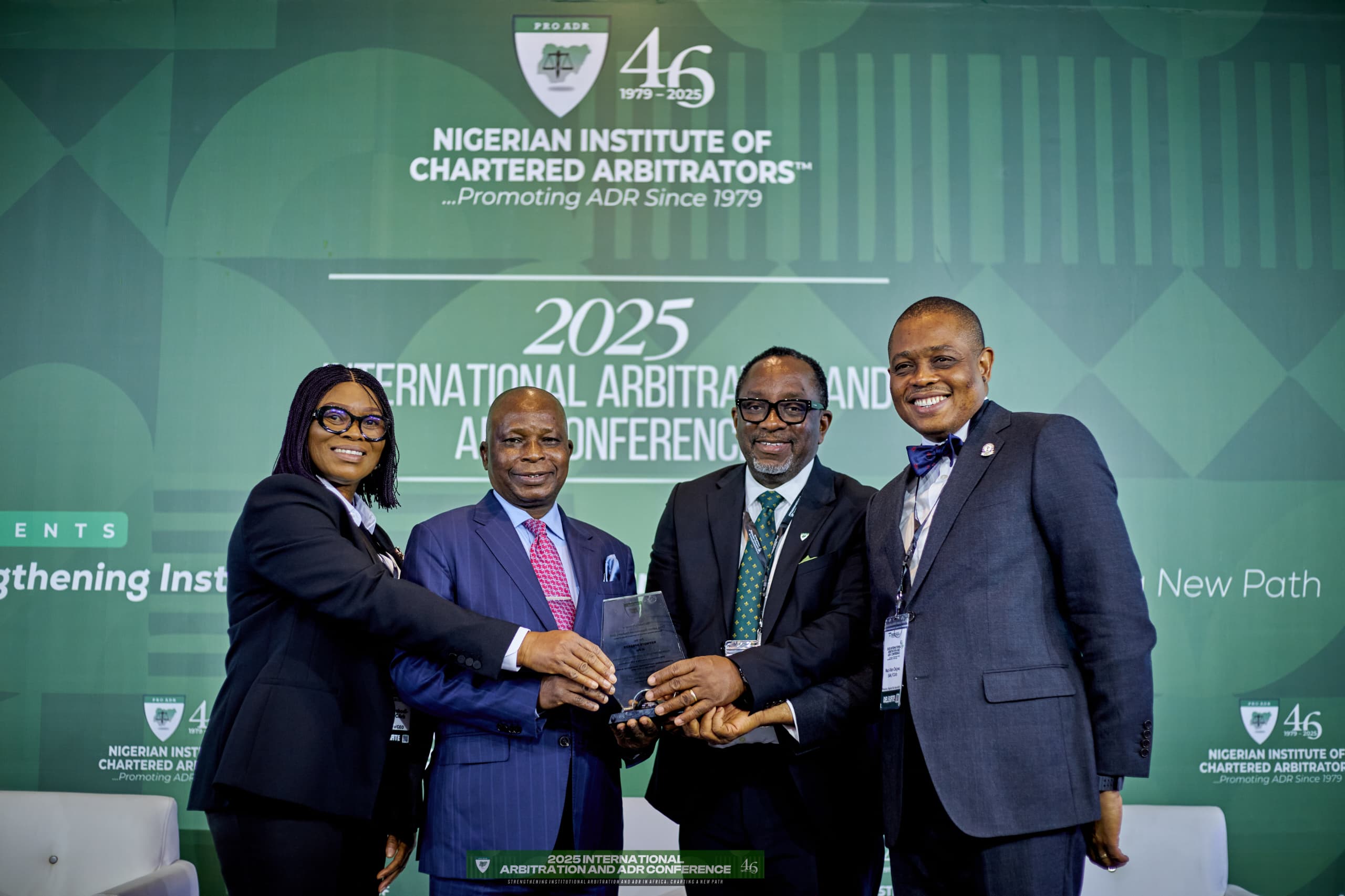
The Nigerian Institute of Chartered Arbitrators (NICArb) recently hosted its Annual Conference and Investiture, a landmark gathering that brought together leading voices in law, business, and dispute resolution. The two-day event underscored Africa’s growing role in shaping global arbitration and Alternative Dispute Resolution (ADR) practices.
Opening Highlights
The conference commenced with remarks from Professor Fabian Ajogwu, SAN, President of NICArb, followed by a virtual address from Mr. Wang Chengjie, Vice President of CIETAC. Lady Debbie Obodokwu, FCArb, representing the Annual Planning Committee, emphasized arbitration’s critical role in driving economic growth, sustaining societal stability, and strengthening Nigeria’s justice system.
Mazi Afam Osigwe, SAN, President of the Nigerian Bar Association, urged practitioners to champion ADR as a way to ease court congestion and retain arbitration work within Nigeria. The Attorney-General of the Federation, Prince Lateef Fagbemi, SAN, reinforced this message, describing ADR as an instrument of peace and justice. He revealed ongoing reforms to enhance enforcement, judicial support, and practice directions that will minimize adjournments and reinforce party autonomy.
Plenary Sessions – Day One
– Strengthening Institutional Arbitration in Africa: Panelists explored how African arbitral institutions can evolve from ad hoc practices to structured systems aligned with international standards, drawing lessons from OHADA, UNCITRAL, and the New York Convention.
– Energy, Oil & Gas Disputes: Discussions focused on leveraging arbitration to minimize project disruptions, ensure regulatory compliance, and build investor confidence in Nigeria’s energy sector.
– Construction & Infrastructure Arbitration: Experts examined recurring challenges such as delayed payments, financing gaps, and political risks, while stressing the need for reforms to enhance enforcement and cost efficiency.
– Banking, Finance & Fintech Disputes: With the rise of cross-border lending and digital finance, panelists highlighted the importance of robust institutions and modern legislative frameworks to position Africa as a hub for financial arbitration.
Plenary Sessions – Day Two
– Young Arbitrators and ADR Awareness: The “Early Riser Session” spotlighted the contributions of emerging practitioners, who are driving innovation and digital transformation in ADR. Panelists emphasized mentorship and inclusive appointment practices to empower young professionals.
– Institutional Mediation: Mrs. Achere Cole of the Lagos Multi-Door Courthouse showcased Nigeria’s mediation model, noting its replication across 21 states and its efficiency compared to litigation. Mr. Denis of AALCO Hong Kong added insights on Hong Kong’s mediation practices.
– Arbitration and the Courts: Judges and practitioners discussed the judiciary’s role in supporting arbitration, stressing the need for consistent precedents, judicial training, and legislative reforms.
– Ethics in Arbitration and ADR: The final session tackled ethical standards, digital transformation, and cybersecurity risks. Mrs. Caroline Etuk emphasized fairness and integrity as the bedrock of ADR, while Rémi Gerbay and Jonathan Barnes highlighted global ethics frameworks and the importance of secure digital solutions.
Key Takeaways
The NICArb Annual Conference reinforced several themes:
– The need for strong institutions and judicial support.
– Retaining disputes within Africa to strengthen local arbitration hubs.
– Empowering young professionals as catalysts for change.
– Mainstreaming mediation alongside arbitration.
– Upholding ethical standards and embracing technology responsibly.
Conclusion
With its rich discussions and forward-looking reforms, the NICArb Annual Conference affirmed that Africa is poised to become a thriving hub for domestic and international dispute resolution. By strengthening institutions, embracing innovation, and adhering to global best practices, Nigeria and the continent at large can chart a new path for arbitration and ADR.