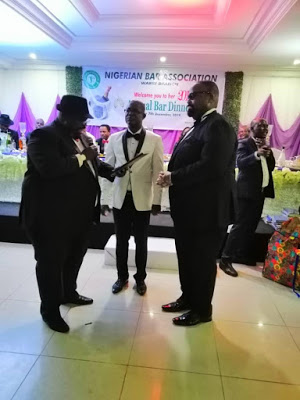
Olumide Akpata receives an award at the annual dinner of the Warri Branch of the NBA

Olumide Akpata receives an award at the annual dinner of the Warri Branch of the NBA

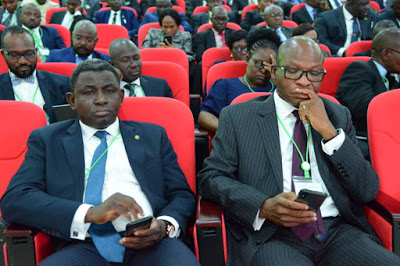
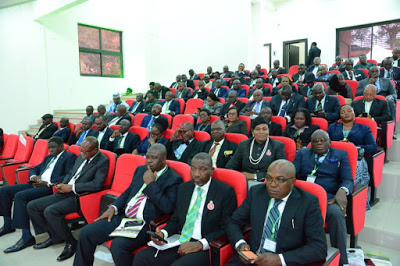
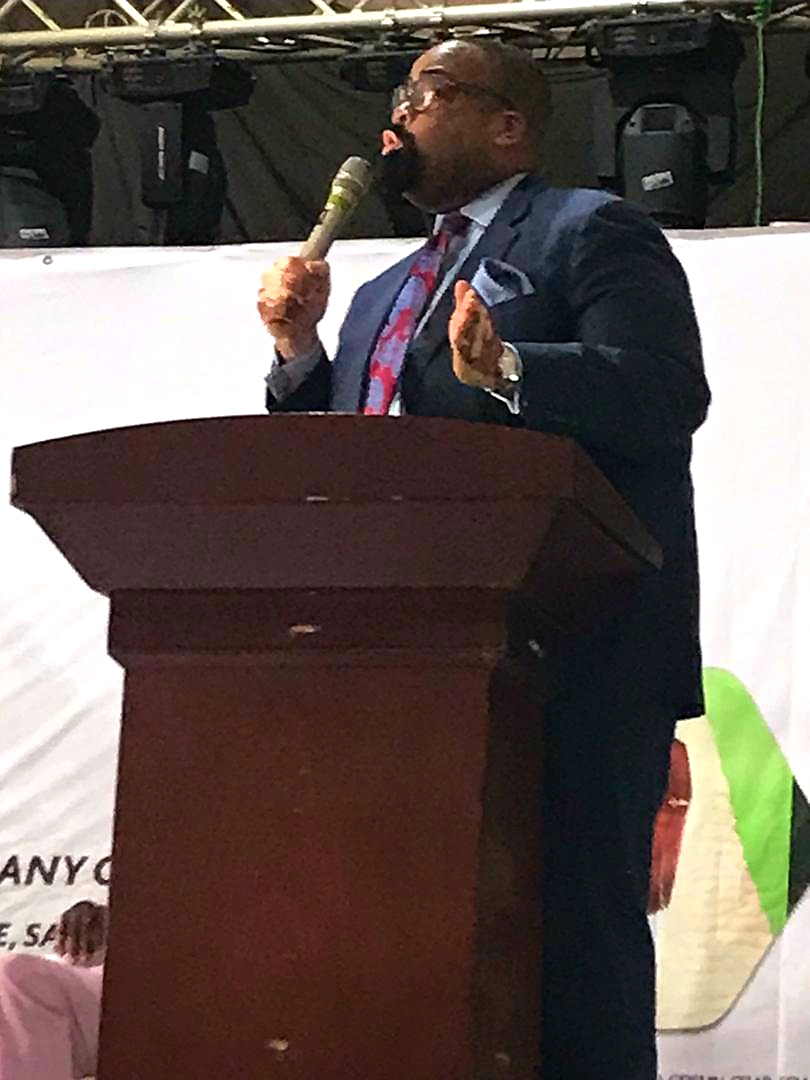
The Warri Branch of the Nigerian Bar Association (NBA) hosted its annual dinner for 2019 yesterday, 7th December. 

Distinguished members of the bar and bench as well as other distinguished guests attended the dinner, including Templars’ Senior Partner and immediate past chairman of the NBA Section on Business Law (SBL), Mr. Olumide Akpata. 
Mr  Akpata, who co-chaired the Technical Committee on Conference Planning that organised the 2019 Annual General Conference (AGC) of the NBA, commended the Warri Branch for hosting a successful dinner. He used the opportunity to highlight the sterling role of the Warri Branch under the leadership of Mike Asugo Esq. in securing the huge successes recorded by the TCCP in the 2019 AGC. 
In his reaction, Mike Asugo Esq, Chairman of the Branch, referred to Mr. Akpata as a Warri-bred lawyer who will always be a part of the Warri Branch. 
The Branch also seized the opportunity to present an award to Mr Akpata, in recognition of his stewardship and long-standing contributions to the Branch. The award was presented by G.O.K. Ebowe Esq, former Chairman of the Branch, on behalf of the leadership and membership of the Branch.
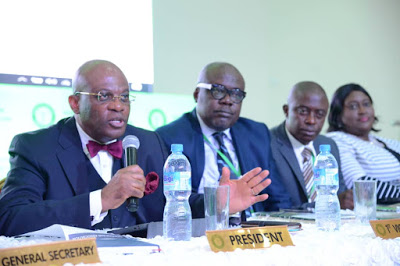
Paul Usoro SAN Presents NBA Quarterly Score Card At NEC Meeting

Paul Usoro SAN Presents NBA Quarterly Score Card At NEC Meeting

The President of the Nigerian
Bar Association, Paul Usoro SAN has presented the Quarterly score card for the Nigerian
Bar Association at its 2019 Quarter 4 NEC Meeting curren at its 2019 Quarter 4
NEC Meeting currently holding at the NBA Secretariat in Abuja today 5th
December, 2019. 

In his speech, the President
covered some of the many victories the NBA has achieved since its last NEC
Meeting including the Annual General Conference which had a record registration
of over 12,000 delegates and the Annual General Meeting, during which the NBA Constitution
was amended to incorporate sustainable governance processes which in the
President’s words if faithfully implemented, would, amongst others, entrench
accountability and transparency in the management of the Association’s
finances. Other achievements include regularizing the Association’s Annual
Returns which had been unattended at the CAC and filing the particulars of the new
Trustees.

Furthermore, the NBA has
been able to revive the Life Assurance Policy for Lawyers, commissioned a fast
speed internet service for the NBA Secretariat and instituted both the NBA
Women’s Forum and the Young Lawyers Forum. 


Mention must also be made of
the successful Election Monitoring teams who earned a well deserving reputation
for the routinely published election monitoring reports which are now used as
reference materials by researchers, scholars, election petitioners, social
activists and the general public. 

More good news is the role
being played by the NBA in the AfCFTA Trade Negotiations being spearheaded by
the Nigerian Office for Trade Negotiations (NOTN) which set up a Nigerian Coalition
of Services Industry for the negotiation of Trade Services, same of which is Co
– Chaired by Mr. Seni Adio SAN and Irene Robinson – Ayanwale, two outstanding
legal professionals. Most certainly the inclusion of Mrs. Mfon Usoro as the
Trade Expert in those negotiations is also worthy of mention as Mfon USoro has
always carried the flag high for the NBA in the past years. 
Most certainly, the NBA is
going in the right direction with the Honorable President, Paul Usoro SAN.

@Legalnaija

Olumide Akpata Highlights Important Role Of Lawyers In Nation Building And Donates 1 Million Naira To NBA (Akure Branch). 

Olumide Akpata Highlights Important Role Of Lawyers In Nation Building And Donates 1 Million Naira To NBA (Akure Branch). 

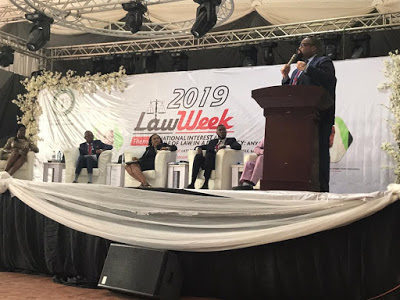
The Akure Branch of the Nigerian Bar Association has been holding its Annual Law Week in Akure, Ondo State. The week long event which began on the 2nd of December and will run to the 8th of December, 2019 has this year’s theme as “National Interest and the Rule of Law”.

Earlier today, 4th December, 2019 and as part of the week long festivities, the NBA Akure Branch hosted a lecture that was attended by both members of the Akure Branch and other distinguished lawyers from across the country, including Mr Olumide Akpata (former Chairman of the NBA Section on Business Law).
Mr Akpata felicitated with the Akure Branch for curating the hugely successful event and emphasised the role of the NBA in strengthening the rule of law as the bedrock of the country’s constitutional democracy. 
Mr. Akpata also highlighted the responsibility of lawyers in nation building, especially in defending the constitutional rights of the masses and providing guidance on issues of national discourse. 
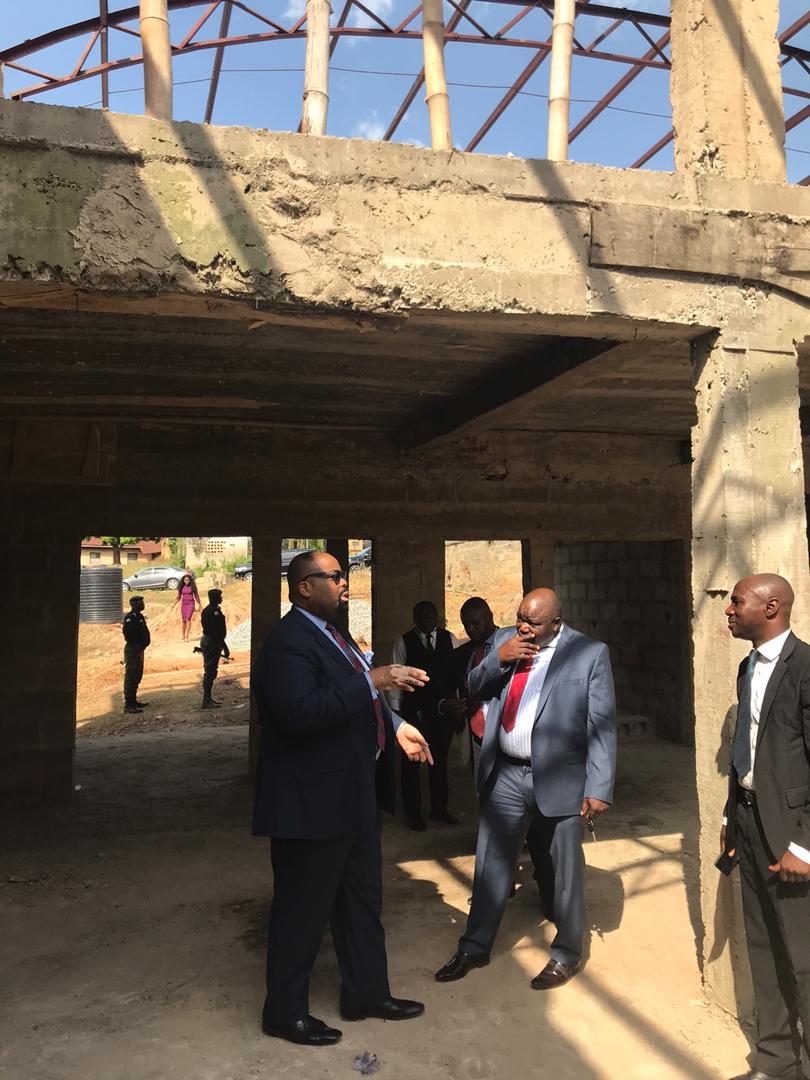
Mr. Akpata visited the Law Centre of the NBA Akure Branch which is currently under construction and donated 1 Million Naira towards completion of the building. When it is completed, the Law Centre will serve as a resource centre for both members of the Akure Branch of the NBA and the general populace at large. 
The Branch was thankful for Mr Akpata’s gesture and commended him for his consistent commitment and contributions to the development of the NBA.
@Legalnaija 
What You Should Know – Legalization Of Nigerian Documents For Use Abroad | Busayo Adedeji

What You Should Know – Legalization Of Nigerian Documents For Use Abroad | Busayo Adedeji

Nigeria is not a party to the Apostille Convention which specifies the modalities through which a document issued in one of the signatory countries (to the Apostille Convention) can be certified for legal purposes in all the other signatory states.

Hence attestation of Nigerian issued documents usually follow a particular process, depending on the type of document and the country such document is sought to be used. Regardless of the process or type of document however, the attestation process is called legalization.

We have highlighted below what a typical document legalization exercise will entail for use abroad:
• Notarization: notarization is the official fraud-deterrent process that assures the parties of a transaction that a document is authentic, and can be trusted. It is a three-part process, performed by a Notary Public, that includes vetting, certifying and record-keeping of the document. Some embassies require that the document sought to legalized be first notarized by a notary public in Nigeria. It is pertinent to state that certain embassies have a list of certified notaries public that must be used.
• Translation: some countries will also require that the relevant document be translated to the official language of the country in which the document is sought to be used before approaching the embassy for legalization. It is also noteworthy that certain embassies have their list of certified translators that must be used as well.
• Authentication by Ministry of Foreign Affairs (MOFA): the final step of certifying the authenticity of Nigerian issued document before approaching the embassy of the foreign country is certification by MOFA. MOFA will upon payment of the prescribed fees and verification of the document, engrave its seal on the document, thereby certifying the authenticity of the relevant document.
• Authentication by Ministry of Education (MoE): In addition to authentication by MOFA, education certificates are required to be authenticated by the MoE. The MoE requirement for education document is required to be done before the MOFA authentication above. The process at the MoE is similar to that at MOFA.
• Legalization at the embassy: this is usually the final stage in the legalization cycle and it entails the embassy ensuring all the previous attestation the document has gone through are genuine. This is done by trained inhouse personnel of the embassy or by consulting external investigators. Once the embassy is satisfied of the authenticity of the document and the prescribed fees are paid, the embassy will legalize the document, thereby certifying it appropriate for use abroad.
Conclusion
As straight forward as attesting/legalizing a document may seem, it is always best to employ the services of trained practitioners who are familiar with the process in other to avoid potential pitfalls. 
Important notes:
• Different countries have different requirements for legalization. Some countries may require some or all of the steps highlighted above. Others may even have additional requirements;
• Legalization fees at the embassy may be subject to foreign exchange rates; and
• Certain documents have a timeline within which they must be legalized once issued.
For questions and clarifications, please do not hesitate to contact Busayo Adedeji at:
Busayo.adedeji@newedege-consultants.com and +2348034476429.
How Courts Disrespect Litigants and Lawyers

How Courts Disrespect Litigants and Lawyers

I left my house 5.30am this morning and arrived High Court premises at Igbosere at about 7.30am. It is is my regular practice to arrive court at least an hour before 9am. I have asked my client to arrive court before 8.30am which he, like me, had to wade through this terrible Lagos traffic to make it to court at the appointed time.

Registrar finally arrives after 9am and announces *”the court is not sitting, please listen for your matters for date”.* 
To leave home at 5.30am I had to wake up 4am. Between 5.30 and 7.30/7.50am I am in Lagos traffic burning fuel with stress building up as to why I must be made to go through this stress. The same goes for the litigant who must leave early and wade through traffic to make it to court.
Had the court considered the challenge and wasted manhours and resources it takes to be on Lagos roads, it would have done the simple task of sending messages to parties if it will not sit for any reason. 
While counsel are required to put their functional email address and phone number, on each processes to be file, this requirement is for a reason but it appears that the court that made it a requirement is not keen at making it an important tool for effective dispensation of justice.
Last week I had a matter at Federal High Court Lagos Division and we had to wait for Registrar till after 9 for a court that normally sits 9 on the dot. On arrival the Registrar announced that the court will not be sitting. On enquiry as to why no message was sent like the last time the Registrar responded that the last messages sent were sent from his pocket and that when they made a proposal to the CR for funds for such messages it was turned down, hence he can’t continue funding it from his pocket.
Just last Thursday a had a matter for trial before a judge in TBS Annex. Arriving court, when it was 9am Registrar started giving dates that the court is not sitting. When counsel present demanded for explanation as to why message was not and the Registrar responded that counsel and litigants should always call a day before the court day to find out if court will be sitting or not.
Can the Bar take this up with the Bench and insist that courtesy be accorded lawyers and litigants in this regards so the court can be taken seriously.
This practice is not rocket science, at least National Industrial Court carries it out effortlessly, why not the State High Courts and Federal High Courts?
 *#JUSTMINDINGMYBUSINESS* 
– copied 
Case Review: SEC V. Big Treat Plc & Ors (2019) LPELR-46520 (CA) | Ayodeji Ayolola

Case Review: SEC V. Big Treat Plc & Ors (2019) LPELR-46520 (CA) | Ayodeji Ayolola


CASE REVIEW OF SEC V. BIG TREAT
PLC & ORS (2019) LPELR-46520 (CA) ON THE POWER OF THE SECURITIES AND EXCHANGE COMMISSION TO INTERVENE
IN THE MANAGEMENT AND CONTROL OF FAILING CAPITAL MARKET OPERATORS 


The Securities and
Exchange Commission (SEC) is statutorily mandated as the apex regulator of the
Nigerian capital market to ensure the protection of investors, and to maintain
a fair, efficient and transparent market. One of the ways in which the
commission carries out this function is intervening in the management and
control of public companies which are ‘failing’, ‘failed’ or ‘in cirsis’.


A recent
judicial precedent that affirms the powers of the commission in this respect is
the case of
SEC v. BIG TREAT PLC & ORS (2019) LPELR-46520 (CA). On 31st January, 2019, the Court of
Appeal, in overruling the decision of the trial court, held that the Securities
and Exchange Commission, being the ‘beacon light of the powers of the Appellant
under the Investment and Securities Act’ had the power to intervene the
management and control of Big Treat Plc, a public listed company.

Brief Facts:

Upon assessing
the 2008 audited accounts of Big Treat Plc (1st respondent), the Securities and
Exchange Commission (appellant) discovered that the 1st respondent was drifting
into deplorable financial state, and therefore decided to intervene in the
affairs of the 1st respondent to ascertain its true financial position and prevent
further depletion of the company’s assets, thereby protecting the interest of the
investors.

Consequently,
the appellant instituted an action at the Federal High Court in the course of
which it applied ex-parte for a preservatory order of injunction to restrain
the 2nd – 6th respondents from obstructing the appellant in the appointment of
an interim management to take charge of the day-to-day administration of the
1st respondent, with a view to preserving its assets and the interests of its
stakeholders. The trial court however refused to grant the application on the
ground that the 1st respondent was not a capital market operator and could
therefore not be under the control and management of the appellant in times of
financial distress. The appellant being dissatisfied with the order of the
trial court appealed to the Court of Appeal.

Court of
Appeal’s Decision:

Allowing the
appeal, the Court of Appeal held in favour of the appellant that the 1st
Respondent was a capital market operator having registered itself with the
appellant as an operator in the Nigerian capital market. The learned justices
maintained this position by relying heavily on section 315 of the Investment
and Securities Act (ISA) which defines a capital market operator as any person,
individual or corporate, duly registered by the Securities and Exchange
Commission to perform specific functions in the capital market. The court also held
in favour of the appellant that it (the appellant) had the statutory power to
intervene in the management and control of the 1st Respondent, if in
the appellant’s opinion; the company had failed, was failing or was in crisis
by doing whatsoever it considered necessary to protect the interest of the
investors. The court reached this decision by relying on Section 13(v) of the
Investment and Securities Act which states that the Commission shall
“…intervene in the management and control of capital market operators which it
considers has failed, is failing or in crisis including entering into the
premises and doing whatsoever the Commission deems necessary for the protection
of investors”.

The Court of
Appeal held thus:

“That the 1st Respondent, an issuer of securities,
having been duly registered with the Appellants and was at all material times
performing the specific function of issuing securities in the capital market
was subject to the intervention of the statutory powers of the Appellant as the
pinnacle regulatory authority for the Nigerian capital market whose sole
purpose is to ensure the protection of investors and to maintain fair,
efficient and transparent capital market as well as reduction of systemic risk
as stated in the preamble of the ISA- the beacon light to the powers of the
Appellant under the ISA.”

Comments:

The court’s
decision in this case reveals the extent of interpretation of the provisions of
the Investment and Securities Act on the definition of capital market operators
and the responsibilities of the Securities and Exchange Commission in relation
to the control and management of failing capital market operators.

This recent
judgment of the Court of Appeal therefore serves as a warning signal to many
public companies in the capital market. Every capital market operator owes its
investors a duty to thrive trade wisely in the capital market, and to continue
to operate as a going concern by all means legally possible. Accordingly, as
required by section 61 of the Investment and Securities Act, capital market
operators need to take more practical steps to establish a system of internal
controls over their financial reporting and security of their assets to ensure
the integrity of their companies’ financial controls and reporting by means of
policies, procedures and practices to ensure safety of assets, accuracy of
financial records and reports, achievement of corporate objectives and compliance
with laws and regulations.

The judgment
also serves as a great beacon light of hope to millions of investors in
Nigeria. Investors can feel safer to invest in the capital market, knowing full
well that there is a watchdog commission which constantly monitors market
activities to forestall manipulative, illegal or unfavourable practices.

Ayodeji Ayolola is an Adjunct Lecturer of Corporate
Law Practice at the Nigerian Law School, Lagos campus; and an Associate Counsel
at Wole Olanipekun & Co., Lagos, Nigeria. Email:ayolola@lawschoollagos.org,
ayodeji.a@woleolanipekun.com

Case Review: Raji v. Truck Sabinos (NIG) Ltd (2018) LPELR-45011 (CA) | Ayodeji Ayolola

Case Review: Raji v. Truck Sabinos (NIG) Ltd (2018) LPELR-45011 (CA) | Ayodeji Ayolola

Case Review of Raji v. Truck Sabinos (NIG) Ltd
(2018) LPELR-45011(ca) on the jurisdiction of the Federal High Court over the
removal of Company Secretaries; a shift in Corporate Law Practice? 

There are some
interesting court decisions which have the potential of shifting long-standing
jurisprudence of certain issues in corporate law practice in Nigeria. One of
such developments is the issue of the jurisdiction of the Federal High Court
over the removal of a company secretary. A legal practitioner of few years
post-call or even almost every Nigerian corporate lawyer would reason that
there is no legal argument worthy of contesting the jurisdiction of the Federal
High Court over the removal of a company secretary, as such jurisdiction is statutorily
vested on the Federal High Court under Section 251(e) of the 1999
Constitution
which states thus:

251. (1) Notwithstanding anything to the contained
in this Constitution and in addition to such other jurisdiction as may be
conferred upon it by an Act of the National Assembly, the Federal High Court
shall have and exercise jurisdiction to the exclusion of any other court in
civil causes and matters
:

…

(e) arising from the operation
of the Companies and Allied Matters Act or any other enactment replacing the
Act or regulating the operation of companies incorporated under the Companies
and Allied Matters Act;

A literal
interpretation of the foregoing provision is that the Federal High Court has
exclusive jurisdiction over every matter that arises from the operation of the
Companies and Allied Matters Act, and that should obviously include matters
bordering on the removal of company secretaries. However, the Court of Appeal in
RAJI v. TRUCK SABINOS (NIG) LTD (2018)
LPELR-45011(CA)
has adopted a more constructive interpretation which is to
the effect that the Federal High Court does not have jurisdiction over the
removal of the company secretary of a private company. The foregoing
interpretation is supported by the finding of the Court that the Companies and
Allied Matters Act (CAMA) does not have any provisions on the removal of the
company secretary of a private company; as section 296(2) of CAMA, which
only provides for the removal of the company secretary of a public company, states
thus:

“Where it is intended to remove the secretary of a public company, the board of directors shall…”

Let us briefly review the case of RAJI v. TRUCK SABINOS (NIG) LTD (2018)
LPELR-45011(CA)
in order to fully
understand the reasoning of the Court.

Brief Facts:

The Plaintiff
was the company secretary of the Defendant under a solicitor’s retainer
agreement between the Plaintiff and the Defendant. The agreed fee for the
retainer was N300,000.00 (Three Hundred
Thousand Naira) per annum payable on a quarterly installment of N75,000.00 (Seventy-five Thousand Naira
each). The said Agreement dated 1st July, 2003 was executed between the parties
to ratify the appointment of the Plaintiff as Company Secretary/Legal Adviser.


The Defendant had been paying the amount due under the agreement until the last
quarter of the year 2006 when it refused to pay as agreed by both parties in
the retainer agreement. The Plaintiff thereafter sent several demand letters
requesting for the payment of the sum due. When no response was received from
the Defendant, a final demand letter dated 21st November, 2006 was sent to the
Defendant in respect of the quarterly fee due. The Defendant, in a reply letter,
stated that the Plaintiff was not entitled to the demanded fees having not
performed its part of the agreement.

The Plaintiff
consequently brought an action before the Federal High Court claiming a
declaration that the unilateral termination of the retainership agreement
between the appellant and the respondent, as solicitor and client respectively,
in the running of the corporate affairs/engagements of the respondent was
wrongful and occasioned pecuniary damages of N300,000
annual retainer fee; N75,000 being the
4th quarter 2006 retainer fee; and N400,000
being general damages for the breach of the retainership agreement together
with N200,000 being cost of the action.


Decision of the Lower Court

The Federal High
Court held that it had no jurisdiction to entertain the action. The court also
refused to transfer the action to the High Court of Lagos State on the ground
that it (High Court of Lagos State) had also struck out the matter believing it
lacked the jurisdiction to entertain same. The Federal High Court therefore
struck out the matter for lack of jurisdiction. The counter claim which the
Court below held was in negligence was also struck out for lack of
jurisdiction. The appellant, dissatisfied with the decision of the Court below
appealed to the Court of Appeal.


Appellant’s Argument

The appellant
was dissatisfied with the decision of the Court below and filed a notice of
appeal with three grounds of appeal and subsequently filed a brief of argument
in which it contended that, considering the claim in the writ of summons and
the statement of claim which was on the duties of the appellant as the company
secretary, the Court below had the exclusive jurisdiction to entertain the
action and should not have struck it out.


Respondent’s Argument

The respondent, on
the other hand, contended that there is no provision in Section 22(2) of the
Federal High Court Act empowering it to transfer any matter which ordinarily
ought to have been commenced in the High Court of a State to that Court where
the case had already been struck out by the High Court for want of jurisdiction.
The respondent relied on the case of Adetayo v. Ademola (2010) 15 NWLR
(pt.1215) 169 at 195
. The respondent therefore urged that the appeal be
dismissed for lacking in merit.

Decision of the Court of Appeal

In reaching its decision,
the Court of Appeal relied on the fact that here was no indication in the processes
filed in the action indicating that the Respondent is a public company.
Following the fact that the respondent is a private company which is outside
the purview of 296(2) of CAMA, the court held that the matter could be decided
without recourse to CAMA or any enactment regulating operation of companies
under CAMA; which further removes the matter from under the purview of section
251(e) of the 1999 Constitution. The court held that actions founded on a
contractual relationship between a company and its employees as well as claims
for recovery of debts though concerning a company are not matters arising from
the operation of CAMA or any other enactment relating to CAMA or regulating the
operation of companies incorporated under CAMA which is outside the
jurisdiction of the Federal High Court as enshrined in Section 251(e) of the
1999 Constitution. The appellate court therefore affirmed the decision of the
lower court that the Federal High Court does not have the jurisdiction to
entertain the suit, having regard to the fact that it is a matter of simple
contract of employment and a claim for damages arising from alleged wrongful
termination of the contract. The appeal was therefore dismissed.


The Court of Appeal however noted in its decision that the matter was a pending
action in 2010 when Section 254C of the Third Alteration Act amending the 1999
Constitution (which provides for the exclusive jurisdiction of the National
Industrial Court) was made by the National Assembly in 2010. Consequently,
section 24(3) of the National Industrial Court Act would still apply to save
the action for its transfer to the National Industrial Court. The order
striking out the action was therefore varied to an order transferring the
action to the National Industrial Court Lagos for determination.


Comments:
The decision of the Court of Appeal in this matter is indeed a welcome
precedent. The courts have always transcended from giving only literal judicial
interpretation of the Constitution to embarking on more constructive
interpretations and holistic interpretations. Section 251(e) of the 1999
Constitution which is germane to the present case states that the Federal High
Court shall have exclusive jurisdiction in civil causes or matters arising from
the operation of CAMA and any other enactment replacing that Act or regulating
the operation of companies incorporated under the CAMA. It is therefore
axiomatic that the removal of the company secretary of a private company does
not fall under the jurisdiction of the Federal High Court as CAMA has no
provisions for such procedure. Accordingly, the matter should be treated as a
simple employment matter which under the exclusive original jurisdiction of the
National Industrial Court.

However, the
precedent created by the Court of Appeal in this matter will be difficult to
enforce due to the fact that section 22 of the Federal High Court Act does not
provide for the transfer of cases from the Federal High Court to the National
Industrial Court. The problem caused by the lacuna is that labour/employment
matters of this nature which are filed at the Federal High Court after the
coming into force of Section 254C of the (Third Alteration) Act, 2010 cannot be
transferred by the Federal High Court to the National Industrial Court which
now has the exclusive original jurisdiction over such matters. It is therefore
important that the National Assembly fills the lacuna by an amendment of
Section 22 of the Federal High Court Act to accommodate the transfer of cases
of this nature by the Federal High Court to the National Industrial Court which
has exclusive original jurisdiction to determine such cases. 

Ayodeji Ayolola is an Adjunct
Lecturer of Corporate Law Practice at the Nigerian Law School, Lagos campus;
and an Associate Counsel at Wole Olanipekun & Co., Lagos, Nigeria. Email:ayolola@lawschoollagos.org, ayodeji.a@woleolanipekun.com


Implementing The Child Rights Act In Nigeria: Alternative Strategies  | Fifehan Ogunde

Implementing The Child Rights Act In Nigeria: Alternative Strategies | Fifehan Ogunde

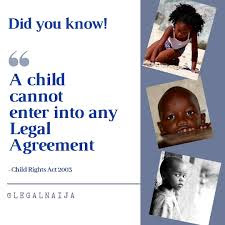
On 30th November 2019, it will be 30 years since the Convention on the Rights of the Child (CRC) was adopted by the United Nations General Assembly. Nigeria became a party to the CRC in 1991, just two years after. In order to incorporate the provisions of the CRC into Nigerian law, a Child Rights Bill was proposed in 1993 but was opposed by conservative religious groups and traditional rulers on grounds of incompatibility with religion and culture.

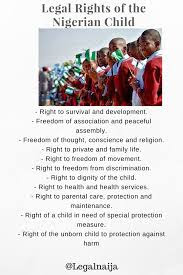
The Nigerian Child Rights Act (CRA) was eventually enacted in 2003 further to the recommendation by the UN Committee on the Rights of the Child in 1996 to enact legislation in this respect. Nearly 16 years after however, it is yet to be universally implemented in Nigeria. About 24 states have implemented the Child Rights Act with 12 states refusing to implement the Act. Of the 12 states, nine are in the North-East region of Nigeria which has the lowest literacy rates and highest number of child-brides . Many of these states oppose the CRA on grounds of the incompatibility of its provisions with Islamic law.

Numerous calls have been made for these states to incorporate the CRA into domestic law. Unfortunately, the peculiar constitutional arrangement of the Nigerian federation purportedly implies that unless these states incorporate the CRA into domestic law, it remains inapplicable in these states. Legislative competence under the constitution is divided between the federal and state governments. The federal legislature is competent to legislate on matters under the exclusive list and the concurrent list. The state legislature is competent to legislate on matters under the concurrent list. For matters not contained in either list, any federal legislation is only applicable in states to the extent of incorporation under state law. Child rights is a matter under the residual list and as a result, its provisions are only applicable in states to the extent that they are incorporated into the laws of the state. 
 It does not appear as though any of these states are not willing to change their stance with respect to the implementation of the CRA and in any case, as asserted by Ogunniran, trying to reconcile the CRA with Sharia Law is an exercise in futility. This does not however suggest that with respect to child rights protection, the federal government is helpless. Where there is a conflict between validly made federal and state law, federal legislation prevails and such state legislation is void to the extent of its inconsistency. Being federal legislation, the CRA should therefore prevail over any state law that is incompatible with its provisions. Surprisingly, this position is hardly advanced in mainstream arguments relating to child rights protection with emphasis being laid instead on encouraging Northern states to domesticate the provisions. This may be due to the fact that without a corresponding political will on the part of states, substantive implementation of the CRA will not be guaranteed even if its supremacy under the constitution is asserted to void incompatible provisions of Sharia Law for example.
Are there any alternatives? Perhaps focus need to shift towards reforming existing law for the purpose of implementing the provisions of the CRA. In the first instance, fundamental rights under the constitution are deemed applicable to ‘every person’ in Nigeria. According to Section 3 of the CRA, those provisions apply ‘as if they were stated in the Act’. It is in my view not far-fetched to argue that this implies that as far as it relates to children, the CRA should represent the authoritative interpretation of fundamental rights provisions under the constitution.
 Another option is to consider the CRA as being the universally applicable law in matters that relate to children under the exclusive legislative list. For instance, the National Assembly is empowered under the exclusive legislative list to make laws relating to the health, safety and welfare of employees. In this area, the CRA may apply in setting the conditions under which children may engage in labour even in states that have not implemented the CRA. The regulation of ‘prisons’ is also a matter under the exclusive list. The provisions of the CRA prohibiting life imprisonment for juveniles can on this basis be regarded as universally applicable on. Post-primary Education is also under the concurrent list, meaning that in cases where the provisions of the CRA conflicts with state law on post-primary education, federal law prevails. Emphasis may be laid on such constitutional guarantees in order to ensure that CRA provisions in this area is universally applicable. 
The United Nations Committee on the Rights of the Child has particularly suggested reforming existing law to ensure compatibility with the CRC. It is however noted that majority of the subjects of particular relevance to children including offences under the Criminal and Penal Codes applicable to Southern and Northern Nigeria respectively are not covered under either the exclusive or concurrent legislative list. Consequently, legislation enacted for the purpose of reforming existing law will still face the problem of limited applicability.  This has been the problem with enforcing subsequent child-rights friendly legislation such as the Violence Against Persons Prohibition (VAPP) Act 2015 which prohibits, among other things, Female Genital Mutilation (FGM) but is only applicable in the Federal Capital Territory. Another option might be broadly interpreting Item 61 of the exclusive legislative list under Schedule 2 of the Constitution to include certain matters that are covered under the existing Criminal and Penal Codes relating to children.
As evidenced above, there are different ways by which the substantive provisions of the CRA can be universally applicable even without domestic incorporation. Moving away from the incorporation of the CRA into domestic law, there is a stark reality that needs to be confronted one way or another with regards children in Nigeria. The numbers may conflict but current statistics show that Nigeria has the highest number of out-of-school children in the world . A significant number of Nigerian children are suffering from violation of their fundamental rights, even in states that have purportedly implemented the provisions of the CRA. In a legal context, the CRA is hardly used as a tool for child rights litigation and has only been referred to or relied upon in a handful of cases. A significant tool in enhancing child rights protection is the development of caselaw to that effect and the CRA needs to serve as a primary frame of reference in all decisions involving children, even in cases where the parties are adults. 
In all of this, it does not appear as though there is any form of political will either at state or federal level to specifically give effect to the provisions of the CRA. With respect to states that have implemented the CRA, greater effort must be made to ensure that its provisions are implemented. Cases involving children should be dealt with under the CRA in order to establish a significant body of case-law relating to child rights protection. Establishing a body of jurisprudence, no matter how significant, does not however replace the need to ensure that greater awareness is created among civil society of the status and relevance of the CRA. UNICEF Nigeria seems to be taking steps in this regard in ensuring that a copy of the CRC is made available to children in local languages . Reports have also emerged of a child-led petition to the Federal government of Nigeria to amend the constitution for the eradication of child marriage. Whether such awareness-creating steps will generate the necessary political and civil society support remains to be seen. One would Otherwise building an effective child rights protection framework may remain a mere pipe dream.
Fifehan Ogunde

Oluwafifehan Ogunde is an research specialist and consultant with research interests in human rights law, criminal law and constitutional law. He has a Master’s degree in Human Rights Law from the University of Nottingham and a Bachelor’s degree from the University of Sheffield. He is also a barrister and solicitor of the Federal Republic of Nigeria, having been called to the Nigerian Bar in February 2012.