Webinar: Election In The New Reality

Webinar: Election In The New Reality

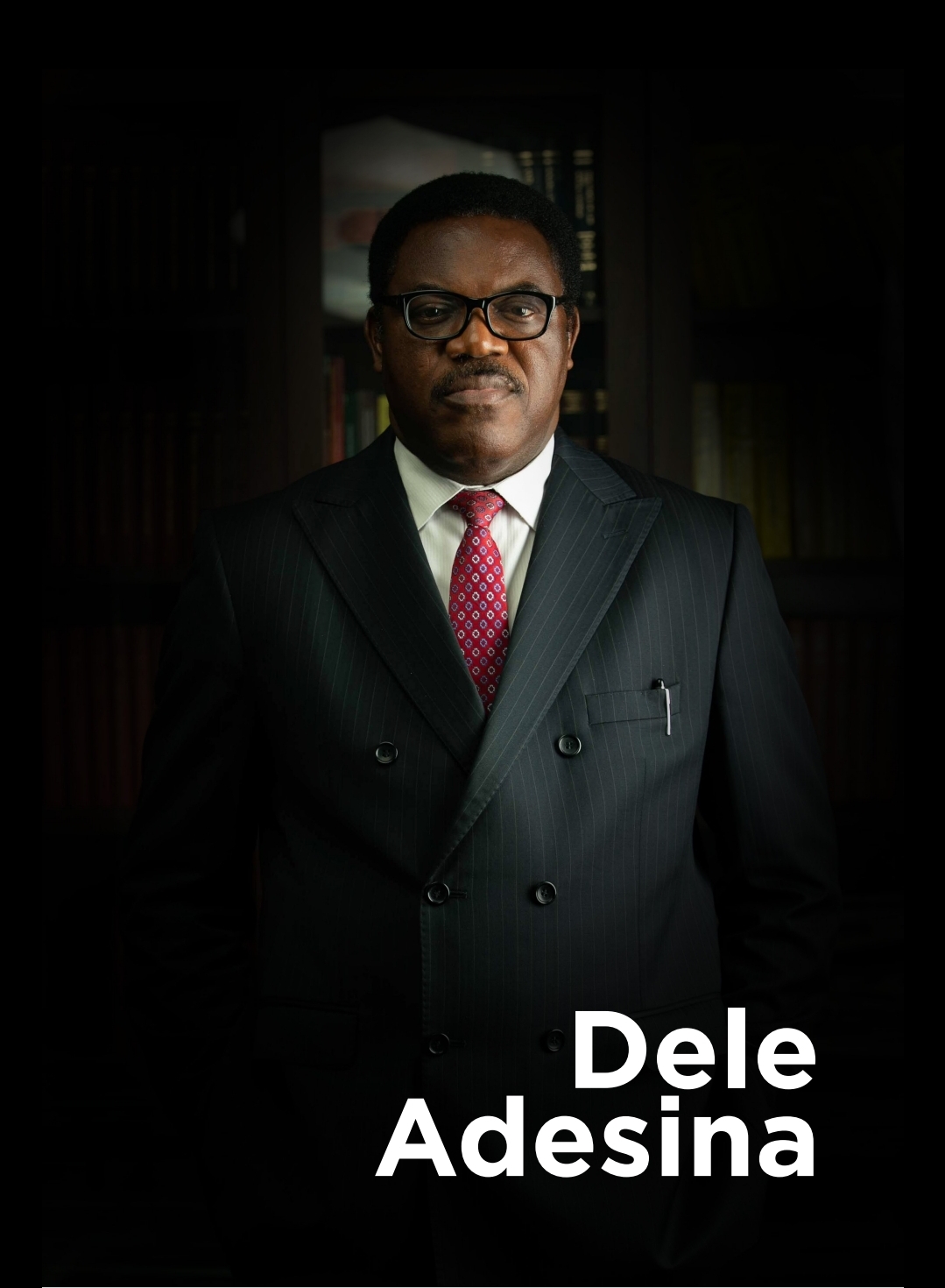
ESQ Practical Lawyers Academy in collaboration with Dele Adesina LP presents, a virtual discuss. 
Theme: Election in the New Reality
Date: Friday, 12th June 2020.
Time: 2pm
Venue and gatepass: https://app.livewebinar.com/993-101-013/62fb995c8dd6183feb408991a1b59c0f
EVENT OVERVIEW
The COVID-19 pandemic has had an unprecedented impact on our world and the severity of the situation and the implications on how it may worsen, if we fail to adhere to the laid down measures cannot be overstated. 
Recently, INEC postponed the four senatorial by-elections in Bayelsa, Imo and Plateau states over the Coronavirus global pandemic. With the severity of this pandemic biting harder and future elections steering us in the face, one fundamental question we must ask is – what lessons, opportunities and challenges have COVID-19 thrown at us? 
How can we conduct credible elections, keep the overall rate of infections low without undermining the rule of law and our democracy? How do we balance preservation of human rights and maintaining democratic principles? What urgent reforms are needed to make votes really count? What role will the Bar and the Bench play to sustain our democracy?
Join leading experts from the Bar and the Bench as we discuss the legal, constitutional and operational challenges facing our electoral system today and the urgent necessary reforms, in view of the challenges posed by Covid 19 Pandemic.
Panellists:
i. Prince Lateef O. Fagbemi SAN
ii. Mallam Yusuf Ali SAN
iii. Dr. Onyechi Ikpeazu SAN
iv. Kehinde Ogunwumiju SAN
v. Chief Adeniyi Akintola SAN

Moderator: Bode Olanipekun SAN.
Host: Lere Fashola, Founder, ESQ Practical Lawyers Academy

Insights: Expanding the Frontiers of Legal Practice in Nigeria | Dele Adesina SAN

Insights: Expanding the Frontiers of Legal Practice in Nigeria | Dele Adesina SAN

The Nigerian Lawyer today is faced with opportunities like never before. The digital revolution through the internet has impacted various kinds of businesses, and law is not an exception.  Due to the rapid development and advancement of technology, expansion of IT solutions and diversification in the market system in Nigeria, lawyers are however presented with a unique opportunity to provide essential service delivery models in expanding areas of practice in order to build wealth both for the lawyer and the client.

According to Professor S. A. Tella of Olabisi Onabanjo University, Ogun state, Nigeria in his Paper Moving Nigeria from Recession to Prosperity: The Trajectory of the Nigerian Laws –


“The role of law in promoting economic development cannot be overlooked as most of our lives and interactions with others are regulated by law. A sound economy invariably leads to growth and is the best way to combat endemic poverty in a developing country such as Nigeria. To ensure a sound economy, the legal institutions and regime must be sound, providing a platform for entrepreneurs and businesses to stand out which would consequently lead to the creation of jobs and alleviation of poverty”.

For instance, the Nigerian creative space has grown exponentially over the last decade, especially in the areas of Music, Film and Information Technology. According to PwC, in 2018, Nigeria’s entertainment and media industry revenue witnessed a 25.5 per cent growth amounting to $3.8 billion with $605 million of the estimated $764 million rise said to be attributable to internet access. Nollywood, is currently the third largest in the world after Hollywood and Bollywood, and it is anticipated by 2022 to have revenue reaching US$9.9 billion. The Nigerian music sector experienced a huge boom and is also currently ranked as the biggest music industry in Africa .

Secondly, the African Continental Area Free Trade Agreement would be the largest trade agreement in history and would remove barriers to trade, thereby allowing a flow of goods and services across African borders. Invariably, there are new job opportunities created for Nigerian legal practitioners in the ECOWAS regions by virtue of the ACFTA. Also, trade between Africa and the UK is growing, according to figures in 2016, Africa’s exports to the UK stood at US$16.89 billion, registering a marginal 1.96% increase from the previous year’s total of US$16.57 billion . Business and trade are now conducted on a global scale and there is an increasing demand for legal services . 

It is no news that the traditional areas of practice are shrinking and many lawyers are concerned about the high rate of multi-disciplinary firms encroaching into the legal space to offer services that used to be the exclusive purview of lawyers. I believe while we look to address these issues, we must simultaneously expand the current frontiers of practice. Many law firms are currently venturing into these new practice areas for instance, we have law firms who specialize in Entertainment Law, Fintech and other forms Alternative Dispute Resolution. However, we must actively encourage more practitioners to go farther in exploring these areas.

Lawyers must begin to offer critical business support and solutions to stakeholders and parties in the areas listed above, which must also include galvanizing government support and protection for creatives. There is a need to reposition the creative industry in Nigeria and Lawyers have a huge role to play in exposing our creative industry to potential markets while helping to structure deals that benefits the Nigerian creatives.

To achieve this, we must pay attention to the following:

Firstly, we must insist on continuous professional development for our legal practitioners. It is now a glaring reality that the education of a lawyer should not be left only to the Nigerian Law School. Mentorship is also key in grooming our younger lawyers to achieve high success in these key areas.

Secondly, the efficacy of the justice administration is a paramount consideration for local and international investors. Therefore, our justice administration system must be reformed to ensure speedy delivery process. Thirdly, the trust and confidence that the people have in the judicial system have a direct impact on obedience to the orders and judgement of the courts, there’s need to build confidence of the people in the judicial system.

Lastly and most importantly, the Bar and the Bench must remain partners in ensuring productive collaboration to facilitate the attainment of due process, rule of law and smooth justice system. I must conclude by re-emphasizing that Nigerian lawyers must begin to position strategically in all the key sectors mentioned above, if we must expand our frontiers and secure the future of our profession.

Dele Adesina SAN, FCIArb.

 
[1] Jayne Augoye. (2018). Review of the Nigerian entertainment industry in 2018. Available: https://www.premiumtimesng.com/entertainment/naija-fashion/303303-review-of-the-nigerian-entertainment-industry-in-2018.html. Last accessed 8th June, 2020 .

[2] Brian Mureverwi. (2017). UK-Africa trading relationship. Available: https://www.tralac.org/resources/our-resources/11896-united-kingdom-africa-trading-relationship.html#:~:text=In%202016%2C%20Africa’s%20exports%20to,imports%20of%20US%24112.08%20billion.. Last accessed 8th June, 2020 .

[3] The Law Society of Western Australia, The Future of the Legal Profession, 2017


Disciplining Children In Nigerian Schools: To Flog or Not To Flog | Eberechi May Okoh

Disciplining Children In Nigerian Schools: To Flog or Not To Flog | Eberechi May Okoh

“There can be no keener revelation of a
society’s soul than the way in which it treats its children.”
  
Nelson Mandela

The role of children in any
society cannot be over-emphasized. Every culture in its own peculiar way, with
or without laws, by default, protects the young. The fact that the present
young population are going to be responsible for running society in the next
twenty to forty years, means that much attention should be paid to children’s
development. As expected, each society’s culture determines how its children
are treated. What might be acceptable to one society, might be completely
abhorrent to another. Two decades ago, flogging children in primary and
secondary schools in Nigeria was widely acceptable. 


This was irrespective of
whether the school was public, private or a missionary school. Today, the
narrative is different.
Even without the prompting of the government,
most private schools in Nigeria have already banned all forms of flogging or
hitting by teachers or other staff.  In
response, some teachers have lamented that the
absence of corporal punishment encourages pupils to be rude to them. Last year,
the Minister of State for Education, Chukwuemeka Nwajiuba, was reported to have
said that  the federal government would
no longer tolerate bullying in
schools, but he was not referring to corporal punishment.[1]
Furthermore, the Spokesperson of the Education Ministry, Ben Goong, emphasized
that the government did not ban corporal punishment.[2]


In Nigeria, corporal
punishments are widely acceptable to the extent that it is unthinkable that a
child will be allowed to grow without physical discipline. While the benefits
are often listed, little is known about the psychological effects on some
children and the healing process involved. Consequently, the culture of
disciplining children physically in the home transcends from the home to the
school and other public spaces. In some communities, an adult may discipline a
child for inappropriate behaviour in public and upon returning the child to the
parents with a report of what transpired, receive a warm welcome. It takes a
community to raise a child. Notably,
Article
295 of the Criminal Code (South), article 55 of the Penal Code (North) and the
Shari’a penal codes in the Northern states confirm the right of parents to use
force to “correct” their children. Yet as we consider what is culturally
acceptable in our geographical space, it is important to take note that f
ortunately, or unfortunately, the world is
quickly shrinking into one global village with national leaders including
Nigerian leaders, signing treaties which will affect the lives of the citizens unbeknownst
to them. For this reason, the topic of disciplining young children in Nigerian
schools cannot be discussed without a consideration of the larger picture- global
practice. It is important to set out however that the consideration of what is
obtainable in other societies is not with a view to compare. The role of
children in the Nigerian society is so important that their affairs cannot be
decided on without recourse to the essence of who we are as a nation.  


Currently, Europe and many
parts of South America practice prohibition of corporal punishment in all
settings. Russia, North America and Canada among others have achieved prohibition
in some settings while Nigeria, Botswana, Saudi Arabia and some others have not
fully prohibited corporal punishment in any setting.[3] Notably,
every continent at some point in their ancient history allowed corporal
punishment. In the UK for instance, in the last century, the issue of corporal
punishment in schools was often met with a perceived incompatibility with
Article 3 of the European Convention on Human Rights and Fundamental Freedoms.
While the Article prohibits torture and degrading treatment, in cases like
Tyrer v
UK[4] and Costello-Roberts
v UK[5] the
issue of corporal punishment was considered in light of the Article. In
Costello-Roberts’ case, the court found that there was no infringement of
Article 3 in slippering a seven-year old child, but in Tyrer’s case, the court held
that the birching of a 15-year old boy was a violation of Article 3. In a
dissenting judgment in Tyrer’s case, Sir Gerald Fitzmaurice noted that Article
3 was not intended as a vehicle for penal reform. The European Convention was
post World War II and was concerned with the torture and ill-treatment
perpetuated by the Nazis and not necessarily corporal punishment.[6] However,
the creation of some fundamental rights had implications not intended by the
drafters. As chairperson of the drafting committee of the Universal
Declaration, Eleanor Roosevelt expressed concern that provisions outlawing
torture and ill-treatment might prohibit the practice of other things such as
compulsory vaccination.[7] These
concerns though voiced in a different context must lead us to ask questions such
as what the unintended effects will be if teachers are prohibited from
administering corporal punishment across all schools and all ages? This is in
view of the fact that Nigeria is a culturally different clime from the Western
World and cannot be seen to adopt Western procedures if not in the best
interest of the child and the society. However, while these questions persist,
the government continues to ratify international treaties and make commitments
which sooner or later, might completely wipe out corporal punishment. 


In 1991, Nigeria ratified
the Convention on the Right of the Child (CRC). With the exception of some
northern states, many states have domesticated the CRC as state laws. The CRC
in Article 28(2) provides as follows:

“States Parties shall take all appropriate
measures to ensure that school discipline is administered in a manner
consistent with the child’s human dignity and in conformity with the present
Convention.”

It is also notable that the
Nigerian government is committed under
the Sustainable Development Agenda
2030 and Africa’s Agenda for Children 2040. 
This year, the Global Initiative together
with Amnesty International Nigeria, is working on a project to bring law reform
on corporal punishment to the forefront of the Nigerian Government’s agenda. According
to the UN, c
orporal punishment is ‘any punishment in which physical
force is used and intended to cause some degree of pain or discomfort, however
light. It involves hitting (‘smacking’, ‘slapping’, ‘spanking’) children, with
the hand or with an implement – whip, stick, belt, shoe, wooden spoon, etc. It
can also involve, for example, kicking, shaking or throwing children,
scratching, pinching, burning, scalding or forced ingestion’.[8]
In a 2019 report of the Global Initiative to End
All Corporal Punishment for Children in Nigeria, they noted that prohibition is
still to be achieved in the home, alternative care settings, day care, schools,
penal institutions and as a sentence for crime. According to them, these
provisions should be repealed, and prohibition enacted of all corporal
punishment by parents and others with parental authority.[9] If this
is achieved, corporal punishments will not only be prohibited in schools but
also in the home.


But as the international
community puts pressure on Nigeria to walk away from all forms of corporal
punishment and many private schools are abandoning it for lighter modes of
discipline, it is important to assess what corporal punishment in Nigerian
schools have done for us as a nation both positive and negative. Amidst reports
of many children (now adults) who appeared to attain to a well-rounded
development as a result of being flogged in schools, are reports of adults who
have scars of being victims of violent abuse at the hands of teachers. Evidence
on the topic shows support for both sides. Does corporal punishment have a
place in our society?  Has it helped our
society? Should it be retained or banned in schools? Have children been made to
endure violence and abuse at the hands of teachers? Do the benefits if any, outweigh
the harm?


[1]   Azeezat Adedigba,  “Teachers, parents
react as Nigerian schools gradually abandon corporal punishment”
      https://www.premiumtimesng.com/news/headlines/378623-teachers-parents-react-as-nigerian-schools-gradually-abandon-corporal-punishment.html assessed 6 June 2020.

[2]
Ibid.

[4]
[1978] ECHR 2

[5]
[1993] ECHR 16

[6]
Barry Phillips The Case for Corporal Punishment in the UK. Beaten into Submission
(1994) 43 The International and Comparative Law Quarterly No. 1 153.

[7]
Barry Phillips (n3) 162.

[8]
(UN Committee on the Rights of the Child, 2006: 4)

[9] Summary of necessary legal reform to achieve full prohibition
(n3).

Photo Credit – www.allafrica.com 

With Dele Adesina I see a brighter future for the Legal profession  | Otunba Olumide Akinbinu

With Dele Adesina I see a brighter future for the Legal profession  | Otunba Olumide Akinbinu

As the biennial election of the Nigerian Bar Association draws near, it is of utmost importance for Lawyers to make a meaningful choice among Contenders for the various Offices of the Association. The Legal profession in Nigeria has come of age and the current Nigerian socio-political dynamics require greater enthusiasm from potential Leaders. We need a Leader in hot pursuit of perfection, swiftness and light in the dark tunnels of the Nigeria Judicial System.
A Leader with sufficient knowledge with proven accomplishments that can give luster to the Legal profession. The Bar Association at this period in time must be capable of shunning every shade of corrupt influences which by itself is the paramount spring of prodigalities and social disorder.
There must be a renewed vigour at placing Justice at the door step of the Nigerian masses. Wisdom to manage and improve upon the socio-economic well being of Lawyers and restore the pride of place hitherto enjoyed by the Legal profession in the days of yore.
At a time when Lawyers carry the aura of distinction, knowledge and honour devoid of sharp practices or the shenanigans of the greedy few ready to pander to dictates of political demagogues and by so doing compromise the place of honour and integrity; thereby giving obscurity to rules of interpretation and awkward exposition of the Law if only to attract the lucre from the filthy political class and thereby exacerbating the contradictions in the Nigerian political system.
The time has also come to look deeply into the modalities of embracing technology  or better put systematic adaptation of modern technology in the practice of Law and Justice delivery system, short of which one is afraid, that the present energies will decay. A time has therefore come to brace up with the reality that there is patent lethargy in Judicial System.
The earlier we realize that nothing progresses if it is resting on the original plan; the better for the Legal profession. In the face of inadequacies and need for progression highlighted above is the quality of the Bar Leadership particular the Presidency.
For this assignment, we need not beam our search light too far. DELE ADESINA (S.A.N) has the pedigree. Aside from deep knowledge of the Law, intellectual acumen, honesty and tenacity of purpose; DELE ADESINA (S.A.N) has unparalleled ability at social engineering. All his God-given qualities he has deployed in the service of the Nigerian Bar Association in the past. Dating from his tenure as the Chairman of Ikeja Branch to his exemplary service as the General Secretary of the Nigerian Bar Association between 2002 and 2004.
Apparently DELE ADESINA (S.A.N) is no neophyte in Nigerian Bar Association Politics nor an upstart. The candidature of DELE ADESINA (S.A.N) is salutary.
He has been very consistent and purposeful in his quest for leadership of the Nigerian Bar Association. Since 2008 when he made a debut into becoming the President of the Nigerian Bar Association. He kept tab on his rich manifesto believing that there is something definitely absurd with the past giving the present challenges of mankind.
In 2014, DELE ADESINA (S.A.N) was a Candidate for the Presidency of the Nigerian Bar Association, well accepted and loved by the body of Lawyers across the Country. He worked assiduously criss-crossing the length and breadth of Nigeria with the view to selling the best of his ideas to the Nigerian Lawyers. Although he lost the election that year to AUGUSTINE ALEGEH (S.A.N) he remained his indomitable self. He could neither divide himself from any man upon differences of opinion or conception of ideas nor a judgement that does not agree with his thoughts. He warmed up to all and sundry and accepted the outcome of elections with the equanimity of a priest. DELE ADESINA (S.A.N) has been un-relenting in his services to the Nigerian Bar Association even in the face of past electoral failure. His impact has been dominant at every Conference of the Bar Association and his willingness to support and serve every other Executive has been un-paralled. Little wonder his fellow Silk and a personality of by no mean stature; FEMI FALANA (S.A.N) described DELE ADESINA (S.A.N) as the ENCYCLOPEDIA of the Nigerian Bar Association. Well said, it captured vividly the stuff with which DELE ADESINA is made. One cannot agree less.
What could be more encouraging than having a wise man in the house whose knowledge of the Law and the Bar Association is like waters descending from above, springing from beneath by reason of a rich antecedent and also inspired by divine revelations.
In all ramifications DELE ADESINA (S.A.N) can never be the blind man in a dark room looking for a black hat in his desire to lead the Bar. He has committed quality time into mapping out a road to progress for the crop of present generation of Lawyers and a brighter future for aspiring ones.
My take is that we should eschew primordial sentiments, give merit a chance and be less contented with the status quo and elect a man with perfect vision to lead the Bar. This golden opportunity should never slip by in the corporate interest of the Bar and the Nigerian Judicial System.
I see greater challenges ahead of the Bar leadership in the recent signing into Law of the Executive Order 10 of 2020 by the Presidency. Quite salutary as it has been the long quest for conformity with the Constitutional requirement of Separation of Powers between Executive, Legislature and the Judicial arms of Government.
Even at that, a strong and un-compromising Bar leadership would be the watch dog of the Judiciary. Implementation at State level and the need to ensure accountability and judicious management of resources by the State Judiciary should be the primary concern of the Nigerian Bar Association. The Bar must at all times hold the person in authority accountable to all and sundry.
Ideas must flow from the Bar to the Bench from time to time and it is common knowledge that it takes the man of letters; a man of acute knowledge, inquisitive and dexterous character and a man that would be prompt in attack and ready in defence to make a meaningful impact. All these qualities rolled together you find in DELE ADESINA (S.A.N).
Together we can make history by placing a round peg into a round hole. DELE ADESINA (S.A.N) is by every standard a quintessential Bar man that cannot be side stepped in the scheme of things. He has a proven dexterity in stirring the ship of the Bar to an enviable destination. Selfless all together and ready to give all in an un-compromising service to the Nigerian Bar Association. With him, I see a brighter future for the Legal profession.
Otunba Olumide Akinbinu
Two-Terms Chairman
Nigerian Bar Association
Ota Branch
Caroline Ibharuneafe Commiserates Over the Loss of Chief Sir Alfred Eghobamien SAN  

Caroline Ibharuneafe Commiserates Over the Loss of Chief Sir Alfred Eghobamien SAN  

 
On behalf of my colleagues and I at Carol Ibharuneafe and Co., I commiserate with Mr. Osaro Eghobamien and family on the loss of Chief Sir Alfred Eghobamien SAN.
 
Sir Alfred was not only a mentor to many but he was a father figure and friend as well. Having passed at the young age of 85 years, the late Learned Silk’s legacy shall continue to live among us and his values will also be cherished and passed on from generation to generation.
 
Most certainly his demise is a huge loss to the legal profession and I pray God comforts his family members at this time and grant his soul eternal rest.
 
Caroline Ibharuneafe,Esq
Past Vice – Chairman, NBA Ikeja
#integrity + accuracy


Ten Things you should know about The Lagos State Infectious Diseases Regulation 2020 (The Regulation)

Ten Things you should know about The Lagos State Infectious Diseases Regulation 2020 (The Regulation)

(The Regulation)

In view of the highly
contagious nature of SARS-COV-2 (COVID-19) and its imminent threat to the
residents of Lagos State; the Lagos State Governor issued the Infectious
Diseases Regulation 2020 (“the Regulation”) pursuant to the Governor’s power
under the Quarantine Act and the Lagos State Public Health Law Ch. P16 Laws of
Lagos State 2015. The Regulation was signed by the Governor on the 27th March
2020
 and it became operative on the same day. It ratified all the acts
done prior to its issuance. Below are ten important points to note about the
Regulation:

1.     
The Governor is authorised to impose
restrictions, issue directives and take all necessary action to prevent,
control or contain the incidence of COVID-19 within Lagos State.

2.     
The Governor (or other authorised person) has
the power to direct that any potentially infectious person should go to a
designated place for screening and assessment, or to go into isolation for 14
days.

3.     
If any person fails or refuses to go for
screening, assessment or isolation as directed, the Governor (or any authorised
person) has the power to order the removal of such a person to carry out the
screening and assessment or to be placed in isolation for 14 days.

4.     
The Governor has the power to restrict the
movement of persons and vehicles within Lagos State. However, transportation of
essential supplies (i.e. food, water or medicine/medical supplies) are allowed.
Personnel involved in the transportation or movement of such supplies are
allowed free movement.

5.     
The Governor has the power to restrict trade
and commercial activities, and to order the temporary closure of bars, event
centres, places of worship, public, educational and vocational institutions or
place restrictions on the number of persons that may be present there for as
long as he deems necessary. Manufacturers of essential supplies are exempt.

6.     
The Governor can mandate security agencies to
break up any gatherings of persons that contravene the restrictions without
permit.

7.     
It is an offence to hoard or inflate prices
of food, water, essential supplies etc. A breach will result in seizure and
forfeiture of the goods to the State, which the government may utilise in bridging
supply gaps within the State.

8.     
The Governor can specify the conditions for
transporting, storing, cremating or otherwise disposing of the remains of
persons who died from the COVID-19 infection.

9.     
Do not share false information regarding
COVID-19 or its outbreak in the State, or promote unverified, untested or
unapproved cures, vaccines or medicinal items that purport to cure, alleviate
or reduce the likelihood of a COVID-19 infection.

10. A
breach of the Regulation or any orders made further to it is an offence which
carries an option of imprisonment.

Source: www.spaajibade.com

The ECNBA’s publication of provisional voters list on the Internet: data protection matters arising by Olumide Babalola 

The ECNBA’s publication of provisional voters list on the Internet: data protection matters arising by Olumide Babalola 

Early this month, the provisional voters list as published by the Electoral Committee of the Nigerian Bar Association (ECNBA) on https://nigerianbar.org.ng/sites/default/files/inline-files/PROVISIONAL%20LIST.pdf was widely circulated on various social media platforms to afford members of the Bar the opportunity to verify their names, call years, email addresses and telephone numbers which details are essential for the e-voting exercise. As indispensable as the publication of members personal data may appear for the purpose of transparent and credible Bar elections, it raises a number of naked issues under our current data protection legislation. Bearing in mind the fact that, data protection role-playing is still largely unpopular even among lawyers in Nigeria, I will respectfully articulate my thoughts on the far-reaching effects of the publication as follows:

The Nigerian Bar Association (NBA) as a Data Controller 
Since the NBA processes its members’ personal data by collection, storage and transmission etc. of same for varying purposes, hence,  it is a data controller since it unarguably determines the purpose and means of processing its members data. For the avoidance of doubt, article 1.3.(x) of the Nigeria Data Protection Regulation (NDPR)  2019 defines a data controller as: 

“a person who either alone, jointly with other persons or in common with other persons or a statutory body determines the purposes for and the manner in which personal data is processed or is to be processed.”

Although the NDPR does not by this definition, include legal persons in its admittedly deficient definition, the Interpretation Act defines “person” to include any body of persons corporate or unincorporate”. See also the foreign decision in Fashion ID GmbH & Co. KG v Verbraucherzentrale NRW eV10  where the Court of Justice of European Union (CJEU) defined a data controller as:

“… a natural or legal person who exerts influence over the processing of personal data, for his own purposes, and who participates, as a result, in the determination of the purposes and means of that processing” 

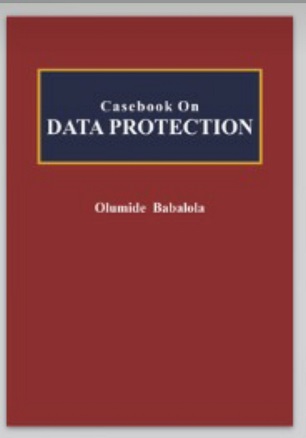
See page 442 of my Casebook on Data Protection, ISBN 978-620-2-55355-1  

Legal basis for publication

Under the NDPR, personal data can only be processed (either by collection, storage, use, transmission, publication, disclosure, dissemnitaion, destruction and/or loss etc) where there exists a lawful basis for such processing. (See article 2.2). Of all the grounds of lawful processing, the one that nearly supports the NBA’s publication of its members’ personal data as done by the ECNBA seems to be “where processing is necessary for the performance of contract to which a data subject is a party”  (see article 2.2(b)

The question that comes to mind from the foregoing assumption is, whether or not there exists a contract between the NBA and its members that necessitates the publication of members’ personal data on the Internet?

In Fawehinmi v NBA (1989) LPELR – 1259(SC), the Supreme Court of Nigeria, per Obaseki, JSC (as he then was) held that:

 “The Constitution of the Nigerian Bar Association is not a statutory instrument. It is not a subsidiary legislation to the Legal Practitioners Act. It is a pure and simple private document which the members of the Nigerian Bar Association were entitled to draw up in exercise of their right to provide a constitution for the Association to regulate its affairs.”

Since all members of the NBA are bound by its constitution, it is  to be conceded that, the NBA’s legal basis for processing its members’ personal data ought to be drawn from such constitution which represents an agreement (contract) between the members. See Aduasim v Emeh (2018) LPELR- 46066 (CA). I note with interest that, section 5(e)(iv) of the NBA Constitution 2015 (as amended) specifically empowers the General Secretary to keep a roll of the members.

It is also worthy of note that, while section 9(1) (2) and (4) provide for the establishment of the ECNBA and procedure for election, none of the subsections expressly provides for the publication of members’ personal data (in the form of provisional list) on the Internet. When recourse is however had to the 2020 ECNBA Guidelines (Final) (https://nigerianbar.org.ng/2020-ecnba-guidelines-final), it will be seen that, while paragraphs 8.3 provides that the branch chairmen shall confirm the personal data (full names, mobile phone numbers and active email addresses) of their eligible brach members, paragraph 8.5 empowers the ECNBA to publish the list for members to correct errors and omissions.

Thus, from the foregoing, the provision of paragraph 8.5 of the ECNBA Guidelines arguably provides a legal basis for the publication of member’s personal data on the Internet.

NBA’s obligations under the NDPR

A Data Controller’s obligation under the NDPR does not stop at the identification of a legal basis for processing data, in fact, the legal basis is the foundation on which all other data protection safeguards and duties rest.

Under article 2.4 of the NDPR, the NBA (as a data controller) is duty bound to take responsibility for the action of third parties with which it shares members’ personal data, but since it has “shared” our data with the whole World on its website, I am afraid it appears, the NBA can no longer assure us of the sanctity of our data which are now in the unguarded public domain, albeit for the “legitimate” purpose of elections. I use ‘legitimate purpose’ here advisedly especially since it is not one of the grounds of lawful processing under the NDPR unlike the GDPR which is inapplicable here.

As a data controller, the Bar is meant to publish its privacy policy (at least) on its website pursuant to article 2.5 but the last time I checked its website (https://nigerianbar.org.ng/) , I found out with avoidable despondency that Africa’s most influential Bar association does not have a privacy policy on its website. This says much about our data protection practice in Nigeria. It can however always get better!

Not only don’t we have a privacy policy, at no time, as data subjects, had the members been expressly and specifically informed that our personal data will be published on the Internet especially with telephone numbers and email addresses in violation article 3.1(1). While it may be argued that the 2020 ECNBA Guidelines constitutes information on the impending publication of personal data, same falls short of it expectations by omitting to provide safeguards on “opting out”. Since the right to vote is neither absolute (see art. 4(1)(b) of the NBA Constitution) nor can it not be waived or abandoned. Most importantly, data subjects have the right to object to processing or further processing of their data (art. 2.8), especially for the benefit of members who do not want to be part of the Bar’s electoral process, albeit unadvisable. 

By article 4.1(1) of the NDPR, the NBA ought to make public its various data protection policies but this writer is not aware of any such publication on the subject. The Bar processes the personal data of tens of thousands of lawyers spread over 125 branches but it does not have a Data Protection Officer again, this is in violation of article 4.1(2) of the NDPR, not to talk of the conduct and filing of data compliance audit and summary with the regulator as mandated by the NDPR.

Conclusion

Beyond jostling to elect any of the eminent candidates into the elective offices, it is never late too come to a party when it has to do with alignment with Global standards with respect to data protection which has been practiced in Europe since the early 70s; the Bar must lead this charge for its members to follow. It is this writer’s respectful opinion that, the General Secretary can double as our Data Protection Officer since he is the constitutional custodian of our personal data, all our data access and exit points need to be lined with our privacy notice which may be a start-up point for the Bar’s compliance with its data protection obligations and relevant regulations.

Prof. Olanrewaju Fagbohun SAN’s Review of ‘Casebook on Data Protection’ written by Olumide Babalola

Prof. Olanrewaju Fagbohun SAN’s Review of ‘Casebook on Data Protection’ written by Olumide Babalola

Introduction

A defining feature of the continuing transformation of our world is the rapid pace of technological change, which has also engendered a heavy reliance on data (both structured and unstructured) on a day-to-day basis.  Whether we are talking of personal data, transactional data, web data or sensor data, there is no denying the fact that data now lies at the heart of government, business and indeed our society.  It is against the backdrop of the consequences of data collection and its implications for societal development that we must appreciate Casebook on Data Protection.

Data mining and data aggregation have become indispensable tools being used to target individuals by both advertisers and organised crimes. Aggregation is with reference to the compilation of individual items of data, databases or datasets to form large datasets. Data mining, on the other hand, involves the processing of a large dataset using tools to search for particular words or phrases, then refining the search with combined search terms to find individual records of interest. Beyond the nuisance of intrusive and aggressive marketing by organizations and companies, of much more serious concern is the use to which organised crime oppressive regimes, terrorist organizations, private investigators and investigative journalists can put data sources to target people and groups for nefarious purposes.

From credit cards to medical and marital information, sensitive personal information and details of children, family members and friends, all can be subject of internet identity theft, fraud and blackmail as a consequence of data mining. Thus, when the author, Olumide Babalola requested me to review Casebook on Data Protection, I did not hesitate for a moment.  Indeed, there could not have been a better time for a book that will address the complex issue of data protection than now when COVID-19 distancing policies are accelerating the digital transition.

The author was bold and assertive on how he came about the idea of the book.  In the Preface, he resolutely opines:

As a privacy practitioner, I had been frustrated a number of times by the lack of apt authorities to back up my submissions on issues bordering on data protection, being an emerging field, the world over. However, when during the COVID-19 lockdown from the last week of March, 2020, I found myself pooling together foreign decisions on the subject, the idea of this book became conceived on the 57th case.

Reading through the Preface, one detects the author’s concerns for the governance regime of data protection. The reason for complexity and challenge of regulation is not far-fetched. Data is global: mobile networks, multiple apps, and interactive databases that feed on data are located in a cloud where national boundaries have little meaning. Yet, data regulation on the other hand is essentially national, controlled by State and Federal governments whose traditional authority starts and stops at the borders of national jurisdiction. Consequently, even with the way digital technology is globally driving the data revolution, the governance regime and legislative approach to the unfolding developments are still guided by the dynamics of politics, cultural differences and global economic inequality. These in themselves are not necessarily problematic. However, what they present is a patchwork of approaches.

Insights into Casebook on Data Protection

To seek to offer comments on every segment of a 659-page book would certainly be tedious. Thus, what I will be offering is a brief overview, the goal of which is to whet the appetite of each and every one of us to appreciate what this addition to legal jurisprudence offers, and how we can fully amortise its benefits.

The book is divided into fourteen chapters.  After an introduction that traces the brief history of data protection in Nigeria, separate chapters are devoted to Definitions, Relationship with other rights; Principles of Data Protection; Exceptions and Derogation; Employment Data; Sensitive Data; Transfer of Data to a Foreign Country; Liability of Data Controllers; Data Subject’s Rights; Data Breach; Remedies; Data Property Rights; Supervisory Authority and Appendices that feature the Nigeria Data Protection Regulation and the NDPR Implementation Framework.

The approach adopted by the author is to introduce what the chapter is about, followed by the facts of the case, the decision of the court, and in some situations, some explanation on the case by way of commentary. It’s a form of digest organised by way of summary of facts and headnotes. In clear anticipation of criticisms that may trail the commentaries as not being argued discursively and academically, or that the author omitted to state his views on points of law where there is no authority or the cases reported are difficult to reconcile, or even a general view that the book did not offer a comprehensive view of the law relating to data as a traditional text would do, the author in his Preface acknowledges:

In order to manage the expectations of readers, it must be noted that, this book neither pretends to be a comprehensive text on the subject nor on academic or otherwise review of the decisions featured therein, rather, it remains casebook of verbatim pronouncements of the courts on data protection.  Hence, it is more intended as a practice-reference book and users are advised to read the full decisions for a comprehensive understanding of the court’s reasoning and arguments of parties.  It is also advisable to consult other more comprehensive text books on data protection for in-depth understanding of the subject, especially on areas not captured by the decisions featured.

The author again emphasized the above in the first two paragraphs of chapter one, thus, putting no one in doubt that his goal is to aid the busy practitioner by providing him with relevant and readily accessible resource material from which he can locate discussion of a legal issue in this area of law which is gradually emerging in Nigeria.  This being the object of the author and the clearly identified limits of the book, one can say he has generally achieved the set goal.

Perhaps, it is also with the busy practitioners in mind that the author felt each chapter should be as complete and self-contained as possible. In this respect, the core of chapter one is the way it gave the real picture and current position of efforts at enacting legislation on data protection in Nigeria.  The issuance of the Nigeria Data Protection Regulation (NDPR) by the National Information Technology Development Agency on 25 January 2019 represents the current state of legislation in this field. Chapter two which deals with Definitions features four cases where the courts had opportunity to define a number of data protection terminologies that are commonly in use.  Beyond definitions, you also find obiter dicta of the court on varied issues relating to the need to maintain a balance between data protection and freedom of expression, and the need for proportionate sanctions against unlawful processing of data among others.

In chapter three, the author features cases that espoused the interplay of data protection with other sensitive rights such as freedom of expression, intellectual property rights, freedom of information, right to effective remedy, and right to freedom of religion.  Chapter four presents an overview of the seven key personal data processing principles under the European Union General Data Protection Regulation (GDPR). The author not only shows that these same principles are what the NDPR has reduced to four, he equally presents relevant judicial decisions touching on these principles.

The exceptions and derogations to data protection are the focus of chapter five.  The author clarifies that while the GDPR, in its application, exempts activities such as crime prevention, national security, purely personal or household activities and activities carried out for journalistic, academic or literary expression, the NDPR only expressly provides for exception with respect to transfer of data to a foreign country. The author brilliantly noted how some of the exceptions not provided for under NDPR have been governed by section 45 of the Constitution. The chapter features about twenty-one cases that dealt with the different exceptions under the GDPR. Chapter six gives attention to broad distinction between the treatment of employees’ personal data under the GDPR and the treatment under the NDPR.  This is followed by about thirteen judicial decisions that considered the positions under the GDPR. Chapter seven relates to sensitive personal data and judicial decisions interpreting how it can lawfully be processed.

In Chapter eight, the reader is taken through provisions of the NDPR on transfer of data to a foreign country (third countries or to international organizations). It considers the approach under EU law, and how the courts have construed the phrase “adequate level of protection” which the foreign country must ensure for a transfer to take place. In Chapter nine, the author discusses the liability of controllers i.e. the obligations and liabilities that come with a data controller’s influence on personal data, and presents the decisions on data subject’s rights and their enforcement in Chapter ten.

Chapter eleven is on the very important issue of data breach and applicable sanctions. Data breach has been defined as the unlawful and unauthorised acquisition of personal information that compromises the security, confidentiality or integrity of personal information.  It features the interesting case of WM Morrison Supermarkets Plc v. Various Claimants. It is a year 2020 decision of the UK Supreme Court. Chapter twelve is on remedies.  Among the interesting cases featured is that of Richard Lloyd v. Google LLC in which Lloyds filed a class action on behalf of more than 4 million Apple iPhone users. He alleged that Google secretly tracked some of their internet activities, for commercial purposes in 2012.

In Chapter thirteen, the reader is taken through judicial decisions on the property value (if any) of personal data. The final chapter features decision on supervisory authorities in relation to their expected independence and cooperation.

Conclusion

Casebook on Data Protection without doubt is a remarkably useful collection of cases that fills a gap in legal literature in a rapidly developing subject of far-reaching importance.  For this, the author, Olumide Babalola deserves our commendation.  The cases are drawn from a great number of sources from all quarters of the globe, hence the author’s note in the Preface that while the cases are not binding on Nigerian courts “…they however offer very useful guidance especially where the wordings of our relevant legislations are similar to their foreign counterpart interpreted”.

As may sometimes be inevitable in a production of this volume, a number of typographical errors such as “Pata Protection” instead of “Data Protection”, “Data Dontrollers” instead of “Data Controllers”, “Data Dreach” instead of “Data Breach”, (see the Table of Contents) are noticed, and to which the author must avert his mind in the next edition. These errors however do not detract from the fact that this is a valuable book.  Overall, the book sets us on the right path towards a better understanding of Data Protection in Nigeria. It deserves the widest readership.

Chief Yomi Alliyu SAN hails Funke Adekoya SAN says Dele Adesina is the best candidate by far.

Chief Yomi Alliyu SAN hails Funke Adekoya SAN says Dele Adesina is the best candidate by far.

Anti Funke, I am sad reading this and I know the same is applicable to numerous supporters in whose hearts you have created a larger than life image. You can NEVER be a traitor or seen by anybody as such.

You are one of the best that Yoruba race has ever produced。Your achievements locally and internationally speak volumes! Let me borrow the words of the late sage, Chief Obafemi Awolowo, in referring to you, ma, as “jewel of inestimable value” to Yoruba race!

I fell in love with your idea due to dexterity you exhibited at the Kaduna Conference (1988 or 89?) when Rotimi Akeredolu SAN (Aketi) contested and stepped into the shoes of PRO you just left!

I stuck to you and your idea because of your oratorical dexterity and ambient erudition, albeit without clinching to u physically. I don’t know your house or chamber but I appeared before you at LPPC about thrice and without knowing me as your ardent supporter your Committee scored me “very high”!
That is u Anti Funke!

I fought behind you that you had no hands in fighting your race because of “misdemeanour” of the past by the beneficiary of their common decision. Now I am hands down. How I wished you had shown interest in contesting the election!
Anti Funke, we went for the best and we are sure of victory since a good product needs no advert!

However, I sincerely plead with you to forget the past and refuse the temptation to throw away the baby with the bath water. The baby this time is not DASAN but common good of Yorubas! DASAN/AJIBADESAN CASE will soon become history! After Mama Priscilla we all look up to you for leadership in Southwest. Taa ba ni kaa begi n’igbo, Anti Funke, a be eeyan mo! Eyin agba tun p’owe pe, “t’aaba binu ka ma se f’aso ya”! Maami, e je bure!

This isn’t for the election purpose as I said earlier. Let your candidate and Yoruba adopted candidate go for the election. But thereafter let peace return to the House of Oduduwa. In 6 years time it will be the turn of Osun that has NEVER produced NBA President and so far Akinboro SAN is the uncrowned prince unless Egbe decides otherwise but definitely it is the turn of Osun State! Edo and Delta should be encouraged to continue to bring up candidates against the 6 other States. It augurs well for democracy.

My sister, I sincerely apologise for coming out openly to address you, ma. I do this because I dont want to be misquoted in this period when WhatsApp are being hacked. Even now you will be amazed with the heading social media lawyer-journalist will give this family discourse!

Elenu rirun lo saa ni amun iya re!
Anti Funke, I love you and I will admire you forever! Greetings to your candidate too!

*I support the best by far, *DELE ADESINA, SAN!*

Chief Yomi Alliyu SAN

Compulsory Licensing Of Patents As A Palliative To Covid-19 Pandemic

Compulsory Licensing Of Patents As A Palliative To Covid-19 Pandemic


COMPULSORY LICENSING OF
PATENTS AS A PALLIATIVE TO COVID-19 PANDEMIC[1]

 The
disruption occasioned by the corona virus pandemic globally is the defining
occurrence of our time. It has affected all spheres and sectors of the global
society, of which the intellectual property terrain is not an exception. With
the announcement of the World Health Organisation (WHO) multi-country clinical
trials termed “Solidarity Trials”[2] and increased funding of various
research groups around the world, a cure is imminent. However, this possible
cure raises some intellectual property rights concerns regarding the protection
of the exclusive patent rights embedded in the inventions of new drugs,
modifications of previously existing drugs or novel medical testing equipment.
Some of the drugs approved for clinical trials by WHO already possess patent
protection, like Remdesivir,[3] 

and attempts have been made in some
countries, like China, to patent similar Covid-19 treatment drugs.[4] This has sparked a lot of debate by
members of the public who fear that patent owners of essential inventions may
abuse their exclusive rights to such patents for the purpose of increasing
profitability. To address a problem of this nature, various international
instruments and treaties[5] signed by several nations,[6] introduced the concept of compulsory
licensing of patents to permit the exploitation of the exclusive rights held by
a patentee over an invention, without necessarily obtaining his consent.[7] However, contrary arguments have
arisen on the fairness of such measure on patent owners, its disincentive to
innovation and hindrance to the right of patent exclusivity. In light of this,
one uniform question resonating in the minds of the public is whether these
arguments are still viable with reference to the use of such essential inventions
during extreme emergencies like the Covid-19 pandemic.

UNDERSTANDING THE NATURE OF
PATENTS

A patent is an exclusive
protection granted to an inventor as a reward for his/her ingenuity or
intellectual creativity. This monopolistic right held by a patentee does not
exist in perpetuity; it subsists for a specified duration of time after which
it falls into the public domain. The rationales for such monopoly is to promote
economic and technological development, encourage creative efforts and to
enable the inventor derive benefits from his invention before it falls into the
public domain. In most jurisdictions, with the aid of international treaties,[8] the duration of a patent typically
spans for at least 20 years. In Nigeria, a patent expires at the end of the
twentieth year from the date of the filing of the patent application.[9]

It is pertinent to note that
it is not all inventions that are patentable. The Agreement on Trade Related
Aspects of Intellectual Property Rights (TRIPS Agreement) provide that “patents
shall be available for any inventions, whether products or processes, in all
fields of technology, provided that they are new, involve an inventive step[10] and are
capable of industrial application
.”[11]  Also, the Patents and Designs Act
(PDA) in Nigeria stipulates similar provisions on the patentability of an
invention, the PDA provides that “an invention is patentable if it is new,
results from inventive activity and is capable of industrial application; or if
it constitutes an improvement upon a patented invention which is similarly new,
results from inventive activity and is capable of industrial application
.”[12]


RIGHTS CONFERRED BY A PATENT

The exclusive rights to a
patent conferred on a patentee could be in relation to either a product or
process. In the instance where the patent rights granted relates to a product,
the patentee has the exclusive right to prevent third parties from making,
using, offering for sale, selling, importing or stocking the resulting patented
products for the purpose of sale or use without obtaining its authorization.[13] In the instance where the patent
rights are granted as a result of a novel process created by the patentee, the
patentee has the exclusive right to exclude third parties from using or
applying the process, offering the process for sale, selling, or importing the
product obtained directly from the use of its process without its consent.[14] In addition, patentees also have
the exclusive right to assign the patent, or transfer the patent by succession,
and to conclude licensing contracts.[15]

It should be noted that
these exclusive rights are not without limitations or exceptions. The rights
under a patent in Nigeria, extends only to acts done for industrial or
commercial purposes and does not extend to acts done in respect of a product
covered by the patent after the product has been lawfully sold in Nigeria,
except in so far as the patent makes provision for a special application of the
product, in which case the special application will continue to be reserved to
the patentee.[16]

COMPULSORY LICENSING OF
PATENT

Despite the exclusive nature
of the rights bestowed on a Patent owner, there are a number of limitations to
those exclusive rights. Compulsory licensing is one of such limitations.
Compulsory licensing of a patent involves the use of a patented product or
process without necessarily obtaining the consent of the Patent owner. The
concept of compulsory licenses has been recognized by various international
treaties and agreements. Article 5(2) of the Paris Convention for the
Protection of Industrial Property[17] empowers each contracting state
party to the convention with the right to “grant compulsory licenses to
prevent abuses which might result from the exercise of exclusive rights
conferred by the patent
…” Also, Article 31 of the TRIPS Agreement
authorizes all member states to the agreement to use compulsory licenses
without the authorization of the right holder in appropriate circumstances.
Paragraph 5(b) of the Doha Declaration[18] similarly states that “each
member has the right to grant compulsory licenses and the freedom to determine
the grounds upon which such licenses are granted.

This kind of license is
usually applied to and granted by the court based on certain specified grounds[19] or authorized by the Minister in
the interest of the public. When issued, the license is non-exclusive, it does
not permit the compulsory licensee to carry out importations or grant further
licenses except in limited circumstances.[20] Although it is usually issued after
the expiration of a period of four years after the filing of a patent
application or three years after the grant of a patent,[21] there are other instances when it
can be issued before the expiration of the four year period. One of such
instances is governmental use of a patented invention as an emergency resort
during a period of emergency like the COVID-19 public health emergency.
Paragraph 4 of the Doha Declaration expressly permits WTO members to take
measures to protect the public health of its citizens. Similarly, Paragraph 16
of the Patents and Designs Act in Nigeria also stipulates when a compulsory
license can be issued for public health reasons.

In situations of a public
health emergency and in the interest of the public, the Minister is empowered
to authorize any person to purchase, make, exercise or vend any patented
article or invention for the service of a government agency in Nigeria.[22] Such powers are exercised by the
Minister when the minister is satisfied that such patented article or invention
is necessary or expedient “…for the maintenance of supplies and services
essential to the life of the community; or for securing a sufficiency of
supplies and services essential to the well-being of the community…
[23]

However, the enforcement of
provisions in various patent laws relating to compulsory licensing during situations
of an emergency is not recent. On June 8, 2005, the Eritrean Minister of Health
relied on the provisions of the TRIPS Agreement and Doha Declaration to issue a
compulsory license for the importation of patented antiretroviral drugs in
Eritrea.[24] This issuance was following his
earlier declaration of a state of emergency on the spread of HIV/AIDS in
Eritrea.[25] He stated that the antiretroviral
medicines would be used non-commercially to treat persons diagnosed with
HIV/AIDS in their country.[26] Similarly, on 26 October 2005,
following a declaration of a state of emergency on the spread of HIV/AIDS in Ghana,
the Ghanaian Health Minister issued a compulsory license for the importation of
patented generic HIV/AIDS medicines in Ghana.[27] He relied on the state’s membership
of World Trade Organisation (WTO) after carefully considering two of WTO’s
texts, being the TRIPS Agreement and Doha Declaration.[28]

Also, the Taiwanese
government issued a compulsory licence for the generic production of Tamiflu,
a patented drug owned by the pharmaceutical manufacturer, Roche, for the
treatment of persons diagnosed with the avian flu in order to ensure the
country has sufficient quantities of the drug in anticipation of a foreseeable
pandemic.[29]

More recently, following
WHO’s declaration of the corona virus as a global public health emergency,[30] several countries began taking
pre-emptive measures by issuing compulsory licenses and amending existing laws
to accommodate the issuance of compulsory licences in response to the ongoing
pandemic. On 18 March 2020, Israel issued compulsory patent licenses for the
importation of lopinavir/ritonavir, which is a patented HIV
medicine and one of the approved testing drugs by WHO, for the treatment of its
corona virus patients.[31] On 25 March 2020, the Canadian
government amended its existing laws to expedite the issuance of compulsory
licenses on patented inventions necessary for the treatment of Covid-19 in
Canada.[32] Similarly, the Ecuadorian
government approved a resolution in its legislative committee on compulsory
licensing of patents relating to Covid-19 technologies.[33]

CONCLUSION

Irrespective of the
exclusive nature of patented inventions, such monopolistic rights are not
without limitations. During periods of emergencies, like the current public
health emergency occasioned by the Covid-19 pandemic, the government is
empowered through a system of compulsory licensing to interfere with exclusive
patent rights over essential inventions in the interest of the public.[34] The arguments raised by various
creatives on the resultant effect of such measures as a disincentive to
innovation and a clog on patent exclusivity rights can be resolved with the
payment of appropriate compensation. The provisions in some of the
international treaties relating to patent stipulate that “each member has
the right to grant compulsory licenses and the freedom to determine the grounds
upon which such licenses are granted.”[35]
 Taking
a glance at what is obtainable in some countries, royalties or lump sum
payments can be made to patent owners whose medical inventions are
non-voluntarily licensed on public interest grounds, to compensate them for the
use of their patents, their ingenuity, and the amount of funding expended
during the development stage of such inventions.[36] The current Patents and Designs Act
in Nigeria which precludes any payments to the patentee whose invention has
been compulsorily licensed on public interest grounds should be amended to
accommodate payment of reasonable compensation to patentees.[37]

Also, patentees could
consider the idea of voluntary licensing of their patent rights and entering
negotiations with relevant authorities once they discover that their inventions
are needed in periods of emergencies, as part of their civic duties to the
state. Instead of viewing compulsory licensing as a hindrance on their
exclusive rights they could consider it as a fulfilment of their collective
social responsibility to their community and use this medium to negotiate other
kinds of benefits from the government, like tax reductions and other
incentives, in exchange for access to their exclusive rights. In this regard,
the need to engage the services of an intellectual property lawyer,
well-grounded in the field of patent rights protection, would be relevant in
negotiating and drafting such agreements.

__________________________________________________________________

For further information on
this article and area of law, please contact Sandra Eke at:

234.                    
P. A. Ajibade & Co., Lagos by telephone
(+234.1.460.5091, 460.5092),

Mobile (+234.703.385.7874;
+234.811.249. 1286) or

Email (seke@spaajibade.com)

www.spaajibade.com

[1]      
Sandra Eke, Associate Intellectual Property & Technology Law, SPA Ajibade
& Co., Lagos, Nigeria.

[2]      
WHO, “WHO Director-General’s opening remarks at the media briefing on
COVID-19
” available at: https://www.who.int/dg/speeches/detail/who-director-general-s-opening-remarks-at-the-media-briefing-on-covid-19—18-march-2020 accessed
15 April 2020.

[3]      
Remdesivir, a Gilead product originally developed for other viral infections,
including Ebola and Marburg virus, is one of the drugs approved  by WHO
for clinical trials for Covid-19. However, Remdesivir is widely patented across
various countries in the world. See Medicines Law & Policy, “Covid-19 and
the comeback of compulsory licensing” available at: https://medicineslawandpolicy.org/2020/03/covid-19-and-the-come-back-of-compulsory-licensing/ accessed
14 April 2020.

[4]      
IAM, “Wuhan lab says it will seek patent protection of Gilead antiviral
available at: https://www.iam-media.com/coronavirus/wuhan-lab-says-it-will-seek-patent-protection-of-gilead-antiviral accessed
17 April 2020.

[5]      
Like the Trade Related Aspects of Intellectual Property Rights (TRIPS
Agreement) 1994, Annex 1C of the Marrakesh Agreement Establishing the World
Trade Organization; Paris Convention for the Protection of Industrial Property
1883, 21 U.S.T. 1583 and 24 U.S.T. 2140, T.I.A.S. No. 6923; and the Doha
Declaration on the TRIPS Agreement and Public Health 2001, WTO Doc. WT/MIN
(01)/DEC/1, 41 ILM 746.

[6]      
See WIPO, “WIPO Administered treaties; contracting parties” available
at: https://www.wipo.int/treaties/en/ShowResults.jsp?lang=en&treaty_id=2 accessed
13 April 2020.

[7]      
The Center for Internet and Society, “Grounds for Compulsory Patent
Licensing in United States, Canada, China, and India
” available at: https://cis-india.org/a2k/blogs/grounds-for-compulsory-patent-licensing-in-us-canada-china-and-india#_ftn40 accessed
14 April 2020.

[8]      
For instance, Article 33 of the Trade Related Aspects of Intellectual Property
Rights (TRIPS Agreement) provides that “the term of protection available
shall not end before the expiration of a period of twenty years counted from
the filing date
.”

[9]      
S.7 (1) Patents and Designs Act (PDA), Cap P2, LFN 2004.

[10]    
The TRIPS Agreement also provides that the term “inventive step” may be
deemed to be synonymous with the term “non-obvious.” That is to say that
if it were obvious to a person of ordinary skill in the field concerned, it
would not progress to the stage qualifying for patent protection.

[11]    
Article 27(1) of the TRIPS Agreement.

[12]    
S.1 (1) PDA.

[13]    
See S.6 of PDA and Article 28 (1) of the TRIPS Agreement.

[14]    
Ibid.

[15]    
Article 28 (2) of the TRIPS Agreement.

[16]    
S.6 (3) of PDA.

[17]    
The Paris Convention is an intellectual property treaty covering industrial
property: patents, trademarks, industrial designs, utility models, service
marks, trade names, and geographical indicators. See, WIPO, “Summary of the
Paris Convention for the Protection of Industrial Property
(1883)” available at http://www.wipo.int/treaties/en/ip/paris/summary_paris.html accessed
15 April 2020.

[18]    
WHO, “The Doha Declaration on the TRIPS Agreement and Public Health 2001” available
at: http://www.who.int/medicines/areas/policy/doha_declaration/en/ accessed
15 April 2020.

[19]    
See Para 1, Pt. 1, Schedule 1, PDA.

[20]    
Para 6, Pt.1, Schedule 1, PDA.

[21]    
Para 1, Pt. 1, Schedule 1, PDA.

[22]    
See Para 15 and 20, Pt. 2, Schedule 1, PDA.

[23]    
Para 20(b) and (c), Pt. 2, Schedule 1, PDA.

[24]    
NLIPW Patents Law, Vol. 1, and No.9, available at: https://nlipw.com/10-examples-of-the-use-of-compulsory-licenses-in-africa-2/ accessed
14 April 2020.

[25]    
Ibid.

[26]    
Ibid.

[27]    
Ministry of Health Ghana, “Notification of Emergency and Issuance of
Government Use of License
” available at: http://www.cptech.org/ip/health/cl/Ghana.png accessed
15th April 2020.

[28]    
Ibid.

[29]    
ICTSD, “Taiwan issues Compulsory License for Tamiflu” available
at: https://www.ictsd.org/taiwan-issues-compulsory-license-for-tamiflu accessed
14 April 2020.

[30] BBC
News, “Coronavirus declared global health emergency by WHO” available
at: https://www.bbc.com/news/world-51318246 accessed
15 April 2020.

[31]    
The Emergency Department, Ministry of Health, “A Permit to the State to
Exploit an Invention Pursuant to Chapter Six, Article Three of the Patents Law
5727-1967
” available at: https://www.keionline.org/wp-content/uploads/A-Permit-to-the-State-to-Exploit-an-Invention-Pursuant-to-Chapter-Six-Article-Three-of-the-Patents-Law-5727-1967.pdf?_sm_au_=iVVvns5WHQ11sMDPvMFckK0232C0F accessed
15 April 2020.

[32]    
IAM, “The key covid-19 compulsory licensing developments so far
available at: https://www.iam-media.com/coronavirus/the-key-covid-19-compulsory-licensing-developments-so-far accessed
17 April 2020.

[33]    
Knowledge of Ecology International “Legislative Committee in Ecuador
approves resolution on compulsory licensing of patents relating to the
coronavirus
” available at: https://www.keionline.org/32429 accessed
17 April 2020.

[34]    
Ibid 20.

[35]    
Paragraph 5(b) of the Doha Declaration and Art. 31(h) of the TRIPS Agreement.

[36]    
A number of countries who issued compulsory licenses on HIV/AIDS drugs in the
past years, set royalty rates for the use of such licenses. Malaysia set a
royalty rate of 4% for such licenses; Mozambique established a 2% royalty;
Zambia set a 2.5% royalty; and Indonesia set a 0.5% royalty. See WHO,
“Remuneration guidelines for non-voluntary use of a patent on medical
technologies” available at: https://www.who.int/hiv/amds/WHOTCM2005.1_OMS.pdf accessed
17 April 2020.

[37]    
See S.17 (d) of the PDA.

Source: www.spaajibade.com