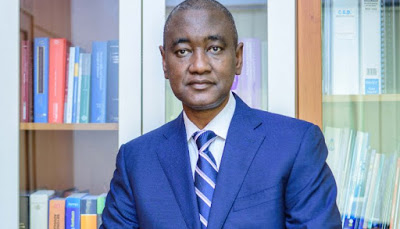
Well, first of all thank you very
much for arranging this interview and for featuring me in your magazine. I
started my legal career in the early 80s after graduating from Ahmadu Bello
University Zaria in 1979. I was called to the Bar in July 1980. I did the
National Youth Service in Rivers State between1980-1981. I returned to the
Ministry of Justice Kano and remained in the service of the Kano State until
1993.
My early legal career was in thus
in the public service. I had the privilege of working with many bright minds.
At the ministry my colleagues included Prof. Mohammed Tabiu, Tijjani Borodo,
Mrs Maryam Uwais, Mr S. Saeda, SAN and many others who left to pursue various
other careers. We worked under the tutelage of distinguished lawyers like S.U.
Minjibir (later Chief Judge of Kano), R.D. Mohammad (later JCA) now retired.
Late S.C. Yusuf (later Chief Judge of Kano). On the Kano bench we had eminent
Justices like Dahiru Mustapha, (former CJN), Justice Alooma Maryam Mukhtar
(former CJN), Justice Aikawa, late Justice Rowland later JCA). Justice
Fernandez who later moved to the Lagos judiciary. Kano had been home to very
many prominent lawyers. Many prominent Nigerian lawyers or jurists had a stint
in Kano. The list was very impressive: Belgore, Akanbi, Noel Grey, Uwais,
Fabeyi, Kaloma, Majiyagbe etc. The standard of practice was extremely high. I
dare say Kano at the time was the hub of commercial and criminal justice
practice in Northern Nigeria. The law reports bear this out.
Outside Kano, I was lucky to work with very many prominent lawyers.
Back in the early 80’s I appeared against HE Judge Bola Ajibola in a famous
case. He was then in private legal practice. From then onwards he took interest
in me and became a mentor. Our relationship continued when he became of
Minister of Justice and even when he moved to the World Court in The Hague. I
visited him there in 1994. He personally took me around to meet the Justices of
the Court and showed me around the impressive facilities of the
Court. The only other significant issue I can mention in the
evolution of my legal career was that I met my wife Justice Pat Mahmoud during
our youth service in Port Harcourt. We got married in 1983 and she moved to
Kano in January of that year. We worked together in the Ministry until she
joined the Kano bench in Dec. 1991.
I retired from public after
serving as Attorney General of Kano 1993 luckily at the age of 36 or so. We
then jointly founded the law firm of DIKKO & MAHMOUD in November of that
year. We started the practice with Alh. A.B. Dikko who had just then retired as
Attorney General of Kebbi. As you can imagine, the two or so decades have
witnessed tremendous changes in legal practice. There is a paradox of some
sort, if you like. At some levels, there has been huge transformation in the
nature of legal practice, a lot of positive changes, we have new, bigger and
better managed law offices. At the same time the quality of legal training,
standards of ethics have gone down considerably.
How Can Bar
Associations and Regulators promote professional excellence:
I think this question is an
extremely important one. It raises fundamental question about the structure and
the organization of the legal profession in Nigeria. For many years we have
been grappling with declining standards in the legal profession. There are
serious ethical issues. There are also serious complaints about professional
misconduct amongst lawyers which tend not to be addressed swiftly. The time has
come when should be asking some hard questions. We need to interrogate the
architecture of the regulation profession in our country. In the UK for
instance, the Legal Services Act 2007 introduced major reforms in the structure
of the regulation of the legal profession in that country. The legal profession
was no longer to be self -regulating. The representative arm of the profession
was separated from the regulatory arm. The Legal Services Board acts as
overarching regulator. The Bar Standards Board regulates the Bar with the Bar
Council remaining as the representative arm. The representative arm for the
solicitors is Law Society and the Solicitors Regulatory Authority regulates
them. The question of course for is: is the existing system outdated? Do we
need a new representative and regulatory structure for the legal profession in
Nigeria? Successful reforms have been undertaken in many other
countries, and even in our sister African countries for instance Kenya, Ghana
have all embarked on serious reforms. We should examine their experiences and see
what we can learn from them. The exponential growth of the legal profession in
Nigeria, now the largest in Africa, suggests to me that we need to review the
system we have inherited essentially since our colonial days.
How do ensure that the quality of
legal education is improved and tailored to meet our national aspirations and
development goals? How do we ensure that the business of legal practice that is
delivery of legal services is properly regulated such that the consumers of
such services are assured of consistently good services? How do we ensure that
ethical standards are maintained at high levels and breaches are swiftly
addressed? How do we ensure that the legal profession remains alive
to its responsibility of safe guarding the institutions of justice, monitoring
their efficacy, guaranteeing access to justice and promoting the rule of
law? The challenges we are facing today call new and more
innovative approaches if we are to remain relevant as a profession.
There is a lot of
concern as what appears to be seeming rot in the Nigerian justice
system. Prosecution of criminal cases, especially corruption
related offences leaves much to be desired and Nigerians are losing confidence
in the judiciary? What is your assessment on the state of our justice sector?
I believe it is obvious to most
observers that the justice sector in Nigeria and in particular the criminal
justice administration system has reached a level of dysfunctionality that is
unacceptable. It is not consistent with the working of a modern democratic
state. Nowhere is this more evident than in the clear inability of criminal
justice institutions to effectively deal with corruption cases. If this is not
corrected, it portends great danger for the country. It is embarrassing that we
have seen far greater results in trials of high profile corruption cases
emanating from Nigeria in foreign courts than in our domestic courts. Last year
the Administration of Criminal Justice Act was passed. It is perhaps too soon
to judge its efficacy. That aside, I think what is needed are perhaps much
deeper reforms which will focus on several elements: bringing attitudinal
changes in the legal profession; aligning resource allocation to properly equip
the agencies of the justice sector; and dismantling or rupturing the current
veneer of opaque rules or ethos that impede the tackling of corruption in the
legal profession including the judiciary.
I think we have a historic
opportunity to face these challenges now. The convergence of economic
difficulties that make the rentier state model unsustainable and the recent
emergence of political leadership with clear popular legitimacy that appears
serious on these issues gives us a golden opportunity for system shake-up.
Unfortunately, the administration has lost a bit of time, but I think it is
doable. The legal profession should lend its weight behind this.
What role do
alternative dispute resolution and judicial case management play in
administration of justice:
Alternative Dispute Resolution
(ADR) offers a huge potential for off-loading and relieving the already
overburdened court system. It offers a more effective, speedier system for
resolving disputes. Besides, there are many disputes, say in the
commercial world or family law that are not amenable to effective resolution
through an adversarial and slow justice system of the courts. What
is needed in my view is enlightenment and education of the users of the justice
system to appreciate and accept ADR. Lawyers need to be embrace the culture and
ethos of ADR. Many Nigerian lawyers pay lip service to ADR. We continue to
approach ADR with a litigation culture. ADR now has become another layer in the
tedious and slow process of litigation. We need to invest
sufficient resources to train lawyers and also to enlighten users. We also need
to provide new and improve existing facilities in our arbitral institutions as
well as provide the supportive personnel and services. Nigeria needs to sell
itself as a friendly center for Alternative Dispute Resolution. Unfortunately, in
the last several years, there is hardly any major arbitral award that has not
ended up in court. This is not good for the country. It negatively impacts on
the perception of Nigeria’s business climate. Slow and costly dispute
resolution regime adds ultimately to cost of doing business. Judges must and
should play their role of promoting ADR and respecting its outcome. They need
to be equipped to do so. The Government should make this top-priority.
With regards to case management,
the main issue is that efficient case management should be an effective tool
for better deployment of judicial time and resources. A good case
management system equips the Judge to take charge of the litigation process,
save cost and ensure that cases are more efficiently managed and tracked. Here
technology is key. I should point out the basic strategy have been developed in
various policy documents. What is required is implementation. I had the
privilege of working in the Judiciary Sub-Committee of the Vision 2020-20
Committee. The issues around ADR and case management including deployment of
technology in the court rooms were identified and policy framework developed.
We need to work to implement these.
What do you consider
the opportunities for Change and economic development in Nigeria?
Well as lawyers we try to focus on
the role of law as a facilitator of change and development. That indeed is the
primary purpose of law and legal institutions: to bring about happiness and
prosperity to the greatest number of people. To the extent that our country has
failed to realize its full potentials, and our people remain largely poor is a
reflection of the failure of the legal order. It is thus the task of lawyers,
jurists and legal professionals to reform the legal order to bring about the
desired change in society. Without doubt Nigeria has great new opportunities
now. It is somewhat paradoxical that the largest economy in Africa is supported
by the legal order that we have in Nigeria. What this points to, are the huge
potentials that a reformed modernized legal system and legal profession can
unleash.
After the elections last year and
the peaceful change of administration, you could see that Nigerians were proud
of their great achievement. The atmosphere was pregnant with great expectations.
This coming after the effective containment of the Ebola crises sent a message
to Nigerians: that we could do it! What was needed was the right leadership and
commitment. Nigerian lawyers can and must champion the reform of the legal
profession. This in my view is a pre-requisite for economic transformation.
There are reports of
International Law Firms seeking to enter the Nigerian legal market. Many senior
lawyers are reportedly against this incursion. Others believe it is inevitable
given the global trends. How should the NBA and Nigerian lawyers prepare for
this?
I think international law firms
are already in the Nigerian legal market. There is considerable amount of legal
work that is already outsourced in various ways to international law firms you
are referring to. This is happening in cross-border transactions, in many other
transactions in various sectors, the energy, in telecoms etc. Nigeria has been
a signatory to the WTO since 1995. It is yet to make a commitment under the
GATS to liberalize legal services. But this is a matter of time. I believe the
NBA already has a task force on this and has been working with the Ministry of
Trade and Investment trying to shape a framework or at least make inputs into
the process. The NBA and Nigerian Lawyers have to prepare for this. It will
happen. The preparation in my view has to involve short term and long term
strategies. In the short term, it is about capacity building, reorganization of
law firms, pooling resources together and developing strategic alliances and
investing in enhancing legal resources available to our lawyers. The longer
term dimensions will include reforming legal training to equip Nigerian lawyers
appropriately to be more competitive globally. We also need to look at our
legal curriculum. Nigerian lawyers in the diaspora that is those who trained or
practice abroad have a role to play. The NBA should harness their resources. I
think we should not see this just as a threat but also as an opportunity. So
long as Nigeria remains part of the global economy, we cannot insulate or
isolate the Nigerian legal profession or legal market from the effects of
globalization. We can prepare ourselves, we probably negotiate some aspects and
we can also position ourselves to take some of the opportunities. Disruptive
and innovative technologies makes an isolationist strategy futile.
The Boko Haram
insurgency has wreaked havoc in Northern Nigeria. How have lawyers practicing
in the North been able to cope with this crisis?
The insurgency has caused enormous
hardship in the country. The Northeast is of course the worst affected.
Economic and social life have been disrupted and there is currently a severe
humanitarian crisis. Lawyers like other citizens have been severely
affected. Some have lost their lives, others their means of livelihood. Many
have been forced to relocate. The courts, like other social and community
infrastructure, like schools, markets etc have shut down. Last November, some
of us accompanied Mr. Austin Alegeh, the NBA National President to Maiduguri to
attend a one-day human rights awareness workshop. And he must commended for the
brave initiative. Moving through Maiduguri and visiting some of the affected
people, injured soldiers, detainees and listening to our colleagues, we were
shocked at what we saw and what we heard. Observing the destruction
and the desolate environment was heart breaking. It was clear to me that
frankly we have not paid enough attention to the fate our colleagues not to
talk of the wider community that have been victimized by this brutal
insurgency.
NBA needs to be more actively
involved not only in supporting our colleagues, but in the whole process of
rebuilding the Northeast. We need to pay attention to the issues around the
administration of justice, the gross human rights abuses but also how to deal
with the problem of detainees. Rebuilding the justice system and dealing with
issues of transitional justice in the region are of strategic importance and a
critical element of reconstruction in the Northeast but also of avoiding future
conflicts. The NBA should provide leadership in this direction. I am happy our
President has shown leadership in this area.
Young lawyers appear
to be disenchanted. Many complain that they are not well paid and are unhappy.
What is your view on this? And what is your advice to younger members of the
profession?
The legal profession in Nigeria
has grown exponentially in the last two or so decades. I believe every year,
between five thousand to six thousand new entrants are admitted into the legal
profession. This growth has not been matched with similar growth in the
economy. Indeed in some respects, the opportunities have dwindled. Be that as
it may, the legal profession must address the issue of the welfare and
wellbeing of all lawyers especially the younger ones. This has huge implication
for the quality of services and standard of ethical behavior. If this is not
addressed, it will affect the future of the profession in the long run. I will
strongly advocate some measure of standardization. We should work to implement
minimum pay, enhance welfare and provide decent work environment. We should
formalize employment in law firms and these should be monitored. We should
explore a flexible system of licensing law offices and require them to meet
certain standards tailored to particular environments or regions. But
ultimately what is important is to create more opportunities both in the public
and private sectors for lawyers. The senior lawyers must lend their weight to
the creating more opportunities for younger members of the profession. They
should also try and mentor them and involve them in the work of their firms at
all levels.
Tell
us a little about yourself and how your career has evolved over the years.
Well, first of all thank you very
much for arranging this interview and for featuring me in your magazine. I
started my legal career in the early 80s after graduating from Ahmadu Bello
University Zaria in 1979. I was called to the Bar in July 1980. I did the
National Youth Service in Rivers State between1980-1981. I returned to the
Ministry of Justice Kano and remained in the service of the Kano State until
1993.
My early legal career was in thus
in the public service. I had the privilege of working with many bright minds.
At the ministry my colleagues included Prof. Mohammed Tabiu, Tijjani Borodo,
Mrs Maryam Uwais, Mr S. Saeda, SAN and many others who left to pursue various
other careers. We worked under the tutelage of distinguished lawyers like S.U.
Minjibir (later Chief Judge of Kano), R.D. Mohammad (later JCA) now retired.
Late S.C. Yusuf (later Chief Judge of Kano). On the Kano bench we had eminent
Justices like Dahiru Mustapha, (former CJN), Justice Alooma Maryam Mukhtar
(former CJN), Justice Aikawa, late Justice Rowland later JCA). Justice
Fernandez who later moved to the Lagos judiciary. Kano had been home to very
many prominent lawyers. Many prominent Nigerian lawyers or jurists had a stint
in Kano. The list was very impressive: Belgore, Akanbi, Noel Grey, Uwais,
Fabeyi, Kaloma, Majiyagbe etc. The standard of practice was extremely high. I
dare say Kano at the time was the hub of commercial and criminal justice
practice in Northern Nigeria. The law reports bear this out.
Outside Kano, I was lucky to work with very many prominent lawyers.
Back in the early 80’s I appeared against HE Judge Bola Ajibola in a famous
case. He was then in private legal practice. From then onwards he took interest
in me and became a mentor. Our relationship continued when he became of
Minister of Justice and even when he moved to the World Court in The Hague. I
visited him there in 1994. He personally took me around to meet the Justices of
the Court and showed me around the impressive facilities of the
Court. The only other significant issue I can mention in the
evolution of my legal career was that I met my wife Justice Pat Mahmoud during
our youth service in Port Harcourt. We got married in 1983 and she moved to
Kano in January of that year. We worked together in the Ministry until she
joined the Kano bench in Dec. 1991.
I retired from public after
serving as Attorney General of Kano 1993 luckily at the age of 36 or so. We
then jointly founded the law firm of DIKKO & MAHMOUD in November of that
year. We started the practice with Alh. A.B. Dikko who had just then retired as
Attorney General of Kebbi. As you can imagine, the two or so decades have
witnessed tremendous changes in legal practice. There is a paradox of some
sort, if you like. At some levels, there has been huge transformation in the
nature of legal practice, a lot of positive changes, we have new, bigger and
better managed law offices. At the same time the quality of legal training,
standards of ethics have gone down considerably.
How Can Bar
Associations and Regulators promote professional excellence:
I think this question is an
extremely important one. It raises fundamental question about the structure and
the organization of the legal profession in Nigeria. For many years we have
been grappling with declining standards in the legal profession. There are
serious ethical issues. There are also serious complaints about professional
misconduct amongst lawyers which tend not to be addressed swiftly. The time has
come when should be asking some hard questions. We need to interrogate the
architecture of the regulation profession in our country. In the UK for
instance, the Legal Services Act 2007 introduced major reforms in the structure
of the regulation of the legal profession in that country. The legal profession
was no longer to be self -regulating. The representative arm of the profession
was separated from the regulatory arm. The Legal Services Board acts as
overarching regulator. The Bar Standards Board regulates the Bar with the Bar
Council remaining as the representative arm. The representative arm for the
solicitors is Law Society and the Solicitors Regulatory Authority regulates
them. The question of course for is: is the existing system outdated? Do we
need a new representative and regulatory structure for the legal profession in
Nigeria? Successful reforms have been undertaken in many other
countries, and even in our sister African countries for instance Kenya, Ghana
have all embarked on serious reforms. We should examine their experiences and
see what we can learn from them. The exponential growth of the legal profession
in Nigeria, now the largest in Africa, suggests to me that we need to review
the system we have inherited essentially since our colonial days.
How do ensure that the quality of
legal education is improved and tailored to meet our national aspirations and
development goals? How do we ensure that the business of legal practice that is
delivery of legal services is properly regulated such that the consumers of
such services are assured of consistently good services? How do we ensure that
ethical standards are maintained at high levels and breaches are swiftly
addressed? How do we ensure that the legal profession remains alive
to its responsibility of safe guarding the institutions of justice, monitoring
their efficacy, guaranteeing access to justice and promoting the rule of
law? The challenges we are facing today call new and more
innovative approaches if we are to remain relevant as a profession.
There is a lot of
concern as what appears to be seeming rot in the Nigerian justice system.
Prosecution of criminal cases, especially corruption related offences leaves
much to be desired and Nigerians are losing confidence in the judiciary? What
is your assessment on the state of our justice sector?
I believe it is obvious to most
observers that the justice sector in Nigeria and in particular the criminal
justice administration system has reached a level of dysfunctionality that is
unacceptable. It is not consistent with the working of a modern democratic
state. Nowhere is this more evident than in the clear inability of criminal
justice institutions to effectively deal with corruption cases. If this is not
corrected, it portends great danger for the country. It is embarrassing that we
have seen far greater results in trials of high profile corruption cases
emanating from Nigeria in foreign courts than in our domestic courts. Last year
the Administration of Criminal Justice Act was passed. It is perhaps too soon
to judge its efficacy. That aside, I think what is needed are perhaps much deeper
reforms which will focus on several elements: bringing attitudinal changes in
the legal profession; aligning resource allocation to properly equip the
agencies of the justice sector; and dismantling or rupturing the current veneer
of opaque rules or ethos that impede the tackling of corruption in the legal
profession including the judiciary.
I think we have a historic
opportunity to face these challenges now. The convergence of economic
difficulties that make the rentier state model unsustainable and the recent
emergence of political leadership with clear popular legitimacy that appears
serious on these issues gives us a golden opportunity for system shake-up.
Unfortunately, the administration has lost a bit of time, but I think it is
doable. The legal profession should lend its weight behind this.
What role do
alternative dispute resolution and judicial case management play in
administration of justice:
Alternative Dispute Resolution
(ADR) offers a huge potential for off-loading and relieving the already
overburdened court system. It offers a more effective, speedier system for
resolving disputes. Besides, there are many disputes, say in the
commercial world or family law that are not amenable to effective resolution
through an adversarial and slow justice system of the courts. What
is needed in my view is enlightenment and education of the users of the justice
system to appreciate and accept ADR. Lawyers need to be embrace the culture and
ethos of ADR. Many Nigerian lawyers pay lip service to ADR. We continue to
approach ADR with a litigation culture. ADR now has become another layer in the
tedious and slow process of litigation. We need to invest
sufficient resources to train lawyers and also to enlighten users. We also need
to provide new and improve existing facilities in our arbitral institutions as
well as provide the supportive personnel and services. Nigeria needs to sell
itself as a friendly center for Alternative Dispute Resolution. Unfortunately,
in the last several years, there is hardly any major arbitral award that has
not ended up in court. This is not good for the country. It negatively impacts
on the perception of Nigeria’s business climate. Slow and costly dispute
resolution regime adds ultimately to cost of doing business. Judges must and
should play their role of promoting ADR and respecting its outcome. They need
to be equipped to do so. The Government should make this top-priority.
With regards to case management,
the main issue is that efficient case management should be an effective tool
for better deployment of judicial time and resources. A good case
management system equips the Judge to take charge of the litigation process,
save cost and ensure that cases are more efficiently managed and tracked. Here
technology is key. I should point out the basic strategy have been developed in
various policy documents. What is required is implementation. I had the
privilege of working in the Judiciary Sub-Committee of the Vision 2020-20
Committee. The issues around ADR and case management including deployment of
technology in the court rooms were identified and policy framework developed.
We need to work to implement these.
What do you consider
the opportunities for Change and economic development in Nigeria?
Well as lawyers we try to focus on
the role of law as a facilitator of change and development. That indeed is the
primary purpose of law and legal institutions: to bring about happiness and
prosperity to the greatest number of people. To the extent that our country has
failed to realize its full potentials, and our people remain largely poor is a
reflection of the failure of the legal order. It is thus the task of lawyers,
jurists and legal professionals to reform the legal order to bring about the
desired change in society. Without doubt Nigeria has great new opportunities
now. It is somewhat paradoxical that the largest economy in Africa is supported
by the legal order that we have in Nigeria. What this points to, are the huge
potentials that a reformed modernized legal system and legal profession can
unleash.
After the elections last year and
the peaceful change of administration, you could see that Nigerians were proud
of their great achievement. The atmosphere was pregnant with great
expectations. This coming after the effective containment of the
Ebola crises sent a message to Nigerians: that we could do it! What was needed
was the right leadership and commitment. Nigerian lawyers can and must champion
the reform of the legal profession. This in my view is a pre-requisite for economic
transformation.
There are reports of
International Law Firms seeking to enter the Nigerian legal market. Many senior
lawyers are reportedly against this incursion. Others believe it is inevitable
given the global trends. How should the NBA and Nigerian lawyers prepare for
this?
I think international law firms
are already in the Nigerian legal market. There is considerable amount of legal
work that is already outsourced in various ways to international law firms you
are referring to. This is happening in cross-border transactions, in many other
transactions in various sectors, the energy, in telecoms etc. Nigeria has been
a signatory to the WTO since 1995. It is yet to make a commitment under the
GATS to liberalize legal services. But this is a matter of time. I believe the
NBA already has a task force on this and has been working with the Ministry of
Trade and Investment trying to shape a framework or at least make inputs into
the process. The NBA and Nigerian Lawyers have to prepare for this. It will happen.
The preparation in my view has to involve short term and long term strategies.
In the short term, it is about capacity building, reorganization of law firms,
pooling resources together and developing strategic alliances and investing in
enhancing legal resources available to our lawyers. The longer term dimensions
will include reforming legal training to equip Nigerian lawyers appropriately
to be more competitive globally. We also need to look at our legal curriculum.
Nigerian lawyers in the diaspora that is those who trained or practice abroad
have a role to play. The NBA should harness their resources. I think we should
not see this just as a threat but also as an opportunity. So long as Nigeria
remains part of the global economy, we cannot insulate or isolate the Nigerian
legal profession or legal market from the effects of globalization. We can
prepare ourselves, we probably negotiate some aspects and we can also position
ourselves to take some of the opportunities. Disruptive and innovative technologies
makes an isolationist strategy futile.
The Boko Haram
insurgency has wreaked havoc in Northern Nigeria. How have lawyers practicing
in the North been able to cope with this crisis?
The insurgency has caused enormous
hardship in the country. The Northeast is of course the worst affected.
Economic and social life have been disrupted and there is currently a severe
humanitarian crisis. Lawyers like other citizens have been severely
affected. Some have lost their lives, others their means of livelihood. Many
have been forced to relocate. The courts, like other social and community
infrastructure, like schools, markets etc have shut down. Last November, some
of us accompanied Mr. Austin Alegeh, the NBA National President to Maiduguri to
attend a one-day human rights awareness workshop. And he must commended for the
brave initiative. Moving through Maiduguri and visiting some of the affected
people, injured soldiers, detainees and listening to our colleagues, we were
shocked at what we saw and what we heard. Observing the destruction
and the desolate environment was heart breaking. It was clear to me that
frankly we have not paid enough attention to the fate our colleagues not to
talk of the wider community that have been victimized by this brutal insurgency.
NBA needs to be more actively
involved not only in supporting our colleagues, but in the whole process of
rebuilding the Northeast. We need to pay attention to the issues around the
administration of justice, the gross human rights abuses but also how to deal
with the problem of detainees. Rebuilding the justice system and dealing with
issues of transitional justice in the region are of strategic importance and a
critical element of reconstruction in the Northeast but also of avoiding future
conflicts. The NBA should provide leadership in this direction. I am happy our
President has shown leadership in this area.
Young lawyers appear
to be disenchanted. Many complain that they are not well paid and are unhappy.
What is your view on this? And what is your advice to younger members of the
profession?
The legal profession in Nigeria
has grown exponentially in the last two or so decades. I believe every year,
between five thousand to six thousand new entrants are admitted into the legal
profession. This growth has not been matched with similar growth in the
economy. Indeed in some respects, the opportunities have dwindled. Be that as
it may, the legal profession must address the issue of the welfare and
wellbeing of all lawyers especially the younger ones. This has huge implication
for the quality of services and standard of ethical behavior. If this is not
addressed, it will affect the future of the profession in the long run. I will
strongly advocate some measure of standardization. We should work to implement
minimum pay, enhance welfare and provide decent work environment. We should
formalize employment in law firms and these should be monitored. We should
explore a flexible system of licensing law offices and require them to meet
certain standards tailored to particular environments or regions. But
ultimately what is important is to create more opportunities both in the public
and private sectors for lawyers. The senior lawyers must lend their weight to
the creating more opportunities for younger members of the profession. They
should also try and mentor them and involve them in the work of their firms at
all levels.
Editor’s Comment – This interview was initially published on www.linkedin.com by Lere Fashola on 08/03/2016.