What to prove to get a divorce in Nigeria | Adedunmade Onibokun

What to prove to get a divorce in Nigeria | Adedunmade Onibokun

Official statistics from
the National Bureau of Statistics suggest that divorce is exceedingly uncommon
in Nigeria with just 0.2% of men and 0.3% of women having legally untied the
knot and well under 1% of couples admit to being separated. But as a Legal practitioner,
I seek not to agree with this statistic especially as I witness many divorce
proceedings in family courts and the newspapers are regularly awash with
reports of petitions for dissolution for marriages.


Moreover, it has been
argued in several quarters that the above statistics do not put into
consideration the number of marriages conducted under traditional law and also Islamic
law.

Under Nigerian law, a statutory
marriage can only be dissolved by a court order and divorce is guided by the
Matrimonial Causes Act. It is also worthy to note that under Nigerian law, marriage
is between a man and a woman, as Nigerian law does not recognize same sex marriages
or unions. The law also further provides a 14 year jail term, for anyone who participates
in same – sex unions or relationships.

With regard to petitions
for dissolution of marriage, Section 15(1) of the Matrimonial Causes Act provides
that, a petition may be presented to the court by either party to the marriage upon
the ground that the marriage has broken down irretrievably.

Submitting a petition for
dissolution of marriage does not however automatically mean that the divorce
will be granted, as the petitioner must be able to prove sufficient grounds to
warrant the prayer being granted. If the petitioner fails to prove this, even
if the divorce is desired by both parties, the petition will be dismissed.

The grounds that a petitioner
must prove to show that the marriage has broken down irretrievably are stated
in Section 15(2) of the Matrimonial Causes Act, they include –

a.      That the other partner (i.e.
respondent) has willfully and persistently refused to consummate the marriage,
meaning that the other spouse has refused to have sexual intercourse since the
celebration of the marriage.  
b.     That since the marriage the respondent
has committed adultery and the petitioner finds it intolerable to live with the
respondent.
c.      That since the marriage the respondent
has behaved in such a way that the petitioner cannot reasonably be expected to
live with the respondent.
d.     That the respondent has deserted the petitioner
for a continuous period of at least one year immediately preceding the
presentation of the petition;
e.      That the parties to the marriage have
lived apart for a continuous period of at least 2 years immediately preceding the
presentation of the petition and the respondent does not object to a decree being
granted;
f.       That the parties to the marriage have
lived apart for a continuous period of at least 3 years immediately preceding
the presentation of the petition;
g.     That the other party to the marriage
has, for a period of not less than one year, failed to comply with a decree or
restitution of conjugal rights made under this act;
h.     That the other party to the marriage
has been absent from the petitioner for such time and in such circumstances as
to provide reasonable grounds for presuming that he or she is dead.

The dissolution of
traditional or customary marriage is however not as stringent as that under the
marriage act. A customary law marriage can be dissolved without judicial
pronouncement or intervention.

For more information about
how to get a divorce, you can talk to a lawyer or send a mail to the
undersigned.

Adedunmade Onibokun
Principal
Partner
Adedunmade
Onibokun & Co.

The solution to Nigeria’s problems | Adedunmade Onibokun

The solution to Nigeria’s problems | Adedunmade Onibokun


What
is Nigeria’s biggest problem?
What
is the single factor responsible for the myriad of socio –political and socio –
economic problems Nigeria is faced with?
Recently, I attended a social event and the
main theme was discovering Nigeria’s problems and how the youth could engineer
solutions to our various challenges. Speakers included senior lawyers,
politicians, former and current senior security personnel and members of the
civil society. I watched as each speaker put the blame on the other, the police
blaming the politicians and elite of the society, politicians blaming former
elected government officials and only a few accepting the blame for our country’s
woes.

I sat and listened, knowing that though
there were little atoms of truth in their individual arguments, all of them had
missed the mark and were off tangent. Our problems do not stem from the
political class or from the security agencies or even past presidents and
political parties. Our problem lies with every single Nigerian that make up of
the over 180 million of us.
Now, do I sound like I am off tangent
myself? Follow me a bit more before you totally judge. What I now know to be
the greatest Nigerian problem, I discovered sometime in 2013 and it came to me
during the normal course of my day but while I was on foreign soil.
I was living in London at that time while
studying as an international student for my LL.M in International Business Law
at the University of Bradford. On this jolly good day, I was walking into a building
and to my surprise, the person ahead, held the door open for me. As little and inconsequential
as this act was, it caused a stir in my heart. This person did not know me, had
never met me, was not going to get anything from me and would probably never
see me again but was kind enough to hold the door for me. This single act was
of mindfulness was so strange that it changed something inside me.
In a place like Lagos where I was coming
from, this act of kindness was very weird. It had never happened to me before. Where
I came from, the person ahead of me at the door would not have cared if the
door hit me in the face, would not have looked back for one second to be
mindful of me but would have walked on and if the door had hit me on the face, I
would have had no cause for complaint as everyone would have asked me one
question “wetin you dey look” or in other words “why were you not paying
attention to the door” or better still “am I your door man”?. If you are
reading this post I am sure you must have had a similar experience before.
Ever since that day, I have always held the
door for anyone coming behind me because I later got to notice that it was the
norm in my new environment. It was a culture to be mindful of others, a culture
of respect. Do we have a similar culture in Nigeria? No way. In Nigeria, the
culture can be described in one sentence, “GET
WHAT YOU CAN, WHILE YOU CAN, NO MATTER WHO BEARS THE CONSEQUENCES OF YOUR
ACTIONS
”.
This is why;
1.     A politician can
amass so much stolen wealth from the public purse and damn the consequences.
2.     A fellow driver in
traffic will not allow you cut into his lane.
3.     Some youths are involved
in online scams reaping innocent people off their life savings.
4.     Herdsmen will
attack the farms in other communities, have their cows eat up the crops and
kill the farmers who complain or challenge them.
5.      Policemen will assault, intimidate and extort
citizens.
6.     Tribes would be at
each other’s throats crying about marginalization and each President or
Governor will be expected and seen to cater to only the needs of his local
government or tribe.
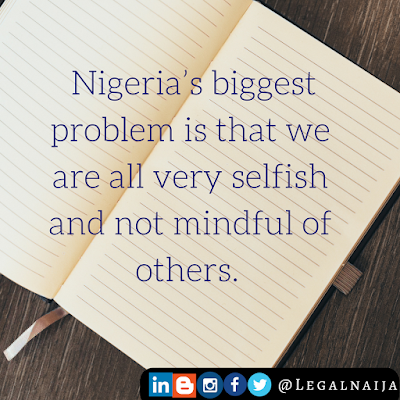
Nigeria’s biggest problem is that we are
all very selfish and not mindful of others, we do not respect others rather we
focus only on thinking about ourselves, our egos, our families, our purses and
our wants. Take something as simple as holding the door for the person coming
after you, no way; we are too busy going ahead with our personal agendas. We deliberately
do the wrong things to make life difficult for everyone else and its like that
with everything.
You cannot feel like royalty, because people
will not serve you with a smile and warmth. You patronize a business and you
wonder if they made a corporate decision to throw good customer service out the
window; the culture of disrespect creates an unsafe environment, you cannot
leave your phone, laptop or valuable in a busy place and come back to find it,
it will have been stolen, even in churches. You can park your car outside and it
may not be there when you get back or you may return to find its window broken
and your valuables gone.
The solution to Nigeria’s problem is to
cultivate a society where people are mindful of others and life will be better
for everyone.  It’s a lesson, Nigeria
must learn from the rest of the world, if we must lead Africa and change the
conversation.
Adedunmade Onibokun
Lawyer | Writer

Lawyers Table Tennis Open Finals To Hold on Saturday

Lawyers Table Tennis Open Finals To Hold on Saturday

The final of the
prestigious Lawyers Table Tennis Open (Mfon Usoro Cup) will hold this Saturday
at the indoor hall of the National Stadium, Lagos. 

This year’s edition will
feature members of the Calabar Bar, who will be making their first appearance
in the tourney while their Ibadan counterpart will also be aiming to clinch the
trophy.

Speaking ahead of the
finals, foremost Lawyer, Paul Usoro SAN expressed delight that the tournament
has become a rallying point for lawyers from across the country.
“I’m quite delighted
about this year’s edition of the LTTO tournament. The beautiful thing about
this tournament is that it is a platform for lawyers to bond and connect with
themselves away from the tense setting of the chambers and courts. I am
particularly delighted because this edition is featuring debutants which is an
indication of the growing profile of the tourney among Lawyers. I look forward
to seeing good sportsmanship on Saturday,” he said.
Also speaking on the
tourney, Mrs. Mfon Usoro, stressed that that LTTO was inspired by a vision to
promote the culture of healthy living among lawyers using sports as the
platform.
Since it started in 2009,
the Lawyers’ Table Tennis Open has grown to become one of the leading annual
sporting events amongst lawyers in Nigeria. 
Participation in the
tourney cuts across Nigeria and it enjoys a wide appeal amongst lawyers, the
public, the leadership of the Nigerian Bar Association and Judges. 
More than two hundred
lawyers have participated in the tournament since inception, with the numbers
expected to increase in the coming years.

Human Rights In The Ivory Tower | Ahmed Adetola-Kazeem, MCIArb(UK)

Human Rights In The Ivory Tower | Ahmed Adetola-Kazeem, MCIArb(UK)

I thank the Students’
Judicial Council of the Lagos State University Students’ Union, for inviting me
as a speaker at this auspicious occasion. I am particularly pleased to be
delivering my 1st official speech in Lagos State University when my
friend and mentor is the Vice-Chancellor. I congratulate the Vice-Chancellor,
Lecturers and Students of this great school on its recent strides both home and
abroad.


The University is a mirror
of the larger society and that is why we have the Executive, Legislature and
Judiciary in the university as well as in the larger society. The Students’
Judicial Council comprises of the High court and the Court of Appeal which are
constituted by Law Students.  Law
Students of the University equally acts as lawyers in the courts. These courts
are statutorily established by the Supreme Constitution of the Students’ union
to deal with election matters, misappropriation or embezzlement of funds by any
elected officer, flagrant disregard to the constitution and abdication of
duties by an elected officer amongst others.

It is pertinent that
students are aware of the courts and what they stand for. They should be bold
to approach the courts when they feel aggrieved. They must also hold officers
of the court accountable. If students are able to govern themselves and hold
officers of the three organs of the students’ union accountable, then the
future of our nation will be brighter.

I was informed that one of
the activities slated for today is the launch of the Code of Conduct for
Judicial Officers and Legal Practitioners of the Students’ Union. I was equally
informed that one of the reasons for the enactment of the Code of conduct is
the unruly behavior of some counsel who appear before the courts. I must say
that this is very unfortunate. The rights of citizens will be in jeopardy if we
have bad and unruly lawyers. Student Legal Practitioners who appear before the
courts should learn to follow good examples of lawyers past and present rather
than the very many bad examples we see on TV and Newspapers irrespective of how
rich they might be. As budding lawyers, you must set your priorities right and
do not allow money and fame be your driving factor.

Professor L.C.B. Gower, a jurist
and well-known legal educator, warned that the public responsibilities of the
legal profession in a developing country are even greater than in the highly
developed industrial states. About the needs of developing countries, he said
with characteristic forthrightness, inter alia:
“They need commercial, corporation, and property lawyers if they are to
achieve an economic take-off. They need bilingual, international, comparative
and constitutional lawyers if they are to survive as states and to enter into
large unions which Pan-Africa sentiment and economic development demand…. They need courageous lawyers with the
highest ethical standards if the atrophy of the rule of law and of personal and
academic freedom and the corrosive growth of corruption, nepotism and elitism
are to be arrested, and if military and police power is to be kept within
bounds. Most of all, perhaps, they need constitutional lawyers sophisticated in
other disciplines if they are to find a viable substitute for the Westminster
model of parliamentary democracy.”

Professor Orojo, equally noted the
remarks by Sir, AdetokunboAdemola, Chief Justice of Nigeria (Rtd) (of blessed
memory), who emphasised the role of Nigerian legal practitioners as that of
legal advisers to the government, commerce, industry and private citizens, as
champions of reform and as defenders of human rights and concluded
significantly that “the respect in which the Bar in any country is held is the
best indication of freedom in that country.” The learned author finally stated
thus:

“The Nigerian legal practitioner (as in other developing
countries) bears a much heavier responsibility to his society than his
counterpart in a highly developed country. In the first place, the Nigerian
legal practitioner has to face not only the problems of the developing society
but also many of those of the developed one into which Nigeria is moving at a
hectic rate; the present rate of change in every facet of life could not have
been foreseen. Secondly, he is one among the very few privileged people in an
environment where the vast majority are not only illiterate but also ignorant,
superstitious and poor; his social and traditional environment clogs him and he
requires to make a great effort not only to break through but to play his proper
role of social catalyst. In the circumstances, Nigerian legal practitioners
must be able not only to perform their traditional functions of catering for
the professional needs of the citizens, of administering justice and manning
the various legal institutions of the state, but they must also be involved in
social change; they must be committed to law reform to ensure the harmonization
of law with the culture of the people and they must strive to ensure a strict
adherence to the rule of law and among other things, ensure that the newly
acquired political power is carefully watched and controlled so that it is not
used to protect or perpetuate the status quo or class domination. As the
watchdog of the people, they must, through their independence and total
commitment to social justice, provide the necessary support to sustain equally
independent and fearless judiciary, the last hope of man for law and order,
peace and progress.”

If the Students’ Union Government of LASU will be
successful, the law students who are judges and lawyers in the court have a
huge role to play. Do not think the roles you play now, whether good or bad don’t
matter, they will determine a lot about your future.

The second perspective to this
topic is Human Rights of students vis-à-vis the school management and
government.

 The media has been awash
with news of expulsion of some students recently based on their outspokenness
or rudeness depending on which side of the divide you are looking at it. The
cases of Kayode Bello expelled from the Law School, Olorunfemi Adeyeye expelled
from the University of Lagos and Debo Adedayo who was recently expelled from
Redeemers University, come to mind. Kayode Bello was expelled from the Nigerian
Law School on the allegation of disorderly behavior and
lacking the core attributes, disposition
and comportment of an aspirant to the Bar.
Olorunfemi Adeyeye was
expelled from the University of Lagos for his facebook post titled, “The Senate of Unilag: A conglomeration of
Academic Ignorami.”
 Debo Adeyeye was
expelled for his post on social media where he allegedly portrayed some
principal officers of redeemers’ university in bad light.

Back in the days, the
average Nigerian student of the university or other tertiary institution is
politically mature, intelligent and exuberantly involved in the affairs of
his/her community and country. Nigerian students have a history of radical
action. After Nigeria’s independence in 1960, Britain sought to retain her
hegemony by pressuring the Prime Minister, Abubakar Tafawa-Balewa’s government
into signing an Anglo-Nigerian Defence Pact. Nigerian students rejected the
pact and embarked on protests and demonstrations against what they clearly
understood to be an attempt to undermine Nigeria’s independence and perpetuate
colonial influence.

All over the world,
students and the youth in general are change agents. The students’ revolts that
jolted the American society in the early 60s was a warning that unchannelled
youthful energy could lead to an explosion that would devastate society. [1]
In South Africa, the youth were in  the
vanguard of the liberation struggle. The apostle of “Black Conciousness”, the
ideological fulcrum on which the struggle for an end to apartheid was anchored
was Steve Biko.[2]
The African students in the United Kingdom in the early  ’50s were forced by experience to take up the
gauntlet of the liberation of their countries from colonialism: Leopold
Senghor, Kwame Nkrumah, Nnamdi Azikiwe, Obafemi Awolowo and a host of first-generation
nationalists in several African countries were able to influence the course of
events as they sojourned in the metropolitan capitals of the colonizing power.[3]

Edwin Madunagu said
“Students acquire a critical consciousness which will naturally struggle to
express itself in action. Students and academics, historically tend more
towards being dissidents and critics who inspire debates and lead social
causes.”

It is this critical ardour
that had propelled Nigerian students into actually being the vanguard of
popular opposition to military rule, the demand for true democracy and popular
participation. One of the major champions of students’ rights was Gani
Fawehinmi.[4]
He said:

“Students
are young minds and must not be cut down in their prime by disengaging them
from the university system. The students have remained the most reliable group
of radicals.
It
is not easy to cow students. Why they last longer than governments is that they
have that purity of thought, independence of disposition, rational analysis of
events from a detached standpoint. And they have not committed the cultural,
political and socio-economic sins of adulthood. Then they have the raw
unpolluted strength of character. The combination of all these which only a
highly disciplined adult can possess, make students a unique specie in our
society”

It
is very doubtful if the description above defines the present crop of Nigerian students,
in view of recent happenings, particularly when one considers the hobnobbing of
students’ union leaders with politicians and the immaturity displayed by
students on social media with the use of abusive and uncouth language when
addressing issues they feel strongly about.

It
used to be that the power of a university senate was perceived as exclusive of
the jurisdiction of the courts because it would amount to the invasion of the
domestic domain of the university. The Supreme Court decision in Akintemi & 2 Ors V. Onwumechili (1985) 1
NWLR (Pt. 1) 68
lent credence to this perception. The appellants had been
alleged to be involved in the cheating. They claimed that the university had
denied them fair hearing in the processes leading to the expulsion. They lost
in the High Court of Ile-Ife and appealed to the Court of Appeal which also
dismissed their appeal. The Supreme Court affirmed both lower court decisions.[5]
The Supreme Court decision in Garba V.
University of Maiduguri
marked the turning point

By
far the most impactful of court decisions on students’ rights filed by
Fawehinmi was Garba v. University of
Maiduguri(1985) 2 NWLR (pt. 18) 559.
It was the first case concerning
students that had gone to the Supreme Court.

For
taking part in a protest in 1983 against the perceived high handedness of the
university authorities, scores of students of the University of Maiduguri were
expelled by the then Vice-Chancellor, Professor Jubril Aminu. In an action
filed at the Borno High Court sitting in Maiduguri, Fawehinmi challenged their
dismissal, contending that the fundamental human rights of the students to a
fair hearing had been breached by the university authorities and thereby asking
for a mandatory order reinstating the expelled students. The learned trial High
Court Judge, Justice Adagun, (as he then was) upheld Fawehinmi’s submissions
and ordered the reinstatement of the expelled students. The university appealed
to the Court of Appeal which reversed the decision of the lower court. The
students further appealed to the Supreme Court.

In the leading judgment of
the apex court read by Justice Andrews Obaseki, a powerful Supreme Court Bench
consisting of Justices Eso, Uwais, Nnamani, Coker and Oputa unanimously allowed
the appeal on grounds inter alia that
the University authorities had no power to try and punish students for the
alleged criminal offences, namely: assault and arson, the trial of which, by
the University Disciplinary Committee amounted to usurpation of judicial
functions.

The Garba decision has become a powerful precedent on student rights.
It is a benign decision that has gone a long way in curbing the excessive
resort by university authorities to damaging sanctions which has the capacity
to compromise students’ future aspiration.

It must however be noted
that in the more recent case of Unilorin
V. Oluwadare (
2006) 14 NWLR (Pt.
1000) 751
 the Supreme Court held that:

in
matters which involve serious criminal allegations against the State such as
arson, stealing, indecent assault, etc., the suspects should, for obvious
reasons, be tried in a Court or tribunal properly so called under the
Constitution. But where the matters involve the award of degrees, diplomas and
certificates and matters incidental thereto like examination malpractices, an
aggrieved party, be he a student or a lecturer should first exhaust all the
internal machineries for redress before a recourse to Court. Where he rushes to
Court without first exhausting all the remedies for redress available to him
within the domestic forum, as was the case of Akintemi v. Onwumechili (supra),
he would be held to have “jumped the gun” and the matter would be declared bad
for incompetence.
University management must
ensure that all the fundamental rights enshrined in the constitution are strictly
adhered to in its dealings with students. These rights include:
  
1. Right to life – (Section
33) Every person has a right to life, and no one shall be deprived
intentionally of his life, save in execution of a criminal offence of which he
has been found guilty in Nigeria.

2. Right to dignity of human person
– (Section 34) Every individual is entitled to respect for the dignity of
person and accordingly no person shall be subject to torture or to inhuman or
degrading treatment.
  
3. Right to personal liberty
(Section 35) Every person shall be entitled to his personal liberty and no
person shall be deprived of such liberty.
  
4. Right to fair hearing –
(Section 36) In the determination of a person’s civil rights and obligations, every
person shall be entitled to fair hearing.

5. Right to private and family life–(Section
37)The privacy of citizens, their homes, correspondences and telephone
conversations  is guaranteed and protected.
  
6. Right to freedom of thought,
conscience and religion
– (Section 38)Every person shall be entitle to
freedom of thought, conscience and religion, including freedom to change his
religion or belief.
  
7. Right to freedom of expression and
the press
– (Section 39) Every person shall be entitled to freedom of
expression, including freedom to hold opinions.
  
8. Right to peaceful assembly and
association
– (Section 40) Every person shall be entitled to assemble
freely and associate with other persons or political party.
  
9. Right to freedom of movement
– (Section 41) Every citizen in Nigeria is entitled to move freely throughout
Nigeria and to reside in any part thereof.
  
10. Right to freedom from discrimination
– (Section 42) No Nigerian shall be discriminated upon on the basis of his
community, ethnic group, sex, place of origin and political opinion.
  
11. Right to acquire and own
immovable property anywhere in Nigeria
– (Section 43) Every Citizen
shall have right to own immovable property anywhere in Nigeria.
  
12. Right against compulsory
acquisition of property
– (Section 44)  
The above are fundamental human rights enshrined in the 1999 Constitution and
accorded to all Nigerians.
Students must however
realize that their rights under the constitution are not absolute. They must
pursue their rights within the confines of the law with maturity and tact.
According to the Dean of
the Faculty of Law of Lagos State University, Professor F.A.R Adeleke,
“Generally students have right to all the rights that are contained in the
Nigerian constitution, those rights that are already recognized and had been
given effect to by judicial authorities and those rights that are contained in
the students’ handbooks. In addition, students also have right to defend these
three categories of rights.” He went further to list students’ rights within
the university, thus:

1.    
Right to be tried within reasonable time
for any act of misconduct.

2.    
Right to defence including right to be
defended by a legal practitioner against any allegation of misconduct.

3.    
Right to participate in any lawful students
union activities subject to the extant rule of the university.

4.    
Right to receive lectures and to
participate in any academic activities.

5.    
Right not to be discriminated against on
account of sex or sexual orientation.

6.    
Right to marry and not to be prejudiced on
account of same during the pendency of the study.

7.    
Right to privacy.

8.    
Right to fair hearing at all times in
respect of any allegation involving any misconduct.

9.    
Right to resist any lecture fixed outside
the university recognized timetable, particularlyon weekends and public
holidays.

10.     
Right to see your scripts and to be shown
your marks in case of tests or examination and to reasonably contest same
within the established rules and regulations of the university.

11. Right to freedom of religion on campus
subject to university regulations.

12.     
Right to appeal any decision of the
university senate

13. Right to protest in writing any act or
directive that stand prejudicial to the interest of the students through the
HOD, DEAN or VICE CHANCELLOR.

14. Right to be shown scripts either
examination or tests for confirmation of scores and to contest score through
the appropriate channel in the university including demand for a remarking of
such scripts without any prejudice.

15. Right to say No to any sexual overture and
to resist any act of sexual harassment.

16. Right to use Hijab and to wear cross or
exhibit any religious inclination, all with moderation.

17.     
Right to refuse and report any act of
lecturers that forces students to buy their books or academic materials and
where any book is to be sold at all such book should be bought directly from
the university bookshop and in any event record of the buyers should not be
kept.

18.     
In all other cases, journals, Faculty book
of reading and similar books that foster the advancement of learning may be
sold to students subject to clarification from the Dean or Deputy Vice
Chancellor Academic.

19.     
Right to speedy response to students
request and rtesolution of issues bordering on students interest.

Without necessarily
pointing who is wrong or right in the recent expulsion of students from the
Universities mentioned earlier, my observation is that while the agitation of
the students might be justified, the manner of venting their anger could have
been more mature.

When I was in the law
school we wrote a petition against two lecturers to Mr. Onadeko, the immediate
past DG of the law school, that expelled Kayode Bello. He was then the head of
Lagos Campus. Our petition succeeded and the lecturers involved apologized.

The fact of the case was
that, we were denied the opportunity to go for Jumat service because the two
lecturers extended their classes beyond the allotted time thereby breaching the
rights of Muslims to worship. I and my firend,  Daud Momodu had notified the lecturers during
the class that it was almost time for Jumat via a note. They asked us to put
our names on the note and we did. We wrote them another note that it was time
for Jumat and the class should end, but they ignored. Some of us left the
class, but many Muslims stayed in class and missed the Jumat service.

Infuriated, we wrote a
powerful but civil petition against the two lecturers to the head of campus, Mr
Onadeko SAN. We cited relevant provisions of the Public Holidays Act and the
Constitution. We copied the affected lecturers.
We were summoned along
with the lecturers to the office of head of campus. We were asked to vocalize
our complaint and the lecturers were asked to respond. The authorities
apologized for the breach of our right to freedom of worship and promised not
to let it happen again. It never did.

My point is, your voice
can be heard without shouting.  Students
must refuse the temptation to go overboard by playing the hero and seeking the
spotlight in a foolish manner. The advent of Social Media has made Student
Activists more vulnerable, their activities are easily monitored and tyrannical
school authorities can easily latch on defamatory posts made by such students
and deal with them decisively.

In Conclusion, I urge the
Students’ Judicial Council and Student Legal Practitioners who appear before
them to be upright and disciplined, only then can we have a sane Students’
Union. Students should make efforts to be aware of their rights and should do
all that is legally acceptable in ensuring that their rights are enforced. The
university management should refuse the temptation to always silence the
opposing voices of students. They should create an avenue whereby students can
air their views without fear of intimidation. The university should recognize
the fact that every disciplinary process should comply with the rule of natural
justice and fair-hearing. These are the basic principles of fundamental rights
of every civilized society and which the constitution seeks to protect and
guarantee. The Student Union leaders and activists must display increased
maturity in dealing with the school management or government. They must be
careful not to unwittingly put their studentship on the line by actions that
cannot be remedied in the law courts. They must look at the legal implications
of their actions and not be deceived by the hailing of their followers who
would forget them the moment they are expelled from the University.

*This paper was delivered on the
17th of October 2017 at the 1st Judicial Summit organized
by the Judicial Committee of the Students’ Union of Lagos State University, Ojo
Campus.
Ahmed Adetola-Kazeem,
MCIArb(UK)
2017 Mandela Washington
Fellow


Photo Credit – ofm.co.za


[1]
C.T. Rowan: Dreams Makers, Dream
Breakers: The World of Justice Thurgood Marshall
; Little Brown& Co.,
1993, p.365.
[2]
Biko, a law student, was subsequently tortured to death while held captive by
the South African Police.
[3] R.
W. Logan: “The Historical Aspects of Pan-Africalism: A Personal Chronicle “African Forum”, Vol.1, No.1/Summer,
1965; p.90
[4]
Akin Ibidapo-Obe and F. Abayomi-Williams, “Gani:
Crusader for Justice” ;
Concept Publications 2008, p.141
[5]
Akin Ibidapo-Obe “In the Public Interest:
A study of the Legal Interventions of Femi Falana
” p. 94
ǼLEX sponsors 2nd edition of the annual Nigeria Mining Week

ǼLEX sponsors 2nd edition of the annual Nigeria Mining Week


ǼLEX is pleased to sponsor
the 2nd edition of the annual Nigeria Mining Week organised by the Federal
Ministry of Mines & Steel Development and the Miners Association of
Nigeria. The Nigeria Mining Week is taking place from the 16th to the 19th of
October 2017 in Abuja, Nigeria. It will provide a unique forum and opportunity
for discussing the legal, regulatory and policy issues regarding Nigeria’s
mining sector and the available financing options. It also offers exclusive
networking opportunities for stakeholders and service providers who are seeking
new investment opportunities and reliable business relationships.
PRAI holds motivational session at Ikoyi Prisons

PRAI holds motivational session at Ikoyi Prisons


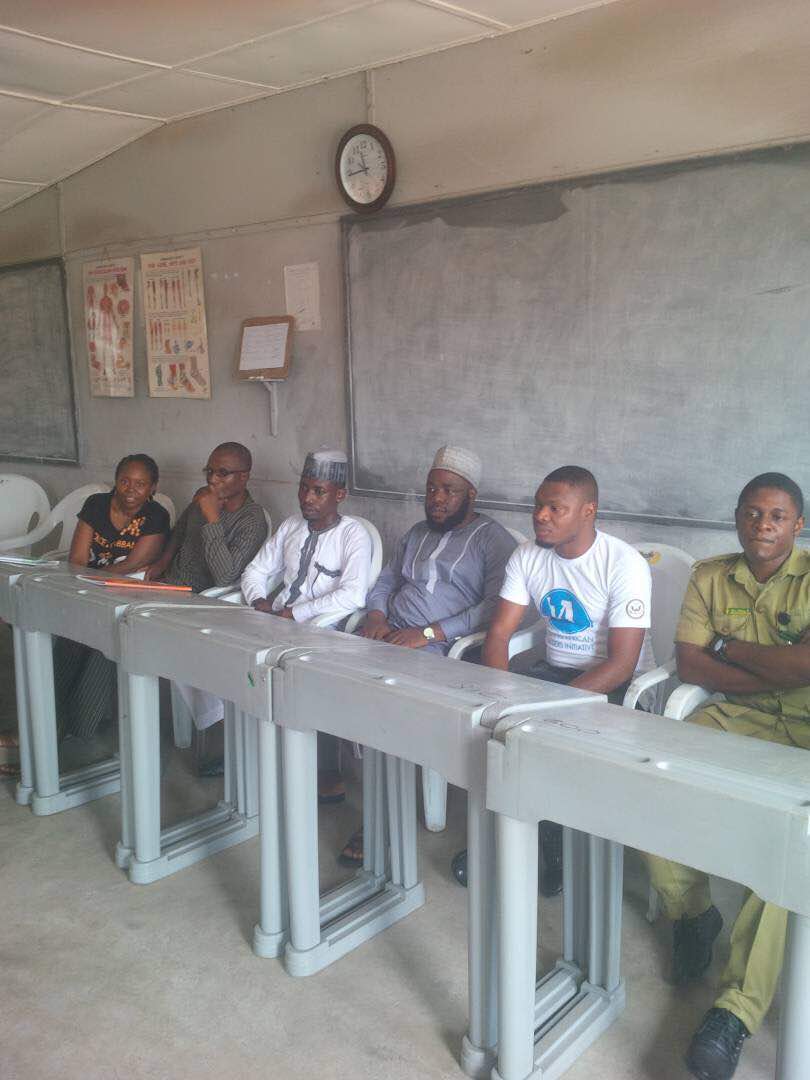
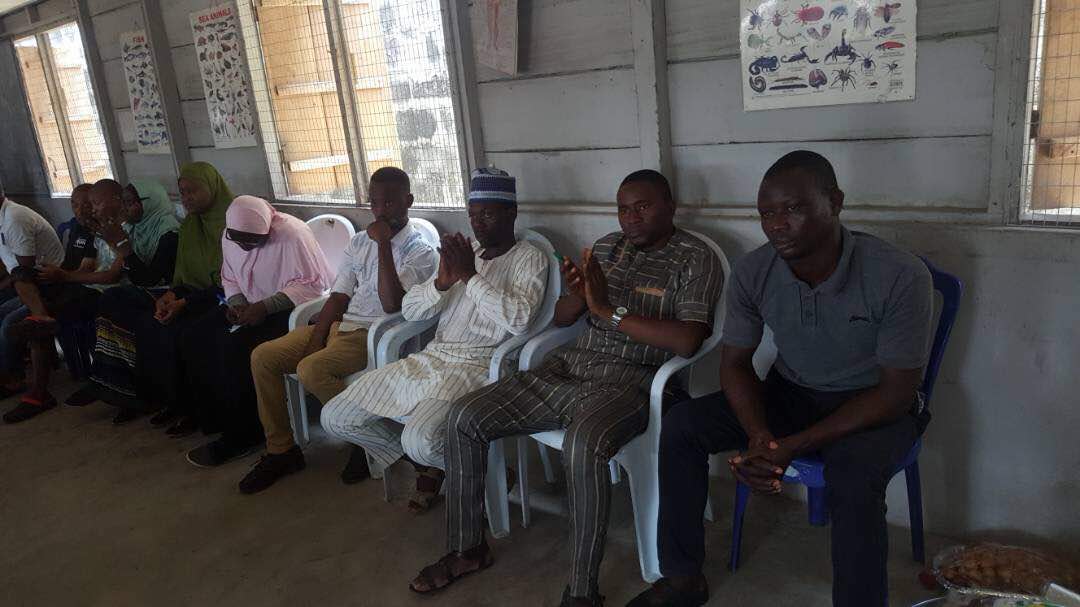
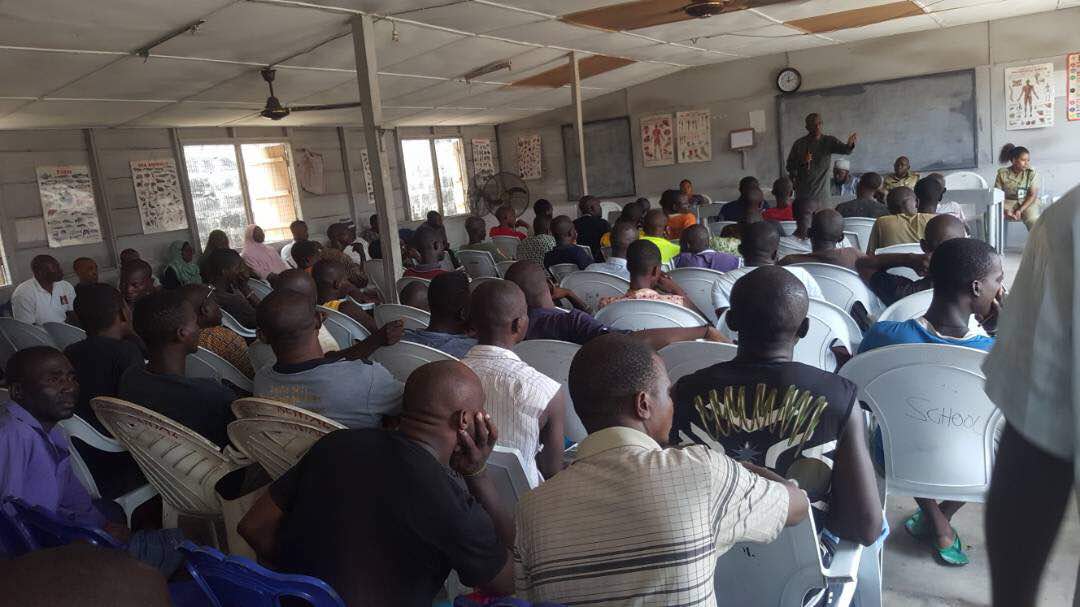
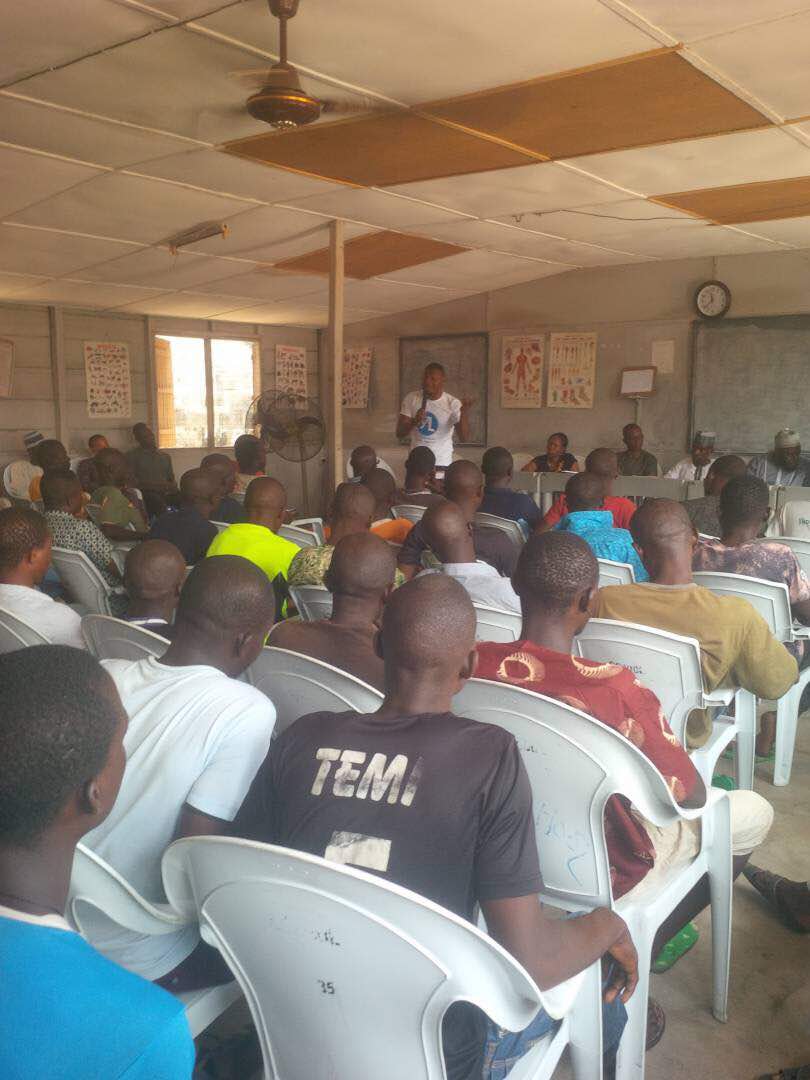
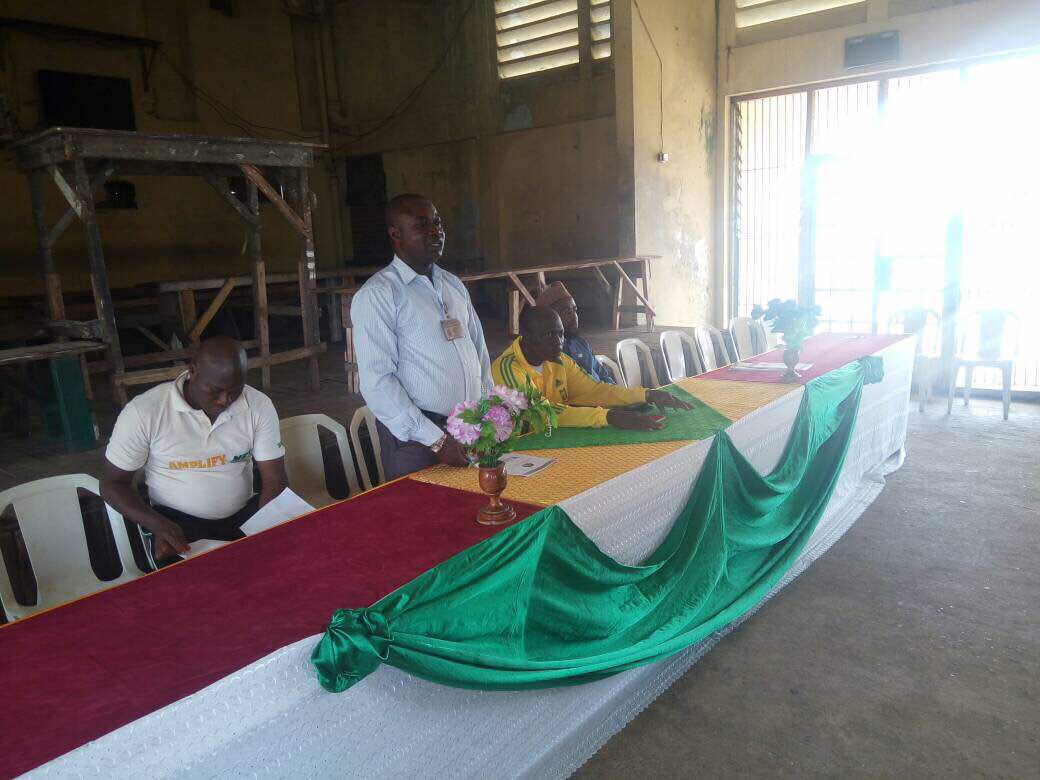
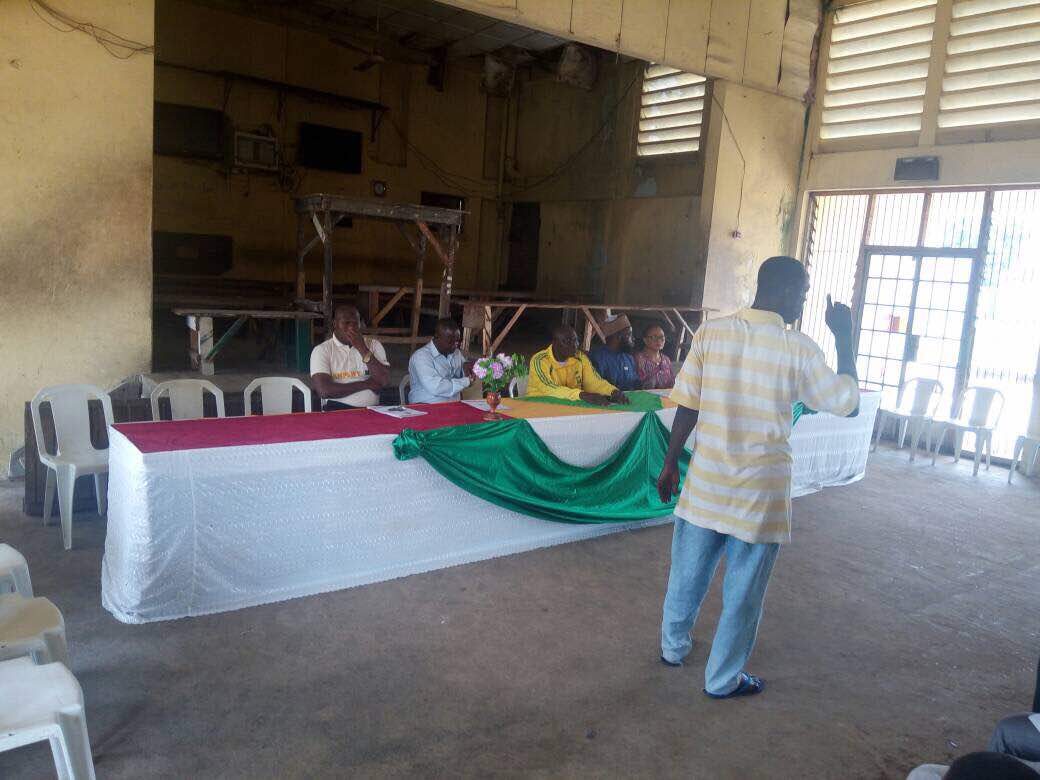
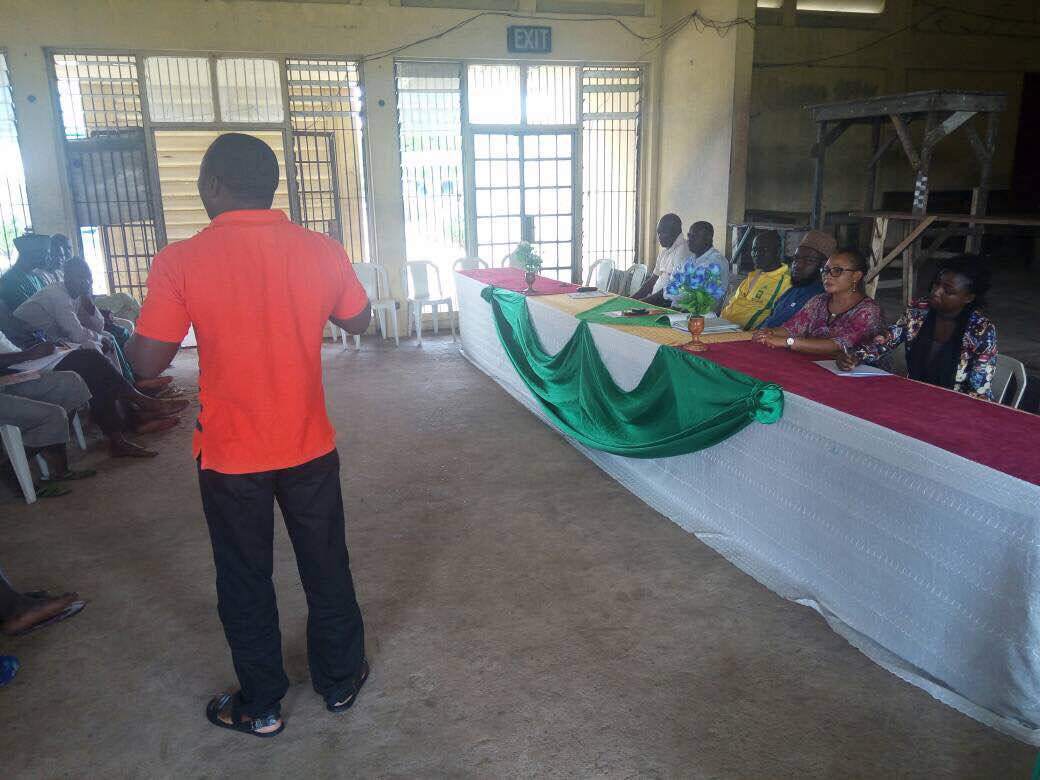
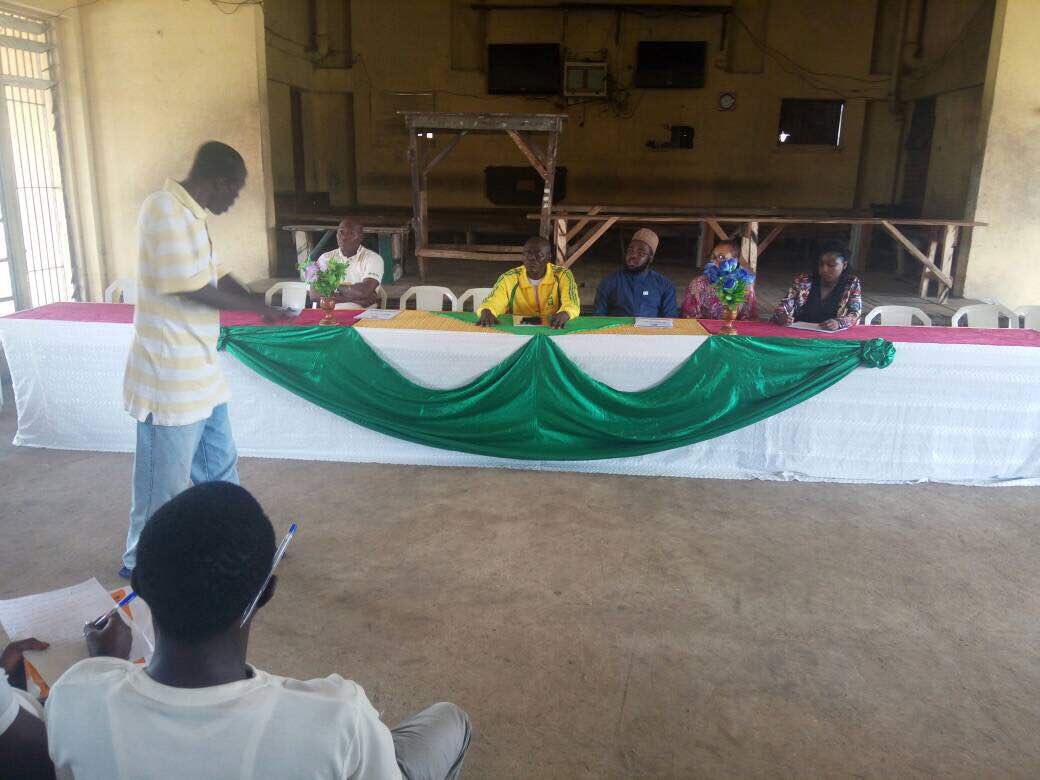
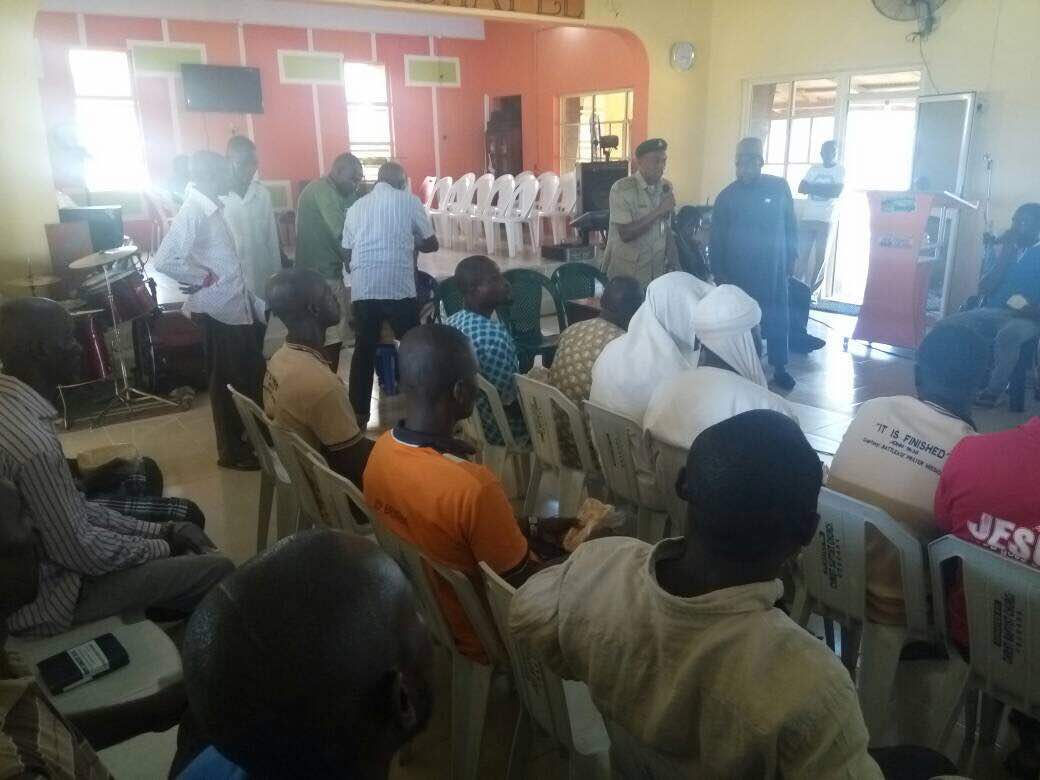
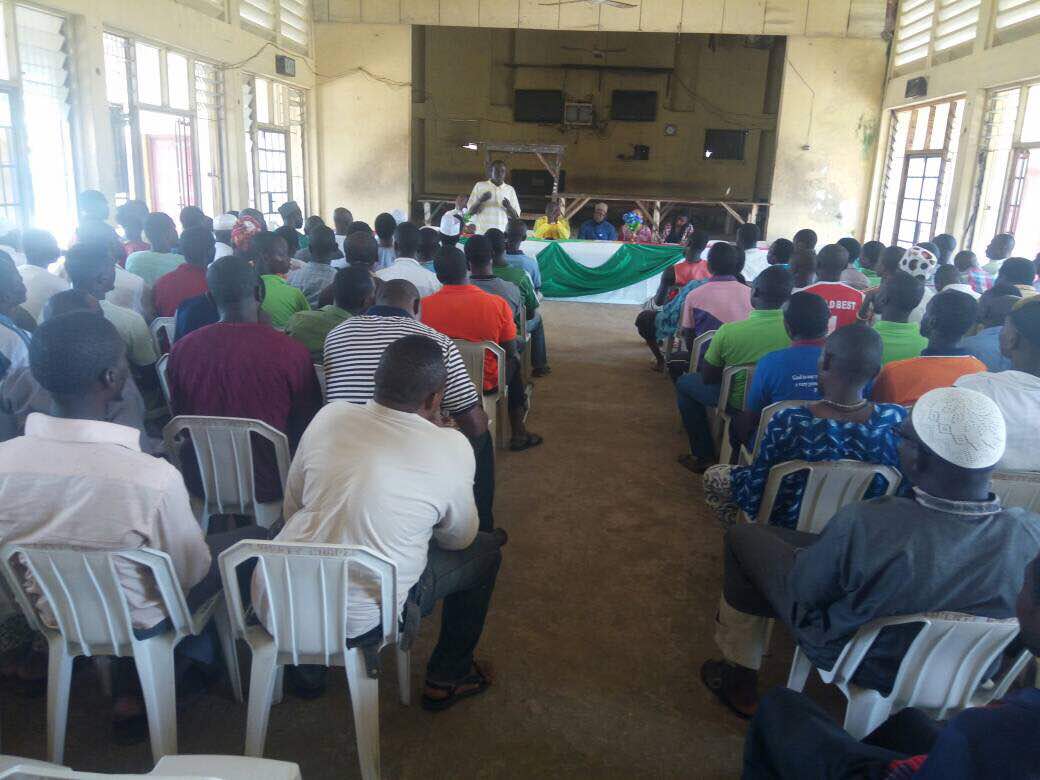
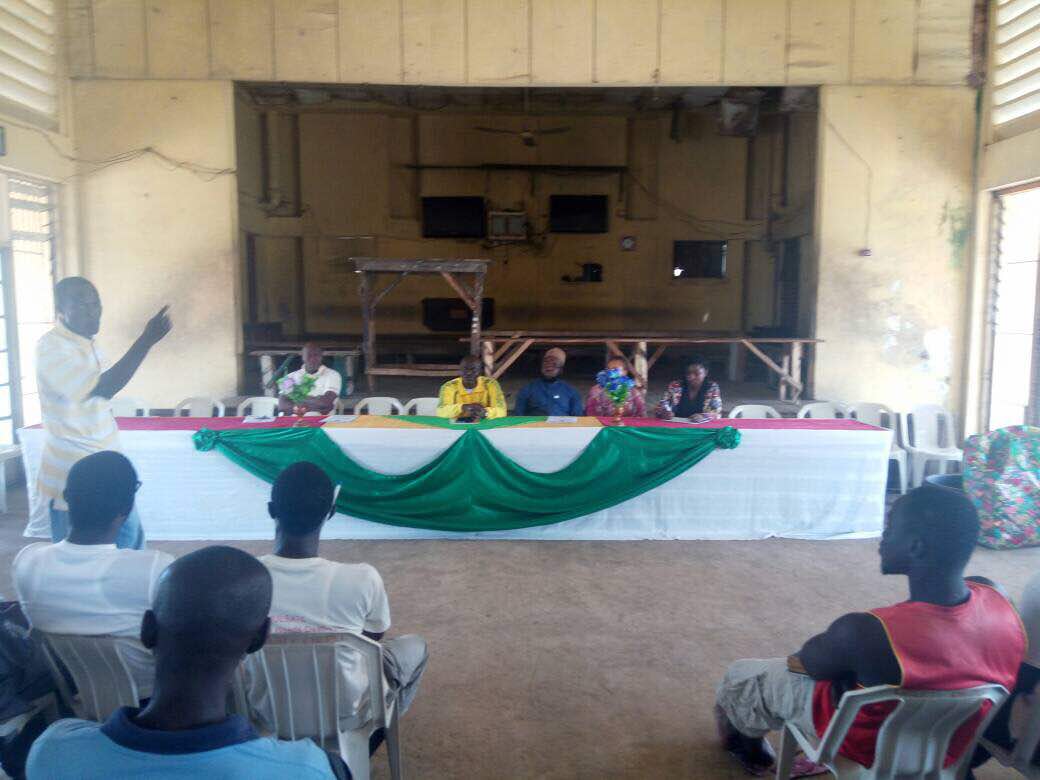
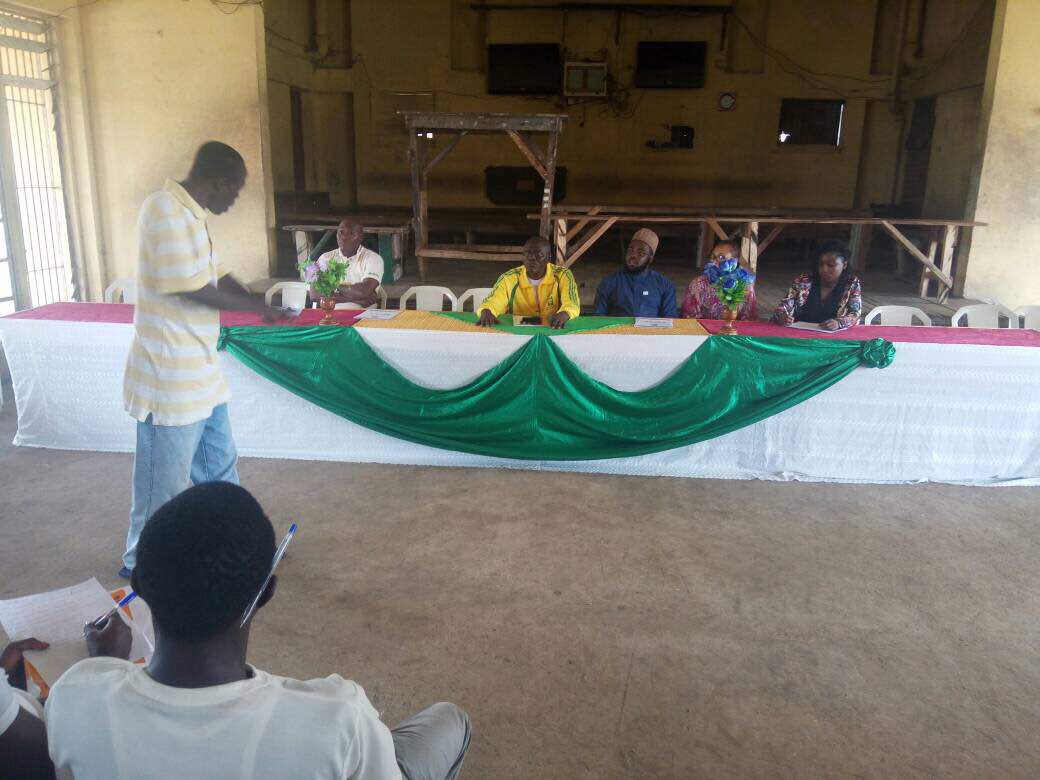
MOTIVATIONAL EVENT FOR INMATES OF IKOYI PRISON ON 6TH OCTOBER, 2017

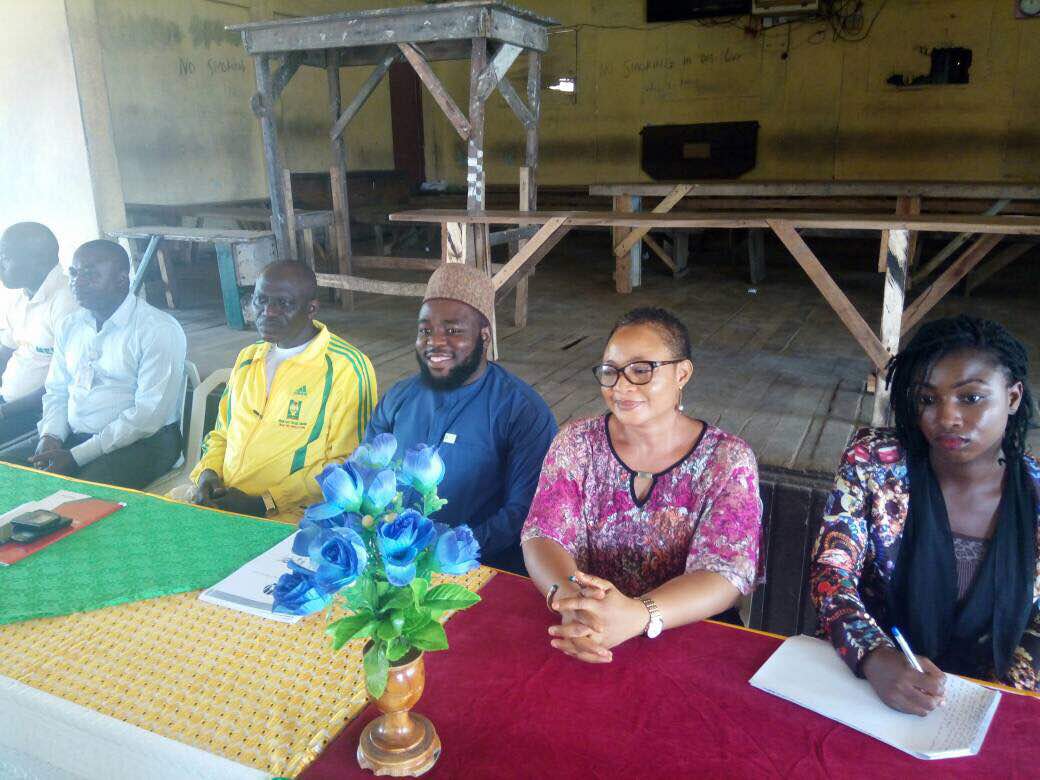
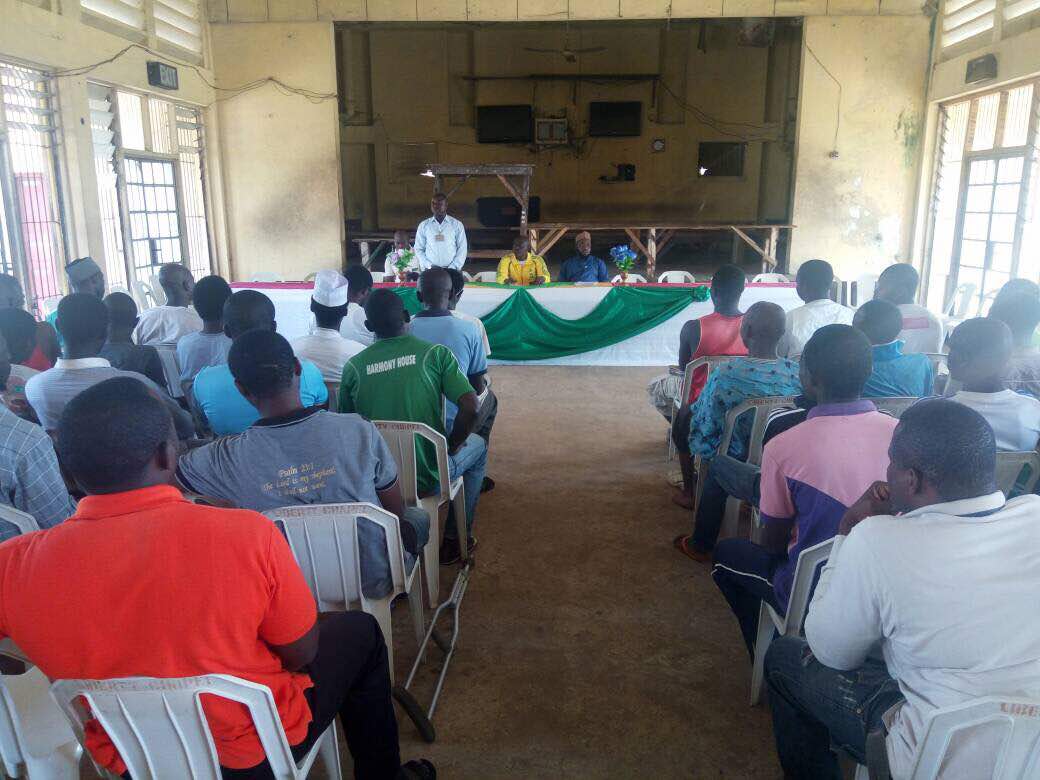
The program started about 10:45am with an opening address from the coordinator, Mr Ahmad Adetola-Kazeem where he enlightened the inmates on the purpose of the organisation as well as the reason for our being there today. He stated clearly that the purpose of our presence today was to motivate the inmates on the importance of being educated or attaining certain skills which will help them become relevant upon their release to the outside world.

A welcome address was also done by the Principal of the school. In his address, he encouraged the inmates to attend the school rather than roaming about and waiting to be enticed with food before attending.
At this juncture, four ex-inmates were introduced to the inmates as the speakers for the day. They included:
Mr Harrison Gwamnishu ishu
Mr Tom
Mr Nathaniel Jangbadi
Mr Babagana Kachalla
The Deputy Controller of Prison joined the gathering after this and succinctly spoke to the inmates on the importance of attending the school and having an education. He further introduced another non-Nigerian NGO which was basically involved in prison welfarism in areas of feeding as well as building of better structures in the prison yard. The Controller thereafter commended both NGOs fir their selfless services to humanity.
An opening prayer was done by two inmates; a Muslim and a Christian.
Afterwards, the first speaker Mr Harrison Gwamishu started on a very lively note, chanting the popular slangs of the prisons which all the inmates instantly resonated with. Mr Harrison who was falsely accused for conspiracy, armed robbery and attempted murder had served four years awaiting trial. He made the inmates understand that it was when he entered the prison that he saw the need to be a better person which prompted him to join the drama group as well as attend school. He further said that it was in the very same Ikoyi prison that he took his GCE in 2013 before he was transferred to the Delta prison before he was eventually released. Mr Harrison spoke to the inmates on the importance of empowering themselves through education as that would be their ticket to the total freedom they wish to have. He further explained that planning to commit more crimes upon their release will do them no good and as such, they should ensure they grab the opportunity of free education and empowerment the prison offers. Mr Harrison is now the founder of Behind Bars Initiative which is an initiative aimed at fighting for the rights of inmates. He was also selected for the Mandela Washington Fellowship in the United States.
The second speaker Mr Tom was an ex-inmate of the Ikoyi prison and is well-known to many of the inmates. He told spoke to them on the importance of education which he buttressed was one major way of staying relevant in the world outside. He further informed them that it was as a result of the opportunity to learn skills while in prison that he has been able to successfully start a new business. He also stated that it is only by getting an education while in the prison that they can avoid being stigmatized when they leave the walls of the prison.
There was about 10 minutes break where the entire audience was thrilled to jokes by Kelvin, a comedian in the prison.
 After that, Mr Nathaniel Jamgbadi, the third speaker, who is a retired banker and a financial consultant who was also falsely accused and spent two years awaiting trial at the Minna prison. He spoke very briefly on deciding who they want to be. He advised them to ensure they do not take negative qualities out of the prison and to do this he said, begins with them gaining knowledge and skills. He further told them that this period was the best time to empower and equip themselves for the world outside.
Mr Babagana who was an ex-inmate at the Kirikiri maximum prison for being accused (falsely) of being a Boko Haram member, shared his experience on how and what led to his arrest and detainment. He further informed them that he learnt the importance of furthering his education while he was in prison and how he also participated actively in teaching others what he knew. He advised the inmates to strongly improve on their spirituality as nothing was impossible with God.
At this juncture, an inmate, Paul Adeoye spoke to the other inmates about the importance of changing their mind-sets first as that would be the only way they would open up to learn. Paul is now a part 2 student of the National Open University of Nigeria studying Entrepreneurship and Business Management and he confessed that the best decision he ever took was making up his mind to take the GCE in prison.
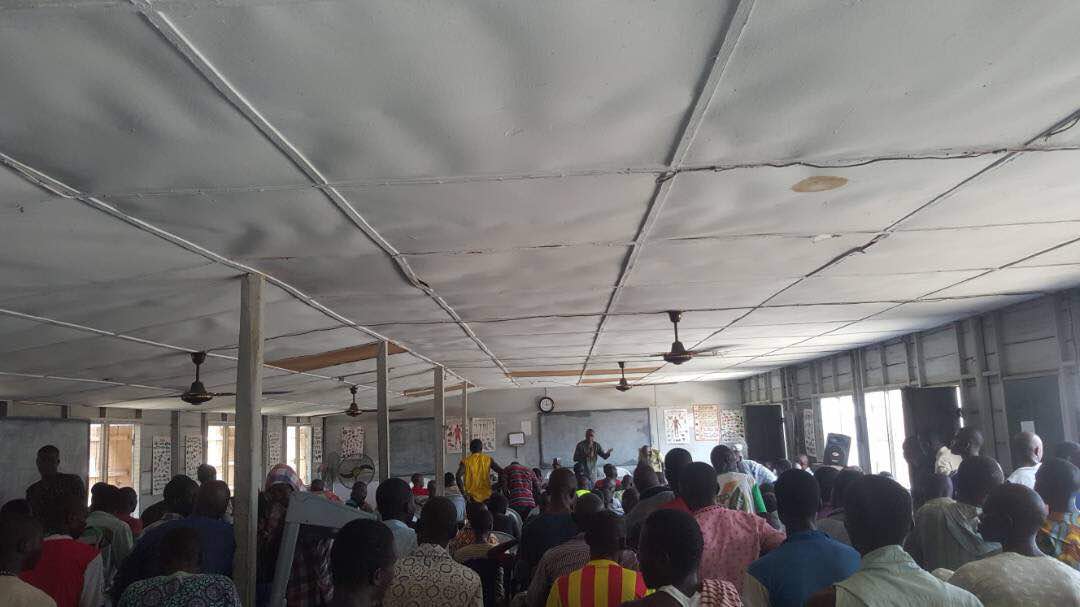
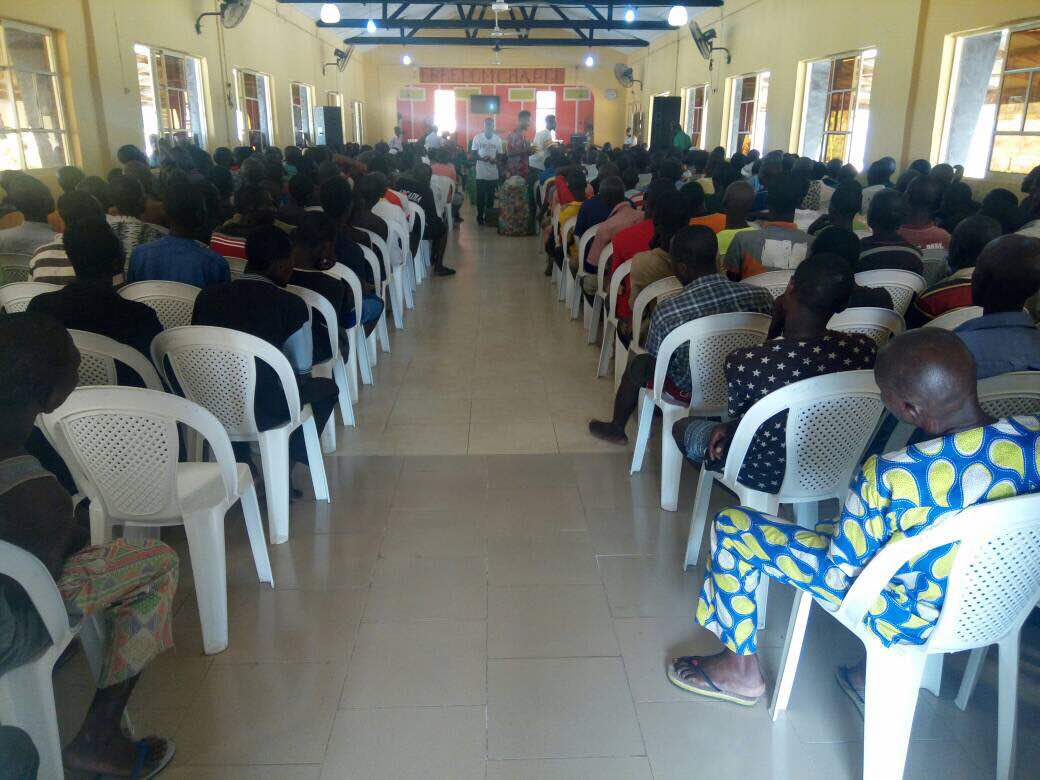
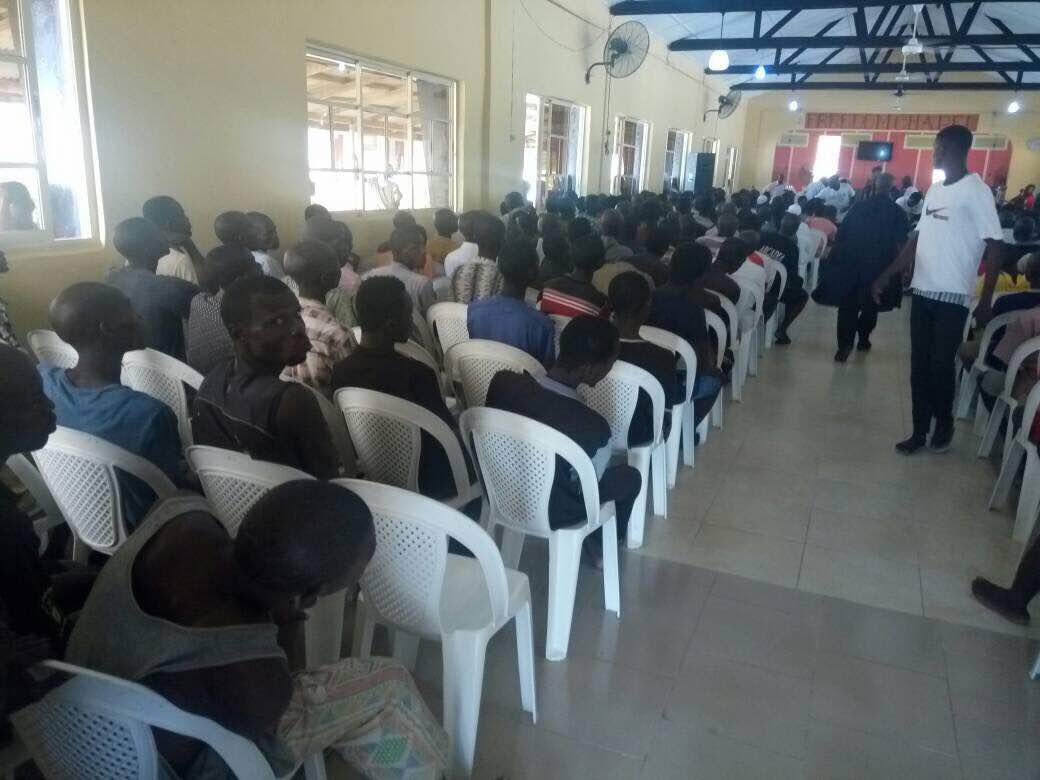
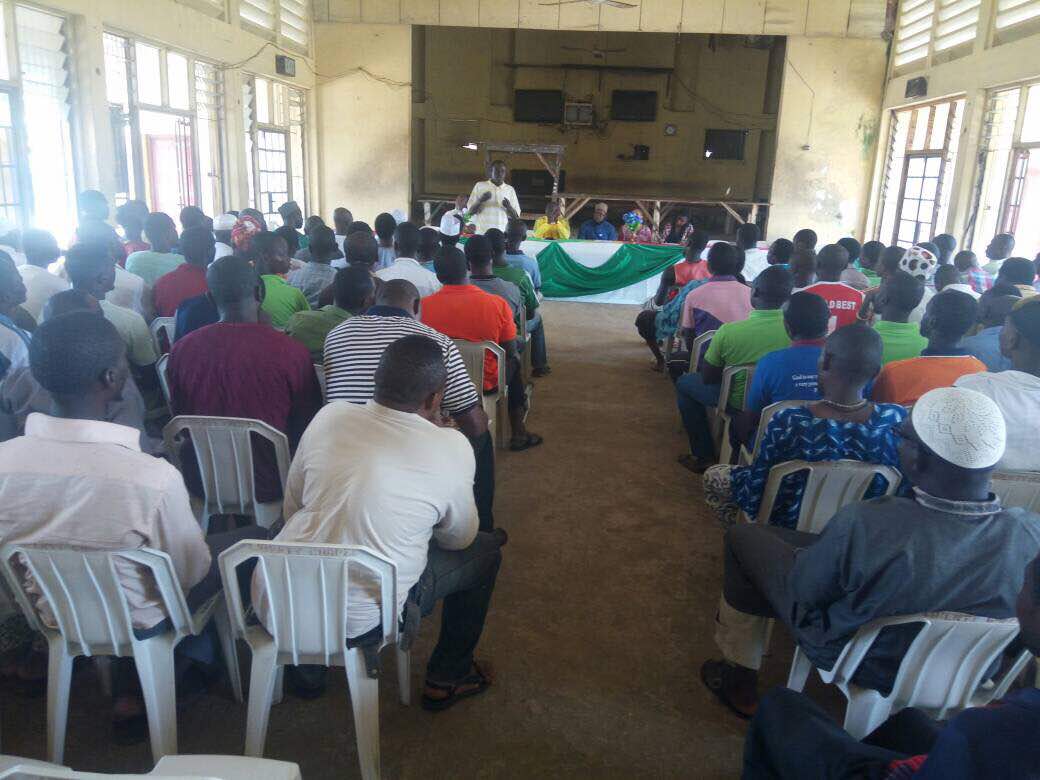
The meeting ended with distribution of snacks and drinks which led to a lot of drama and elation from the inmates. 226 inmates attended the invent.  The closing remarks and answering of questions was done by the Coordinator and the program came to a close at about 1:25pm.
-@PRAINigeria
PRAI holds motivational speaking session for Kirikiri Prison Inmates

PRAI holds motivational speaking session for Kirikiri Prison Inmates

PRAI’S MOTIVATIONAL EVENT HELD AT KIRIKIRI MAXIMUM AND MEDIUM PRISON ON FRIDAY OCTOBER 14, 2017

The program at Kirikiri maximum prison started at 11.10am an introduction by the Welfare Officer of the prison. There was a brief talk by the Director of PRAI, Mr Ahmed Adetola-Kazeem, about  the aims and objective of PRAI, its past events and goals, and an introduction of the PRAI’s three volunteer schemes (“Represent and Inmate”, “Educate an inmate” and “Empower an Inmate’) and few of PRAI’s achievements in assisting inmates and ex-inmates. He added that those skills began in the prison and encouraged the inmates to be a part of the scheme.

The Deputy Controller of Prisons in charge of the Maximum Prison, also confirmed PRAI’s numerous efforts in terms of pro bono litigation and rehabilitation programmes and other efforts towards making the prison system in Nigeria a better one.  The welfare officer called out inmates, who are beneficiaries of the Prison’s educational system, to share their experiences.

Moshood Oladipo a former death row inmate and lifer appreciated the officers at maximum prison, all prison authorities that saw to the establishment of school in the prison. He gave his testimony of how he started learning shoe making in the prison before he wrote GCE and enrolled at the National Open University of Nigeria for his first degree and then Masters degree, despite awaiting his death. He informed everyone present that his release warrant was recently signed by the Oyo state government  because of the Masters degree he obtained from  NOUN. He advised the inmate to be good influence to other inmates and be known for something good in the prison because that could aid their release. He advised those who don’t want to attend school to learn a vocational skill.

The general pastor of the inmates was also called upon; he said he was detained in 2003 and was condemned to death before and later the death sentence was commuted to life imprisonment . He appreciated the opportunity that was given to him to acquire both PGD and MSc. Degree at the Maximum Prison. He advised inmates that their aim of going to school shouldn’t be about the certificate but to acquire knowledge and be well equipped with skills.

The catchyst of the prison catholic church who is also an inmate was called upon to share his experience; he appreciated PRAI and acknowledged that education a very important key to success.  He took the audience through his journey from Ikoyi prison where he wrote jamb, taught fellow inmates, learnt soap making and enrolled at the Open University. He admonished inmates to take the step and start now, saying if inmates are not reformed and are being released they go outside to cause more problem just like the case of an ex-inmate that killed a one-time Gulder Ultimate Search winner. He said that with his education, once he is out of the prison he can become a Special Adviser to the President on prison issues, based on his knowledge of the prison system and the reformation he has gone through. He concluded by saying that the prison should be reformatory  and not defamatory.

Barr. Adetola Called out for inmates interested in registering in the school today and quite a number signified by raising their hands and a list went round to collect their names.
The head teacher in the prison yard, appreciated the yard officials and the representatives of PRAI, he called them the instrument God is using to change their lives. He sought for assistance in the rehabilitation of the school structure which is always leaking during rainfall. He also sought for fainacial support for the inmates who are teachers in the school as well as books, markers, pens, boards etc. He showed appreciation to the welfare officer of the prison,  Alhaji Rasheed  for always assisting the teachers with food supply .

Mr.  Ogbonaya the prison  psychologist appreciated PRAI and its representatives. He said education is a continuum which starts from birth to death. He added that human thoughts are products of what they know and what they know is what they acquire through education. He introduced a club called 3R’s and invited inmates to be a part of the various sessions such as  entertainments, sports, catering services and other activities. He advised that inmate should be mindful of the people they move with because some inmates have PhD in pulling people down. He concluded by appreciating the organizers of the program and said some prayers for them.
PRAI’s director,  appreciated all attendees and encouraged inmates who indicated interest in studying to fulfill their promises by attending the school. He introduced the volunteers of PRAI present at the event from Mr. Nathaniel Jamgbadi, Miss Nelly D, Miss Aramide Adedeji, Mrs. Yewande and Mr. Kehinde Ibrahim.  He appreciated the prison authorities for allowing the program. The inmates showed appreciation by giving PRAI 3 gbosas.
The inmates were told to queue up to collect the food items that was brought for them and they all matched out afterwards.

There was a short meeting with 7 of the school teachers. They all introduced themselves and the subject they teach. Ibrahim Kamil Ogun an inmate who has been sentenced to life imprisonment but seized the opportunity to enroll in the prison nursery school to university and now teaches in the school was one of the teachers at the meeting.
The head teacher indicated that they need teachers in the following subjects; BIOLOGY, MATHEMATICS, ACCOUNTING, HISTORY, ENGLISH and LITERATURE respectively and  they also need MARKERS, EXERCISE BOOKS, and BIROS. He also said teachers needs encouragements in form of stipends.
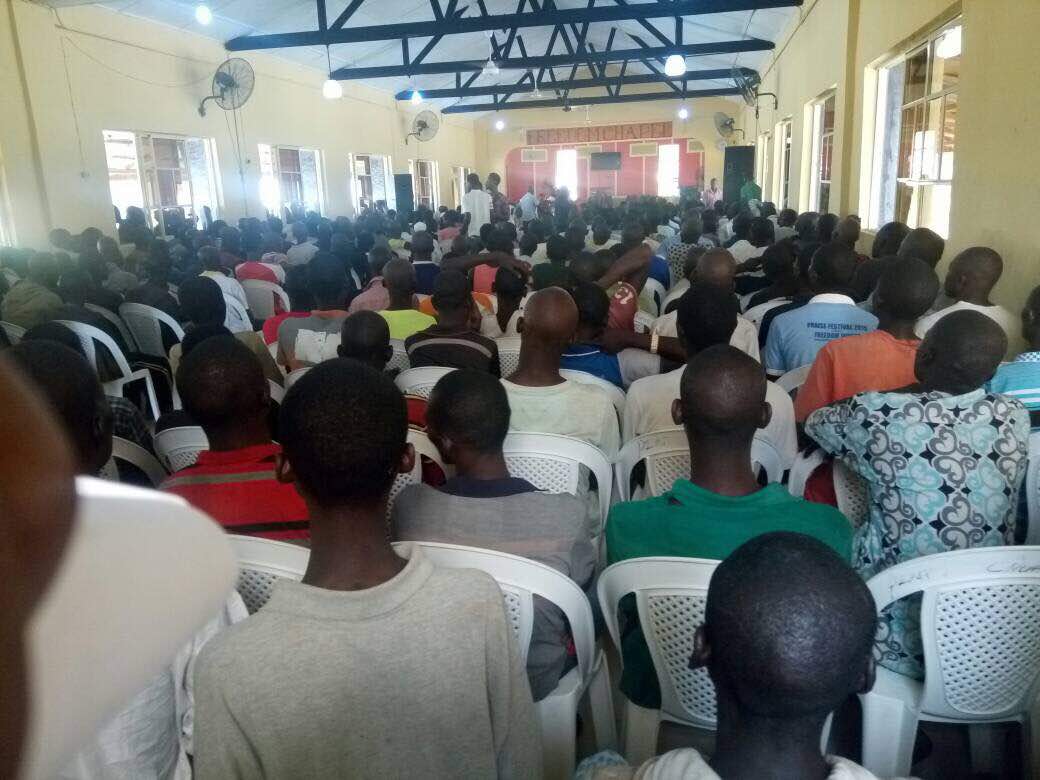
There were about 150 inmates in attendance.
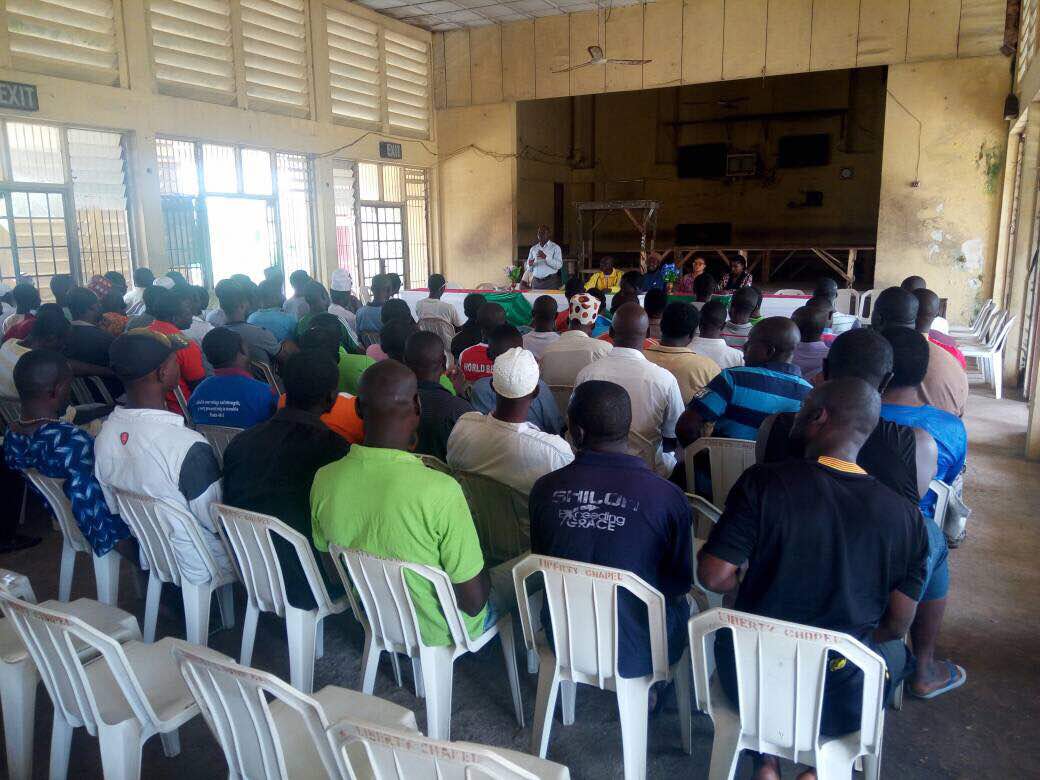
The program at Kirikiri medium prison commenced at about 2:15pm. The Executive Director of PRAI, Mr Ahmed Adetola-Kazeem appreciated the pastor for allowing the use of the church for the program because the school was extremely small. He introduced PRAI and how it’s set up to liberate, educate and empower inmates. He informed the inmates that PRAI will no longer be taking up random cases on behalf of inmates , and only cases of those enrolled in the school and workshops will be handled by PRAI henceforth.
 The principal of the school spoke about the needs of the school and that they have three inmates currently enrolled at the National Open University of Nigeria (NOUN). He said that they need computers in their computer school, markers, books and other materials important for the running of the school. He also said he is looking forward to meeting the new teachers and advised fellow inmates to take advantage of this opportunity.
Mr. Oyeleye, another inmate appreciated PRAI and other Initiatives that are making impart in the lives of many inmates. He said that the government hasn’t been looking at human capital development and investments programs and that the school should be given a lift so that proper impartation can be made. He added that there should be a platform for empowerment and if the government can see all these, they would do a broader one.
Barr. Adetola responded by saying we will keep trying our best, however we cannot do more than we can do. He made emphases on their involvements in school because we can only help those we know and PRAI is looking into human capital development programs.
Frank an inmate who is a beneficiary of PRAI’s pro bono legal services, said  his coming to the prison is not a mistake, but God’s divine directions and that the life he lived that got him to prison was nothing compared to what he has achieved while in prison. Before he became an inmate he had no skill and had no knowledge but now he is a 200 level student in the Open University studying criminology. He is also a website designer and developer; he told inmates that he works with Onesimus Ventures, which is in partnership with the prison service and Covenant University, where they produce paint, soaps, hand wash, car wash e.t.c and he said their products are better that the ones we find outside. They have established business with Wema bank and have sold 5 cartons of soap to them, now he has no reason to go back to committing crime when he leaves the prison. He encouraged other inmates to take advantage of the school and workshops and that he is not impressed with the turn up of inmates in the school and the workshops.
Mrs. Yewande Omotayo, a volunteer and great supporter of PRAI, buttressed his view and further encouraged more inmates to join the school, and called for those who would promise to attend school and workshops. Several of them indicated interest by raising their hands and a list was passed to them.
An inmate asked that after inmates have acquired these skills and have gone through school what would be the end result since the government has made the rule that freed persons would wait 10 years after being released to be fully integrated into the society again and he suggested such law be removed. Barr. Akinola responded by saying, no education is a waste and that it is the duty of the ex-convicts to show that they are reformed and worthy of pardon and he won’t advocate that the law be scrapped.
Another inmate opined that most of the inmates do not understand the meaning of human capital development and how they can take partake in what they do not understand, he also said that many of them went into crime because of lack of skills and knowledge and they need more help from initiative like this in other to expand the training facilities to accommodate more inmates. He added that ventures in prisons like Onesimus Ventures needs to have partnership with initiatives and foundations such as  PRAI the purpose of marketing and awareness.
ASP Tony , who represented the DCP, said he is aware that the population of inmates in the prison is much and they all want to leave and are not interested in education, but what they do not know is  when they will leave and that is why they need to acquire vocational skills. He told them about the department in the welfare unit called the after care and ones they are empowered the after care unit will follow up on them. He appreciated PRAI for the program and the gifts of Bread, eggs and tea that was brought to feed the inmates.
The program ended few minutes after 4 and there were over 330 inmates in attendance.
Tax Incentives for Start-Ups and Venture Capitalists in Nigeria|

Tax Incentives for Start-Ups and Venture Capitalists in Nigeria|

Developing countries tend
to use both targeted and general incentives to attract investors. Such
incentives may be included in tax laws, financial regulations, investment laws,
government directives and the likes. The mere fact that tax incentives do not
require upfront use of government funds makes them a preferable option for
developing countries, unlike developed countries that are generally more open
to grants or subsidized loans.


In line with the above,
Nigeria passed the Venture Capital (Incentives) Act Cap V2, LFN 2004 (“The
Act”) which was enacted for the sole purpose of granting additional
tax incentives to venture capital and start-ups generally. However, the
structure/mode of operation of a start-up is a major determinant of which and
what benefits are applicable to such entities (kindly seek professional
advice for clarity)
.

The incentives in the Act
are as follows;

1.      Pioneer
Status
: This exempts an organization from paying company
income tax for a period of 3 years. The privilege can be extended for an
additional 2 years, making a possible total of 5 (five) years of tax exemption.

2.      Withholding
Tax:
 The
Act gives a 50% reduction in withholding tax over a period of 5 (five) years,
on dividend payable to an investor in a Venture Project Company(“VPC”).

3.      Capital
Gains Incentives
: This is a reduction in the amount payable
as tax on the profit made when disposing an asset that has increased in value. 

The act provide as follows:
  • Disposal of capital within five years
    of investment, 100 per cent
  • Disposal of capital between six and
    ten of investment, 75 per cent
  • Disposal of capital between eleven and
    fifteen years of investment, 25%
4.      Capital
Allowance: 
It is a tax deduction companies or
start-ups can claim for the wear and tear of fixed assets used in trade or business.
They are as follows:

  • 30% deduction for the 1st year
  • 30% deduction for the 2nd year
  • 20% deduction for the 3rd year
  • 10% deduction for the fourth year
  • 10% deduction for the 5th year
5.      Export
Incentives:
 Start-ups that qualify (in accordance
with the provisions of the Act) will be able to access export incentives such
as financial assistance from the Export Development Fund as well as benefit
from the export expansion grant and the export adjustment scheme fund.

 Eligibility
Requirement for Incentives under the Act

1.    
Venture Project Company under the Act:
A VPC is defined as one established for the following purposes (a) The
acceleration of industrialization by nurturing innovative ideas, projects and
techniques to fruition (b) The commercialization of research findings with high
potentials for far-reaching forward or backward linkages (c) The promotion of
self-reliance through the establishment of resource-based and strategic
industries through the provision of risk guarantee and insurance (d) The encouragement
of indigenous process and technologies (e) The promotion of the growth of small
and medium scale enterprises with emphasis on local raw materials development
and utilization (f) such other objectives as may from time to time, be
specified by the FIRS. A VCC must also be established for the foregoing
purposes to be eligible for the incentives provided for under the Act.

2.    
Share Capital Threshold: The
Venture Capitalist must acquire not less than 25% of the total capital required
for the project.

3.    
FIRS Certification: The
Federal Inland Revenue Service is the agency responsible for administering the
incentives under the Act and generally has the power to determine whether a
company is capable of fulfilling one or more of the incentives. Companies who
intend to take advantage of the incentives under the Act must obtain the
accreditation of the Federal Inland Revenue Service.

Conclusion
In as much as the intent
of the Act might be commendable, there is a large room for improvement on what
presently obtains. One of the various steps that should be taken includes
expanding the scope of VPC and a general review to capture present business
realities.
Olanrewaju
Olumide
Partner
at Bamidele Aturu & Co

Ease of doing business is about to disrupt these 11 bottlenecks | Ibiyode Ibikunle

Ease of doing business is about to disrupt these 11 bottlenecks | Ibiyode Ibikunle


The Presidential Enabling
Business Environment Council (PEBEC) through its secretariat has released the
national action plan in its continuous bid to facilitate ease of doing business
in Nigeria.


The national action plan
is supposed to last for a period of 60 days from the 3rd of
October to 31st of December 2017 and it is to cut across 11
major areas in the economy.

Also of note with the plan
is that as it affects various sectors, they are specific to different regions
in the country.

The innovations contained
in the plan are as follows,
  • Incorporation: Incorporation
    is expected to be easier with one of the processes removed and about 72
    hours removed from the procedure.

  • Construction: It
    is expected that obtaining construction permits get easier with the time
    frame for obtaining governor’s consent set at a maximum of 30 days.

  • Property Registration: The
    introduction of e-consent by the governor is included with clearly defined
    fee schedules made available to public. Also statistical information on
    land disputes is to be available online.

  • Getting Electricity: There
    is to be further reduced time to get connected to the grid by deploying
    online systems and a revised procedure for connection and strict adherence
    to the timeline

  • Access to Credit Facilities: There
    is an increase in number of financial institutions on the collateral
    registry with about at least 300 microfinance banks joining the National
    Collateral Registry and increased usage of credit scoring services by
    banks and other financial institutions.

  • Tax Remittance: The
    plan is expected to simplify the process and reduce the time for paying
    taxes with all large and medium size enterprises to be registered on
    e-filing system.

  • International Trade: The
    plan is expected to cover cross border trading by joint examination of
    import cargo in Lagos (led by Nigerian Custom Services) and prevent
    multiple inspections. Also, there will be strict compliance with 48-hour
    scheduling process by pre-shipment inspection agents. Also, export
    documentation and import documentation has been reduced to 7 and 8
    respectively.

  • Enforcement of Contracts: The
    plan is to address the time spent in court relating to commercial
    transactions.

  • Public Procurement: The
    plan is to address the process of procurement by government for SMEs.
    Also, the Bureau of Public Procurement will ensure compliance of relevant
    government agencies to laid down procedures and timelines.

  • Immigration: The
    plan addresses the experience of travelers entering and leaving Nigeria.
    The plan would ensure reduction of time spent at the airports.
    Streamlining of the processes for entering the country is also expected to
    be worked on with a Single Passenger Clearance system at airports to
    reduce average clearance time by 50%. Processing and approval of Temporary
    Work Permit (TWP) within 48 hours is also expected. There is also going to
    be the introduction of Automated Expatriate Quota (EQ) application process
    at the Federal Ministry of Interior to ease entry of expatriates.

  • Local Trade: The
    plan also encompasses trade practices within the locality. Plans will
    include the simplification of the process of registering food and drugs at
    NAFDAC, removal of illegal road blocks, clear backlog of outstanding marks
    at the trademark registry among other things.

Committed Leadership in Lagos State | Senator Ashafa

Committed Leadership in Lagos State | Senator Ashafa


The Senator representing
Lagos East has described His Excellency, Governor Akinwunmi Ambode of Lagos
State as a visionary, committed and courageous leader.


The Senator made the
comment while addressing the press at the ongoing Lagos State
Executive/Legislative Parley 2017 themed “Mega City to Smart City.”
Ashafa stated that “Let me seize this opportunity to commend His
Excellency Governor Ambode and the entire team of Lagos State Government under
his leadership for the awesome work of further transforming Lagos State. The
socioeconomic and infrastructure development going on around the state can only
be a testament of one thing: Visionary, committed and courageous
Leadership.”

The Senator also
identified Lagos State as being in the forefront of development across the
country stating that “No doubt Lagos State has been in the forefront of
development across the Country and this is so not necessarily because
we have so much resources, but because the resources coming into Lagos have
been well managed by the Governor of Lagos State and his team.”

He
stated further that “
Sincerely, it is
events like these where we come together to brainstorm over the future of our
dear state and the direction in which it should go that set Lagos State apart
as the Center of Excellence.It is my hope that we would in the next few days be
able to discuss frankly and with clarity on the theme of this years parley:
Mega City to Smart City.

​​Ashafa
concluded by calling on Lagosians to continue supporting the government of
Governor Akinwunmi Ambode while also restating the commitment of the
Senators and Members of the National Assembly from Lagos State to always
give 
their best in defending the
interest of Lagos State as 
they also
continue to contribute 
their quota in
the grassroots
and various constituencies
to ensure the actualization of the vision of His Excellency, Governor Ambode
for Lagos State.